Growth of the Soil
A pioneer's journey from a wild mountainside to a thriving farm
Page 1
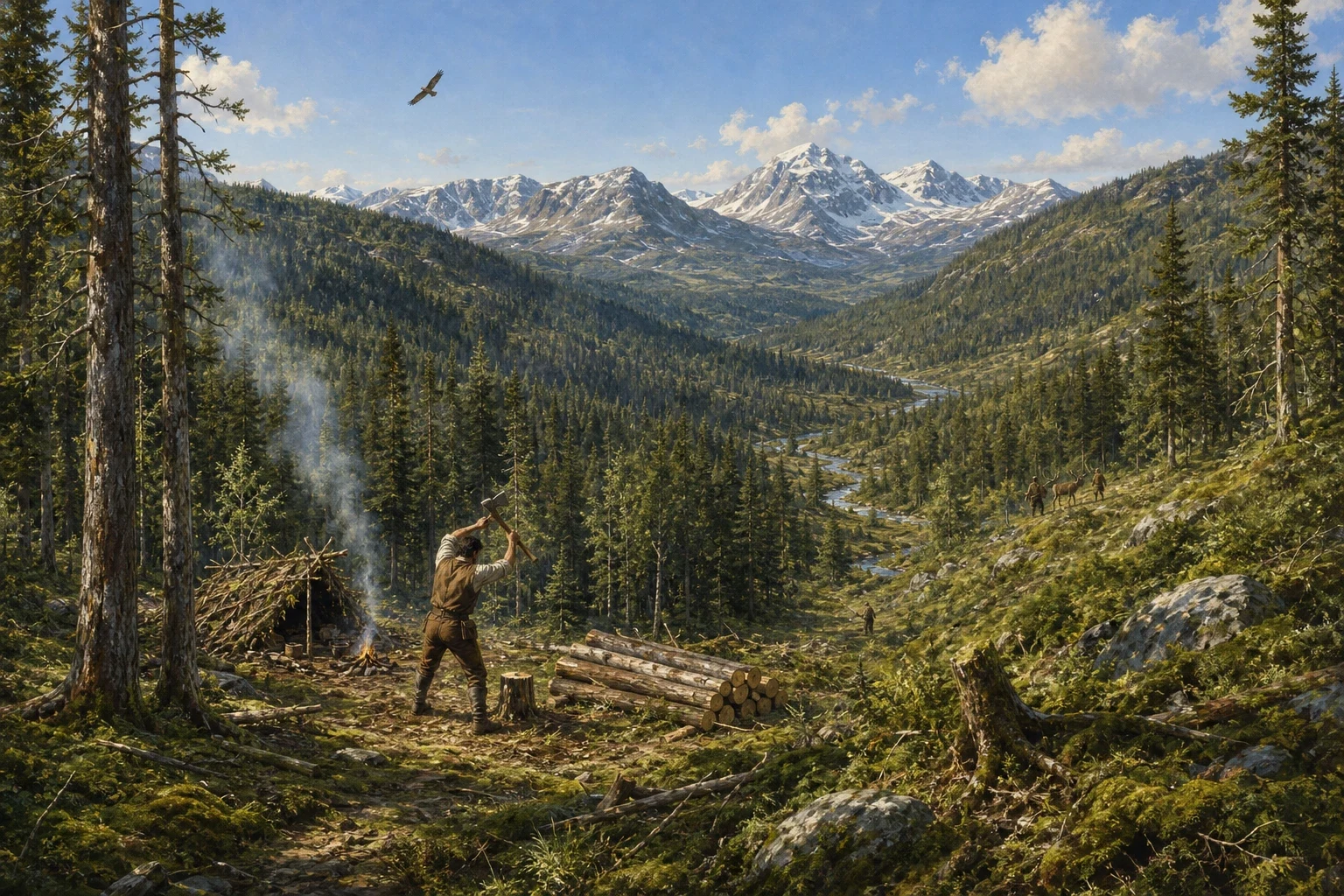
Far up in the Norwegian uplands, where the forest stretched endlessly and no man had yet made his home, a single figure appeared. It was Isak, a strong man with a quiet purpose, carrying an axe and a few provisions. He sought only a patch of land he could call his own, a place to build a life from the earth. The wilderness was vast, silent, and ancient, but Isak was undaunted by its scale. He found a promising spot, a gentle slope nestled between two trickling streams, and began to clear the first towering trees. Each swing of his heavy axe against the mighty pines was a declaration, a solitary act of faith in the fertile soil that lay beneath the thick moss and stubborn stone. Day after day, he toiled with tireless energy, pushing back the encroaching wild, creating a tiny space where a home and a new life might one day thrive in this immense, silent world.
Page 2
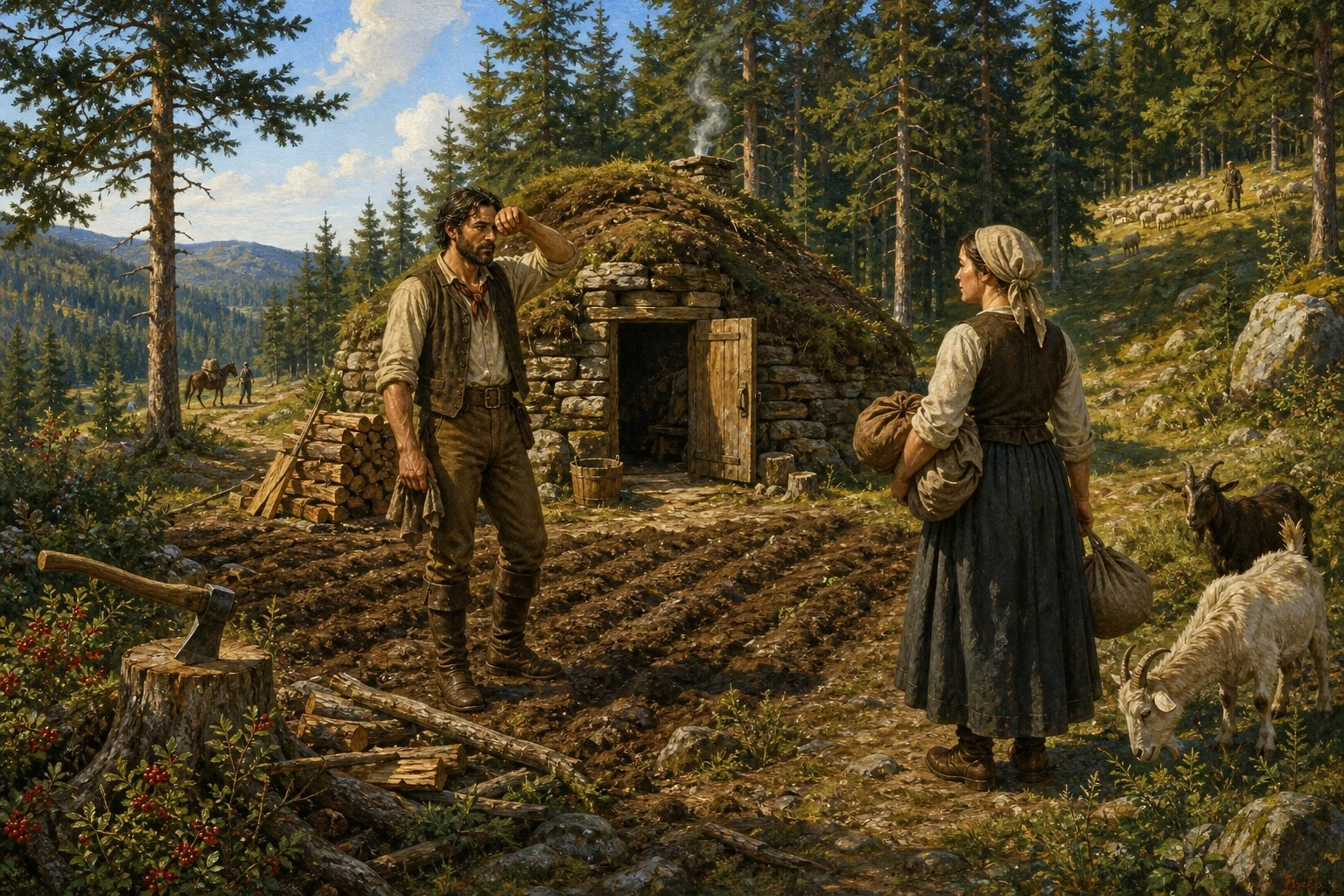
Time passed, and Isak’s clearing grew larger and more defined. From the very earth he worked, he built a small, sturdy turf hut, simple but strong, with a smoking hole in the roof and a door that turned on wooden hinges. His work was hard, his days long, and loneliness was his only constant companion in the vast quiet. Then, one day, as he worked the newly turned soil near his hut, a woman appeared on the edge of the clearing. It was Ingeborg, a sturdy woman with a harelip, carrying her bundles and a pair of goats. She had walked for days, drawn by the stories of the solitary settler. There were few words exchanged between them, but in their quiet understanding and shared gaze, a new life began. Soon, the small hut that had been Isak's alone became their shared home, a true beginning at Sellanraa, marked by the presence of a woman and the bleating of new animals.
Page 3
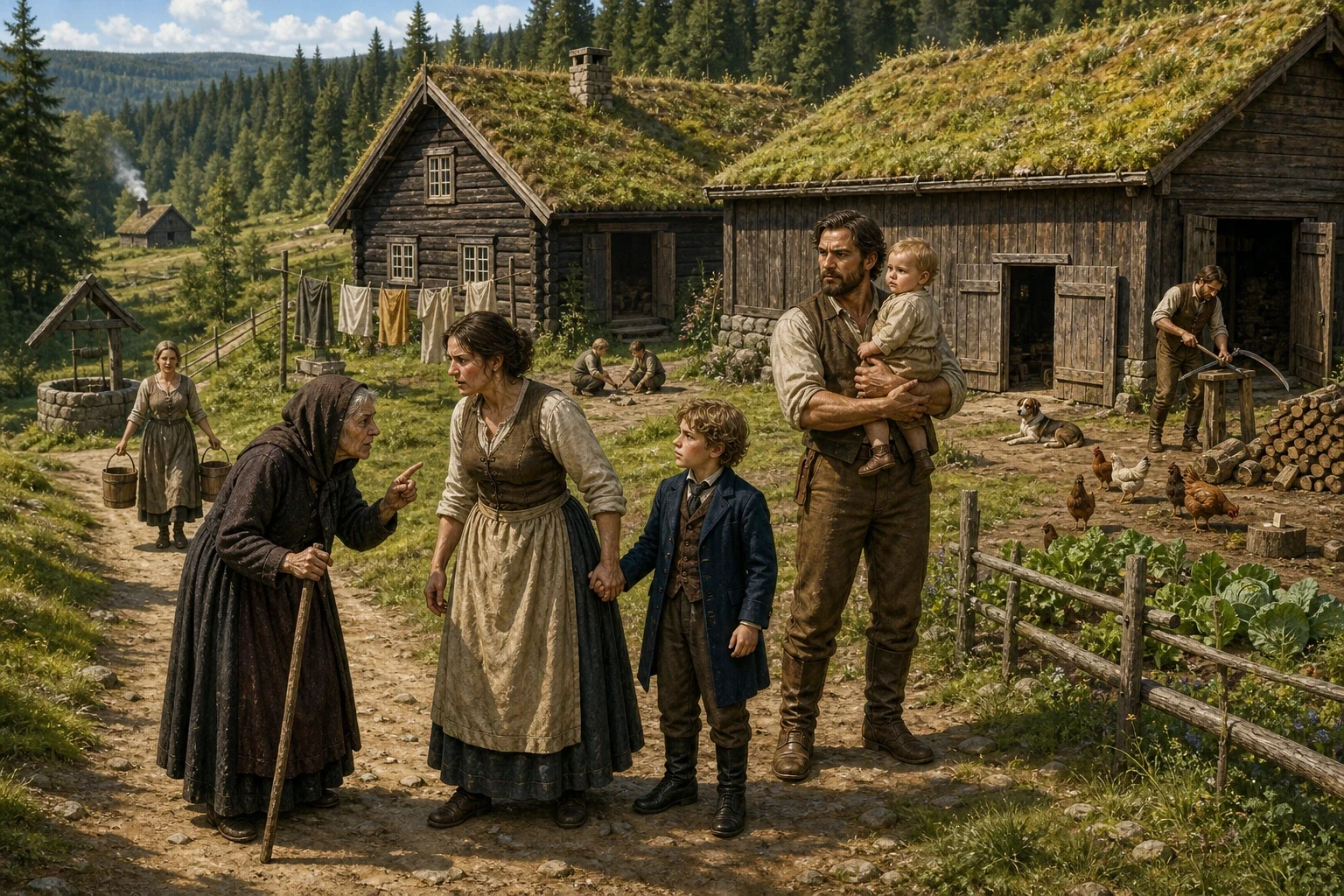
Years rolled on, and the small settlement of Sellanraa prospered, growing into a true farmstead. The original turf hut was replaced by a proper timber house, a solid barn stood ready for animals, and the cultivated fields yielded good harvests, sustaining the family. Isak and Ingeborg had two sons now, Eleseus and Sivert, strong boys who grew alongside the farm's expansion. But joy was often shadowed by hardship and human frailty. Once, in her despair and fear, especially given the child had a harelip like her own, Ingeborg had given birth alone to a stillborn child, or one that died very shortly after its birth, and had quietly buried the tiny body in the woods. But secrets rarely stay buried in the uplands. The busybody Oline, with her sharp eyes and even sharper tongue, learned of it and carried the tale to the authorities. Soon, the lensmann arrived, and Ingeborg was taken away, leaving Isak to care for the boys and the farm alone, a heavy burden on his silent shoulders.
Page 4
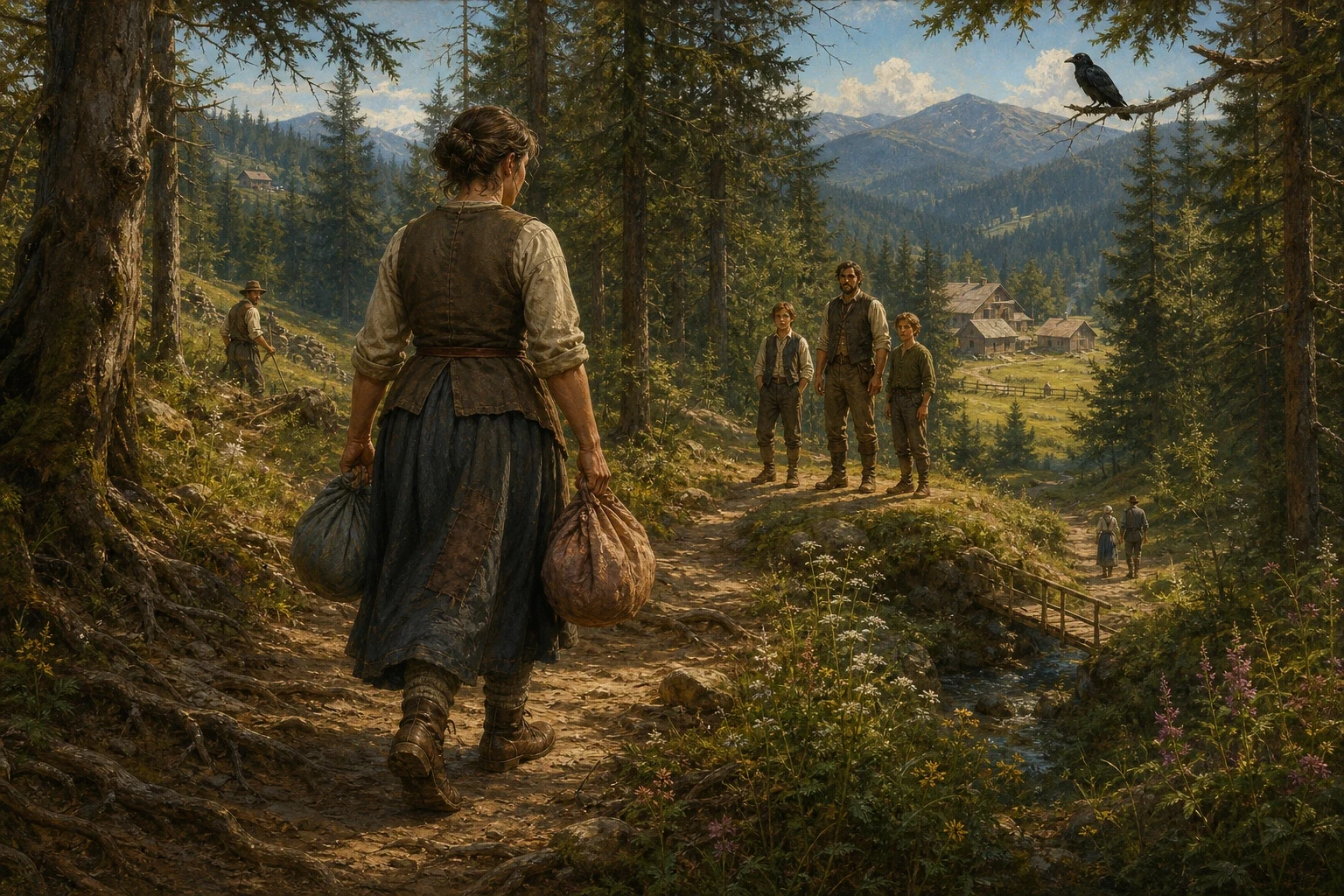
For three long years, Ingeborg was gone from Sellanraa, serving her time for the secret she had kept. The boys grew taller, becoming more independent, and Isak toiled tirelessly, the silent mountains and his own grim resolve his only witnesses. But at last, the day came when she was free to return to the life she had built. She walked the long, winding paths back to her home, her bundles light, her heart heavy with the years of separation, yet filled with a quiet resolve to reclaim her place. As she neared the familiar clearing, she saw them: Isak, standing patiently by the house, a sturdy silhouette, and her two boys, Eleseus and Sivert, now taller and leaner, waiting with a mixture of shyness and eager anticipation. There was no grand reunion, no tearful embrace, but a simple, heartfelt return to the life she had left and the family who had waited. She was home, older and wiser, but unbroken by her ordeal.
Page 5
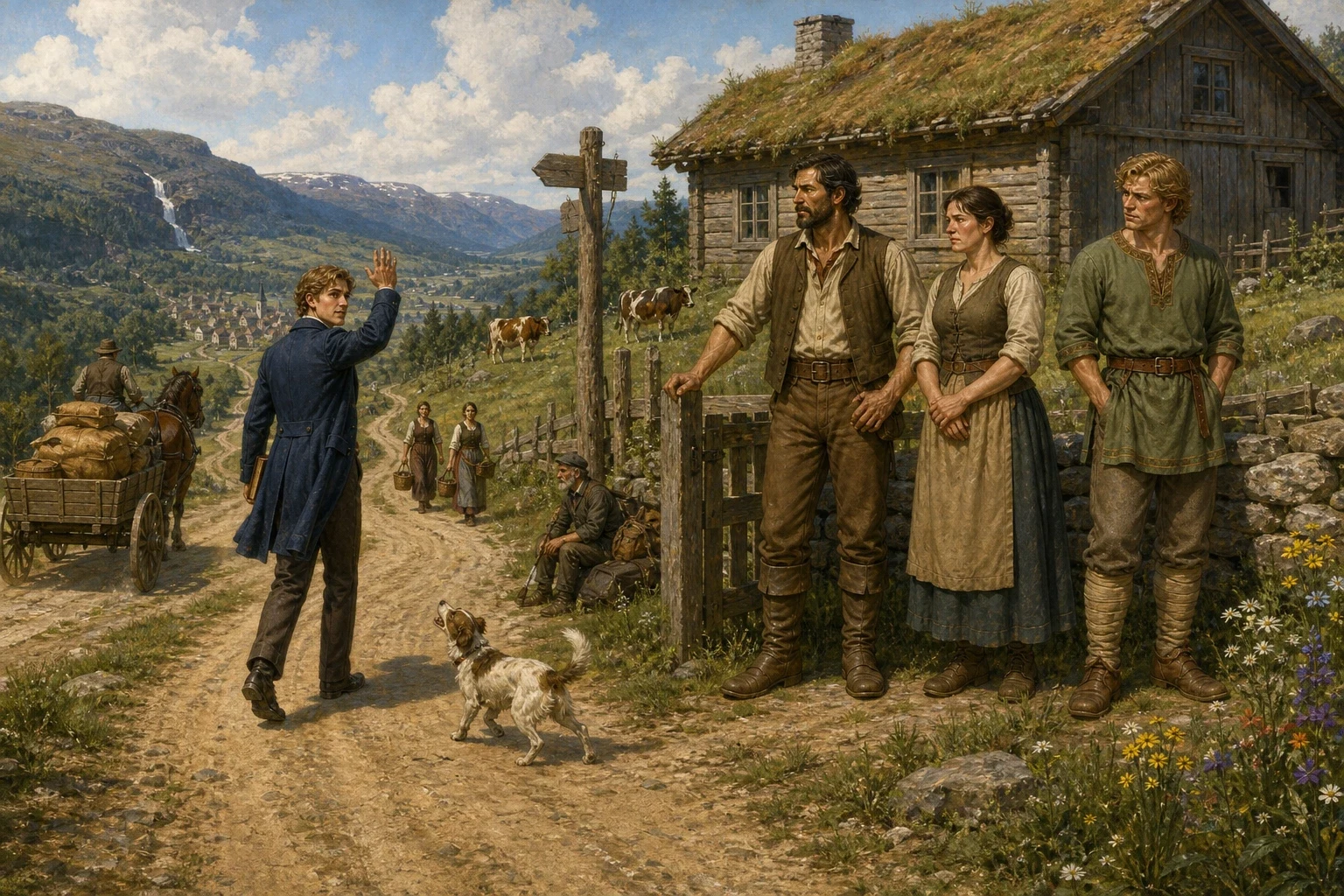
Eleseus, the elder son, was not like his brother Sivert. He had a restless mind, a hunger for books and learning, and the silent rhythm of Sellanraa could not hold him captive. The wider world beyond the mountains called to him insistently, the distant town with its schools and opportunities for a different kind of life. Despite his parents' quiet misgivings and their unspoken desire for him to stay on the land, Eleseus was determined to seek his fortune there. One crisp morning, dressed in his new, slightly ill-fitting town clothes, he stood on the dusty road that led away from Sellanraa. His mother, Ingeborg, looked on with a mixture of pride and unspoken sorrow, while Isak stood by, his face impassive but his heart heavy with unspoken farewells. Sivert, practical and rooted, watched his brother leave, perhaps not fully understanding the potent call of the wider world. Eleseus turned, waved a final goodbye, and set off down the long, winding road, leaving his home and its familiar rhythms behind him.
Page 6
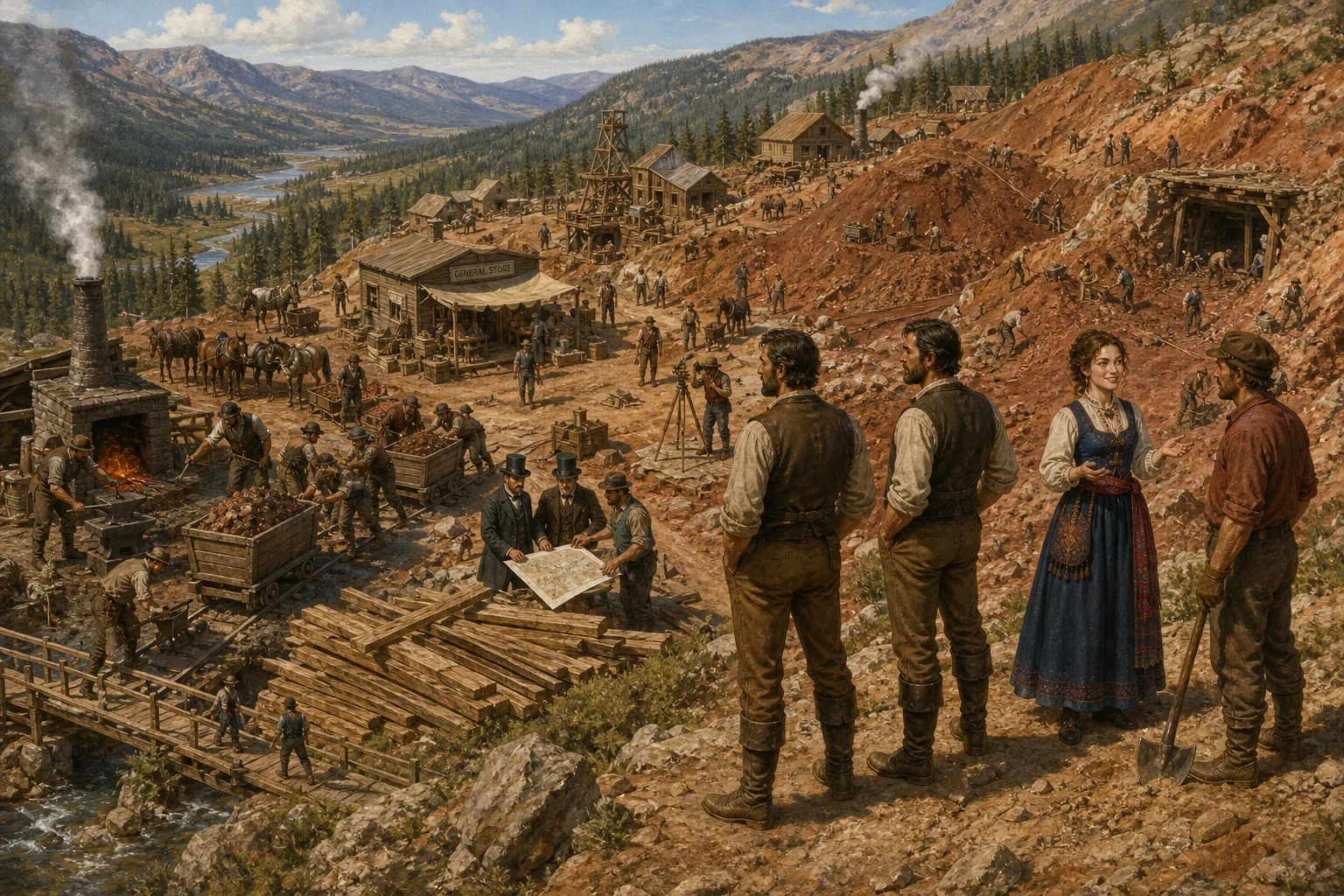
The quiet life of the uplands was soon dramatically disturbed by the alluring promise of mineral riches. Rumors of copper in the mountains drew prospectors and businessmen from far and wide, and before long, a mine was established not far from Sellanraa. The once-silent hills now echoed with the incessant sounds of digging, hammering, and shouting, a cacophony of industry. New, hastily constructed houses sprang up, a general store opened its doors, and money began to flow, rapidly changing the simple economy of the farmers. Isak, ever a man of the enduring soil, watched these developments with a wary eye, valuing the steadfast earth over transient wealth. His neighbor, Aksel, saw the immediate opportunities and was intrigued, while young Barbro, Brede's lively daughter, was completely captivated by the new faces and the bustling excitement, drawn to the modern ways and the lure of novelty. The mine brought a new kind of life, and a new kind of trouble, to the quiet valley.
Page 7
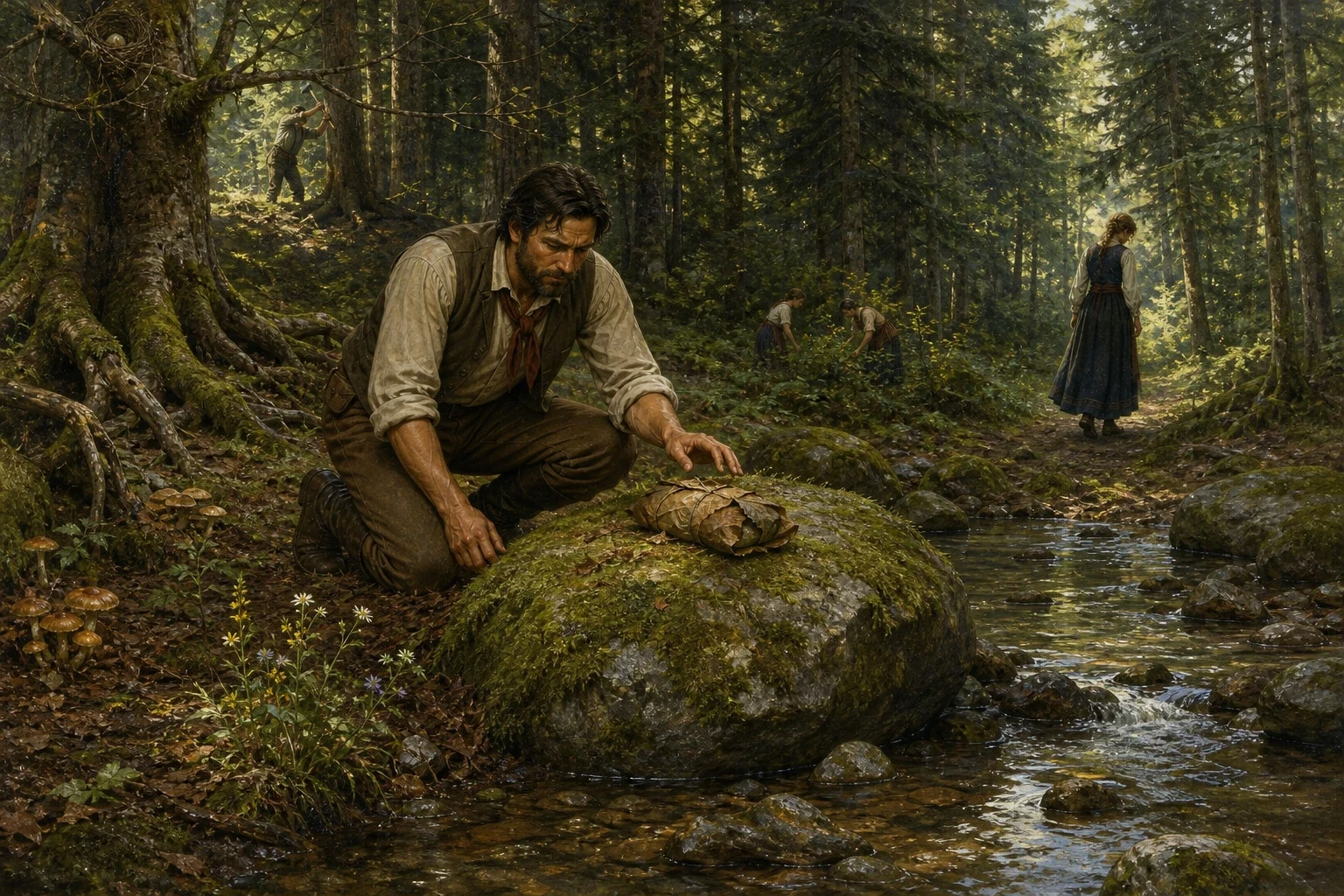
The new life brought by the mine also brought its shadows and sorrows. Young Barbro, drawn to the transient workers and the excitement, found herself in grave trouble. Alone and desperate in the vast wilderness, she gave birth in secret to a child that was stillborn or died very quickly after birth. Overwhelmed by shame, fear, and utter despair, she left the tiny, lifeless form wrapped in leaves in a secluded spot in the deep woods, near a mossy rock and a small, trickling stream. It was Isak, walking his trap lines and familiar with every hidden corner of the forest, who stumbled upon the terrible secret. His heart, though hardened by a lifetime in the wilderness, was full of compassion for the lost soul. He knew the harsh judgment the community would inflict upon her. Without a word to anyone, he dug a small, shallow grave in the soft earth, gently placed the infant within, and covered it over with leaves and soil, leaving no trace. He carried Barbro’s secret silently, protecting her fate from a cruel and unforgiving world.
Page 8
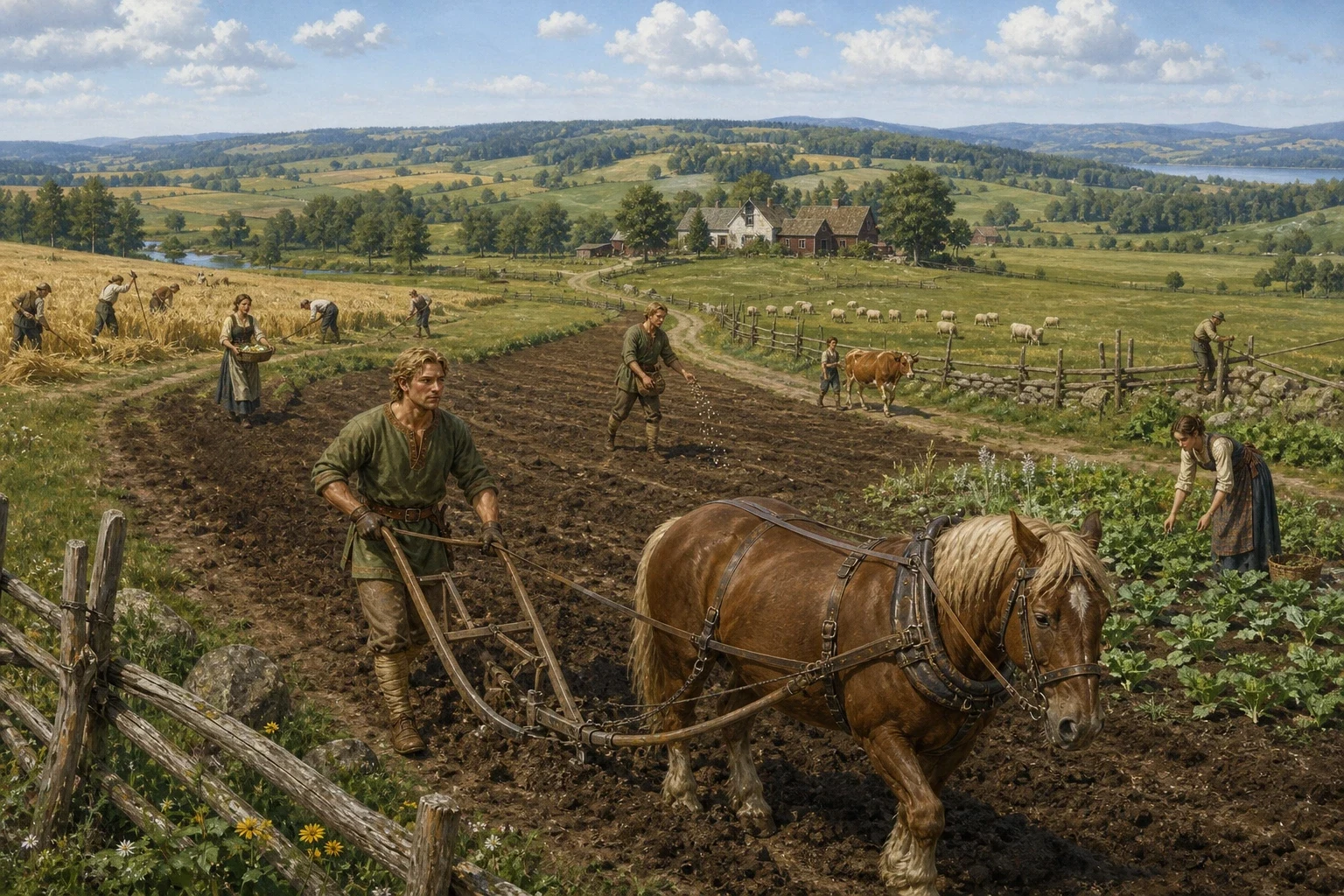
While Eleseus chased fleeting dreams in town, Sivert, the younger son, remained deeply rooted in the fertile soil of Sellanraa. He grew into a strong, dependable man, inheriting his father’s profound connection to the land and its rhythms. With each passing season, the cultivated fields expanded further, yielding more abundant harvests that sustained the growing community. Sivert’s life was simple, hardworking, and deeply satisfying, found in the honest toil of the earth. He married Barbro, who, after her youthful troubles and the painful secret she carried, had settled into the steadfast rhythms of farm life, becoming a diligent and capable wife, working alongside him. Together with their neighbor Aksel, who had married Barbro's sister, they worked the rich earth, their lives intertwined with the timeless cycles of planting and harvest. Sellanraa was not just a farm; it was a testament to the enduring power of the land and the people who loved it, a place of steady growth and quiet perseverance, embodying the true strength of the uplands.
Page 9
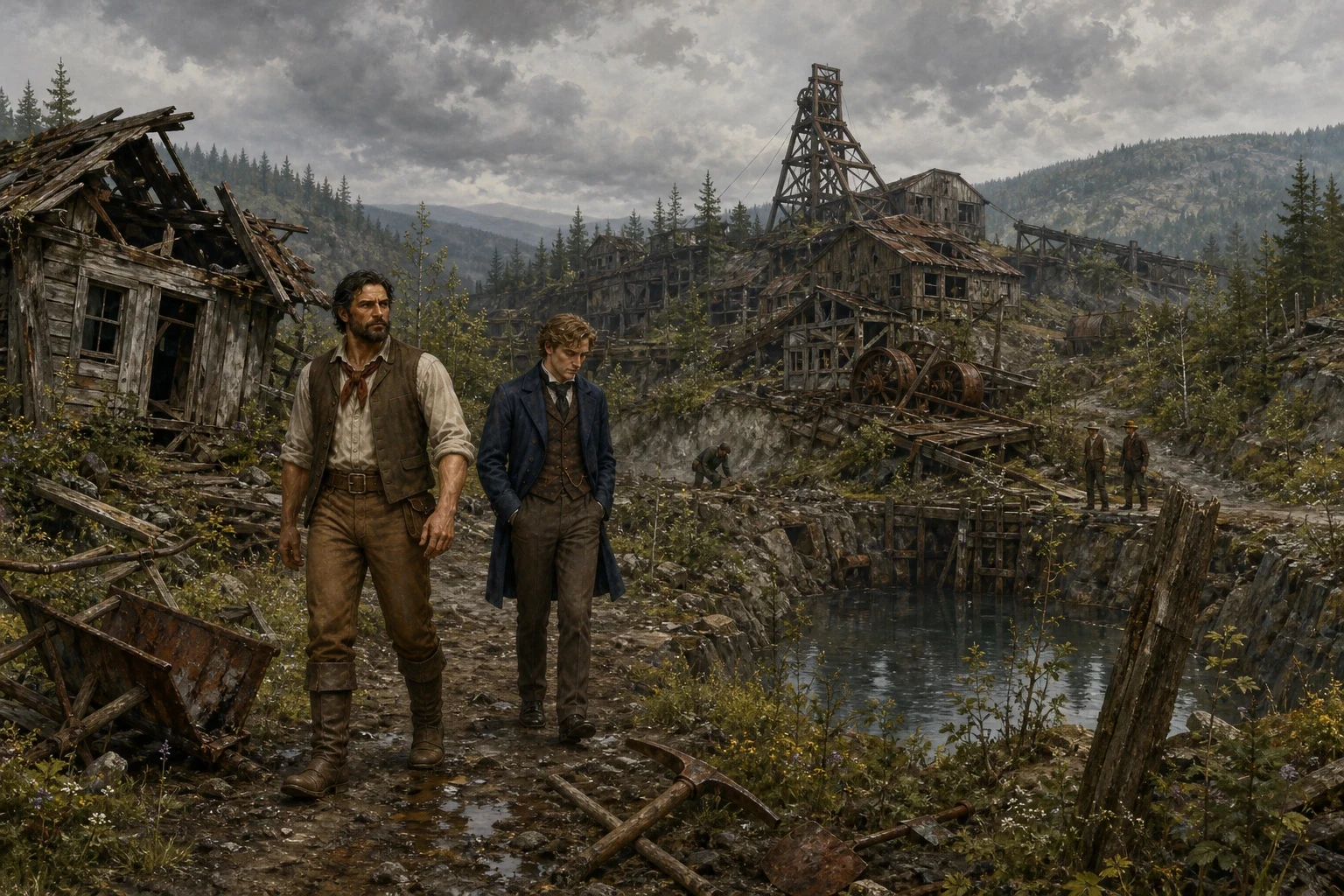
The boom of the copper mine, a symbol of fleeting human ambition, proved to be short-lived. The veins of ore thinned out, the market prices fell sharply, and the workers, who had been drawn by the promise of quick riches, departed as swiftly and silently as they had arrived. The mine, once a place of bustling activity and loud ambition, now stood deserted, its hastily constructed buildings falling into ruin, its scars slowly being reclaimed by the tenacious wilderness. Eleseus, who had found little lasting success or true happiness in the town, drifted back to the quiet uplands, disillusioned and weary from his ventures. He walked with his father, Isak, through the desolate mine site, a stark contrast to the thriving farm he had left behind. The profound silence of the abandoned workings spoke volumes about the transient nature of man's grand schemes compared to the steady, enduring growth of the soil, a lesson etched into the very landscape.
Page 10
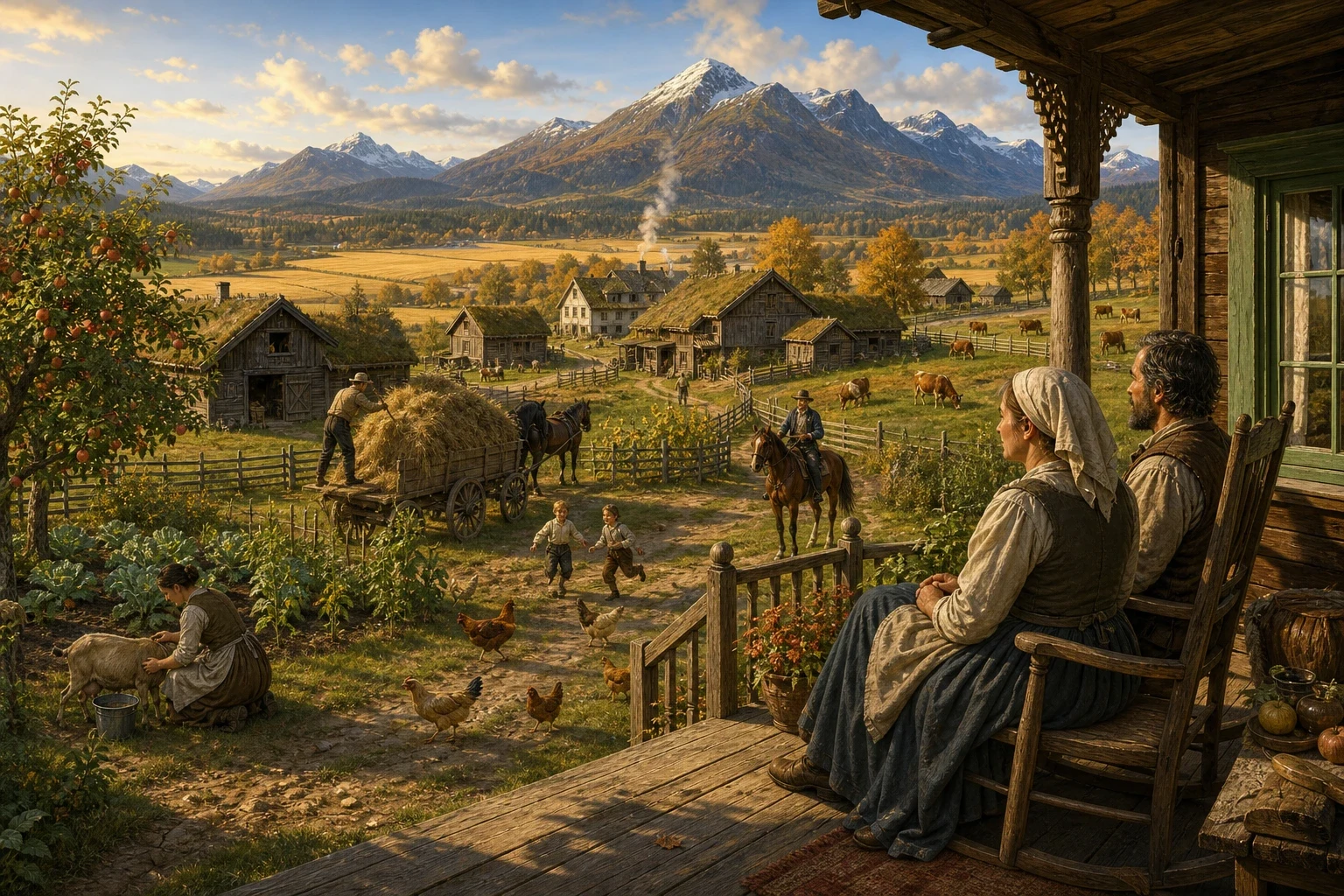
The years had carved their deep lines on Isak and Ingeborg's faces, but Sellanraa, their beloved farm, flourished like never before. It was a haven of peace and prosperity, a living testament to a lifetime of honest toil and unwavering faith in the earth. Their children had found their paths, whether staying on the land or venturing into the wider world, but the heart of Sellanraa remained steadfast with its founders. Isak and Ingeborg, now old and slow of foot, often sat on their porch, gazing out over the expansive fields they had painstakingly cleared and nurtured with their own hands. The once wild mountainside was now a landscape of cultivated abundance, a sprawling, vibrant legacy. They had taken nothing but wilderness and, with their hands and hearts, had brought forth life and sustenance. The land had given, and they had received, in a bond as old and enduring as the soil itself. It was the growth of the soil, and the profound growth of their lives, intertwined forever in the quiet strength of the uplands.
About this story
- Audience: general readers
Read Wonder Novels on your phone
Wonder Novels is available on Android. Get Wonder Novels on Google Play.