Salammbô
A priestess, a mercenary, and the sacred veil that destroyed an army
Page 1
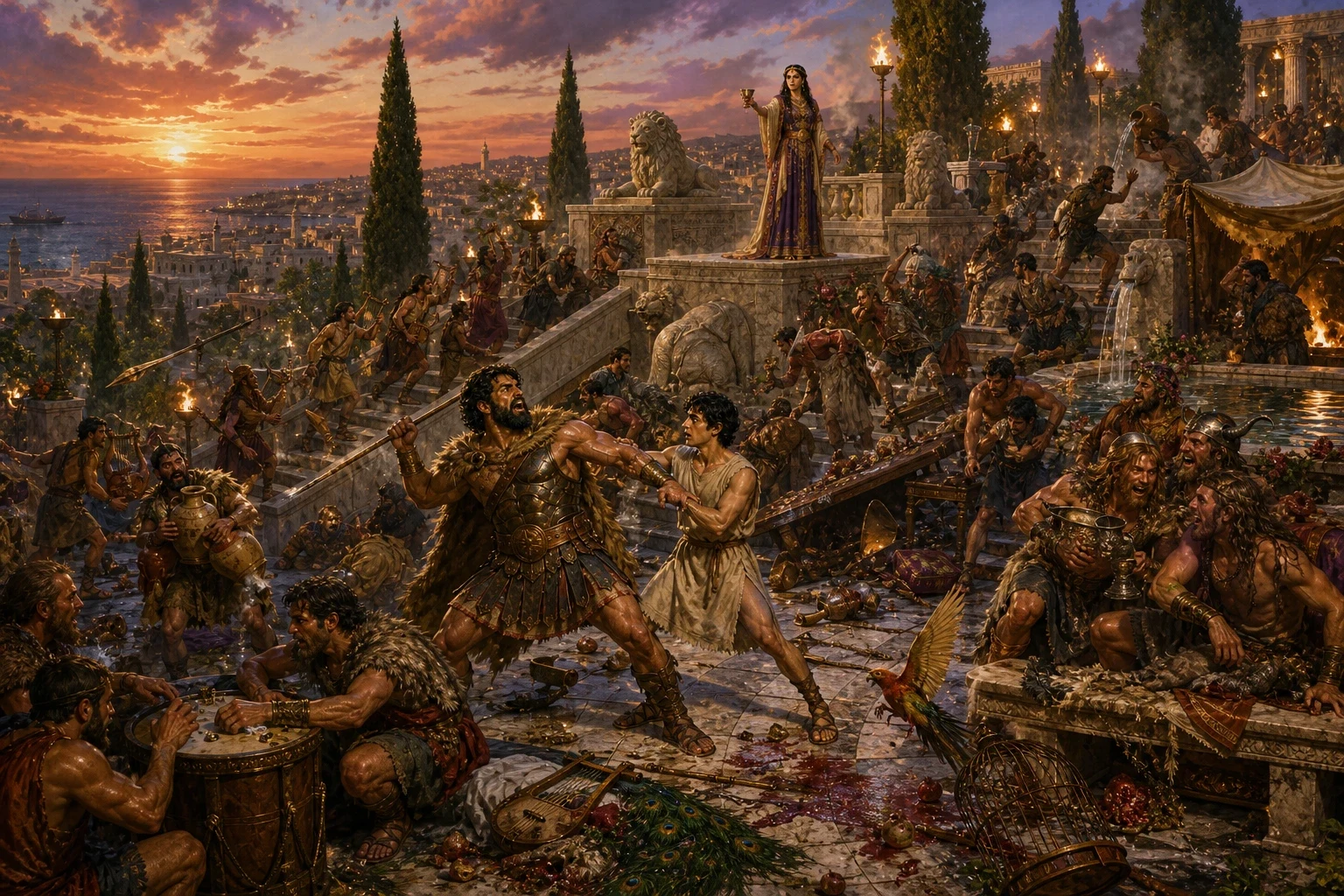
In the gardens of the absent general Hamilcar Barca, the city of Carthage held a feast for its mercenary army. But the soldiers, unpaid for their service in Sicily, grew drunk and angry. They smashed the priceless treasures of the garden, their resentment boiling over. Suddenly, on the highest terrace, Hamilcar's daughter appeared. She was Salammbô, priestess of the moon goddess Tanit, and her beauty silenced the riot. She sang to them of their duty and offered a cup of wine. A giant Libyan soldier named Matho stared, utterly captivated. His companion, an escaped slave called Spendius, whispered in his ear. "Ask for the cup! Take it!" Matho pushed through the crowd toward her. Another chieftain, Narr'Havas, stepped forward and took the cup first. In a jealous rage, Matho threw a javelin, and the feast erupted back into chaos. "What is his name?" Salammbô asked as she was hurried away. "Matho," a servant answered. "He is one of the barbarian captains."
Page 2
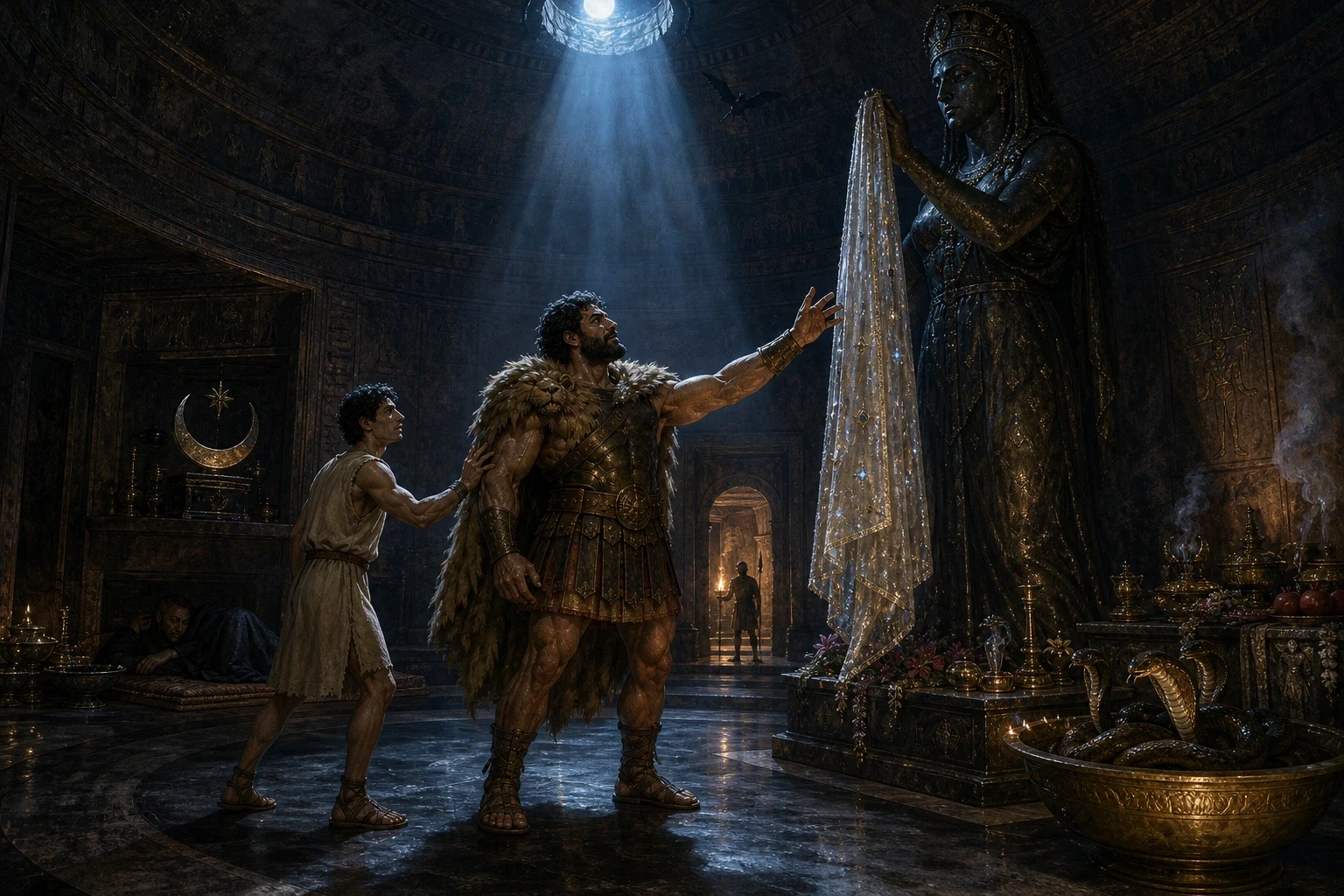
Driven by his obsession and Spendius's cunning, Matho scaled the walls of Carthage's acropolis by night. They crept into the sacred Temple of Tanit, a place forbidden to all men but the high priests. In the moonlight that streamed from an opening in the high dome, they saw the statue of the goddess. Before it hung the Zaïmph, her sacred veil, covered in stars and jewels, believed to hold the city's soul. "It is a crime against the gods," Matho whispered, his courage failing. "There is no turning back," Spendius urged him. "Take it, and Carthage will be afraid. You will hold its power in your hands. You will be a god to them!" Convinced, Matho reached out with trembling hands. As he touched the veil, he felt a strange power flow through him. He wrapped the shimmering fabric around his body, under his lion-skin cloak, and they fled back into the darkness just as the temple priests discovered the sacrilege.
Page 3
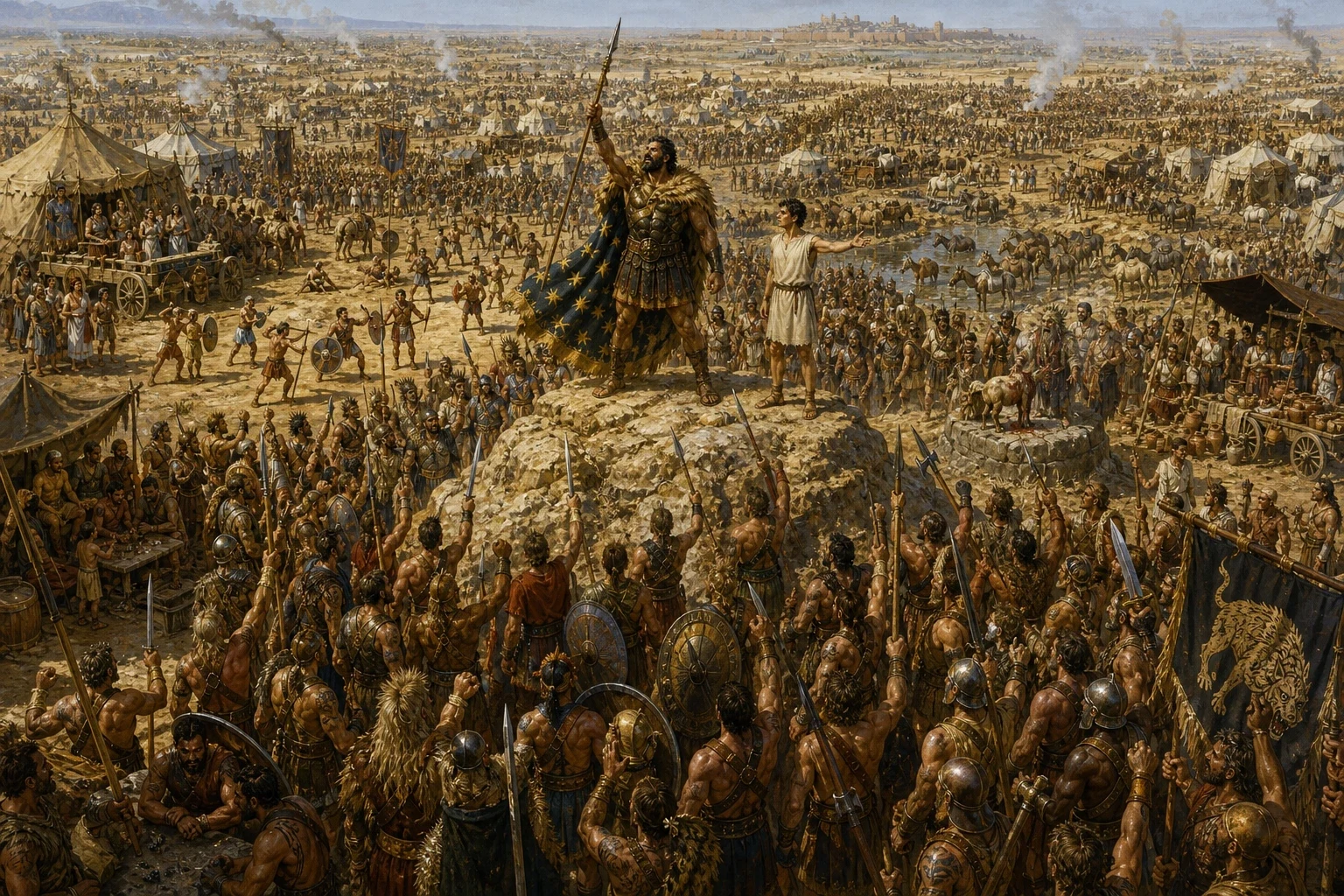
The mercenary army, now in open rebellion, marched out of Carthage and made their camp on the plains. With them, they carried the stolen soul of the city: the sacred Zaïmph. The soldiers gathered in a great assembly, a chaotic mix of a hundred different peoples, all united by their hatred of Carthage. Spendius brought Matho before them. Unfurling the shimmering veil, he draped it over the giant Libyan's shoulders. A gasp went through the thousands of soldiers as they saw the legendary talisman. "He who holds the Zaïmph is invincible!" Spendius shouted. "The gods are with us! I say Matho should be our leader!" A roar of approval went up from the army. They beat their shields and raised their spears, acclaiming the man who had dared to defy Carthage's goddess. Matho stood before them, feeling the veil's power and the army's adoration. "To Carthage!" he roared, his voice carrying across the plain. "We will have our payment in full, from the ruins of their city!"
Page 4
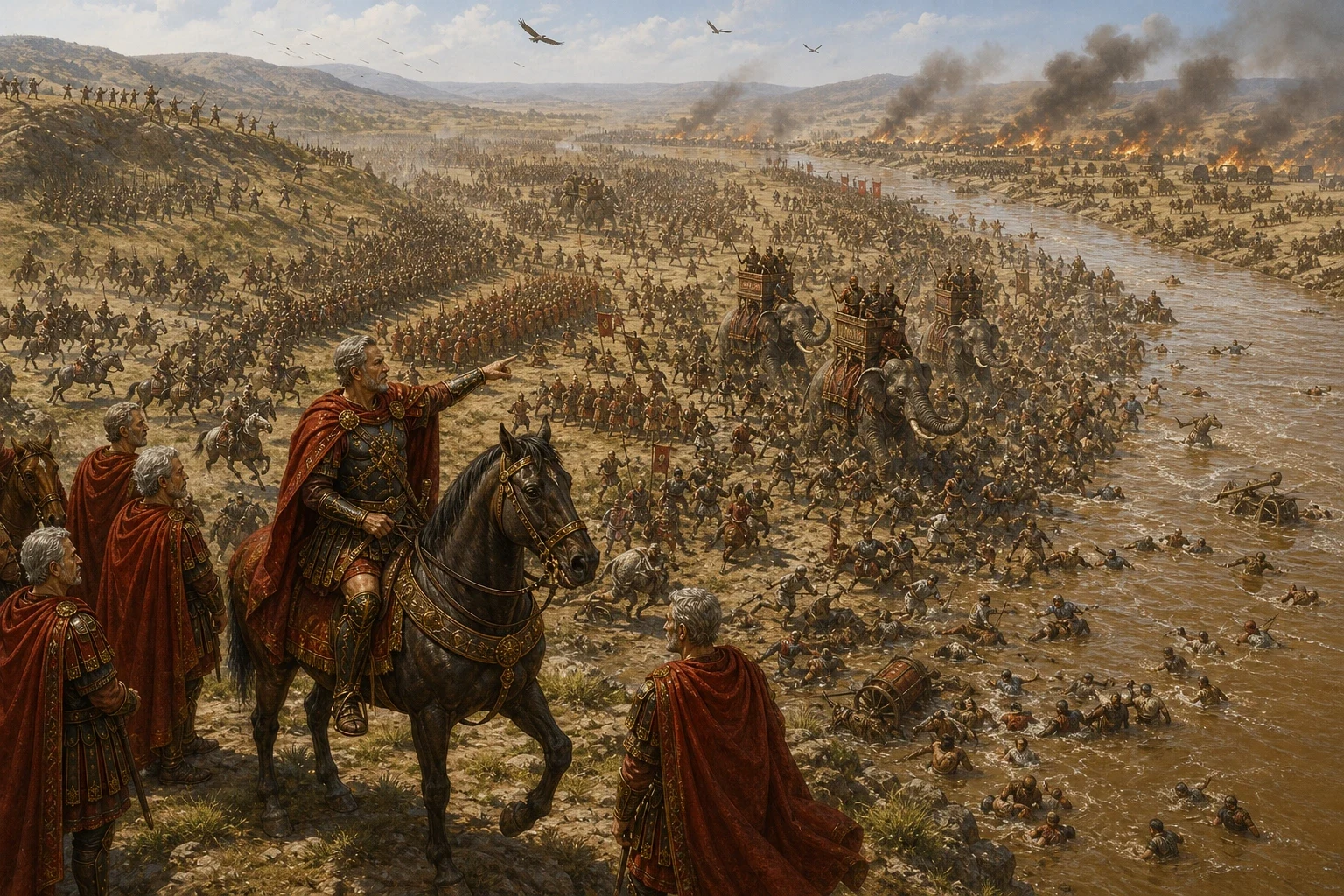
Hamilcar Barca returned to Carthage and took command of the war. He was a master of strategy, and he met the mercenary army by the Macar River. The Barbarians, overconfident, charged across the plain. Hamilcar's smaller force seemed to retreat before them. "They are running!" the mercenary captains shouted. "Victory is ours!" But it was a trap. As the mercenaries surged forward in a disorganized mass, Hamilcar gave a signal. From behind a ridge, his war elephants appeared, thundering down on the Barbarians' flank, while his infantry turned and attacked from the front. The mercenary lines broke in terror and confusion. Trapped between the Carthaginian spears and the river, thousands were lost. From his command post on a hill, Hamilcar watched without expression as his plan unfolded perfectly. "Do not take prisoners," he told his officers. "Let the river carry them to the sea. They must learn what it costs to challenge Carthage."
Page 5
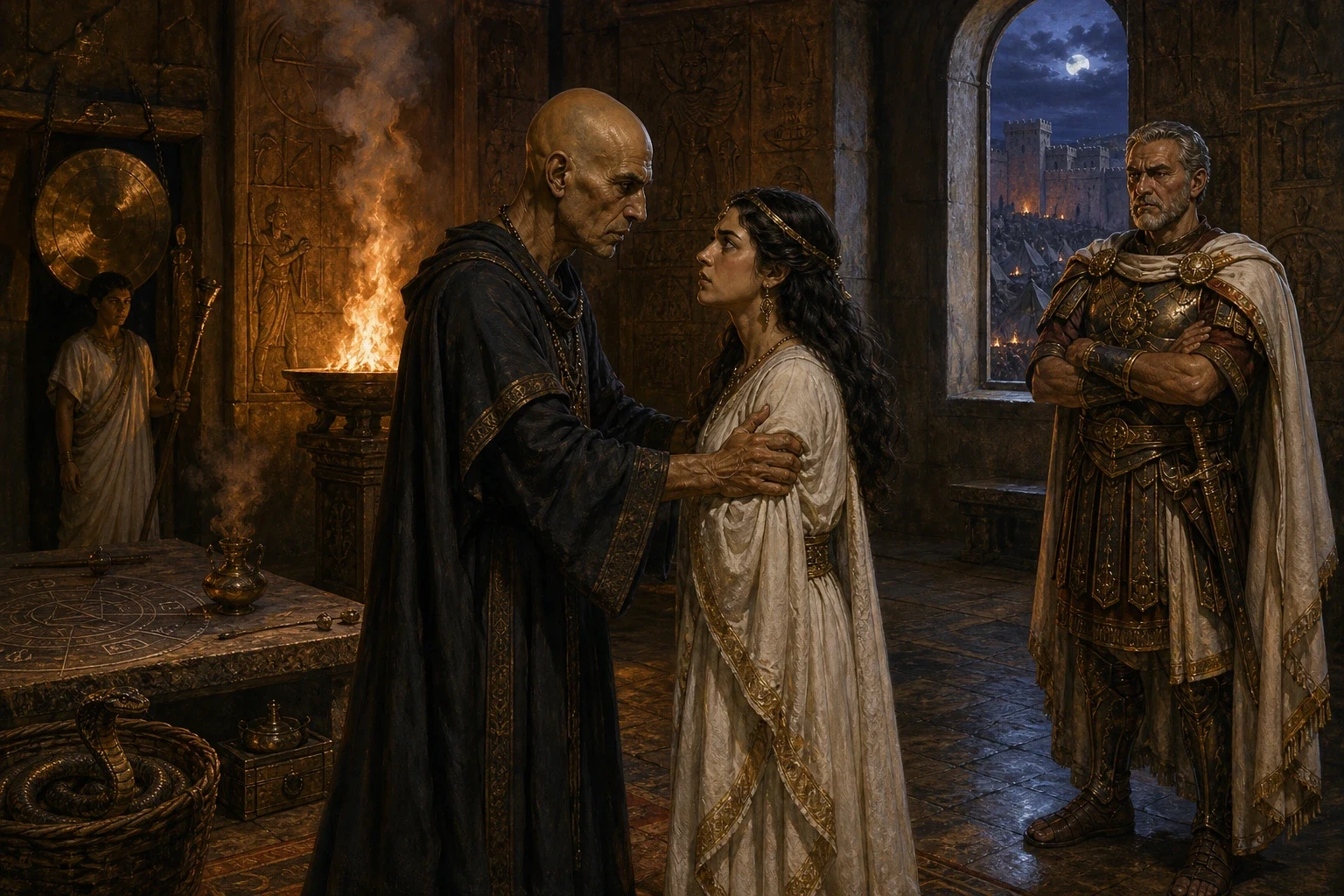
Despite Hamilcar's victory, the war had turned. The mercenaries besieged Carthage, and the city began to starve. In the temples, the priests declared that the goddess Tanit was angry over the loss of her veil. The high priest, Schahabarim, came to Salammbô with a terrible command. "The goddess has spoken to me," he said, his voice hollow. "You must go to the barbarian camp. You must enter the tent of their leader, Matho. And you must bring back the Zaïmph." Salammbô stared in horror. "Go to him? Alone? It is impossible!" Hamilcar, her father, stood grimly by the wall. "It is not a request," he said. "Carthage is dying. The gods demand this sacrifice." Schahabarim took her hands. "The goddess will protect you," he whispered. "You are her daughter. You will approach him not as a woman, but as a divine power he cannot resist. Do this, and you will save us all." Terrified but seeing no other way, Salammbô bowed her head.
Page 6
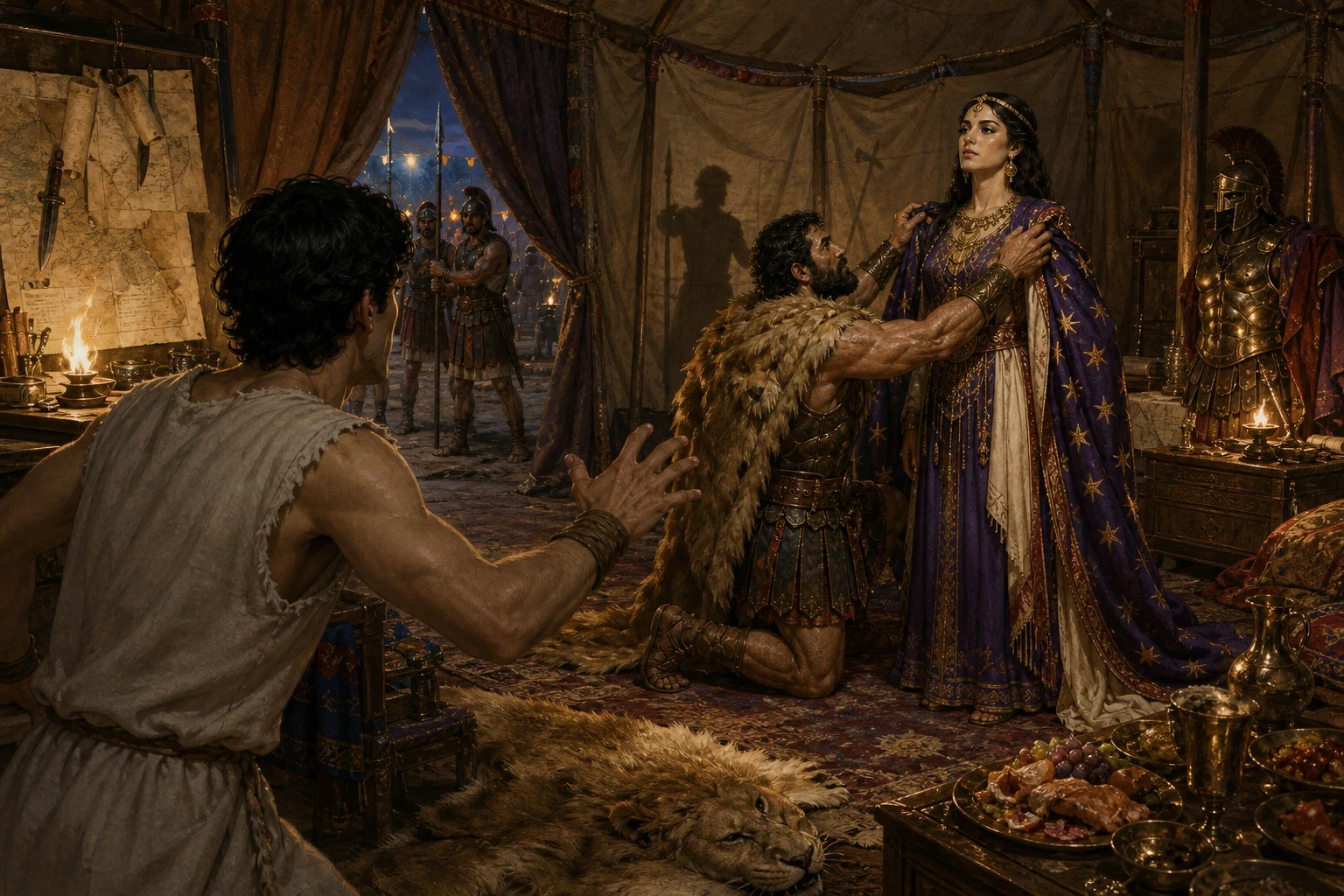
Dressed in her most sacred vestments, Salammbô secretly entered the mercenary camp and went to Matho's tent. He was inside, staring at the stolen Zaïmph which hung from the central pole. When she entered, he fell to his knees, thinking her a vision from the goddess. "Did you come for the veil?" he stammered. "I have kept it for you." Salammbô did not answer. She was following the priests' instructions, moving with an otherworldly grace, her presence filling the tent. Overwhelmed by her beauty, his love, and his fear of the divine, Matho was powerless. He confessed his love for her, the obsession that had driven him to start the war. "I love you! I love you!" he cried. He took the Zaïmph from the pole and wrapped it around her. Just then, Spendius rushed in with a warning. "The camp is in an uproar! Someone saw her enter!" Seizing the moment of confusion, Salammbô slipped out of the tent with the veil and fled back toward Carthage as the camp dissolved into chaos.
Page 7
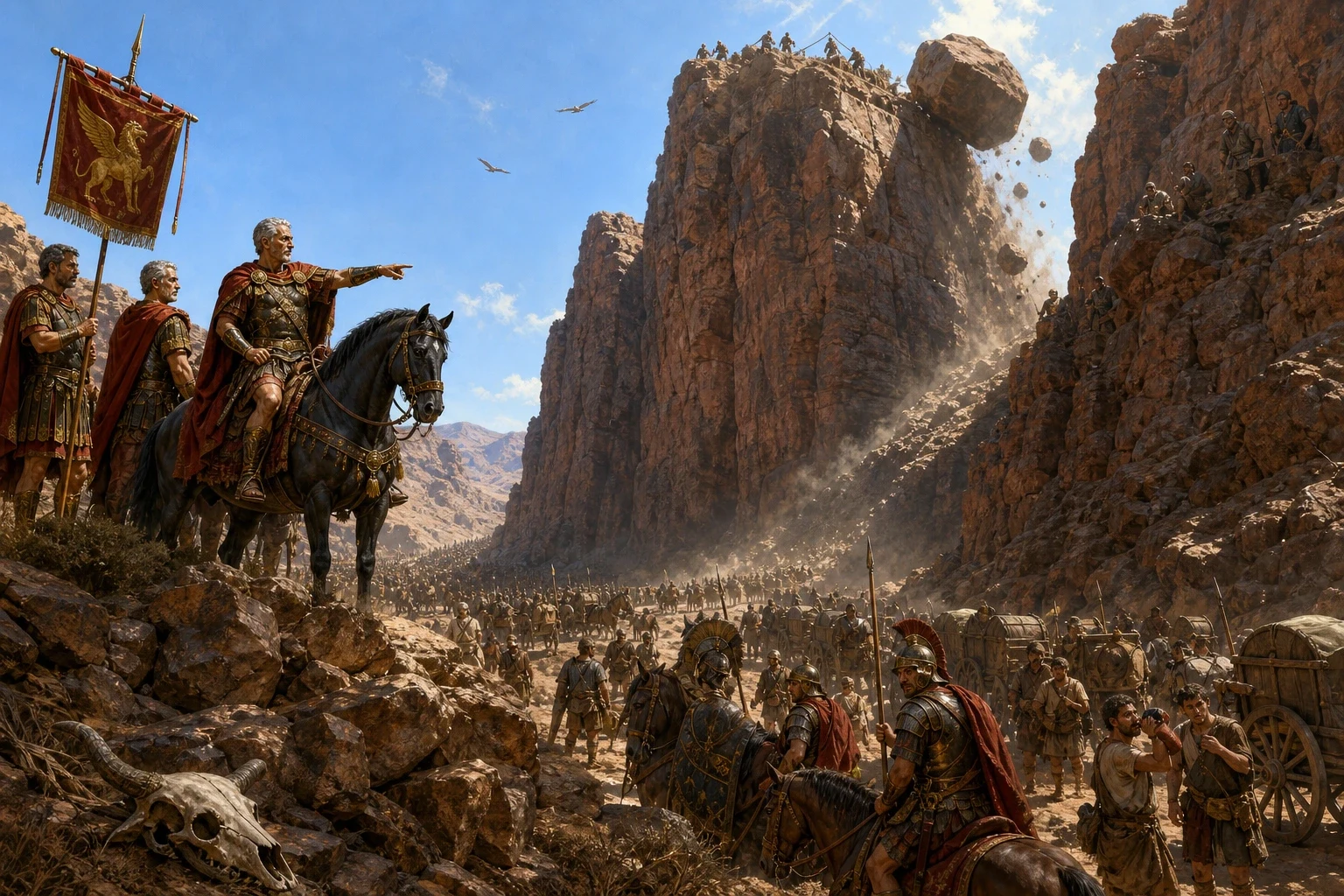
With the Zaïmph returned, the spirit of Carthage was reborn. Hamilcar, his authority restored, devised a final, brutal plan. He feigned a retreat, luring the main mercenary army away from the city and deep into the mountains. His spies had told him of a long, inescapable canyon known as the Defile of the Axe. Patiently, Hamilcar led the mercenaries on, letting them think they were pursuing a defeated army. He watched from a high ridge as the last of their vast column, with all its supply wagons and followers, marched into the narrow canyon entrance below. "They are all inside," an officer reported. Hamilcar nodded. "Good. Send the signal." At his command, Carthaginian soldiers, hidden in the heights, began to roll massive boulders down, sealing the entrance. Another force blocked the far end. The great mercenary army was trapped. "Now," Hamilcar said to his officers, looking down into the canyon, "we wait. Hunger will be my weapon."
Page 8
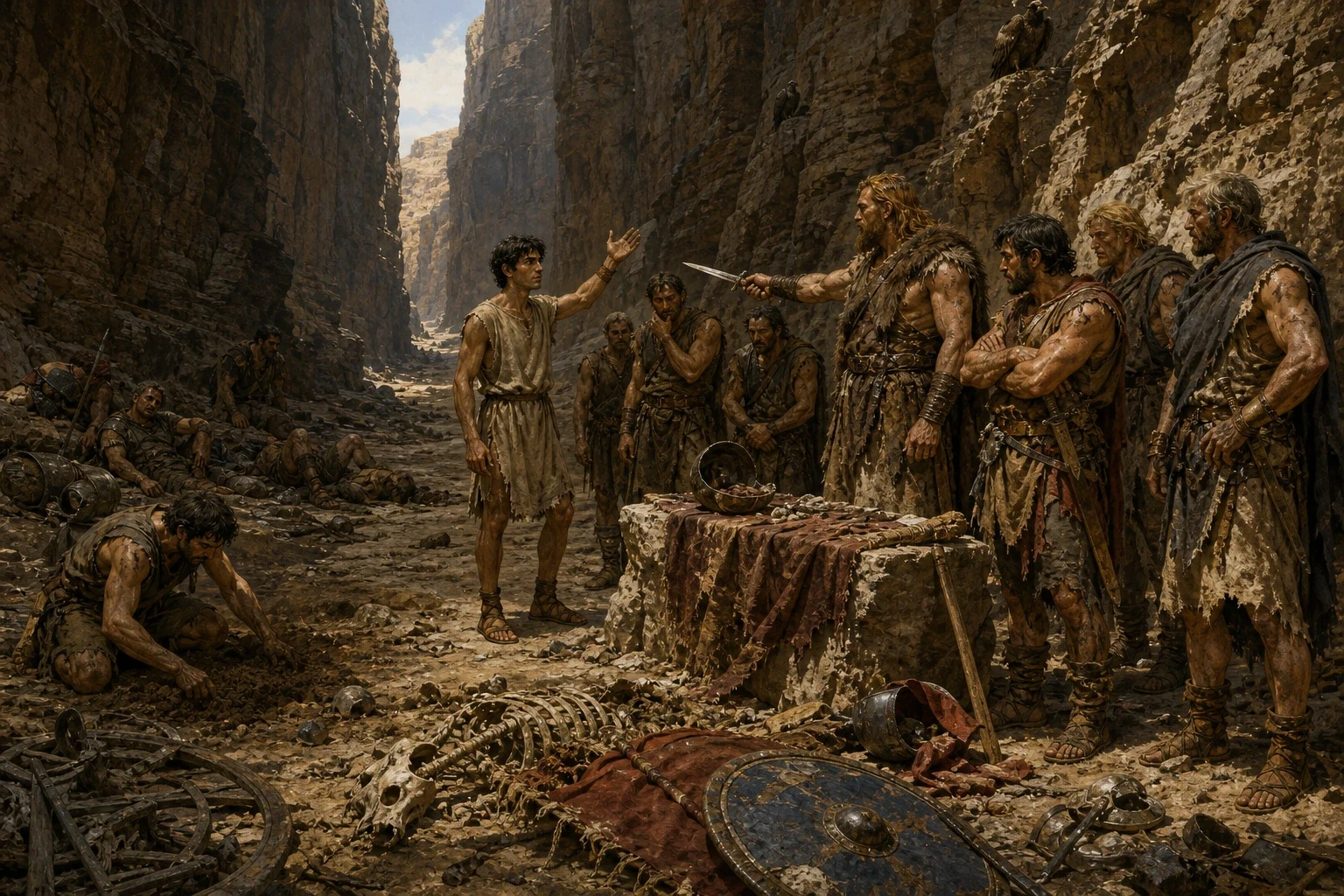
Trapped in the Defile, the army starved. After weeks of agony, the chieftains gathered. There was nothing left to eat. "We must choose ten men," a Gaulish captain rasped, "to feed the rest." A terrible silence fell. Then Spendius, his body wasted but his eyes still sharp, began to laugh. "You would eat your brothers to live one more day? For what? To die tomorrow?" He pointed a trembling finger toward the canyon entrance. "There is only one choice. We surrender. Let Hamilcar do his worst." Another chief spat on the ground. "Surrender means the cross!" Spendius shrugged. "The cross is quicker than this. At least we will die like men, not animals devouring their own." With the last of their strength, they stumbled toward the Carthaginian barricade under a white flag, their great rebellion ending not in a battle, but in a final, broken argument.
Page 9
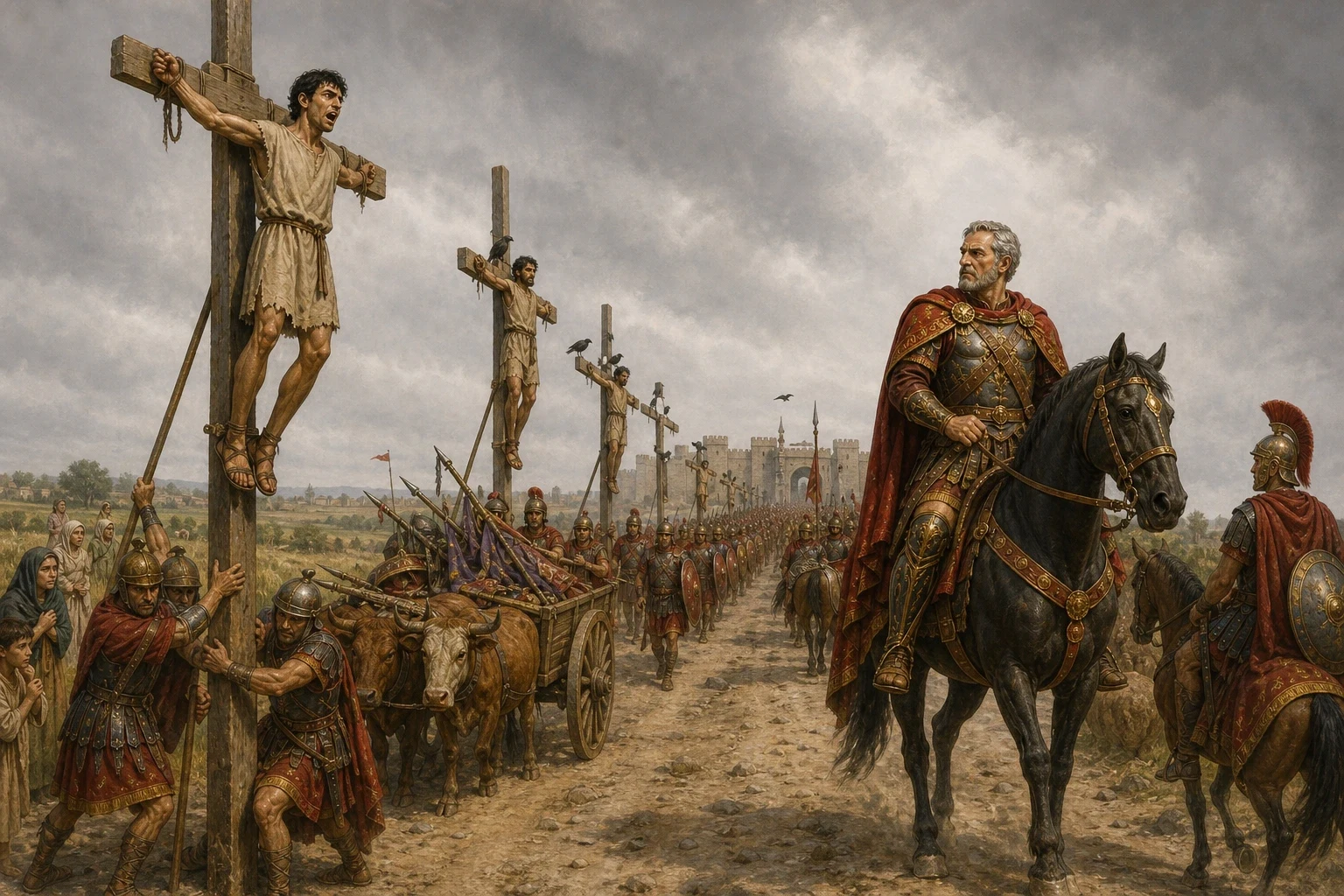
The last few survivors of the Defile, including the leaders, finally surrendered. Hamilcar showed no mercy. To make an example of them, he had them all executed on crosses along the main road leading into Carthage. For miles, the grim procession of crosses lined the way. Among the last to be raised was Spendius. As the soldiers lifted his cross, he saw Hamilcar ride past at the head of his victorious army. "General!" he cried out, his voice surprisingly strong. "You have won the war, but you will lose your daughter." Hamilcar stopped his horse and looked at the Greek slave. "What do you mean?" he demanded. Spendius only smiled a bloody smile. "Matho lives," he said. "He was not in the Defile. And he still loves her." Hamilcar stared at the dying man, then spurred his horse toward the city, a new unease gripping him. Only Matho, the greatest prize, had been saved for the victory celebrations in Carthage.
Page 10
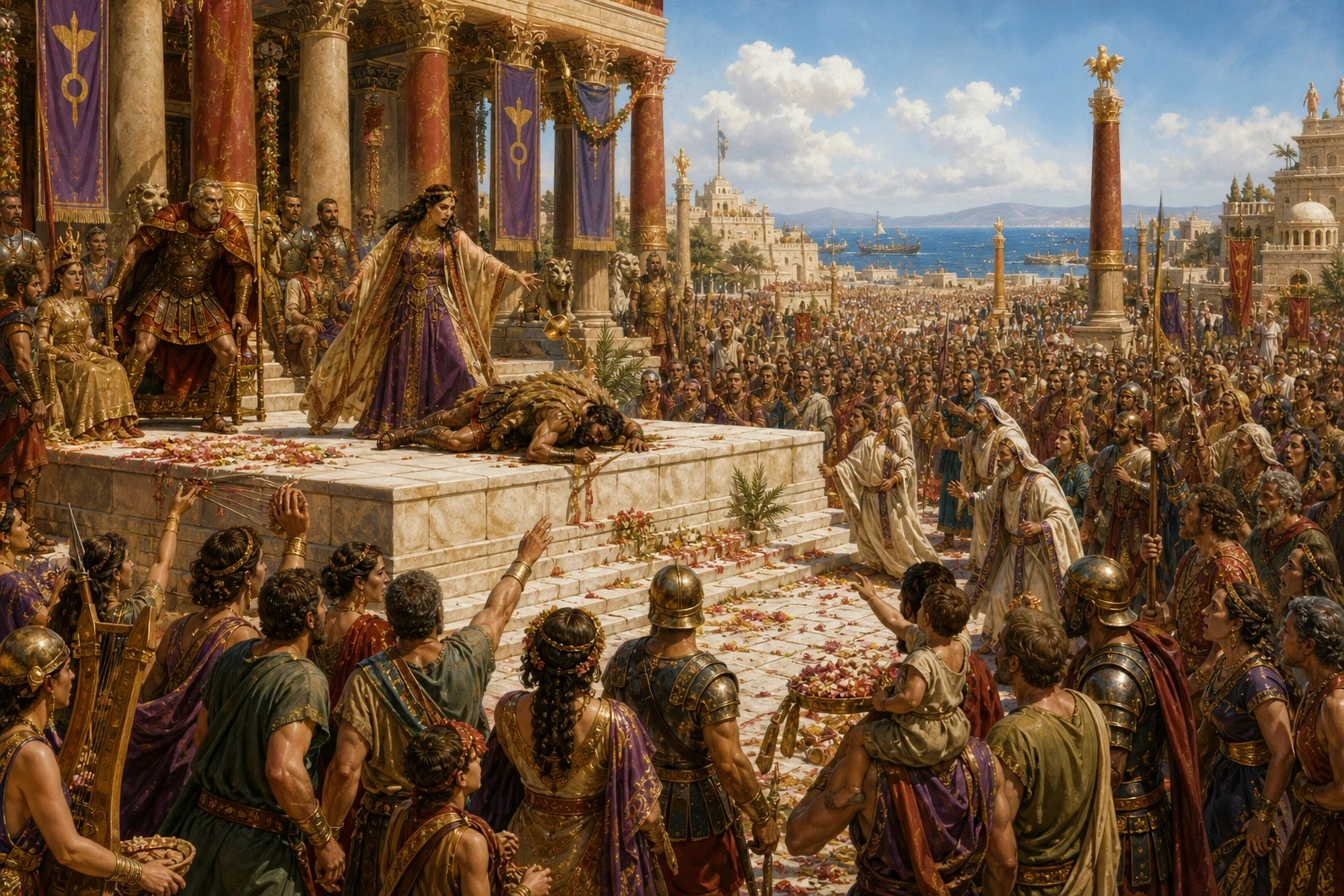
Carthage celebrated its victory on the day of Salammbô's wedding. On a high platform, she sat beside her father, looking out over a sea of joyful citizens. This was her triumph. Then, the final spectacle began. Matho, the last leader, was led into the square. The crowd struck and cursed him as he was forced up the steps. He was broken and gravely wounded, but his eyes never left Salammbô. He reached her, stood before her, and gave a great shudder. "I curse you, Carthage!" he whispered, and fell dead at her feet. As he fell, Salammbô rose, a cup in her hand. She remembered him in his tent, crying, "I love you!" The memory was too much. The cup slipped from her fingers. She, too, collapsed, falling lifeless over Matho's body. A priest cried out, "The goddess has taken her!" A great silence fell over the square.
About this story
- Audience: general readers
Read Wonder Novels on your phone
Wonder Novels is available on Android. Get Wonder Novels on Google Play.