Silas Marner
A lonely weaver, his stolen gold, and the golden-haired child who came to his fire instead
Page 1
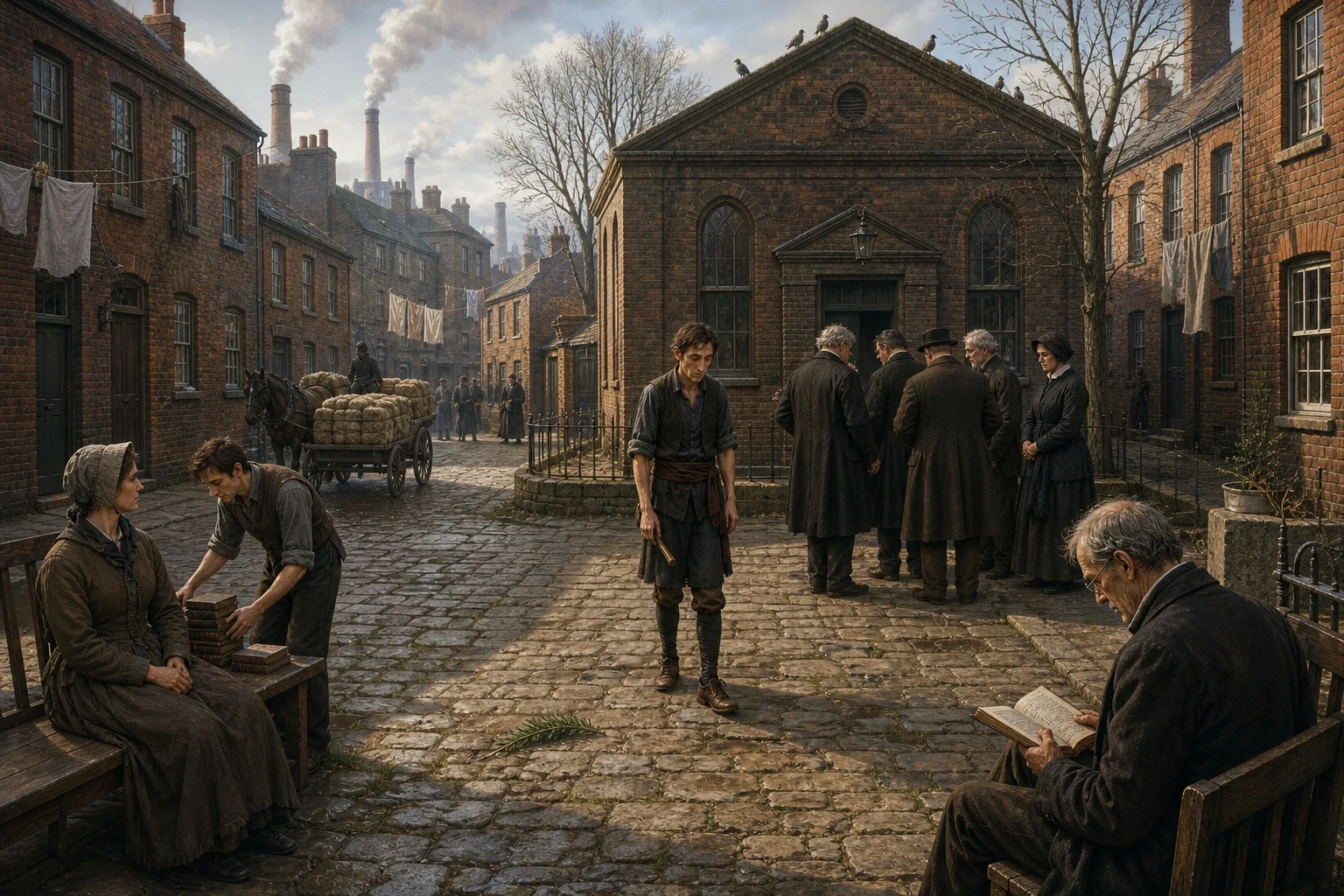
Long before he came to Raveloe, Silas Marner lived among the close brick houses of Lantern Yard, in a narrow northern town, and worshipped with a small chapel of plain, serious people who called each other brother and sister. Silas was trusted by everyone there. He was engaged to be married, and his dearest friend was a young man named William Dane. One night, while Silas sat up with a dying deacon, a bag of the chapel's money went missing from the old man's room. Silas's own knife was found beside the empty bag, though he could not say how it came there. The brethren met, drew lots as their custom was, and the lots said Silas was guilty. No one would hear his word against it — not even his dearest friend. His engagement was broken, his name was ruined, and his faith in God and in good people broke with it. With nothing left to keep him, Silas gathered his few belongings and walked out of Lantern Yard forever, carrying only his loom and his tools.
Page 2
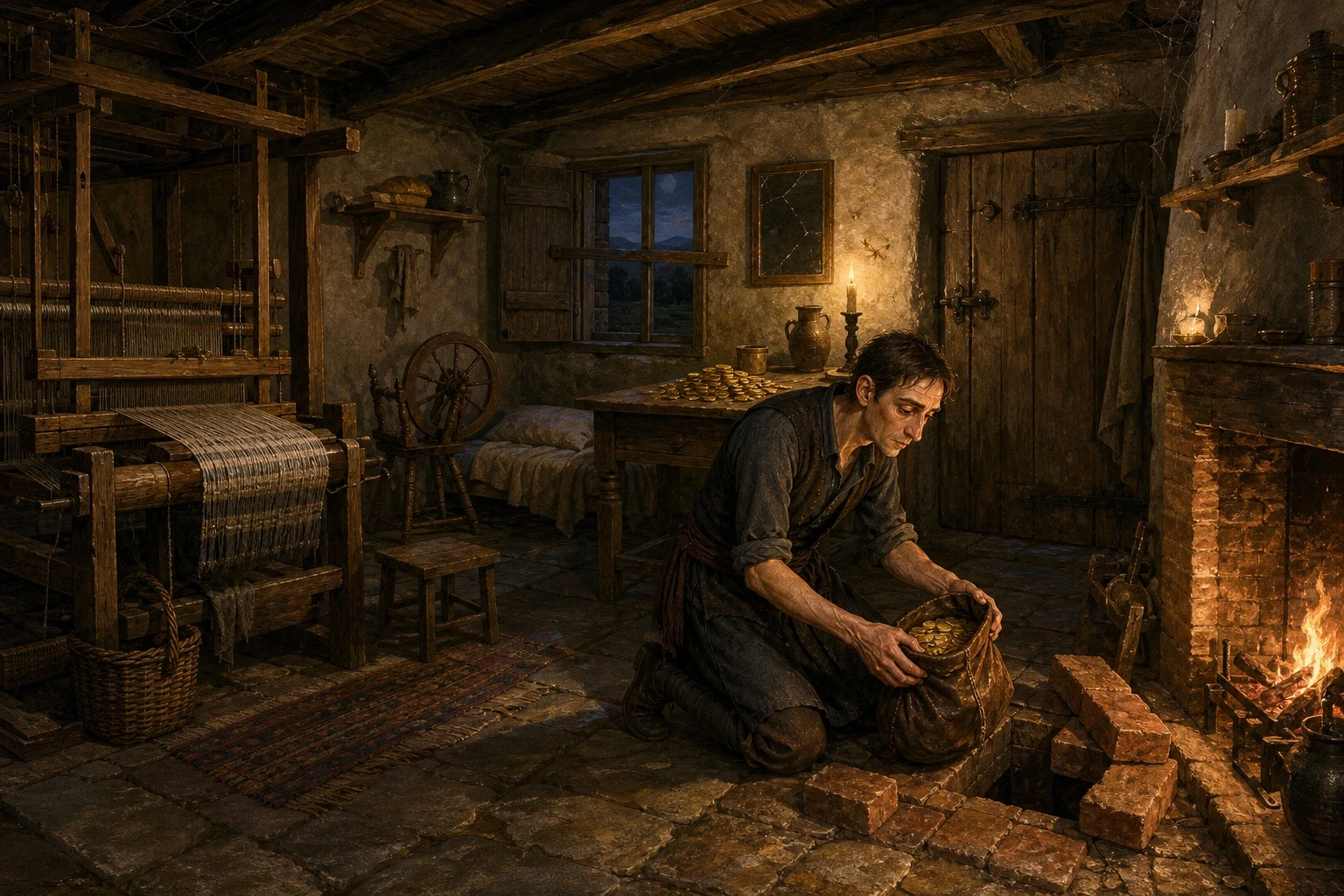
Silas Marner came at last to the village of Raveloe, and settled in a stone cottage at the edge of the Stone-pits, a cluster of old flooded quarries out past the edge of the fields. He asked no one for friendship, and no one asked much of him either; he was a stranger, a weaver, and strange besides, with his short-sighted stare and his odd bent back. Sunk in on himself, his old faith gone and no new one to replace it, Silas found he could still love one thing: the clink and shine of gold. Every piece he earned at his loom he kept, and every night, when his shutters were barred and his door was bolted, he would lift the bricks from under his hearth, draw out his leather bags of coins, and pour them into a heap on the table to count, over and over, loving the weight and the gleam of them more than he had ever let himself love a person. Fifteen years passed this way, and the heap of gold grew.
Page 3
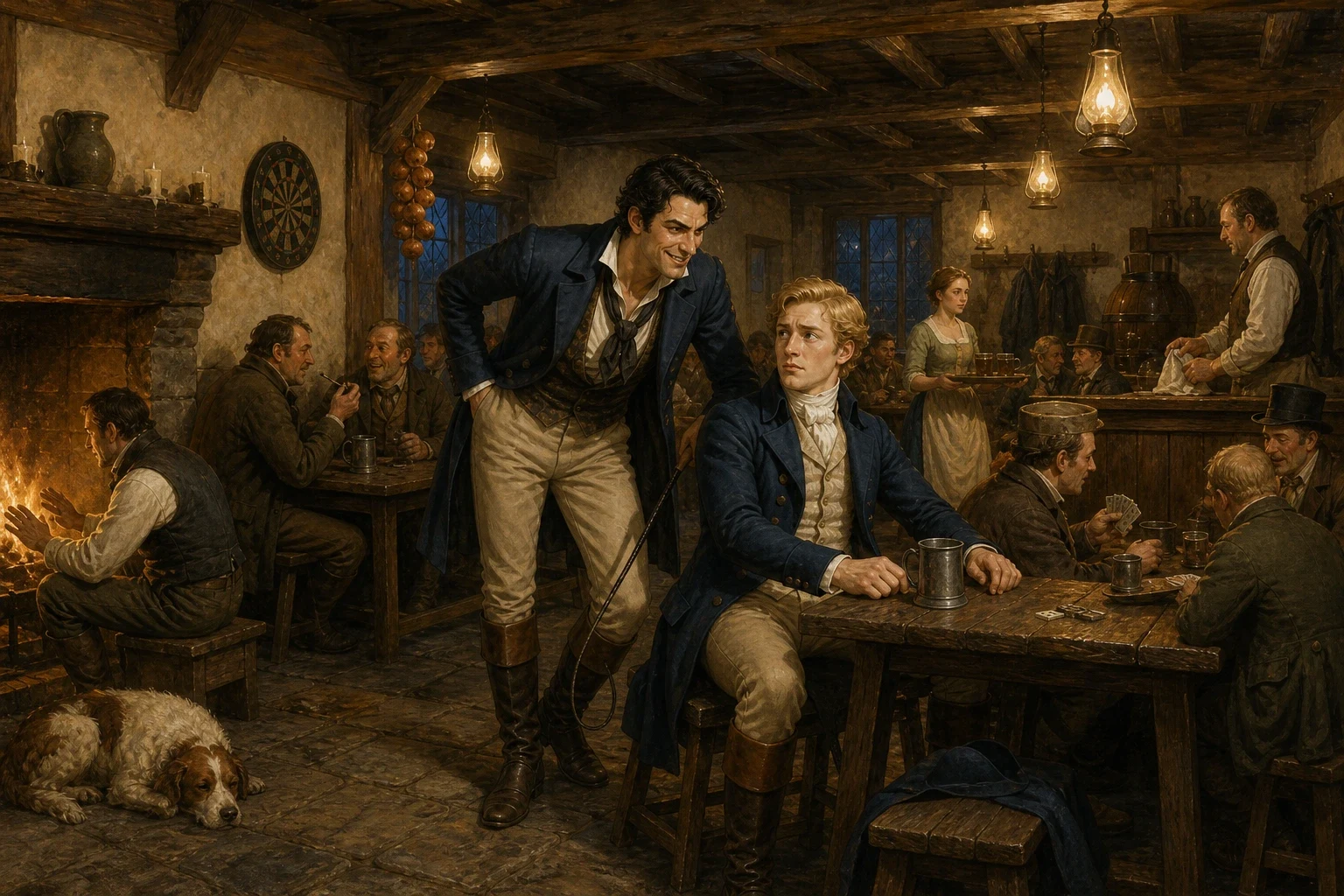
Down in the village, at the Rainbow Inn, the farmers and the landlord liked to talk about the queer weaver out at the Stone-pits, who kept himself shut up with his loom and was said to have more gold hidden away than any ten of them put together. But that evening the talk turned, as it often did, to the Squire's two sons. Godfrey Cass, the elder, was the handsomest young man in the parish and loved pretty, steady Nancy Lammeter, though something always seemed to stand in his way of asking for her. Nobody at the Rainbow knew what that something was — only Godfrey himself knew he was already secretly married, to a woman named Molly Farren, a match he was ashamed of and wished undone. His younger brother Dunstan, idle and always short of money, knew the secret too, and liked nothing better than to remind Godfrey of it whenever he wanted cash from him.
Page 4
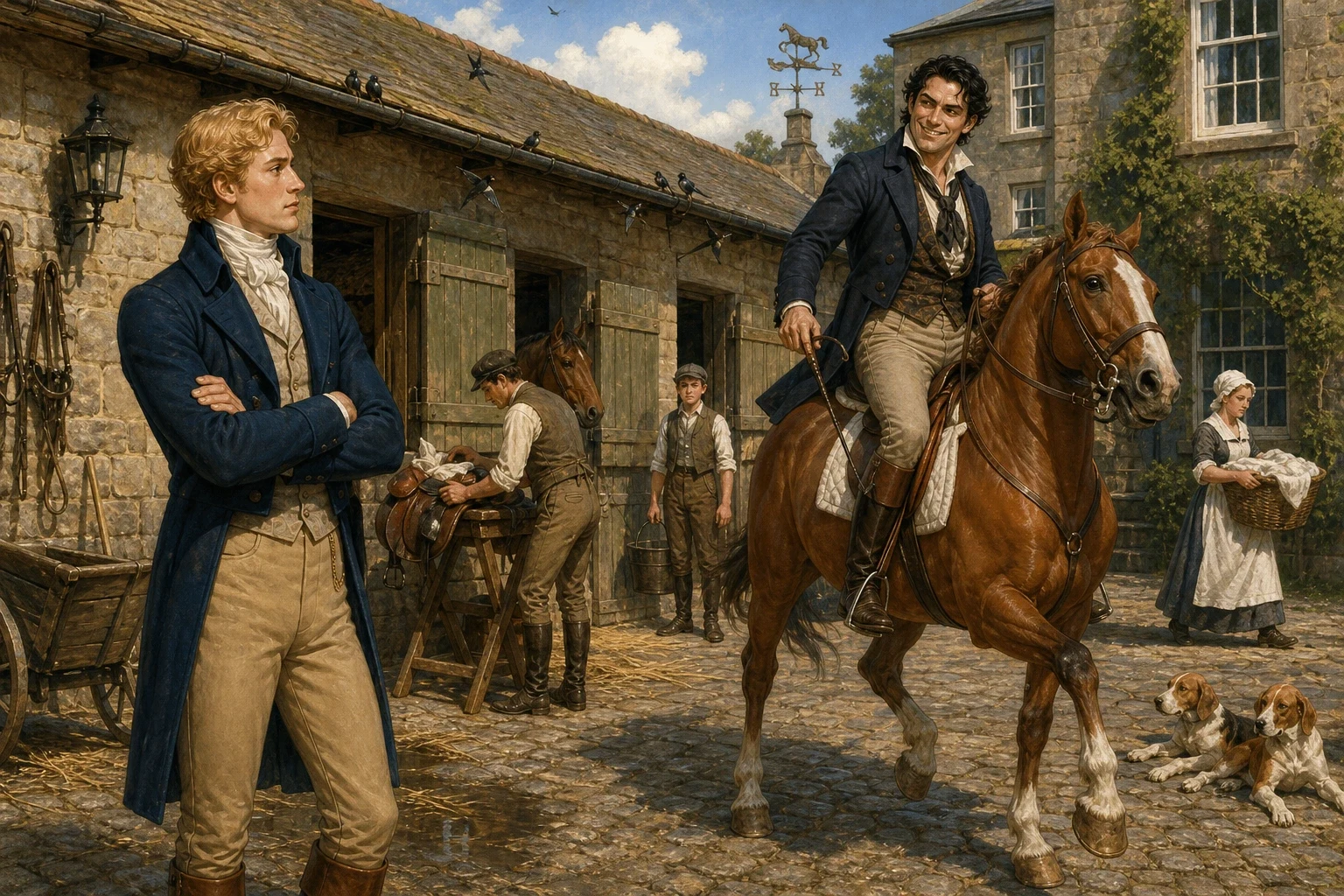
The next morning, in the stable-yard of the Red House, Dunstan cornered his brother again. Godfrey owed money to the Squire that he dared not ask for outright, and Dunstan offered, slyly, to solve it: let him take Godfrey's fine hunting horse, Wildfire, to the hunt that day and sell him for a good price. Godfrey, trapped as always by the secret Dunstan held over him, agreed, though he loved that horse and trusted his brother not at all. Dunstan swung up into the saddle, flourishing his whip, delighted with himself, and rode off toward the hunt — and afterward meant to walk home the long way past the Stone-pits, thinking he might call on the strange weaver there and see for himself if the stories of hidden gold were true.
Page 5
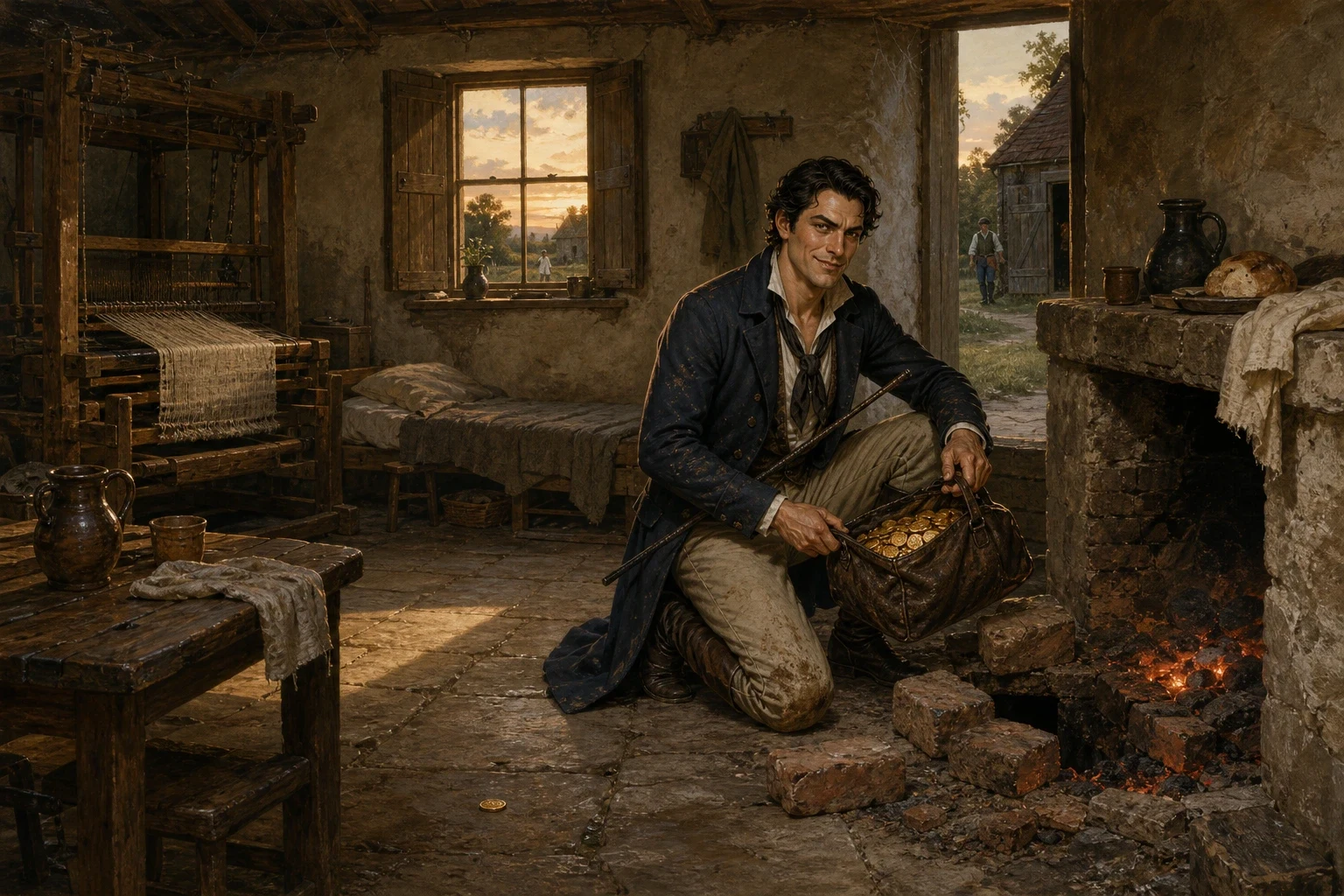
At the hunt, Wildfire took a hard jump and threw Dunstan clear, then bolted off across the fields before anyone could catch him. Dunstan, muddy and furious, set out to walk home — and because the Stone-pits lay on his way, and because he could never resist worming into other people's business, he came at last, in the near dark, to Silas Marner's cottage. No light showed at the window and no smoke rose from the chimney; the weaver, as Dunstan well knew from the village gossip, was out delivering a parcel of cloth and would not be home for hours yet. Dunstan tried the door and found it, for once, unbolted. Inside, he searched by the last of the daylight until he found the loose bricks under the hearth, just as the stories said, and underneath them two heavy leather bags of gold coins. He took both, tucked them inside his coat, and let himself out into the gathering dark, pleased with his evening's work.
Page 6

Dunstan left the cottage and set off along the footpath that ran past the old Stone-pits — a cluster of flooded quarries, deep and dark, left over from when men had cut stone there years before. The night had come on properly now, with no moon yet risen, and the path was narrow and slippery with the day's rain. Dunstan knew the way well enough in daylight, but in the dark, with two heavy bags of another man's gold tucked inside his coat, he grew careless, hurrying to be home and spend some of it. He never saw the edge of the old quarry until his foot had already gone out from under him on the wet grass. He pitched forward into the black water below with a splash that nobody heard, for there was no one about on that lonely road at that hour — and after that, nobody in Raveloe ever saw Dunstan Cass, or the two bags of gold he carried, again.
Page 7
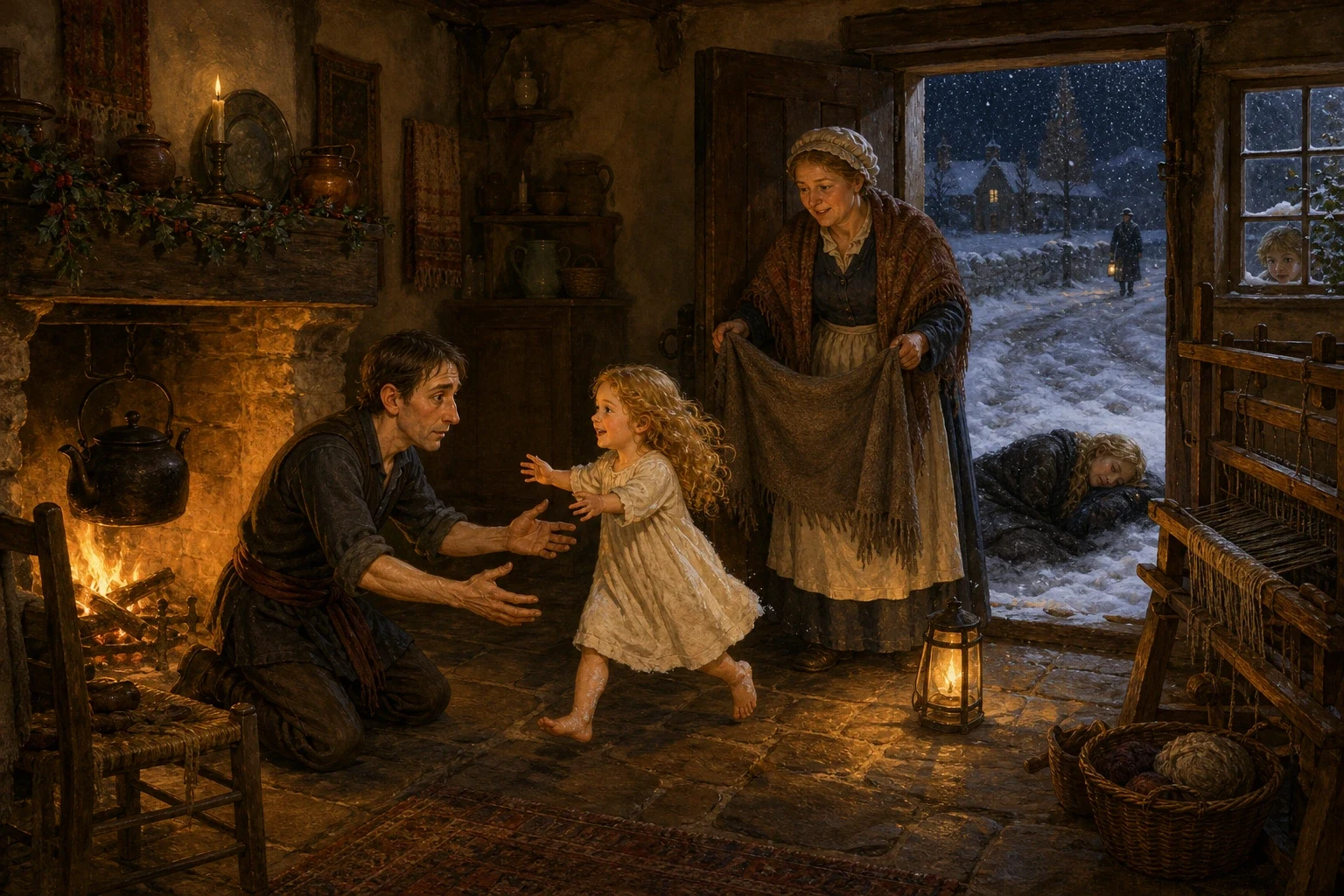
When Silas came home and found his hiding place empty and his gold gone, he cried out as if his heart would break, and ran all the way to the Rainbow Inn for help. The village searched and asked questions, and for the first time in fifteen years, neighbors like kind Dolly Winthrop came to sit with Silas and try to comfort him, though nothing could fill the place his gold had left. Weeks later, on New Year's Eve, Silas sat alone by his fire with his door left carelessly ajar. He looked up to see a small golden-haired child standing just inside it, drawn in by the warmth and the light, as if the fire had called her. Thinking for one dazed moment that his gold had somehow come home again, Silas followed her small footprints back out into the snow — and found, a little way along the road, a young woman named Molly Farren, overcome by the bitter cold, sunk down and sleeping and never to wake again. Silas carried the warm, living child back inside to his own fire, and from that night he kept her, and called her Eppie.
Page 8
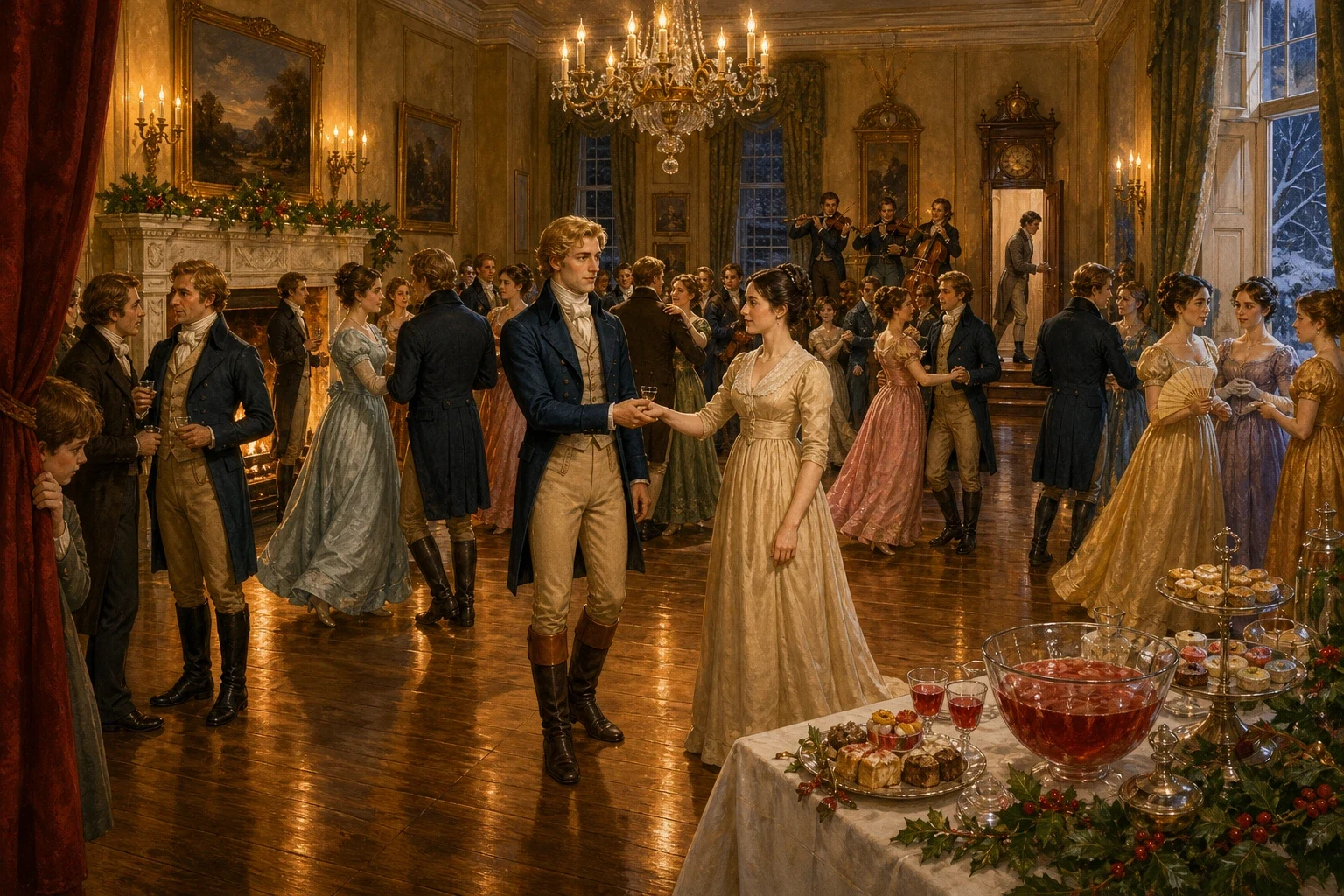
That same New Year's Eve, there was dancing at the Red House, with candles blazing and the whole parish's best families gathered in their finest clothes. Godfrey Cass was there too, dancing with Nancy Lammeter at last, happier than he had been in years — until a servant came in quietly and whispered that a woman had been found collapsed in the snow near the Stone-pits. Godfrey slipped away to look, and in the lantern light he saw, with a cold shock that nearly stopped his heart, that the dead woman was Molly Farren — his own secret wife. In that moment, instead of grief, Godfrey felt only relief flood through him: the secret that had bound him for years was gone with her, and no one need ever know. He said nothing to anyone of what he had seen, or of the little girl who had wandered off toward the weaver's cottage, and he went back inside and finished the evening dancing with Nancy, lighter of heart than he had any right to be.
Page 9
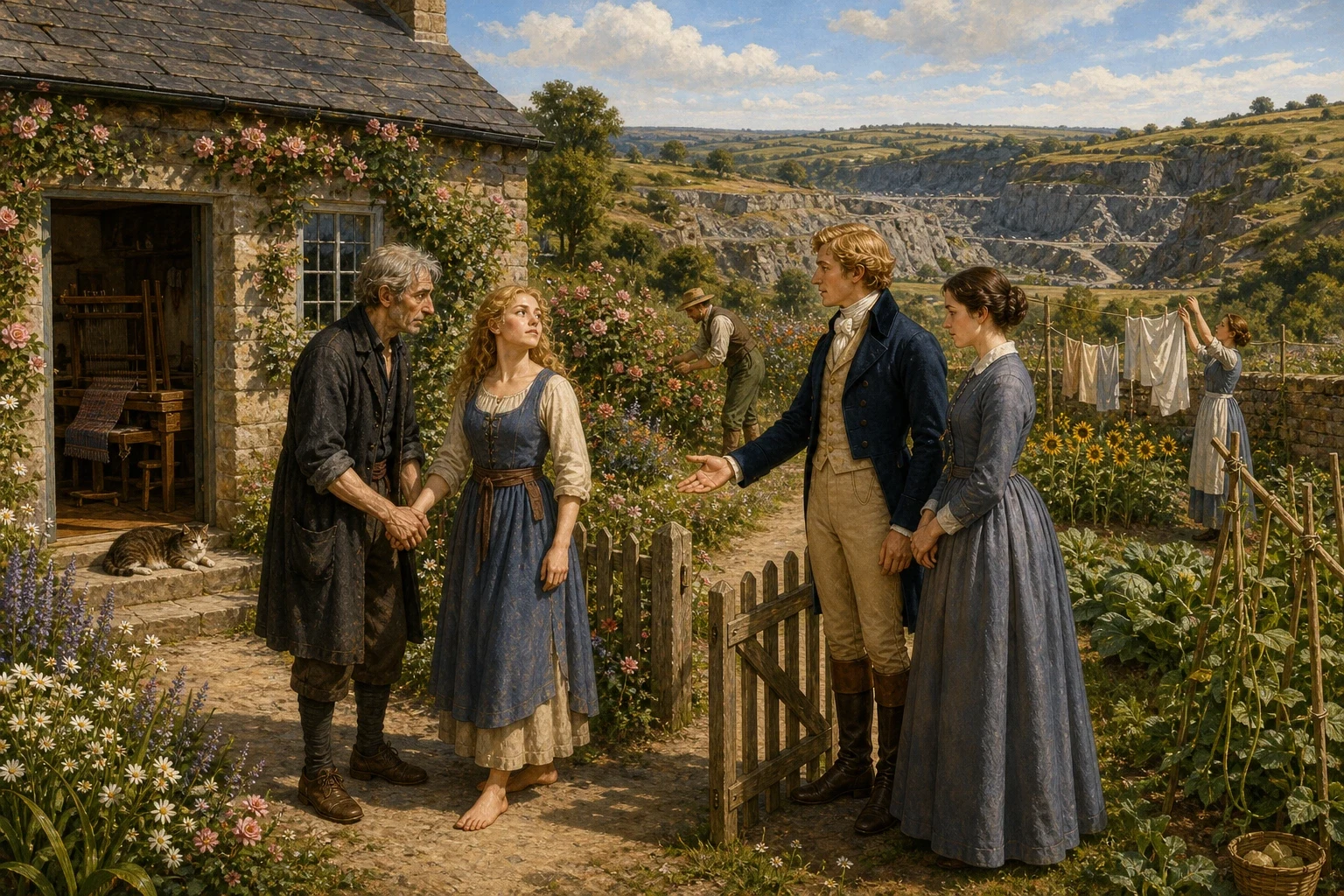
Sixteen years passed, and Eppie grew up at Silas's cottage into a bright, loving young woman, with the same golden hair she had come with. Then one summer the old Stone-pits were drained for a new farmer's use, and at the bottom, in the mud, the workmen found a skeleton, a walking-stick, and two leather bags of gold coins — the last anyone would ever learn of Dunstan Cass, and the very gold Silas had lost all those years before. The discovery shook Godfrey Cass so badly that he went home and told his wife, Nancy, the whole truth at last: that Molly Farren had been his wife, and that golden-haired Eppie was his own daughter. Together, ashamed and hopeful, Godfrey and Nancy walked out to the cottage by the Stone-pits to claim Eppie and offer her a life as a lady at the Red House. But Eppie, standing in the garden with her hand in Silas's, would not leave him. She had only one father, she told them gently, and he was standing right beside her.
Page 10
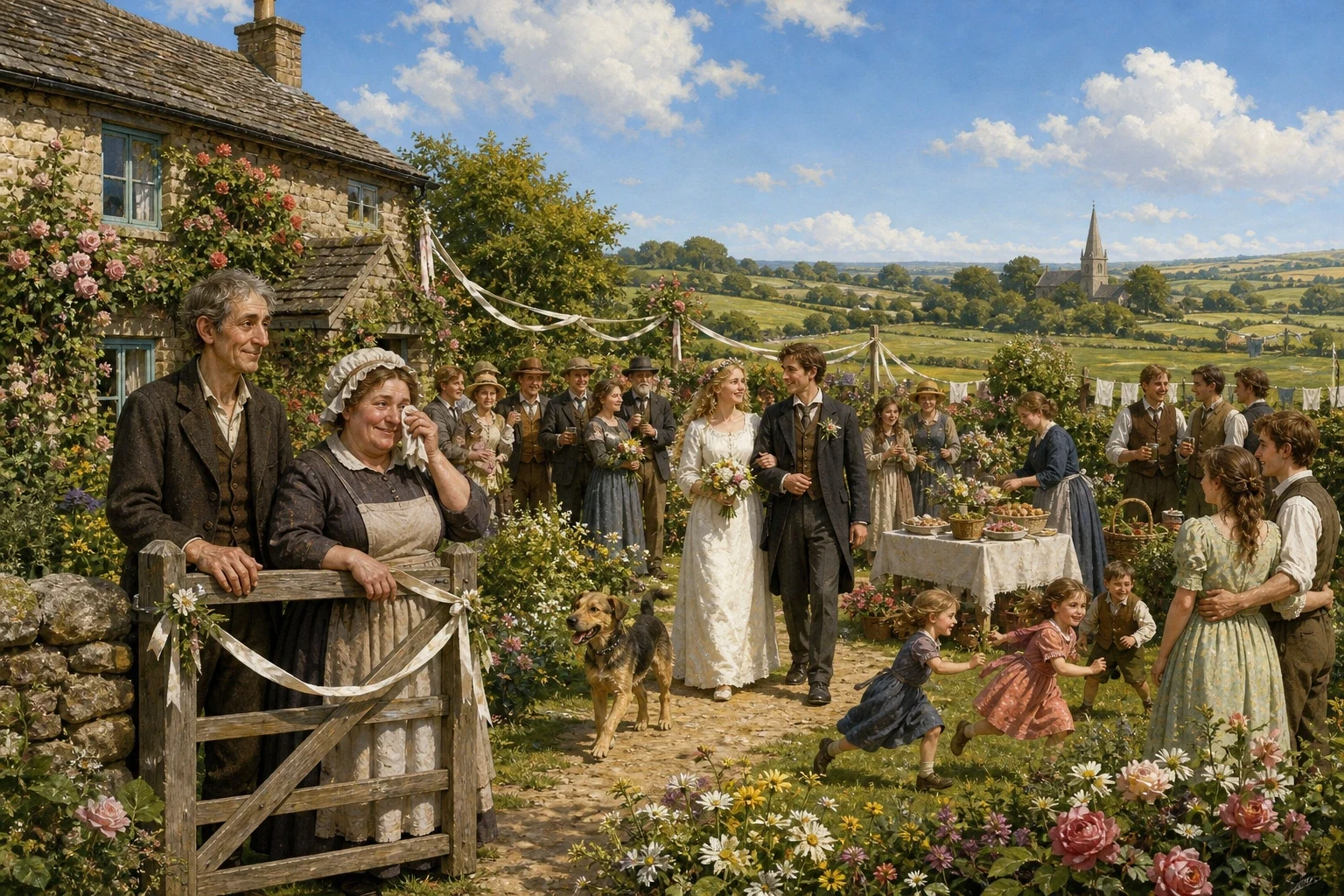
On a bright summer morning not long after, the whole village gathered at the little garden by the Stone-pits for Eppie's wedding to Aaron Winthrop, Dolly Winthrop's steady, good-hearted son. Silas's stolen gold, found at last in the drained quarry, had been given back to him, but he found he no longer needed it the way he once had — he had Eppie, and Eppie had made the plain cottage into the richest home in Raveloe. Silas stood at the garden gate in his best coat, watching his daughter walk out among the flowers she had planted herself, with Dolly beside him wiping her eyes and smiling at once. The chapel at Lantern Yard, and the lots that had once named him guilty, belonged to another life entirely now, in another man's story. Here, in the valley he had once walked into as a broken stranger, Silas Marner had found everything that mattered, and he never once looked back.
About this story
- Audience: kids (ages 6–12)
Read Wonder Novels on your phone
Wonder Novels is available on Android. Get Wonder Novels on Google Play.