The Age of Innocence
A New York lawyer, the woman he cannot marry, and a whole world built to keep them apart
Page 1
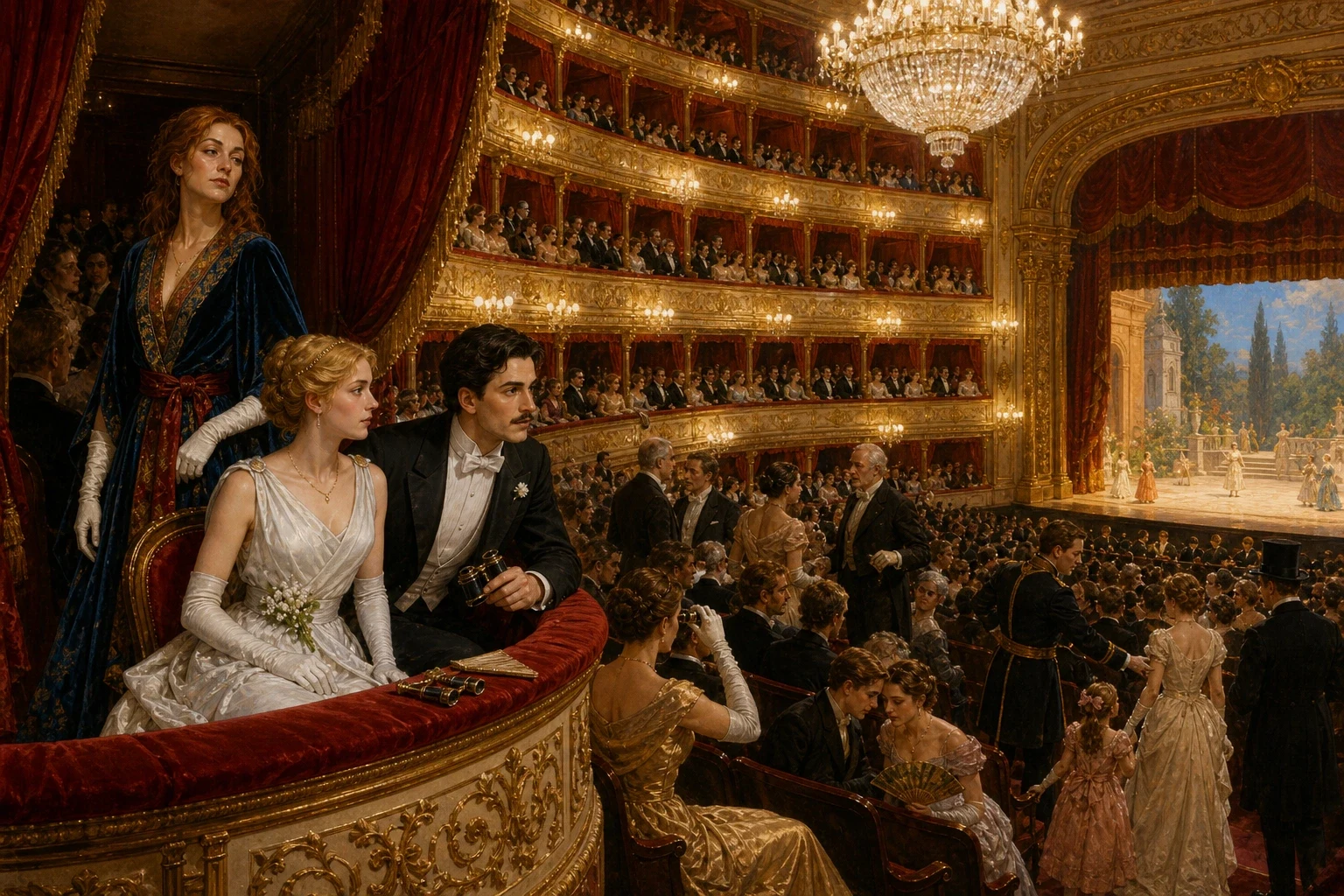
On a January evening in the 1870s, all of fashionable New York filled the Academy of Music to hear Faust, as it did every opening night. Newland Archer sat in the Mingott family box, his eyes more often on young May Welland across the house than on the stage; he loved her, and meant very soon to ask the Wellands for her hand. Society that night was a settled thing, every family in its own box, every rule understood without a word being spoken. Then, in the middle of the second act, a murmur ran along the row of boxes: Mrs. Manson Mingott's granddaughter, Ellen, had come back from Europe, and worse, she was sitting in the Mingott box beside May, in a dress cut like no other dress in the house. People lifted their opera glasses not at the singers but at her. Newland looked across and saw a face he did not know, and did not look away as quickly as he meant to.
Page 2
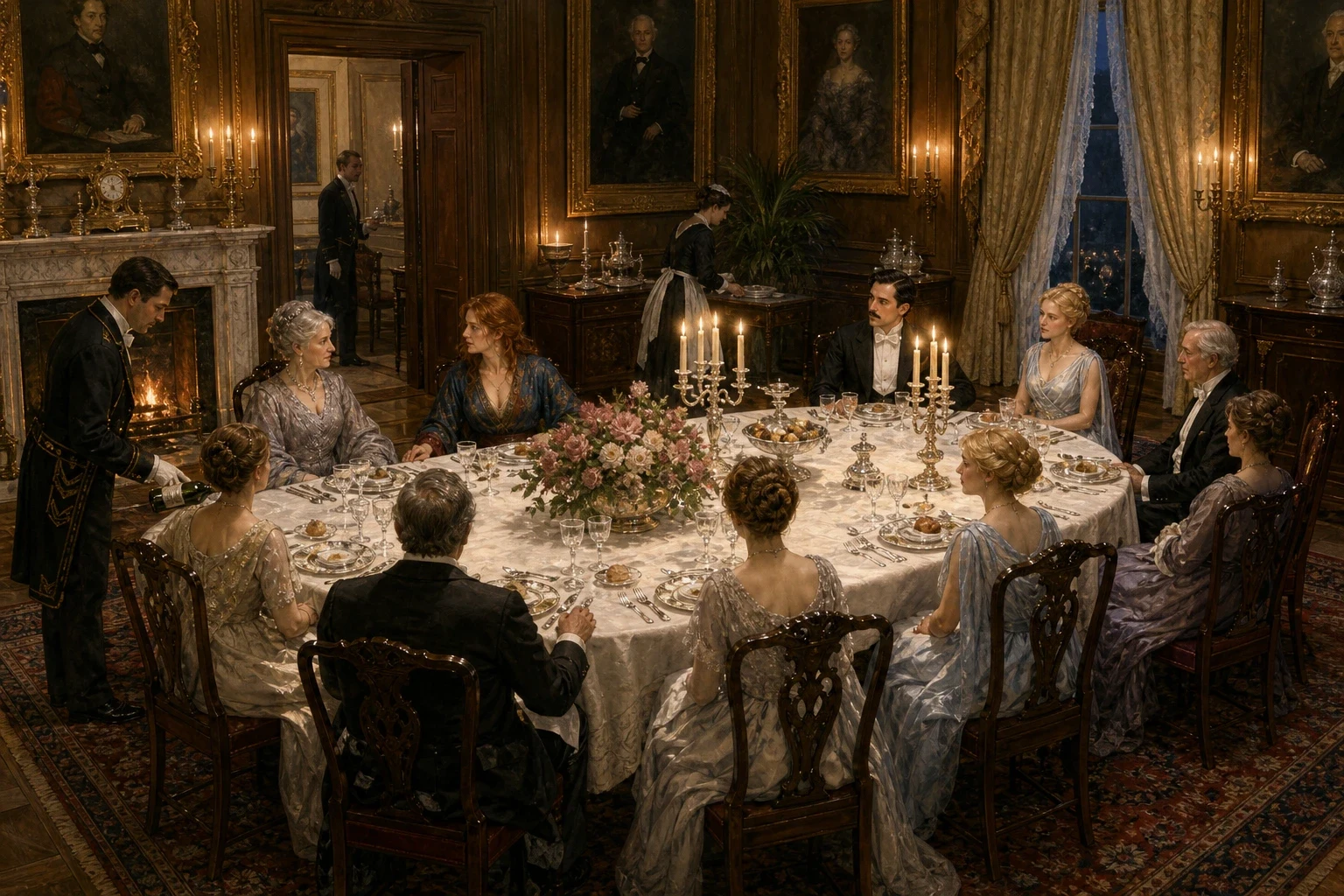
Old New York had one couple whose word nobody questioned: Mr. and Mrs. van der Luyden, who seldom dined out and rarely gave dinners of their own, but who could, with a single invitation, settle any question of who belonged and who did not. When whispers grew that Countess Olenska's return — and talk of a divorce from her Polish husband — might be too much for society to accept, the family turned to the van der Luydens. They answered by inviting Ellen to their own table, seating her at Mr. van der Luyden's right hand, and letting it be known through the whole room, without one word of explanation, that the matter was now closed. Newland Archer, seated down the table between his mother and May, watched Ellen hold her own among the stiffest company in New York, answering old Mrs. van der Luyden's careful questions with an ease that was somehow neither humble nor defiant, and found himself admiring her more than he meant to.
Page 3
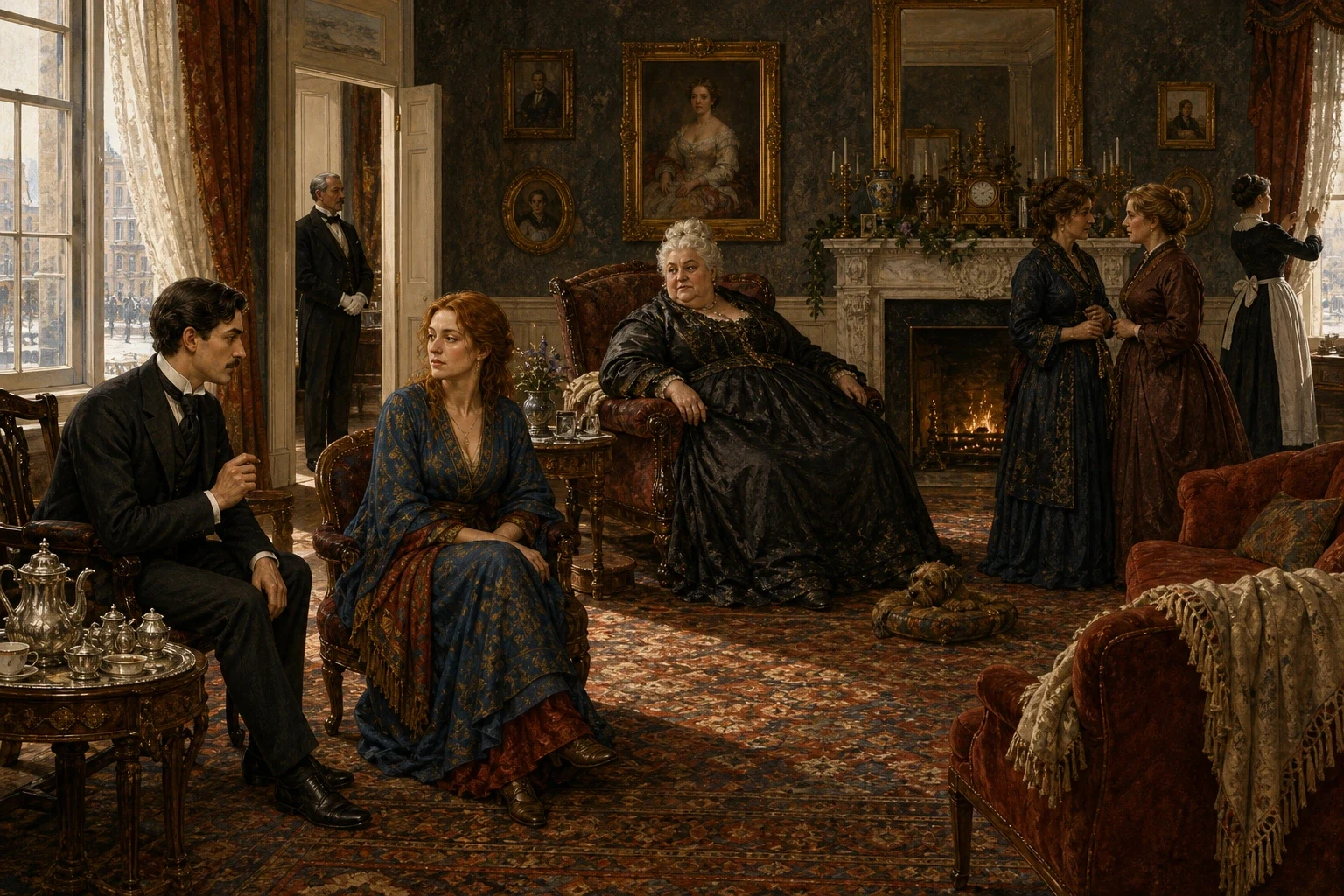
The family gathered at old Mrs. Manson Mingott's house to decide, among themselves, what ought to be done about Ellen. Mrs. Mingott, too heavy now to climb her own stairs, received the whole conclave enthroned in her vast ground-floor parlor, and it was there, in front of her, that the family asked Newland to do what no one else could manage tactfully: persuade Ellen to drop all talk of divorcing Count Olenski, however badly he had treated her, because a divorce trial would drag every family name through the newspapers. When the others had said their piece and gone, Newland found himself alone for a moment with Ellen in a corner of the great parlor, under Mrs. Mingott's watchful, amused little eyes. He began his errand carefully, speaking of the family's wishes. Ellen listened without arguing, and agreed, simply and at once, to let the matter drop — not, he understood slowly, because he had persuaded her, but because she had already decided, for her own reasons, that she did not want the divorce either.
Page 4
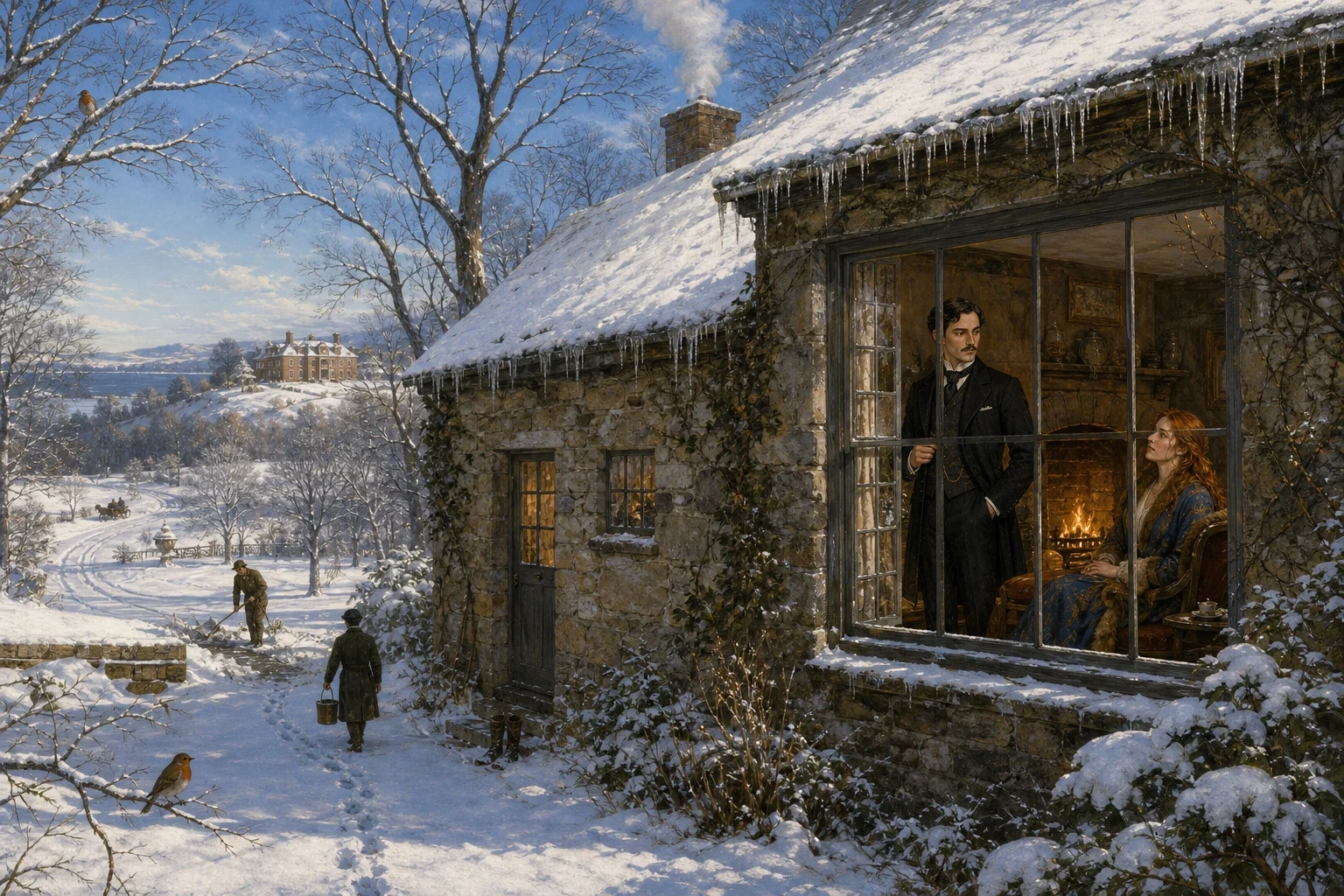
The van der Luydens kept a country place at Skuytercliff on the Hudson, and that winter they lent the old stone Patroon's house on the grounds to Ellen, who wanted to be away from New York's curiosity for a while. Newland came up one Sunday to call at the big house, and finding the family gone to church, walked alone through deep snow to the little stone cottage instead. He found Ellen sitting by the fire, and for the first time they talked without the family between them, without an errand to carry out — simply as two people who had begun, without quite admitting it, to matter to each other. The quiet in the small snowbound room felt larger than anything either of them said aloud. Then, far off down the drive, sleigh bells rang, and Ellen's whole manner changed, grew careful again. Someone else was coming to call. Newland left her there and walked back through the snow with the strange, aching certainty that he had come very close to saying something that could not be unsaid.
Page 5
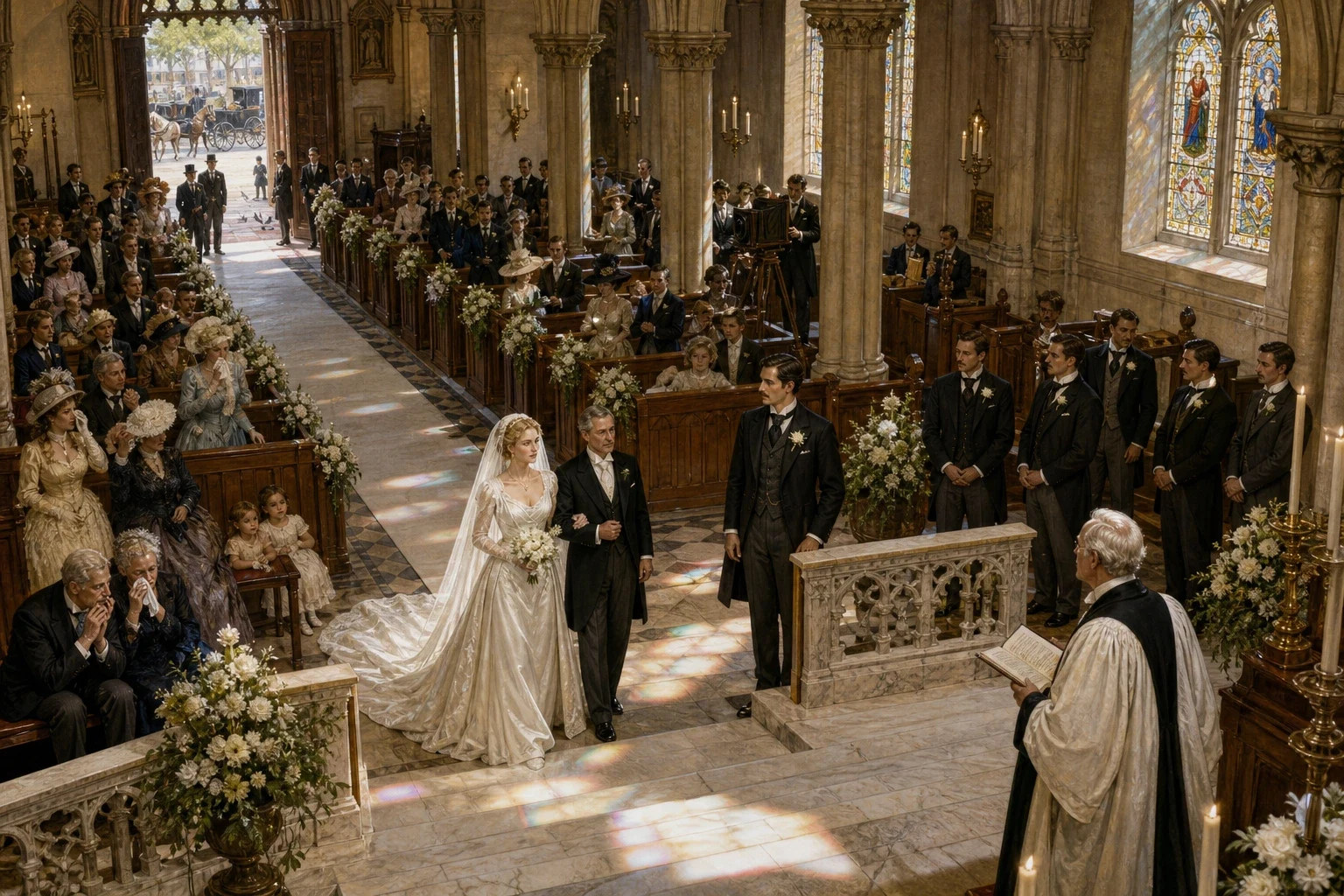
In April, Newland Archer and May Welland were married at Grace Church, exactly as New York expected two people of their families to be married — the same church, the same flowers, the same old bishop, the same long line of carriages outside. May came up the aisle on her father's arm in white satin and her grandmother's lace veil, and Newland, waiting at the chancel rail among his groomsmen, watched her come toward him and felt, for one strange moment, that he could not quite remember why he was there. He had chosen this, wanted this, for a long time; and yet, standing in the candlelit church surrounded by every familiar face in his world, he found his mind had gone somewhere else entirely, to a small stone house in the snow. Then May reached him, lifted her veil, and the old words of the service began, and he answered them clearly, and it was done.
Page 6
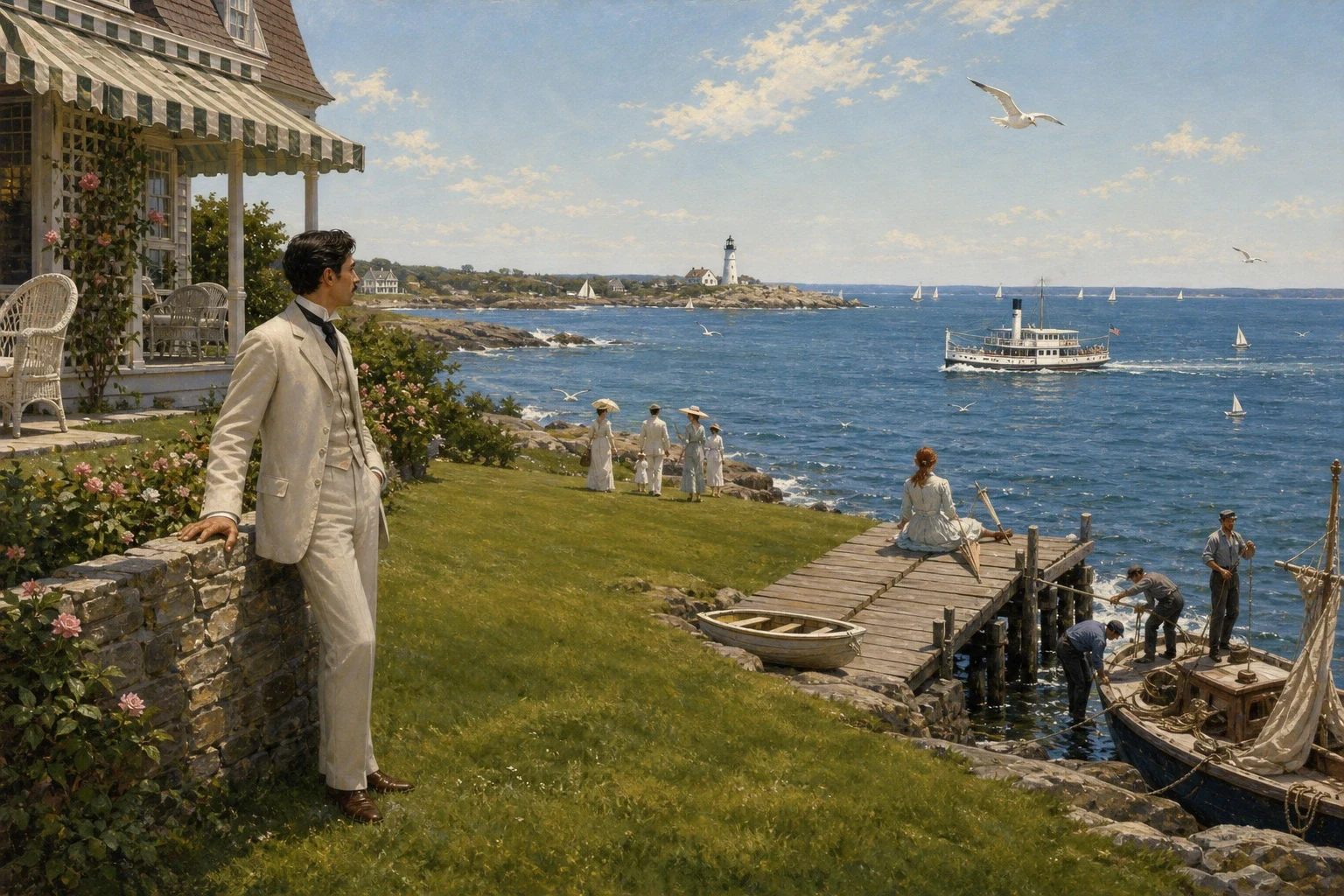
That summer, Newland and May stayed at the Welland cottage in Newport, and across the water, at old Mrs. Mingott's rented house, Ellen was staying too. One afternoon Newland walked down to the shore and stood on a stretch of lawn above the bay, watching a little white ferryboat make its way across toward a distant lighthouse point, with Ellen sitting alone on a dock far off, her back to him, watching the same boat. He made himself a strange private promise: if she turned around before the boat passed the lighthouse, he would go down to her; if she did not turn, he would go back to the house and say nothing, ever, of what he felt. He stood a long time in the bright afternoon sun, watching the small white boat creep across the water, waiting for her to turn. The boat passed the lighthouse point. Ellen never turned around. Newland walked back up to the house alone, and told himself, without quite believing it, that the sign had been enough.
Page 7
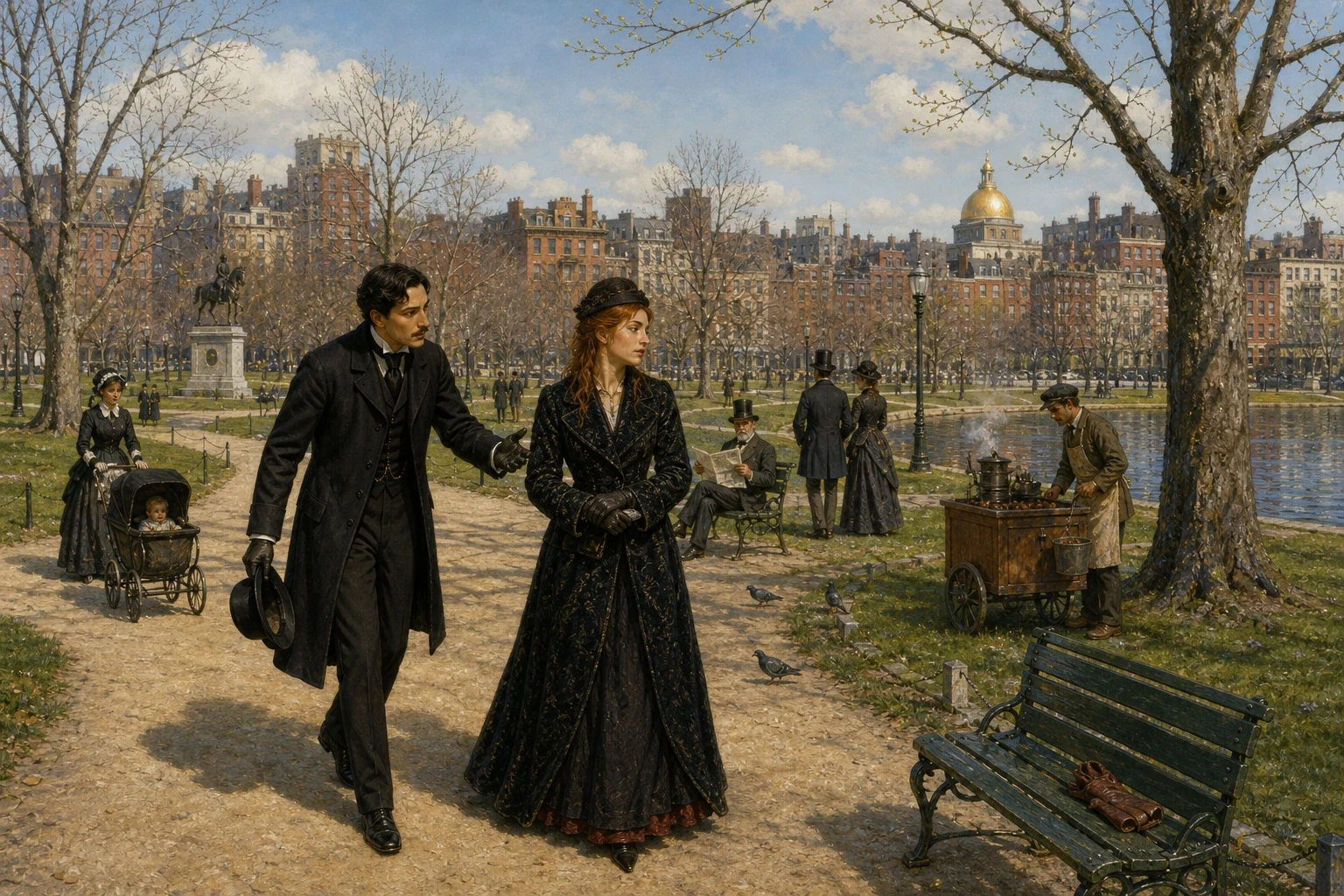
Newland invented a reason for business in Boston, and once there, found out, by a small deception he was ashamed of, that Ellen was staying at the Parker House, called away from Washington to settle some of her grandmother's affairs. He found her sitting on a bench on the Common under the bare spring trees, and for an hour they walked together along the old paths, further from New York's eyes than they had ever been. He told her plainly, for the first time, that he loved her and could not go on pretending otherwise. Ellen did not deny what she felt either, but she would not let him finish what he seemed to be working toward saying. She reminded him, gently and firmly, of May — of what it would cost May, who had done nothing except trust them both — and asked him, as a kind of answer to everything, to promise he would never ask her to do what he was about to ask. He could not quite promise. He could not quite insist, either.
Page 8
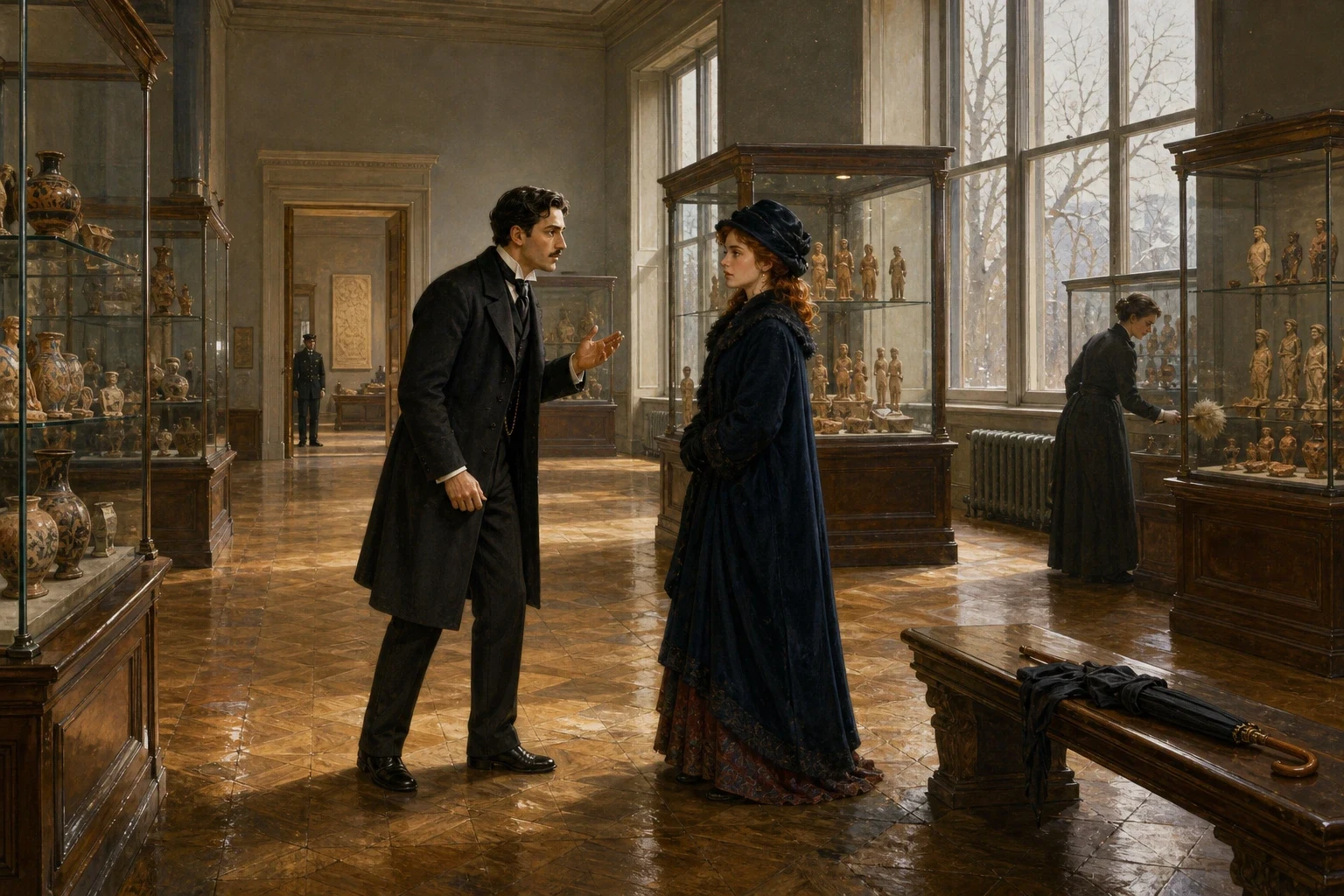
Back in New York that winter, Newland arranged to meet Ellen at the Metropolitan Museum, in the quiet gallery where a collection of ancient broken pottery and small carved figures from Cyprus stood in glass cases, a room almost no one else ever visited. There, among objects that had outlasted the people who made them, he asked her directly to become his, whatever that cost either of them — to leave behind pretending, and simply be together, in the only way left open to two people who could not marry. Ellen listened to him with more sorrow than surprise, as though she had always known this request would come. She told him it was impossible, not because she did not want it, but because it would mean the ruin of exactly the people — May most of all — whom their happiness would be bought with. He pressed her again. She did not change her answer, though for a moment, before she turned to go, he saw how much it cost her to refuse him.
Page 9
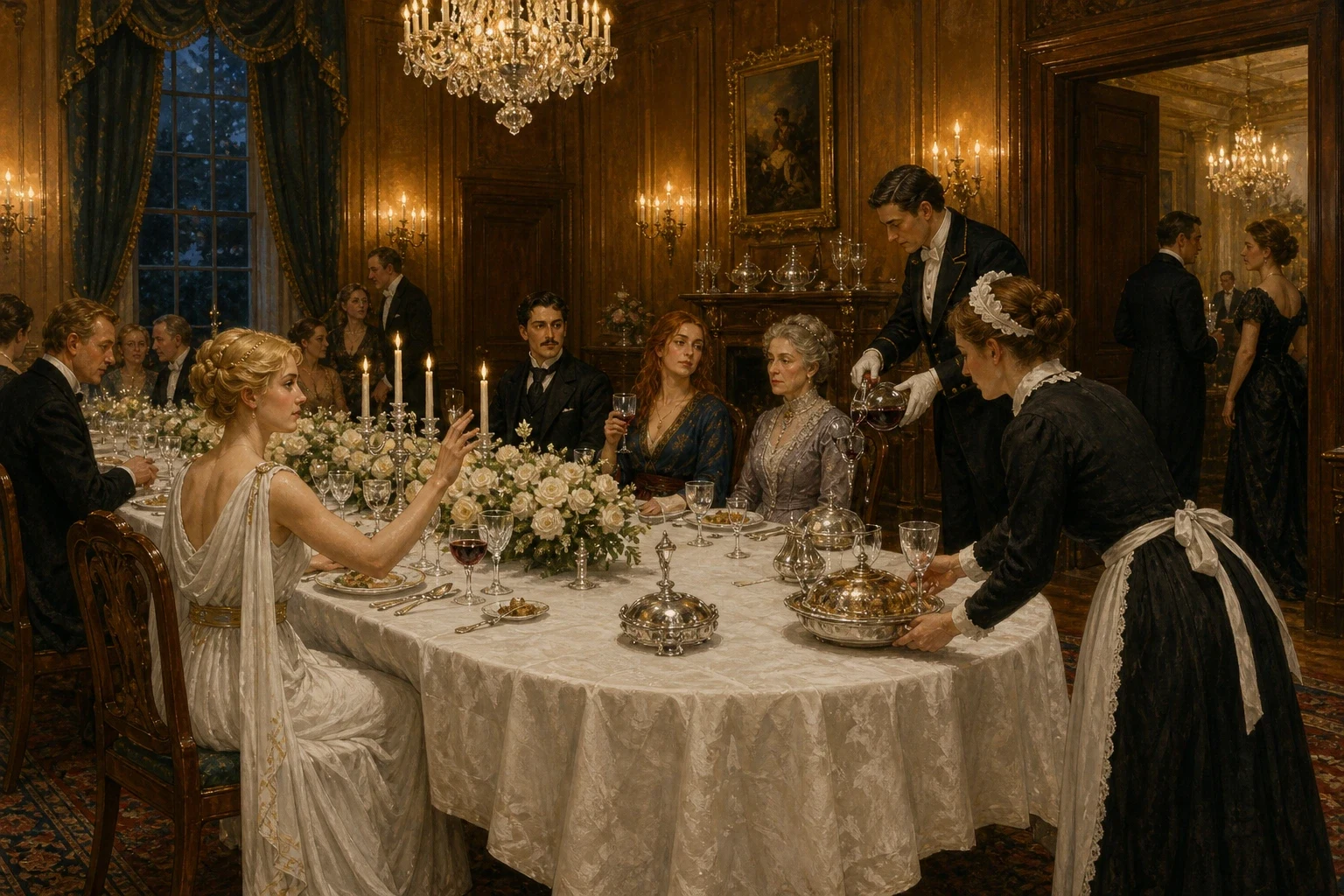
Ellen had decided to go back to Europe for good, and before she sailed, Newland and May gave a formal dinner for her at their own house — the kind of dinner, Newland realized too late, that old New York gives when it wants to close ranks around something it will never openly discuss. Every important name in the family came, even the van der Luydens, who almost never dined from home. Watching the table, Newland understood all at once that everyone in the room, including his own wife, believed he and Ellen had been lovers, and that this dinner, with its flowers and its toasts and its perfect courtesy, was society's elegant, wordless way of seeing her safely out of the country and the matter safely closed, without one word of scandal ever being spoken aloud. May sat at the foot of the table, lovely and composed, directing the courses as smoothly as if nothing at all were wrong, and it was her very calm, more than anything said that evening, that told Newland the thing was already decided, and decided without him.
Page 10
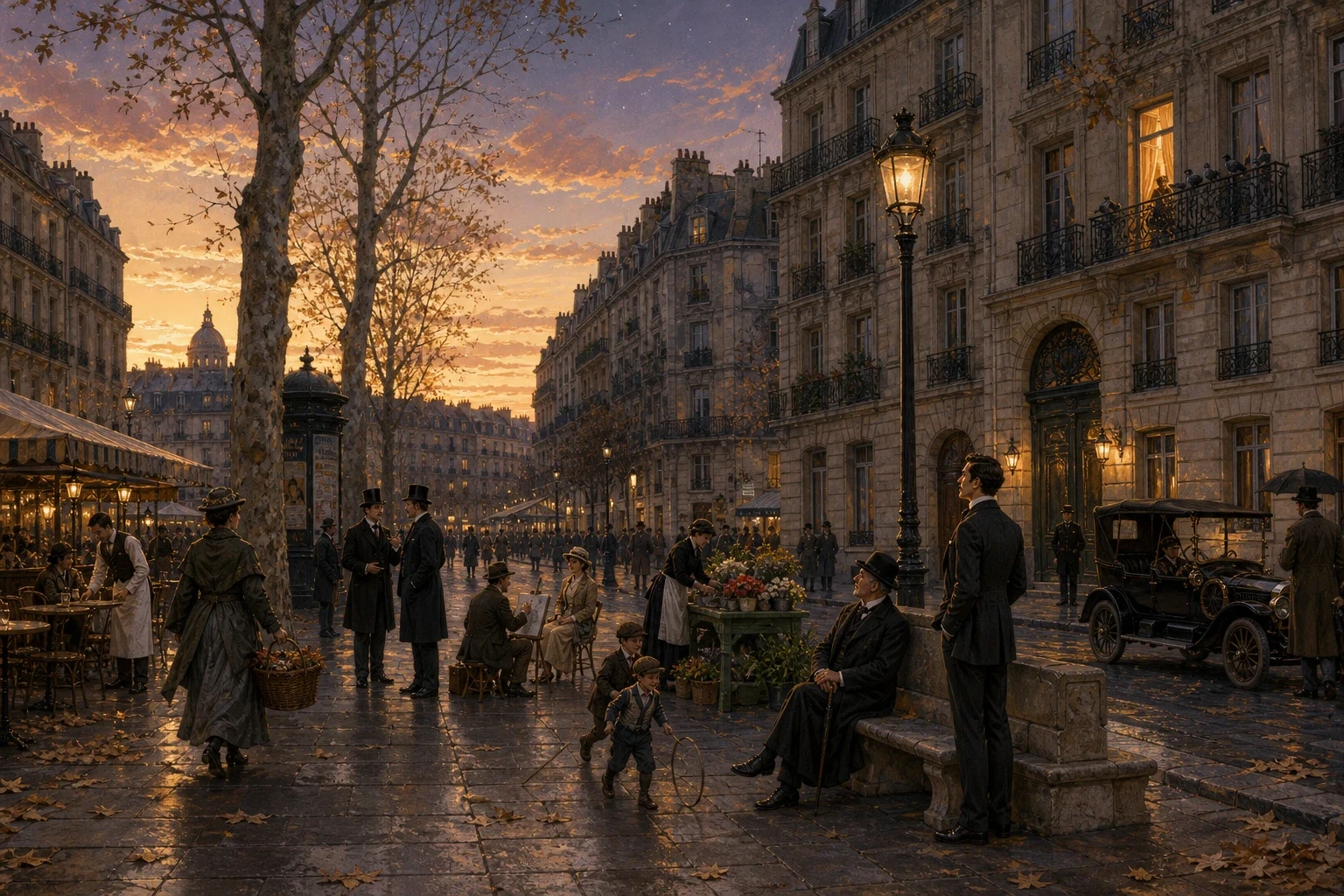
Twenty-six years later, Newland Archer was an old man, a widower, visiting Paris with his grown son Dallas. May had died some years before; the two of them had never been unfaithful to the shape of the life they chose that winter, and Newland had long since made a kind of peace with it. Dallas, who knew more of the old story than his father realized, had arranged, without quite asking permission, for them to call that evening on the Countess Olenska, who still lived in Paris, unmarried, in an apartment on a quiet street. Newland walked there with his son in the last gold light of early evening, stood looking up at the building, found the lit window Dallas pointed out, and understood that this was the moment, after all these years, when he might finally go up and see her. He told Dallas to go up alone. He sat down on a bench across the street instead, watching the lit window, and let the old distance stay exactly as it had always been.
About this story
- Audience: general readers
Read Wonder Novels on your phone
Wonder Novels is available on Android. Get Wonder Novels on Google Play.