The Captain's Daughter
A young officer, a rebel leader who remembers a kindness, and the fortress on the Russian steppe
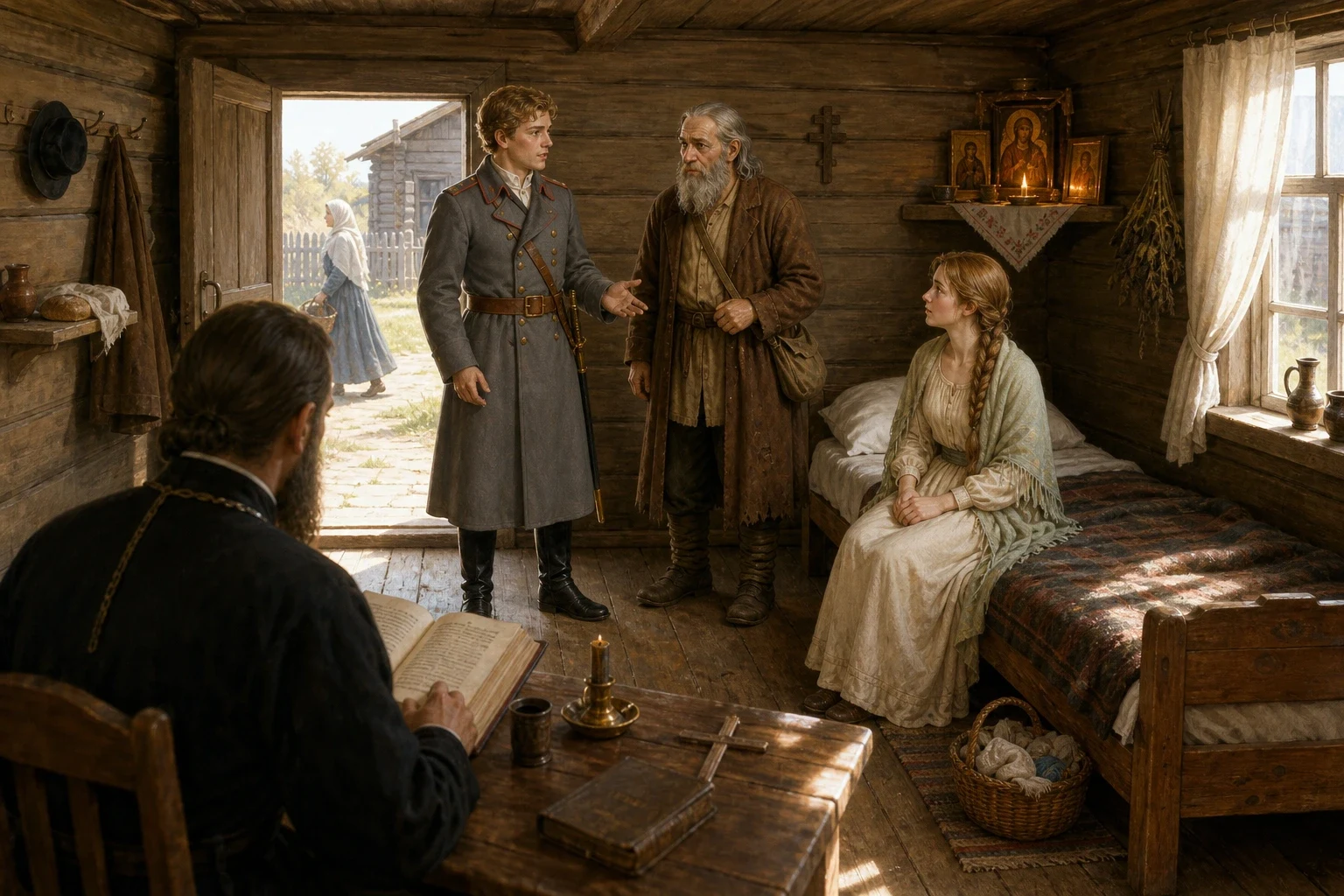
Page 1
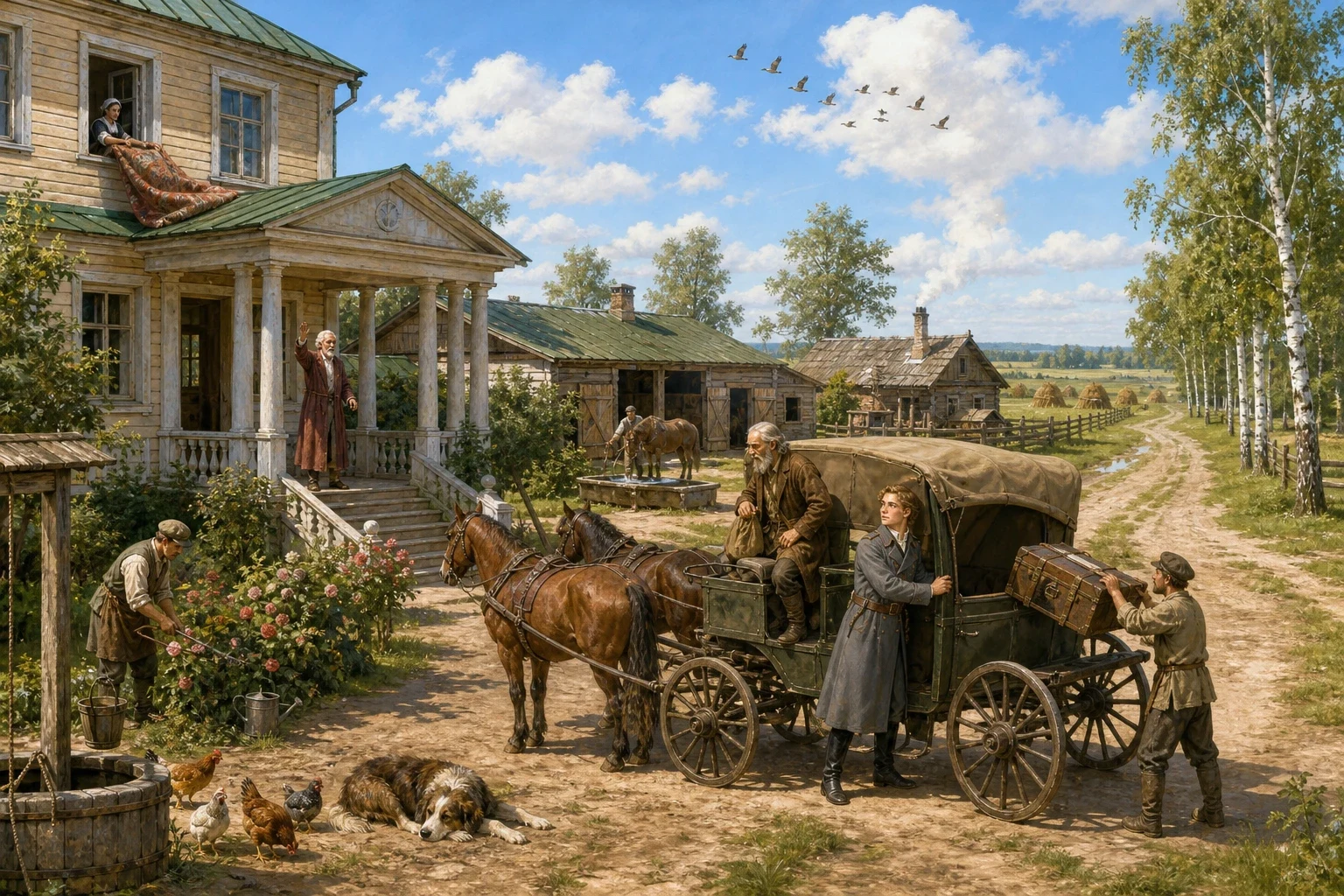
Pyotr Grinyov grew up on his family's country estate in Russia, dreaming of the soldier's life waiting for him in Petersburg, where he had been enrolled as a guardsman since he was a boy. But on the morning he turned seventeen, his father, Andrei Petrovich, called him down into the yard with very different news. He was not going to Petersburg at all. He was going to serve with the army far out on the frontier, on the open Russian steppe, where nobody would spoil him and he would learn what real service meant. His old servant Savelich, who had cared for him since he was a baby, was sent along to watch over him on the road. Before the carriage pulled away, his father pressed one piece of advice on him: look after your coat while it is new, and your honor while you are young. Pyotr climbed up beside Savelich, and the horses carried them out through the gate toward the open road.
Page 2
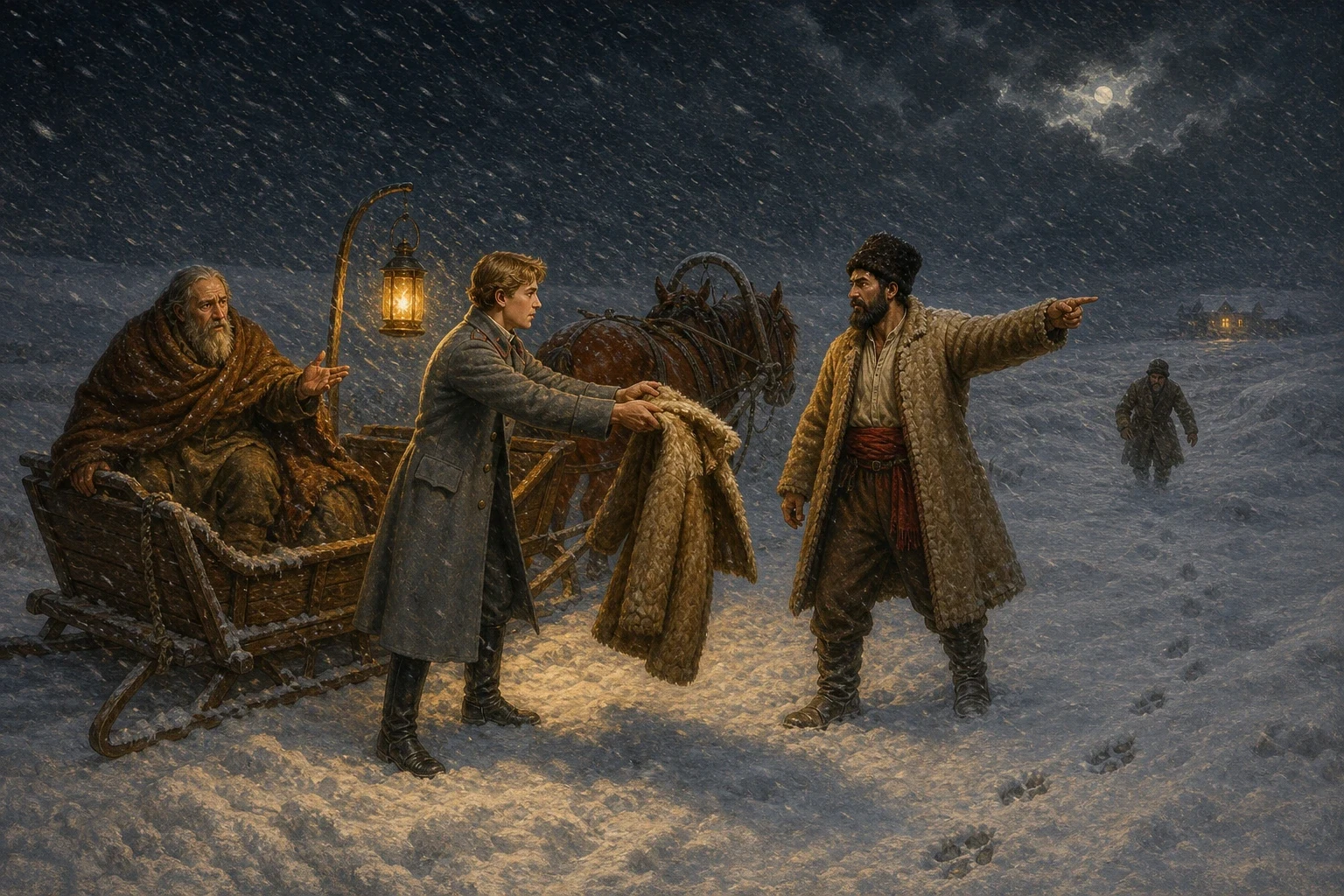
Out on the open steppe, a blizzard caught Pyotr's sleigh in the fading light, and soon the driver could not even tell where the road was. Snow swirled on every side until Pyotr feared they would freeze out there in the dark. Then, through the white, a lone traveler on foot appeared beside them — a peasant who said he knew this ground well, even in a storm, and offered to guide them to shelter. He led the sleigh through the drifts to a small wayside inn, where a warm stove and food were waiting. Grateful, and moved by how roughly dressed the man was in such bitter cold, Pyotr took off his own hareskin coat and gave it to him, over Savelich's loud objections that it would not even fit. The peasant thanked him warmly and pulled it on over his old sheepskin, and in the morning he was gone before Pyotr woke.
Page 3
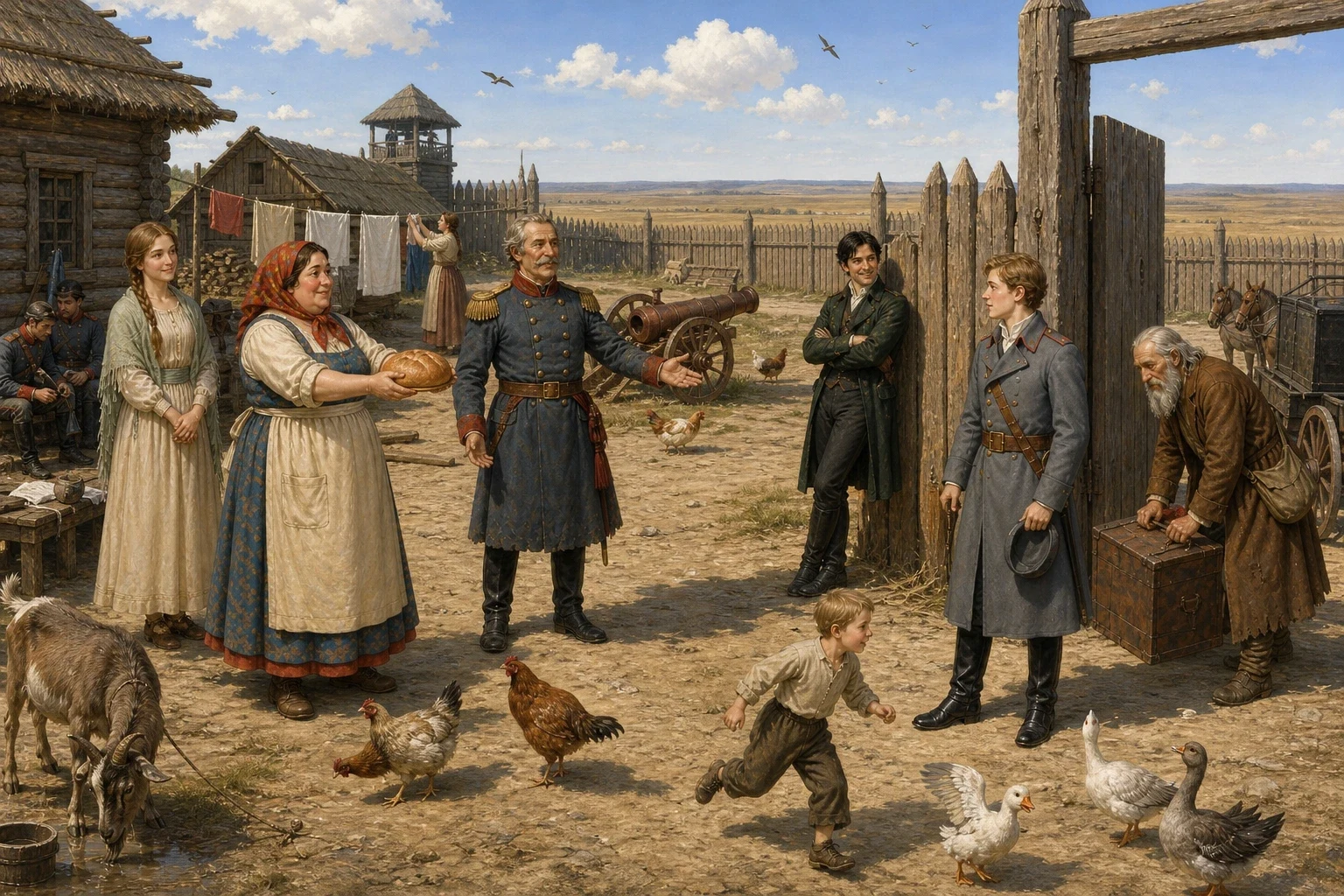
At last Pyotr reached Belogorsk Fortress, and it was nothing like the great stone forts he had imagined — only a huddle of log houses behind a crooked wooden fence, with a single rusty cannon standing in the yard and chickens running loose underfoot. Captain Ivan Mironov, the old commandant, ran the whole place more like a farm than an army post, and his wife, Vasilisa Egorovna, ran the captain. She welcomed Pyotr at once as if he were family, feeding him and fussing over his quarters. Their daughter, Masha, was quiet and shy at first meeting, but kind-eyed and sensible. The only other officer of any rank was Alexey Shvabrin, a sharp-tongued young man who had been sent here himself, years before, for fighting a duel in Petersburg. Shvabrin was friendly enough at first, full of gossip about the fortress and quick jokes at everyone's expense, and Pyotr was glad of the company.
Page 4
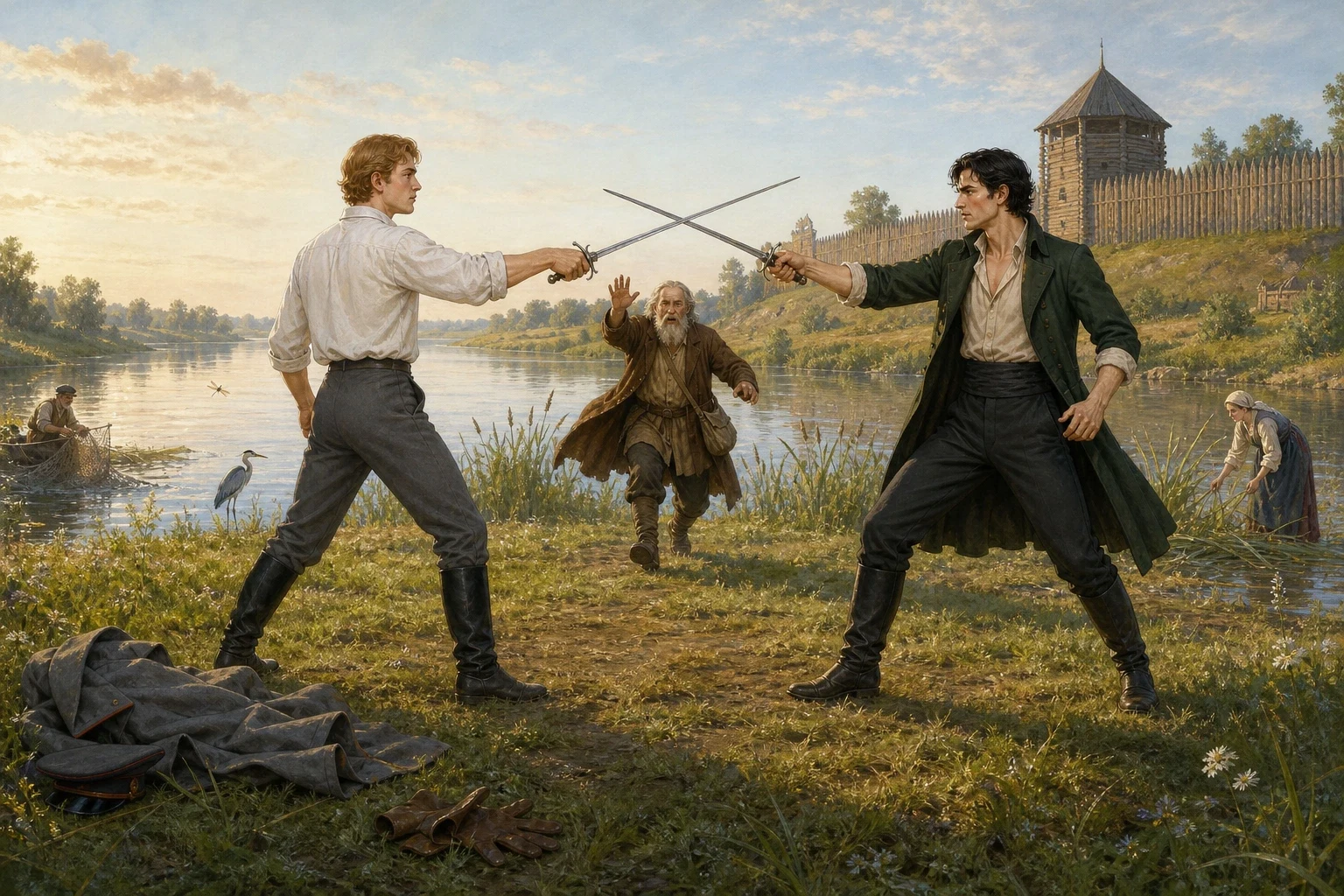
As weeks passed, Pyotr grew closer to Masha, and grew to dislike Shvabrin, who mocked her in cruel verses and then mocked Pyotr's own poems written for her. One sharp exchange of words led to a challenge, and the two officers met outside the fortress wall to settle it with swords. Captain Mironov's wife discovered the first attempt and broke it up before harm was done, scolding them both soundly. But Shvabrin and Pyotr slipped away again the very next day to finish what they had started, down by the riverbank where no one from the fortress could see them. Blades crossed, and for a moment it seemed an even match — until Savelich, who had followed in secret, came running and shouting for Pyotr to stop, and in that one instant of distraction, Shvabrin's blade caught him.
Page 5
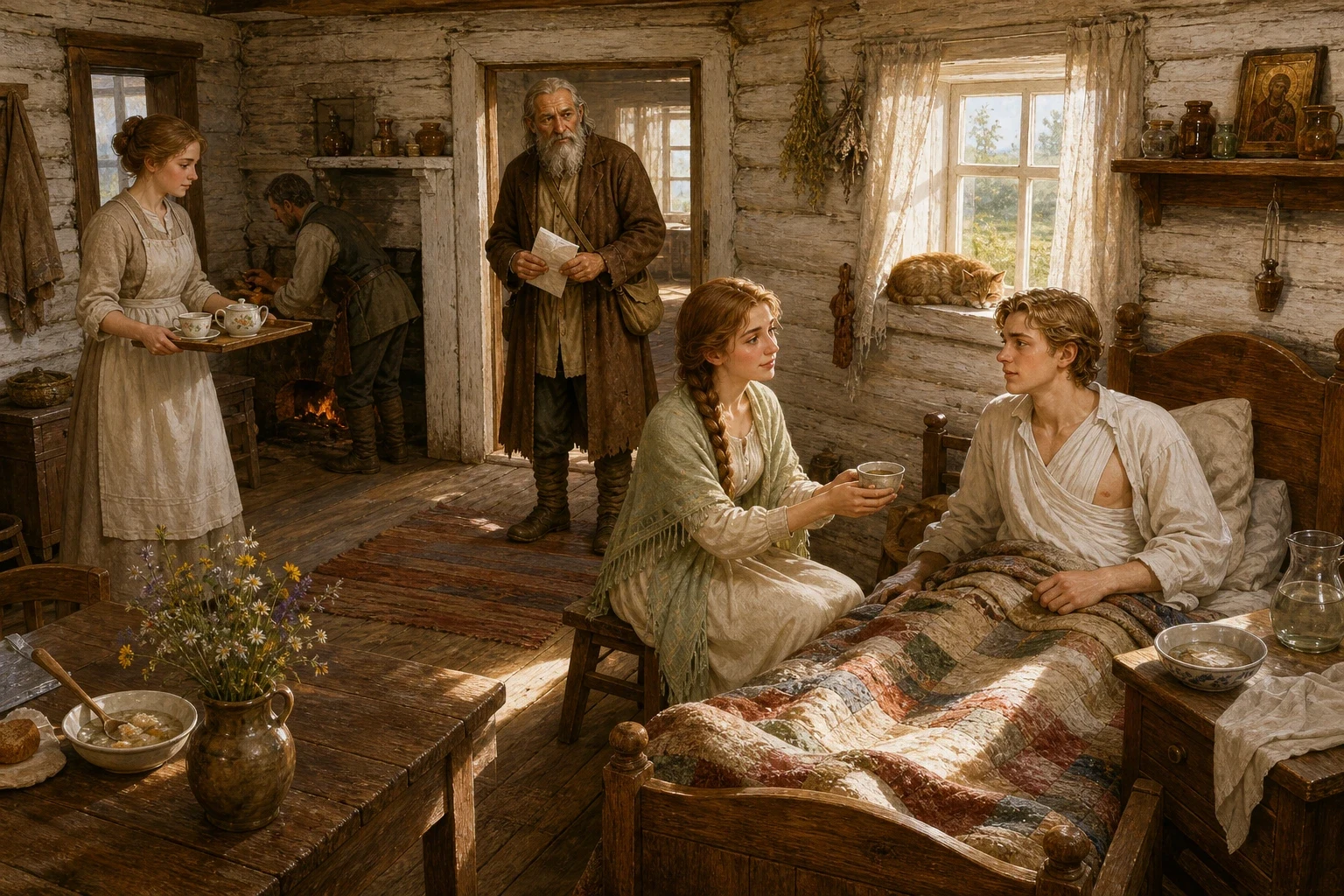
Pyotr was carried back to the captain's house with a shallow wound, and it was Masha who nursed him back to health through the following days, sitting by his bed with cool water and quiet patience. By the time he could stand again, the two of them knew they loved each other, and Pyotr wrote home at once asking his father's blessing to marry her. The answer, when it came, was a bitter disappointment: his father refused outright, having somehow already heard an exaggerated and unflattering account of the duel, and forbade the marriage entirely. Pyotr was heartbroken, and ashamed that his own foolishness had caused it, but Masha told him gently that she would not marry him without his father's blessing, however much it grieved her, and that they would simply have to wait and hope the trouble passed.
Page 6
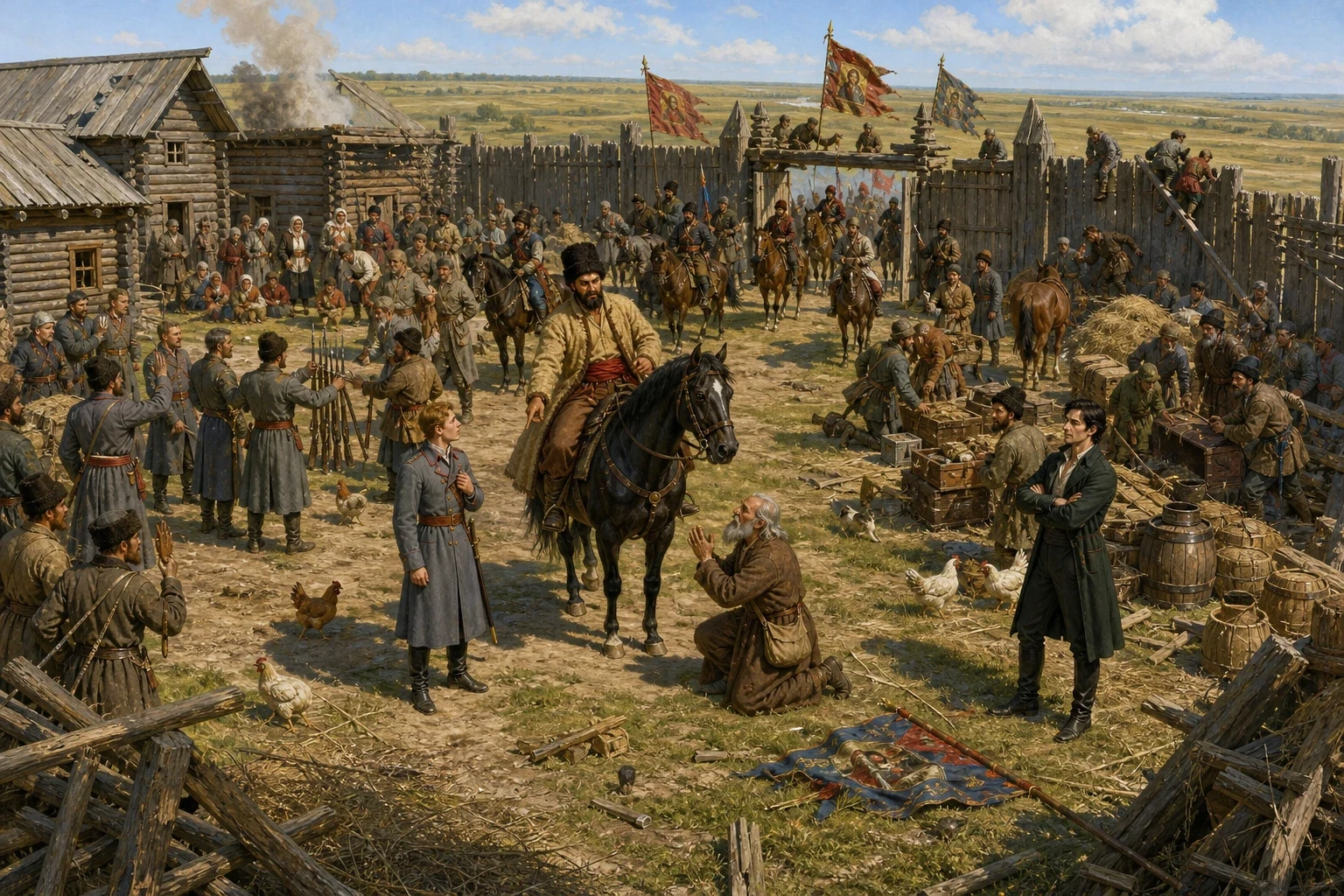
Then came terrible news: a Cossack rebel named Emelyan Pugachev, claiming to be the rightful Tsar, was marching across the steppe with an army, taking fortress after fortress. Belogorsk fell within a single day. Captain Mironov refused to swear loyalty to the rebel leader and was put to death for it, along with others who stood firm; the news reached Pyotr only in broken pieces, and Vasilisa Egorovna, who ran to her husband's side, was killed too in the chaos of that terrible morning. Shvabrin, to everyone's disgust, went straight over to Pugachev's side. Pyotr himself was dragged before the rebel leader next, to be dealt with the same way — until Pugachev looked hard at him and recognized the young officer who, long ago in a snowstorm, had given a poor stranger his own hareskin coat. Pugachev laughed, called him friend, and ordered him freed, while old Savelich, in tears, had already been begging and offering money for his master's life.
Page 7
Pugachev, who now held the fortress, let Pyotr go free to travel where he liked, but Pyotr would not leave Masha behind — not with Shvabrin, who he knew had wanted her for himself and would take advantage of the chaos now that he had the rebels' favor. Pyotr quietly asked the fortress priest's wife, kind old Akulina Pamfilovna, to hide Masha in her house and to tell anyone who asked that she was only a niece, too sick to be seen. Savelich stayed close by her as well. Satisfied that Masha was as safe as she could be for now, Pyotr set out for Orenburg, the nearest fortress still loyal to the Empress, to ask for soldiers to come and put an end to the rebellion and free the fortress properly.
Page 8
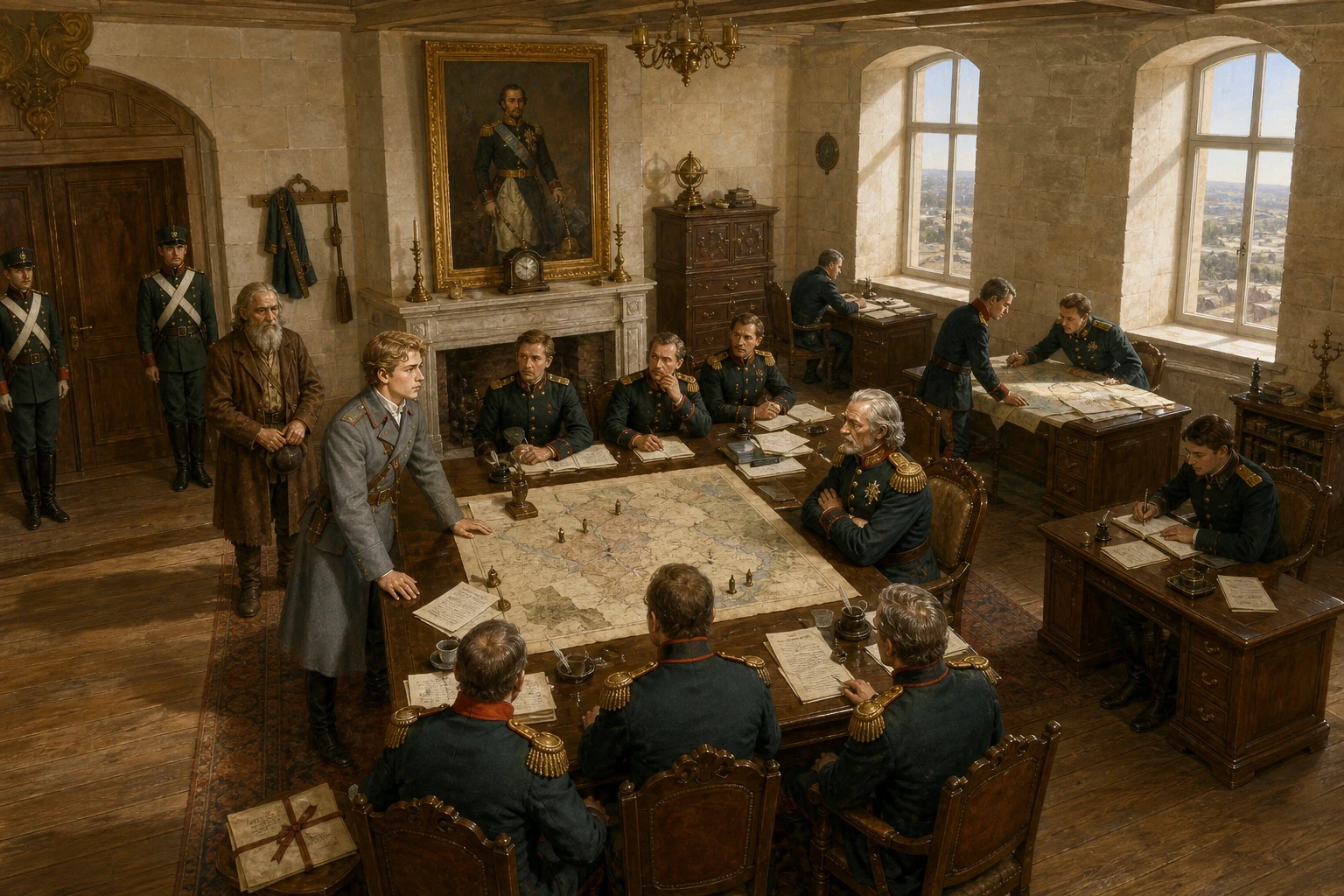
At Orenburg, Pyotr stood before the general and his council and begged them to send troops at once to retake Belogorsk before Shvabrin, now installed there as commandant under Pugachev, could do Masha any harm. The council listened politely and then refused, deciding it was wiser to keep every soldier inside Orenburg's own walls and wait the rebellion out. Pyotr left the chamber furious and helpless. Weeks later, a letter finally reached him, smuggled out of the fortress in secret: Masha wrote that Shvabrin now knew who she really was, and was forcing her to agree to marry him, threatening to hand her over to Pugachev's men if she refused. Pyotr knew then that no army was coming, and that if Masha was to be saved at all, he would have to go and save her himself.
Page 9
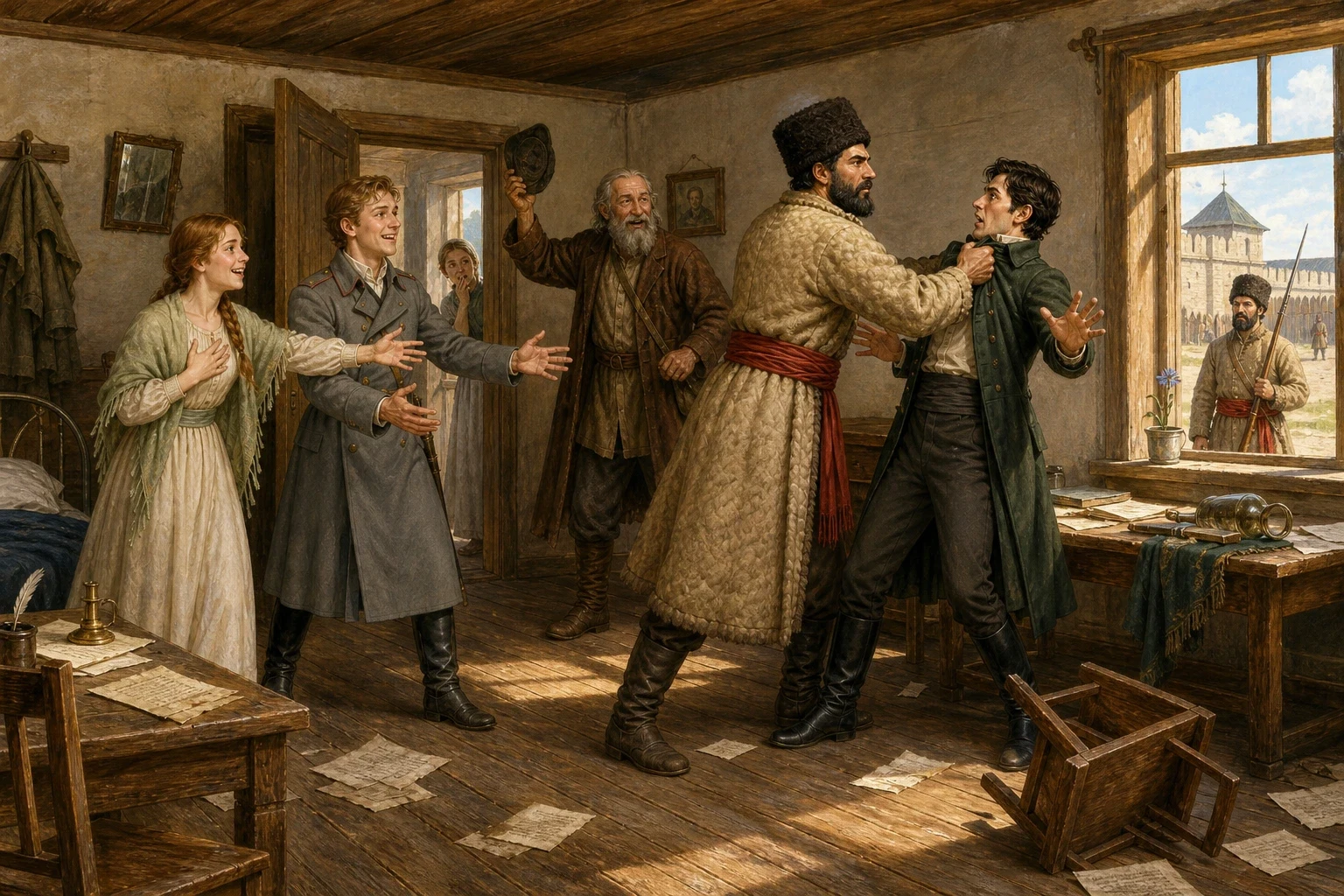
With only Savelich beside him, Pyotr rode straight back toward Belogorsk and, on the road, came face to face with Pugachev's own men, who brought him before the rebel leader himself. Pyotr told Pugachev the whole truth — that Shvabrin was holding an innocent girl against her will — and Pugachev, true to the debt he felt he owed for the hareskin coat, agreed at once to ride with him and set it right. Together they reached the fortress, and Pugachev strode into Shvabrin's quarters, seized him by the collar, and ordered Masha freed on the spot, brushing aside all of Shvabrin's excuses. Masha, pale and frightened, ran to Pyotr's arms the moment she was let go. Pugachev, satisfied, let the two of them travel away together unharmed, asking nothing in return but that Pyotr remember him kindly.
Page 10

The rebellion was crushed within the year, and Pugachev himself was captured and later executed by the Empress's soldiers. But Pyotr's troubles were not quite over: because he had once ridden and spoken so freely with the rebel leader, he was arrested and accused of treason, with Shvabrin testifying against him out of spite. Pyotr, too proud to drag Masha's name into his defense, said nothing in his own favor and was sentenced to exile. So Masha herself travelled all the way to Petersburg alone, and one morning, walking in the palace garden at Tsarskoye Selo, she fell into conversation with a kind lady out walking her dog, and poured out the whole story to her, not knowing until later that she had been speaking to the Empress herself. Days later, a pardon arrived. Pyotr was freed, and before long the two of them were married at last.
About this story
- Audience: kids (ages 6–12)
Read Wonder Novels on your phone
Wonder Novels is available on Android. Get Wonder Novels on Google Play.