The Death of Ivan Ilyich
A judge discovers, in his last illness, that the comfortable life he built was never the real one
Page 1
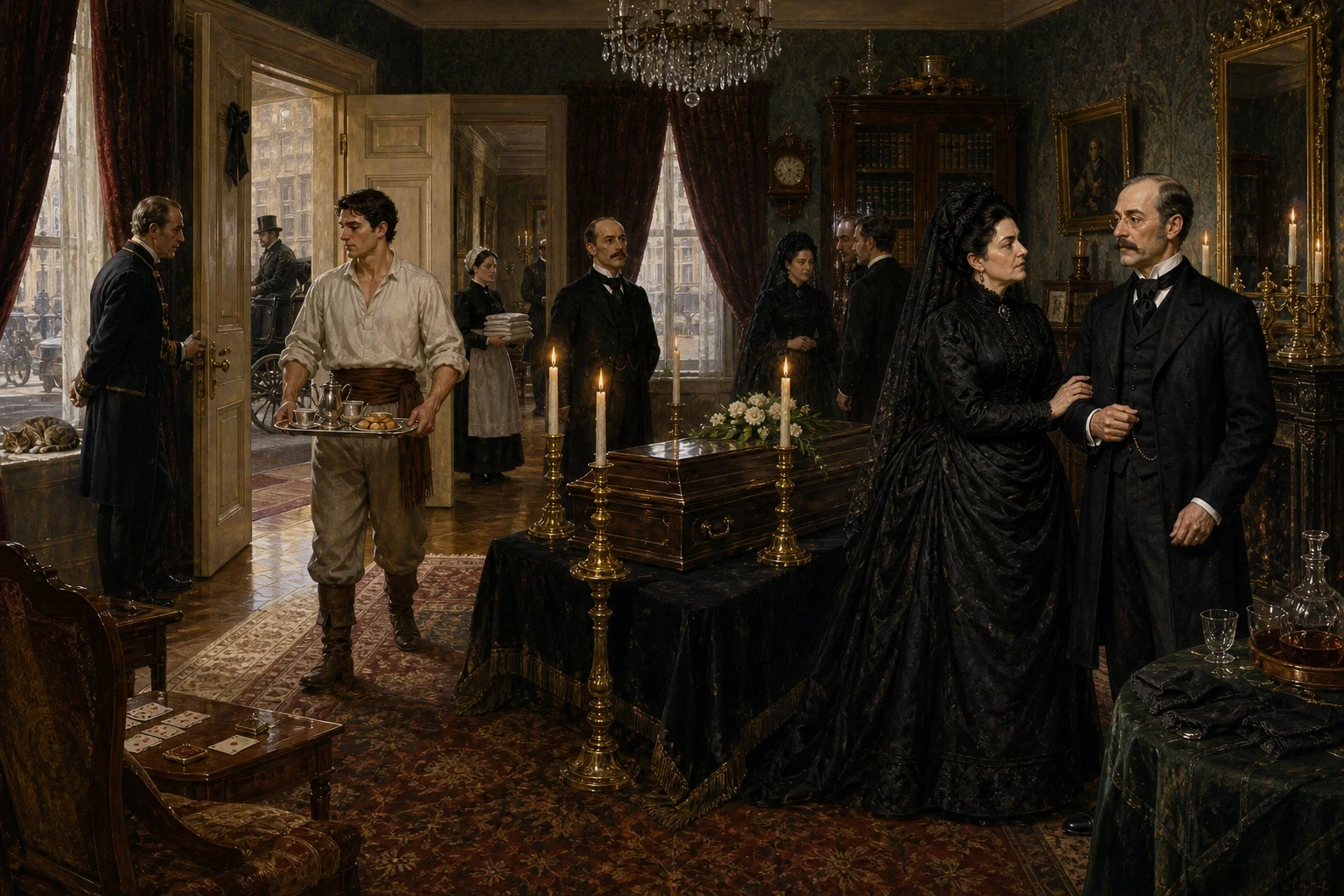
In Petersburg, in the Law Courts building, the clerks were discussing business when Fyodor Vasilievich announced that Ivan Ilyich Golovin had died. The judges, who had worked beside him for years, each thought first of what his death might mean for their own promotion, and only then remembered to be sorry. Pyotr Ivanovich, his old friend, left his card and went that same evening to the dead man's apartment. A footman let him in, and in the hall he passed Gerasim, Ivan Ilyich's servant, going about his quiet work as though nothing in the house had changed. In the drawing room the coffin stood on a table, candles burning around it, the room thick with incense. Praskovya Fedorovna came to him in her widow's black, took his arm, and began at once to ask whether she might still draw a government pension now that her husband was gone, and to describe, in careful detail, exactly how much he had suffered at the end.
Page 2
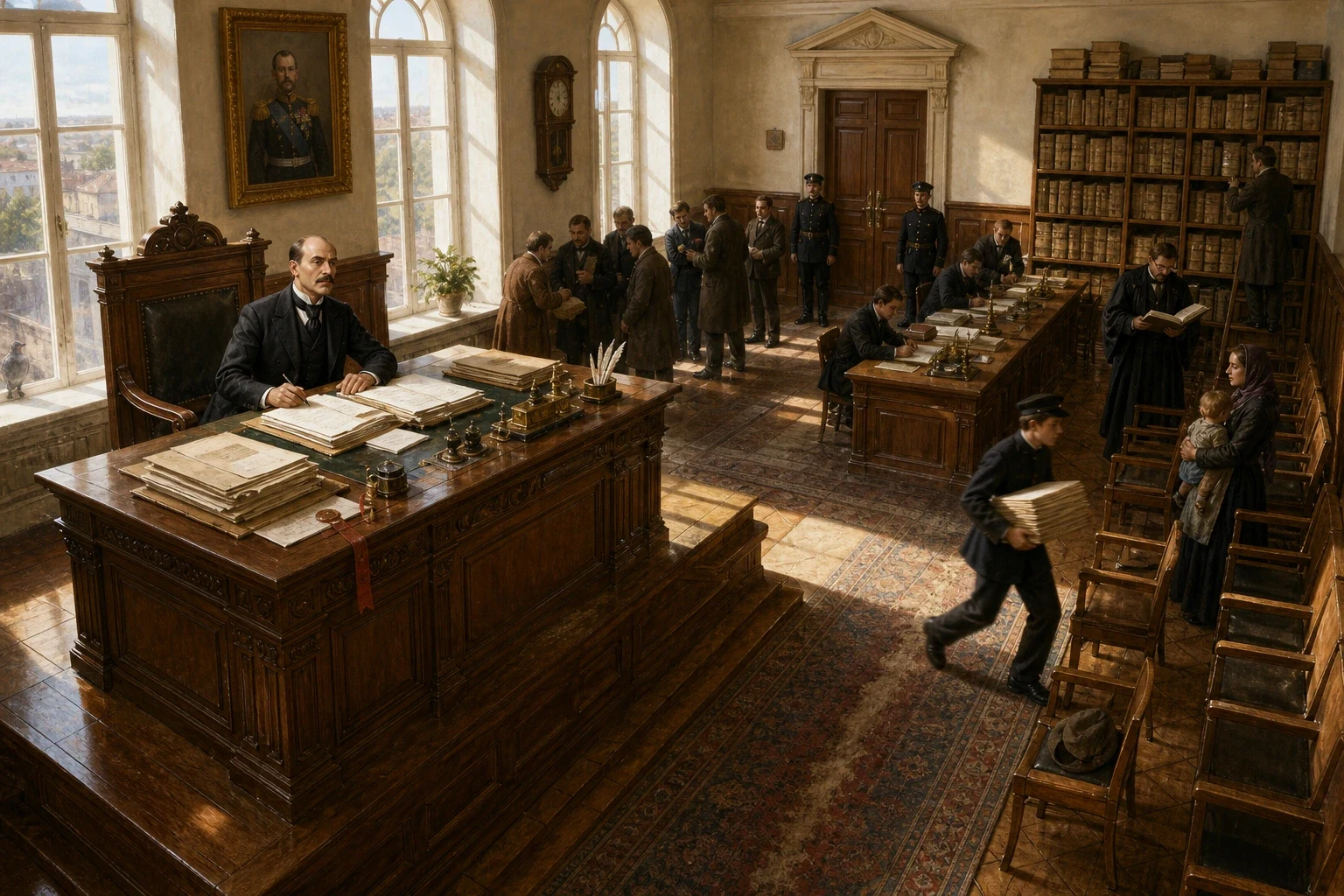
As a young man Ivan Ilyich had trained as a lawyer and risen steadily, moving from one post to the next, always pleasant, capable and correct, never troubling himself with anything that was not strictly his official business. In a provincial town he was made an examining magistrate, and there he married Praskovya Fedorovna, a good enough match, he thought, for a rising man. But marriage disappointed him; his wife made scenes and demanded more of his attention than he cared to give. Ivan Ilyich found the solution that would serve him the rest of his life: he withdrew from home into his work, and let the Law carry him like a river carries a boat, asking nothing of him but that he follow its channel. Each promotion brought a little more salary, a little more comfort, and a little more distance from his wife and children, until the office itself became the only place he was truly content.
Page 3

Later, promoted again and moved to Petersburg, Ivan Ilyich found the apartment of his dreams on Stolovy Lane, and set about furnishing it exactly as he pleased, choosing the curtains, the carpets, the little bronze ornaments himself, delighted with every detail as though he were decorating his whole life rather than a few rooms. He climbed a ladder one afternoon to show the upholsterer how he wanted a length of drapery hung, slipped, and struck his side against the window frame as he caught himself. It hurt for a moment and then seemed nothing at all; he laughed about it, pleased that he had managed to save the drapery from falling, and went on with his work, telling everyone that evening how agile he had been, saving himself like a young man. He thought no more of the bruise. It was, after all, such a small thing, in such a happy room, in such a happy time of his life.
Page 4
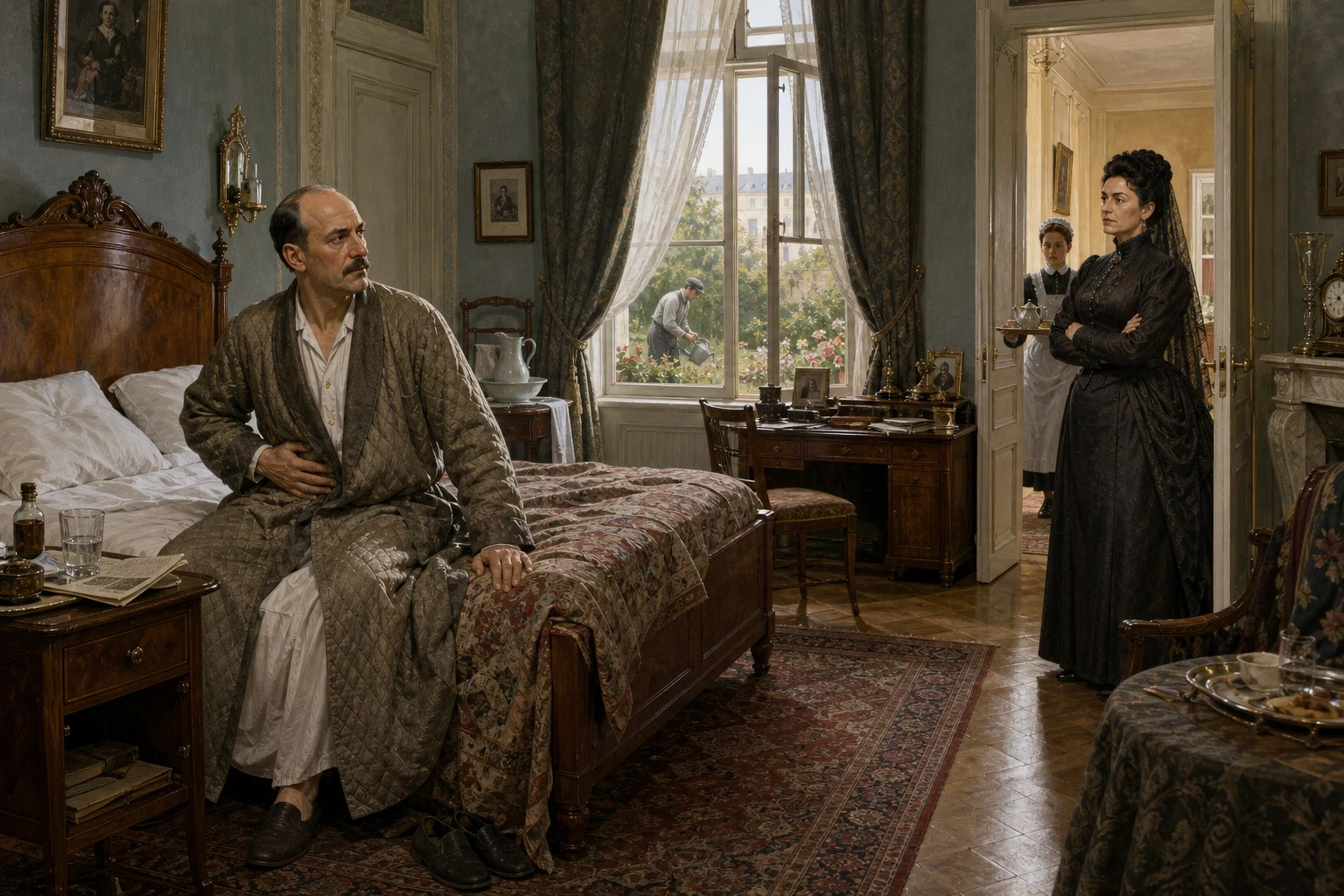
A strange taste came into Ivan Ilyich's mouth, and a dull discomfort settled into his left side, the very place he had struck against the window frame. At first he thought little of it, but the discomfort did not pass; instead it grew into a steady, nagging pain that followed him through his working days and sat with him at dinner. Praskovya Fedorovna noticed he had grown short-tempered and pale, and insisted he see a doctor. He went, resentfully, telling himself it was nothing — a touch of indigestion, surely, nothing a man of his position needed to trouble himself over. But lying awake that night, listening to his own breathing, he found he could not stop his mind returning to that dull ache beneath his ribs, turning it over and over, searching for some innocent explanation and not quite finding one.
Page 5
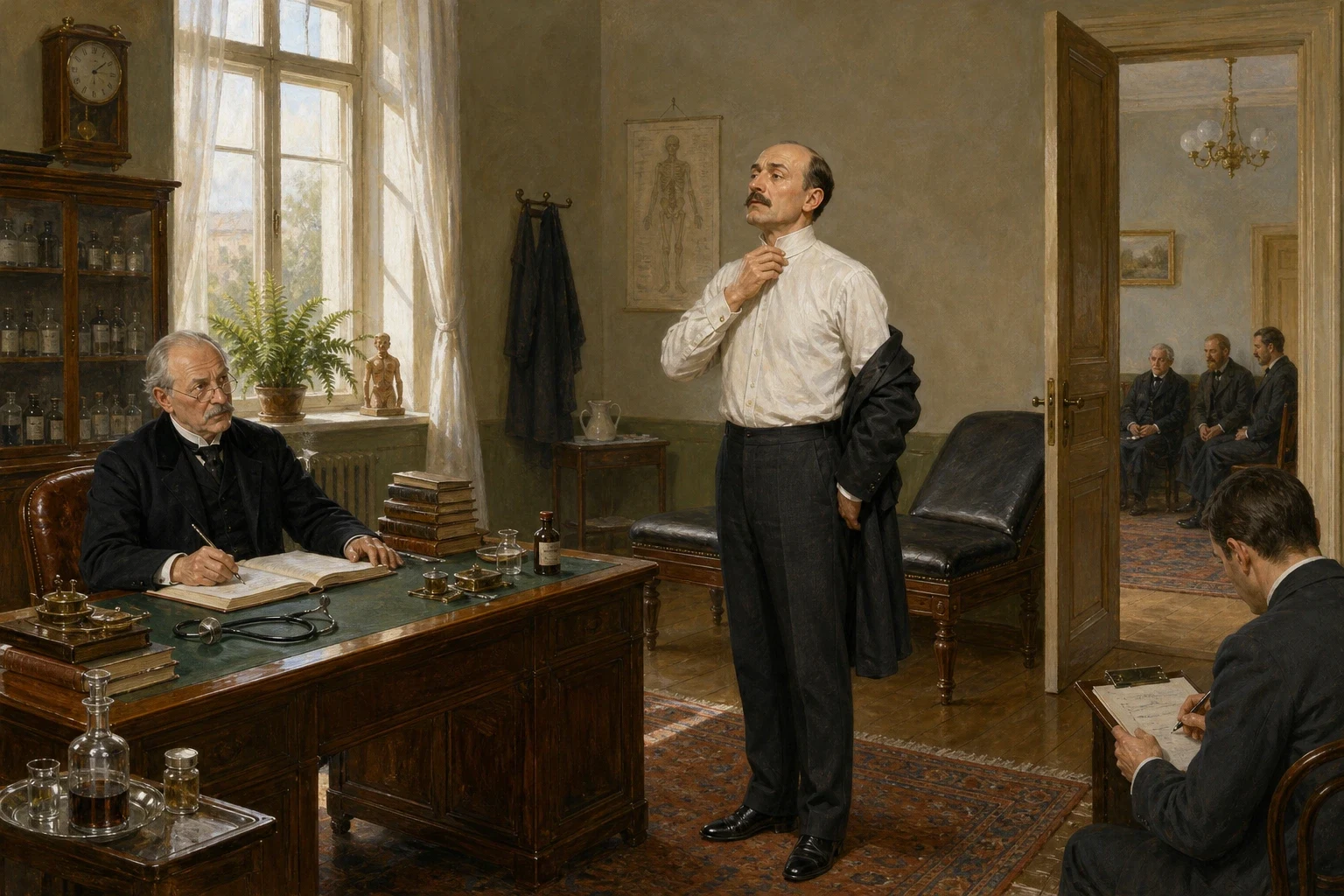
The celebrated doctor examined Ivan Ilyich the way Ivan Ilyich himself had so often examined the men brought before his own bench — with the same brisk, impersonal confidence, asking questions that mattered to the doctor's diagnosis and none that mattered to Ivan Ilyich's fear. Was it the kidney? The appendix? The doctor spoke of a floating kidney in Latin terms, offered no plain answer, and told him only to rest and take certain drops. Ivan Ilyich asked, directly, whether his condition was dangerous. The doctor glanced up over his spectacles as if the question were improper, and said merely that it was too soon to say anything definite. Driving home, Ivan Ilyich turned the doctor's evasive words over and over, and understood, with a cold certainty that had nothing medical in it at all, that something inside him was seriously and perhaps fatally wrong, and that no one intended to tell him so plainly.
Page 6
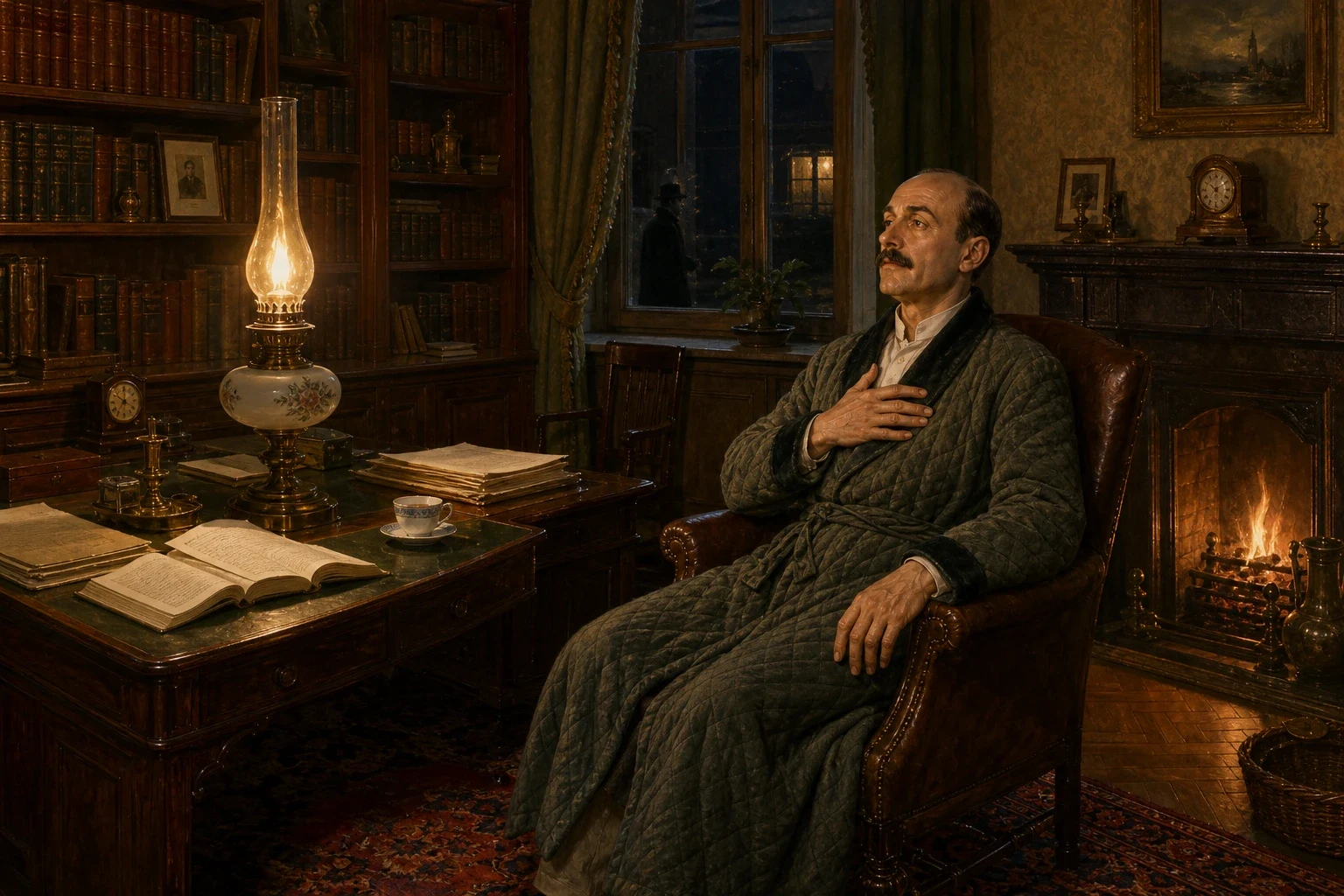
Alone in his study that night, Ivan Ilyich remembered a piece of logic from his old schoolbook: Caius is a man, men are mortal, therefore Caius is mortal. He had always accepted this as true of Caius, true of mankind in general, but never once, in all his forty-five years, as true of himself — of Vanya, with his toys and his mother and his particular feelings, the Vanya who was not at all the same as Caius or mankind in general. Now, sitting in his own chair, in his own study, with his own pain steady beneath his ribs, he understood for the first time that the syllogism applied to him exactly as it applied to anyone else. He would die. Not someday, in the abstract, but soon, and specifically, and there was no argument, no clever reasoning, no position in the Ministry that could set the fact aside.
Page 7
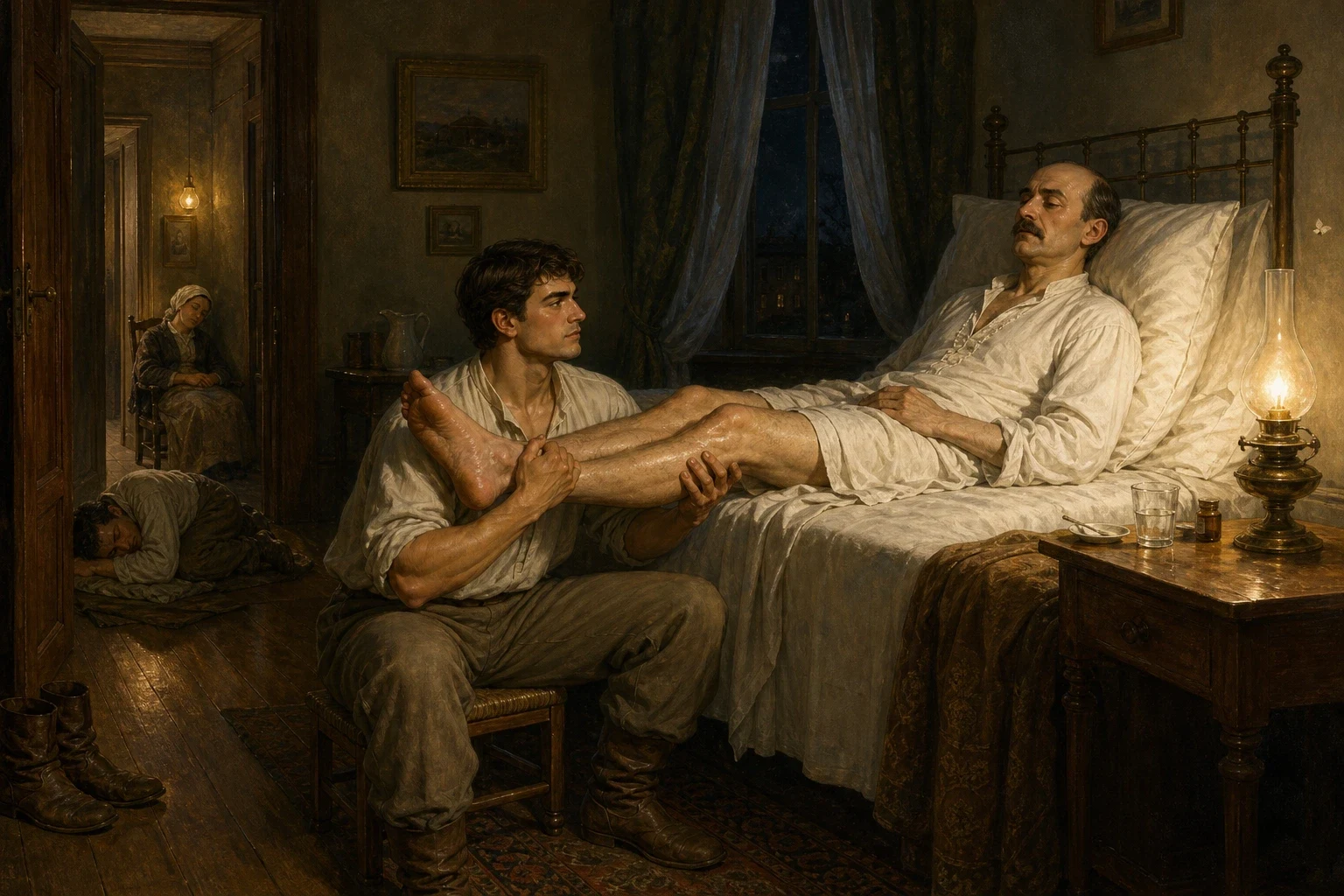
By now Ivan Ilyich's legs ached unbearably through the long nights, and nothing the doctors prescribed eased it. It was Gerasim who found the only relief: the young peasant servant would come in without being asked, lift Ivan Ilyich's legs onto his own strong shoulders, and hold them there, hour after hour, asking nothing and complaining of nothing, while Ivan Ilyich at last slept a little. Everyone else in the house treated his illness as an embarrassment, something to be managed and hurried past; only Gerasim looked at him plainly, without pretending, and seemed to pity him honestly, the way one pities a man who is actually dying, instead of performing sympathy and hoping he would recover and stop being difficult. Ivan Ilyich came to depend on those nights more than on any medicine, and sometimes, held like that, he almost forgot the pain.
Page 8
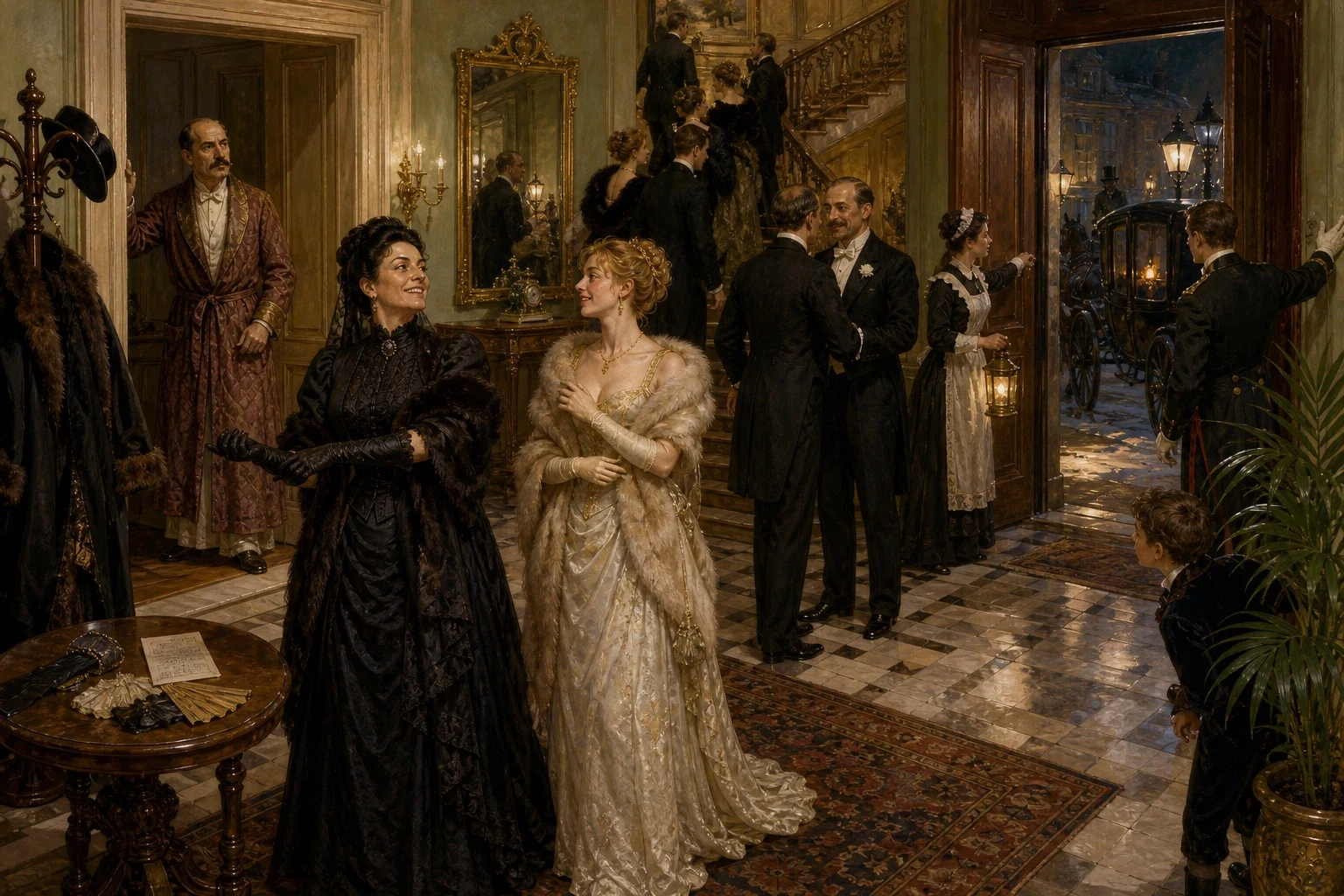
One evening Praskovya Fedorovna and their daughter Liza dressed for the theatre, laughing together in the front hall over a lost glove, while a carriage waited outside, already called. Ivan Ilyich stood in the doorway of his room in his dressing gown, watching them, and felt a wave of something close to hatred rise in him — not at any one thing they had done, but at the plain fact that his dying changed nothing for them, that the evening would go ahead exactly as planned whether he suffered through it alone or not. Praskovya Fedorovna came to kiss his cheek before leaving, told him cheerfully to rest, and reminded him which drops to take, already half turned toward the door as she said it. He watched the carriage lamps swing away down the street from his window, and the house went very quiet around him.
Page 9
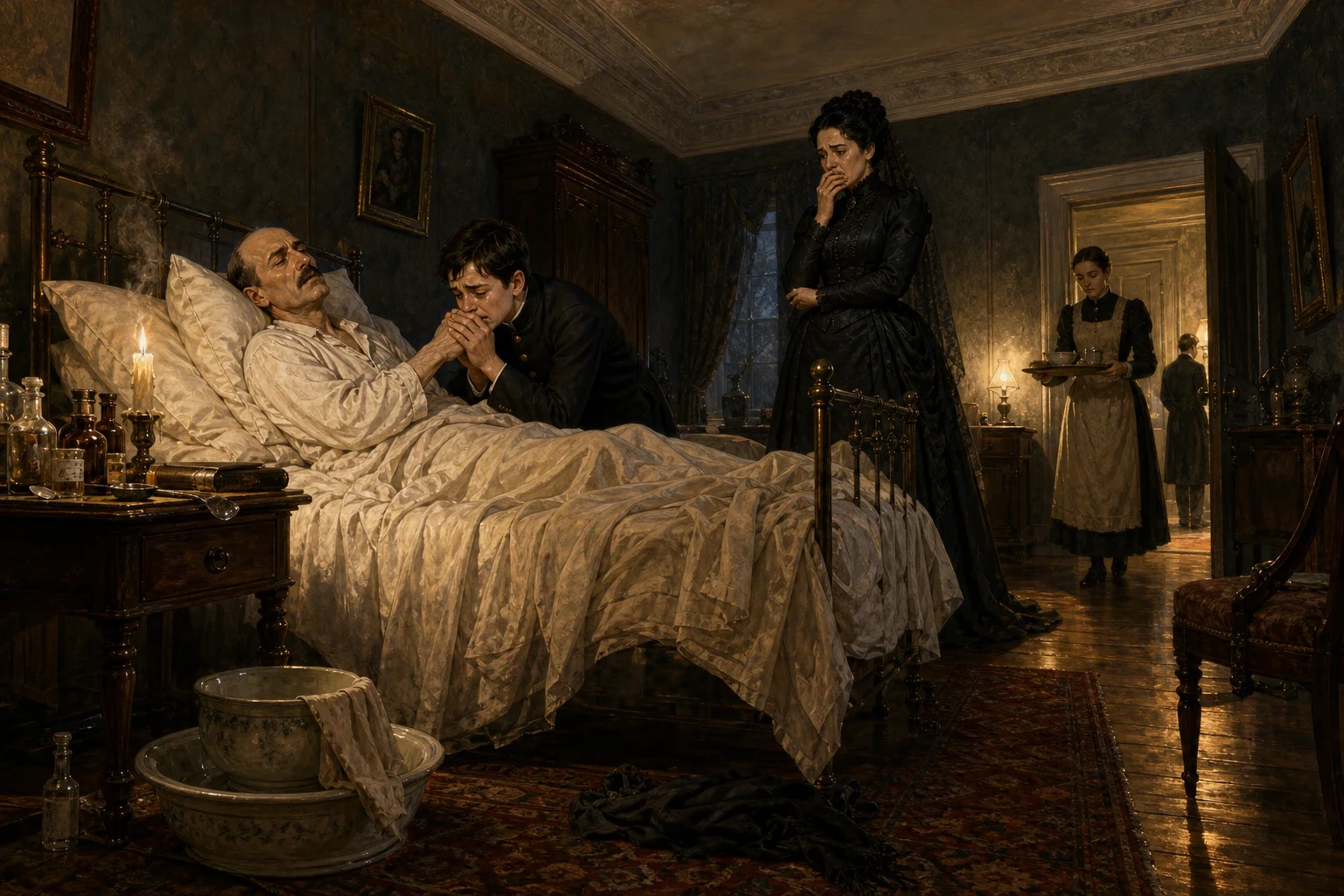
For three days Ivan Ilyich did nothing but scream, a single long unbroken cry that could be heard through two closed doors, and those who heard it could hardly believe it came from a living man. He felt himself being pushed down into a narrow black sack by some force he could not see or fight, pushed further in no matter how he struggled, and the worst of it was knowing he could not get out and could not stop being pushed. In those three days he was not really in the room at all; his family came and went around him as though at a distance. Then, near the end, his son Vasya crept to the bedside, took his father's hand, and pressed it to his lips, and began to cry. Ivan Ilyich, through all his pain, felt that small weight of his son's lips on his hand, and for one moment, however briefly, the screaming inside him went quiet.
Page 10
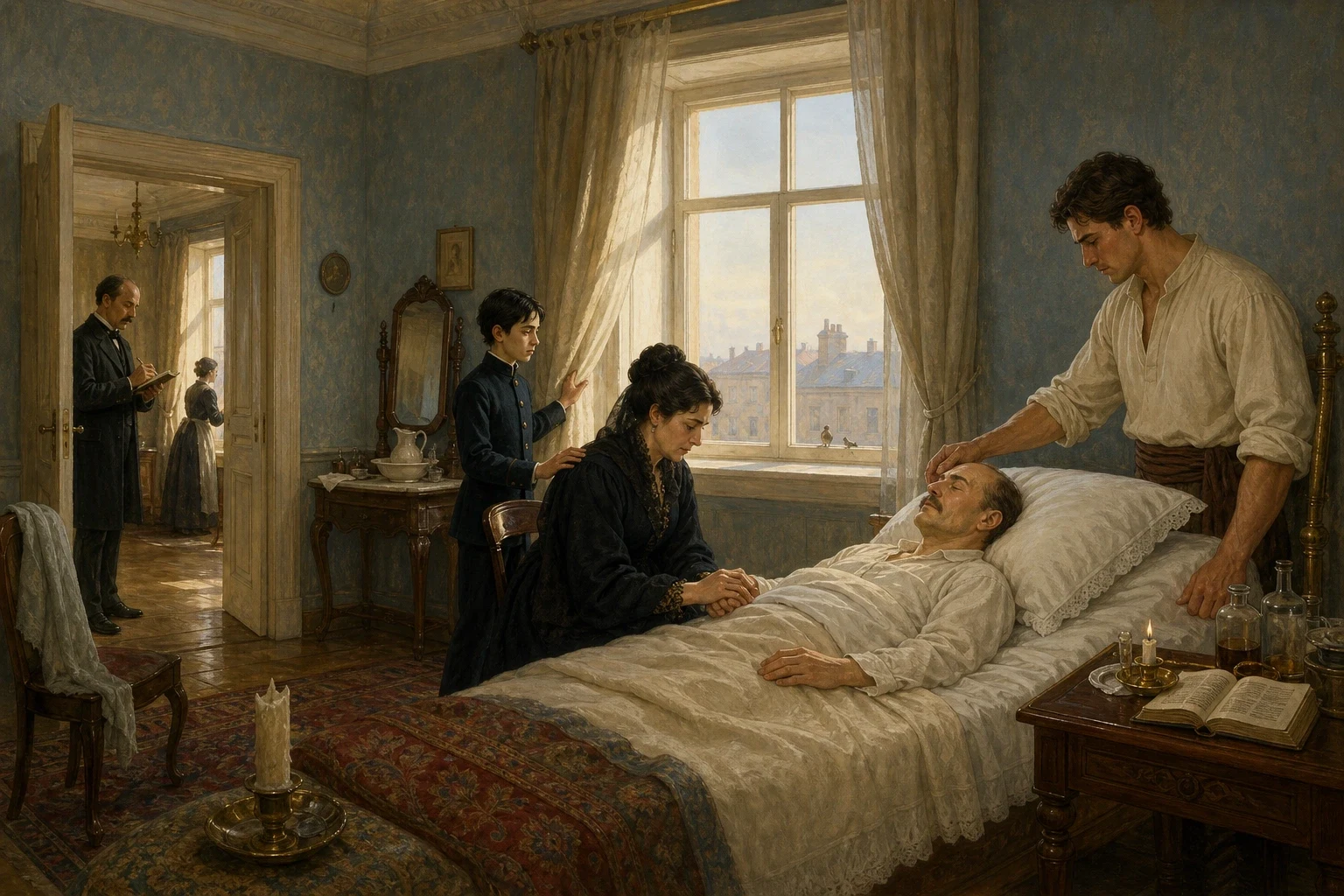
Then, in the middle of his screaming, Ivan Ilyich suddenly stopped struggling against the force that pushed him down, and let himself fall through, and at the bottom of the black sack, where he had expected only darkness, he found light. He understood, all at once, that his life had not been what it should have been, but that this could still be set right, and the thought no longer tormented him; it simply was. He felt sorry for his wife and his son, there beside the bed, and wanted, in that last moment, to make things easier for them rather than harder. He tried to say so, and said instead only, 'Let me be,' meaning let the pain go, not them. Someone's hand was holding his hand. And then, instead of death, there was only the light, filling him completely, and Ivan Ilyich said to himself, 'It is finished,' and died.
About this story
- Audience: general readers
Read Wonder Novels on your phone
Wonder Novels is available on Android. Get Wonder Novels on Google Play.