The Brothers Karamazov
A father, three sons, the woman they all wanted, and the murder that convicts the wrong brother
Page 1
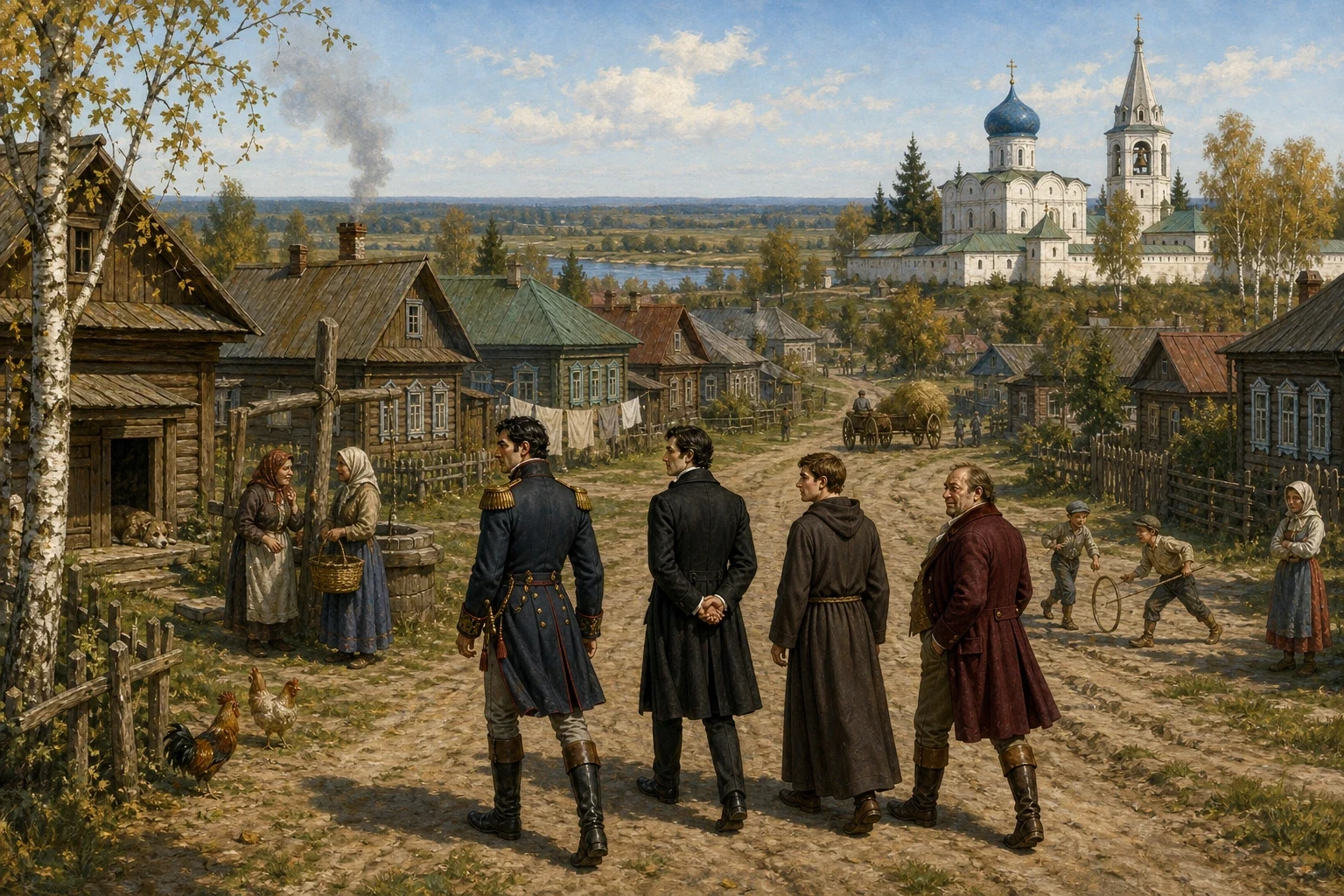
In a small town in Russia there lived a rich, loud and shameless landowner named Fyodor Pavlovich Karamazov. He had buried two wives and raised, badly, three sons who grew up almost as strangers to him and to each other: Dmitri, once a soldier, hot-tempered and proud; Ivan, a thinker, cold and clever; and Alyosha, the youngest, gentle and about to become a monk. Old Fyodor Pavlovich loved money and pleasure more than he loved any of them, and lately a new quarrel had split the family wide open — over the inheritance Fyodor Pavlovich owed his sons, and over a young woman named Grushenka, whom both the father and his eldest son wanted for themselves. To try to settle the money at least, a meeting had been arranged at the monastery outside town, with the old monk Zosima to referee. All three brothers and their father set out along the road toward it, each carrying his own private grievance like a stone in his pocket.
Page 2
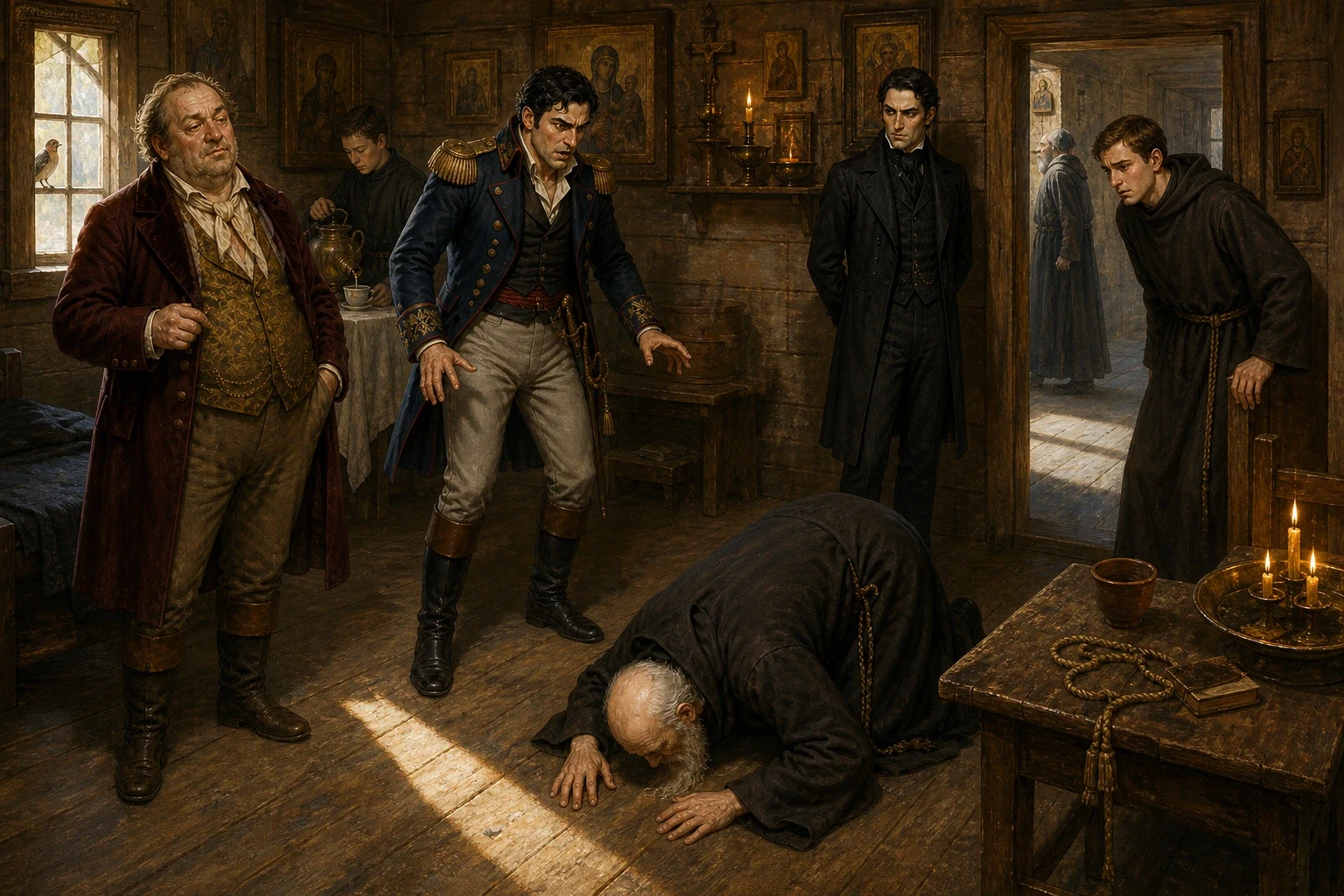
At the monastery, the family gathered in the small wooden cell of the elder Zosima, hoping he could calm the quarrel over Fyodor Pavlovich's estate. It did no such thing. Fyodor Pavlovich mocked everyone in the room, twisting every serious word into a joke; Dmitri, red with anger over the money he felt was rightfully his, and over his father's shameless pursuit of Grushenka, spoke so wildly of his hatred that it frightened the others in the room. Suddenly old Zosima rose from his seat, crossed the cell to where Dmitri stood, and knelt down, bowing all the way to the floor before him. No one understood why. Alyosha, watching, felt a cold fear he could not explain. When the old monk was helped back to his feet, he said nothing more about it, only that great suffering was coming, and that it should be borne. The meeting broke up unsettled, the quarrel over money no closer to being solved.
Page 3
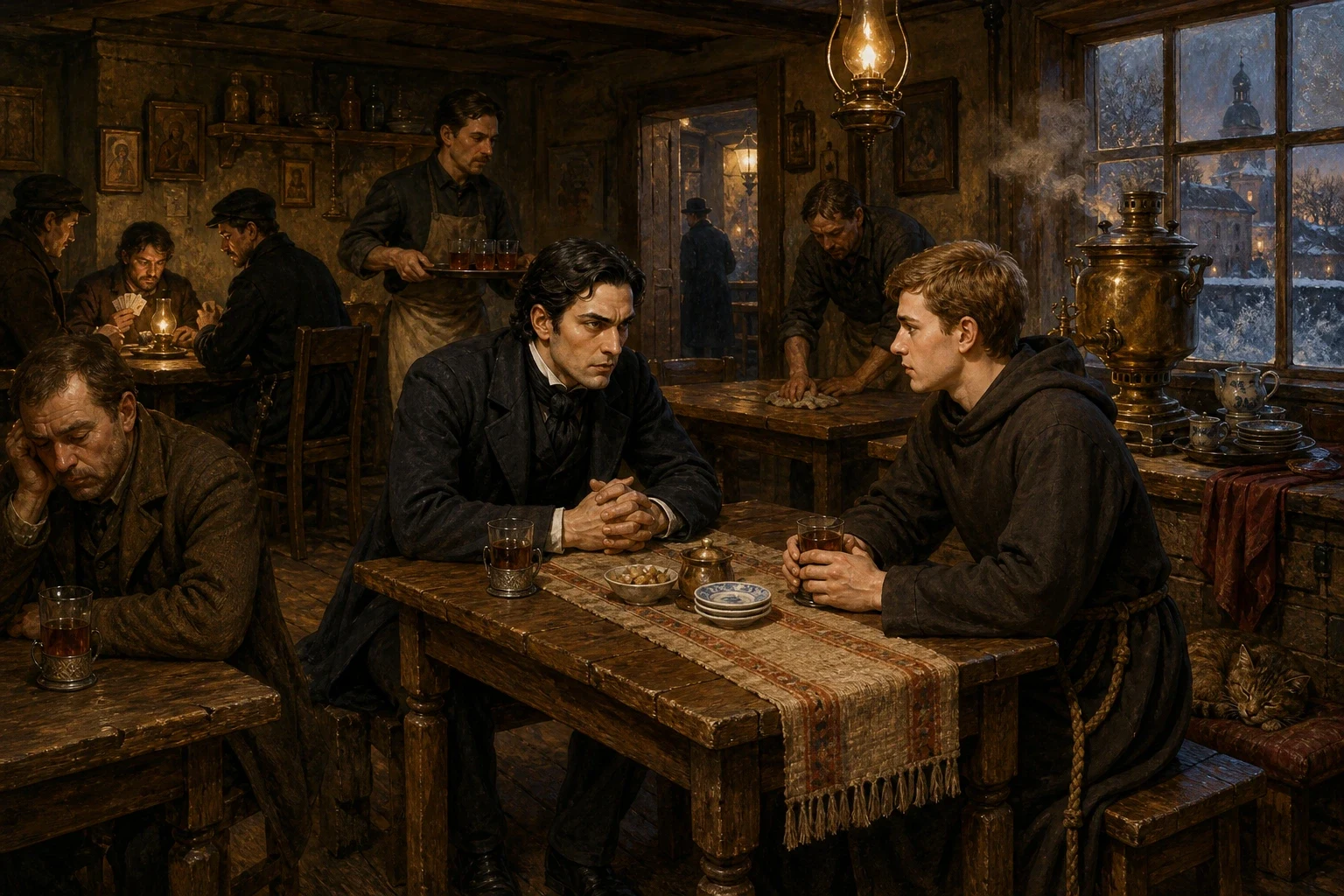
In a tavern in town, Ivan sat across the table from his younger brother Alyosha and finally said aloud the thing that had been eating at him. He could not accept, he said, a world built so that children suffer for a harmony they will never live to see, even if God himself promised to explain it all at the end of time; whatever the reason, he would rather return the ticket. Then he told Alyosha about a poem he had written in his head, about the Grand Inquisitor: how Christ, if he came back to earth, would be arrested by the Church itself, because the Church had built its peace on taking away the very freedom Christ had given men, and did not want it given back. Alyosha listened, troubled, unable to argue his brother out of his despair, only kissing him gently on the lips before they parted into the night.
Page 4
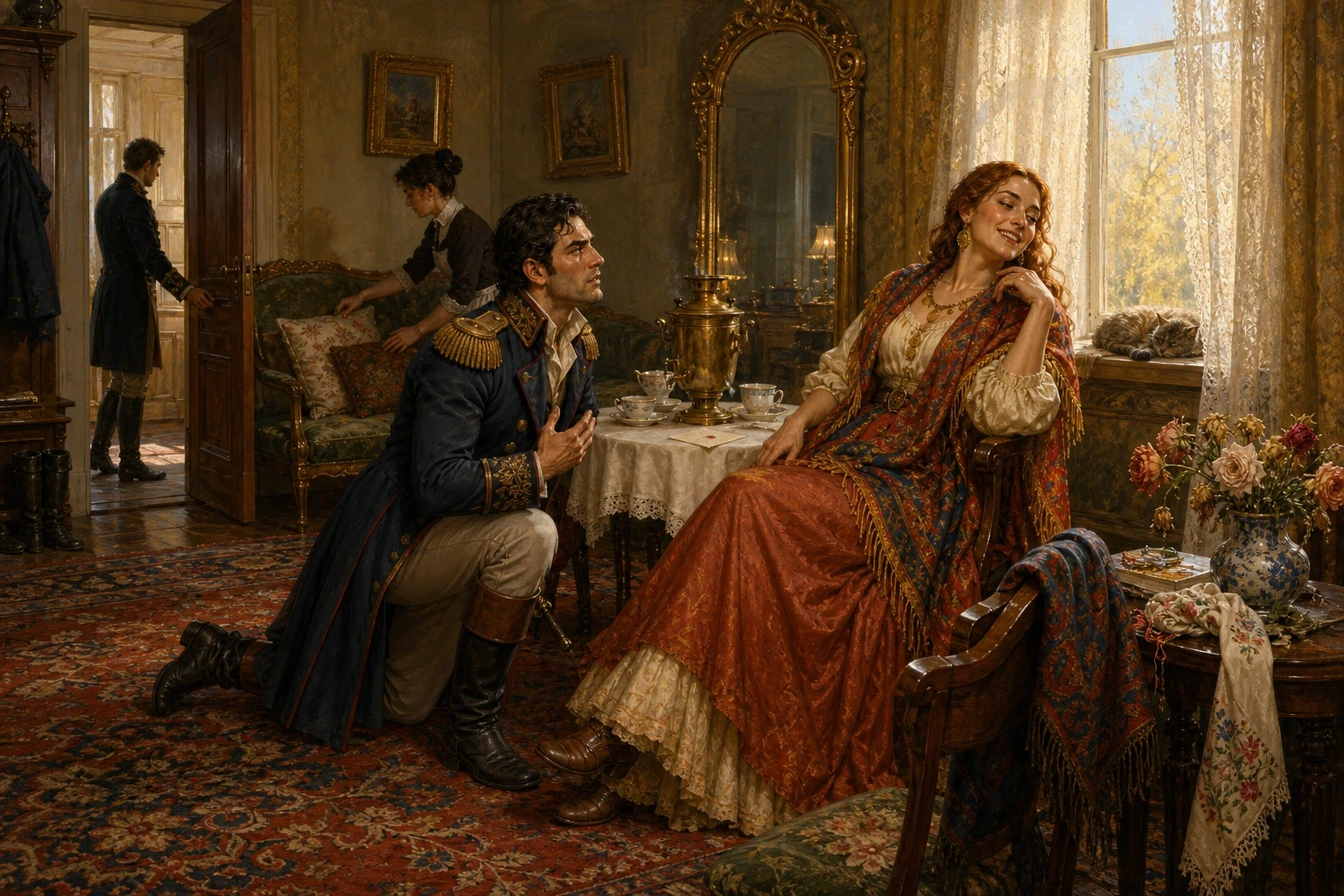
Dmitri loved Grushenka so completely that he had broken off his engagement to a fine, proud young woman named Katerina Ivanovna, and spent money that was not even his trying to win her. Worse, his own father wanted Grushenka too, and had set aside three thousand roubles to tempt her with. Dmitri owed Katerina that very sum, and swore to himself that he would pay it back or shoot himself trying. In her parlor, Grushenka listened to him plead and teased him without promising him anything at all, enjoying the power she held over both father and son and giving her answer to neither. Dmitri left her house that evening no closer to knowing whether she would ever truly be his, burning with jealousy at the thought of his father's money sitting ready for her, and more desperate than ever to find three thousand roubles before someone else did.
Page 5
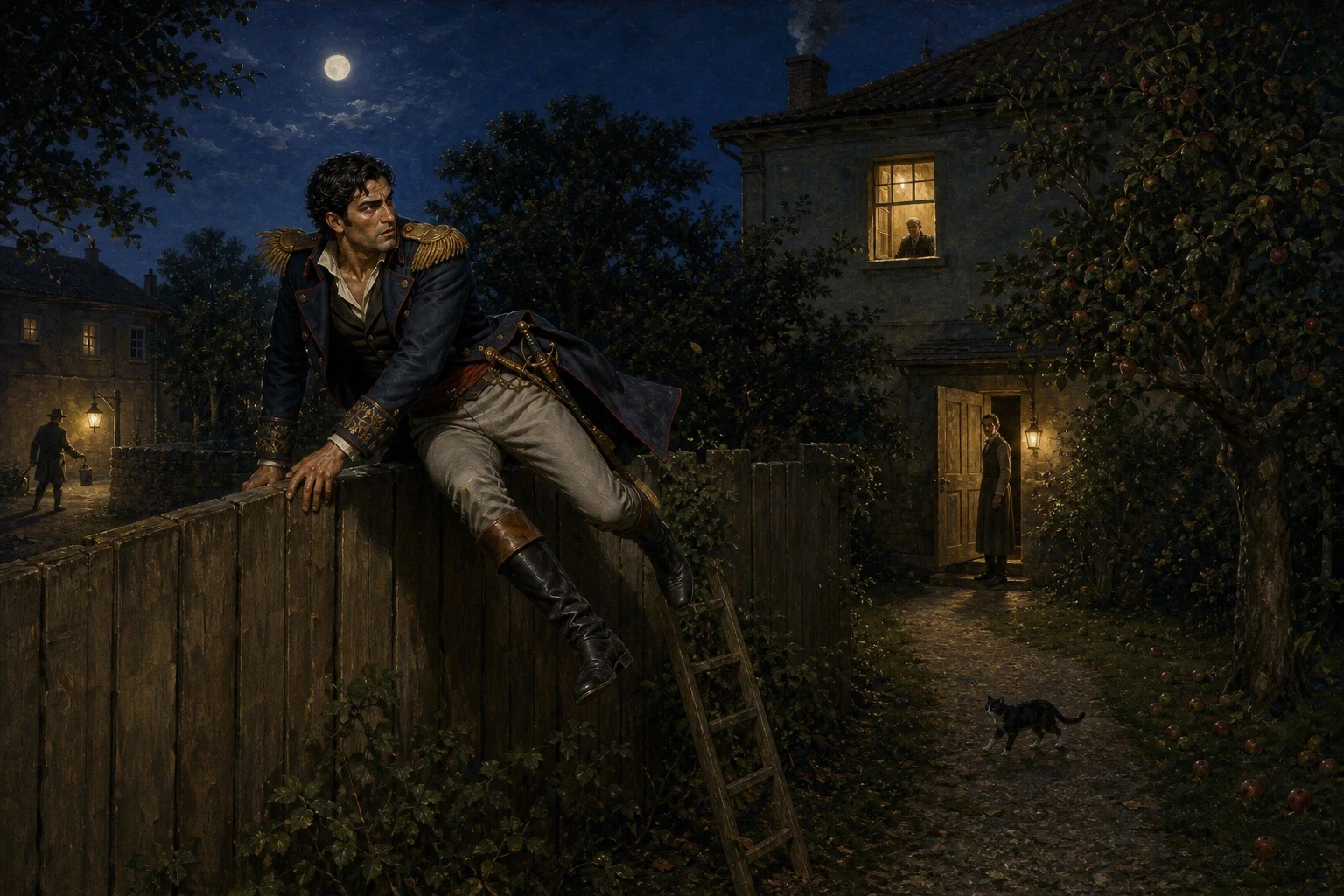
That night, desperate for money and certain Grushenka might be hiding at his father's house, Dmitri crept into the garden and tapped the secret signal on his father's window — but hearing only his father's voice calling out, and no sign of Grushenka, he turned and fled without going inside. Climbing back over the garden wall, he struck out at the old servant Grigory, who had come running and caught at his leg, injuring him, before vanishing into the dark. Later that same night, alone in the house with his father, the servant Smerdyakov did what Dmitri had only threatened to do: he killed Fyodor Pavlovich with the heavy brass pestle kept by his bed, and took the envelope of three thousand roubles meant for Grushenka. By morning, old Fyodor Pavlovich lay dead in his own house, and his son Dmitri, who had fled that same garden only hours before with blood already on his hands from Grigory, would be the one everyone suspected.
Page 6
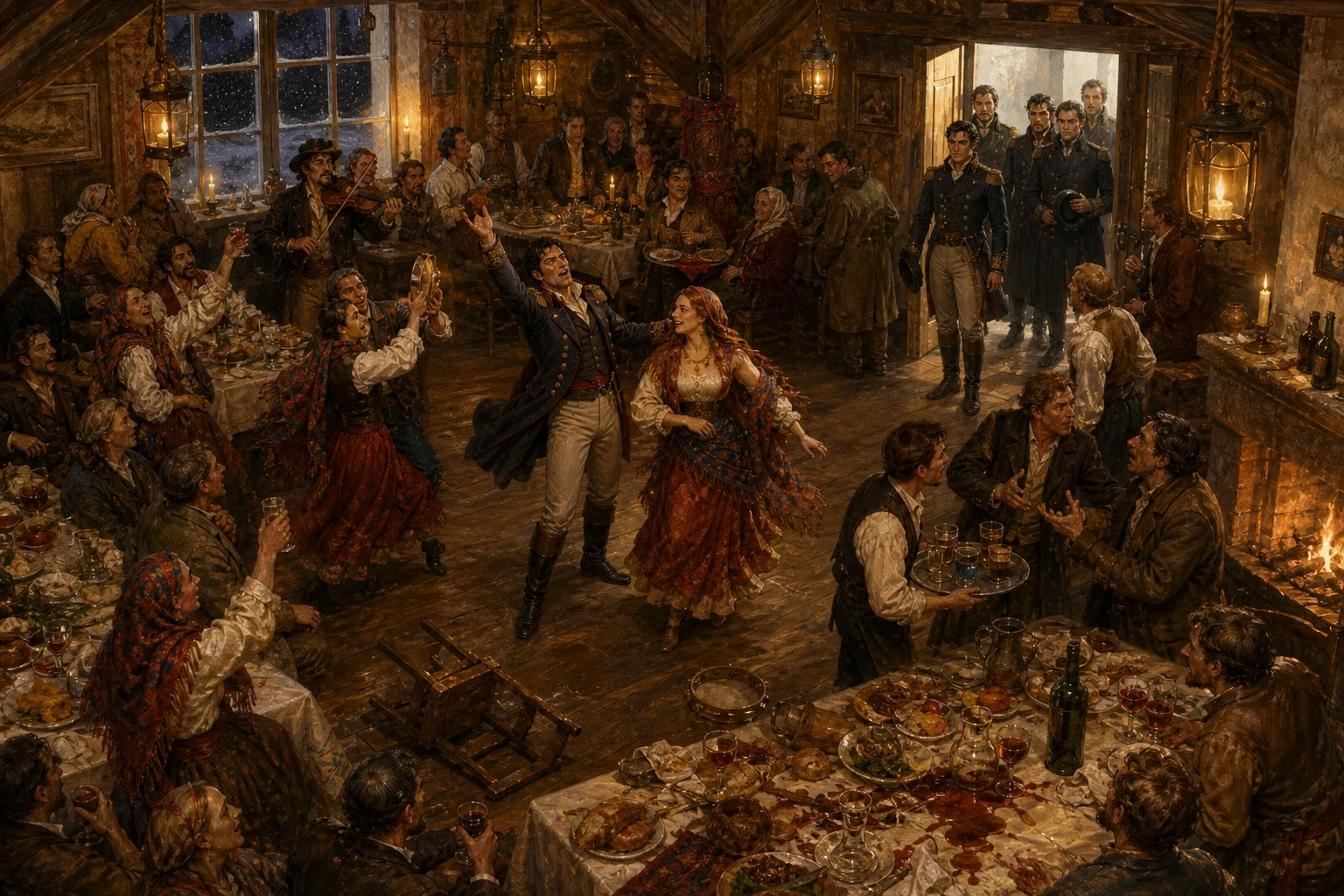
Believing, wrongly, that he had finally won Grushenka's heart, Dmitri rushed to the country inn at Mokroye and threw himself a celebration, calling for musicians and gypsy singers and spending money freely on wine and food for the whole room. For one golden evening he was simply happy, certain his whole hard life was about to change for the better. Grushenka, moved at last by his joy, began to soften toward him. But in the middle of the singing and the dancing, the inn door opened and police officials walked in. They told Dmitri plainly that his father had been found murdered that same night, and that he was under arrest for the crime. The music stopped. Dmitri, stunned, understood at once what it would look like to everyone — that he, who had hated his father so openly and needed money so badly, would seem guilty before he ever said a word in his own defense.
Page 7
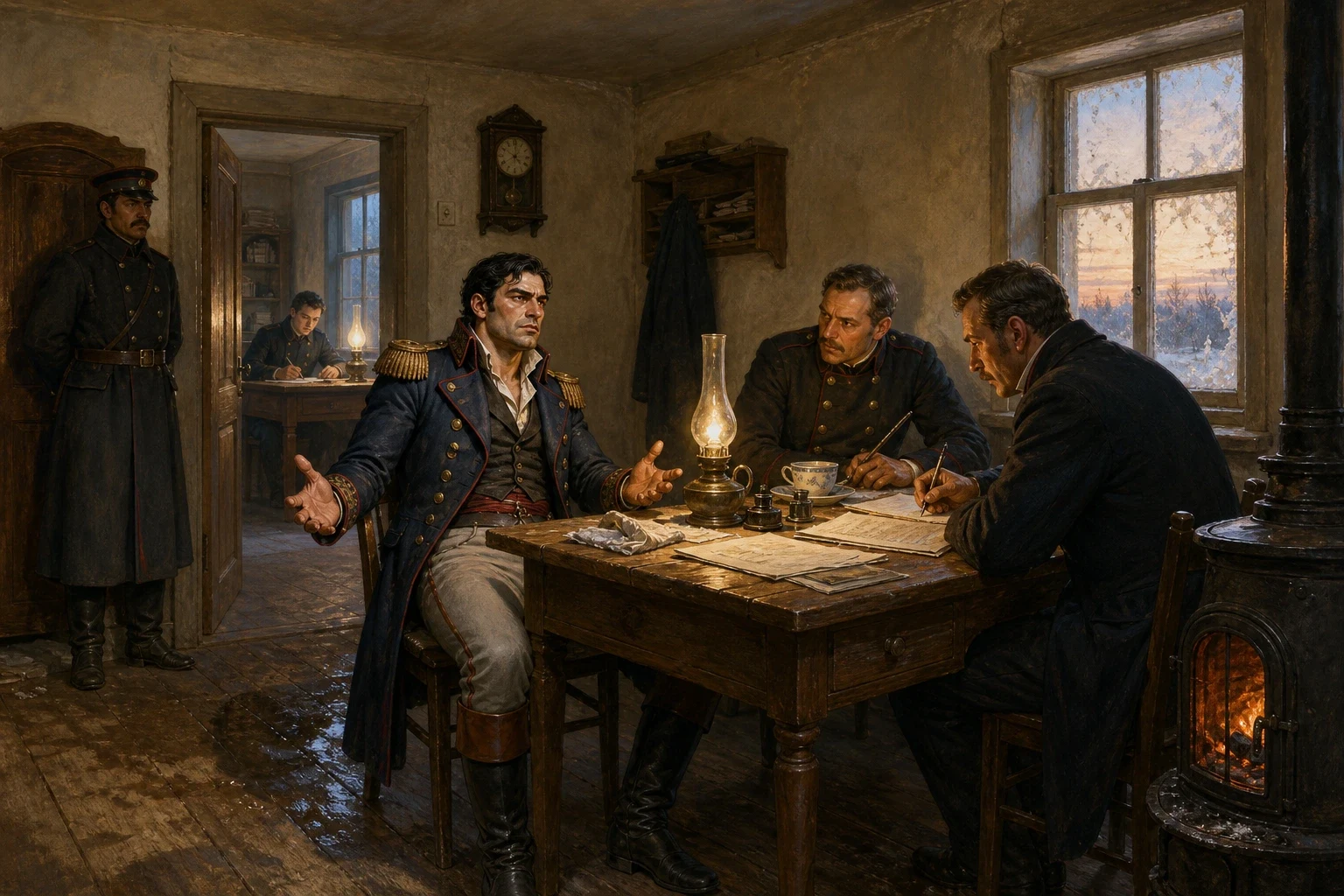
Through the rest of that night, Dmitri was questioned in a small office at Mokroye by the local magistrate and the prosecutor. He told them everything he could: that he had gone to his father's garden looking for Grushenka, that he had struck Grigory at the fence, that he had fled without even going inside. The money he had spent so freely that night, he swore, had nothing to do with his father's murder — it was an old sum, carried folded in a cloth around his neck for months, which he had finally decided to spend. But no one in the room believed that a man so openly furious at his father, so deep in debt, and so plainly guilty-looking that very night, could possibly be telling the truth. By the grey light of morning, Dmitri Fyodorovich Karamazov was formally charged with the murder of his father.
Page 8
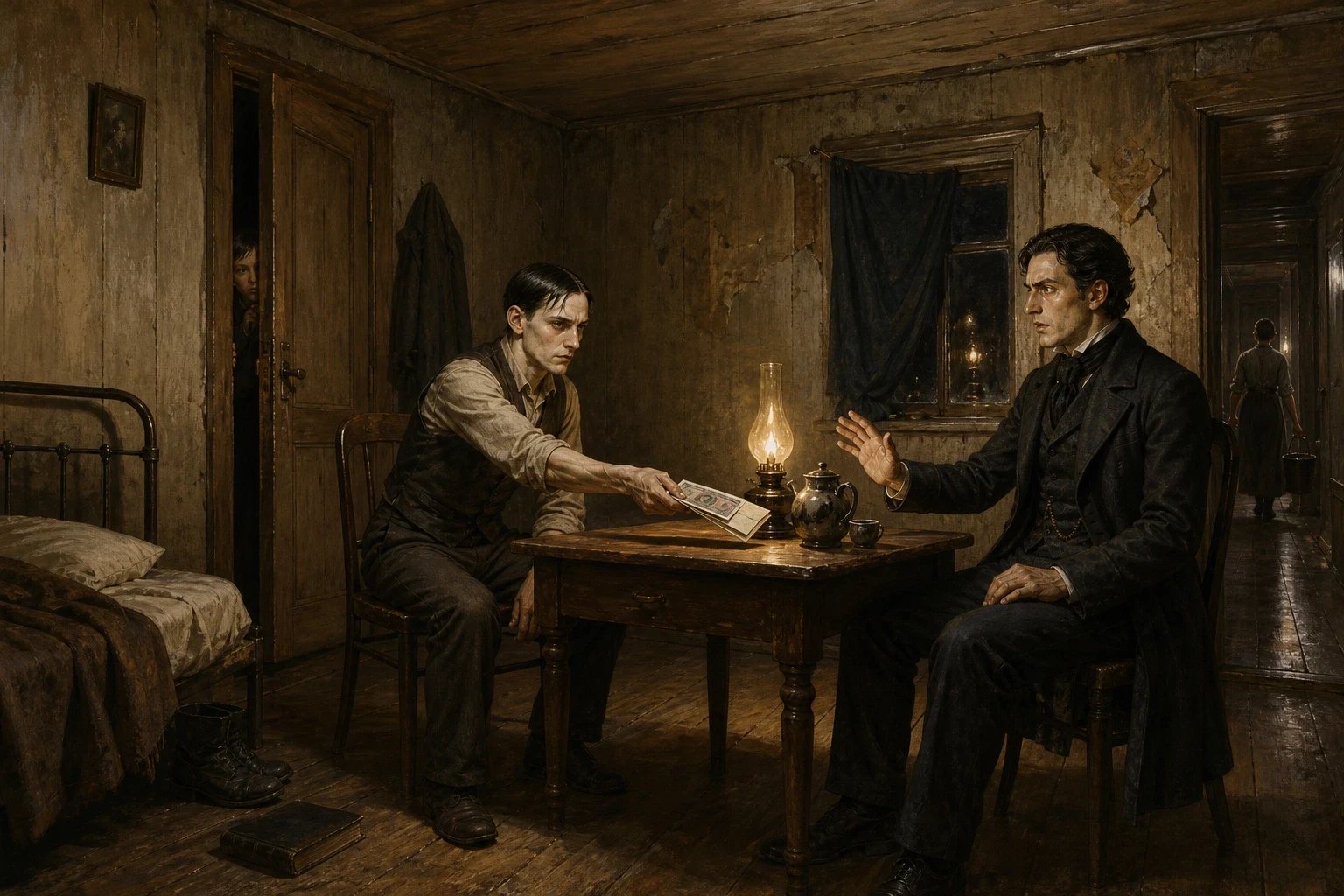
Something about the murder troubled Ivan deeply, and he went three times to see the family's sickly servant Smerdyakov, certain the man knew more than he had told the court. On the third visit, in Smerdyakov's bare little room, the truth finally came out. It was Smerdyakov, not Dmitri, who had killed Fyodor Pavlovich that night with the heavy brass pestle, while Dmitri was busy fleeing over the garden wall outside. Smerdyakov said, quite calmly, that he had done it partly because of ideas about God and conscience that he had picked up from listening to Ivan himself, and that Ivan, by leaving town that night instead of staying to protect his father, had as good as wanted it to happen. He handed over the stolen three thousand roubles, saying he had no use for money anymore. That same night, alone, Smerdyakov took his own life.
Page 9
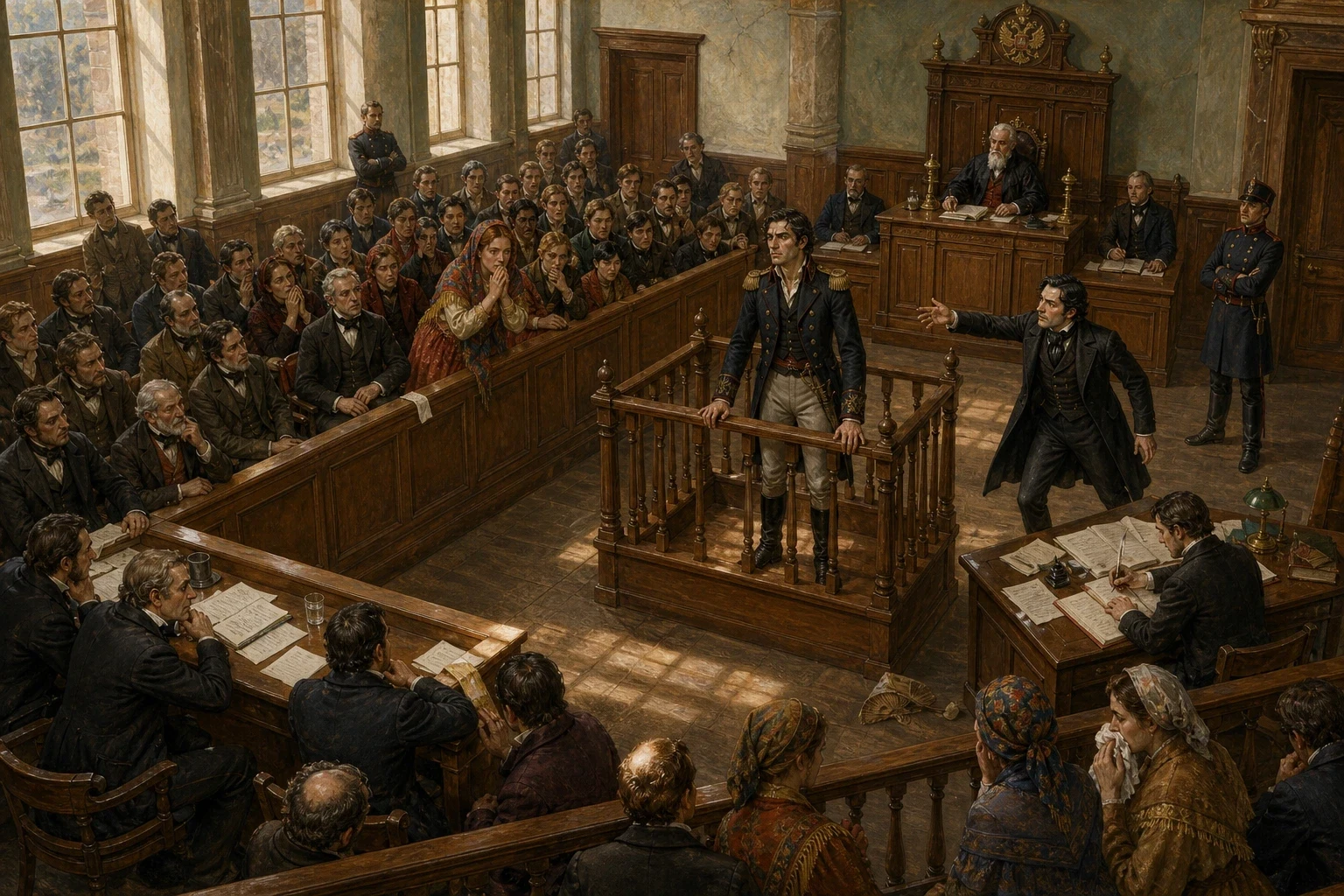
At the trial, the whole town crowded into the courtroom to watch Dmitri Fyodorovich Karamazov tried for his father's murder. A letter Dmitri had written on the night of the murder, drunkenly promising to pay his debts or kill himself, was read aloud and used as proof of his guilt. Ivan tried to tell the court the truth he had learned from Smerdyakov, but grief and strain had worn him down so badly that he seemed to rave, and the court did not believe a word of it. Grushenka wept and begged the jury to see that Dmitri could never have truly killed his own father. None of it was enough. After everything was weighed, the jury found Dmitri guilty of the murder of Fyodor Pavlovich Karamazov, a crime he had not committed, and the courtroom fell completely silent around him.
Page 10
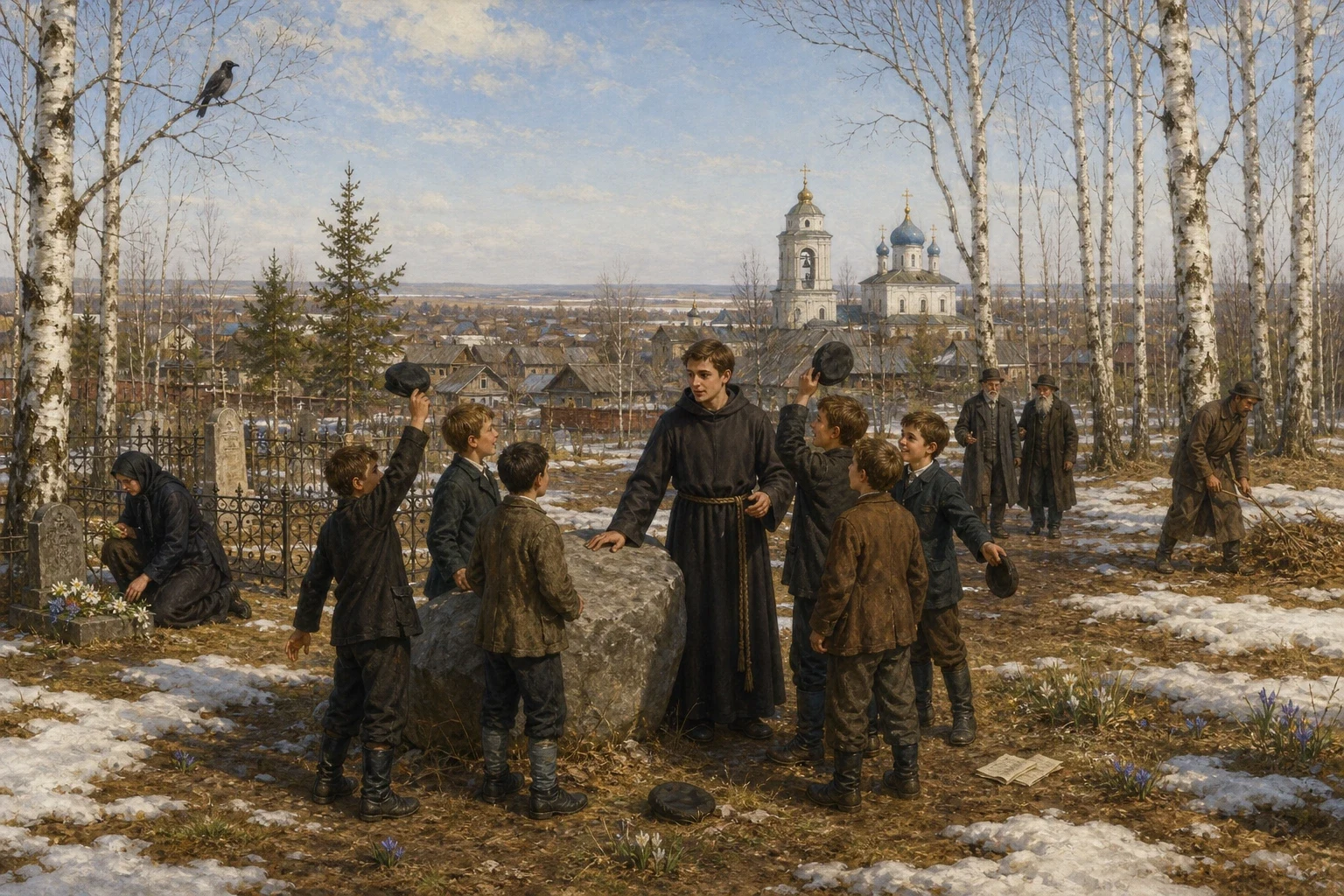
After the funeral of a schoolboy named Ilyusha, whom Alyosha had comforted and visited faithfully through his last illness, Alyosha walked out to the big flat stone by the edge of the cemetery that Ilyusha had loved, where the boy's young schoolfellows had gathered, grieving. Alyosha told them that whatever happened to them in their lives, however far apart they scattered, they must never forget this day, or the love they had felt for their friend and for each other, because a good memory kept from childhood could save a person later, even in a bad hour. The boys, moved, promised they would remember. Then, their grief loosened a little, they set off together toward the house, talking of the pancakes waiting for them at the funeral breakfast, calling out as they went, all together, one last time, in memory of their friend.
About this story
- Audience: general readers
Read Wonder Novels on your phone
Wonder Novels is available on Android. Get Wonder Novels on Google Play.