The Hound of the Baskervilles
A deadly family legend, a lonely moor, and the detective who proved the curse was a man, not a monster
Page 1
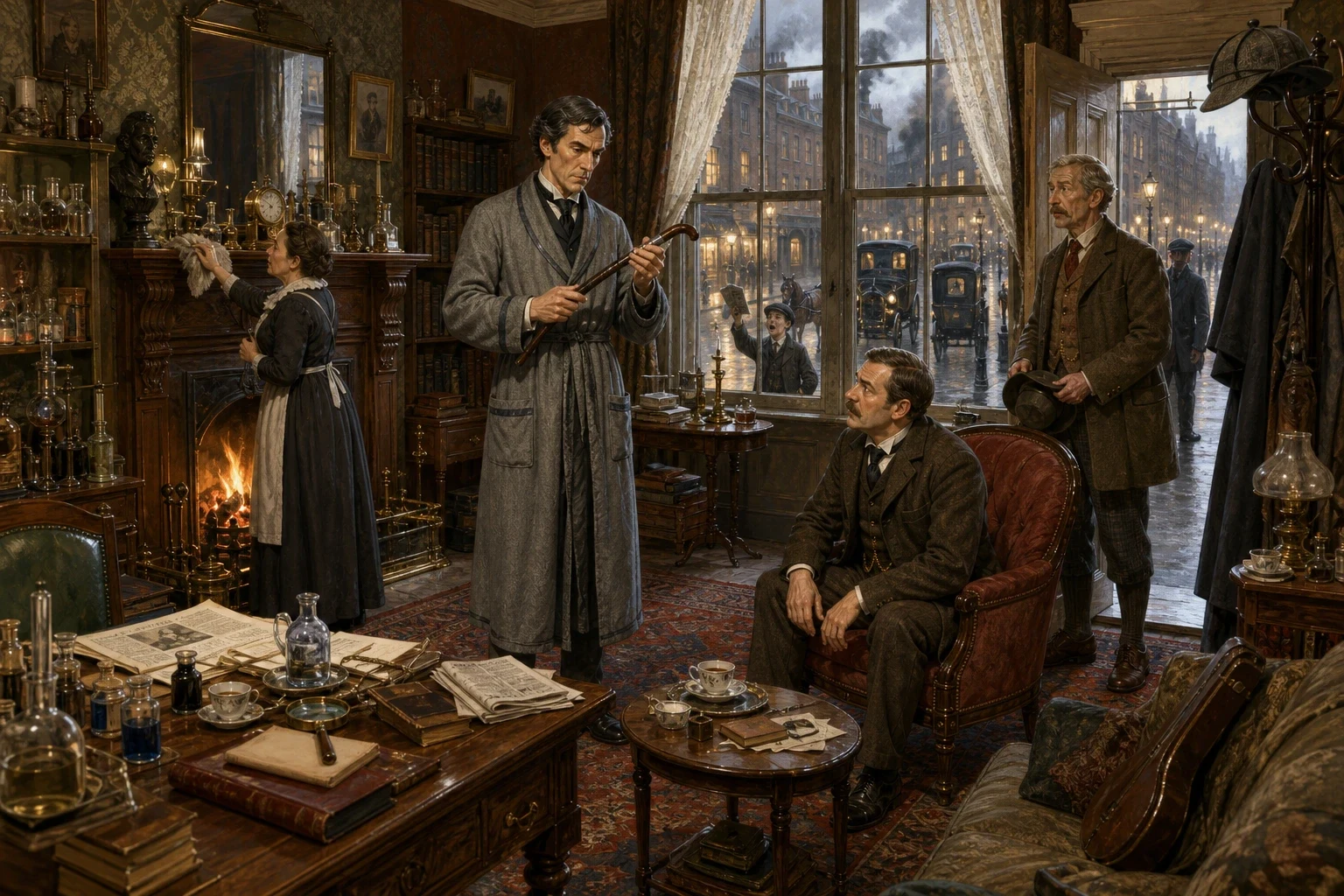
At 221B Baker Street, Sherlock Holmes turned a walking stick over and over in his long fingers while Dr. Watson looked on. The stick had been left behind the evening before by a visitor who had forgotten it, and Holmes was busy working out who its owner must be before the man even knocked again. Soon the owner did knock: a tall, stooping country doctor from Devonshire, who had come about something far stranger than a lost stick. He told them of his old friend and patient, Sir Charles Baskerville, found dead on the moor outside his own hall, his heart stopped by fright, and beside his body, pressed fresh into the mud, the huge footprints of a hound. The doctor believed the old family curse of a demon hound was real, and had come to beg London's great detective for help before the next Baskerville heir arrived to claim his inheritance.
Page 2
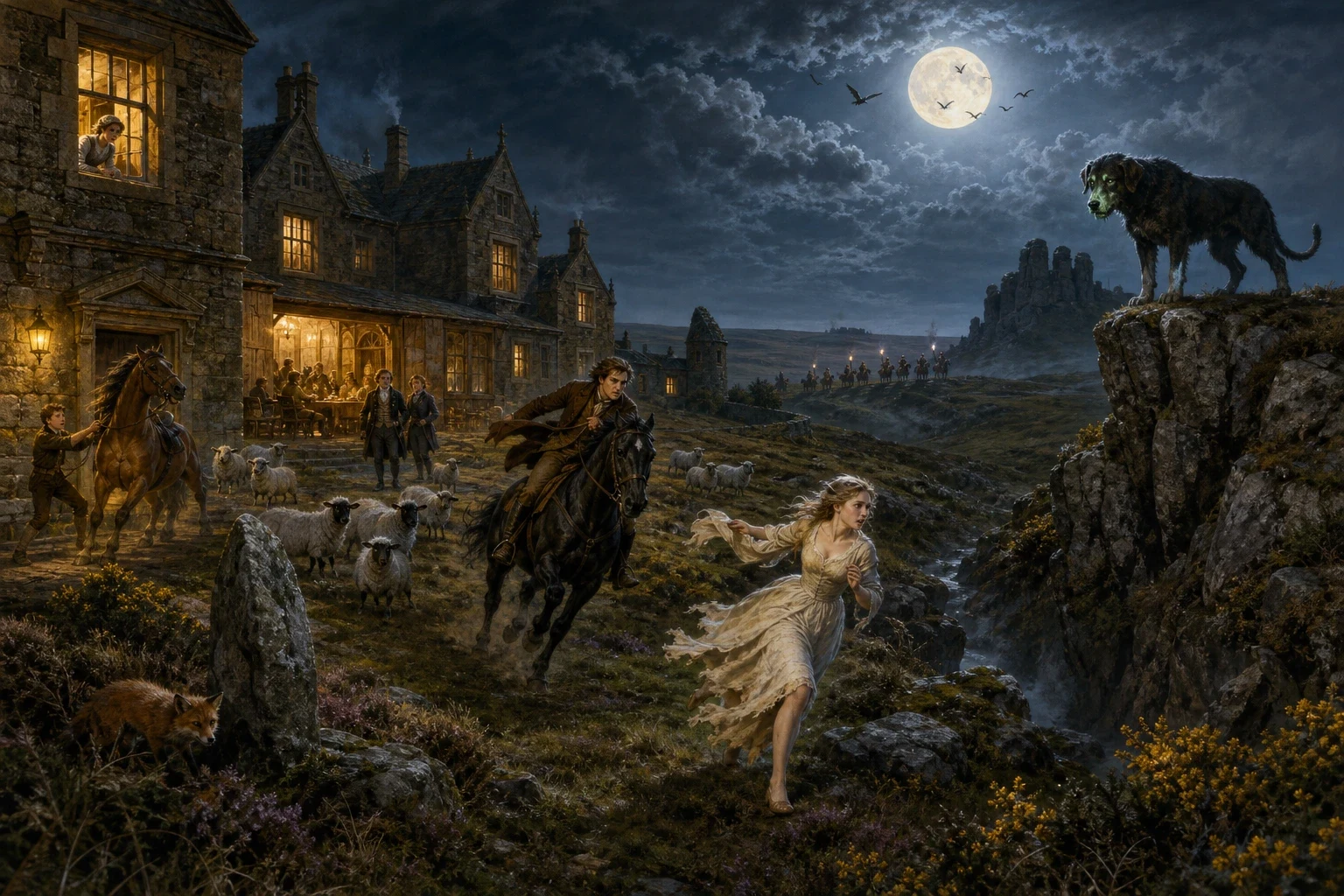
The old family paper told of Hugo Baskerville, a wild and cruel squire who once held a young woman locked in an upper room of the Hall while he feasted below with his friends. She escaped by climbing down the ivy and ran across the moor toward home. Hugo, in a fury, swore he would give his soul to the Devil to catch her, and galloped out after her into the dark with his hounds. His friends, following late, found the hounds whimpering at the mouth of a gully, refusing to go further. Two of the boldest riders went on alone and found the young woman dead of fear and exhaustion, and near her, standing over Hugo Baskerville's body, a monstrous hound, black and shaggy, far bigger than any hound ever seen before. From that night, the story said, the curse had never left the Baskerville family.
Page 3
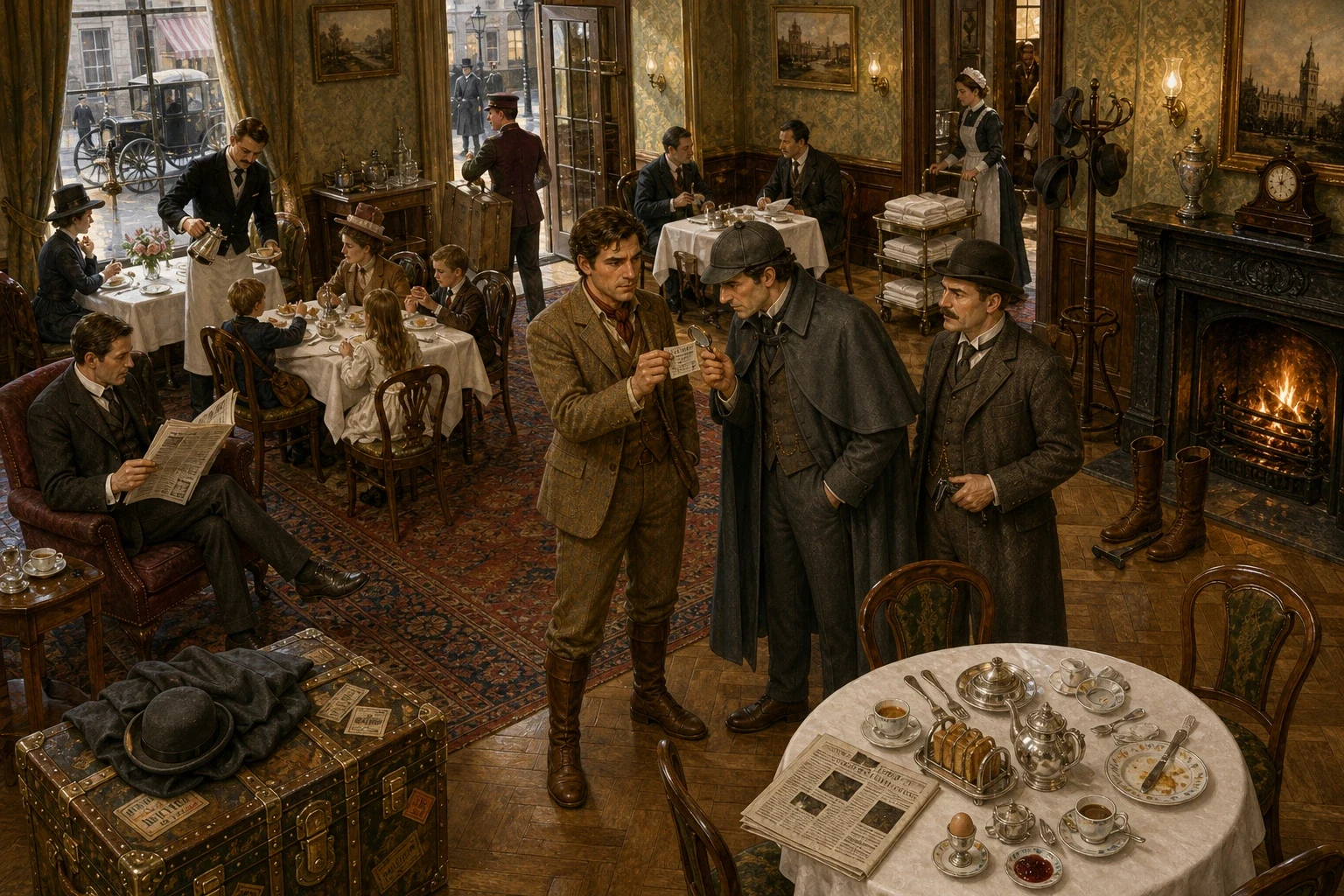
Sir Henry Baskerville, Sir Charles's nephew and heir, had arrived in London from Canada to claim the Hall. At his hotel he received a strange note made of words cut from the Times, warning him to keep away from the moor. That same day, one of his new brown boots vanished from outside his door, and a boot from a different pair went missing the next. Holmes and Watson met him at breakfast and heard all of it. Despite the strangeness and the note's warning, Sir Henry declared he meant to go to Baskerville Hall anyway, curse or no curse, and Holmes resolved that Watson would go with him to watch over him.
Page 4
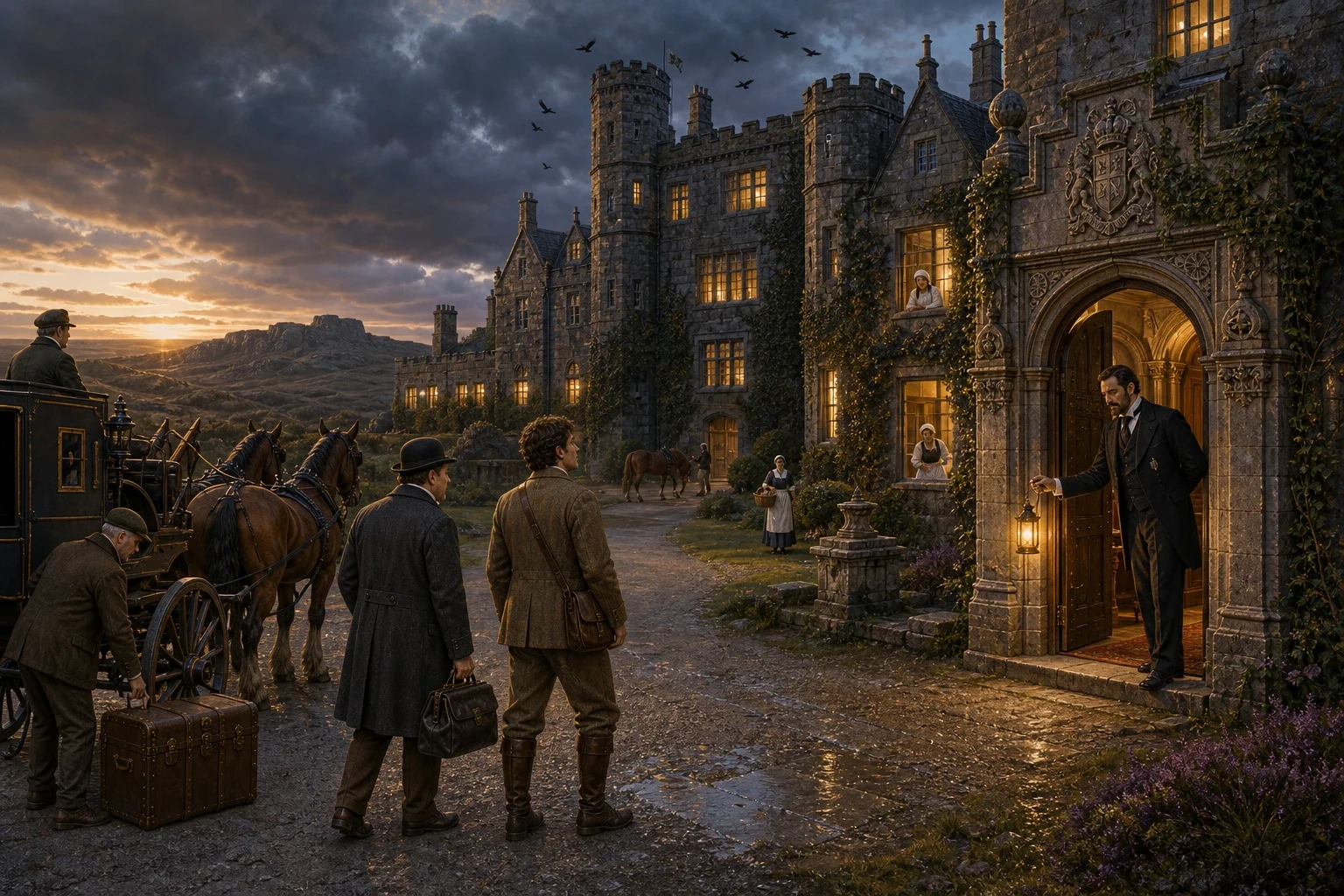
Watson and Sir Henry traveled down to Devon and drove up to Baskerville Hall through the dark Yew Alley, the old trees meeting overhead like a tunnel. The Hall itself rose grim and grey against the sky, and as they arrived, the butler Barrymore came out to greet the new master. That night, Watson was woken by the sound of a woman sobbing somewhere in the old house, and far off, carried on the wind across the moor, he thought he heard the long, low cry of a hound.
Page 5
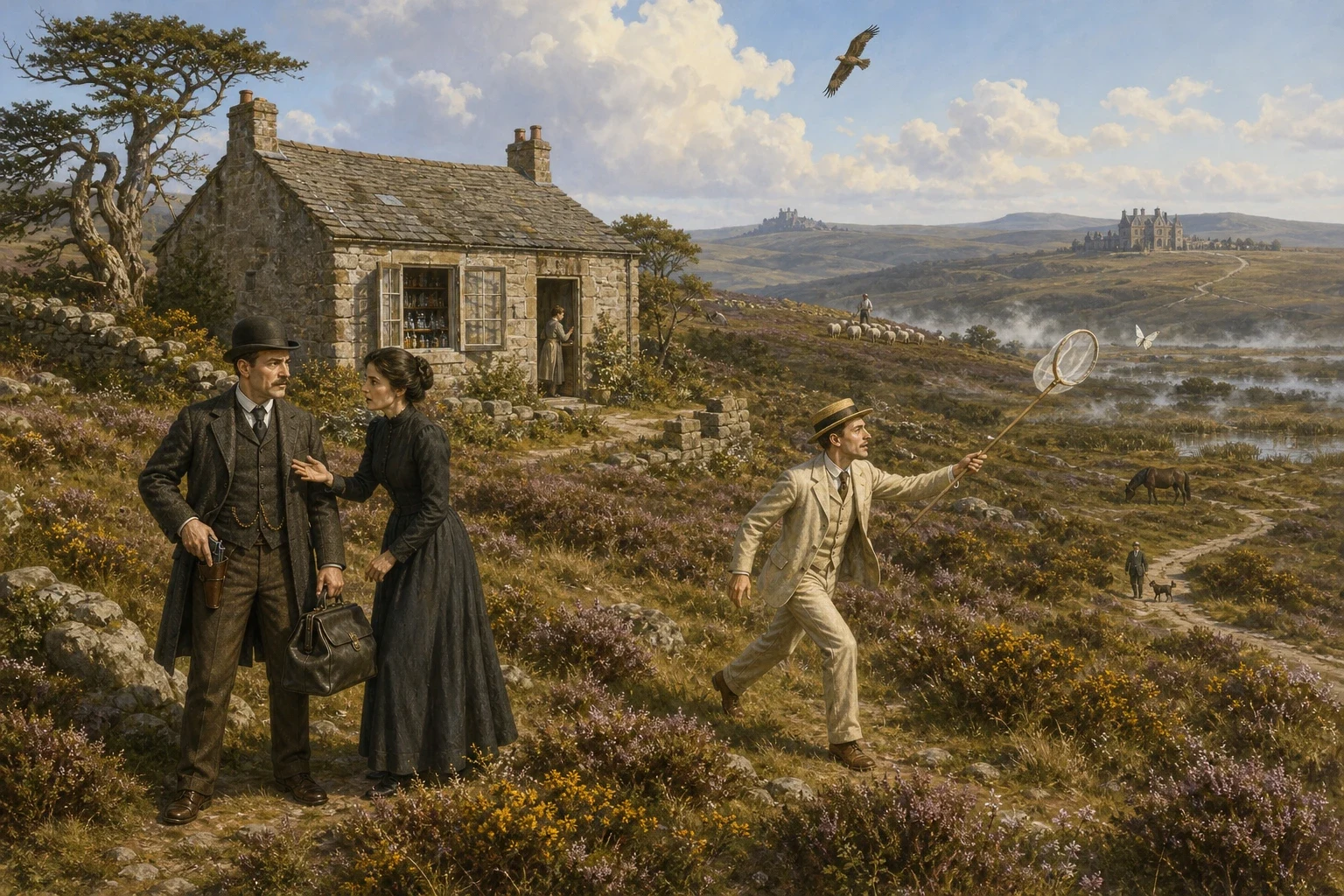
Out walking on the moor, Watson came to a small, lonely house called Merripit House, home of the naturalist Mr. Stapleton and his sister Beryl. Stapleton, chasing butterflies across the bog with his net, greeted Watson eagerly and warned him of the deadly Grimpen Mire nearby, where careless men and ponies had vanished into the mud. Later, walking with Watson in the fading light, Beryl mistook him for Sir Henry and urgently begged him to go back to London at once, away from the moor and the Hall — then, realizing her mistake, grew frightened and refused to say any more.
Page 6
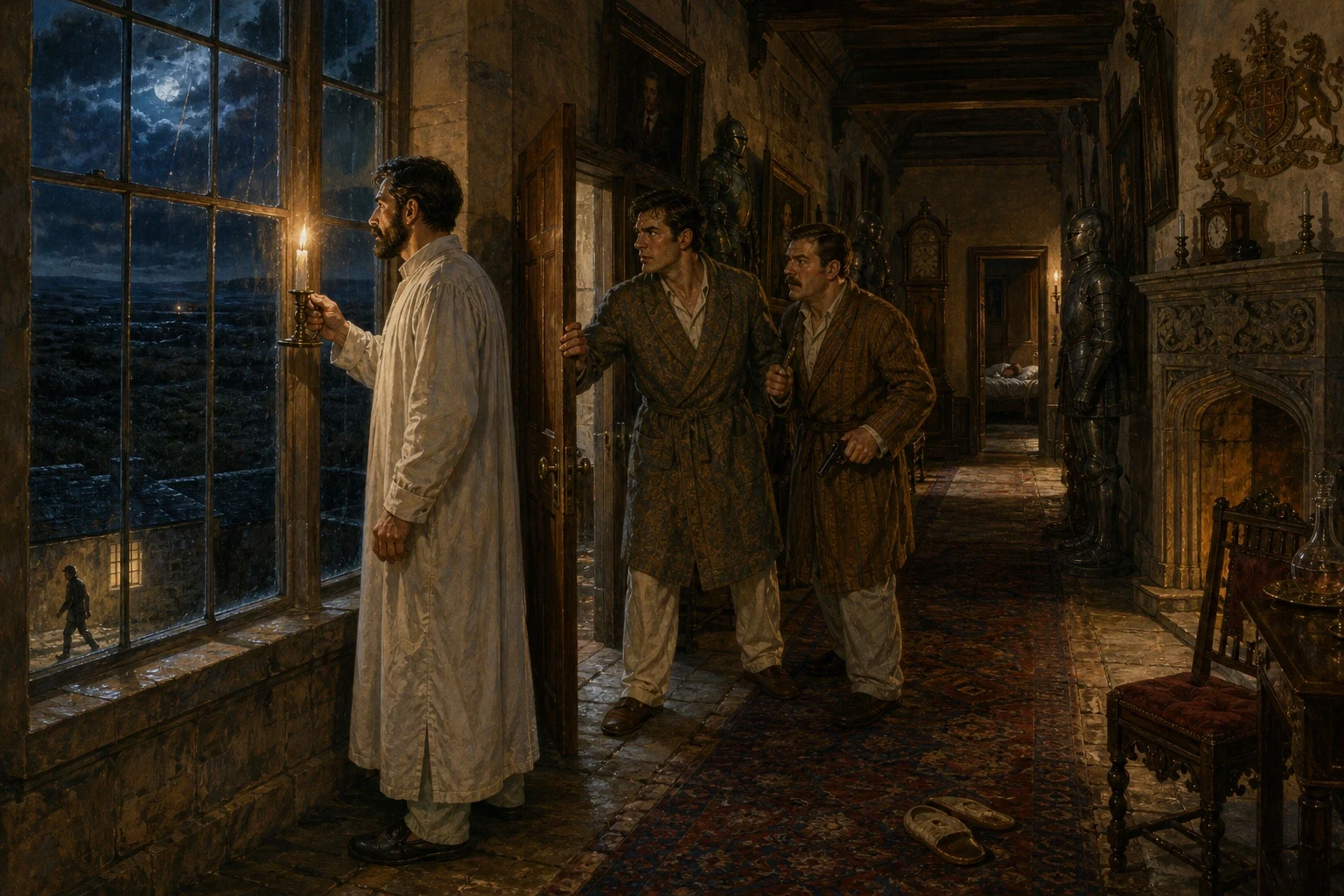
Late one night, Watson and Sir Henry crept along the dark corridor of Baskerville Hall and caught Barrymore at an upstairs window, holding a candle close to the glass and moving it slowly back and forth, as if signaling someone out on the dark moor. Confronted, Barrymore at first refused to explain — until his wife, weeping, confessed the truth: the dangerous man hiding out on the moor was her own brother, and the candle was food and a signal, carried to him in secret so he would not starve before he could get away to South America.
Page 7
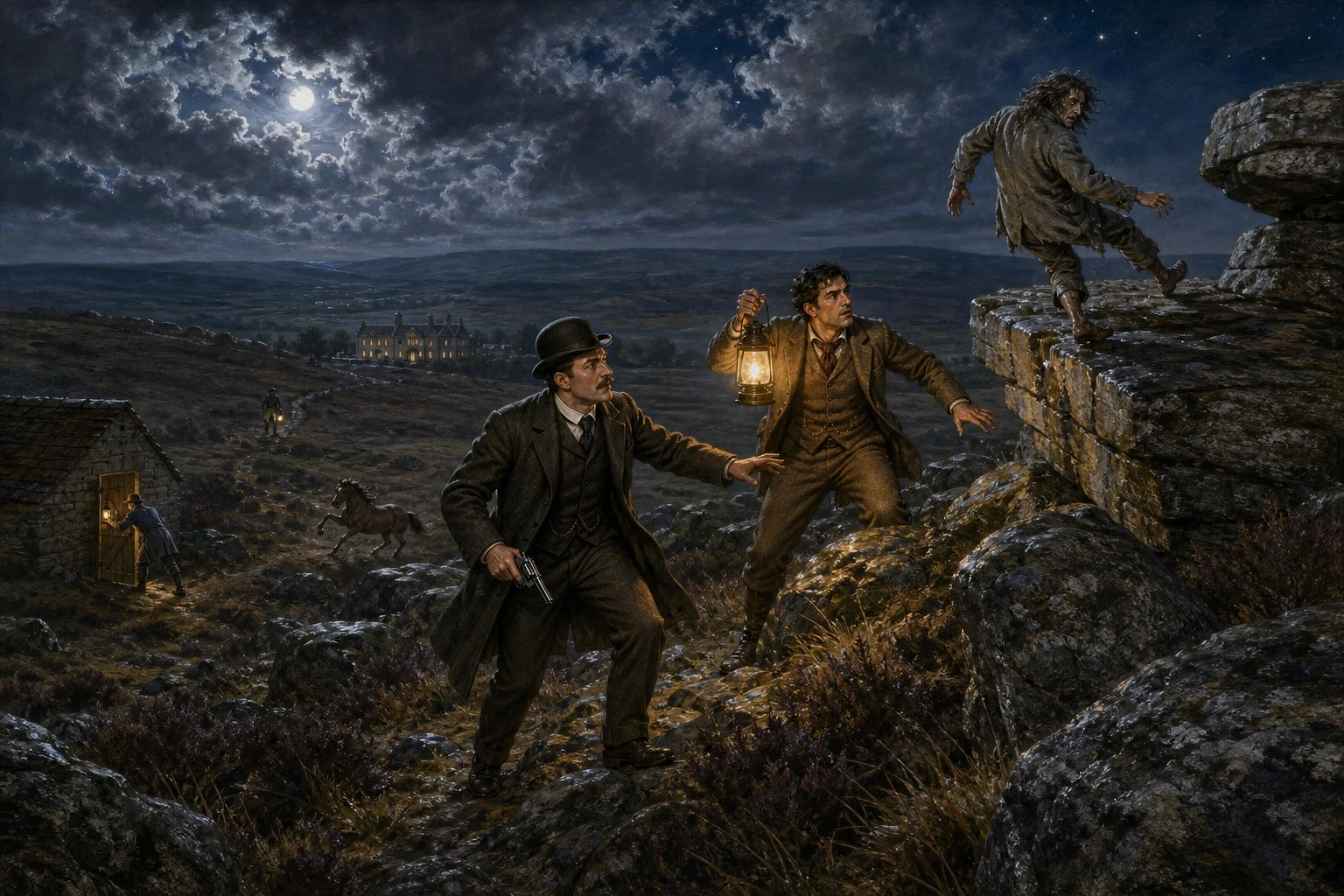
Out on the dark moor, hunting for the mysterious light, Watson and Sir Henry suddenly came upon the hidden man himself, scrambling away from them over the rocks in fright. As they chased him through the darkness and the broken ground, a terrible sound rolled across the moor — a long, deep, moaning cry, like nothing either man had heard before, and then it came again. Somewhere ahead among the tors, the fleeing man lost his footing on the loose stone and fell. By the time Watson and Sir Henry reached him, he was already dead, and the hound's cry had long since died away into silence.
Page 8
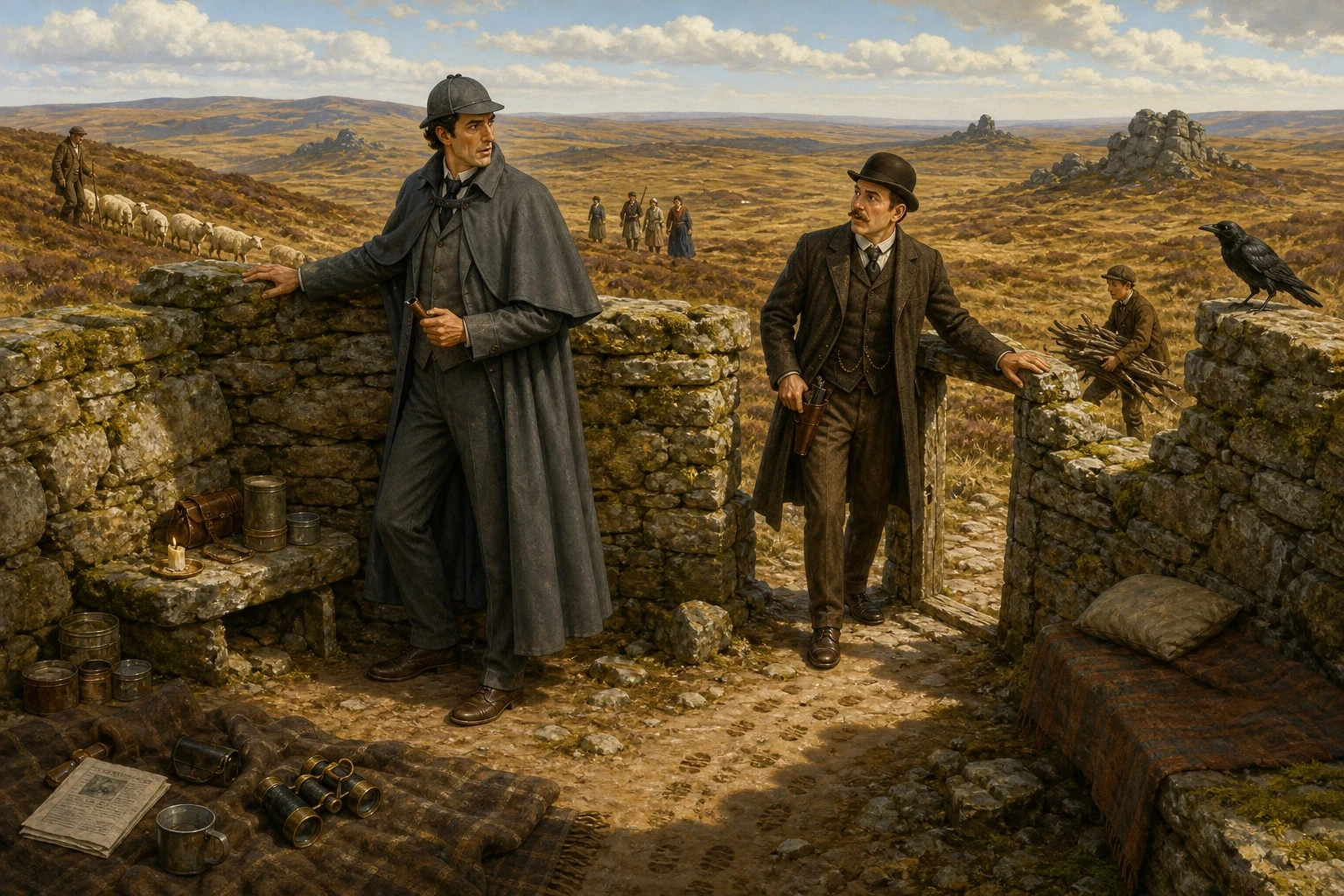
Searching the moor by day, Watson followed a trail to one of the old, roofless stone huts left behind by ancient people who once lived there, and found it being used as a hideout — a blanket, food, a candle stub. Creeping closer, expecting the worst, he was astonished to find the mysterious watcher was Sherlock Holmes himself, who had been secretly living out on the moor for days, following the case unseen. Holmes explained that he had let everyone believe him still in London so he could investigate freely, and now told Watson his real suspicion: that the respectable naturalist Stapleton was in fact the last of the Baskervilles, the heir who stood to gain everything if Sir Henry died.
Page 9
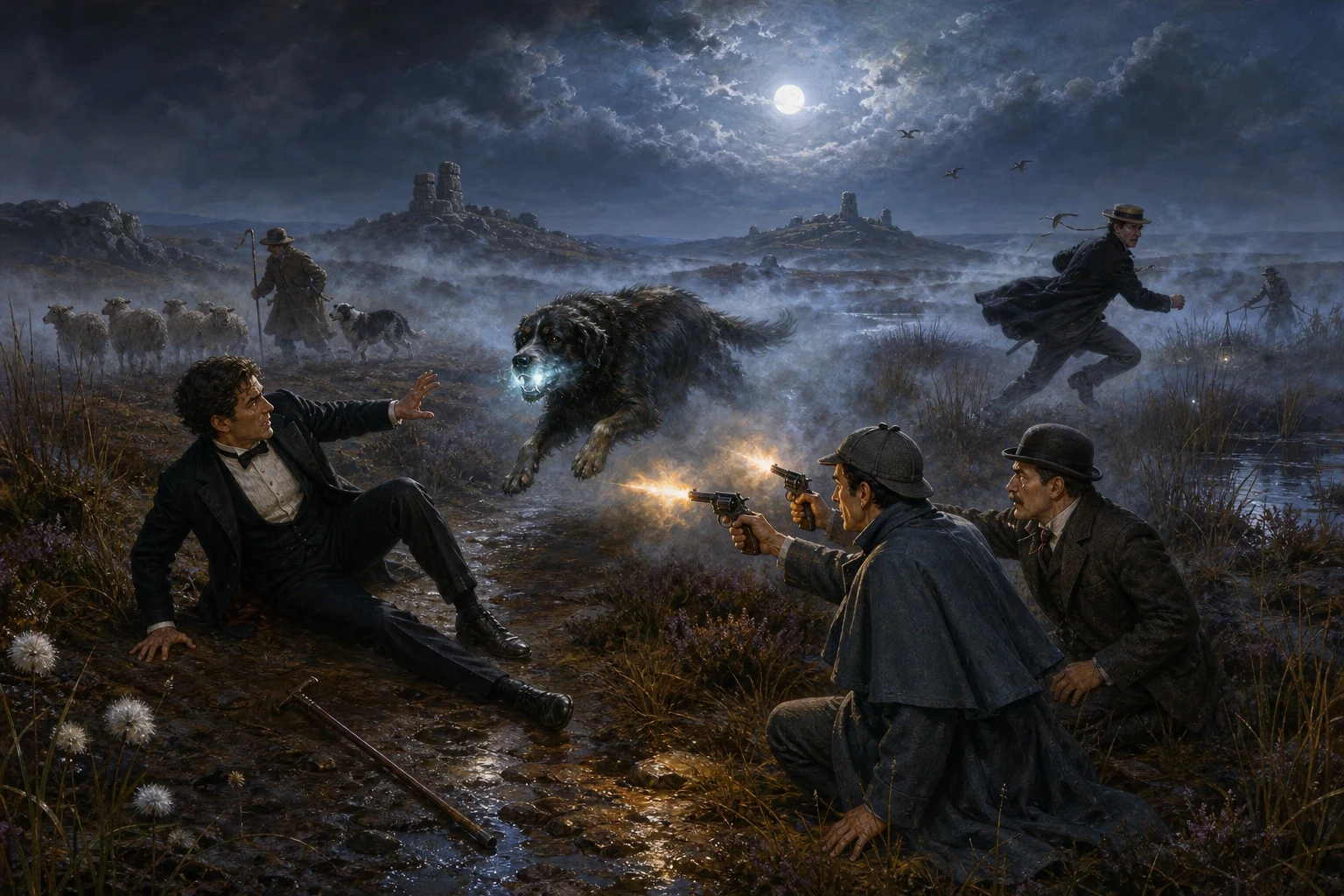
Sir Henry walked home alone across the moor after dinner at Merripit House, while Holmes and Watson lay hidden nearby, watching. Out of the fog rolling off the Grimpen Mire came a huge hound, its eyes and muzzle glowing a horrible fiery blue in the dark — a real dog, but one Stapleton had secretly kept hidden and painted with a strange glowing paint to make it seem like a demon out of the old legend. As it bounded toward Sir Henry, Holmes and Watson fired together, and the great beast dropped and did not move again. In the confusion, Stapleton, caught at last, turned and ran off into the fog hanging over the deadly Mire, and was never seen again.
Page 10
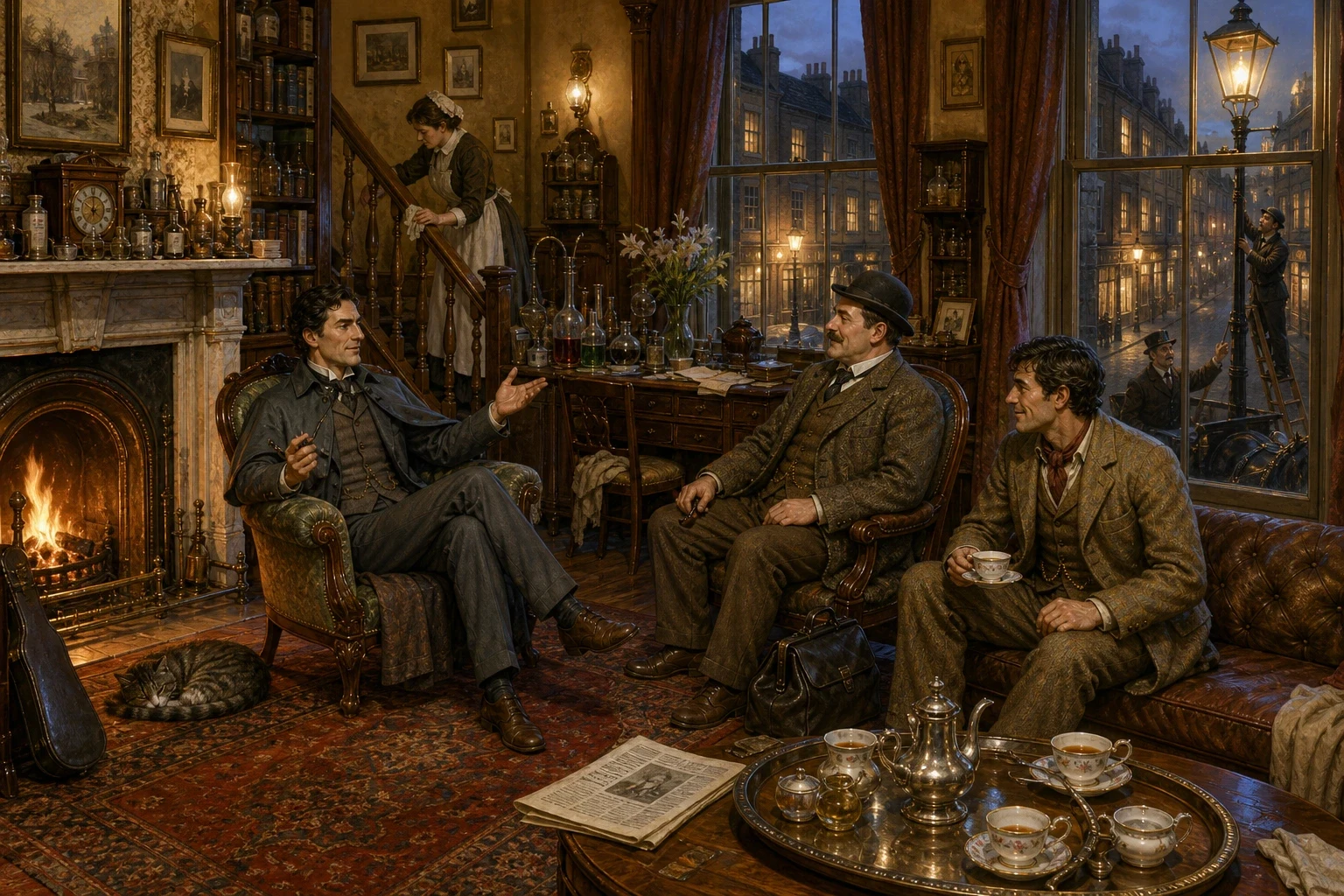
Weeks later, back in the same sitting room at 221B Baker Street where it all began, Sherlock Holmes, Dr. Watson and Sir Henry Baskerville sat together by the fire. Sir Henry, quite recovered from his fright on the moor, was soon to leave for a long restful voyage abroad before returning to take up his place at Baskerville Hall at last. Holmes went back over the whole strange case for them: how Stapleton, the hidden Baskerville heir, had kept the great hound secretly, painted it to glow in the dark, and used the old family legend to try to frighten Sir Charles and then Sir Henry to death for the fortune — and how, in the end, the real explanation turned out to be far simpler, and far more human, than any curse.
About this story
- Audience: kids (ages 6–12)
Read Wonder Novels on your phone
Wonder Novels is available on Android. Get Wonder Novels on Google Play.