The Red and the Black
A carpenter's son climbs on ambition and love, in a France that never forgets a man's rank
Page 1
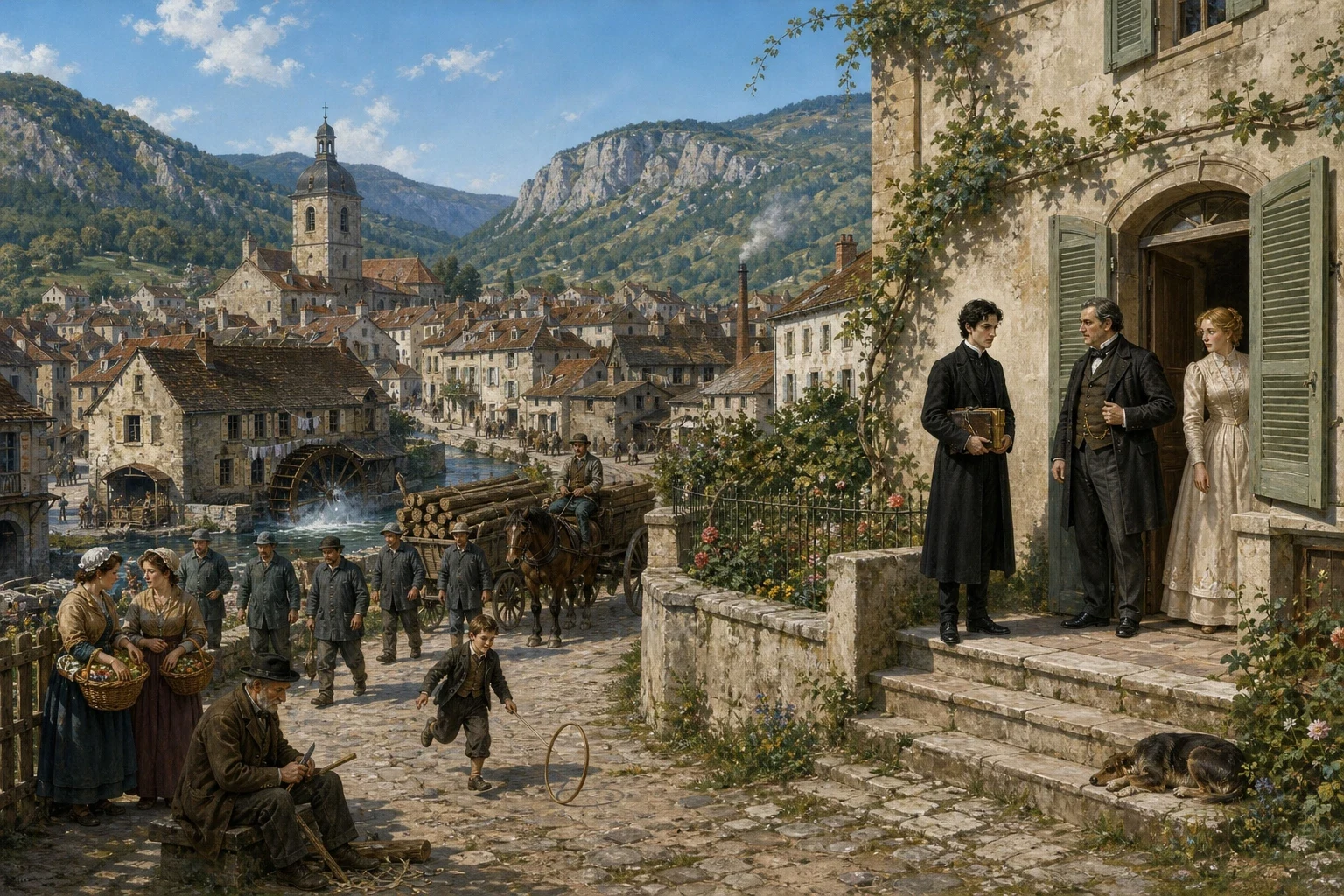
In the small French town of Verrières, built along a fast mountain stream below the Jura, Monsieur de Rênal was mayor and owner of the town's nail factory, a proud and prosperous man. He had decided his children needed a tutor, and so he sent for Julien Sorel, the carpenter's third son, a quiet, bookish young man who had taught himself Latin and dreamed of rising in the world. Julien's own father thought him useless for sawing wood and was glad to be rid of him. Julien arrived at the handsome Rênal house with nothing but his books and his pride, determined to show no one how poor and frightened he truly felt. Madame de Rênal, young and gentle, met him at the door, startled to find the new tutor not an ugly old priest but a pale, striking boy with dark eyes who trembled as he spoke to her. Something in that first meeting unsettled them both, though neither understood it yet.
Page 2
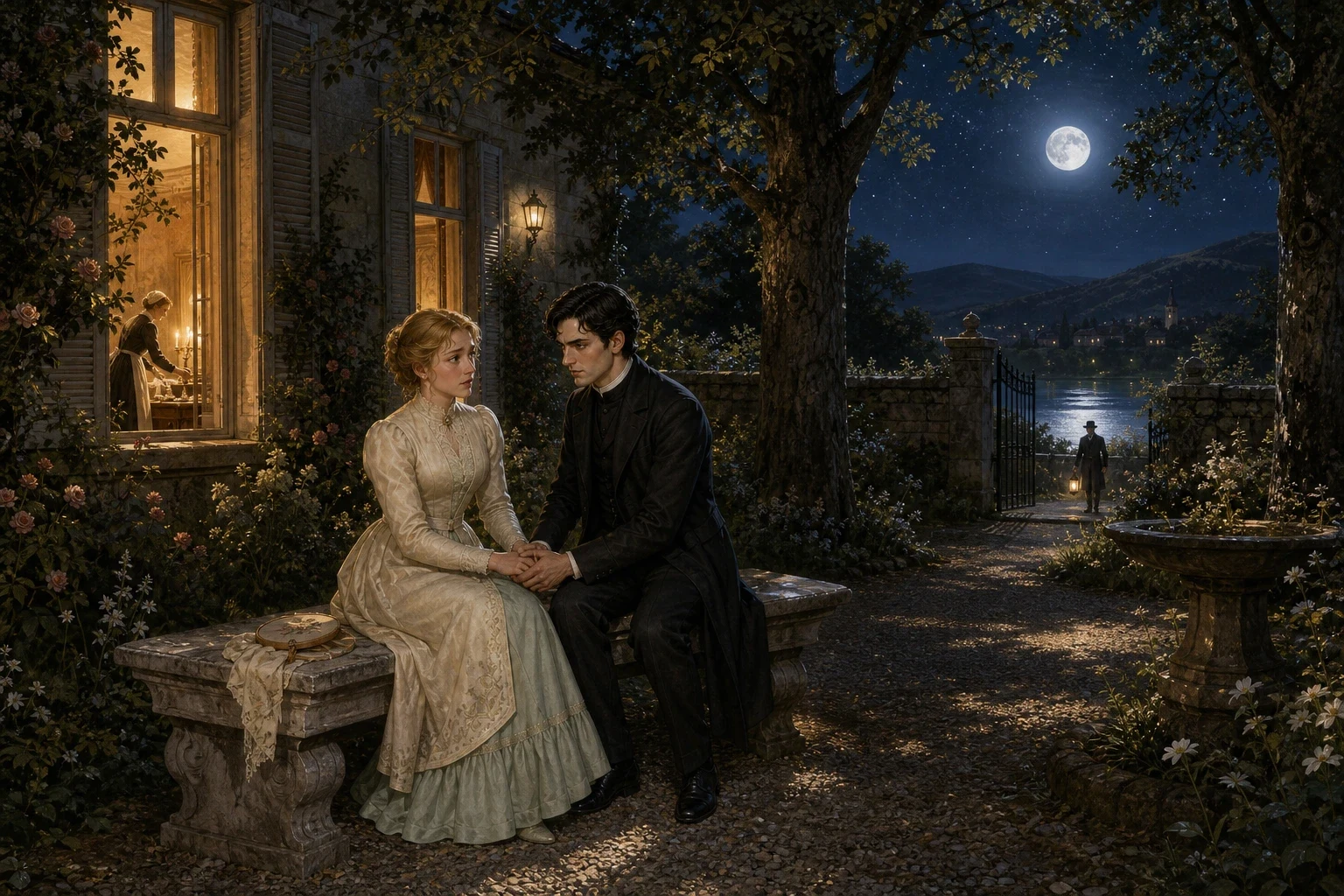
All that summer, Julien and Madame de Rênal sat together in the garden in the evenings while her husband talked business inside. Julien had decided, coldly and almost as a test of his own courage, that he must take her hand before the night was over, as a soldier takes a position. He did not do it for love, at first, but because he had told himself he would, and a man who broke his own word to himself was nothing. In the darkness under the chestnut trees he reached out and closed his hand over hers. She did not pull away. From that single act, done more out of nerve than feeling, grew a real and overwhelming love between them, hidden from the whole town, carried on in whispered evenings and stolen hours while her husband remained entirely unaware that his wife and his children's tutor had fallen into each other's lives.
Page 3
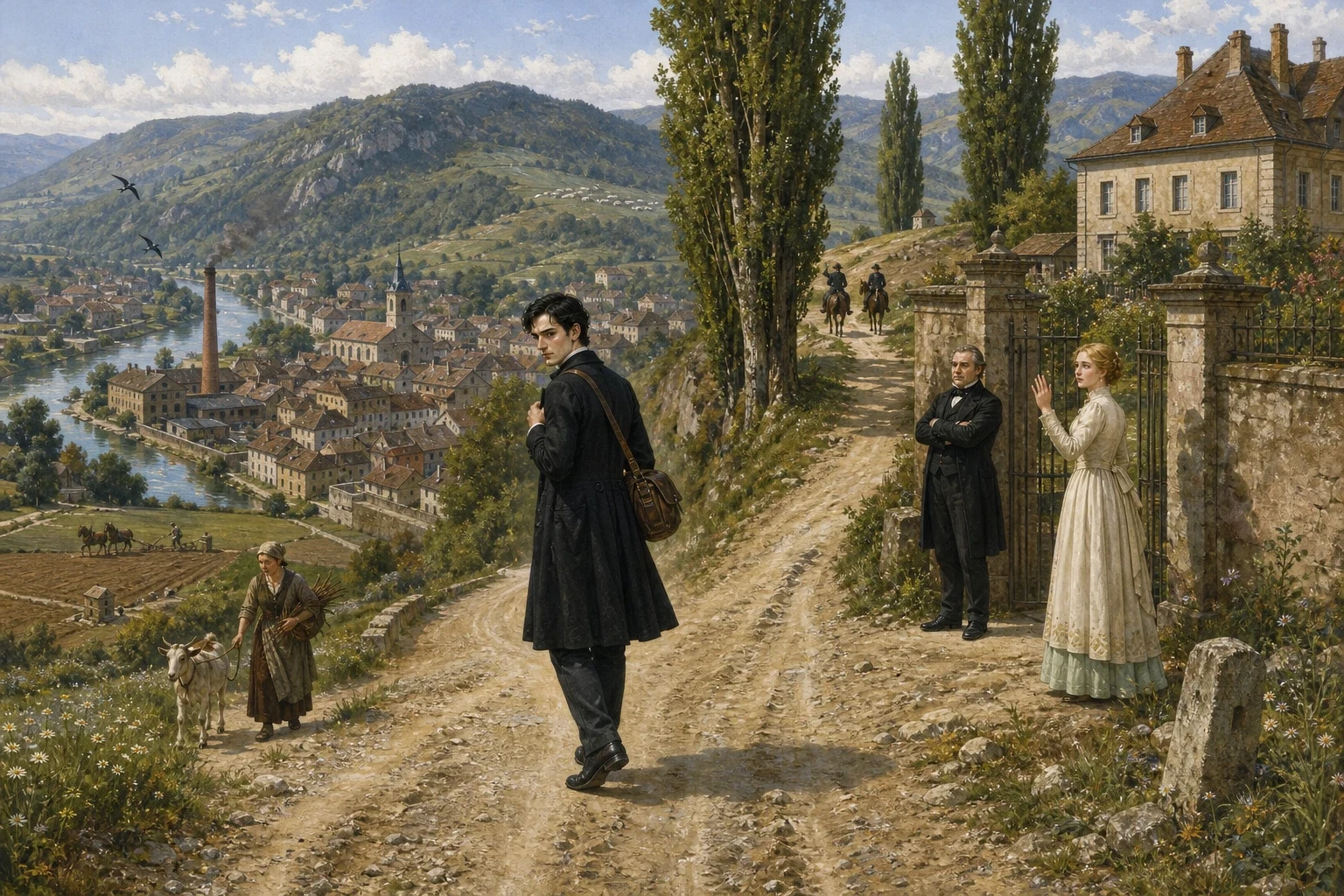
An anonymous letter arrived at the house warning of a tutor too familiar with his employer's wife. Monsieur de Rênal, suspicious but unwilling to believe the worst of his own household, grew watchful and cold, and it was quickly decided that Julien should leave Verrières to study for the priesthood at the seminary in Besançon, a decision Monsieur de Rênal thought was entirely his own idea. Madame de Rênal, frightened for both of them, urged Julien to go, though it broke something in her to do it. On the morning he left, she managed only a last look at him across the courtyard, under her husband's eye, before Julien set out walking up the road that climbed out of the valley. At the top of the rise he turned back once to look down at the town, the river, and the house where he had lived for over a year, before walking on toward Besançon and the next uncertain stage of his life.
Page 4
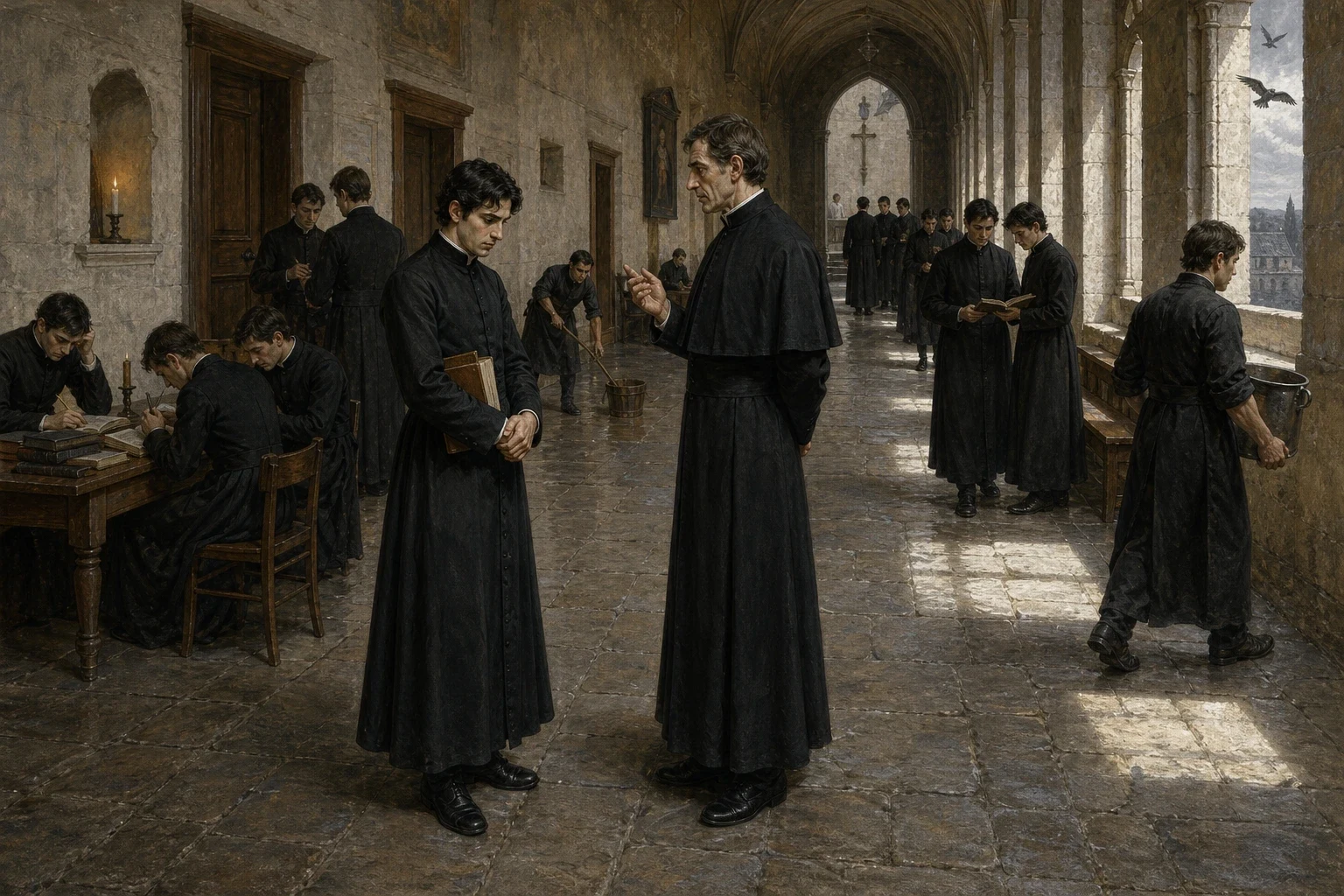
The seminary at Besançon was a cold, narrow world, full of suspicious young men from poor families who watched each other for any sign of ambition or pride, since both were dangerous there. Julien, cleverer and more widely read than almost anyone around him, quickly learned that his intelligence made him enemies rather than friends, and he forced himself to walk with downcast eyes and say little, hiding the very qualities that had once seemed his only hope. Abbé Pirard, the seminary's stern director, was almost alone in recognizing something real in Julien beneath the careful disguise, and though he rarely showed warmth, he protected the young man from the worst of the other seminarians' schemes and jealousy. It was a hard, grey, watchful stretch of Julien's life, teaching him patience and concealment in equal measure, skills that would serve him later in Paris far more than any theology he was meant to be learning.
Page 5
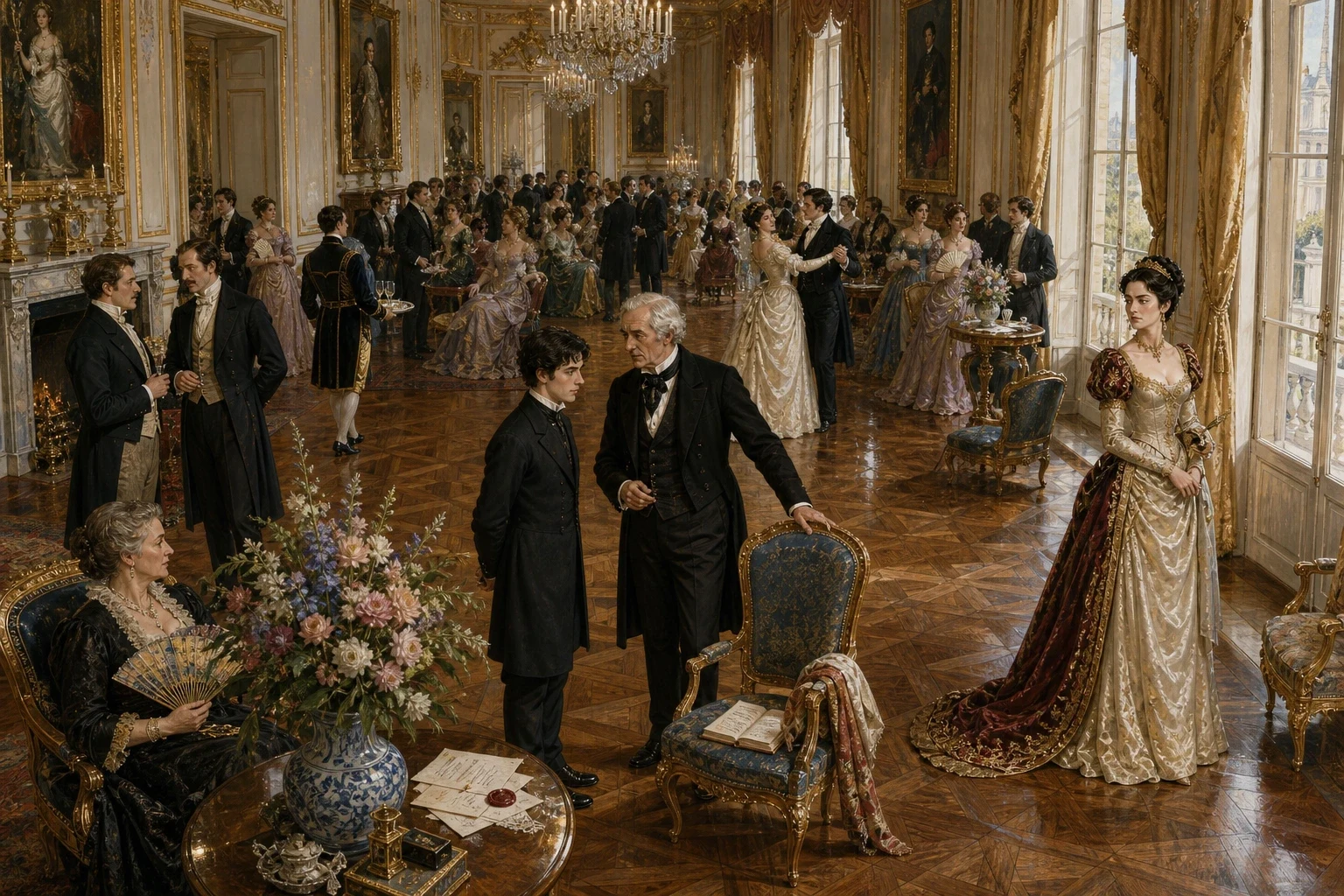
On Abbé Pirard's recommendation, Julien left the seminary to become private secretary to the Marquis de la Mole in Paris, a sudden and dizzying rise for a carpenter's son. The Marquis, an elderly, dignified nobleman, found Julien quick, useful, and discreet, and gave him real responsibility far beyond what a secretary usually received. In the grand salons of the Hôtel de la Mole, Julien was thrown among the oldest and proudest families in France, watching their manners carefully while saying almost nothing, aware every moment of how easily they could see through him. It was there he first truly noticed Mathilde, the Marquis's daughter, cold and brilliant, bored by every young nobleman who courted her and intrigued, almost against her own will, by the dark, silent secretary who seemed to want nothing from her at all and treated her haughtiness with a haughtiness of his own.
Page 6
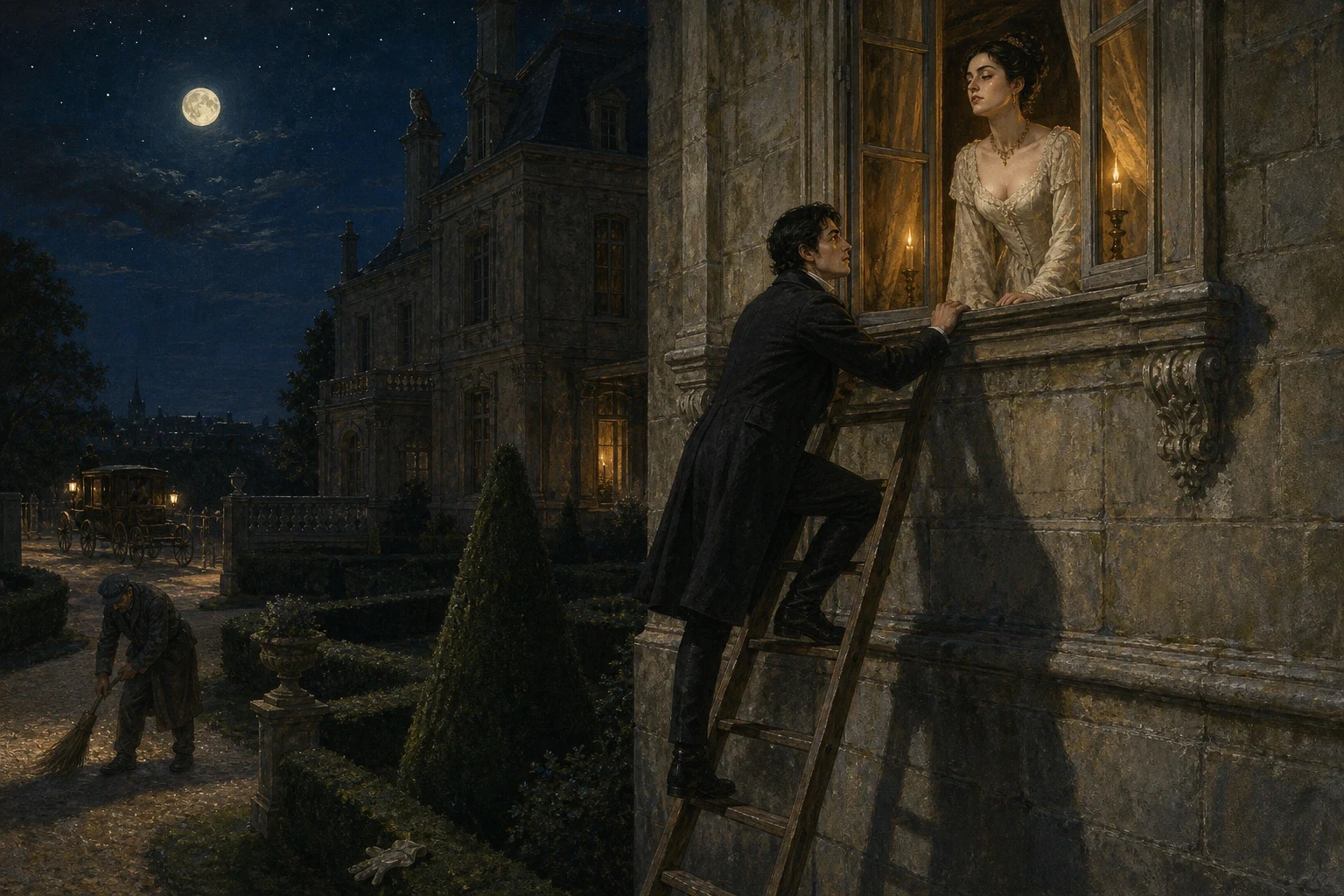
Mathilde decided, in her own proud and deliberate way, that she would love Julien, partly from boredom with everyone of her own rank and partly because the danger and impossibility of it appealed to something hard and romantic in her nature. She sent him instructions to climb a ladder to her window at night, to prove he had the courage, and warned him she would shoot him herself if he hesitated or if it was a trap. Julien climbed, terrified but unwilling to show it, each of them testing the other's nerve more than giving in to any softer feeling. Once inside, their meetings became a strange contest of wills, each one determined never to seem the more in love, Mathilde swinging between fierce declarations and cold withdrawal, Julien matching her coldness with his own out of sheer necessity and pride, so that what grew between them was passionate but never once gentle.
Page 7
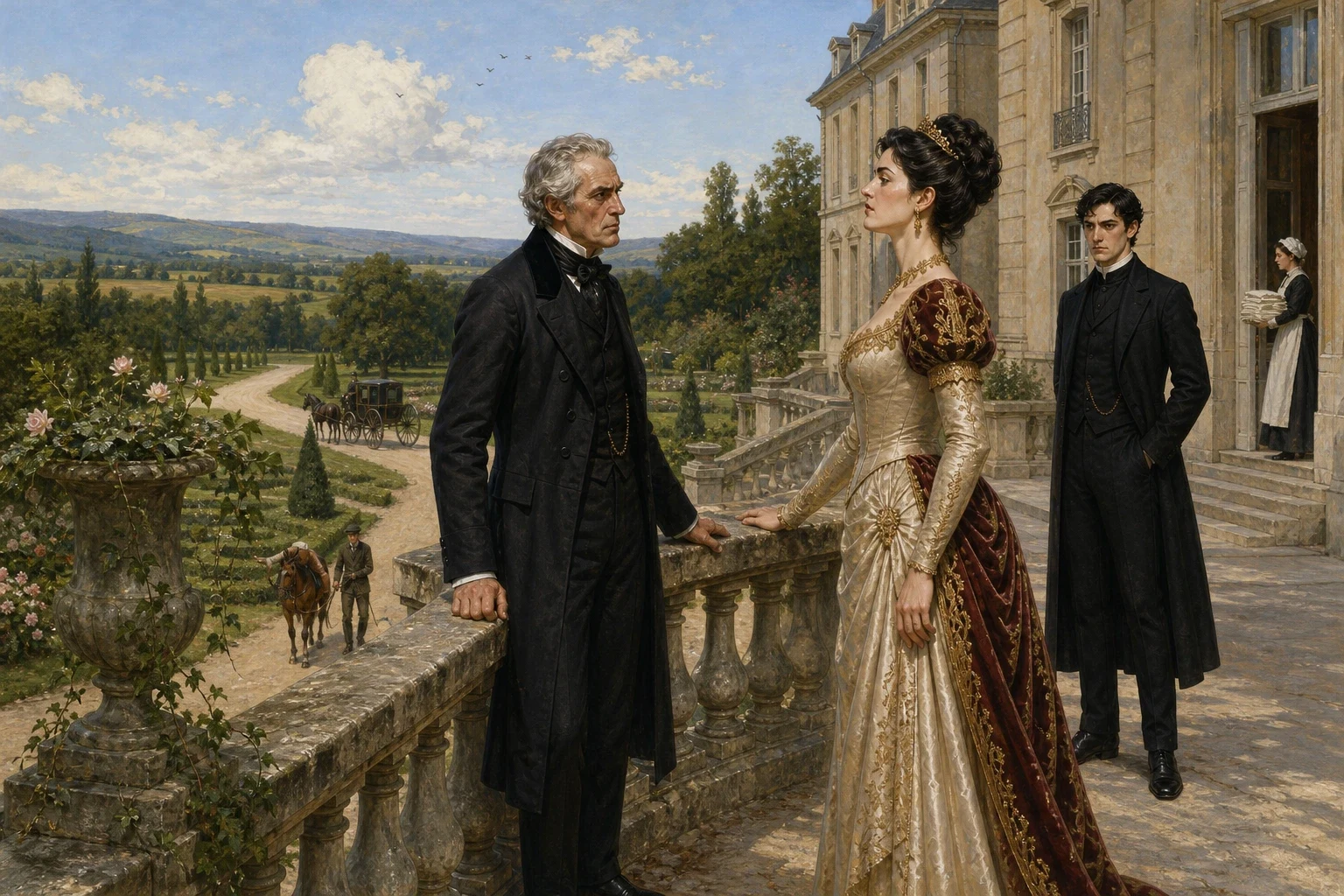
When Mathilde discovered she was pregnant, she did not hide or despair but acted with the same cold determination she brought to everything, writing at once to her father and insisting that Julien be recognized and that their marriage go forward whatever the cost to the family's pride. The Marquis, when he learned of it at his country estate away from Paris, was first furious at the ruin of his daughter's prospects and at a secretary's presumption, but Mathilde would not be moved, and in time his fury gave way to a hard, practical resignation. Rather than face open scandal, he arranged a commission in a cavalry regiment and a title for Julien, transforming the carpenter's son, on paper at least, into a nobleman worthy of marrying a Marquis's daughter. It was the summit of everything Julien had worked and hidden and endured for since Verrières, achieved not through love alone but through Mathilde's iron will against her own father.
Page 8
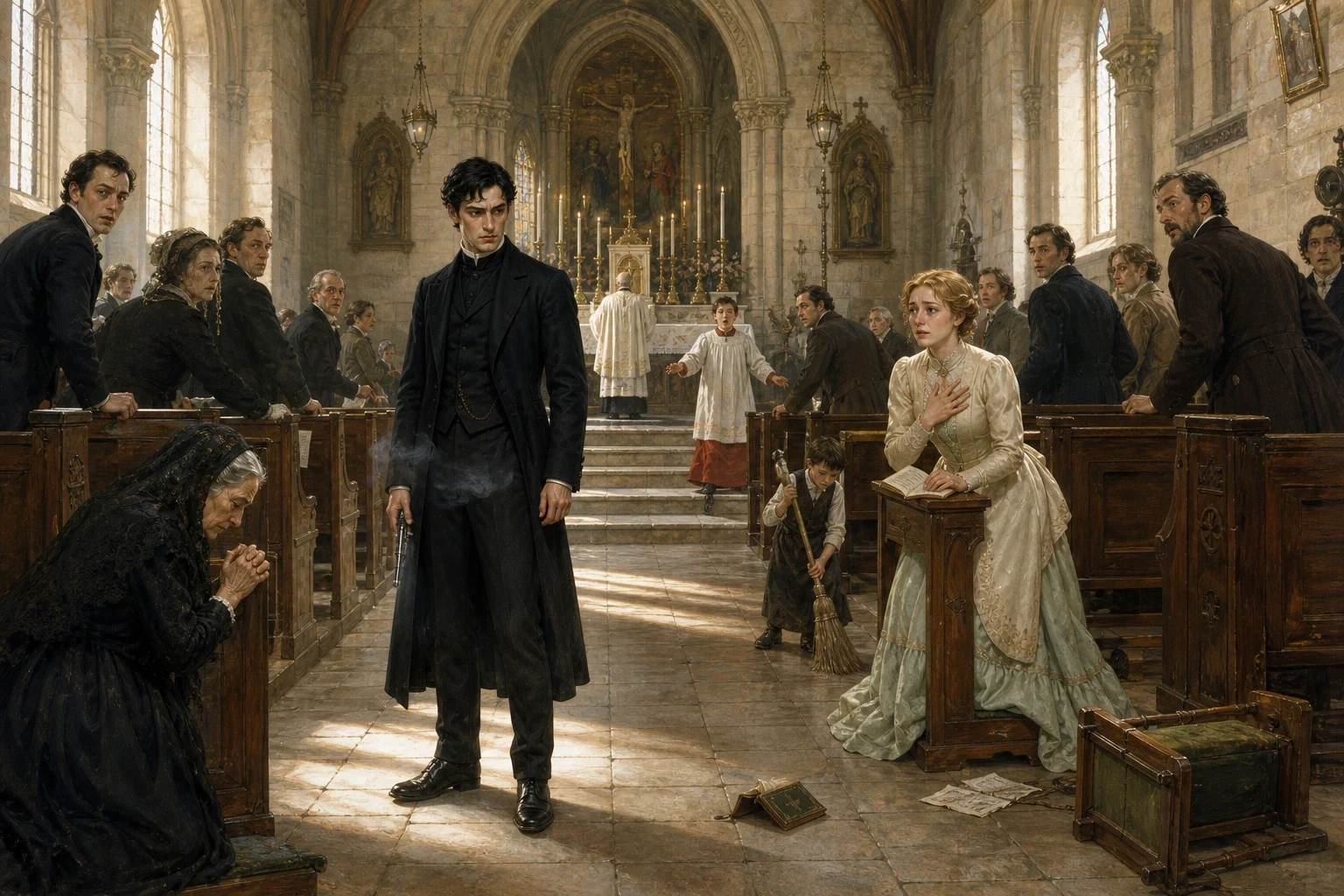
Just as everything seemed secured, a letter arrived at the Hôtel de la Mole in Madame de Rênal's hand, written at her confessor's insistence, denouncing Julien as a cold schemer who used women to climb in the world. The Marquis withdrew everything at once, the commission, the title, the marriage, and Julien's whole future collapsed in a single morning. Half out of his mind with the ruin of it, Julien bought a pair of pistols and rode back to Verrières, arriving at the church during Mass, where he found Madame de Rênal kneeling at prayer exactly where he had first imagined her. In the sound and shock of the shots that followed, the whole congregation rose in alarm. Madame de Rênal was gravely wounded but, as it would soon be known through the town, she survived. Julien stood motionless afterward, the thing finally done, as parishioners around him cried out and scrambled from their seats.
Page 9
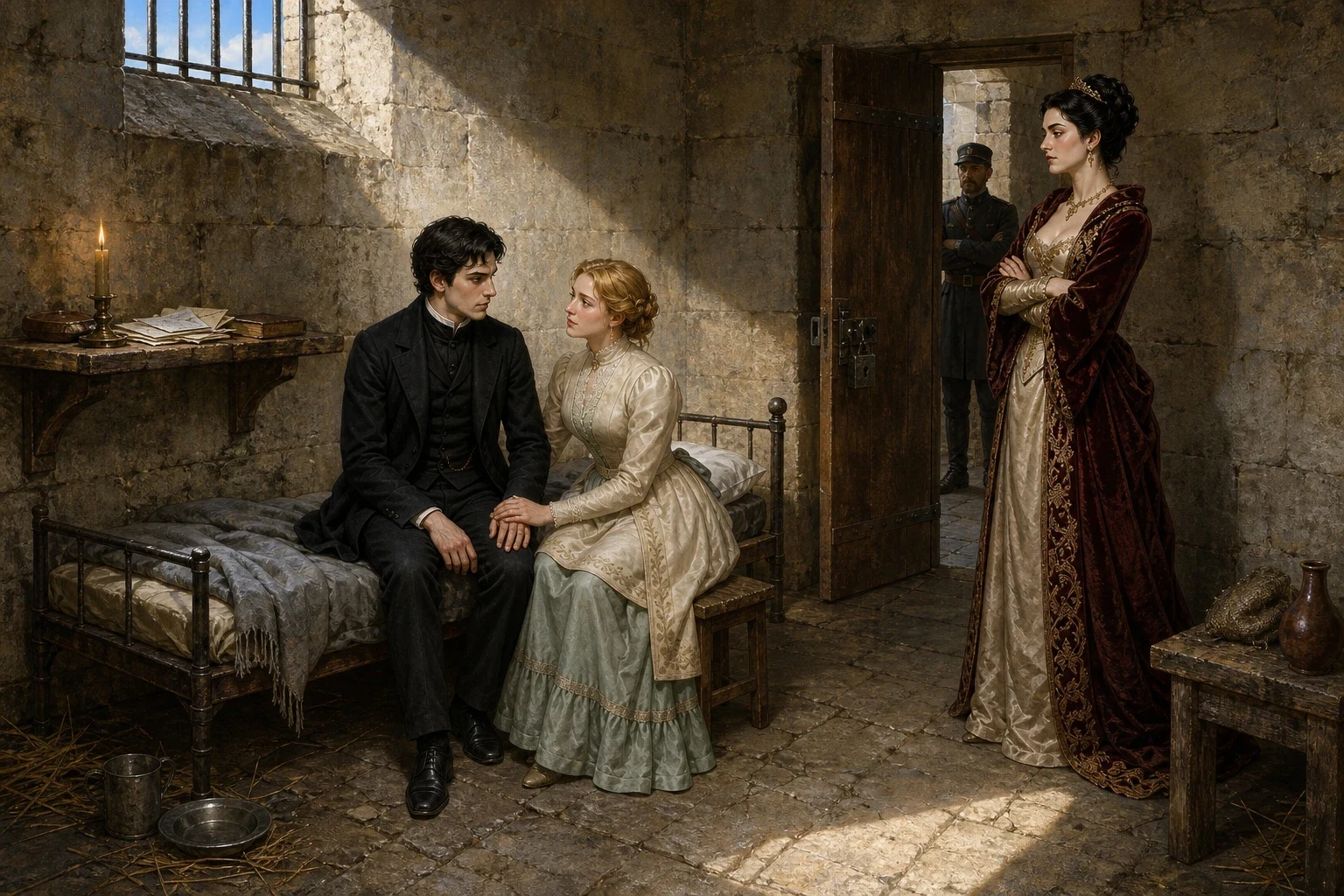
Julien was taken to the old prison at Besançon to await trial, and there, strangely, he found a kind of peace he had never known while free, released at last from all his years of scheming and concealment. Madame de Rênal, recovering from her wound and acting against everyone's advice, came to visit him in his cell, forgiving him completely and loving him, if anything, more openly than before, since neither of them had any future left to protect. Mathilde came too, fierce and determined, working every connection her family had to save his life, bribing officials and pressing lawyers, refusing to accept that he might die. But Julien, to her frustration, no longer wished to be saved. He told her plainly that he did not want a life bought through her father's influence or built on the ambition that had driven him since Verrières, and that he had finally stopped pretending to want things he did not.
Page 10
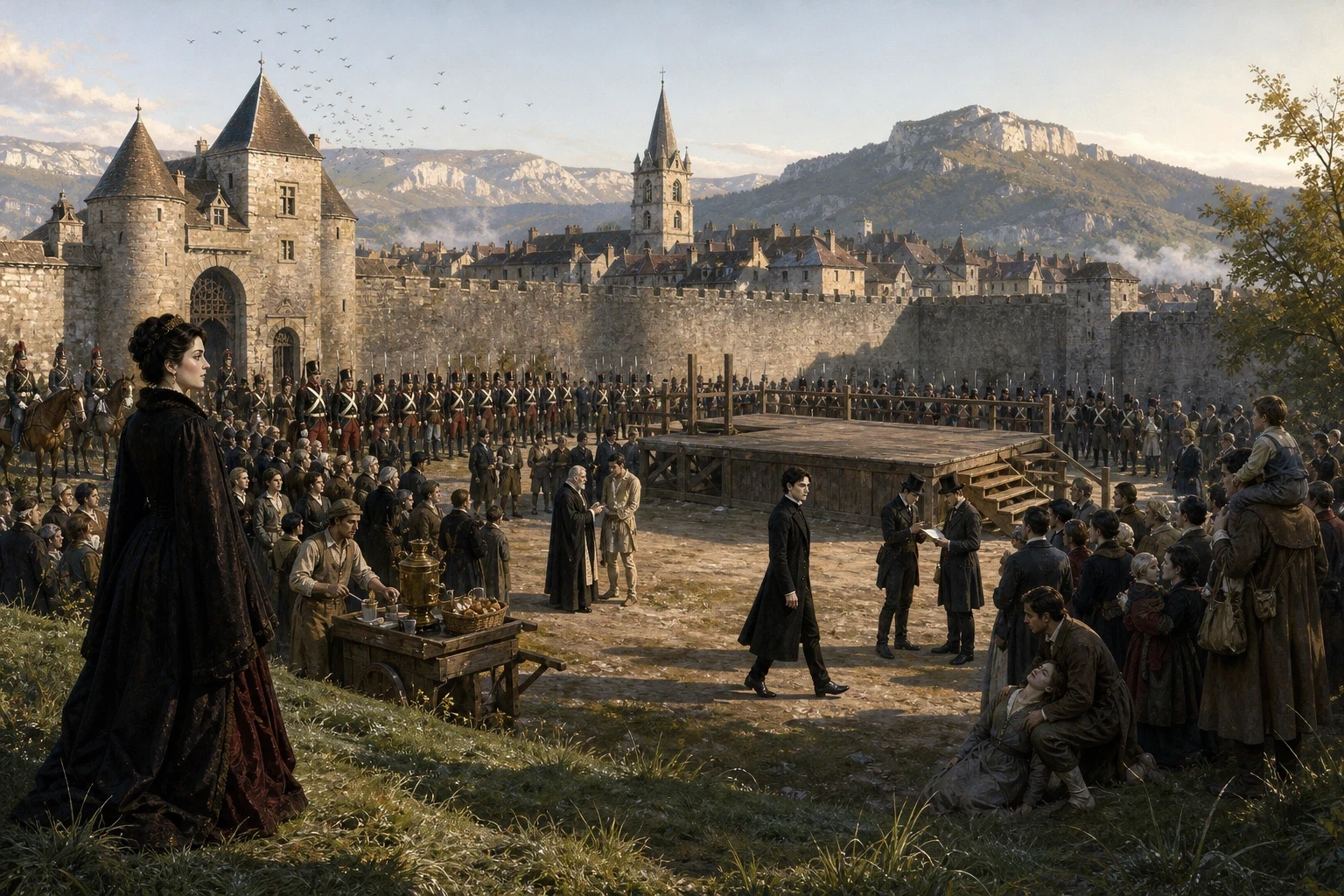
At his trial, Julien did not defend himself in the way his lawyers wished. He stood and told the jury plainly that he was a man of low birth who had dared to rise above the station the world had marked out for him, and that this, far more than the shooting itself, was his true crime in their eyes. The jury, made up of men very like those he described, condemned him to death. On the morning of his execution, a crowd gathered outside the walls of Besançon under the same grey-and-green mountains that had always stood over this part of France. Mathilde came, as she had promised she would, standing apart from the crowd to be near him to the last. Julien walked out to the scaffold composed and unafraid, a man who had finally stopped performing for anyone, having chosen, in the end, to be exactly what he was.
About this story
- Audience: general readers
Read Wonder Novels on your phone
Wonder Novels is available on Android. Get Wonder Novels on Google Play.