Uncle Tom's Cabin
Uncle Tom's Cabin — an illustrated literature story. 10 illustrated pages, free to read on Wonder Novels.
Page 1
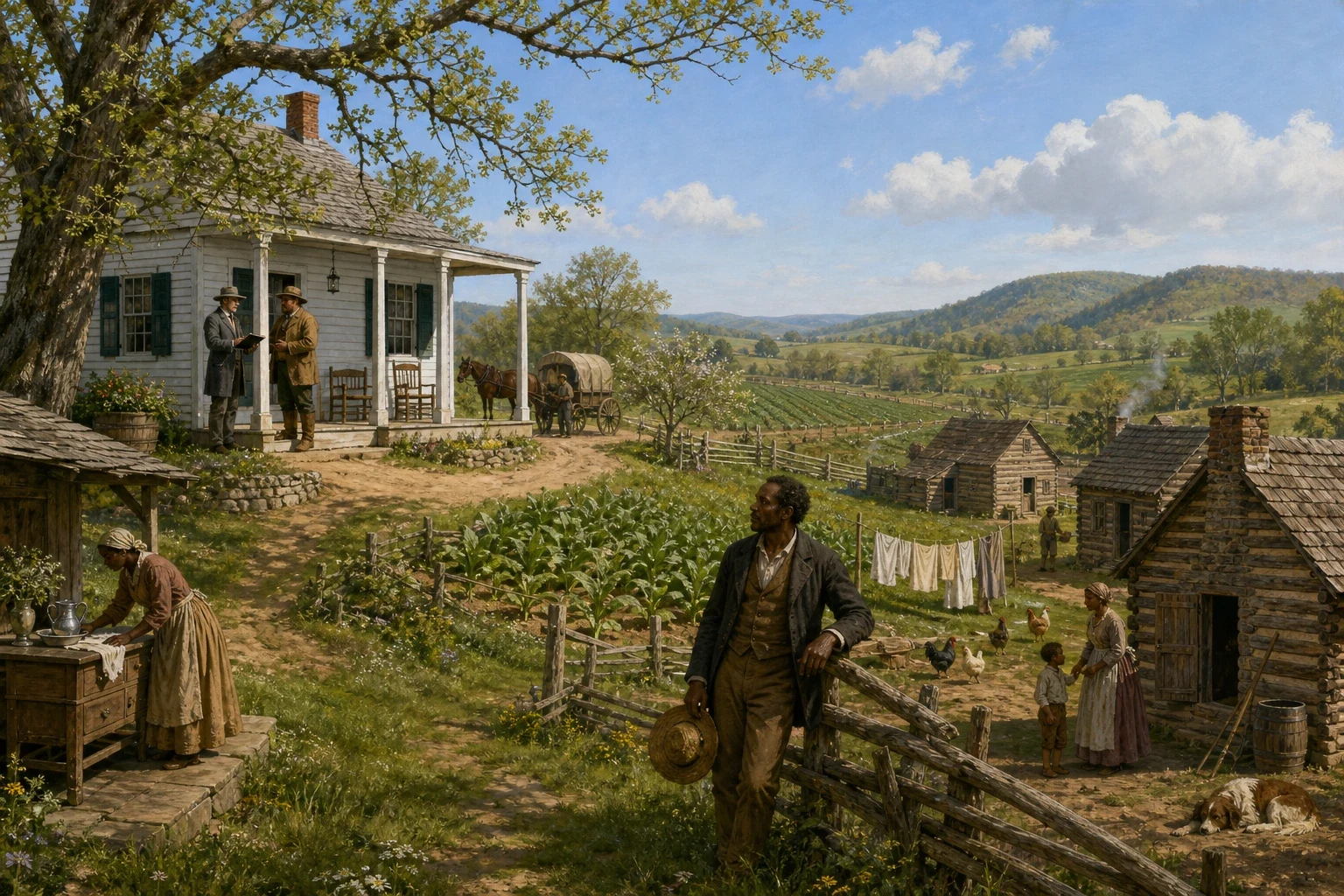
On a farm in Kentucky, in the early days of America, Mr. Shelby owed more money than he could pay, and the slave trader Haley had come to collect it. Mr. Shelby was, by the standards of his time, a kind master — but a debt is a debt, and Haley wanted payment in people, not dollars. Sitting together in Mr. Shelby's study, the two men settled on their price: Haley would take Uncle Tom, the steadiest and most trusted man on the place, and he would take little Harry too, Eliza's only child. Down the slope from the big house stood Tom's own cabin, a small cedar-log building he loved and was trusted to keep. Eliza, who waited on Mrs. Shelby, happened to be near the study door and heard every word of the bargain being struck. She said nothing to anyone. She went straight home, scooped up her sleeping son Harry, and slipped out into the night.
Page 2
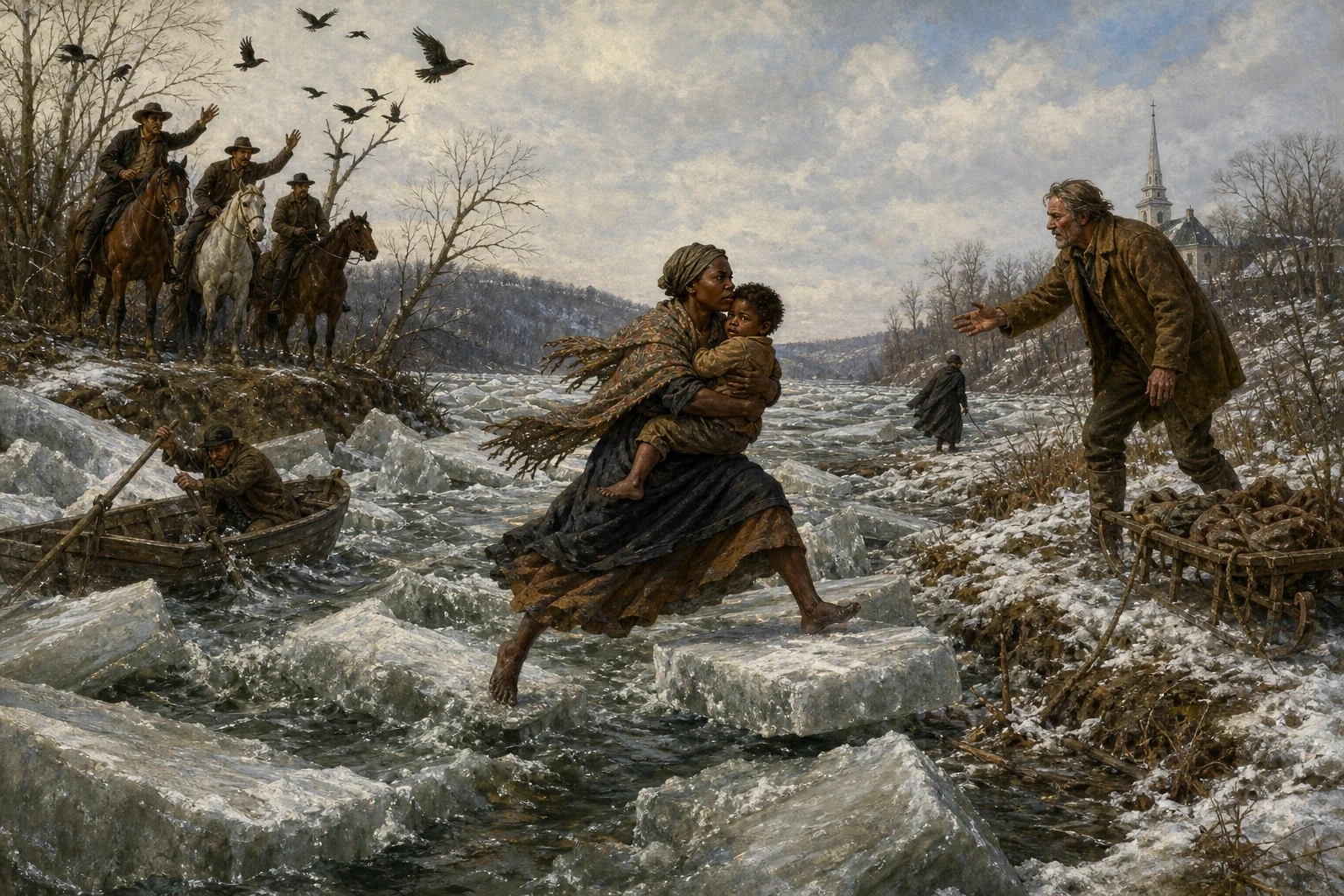
Eliza ran all through the night and into the next day, carrying Harry on her hip, until she came to the bank of the Ohio River — the river that, in those days, divided a slave state from a free one. She had meant to cross by the ferry, but Haley and two men were already close behind her, and the ferry was stopped: the river was breaking up, great cakes of ice grinding and tumbling in the current, too broken for any boat and, it seemed, too broken even to walk on. Eliza did not stop to think about it. With Harry held tight against her, she went down the bank and out onto the first slab of ice. It cracked and sank the moment her weight left it, but by then she had already leapt to the next one, and the next, half running, half falling, until at last she came up the far bank into Ohio, where a farmer reached down and pulled her up onto free ground.
Page 3
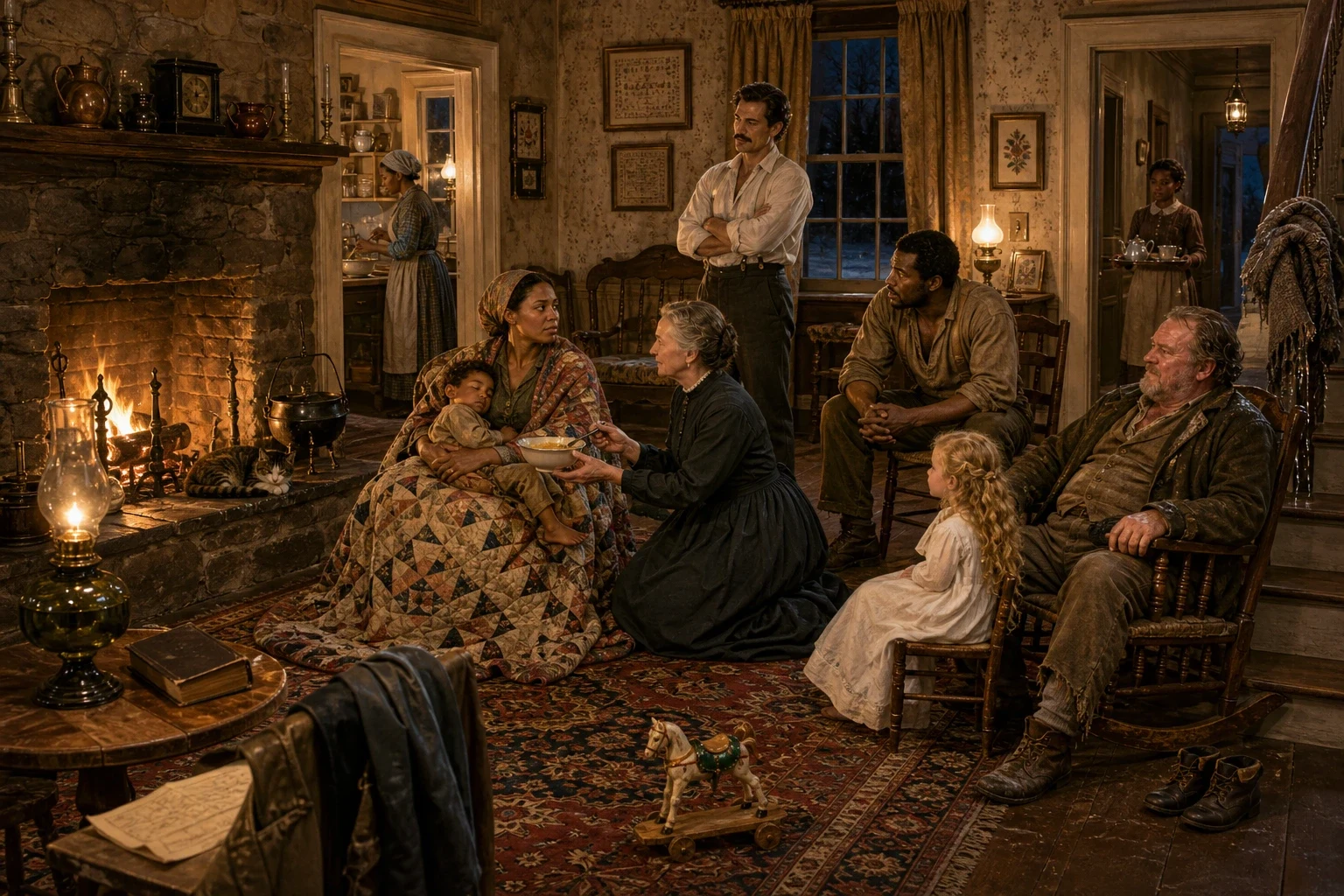
The farmer who had helped Eliza across the river brought her to the nearest house he knew, which happened to belong to Senator and Mrs. Bird. It was a strange turn of fortune, for Senator Bird had that very day stood up in the state senate and voted for a new law — a law that made it a crime to give food or shelter to a runaway slave. But a law is easy to vote for in a warm room full of other senators, and much harder to keep once a half-frozen woman is sitting at your own fire with a hungry child in her lap. Mrs. Bird would not hear of turning Eliza out, and in the end neither would her husband. They fed her, warmed her, and let her sleep. In the morning, Senator Bird himself harnessed his own wagon, wrapped Eliza and Harry in blankets, and drove them further along the road, toward people he knew who could help them go on.
Page 4
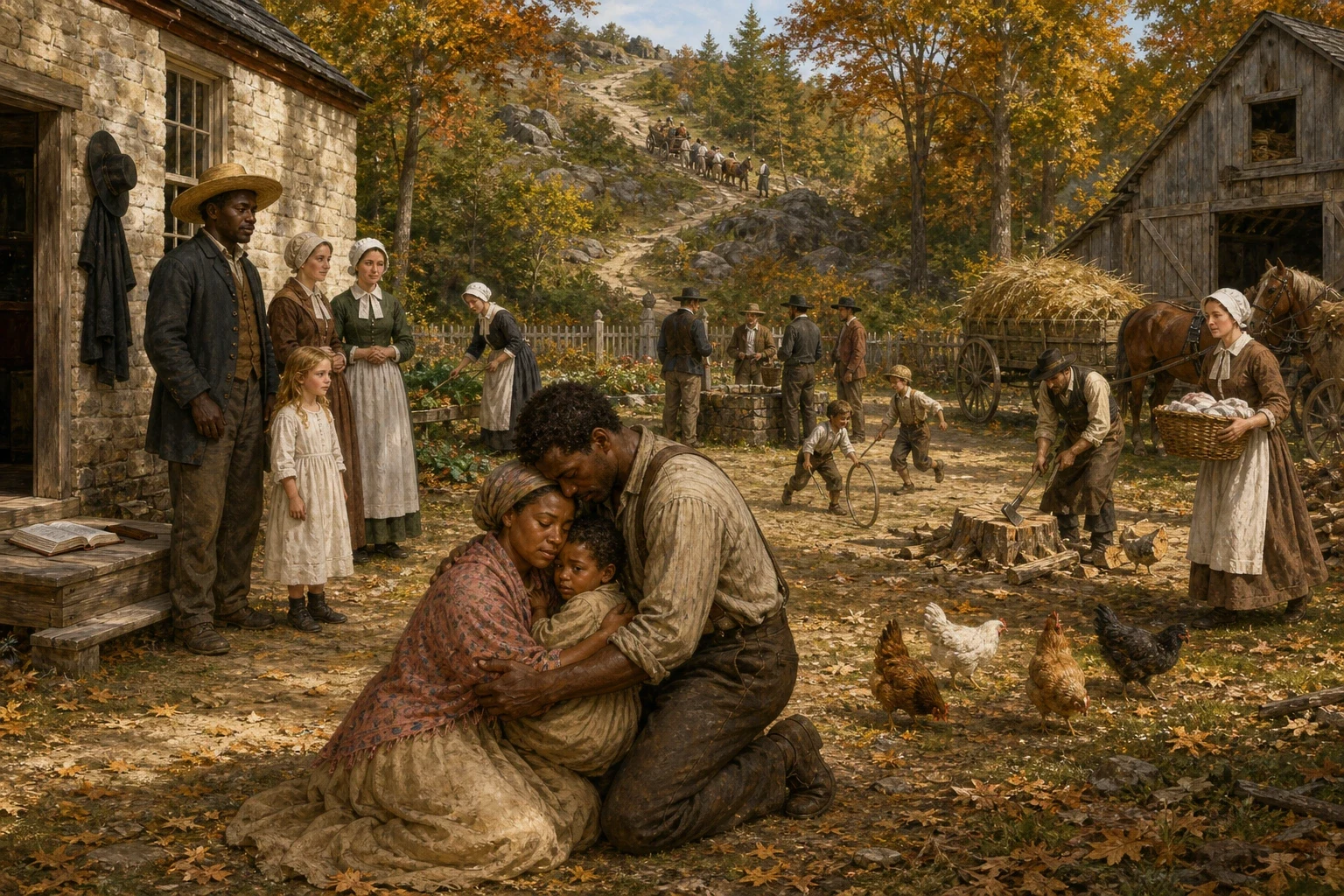
The Quakers kept a loose chain of safe houses through the Ohio hills, passing fugitives from one farm to the next, and it was at one of these settlements that George Harris finally caught up with his wife and son. He had escaped his own master days before, and the reunion, after so much fear, was almost too much for any of them to speak through. They did not have long to rest. A slave-catcher named Tom Loker, hired by George's old master, had traced them to a rocky pass on the road above the settlement, with several armed men behind him. George climbed up among the rocks with the Quaker men and called down a warning that they would not be taken alive. Loker came on anyway, certain that a frightened family could not truly fight back. He was wrong. A shot rang out, and Loker fell, wounded in the side. His own men, seeing him down, turned their horses and rode off without him. The Quakers, true to their own beliefs, would not leave even an enemy to die on the road — they carried Loker down to their own house to tend his wound.
Page 5
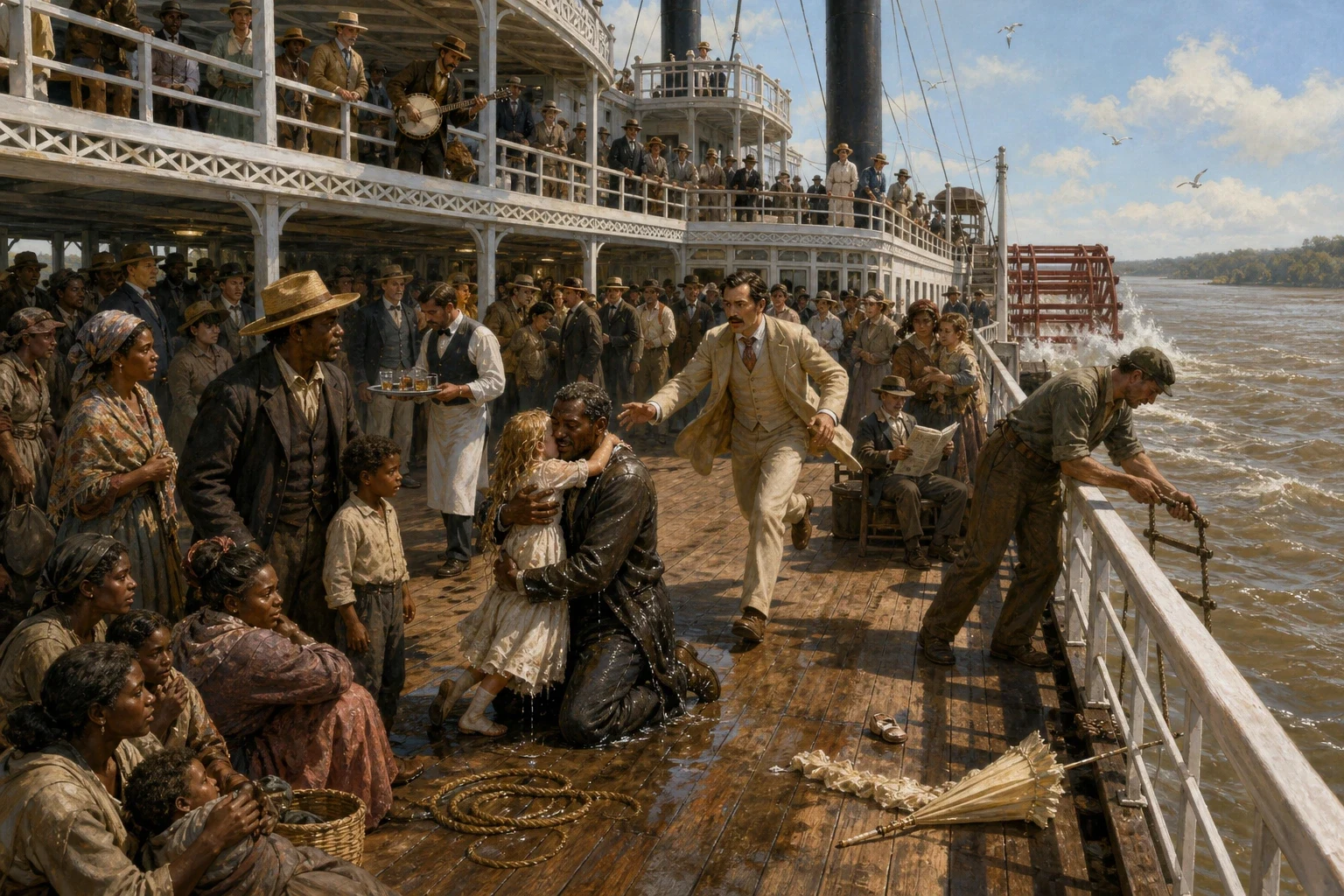
Haley sold Tom on to another trader, and Tom was put in chains with a long line of other enslaved men and women and carried south down the Mississippi River on a steamboat, away from his wife Chloe and his children, not knowing if he would ever see them again. He kept mostly to himself, reading his one small Bible, until a little girl noticed him. Her name was Eva St. Clare, and she was traveling with her father, a New Orleans gentleman named Augustine St. Clare. Eva was not afraid of Tom the way other children on the boat were of the chained men; she simply climbed up and talked with him as if he were any other person, which to Tom, after days of being treated like cargo, meant everything. A few days later, the boat lurched hard against the current, and Eva slipped on the wet deck and went over the side into the river. Without a thought for his own chains, Tom went in after her and brought her up safe. Her father, watching from the rail, bought Tom from the trader before the boat reached New Orleans.
Page 6
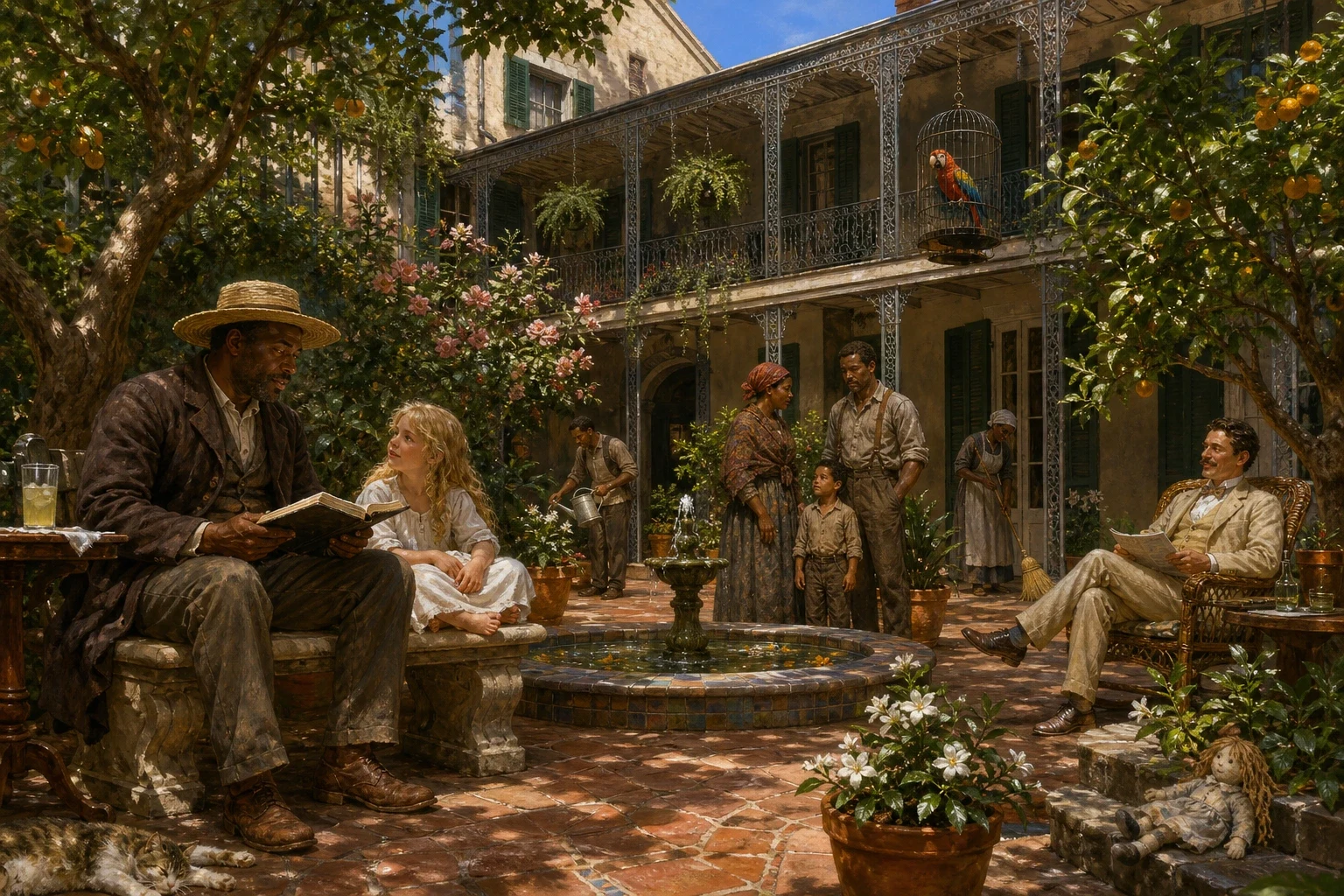
At the St. Clare house in New Orleans, Tom found a kind of life he had not expected to find again. Augustine St. Clare was an easy, generous master who disliked the whole business of slavery in his heart but never did much about it beyond kindness within his own walls. Eva treated Tom as her particular friend, and the two of them spent long hours together in the shaded courtyard garden behind the house, among the orange trees and the fountain, Eva asking Tom to tell her Bible stories and Tom telling them exactly as he had learned them, without changing a word. St. Clare's household was a strange, crowded one: his cousin from the North, Miss Ophelia, had come to manage it and was forever scandalized by the disorder she found; and there was Topsy, a sharp, quick, unruly child St. Clare had bought half out of mischief and half out of real pity. Tom watched it all, steady and patient, and waited for a freedom St. Clare kept meaning to give him.
Page 7
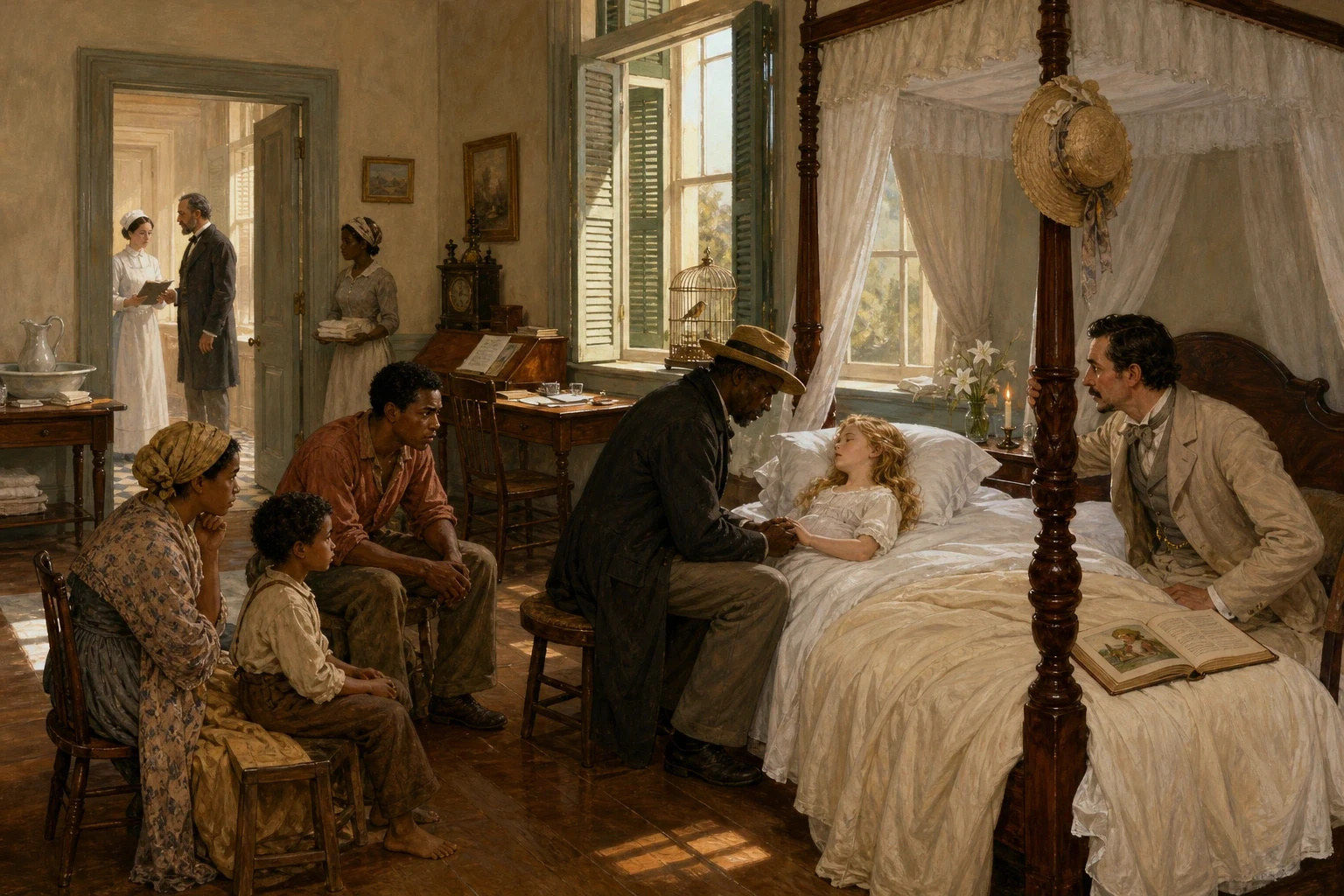
Eva had never been a strong child, and that winter she grew paler and thinner by the week, until even St. Clare, who did not want to see it, could no longer pretend she was simply tired. She was dying, and she knew it before anyone said the word to her. In her last weeks she called the household to her one by one — Tom among them — not to grieve with her but to ask something of each of them: that they be kinder to one another than the world had taught them to be, and that each of them try to meet her again in heaven, where there would be no masters and no slaves at all. To her father she made one particular request: that he free Tom, properly and on paper, so that nothing could ever take him from his family again. St. Clare promised her he would. In the end Eva simply grew quiet, and then stiller, and then was gone, with Tom at her bedside and her hand still resting in his.
Page 8
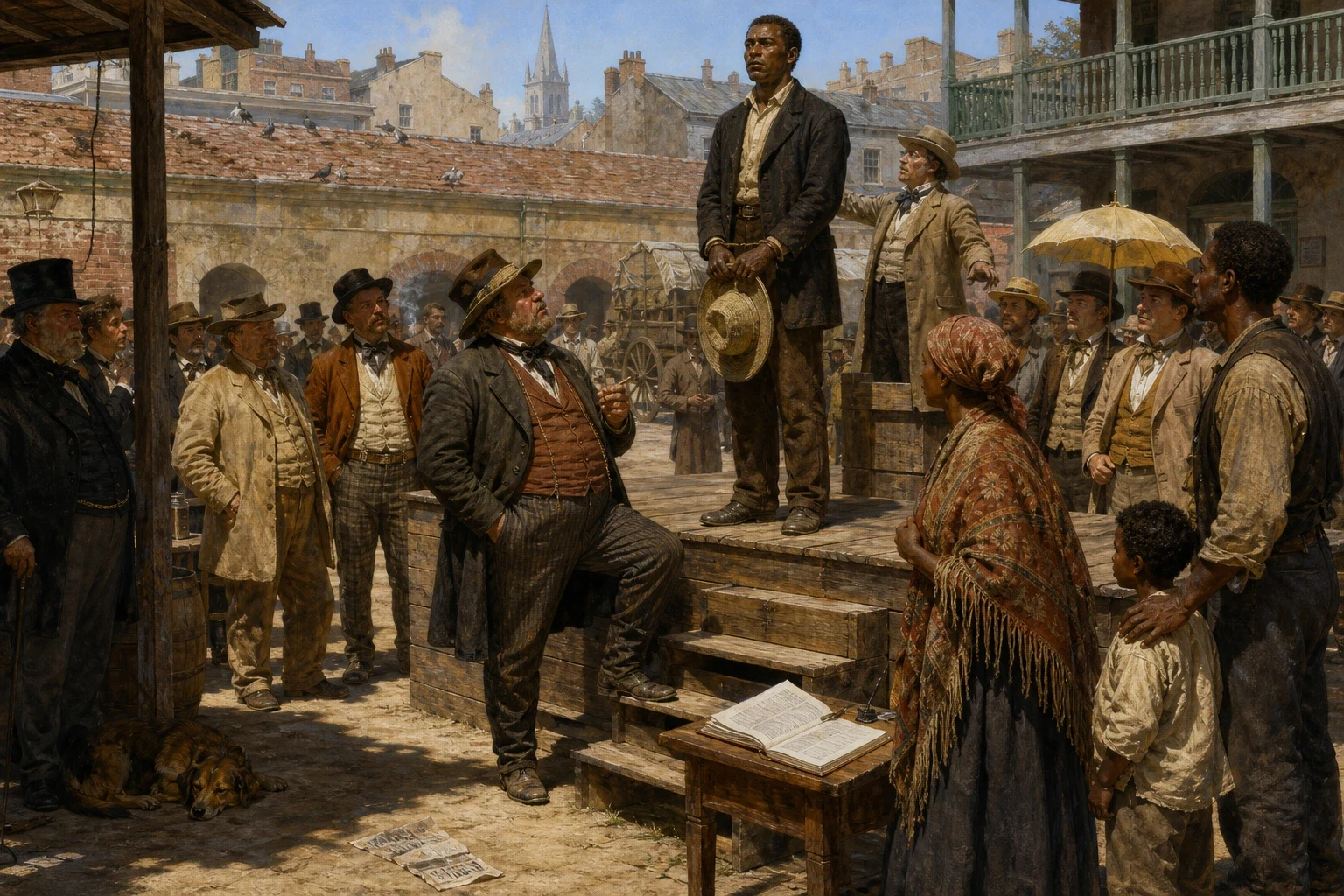
St. Clare never did sign Tom's freedom papers. He meant to see to it properly, as soon as there was time, and then one evening, stepping between two quarreling strangers on a New Orleans street to calm them down, he was struck and killed before any lawyer was ever called. With no master's word to protect him and no papers of his own, Tom became simply another piece of the dead man's estate, and Marie St. Clare, who had never cared for him the way her husband and daughter had, sold him without a second thought. He was marched down to the New Orleans slave market along with others from estates being settled, and stood up on the block to be looked over, prodded, and bid on like livestock. A heavyset, red-faced plantation owner named Simon Legree looked Tom over with particular interest — broad shoulders, strong hands, a man who could clearly still do a hard day's work — and bought him for a low price, meaning to get every cent of use out of him before he wore out.
Page 9
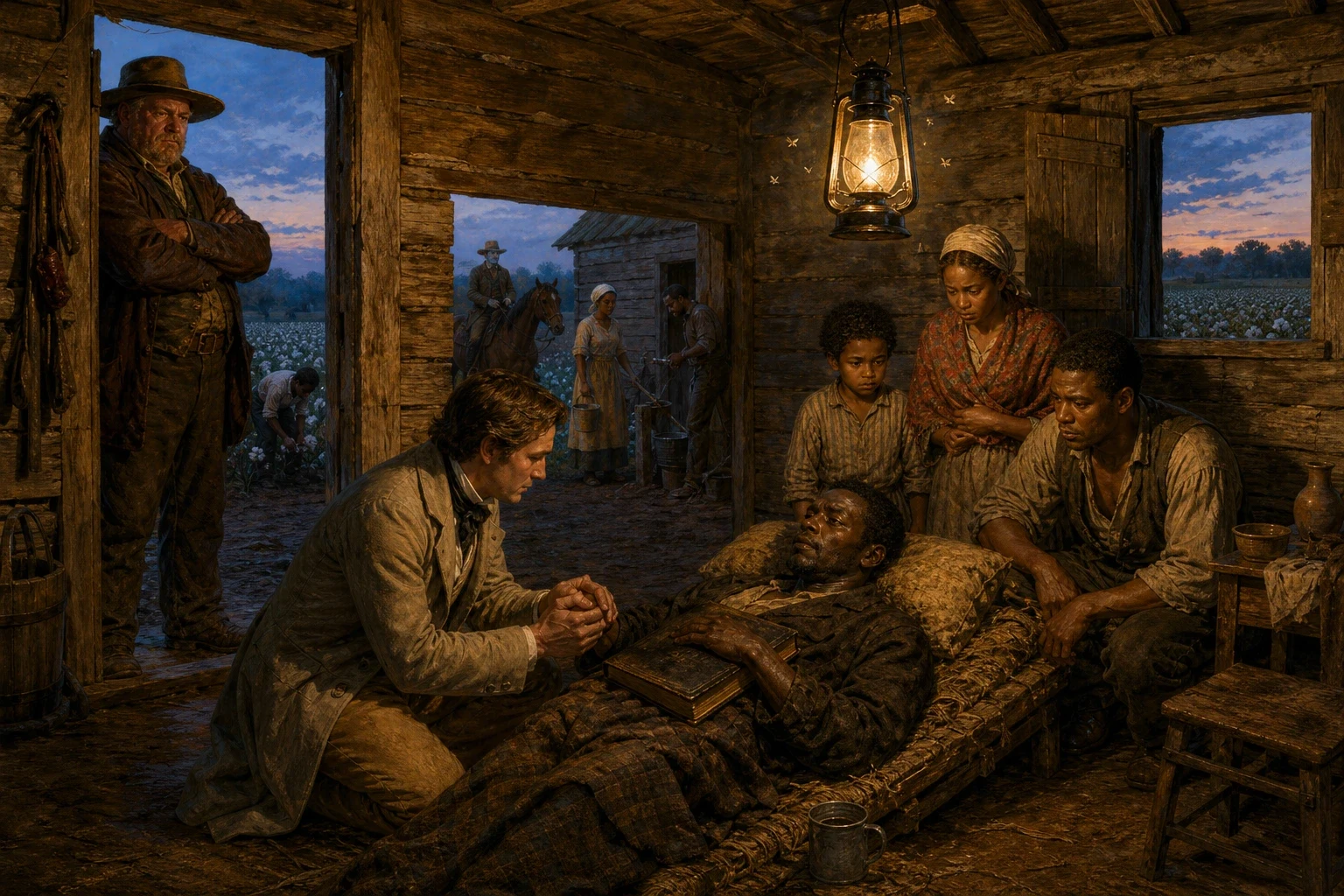
On Legree's plantation, deep in the Louisiana swamp country, Tom did the hardest work of his life and endured the harshest master in the whole book, yet he never became what Legree wanted him to become. He prayed with the other enslaved people in secret and comforted them, and when two women on the place, Cassy and Emmeline, finally found a way to escape into the swamp, Tom knew where they had gone and would not say. Legree had him beaten for it, again and again, demanding the truth each time, and each time Tom refused him, not out of defiance for its own sake but because he would not buy his own ease with someone else's capture. The beating left him broken in body, and he lay dying in his own small cabin on the place. It was there, only days later, that young George Shelby — Mr. Shelby's son, grown now, and sent by his father to buy Tom back at last — found him. He had come too late to save him, but not too late to sit with him. Tom, weak and dying, held nothing against anyone, and told George so with his own breath.
Page 10
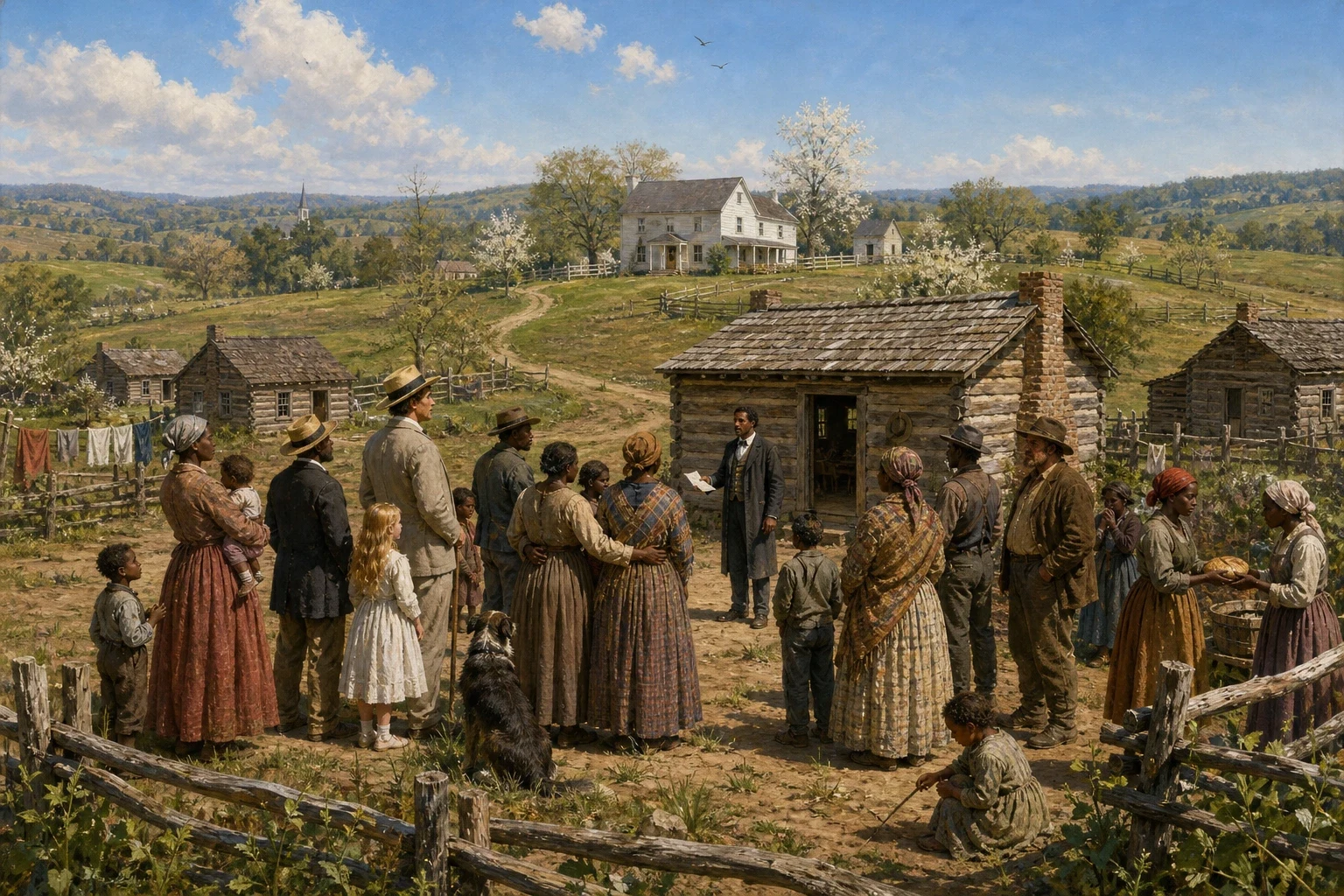
George Shelby carried Tom's death home with him to Kentucky, and he did not let it rest once he arrived. He gathered every man, woman and child enslaved on his father's farm together in the yard, in front of Tom's own small cabin, and he freed every one of them on the spot, with the papers drawn up properly and signed. It was not, he told them plainly, a kindness he was doing them; it was only right, and long overdue, and it had cost a good man his life to teach him so. He asked them to keep the cabin standing, just as it was, and to remember, whenever they passed it, the man who had lived there — his patience, his faith, and the price the world had made him pay for both. The farm's bare slope was greening again with the spring, and down in the valley the same old river ran on, the way it always had.
About this story
- Audience: general readers
Read Wonder Novels on your phone
Wonder Novels is available on Android. Get Wonder Novels on Google Play.