Anansi the Spider
How all the stories in the world came to belong to a spider
Page 1
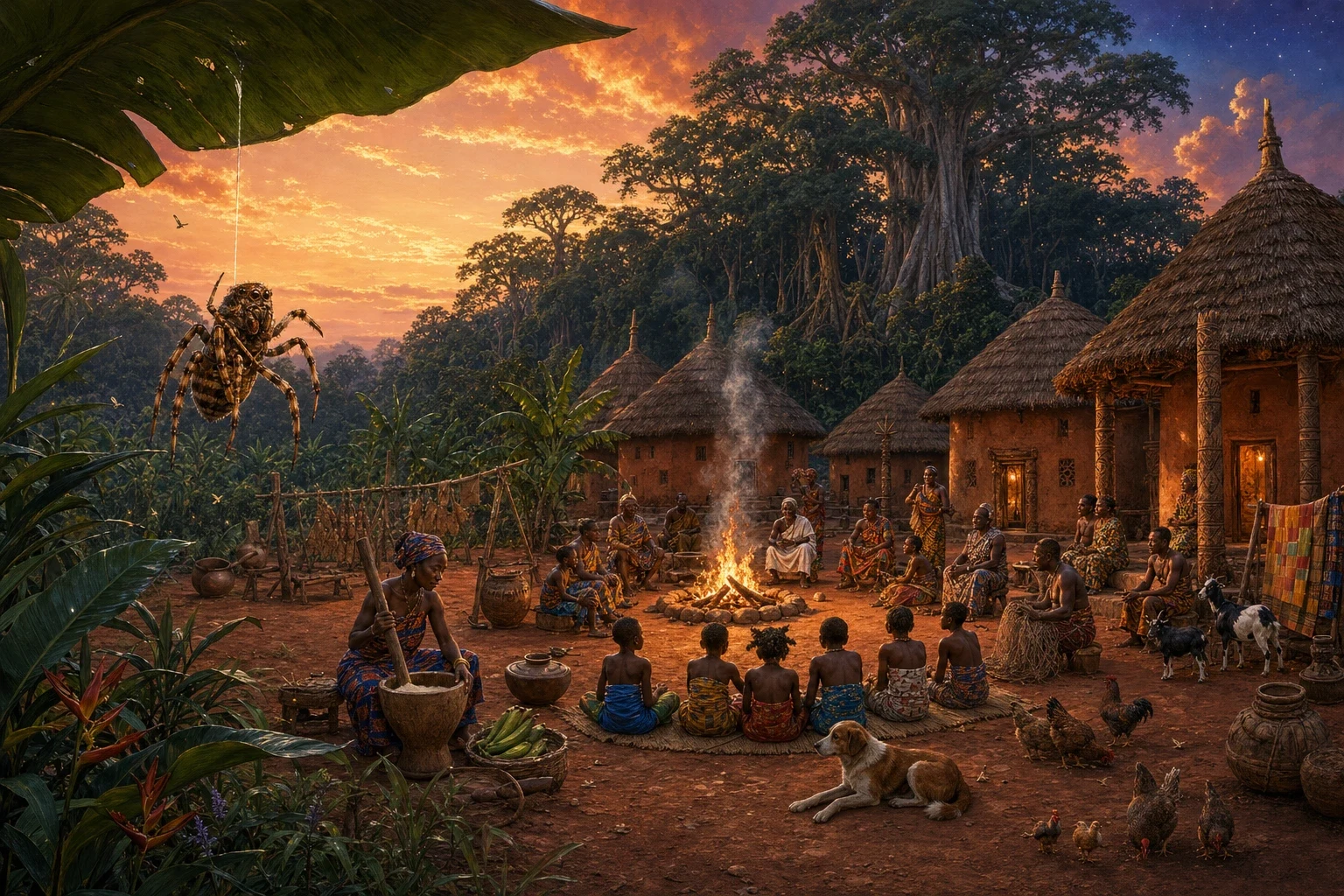
A long time ago there were no stories in the world. Not one. There was nothing for anybody to tell by the fire at night, and nothing for a grandmother to say to a child who would not sleep, because every story there had ever been belonged to Nyame the Sky God, and he kept them all in a wooden box beside his stool in the sky, and nobody had ever had them. In a village at the forest's edge there lived a spider called Kwaku Anansi, who was not large and not strong and not fast, and who had the best head of anybody in that country and knew it. He sat on the underside of a leaf one evening watching the people down in the clearing sitting round the fire with nothing to say to one another — and he decided, right there, that he was going up to the sky to buy the stories.
Page 2
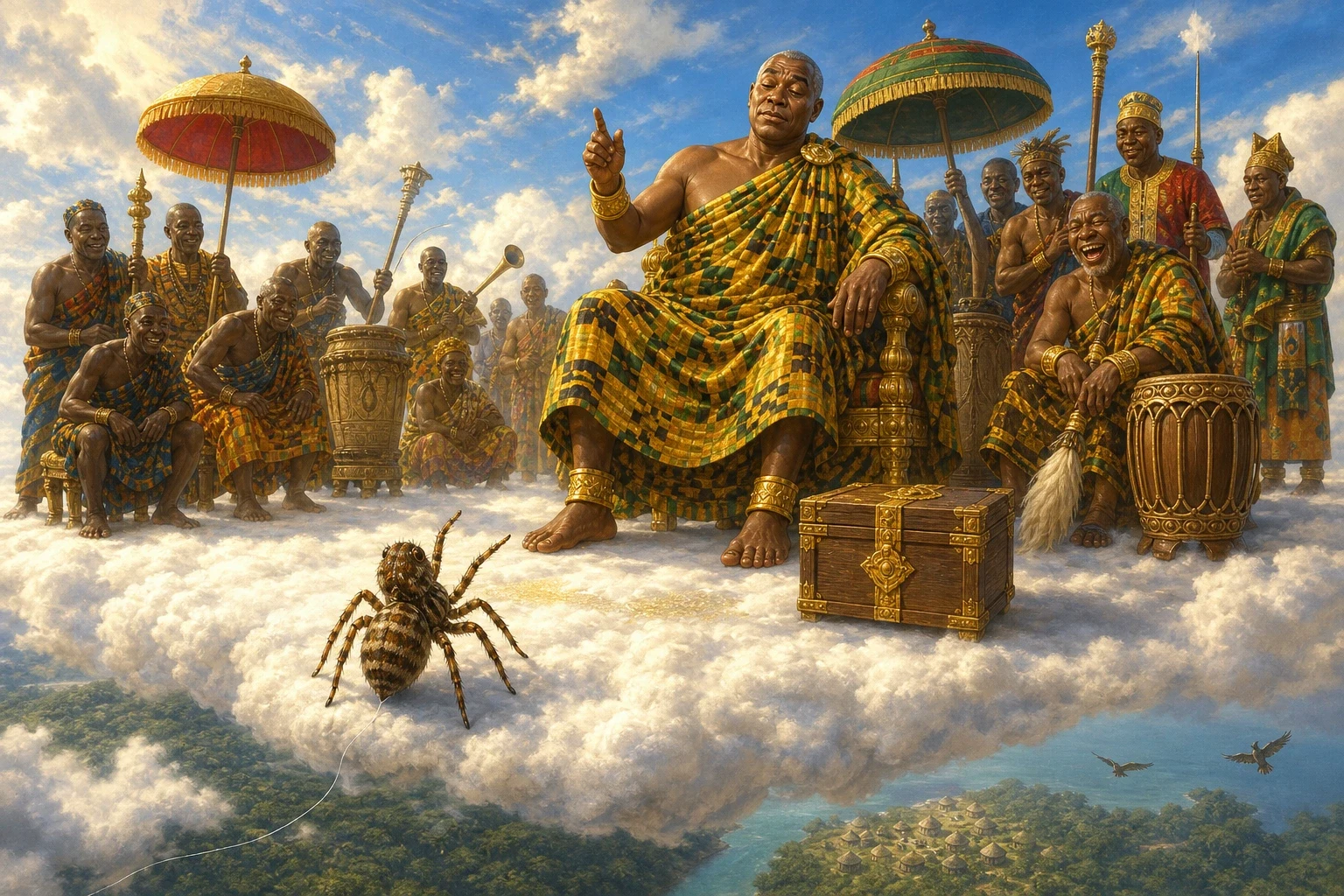
He spun a thread and went up it, and up, and up, and came out in the sky country, and walked across the clouds to where Nyame the Sky God sat on his great gold-studded stool with the box of stories beside him. Anansi said good morning and asked what the stories cost. The Sky God looked down at him for a long moment, and the whole of his court looked too, and then Nyame said the price — and said it in the tone of a man who has used that price before to get rid of people. The price was four things. Onini the python, who is longer than a canoe. The Mmoboro hornets, who fill a whole nest and sting like fire. Osebo the leopard, with teeth like spears. And Mmoatia, the forest fairy whom nobody has ever seen. Bring me those four, said the Sky God, alive, and the stories are yours. The whole court laughed. Anansi said that he would go and get them, and went back down his thread.
Page 3

Anansi cut a long branch from a palm tree and gathered a bundle of strong creeper vine, and he walked along to the river bank where Onini the python lived, muttering to himself the whole way and taking no notice of anybody. When he got there he was still arguing out loud. He was saying that his wife was a foolish woman; that she said the python was longer than this palm branch; that he himself said the palm branch was longer than the python; and that they had been at it since breakfast. The python lifted his broad head off the mud and asked, with some interest, what exactly had been said about his length. And that was that. He stretched himself out beside the palm branch to settle the question, and Anansi said that he kept curling up at the ends and could not be measured properly, and offered to tie him to it, just at the neck and the middle and the tail — and the python, who wanted this settled once and for all, said that he might.
Page 4
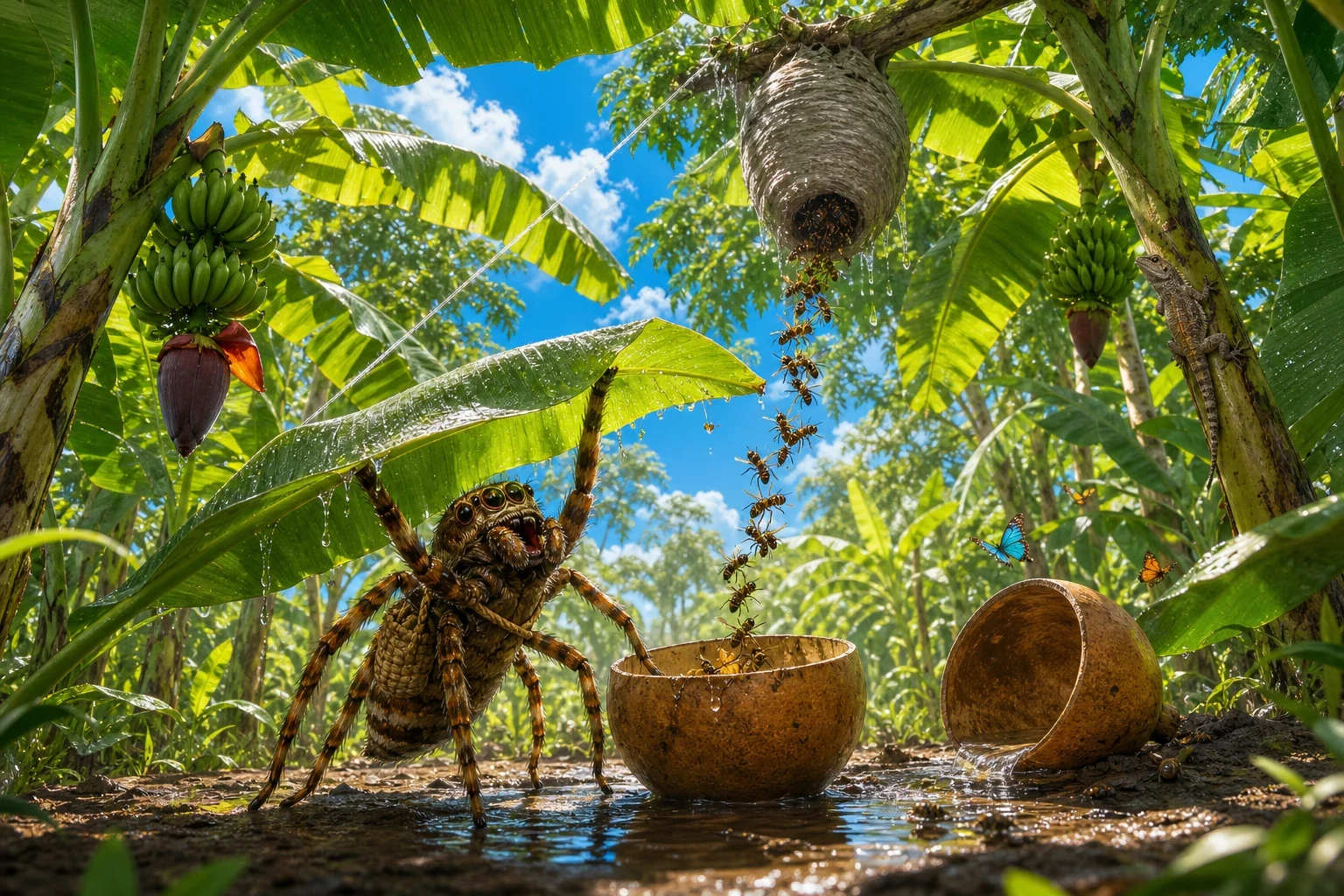
Next were the hornets. Anansi filled a calabash with water and cut an enormous banana leaf, and went to the grove where the Mmoboro nest hung grey and papery in a tree. He poured half the water over the nest and the other half over himself, and then he stood out in the open under the banana leaf held over his head like a roof, and called up to them in a worried voice that the rains had come early, and that they would be drowned where they hung, and would they not come and shelter in his dry calabash until it had passed? The hornets came out and looked at the water dripping off every leaf and off the spider himself, and agreed that the rains had certainly come. Then they flew down, every one of them, into the dry calabash — and Anansi put the banana leaf over the mouth of it and tied it down, and said, out loud, that they were really not very clever, and carried them home.
Page 5

Osebo the leopard was next, and the leopard was harder, because the leopard was neither vain nor foolish. So Anansi did not talk to him at all. He went to the place where the leopard walked every evening, and he dug a deep pit across the path and covered it over with sticks and leaves and swept the earth smooth, and went home to bed. In the morning there was the leopard, standing at the bottom of a hole far too deep for him to jump out of, in a thoroughly bad temper. Anansi came by and was astonished. He was extremely sympathetic. He said that he would of course help, and that the only safe way to get a leopard out of a pit is to tie his tail to a bent-down tree so that it can lift him — and the leopard, who could not get out and had been down there all night, told him to get on with it. So Anansi bent the tree down, and tied, and let go; and the leopard came out of the hole very fast indeed, and hung in the air at the top of the tree, and was still there, swinging, when Anansi went home for his rope.
Page 6
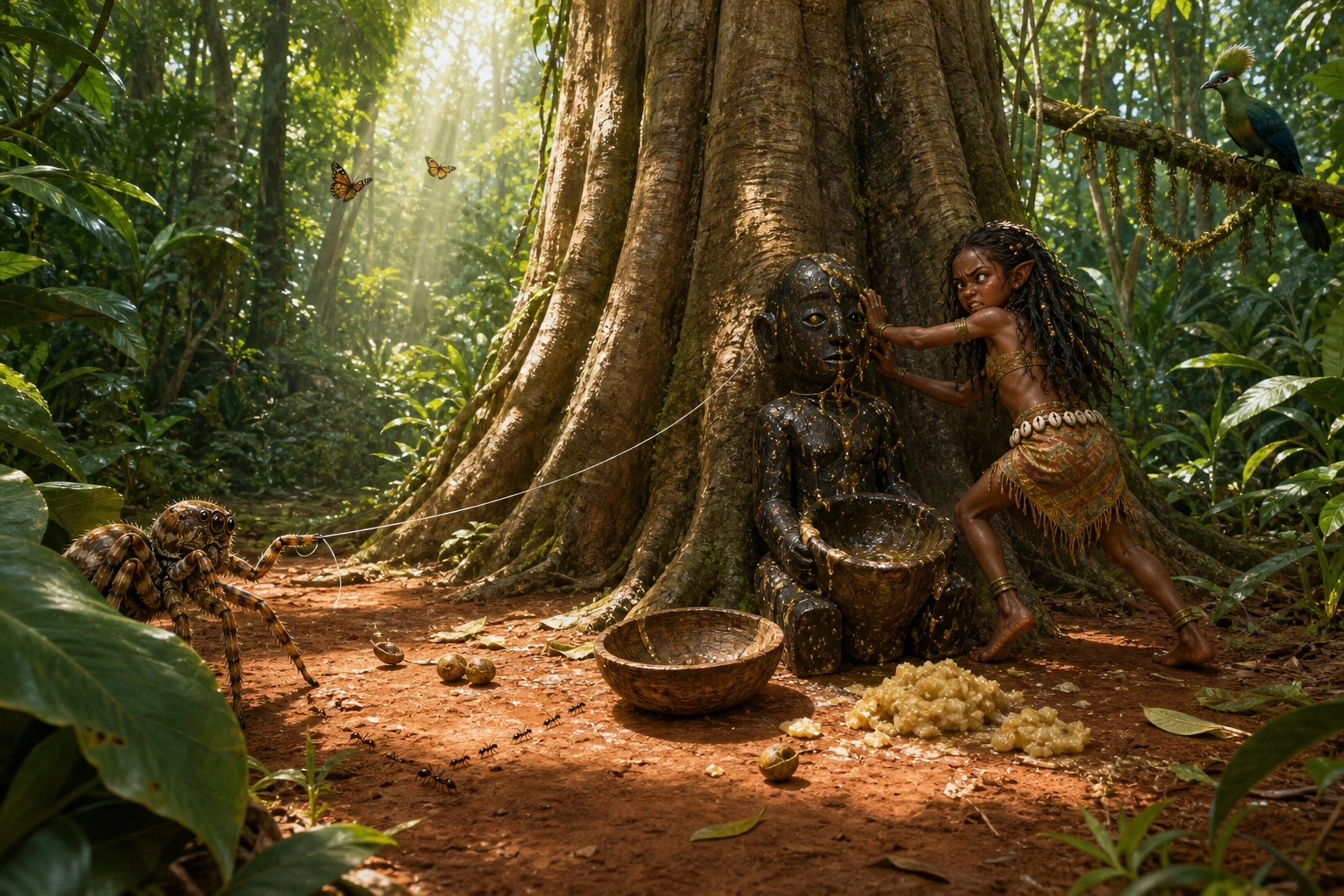
The last was Mmoatia the forest fairy, whom nobody had ever seen. Anansi carved a small wooden doll and covered it all over with the sticky gum of a tree, and set it under an odum tree in the clearing where the fairies were said to come, and he put a bowl of mashed yams in its lap. Then he tied a thread to the doll's head and went and hid in the bushes with the other end. The fairy came. She looked at the yams and asked the doll whether she might have some; and Anansi, in the bushes, pulled his thread so that the doll's head nodded yes. She ate the lot. Then she thanked the doll — and the doll, of course, did not answer, because it was a doll. She asked again. Nothing. And Mmoatia, who was proud, and who had never in her life been ignored by anybody, slapped the doll on the cheek for its rudeness — and her hand stuck fast in the gum; and she hit it with the other hand, and that stuck too; and then she pushed with her feet, and after that there was no part of her that was not stuck to it at all.
Page 7
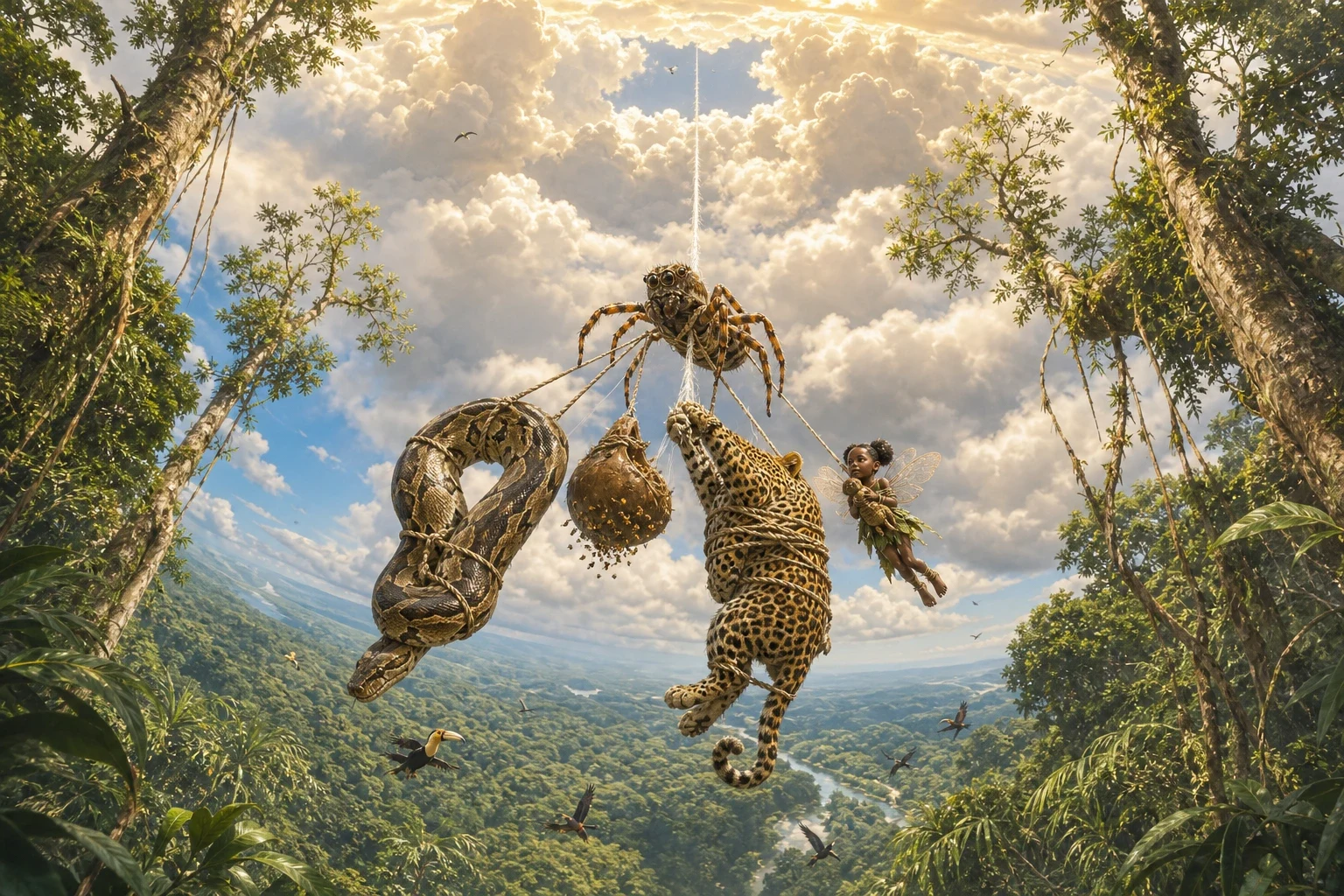
So Anansi went back up his thread, and what he took with him had never been seen going up a thread before: a python longer than a canoe, bound to a palm branch; a calabash with a whole nest of hornets shut up inside it and complaining; a leopard roped by all four paws and swearing continuously; and a fairy stuck to a wooden doll. It took him most of a day. He went up past the top of the forest, and past the hills, and past the birds, and into the cloud — and all the way up he was saying to himself, quietly and steadily, that he had told them so.
Page 8
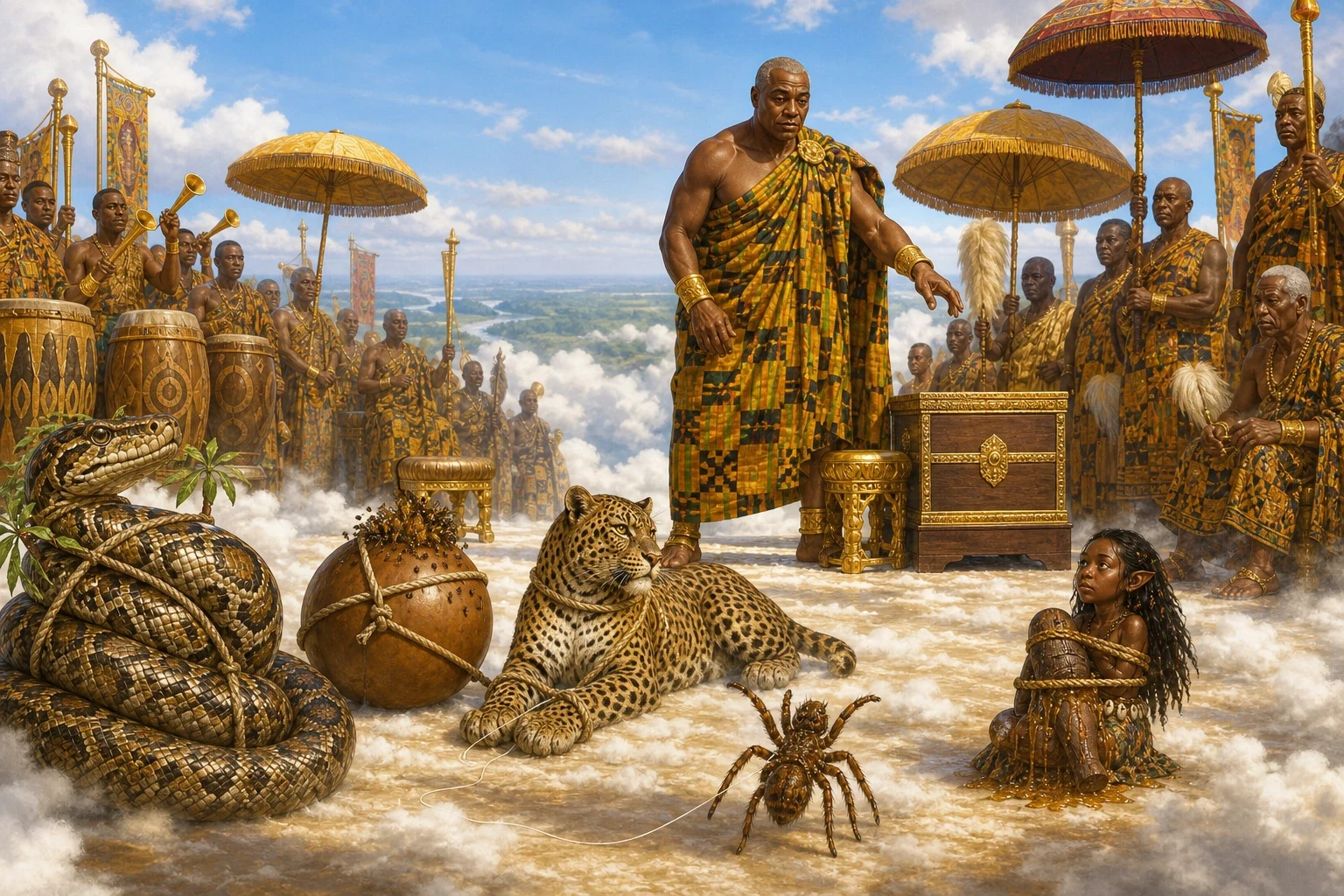
He put them down on the cloud in front of the Sky God's stool, one after another, and named them as he put them down. Onini the python. The Mmoboro hornets. Osebo the leopard. Mmoatia, the fairy nobody had ever seen. The whole court of Heaven, which had laughed at him four captures ago, did not make a sound. And Nyame the Sky God looked at the four of them lying there, and then down at the spider, and then he stood up off his gold-studded stool — which he did perhaps twice in an age — and said, so that every chief and every elder and every drummer in the sky could hear him, that great men and rich men and whole armies had tried to buy his stories and had not paid the price; and that a spider had.
Page 9

The Sky God gave him the box. Anansi got a line round it and went over the edge of the cloud and started down, and all the way down he could hear the stories moving about inside it, which is a sound like a hundred people talking very quietly a long way off. He came down past the birds and the hills and the top of the forest. And somewhere above his own village, with the box swinging under him and the whole green country spread out below, he thought about carrying it home and keeping it under his roof and being the only one who had any — and he thought about the people sitting round the fire with nothing to say to each other. Then he opened the lid.
Page 10
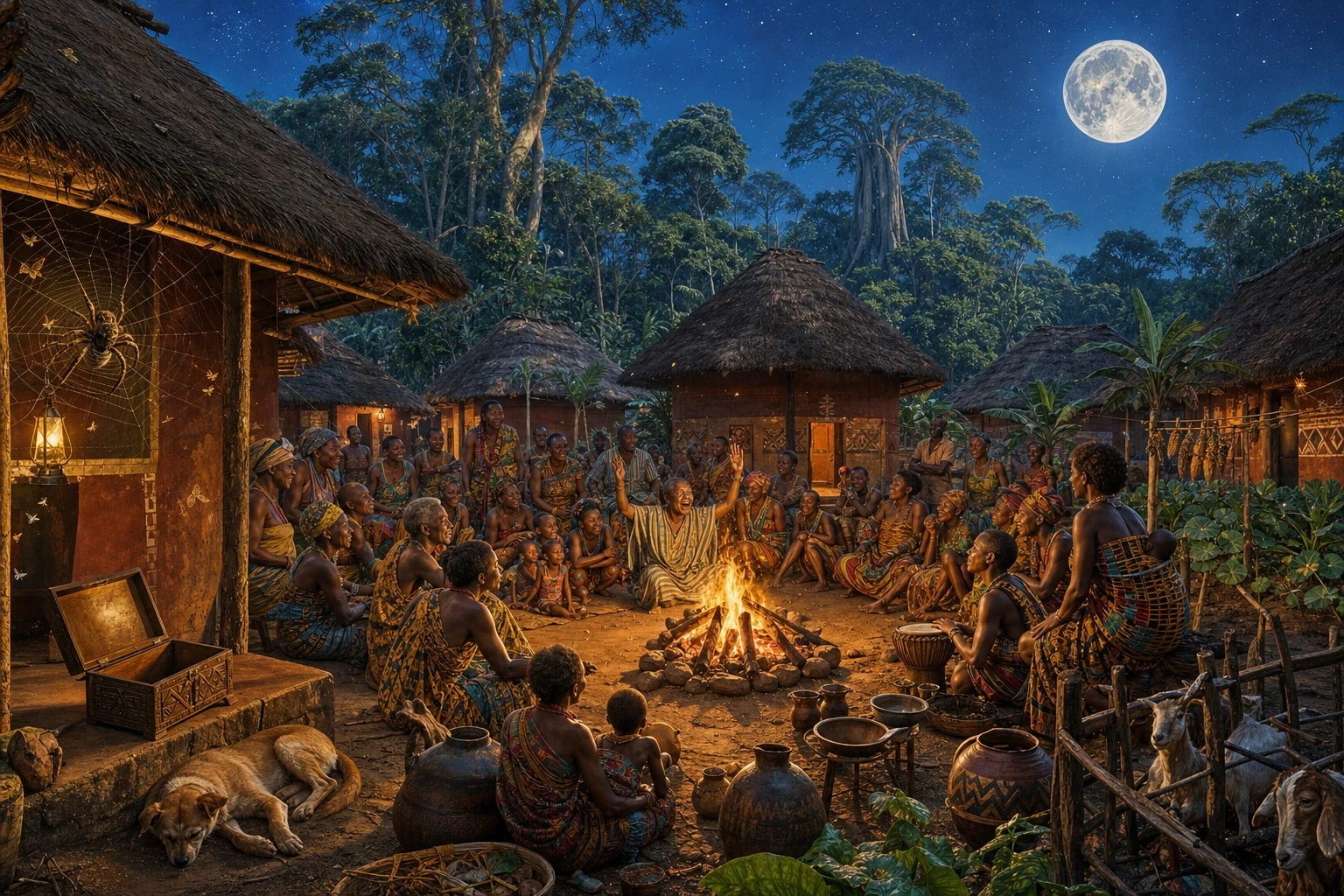
They went everywhere. They blew out over the forest and along the rivers and across the sea and into every country there is, and they got into people's houses and into their heads, and they have been there ever since — which is why you have never met anybody anywhere in the world who does not know a story. That night in the village below, somebody sat down by the fire and started to tell one, and did not know where it had come from, and everybody stopped to listen. And up under the eaves of the nearest house, where it was dark and warm, a spider sat in the middle of his own web with all eight legs folded, listening too. In the Ashanti country they are not called stories to this day. They are called Anansesem — spider stories — because he paid for them, and because he did not keep them.
About this story
- Audience: kids (ages 6–12)
Read Wonder Tales on your phone
Wonder Tales is available on Android. Get Wonder Tales on Google Play.