Who are the 9 major Egyptian gods?
Ancient Egyptian religion featured many gods, but a specific group of nine, known as the Ennead, played a central role.
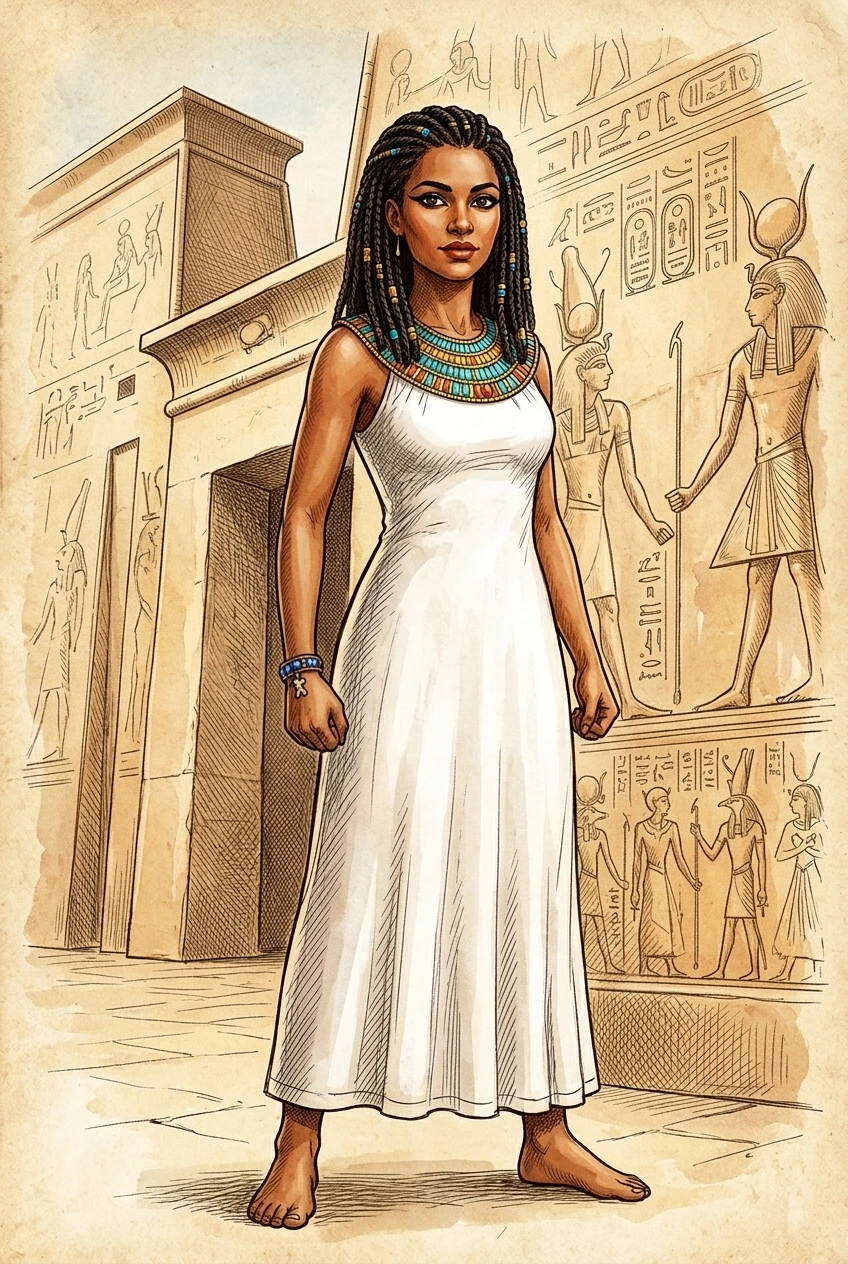
The idea of nine major ancient Egyptian gods refers to a group known as the Ennead of Heliopolis. This was a specific theological grouping from the city of Heliopolis, which included the creator god Atum, his children Shu and Tefnut, their children Geb and Nut, and finally the children of Geb and Nut: Osiris, Isis, Seth, and Nephthys.
The Popular View of Egyptian Gods
When people think about ancient Egyptian gods, they often imagine a fixed pantheon, a single, unchanging list of deities worshipped across all of Egypt for thousands of years. This view sometimes includes the belief that there was always a specific set of 'major' gods, perhaps exactly nine, who were universally recognized above all others. However, the reality of ancient Egyptian religion was far more complex and fluid than a simple, static list suggests.
- There was one definitive list of nine 'major' gods worshipped throughout ancient Egypt.
- Gods like Ra and Amun were always at the top of the pantheon, consistently seen as the most important.
- The roles and importance of gods remained largely unchanged over millennia.
- All Egyptians believed in the same set of gods and myths.
The Ennead: A Specific Theological Grouping
The concept of "the 9 major Egyptian gods" most accurately refers to the Ennead (from the Greek word for "nine"), which originated in Heliopolis, a significant religious center. This group formed a foundational mythological family tree, central to the Heliopolitan creation story. At the head was Atum, who created himself and then brought forth Shu (air) and Tefnut (moisture). Their children were Geb (earth) and Nut (sky), who in turn gave birth to Osiris, Isis, Seth, and Nephthys. Sometimes Horus, the son of Osiris and Isis, was also included, bringing the number to nine or ten, depending on the tradition. This specific grouping was indeed very important, but it was one of several theological systems that existed across Egypt. For a deeper dive into these foundational stories, consider reading Egyptian Creation Myths.
Man fears time, but time fears the pyramids.
Dynamic Deities and Regional Focus
While the Ennead was influential, it's a simplification to say there was one definitive list of nine major gods across all of ancient Egypt. The prominence of deities often depended on the region and the era. For example, Amun rose to immense importance in Thebes, particularly during the New Kingdom, often syncretized with Ra as Amun-Ra. Other gods, like Ptah in Memphis or Sobek in the Faiyum, were paramount in their local cult centers. The god Thoth, known as the scribe of the gods and keeper of knowledge, held consistent importance across many periods, as explored in Thoth, and the God Who Kept the Records. The pantheon was vast, with hundreds of deities, and their relative importance could shift dramatically over the three millennia of ancient Egyptian civilization. The story of Amun, the Hidden One highlights how certain gods could gain and lose influence. Even the concept of a single god emerged briefly, as detailed in The Year Egypt Had One God.
The Enduring Importance of Specific Gods and Goddesses
Despite the regional variations and changing theological emphasis, some gods and goddesses maintained widespread and enduring importance. Osiris, Isis, and Horus, for example, were central figures in the afterlife beliefs and royal legitimacy throughout much of Egyptian history. The story of Osiris and the Court of the Dead illustrates his critical role. Isis, in particular, grew to be one of the most revered goddesses, her cult spreading far beyond Egypt's borders, a phenomenon explored in Isis, and the Goddess Who Outlived Egypt. Similarly, Bastet, the cat goddess, maintained a popular following, especially among the common people, as seen in The Cats of Bastet and The Egyptian Cat Goddess. The beliefs surrounding these deities often involved complex rituals and the work of The Priests and Priestesses of Egypt. Understanding these core figures helps to grasp the spiritual world of ancient Egypt, particularly concepts like judgment after death, as described in The Weighing of the Heart. For further exploration of these fascinating beliefs, the collection of stories in Wonder Egypt offers rich insights into the world of ancient Egyptian mythology and religion. You can explore more about these stories and others through Wonder Egypt.
Frequently Asked Questions
What is the difference between the Ennead and other groups of gods?
The Ennead was a specific group of nine deities associated with the creation myth of Heliopolis, a major religious center. While very influential, it was not the only theological grouping; other cities and periods had their own prominent deities and creation stories, such as the Ogdoad of Hermopolis.
Were all Egyptian gods depicted with animal heads?
No, not all Egyptian gods were depicted with animal heads. Many, like Isis and Osiris, were typically shown in human form, sometimes with specific headdresses or regalia. Gods like Thoth (ibis or baboon head) or Horus (falcon head) are famous examples of theriomorphic, or animal-headed, depictions.
Did ancient Egyptians believe in an afterlife?
Yes, belief in an afterlife was a central tenet of ancient Egyptian religion. They believed that after death, individuals would undergo a judgment, often involving the weighing of the heart against the feather of Ma'at, to determine their worthiness to enter the Field of Reeds, a paradise-like existence.