Café Terrace at Night by Vincent van Gogh (Arles, France — 1888)
Café Terrace at Night by Vincent van Gogh (Arles, France — 1888) — an illustrated arts story, set in France. 10 illustrated pages, free to read on Wonder Arts.
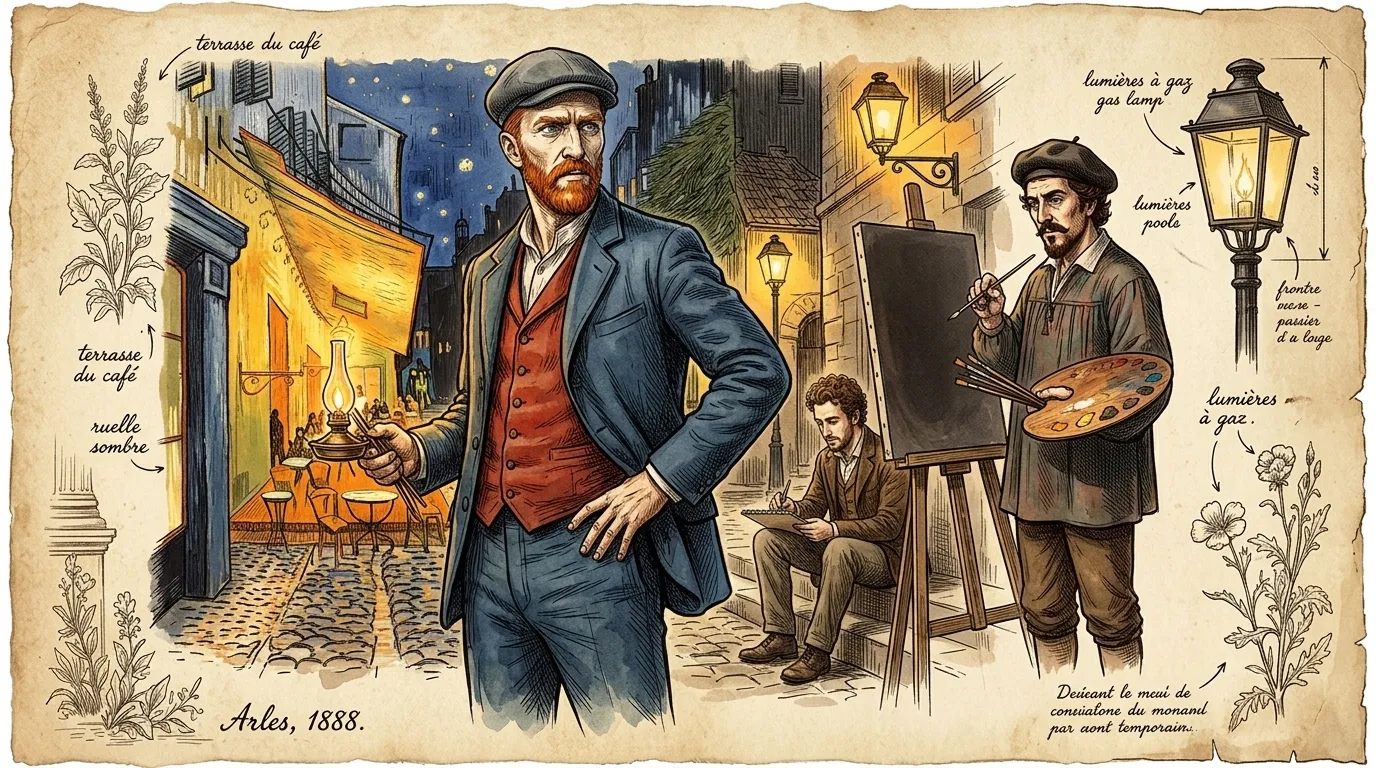
Page 1
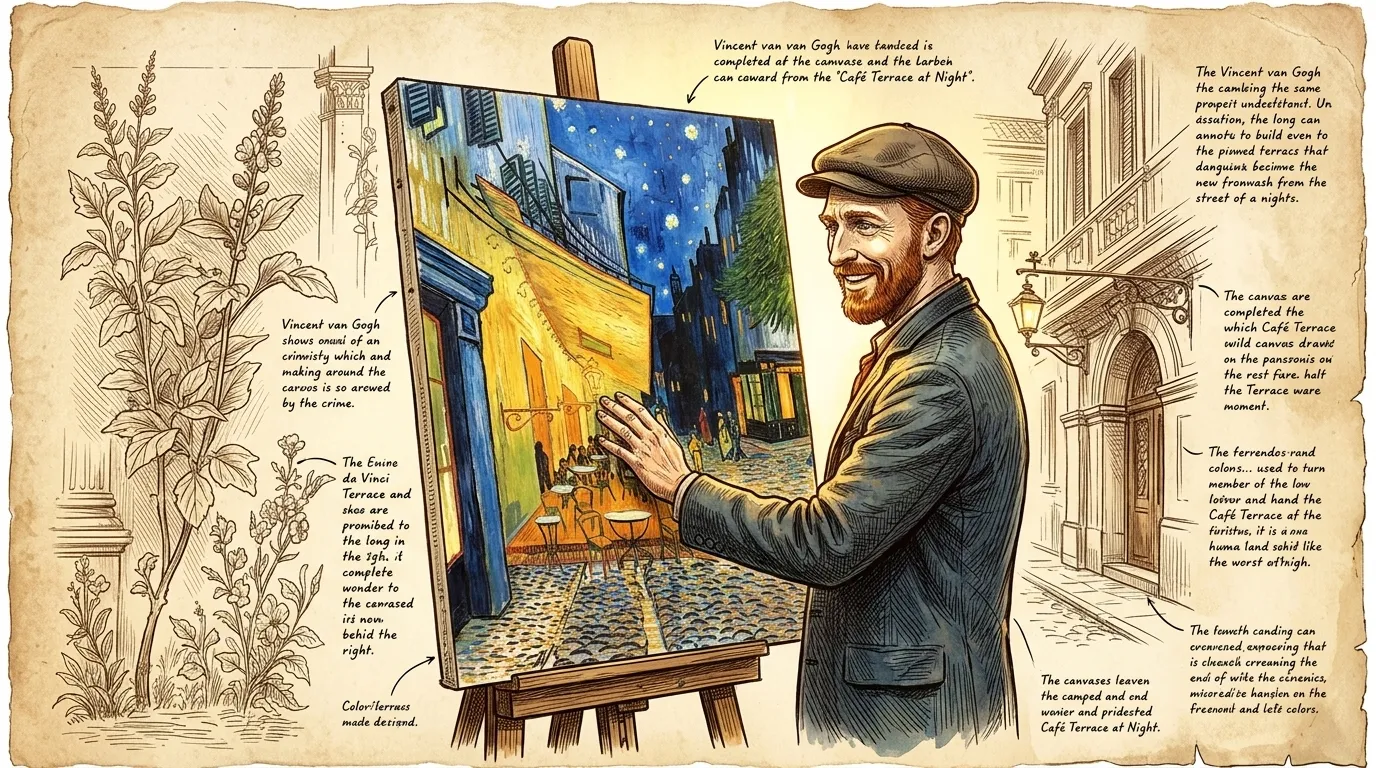
Vincent van Gogh stands before his 'Café Terrace at Night,' completed in Arles, France, in 1888. The painting, measuring 81 x 65.5 cm, now resides at the Kröller-Müller Museum in Otterlo, Netherlands. Its striking use of color and light has made it one of his most recognizable and beloved works.
"Van Gogh murmurs to himself, 'This street... this light... it's all there, just as I imagined it. Now, I will show the world, what beauty could truly look like.'"
Art Fact: The painting's vibrant colors and contrasting light and shadow create a mesmerizing effect, drawing viewers into the scene.
Page 2
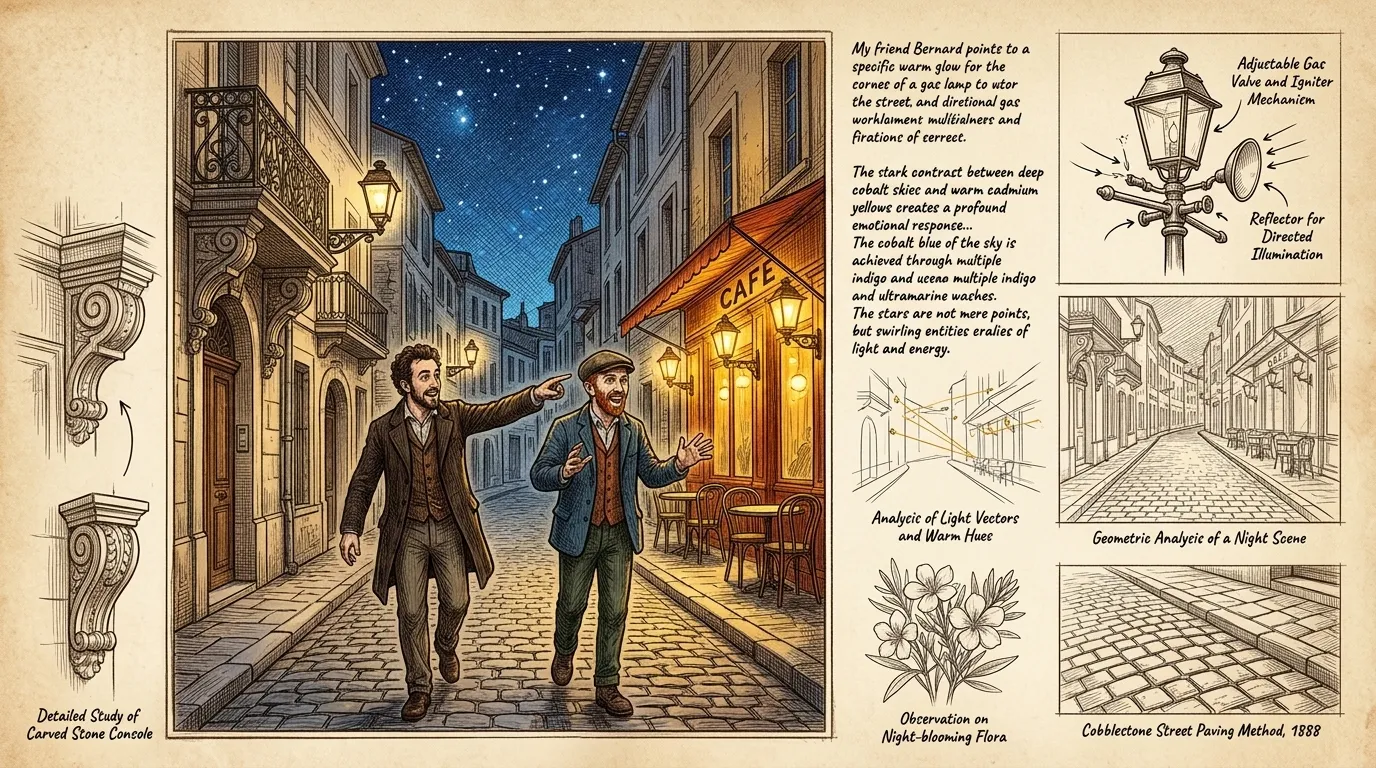
One evening, while strolling through Arles, Van Gogh observed the contrast between the warm, artificial light of the café and the deep blue of the starlit sky. This sight captivated him, sparking the initial idea for his painting.
"Émile Bernard, a fellow artist, says, 'Vincent, look at how the light illuminates the street! It's as if the stars have come down to earth.' Van Gogh replies, 'Yes, Émile! It's a world of warmth and light in the midst of the night. I must capture this on canvas!'"
Art Fact: Van Gogh often found inspiration in the everyday scenes around him, transforming ordinary moments into extraordinary works of art.
Page 3
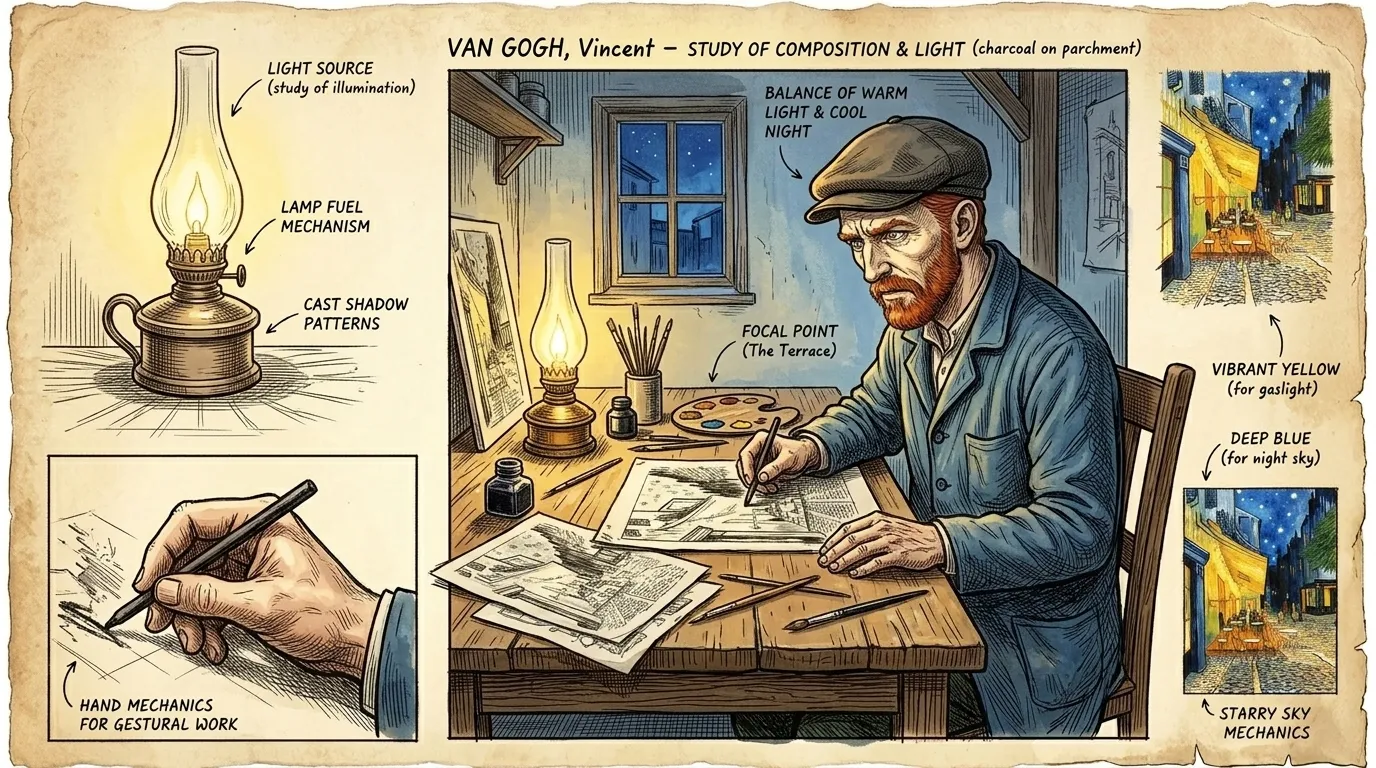
Back in his modest room, Van Gogh begins sketching the scene. He experiments with different compositions, trying to capture the essence of the vibrant light and the peaceful atmosphere.
"Van Gogh mutters to himself, 'The composition must be just right... the balance between the warm café and the cool night... it must breathe with life.'"
Art Fact: Van Gogh's early sketches reveal his meticulous approach to composition and his dedication to capturing the true essence of his subjects.
Page 4
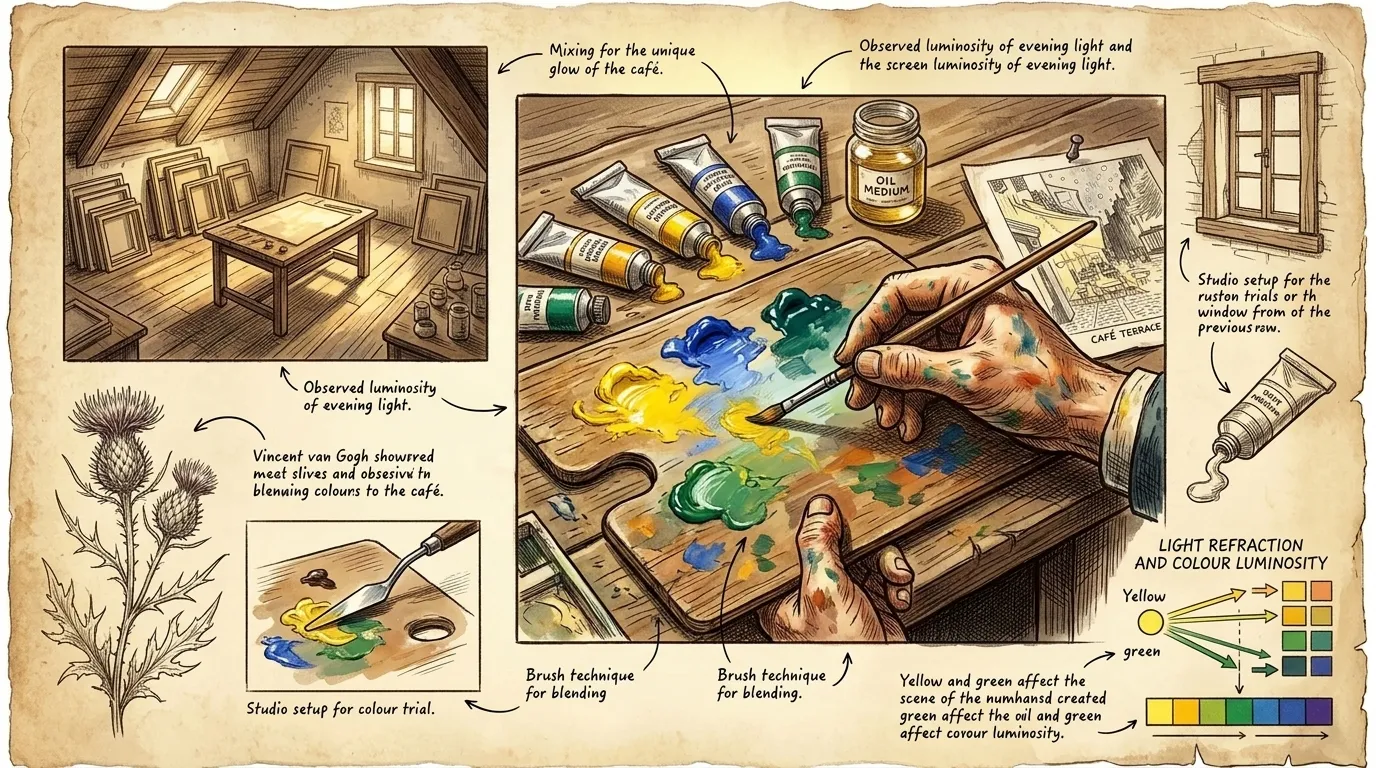
Van Gogh carefully selects his palette, choosing vibrant yellows, blues, and greens to recreate the scene's luminous quality. He mixes his paints with precision, striving to achieve the perfect balance of color and tone.
"He declares, 'Color is the soul of a painting! Yellow for the warmth, blue for the night's mystery... together they create a symphony.'"
Art Fact: Van Gogh's bold use of color is one of the defining characteristics of his art, conveying emotion and creating a unique visual language.
Page 5
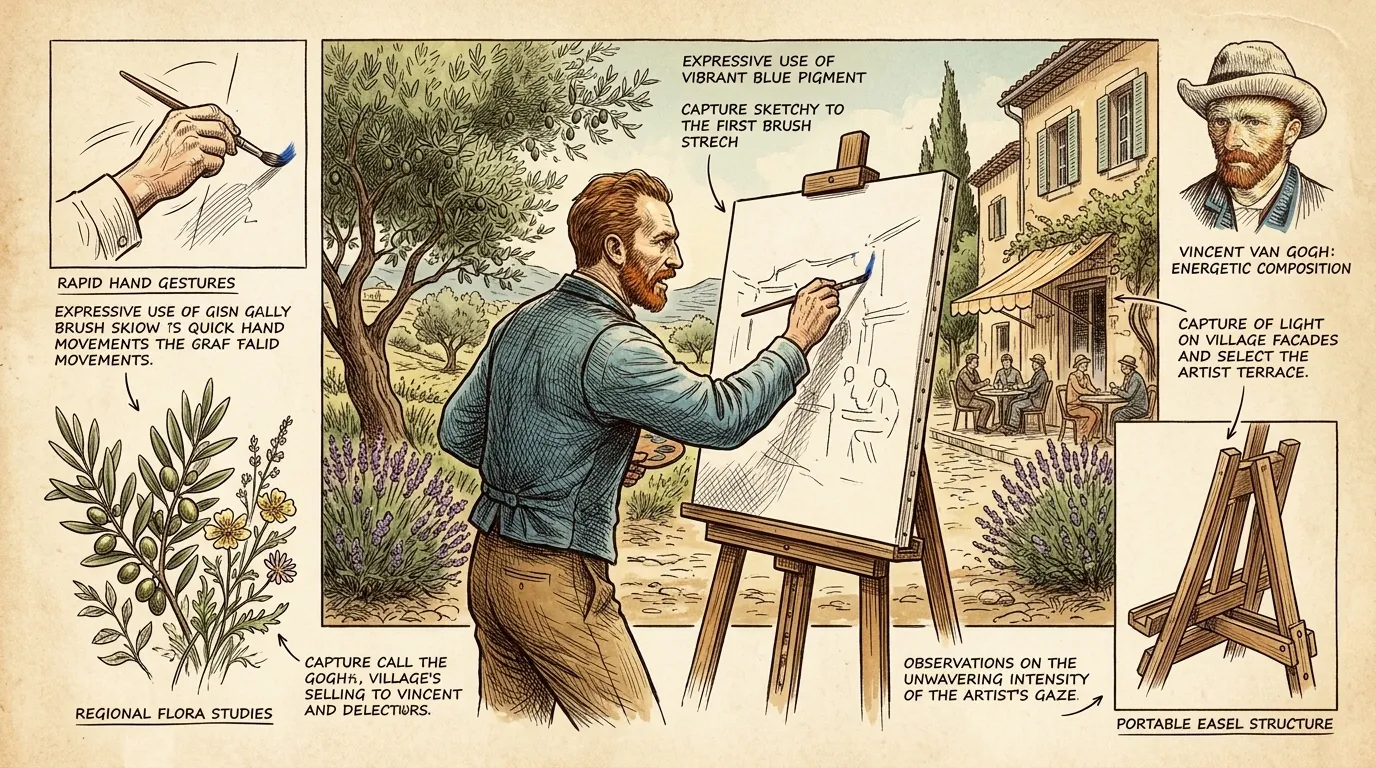
With his canvas prepared, Van Gogh applies the first brushstrokes. He works quickly and decisively, capturing the rough outlines of the buildings and the figures on the terrace.
"As he paints, Van Gogh exclaims, 'It's taking shape! The energy, the vibrancy... it's flowing onto the canvas!'"
Art Fact: Van Gogh's energetic brushstrokes give his paintings a sense of movement and life, capturing the dynamic energy of the world around him.
Page 6
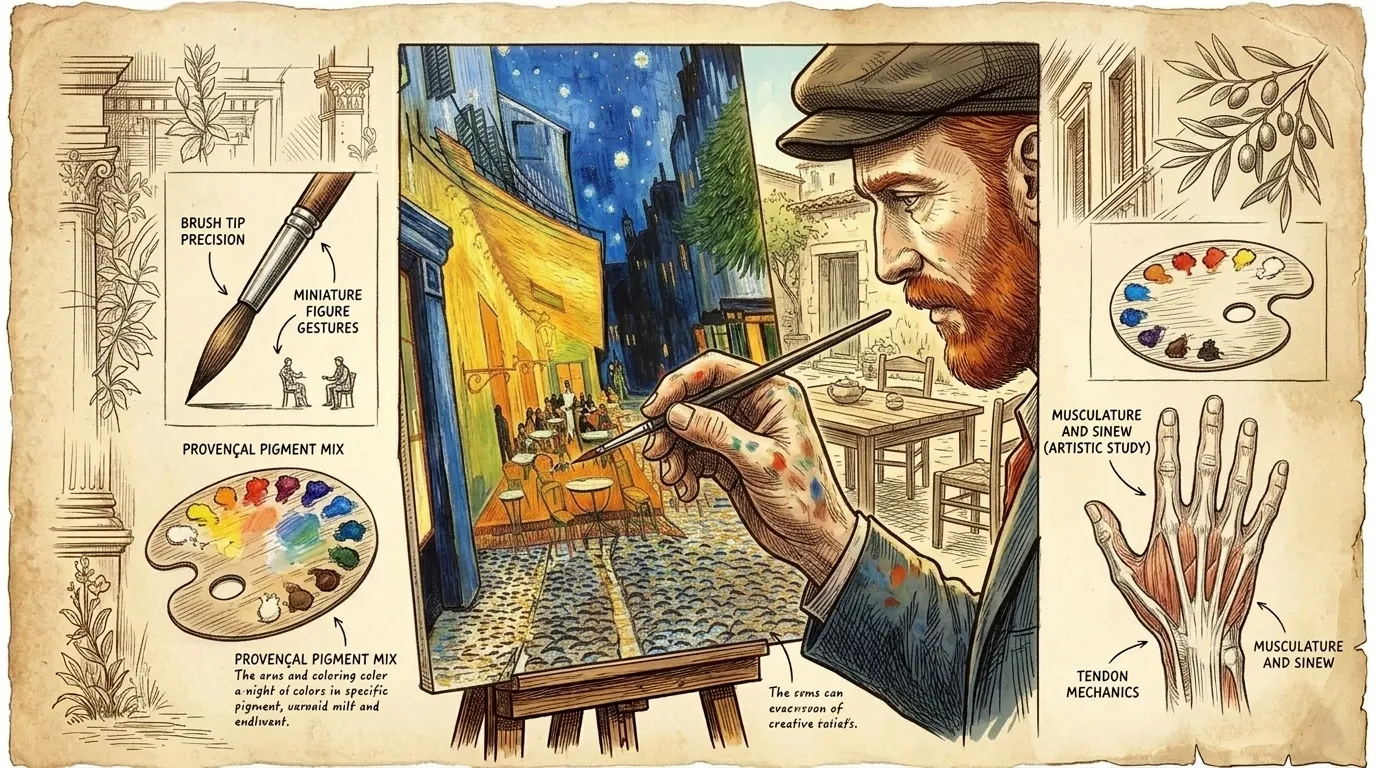
As Van Gogh continues to work, he adds finer details to the painting. He carefully renders the figures on the terrace, capturing their individual characteristics and creating a sense of intimacy.
"He says to himself, 'Each figure tells a story... a moment in time, a fleeting connection... I must capture their essence.'"
Art Fact: Van Gogh's attention to detail brings his paintings to life, creating a rich and immersive experience for the viewer.
Page 7
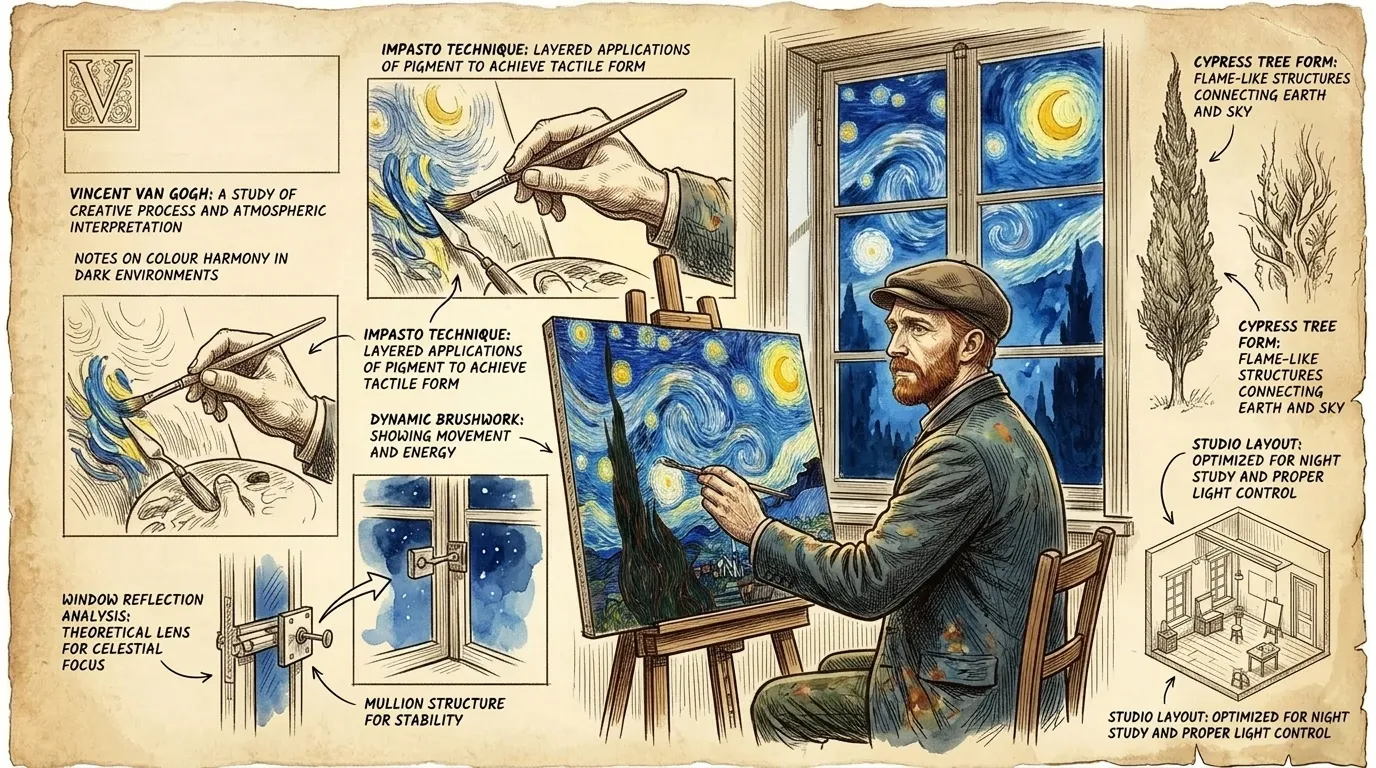
The final touch is the starlit sky, a swirling expanse of blue and yellow. Van Gogh meticulously paints each star, giving the sky a sense of depth and movement.
"Reflecting on the night sky, Van Gogh declares, quoting Immanuel Kant, 'Two things fill the mind with ever-increasing wonder and awe, the more often and the more intensely the mind of thought is drawn to them: the starry heavens above me and the moral law within me.' It is what keeps me creating."
Art Fact: Van Gogh's starlit sky is a masterpiece in itself, capturing the beauty and mystery of the night.
Page 8
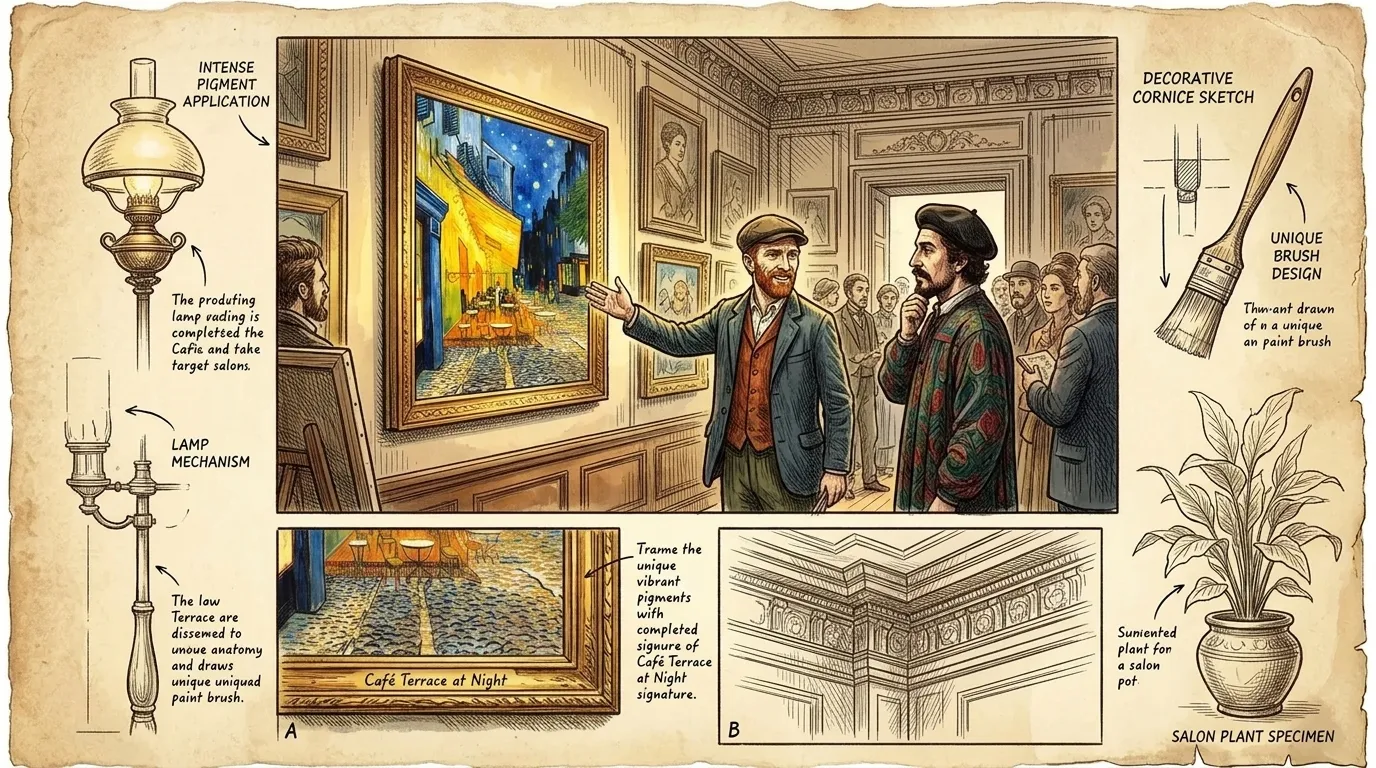
Van Gogh, now living in Arles, sees his 'Café Terrace at Night' displayed for the first time, bathing the streets in new light. This scene reflects his deep connection to the location and his desire to capture the essence of life as he saw it.
"Van Gogh to the artist Paul Gauguin, 'Paul, doesn't it show exactly what our art strives for? To capture a moment of time, the beauty in things!'"
Art Fact: The painting's vibrant colors and contrasting light and shadow create a mesmerizing effect, drawing viewers into the scene.
Page 9
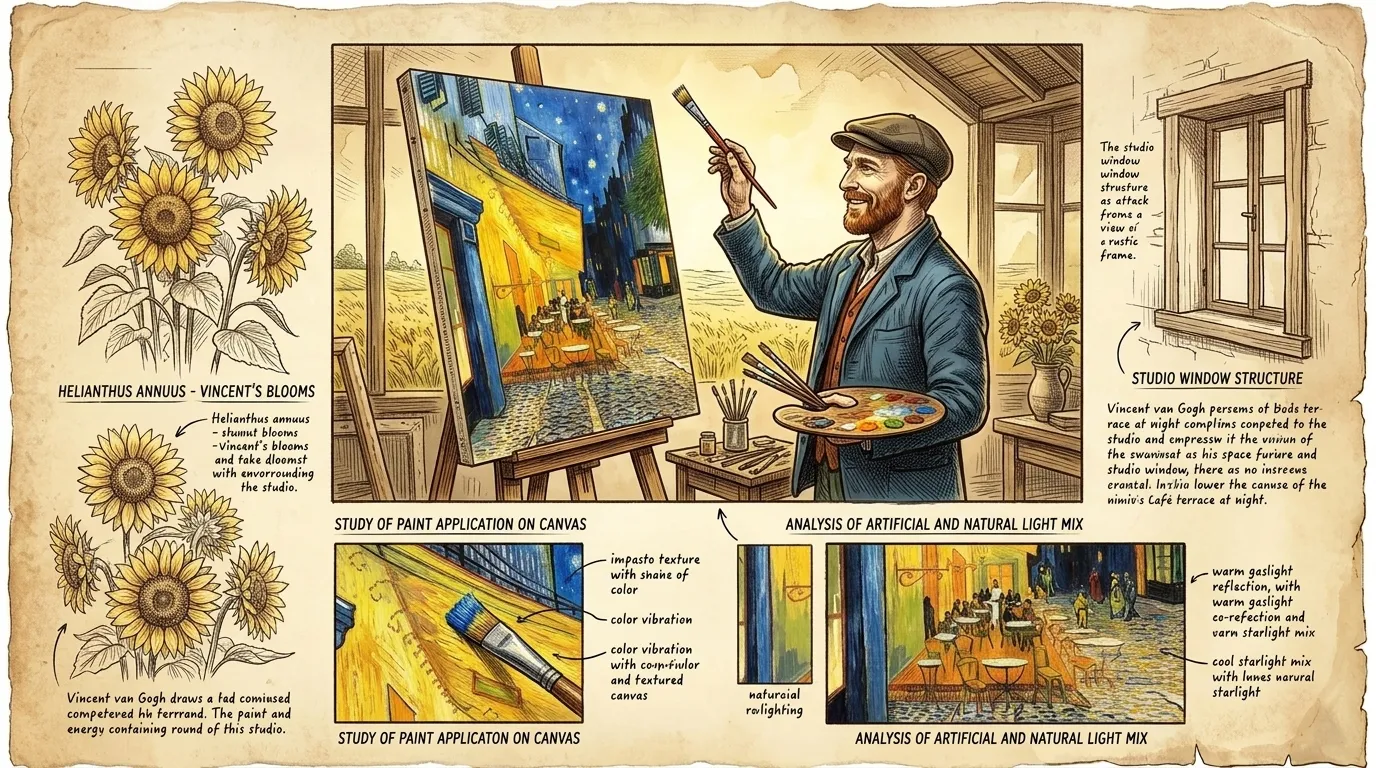
With a final flourish, Van Gogh puts down his brush. 'Café Terrace at Night' is complete, a testament to his vision and his skill. He knew it would forever bring warmth to the world.
"He smiles to himself, 'It is done. This painting is more than just colors on canvas...it is a piece of my soul.'"
Art Fact: Van Gogh's dedication and passion are evident in every brushstroke of 'Café Terrace at Night,' a work that continues to captivate audiences around the world.
Page 10
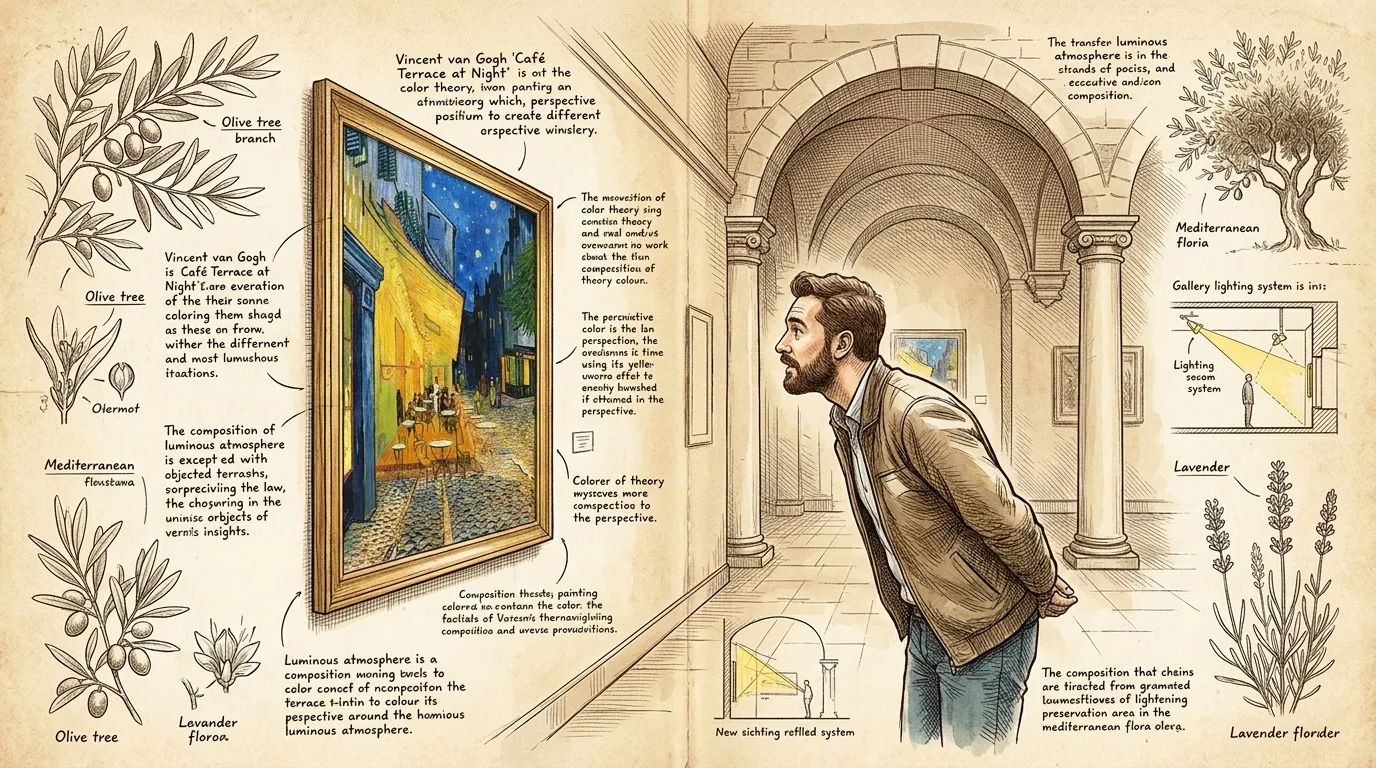
Today, 'Café Terrace at Night' hangs in the Kröller-Müller Museum, where it continues to inspire and enchant viewers. Its vibrant colors and luminous atmosphere ensure that Van Gogh's vision will live on for generations to come.
"As a viewer gazes at the painting, they whisper, 'It's like stepping into another world... a world of warmth, light, and beauty, created by Van Gogh's hands and vision.'"
Art Fact: Van Gogh's work survives forever because it captures the universal human experience of finding beauty and wonder in the everyday.
About this story
- Location: France
- Audience: general readers
Questions and answers
Questions and answers about Café Terrace at Night by Vincent van Gogh (Arles, France — 1888)
Read Wonder Arts on your phone
Wonder Arts is available on Android. Get Wonder Arts on Google Play.
More Wonder Arts stories
- Camera Obscura by Ibn al-Haytham (Cairo, Egypt — c. 1000 AD)
- Canterbury Cathedral (Canterbury, UK — 1400)
- Capitoline Museums (Rome, Italy — 1734)
- Chartres Cathedral (Chartres, France — 1220)
- Chichén Itzá (Yucatán, Mexico — c. 600–1200 AD)
- Christ in the House of His Parents by John Everett Millais (London, UK — 1850)