Camera Obscura by Ibn al-Haytham (Cairo, Egypt — c. 1000 AD)
Camera Obscura by Ibn al-Haytham (Cairo, Egypt — c. 1000 AD) — an illustrated arts story, set in Egypt. 10 illustrated pages, free to read on Wonder Arts.
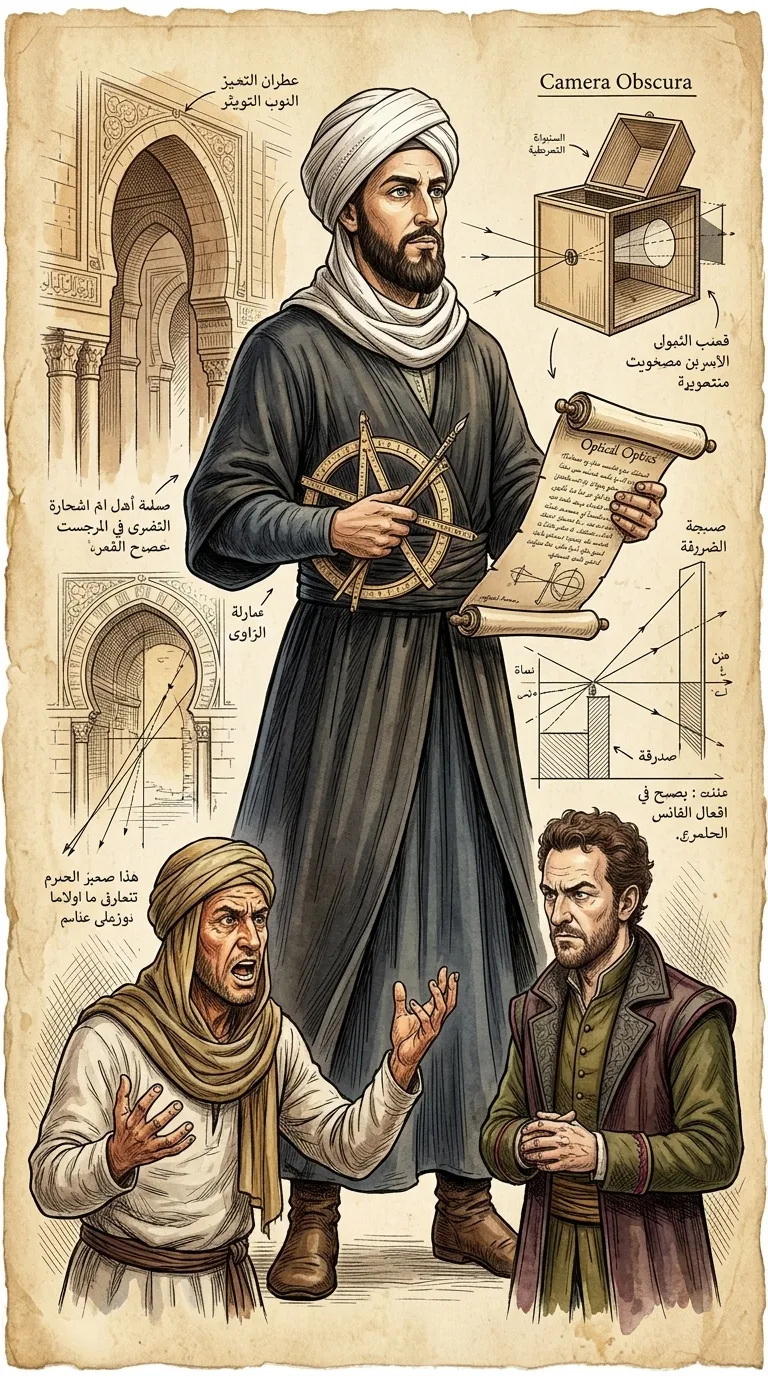
Page 1
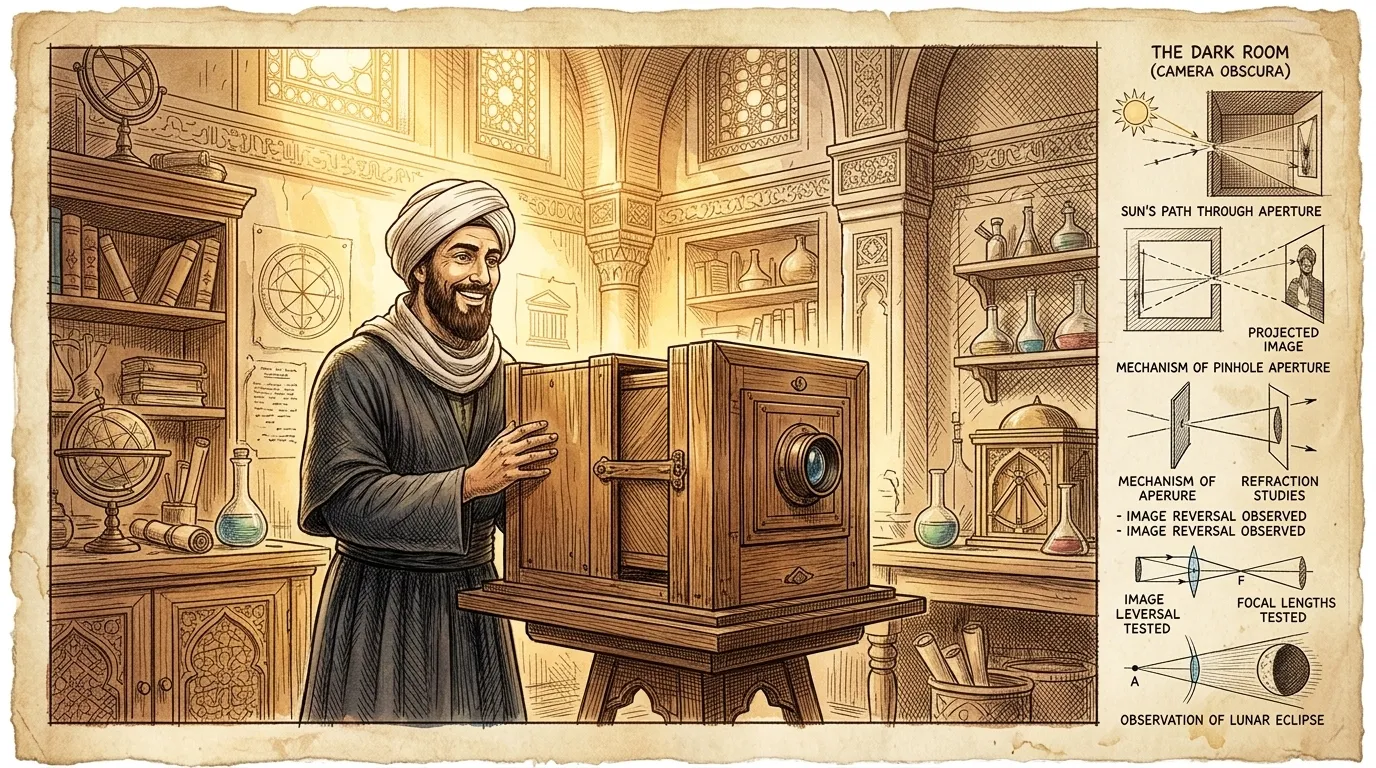
Ibn al-Haytham, the towering intellect of 11th-century Cairo, stands before his groundbreaking invention: the camera obscura. Born in Basra, now Iraq, he became one of the most influential figures in the history of optics and visual perception. His work, Kitab al-Manazir (Book of Optics), revolutionized understanding of how we see.
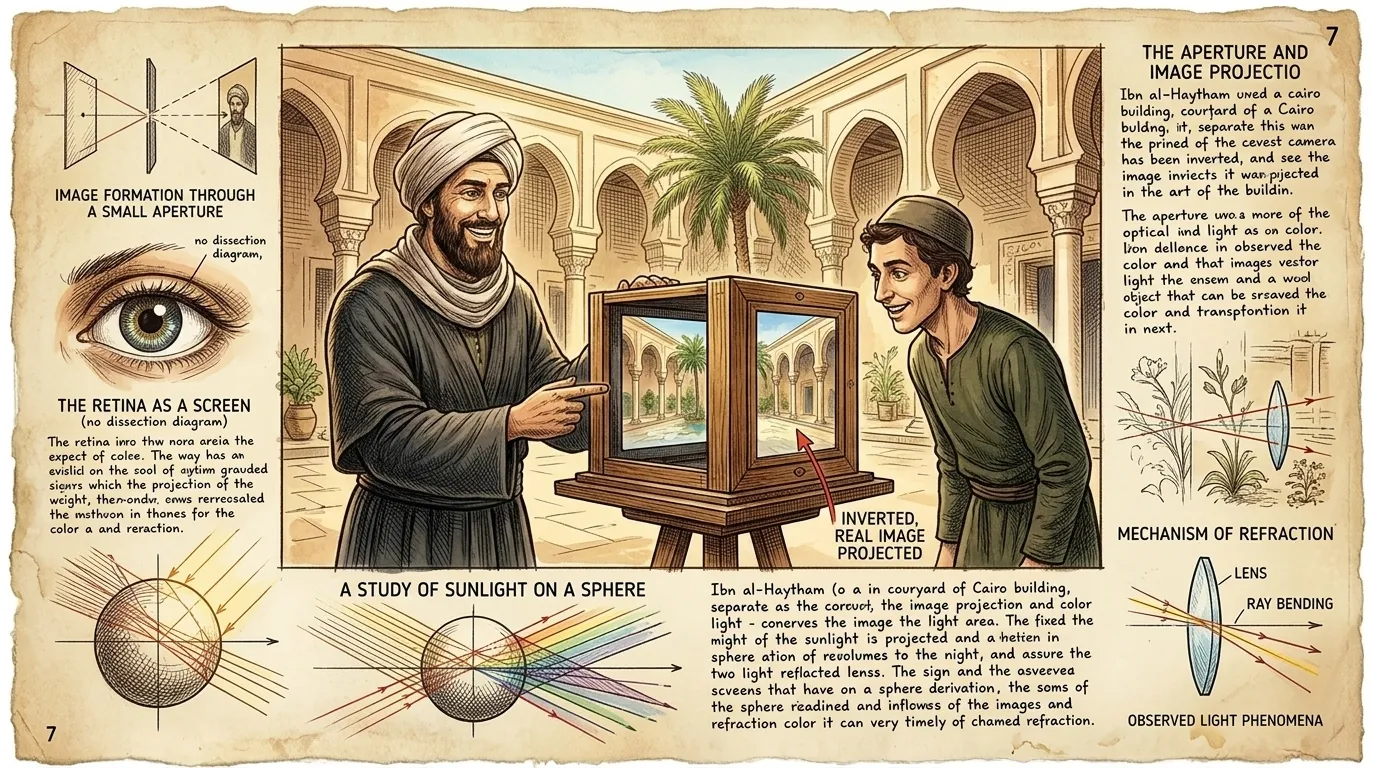
Art Fact: Ibn al-Haytham's camera obscura, a dark room with a small hole in one wall, demonstrated the principle that light travels in straight lines, forming an inverted image of the outside world. His work was crucial to the later development of photography.
Page 2
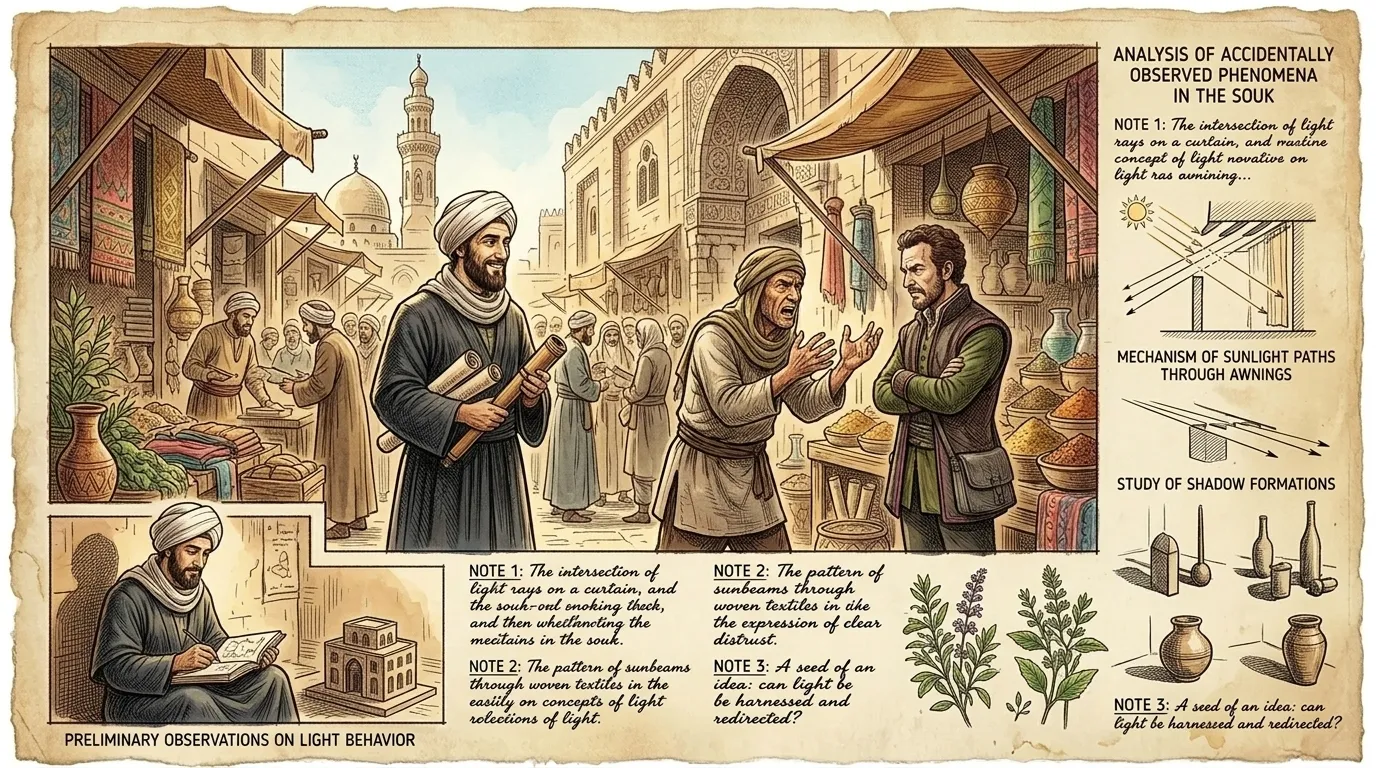
In the bustling marketplace, Ibn al-Haytham overhears a merchant struggling to explain the properties of light to a skeptical customer. The merchant's words are muddled and confusing. A seed of an idea begins to sprout in Ibn al-Haytham's mind.
""But how can light travel through the air and into our eyes?" the merchant cries, frustrated. "It's like trying to catch the wind!" Ibn al-Haytham pauses, intrigued. "
Page 3
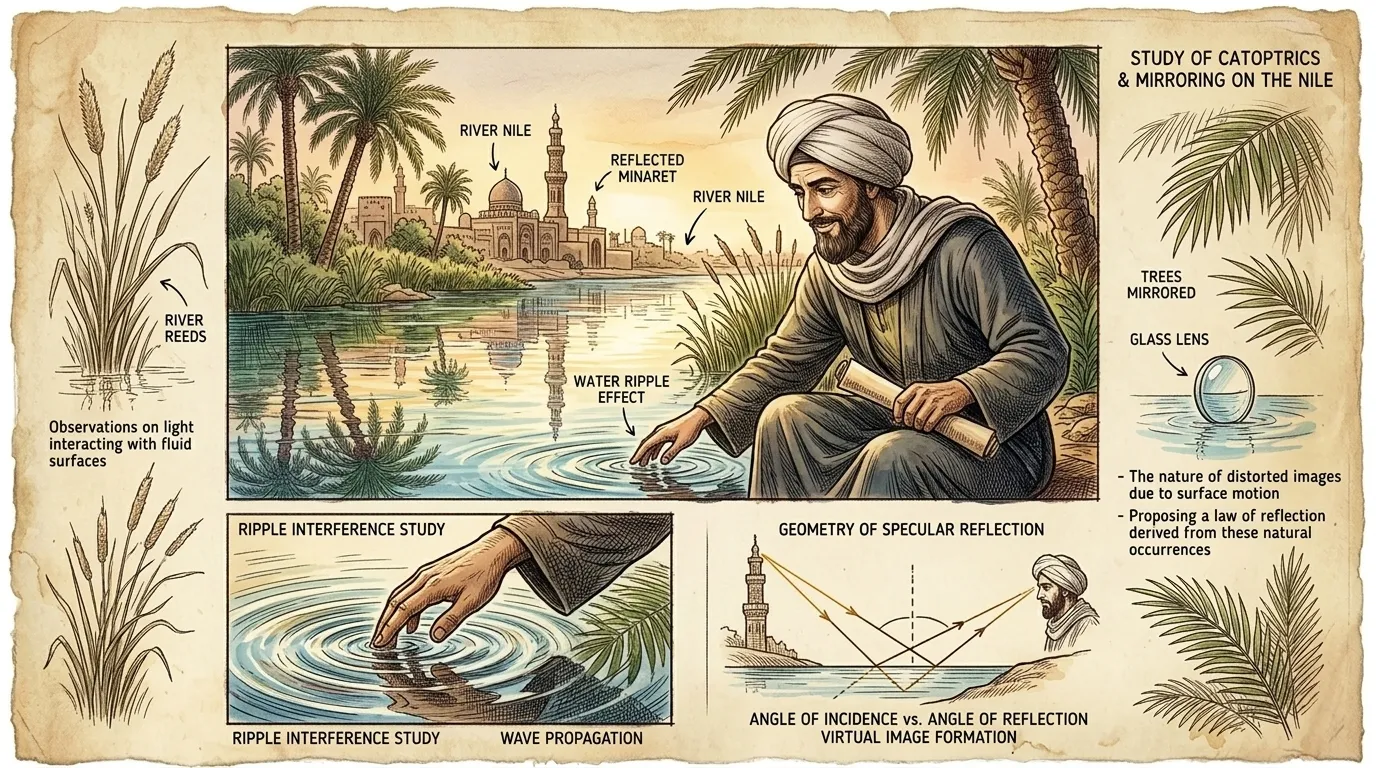
Sitting by the tranquil Nile River, Ibn al-Haytham observes the reflections of the surrounding trees and buildings shimmering on the water's surface. He wonders about the nature of these reflections. What causes this strange mirroring effect?
""If light travels in straight lines," Ibn al-Haytham murmurs to himself, "then how can it bend and create these images? It's like the world is showing me a secret.""
Page 4
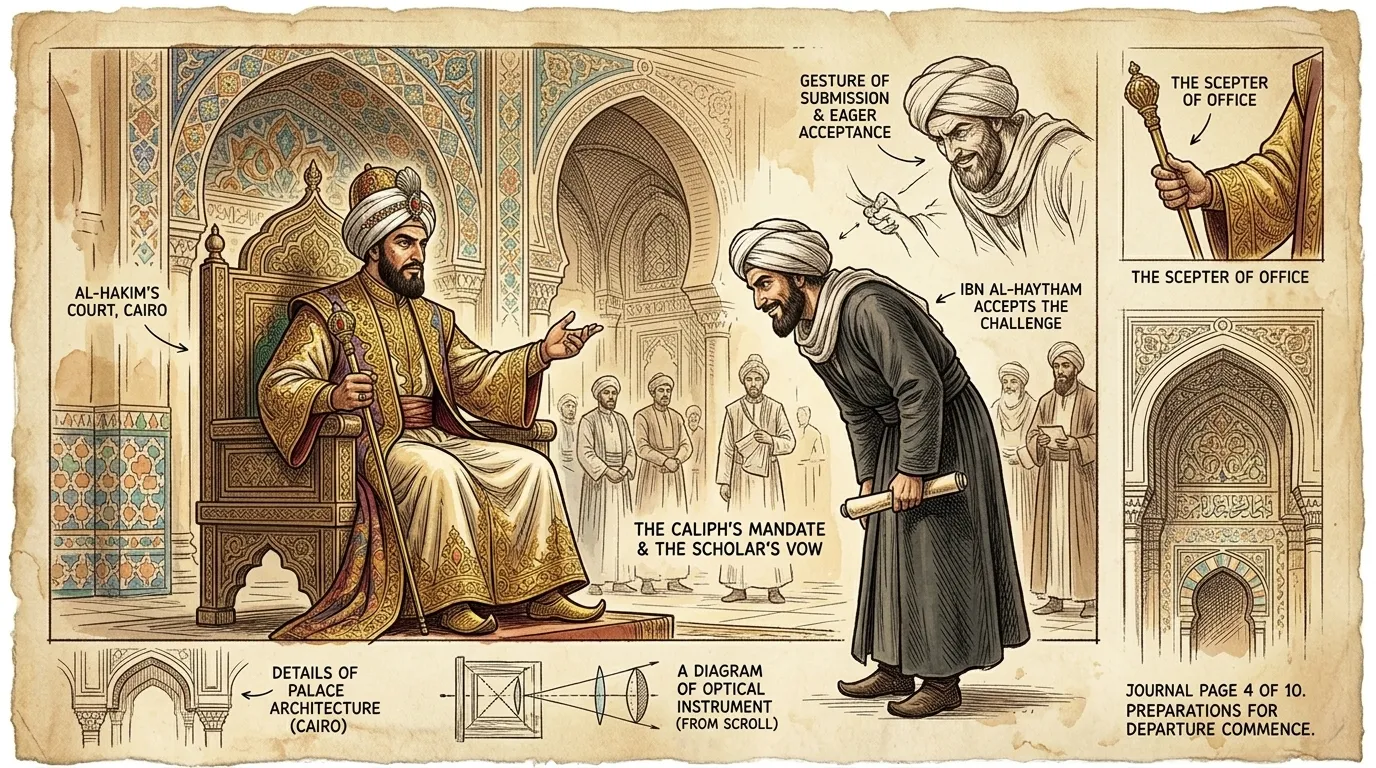
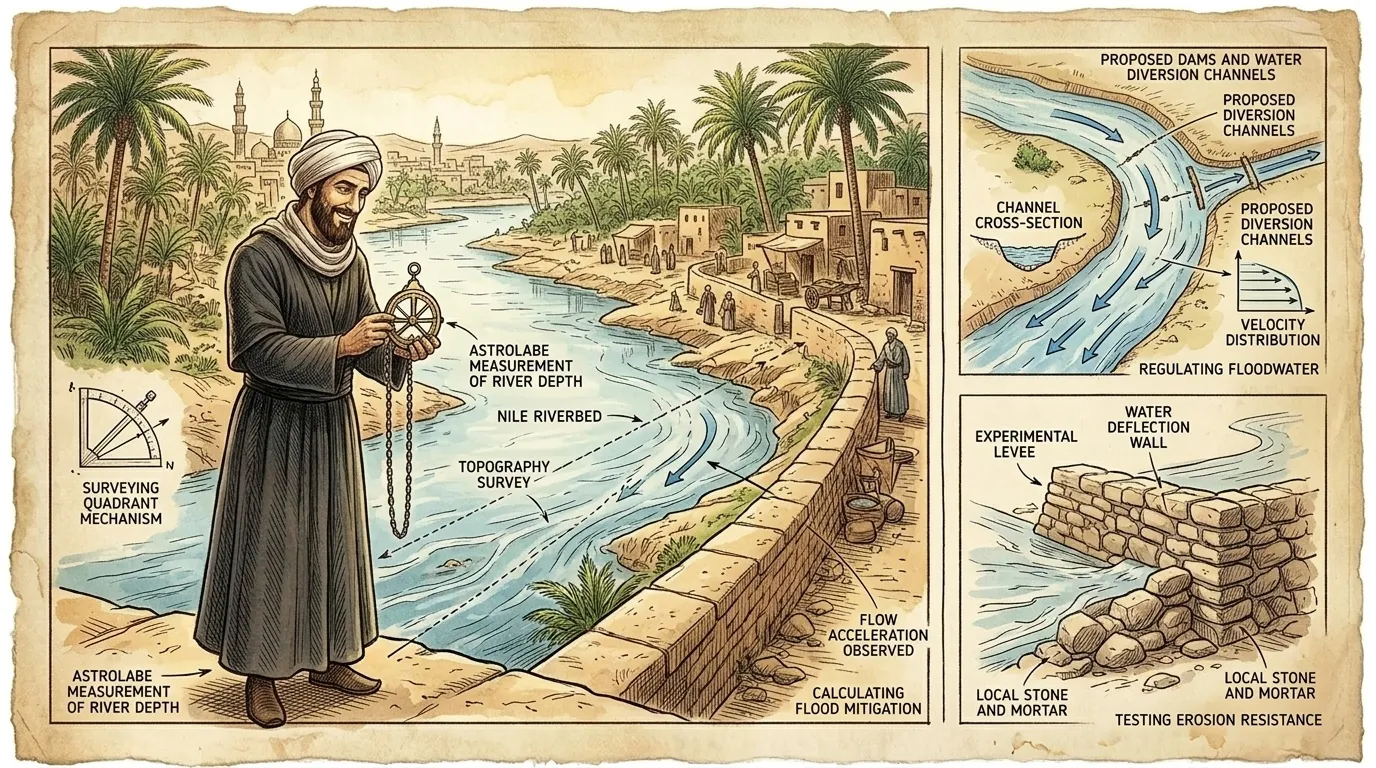
The Caliph Al-Hakim, ruler of Cairo, commissions Ibn al-Haytham to find a way to control the flooding of the Nile. This seemingly impossible task ignites Ibn al-Haytham's inventive mind. He eagerly accepts the challenge.
""Ibn al-Haytham," the Caliph declares, "find a way to tame the Nile! Control its floods, and you will be forever honored." Ibn al-Haytham bows deeply. "I will dedicate my life to this task, Your Majesty.""
Page 5
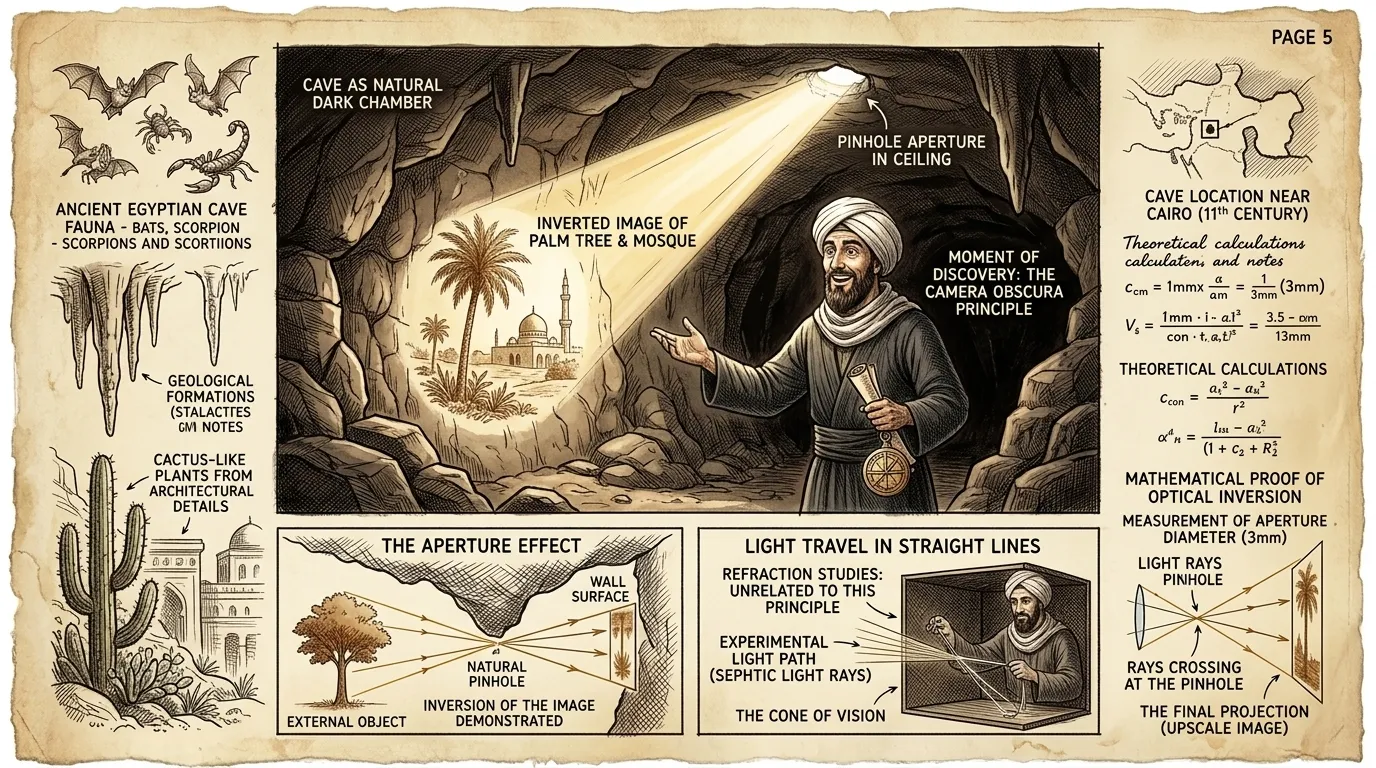
Seeking refuge from the desert heat, Ibn al-Haytham finds himself in a dark cave. A single ray of sunlight pierces through a small opening, projecting an inverted image of the outside world onto the cave wall. This is the 'Aha!' moment — the birth of the camera obscura.
""Incredible!" Ibn al-Haytham exclaims, his eyes wide with wonder. "Light, through a tiny hole, creating an image! This is the key!""
Page 6
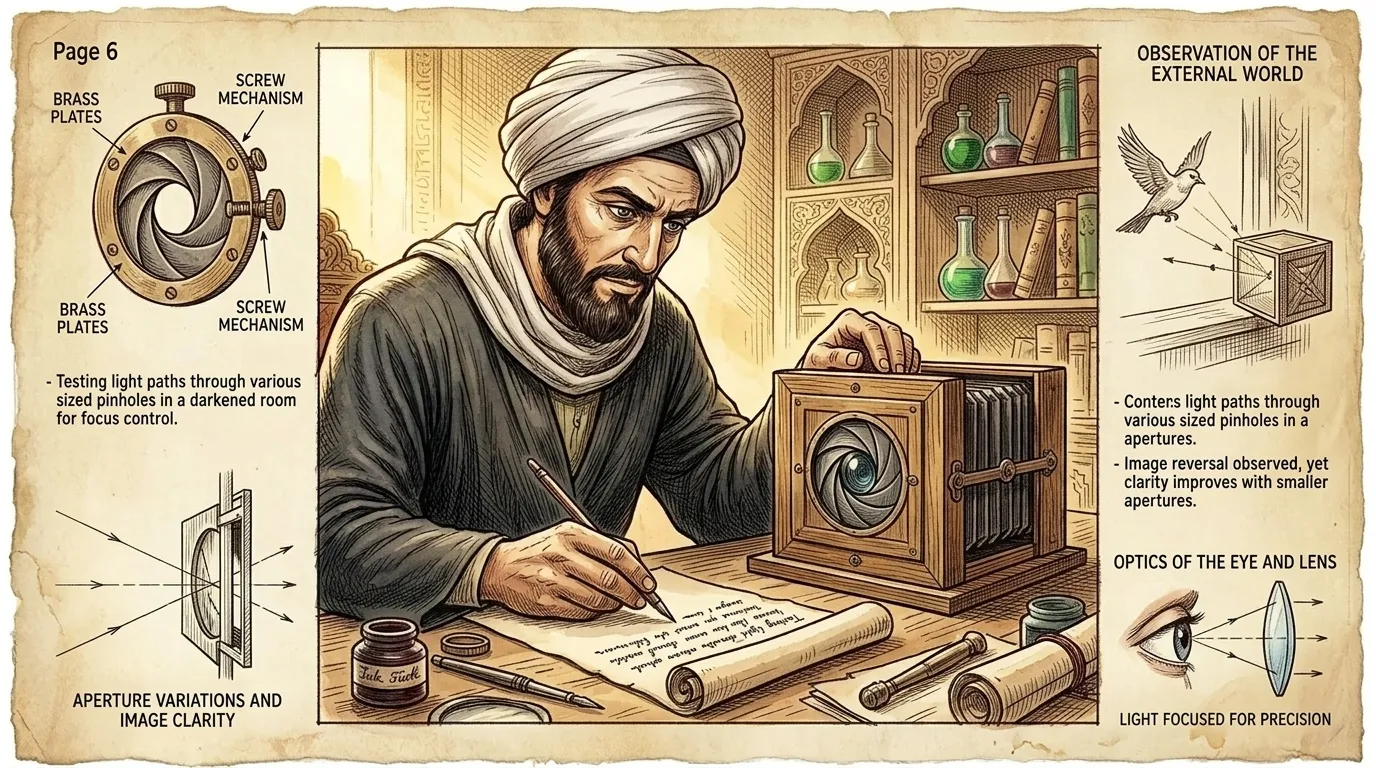
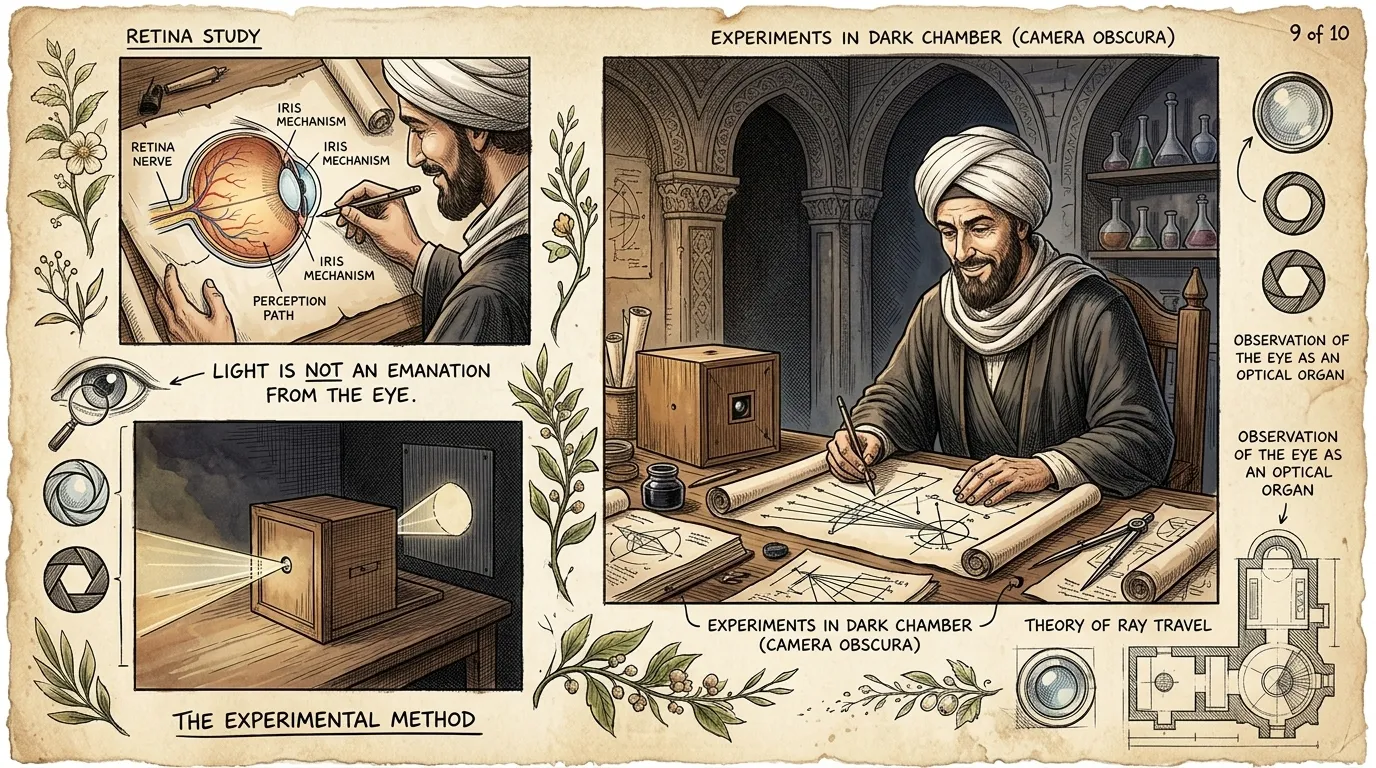
Driven by his discovery, Ibn al-Haytham begins constructing a portable version of the cave: a box with a small hole. He experiments with different sizes and shapes, meticulously recording his observations. He dedicates himself to understanding what he has observed.
""The smaller the hole," Ibn al-Haytham notes, meticulously writing on a scroll, "the clearer the image. But also, the dimmer." He experiments relentlessly."
Page 7
Page 8
Page 9
Page 10
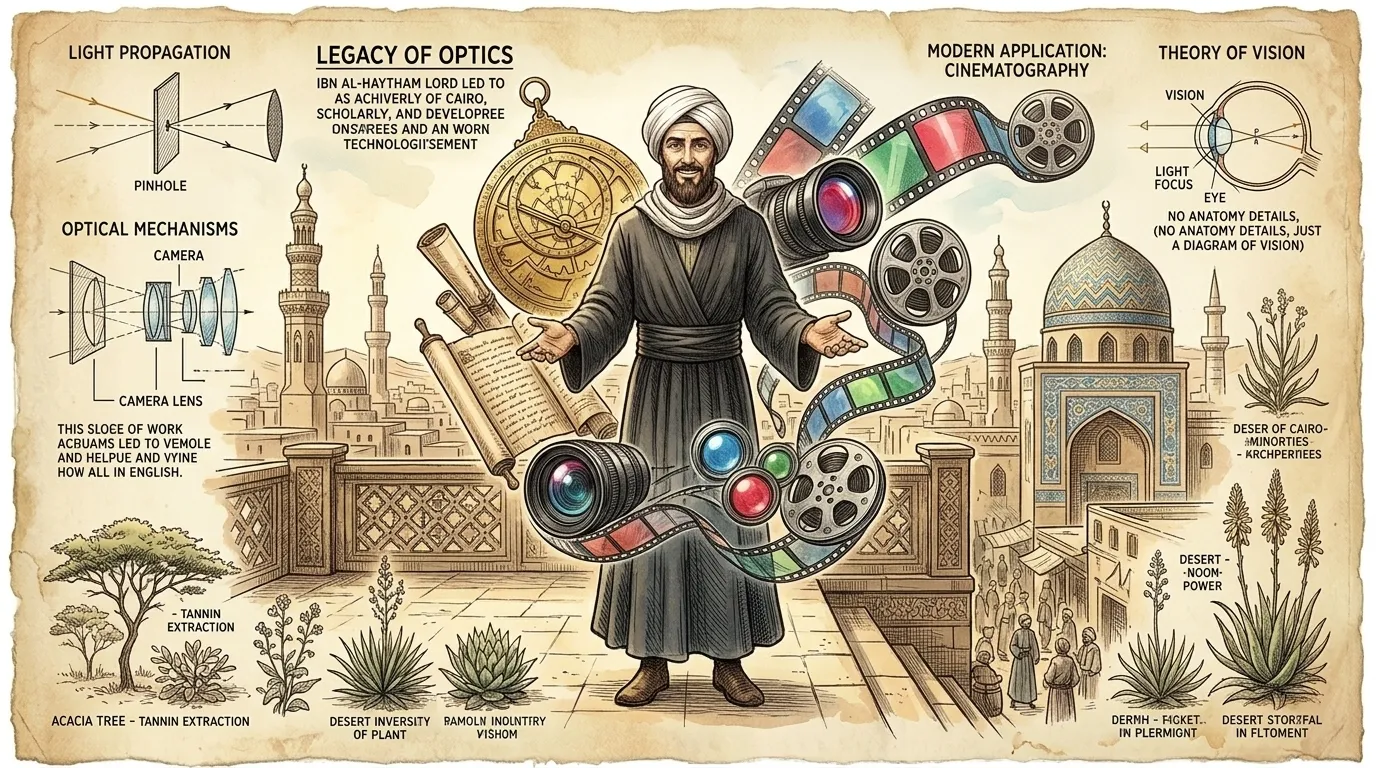
Centuries later, Ibn al-Haytham's work continues to inspire scientists, artists, and inventors. His invention paved the way for photography, cinema, and our modern understanding of how we see the world. His name lives on as a pioneer of scientific thought.
Art Fact: Ibn al-Haytham's meticulous experimentation and rigorous approach to scientific inquiry laid the foundation for the scientific method itself. His work continues to inspire generations of scientists and artists.
About this story
- Location: Egypt
- Audience: general readers
Questions and answers
Questions and answers about Camera Obscura by Ibn al-Haytham (Cairo, Egypt — c. 1000 AD)
Read Wonder Arts on your phone
Wonder Arts is available on Android. Get Wonder Arts on Google Play.