Chartres Cathedral (Chartres, France — 1220)
Chartres Cathedral (Chartres, France — 1220) — an illustrated arts story, set in France. 10 illustrated pages, free to read on Wonder Arts.

Page 1
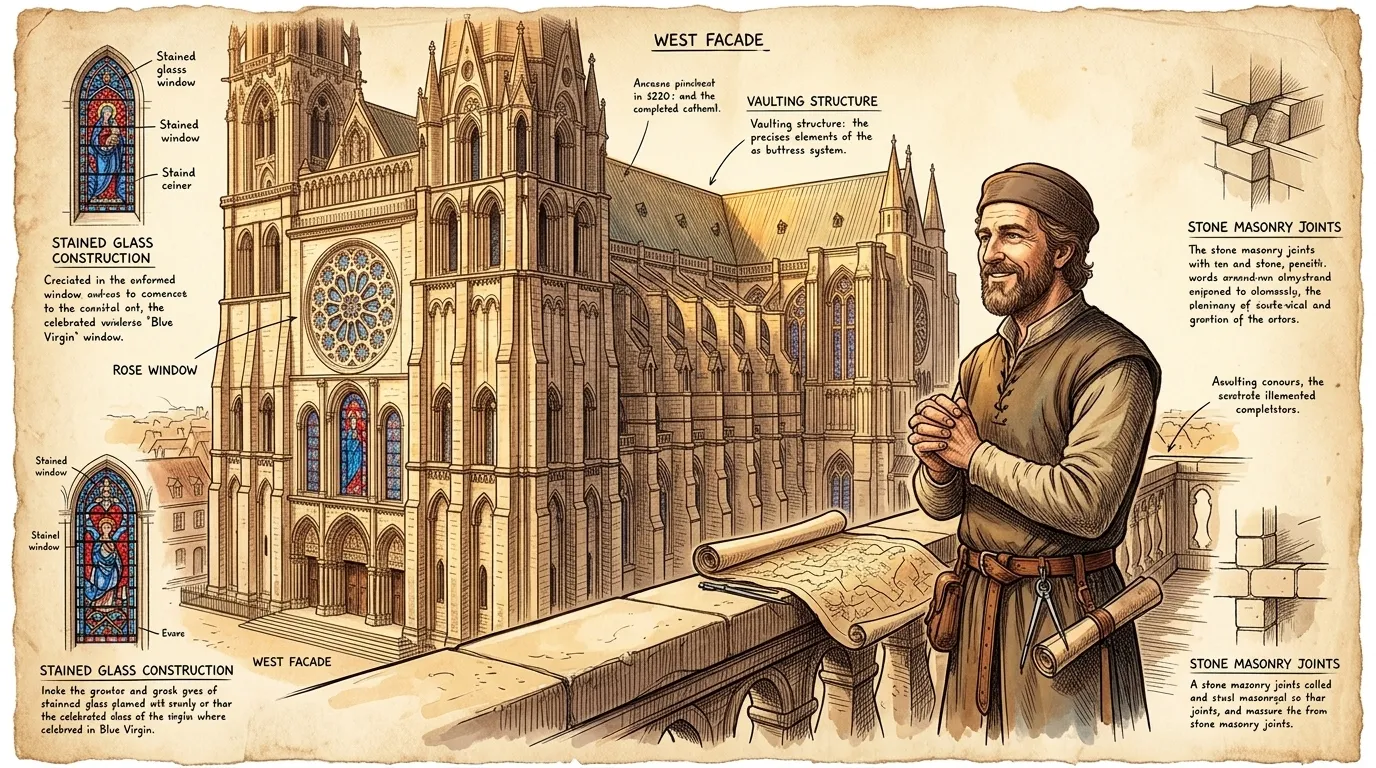
Jean de Chelles, master mason of Chartres, surveys his completed cathedral in 1220. The towering edifice, a testament to faith and engineering, is a symphony of stained glass and sculpted stone. The cathedral measures 130 meters long and 32 meters high at the nave—a symbol of humanity reaching for the divine. Its stained glass windows, particularly the 'Blue Virgin' window, are celebrated for their unparalleled color, a secret lost to time.
"Jean whispers to himself, 'It is more than stone; it is a prayer, solid and soaring. As Augustine said, 'beauty is indeed a good and graceful gift of God.' May this space inspire devotion for centuries to come."
Art Fact: Chartres Cathedral, completed in 1220, houses the Sancta Camisa, said to be the tunic worn by the Virgin Mary at Christ's birth, making it a major pilgrimage site. It is a masterpiece of Gothic architecture.
Page 2
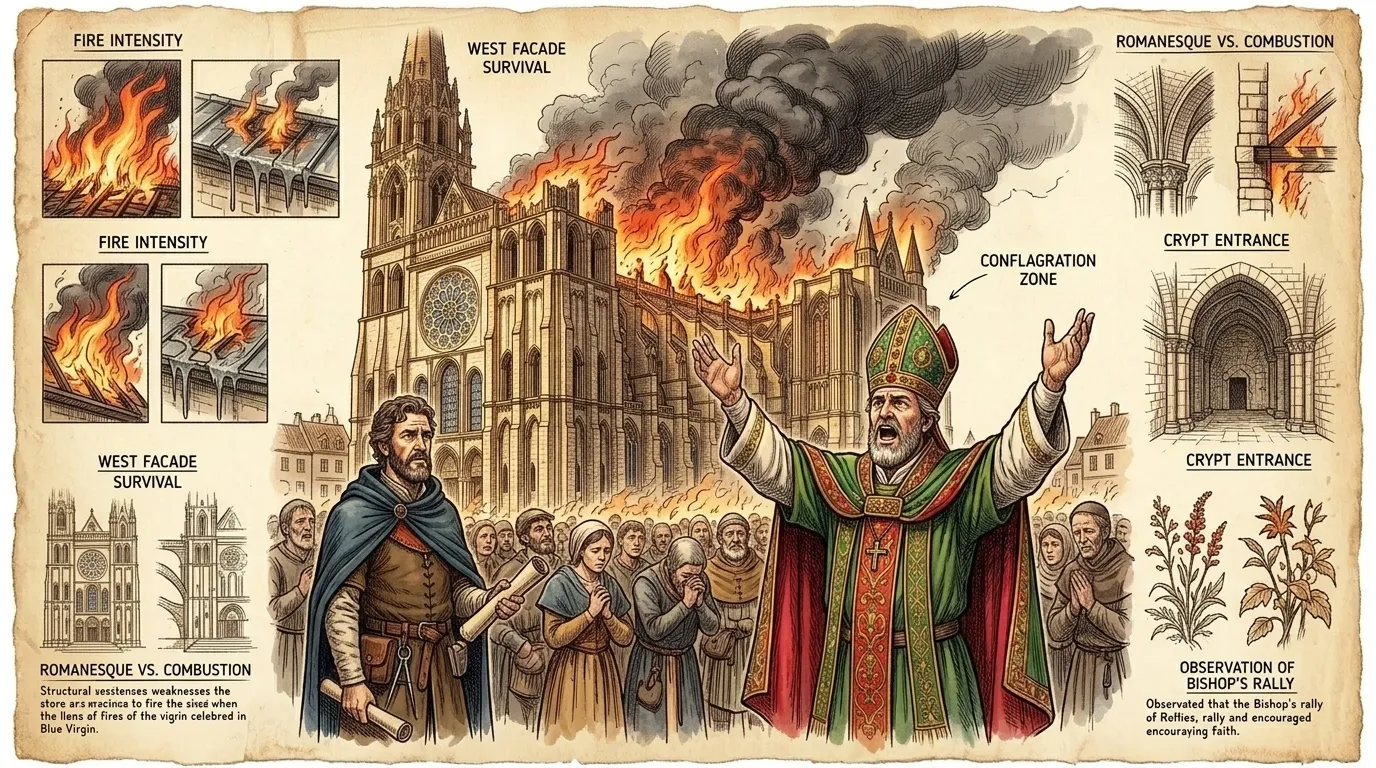
The great fire of 1194 consumes the old Romanesque cathedral. Only the west facade and crypt survive. The townspeople, including Jean, watch in despair. Bishop Renaud de Mouçon rallies the community, declaring that a more magnificent cathedral will rise from the ashes, a beacon of hope.
"Bishop Renaud cries out, 'Though fire has taken our sanctuary, it cannot take our faith! We shall rebuild, greater than before! Let our labor be a testament to God's enduring love!'"
Art Fact: The fire of 1194 destroyed most of Chartres Cathedral, but miraculously, the Sancta Camisa was saved, bolstering the resolve to rebuild.
Page 3
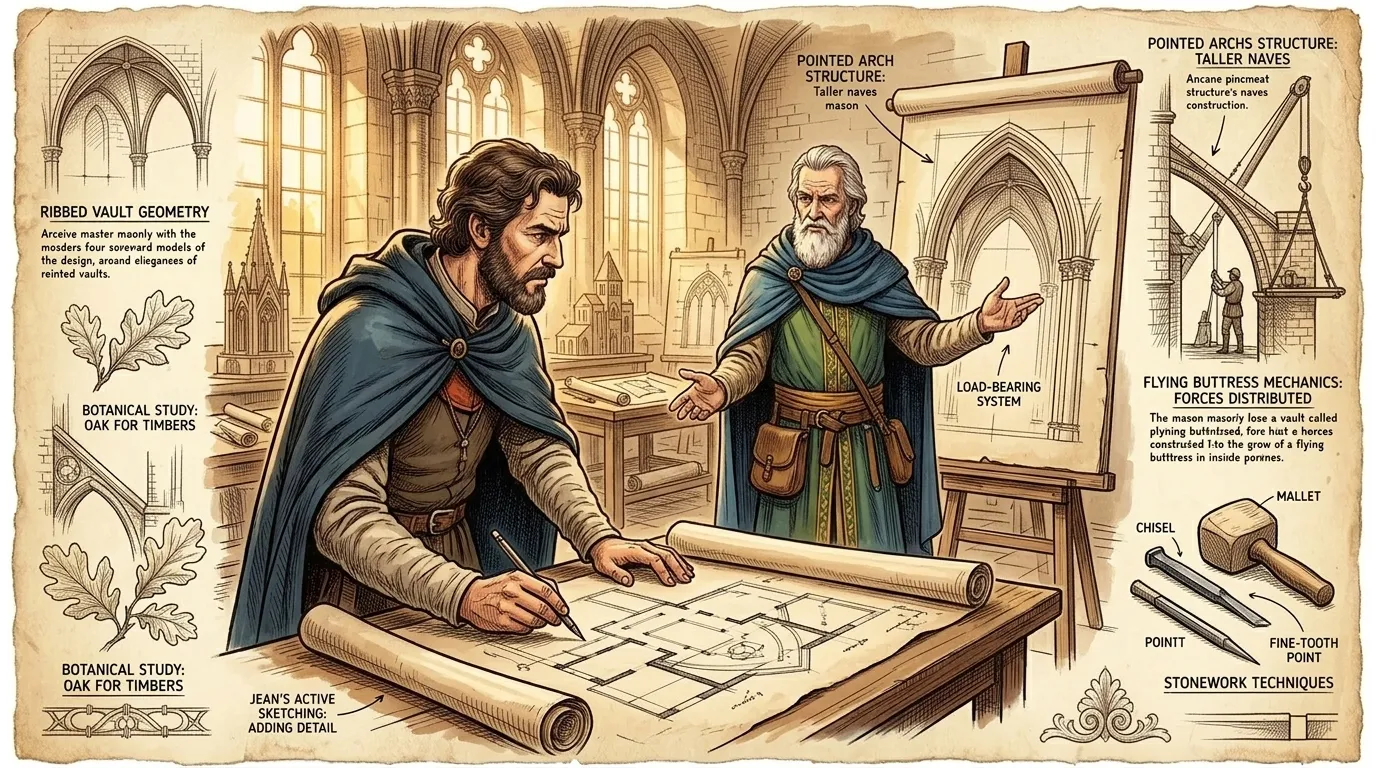
Jean apprentices under the aging master mason, learning the secrets of Gothic architecture. The master, a stoic man named Robert de Luzarches, emphasizes the importance of light and proportion in creating a space that elevates the soul. He reveals that the pointed arch, recently pioneered, allows for taller and wider naves.
"Robert explains, 'The pointed arch, Jean, is not merely an aesthetic choice. It allows us to reach higher, to bring more light into God's house. Remember what Leonardo da Vinci said, 'Details make perfection, and perfection is not a detail.' Every stone must be precisely placed!'"
Art Fact: Robert de Luzarches, the initial architect of Chartres, introduced innovative Gothic elements, emphasizing verticality and light.
Page 4

Jean studies the sculpted figures adorning the west facade. He marvels at the intricate details, each figure telling a story from the Bible. He understands that the cathedral is not just a building, but a book written in stone, accessible to all, literate or not.
"Jean murmurs, 'Each statue, each carving, a chapter in the great story. The unlearned can read these stones, their hearts moved by the visual gospel.'"
Art Fact: The sculptures at Chartres served as a visual encyclopedia of biblical stories and Christian teachings.
Page 5
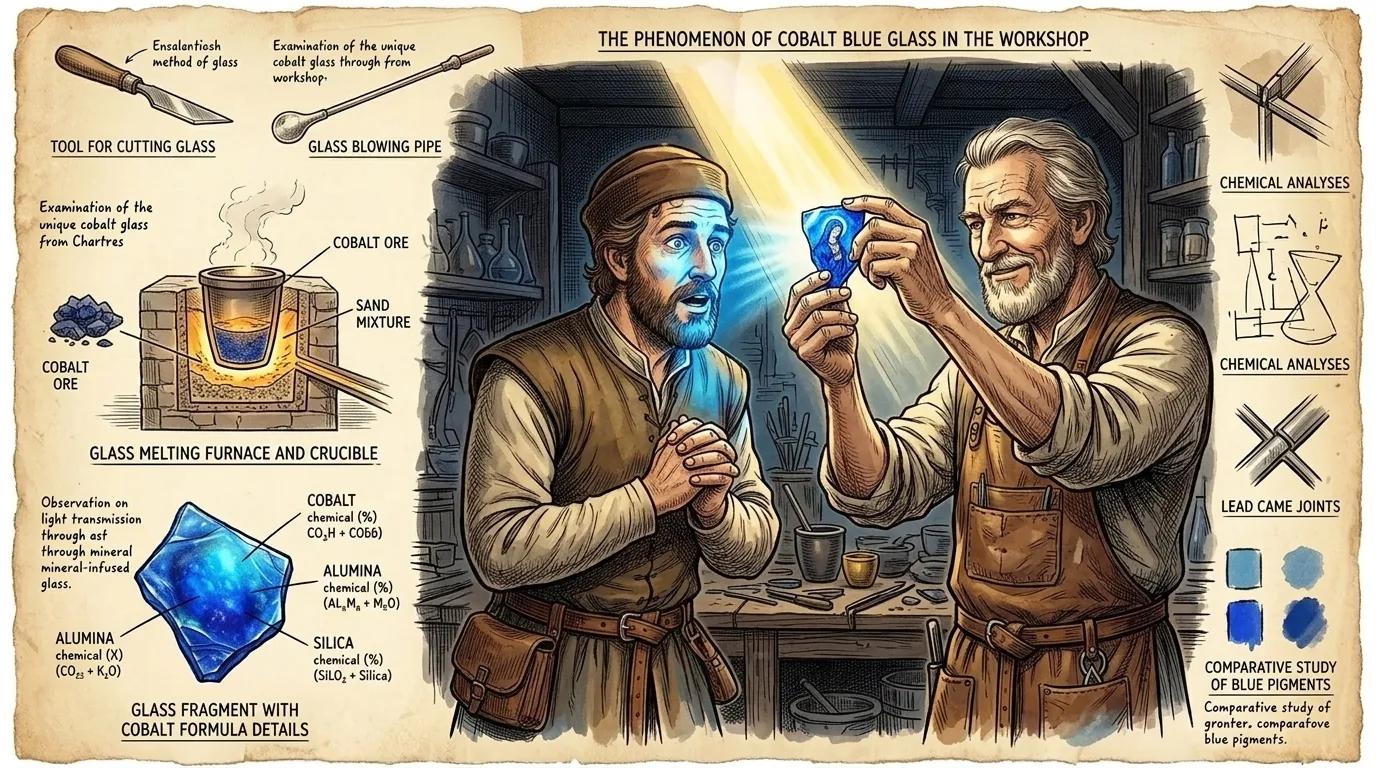
Jean is entranced by the deep, luminous blue of the stained glass. He learns that the color is achieved through a secret formula, a combination of cobalt and other minerals. The 'Blue Virgin' window becomes his inspiration, a symbol of divine grace.
"A master glassmaker confides, 'This blue, Jean, is more than pigment. It is light itself, transformed. Hold it to the sun, and you will see heaven reflected!'"
Art Fact: The 'Blue Virgin' window at Chartres is famed for its unique, vibrant blue color, the recipe for which remains a mystery.
Page 6
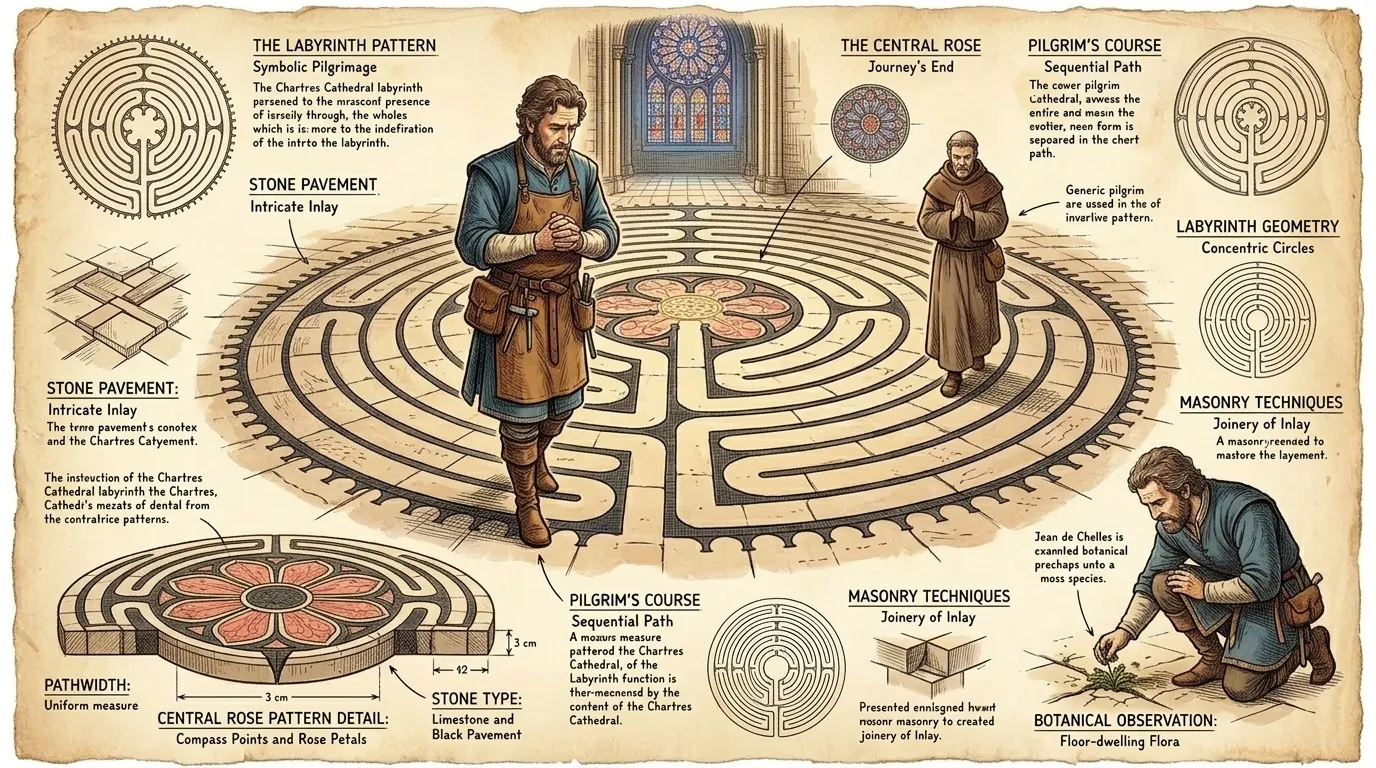
Jean walks the labyrinth on the cathedral floor. He understands that it is a symbolic pilgrimage, a representation of the journey to God. Each step is a prayer, each turn a challenge. The labyrinth reflects the complexities of faith, and its central rose represents divine perfection.
"A pilgrim whispers, 'Each turn is a trial, each step closer to redemption. Only through perseverance can we find our way to the heart of God.'"
Art Fact: The labyrinth at Chartres Cathedral is a symbolic representation of the pilgrimage to Jerusalem and the soul's journey to God.
Page 7
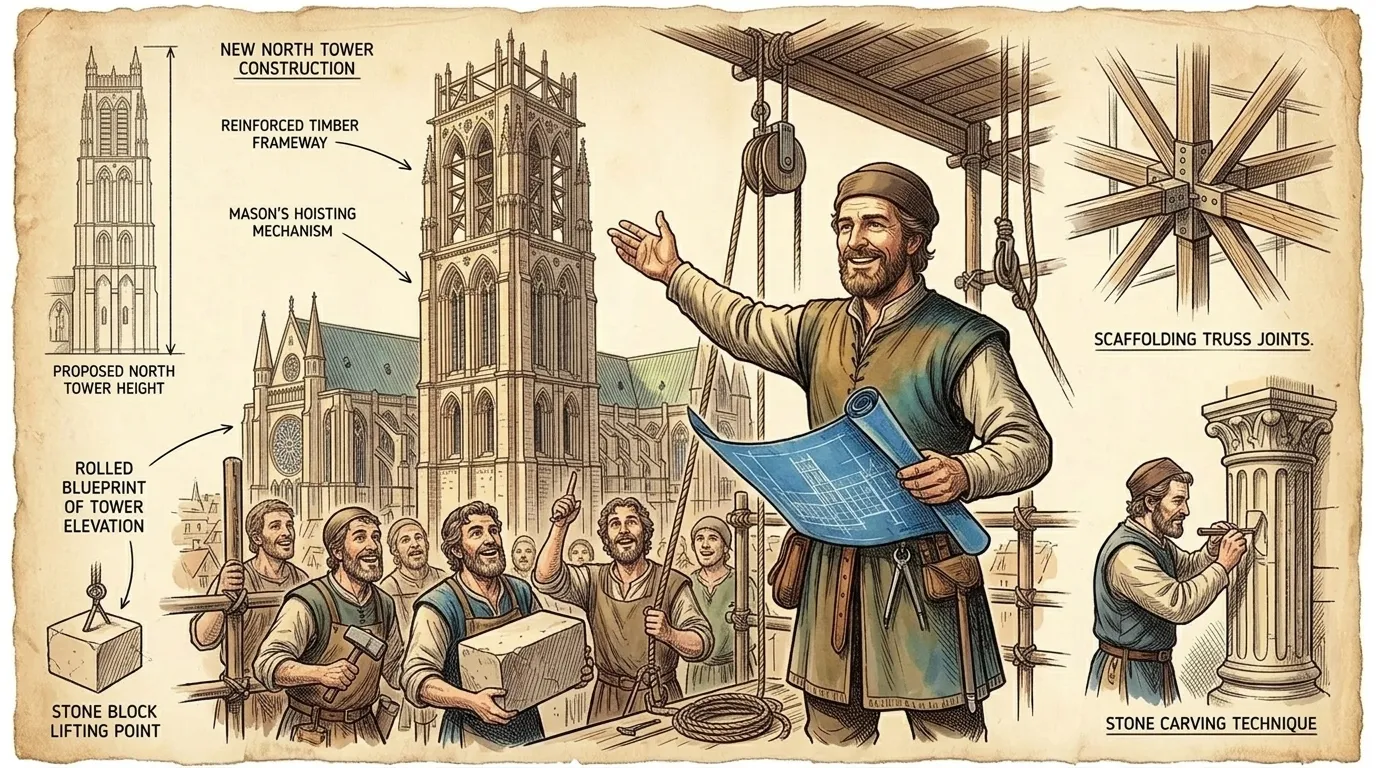
Robert de Luzarches, the original architect, passes away. Jean is appointed master mason. He decides to add a second, taller tower to the north side, diverging from the original design. This bold decision reflects his confidence and vision. This act of trusting in himself is key to continuing the project, and he is now filled with renewed vigor.
"Jean tells his team, 'The North Tower shall reach even higher! Some will question this departure, but as Henry Ford wisely put it, 'Whether you think you can, or you think you can't--you're right.' We can and we will make Chartres the greatest cathedral in France!'"
Art Fact: Jean de Chelles' addition of the second, taller tower to Chartres Cathedral demonstrated his architectural boldness.
Page 8
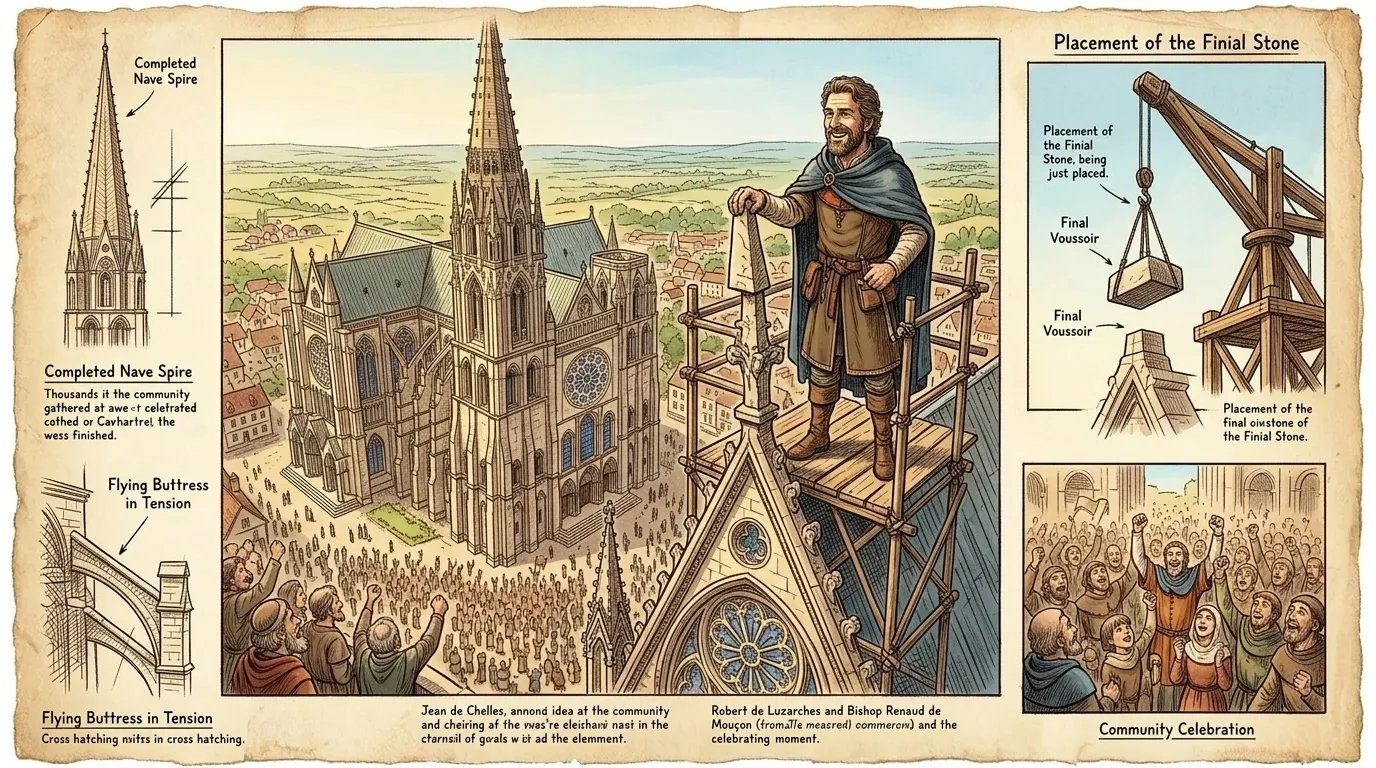
The final stone is placed on the roof of the cathedral. The community celebrates. Jean watches with immense satisfaction as the massive structure stands complete, a testament to collective faith and artistic vision.
"Jean reflects, 'It is finished. A monument not to a single man, but to the enduring spirit of our community. May it stand for centuries to come!'"
Art Fact: The completion of the roof marked a significant milestone in the construction of Chartres Cathedral, solidifying its structural integrity.
Page 9
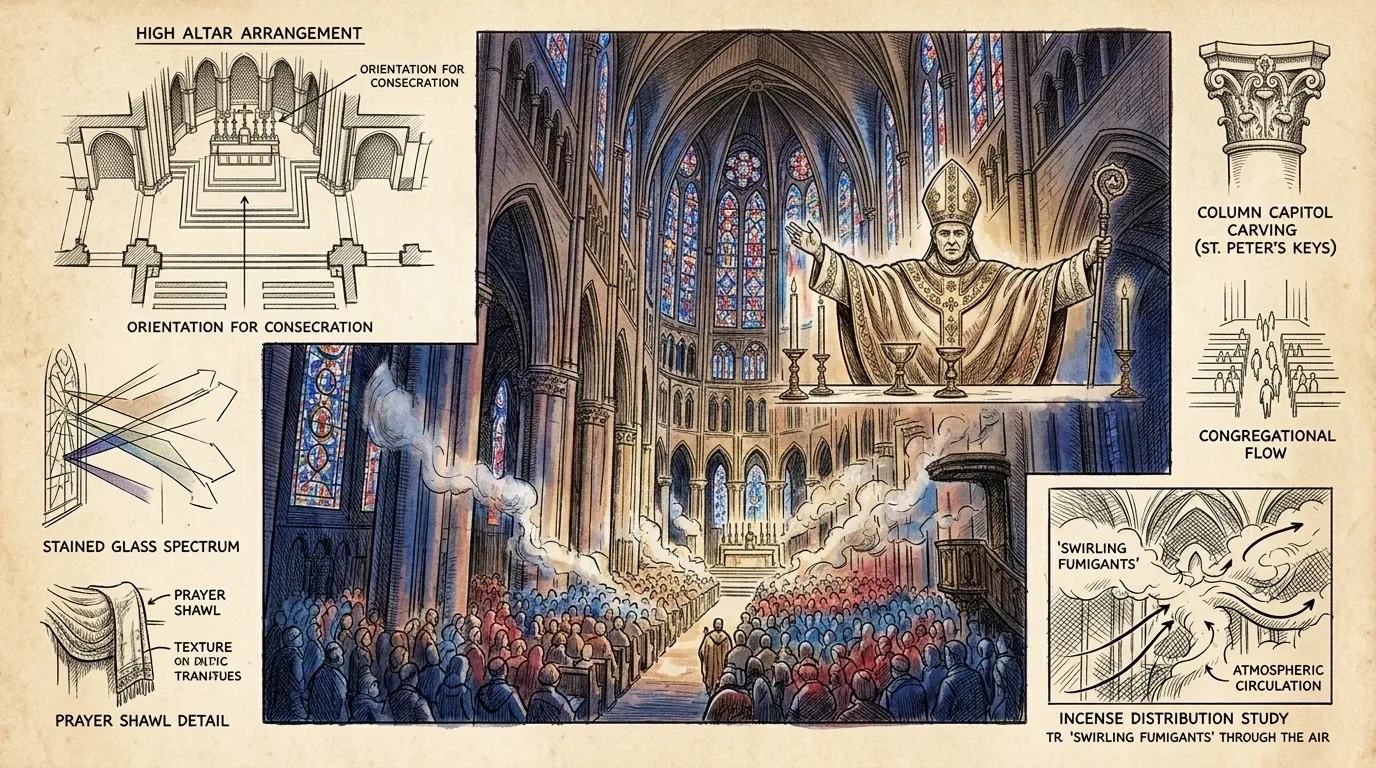
The newly built Chartres Cathedral is consecrated. The bishop leads the ceremony, blessing the altar and the walls. The cathedral is filled with music and incense, a symphony of senses. The congregation is moved by the splendor of the space.
"Bishop proclaims, 'Let this sacred space be a sanctuary for all who seek solace and guidance. May it be a testament to the power of faith and the glory of God!'"
Art Fact: The consecration marked the official dedication of Chartres Cathedral as a house of worship, opening its doors to pilgrims and worshippers.
Page 10
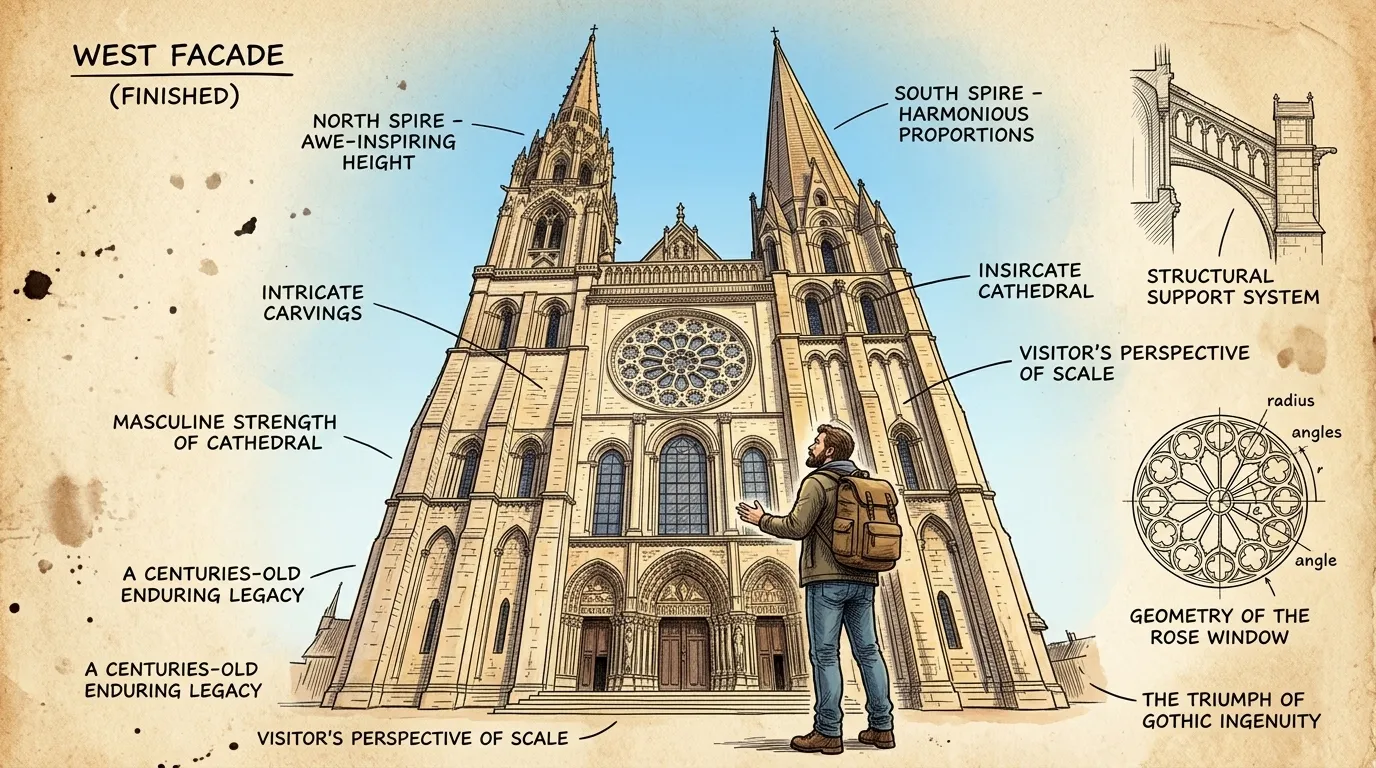
Centuries pass. Chartres Cathedral stands as a testament to human artistry and spiritual devotion. Pilgrims, scholars, and artists continue to visit, inspired by its beauty and grandeur. Jean de Chelles' vision endures, his name etched in the stones of his masterpiece.
"A modern visitor whispers, 'The light, the colors, the sheer scale...it's breathtaking. He built something for the ages.'"
Art Fact: Chartres Cathedral continues to inspire millions, a timeless example of Gothic architectural and artistic achievement. Jean de Chelles' legacy remains intertwined with its enduring beauty.
About this story
- Location: France
- Audience: general readers
Questions and answers
Questions and answers about Chartres Cathedral (Chartres, France — 1220)
Read Wonder Arts on your phone
Wonder Arts is available on Android. Get Wonder Arts on Google Play.
More Wonder Arts stories
- Chichén Itzá (Yucatán, Mexico — c. 600–1200 AD)
- Christ in the House of His Parents by John Everett Millais (London, UK — 1850)
- Cologne Cathedral (Cologne, Germany — 1880)
- Colossus of Rhodes by Chares of Lindos (Rhodes, Greece — 280 BC)
- Cubism by Picasso and Braque (Paris, France — 1907)
- Cupid and Psyche by Antonio Canova (Paris, France — 1793)