Cologne Cathedral (Cologne, Germany — 1880)
Cologne Cathedral (Cologne, Germany — 1880) — an illustrated arts story, set in Germany. 10 illustrated pages, free to read on Wonder Arts.
Page 1

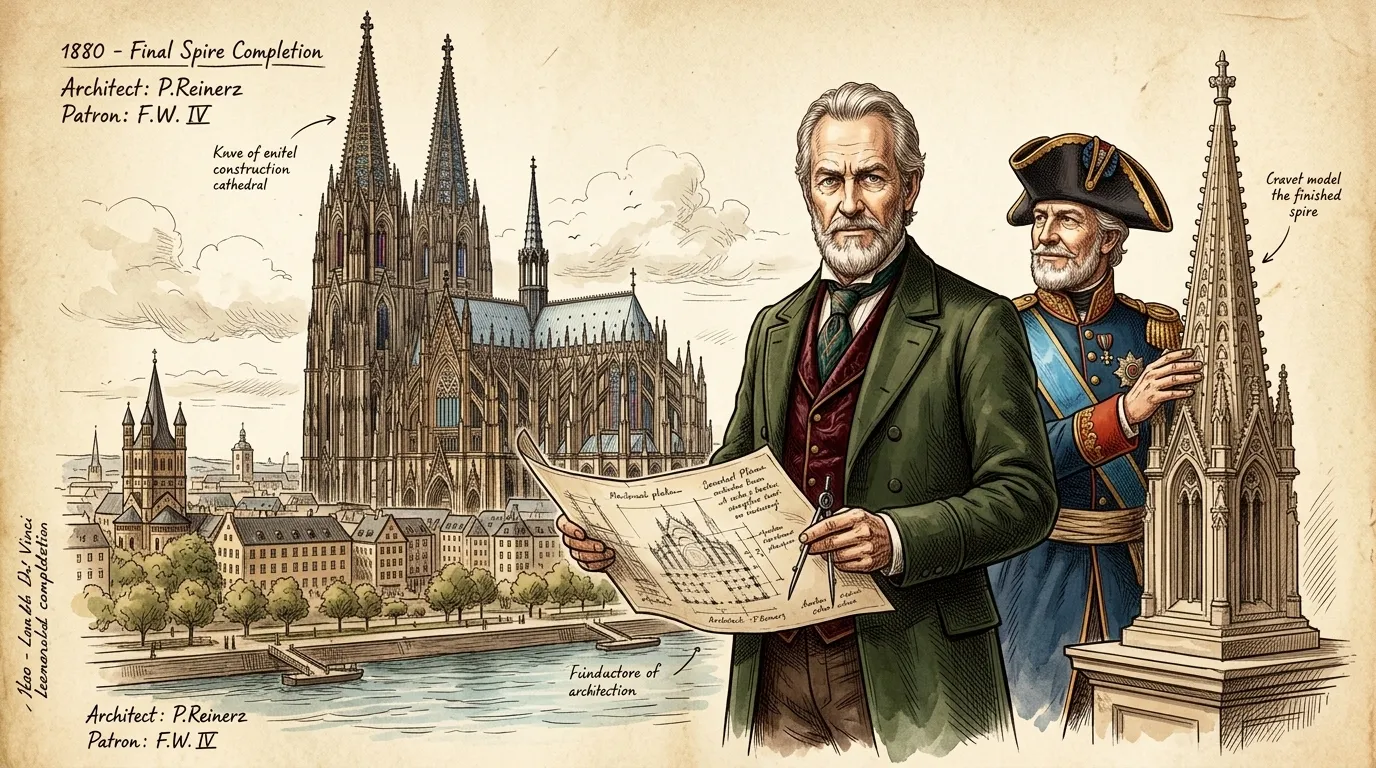
Peter Joseph Hubert Reinerz, the master builder of Cologne Cathedral, surveys his completed masterpiece in 1880. The cathedral, a testament to Gothic architecture, soars 157 meters into the sky, its twin spires dominating the Cologne skyline. This enduring symbol of faith took over 600 years to complete, its construction fraught with challenges and triumphs.
"Reinerz, turning to his assistant, remarks with a sigh of relief: 'It is finished. Though it tested the resolve of generations, the cathedral stands, a beacon of hope for Cologne.'"
Art Fact: Cologne Cathedral, a UNESCO World Heritage Site, is Germany's most visited landmark, attracting millions of pilgrims and tourists each year. Construction began in 1248 and was only completed in 1880, after being halted for centuries. Its stained-glass windows cover over 10,000 square meters, creating a kaleidoscope of light inside.
Page 2

Young Reinerz, a student of architecture, pores over the original medieval blueprints of Cologne Cathedral. He marvels at the intricate designs and the ambition of the original builders. He is fascinated by the dedication to create something that would last for centuries. The blueprints, faded with age, reveal the grand vision of the cathedral.
"Reinerz, tracing the lines of the blueprint with his finger, exclaims: 'Incredible! To think they envisioned this grandeur centuries ago! It's our duty to see their dream realized.'"
Art Fact: The original blueprints of Cologne Cathedral were designed in the Gothic style by Gerhard Morart, the master builder who began the project in 1248. These plans were meticulously followed when construction resumed in the 19th century.
Page 3

Years later, Reinerz visits the unfinished cathedral, its spires incomplete and construction at a standstill. He witnesses the decay and neglect that has befallen the site. This sight fuels his determination to revive the project. The incomplete structure stands as a stark reminder of interrupted dreams.
"Surveying the site, Reinerz mutters: 'So much potential, left to ruin. As Goethe said, 'Knowing is not enough; we must apply. Willing is not enough; we must do.' We must act to complete this cathedral.'"
Art Fact: Construction of Cologne Cathedral was halted in 1560 due to lack of funds and changing architectural styles. The unfinished structure remained a prominent feature of the Cologne skyline for centuries, until the 19th-century revival.
Page 4

Reinerz secures the patronage of King Frederick William IV of Prussia, who pledges financial support to resume construction. The king's enthusiasm and resources provide the necessary impetus to restart the project. The royal endorsement marks a turning point in the cathedral's fate.
"The King, with a flourish, announces: 'Herr Reinerz, I pledge my full support to this noble endeavor. Let us together complete this magnificent testament to faith and German ingenuity!'"
Art Fact: King Frederick William IV of Prussia played a crucial role in the resumption of construction, providing significant funding and political support. His enthusiasm for Gothic architecture helped revive interest in completing the cathedral.
Page 5

Reinerz travels across the region, gathering skilled stonemasons, carpenters, and artisans to work on the project. He inspires them with his vision and passion, creating a sense of shared purpose. The craftsmen, eager to contribute, converge on Cologne from far and wide.
"Addressing a group of assembled workers, Reinerz declares: 'We are not merely building a cathedral; we are building a legacy. Let us work together to create something that will inspire generations!'"
Art Fact: The resumption of construction on Cologne Cathedral created numerous jobs and attracted skilled laborers from across Germany and beyond. The project became a symbol of national unity and pride.
Page 6

Reinerz introduces innovative construction techniques, including the use of iron frameworks to support the soaring spires. This advancement allows for greater height and stability, pushing the boundaries of Gothic architecture. The iron framework becomes a symbol of modernity integrated with traditional craftsmanship.
"Reinerz, inspecting the iron framework, explains: 'This innovation will allow us to achieve heights previously unimaginable. It marries modern technology with the timeless beauty of Gothic design.'"
Art Fact: The use of iron frameworks in the construction of Cologne Cathedral was a significant innovation, allowing for greater structural stability and enabling the completion of the soaring spires.
Page 7

Reinerz collaborates with master glassmakers to create stunning stained-glass windows, filling the cathedral with vibrant light and color. The intricate designs depict biblical scenes and historical events, creating a visual narrative for the faithful. The stained glass transforms the interior into a kaleidoscope of spiritual illumination.
"Discussing the designs with a glassmaker, Reinerz suggests: 'Let the colors tell the story. Let the light inspire awe and reverence. Let these windows be a testament to God's glory.'"
Art Fact: The stained-glass windows of Cologne Cathedral are renowned for their beauty and intricate designs. They depict a wide range of biblical scenes, historical events, and symbolic imagery, creating a rich visual experience for visitors.
Page 8

During the Franco-Prussian War, construction is briefly interrupted, but Reinerz ensures the cathedral is protected from damage. He sees the completion of the cathedral as a symbol of German resilience and faith amidst conflict. The war serves as a stark reminder of the fragility of peace and the importance of cultural preservation.
"Addressing the workers, Reinerz urges: 'Despite the turmoil, we must protect this sacred place. It is a symbol of hope and perseverance. Its the very thing we need right now as the conflict surrounds us.'"
Art Fact: During the Franco-Prussian War (1870-1871), Cologne Cathedral served as a symbol of German resilience and cultural heritage. Efforts were made to protect the structure from damage during the conflict.
Page 9

The final stone is placed atop the southern spire, marking the completion of Cologne Cathedral. Reinerz witnesses the culmination of his life's work, a moment of profound satisfaction and pride. The cathedral stands as a testament to human ingenuity, faith, and perseverance.
"As the final stone is placed, Reinerz whispers: 'At last, it is done. A dream realized, a legacy secured.'"
Art Fact: The completion of Cologne Cathedral in 1880 was a momentous occasion, celebrated throughout Germany. The structure became a symbol of national pride and a testament to the enduring power of faith and human endeavor.
Page 10

Today, Cologne Cathedral stands as an iconic symbol of Cologne and Germany. It continues to inspire awe and reverence in visitors from around the world, a legacy of faith and human endeavor. As the Roman philosopher Seneca once said, "Every new beginning comes from some other beginning's end." The cathedral, a symbol of faith, continues to echo through time.
"A modern visitor, gazing at the cathedral, remarks: 'It's breathtaking. To think that something so magnificent was built over centuries, fueled by so much passion and dedication...'"
Art Fact: Cologne Cathedral remains one of the most visited landmarks in Germany, attracting millions of pilgrims and tourists each year. It is a UNESCO World Heritage Site, recognized for its architectural significance and cultural importance.
About this story
- Location: Germany
- Audience: general readers
Questions and answers
Questions and answers about Cologne Cathedral (Cologne, Germany — 1880)
Read Wonder Arts on your phone
Wonder Arts is available on Android. Get Wonder Arts on Google Play.
More Wonder Arts stories
- Colossus of Rhodes by Chares of Lindos (Rhodes, Greece — 280 BC)
- Cubism by Picasso and Braque (Paris, France — 1907)
- Cupid and Psyche by Antonio Canova (Paris, France — 1793)
- Daguerreotype by Louis Daguerre (Paris, France — 1839)
- Dante and Virgil in Hell by William-Adolphe Bouguereau (France — 1850)
- David by Donatello (Florence, Italy — 1440)