Colossus of Rhodes by Chares of Lindos (Rhodes, Greece — 280 BC)
Colossus of Rhodes by Chares of Lindos (Rhodes, Greece — 280 BC) — an illustrated arts story, set in Greece. 10 illustrated pages, free to read on Wonder Arts.
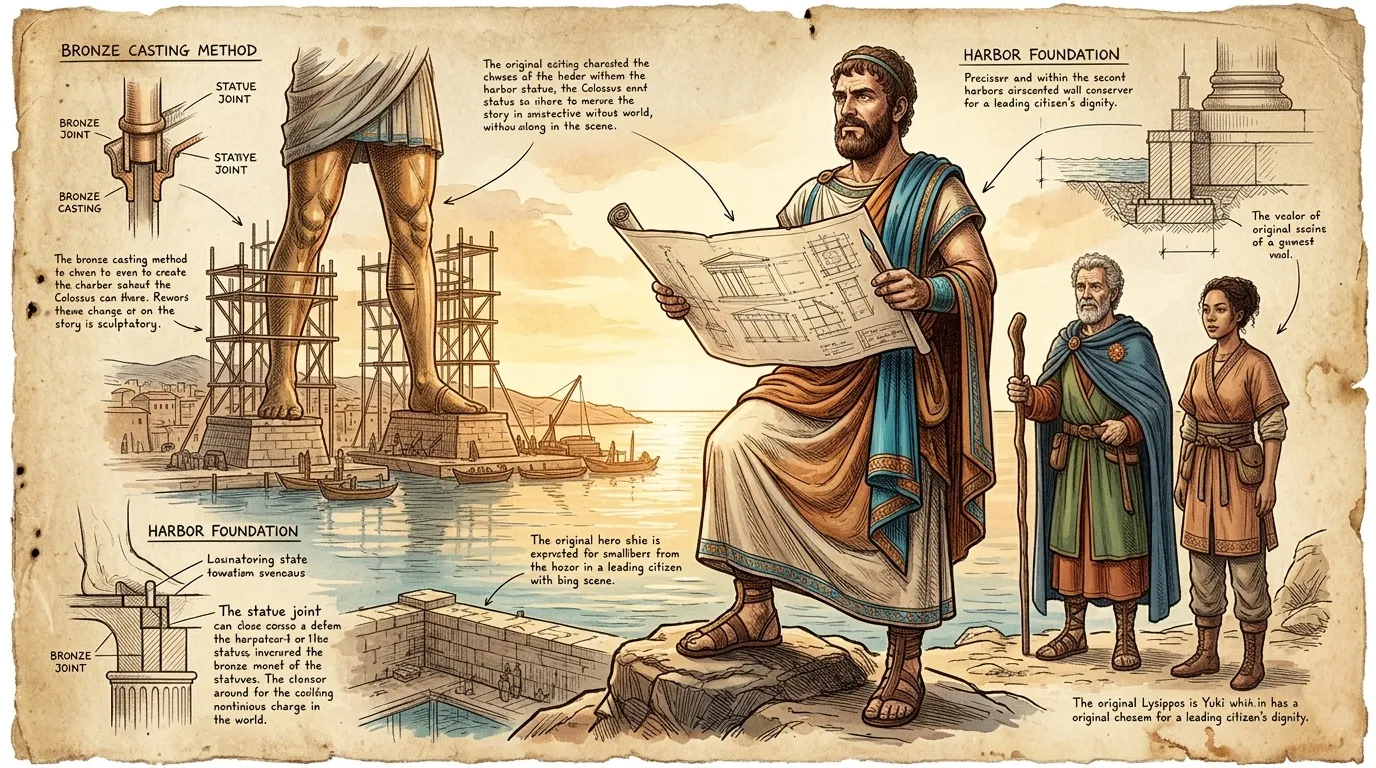
Page 1
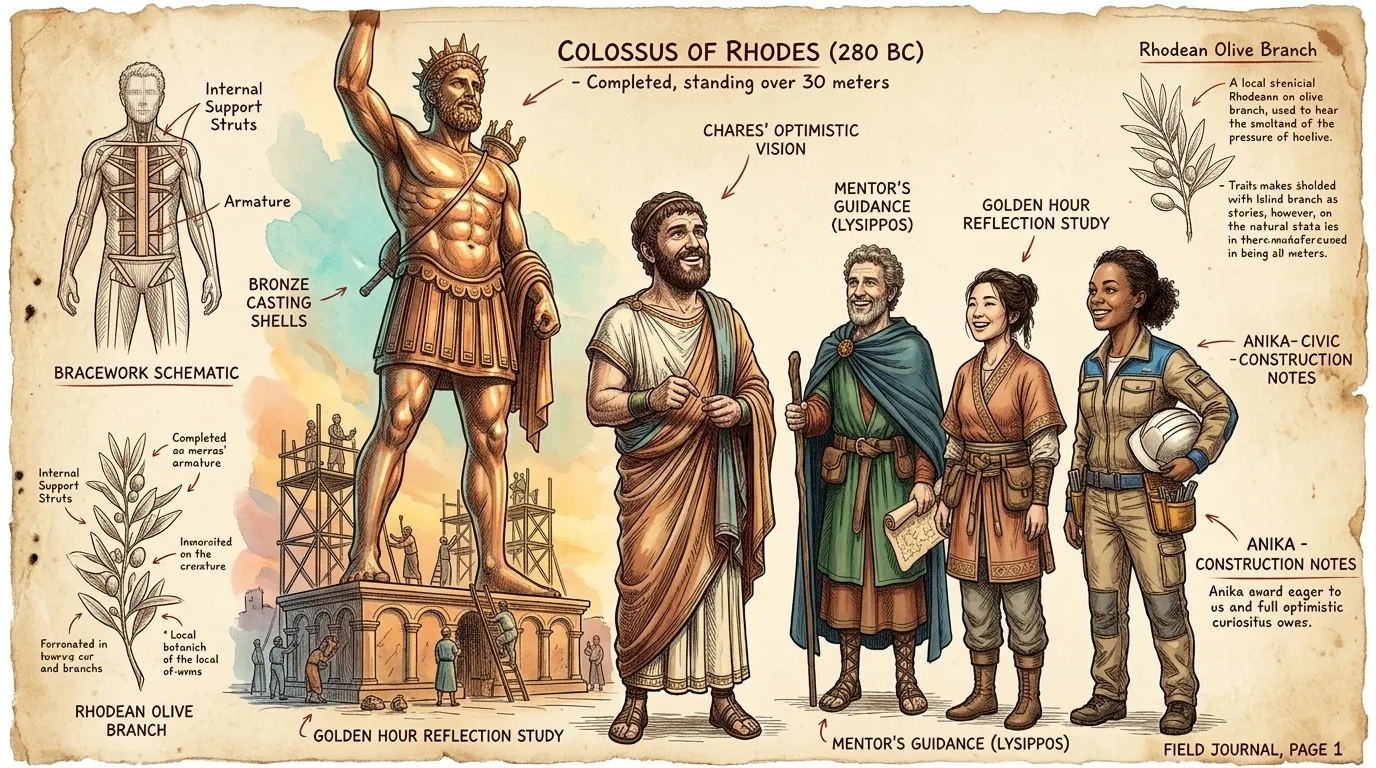
Chares of Lindos, the master sculptor, stood before his creation. The Colossus of Rhodes, a towering bronze statue of the sun god Helios, shimmered in the fading light of 280 BC. This monument, standing approximately 108 feet tall, was more than just a sculpture; it was a symbol of Rhodes' power and resilience, paid for by the spoils of war after successfully withstanding a year-long siege. The statue was famed as one of the Seven Wonders of the Ancient World.
""A titan for a titan," Chares muttered, echoing the sentiments of his island. "May it stand for eternity.""
Art Fact: The Colossus of Rhodes was constructed to commemorate the island's successful defense against Demetrius Poliorcetes. Its massive scale made it a marvel of the ancient world.
Page 2
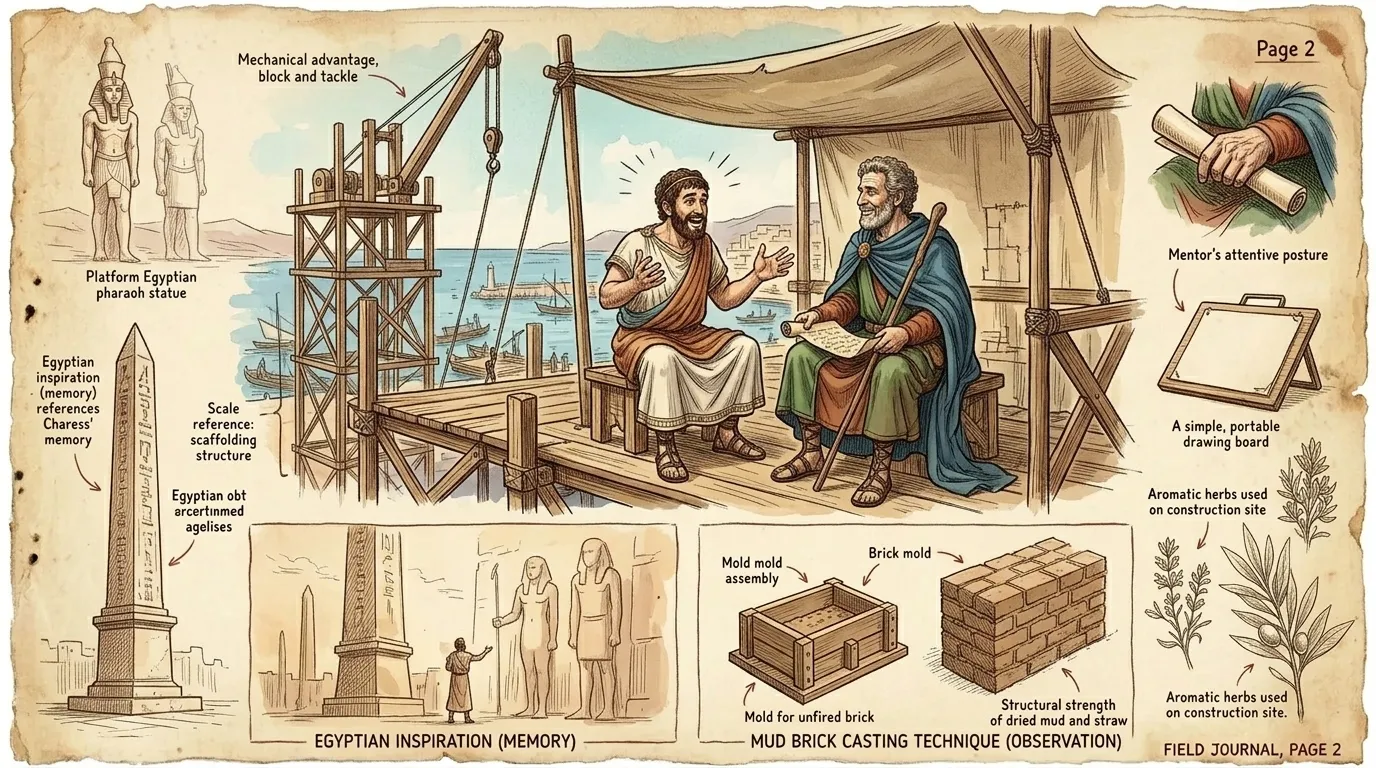
Years before the Colossus, a young Chares sailed to Egypt. There, he beheld the colossal statues of pharaohs, their scale inspiring awe. He recounted the experience to his mentor, Lysippos. "These monuments...they speak of power, of gods among men, Lysippos."
"Lysippos, the great sculptor, nodded slowly. "Indeed, Chares. But true art must not only impress, it must also inspire. It must tell a story.""
Art Fact: The colossal statues of ancient Egypt were a major source of inspiration for Chares, influencing his vision for the Colossus.
Page 3
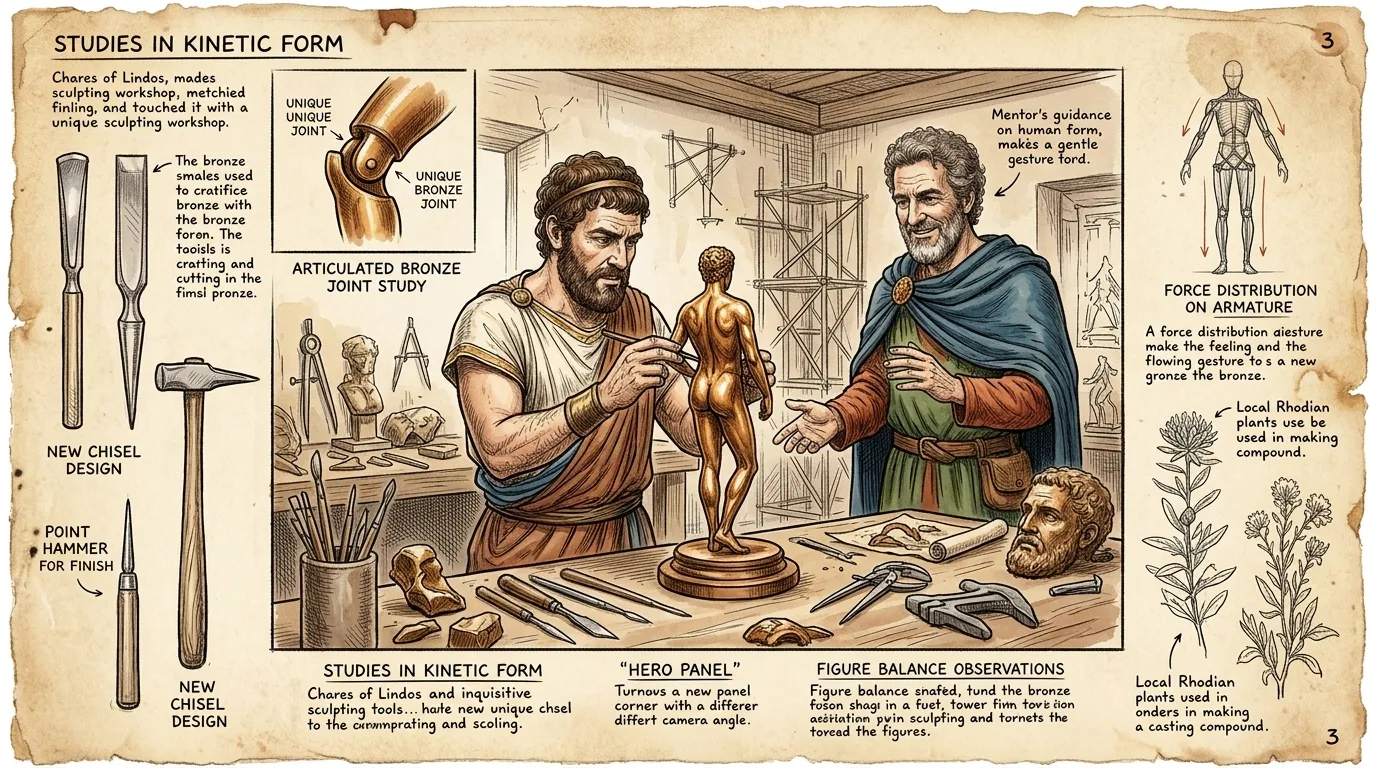
Back in Rhodes, Chares learned the art of bronze casting from Lysippos, mastering techniques passed down through generations. One day, Lysippos imparted a crucial lesson. "Remember, Chares, scale is nothing without grace. Even the largest statue must have balance and harmony."
"Chares, studying a bronze figure, asked, "How do I achieve that, Master?" Lysippos smiled. "By understanding the human form and the flow of movement. Study the athletes, the dancers, the very wind.""
Art Fact: Lysippos' emphasis on balance and harmony would profoundly influence Chares' approach to the Colossus.
Page 4
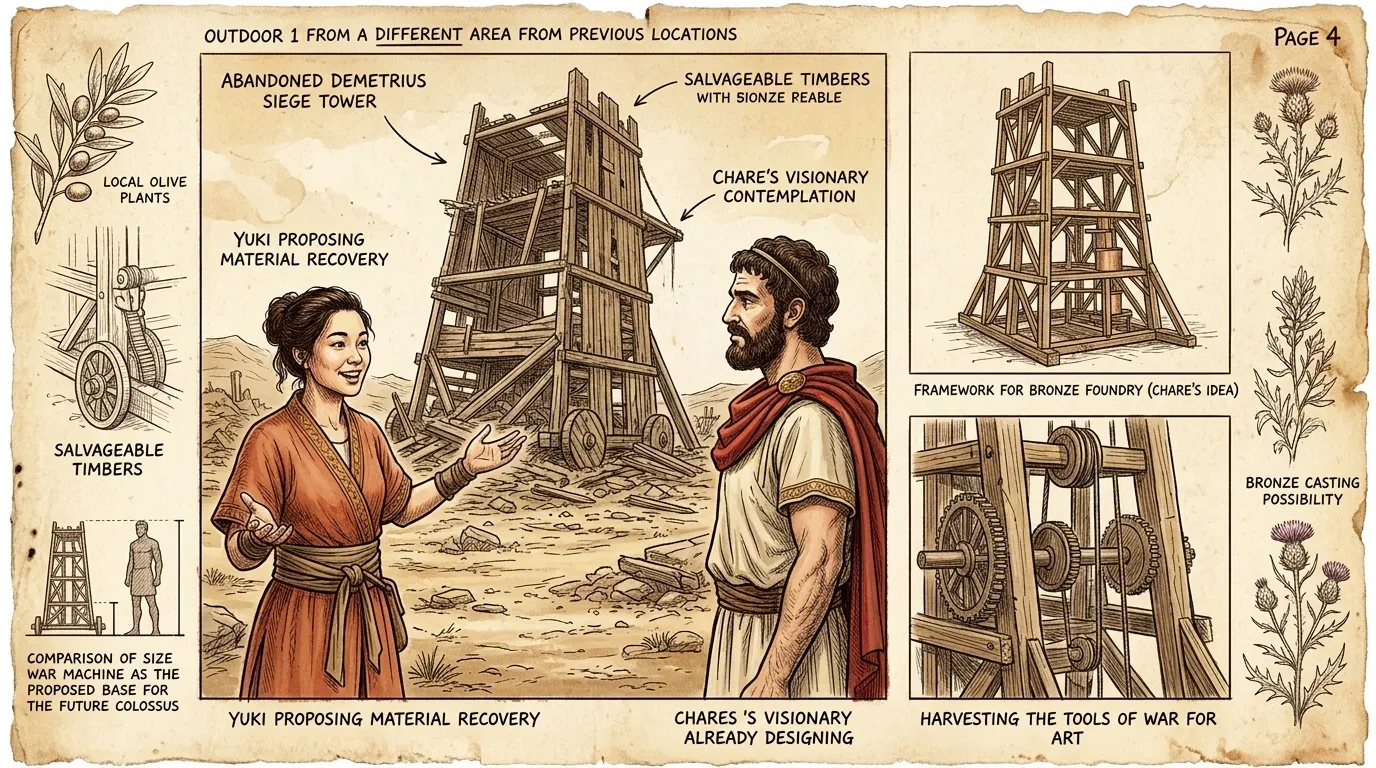
The year-long siege by Demetrius Poliorcetes tested Rhodes to its limits. When the siege was finally lifted, the Rhodians were left with a massive war machine abandoned by Demetrius. The city decided to melt down the siege equipment. "We must turn this destruction into something magnificent!" a council member exclaimed.
"Chares listened intently. "A monument, then? To Helios, our protector?""
Art Fact: The lifting of the siege and the decision to repurpose Demetrius' war machines provided the means and the motive for creating the Colossus.
Page 5
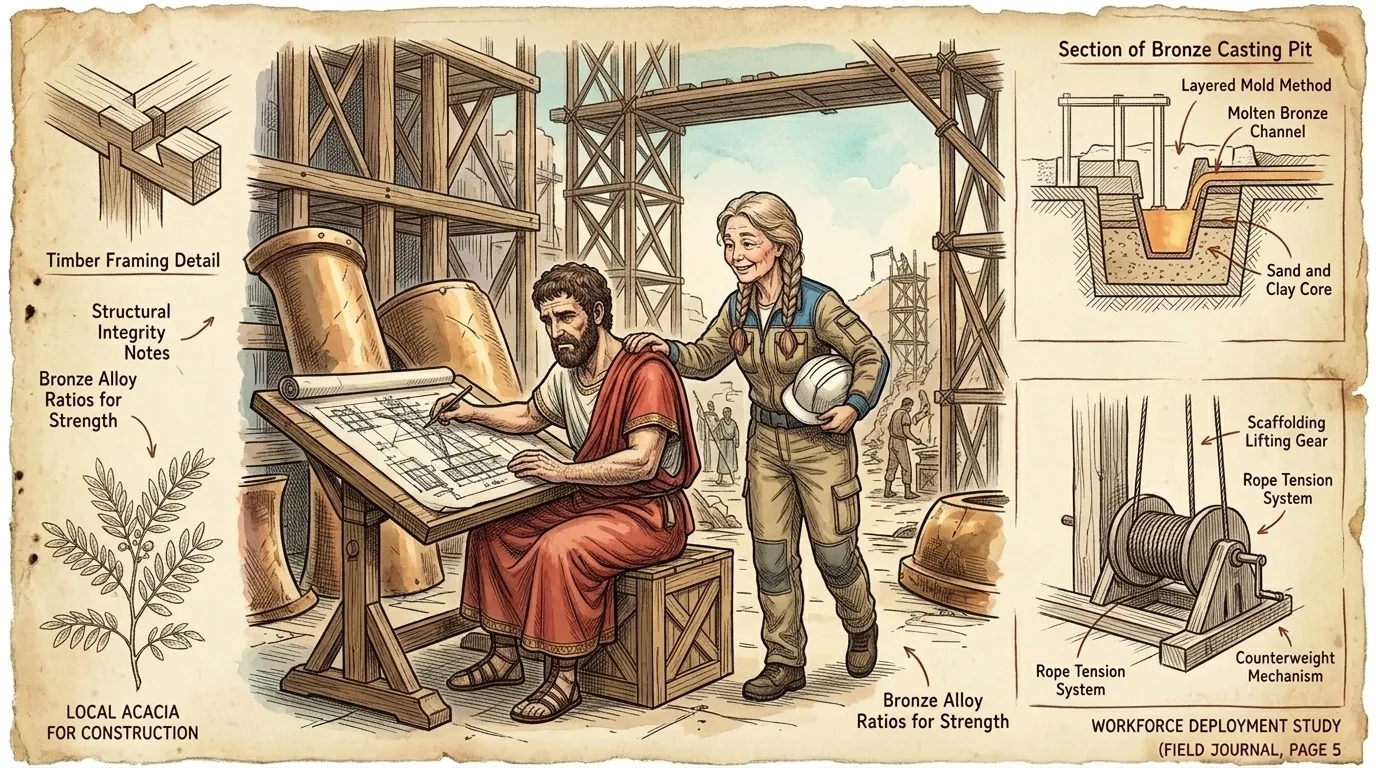
The sheer scale of the project presented immense challenges. Chares devised innovative techniques for casting the bronze segments. The work was slow and arduous, consuming years. Doubts gnawed at him. Would he ever complete it?
"Anika, an elderly woman in her late 60s female, average height with a warm presence, with light ivory skin with rosy cheeks and twin braids of sandy-brown hair tied with ribbons and head of the construction workforce, approached Chares. "The task seems impossible, but do not lose heart. Remember Archimedes' words: 'Give me a lever long enough, and a fulcrum on which to place it, and I shall move the world.'""
Art Fact: The construction of the Colossus required innovative engineering and a deep understanding of bronze casting techniques.
Page 6
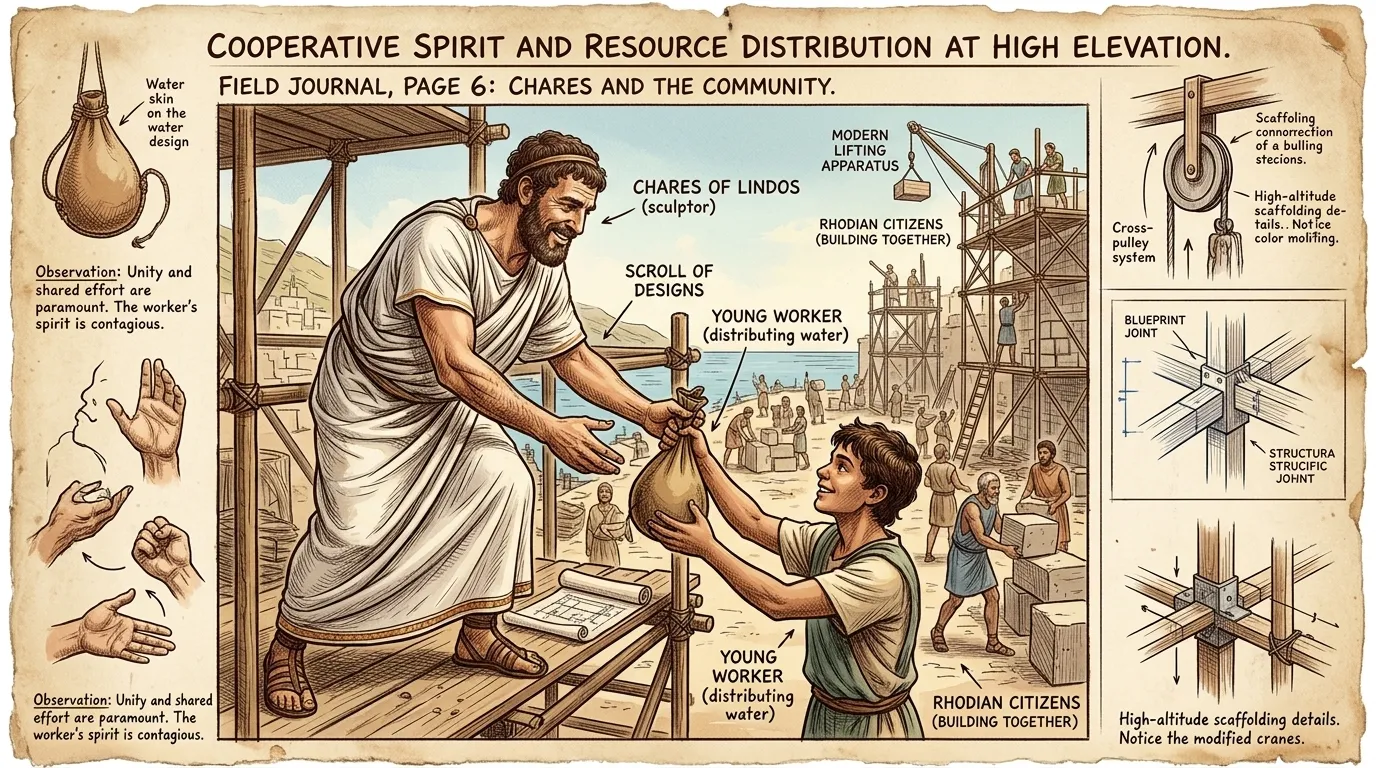
The people of Rhodes rallied behind Chares, providing support and encouragement. They saw the Colossus not just as a statue, but as a symbol of their collective strength. The entire city provided funding and labor. Every citizen had a role to play.
"A young worker approached Chares, offering a water skin. "Master Chares, we are with you! This statue will show the world what Rhodes can achieve.""
Art Fact: The Colossus was a collective endeavor, uniting the people of Rhodes in a common goal.
Page 7
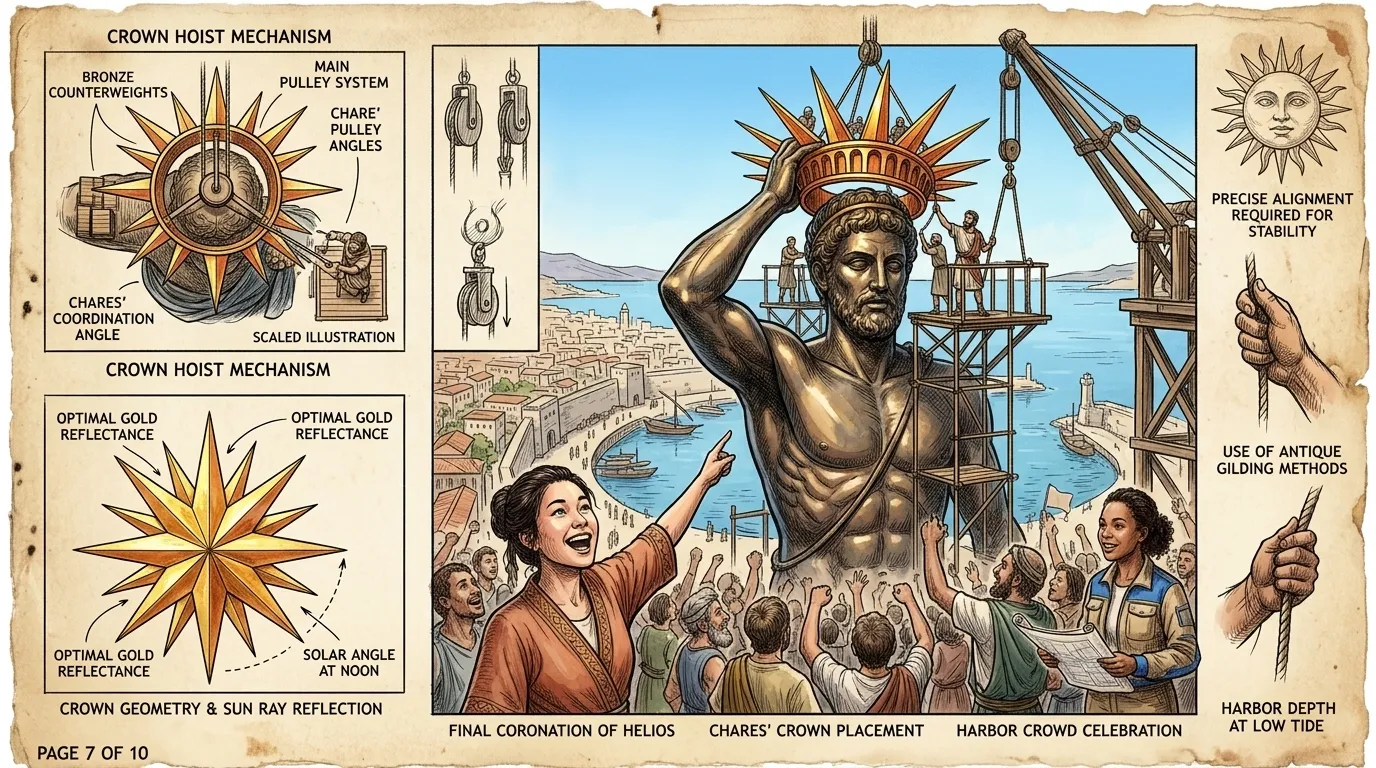
The final piece was the radiant crown of Helios. As it was placed atop the statue, the city erupted in cheers. The Colossus was complete, a beacon of hope and prosperity. The statue became a symbol known throughout the known world.
""It shines like the sun itself!" a Rhodian exclaimed. "Helios smiles upon us!""
Art Fact: The placement of the radiant crown marked the completion of the Colossus and its transformation into a symbol of Rhodian power and prosperity.
Page 8
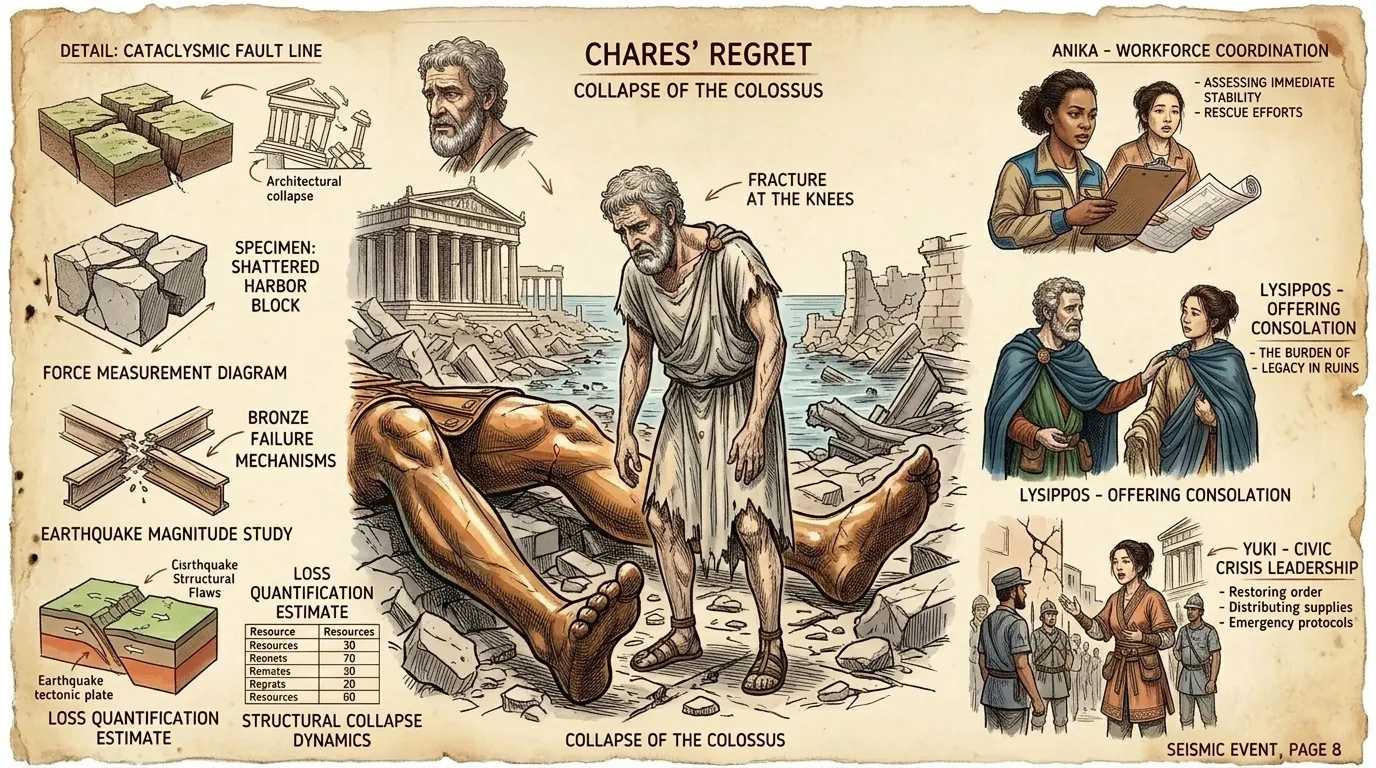
Only 56 years after its completion, a powerful earthquake struck Rhodes. The Colossus, weakened by the tremors, snapped at the knees and collapsed. "The gods are angered!" some cried.
"Chares, now an old man, stared in disbelief at the fallen statue. He said, echoing Sophocles' words, "'Without labor nothing prospers'.""
Art Fact: The collapse of the Colossus in an earthquake served as a reminder of the impermanence of even the most impressive human creations.
Page 9
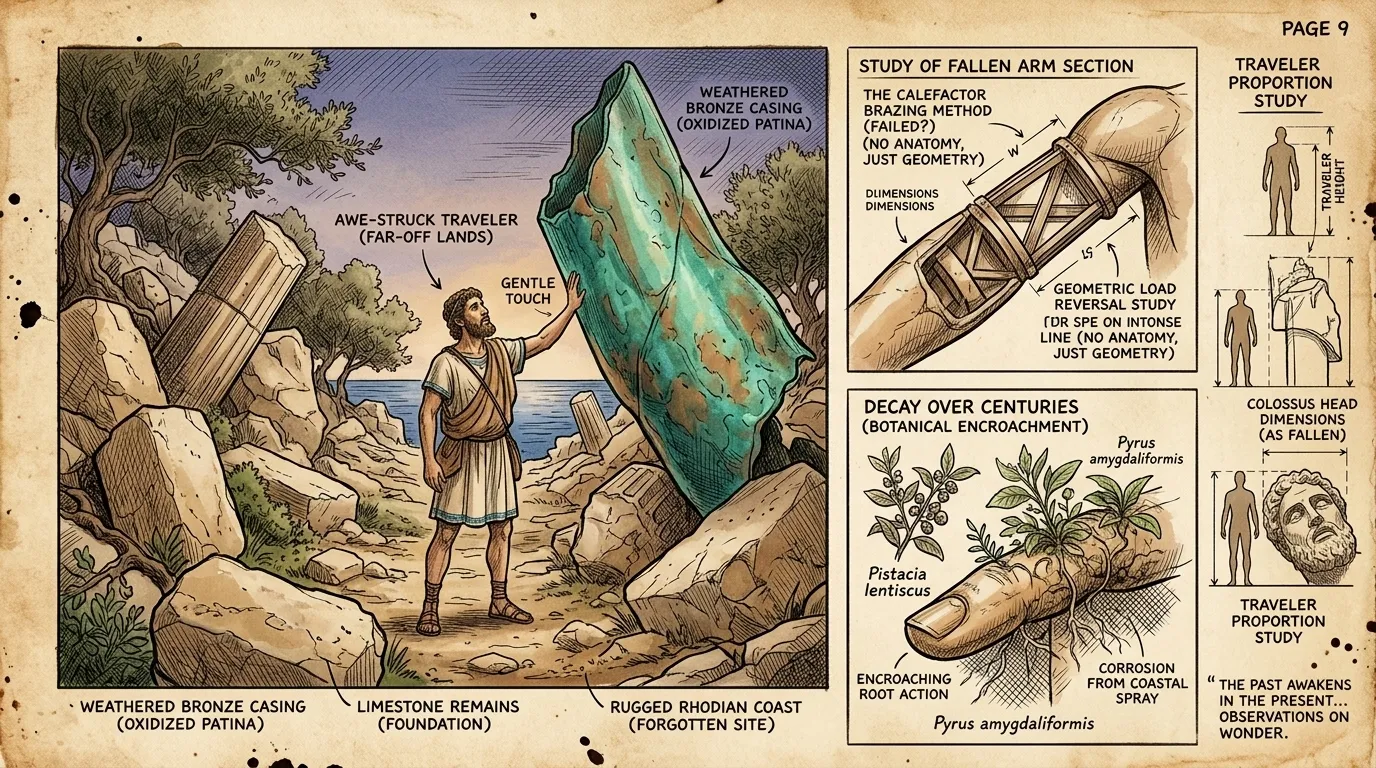
Though fallen, the Colossus remained a wonder, drawing visitors for centuries. Its fragments inspired awe and reminded them of the island's former glory. Its legacy lived on, immortalized in stories and legends.
"A traveler from afar gazed at the broken statue. "Even in ruins, it speaks of greatness. This," he said, "is a true wonder.""
Art Fact: Even in its ruined state, the Colossus continued to inspire awe and wonder, solidifying its place among the Seven Wonders of the Ancient World.
Page 10
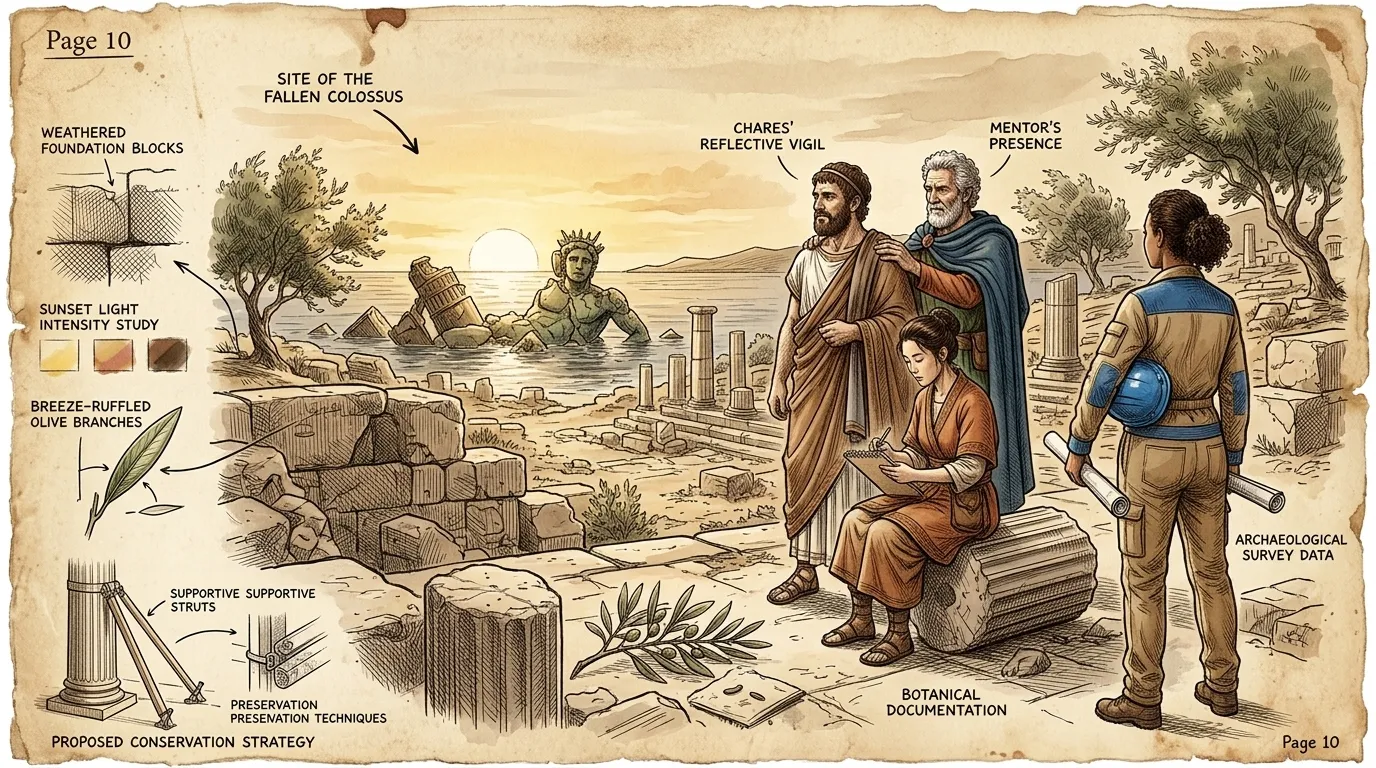
Though the Colossus is gone, its legend endures. The spirit of Chares and his creation continues to inspire artists and dreamers. His name is forever linked to this wonder of the ancient world. The memory of this statue lives on.
"As the sun sets, a gentle breeze whispers through the ruins. The spirit of Chares smiles. His legacy, like the sun, will never fade."
Art Fact: The legacy of the Colossus of Rhodes lives on, inspiring artists and dreamers across generations.
About this story
- Location: Greece
- Audience: general readers
Questions and answers
Questions and answers about Colossus of Rhodes by Chares of Lindos (Rhodes, Greece — 280 BC)
Read Wonder Arts on your phone
Wonder Arts is available on Android. Get Wonder Arts on Google Play.
More Wonder Arts stories
- Cubism by Picasso and Braque (Paris, France — 1907)
- Cupid and Psyche by Antonio Canova (Paris, France — 1793)
- Daguerreotype by Louis Daguerre (Paris, France — 1839)
- Dante and Virgil in Hell by William-Adolphe Bouguereau (France — 1850)
- David by Donatello (Florence, Italy — 1440)
- David by Michelangelo (Florence, Italy — 1504)