Hungarian Rhapsodies by Franz Liszt (Weimar, Germany — 1846)
Hungarian Rhapsodies by Franz Liszt (Weimar, Germany — 1846) — an illustrated arts story, set in Germany. 10 illustrated pages, free to read on Wonder Arts.
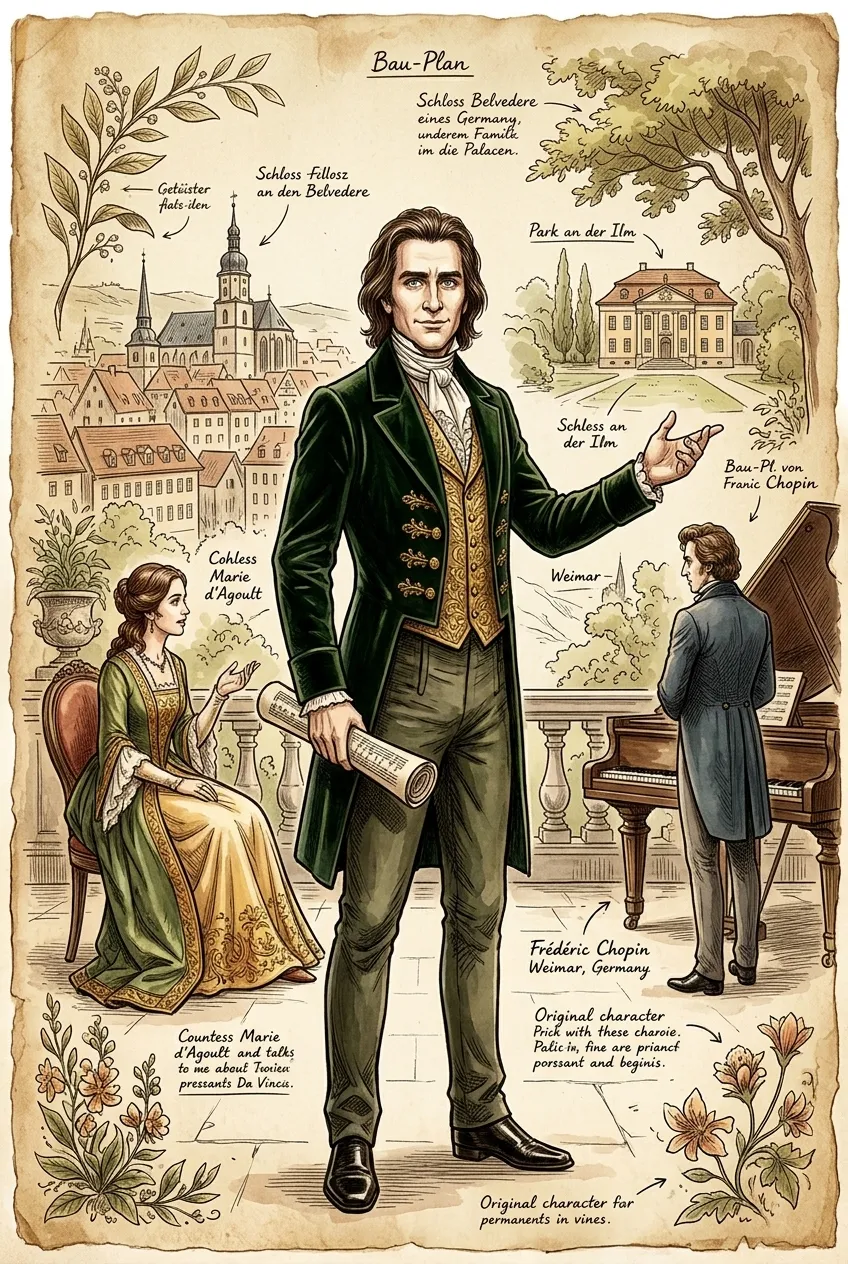
Page 1
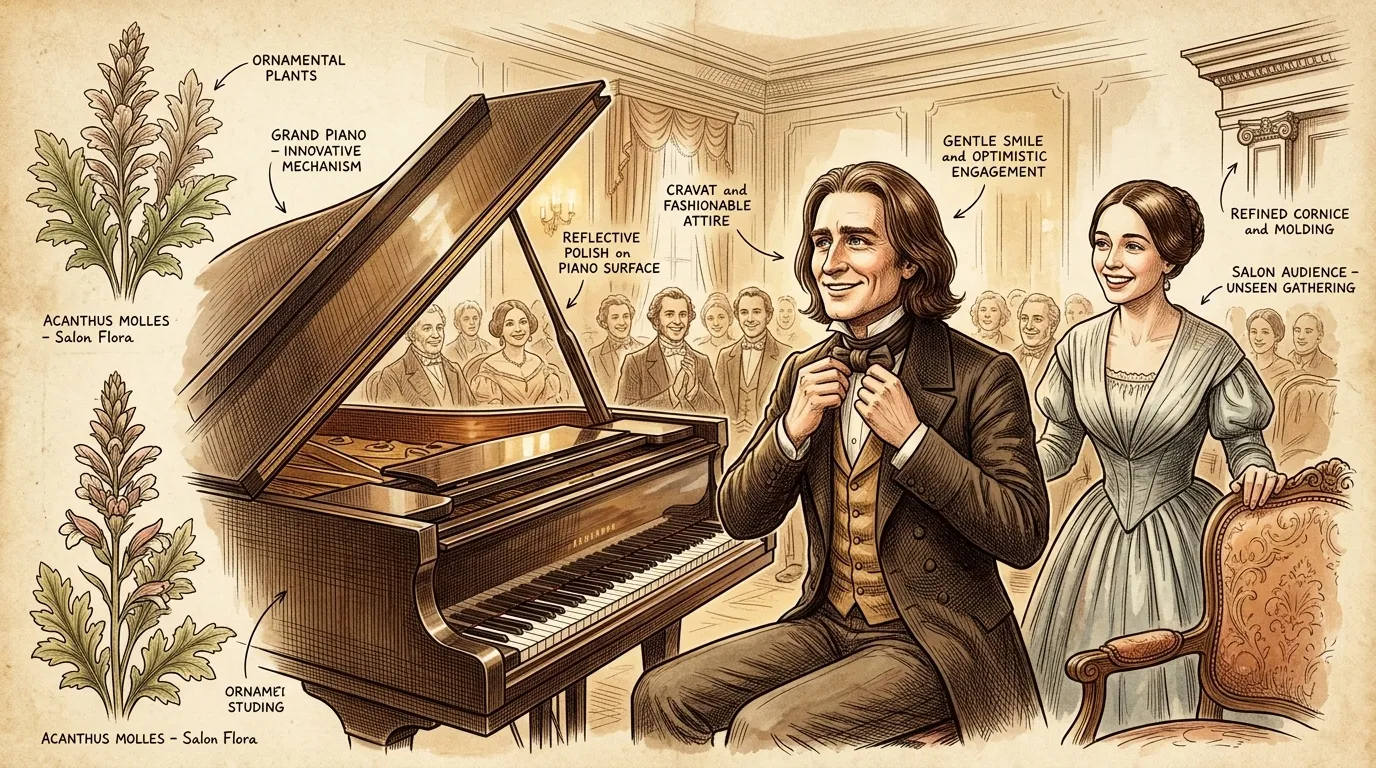
Franz Liszt, at 35, surveys the scene: the grand salon in Weimar, the expectant faces, and most importantly, the gleaming piano awaiting his touch. The year is 1846. He is about to embark on a journey that will lead to the creation of his 'Hungarian Rhapsodies', a series of 19 pieces celebrated for their virtuosic piano writing and their integration of Hungarian folk themes. It's said that Liszt, always a showman, would often improvise entire rhapsodies on the spot, gauging the audience's reaction to shape the piece.
"Liszt adjusts his cravat and says to Countess Marie d'Agoult, his partner, "Tonight, Marie, we capture the very soul of Hungary. These melodies, these rhythms... they will ignite the spirit!""
Art Fact: The Hungarian Rhapsodies are more than just piano pieces; they are a cultural bridge, bringing the vibrant folk music of Hungary to the concert halls of Europe.
Page 2
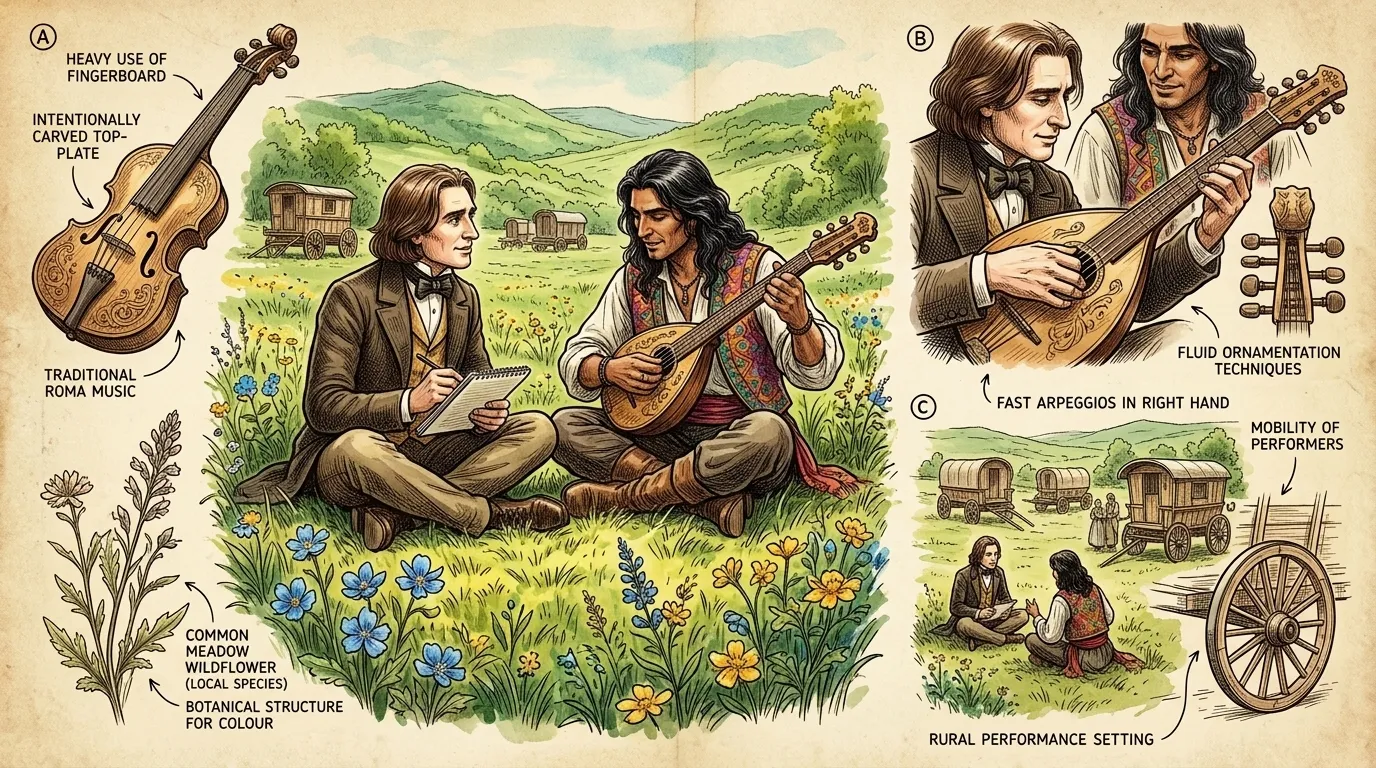
A few years earlier, in Hungary, Liszt, then a young and ambitious composer, traveled extensively through the countryside. He immersed himself in the music of the Roma people, often called 'Gypsies' at the time, listening to their improvisations and absorbing the unique sounds of their folk melodies. These experiences would later become the bedrock of his 'Hungarian Rhapsodies'.
"Liszt says, notebook in hand, to a Roma musician, "Tell me, friend, what stories do these melodies tell? What pain, what joy, resides within these notes?""
Art Fact: Liszt's embrace of Roma music was controversial. Some critics accused him of appropriating folk melodies, while others praised him for elevating them to the level of high art.
Page 3
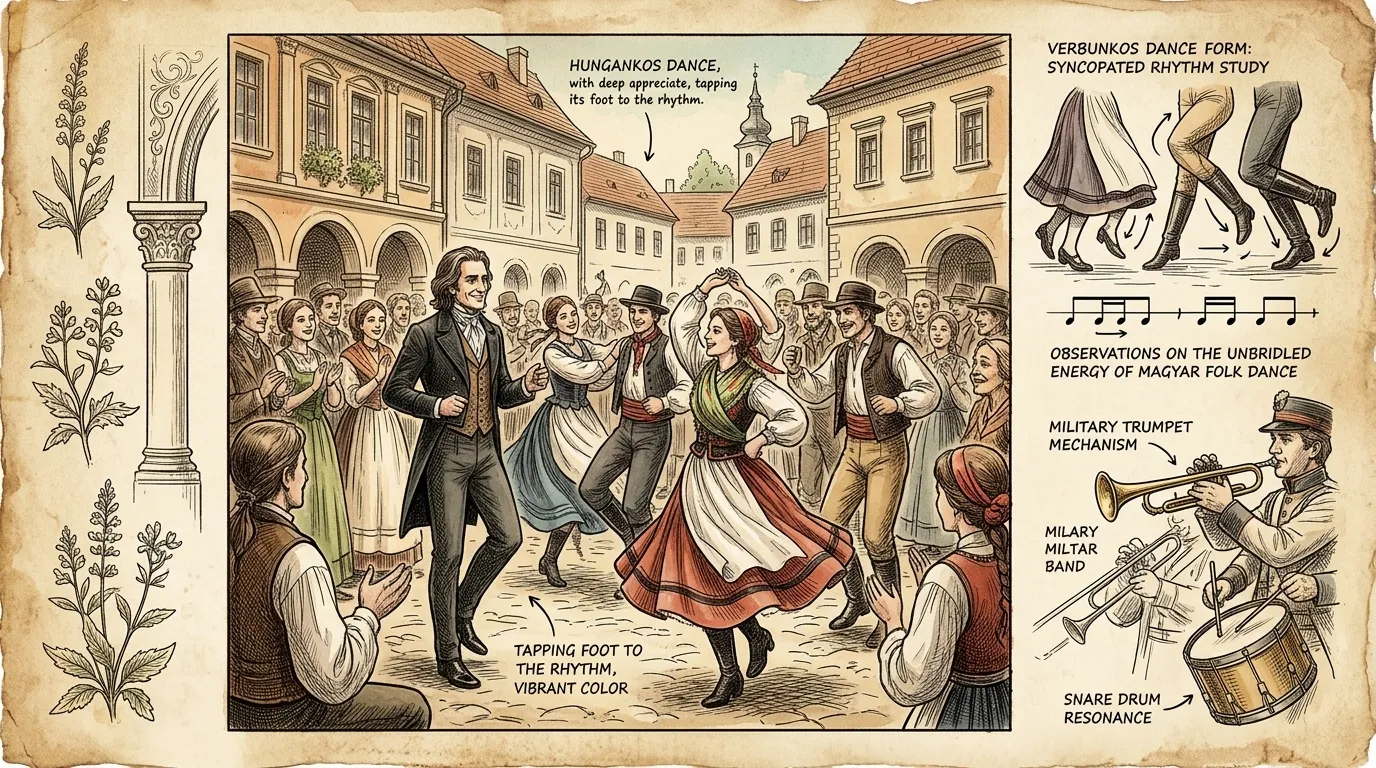
Another key element of Liszt's musical inspiration was the 'verbunkos', a Hungarian recruiting dance known for its syncopated rhythms and contrasting moods. The verbunkos, often performed by military bands, captured the national spirit of Hungary and its yearning for freedom. Liszt recognized the power of this music and sought to incorporate it into his compositions.
""This verbunkos," Liszt remarks to himself, tapping his foot, "it is the heartbeat of Hungary – proud, defiant, and full of life! I must weave this into the fabric of my rhapsodies.""
Art Fact: The verbunkos style, with its characteristic dotted rhythms and improvisational feel, became a defining feature of the Hungarian Rhapsodies.
Page 4
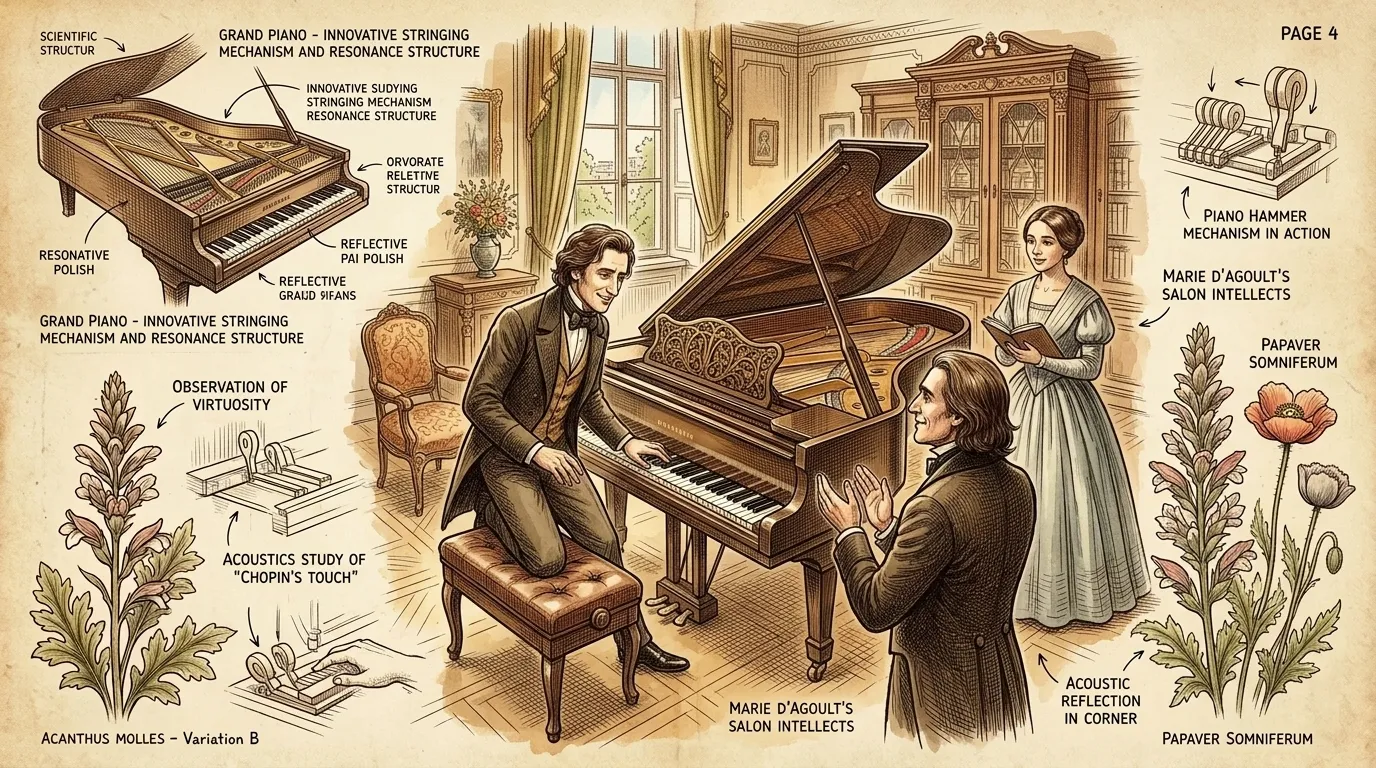
Liszt admired Frédéric Chopin immensely. Chopin's romantic piano style, his delicate melodies, and his mastery of the instrument deeply influenced Liszt. He incorporated elements of Chopin's virtuosity into his own compositions, including the 'Hungarian Rhapsodies'. Liszt, ever generous, dedicated some of his pieces to Chopin.
"Liszt says, after hearing Chopin play, "Chopin, your touch is like gossamer, yet filled with such power! You make the piano sing like an angel." Chopin replies with a gentle smile, "Franz, your strength at the keyboard is that of a titan!""
Art Fact: Liszt and Chopin were friends and rivals, each pushing the boundaries of piano technique and composition.
Page 5
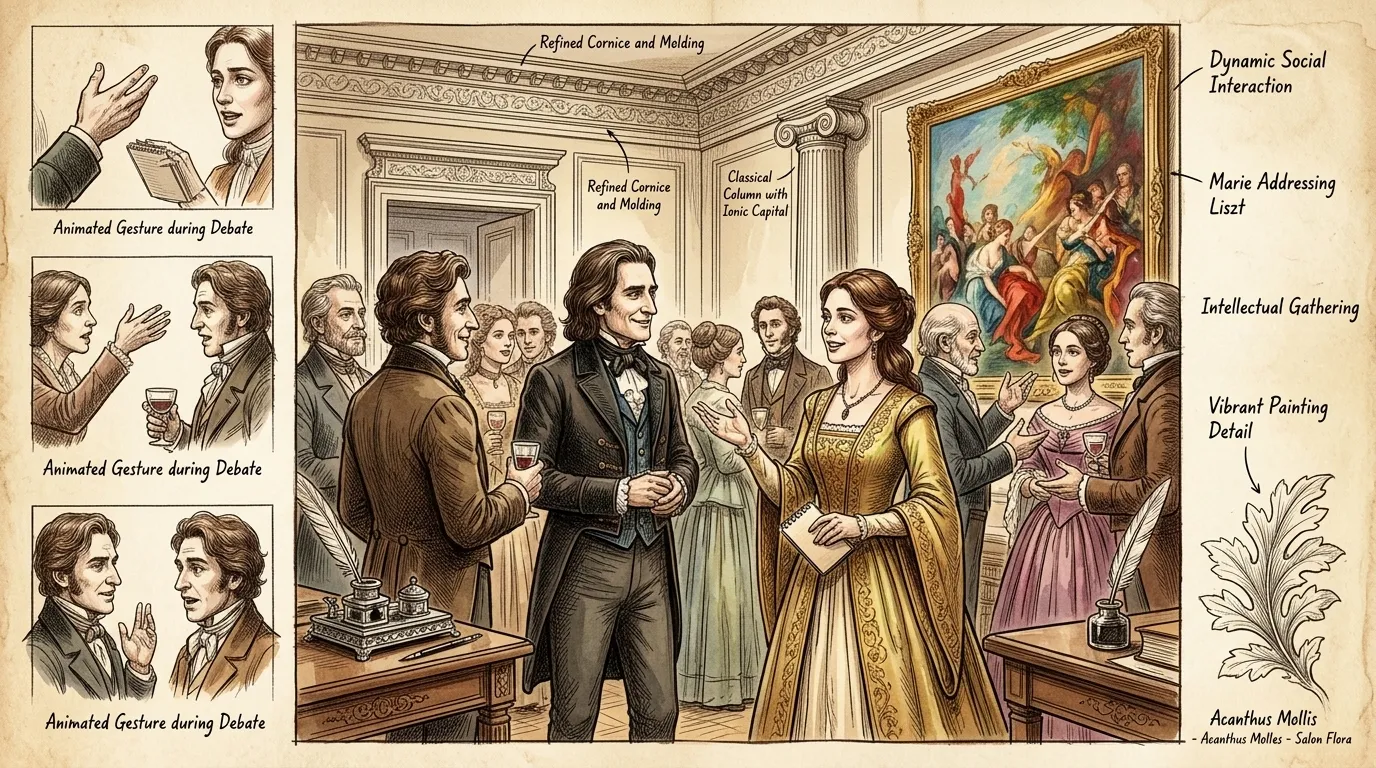
Weimar, under the patronage of Grand Duchess Maria Pavlovna, had become a hub of artistic activity. Liszt, now the Kapellmeister there, made it his home. His partner, Countess Marie d'Agoult, ran a salon that attracted writers, artists, and musicians. The vibrant intellectual atmosphere stimulated Liszt's creativity, providing a fertile ground for the development of his 'Hungarian Rhapsodies'.
"Countess Marie d'Agoult says to Liszt, surrounded by guests, "Franz, your music has set Weimar alight! The entire city is buzzing with excitement for your next creation.""
Art Fact: Countess Marie d'Agoult was not only Liszt's partner but also a writer and intellectual in her own right, contributing significantly to the cultural life of Weimar.
Page 6
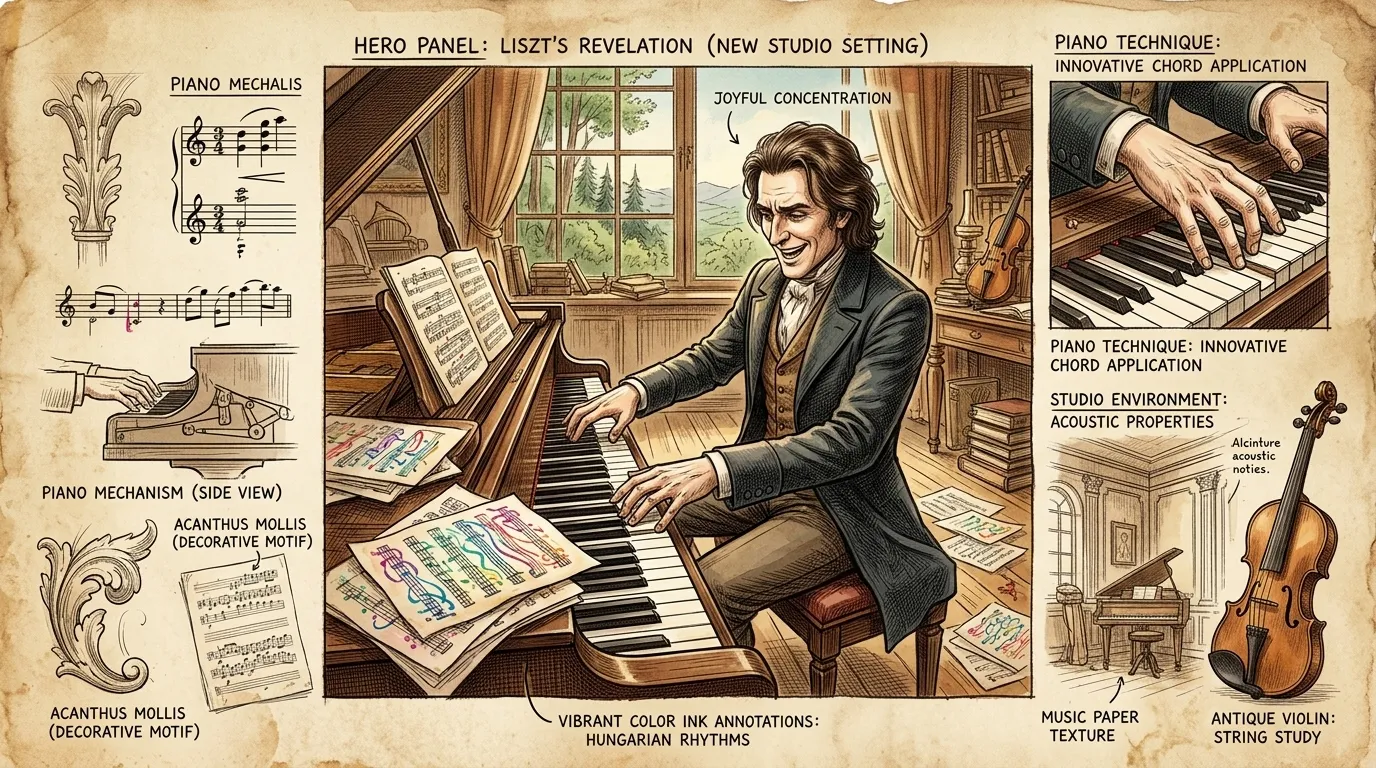
Back in his studio, Liszt began to weave together the various elements that inspired him: the Roma melodies, the verbunkos rhythms, and the virtuosity of Chopin. He experimented with different harmonies, textures, and forms, gradually shaping the 'Hungarian Rhapsodies' into their final form. It was during this time he discovered that his passion could become an immortal work.
"Liszt exclaims to himself, striking a chord on the piano, "Yes! This is it! The passion of the Roma, the spirit of Hungary... all channeled through the language of the piano!""
Art Fact: Liszt's compositional process was often improvisational, allowing him to capture the spontaneity and passion of the music.
Page 7
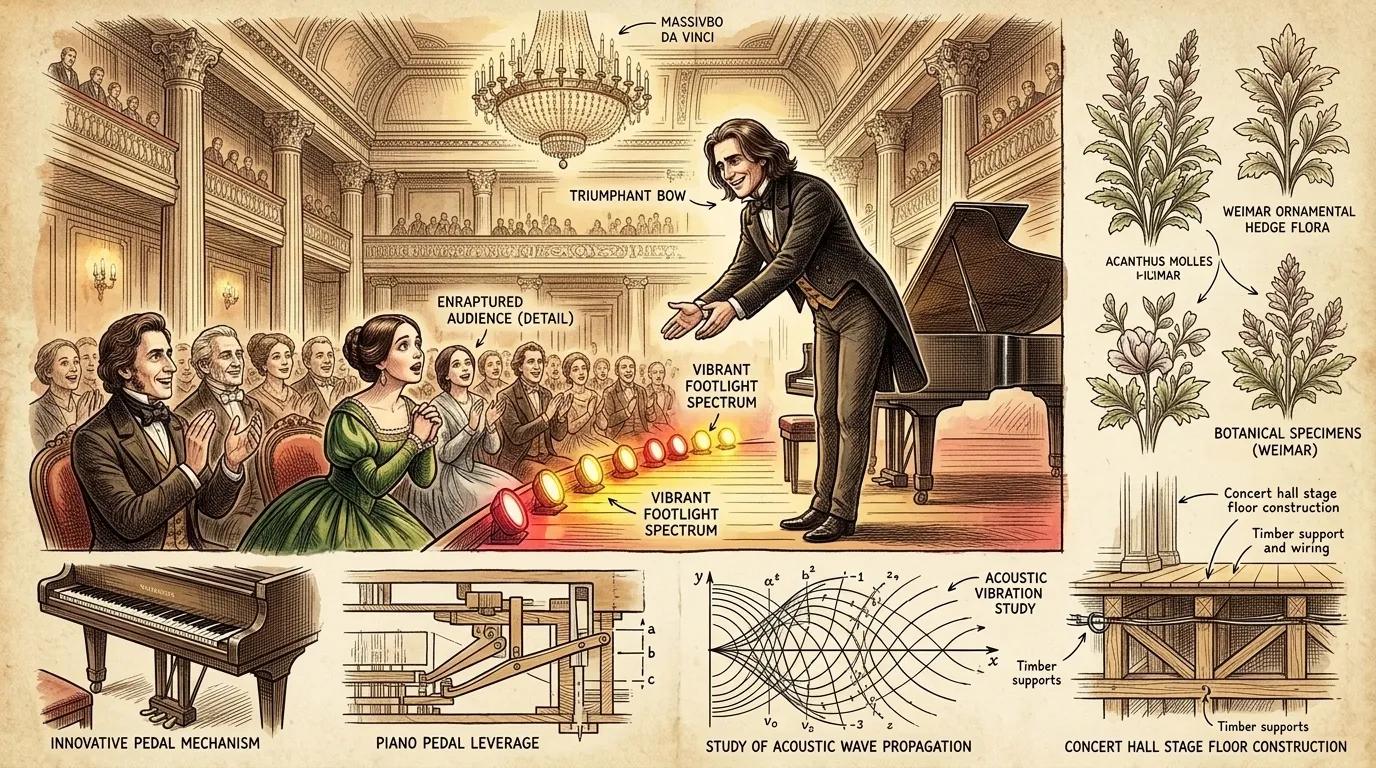
When Liszt first performed his 'Hungarian Rhapsodies' in Weimar, they were an instant success. Audiences were captivated by their energy, their passion, and their unique blend of folk and classical styles. The pieces quickly spread throughout Europe, becoming some of Liszt's most popular and enduring works.
"After the performance, an audience member exclaims, "Liszt, your music is breathtaking! It is as if you have unleashed the very soul of Hungary upon us!""
Art Fact: The success of the 'Hungarian Rhapsodies' cemented Liszt's reputation as one of the greatest composers and pianists of his time.
Page 8

Not all critics were pleased. Some accused Liszt of vulgarizing classical music with his folk-inspired melodies. Others praised him for his originality and his ability to connect with audiences on an emotional level. Despite the controversy, the 'Hungarian Rhapsodies' continued to gain popularity, transcending their initial criticisms.
"A critic writes in a newspaper, "Liszt's 'Rhapsodies' are a chaotic mix of brilliance and barbarism! They titillate the senses but lack true artistic depth." Another critic counters, "Nonsense! Liszt has tapped into the primal energy of Hungarian music, creating something truly new and exciting!""
Art Fact: The debate over the artistic merit of the 'Hungarian Rhapsodies' continues to this day, highlighting the complex relationship between folk and classical music.
Page 9
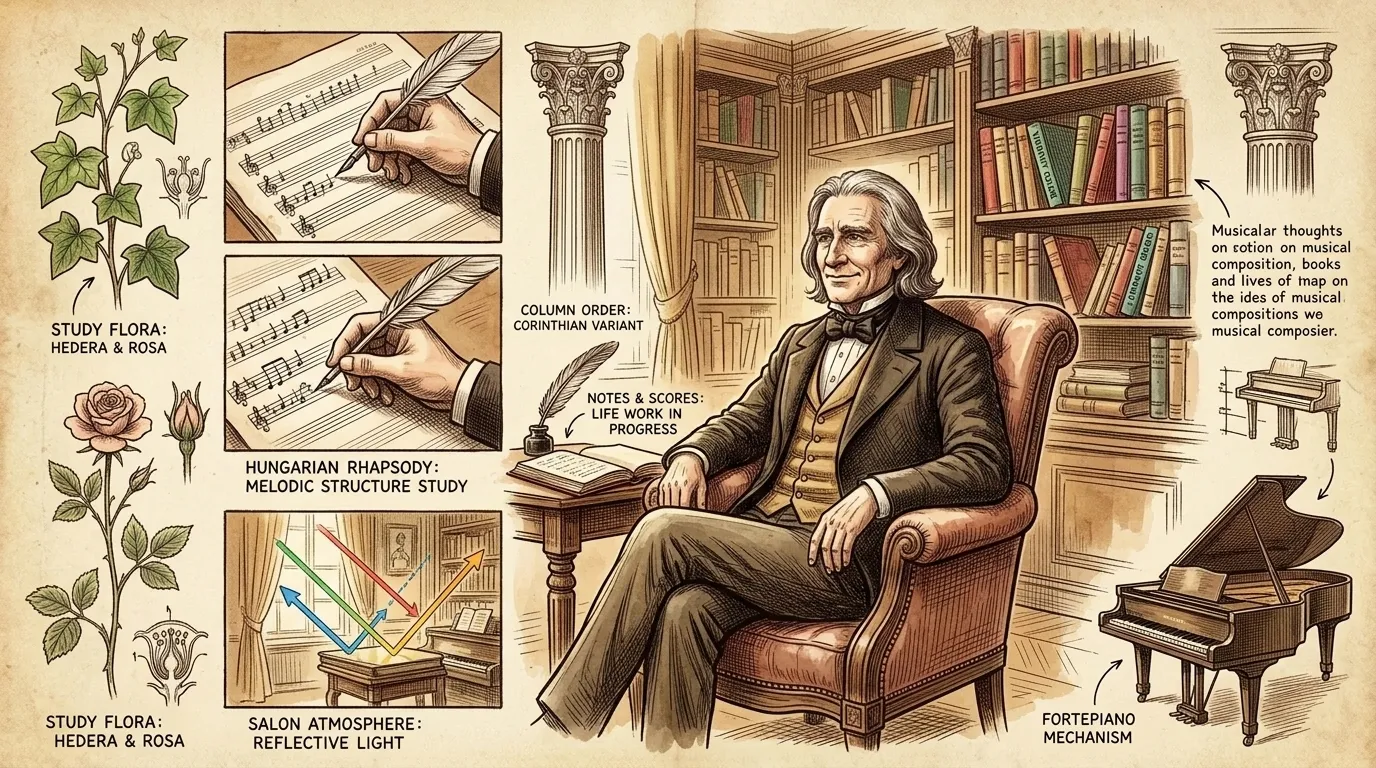
Liszt continued to perform and compose throughout his life, leaving behind a vast body of work that includes operas, symphonies, and sacred music. But the 'Hungarian Rhapsodies' remain among his most beloved and recognizable compositions. They have been performed and recorded by countless pianists, inspiring generations of musicians and music lovers.
"As Liszt aged, he reflected on his work, noting, "Music is the embodiment of the soul, reflecting its joys, its sorrows, and its eternal search for meaning." He added, echoing Seneca: "Every new beginning comes from some other beginning's end.""
Art Fact: The 'Hungarian Rhapsodies' continue to be performed and enjoyed around the world, a testament to their enduring power and appeal.
Page 10
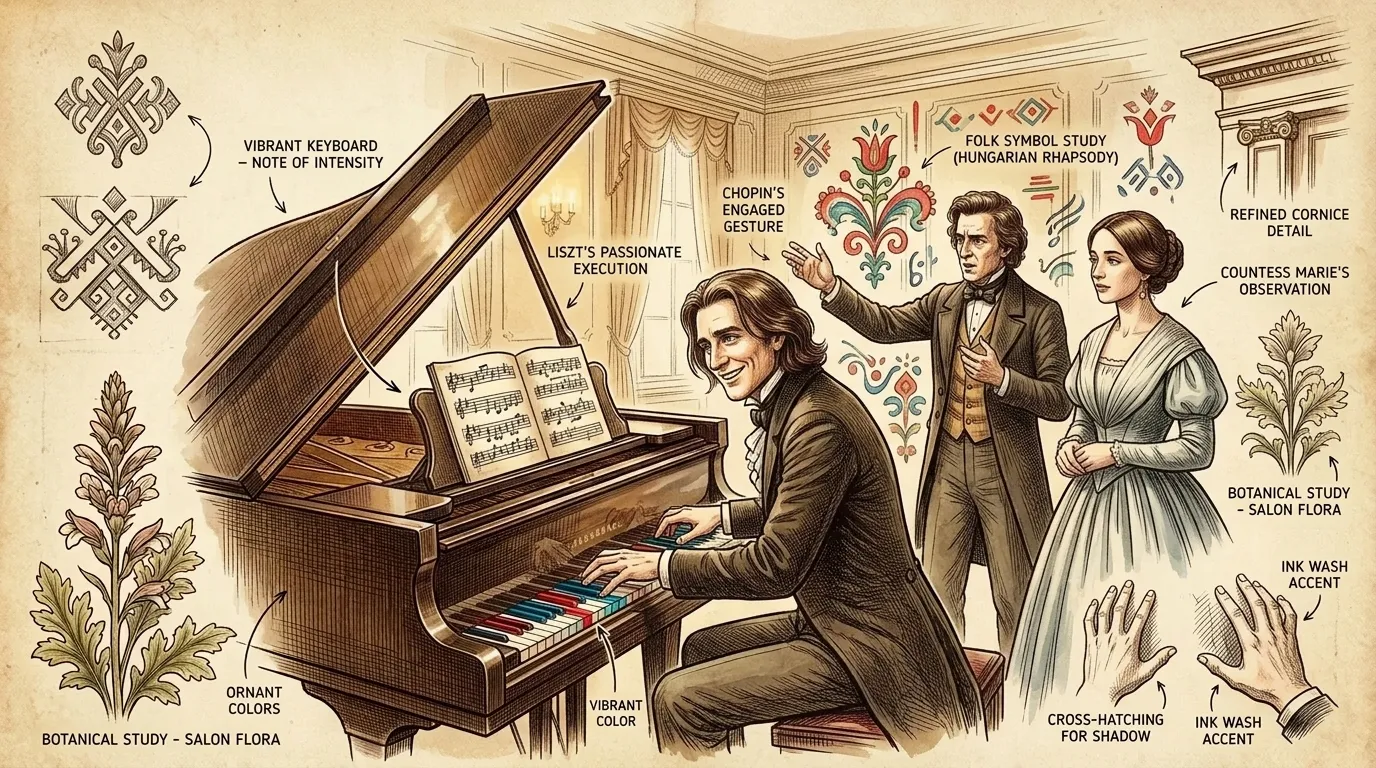
Today, the 'Hungarian Rhapsodies' are more than just piano pieces; they are a symbol of Hungarian national identity and a celebration of the power of music to transcend cultural boundaries. They stand as a testament to Liszt's genius, his passion, and his unwavering commitment to artistic expression. His innovative spirit remains a guiding influence for musicians everywhere.
"A young pianist says, after practicing the 'Hungarian Rhapsodies', "Liszt's music is like a fire in my soul! It challenges me, inspires me, and makes me want to share its beauty with the world.""
Art Fact: Franz Liszt's 'Hungarian Rhapsodies' survive forever because they captured not just the sounds of a nation, but the universal language of the human heart.
About this story
- Location: Germany
- Audience: general readers
Questions and answers
Questions and answers about Hungarian Rhapsodies by Franz Liszt (Weimar, Germany — 1846)
Read Wonder Arts on your phone
Wonder Arts is available on Android. Get Wonder Arts on Google Play.
More Wonder Arts stories
- Hylas and the Nymphs by John William Waterhouse (London, UK — 1896)
- Impression, Sunrise by Claude Monet (Paris, France — 1872)
- Irises by Vincent van Gogh (Saint-Rémy, France — 1889)
- Kinetoscope by Thomas Edison (USA — 1889)
- L’Absinthe by Edgar Degas (Paris, France — 1876)
- Laocoön and His Sons by Agesander, Athenodoros, and Polydorus (Vatican City, Rome — c. 40 BC)