Kinetoscope by Thomas Edison (USA — 1889)
Kinetoscope by Thomas Edison (USA — 1889) — an illustrated arts story, set in United States. 10 illustrated pages, free to read on Wonder Arts.
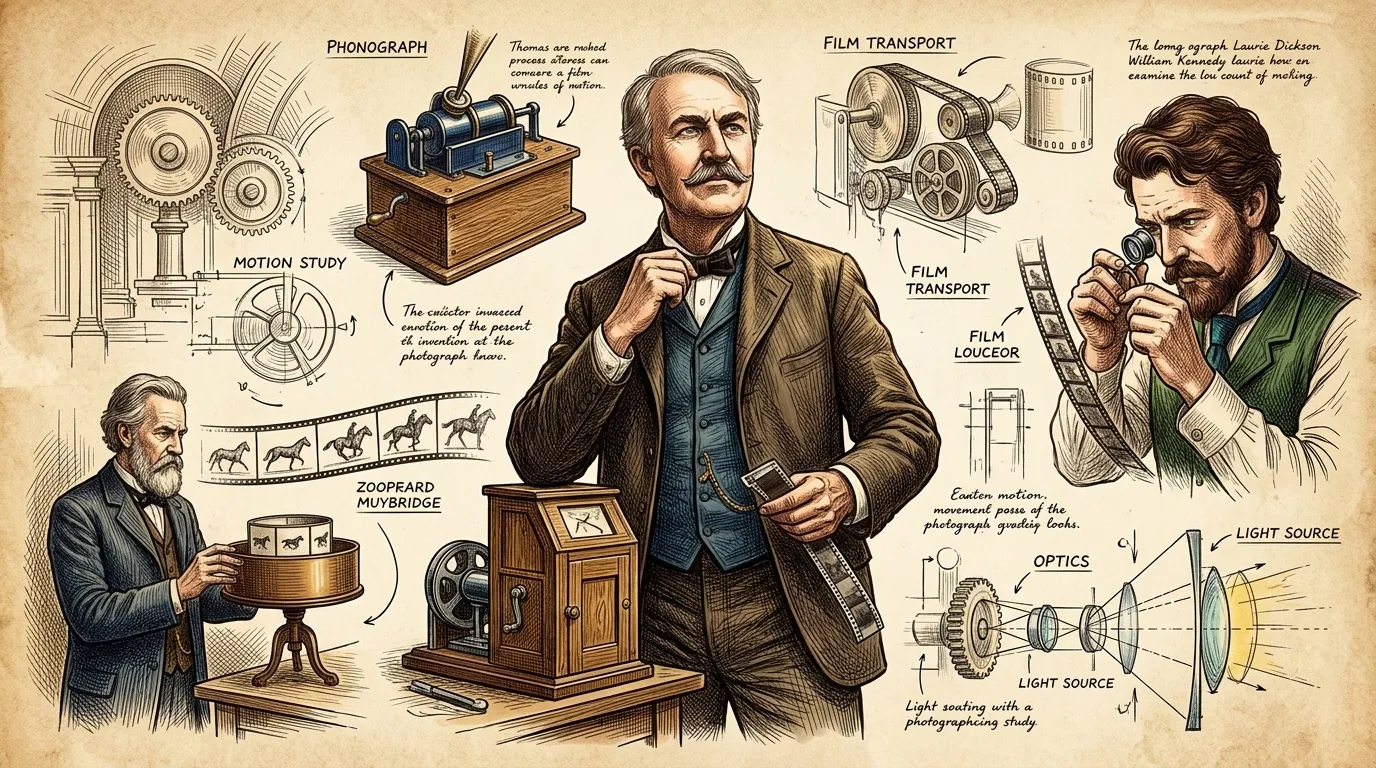
Page 1
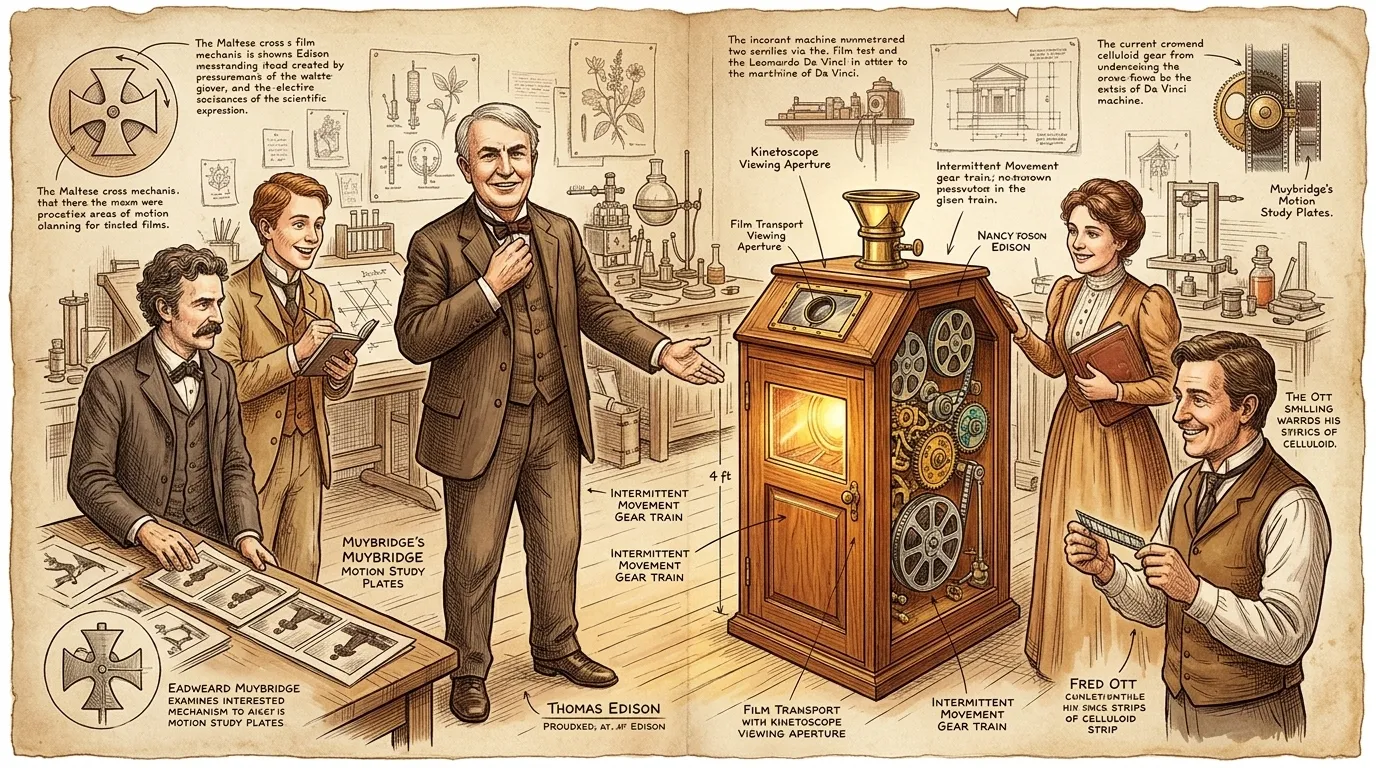
Thomas Edison, a titan of invention, stands before his Kinetoscope in 1889. This marvel, a precursor to cinema, measures approximately 4 feet tall and allowed one person at a time to view a moving film. The Kinetoscope marked a pivotal step towards modern filmmaking, a testament to Edison's prolific ingenuity. Its original price was around 250, a significant investment at the time.
""This, gentlemen," Edison proclaims, a glint in his eye, "is not merely a machine, but a window into the future of entertainment!" He adjusts his tie, a proud smile gracing his lips. "Imagine, capturing life itself in motion.""
Art Fact: The Kinetoscope was initially conceived as a visual accompaniment to the phonograph, Edison's earlier invention. However, it quickly became a sensation in its own right.
Page 2
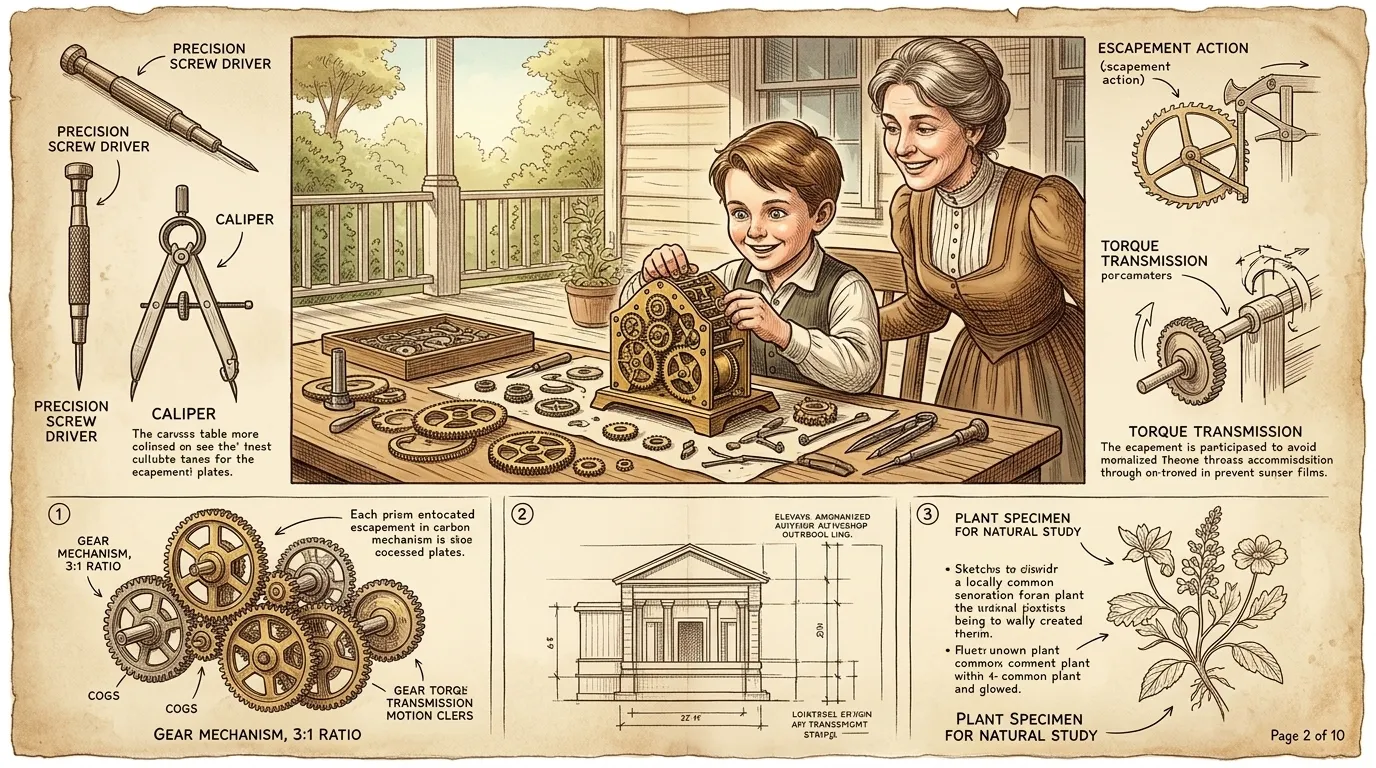
A young Edison, still a boy with boundless curiosity, watched the gears of a clock with fascination. He disassembled and reassembled the clock, driven by an insatiable desire to understand how things worked. This early fascination with mechanics would lay the foundation for his future inventions. His mother, Nancy, a former schoolteacher, encouraged his experiments, fueling his inquisitive nature.
""Thomas, what have you done to the clock?" Nancy asks, her voice a mixture of exasperation and amusement. "I wanted to see how it works, Mother," Edison replies, his eyes shining with excitement. "I'll put it back together, I promise!""
Art Fact: Edison's early education was limited; he was largely self-taught, fueled by his own curiosity and his mother's guidance.
Page 3
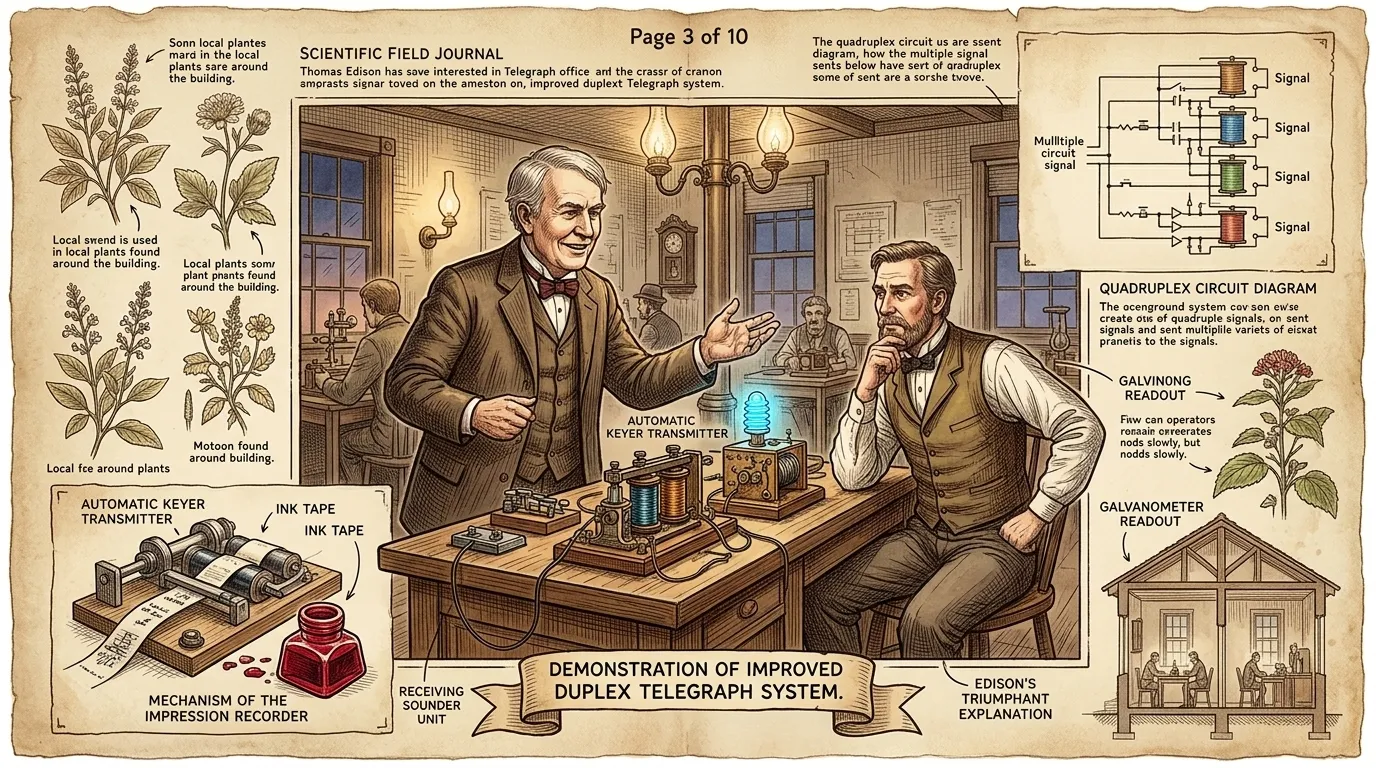
Edison's first significant invention came during his time as a telegraph operator. Frustrated by the slow transmission speeds, he developed an improved telegraph system. This invention demonstrated his practical ingenuity and his ability to solve real-world problems. His work with the telegraph exposed him to the principles of electricity and communication.
""This new system will revolutionize communication!" Edison exclaims to a fellow telegraph operator, his voice ringing with conviction. "No more delays, no more missed messages. We'll transmit information faster than ever before!" The other operator, a man with a skeptical look, nods slowly."
Art Fact: Edison's early inventions were primarily focused on improving existing technologies, a pattern that would continue throughout his career.
Page 4
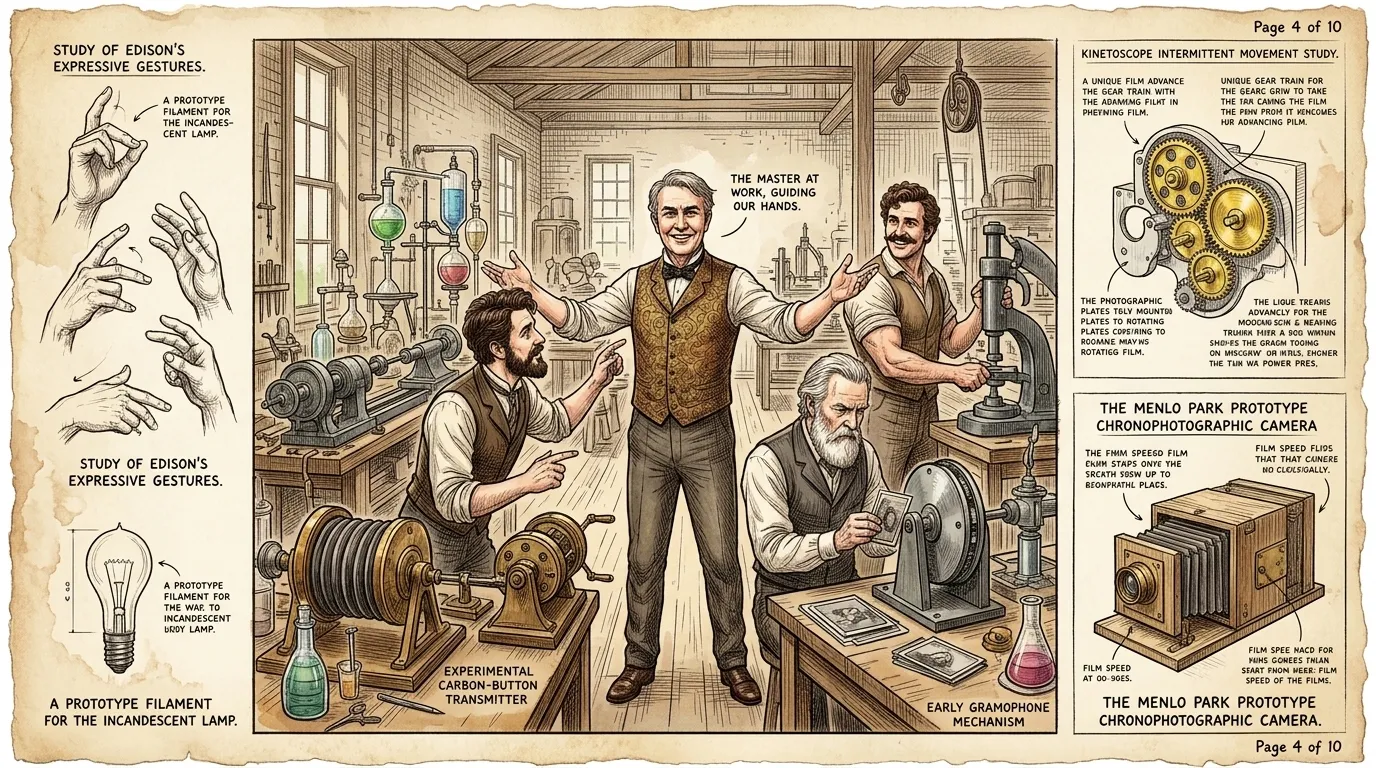
Edison established his famous Menlo Park laboratory, a dedicated space for invention and experimentation. It was here that he and his team developed numerous groundbreaking technologies. Menlo Park became a symbol of innovation and collaboration, attracting talented individuals from across the globe. The goal: invent the future.
""This is where we will change the world!" Edison declares to his assembled team at Menlo Park. "We will invent, experiment, and create technologies that will transform society. No idea is too bold, no challenge too great!" The team looks at him with admiration and excitement."
Art Fact: Menlo Park was one of the first industrial research laboratories, pioneering the concept of team-based innovation.
Page 5
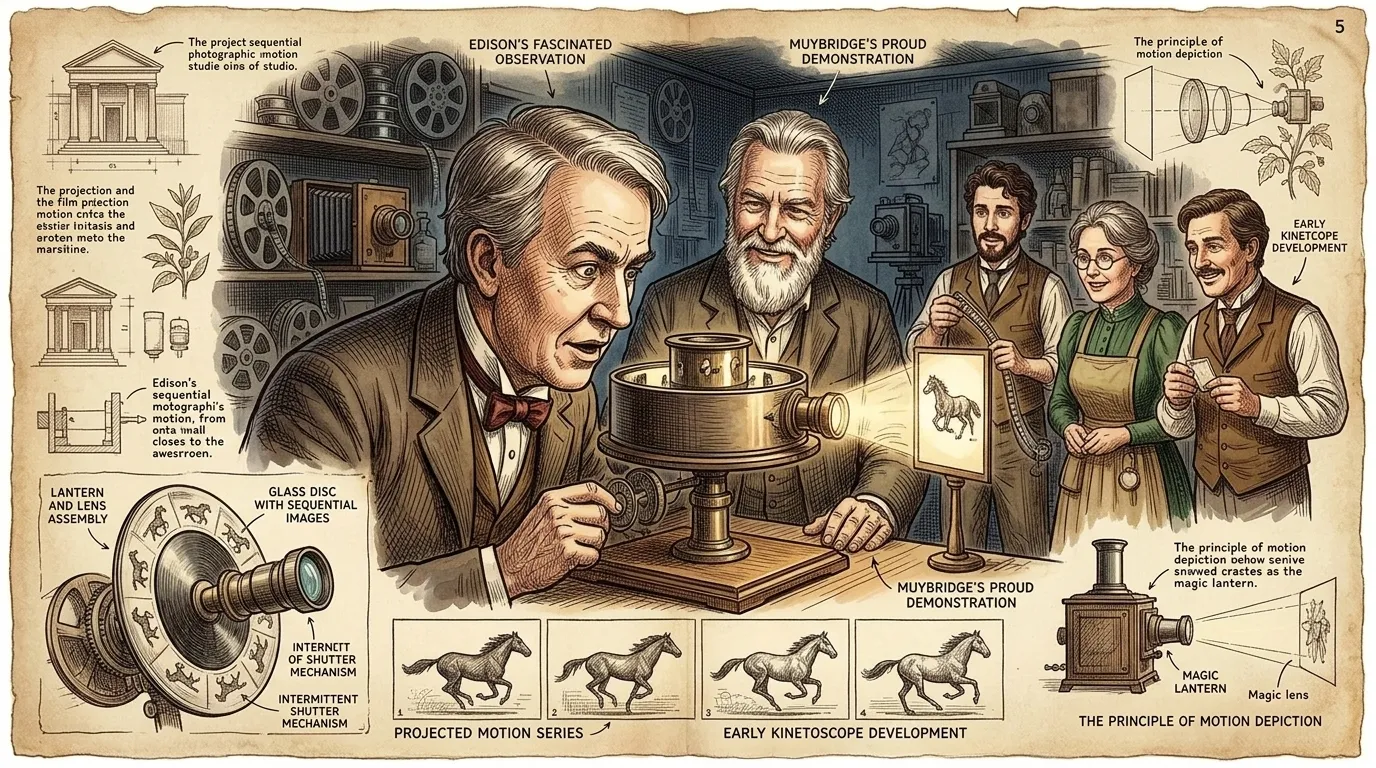
Edison encountered Eadweard Muybridge's zoopraxiscope, a device that projected sequential images to create the illusion of motion. This encounter sparked Edison's interest in capturing and reproducing movement. He saw the potential to combine motion pictures with his phonograph, creating a complete audio-visual experience. This meeting was very happenstance.
""Remarkable!" Edison exclaims, watching Muybridge's zoopraxiscope in action. "Imagine, combining this with my phonograph! We could create a complete illusion of reality!" Muybridge, standing beside him, nods enthusiastically."
Art Fact: Eadweard Muybridge is known for his pioneering work in photographic studies of motion, particularly his sequences of a horse in full gallop.
Page 6
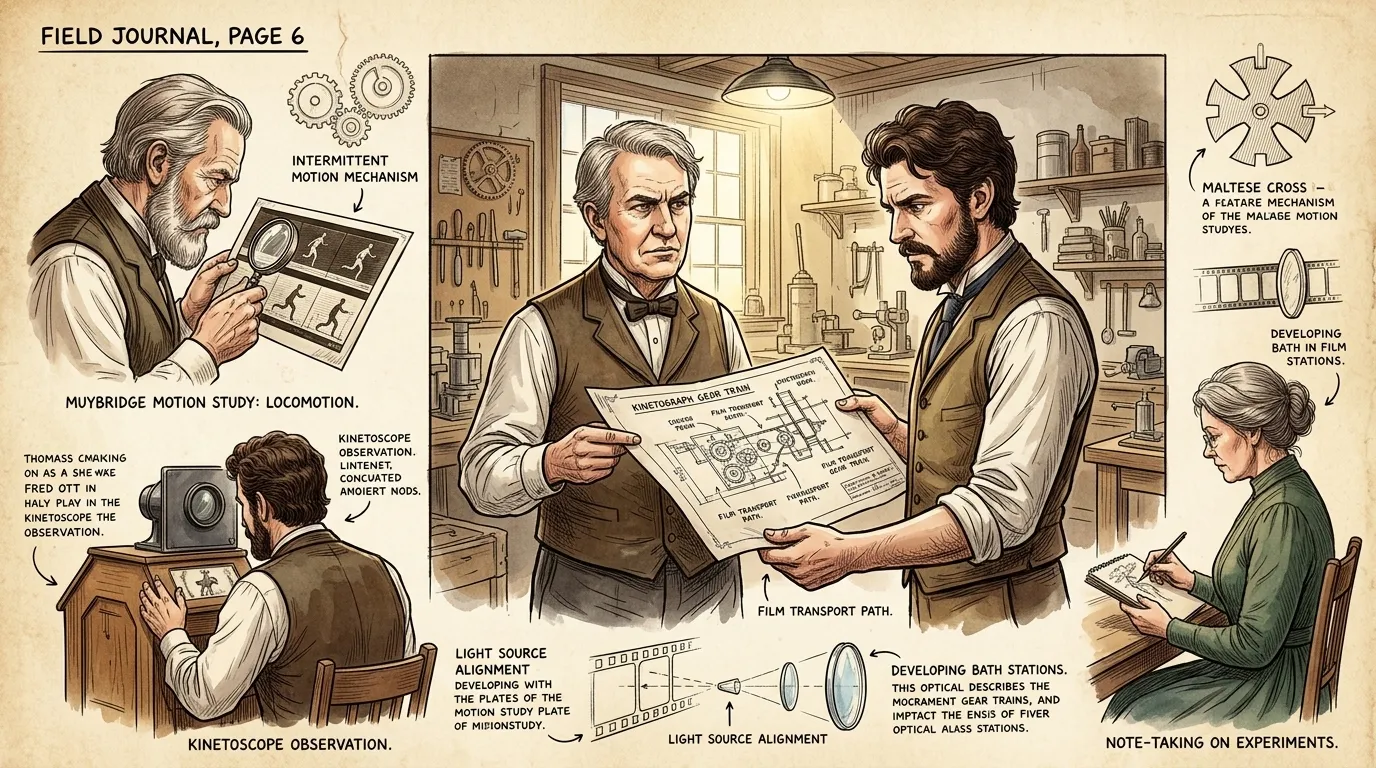
Edison entrusted the development of the Kinetoscope to his assistant, William Kennedy Laurie Dickson. Dickson played a crucial role in the technical design and experimentation. The collaboration between Edison and Dickson was essential to the success of the project. Dickson's expertise in mechanics and optics proved invaluable.
""Dickson, I need you to focus on this," Edison says, handing Dickson a blueprint. "We need to find a way to capture motion with clarity and precision. This is our chance to make motion pictures a reality!" Dickson nods, his expression determined."
Art Fact: William Kennedy Laurie Dickson is often credited as the primary inventor of the Kinetoscope, although Edison retained overall control of the project.
Page 7
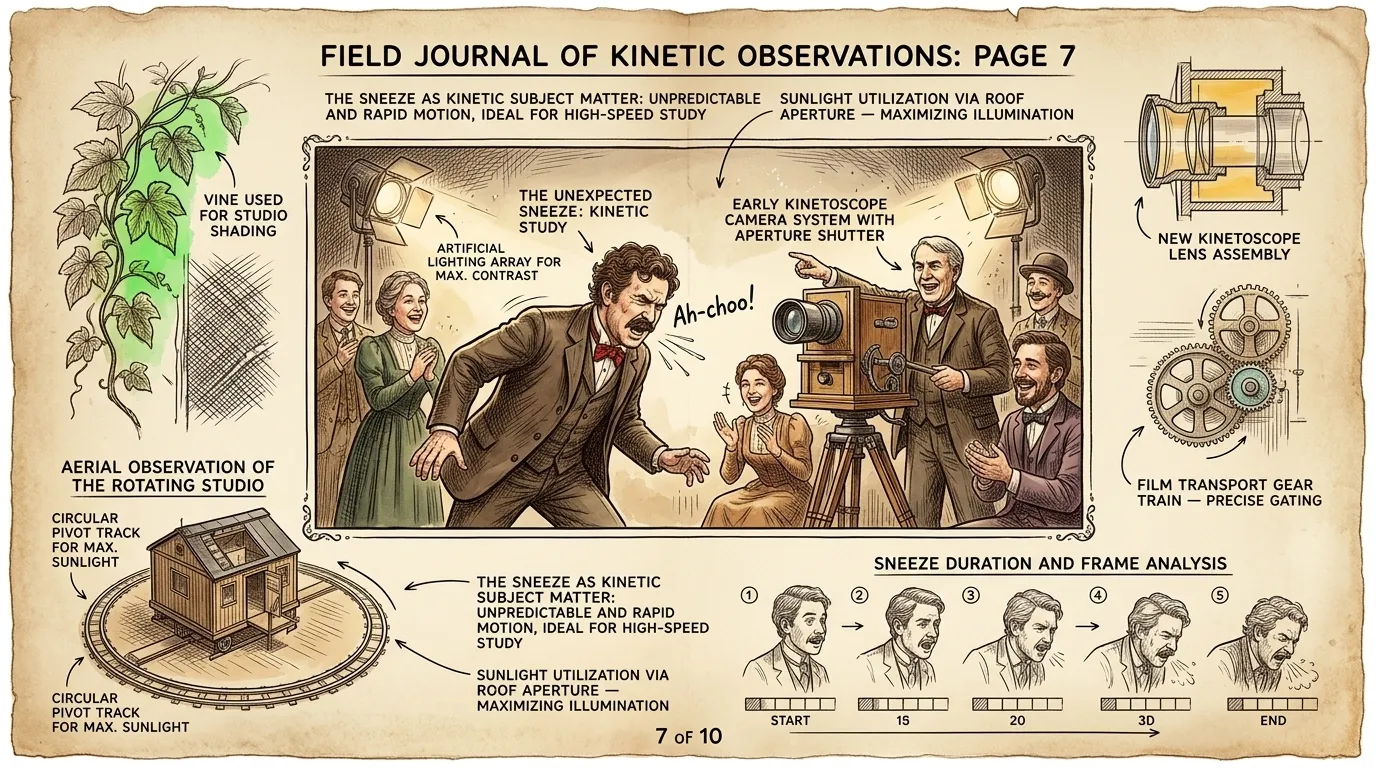
One of the earliest films created for the Kinetoscope featured Fred Ott, an Edison employee, sneezing. This simple act, captured in motion, became a sensation. The 'Fred Ott Sneeze' demonstrated the Kinetoscope's ability to record and reproduce everyday life. It was a moment in history.
""Lights, camera, action! Now, Fred, a convincing sneeze!" Edison shouts from behind the camera. Fred Ott leans forward, closes his eyes, and lets out a resounding 'Ah-choo!'. The team erupts in laughter."
Art Fact: The 'Fred Ott Sneeze' is one of the oldest surviving motion pictures, a testament to the Kinetoscope's historical significance.
Page 8
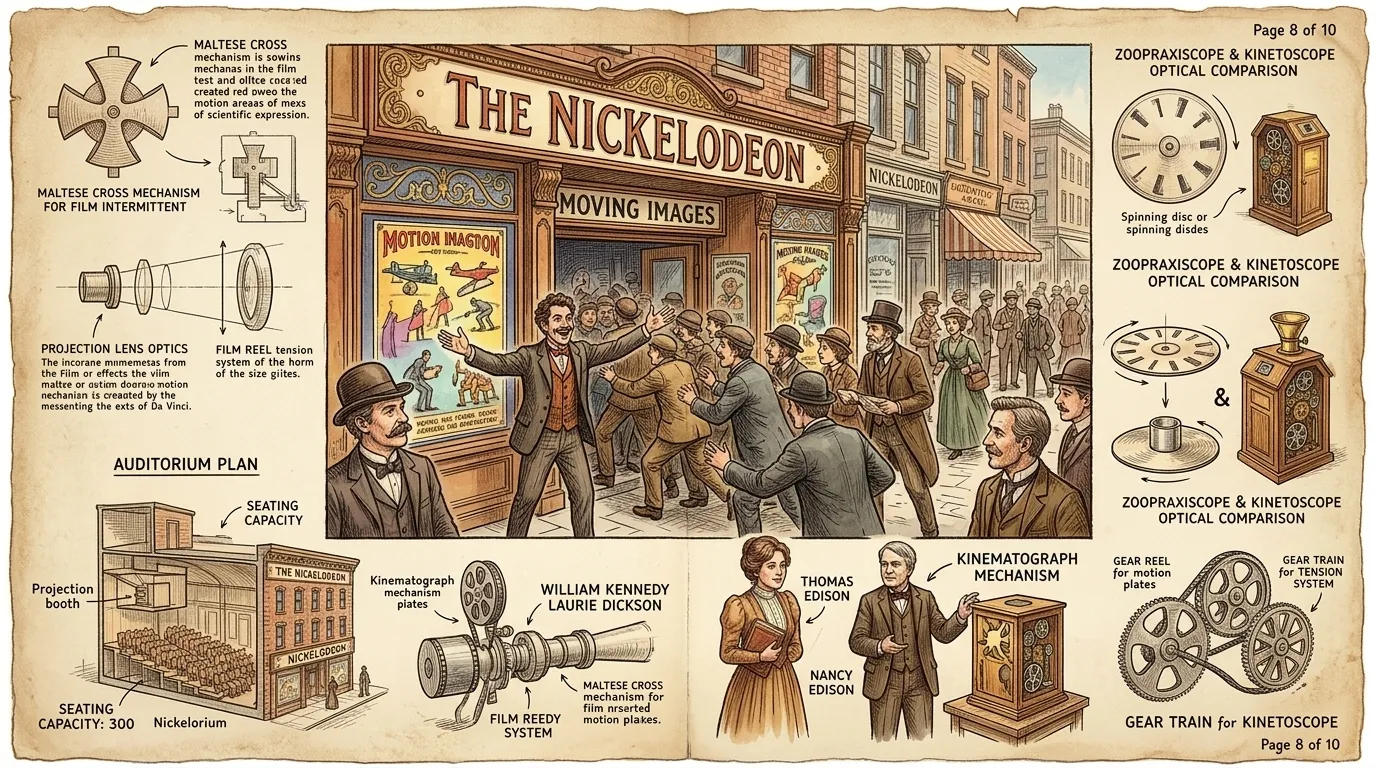
The Kinetoscope's popularity led to the establishment of 'Nickelodeons,' early movie theaters that charged a nickel for admission. These venues offered a new form of entertainment to the masses. Nickelodeons transformed the way people experienced moving pictures. This was a revolution in leisure.
""Come one, come all! A nickel to see the magic of moving pictures!" A barker shouts in front of a bustling Nickelodeon. Patrons crowd around the entrance, eager to experience the spectacle. The style is hyper realistic."
Art Fact: Nickelodeons provided affordable entertainment to working-class audiences, democratizing access to moving pictures.
Page 9
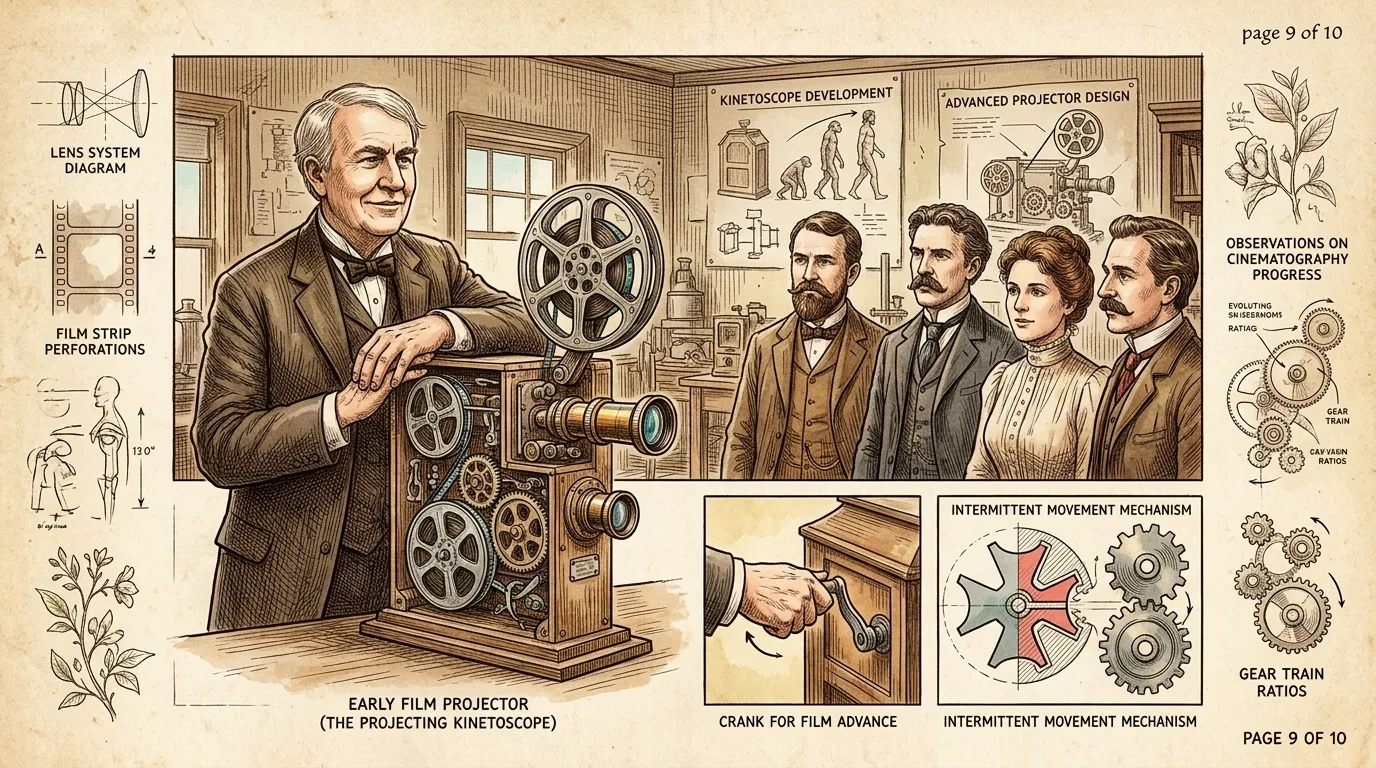
Edison's Kinetoscope paved the way for future advancements in filmmaking. The technology served as a foundation for the development of more sophisticated projection systems. The Kinetoscope laid the groundwork for the motion picture industry we know today. As Marie Curie once said, "Nothing in life is to be feared, it is only to be understood." Edison applied that.
"Edison, with a touch of nostalgia in his voice, remarks to his team, "As Marie Curie once said, 'Nothing in life is to be feared, it is only to be understood.' And we are coming to understand everything about motion pictures!""
Art Fact: The Kinetoscope's legacy extends beyond its immediate success, influencing the development of numerous technologies.
Page 10
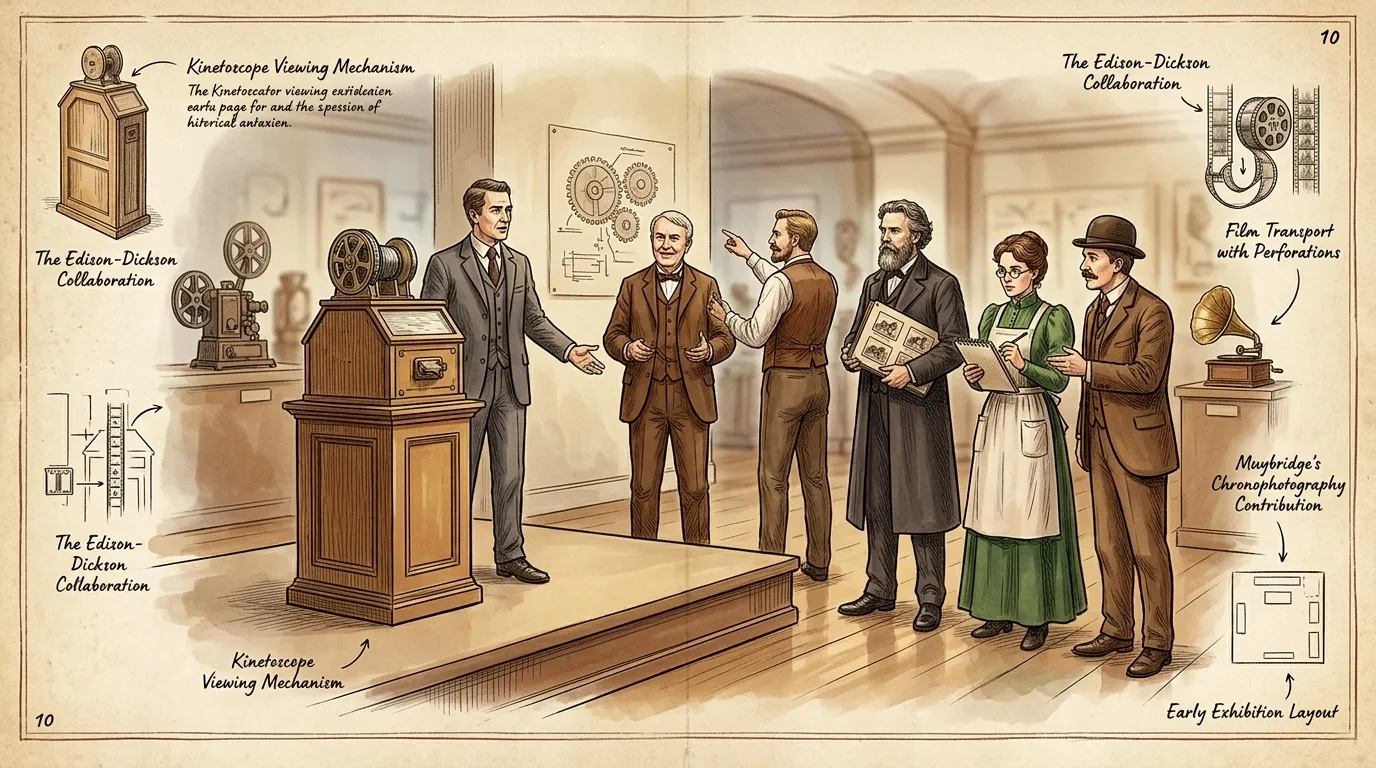
Today, Edison's Kinetoscope resides in museums, a testament to his enduring legacy. It stands as a symbol of innovation and ingenuity. The Kinetoscope's impact on entertainment and technology remains profound. Edison's name is forever synonymous with the birth of cinema.
"A museum curator remarks, "Edison's Kinetoscope transformed entertainment. It represents a pivotal moment in history.""
Art Fact: Edison's inventions continue to inspire generations of scientists, engineers, and filmmakers.
About this story
- Location: United States
- Audience: general readers
Questions and answers
Questions and answers about Kinetoscope by Thomas Edison (USA — 1889)
Read Wonder Arts on your phone
Wonder Arts is available on Android. Get Wonder Arts on Google Play.
More Wonder Arts stories
- L’Absinthe by Edgar Degas (Paris, France — 1876)
- Laocoön and His Sons by Agesander, Athenodoros, and Polydorus (Vatican City, Rome — c. 40 BC)
- Las Meninas by Diego Velázquez (Madrid, Spain — 1656)
- Las Meninas — Madrid, Spain — 1656
- Leda and the Swan by Leonardo da Vinci (France — c. 1508)
- Liberty Leading the People by Eugène Delacroix (Paris, France — 1830)