Leda and the Swan by Leonardo da Vinci (France — c. 1508)
Leda and the Swan by Leonardo da Vinci (France — c. 1508) — an illustrated arts story, set in France. 10 illustrated pages, free to read on Wonder Arts.
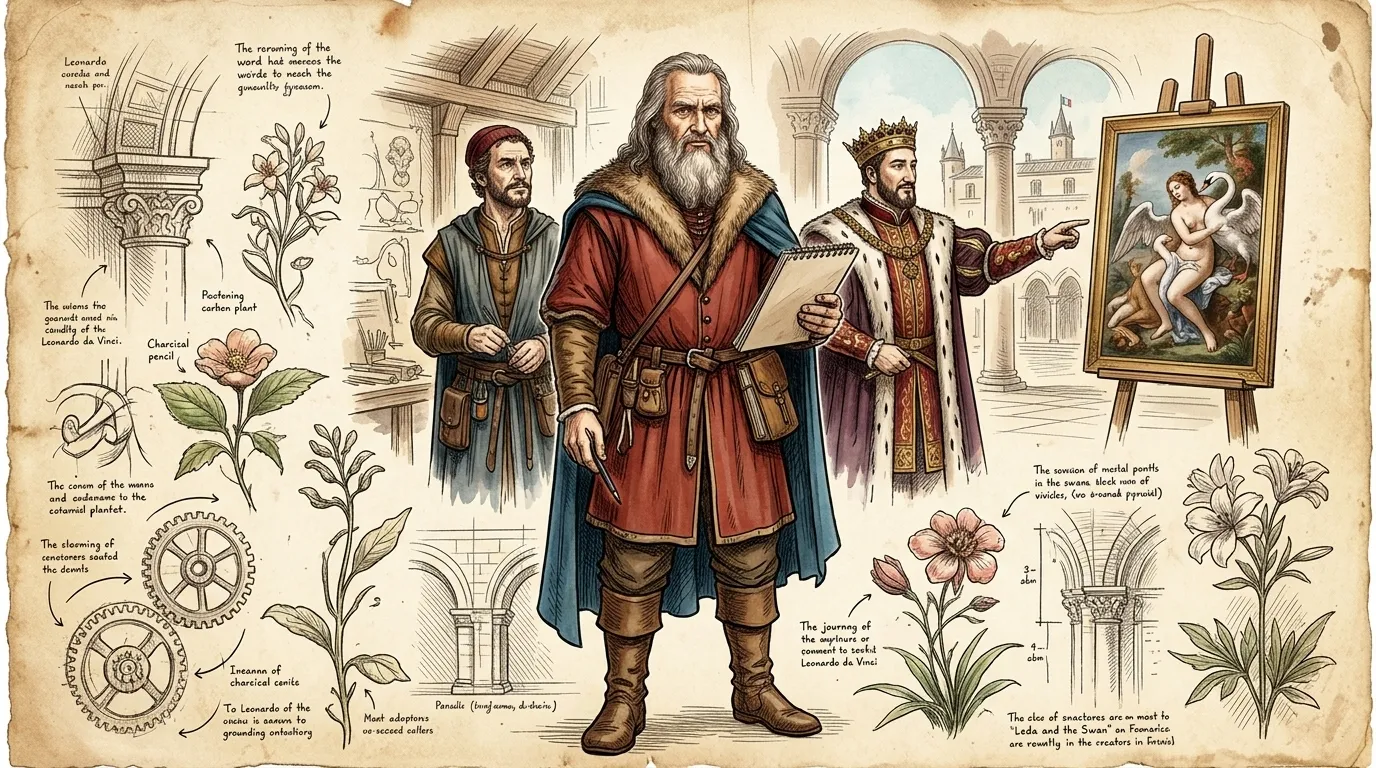
Page 1
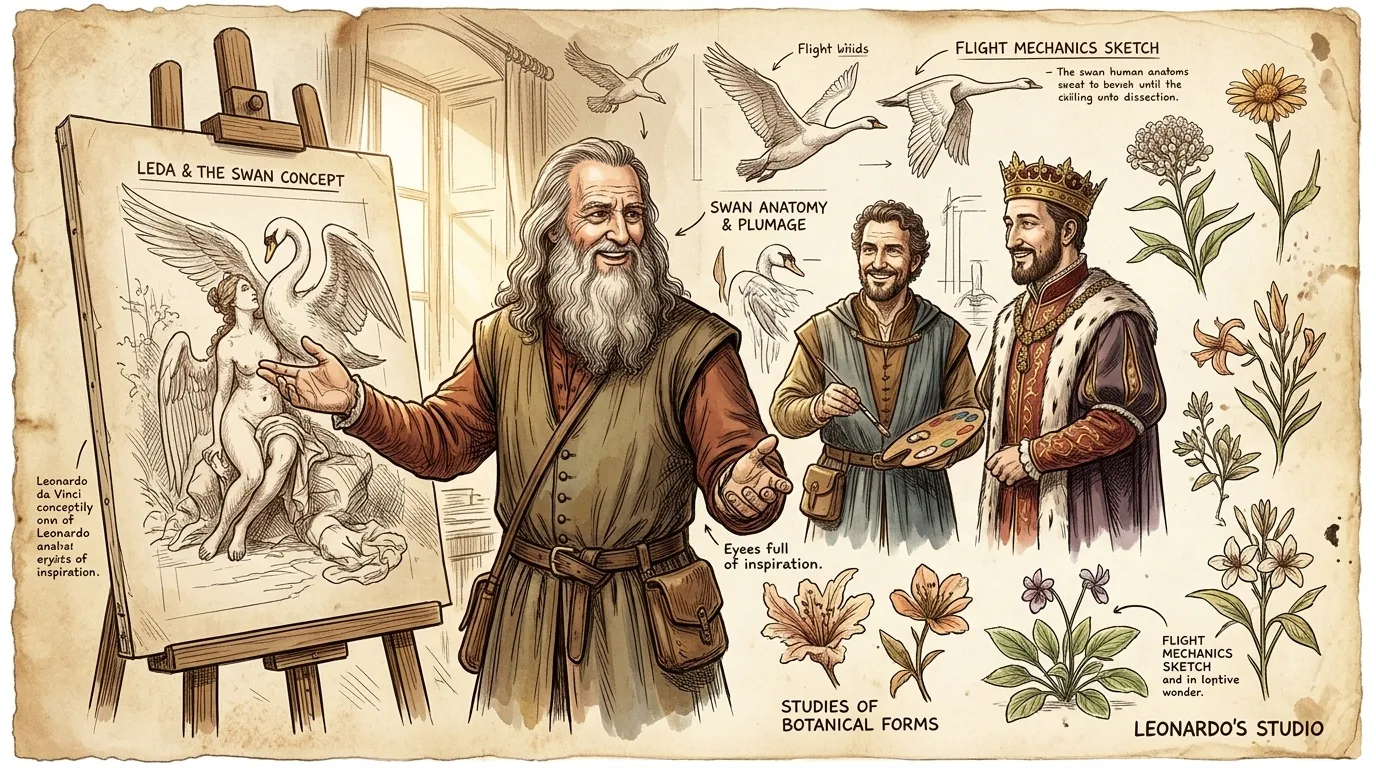
Leonardo da Vinci stands before his imagined masterpiece, 'Leda and the Swan,' circa 1508. Though the original oil painting is lost, known only through copies and preparatory sketches, it remains a testament to his fascination with the beauty and power of nature. Measuring approximately 115 x 86 cm, this work, had it survived, would undoubtedly be priceless, a treasure beyond measure. The mystery surrounding its disappearance only adds to its allure, a haunting reminder of art's fragility.
"Leonardo murmurs to himself, barely audible, "Such beauty, such power... to capture the divine in the mortal coil.""
Art Fact: The original 'Leda and the Swan' is lost, known only through copies and sketches. Its composition is celebrated for its dynamic intertwining of human and animal forms.
Page 2
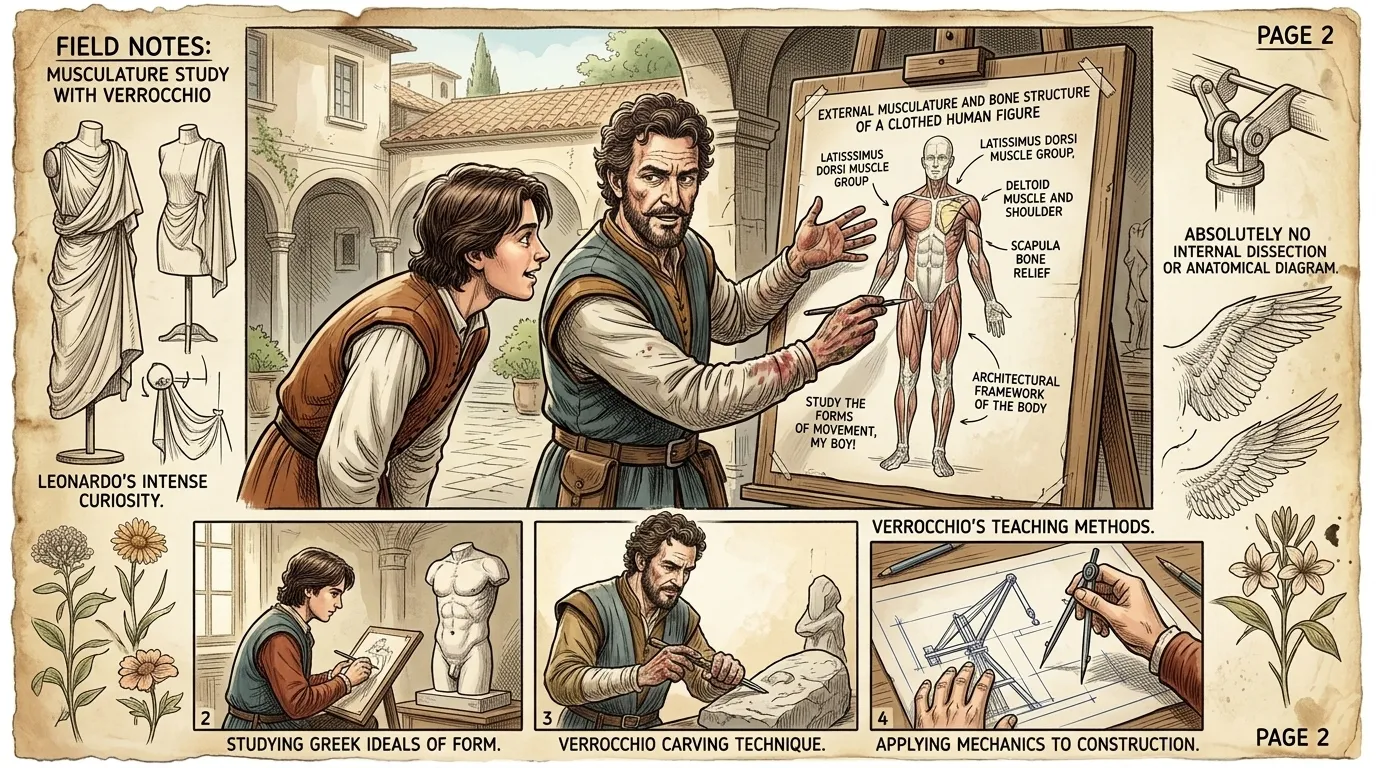
Young Leonardo, barely a teenager, observes Andrea del Verrocchio dissecting a cadaver. The intensity of the moment, the dedication to understanding the human form, burns into Leonardo's mind. He understands that only through meticulous study can true beauty be captured. This relentless pursuit of anatomical perfection would become a hallmark of his art.
"Verrocchio, his hands stained crimson, explains, "Look closely, Leonardo. Understand the architecture of the body. Only then can you truly portray its grace.""
Art Fact: Leonardo's early training with Verrocchio instilled in him a deep understanding of anatomy, evident in his later works.
Page 3
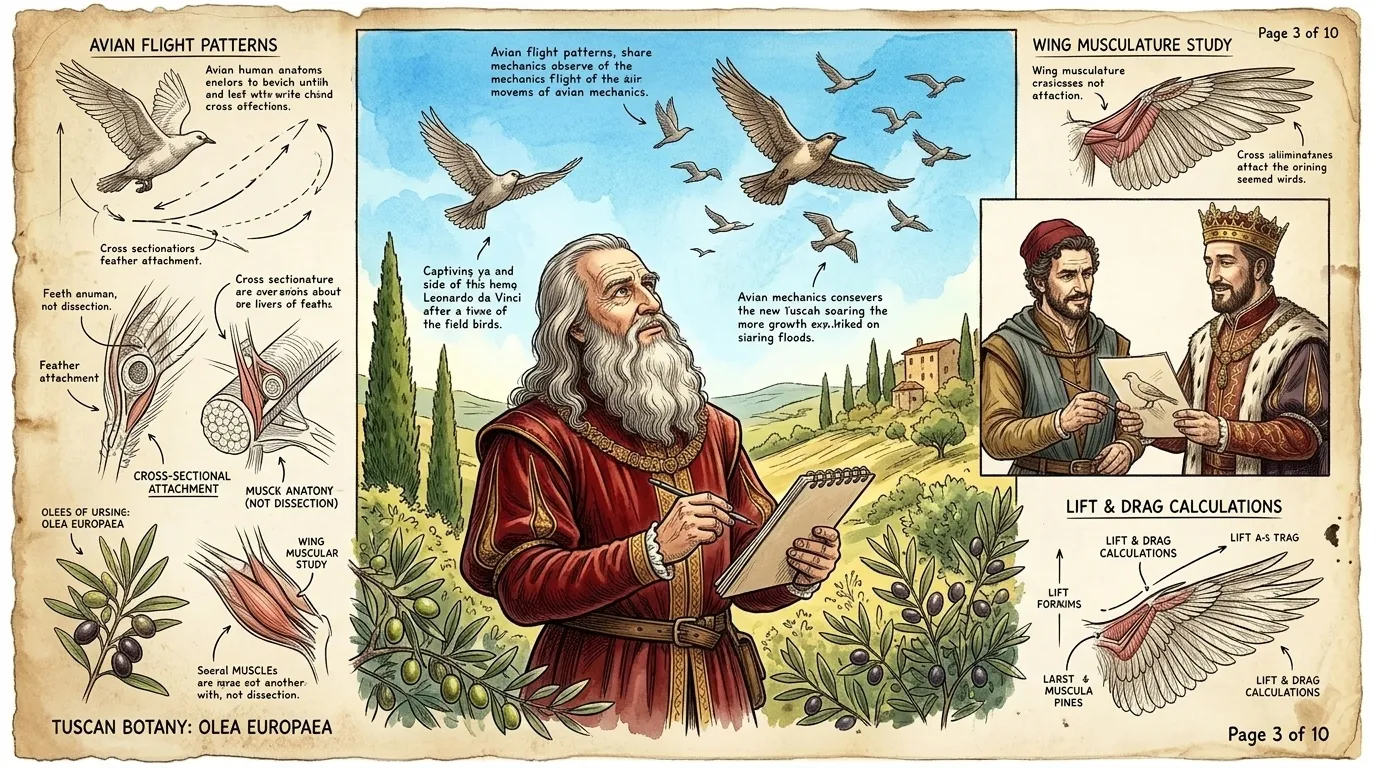
Leonardo watches birds soaring above the Tuscan hills. He is captivated by their effortless grace, their command of the air. He studies their wings, their movements, their very essence of flight. This fascination fuels his lifelong quest to understand and replicate the mechanics of avian motion, influencing his art and his inventions.
"Leonardo thinks to himself, "If only I could unlock the secrets of their wings. To understand the divine inspiration of flight, as the Roman poet Virgil said, 'They can because they think they can.'""
Art Fact: Leonardo's fascination with flight led him to create detailed studies of birds and designs for flying machines, reflecting his belief in the interconnectedness of art and science.
Page 4
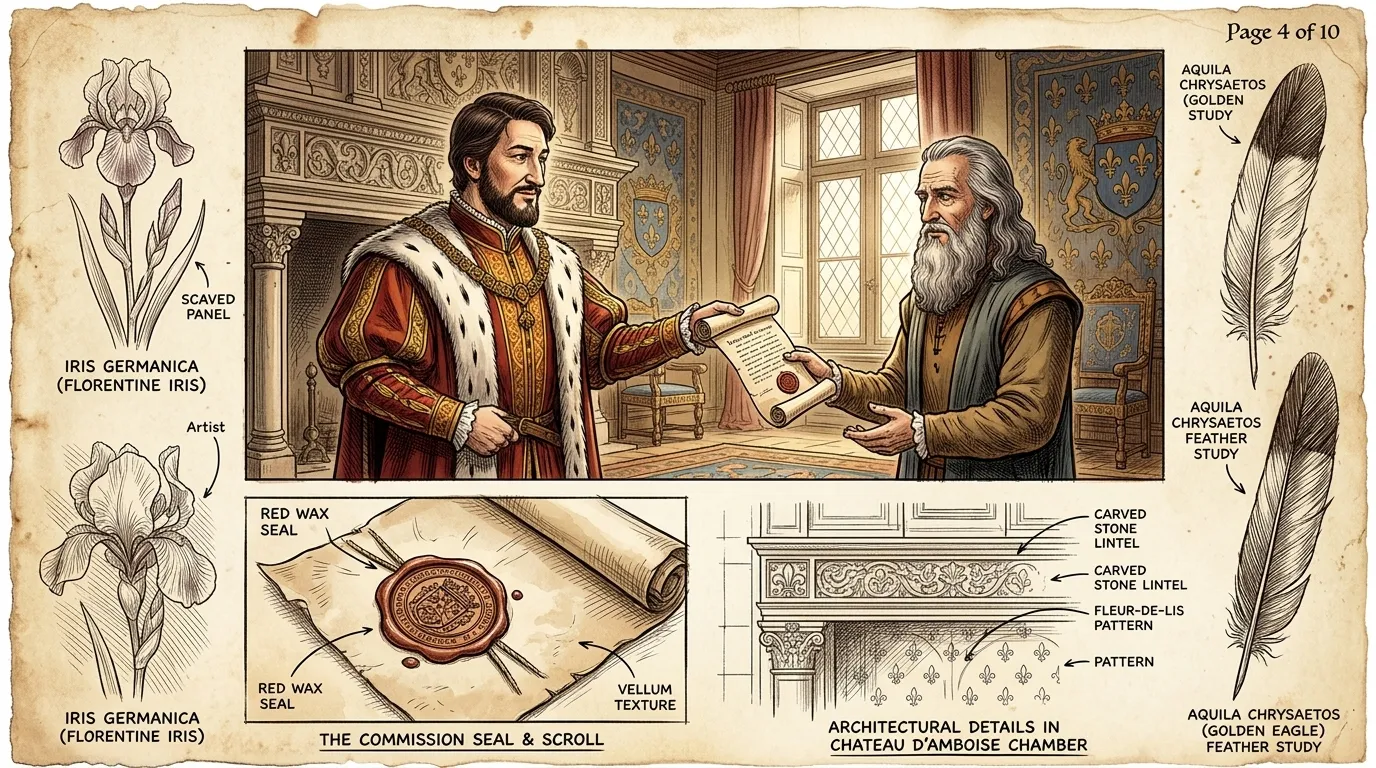
Leonardo receives a commission from King Francis I to create a mythological painting, 'Leda and the Swan'. He is intrigued by the theme, a union of mortal and divine, of beauty and power. He envisions a scene of ethereal grace, a testament to the boundless creativity of nature. The King's request validates his artistry, confirming his place among the masters.
"King Francis I declares, "Leonardo, I desire a work that captures the very essence of beauty, a union of the earthly and the divine. Let 'Leda and the Swan' be a testament to your genius.""
Art Fact: The commission from King Francis I provided Leonardo with the resources and inspiration to explore mythological themes in his art.
Page 5
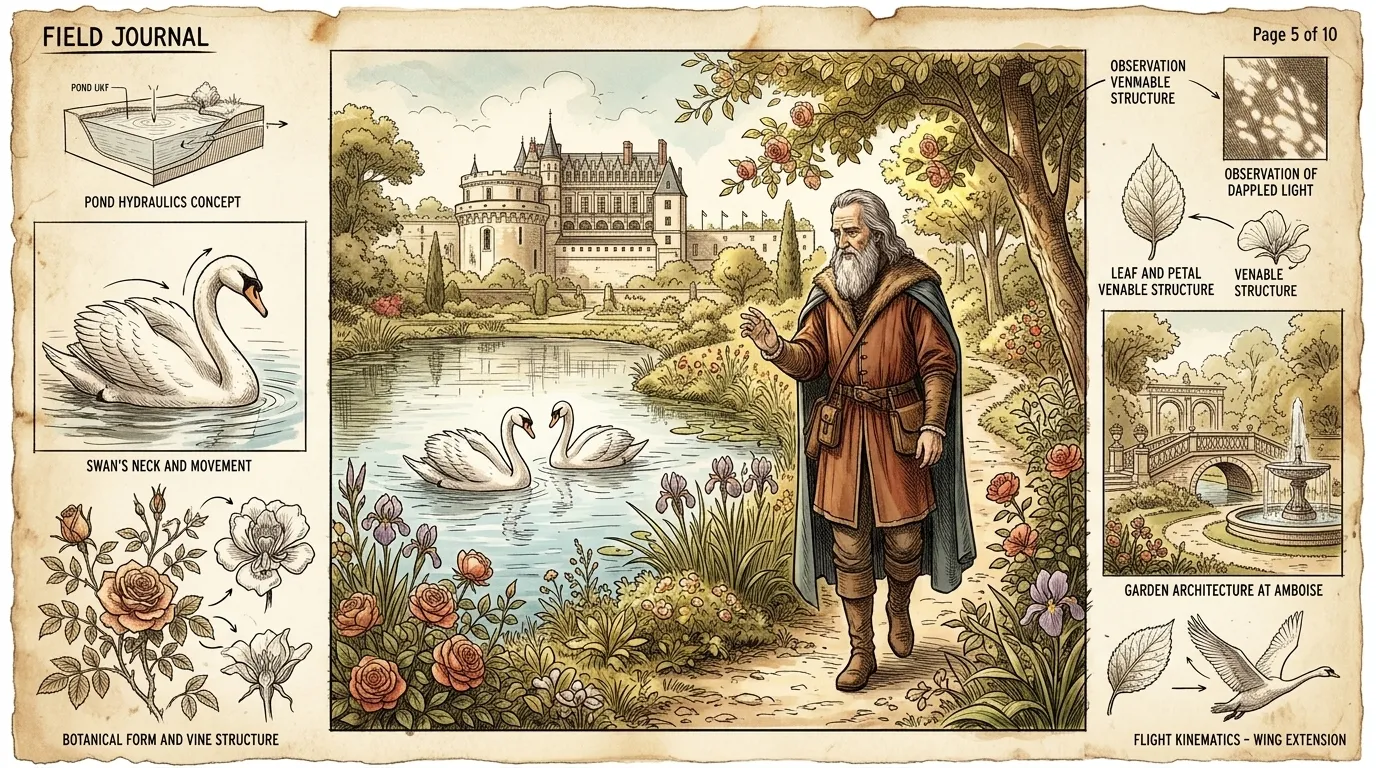
Leonardo wanders through the gardens of the Château d'Amboise, seeking inspiration for his 'Leda'. He observes the swans gliding across the pond, their movements fluid and graceful. He studies the lush vegetation, the interplay of light and shadow, the very essence of nature's beauty. He understands that to capture Leda's beauty, he must understand the essence of her surroundings.
"Leonardo muses, "Nature is the supreme artist. Only by observing her closely can I hope to capture her divine essence.""
Art Fact: The gardens of Amboise provided Leonardo with a natural setting to study the movement of swans and the beauty of nature, informing his vision for 'Leda and the Swan'.
Page 6
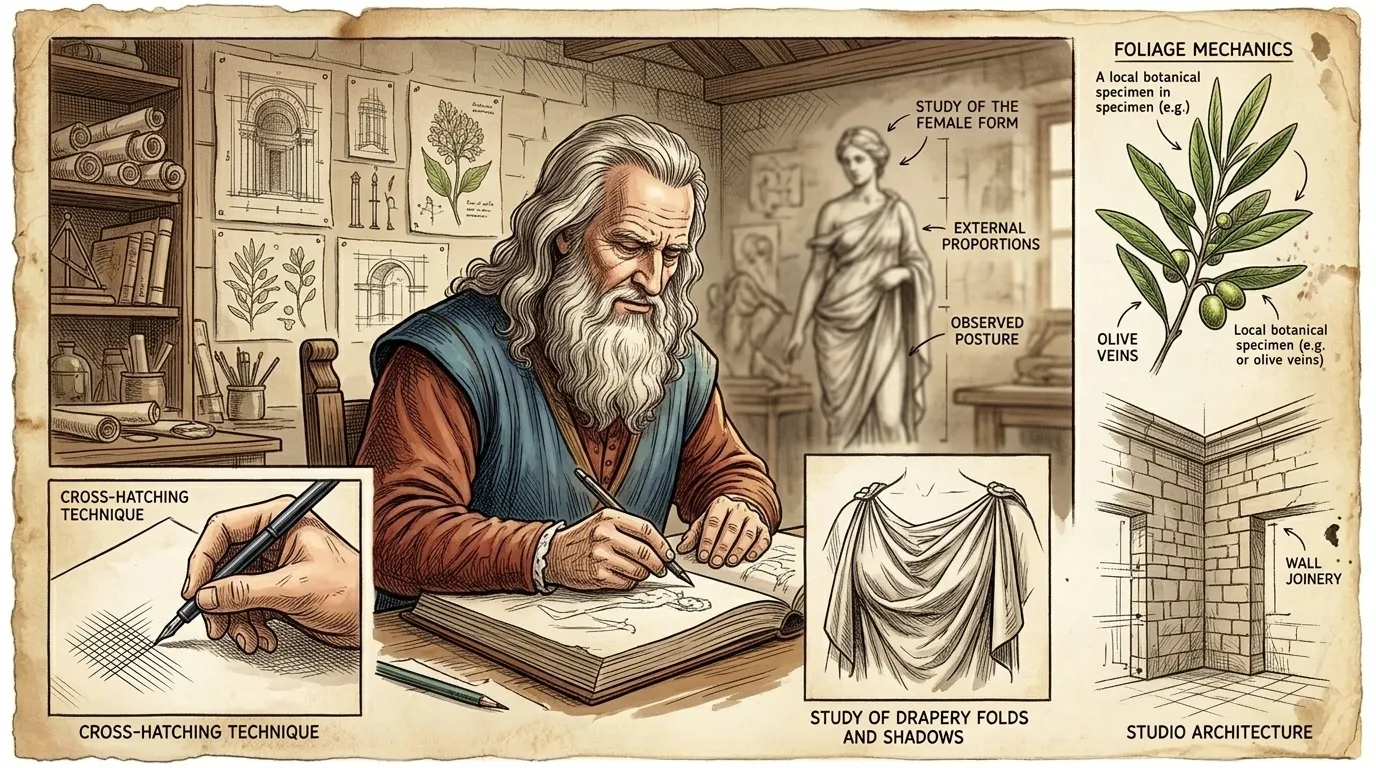
Leonardo immerses himself in the study of the female form, creating countless sketches and anatomical drawings. He seeks to understand the underlying structure, the musculature, the very essence of female beauty. He understands that only through a deep knowledge of anatomy can he truly capture Leda's grace and sensuality.
"Leonardo, intensely focused, states, "Without knowledge of the human form, any portrayal is merely a superficial imitation. To truly capture the essence of beauty, one must understand its foundations.""
Art Fact: Leonardo's anatomical studies were crucial to his artistic process, allowing him to depict the human form with unparalleled accuracy and grace.
Page 7
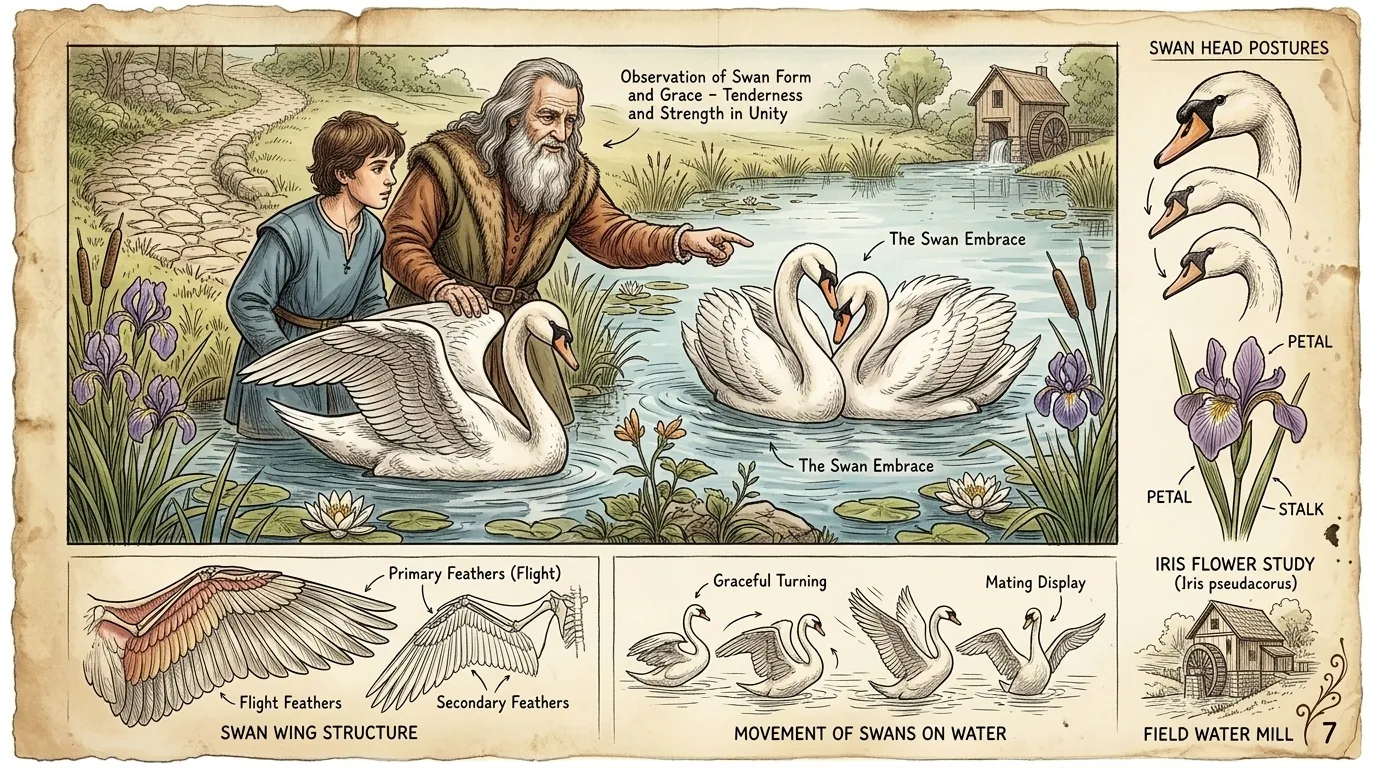
Leonardo observes the interaction of swans, their tender embrace, their powerful wings. He sees in their union a reflection of the mythological tale of Leda and the Swan, a merging of mortal and divine. He understands that to capture the essence of their embrace, he must convey both tenderness and strength.
"Leonardo remarks to his apprentice, "Observe the swan's power and grace. The ancient philosopher Plato said, 'The beginning is the most important part of the work.' I must find the perfect beginning to capture their essence.""
Art Fact: The intimate observation of swans in their natural habitat allowed Leonardo to capture the essence of their movements and interactions, informing his depiction of the mythological encounter between Leda and the Swan.
Page 8
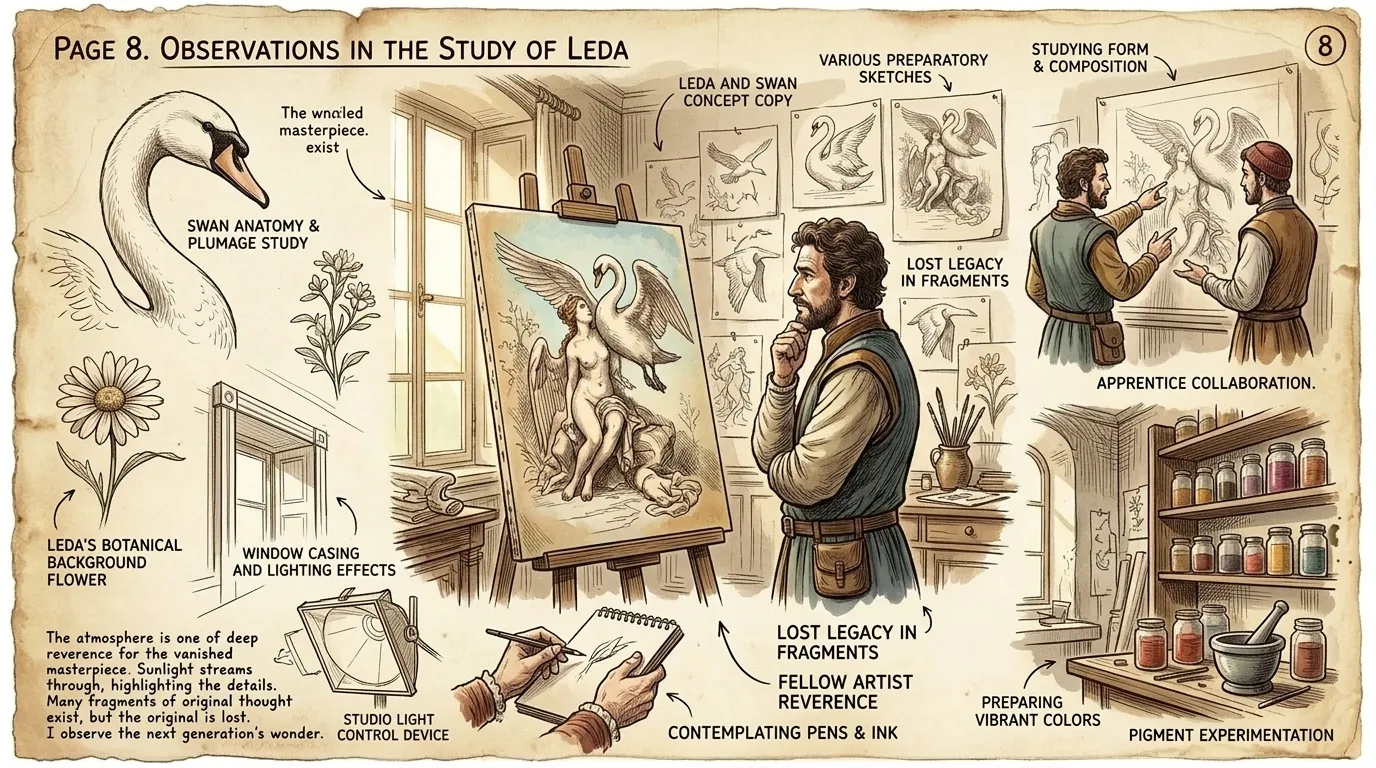
After Leonardo's death, 'Leda and the Swan' vanishes, lost to time and circumstance. Only copies and sketches remain, tantalizing glimpses of a masterpiece that might have been. Its disappearance fuels speculation and legend, a haunting reminder of the ephemeral nature of art. Yet, its memory endures, inspiring generations of artists.
"A fellow artist laments, "Leonardo's 'Leda' is gone, but its spirit lives on. As Seneca wrote, 'Every new beginning comes from some other beginning's end.' Perhaps its loss will inspire new creations.""
Art Fact: The disappearance of 'Leda and the Swan' remains a mystery, fueling speculation and legend about the fate of Leonardo's masterpiece.
Page 9
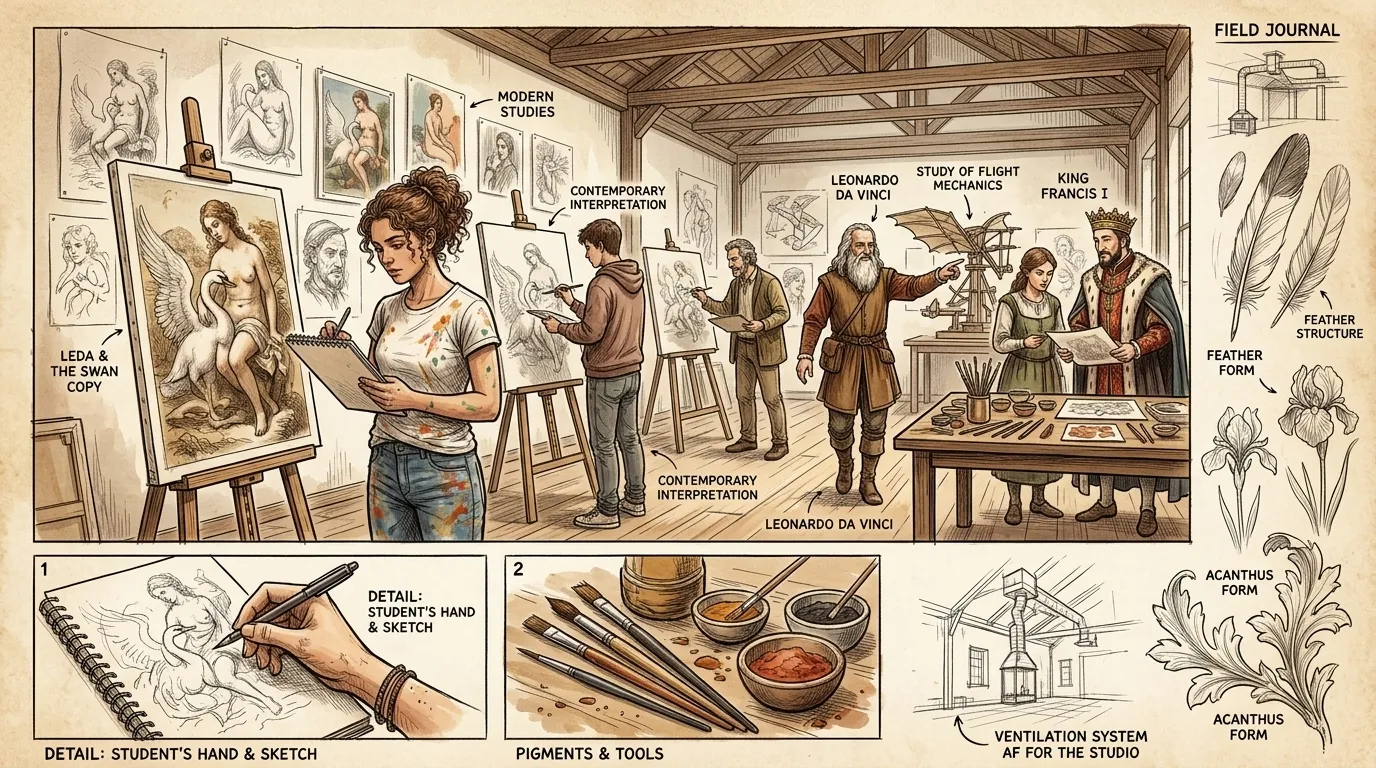
Centuries later, artists continue to be inspired by Leonardo's 'Leda'. Her image appears in countless interpretations, a testament to her enduring power. She becomes a symbol of beauty, of sensuality, of the eternal dance between mortal and divine. Her story lives on, carried through time by the echoes of Leonardo's vision.
"A young artist, studying a copy of the painting, says, "Leonardo's Leda still speaks to us across the ages. As the artist Paul Klee said, 'Art does not reproduce the visible; rather, it makes visible.' This painting makes the invisible essence of beauty visible.""
Art Fact: Leonardo's 'Leda and the Swan' has inspired countless artists across centuries, becoming an iconic symbol of beauty and mythology.
Page 10
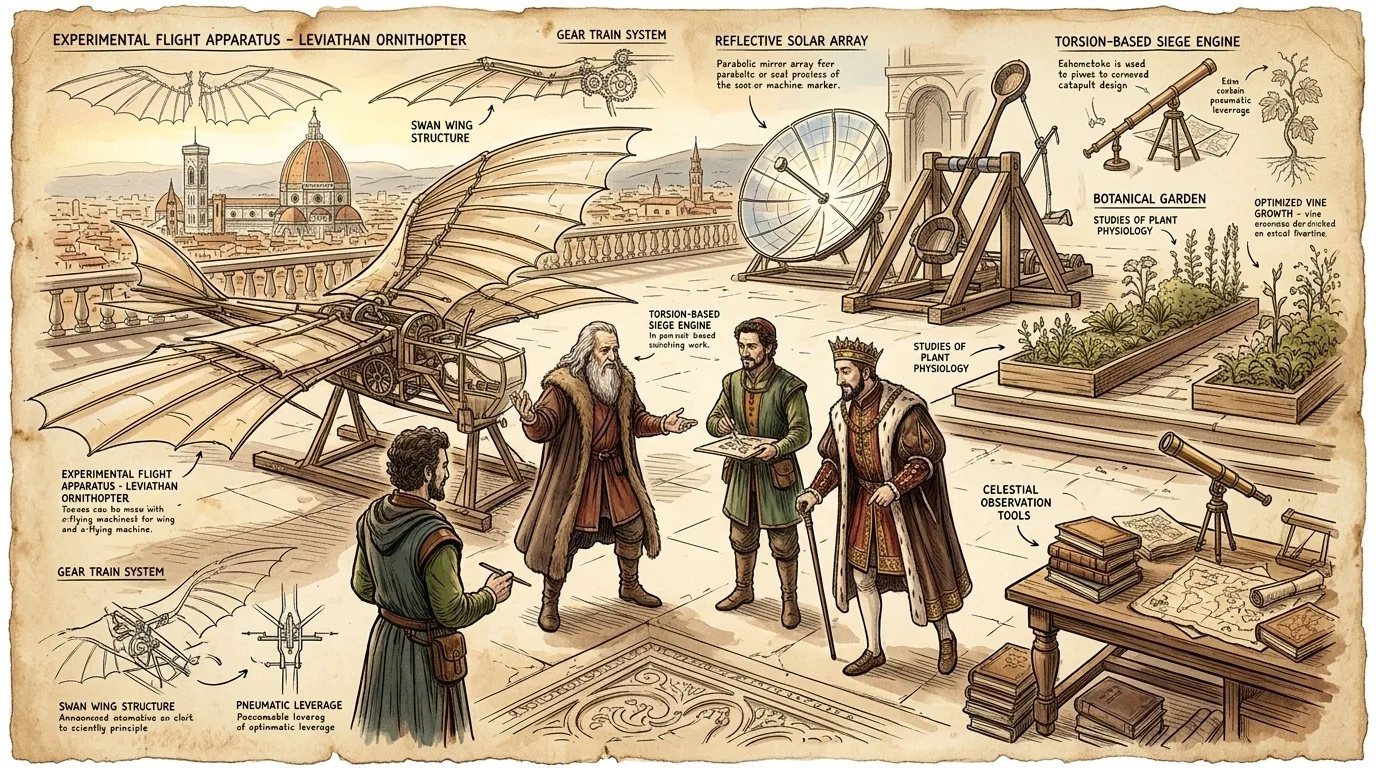
Though 'Leda and the Swan' is lost, Leonardo's genius endures, echoing through time. His vision of beauty, his relentless pursuit of knowledge, his boundless imagination continue to inspire us. His legacy is not just in the art he created, but in the questions he asked, in the boundaries he pushed. Leonardo's impact survives because, as he himself wrote, 'The noblest pleasure is the joy of understanding.'
Art Fact: Leonardo da Vinci's legacy lies in his boundless curiosity, his relentless pursuit of knowledge, and his unparalleled artistic vision, inspiring generations to explore the boundaries of human potential.
About this story
- Location: France
- Audience: general readers
Questions and answers
Questions and answers about Leda and the Swan by Leonardo da Vinci (France — c. 1508)
Read Wonder Arts on your phone
Wonder Arts is available on Android. Get Wonder Arts on Google Play.
More Wonder Arts stories
- Liberty Leading the People by Eugène Delacroix (Paris, France — 1830)
- Library of Alexandria destruction (Alexandria, Egypt — c. 3rd Century BC)
- Lion Monument by Bertel Thorvaldsen (Lucerne, Switzerland — 1821)
- Lithography by Alois Senefelder (Germany — 1796)
- Louvre Museum opening (Paris, France — 1793)
- Luncheon of the Boating Party by Pierre-Auguste Renoir (Washington D.C., USA — 1881)