Liberty Leading the People by Eugène Delacroix (Paris, France — 1830)
Liberty Leading the People by Eugène Delacroix (Paris, France — 1830) — an illustrated arts story, set in France. 10 illustrated pages, free to read on Wonder Arts.
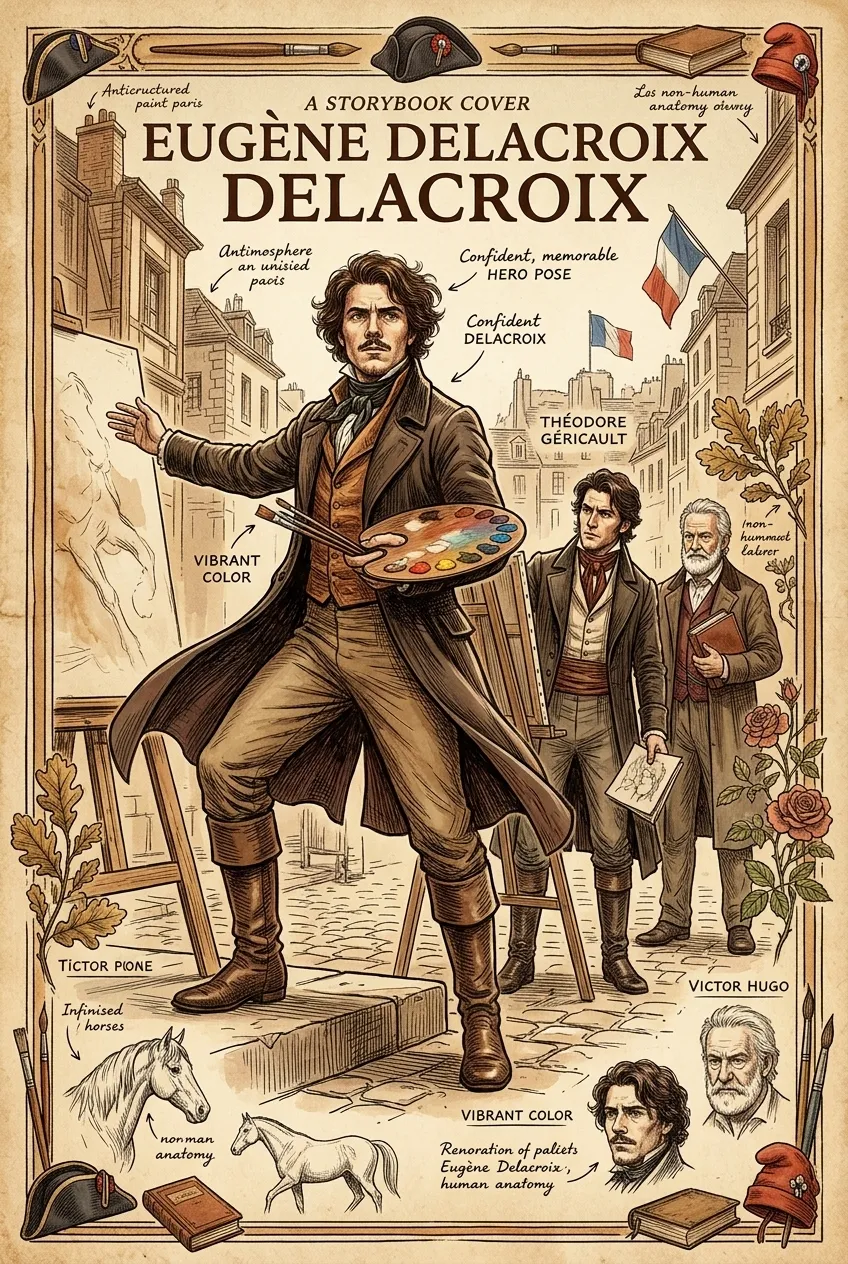
Page 1
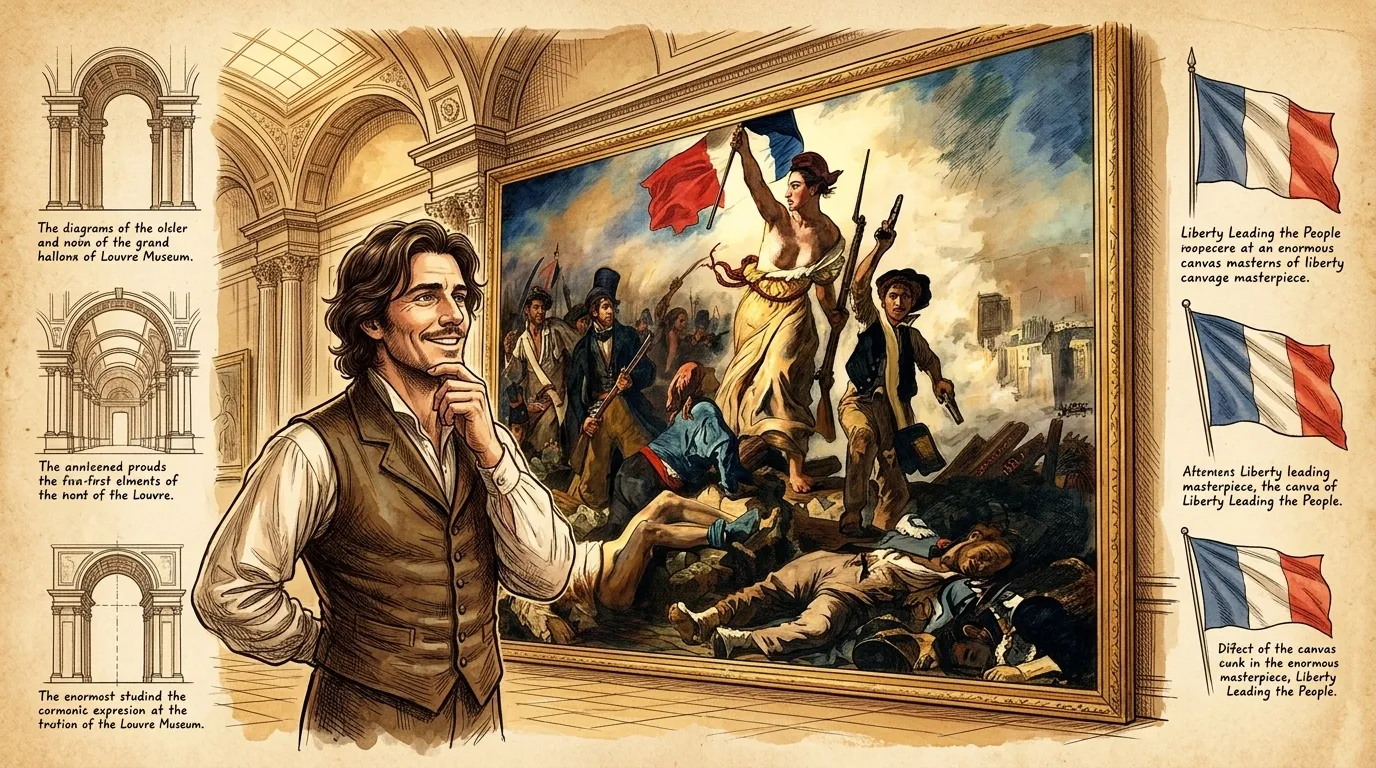
Eugène Delacroix stands before his masterpiece, 'Liberty Leading the People,' completed in 1830. The oil on canvas, measuring 2.6 meters high and 3.25 meters wide, explodes with revolutionary fervor. Currently gracing the walls of the Louvre Museum in Paris, the painting's audacious depiction of a bare-breasted Liberty sparked both acclaim and controversy, solidifying its place as an icon of French Romanticism.
"Delacroix mutters to himself, 'This canvas...it bleeds with the spirit of France. May it forever remind us of the price of freedom.'"
Art Fact: The painting's pyramid structure and dynamic composition reflect Delacroix's Romantic style, emphasizing emotion and movement.
Page 2
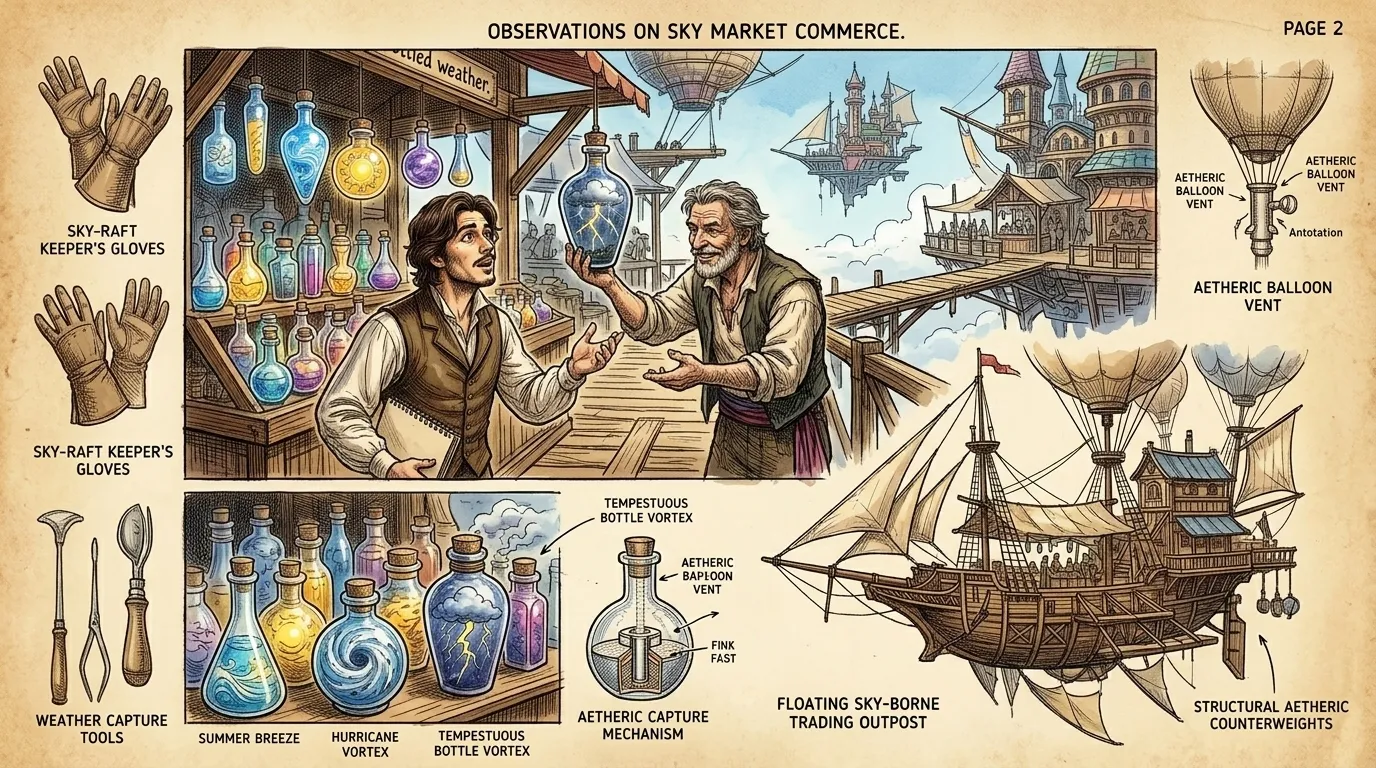
Young Eugène accompanied his father, a high-ranking government official, to the floating sky markets. The stalls were stacked with vials containing bottled weather—sunsets, storms, and gentle breezes. A grizzled merchant, noting Eugène's fascination, gestures toward a tempestuous bottle. He said, 'Son, art is all about capturing the weather of our souls. Bottled up for the world to see.'
"'Is it truly possible to hold such power in a bottle?' young Eugène asked, wide-eyed. The merchant chuckled, 'More power than you can imagine, lad. Each one tells a story, much like a painting does.'"
Art Fact: Delacroix's early exposure to the vibrant sky markets ignited his imagination and love for dramatic scenes.
Page 3
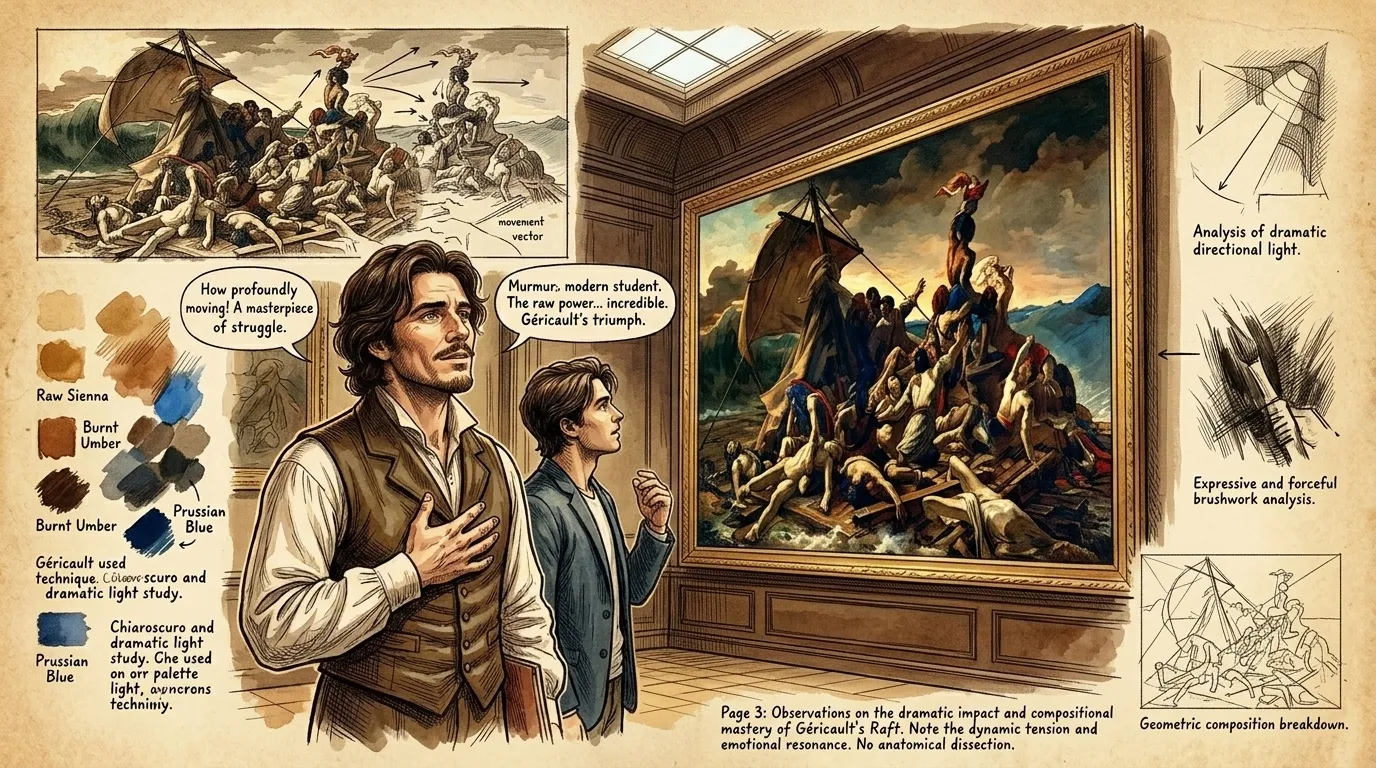
Delacroix, now a student, gazes upon Théodore Géricault's 'The Raft of the Medusa.' The painting's raw emotion and unflinching depiction of suffering shook him to his core. He realized art could be a mirror reflecting the most brutal truths of humanity. 'This,' he thought, 'is more than just paint on canvas. It's a cry for justice.'
"Delacroix whispers, 'The horror...it's palpable. But there's also a terrible beauty in the struggle,' as he stares into the eyes of the dying figures. Another student beside him murmurs, 'Géricault has captured the very essence of despair. It's unforgettable.'"
Art Fact: Géricault's influence on Delacroix was profound, shaping his approach to historical and emotional subjects.
Page 4
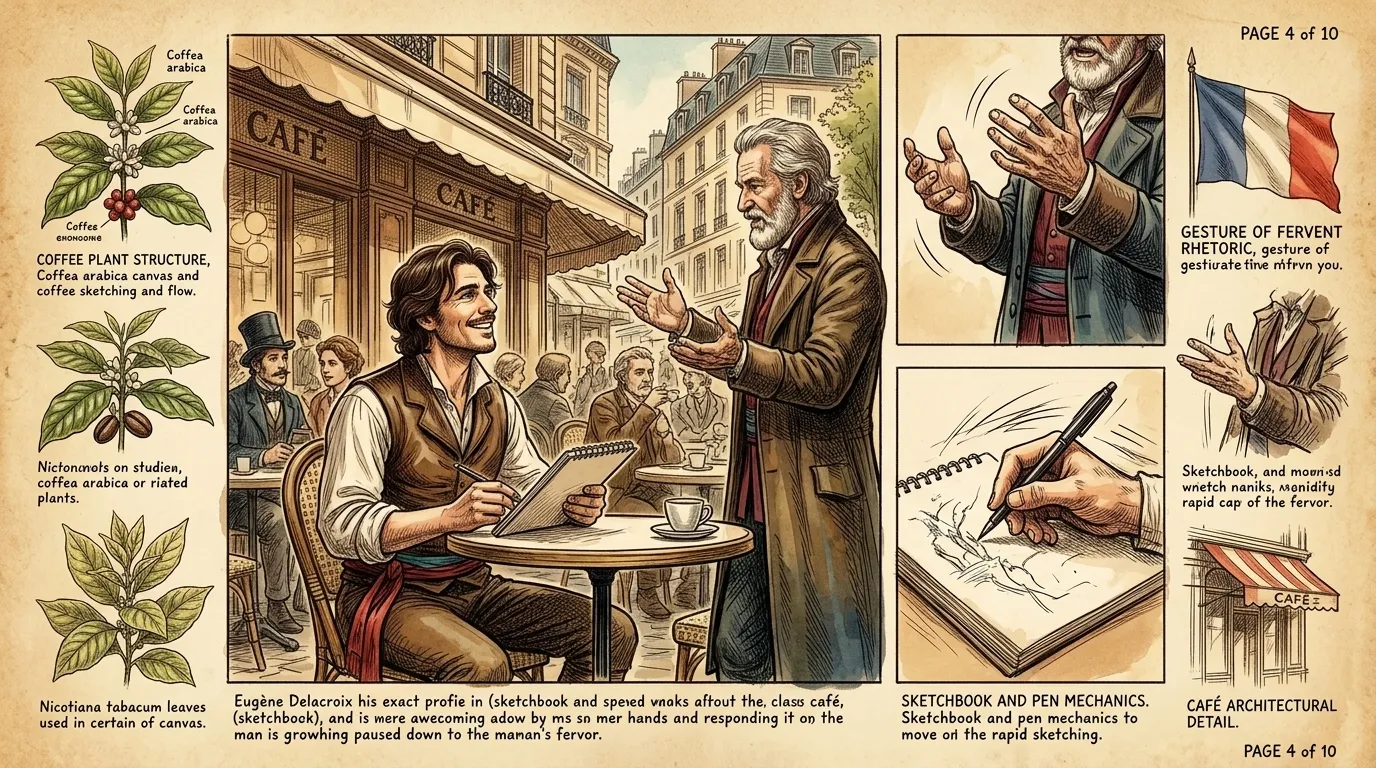
Paris buzzed with revolutionary fervor. Delacroix, sketching in a café, overhears passionate discussions about liberty and justice. A fiery orator proclaims, 'We must fight for our freedom, or we are no better than slaves!' The artist felt a surge of inspiration; he knew his art had to reflect the people's yearning for change.
"A fellow café patron exclaims, 'The King is deaf to our pleas! We need action, not words!' Delacroix replies, 'Perhaps...but art can be a powerful form of action, too. It can ignite the spirit of revolution.'"
Art Fact: The revolutionary atmosphere of Paris deeply influenced Delacroix's choice of subject matter and his commitment to portraying contemporary events.
Page 5
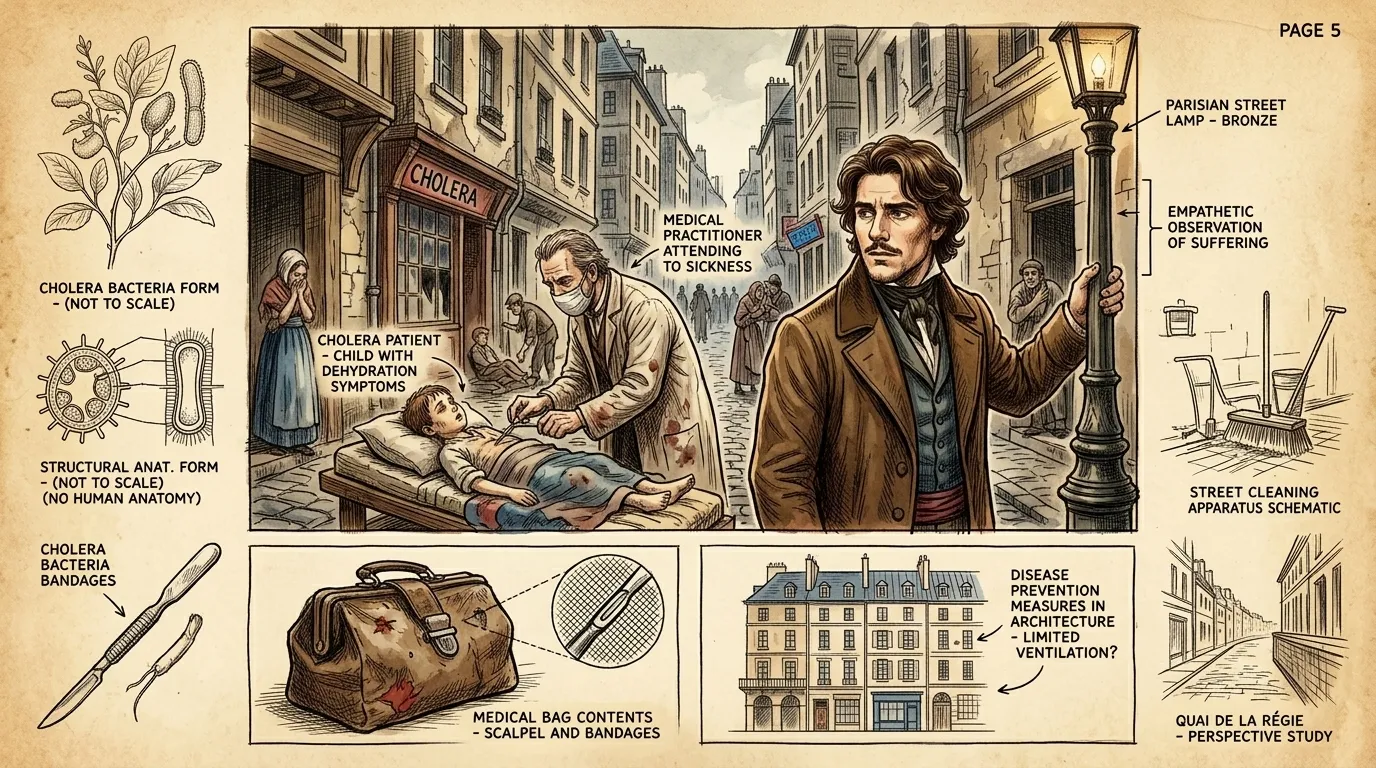
The cholera epidemic ravaged Paris. Delacroix witnessed firsthand the suffering and resilience of the common people. The streets became filled with despair. He realized art could be a testament to human endurance in the face of unimaginable hardship. In the midst of this horror, he saw the unwavering spirit that would later define his 'Liberty.'
"Delacroix, witnessing a doctor attending to a sick child, remarks, 'Even in the face of death, the human spirit persists. It's both heartbreaking and inspiring.' The doctor, weary and worn, responds, 'We must hold onto hope, monsieur. It's all we have left.'"
Art Fact: The cholera outbreak exposed Delacroix to the resilience of the Parisian people, a key element in his portrayal of Liberty.
Page 6
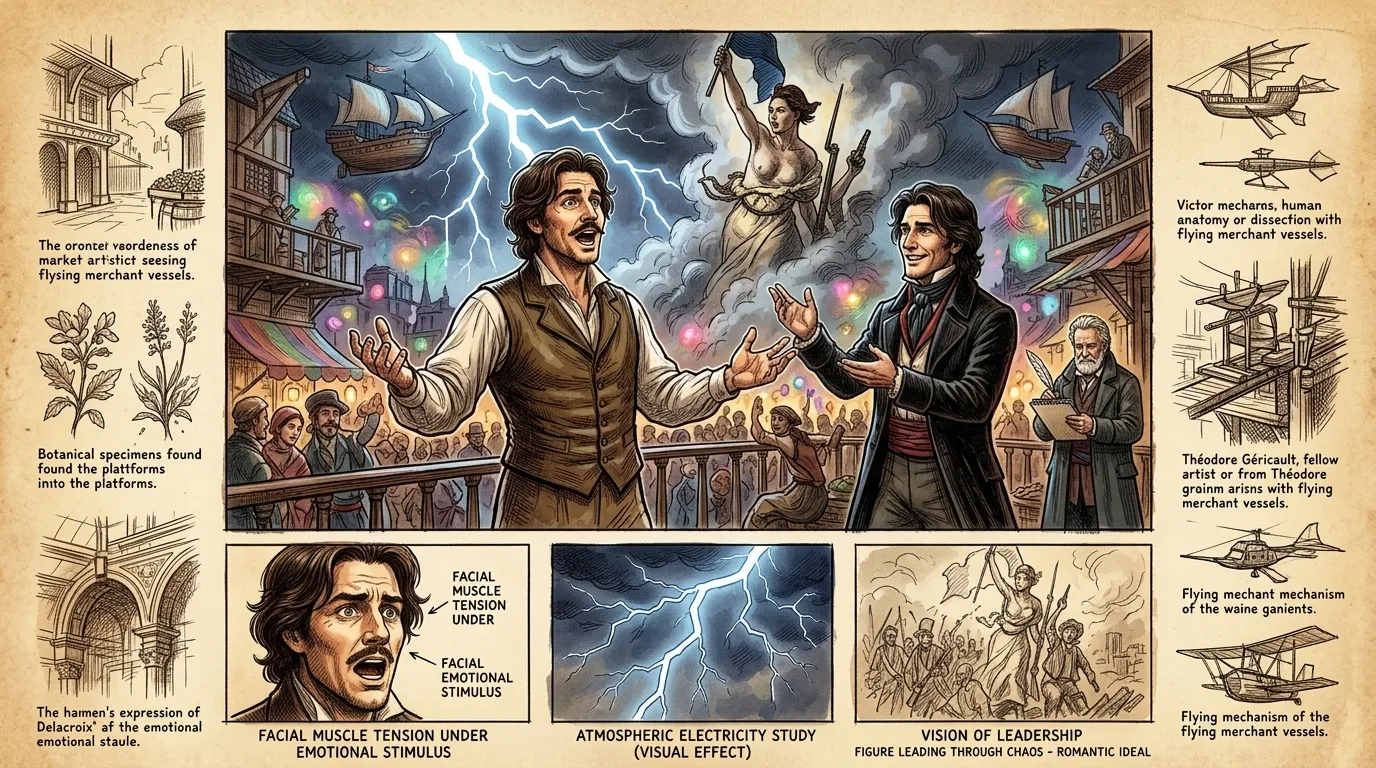
One stormy evening, as lightning illuminated the sky market, Delacroix had a vision. He saw a woman, fierce and determined, leading the people forward through smoke and chaos. She embodied the spirit of revolution, of France itself. This vision became the foundation of 'Liberty Leading the People.'
"In a moment of revelation, Delacroix cries out, 'Liberty! I see her! She is the embodiment of France, leading us towards a brighter future!' His friend, a fellow artist, replies, 'Capture her, Eugène! Let the world see your vision!'"
Art Fact: The allegorical vision provided Delacroix with the central image for his revolutionary painting.
Page 7
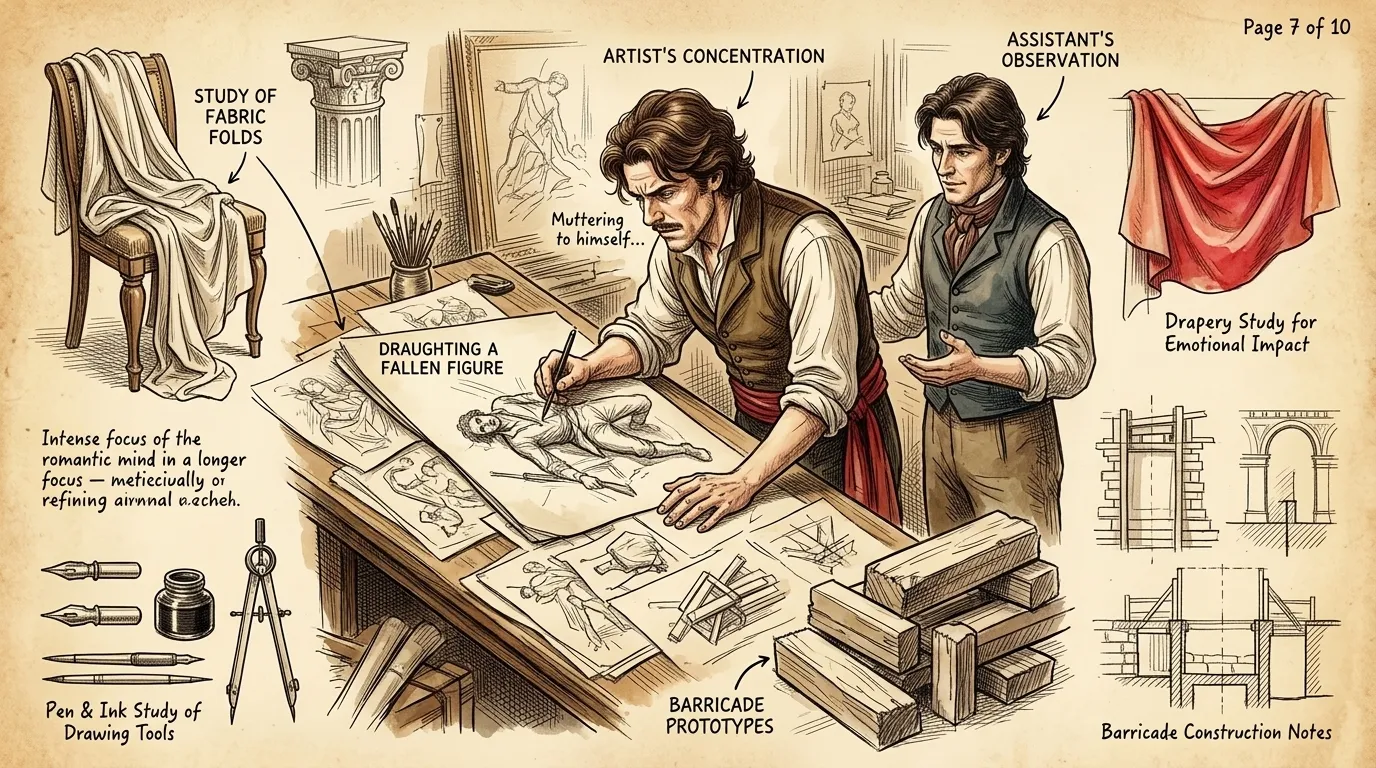
Delacroix, driven by his vision, meticulously planned his composition. He sketched the fallen figures, the barricades, and the determined faces of the revolutionaries. He spent weeks perfecting the figure of Liberty, ensuring she embodied both strength and vulnerability. Each brushstroke was a step toward immortalizing the spirit of 1830.
"Delacroix, while sketching a fallen revolutionary, mutters, 'Each life lost is a sacrifice for freedom. I must capture their courage, their pain, their unwavering commitment.' His assistant adds, 'Your dedication is inspiring, monsieur. This painting will be a testament to their bravery.'"
Art Fact: Delacroix's meticulous planning and dedication ensured that 'Liberty Leading the People' would be a powerful and enduring symbol of revolution.
Page 8
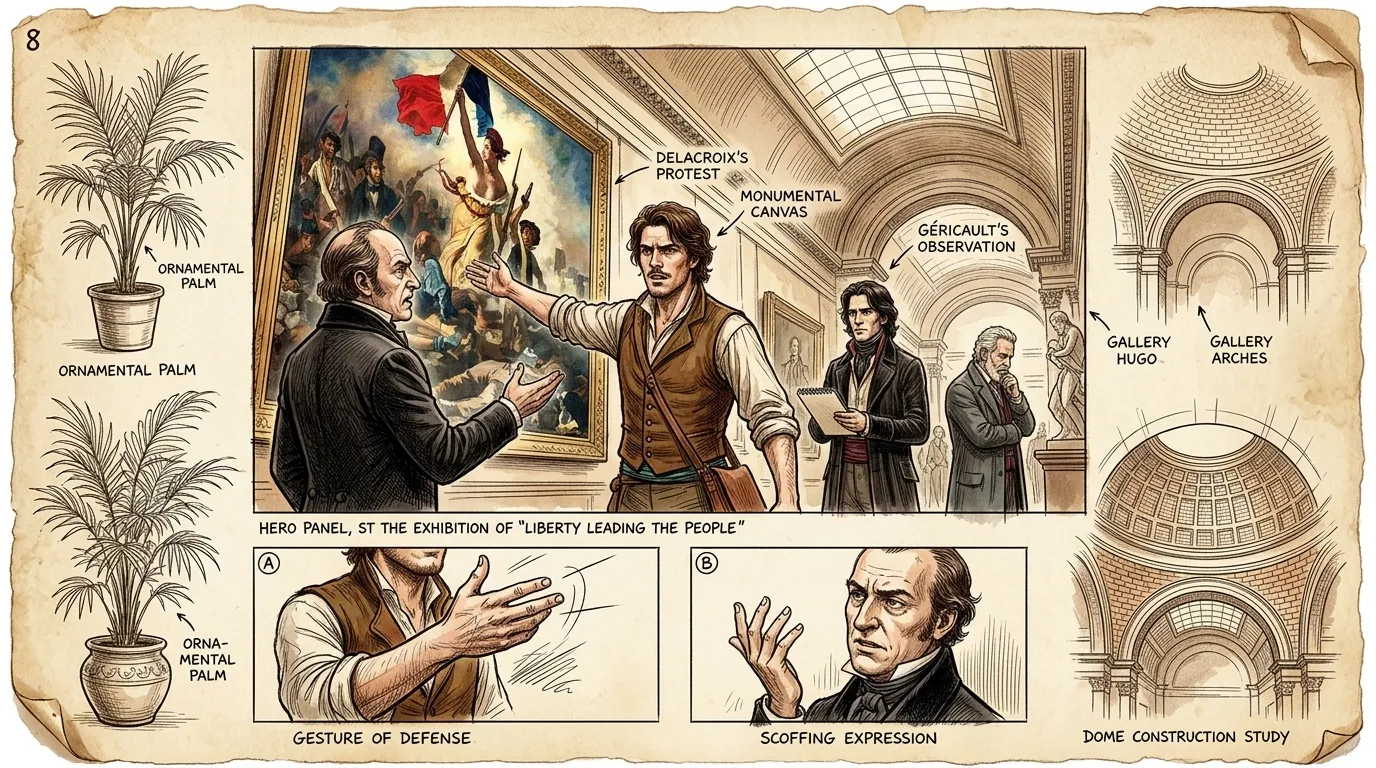
When 'Liberty Leading the People' was first exhibited, it caused a sensation. Some praised its revolutionary fervor, while others criticized its unconventional depiction of Liberty as a bare-breasted woman. Despite the controversy, Delacroix stood by his artistic choices. He proclaimed, 'Liberty is not a porcelain doll; she is the fierce mother of the French Revolution!'
"A critic scoffs, 'A bare-breasted woman leading a revolution? It's scandalous!' Delacroix retorts, 'Liberty is not meant to be demure. She is bold, she is defiant, she is the embodiment of our struggle!'"
Art Fact: The controversy surrounding the depiction of Liberty only added to the painting's notoriety and cemented its place in art history.
Page 9
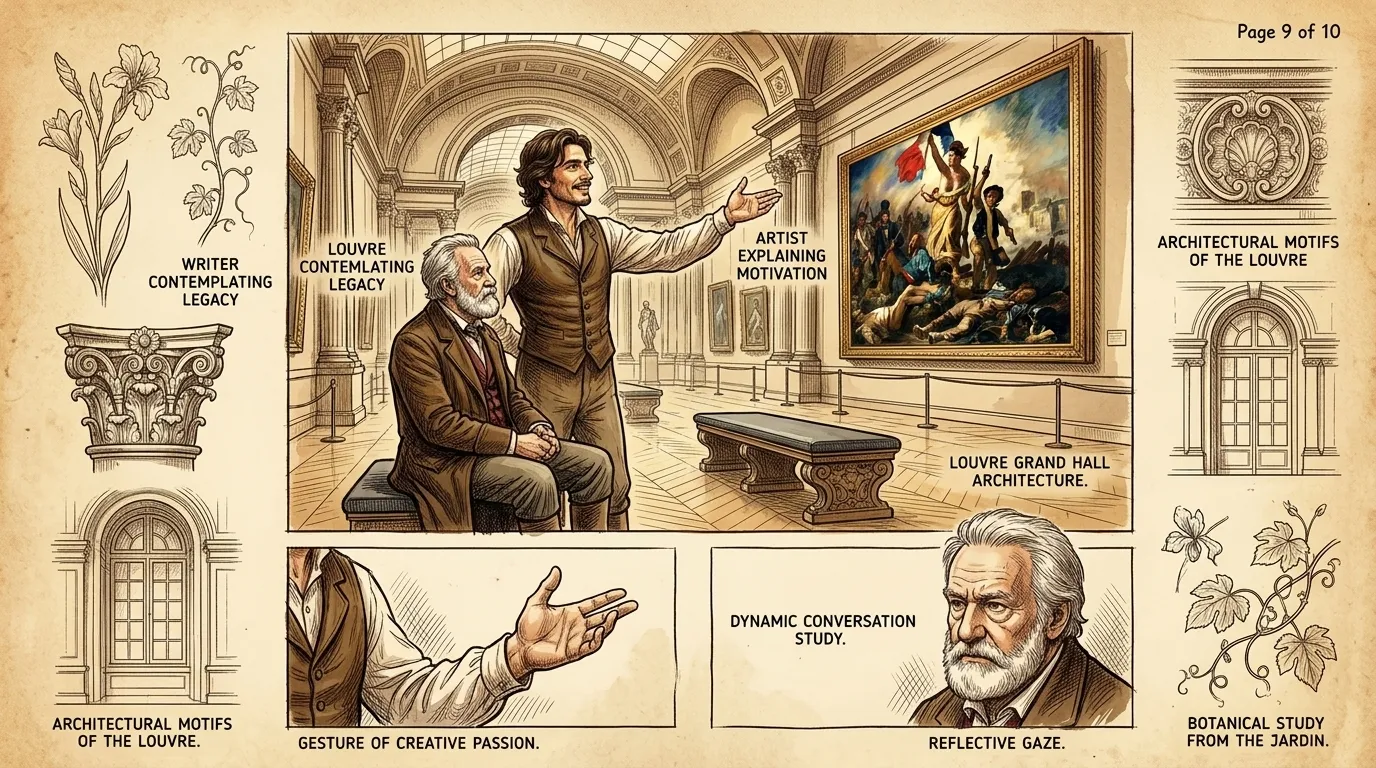
Years later, 'Liberty Leading the People' found its home in the Louvre Museum. It inspired generations of artists and revolutionaries. From the barricades of Paris to the streets of protest, Liberty's image became a symbol of hope and resistance. Delacroix's vision had transcended time, igniting the hearts of those who yearned for freedom.
"Looking at the painting, Delacroix says, 'As Victor Hugo said, 'Nothing is more powerful than an idea whose time has come.' I hope this painting inspires the world to fight for their freedom forever.'"
Art Fact: The painting's enduring legacy lies in its ability to inspire hope and resistance in the face of oppression.
Page 10
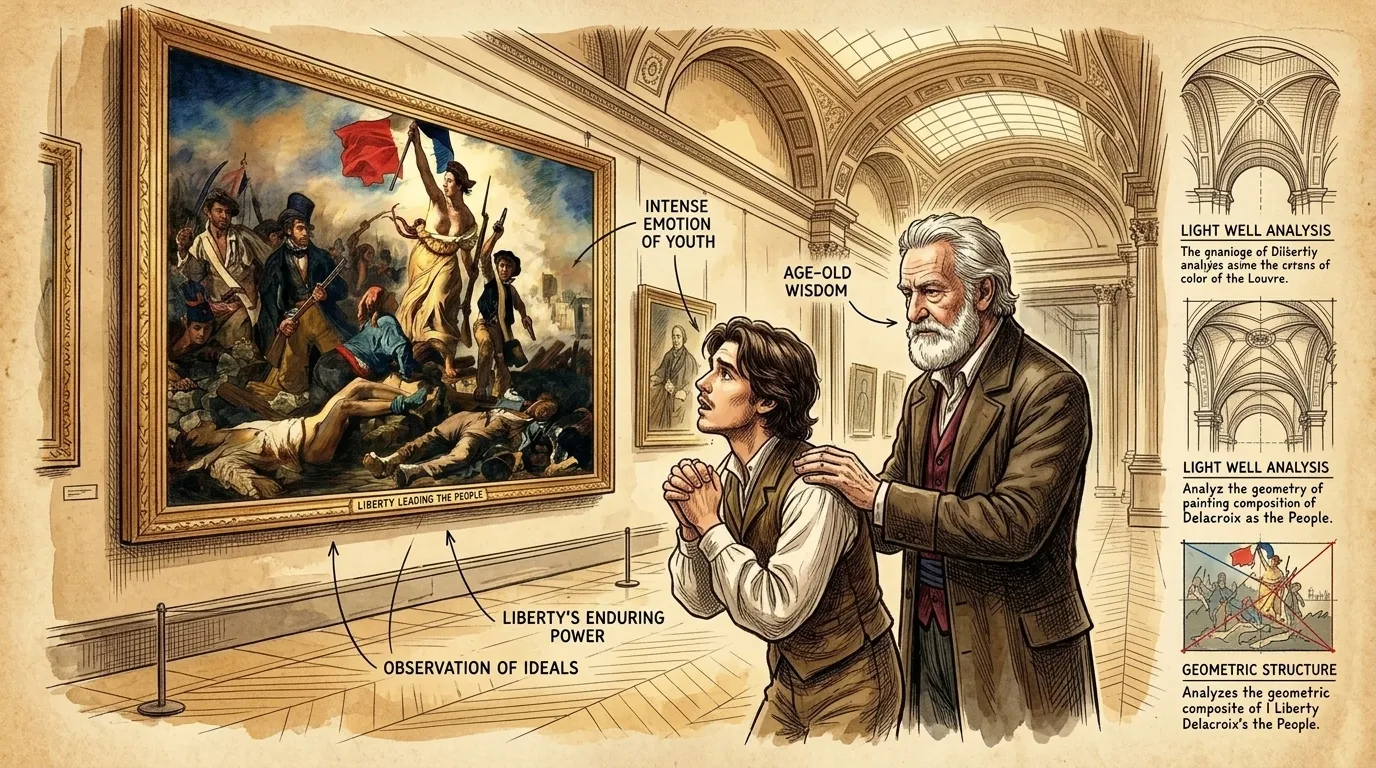
Delacroix's spirit lives on, echoing through the ages. His Liberty continues to inspire those who champion freedom, equality, and justice. The people she leads are not just figures on a canvas, but the eternal voice of human aspiration. As long as there are those who fight for liberty, Delacroix's art will survive.
"A young student, gazing at the painting, declares, 'This is more than just art; it's a call to action!'. An older man adds, 'Delacroix captured the very essence of the French Revolution – a yearning for freedom that will never die.'"
Art Fact: Delacroix's 'Liberty Leading the People' continues to resonate because it captures the universal human desire for freedom, inspiring generations to fight for a better world.
About this story
- Location: France
- Audience: general readers
Questions and answers
Questions and answers about Liberty Leading the People by Eugène Delacroix (Paris, France — 1830)
Read Wonder Arts on your phone
Wonder Arts is available on Android. Get Wonder Arts on Google Play.
More Wonder Arts stories
- Library of Alexandria destruction (Alexandria, Egypt — c. 3rd Century BC)
- Lion Monument by Bertel Thorvaldsen (Lucerne, Switzerland — 1821)
- Lithography by Alois Senefelder (Germany — 1796)
- Louvre Museum opening (Paris, France — 1793)
- Luncheon of the Boating Party by Pierre-Auguste Renoir (Washington D.C., USA — 1881)
- Macchiaioli by Tuscan painters (Florence, Italy — c. 1855)