Las Meninas by Diego Velázquez (Madrid, Spain — 1656)
Las Meninas by Diego Velázquez (Madrid, Spain — 1656) — an illustrated arts story, set in Spain. 10 illustrated pages, free to read on Wonder Arts.
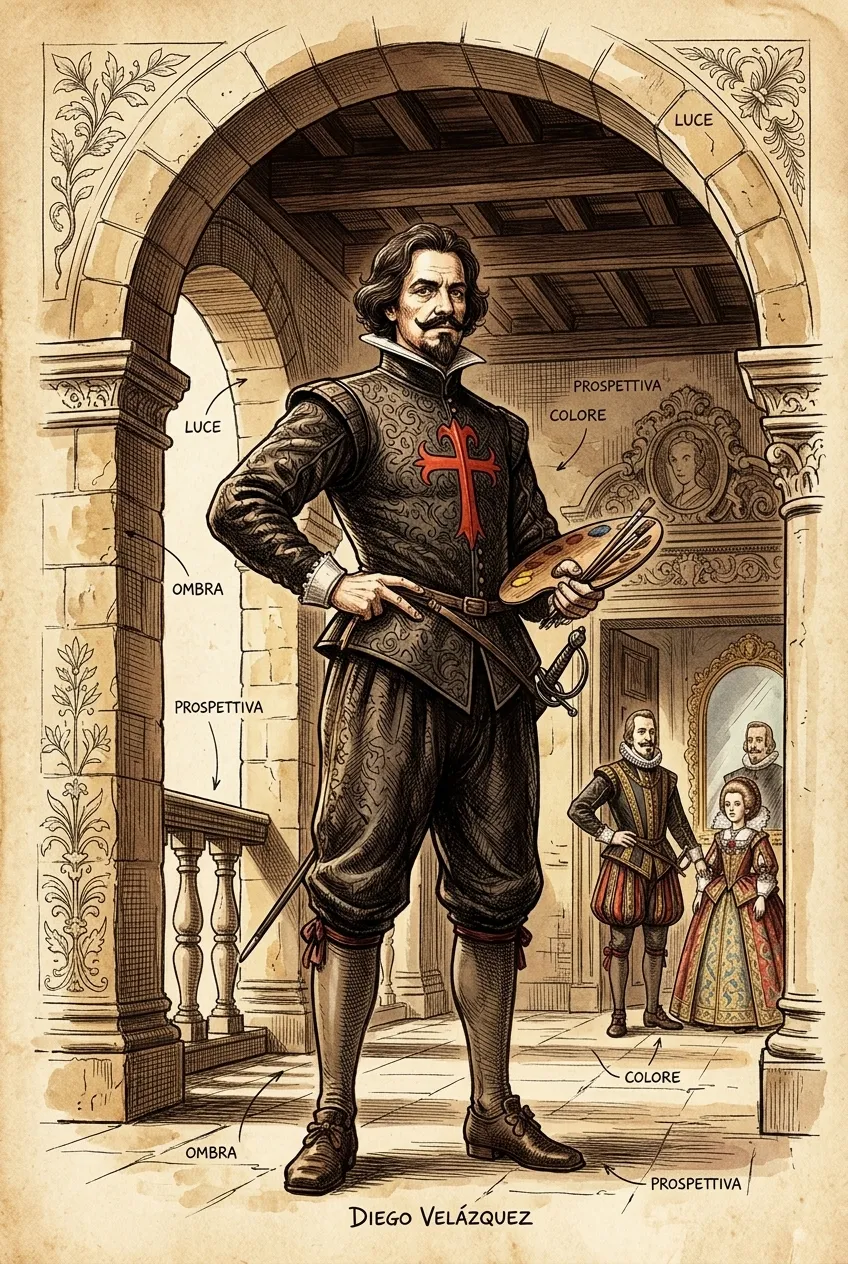
Page 1

Las Meninas, painted in 1656 by Diego Velázquez in Madrid, stands as one of the most analyzed and discussed paintings in Western art history. Housed in the Museo del Prado, this large oil on canvas, measuring 318 x 276 cm, presents a complex interplay of gazes and perspectives. Its enigmatic composition has captivated viewers for centuries, prompting endless interpretations of its meaning and purpose.
""Look at the way Velázquez plays with light, it's almost like he's inviting us into the scene," King Philip IV mused, gazing at the painting."
Art Fact: Las Meninas translates to 'The Maids of Honour' in English. It depicts Infanta Margarita, her maids of honor, and other figures within the Spanish court.
Page 2

In 17th century Madrid, Velázquez, a court painter, was more than just an artist; he was a confidant of the King. His studio was his sanctuary, a space where royal portraits came alive. Surrounded by canvases, brushes, and the scent of turpentine, Velázquez sought to capture the essence of his subjects. He was influenced by the Realism of Caravaggio, focusing on capturing genuine emotion.
""Your Majesty, I seek to paint not just your image, but your soul," Velázquez declared, sketching rapidly on a small canvas."
Art Fact: Velázquez's position at court granted him access to the royal collection, where he studied the works of Titian and other masters.
Page 3
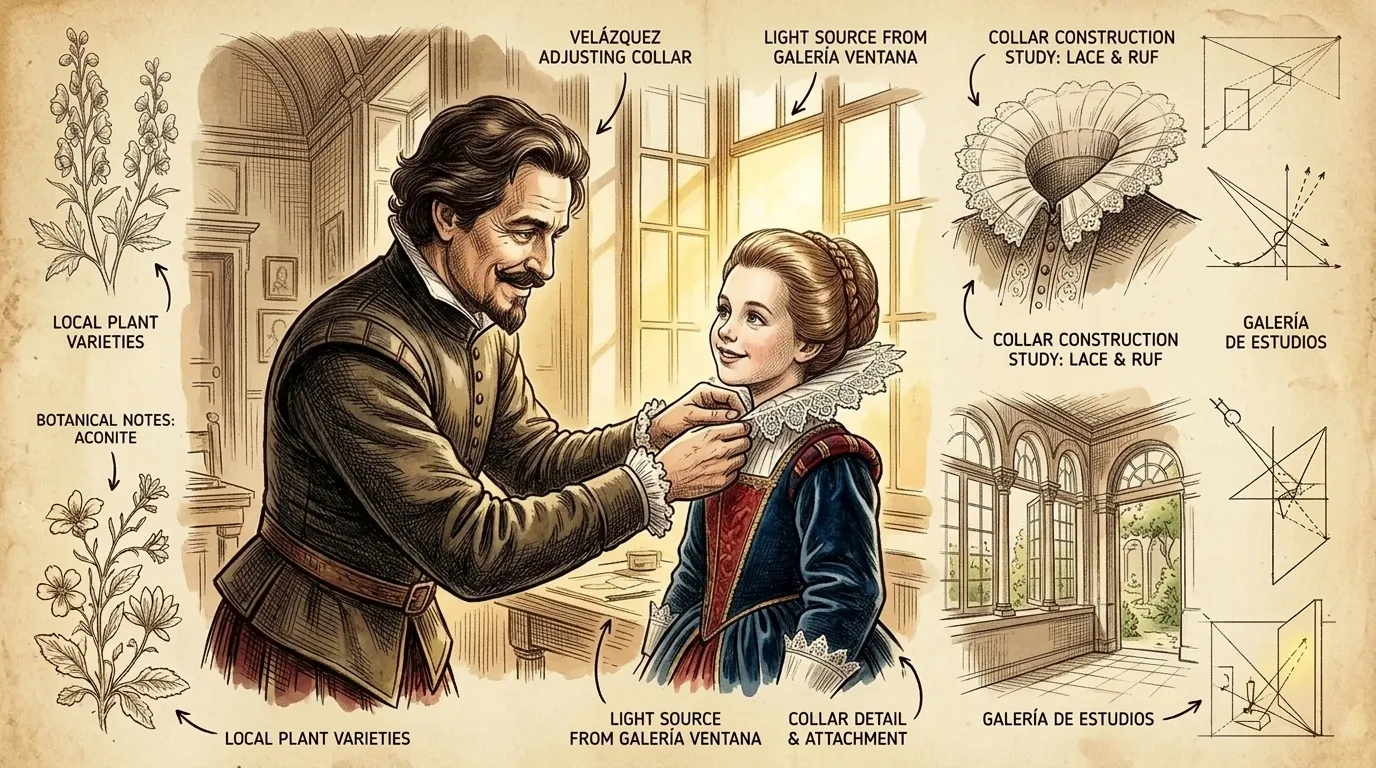
The Infanta Margarita, a young princess, was often the subject of Velázquez's portraits. Her presence was a reminder of the royal lineage and the importance of the Spanish monarchy. Velázquez, in his quest for realism, tried to capture her youth. He wanted to show her not as a symbol of power, but as a child, caught in a moment of play.
""I want to paint you as you are, Infanta, not as others see you," Velázquez said gently, adjusting the young princess's collar."
Art Fact: Infanta Margarita was a central figure in the Spanish court, and her portraits were often sent to other European courts for diplomatic purposes.
Page 4
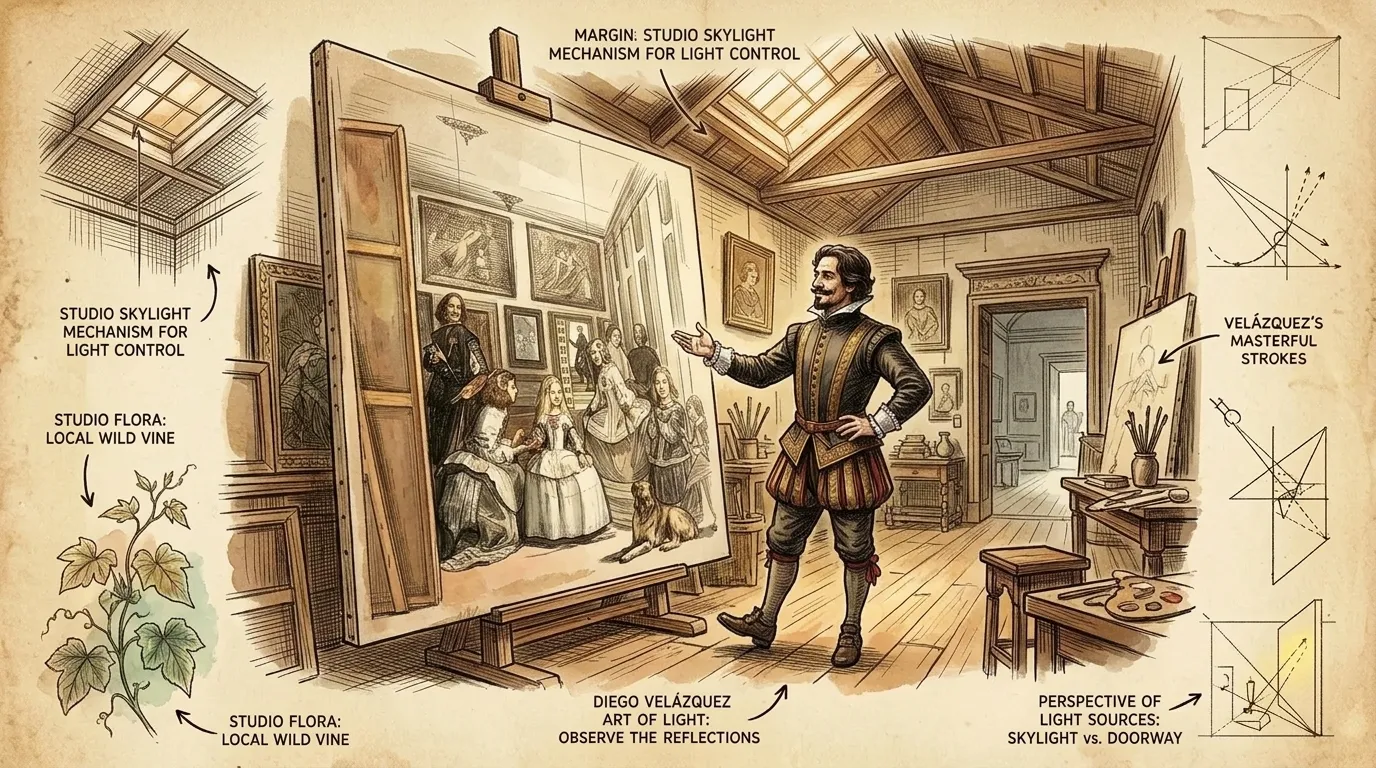
Velázquez began to map out the composition of Las Meninas. He began using light and shadow to define the space and create depth. The painting was to be a window into the royal court. Velázquez sought to capture the complexity of human relationships and the subtle power dynamics at play.
""This painting must show more than just faces; it must show the essence of the court," Velázquez declared, stepping back from the canvas."
Art Fact: The use of perspective in Las Meninas is a key element, drawing the viewer's eye deeper into the scene.
Page 5
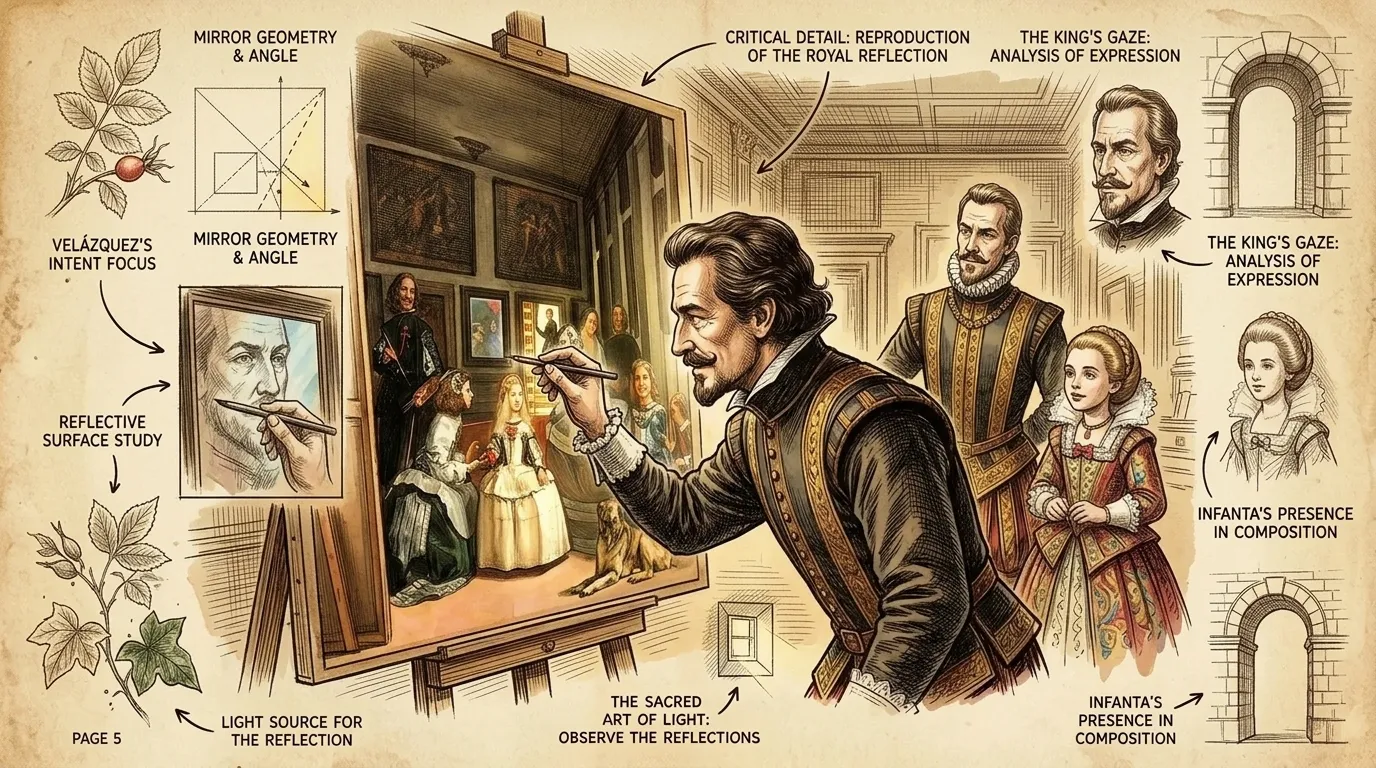
The inclusion of King Philip IV and Queen Mariana in the mirror at the back of the room added another layer of complexity to the painting. Velázquez was showing the reality of the court, with the King and Queen always watching, always present. He wanted to represent their authority without making them the direct subjects of the painting.
""The mirror reflects more than just their images, it reflects their power," Velázquez observed, sketching the figures in the mirror."
Art Fact: The interpretation of the mirror's reflection is one of the most debated aspects of Las Meninas.
Page 6
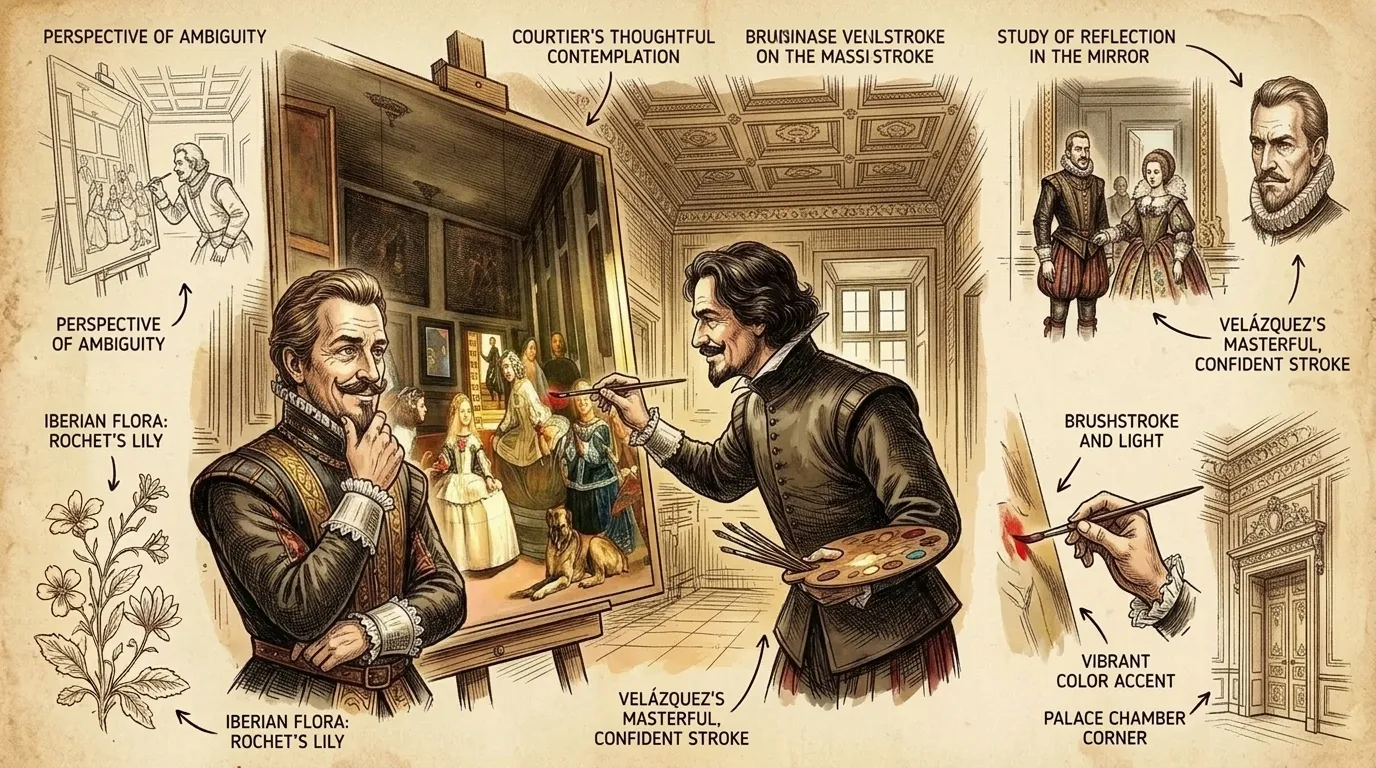
As Velázquez continued to work on Las Meninas, he began to experiment with the viewer's perspective. Was he painting the Infanta and her maids of honor? Or was he painting the King and Queen, with the Infanta and her retinue merely observing? The ambiguity was deliberate. As Leonardo da Vinci said, 'Painting embraces all the ten functions of the eye; that is to say, darkness, light, body and colour, form and situation, distance and nearness, motion and rest.' Velázquez believed that painting could embrace all functions of the eye.
""Is it a portrait? Or is it a glimpse into the artist's world?" a courtier pondered, observing the painting's progress."
Art Fact: Velázquez's use of Realism allowed him to depict the court with unprecedented detail and accuracy.
Page 7

The unveiling of Las Meninas at the Alcázar Palace in Madrid caused a stir among the court. Some praised Velázquez's skill, others questioned his audacity in placing himself within the royal portrait. The King, however, was pleased. The painting captured the essence of his court.
""It is as if we are looking into a mirror, not at a painting," King Philip IV remarked, gazing at Las Meninas for the first time."
Art Fact: King Philip IV was a great patron of the arts, and he supported Velázquez throughout his career.
Page 8

Over the centuries, Las Meninas remained a treasure of the Spanish crown. During the Napoleonic Wars, it was briefly stolen, only to be recovered and returned to its rightful place. The painting's enduring appeal has ensured its survival through turbulent times.
""We must protect this masterpiece at all costs!" a royal guard exclaimed, during the threat of invasion. "
Art Fact: The resilience of Las Meninas reflects the enduring power of art to transcend historical events.
Page 9
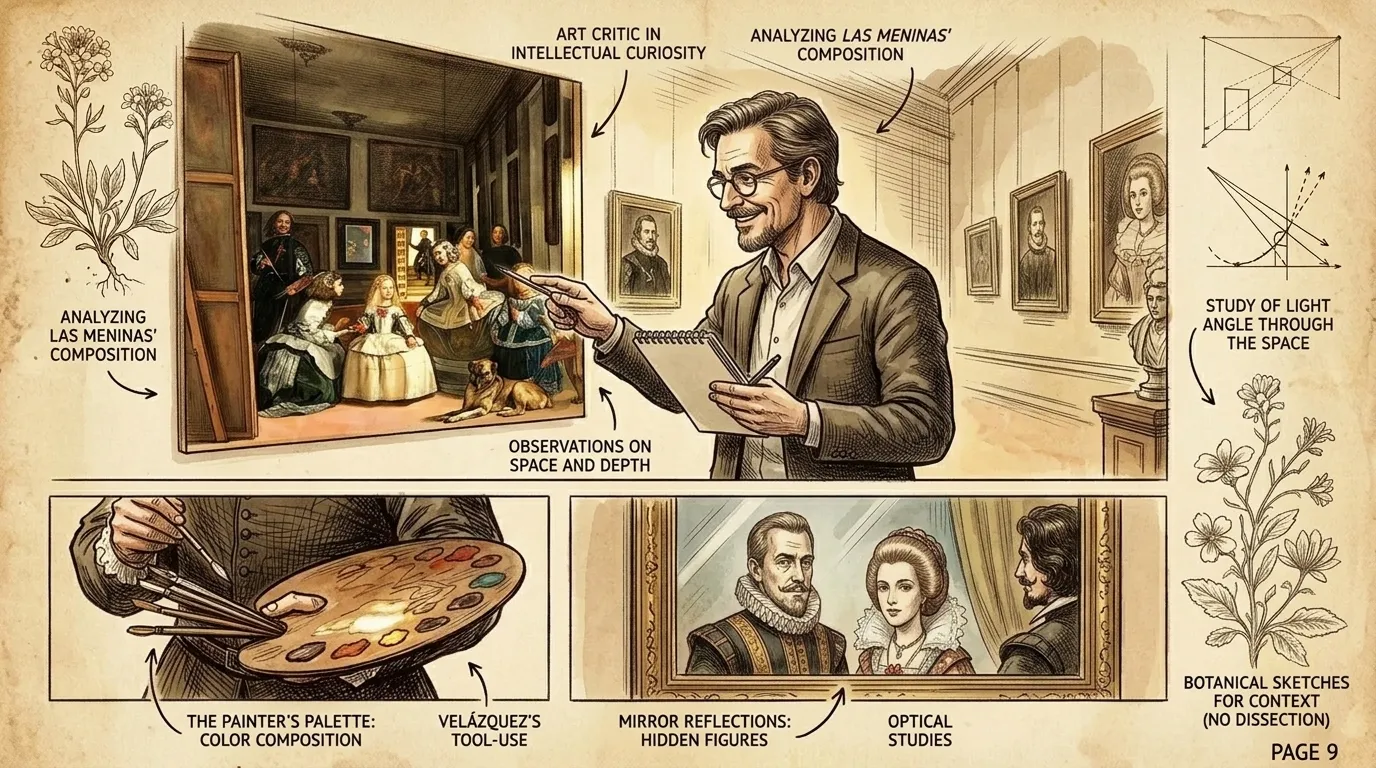
Las Meninas continues to inspire artists and viewers alike. Its complexity and ambiguity have made it a subject of endless study and interpretation. As Pablo Picasso said, 'When art critics get together they talk about Form and Structure and Meaning. When artists get together they talk about where you can buy cheap turpentine.' Perhaps the constant questioning makes the art even more valuable.
""This painting will be studied for centuries to come," an art critic predicted, analyzing the composition."
Art Fact: The painting has influenced countless artists, including Picasso, who created a series of variations on Las Meninas.
Page 10
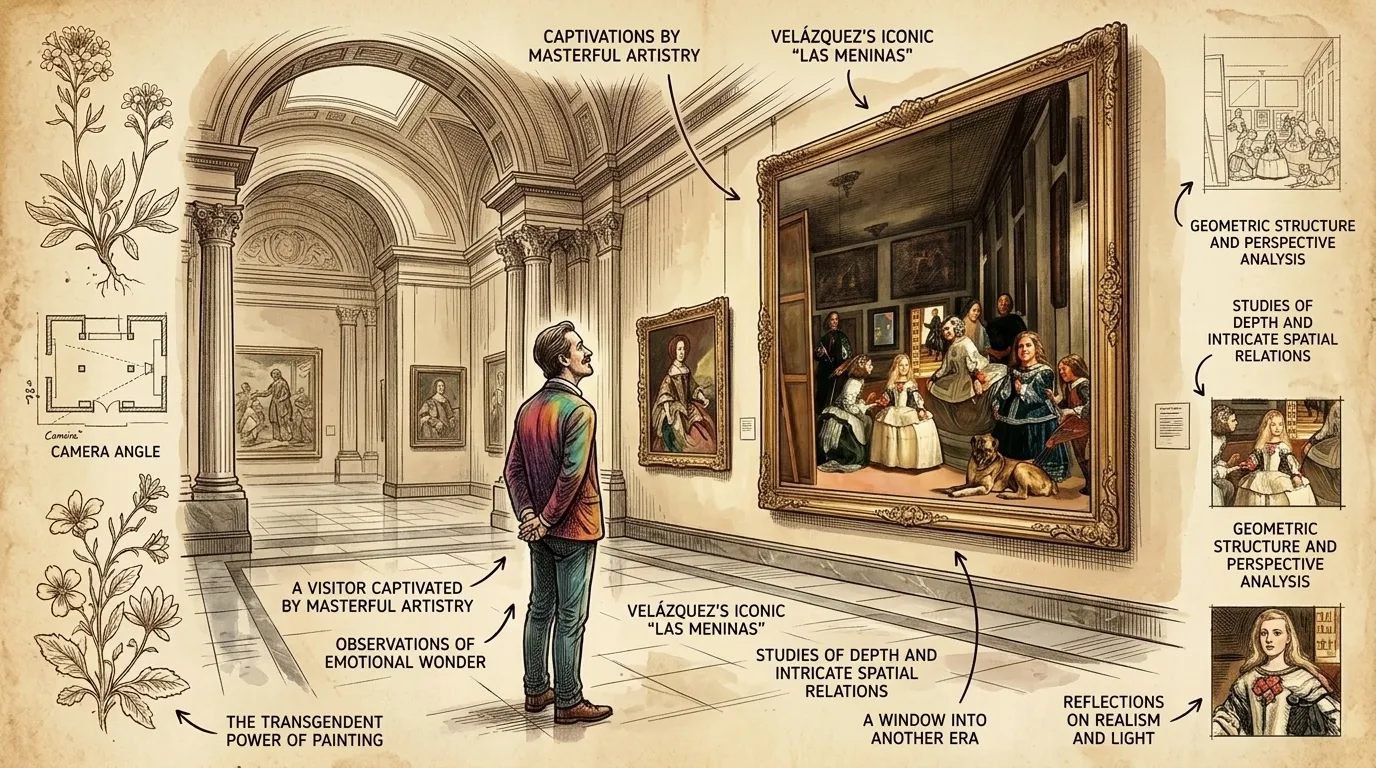
Today, Las Meninas remains in the Museo del Prado, a testament to Velázquez's genius and the enduring power of art. Visitors from around the world come to see this masterpiece, to ponder its mysteries, and to marvel at its beauty. It is a reminder that art can transcend time and culture, speaking to us across the centuries.
""It's more than just a painting; it's a window into another world," a visitor whispered, gazing at Las Meninas."
Art Fact: Las Meninas continues to be one of the Museo del Prado's most popular and iconic works.
About this story
- Location: Spain
- Audience: general readers
Questions and answers
Questions and answers about Las Meninas by Diego Velázquez (Madrid, Spain — 1656)
Read Wonder Arts on your phone
Wonder Arts is available on Android. Get Wonder Arts on Google Play.
More Wonder Arts stories
- Las Meninas — Madrid, Spain — 1656
- Leda and the Swan by Leonardo da Vinci (France — c. 1508)
- Liberty Leading the People by Eugène Delacroix (Paris, France — 1830)
- Library of Alexandria destruction (Alexandria, Egypt — c. 3rd Century BC)
- Lion Monument by Bertel Thorvaldsen (Lucerne, Switzerland — 1821)
- Lithography by Alois Senefelder (Germany — 1796)