Hylas and the Nymphs by John William Waterhouse (London, UK — 1896)
Hylas and the Nymphs by John William Waterhouse (London, UK — 1896) — an illustrated arts story, set in United Kingdom. 10 illustrated pages, free to read on Wonder Arts.
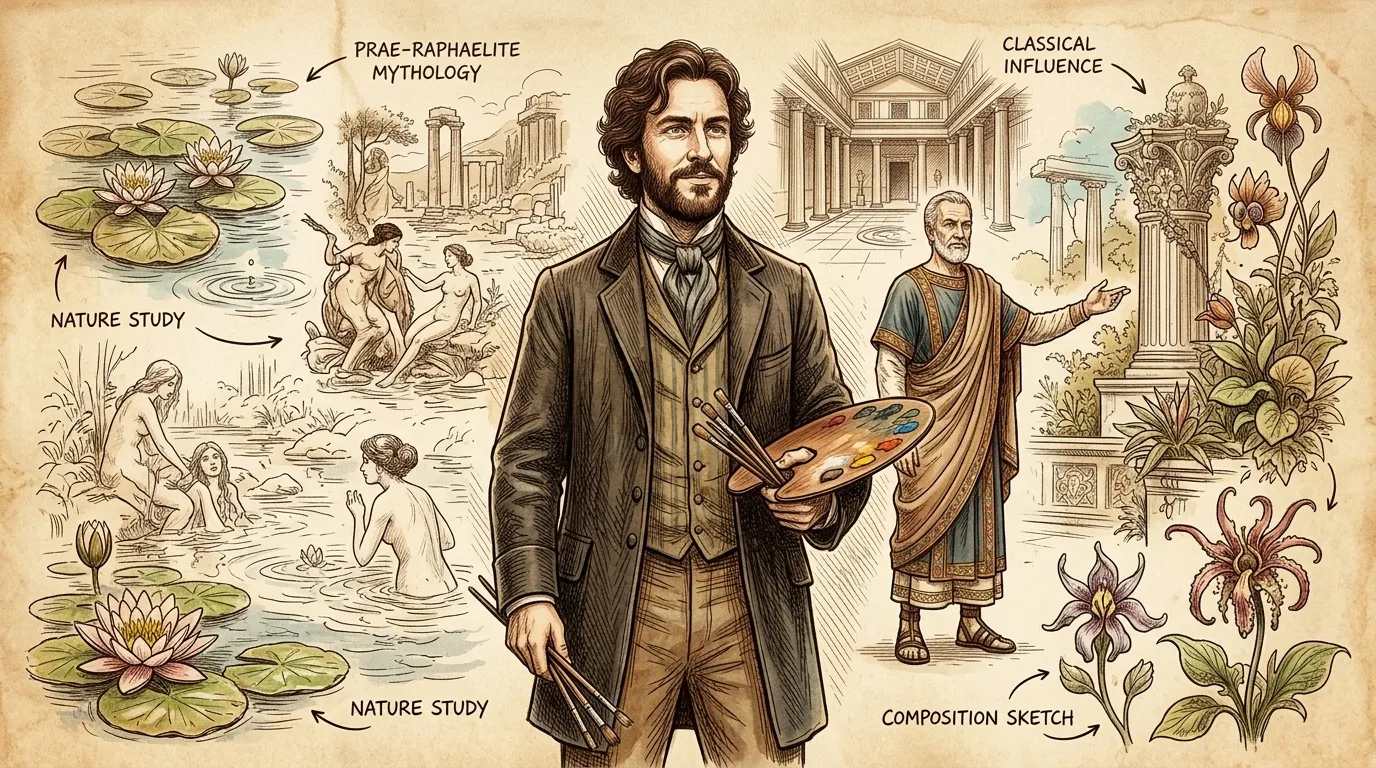
Page 1
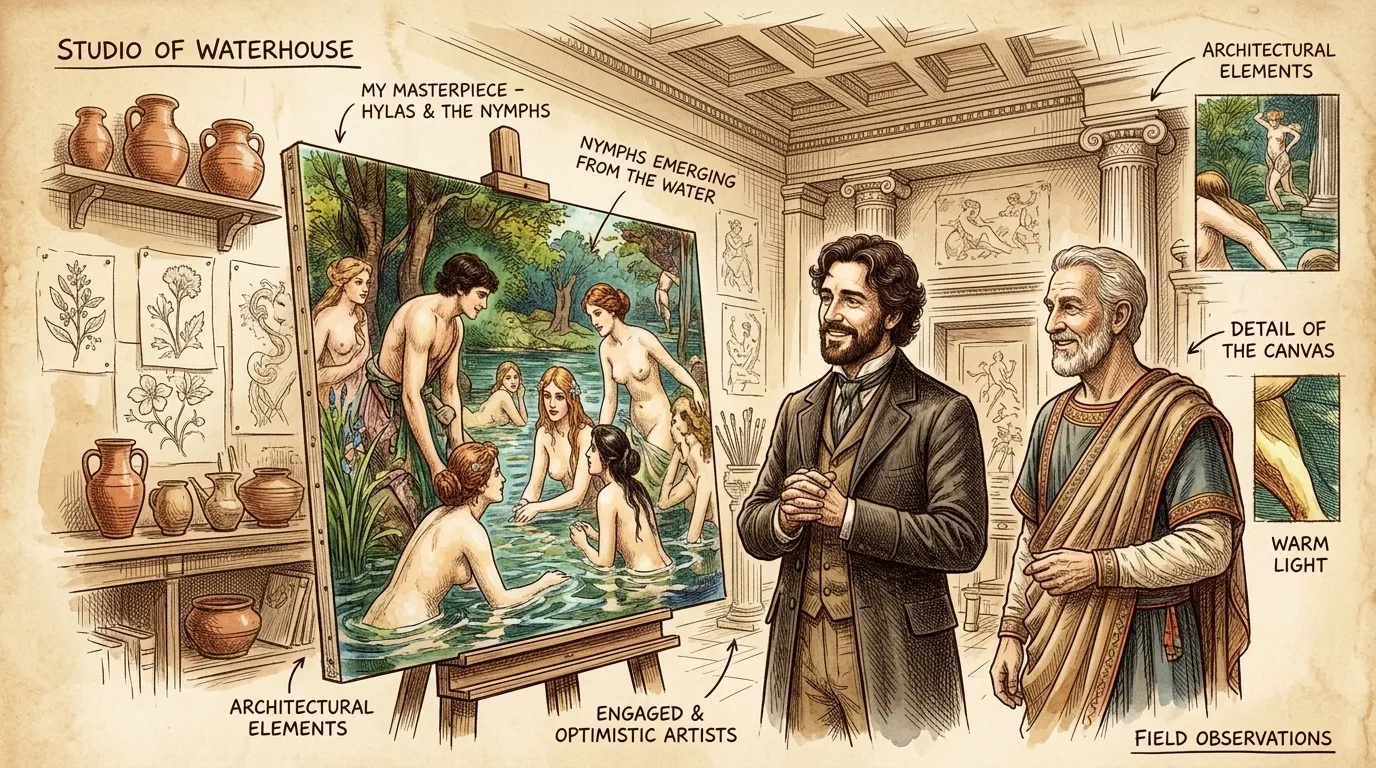
John William Waterhouse stands before his completed masterpiece, 'Hylas and the Nymphs.' Completed in 1896, the painting measures 98 x 163 cm and resides in the Manchester Art Gallery. Its beauty, however, belies a controversial history, having once been deemed too suggestive for public display. Its estimated value exceeds 2.5 million.
"Waterhouse murmurs, almost to himself, 'Have I truly captured their allure, their danger? They are beautiful, yet they hold a darkness within.'"
Art Fact: John William Waterhouse was known for his Pre-Raphaelite style, often drawing inspiration from mythology and literature.
Page 2

A young Waterhouse visits the studio of Lawrence Alma-Tadema. The opulent space, filled with classical artifacts, deeply impresses him. Alma-Tadema, known for his meticulous recreations of Roman life, offers a critique of Waterhouse's early work. This meeting ignited Waterhouse's passion for classical themes.
"Alma-Tadema gestures to a marble statue. 'Details, Waterhouse, details! Every fold, every texture must speak of authenticity. Only then can the past truly live again.' Waterhouse nods, absorbing the master's words. 'I understand, sir. It's more than just painting, it's recreating a world.'"
Art Fact: Lawrence Alma-Tadema's influence is evident in Waterhouse's attention to detail and classical subject matter.
Page 3
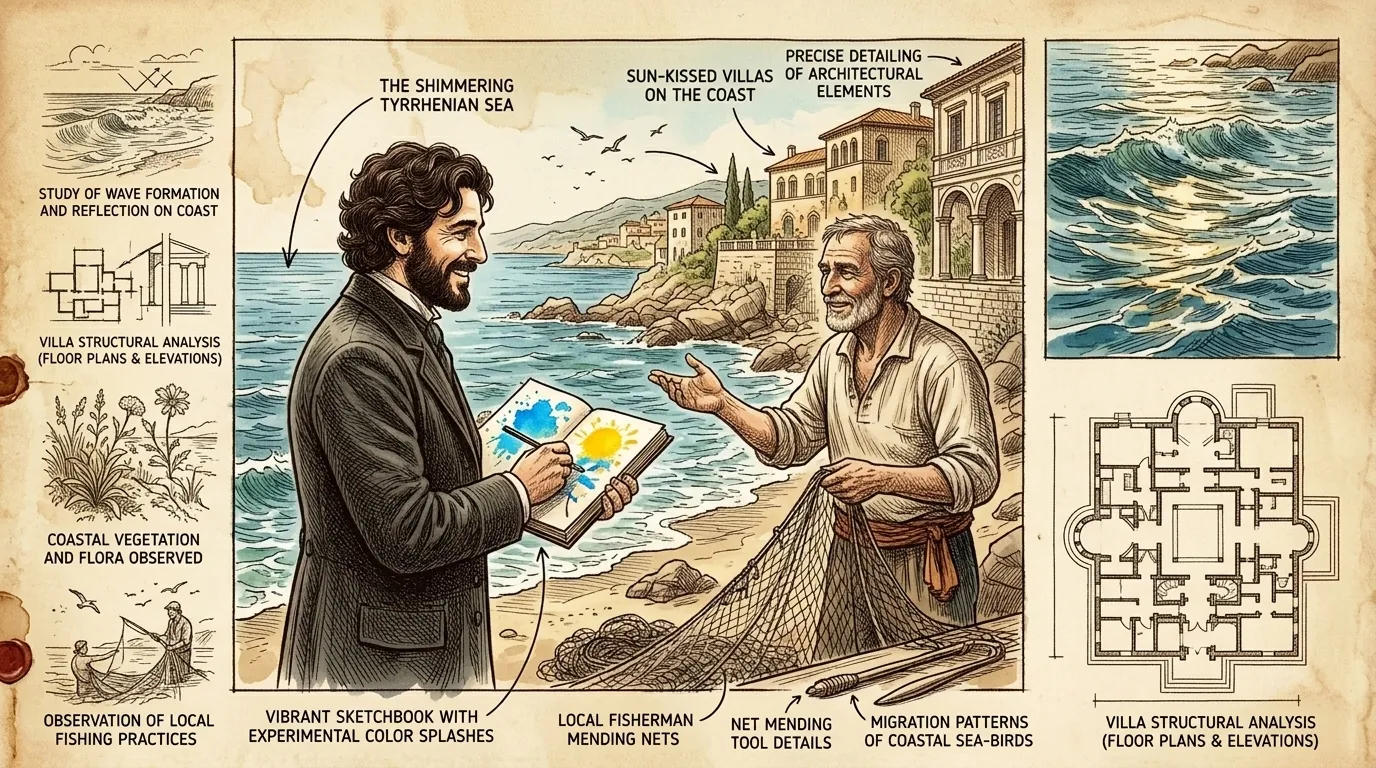
During a trip to Italy, Waterhouse discovers the vibrant hues of the Mediterranean landscape. The shimmering blues of the Tyrrhenian Sea and the sun-drenched villas captivate him. He begins to experiment with a brighter palette, a departure from the more muted tones of his earlier works. It was a pivotal moment in his growth as an artist.
"Waterhouse, sketching by the shore, exclaims, 'These colors...they sing! It's as though the very light itself is imbued with life.' A local fisherman replies, 'The sea and the sun, signore, they are our greatest artists. We simply try to capture their beauty.'"
Art Fact: Waterhouse's Italian travels significantly impacted his use of color and light.
Page 4
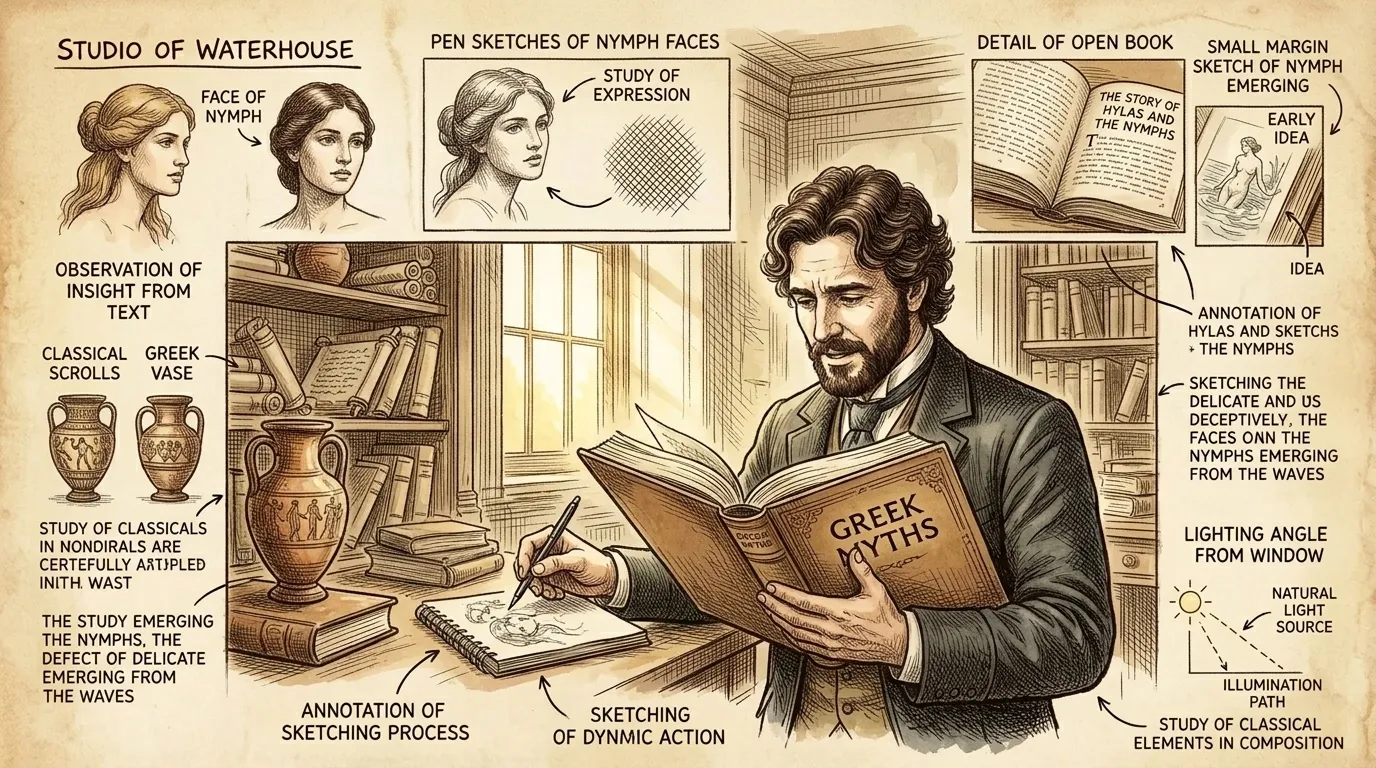
Waterhouse delves into Greek mythology, drawn to the tragic tale of Hylas. The story of the beautiful youth lured to his doom by water nymphs resonates deeply with him. He begins to envision the painting, sketching preliminary ideas in his notebook, capturing the nymph's beautiful and deceptive faces. Waterhouse wanted to convey a tale of temptation and innocence lost.
"Waterhouse, reading aloud from a book of myths, 'Hylas, beloved companion of Hercules, drawn to a spring by irresistible nymphs...a tale of beauty and peril.' He pauses, 'The nymphs...they represent the seductive power of nature, the dangers lurking beneath the surface.'"
Art Fact: The myth of Hylas provided the narrative foundation for Waterhouse's painting.
Page 5
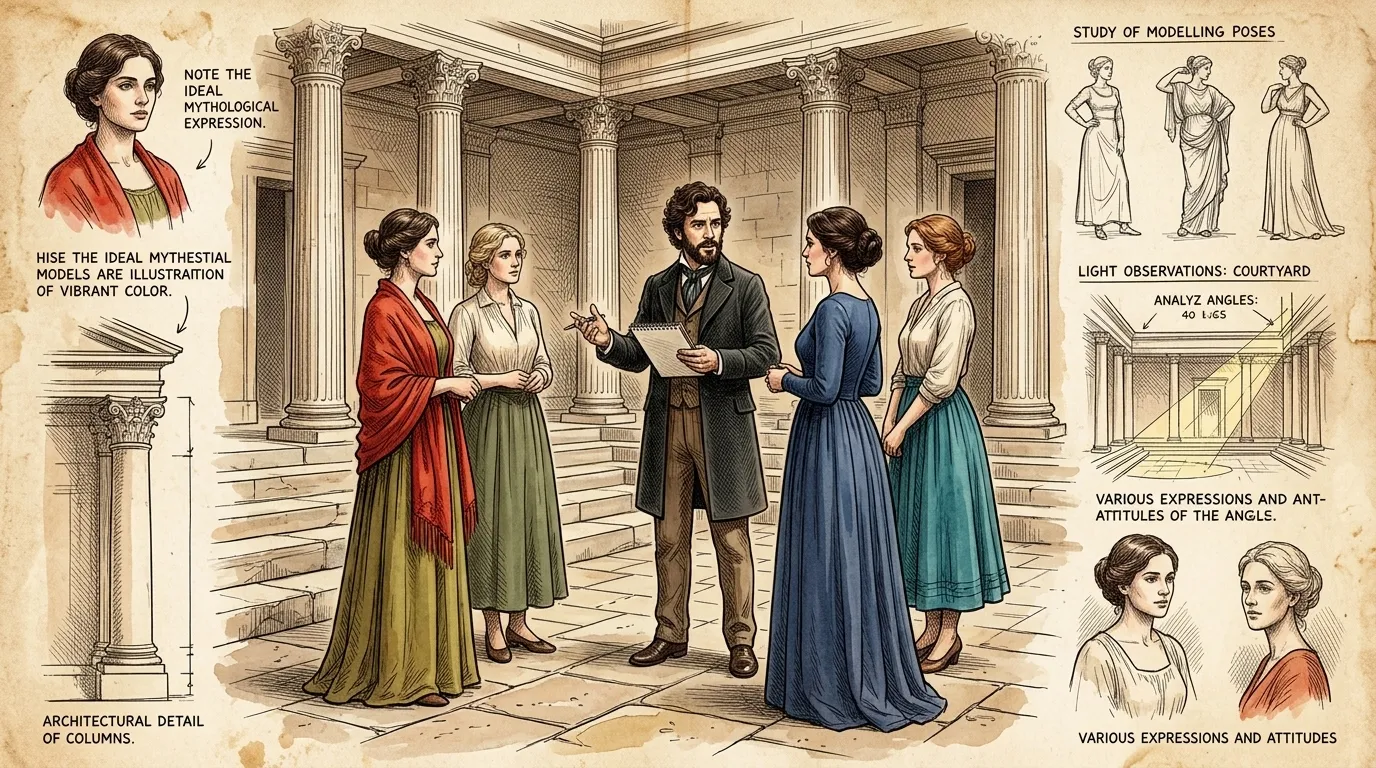
Waterhouse searches for models who embody the ethereal beauty of the nymphs. He seeks women with fair skin, flowing hair, and an air of otherworldly allure. After numerous auditions, he finally finds his muses, each possessing a unique quality that contributes to the painting's overall effect. He pays them well but insists on capturing the essence of the mythological story.
"Waterhouse, addressing a group of potential models, 'I seek not mere beauty, ladies, but the embodiment of myth. You must project an air of both innocence and seduction, a glimpse of the divine and the deadly.' He carefully scrutinizes each woman, seeking the perfect nymph."
Art Fact: The selection of models was crucial to Waterhouse's artistic vision.
Page 6
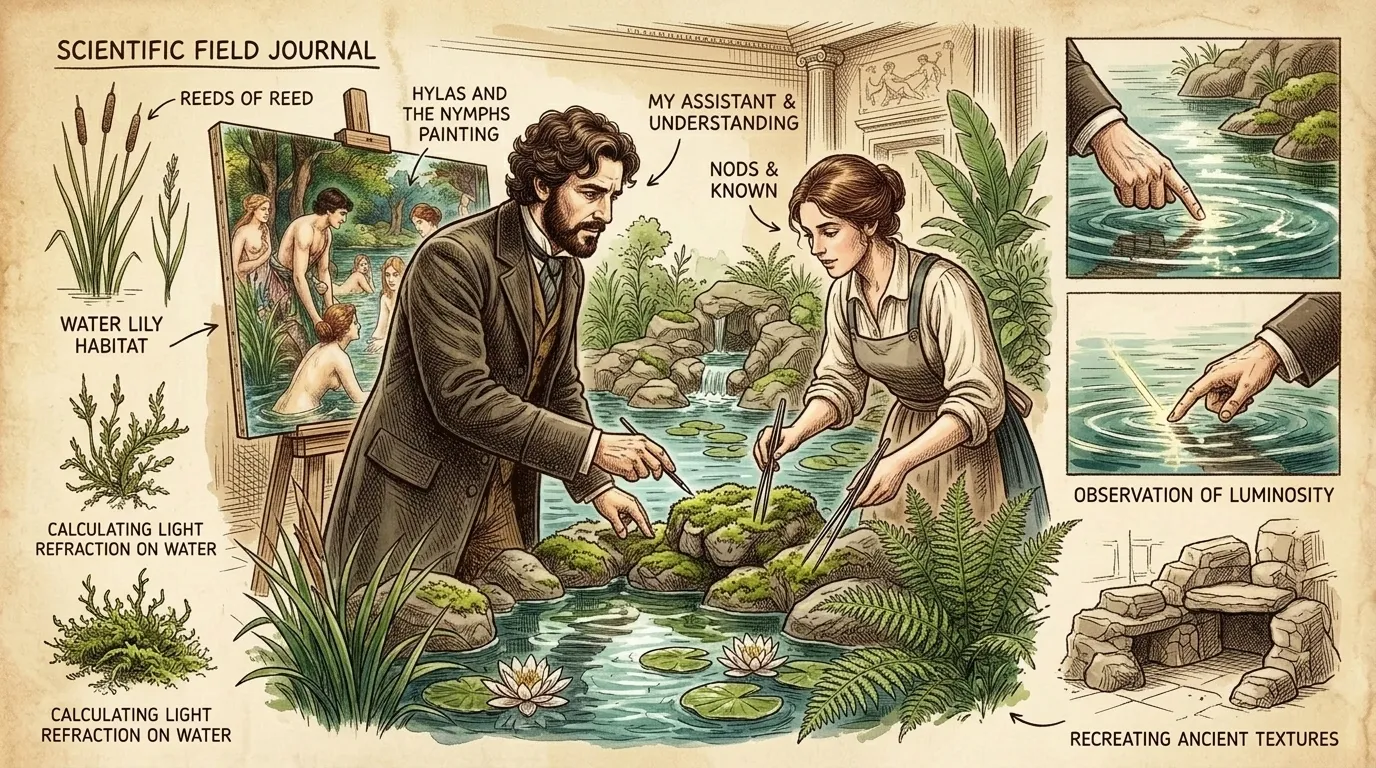
Waterhouse meticulously recreates the scene of the pool where Hylas meets his fate. He studies the reflections of light on water, the texture of moss-covered rocks, and the delicate foliage surrounding the pool. He aims for realism, but with a touch of ethereal beauty, blending the natural with the mythical. His studio is a sanctuary of imagination and creation.
"Waterhouse, instructing his assistant, 'More moss, please! And ensure the lighting captures the glint of water, the way it dances and deceives. The pool must be both inviting and treacherous.' The assistant nods and adjusts the set."
Art Fact: Waterhouse paid great attention to detail in recreating the setting of his painting.
Page 7
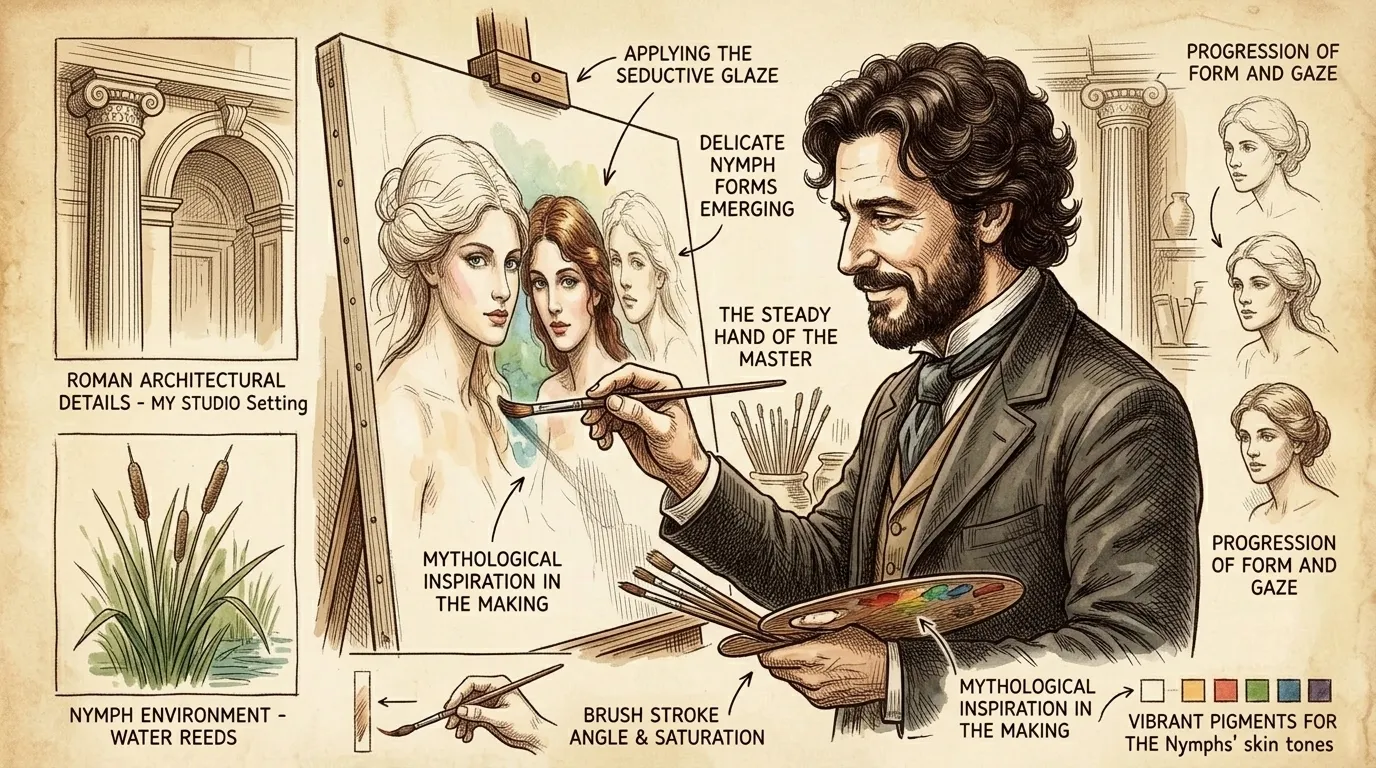
Waterhouse layers the paint, building up the forms of the nymphs with delicate brushstrokes. He captures their seductive gazes, their graceful limbs, and the subtle play of light on their skin. He infuses the painting with a sense of mystery, a hint of danger lurking beneath the surface of beauty. The canvas is slowly coming alive.
"Waterhouse pauses, gazing intently at the canvas. 'The eyes...they must hold the key. A promise of pleasure, a hint of doom. Like Oscar Wilde said, 'The only way to get rid of a temptation is to yield to it'. That is what will make this piece timeless.'"
Art Fact: Waterhouse's skill with the brush brought the nymphs to life with a captivating blend of beauty and danger.
Page 8
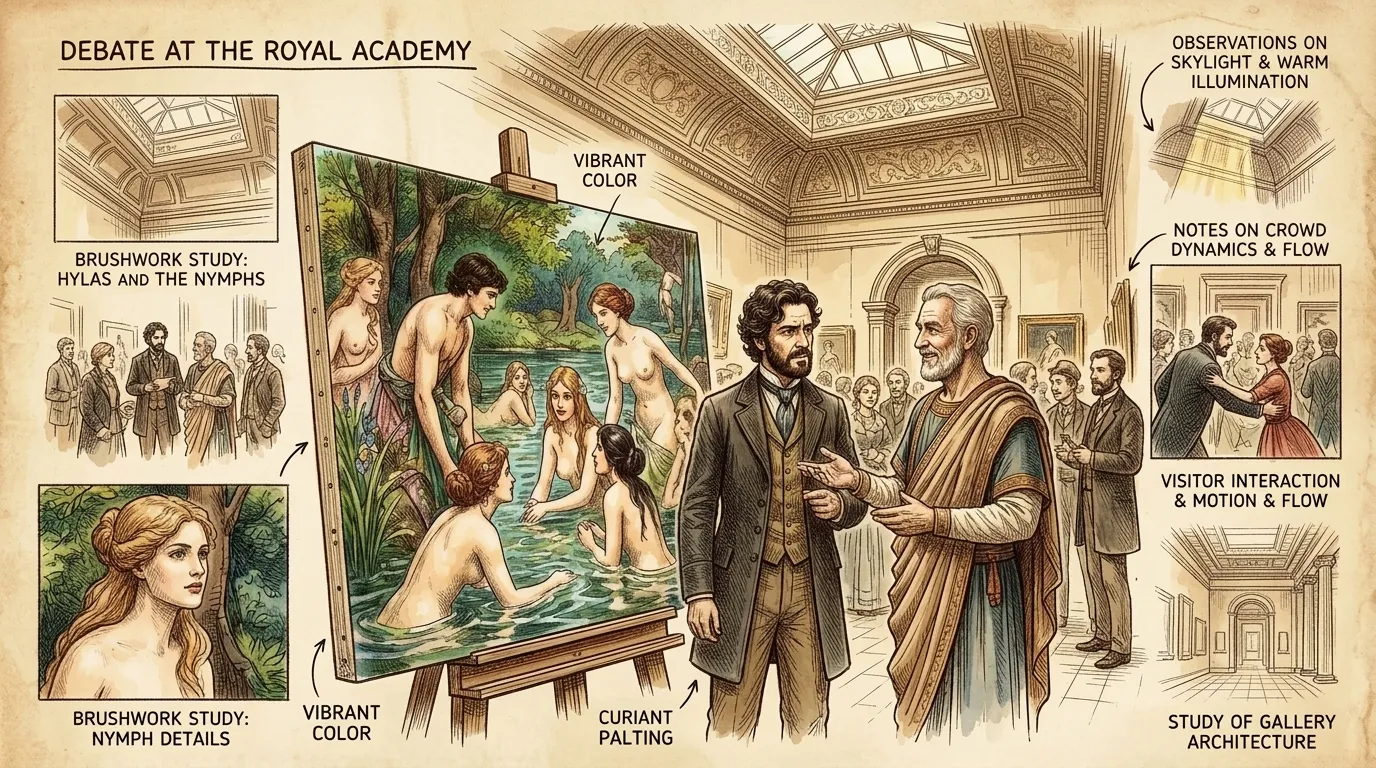
The painting is exhibited at the Royal Academy to mixed reactions. Some are captivated by its beauty, while others are scandalized by its suggestive nature. Critics debate the painting's merits, its treatment of the nude form, and its overall message. The controversy only adds to its allure. The painting becomes a talking point of the London art world.
"A critic remarks, 'The nymphs are alluring, yes, but there's a darkness there, a sense of impending doom. Is this beauty or a warning?' Another retorts, 'Nonsense! It's a celebration of the female form, a testament to the power of myth!'"
Art Fact: The painting's reception was marked by both admiration and controversy.
Page 9
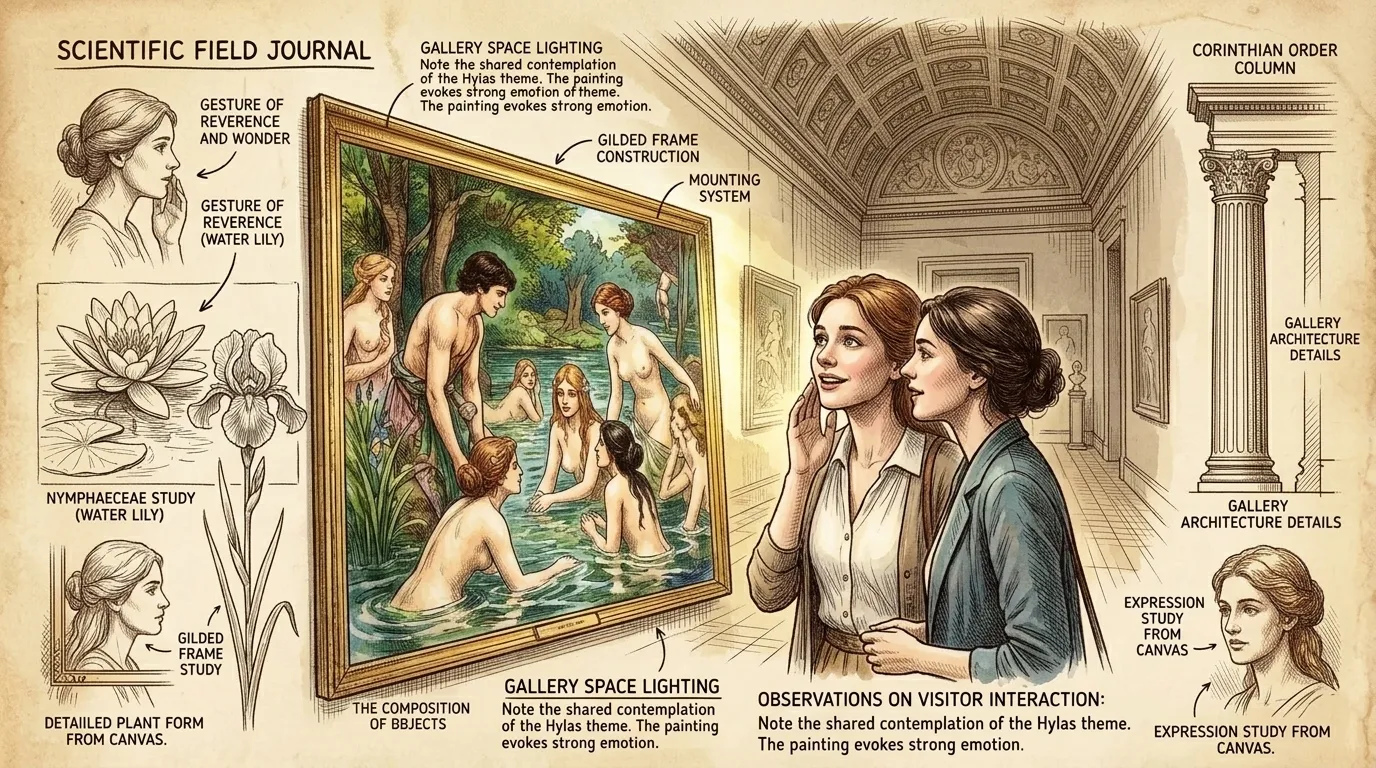
Despite the initial controversy, 'Hylas and the Nymphs' endures as one of Waterhouse's most iconic works. Its beauty continues to captivate audiences, its themes of temptation and innocence resonating across generations. The painting stands as a testament to Waterhouse's skill and his ability to capture the essence of myth.
"A young woman, gazing at the painting, whispers to her companion, 'They are so beautiful, yet so dangerous. I can almost feel their pull. It is like what Helen Keller said, 'The best and most beautiful things in the world cannot be seen or even touched - they must be felt with the heart.''"
Art Fact: The painting's enduring appeal lies in its captivating blend of beauty and danger.
Page 10
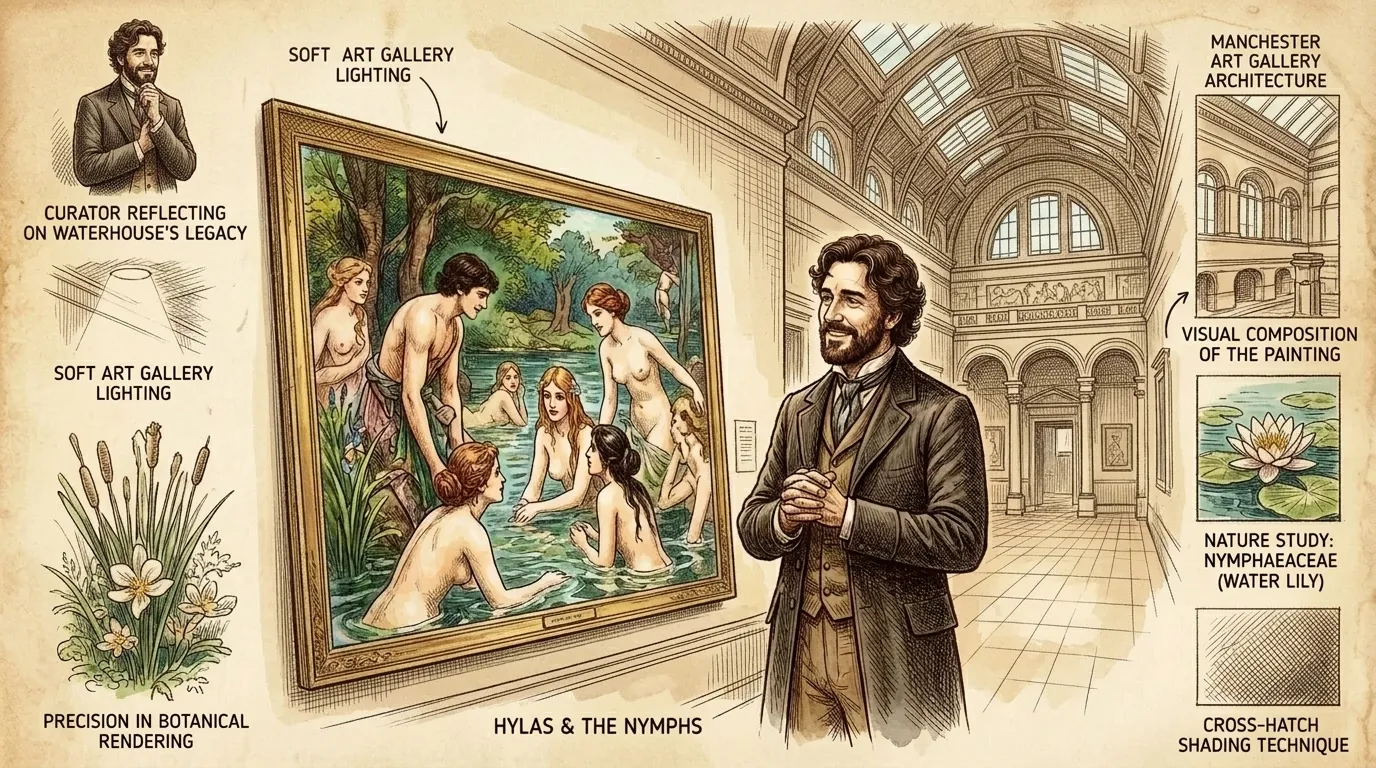
Today, 'Hylas and the Nymphs' resides in the Manchester Art Gallery, where it continues to draw visitors from around the world. Waterhouse's legacy lives on through his art, his paintings capturing the imagination and reminding us of the power of myth and beauty. His work survives, because, as Vincent van Gogh said, 'Art is to console those broken by life.'
"A curator at the Manchester Art Gallery reflects, 'Waterhouse captured something timeless in that painting. The allure of the nymphs, the vulnerability of Hylas...it speaks to something deep within the human psyche.'"
Art Fact: Waterhouse's 'Hylas and the Nymphs' remains a significant artwork in the Manchester Art Gallery's collection.
About this story
- Location: United Kingdom
- Audience: general readers
Questions and answers
Questions and answers about Hylas and the Nymphs by John William Waterhouse (London, UK — 1896)
Read Wonder Arts on your phone
Wonder Arts is available on Android. Get Wonder Arts on Google Play.
More Wonder Arts stories
- Impression, Sunrise by Claude Monet (Paris, France — 1872)
- Irises by Vincent van Gogh (Saint-Rémy, France — 1889)
- Kinetoscope by Thomas Edison (USA — 1889)
- L’Absinthe by Edgar Degas (Paris, France — 1876)
- Laocoön and His Sons by Agesander, Athenodoros, and Polydorus (Vatican City, Rome — c. 40 BC)
- Las Meninas by Diego Velázquez (Madrid, Spain — 1656)