Rouen Cathedral Series by Claude Monet (Rouen, France — 1894)
Rouen Cathedral Series by Claude Monet (Rouen, France — 1894) — an illustrated arts story, set in France. 10 illustrated pages, free to read on Wonder Arts.
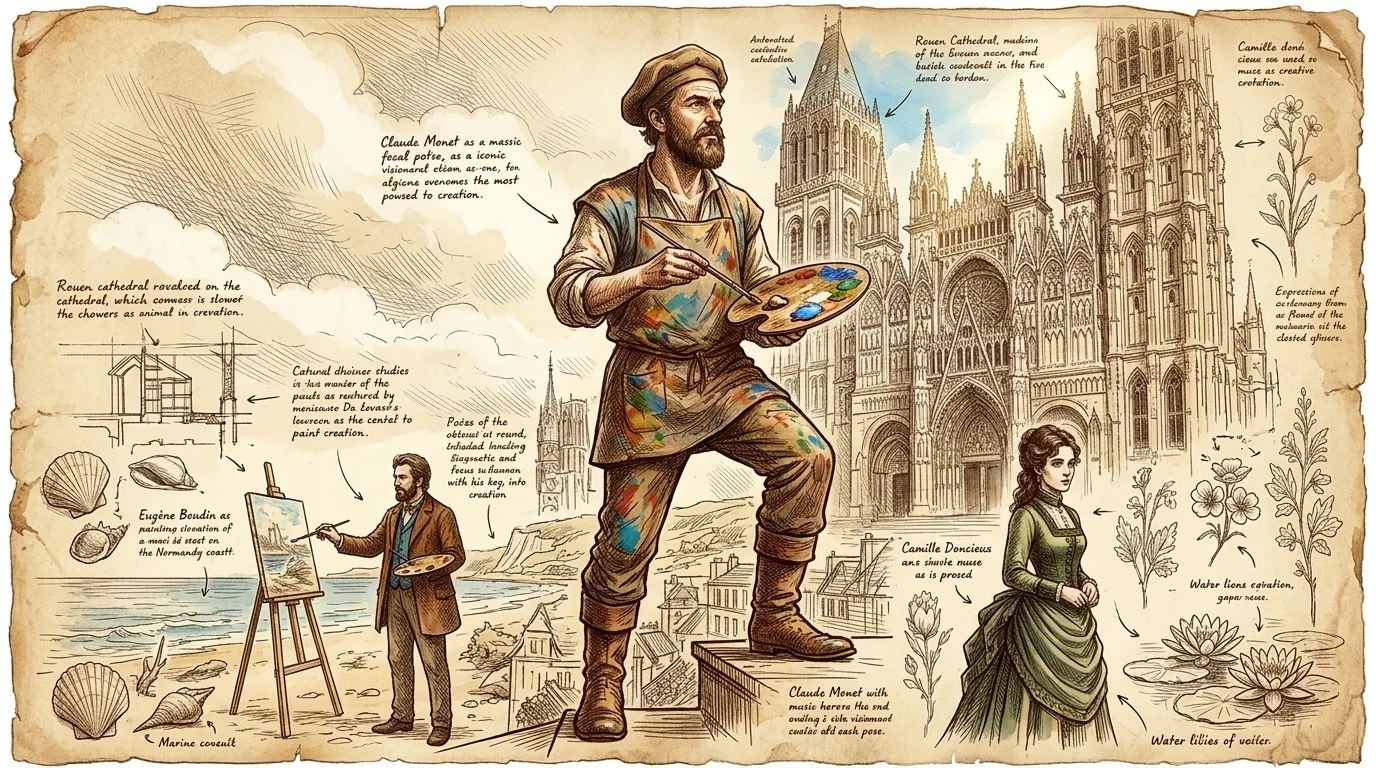
Page 1
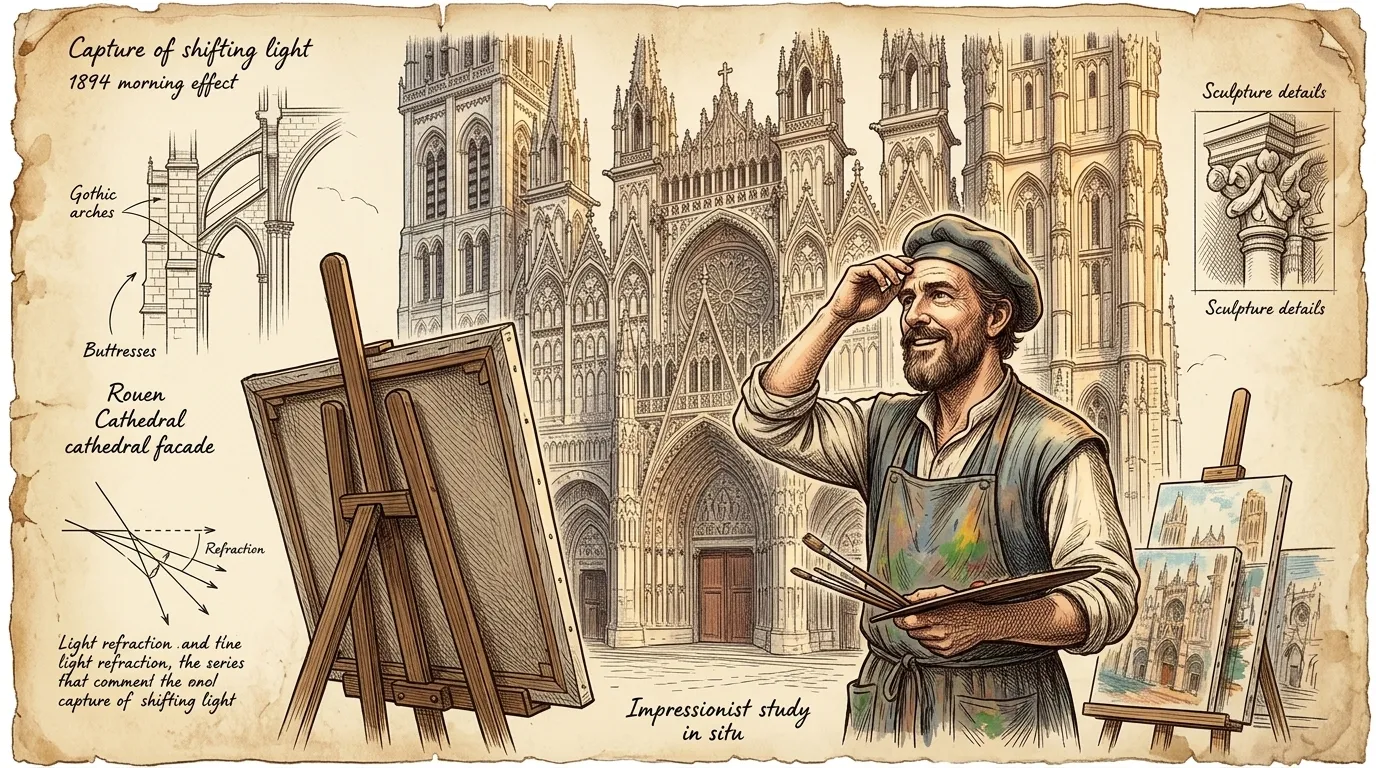
Claude Monet, a titan of Impressionism, stood before a canvas capturing the ethereal facade of Rouen Cathedral in 1894. This was not a singular painting, but a series—an ambitious exploration of light's fleeting dance. Each canvas, roughly 39.5 x 26 inches, immortalizes the cathedral at different times of day, under varying weather conditions. The series, now scattered across prestigious museums, is valued in the hundreds of millions and symbolizes Monet's dedication to capturing ephemeral beauty.
"Monet muttered to himself, brushing a stray hair from his forehead. 'The light...it shifts like a dream. I must seize it before it vanishes.'"
Art Fact: Rouen Cathedral, Facade, Morning Light (1894) is part of a series of over thirty paintings of Rouen Cathedral by Claude Monet. He sought to capture the cathedral's appearance at different times of the day and year, reflecting changes in its appearance under different lighting conditions.
Page 2
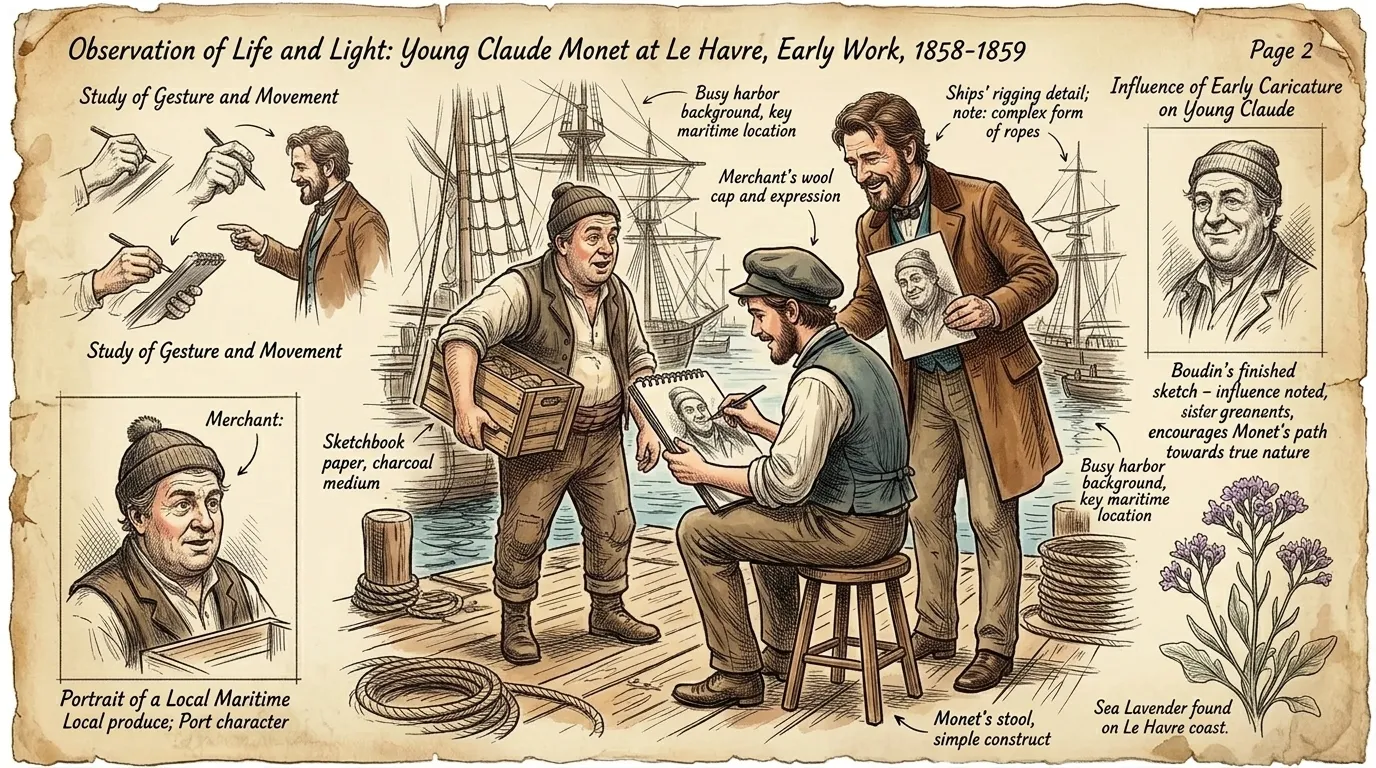
Young Claude, not yet the celebrated Monet, sketched charcoal portraits for pocket change in the bustling port city of Le Havre. His father, Adolphe, envisioned a future in the family's ship-chandling business, but Claude's heart belonged to art. One day, Eugène Boudin, a landscape painter, noticed the boy's talent.
"Boudin examined a caricature of a local merchant, chuckling. 'Remarkable likeness, young man. But tell me, have you ever tried painting the sea?'"
Art Fact: Eugène Boudin was one of the first artists to paint landscapes en plein air (outdoors), a practice that would later become central to Impressionism.
Page 3
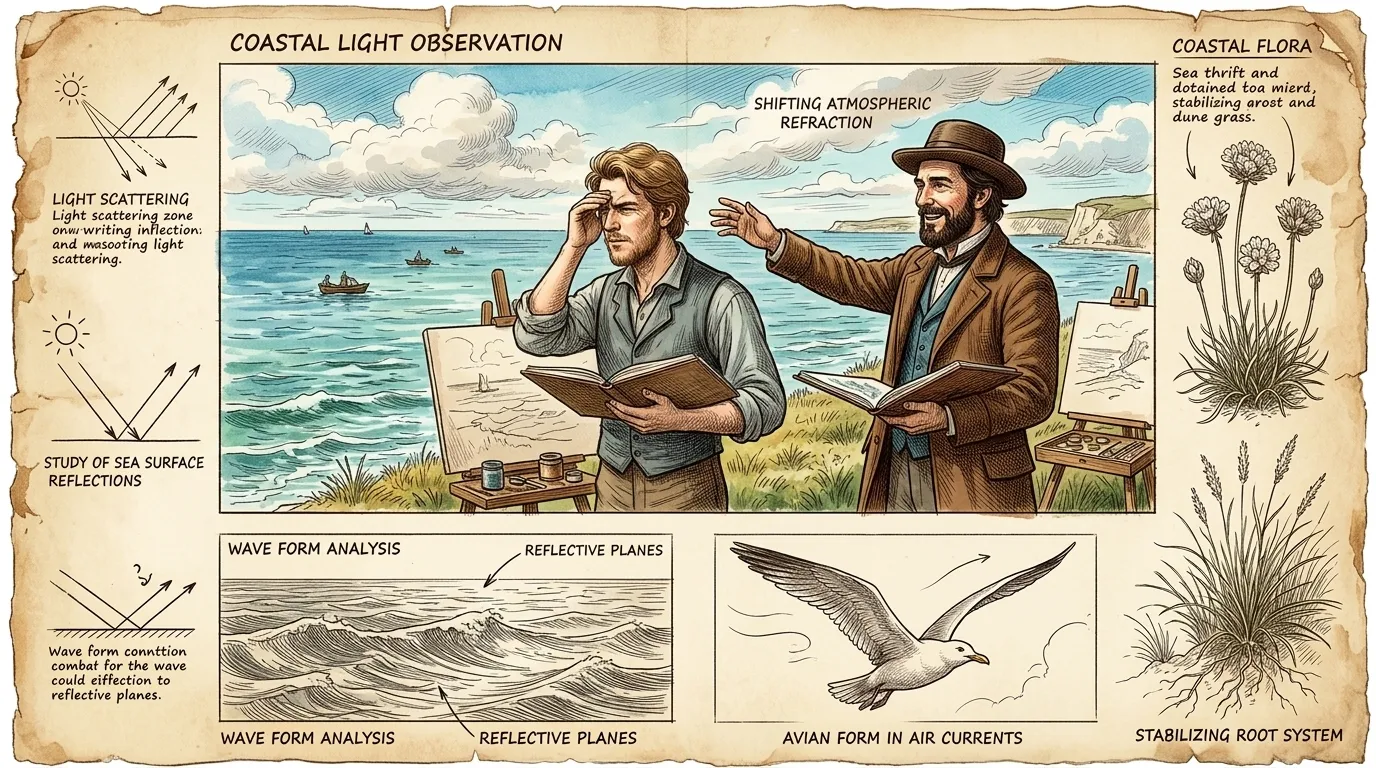
Boudin introduced Monet to 'plein air' painting, urging him to capture the fleeting effects of light and atmosphere directly from nature. Monet found himself transfixed. 'Everything I have learned has come from the sea, and the sky,' Boudin later said. The American philosopher Ralph Waldo Emerson famously said, 'To be yourself in a world that is constantly trying to make you something else is the greatest accomplishment.' Monet found this sentiment in his dedication to open-air painting and capturing the transient effects of light, a departure from the studio-bound conventions of the time.
"Monet, squinting at the Channel, asked 'But how can I capture the shifting light, Monsieur Boudin? It never stays still!' Boudin replied, 'That, my boy, is the challenge. Seize the moment!'"
Art Fact: Painting 'en plein air' allowed Impressionist artists to observe and record the subtle changes in light and color that occur throughout the day.
Page 4
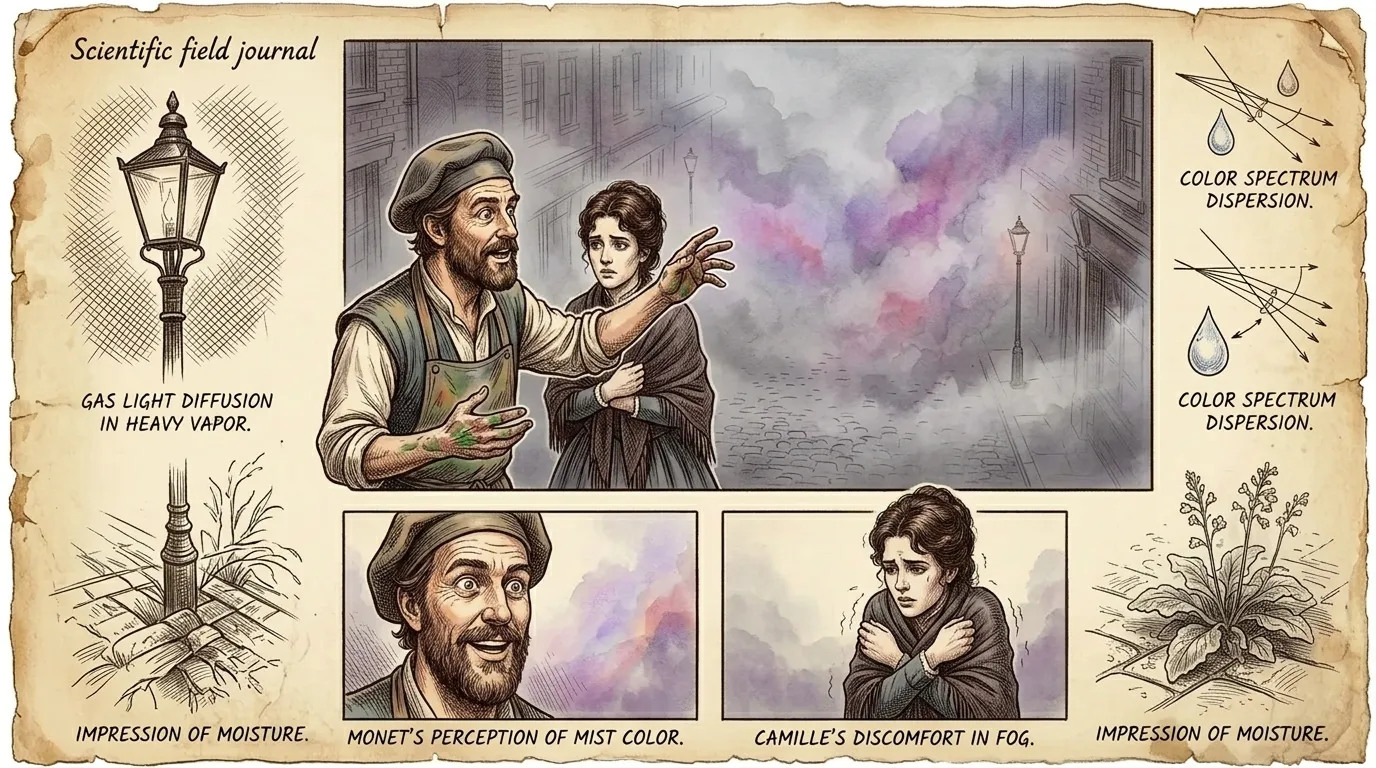
During the Franco-Prussian War, Monet sought refuge in London. The city's dense fogs, far from depressing him, revealed a new spectrum of colors—subtle grays, pinks, and violets that he had never noticed before. This discovery transformed his palette and deepened his understanding of light.
"Camille Doncieux, Monet's companion, shivered slightly, pulling her shawl tighter. 'The fog is so thick, Claude! I can barely see across the street.' Monet, eyes wide, replied, 'But look, Camille! It's not just gray! See the violet, the rose...the city is transformed!'"
Art Fact: Monet's time in London exposed him to the work of J.M.W. Turner, whose paintings of light and atmosphere further influenced his artistic development.
Page 5
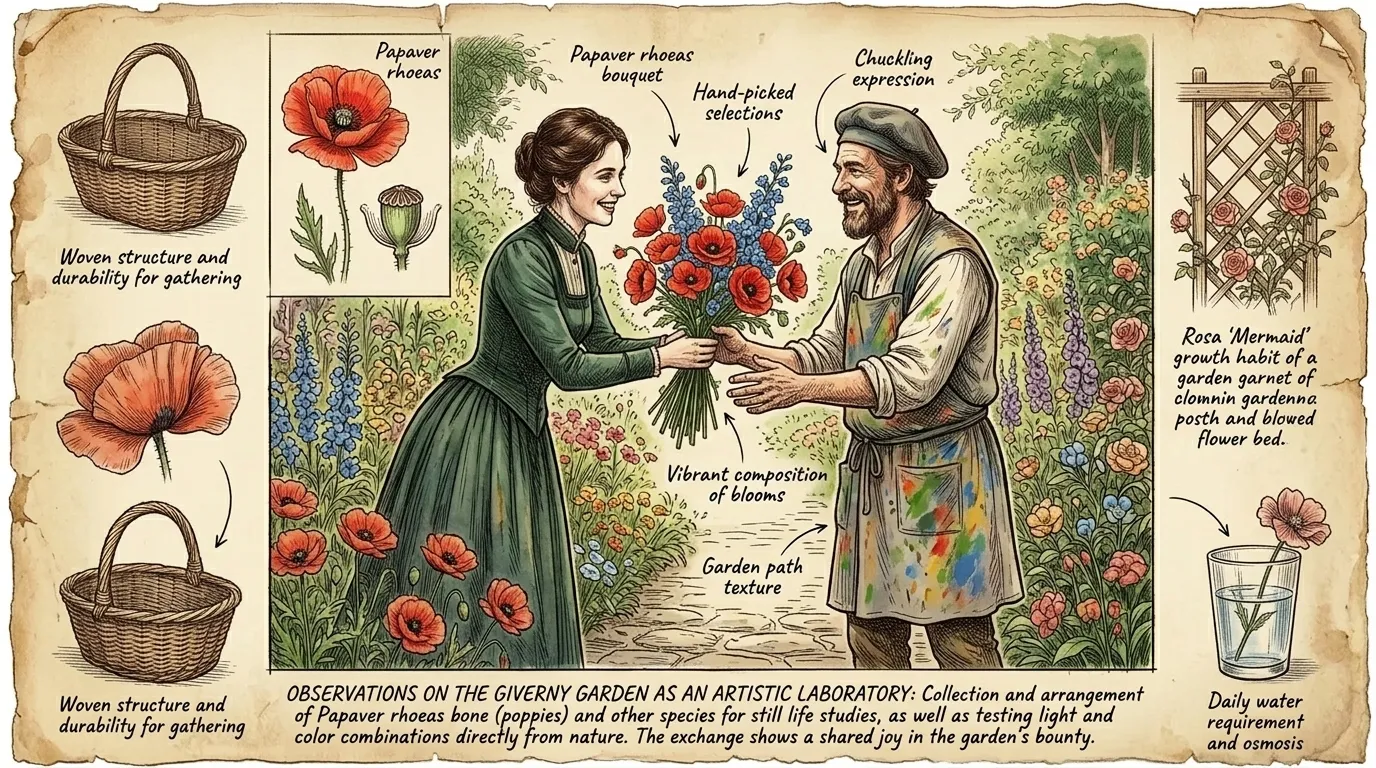
In 1883, Monet settled in Giverny, a village northwest of Paris. He transformed his garden into a vibrant tapestry of colors and textures, planting flowers from around the world. This garden became his primary source of inspiration, a living laboratory for his artistic experiments.
"Alice Hoschedé, Monet's second wife, smiled as she handed him a bouquet of poppies. 'The garden is a riot of color today, Claude. Another masterpiece waiting to be born?' Monet chuckled, taking the flowers. 'It is endless, Alice. Each day, a new symphony of light and shadow.'"
Art Fact: Monet's garden at Giverny was meticulously designed and maintained, reflecting his artistic sensibilities and providing him with endless inspiration.
Page 6
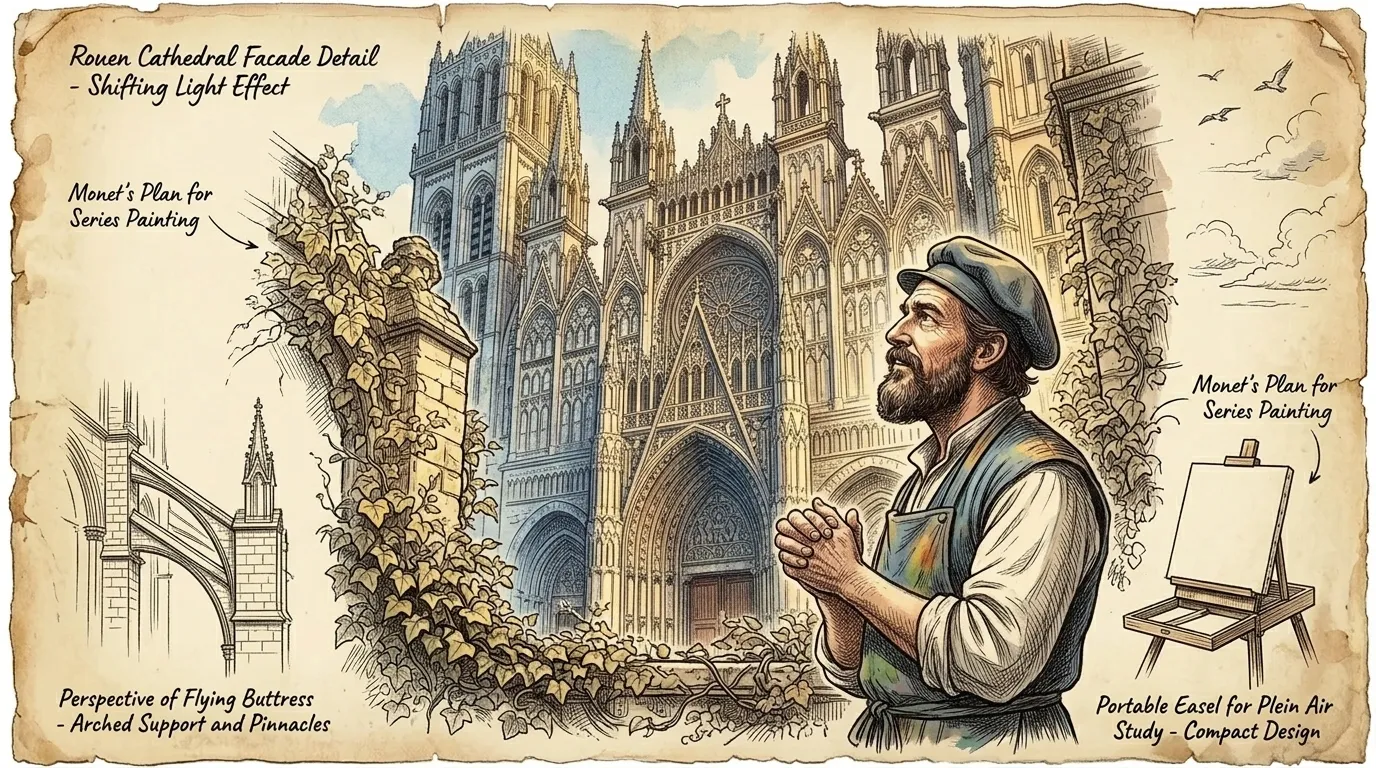
In 1892, Monet traveled to Rouen, drawn by the imposing facade of the cathedral. He saw in its gothic architecture a new challenge—to capture the ever-changing effects of light on a complex, textured surface. He wrote to his wife, Alice, about his fascination, describing the cathedral as 'an object of intense interest'.
"Monet, gazing up at the cathedral, said to himself, 'It is a mountain of stone, but also a canvas of light. How to capture such grandeur, such detail?'"
Art Fact: Rouen Cathedral is a masterpiece of Gothic architecture, known for its soaring spires, intricate carvings, and stained-glass windows.
Page 7
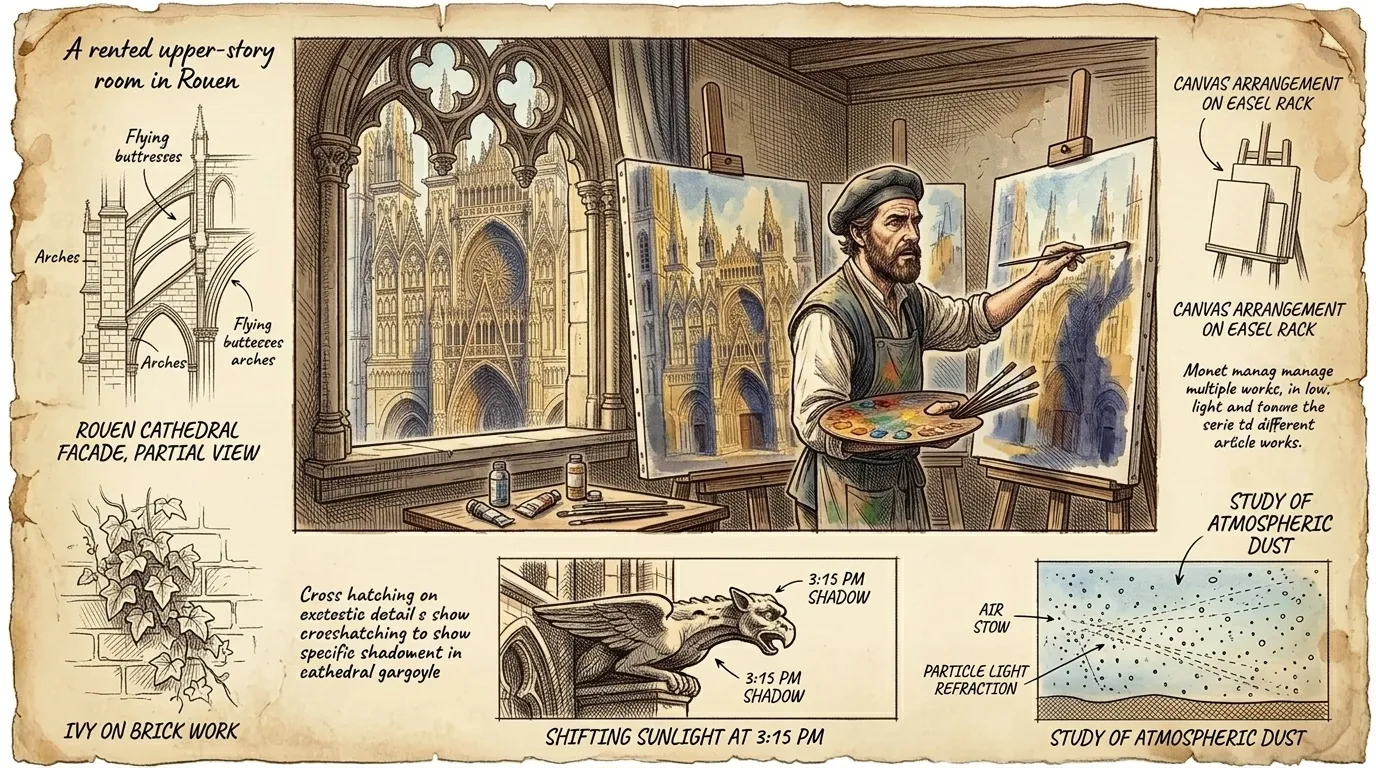
Monet rented spaces across from the cathedral, setting up multiple canvases to capture the building at different times of day. He worked simultaneously on several paintings, switching between them as the light shifted. 'I want to paint the air in which the bridge, the house and the boat are to be found,' he explained, seeking to evoke the atmosphere of the scene.
"Monet, palette in hand, turned to his assistant. 'Quickly, Pierre! The light on the west facade is fading. Bring me the canvas with the violet underpainting!'"
Art Fact: Monet's simultaneous work on multiple canvases allowed him to capture the fleeting effects of light and atmosphere.
Page 8
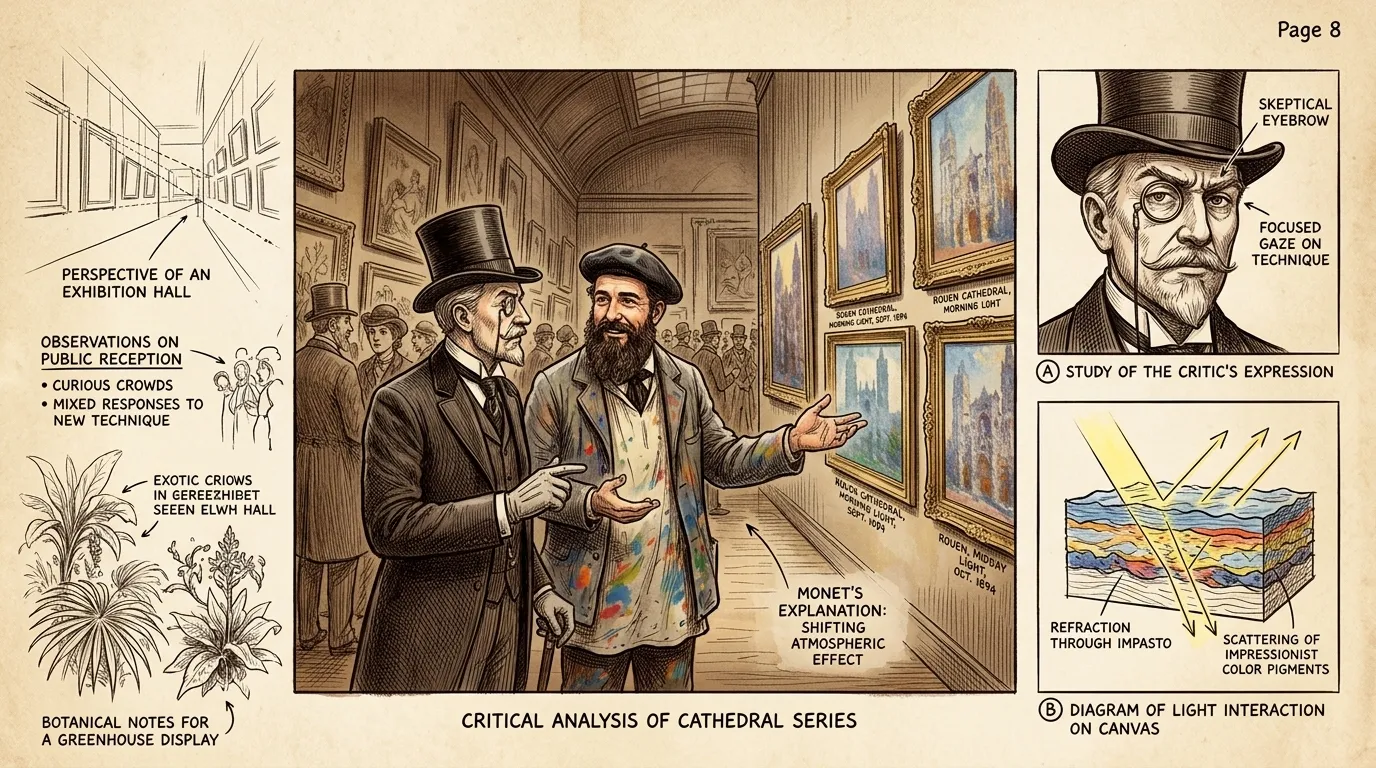
When Monet exhibited the Rouen Cathedral series, the reaction was mixed. Some critics praised his mastery of light and color, while others dismissed the paintings as repetitive and lacking in substance. 'He is only an eye,' one critic wrote, both praising and condemning his dedication to visual sensation.
"At an exhibition, a critic approaches Monet. 'Monsieur Monet, these are...interesting. But surely, one cathedral is enough? Why so many?' Monet replied, 'Because the light is never the same. It transforms the very stone!'"
Art Fact: The Rouen Cathedral series was both praised and criticized for its repetitive subject matter and its focus on the fleeting effects of light and color.
Page 9
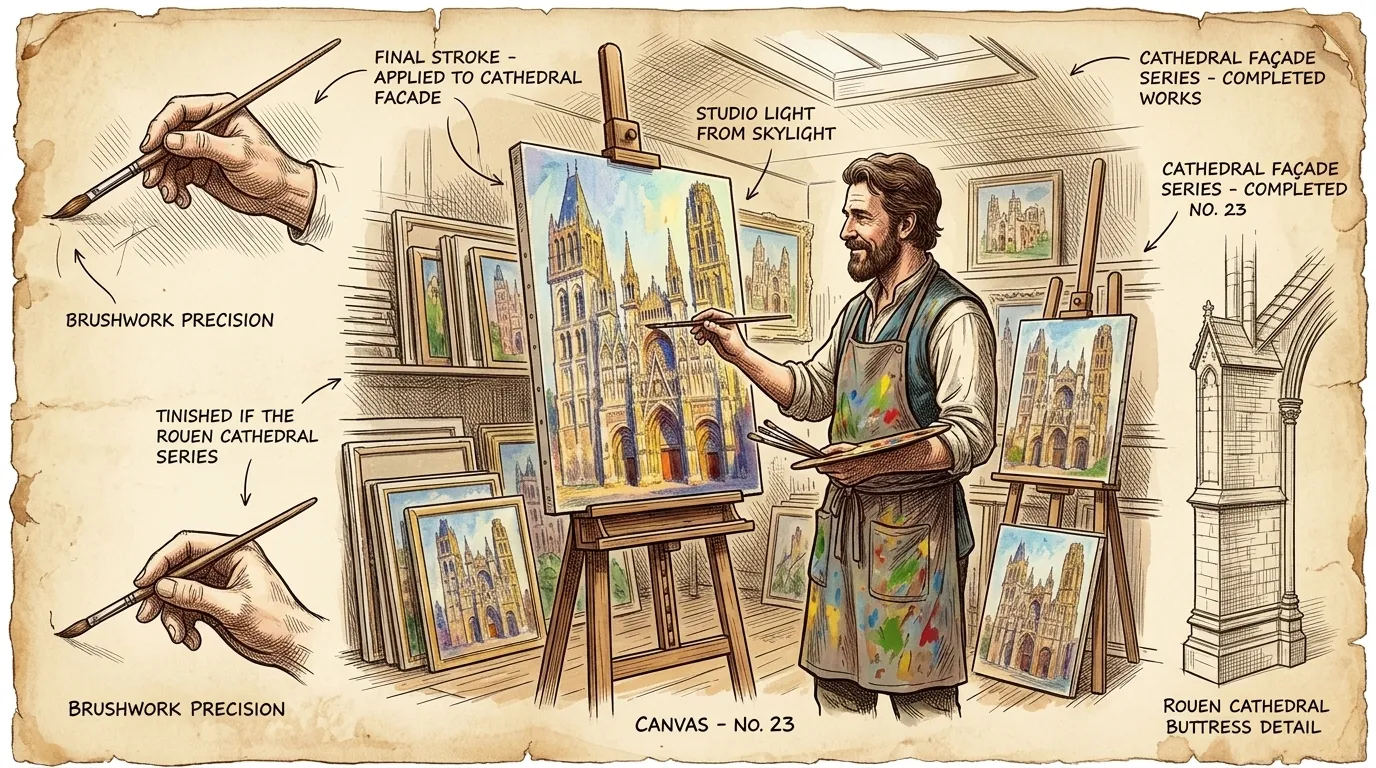
Despite the criticism, Monet knew he had achieved something significant. He had captured not just the likeness of a building, but the essence of light itself. 'Other people paint a bridge, a house, a boat, and that's the end. They see only the object,' Monet said. 'I wanted to paint the air in which the bridge, the house and the boat are to be found, the beauty of the air around them, and that is nothing else but the impossible.'
"Monet, back in his studio, brushed a final stroke on a canvas. 'The light...it will always be there, even when I am gone. And these paintings will remember it.'"
Art Fact: Monet's Rouen Cathedral series helped to solidify his reputation as a leading figure in the Impressionist movement and paved the way for future generations of artists.
Page 10
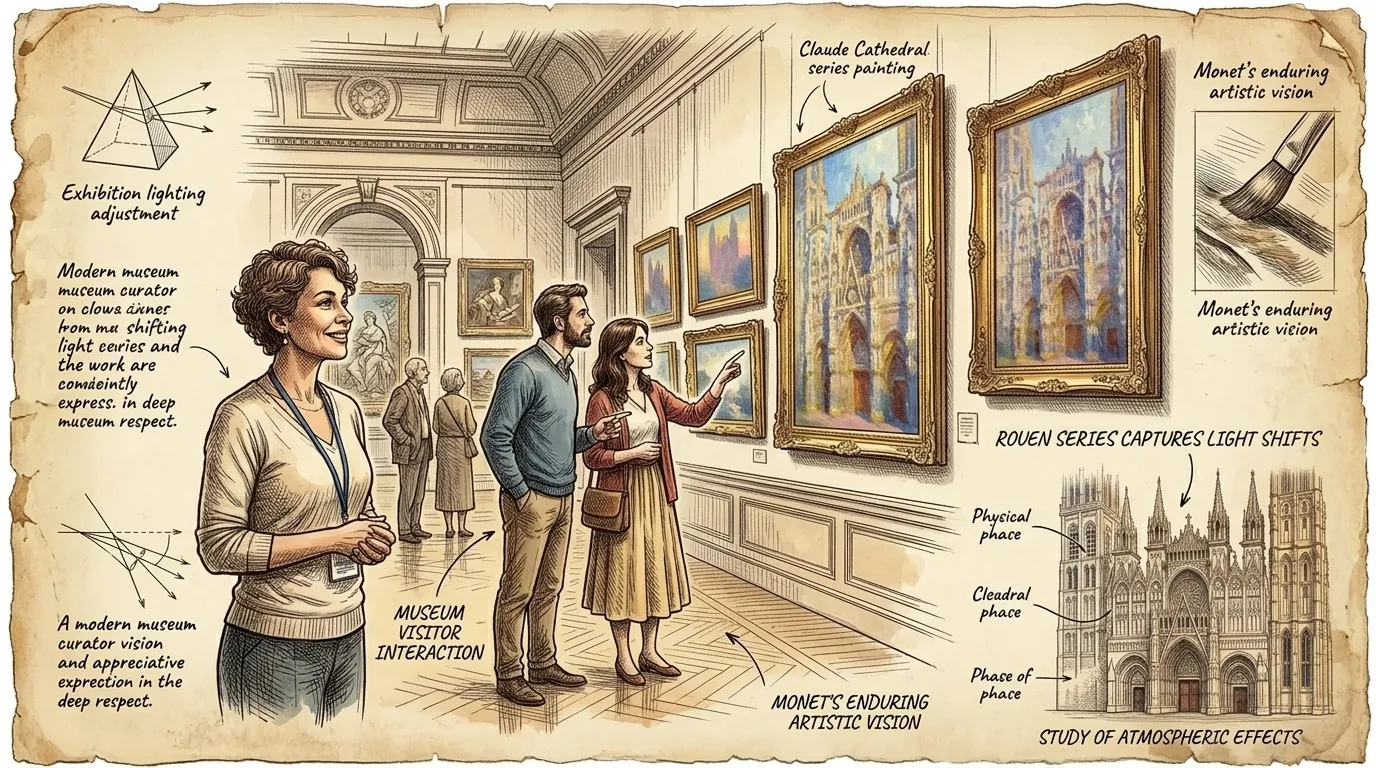
Today, Monet's Rouen Cathedral series hangs in museums around the world, captivating viewers with its luminous beauty. The paintings remind us that even the most familiar subject can be transformed by the ever-changing play of light, and that true art lies in capturing the ephemeral. Monet's vision survives forever, a testament to his dedication and his extraordinary eye.
"A museum curator smiles, watching visitors gaze at Monet's paintings. 'He showed us how to see,' she remarks. 'Not just the cathedral, but the light itself.'"
Art Fact: Monet's Rouen Cathedral series continues to inspire artists and art lovers around the world, a testament to his extraordinary vision and his mastery of light and color.
About this story
- Location: France
- Audience: general readers
Questions and answers
Questions and answers about Rouen Cathedral Series by Claude Monet (Rouen, France — 1894)
Read Wonder Arts on your phone
Wonder Arts is available on Android. Get Wonder Arts on Google Play.
More Wonder Arts stories
- Roundhay Garden Scene by Louis Le Prince (Leeds, UK — 1888)
- Saint George by Donatello (Florence, Italy — 1417)
- Saint Longinus by Gian Lorenzo Bernini (Vatican City — 1638)
- Saint Mark by Donatello (Florence, Italy — 1413)
- Salisbury Cathedral (Salisbury, UK — 1258)
- Sallie Gardner at a Gallop by Eadweard Muybridge (California, USA — 1878)