Roundhay Garden Scene by Louis Le Prince (Leeds, UK — 1888)
Roundhay Garden Scene by Louis Le Prince (Leeds, UK — 1888) — an illustrated arts story, set in United Kingdom. 10 illustrated pages, free to read on Wonder Arts.
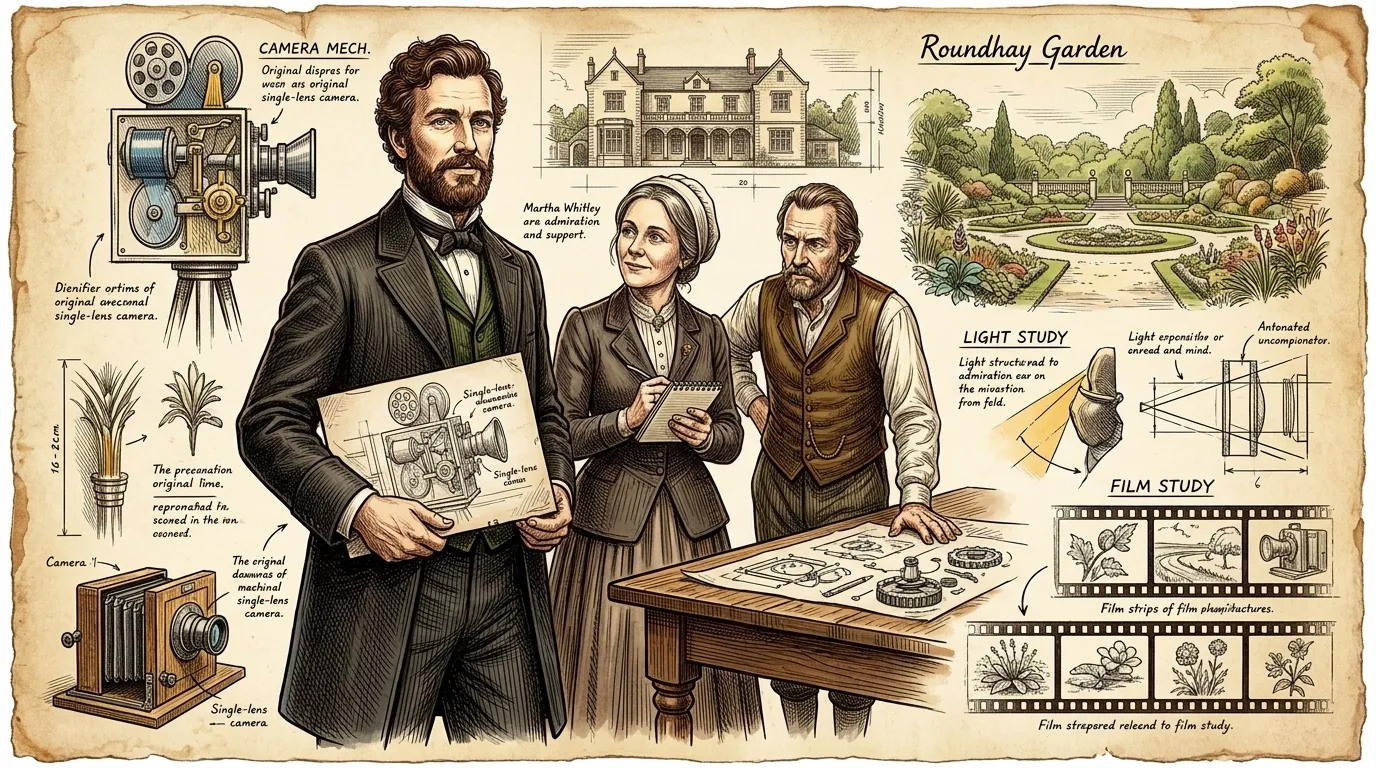
Page 1
Louis Le Prince, a visionary inventor, stands proudly before his creation: the Roundhay Garden Scene. This short film, captured in 1888 in Leeds, UK, is considered one of the earliest surviving motion pictures. Only a few seconds long, this glimpse into the past represents a pivotal moment in cinematic history. The film, a mere 2.11 seconds, was shot at 12 frames per second, showcasing Le Prince's groundbreaking work. Its cultural value is immeasurable, a testament to early experimentation with moving images.
""This isn't just moving pictures, Sarah," Louis murmurs, adjusting his camera. "This is history in the making. Each frame, a moment captured for eternity.""
Art Fact: The Roundhay Garden Scene, filmed at Oakwood Grange, Roundhay, Leeds, is a cornerstone of early cinema. Louis Le Prince's invention captured his family at play, a poignant snapshot of life in the late 19th century.
Page 2
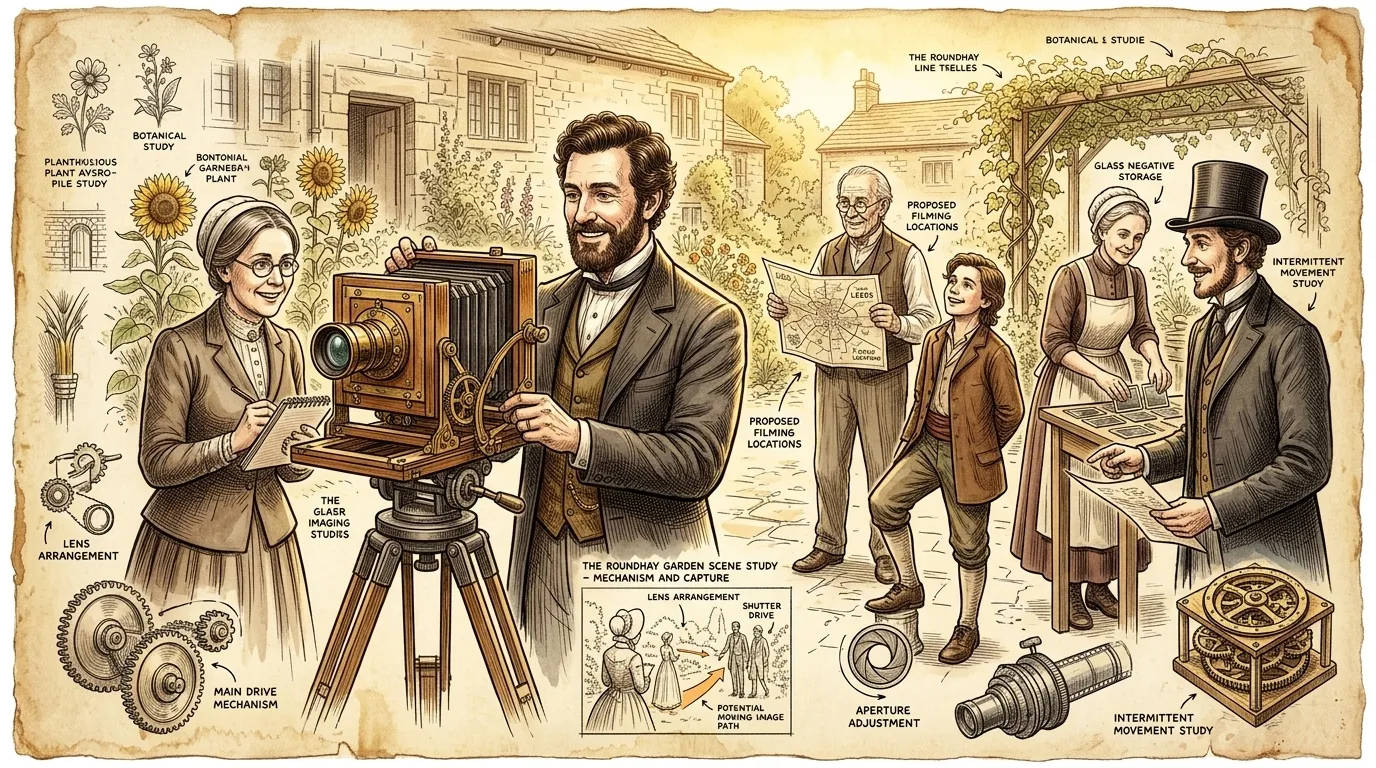
Before venturing into motion pictures, Louis Le Prince immersed himself in still photography. He experimented with multiple lens cameras and photographic projection, laying the foundation for his future inventions. These early explorations allowed him to understand the nuances of light and image capture. He met John Whitley who would later become his Father-in-law and the two worked in Whitley's business.
""Photography isn't just about capturing a single moment, John," Louis explains, adjusting the lens on his camera. "It's about understanding the light, the shadows, and how they interact to create an image. It's about creating something beautiful.""
Art Fact: Le Prince's early photography experiments, particularly his work with multi-lens cameras, provided crucial insights that would later inform his invention of the motion picture camera.
Page 3
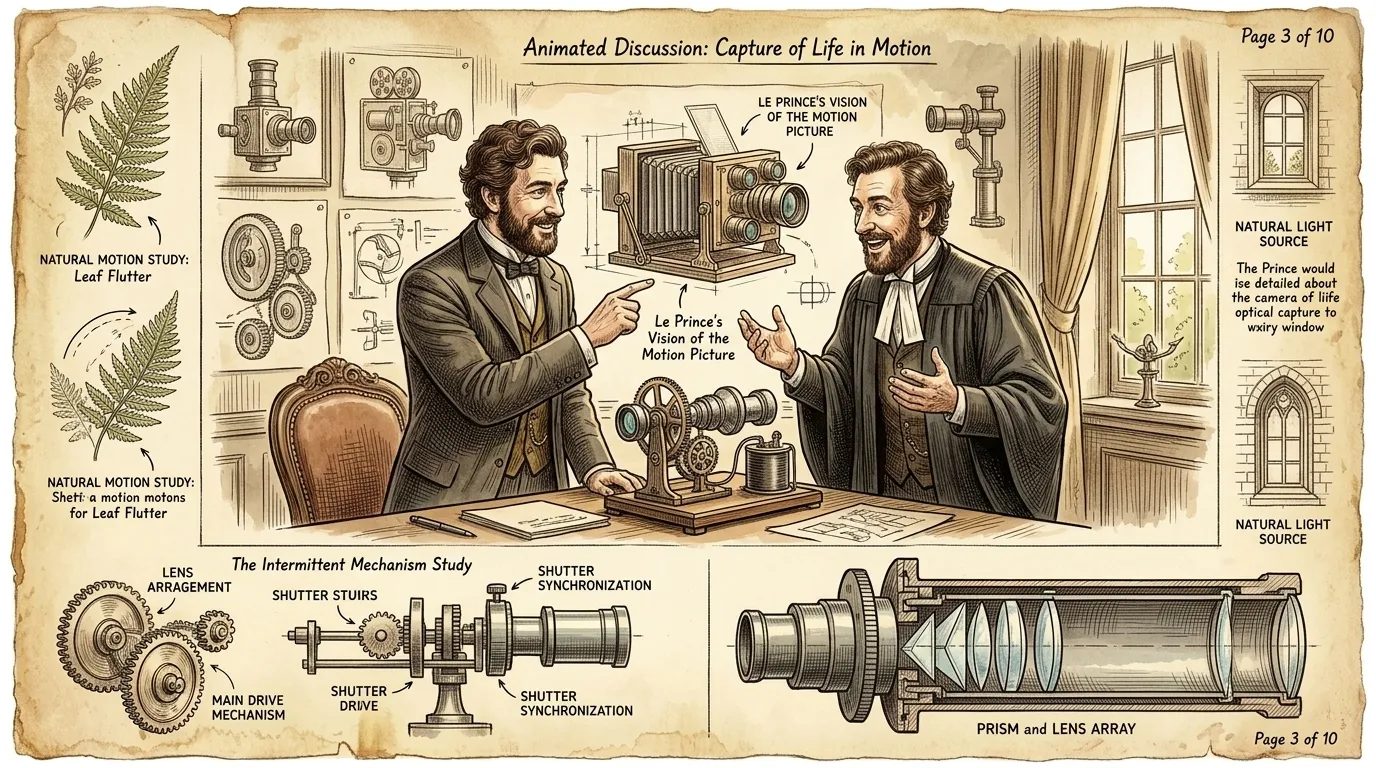
A pivotal moment in Le Prince's journey occurred when he encountered Wordsworth Donisthorpe, a British barrister and inventor also fascinated by moving images. Their discussions fueled Le Prince's determination to create a device that could capture life in motion. "As Isaac Newton said, 'If I have seen further it is by standing on the shoulders of giants,'" Le Prince said to Donisthorpe, acknowledging the importance of collaboration.
""Imagine, Louis," Donisthorpe exclaims, his eyes gleaming with excitement. "A world where we can capture entire scenes, not just static images!" Le Prince nods, equally enthusiastic. "It is a challenge, but one I believe we can conquer.""
Art Fact: Wordsworth Donisthorpe, a key figure in the early development of cinema, played a significant role in encouraging and inspiring Louis Le Prince to pursue his groundbreaking work in motion pictures.
Page 4
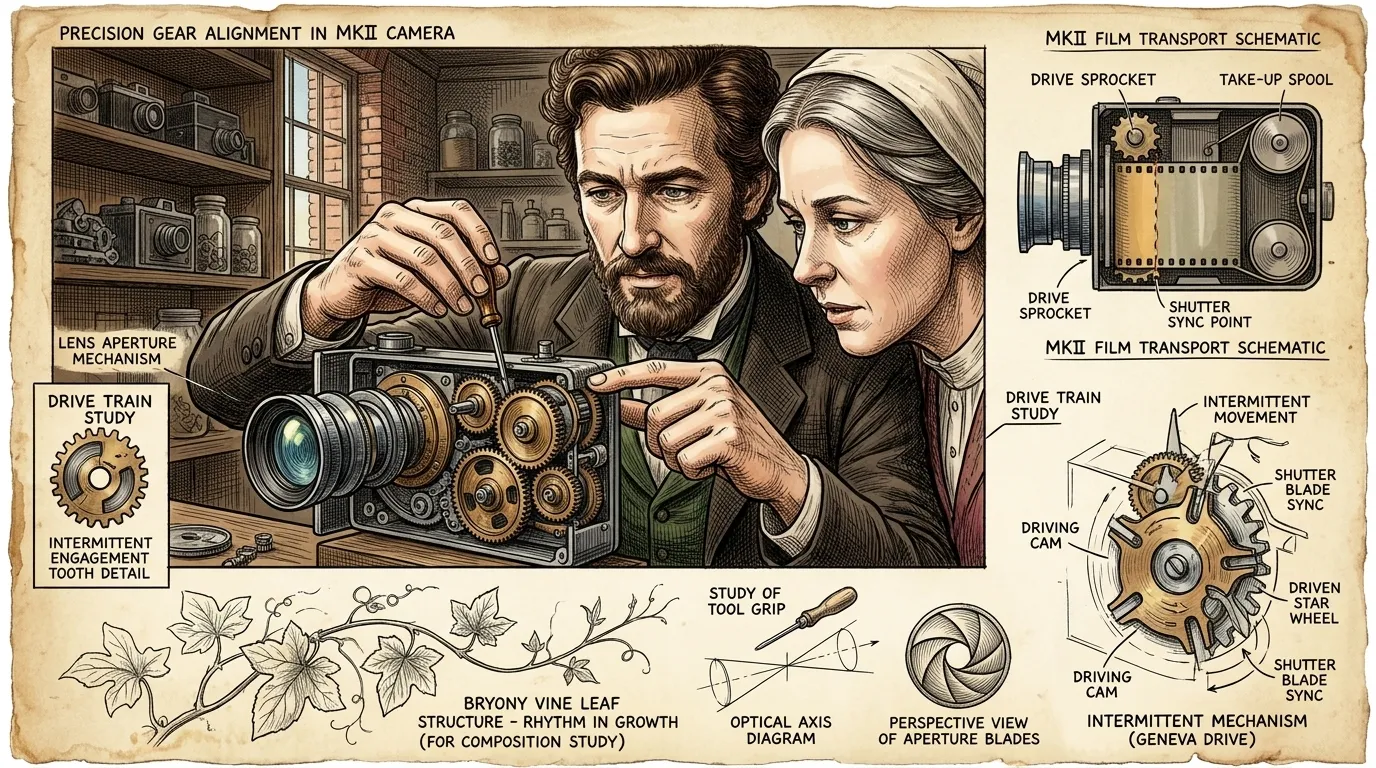
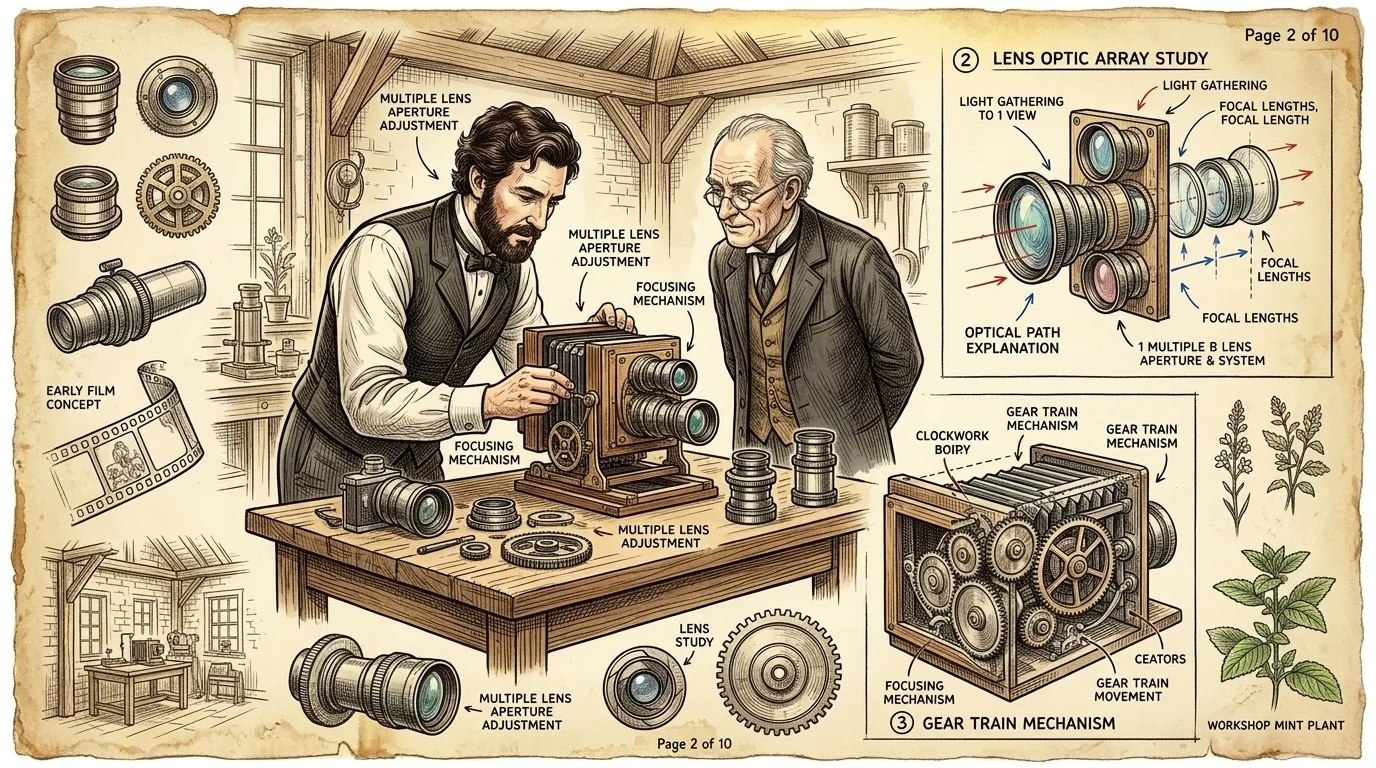
Le Prince's inventive mind led to the design and construction of the MKII camera, a revolutionary device capable of capturing sequences of images. The creation was painstaking. Each component was carefully crafted and assembled. The camera, a complex array of gears and lenses, represented a significant leap forward in cinematic technology.
""The key, Martha, is the precision," Louis explains to his wife, Martha Whitley, as he adjusts a gear within the camera. "Each part must work in perfect harmony to capture the motion.""
Art Fact: The MKII camera, designed and built by Louis Le Prince, was instrumental in capturing the Roundhay Garden Scene and other early motion picture experiments.
Page 5
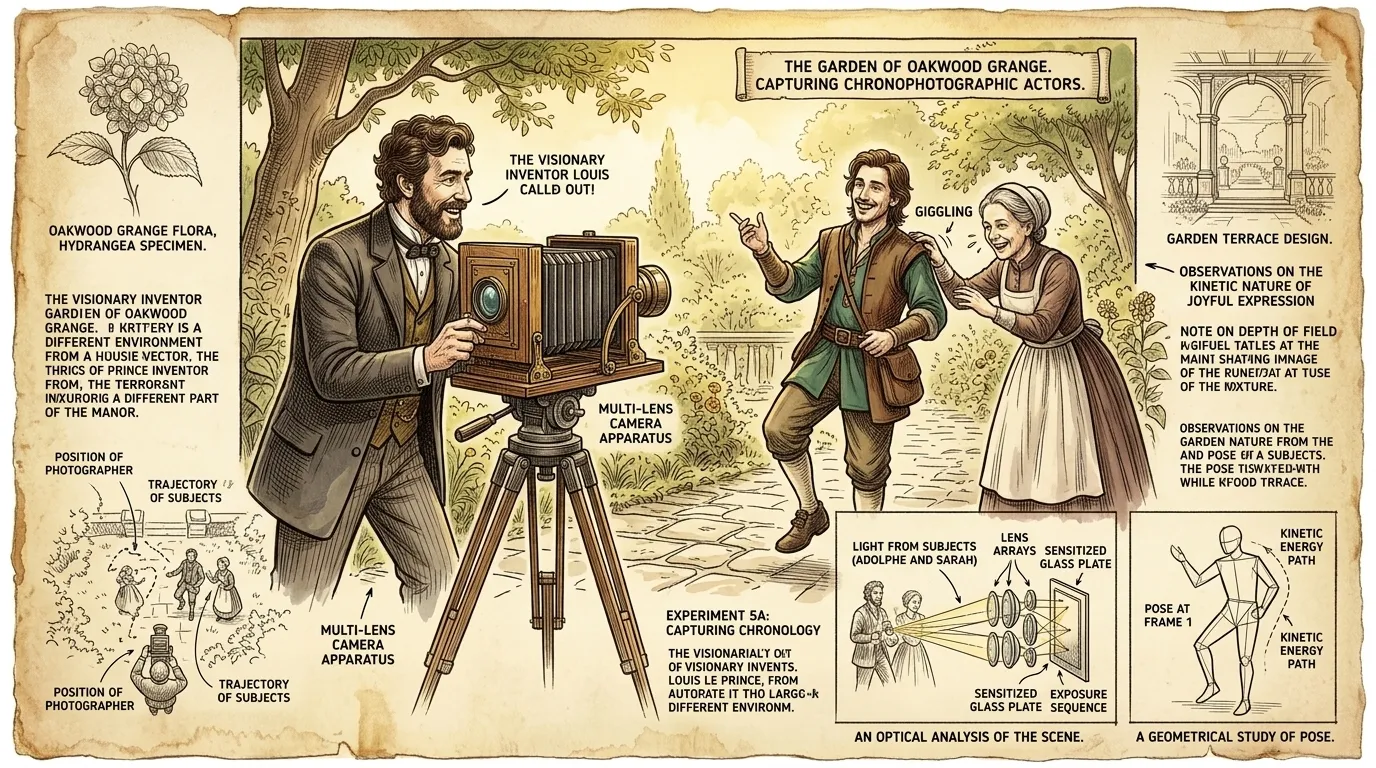
Oakwood Grange, the Whitley family estate, became the backdrop for Le Prince's cinematic experiments. His family members, including his son Adolphe and his mother-in-law Sarah Whitley, became willing participants in his early films. Capturing their everyday moments in the garden, turning the ordinary into the extraordinary.
""Smile for the camera, Adolphe!" Louis calls out, adjusting the focus. "We're making history today!" Sarah Whitley giggles, playfully swatting at Adolphe."
Art Fact: Oakwood Grange, the location of the Roundhay Garden Scene, provided a safe and familiar environment for Louis Le Prince's pioneering film experiments.
Page 6
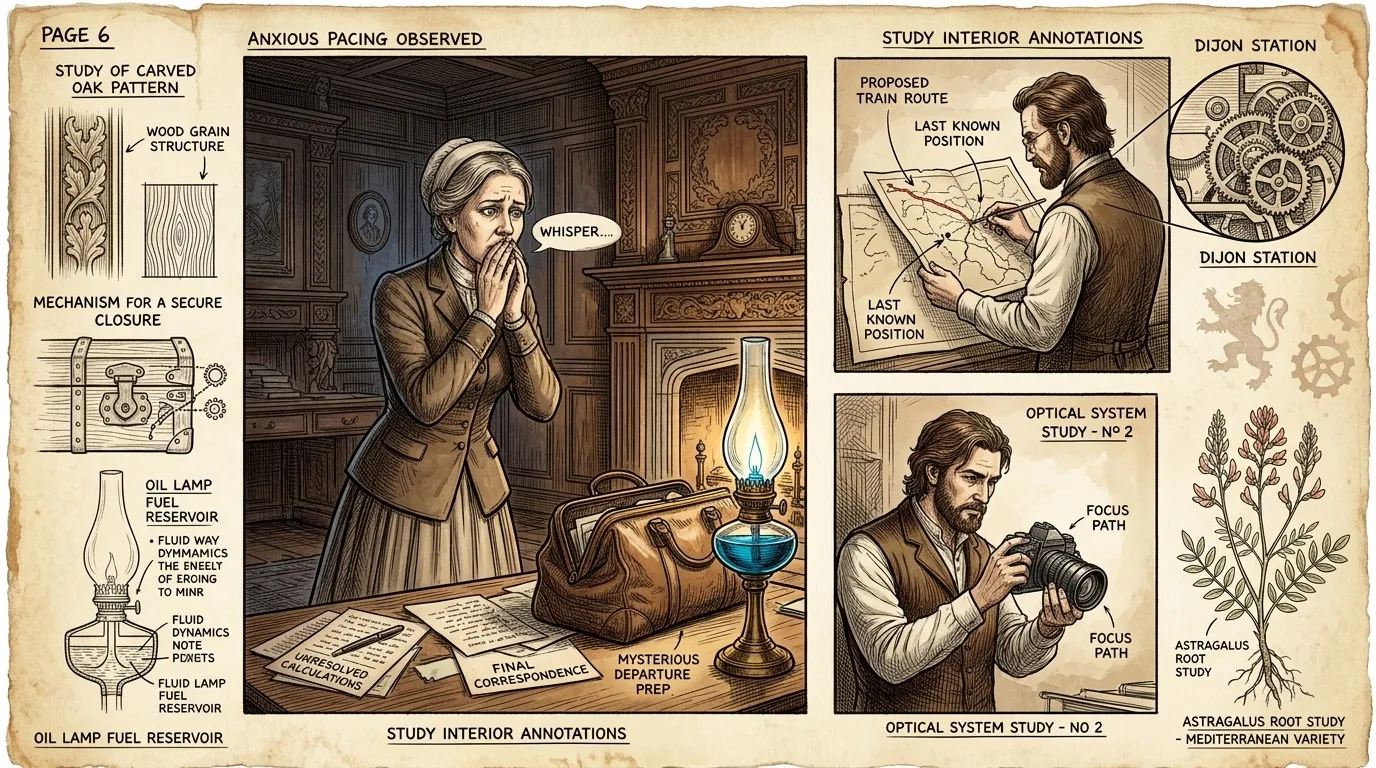
In 1890, Louis Le Prince mysteriously vanished while traveling by train in France. His disappearance remains unsolved to this day, leaving a cloud of intrigue over his groundbreaking work. "The world will little note, nor long remember what we say here, but it can never forget what they did here," someone said, echoing Abraham Lincoln's words, highlighting the lasting impact of those early film pioneers.
""Where could he be?" Martha whispers, pacing anxiously. "He simply vanished... with all his notes and inventions.""
Art Fact: The unsolved disappearance of Louis Le Prince in 1890 adds a layer of mystery to his already compelling story, raising questions about the potential motives behind his vanishing.
Page 7
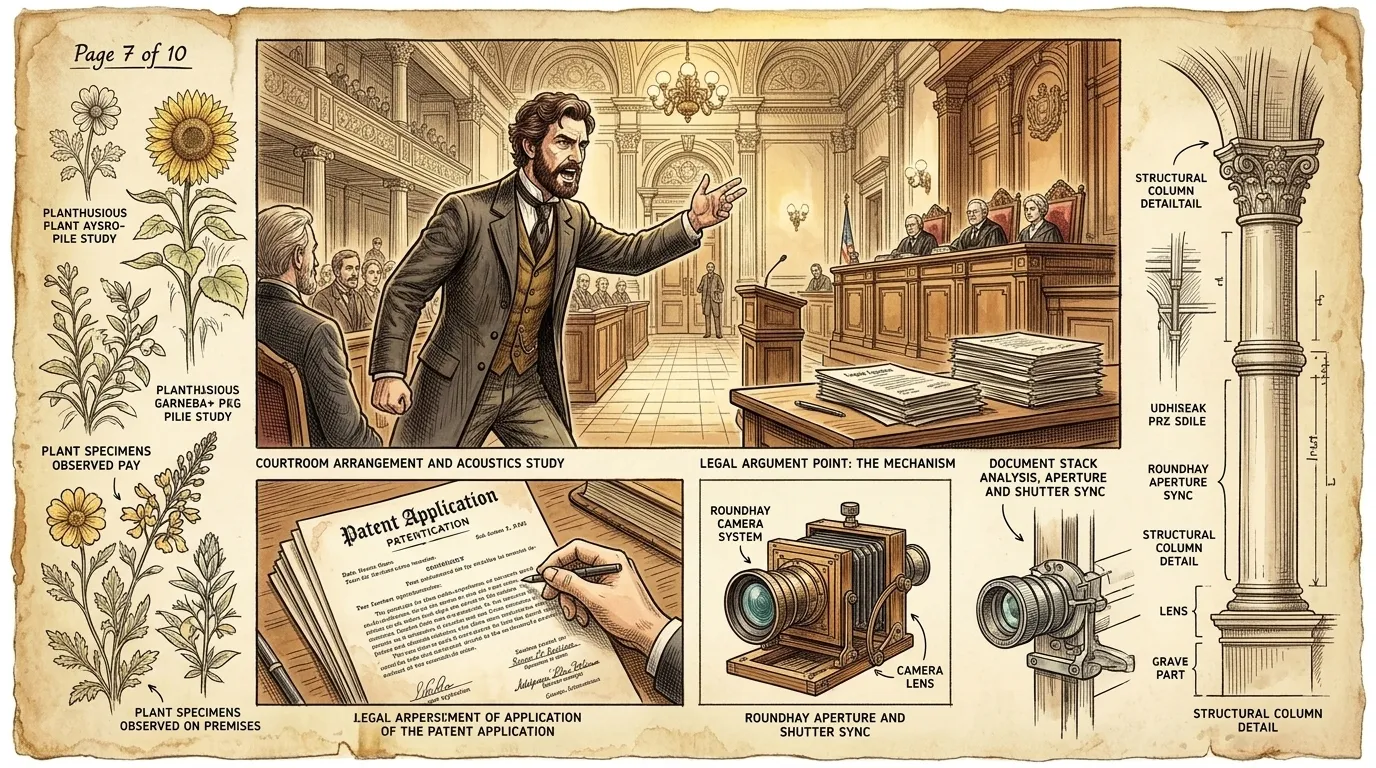
Following Le Prince's disappearance, his son Adolphe fought tirelessly to secure his father's patents, battling against Thomas Edison's claims to the invention of motion pictures. The legal battle became a fight for recognition of Le Prince's pioneering contributions. However, Edison would win the patent to the motion picture camera and much of the credit for its invention.
""My father deserves recognition for his work," Adolphe argues passionately in court. "He was the true pioneer of motion pictures, not Edison!""
Art Fact: The patent battle between Adolphe Le Prince and Thomas Edison underscores the complex history of the invention of motion pictures, highlighting the contested claims of different inventors.
Page 8
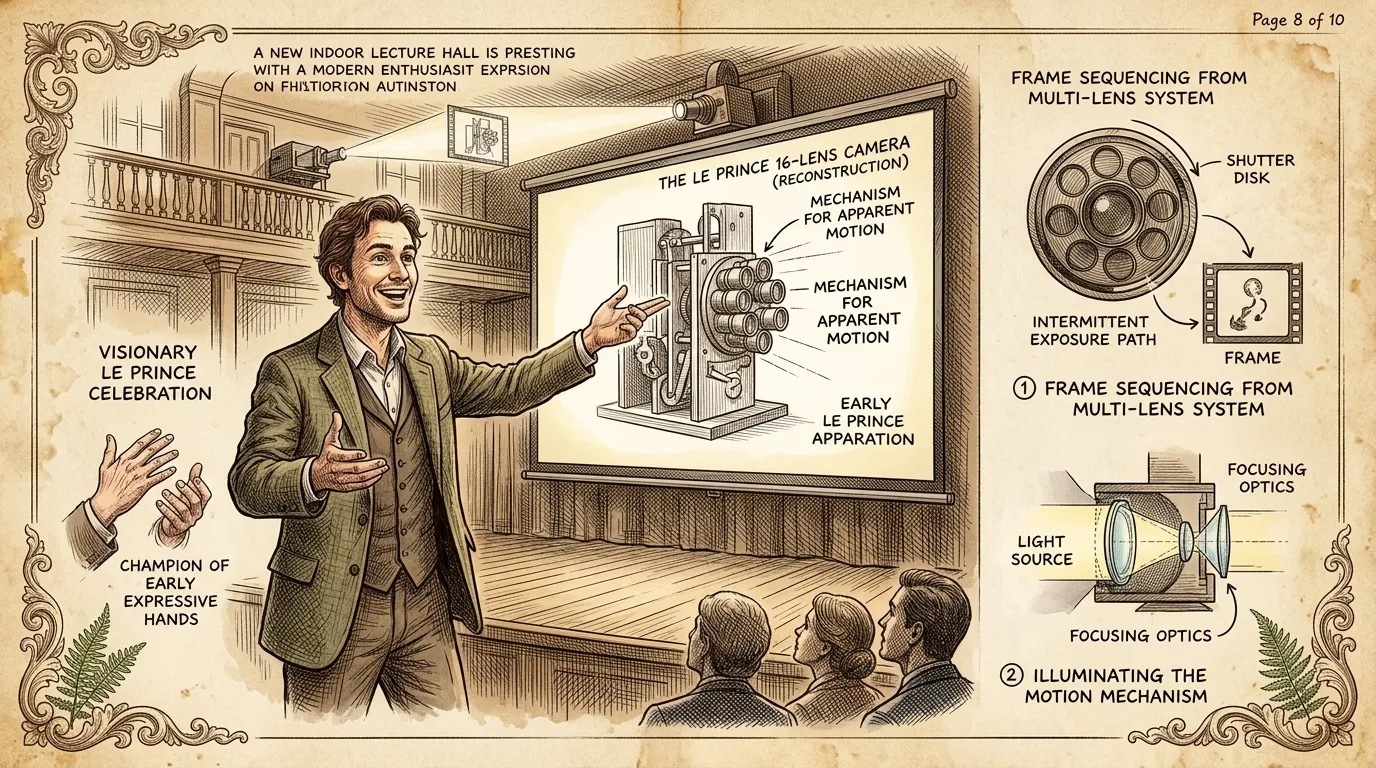
In recent years, Louis Le Prince has received posthumous recognition for his groundbreaking work. Historians and film enthusiasts have rediscovered his contributions, celebrating him as a true pioneer of cinema. His legacy is restored for his innovation, creativity, and technical skill.
""Le Prince was a visionary!" a film historian exclaims during a lecture. "His work predates Edison's, making him the true father of motion pictures!""
Art Fact: The rediscovery of Louis Le Prince's work has led to a reassessment of his role in the history of cinema, solidifying his place as a key pioneer in the development of motion pictures.
Page 9
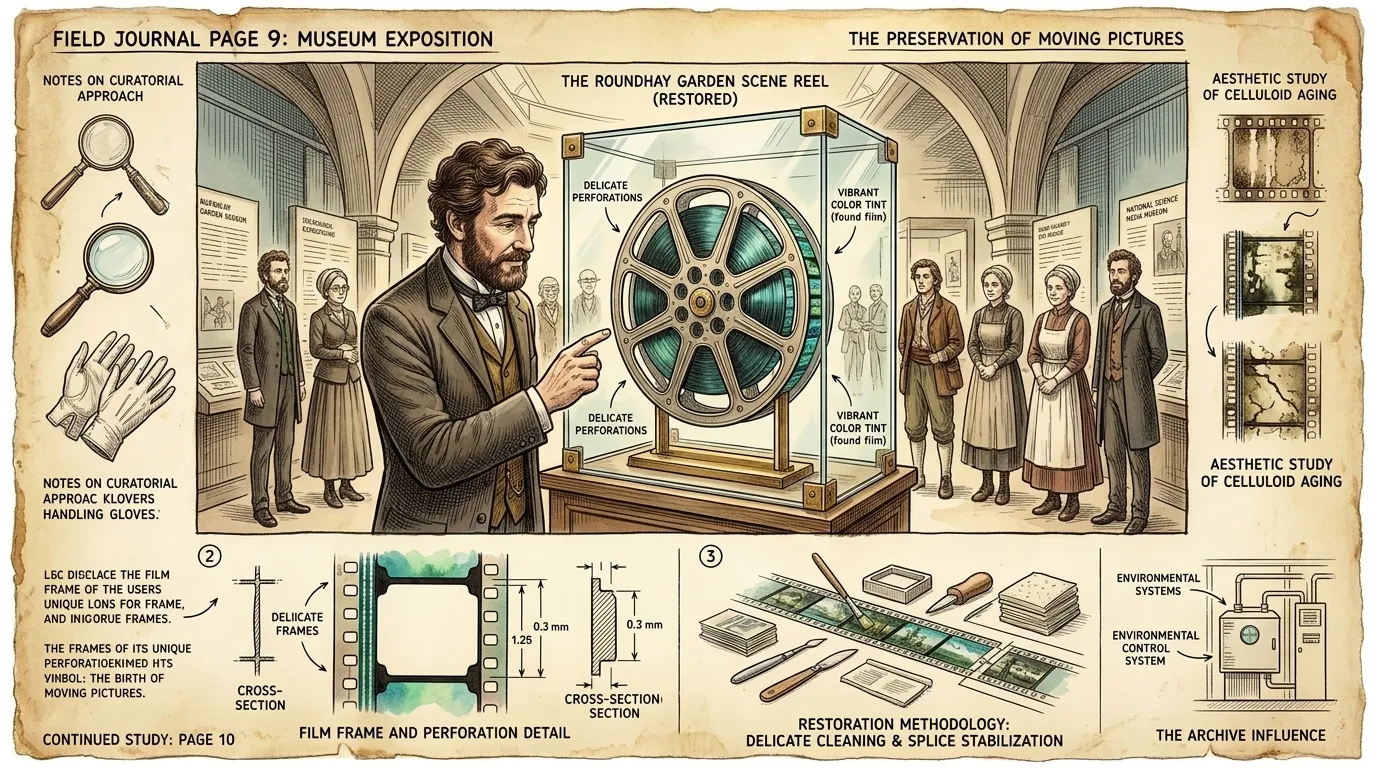
A copy of the original Roundhay Garden Scene now resides at the National Science and Media Museum in Bradford, England, ensuring its preservation and accessibility for future generations. The short film has been fully restored. It is a piece of history that allows us to see the very first flicker of moving pictures and the birth of film.
""To think, it all started with this," a museum curator says, pointing to the restored film. "A simple garden scene, yet it changed the world.""
Art Fact: The National Science and Media Museum in Bradford, England, serves as a custodian of Louis Le Prince's legacy, preserving and showcasing his groundbreaking work for the world to appreciate.
Page 10
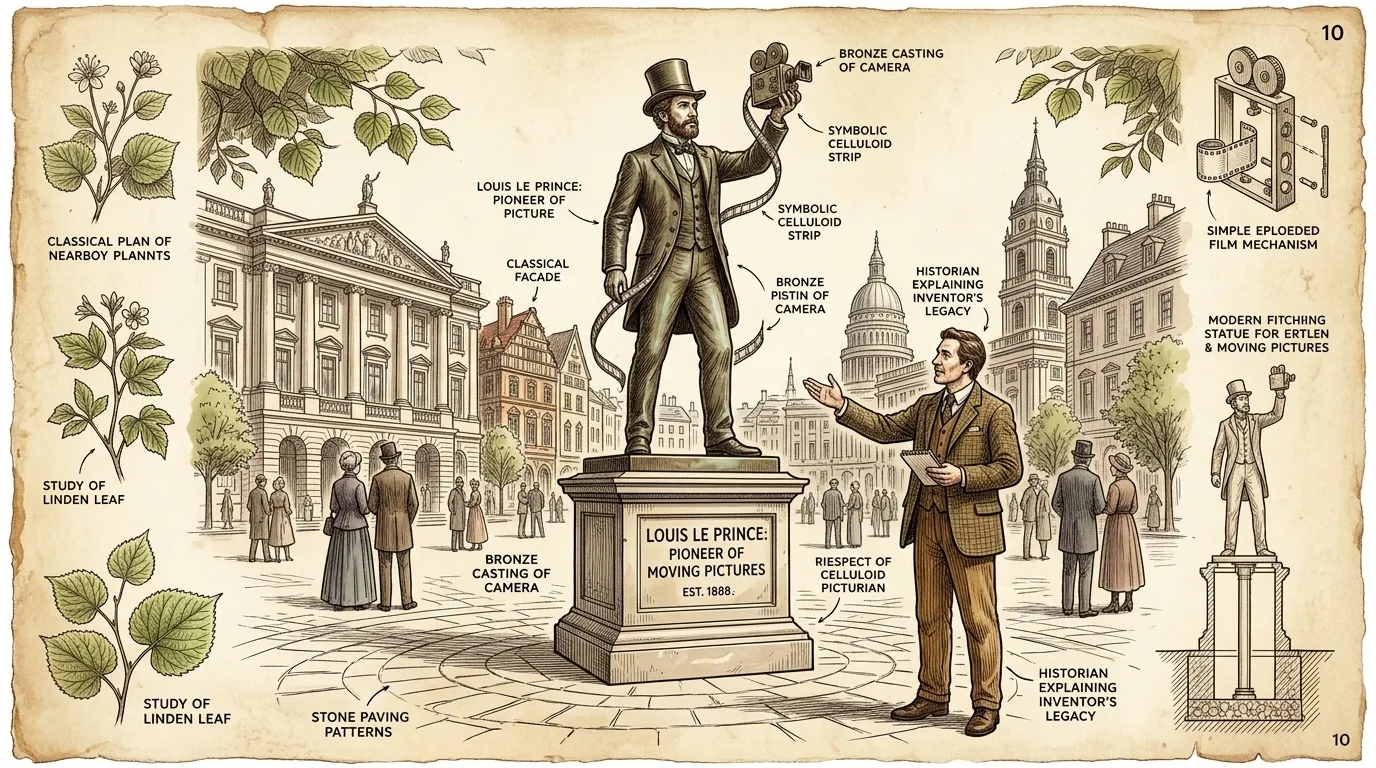
Louis Le Prince's pioneering spirit lives on in every frame of film, in every motion picture ever created. He was a dreamer who dared to capture life in motion, forever changing how we see and experience the world. His contribution to the birth of the technology is unforgettable.
""The moving image, cinema. Its birth can be attributed to this man," says a historian, gesturing toward a statue of Le Prince. "His name echoes through time in the art.""
Art Fact: Louis Le Prince's legacy as a true pioneer of cinema endures, inspiring filmmakers and artists to push the boundaries of visual storytelling and capture the beauty of the world in motion.
About this story
- Location: United Kingdom
- Audience: general readers
Questions and answers
Questions and answers about Roundhay Garden Scene by Louis Le Prince (Leeds, UK — 1888)
Read Wonder Arts on your phone
Wonder Arts is available on Android. Get Wonder Arts on Google Play.
More Wonder Arts stories
- Saint George by Donatello (Florence, Italy — 1417)
- Saint Longinus by Gian Lorenzo Bernini (Vatican City — 1638)
- Saint Mark by Donatello (Florence, Italy — 1413)
- Salisbury Cathedral (Salisbury, UK — 1258)
- Sallie Gardner at a Gallop by Eadweard Muybridge (California, USA — 1878)
- Sleeping Hermaphroditus by Polycles (Rome, Italy — c. 2nd Century AD)