Smithsonian Institution (Washington D.C., USA — 1846)
Smithsonian Institution (Washington D.C., USA — 1846) — an illustrated arts story, set in United States. 10 illustrated pages, free to read on Wonder Arts.
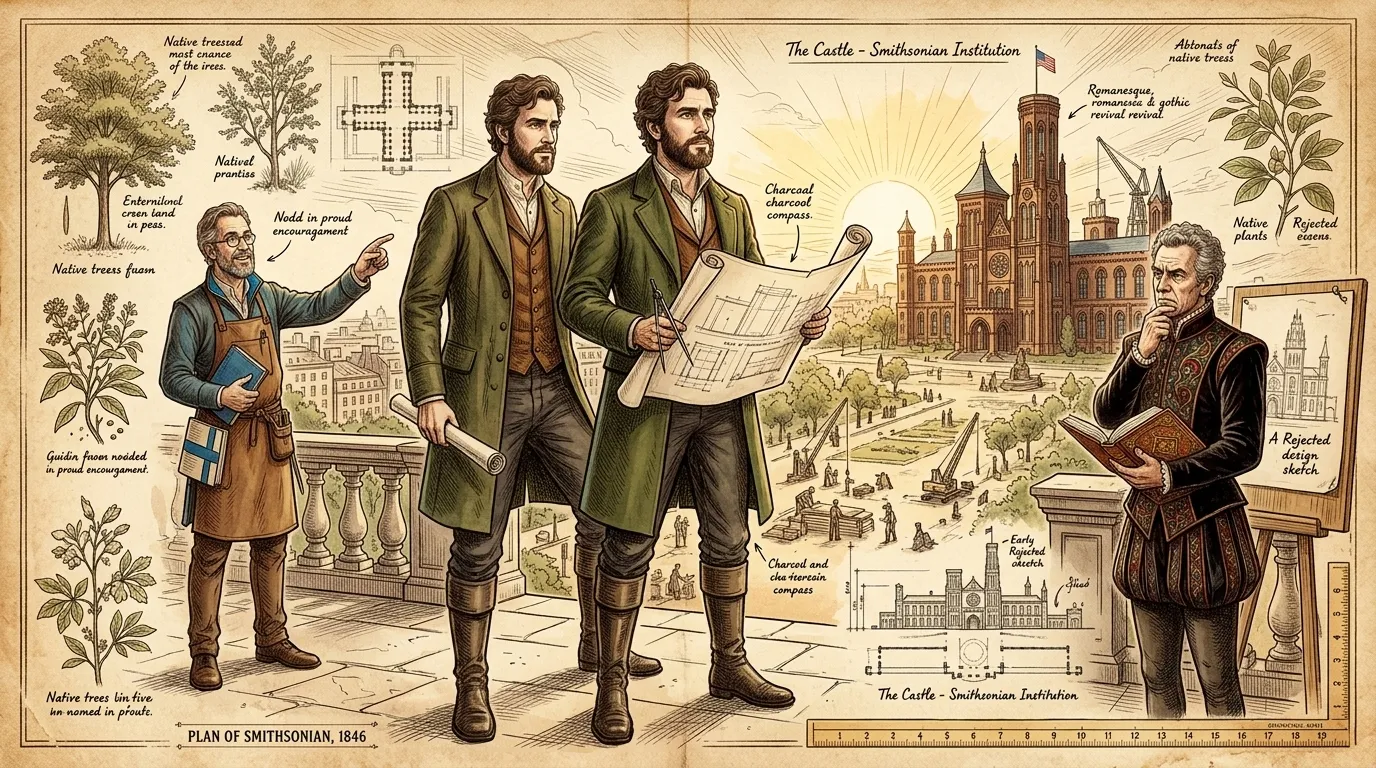
Page 1
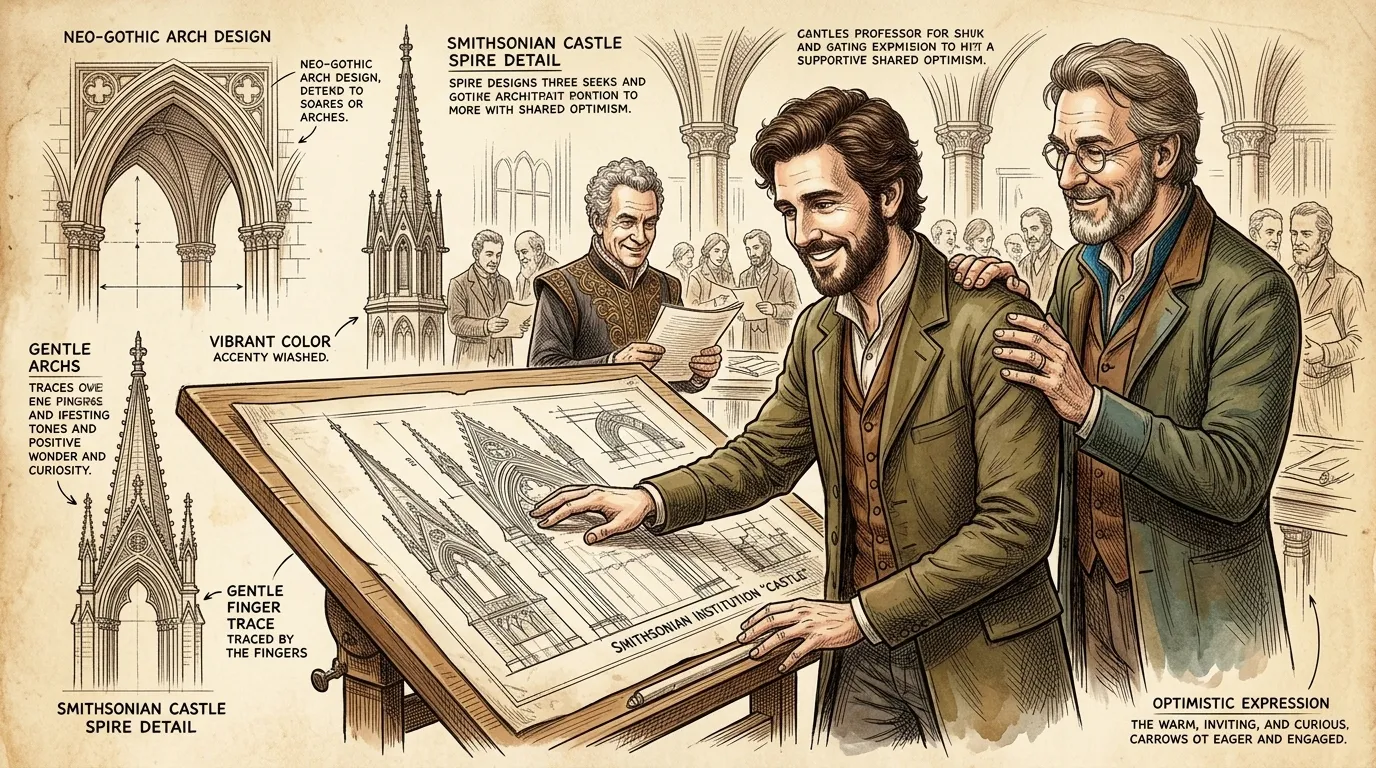
James Renwick Jr. stands before his architectural plans for the Smithsonian Institution in 1846. The Neo-Gothic design, a departure from the Classical styles dominating Washington D.C., would become the heart of American knowledge. The building, nicknamed 'The Castle', measures 447 feet long and 160 feet wide. Its construction, fraught with challenges, was a testament to Renwick's unwavering vision.
""Architecture," Renwick murmurs to himself, tracing a line on the blueprint, "is not merely about structure. It is about aspiration. As Vitruvius said, 'Well building hath three conditions: firmness, commodity, and delight.' This, my castle, shall embody them all.""
Art Fact: The Smithsonian Institution Building, often called 'The Castle', was designed by James Renwick Jr. and completed in 1855. It is located on the National Mall in Washington D.C.
Page 2
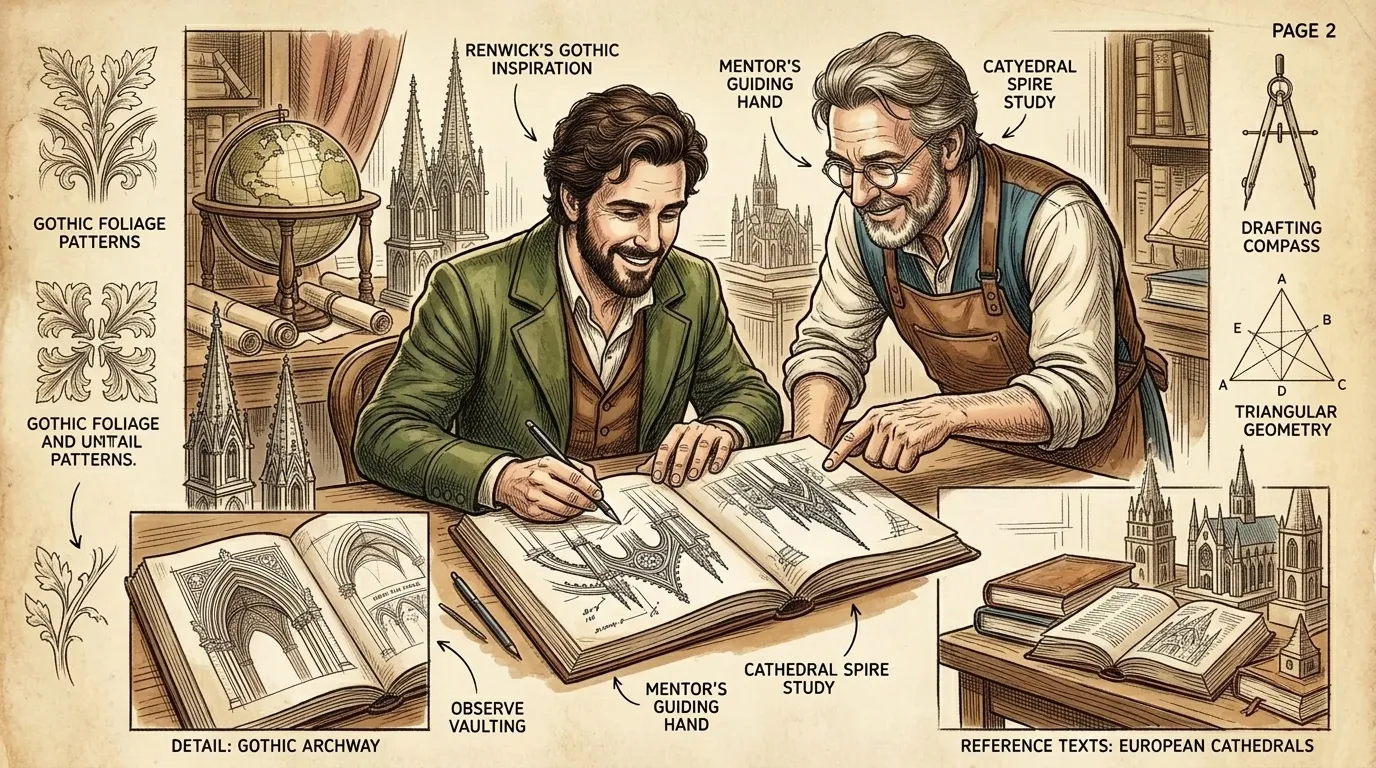
During his studies, James Renwick, deeply moved by the grandeur of European cathedrals, filled sketchbooks with their architectural details. The soaring arches and intricate ornamentation of these structures fueled his imagination, shaping his distinctive Neo-Gothic style. He believed that a building could inspire awe and reverence.
""Look at this pinnacle, Renwick," a professor says, pointing to a sketch of a Gothic spire. "Its height is not merely structural, but spiritual. It reaches for the heavens. Ruskin was right when he wrote, 'When we build, let us think that we build forever.'""
Art Fact: James Renwick Jr. drew inspiration from European Gothic cathedrals, influencing his unique architectural style.
Page 3
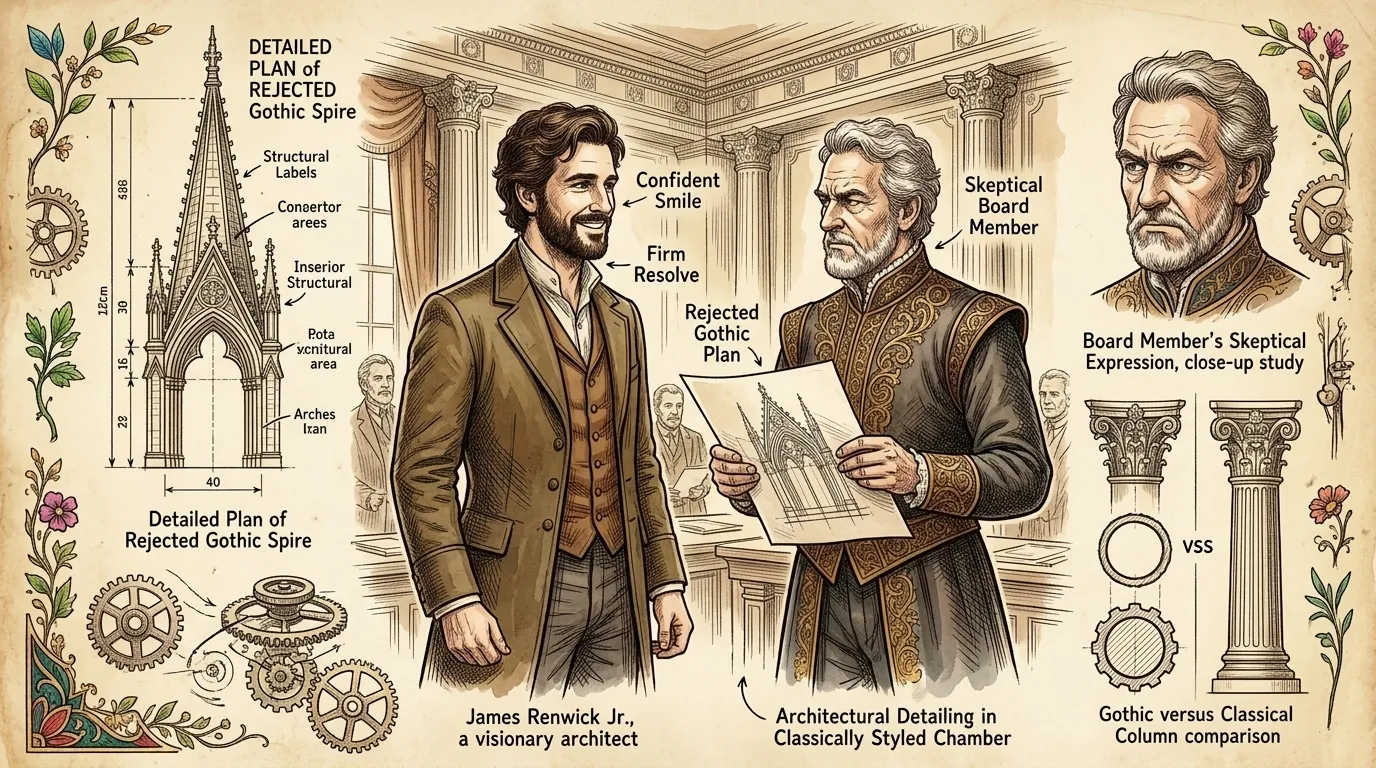
Before the Smithsonian, Renwick's designs were often dismissed as too radical. His peers favored the Classical style, deeming his Gothic leanings impractical. Despite the criticism, he remained steadfast in his vision. He saw the Neo-Gothic style as perfectly suited to the Smithsonian's mission of advancing knowledge and innovation.
""Your designs, Renwick, are... ambitious," a stern-faced board member says, holding up a rejected sketch. "But Washington is a city of reason, of Classical ideals. Your Gothic fantasies are not in keeping with our nation's spirit." Renwick retorts, "As Frank Lloyd Wright said, 'Give me the luxuries of life and I'll gladly do without the necessities!' I believe that beauty, that soaring ambition is a necessity.""
Art Fact: Renwick faced initial criticism for his Gothic architectural style, which was considered unconventional for the time.
Page 4

When the call for designs for the Smithsonian Institution was announced, Renwick seized the opportunity. He poured all his energy into the project, meticulously crafting plans that blended Gothic grandeur with American practicality. His design stood out from the rest, capturing the spirit of intellectual curiosity and national pride.
""Gentlemen, we have a winner!" the chairman announces, holding up Renwick's proposal. "Renwick's vision captures the very essence of what the Smithsonian should be. It is bold, innovative, and utterly unforgettable.""
Art Fact: Renwick's design was chosen for the Smithsonian Institution because it captured the spirit of innovation and national pride.
Page 5
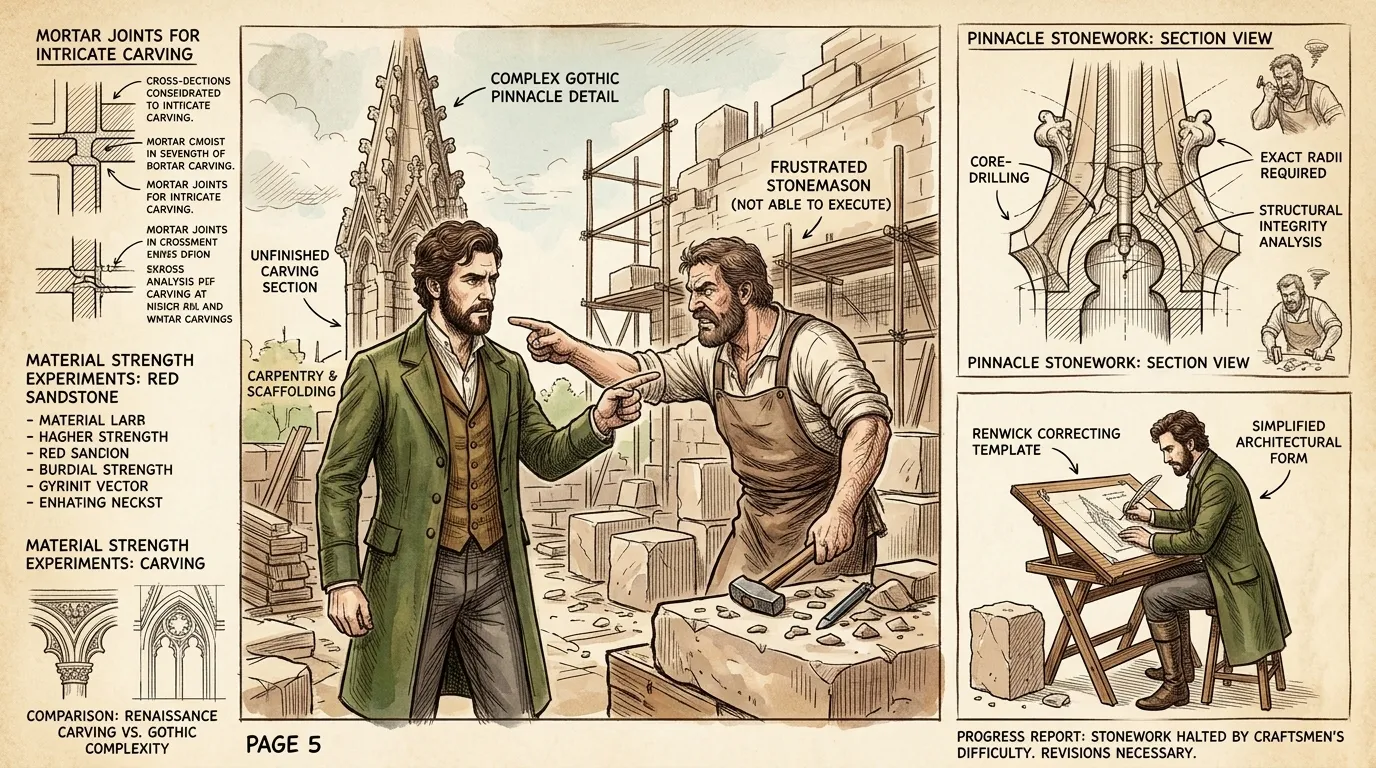
Construction was plagued by delays and disagreements. Builders questioned Renwick's intricate designs, finding them too complex and costly. Renwick, however, refused to compromise his vision, insisting on the highest standards of craftsmanship. The conflict tested his patience but strengthened his resolve.
""This pinnacle will take months to carve!" a burly stonemason exclaims, throwing down his tools in frustration. "It's impractical, Mr. Renwick!" Renwick responds, his voice firm, "As Michelangelo said, 'I saw the angel in the marble and carved until I set him free.' We must strive for perfection, even if it takes time.""
Art Fact: Construction was difficult, and he had many disagreements with the builders, but he refused to compromise his design.
Page 6
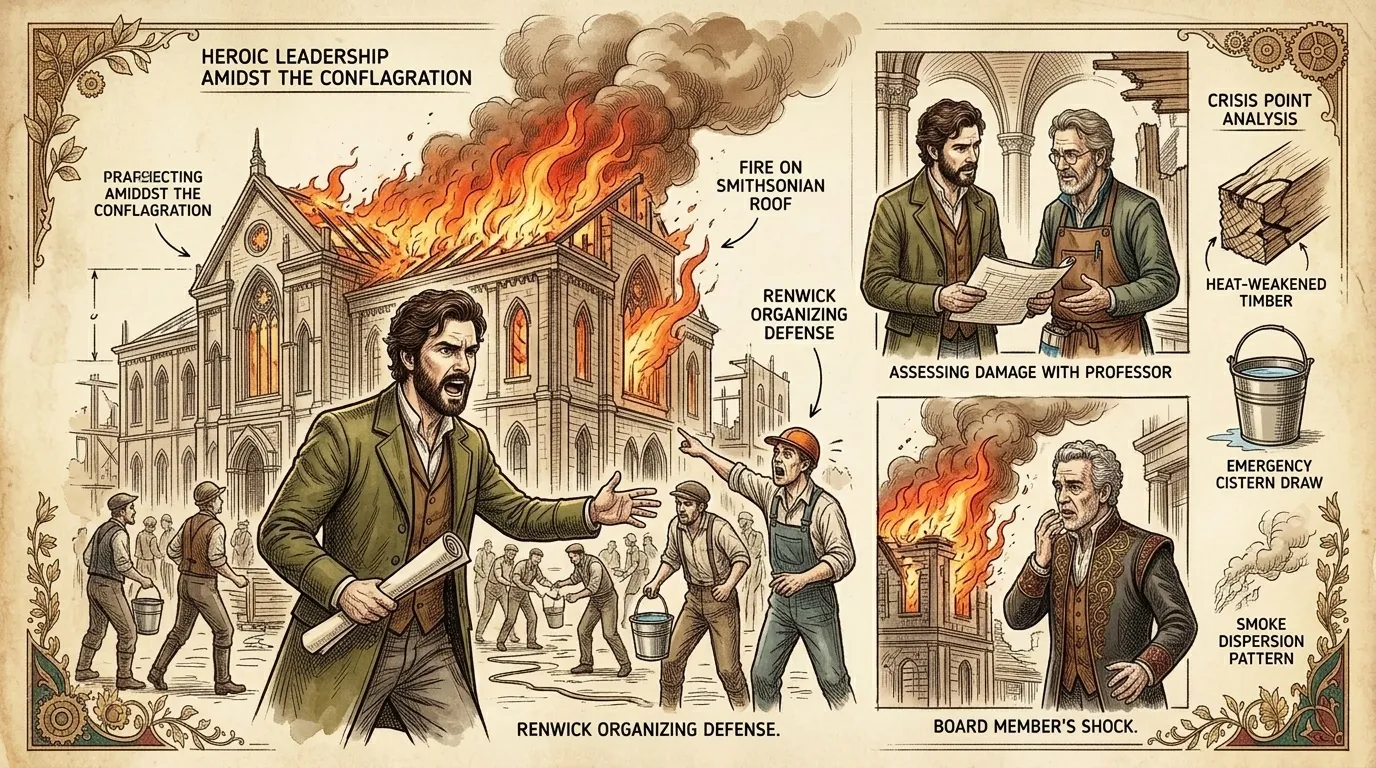
During construction, a fire erupted, threatening to destroy the partially completed building. Renwick watched in horror as flames consumed his creation. He rallied the workers, risking his own life to save what he could. Despite the setback, he saw the fire as a test of his dedication and a call to rebuild with even greater determination.
""The Castle is burning!" a worker cries out, pointing to the smoke billowing from the roof. Renwick shouts, "We cannot let it fall! As Pericles said, 'What you leave behind is not what is engraved in stone monuments, but what is woven into the lives of others.' We must rebuild!""
Art Fact: A fire during construction threatened to destroy the building, but Renwick rallied the workers to rebuild.
Page 7
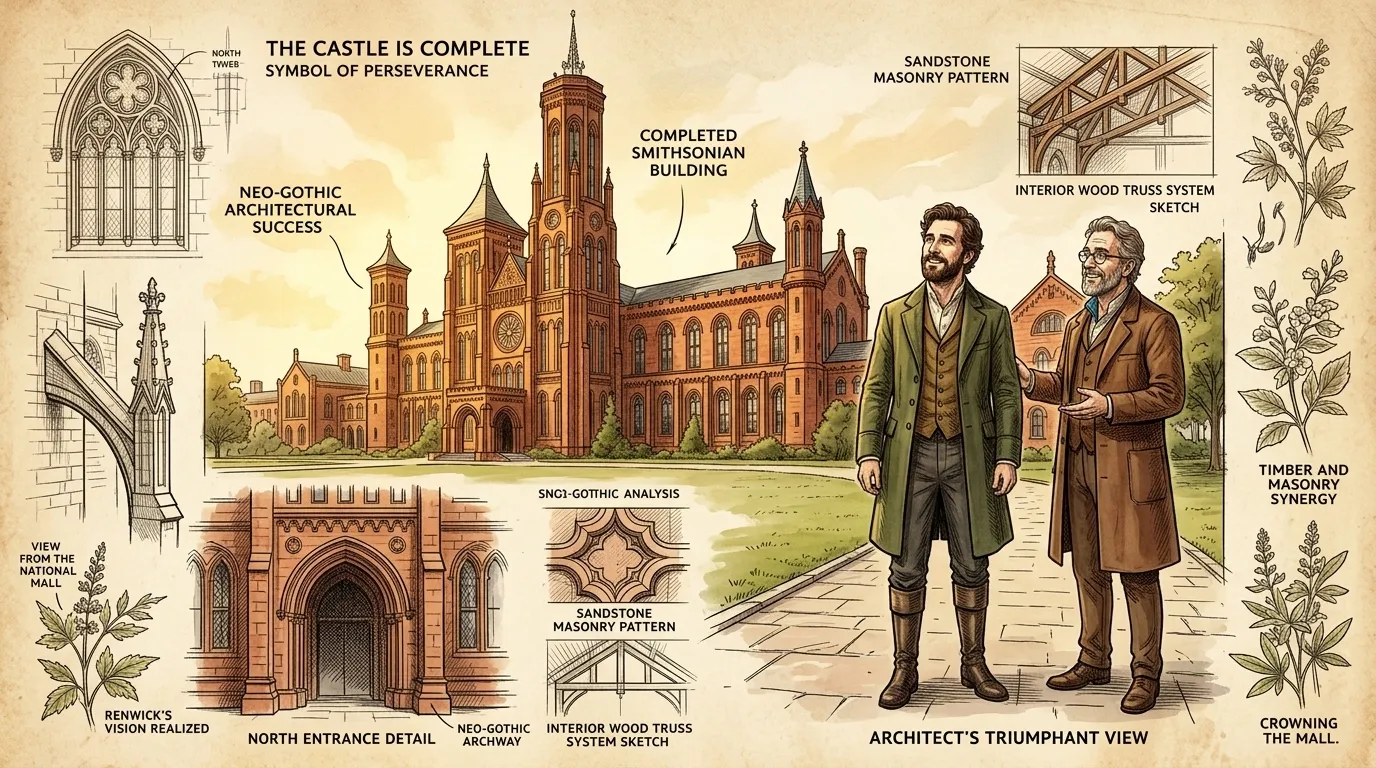
After the fire, Renwick led the reconstruction efforts, strengthening the building's fire resistance and refining its design. His perseverance paid off. The Smithsonian Institution Building, a testament to his vision and determination, was finally completed in 1855. It stood as a beacon of knowledge and a symbol of American ambition.
""It is magnificent, Renwick," a colleague remarks, gazing at the completed building. "You have created something truly extraordinary." Renwick replies, "As Winston Churchill said, 'We shape our buildings; thereafter they shape us.' This castle will shape the minds of generations.""
Art Fact: Despite setbacks, the Smithsonian Institution Building was completed in 1855, a testament to Renwick's vision and determination.
Page 8
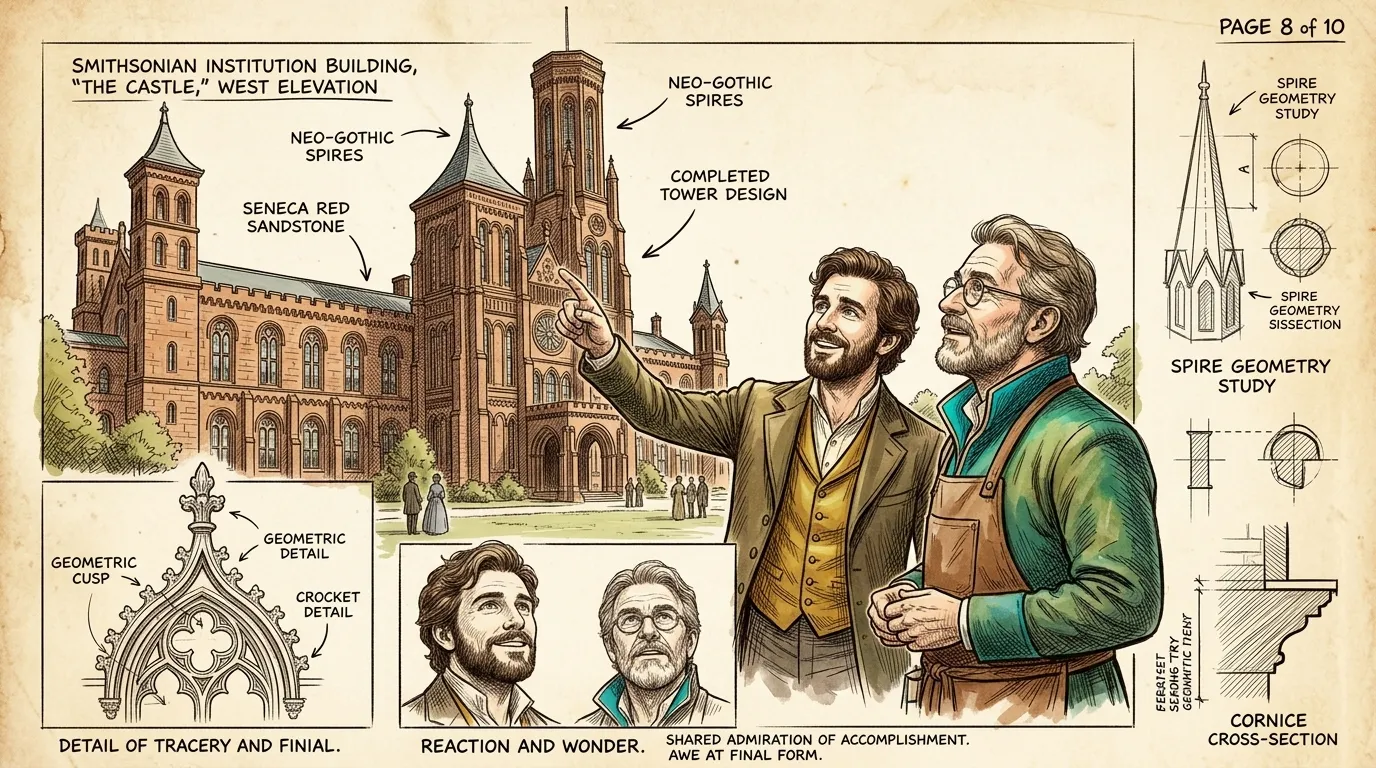
The Smithsonian Institution Building became an icon, shaping the architectural landscape of Washington D.C. and inspiring countless others. James Renwick Jr.'s legacy as a visionary architect lived on through his masterpiece, a symbol of knowledge, innovation, and the enduring power of human creativity.
""This building, it speaks to the soul," a visitor says, gazing up at the towering spires. "Renwick's genius is undeniable." Another visitor adds, "As Ralph Waldo Emerson said, 'Do not go where the path may lead, go instead where there is no path and leave a trail.' Renwick forged his own path, and we are all the richer for it.""
Art Fact: The Smithsonian Institution Building stands as a lasting testament to Renwick's genius and vision.
Page 9

Within the walls of the Smithsonian, echoes of Renwick's dedication and passion linger. His vision continues to inspire, reminding us that architecture is not just about building structures, but about shaping dreams and leaving a mark on the world. The 'Castle' stands as a silent witness to the power of human imagination.
"A young architect sketches a design, gazing at the 'Castle' in awe. "It's more than just a building," she murmurs. "As Maya Angelou said, 'If you don't like something, change it. If you can't change it, change your attitude.' Renwick changed the landscape of architecture, and his attitude of perseverance inspires me today.""
Art Fact: Renwick's vision continues to inspire generations of architects and visitors.
Page 10
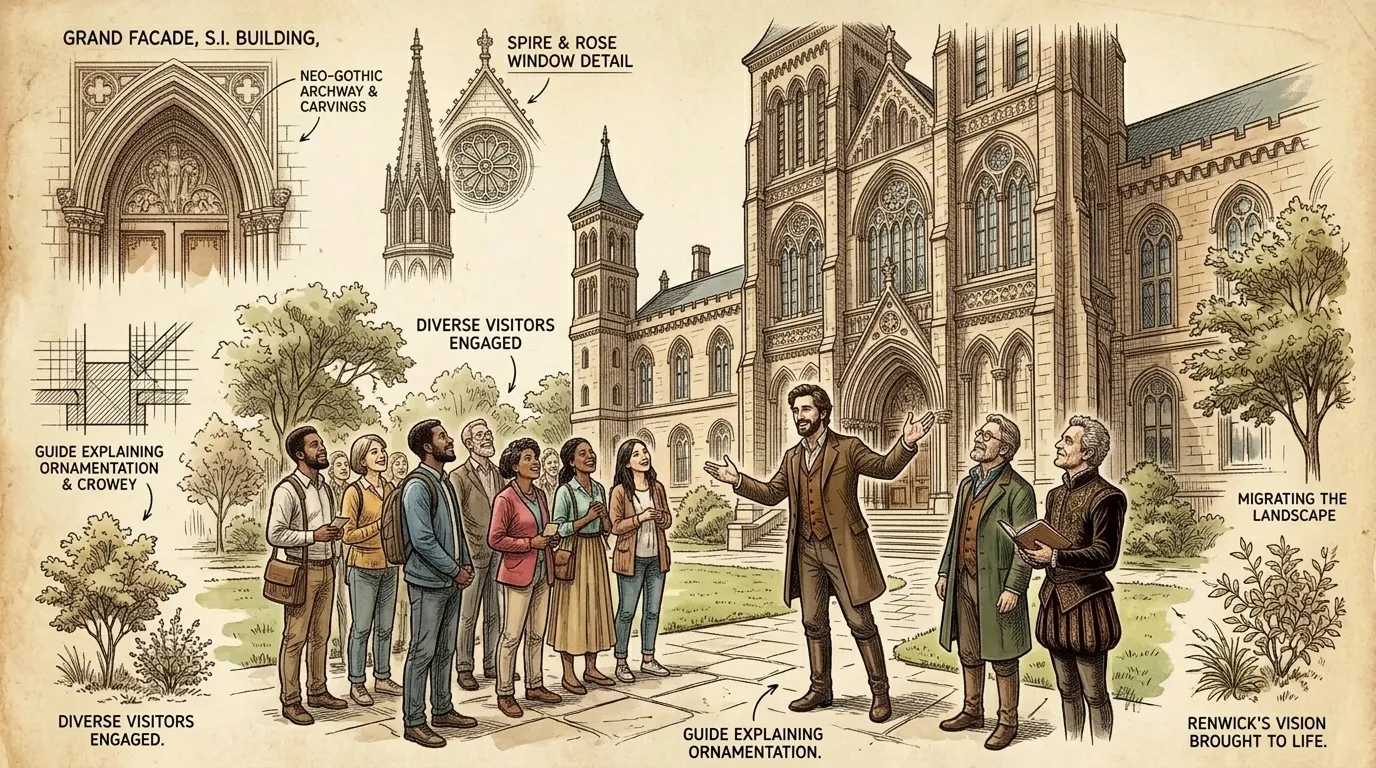
The Smithsonian Institution Building, a symbol of American aspiration, stands as a reminder that visionary architecture can transcend time. James Renwick Jr.'s masterpiece continues to inspire awe and wonder, inviting us to explore the boundless realms of knowledge and human potential. His legacy is etched in every stone and spire.
"Visitors from around the world gather, their voices a chorus of admiration and curiosity. A guide recites, "As Leonardo da Vinci said, 'Simplicity is the ultimate sophistication.' Renwick's design, though complex, achieves that ultimate sophistication. It is a treasure for all humanity.""
Art Fact: The Smithsonian Institution Building remains a treasured landmark, inspiring visitors from around the world.
About this story
- Location: United States
- Audience: general readers
Questions and answers
Questions and answers about Smithsonian Institution (Washington D.C., USA — 1846)
Read Wonder Arts on your phone
Wonder Arts is available on Android. Get Wonder Arts on Google Play.
More Wonder Arts stories
- Snap the Whip by Winslow Homer (USA — 1872)
- Snow Storm by J.M.W. Turner (London, UK — 1842)
- St. Mark’s Basilica (Venice, Italy — 1094)
- St. Peter’s Basilica (Vatican City — 1626)
- Statue of Liberty by Frédéric Auguste Bartholdi (New York City, USA — 1886)
- Statue of Zeus at Olympia by Phidias (Olympia, Greece — c. 435 BC)