Snap the Whip by Winslow Homer (USA — 1872)
Snap the Whip by Winslow Homer (USA — 1872) — an illustrated arts story, set in United States. 10 illustrated pages, free to read on Wonder Arts.
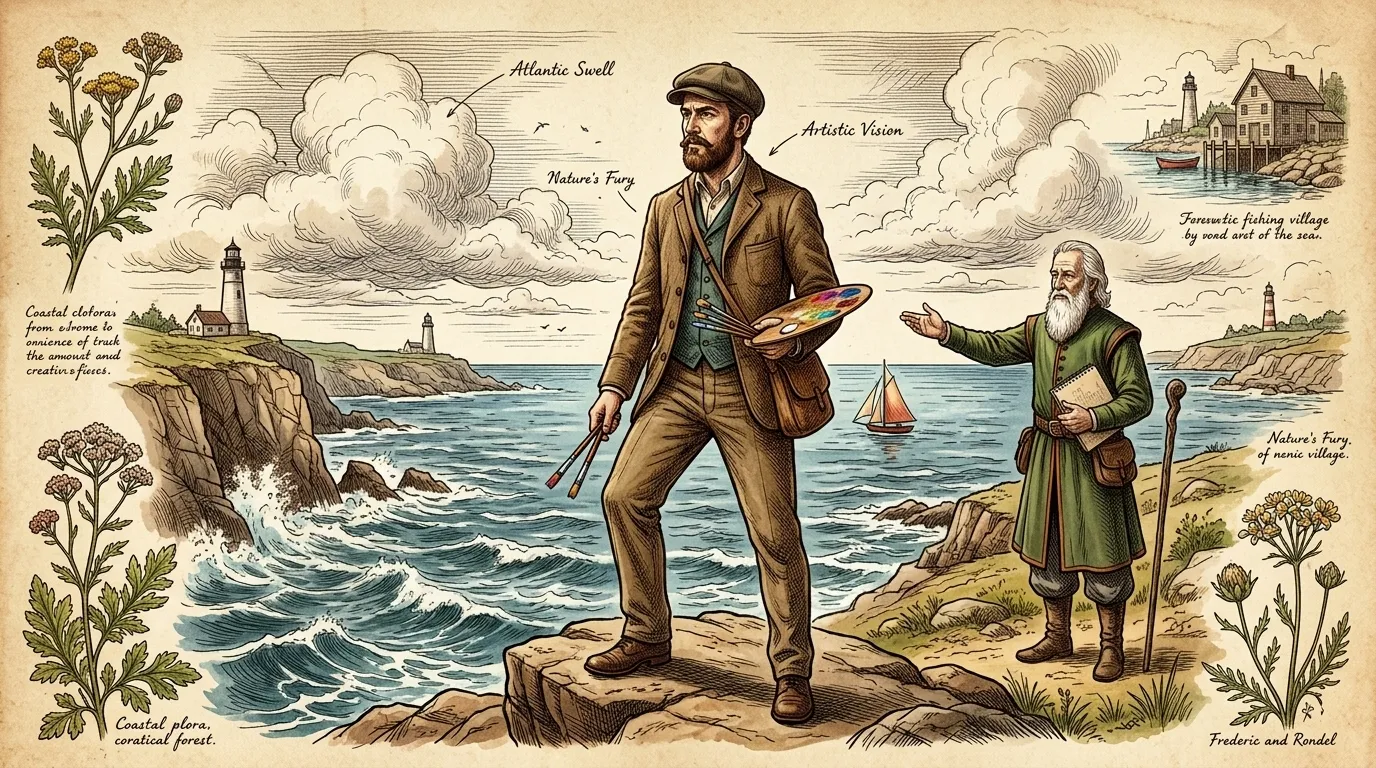
Page 1
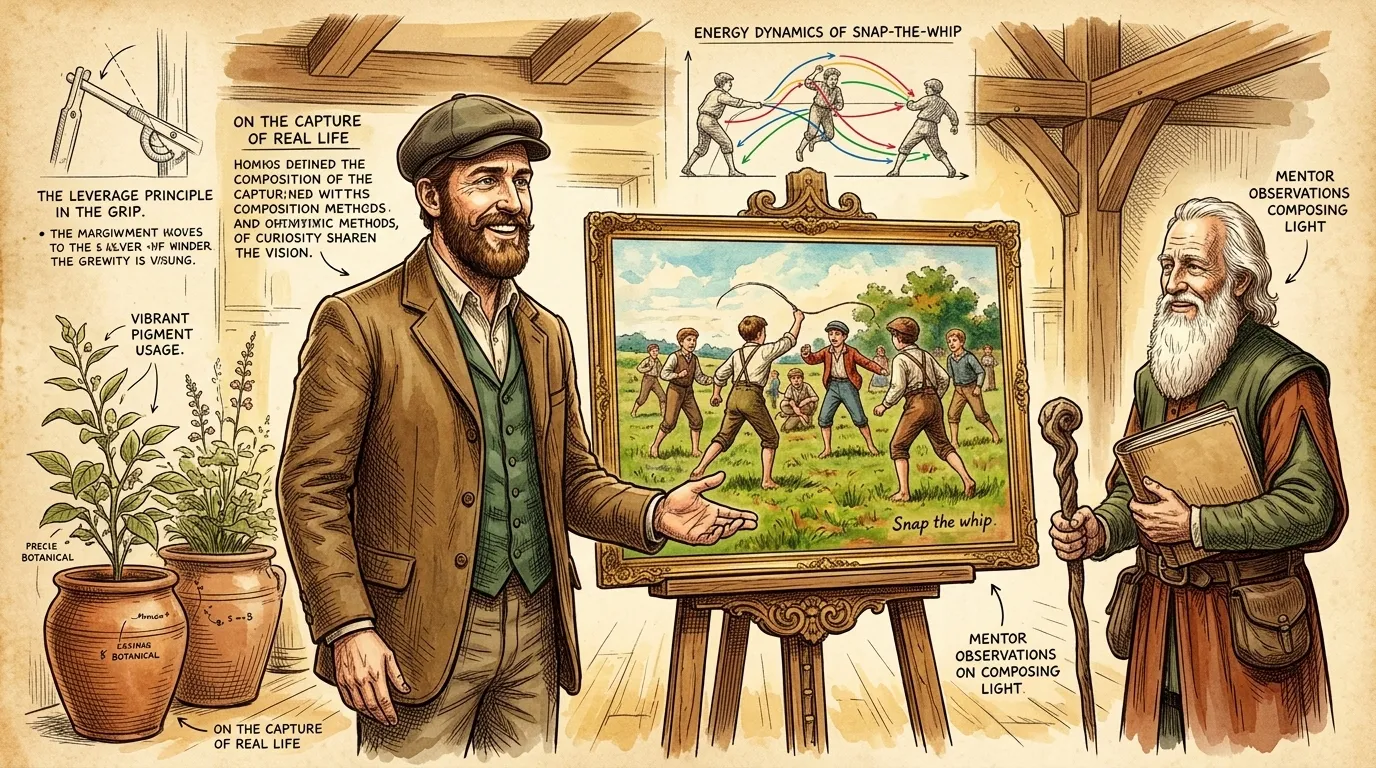
Winslow Homer, a master of American Realism, stands proudly before his iconic painting, 'Snap the Whip.' Completed in 1872, this oil on canvas captures the essence of post-Civil War rural America with startling clarity. The painting, measuring 12 x 20 inches (30.5 x 50.8 cm), currently resides in the Metropolitan Museum of Art in New York City. What many don't realize is Homer's initial struggles with acceptance; critics initially dismissed his early works as too simple, a far cry from the acclaim it holds today.
""I wanted to paint life as I saw it," Homer once declared, a sentiment that fueled his dedication to portraying everyday scenes with unflinching honesty."
Art Fact: Did you know? 'Snap the Whip' was initially criticized for its lack of formal composition, but later praised for its raw depiction of American youth.
Page 2
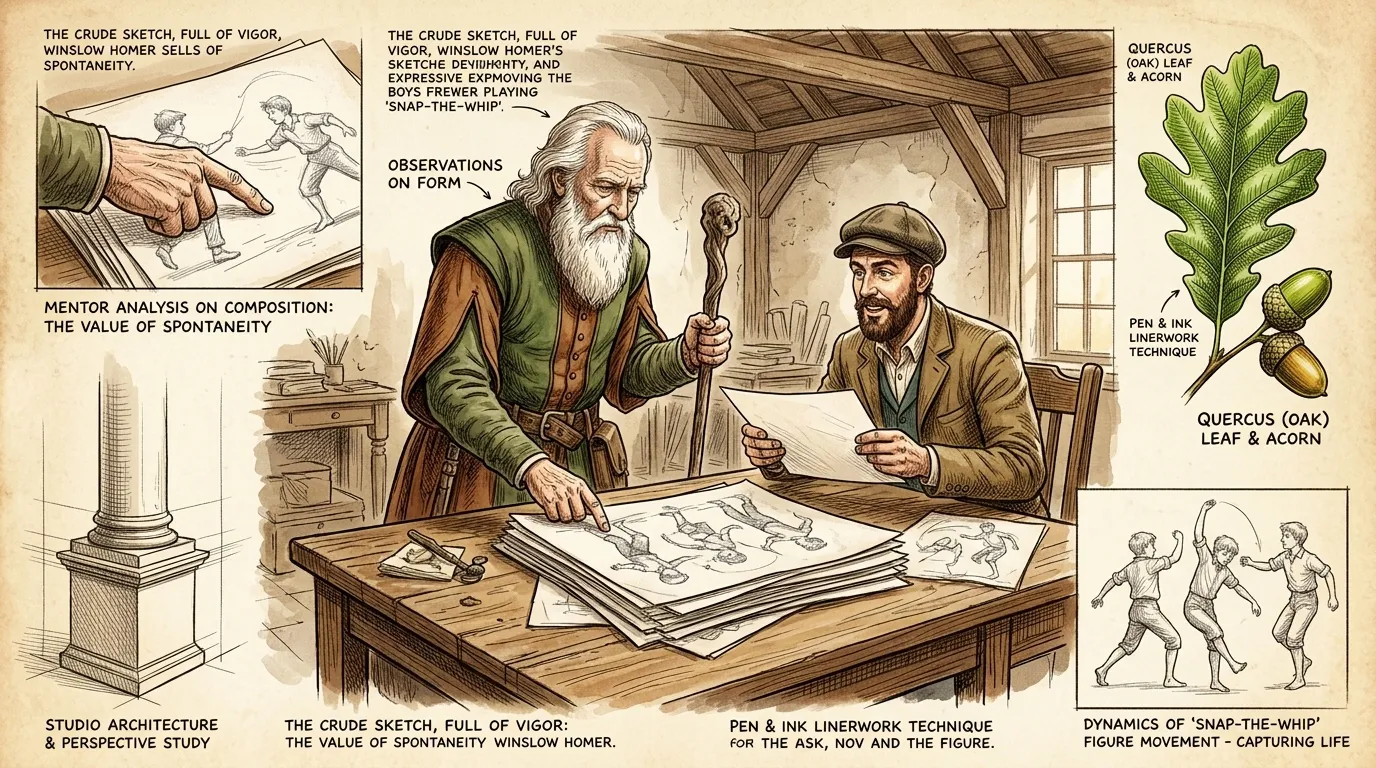
The seeds of 'Snap the Whip' were sown in Homer's early sketches. A series of preliminary drawings reveal his initial exploration of the subject. He experimented with various compositions, focusing on the dynamic energy of boys playing. These sketches, crude yet full of life, hinted at the masterpiece to come.
""The real voyage of discovery consists not in seeking new landscapes, but in having new eyes," Homer's mentor, Frederic Rondel, quoted Marcel Proust, as he reviewed Homer's initial sketches. "Look closer, Winslow, and capture the essence!""
Art Fact: Homer's early illustrations for Harper's Weekly provided him with invaluable experience in capturing fleeting moments of everyday life.
Page 3
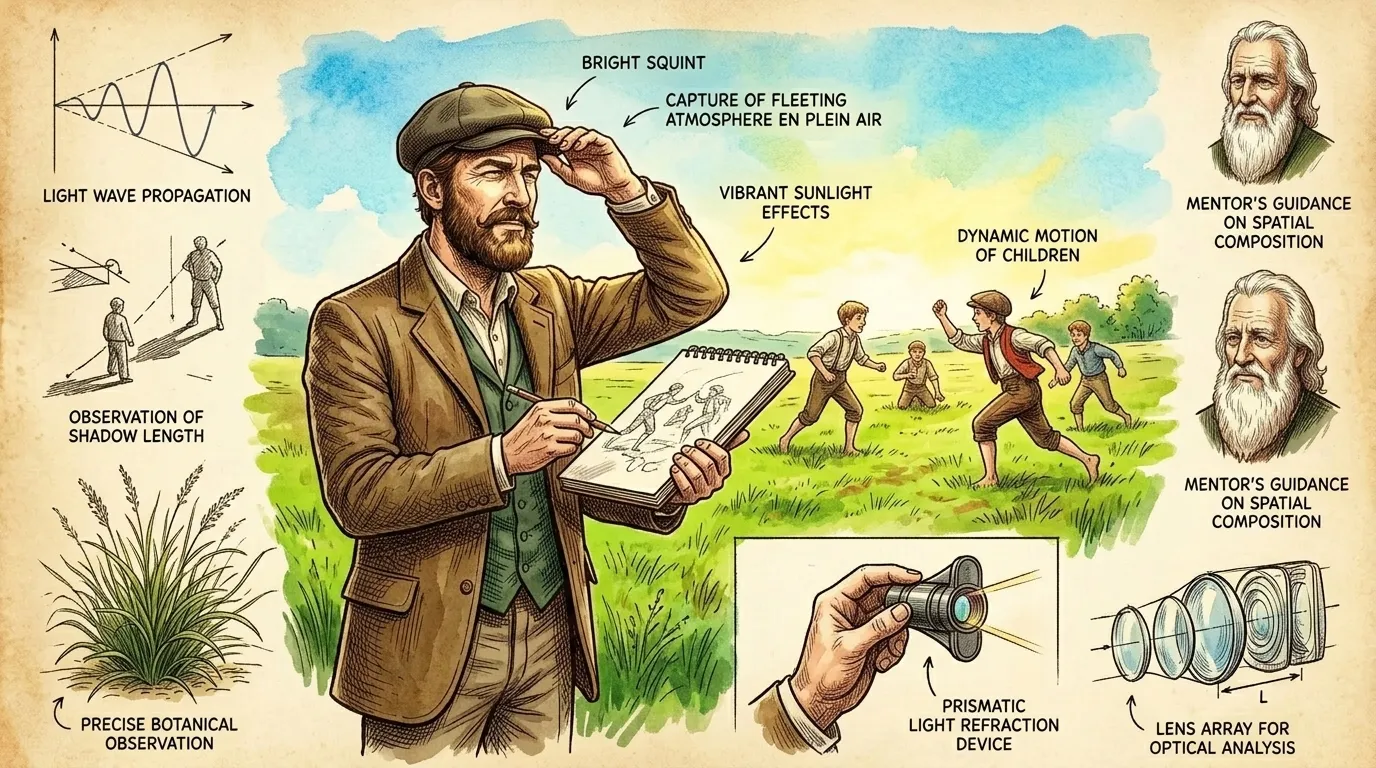
Homer embraced the Impressionistic technique of 'en plein air,' painting outdoors to capture the fleeting effects of light and atmosphere. He spent hours observing the children in the fields, meticulously studying their movements and interactions. The vibrant colors of the landscape inspired him to infuse his canvas with a newfound energy.
""The sun never sees a shadow," Homer observed to his friend, Arthur, squinting at the light, adapting Leonardo da Vinci's insight. "I must capture its dance!""
Art Fact: Winslow Homer often used quick, broad brushstrokes to capture the fleeting light and movement of his subjects.
Page 4
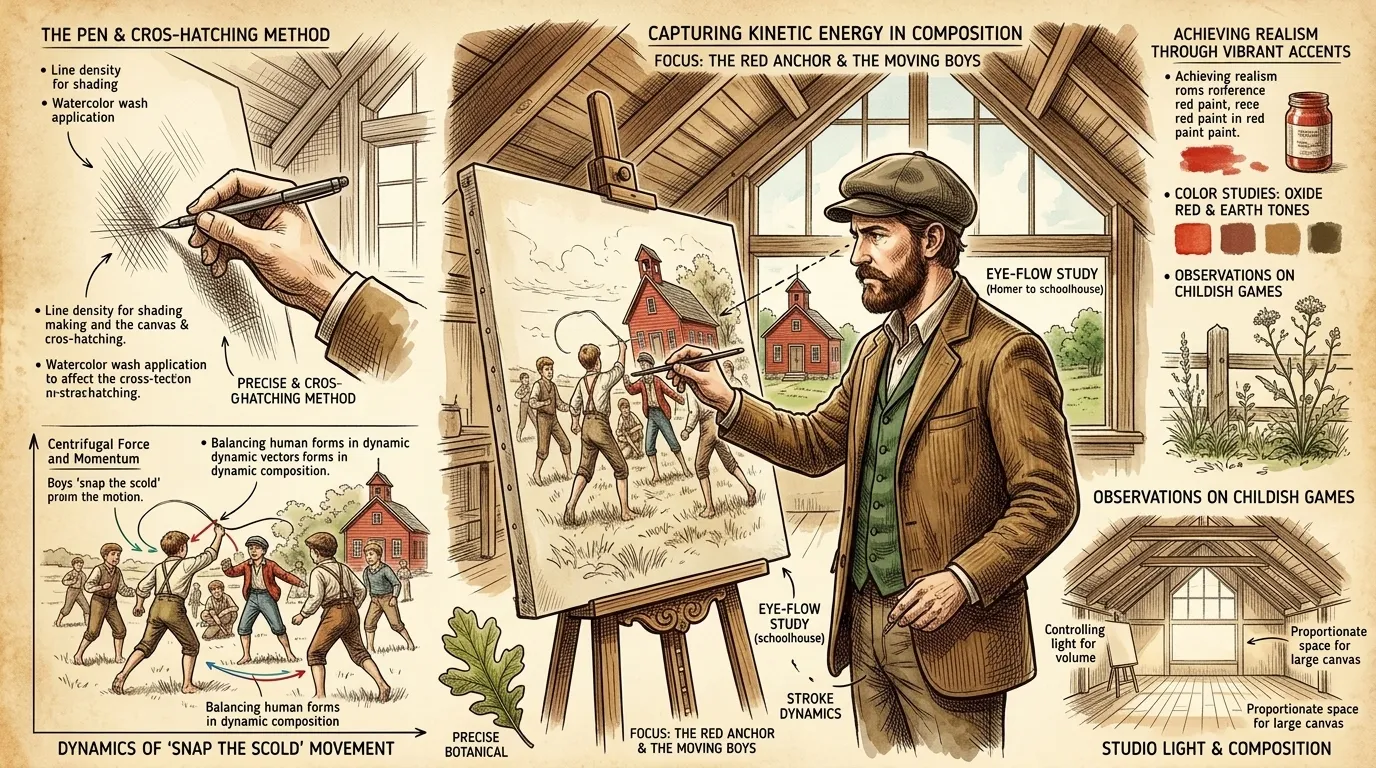
The composition of 'Snap the Whip' captures a specific moment in time—a group of boys engaged in a game of 'snap the whip.' Homer arranges the figures with careful attention to balance and rhythm, creating a dynamic and engaging scene. The red schoolhouse in the background serves as a visual anchor, grounding the painting in its rural setting.
""Paint the broad, clear, general aspects of nature," Homer noted, recalling advice from his earlier days working as an illustrator. "But do not dwell over the details.""
Art Fact: Homer's use of color in 'Snap the Whip' is deliberately restrained, reflecting the simplicity of rural life.
Page 5
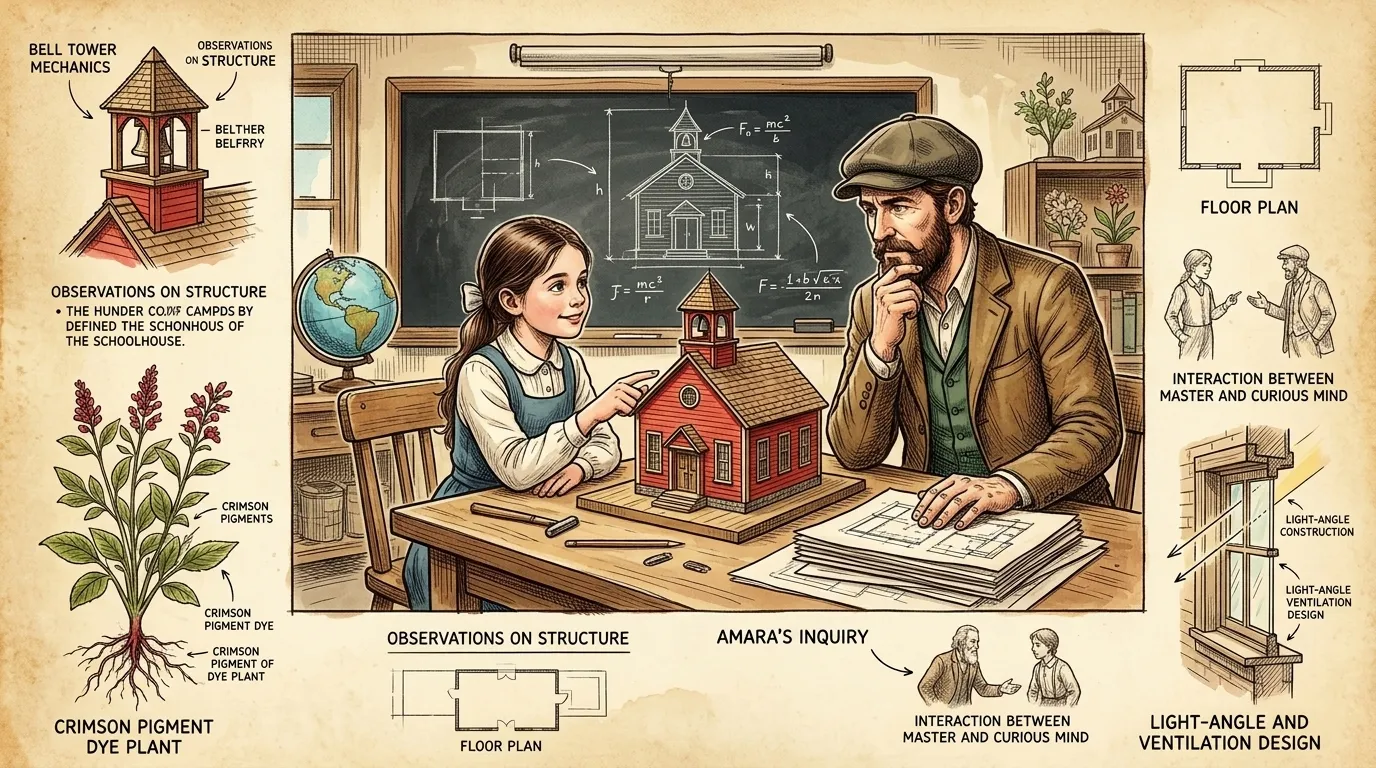
The red schoolhouse, prominently featured in 'Snap the Whip,' symbolizes the importance of education in post-Civil War America. Homer uses the schoolhouse as a backdrop, representing the societal fabric and the hopes for the future. The building contrasts with the freedom of the boys playing, capturing the duality of youth and responsibility.
"Amara, a thoughtful 10-year-old, observed the schoolhouse model, "'Education is the most powerful weapon which you can use to change the world,'"Amara quoted Nelson Mandela, turning to Winslow, "It's more than a building. It's hope!""
Art Fact: The one-room schoolhouse was a common sight in rural America during the late 19th century, serving as the center of community life.
Page 6
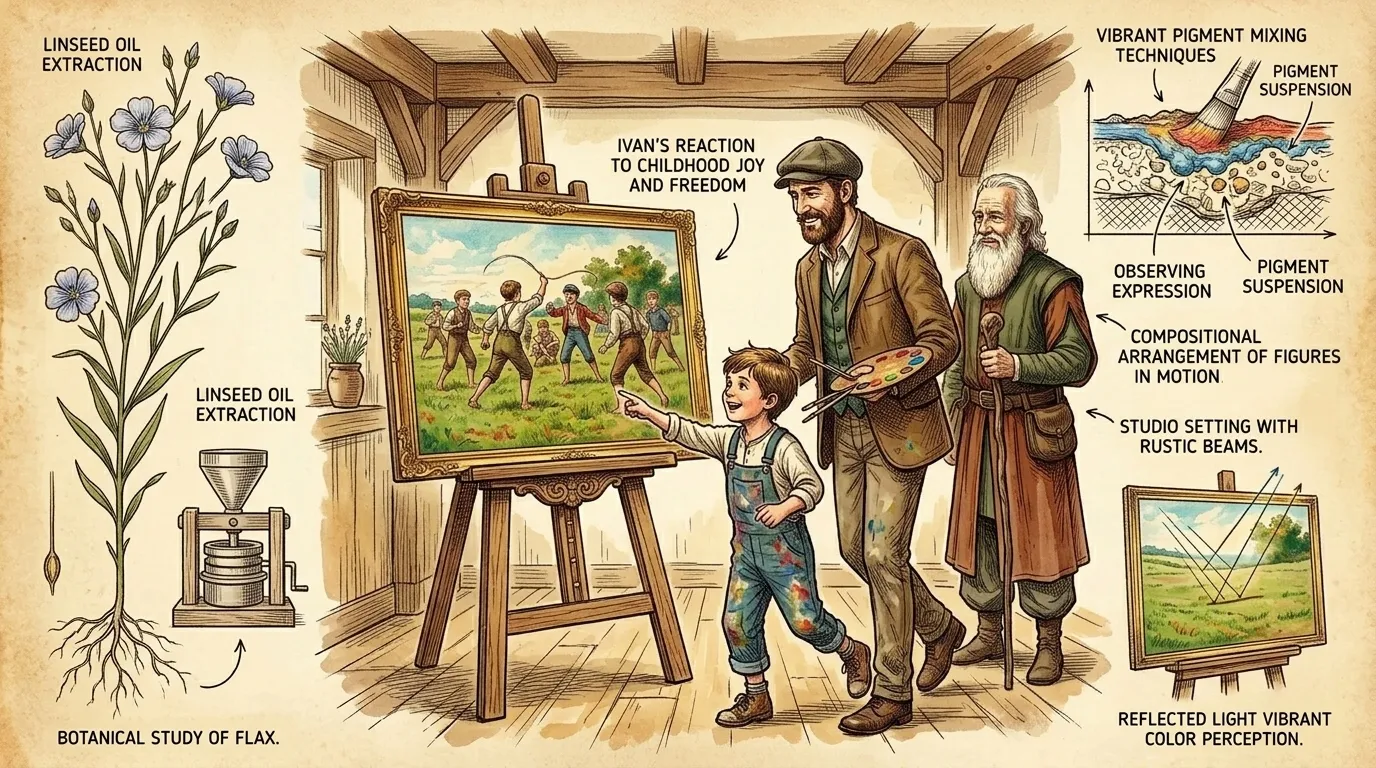
Homer's 'Snap the Whip' is celebrated for its vibrant depiction of childhood joy and freedom. The artist meticulously captures the energy and camaraderie of the boys at play. Their uninhibited laughter and carefree spirits evoke a sense of nostalgia and innocence.
""There is no remedy for love but to love more,'"Ivan, a bold 6-year-old, blurted out, quoting Henry David Thoreau as he observed Winslow's work, "Just like the game, right?""
Art Fact: The game of 'snap the whip' was a popular pastime among children in rural America during the late 19th century.
Page 7
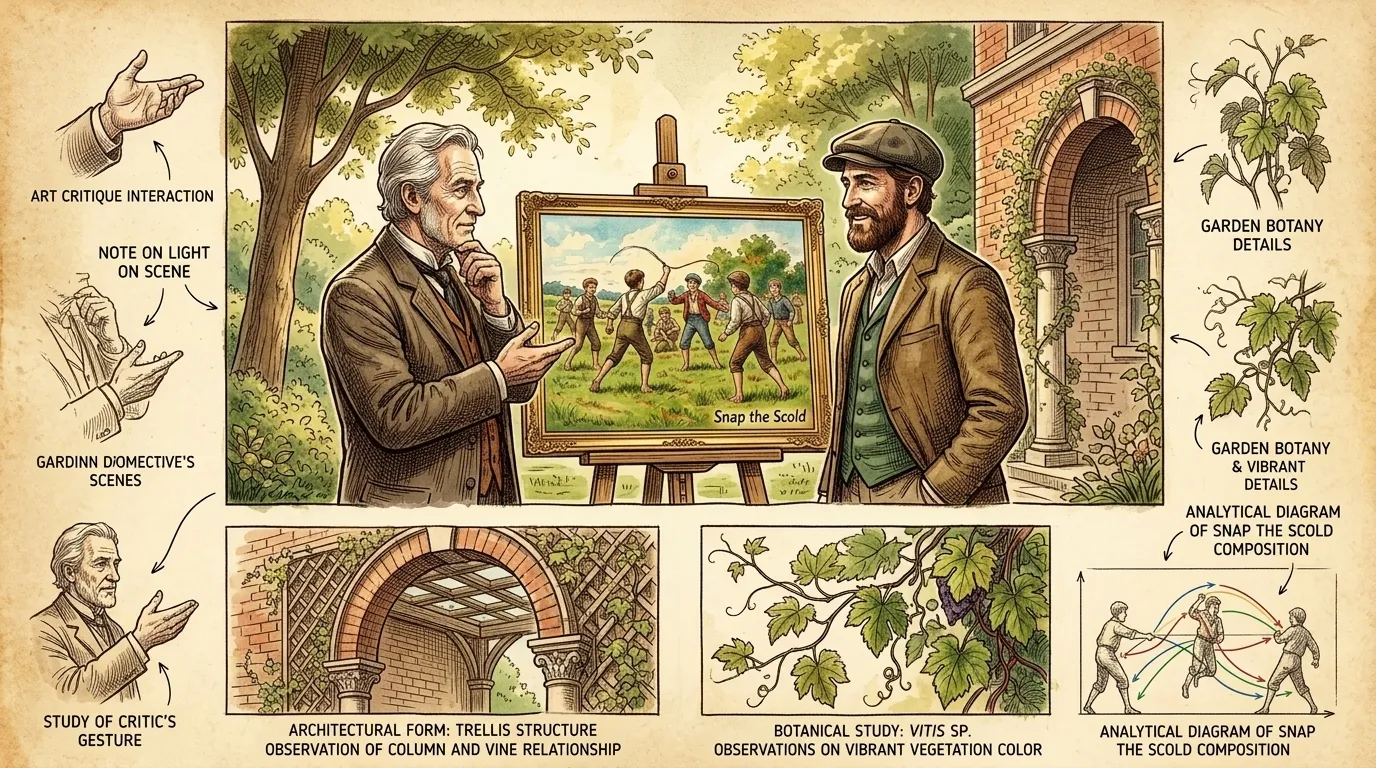
Initially, 'Snap the Whip' faced mixed reviews. Some critics found its simplicity too stark, while others lauded its honest portrayal of American life. Over time, however, the painting gained recognition as a masterpiece, capturing the essence of a bygone era.
""The test of a first-rate intelligence is the ability to hold two opposing ideas in mind at the same time and still retain the ability to function,", a critic remarked to Homer, quoting F. Scott Fitzgerald, "It's divisive, but perhaps that's the point?""
Art Fact: Over the years, 'Snap the Whip' has become an iconic representation of American childhood and rural life.
Page 8

With painstaking detail and unwavering dedication, Homer applies the final brushstrokes to 'Snap the Whip.' The painting comes alive, capturing the spirit of youth and the beauty of the American landscape. The result is a timeless work of art that continues to resonate with audiences today.
""As I grow older, I pay less attention to what men say. I just watch what they do,'" Winslow declared, quoting Andrew Carnegie as he puts the finishing touches to his painting, his brow furrowed in concentration."
Art Fact: The final touches bring the painting to life, capturing the spirit of youth and the beauty of the American landscape.
Page 9
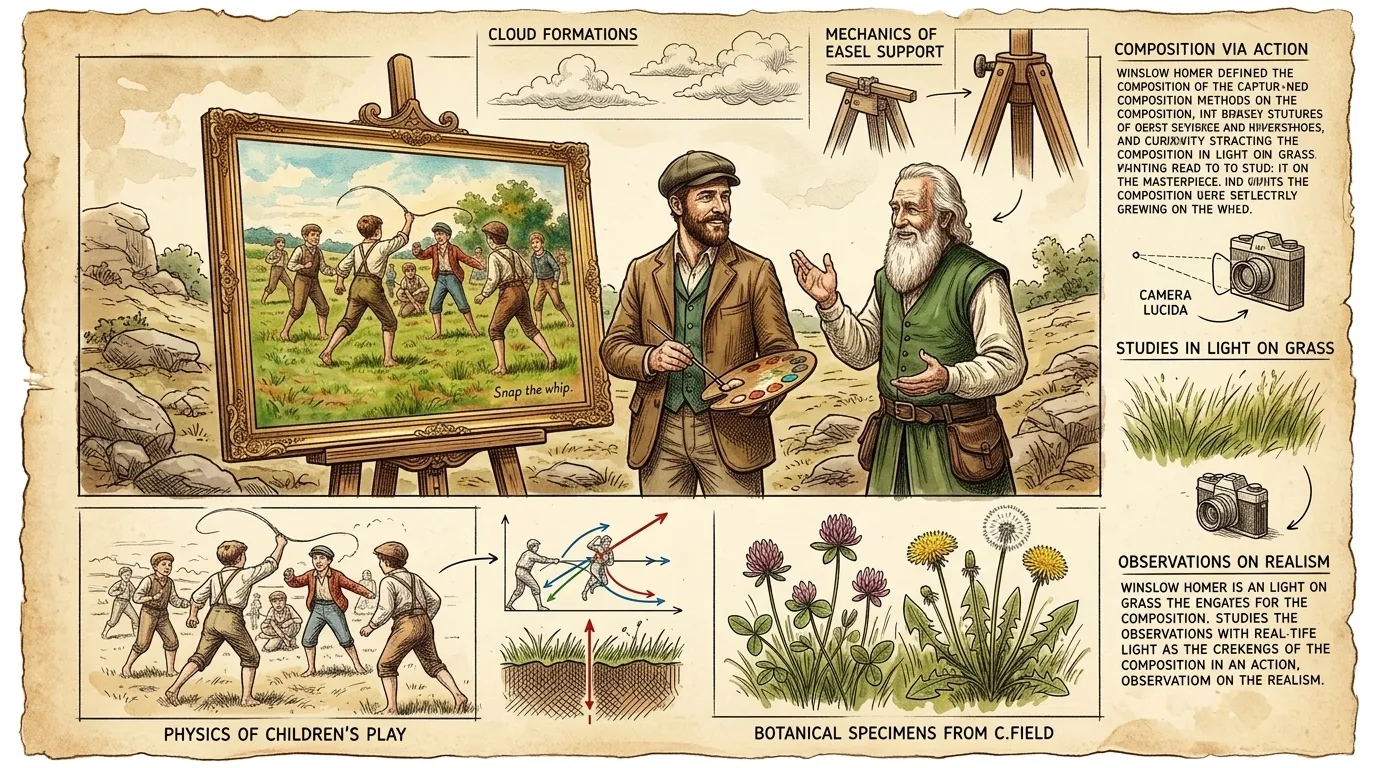
'Snap the Whip' has left an indelible mark on American art. Its realistic portrayal of rural life and its celebration of childhood joy have inspired generations of artists. The painting stands as a testament to Homer's vision and his ability to capture the essence of a nation.
""'The aim of art is to represent not the outward appearance of things, but their inward significance,'" a fellow artist tells Homer, quoting Aristotle, "And you, Winslow, have achieved that with brilliance.""
Art Fact: 'Snap the Whip' continues to inspire and captivate audiences with its timeless portrayal of American youth and rural life.
Page 10
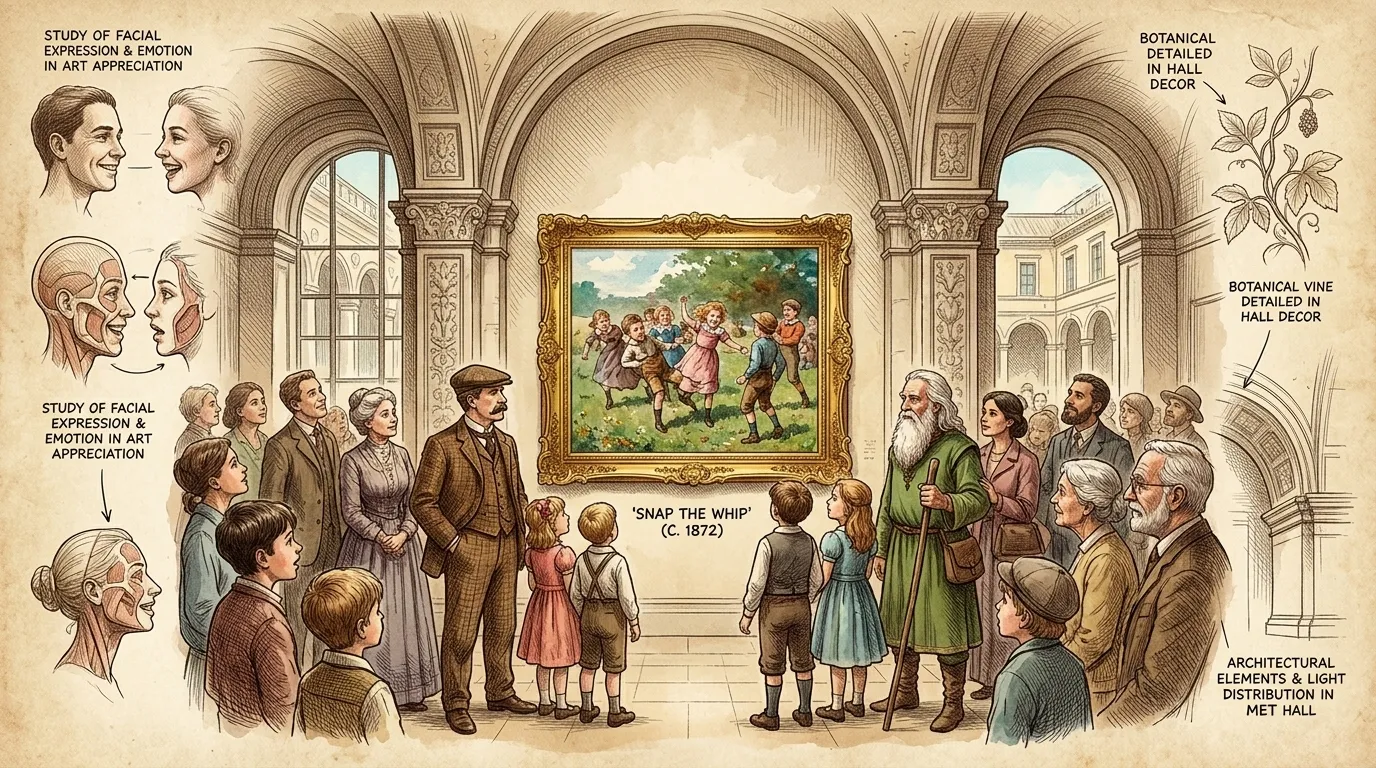
Today, 'Snap the Whip' resides in the Metropolitan Museum of Art, where it continues to captivate visitors from around the world. Its enduring appeal lies in its ability to transport viewers back to a simpler time, reminding them of the joys of childhood and the beauty of the American landscape. It stands as a monument to Winslow Homer's dedication.
""'Art washes away from the soul the dust of everyday life,'" visitors whispering to each other, quoting Pablo Picasso, as they gaze upon Homer's masterpiece. The painting's message transcends time, resonating with each generation."
Art Fact: Winslow Homer's work survives because he captured the essence of American life with unwavering honesty and timeless artistry.
About this story
- Location: United States
- Audience: general readers
Questions and answers
Questions and answers about Snap the Whip by Winslow Homer (USA — 1872)
Read Wonder Arts on your phone
Wonder Arts is available on Android. Get Wonder Arts on Google Play.
More Wonder Arts stories
- Snow Storm by J.M.W. Turner (London, UK — 1842)
- St. Mark’s Basilica (Venice, Italy — 1094)
- St. Peter’s Basilica (Vatican City — 1626)
- Statue of Liberty by Frédéric Auguste Bartholdi (New York City, USA — 1886)
- Statue of Zeus at Olympia by Phidias (Olympia, Greece — c. 435 BC)
- Still Life with Apples by Paul Cézanne (France — 1890)