The Nightmare by Henry Fuseli (London, UK — 1781)
The Nightmare by Henry Fuseli (London, UK — 1781) — an illustrated arts story, set in United Kingdom. 10 illustrated pages, free to read on Wonder Arts.
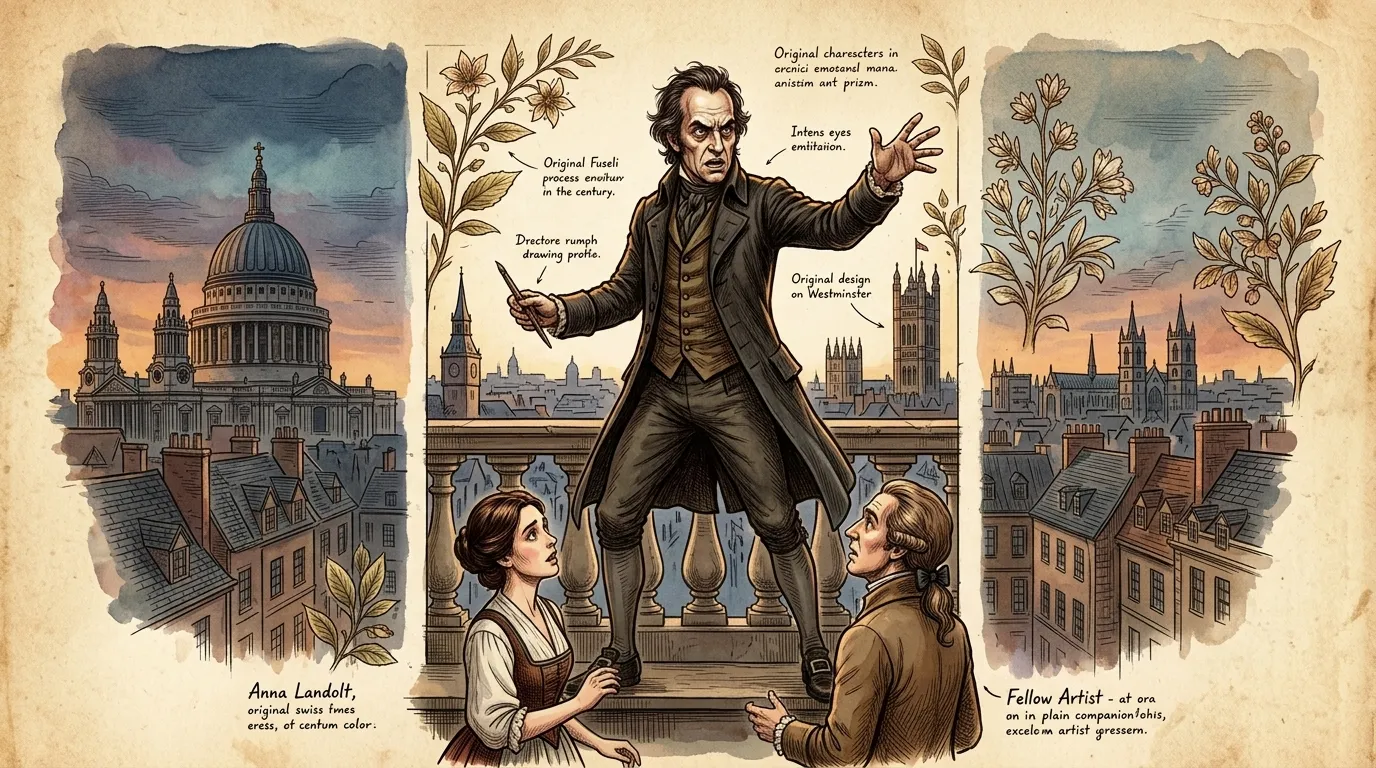
Page 1
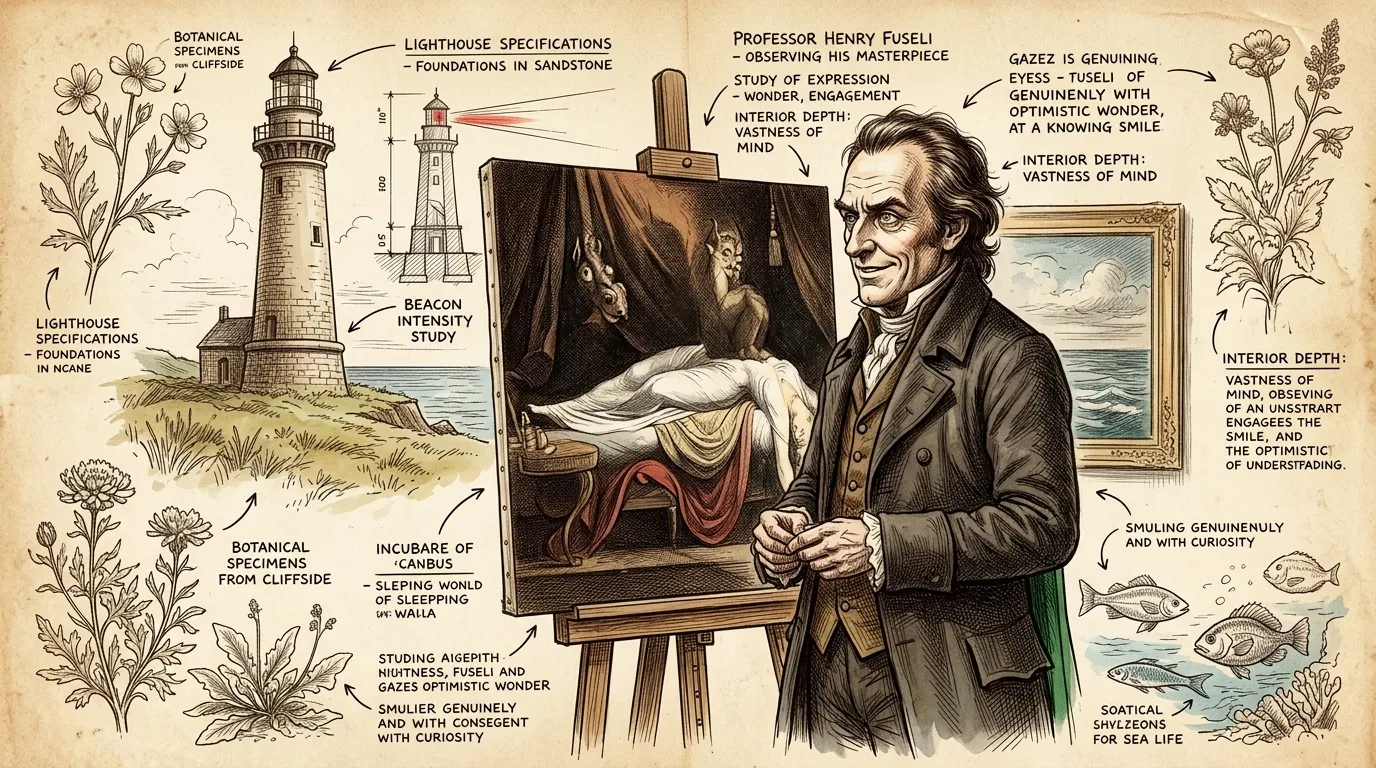
From the lonely lighthouse at the edge of a painted sea, where shadows stretch long and the wind whispers tales of old, we cast our gaze back to a pivotal moment in art history. Here, a canvas pulses with a dark energy, a vision plucked from the deepest recesses of the subconscious.
""They called it monstrous, obscene even," Henry Fuseli muttered, his eyes fixed on the canvas, "but what is art if not the mirror held to our hidden selves, to the dreams and terrors we dare not speak aloud?""
Art Fact: Henry Fuseli's 'The Nightmare,' painted in London in 1781, measures 101.6 cm 126.7 cm (40 in 49.9 in) and is housed in the Detroit Institute of Arts. Upon its exhibition, it caused a sensation, shocking audiences with its morbid subject matter yet captivating them with its raw emotional power. This painting is considered a precursor to Romanticism and even Surrealism, exploring themes of the subconscious and night terrors long before psychoanalysis.
Page 2
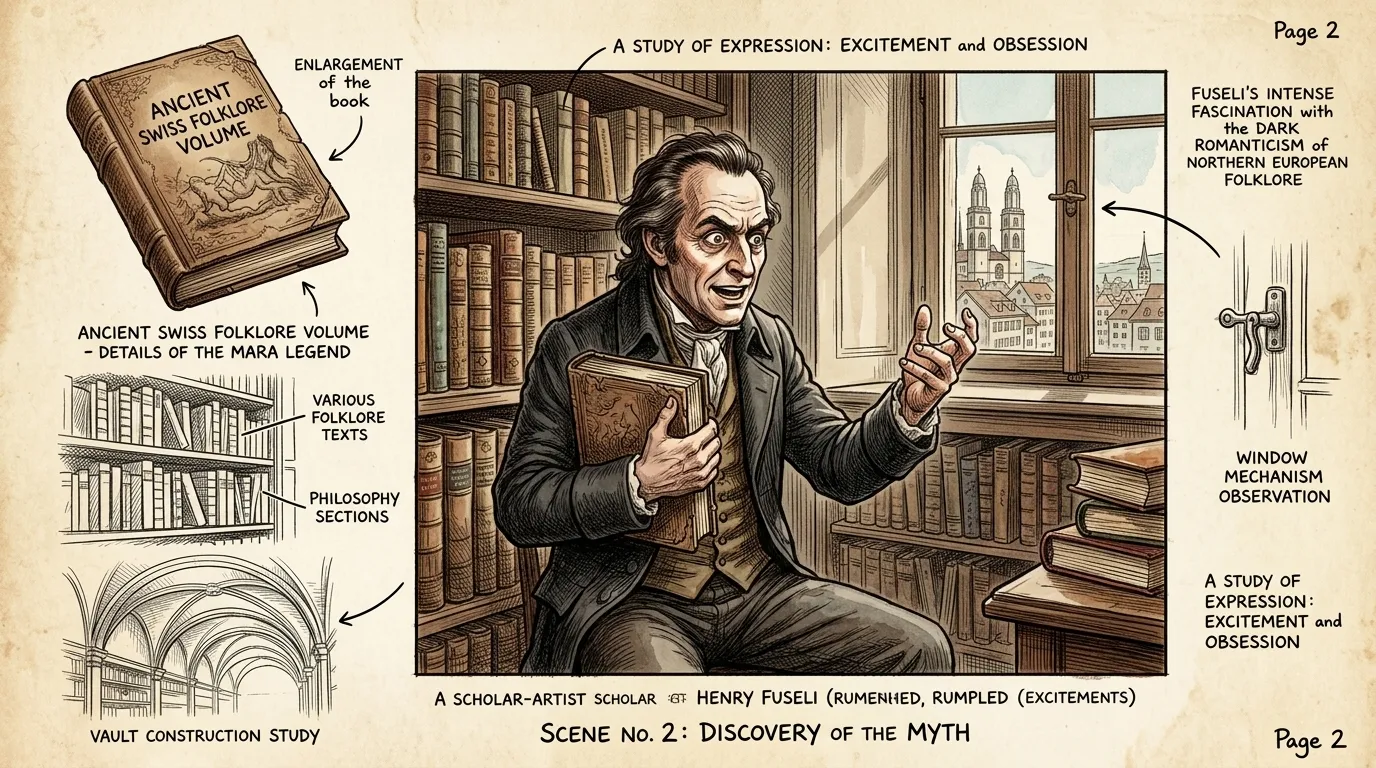
Before the monstrous visions took hold on canvas, they first seeped into Fuseli's mind through ancient tales and whispered legends. He was a scholar before he was an artist, steeped in the dark romanticism of Northern European folklore.
""The old stories speak of the Mara," young Fuseli exclaimed, clutching a tattered volume in a quiet corner of a Zurich library, "a demon that rides upon the sleeper's chest, stealing their breath and twisting their dreams into torment.""
Page 3
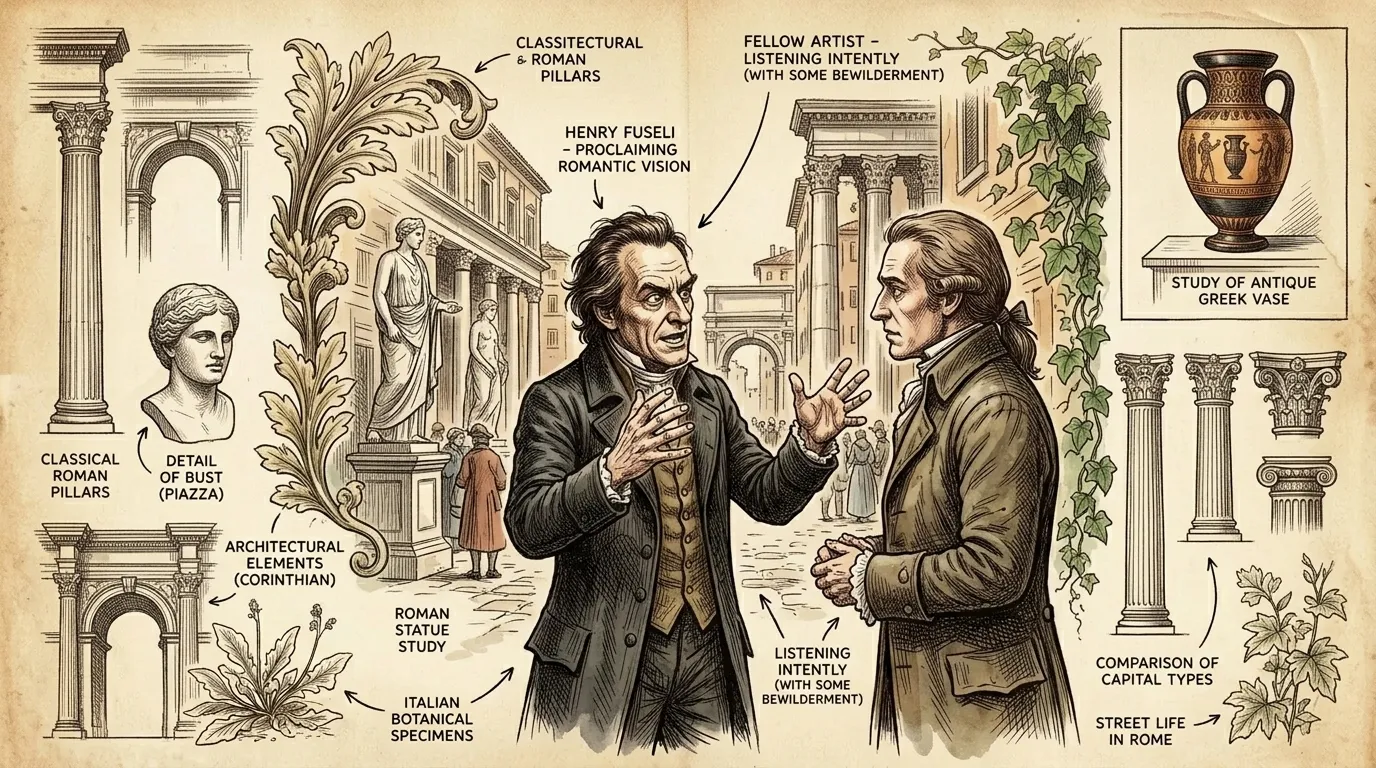
Fuseli's journey to Rome, the epicenter of classical art, was meant to refine his academic eye. Yet, amidst the serene marble and idealized forms, a rebellious spirit stirred, seeking a deeper, more unsettling truth.
""The ancients understood heroism, beauty," Fuseli declared to a fellow artist in a bustling Roman piazza, gesturing wildly, "but where is the passion, the terror, the sublime distortion that grips the soul? We must find the new sublime!""
Page 4
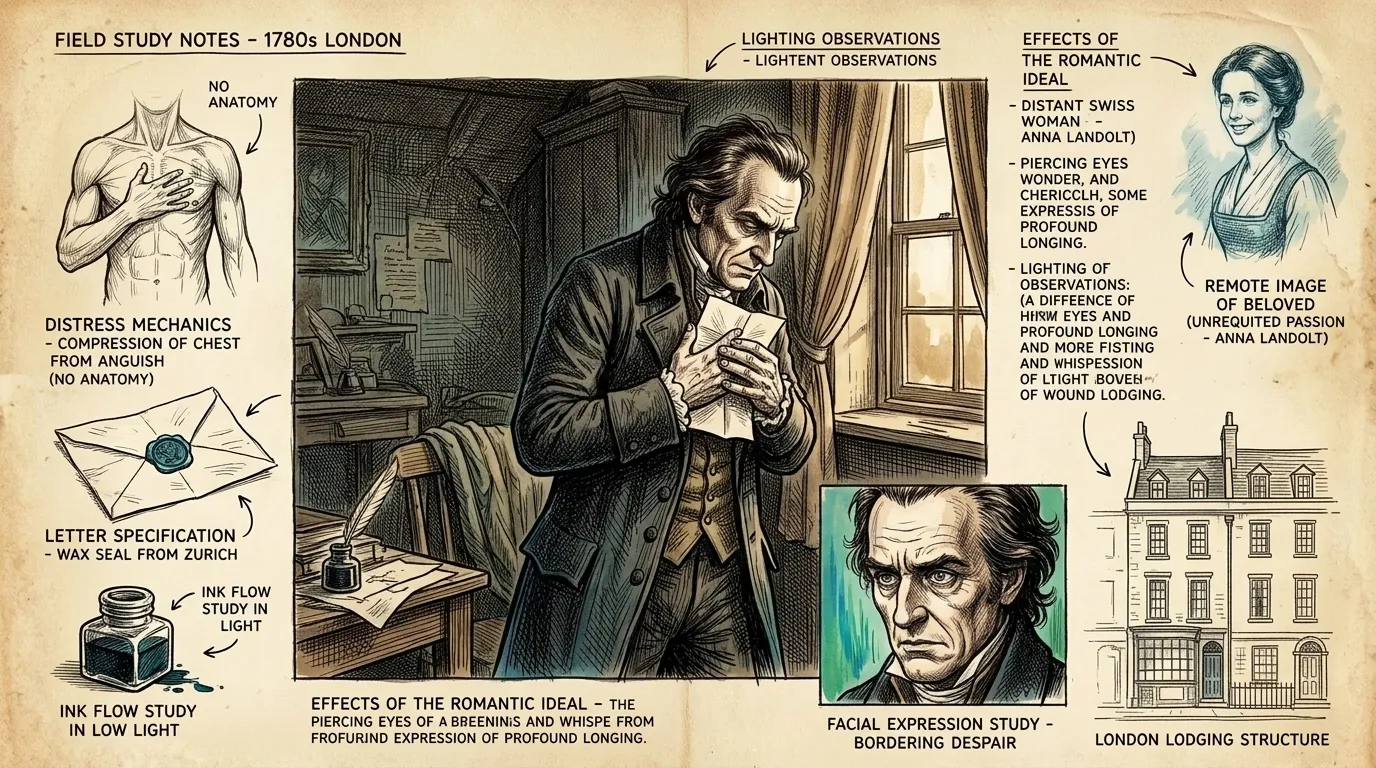
The raw emotion fueling 'The Nightmare' was not merely academic study; it was a deeply personal agony. Fuseli's intense, unrequited passion for Anna Landolt, a Swiss woman, found its grotesque outlet on his canvas.
""Anna, my love, my torment!" Fuseli whispered, clutching a crumpled letter to his chest in his dimly lit London lodging, "Your image haunts my waking thoughts and fills my nights with dreams of desperate yearning.""
Page 5
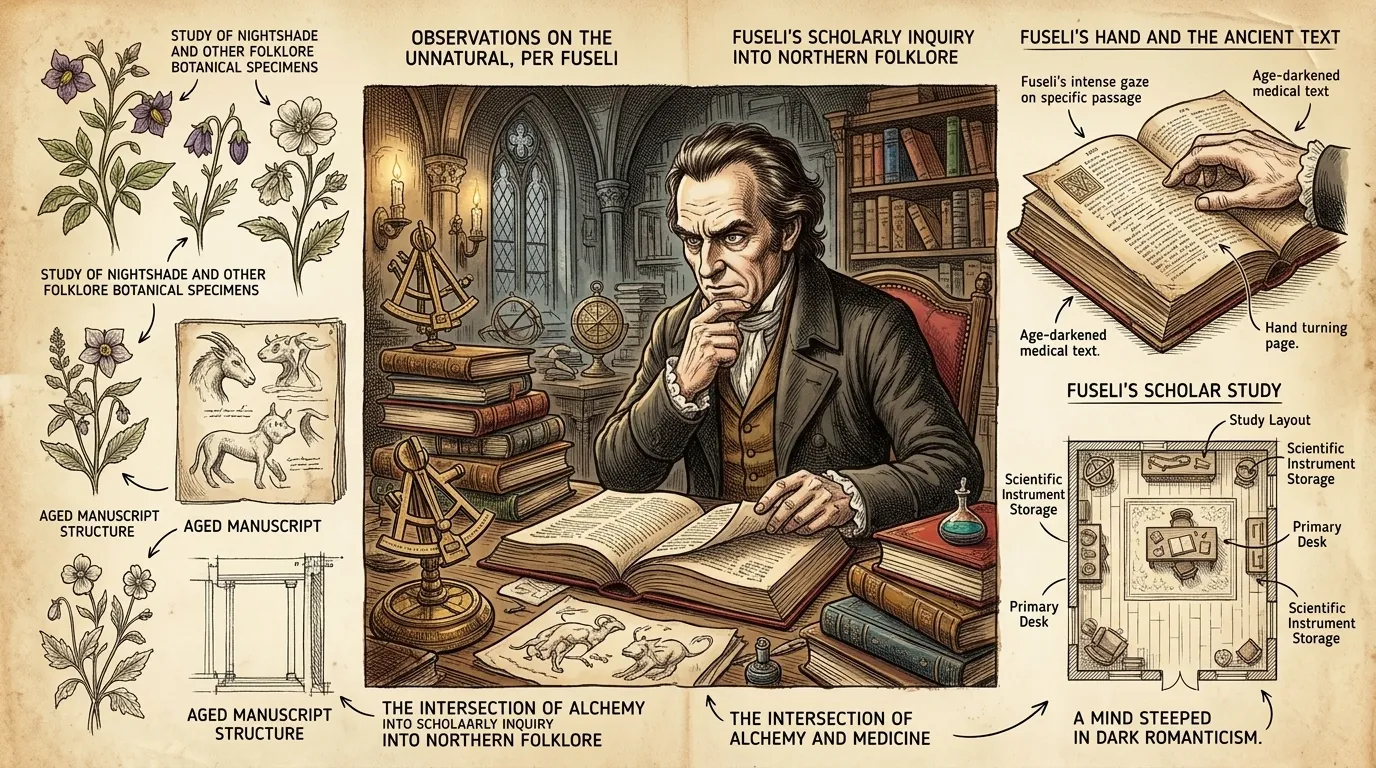
Fuseli didn't just illustrate nightmares; he embodied them. He delved into medical treatises and folklore, blending the scientific understanding of sleep paralysis with ancient superstitions, giving terrifying form to the unseen.
""They call it an 'oppression of the chest', a malady of the humors," Fuseli muttered, leafing through an old medical text, "but the people know better. It is a demon, a weight, a manifestation of our deepest, primordial dread.""
Page 6
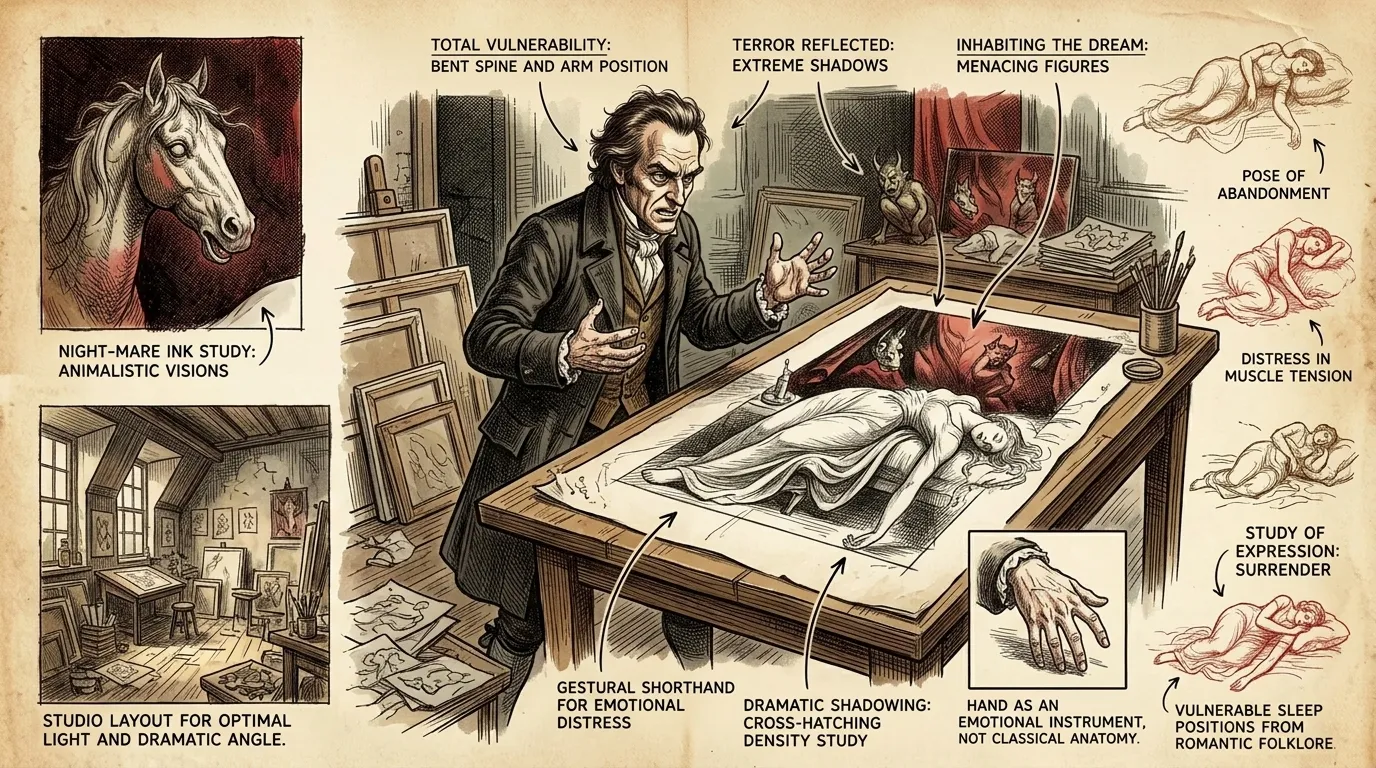
The true breakthrough lay in Fuseli's audacious decision to depict the human body not as idealized form, but as a vessel of terror and psychological distortion. He bent classical anatomy to serve emotional truth.
""No, no, not perfect!" Fuseli exclaimed, his voice sharp with frustration, as he gestured at a preliminary drawing of the sleeping woman's pose. "The limbs must be leaden, the head thrown back, an agony of total surrender to the unseen force!""
Page 7
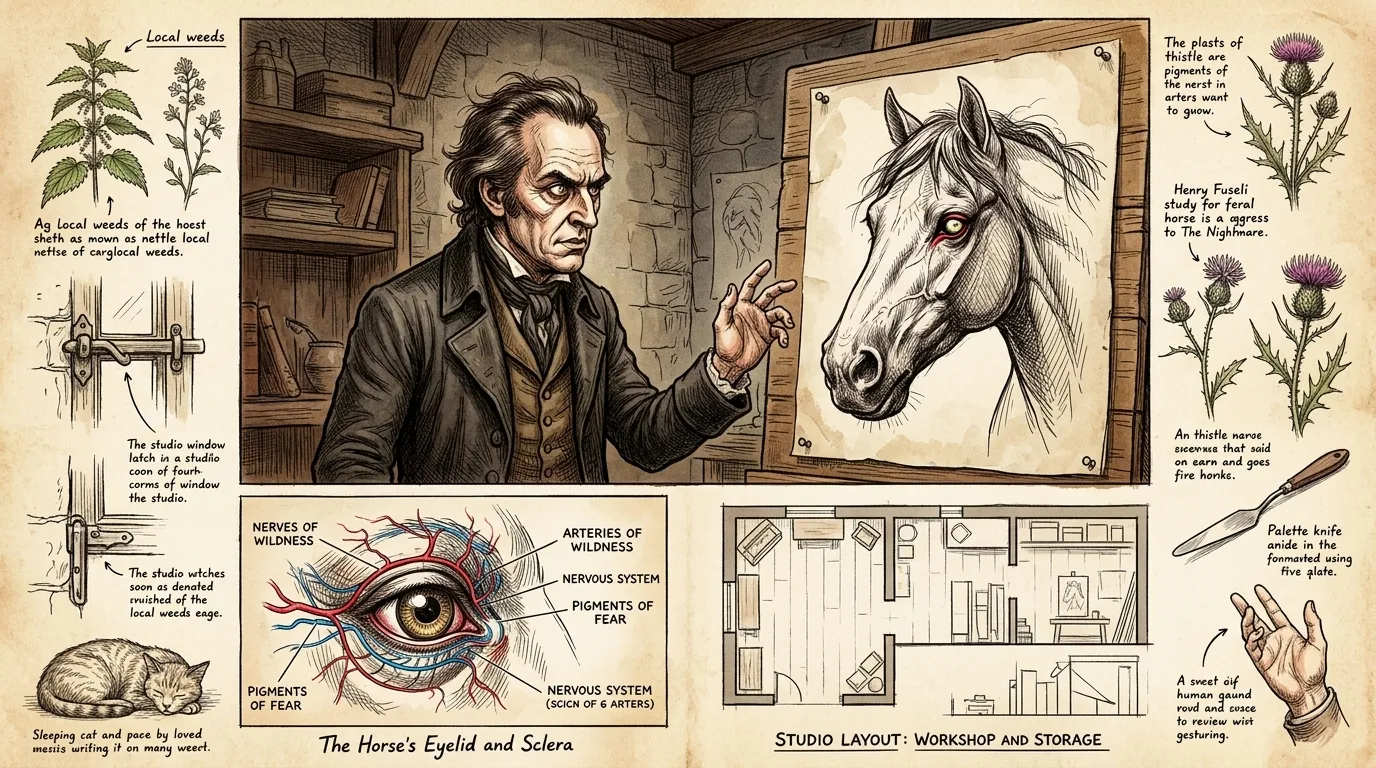
The infamous horse, with its luminous eyes and aggressive presence, was not a mere detail but a potent symbol. It was the 'night-mare' made manifest, bursting from the subconscious into the tangible world of the canvas.
""The terror is not merely on her chest," Fuseli mused, eyes gleaming in the dim light of his studio, "but surrounds her, invades her space! And what better symbol of an invading nightmare than the beast itself, a wild, untamed force from the dark recesses?""
Page 8
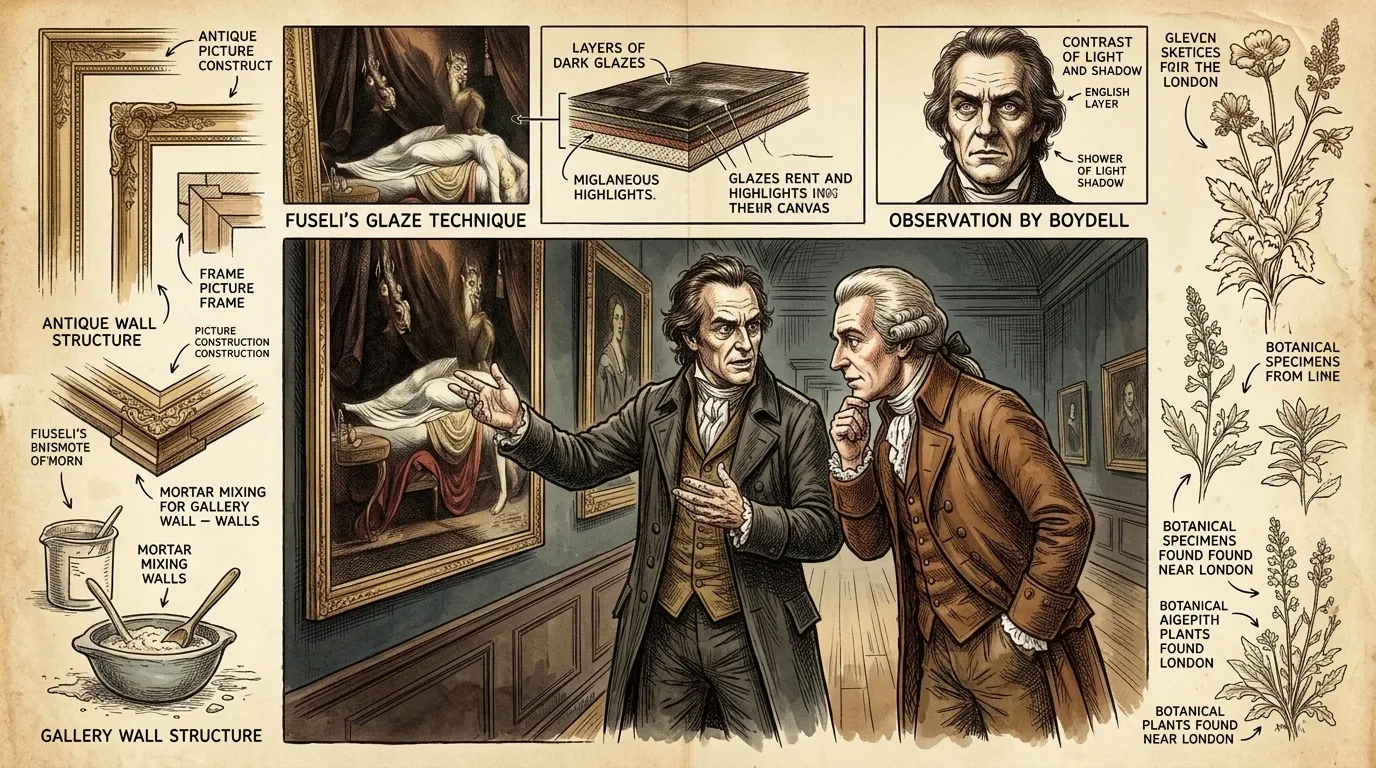
With meticulous precision, Fuseli applied layers of dark glazes, contrasting them with stark highlights. This technique, almost akin to Caravaggio's chiaroscuro, amplified the painting's unsettling drama and psychological depth.
""The darkness is not merely an absence of light," Fuseli explained to his acquaintance, the print publisher John Boydell, his voice low, "but a presence, a shroud of the subconscious, making the terror more vivid, more palpable.""
Page 9
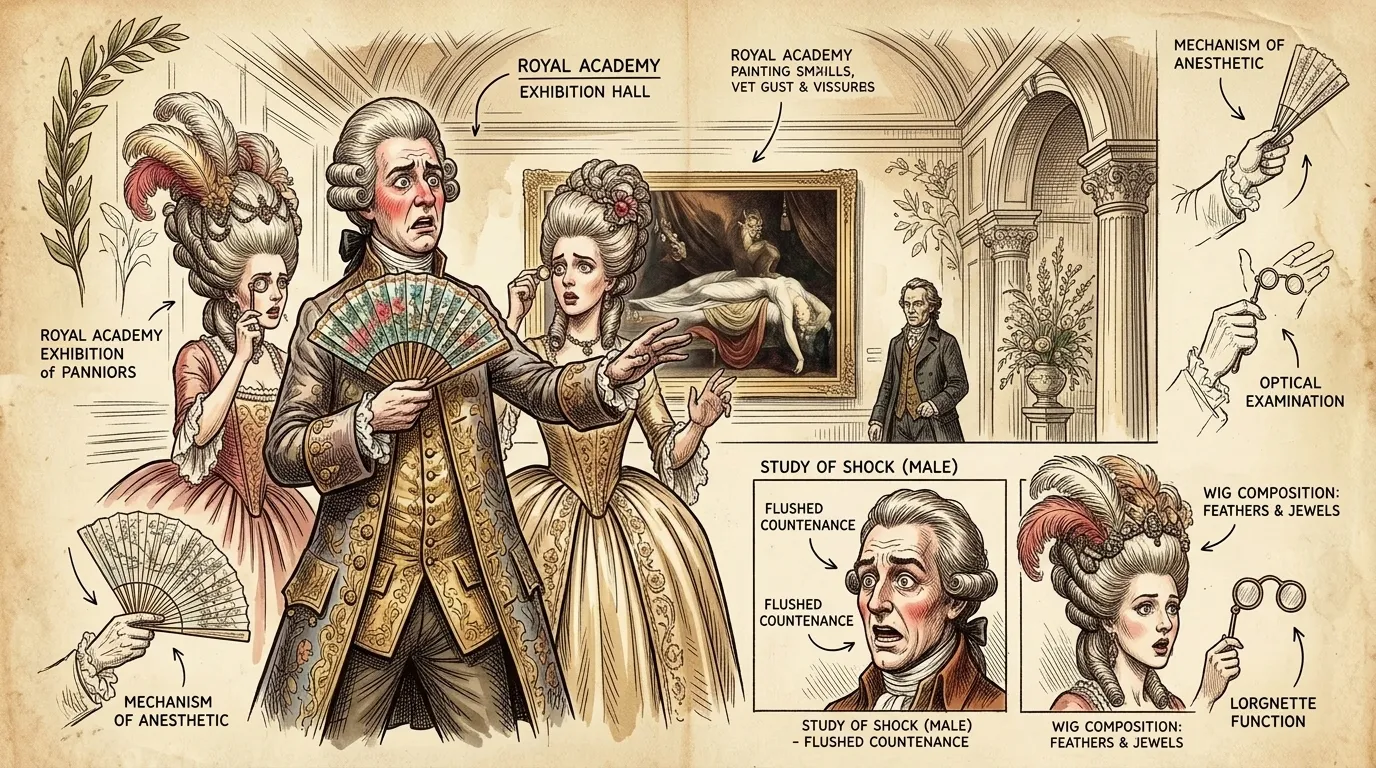
When 'The Nightmare' was first exhibited at the Royal Academy, it unleashed a torrent of polarized reactions. Some recoiled in disgust, others were morbidly fascinated, recognizing a disturbing truth about human nature.
""It is utterly shocking, Sir!" exclaimed a bewildered gentleman, fanning himself with a hand, to his companion Lady Eleanor. "Such grotesque imagery! Yet, I confess... I cannot tear my eyes away from it!""
Page 10
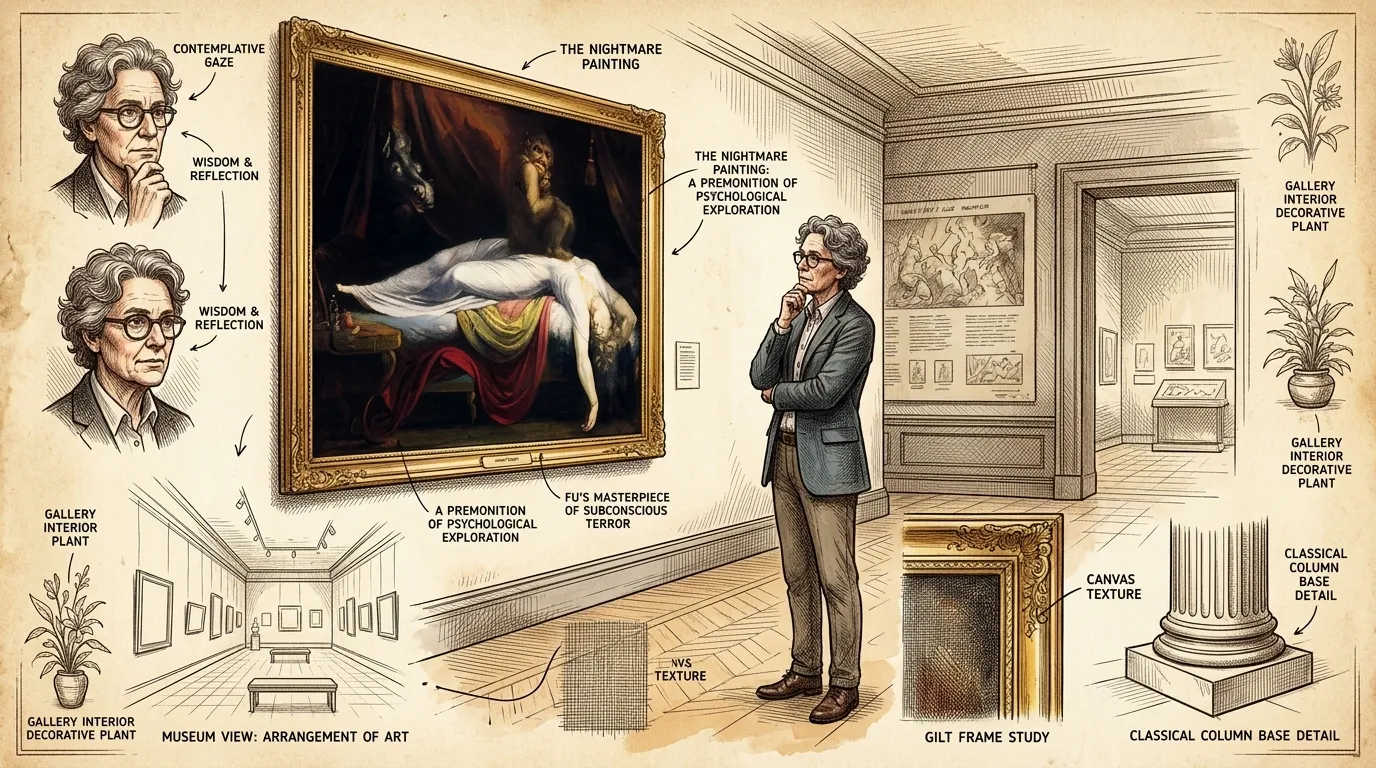
Today, 'The Nightmare' stands as a testament to Fuseli's singular genius, a chilling premonition of psychological exploration. Its legacy echoes not only through art history but through literature, psychoanalysis, and the very way we understand our dreams.
""The dreams of the mind, when left unbound, can create monsters more real than any waking terror," a contemplative art historian mused, standing before the painting's enduring power. "Fuseli understood that a raw, psychological truth often speaks louder than any classical ideal.""
About this story
- Location: United Kingdom
- Audience: general readers
Read Wonder Arts on your phone
Wonder Arts is available on Android. Get Wonder Arts on Google Play.
More Wonder Arts stories
- The Origin of the World by Gustave Courbet (France — 1866)
- The Oxbow by Thomas Cole (USA — 1836)
- The Pantheon (Rome, Italy — 126 AD)
- The Persistence of Memory by Salvador Dalí (New York City, USA — 1931)
- The Potato Eaters by Vincent van Gogh (Nuenen, Netherlands — 1885)
- The Rape of Proserpina by Gian Lorenzo Bernini (Rome, Italy — 1622)