The Pantheon (Rome, Italy — 126 AD)
The Pantheon (Rome, Italy — 126 AD) — an illustrated arts story, set in Italy. 10 illustrated pages, free to read on Wonder Arts.
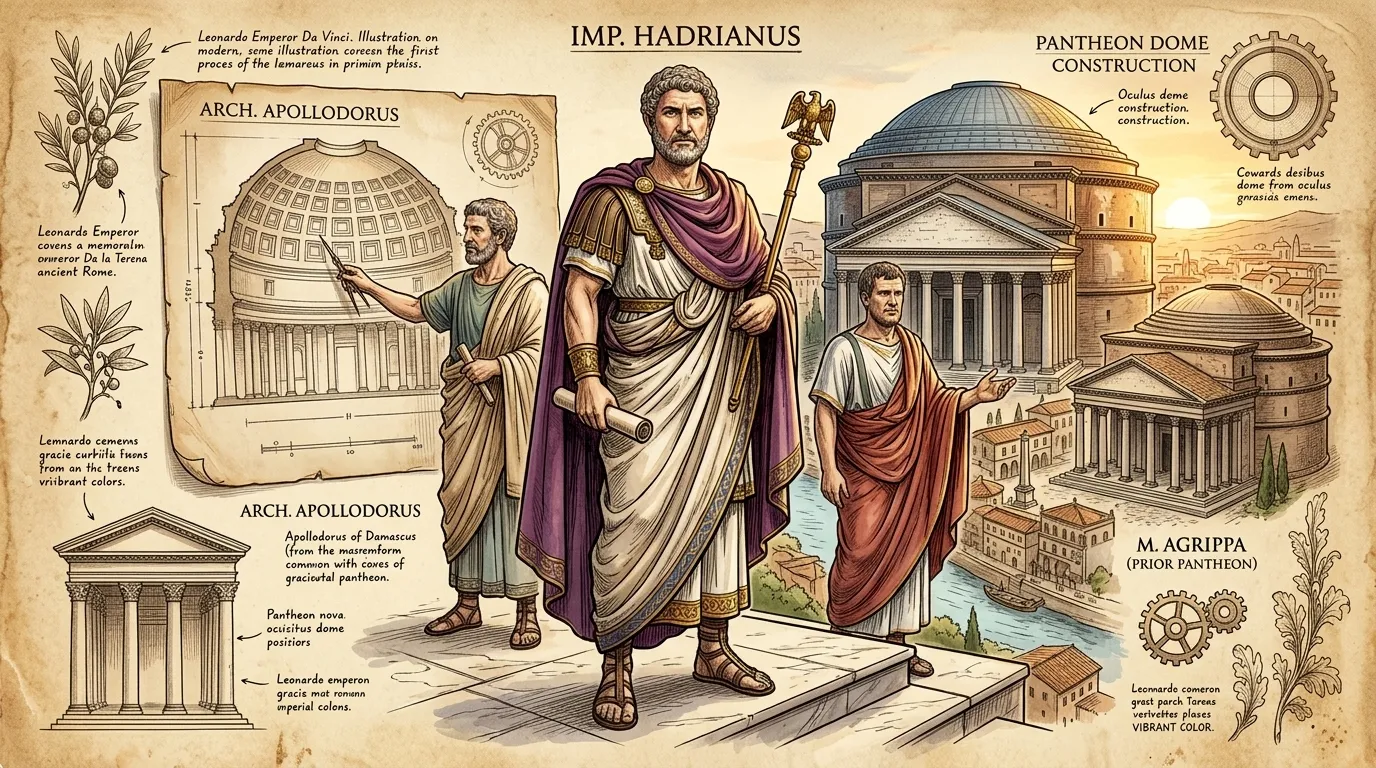
Page 1
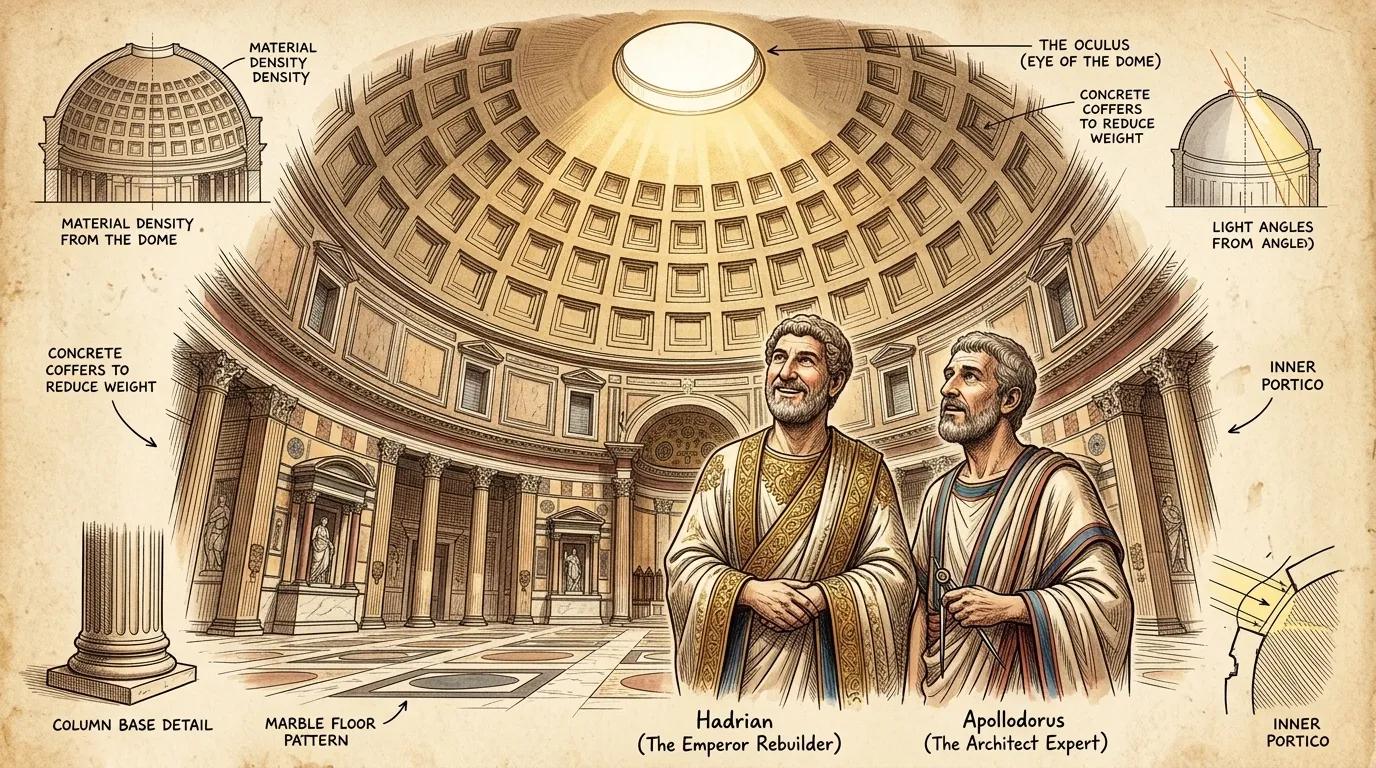
Emperor Hadrian, the mastermind behind the Pantheon's reconstruction, surveys his completed masterpiece. The year is 126 AD. This architectural marvel, with its awe-inspiring dome and oculus, stands as a testament to Roman engineering prowess. It measures 142 feet in diameter and height, and its dedication inscription actually honors Marcus Agrippa, its original builder.
"Hadrian turns to his architect, Apollodorus of Damascus, "Apollodorus, does it capture the spirit of all the gods, as I envisioned?""
Art Fact: The Pantheon's dome was the largest in the world for over 1300 years and is still the world's largest unreinforced concrete dome.
Page 2
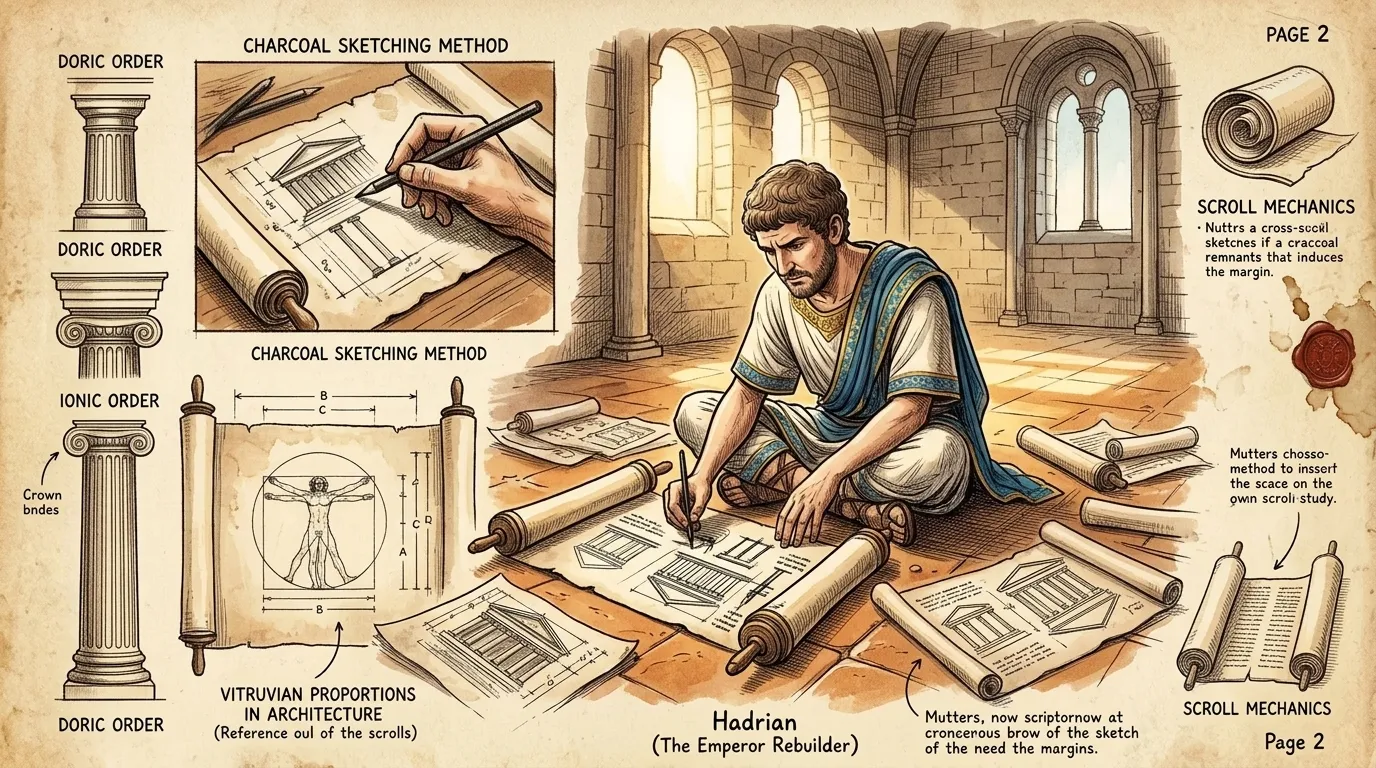
Long before ascending to the throne, Hadrian, as a young noble, devoured scrolls on architecture and engineering. He studied the works of Vitruvius and other Greek masters, sketching designs in the margins. This early passion shaped his reign and the grand projects he would later commission. 'Architecture,' he once wrote, 'is frozen music.'
"Hadrian, a young man, pores over a scroll, muttering to himself, "The principles of balance and harmony... the key to lasting beauty.""
Art Fact: Hadrian's architectural style blended Roman practicality with Greek idealism.
Page 3
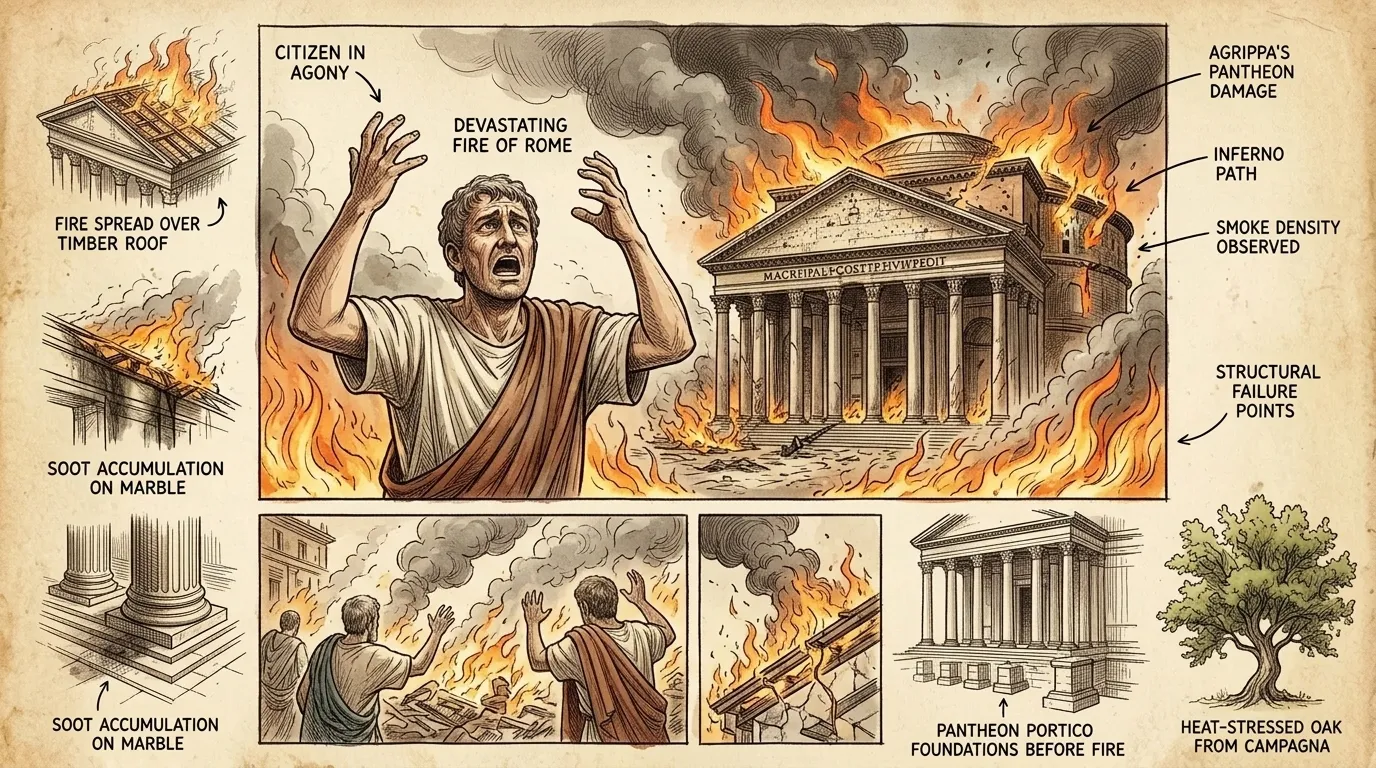
In 80 AD, a devastating fire swept through Rome, severely damaging the original Pantheon built by Marcus Agrippa. Domitian undertook some restoration, but the structure never fully recovered its former glory. This destruction deeply affected Hadrian, igniting his ambition to create something even grander, a lasting monument that would defy time and fire. He remembered Seneca's words: 'Every new beginning comes from some other beginning's end.'
"A Roman citizen shouts in despair, "The fire... it has taken everything! Even Agrippa's great temple!""
Art Fact: The inscription 'M. AGRIPPA L. F. COS. TERTIUM FECIT' still visible today, refers to Agrippa's original construction, not Hadrian's.
Page 4
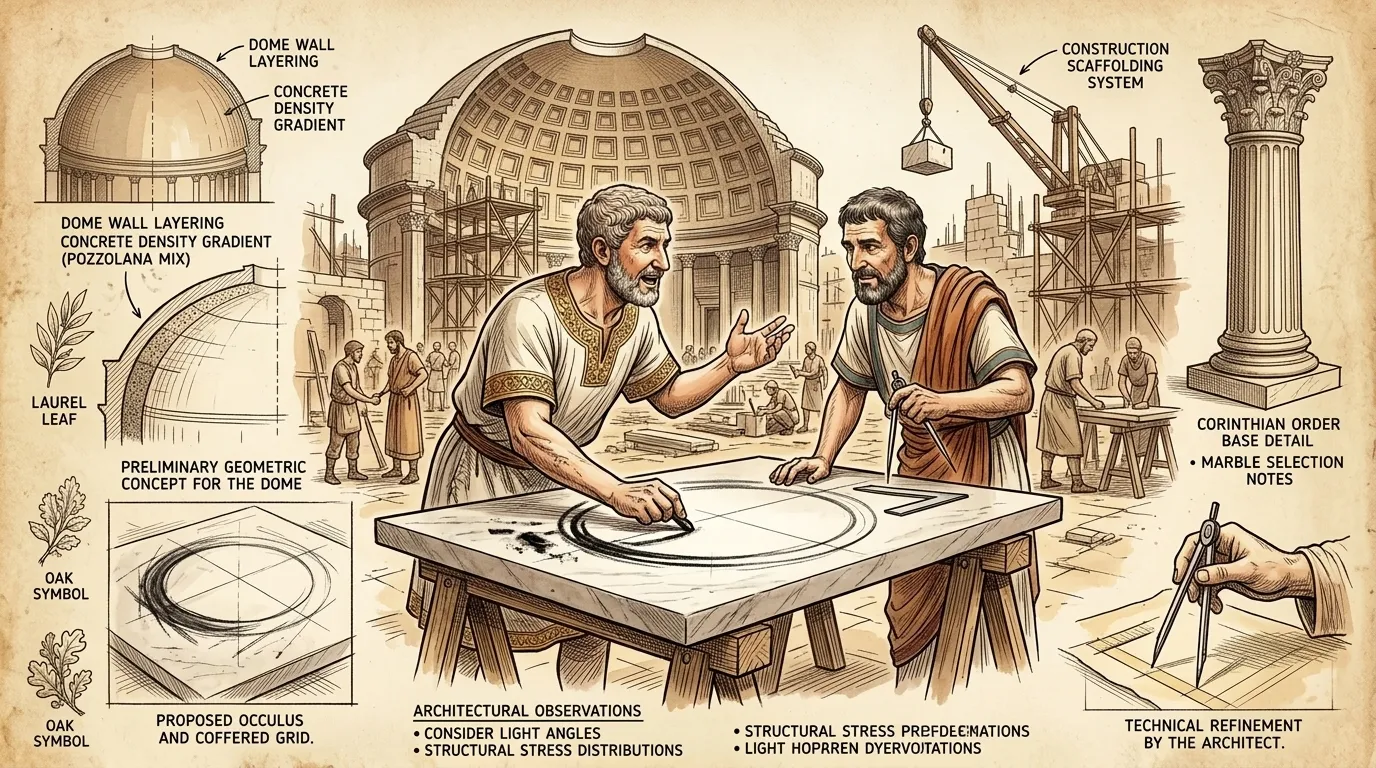
Hadrian envisioned a radical departure from traditional rectangular temples. He sought a circular design, a rotunda, symbolizing the cosmos and the unity of all gods. This innovative concept challenged Roman architectural norms and required unprecedented engineering solutions. He sought Apollodorus's advice, whispering, 'What if we looked upward, instead of outward?'
"Hadrian gestures with a piece of charcoal, sketching on a marble slab, "Imagine, Apollodorus, a space where the heavens themselves seem within our reach.""
Art Fact: The rotunda design required innovative use of concrete, with lighter materials used towards the dome's apex.
Page 5
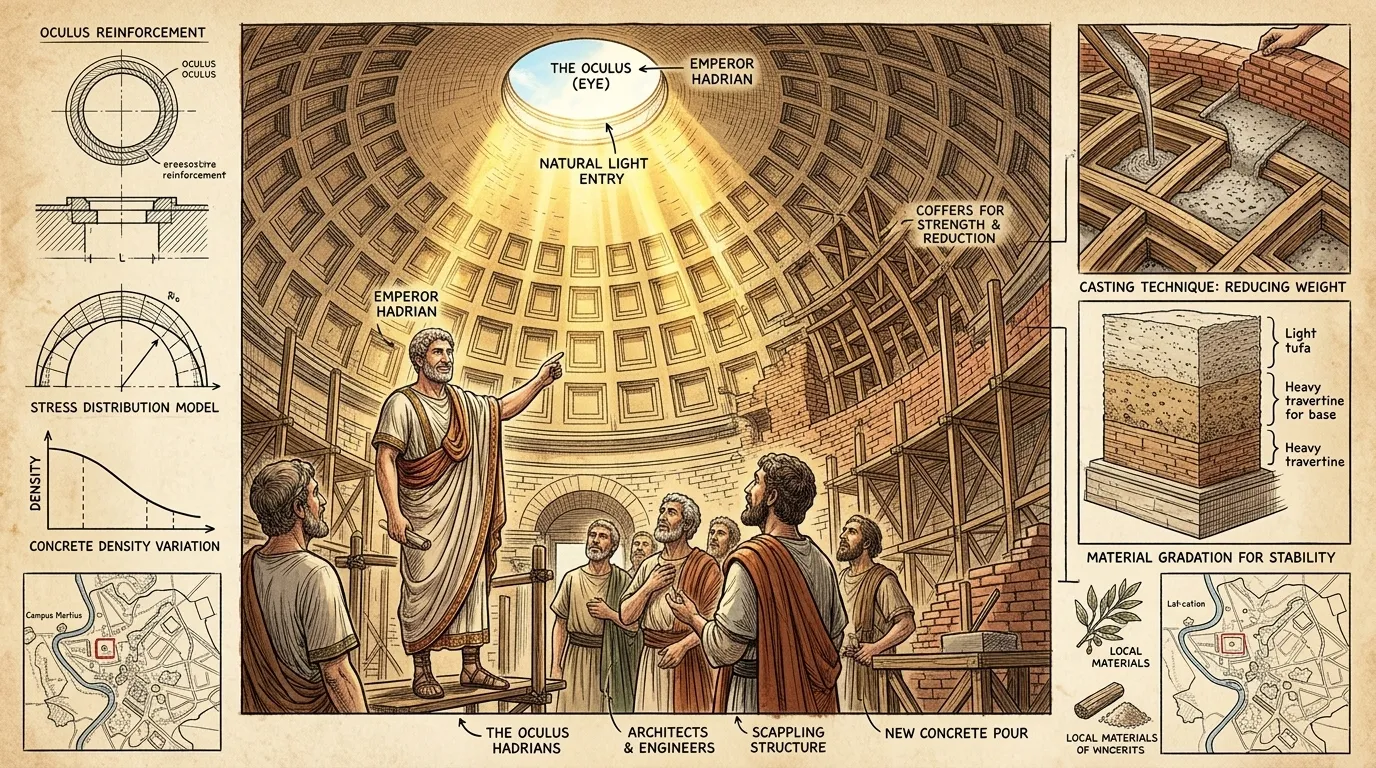
Central to Hadrian's vision was the oculus, the circular opening at the dome's apex. This wasn't merely a source of light; it was a direct connection to the heavens, allowing worshippers to feel the presence of the divine. The play of light and shadow throughout the day created a constantly shifting spectacle, a tangible representation of celestial movement. Hadrian believed, as Cicero said, "The heavens declare the glory of God; the skies proclaim the work of his hands."
"Hadrian explains to his engineers, "The oculus must be perfectly positioned, a gateway for the gods to enter and for our prayers to ascend.""
Art Fact: The oculus is 27 feet in diameter and serves as the Pantheon's only source of direct natural light.
Page 6
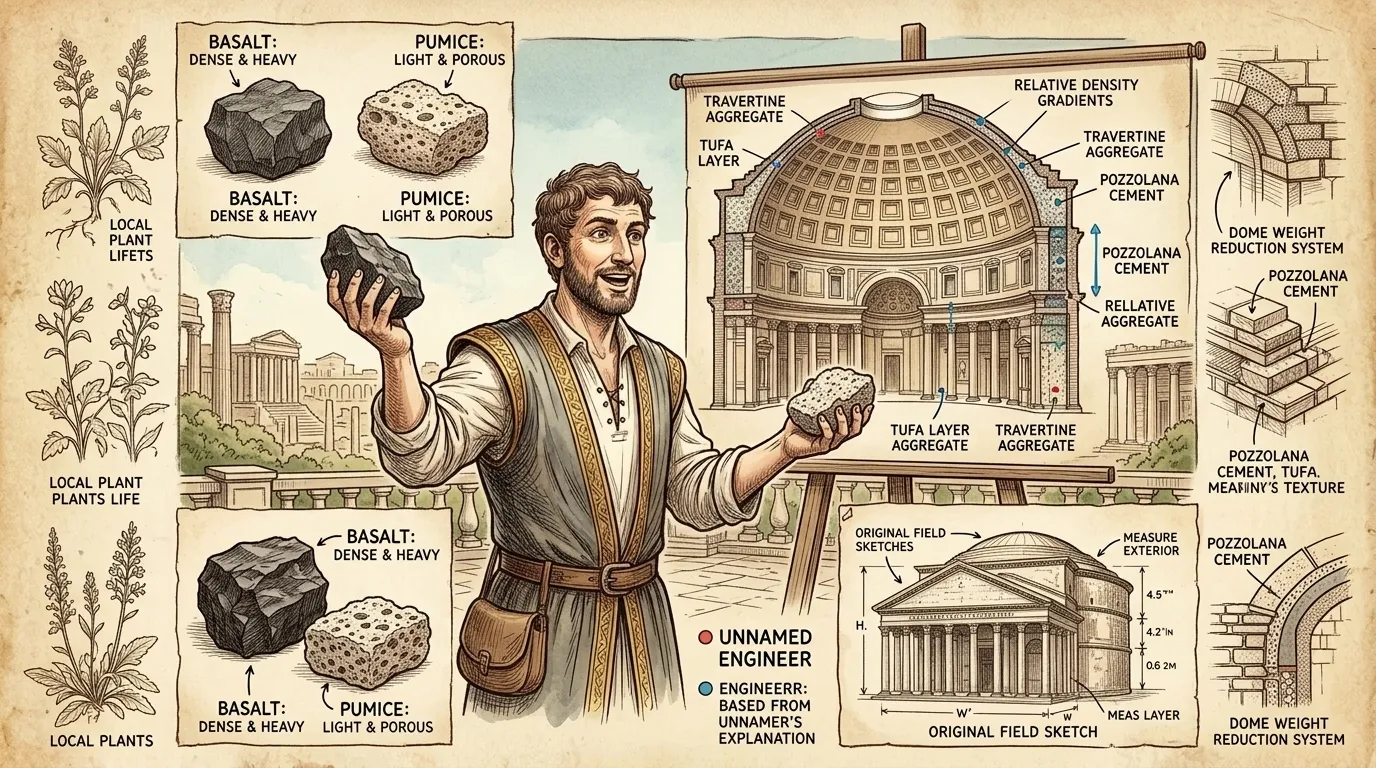
The Pantheon's dome was a triumph of Roman concrete technology. By using different aggregates – heavy basalt at the base, lighter pumice at the top – the engineers reduced the dome's weight without compromising its structural integrity. This innovative approach allowed them to create a dome of unprecedented size and stability. It showed, as Pliny the Elder wrote, 'that fortune is on the side of those who do not rest'.
"An engineer explains the composition of the concrete, "We mix basalt for strength below, and then pumice to make it lighter as we rise!""
Art Fact: Roman concrete was stronger and more durable than modern concrete, thanks to its unique composition.
Page 7
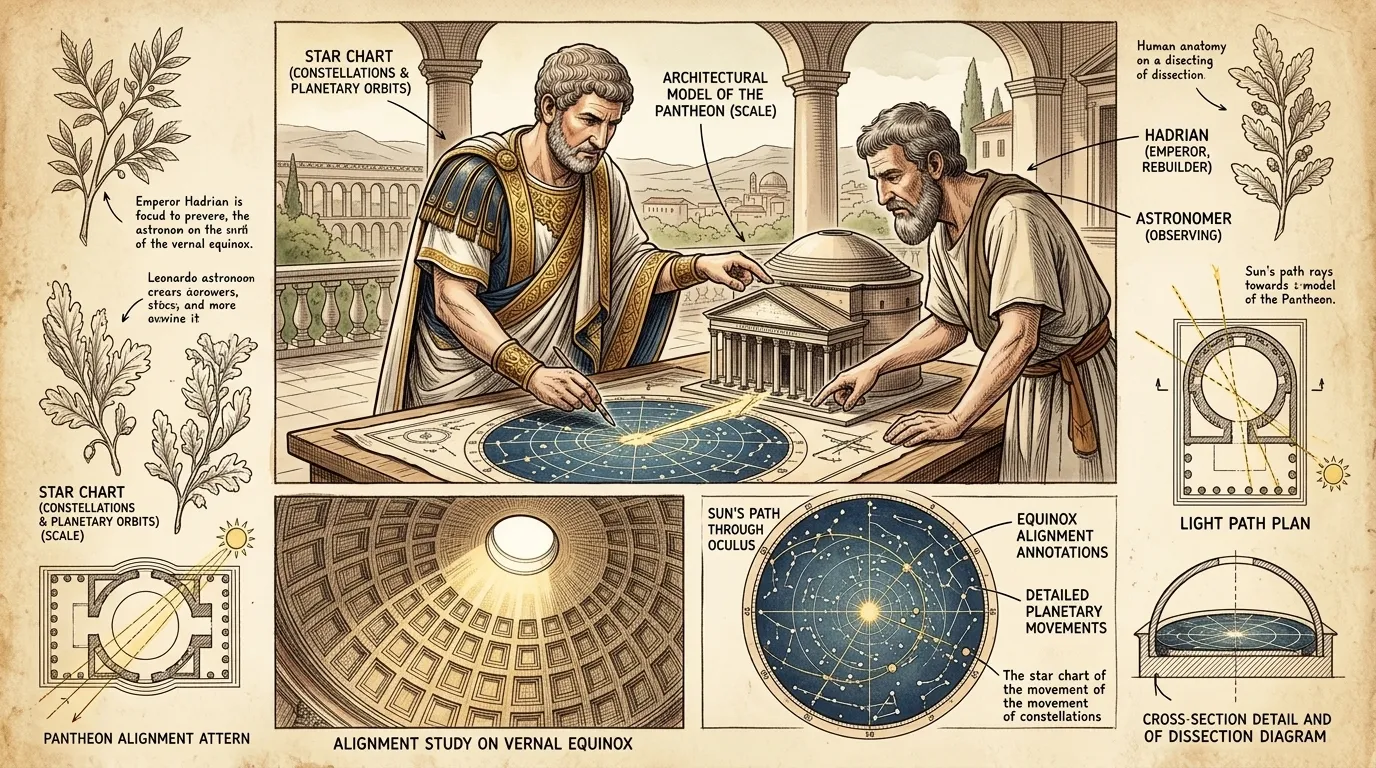
Hadrian meticulously planned the Pantheon's orientation to align with the solstices and equinoxes. On certain days, the sun would shine directly through the oculus, illuminating specific niches within the temple. This intentional alignment transformed the Pantheon into a living sundial, a testament to Roman understanding of astronomy and their connection to the cosmos. 'As above, so below,' Hadrian often murmured, quoting Hermes Trismegistus.
"Hadrian consults with an astronomer, "On the vernal equinox, the sun must illuminate the entrance, marking the renewal of the year!""
Art Fact: The Pantheon served as a temple to all gods, reflecting Hadrian's syncretic religious beliefs.
Page 8
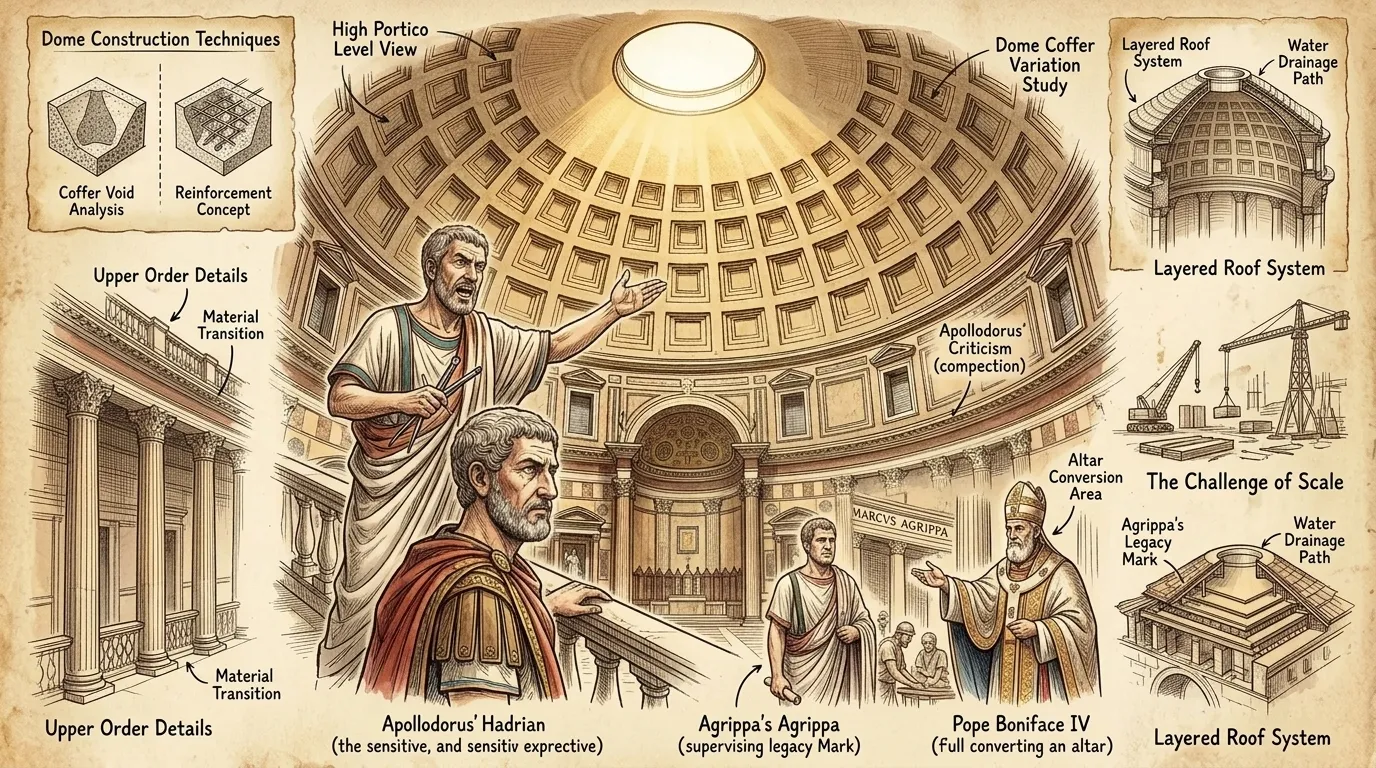
Legend has it that Apollodorus of Damascus, Hadrian's former architect, dared to criticize the completed Pantheon, deeming it a 'pumpkin' and mocking the sculptures of the gods. Hadrian, known for his sensitivity to criticism, is said to have banished and later executed Apollodorus. This act highlights the emperor's absolute authority and his deep personal investment in the project. 'The critic,' Hadrian supposedly retorted, echoing Plato, 'is he who knows the road but cannot drive the car'.
"Apollodorus confronts Hadrian, "Emperor, the dome... it lacks true grandeur! It's merely a pumpkin!""
Art Fact: The story of Apollodorus's critique and execution is debated by historians, but it underscores Hadrian's complex character.
Page 9
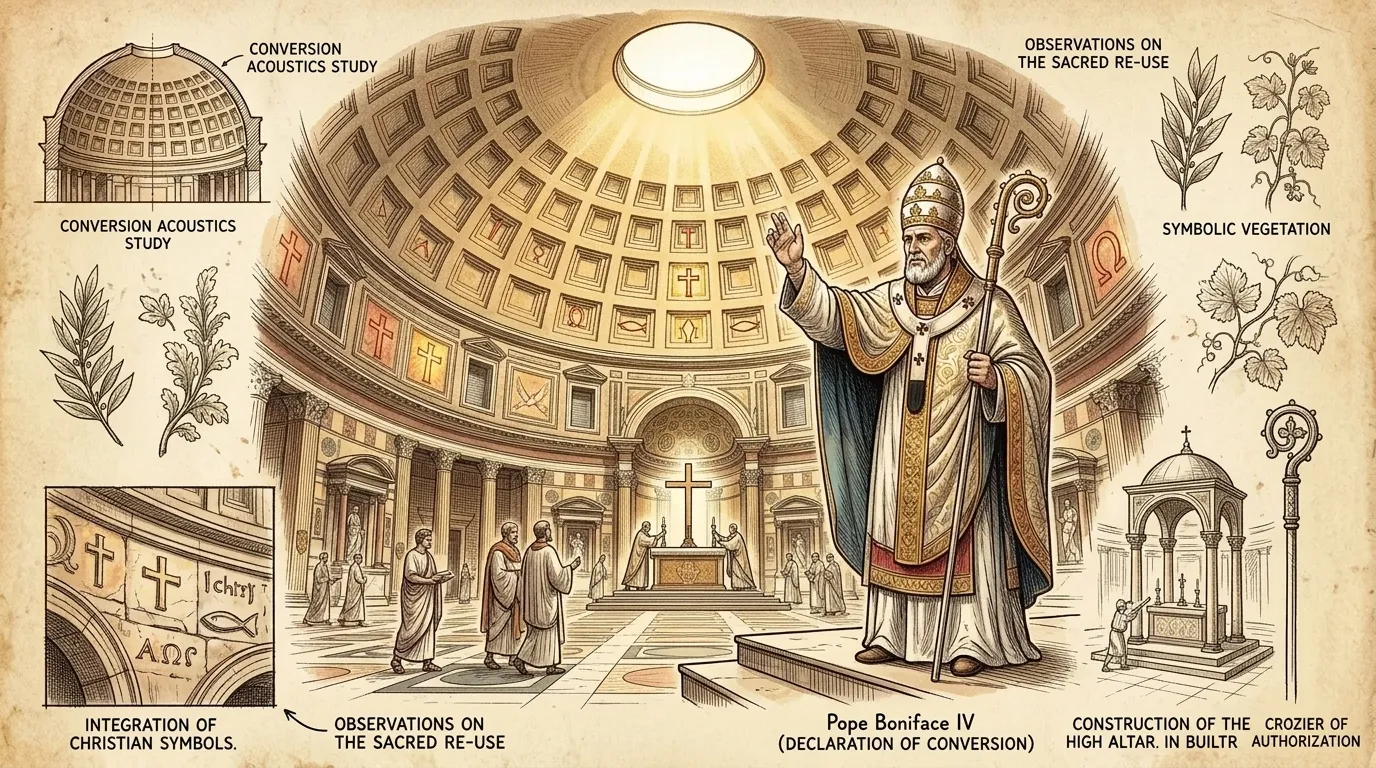
In 609 AD, the Pantheon was consecrated as a Christian church, Santa Maria ad Martyres, saving it from the neglect and destruction that befell many other pagan temples. This transformation ensured the Pantheon's survival and its continued relevance as a place of worship. The conversion symbolized the enduring power of faith and the adaptability of architecture. As Saint Augustine said, 'The world is a book, and those who do not travel read only one page.'
"Pope Boniface IV declares, "Let this temple be cleansed and dedicated to the glory of the Virgin Mary and all the Martyrs!""
Art Fact: The Pantheon is one of the best-preserved ancient Roman buildings, thanks to its continuous use.
Page 10
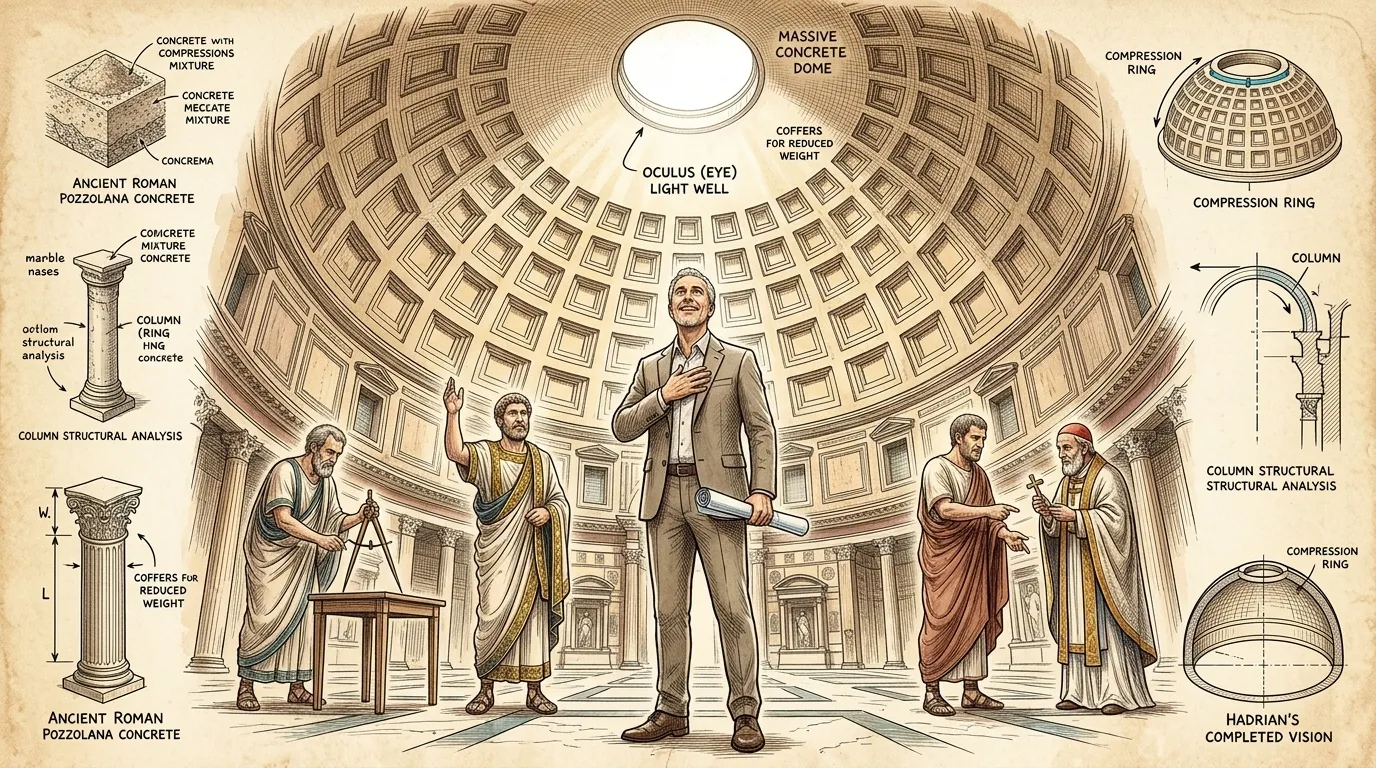
Today, the Pantheon stands as a testament to Roman ingenuity, Hadrian's vision, and the enduring power of architecture. It has inspired countless artists, architects, and engineers throughout history. Its dome remains an unparalleled feat of engineering, and its oculus continues to connect visitors to the heavens. The Pantheon's survival proves that, like the ancient Roman poet Horace said, 'A monument more lasting than bronze' can be built through artistry and vision.
"A modern architect whispers, "The Pantheon... its dome is a marvel, an inspiration even after two millennia.""
Art Fact: The Pantheon continues to inspire awe and wonder, a timeless symbol of human achievement.
About this story
- Location: Italy
- Audience: general readers
Read Wonder Arts on your phone
Wonder Arts is available on Android. Get Wonder Arts on Google Play.
More Wonder Arts stories
- The Persistence of Memory by Salvador Dalí (New York City, USA — 1931)
- The Potato Eaters by Vincent van Gogh (Nuenen, Netherlands — 1885)
- The Rape of Proserpina by Gian Lorenzo Bernini (Rome, Italy — 1622)
- The Rocky Mountains by Albert Bierstadt (USA — 1863)
- The School of Athens by Raphael (Vatican City, Rome — 1509–1511)
- The Sea of Ice by Caspar David Friedrich (Germany — 1824)