The Sea of Ice by Caspar David Friedrich (Germany — 1824)
The Sea of Ice by Caspar David Friedrich (Germany — 1824) — an illustrated arts story, set in Germany. 10 illustrated pages, free to read on Wonder Arts.
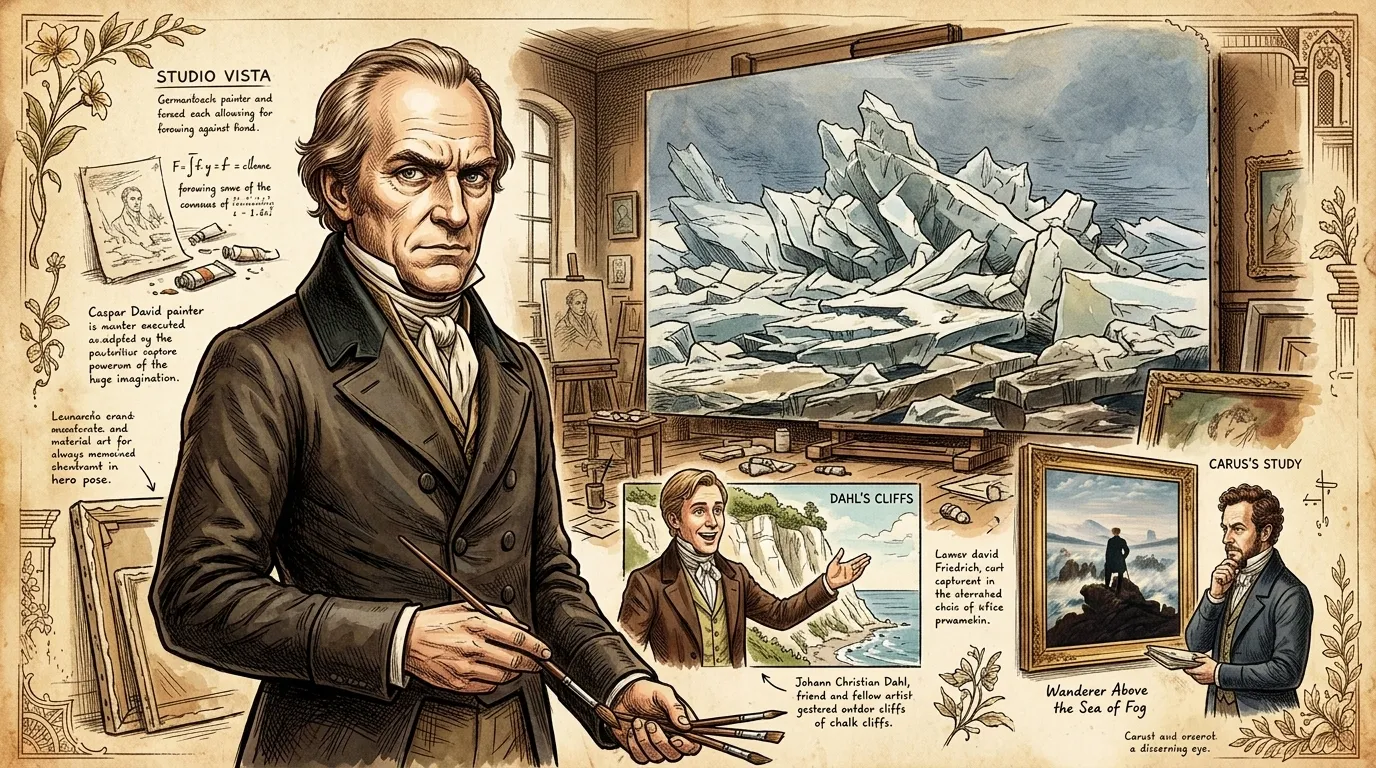
Page 1
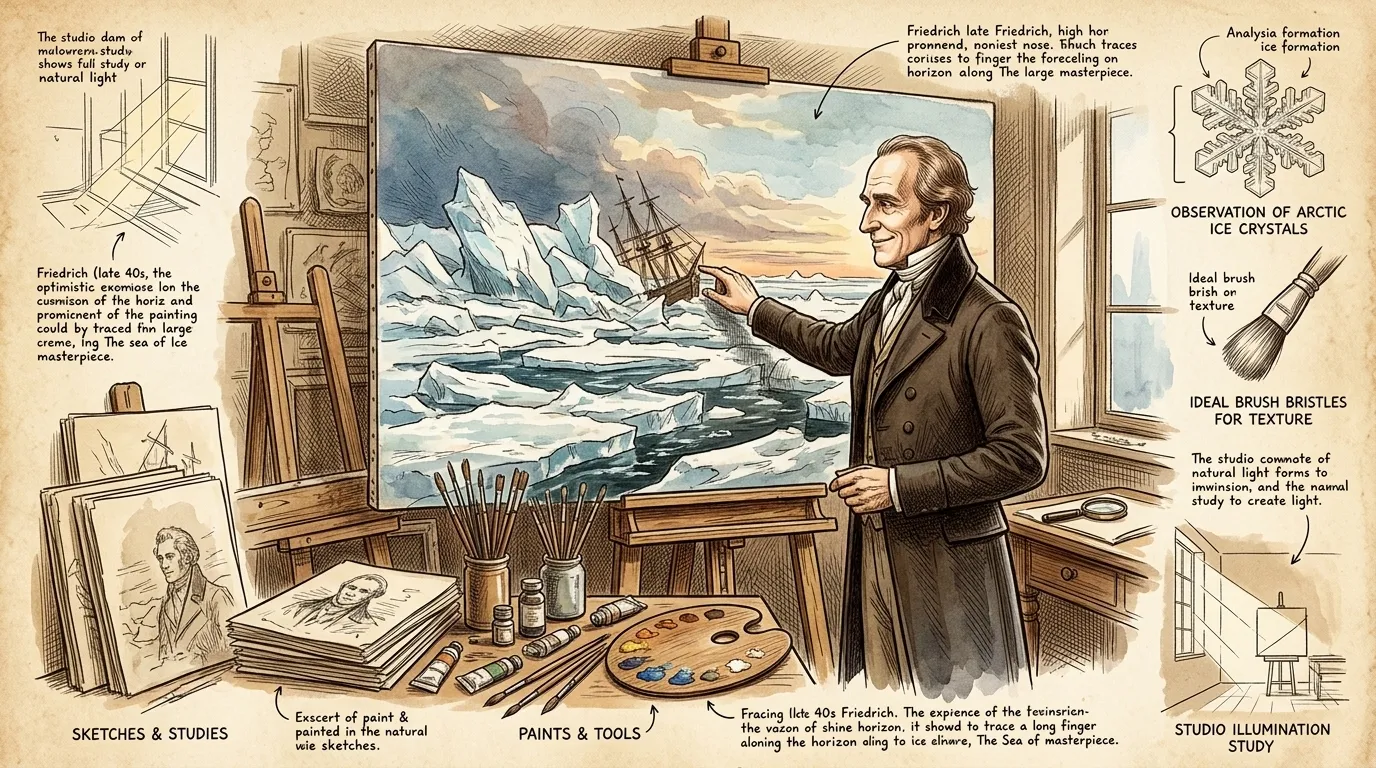
Caspar David Friedrich, in 1824, stands before his chilling masterpiece, 'The Sea of Ice.' This painting, currently housed in the Kunsthalle Hamburg, measuring 96.7 x 126.9 cm, depicts the shipwrecked hope of humanity crushed by the indifference of nature. It's a stark reminder, some say, of the limits of human ambition.
""The ice... it speaks of endings, doesn't it?" Friedrich murmurs, tracing a finger along the imagined horizon. "But from endings, new beginnings arise.""
Art Fact: The painting's sharp, angular ice floes are said to represent the fragmented dreams of mankind facing nature's overwhelming power.
Page 2
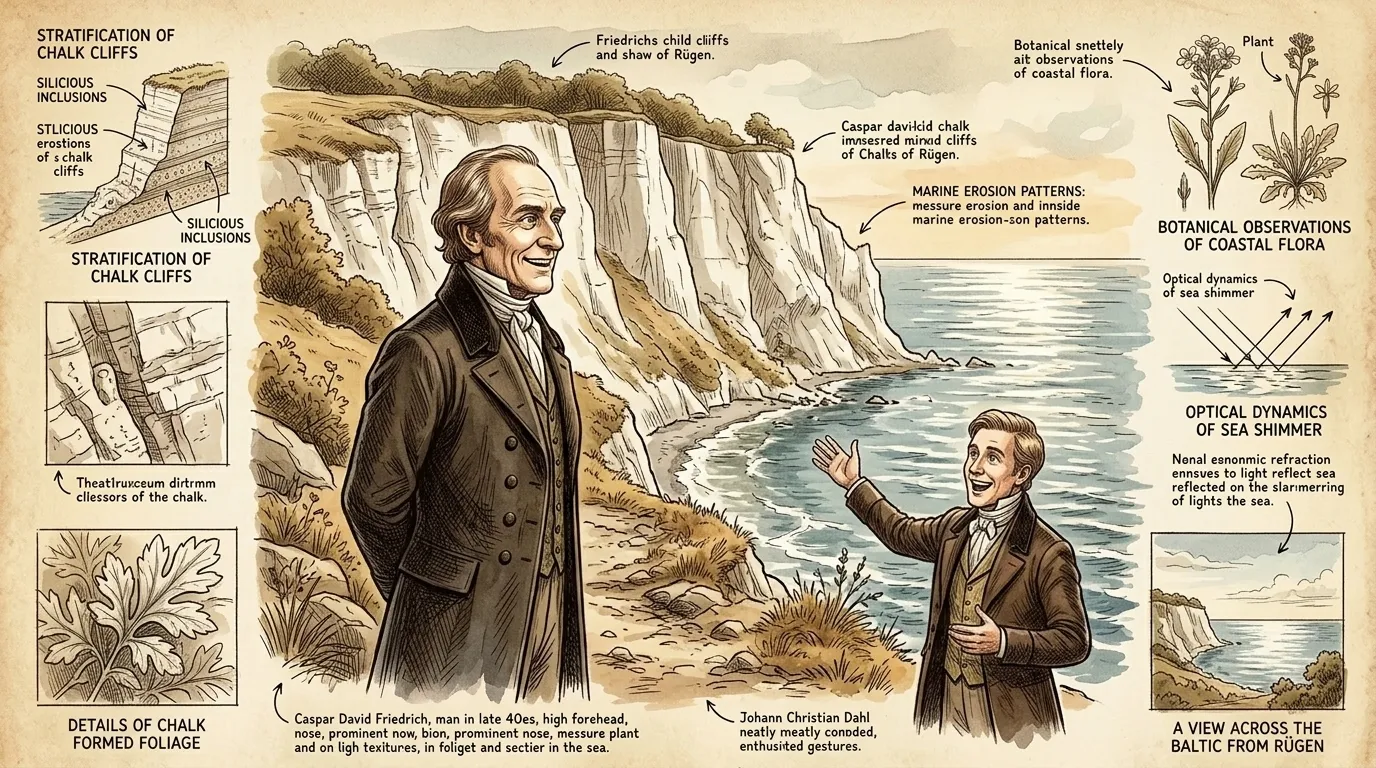
Friedrich's journey began on the island of Rügen. He found himself mesmerized by the chalk cliffs, a place where the earth met the sky in a dramatic clash. Here, he encountered Johann Christian Dahl, a fellow artist. Their shared passion for nature ignited a lifelong friendship.
""Look at the light, Caspar," Dahl exclaimed, pointing towards the shimmering sea. "It dances upon the water like fleeting thoughts. We must capture this essence!""
Art Fact: Rügen's dramatic landscape became a recurring motif in Friedrich's work, symbolizing the sublime power of nature.
Page 3
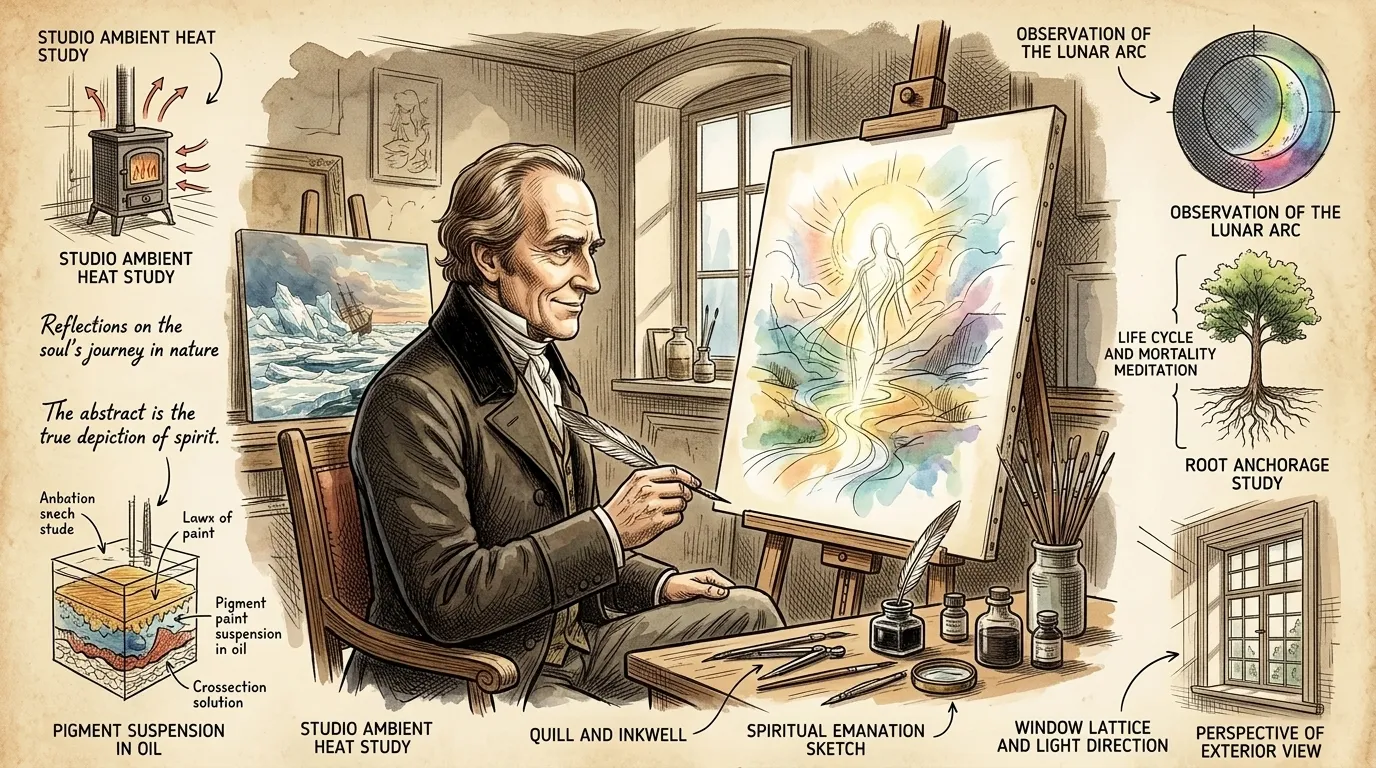
A pivotal moment shaped Friedrich's artistic vision: the tragic death of his brother, who drowned trying to save him. The loss haunted him. This personal tragedy transformed into a profound meditation on mortality and the fleeting nature of life.
""'The spirit of a man is constructed from his memories,'" Friedrich whispered, quoting Johann Wolfgang von Goethe. "'They define who we are and what we become.' My brother's spirit will live on in my art.""
Art Fact: The theme of death and resurrection permeates much of Friedrich's oeuvre, a direct reflection of his personal loss.
Page 4
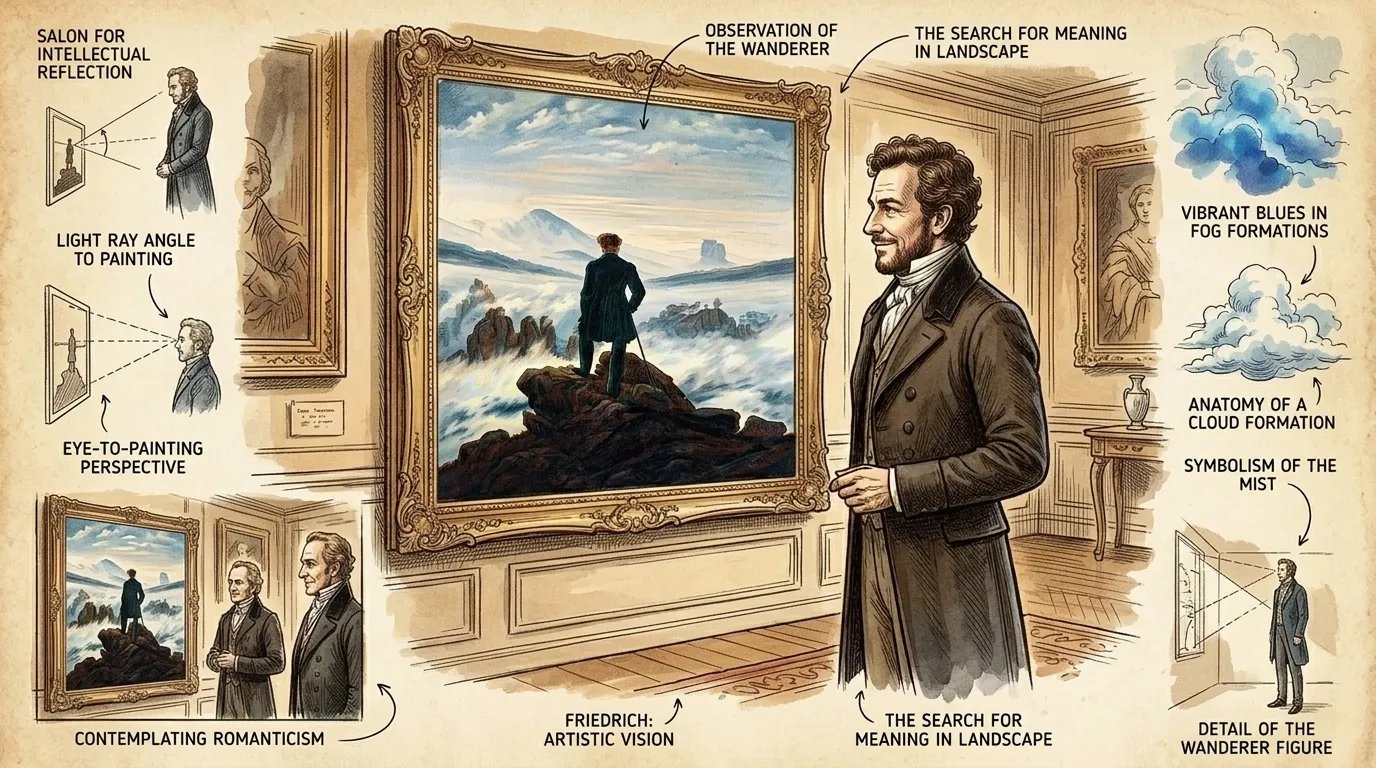
In 1818, Friedrich completed 'Wanderer Above the Sea of Fog,' a painting that captured the spirit of Romanticism. The solitary figure atop the mountain, gazing into the misty abyss, resonated with a generation seeking connection with the infinite.
""He stands at the edge of the known world," Carl Gustav Carus, a friend and critic, observed, "a symbol of man's yearning for the boundless.""
Art Fact: The 'Wanderer' cemented Friedrich's reputation as a leading artist of the Romantic movement.
Page 5
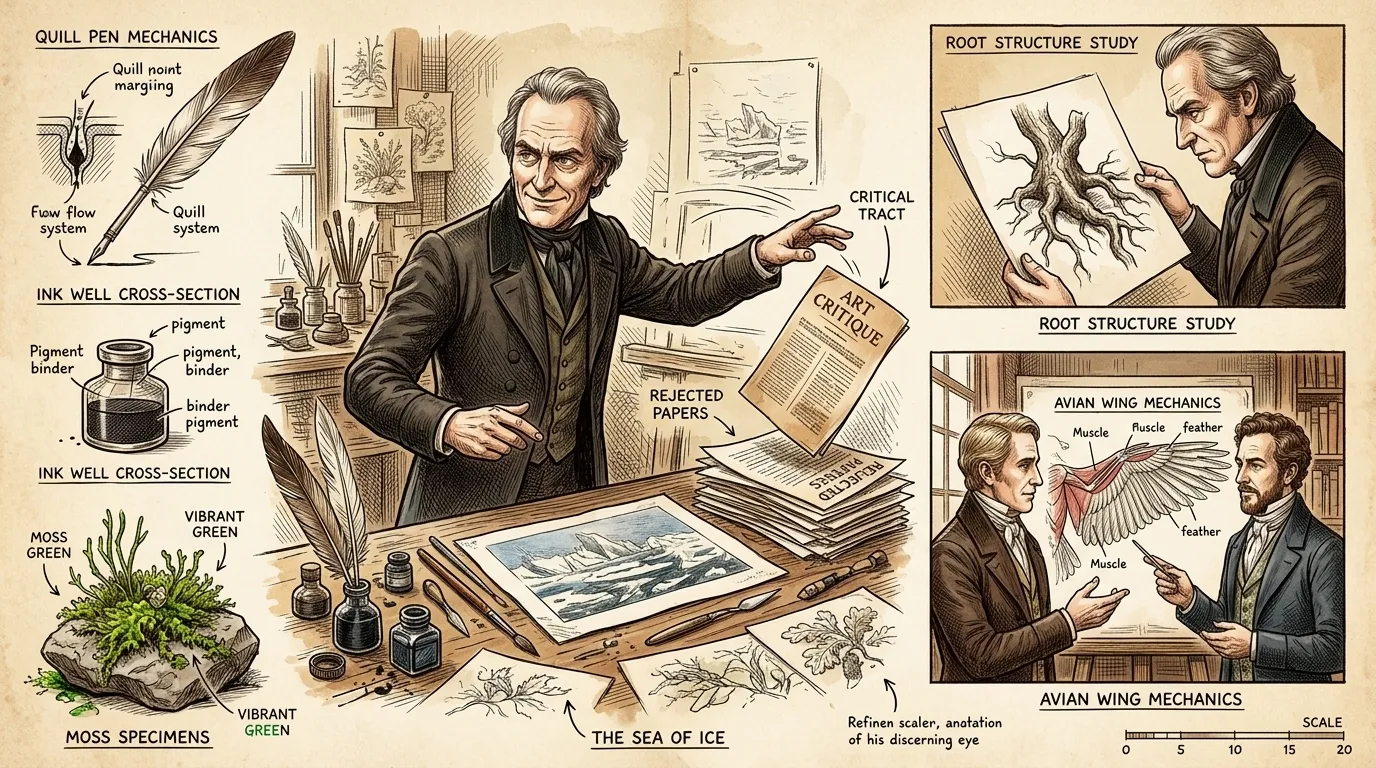
Despite his growing fame, Friedrich faced harsh criticism. Some critics found his work melancholic and unsettling. 'The Sea of Ice' was particularly controversial, deemed a 'chaotic jumble' and a 'failure of composition' by some.
""They call it bleak, lifeless," Friedrich exclaimed, tossing a critical pamphlet onto his workbench. "Do they not see the power, the truth of nature's indifference? 'The world will not be destroyed by those who do evil, but by those who watch them without doing anything,' as Einstein said! I must continue!"
Art Fact: Friedrich's unwavering commitment to his artistic vision helped him weather the storms of criticism.
Page 6
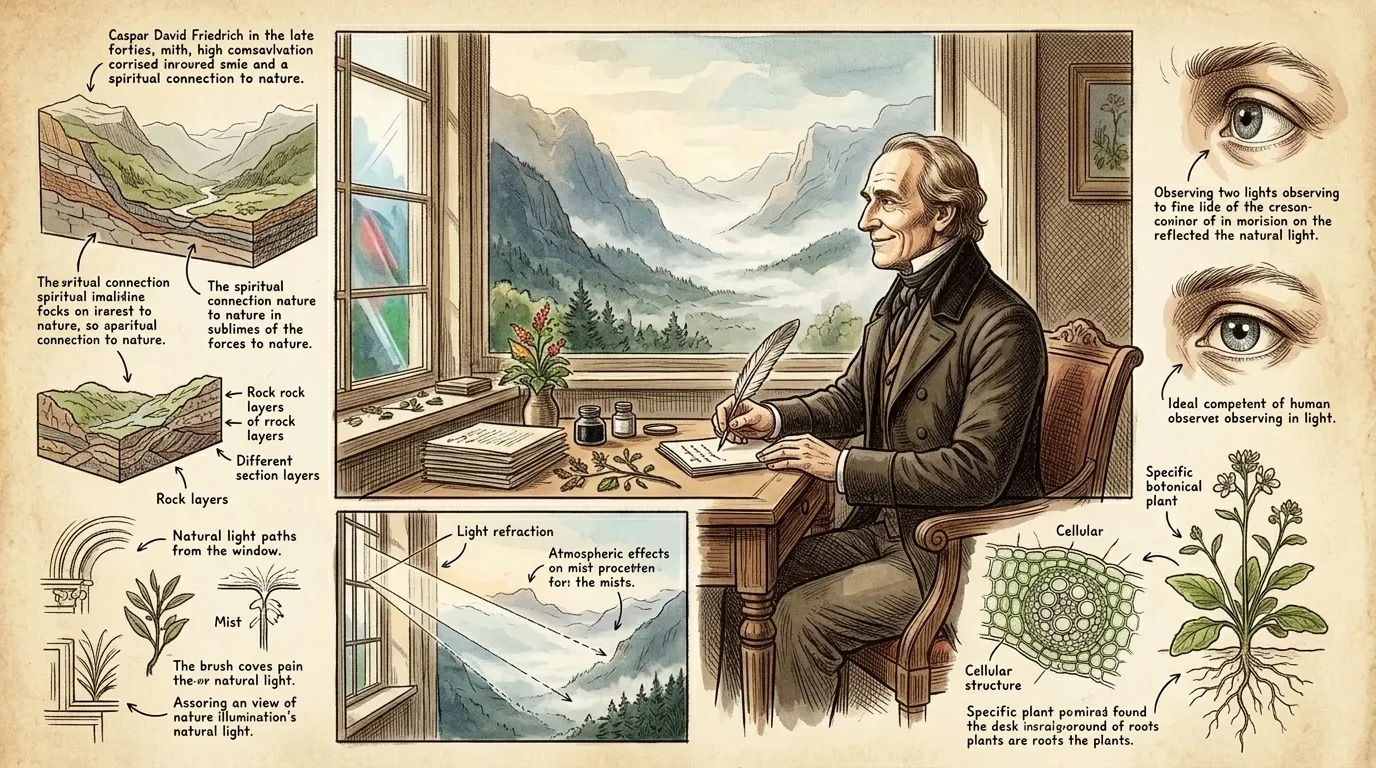
Friedrich saw nature as a manifestation of the divine. He believed that true art should evoke a spiritual experience, a connection to something larger than oneself. This conviction fueled his artistic exploration of landscapes.
""To truly see nature," Friedrich once wrote in a letter, "is to understand God. My paintings are not merely depictions of landscapes, but reflections of the divine within.""
Art Fact: Friedrich's landscapes are imbued with a sense of religious awe, reflecting his deep spiritual beliefs.
Page 7
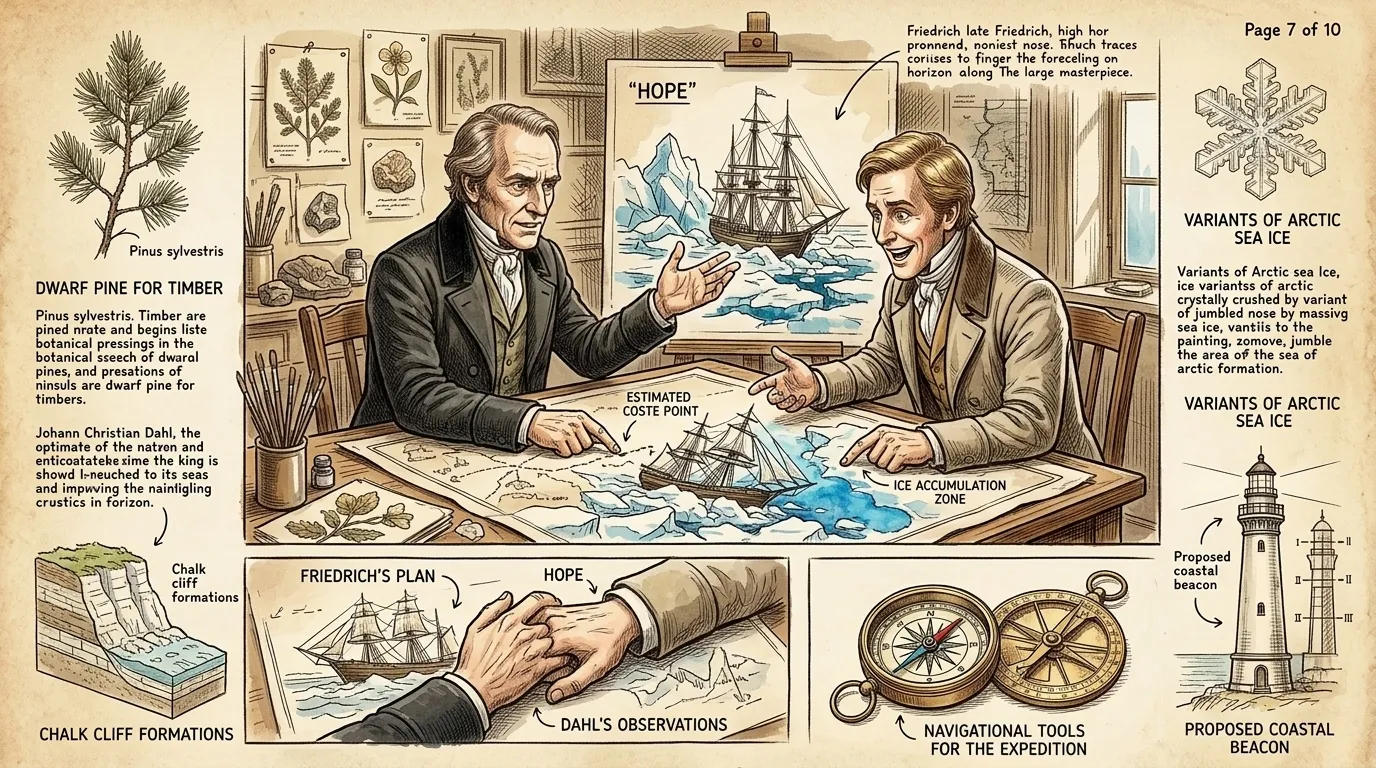
The inspiration for 'The Sea of Ice' came partly from reports of Arctic expeditions and shipwrecks. The ill-fated voyage of the 'Hope,' a British ship crushed by ice, captured the public's imagination. Friedrich saw in this tragedy a powerful metaphor for the fragility of human ambition.
""Have you heard of the 'Hope'?" Friedrich asked a fellow artist, Johan Christian Clausen Dahl. "Crushed by the ice... a symbol of our struggle against the inevitable.""
Art Fact: The story of the 'Hope' became a catalyst for Friedrich's exploration of the themes of destruction and human resilience.
Page 8
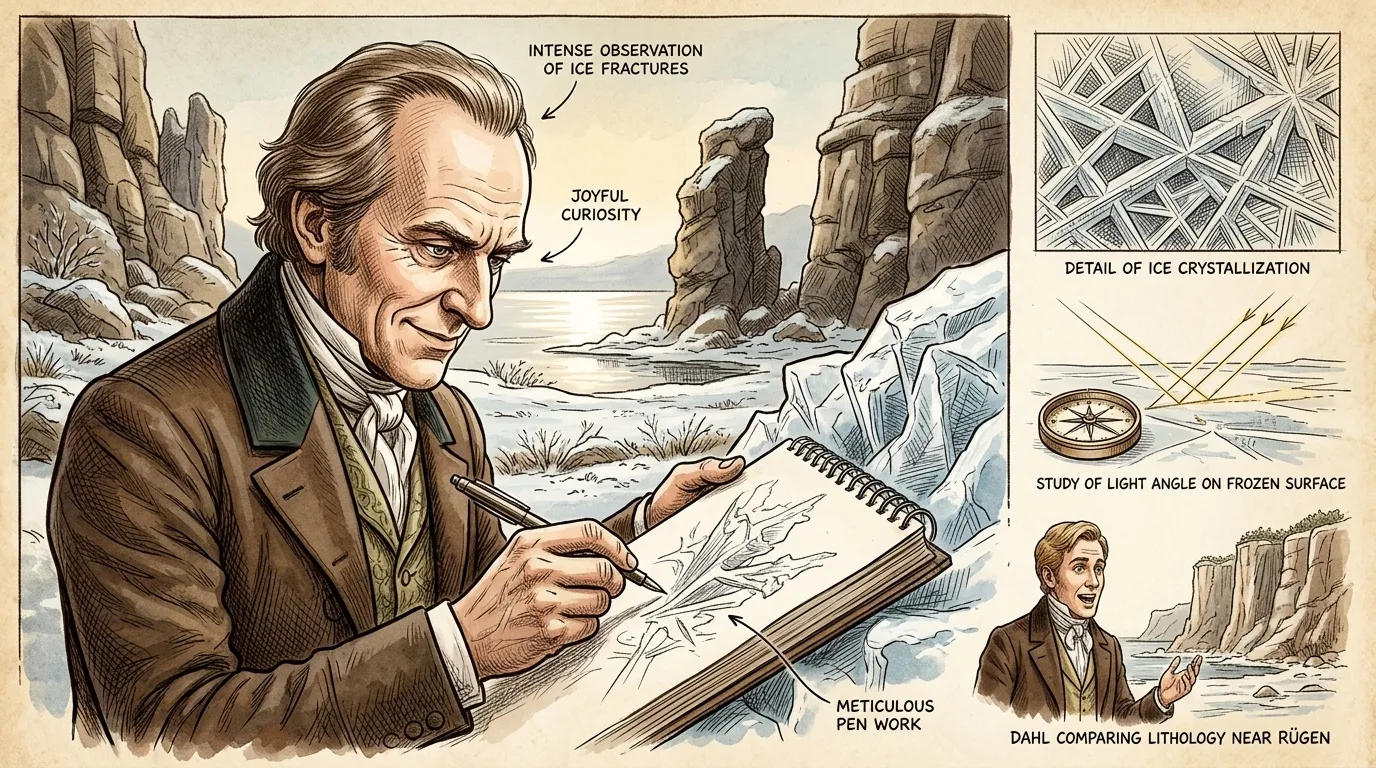
Friedrich dedicated countless hours sketching and observing the natural world around Dresden. He meticulously studied ice formations, rock structures, and the effects of light on water. These studies formed the foundation for his later, more dramatic compositions.
""Every detail, every shadow, tells a story," Friedrich said, as he painstakingly sketched a fragment of ice. "We must learn to read the language of nature!""
Art Fact: Friedrich's dedication to observation and detail contributed to the realism and power of his landscapes.
Page 9
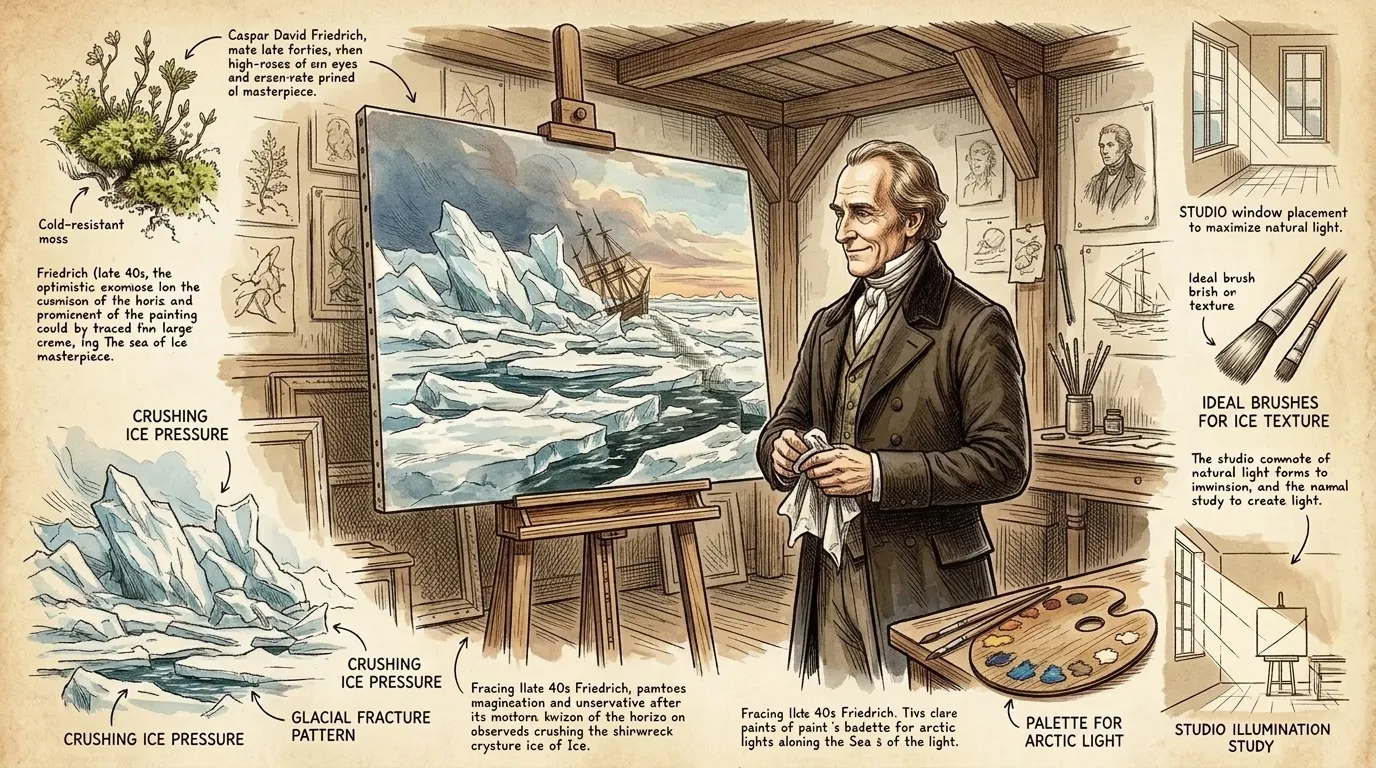
After months of intense work, 'The Sea of Ice' was finally completed. Friedrich stepped back, contemplating his creation. It was a stark and uncompromising vision, a challenge to the viewer's expectations of beauty and harmony.
""It is finished," Friedrich muttered, gazing at his work. "It is a testament to the might and the mystery of the natural world. 'The only true wisdom is in knowing you know nothing,' Socrates once said, and nature constantly reminds us of this.""
Art Fact: The painting's completion marked a turning point in Friedrich's career, solidifying his status as a controversial and visionary artist.
Page 10

About this story
- Location: Germany
- Audience: general readers
Read Wonder Arts on your phone
Wonder Arts is available on Android. Get Wonder Arts on Google Play.
More Wonder Arts stories
- The Slave Ship by J.M.W. Turner (London, UK — 1840)
- The Sleeping Gypsy by Henri Rousseau (Paris, France — 1897)
- The Snake Charmer by Henri Rousseau (Paris, France — 1907)
- A Burial at Ornans by Gustave Courbet (France — 1849)
- A Cavalier by Frans Hals (Australia — 1624)
- A Sunday on La Grande Jatte by Georges Seurat (Paris, France — 1884)