The Sleeping Gypsy by Henri Rousseau (Paris, France — 1897)
The Sleeping Gypsy by Henri Rousseau (Paris, France — 1897) — an illustrated arts story, set in France. 10 illustrated pages, free to read on Wonder Arts.
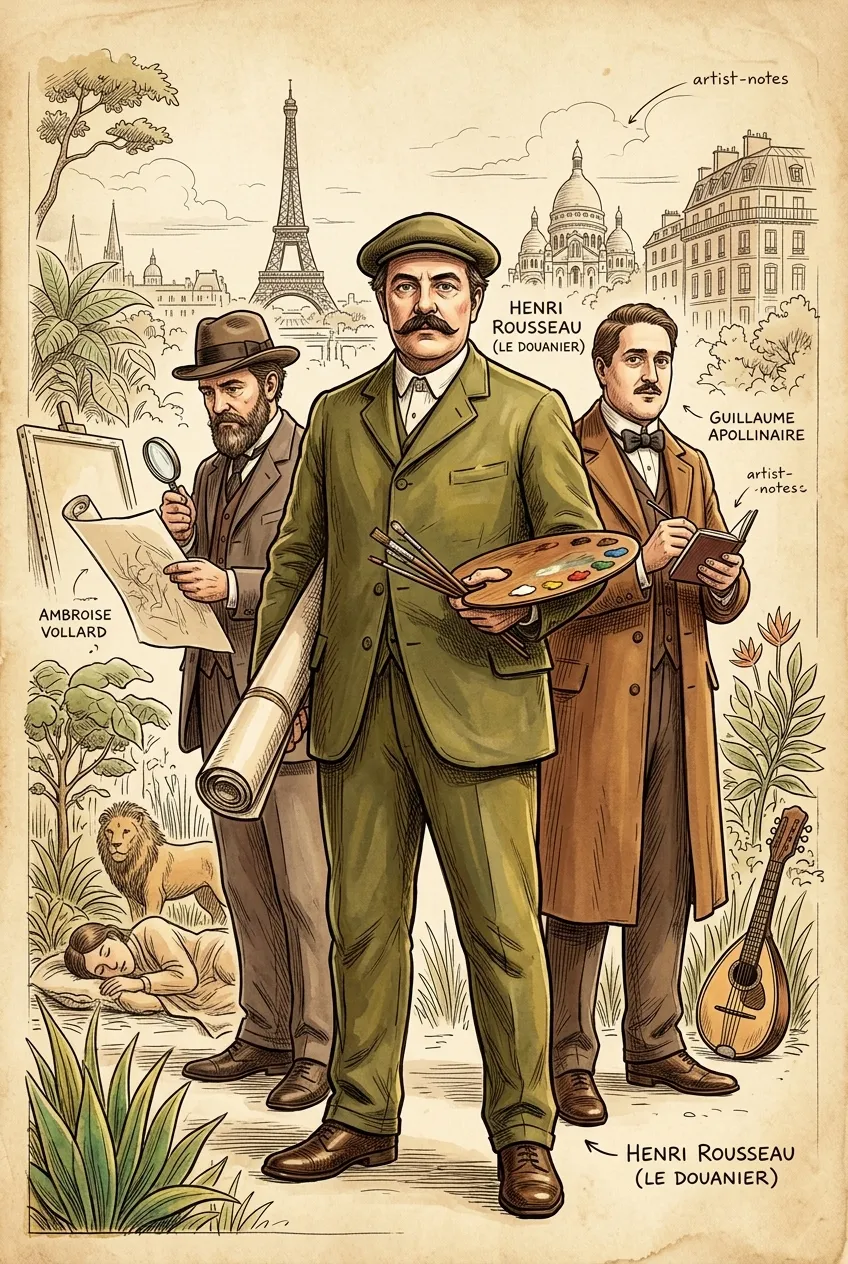
Page 1
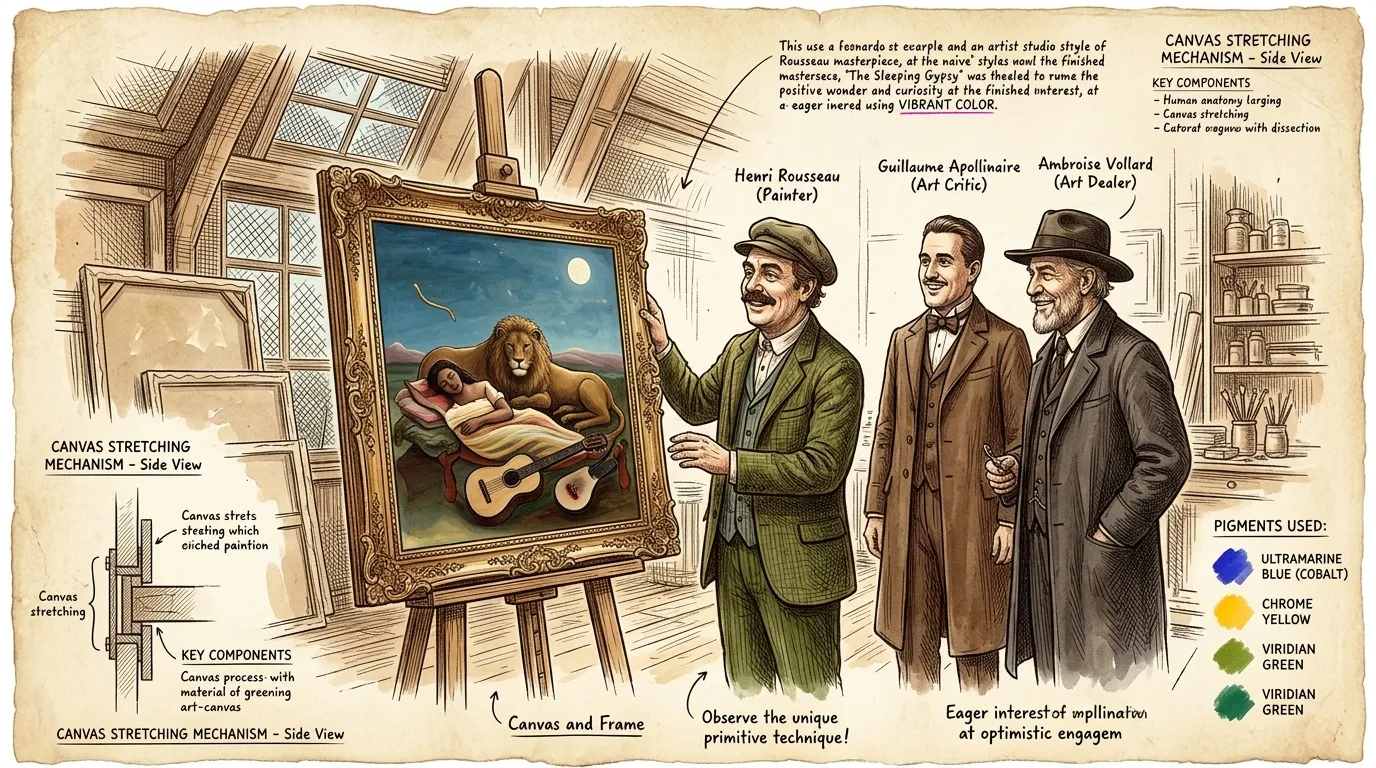
Henri Rousseau, a self-taught genius, stands proudly before his masterpiece, 'The Sleeping Gypsy.' Completed in 1897, this enigmatic painting, measuring 129.5 x 200.7 cm, initially faced rejection from the official Salon. Today, it resides in the Museum of Modern Art in New York City, a testament to Rousseau's unique vision. Its dreamlike quality continues to captivate and mystify art enthusiasts worldwide.
""Here it is, finally finished," Rousseau murmurs, his eyes reflecting the serene yet powerful image before him. "A world where dreams and reality dance together, where the desert whispers secrets.""
Art Fact: Rousseau's 'The Sleeping Gypsy' was painted when he was working as a toll collector for the city of Paris, pursuing his art in his spare time.
Page 2
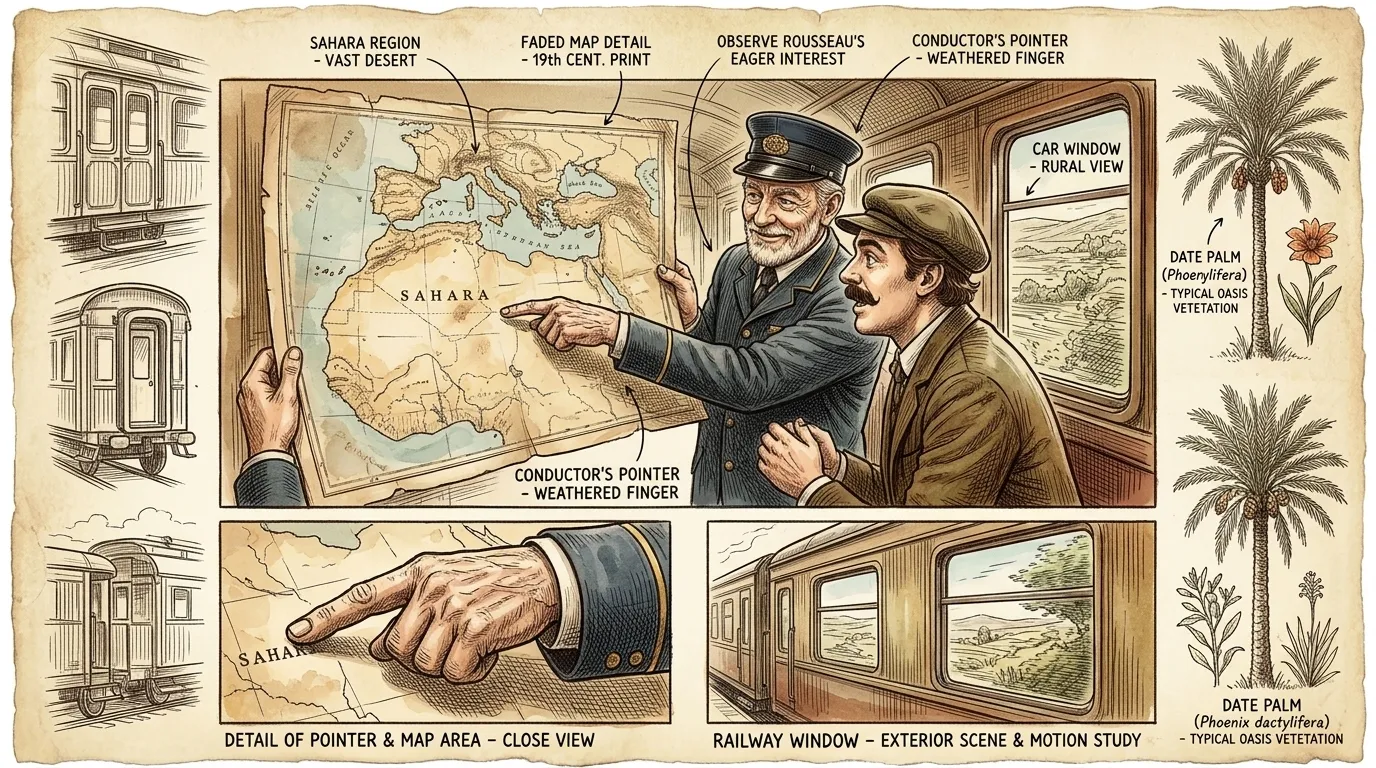
Young Henri, working as a railway employee, overhears tales from far-flung travelers. Their stories of exotic lands and mysterious cultures ignite his imagination. An older conductor, noticing Henri's fascination, shares a faded map of North Africa, pointing to the vast Sahara.
""Paris is fine, Henri, but the world is much bigger," the conductor says, his voice raspy with experience. "Remember what Mark Twain wrote: 'Travel is fatal to prejudice, bigotry, and narrow-mindedness.' Don't let your dreams be confined to these tracks.""
Art Fact: Rousseau's early employment with the railway system exposed him to diverse stories and cultures, despite never leaving France.
Page 3
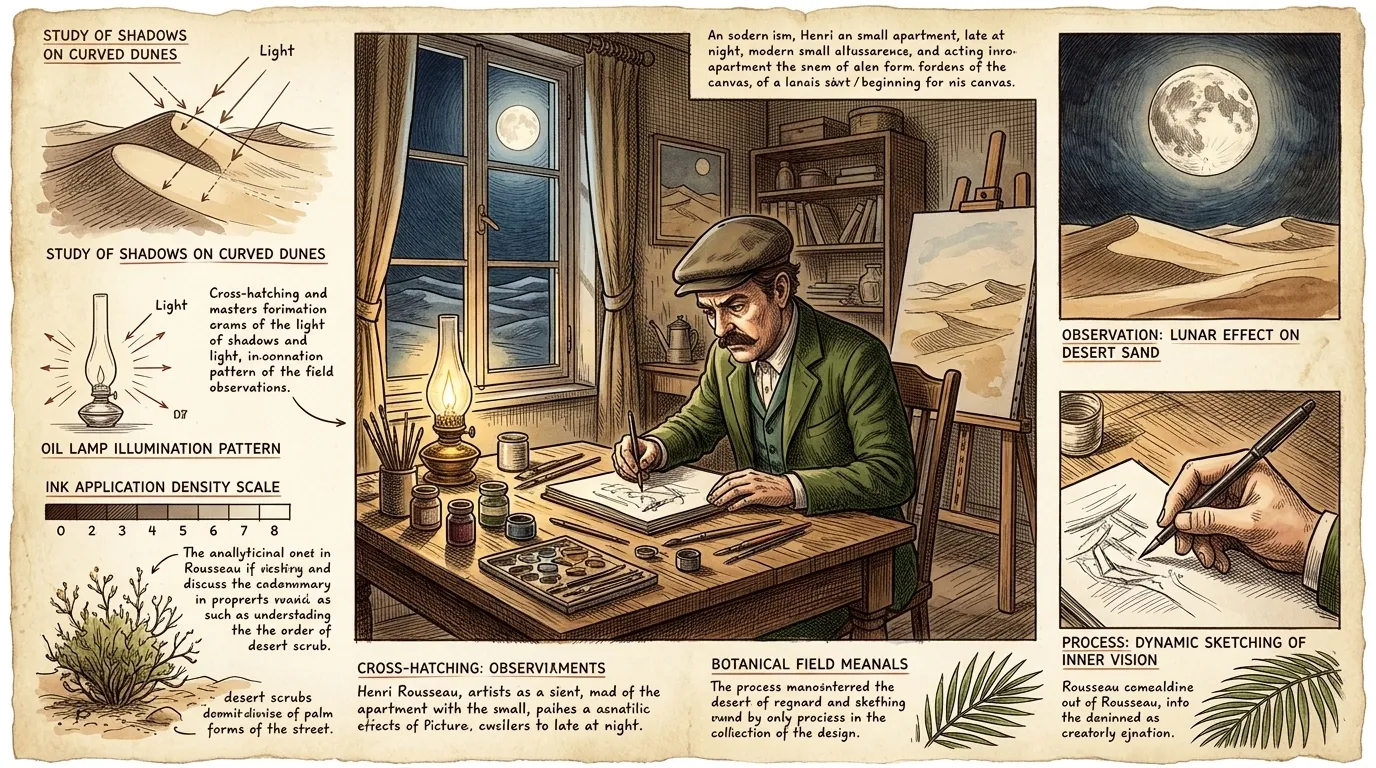
Late at night, in his small apartment, Henri sketches furiously. The image of a lone traveler in the desert dominates his mind. He experiments with colors, trying to capture the intense moonlight and the deep shadows of the dunes. A vivid dream—a dark-skinned woman asleep under a watchful lion—inspires him.
""It's all coming together now," Henri whispers to himself, his eyes fixed on the canvas. "I must paint the feeling, not just the scene. Like Da Vinci said, 'Painting embraces all the ten functions of the eye; that is to say: darkness, light, body and color, substance and form, motion and rest, convexity and concavity, divisibility and coherence.'""
Art Fact: Rousseau often painted scenes from his imagination, blending elements of his everyday life with his romanticized visions of exotic places.
Page 4
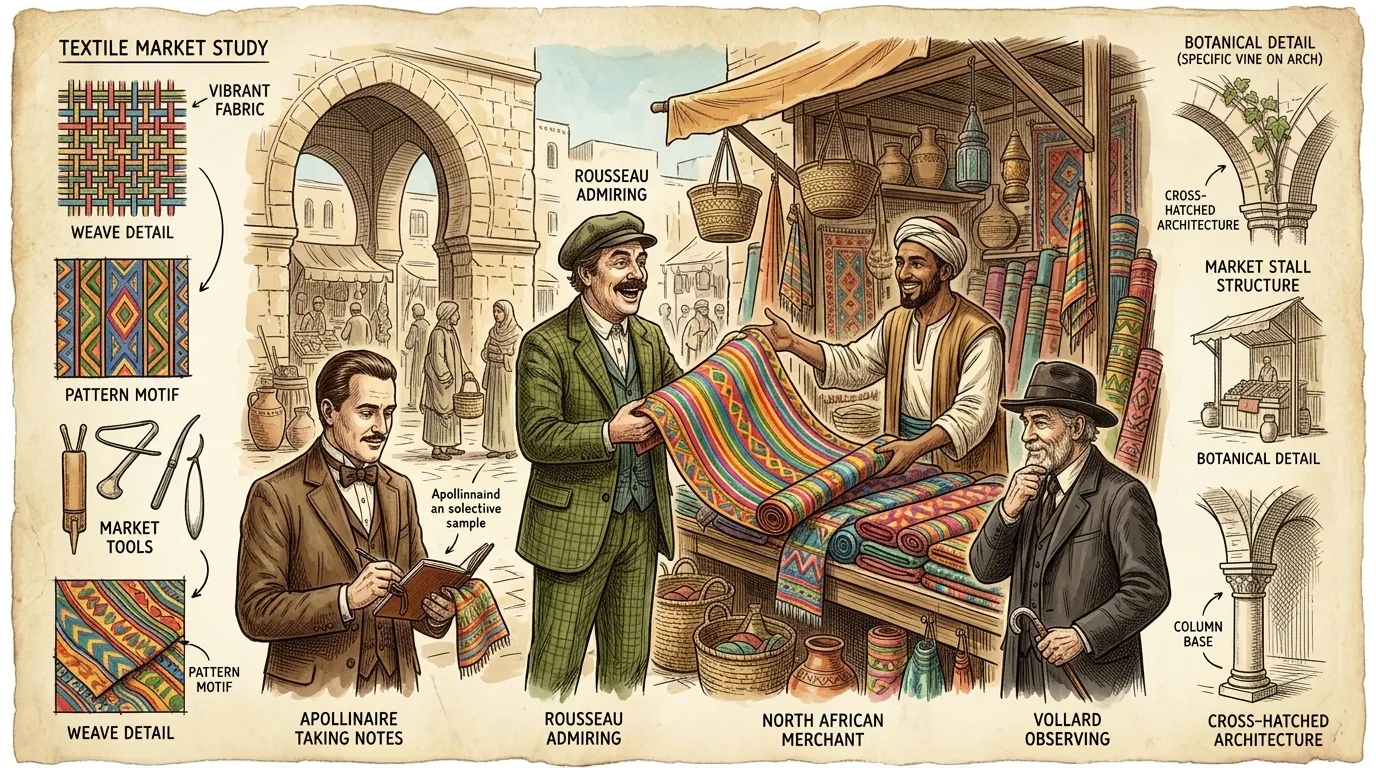
A chance encounter at a local market provides a key detail. Henri observes a group of North African merchants selling textiles. He is particularly struck by the bold, striped patterns of their clothing. These stripes, he realizes, will add a touch of authenticity and vibrancy to his sleeping gypsy.
""Magnifique!" Henri exclaims, examining a roll of brightly striped fabric. He turns to a merchant: "The colors, the patterns... they speak of the desert itself!""
Art Fact: Rousseau was inspired by the visual elements of the world around him, incorporating details from everyday life into his fantastical paintings.
Page 5
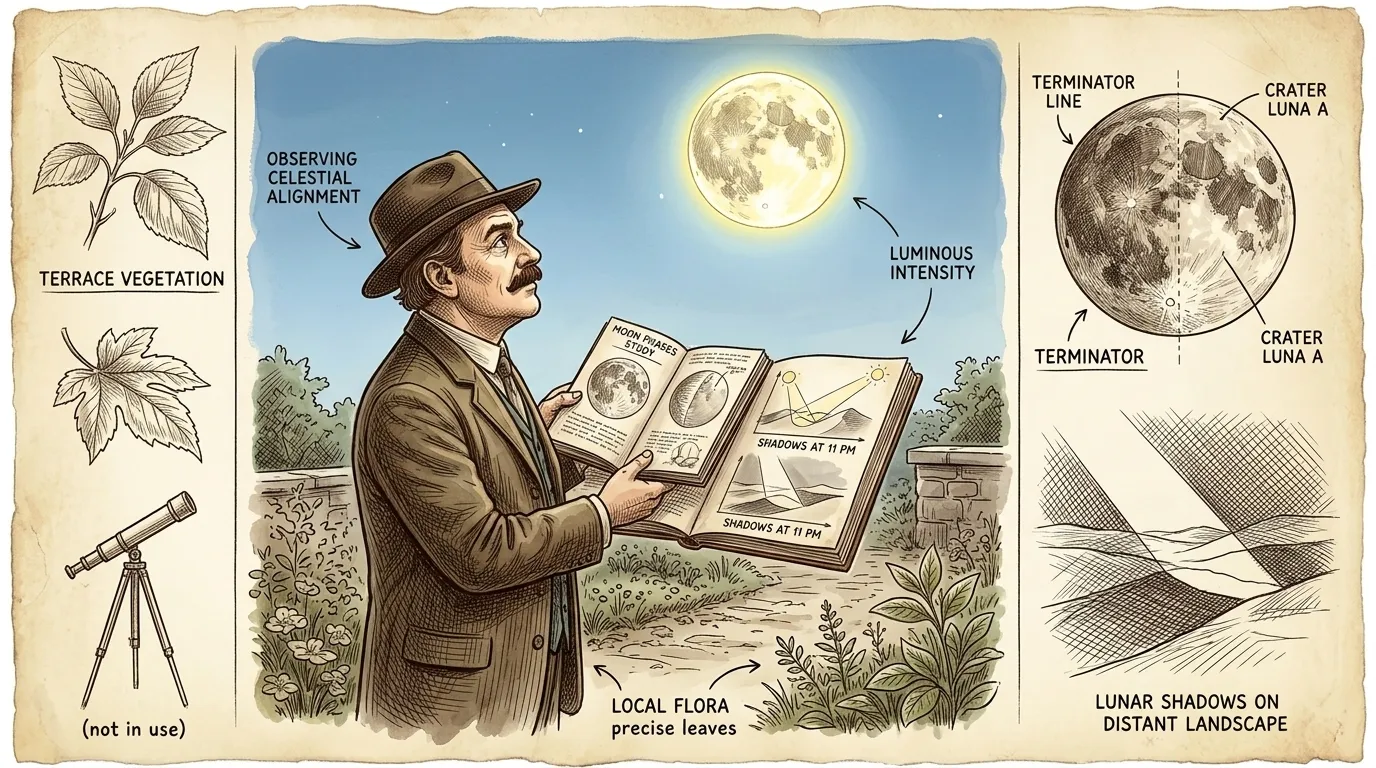
Rousseau spends countless nights studying the moon. He observes its changing phases, its varying intensity, and the way it casts shadows on the landscape. He understands that the moonlight is crucial to capturing the ethereal atmosphere of his desert scene.
""The moon is a painter in its own right," Rousseau muses, gazing at the night sky. "'Nature is not only all that is visible to the eye... it also includes the inner pictures of the soul,' as Edvard Munch said. I must capture its essence on the canvas.""
Art Fact: Rousseau was fascinated by the moon and its effects on the night landscape, often incorporating it into his dreamlike compositions.
Page 6
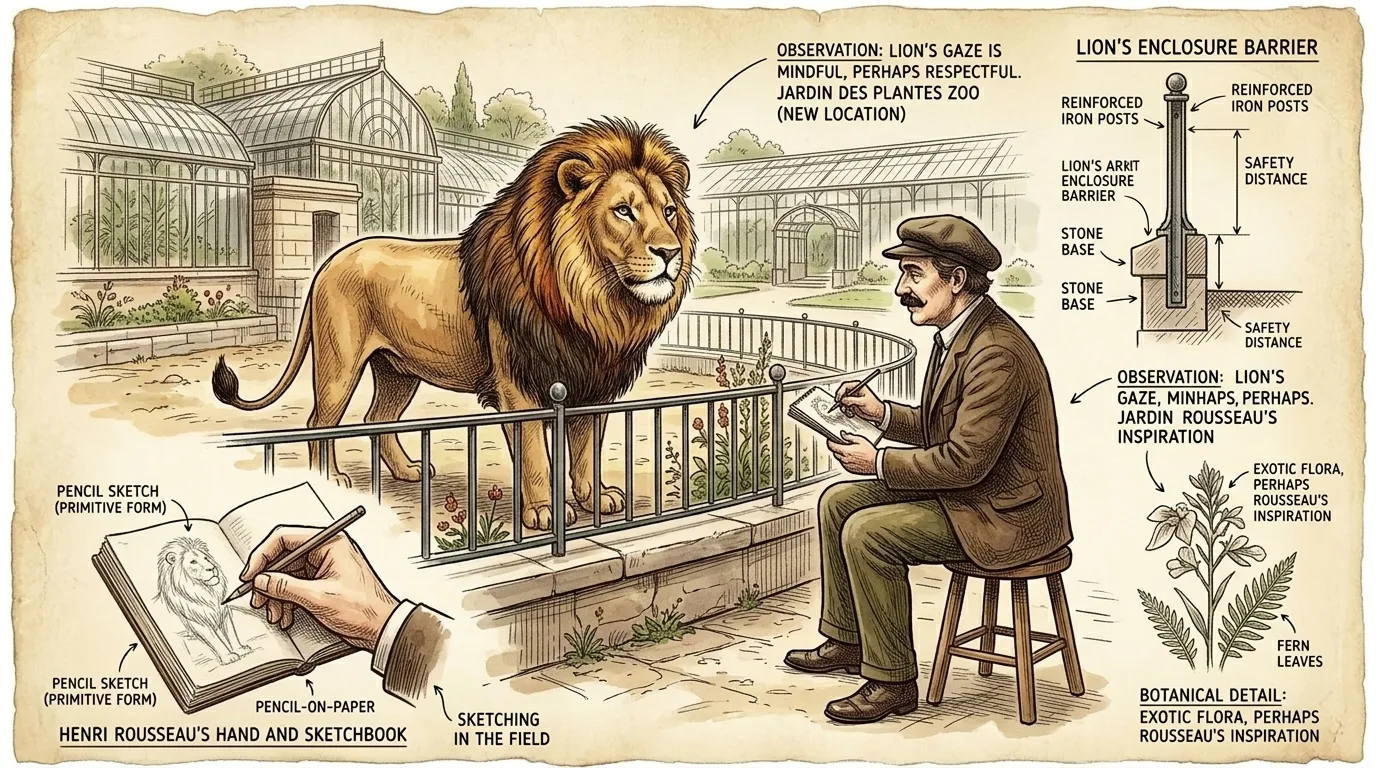
To truly capture the essence of the lion, Rousseau visits the Jardin des Plantes, the Paris zoo. He sketches the majestic creature, studying its powerful form and its watchful gaze. He realizes that the lion is not a threat, but a protector, a guardian of the sleeping gypsy's dreams.
""Such power, such grace," Rousseau murmurs, sketching the lion. "Not a beast of prey, but a sentinel, a symbol of the wild, watchful spirit. Like Aristotle once said, 'The aim of art is to represent not the outward appearance of things, but their inward significance.'""
Art Fact: Rousseau, despite his limited travels, meticulously studied animals and plants in Parisian gardens and zoos to accurately depict exotic wildlife in his paintings.
Page 7
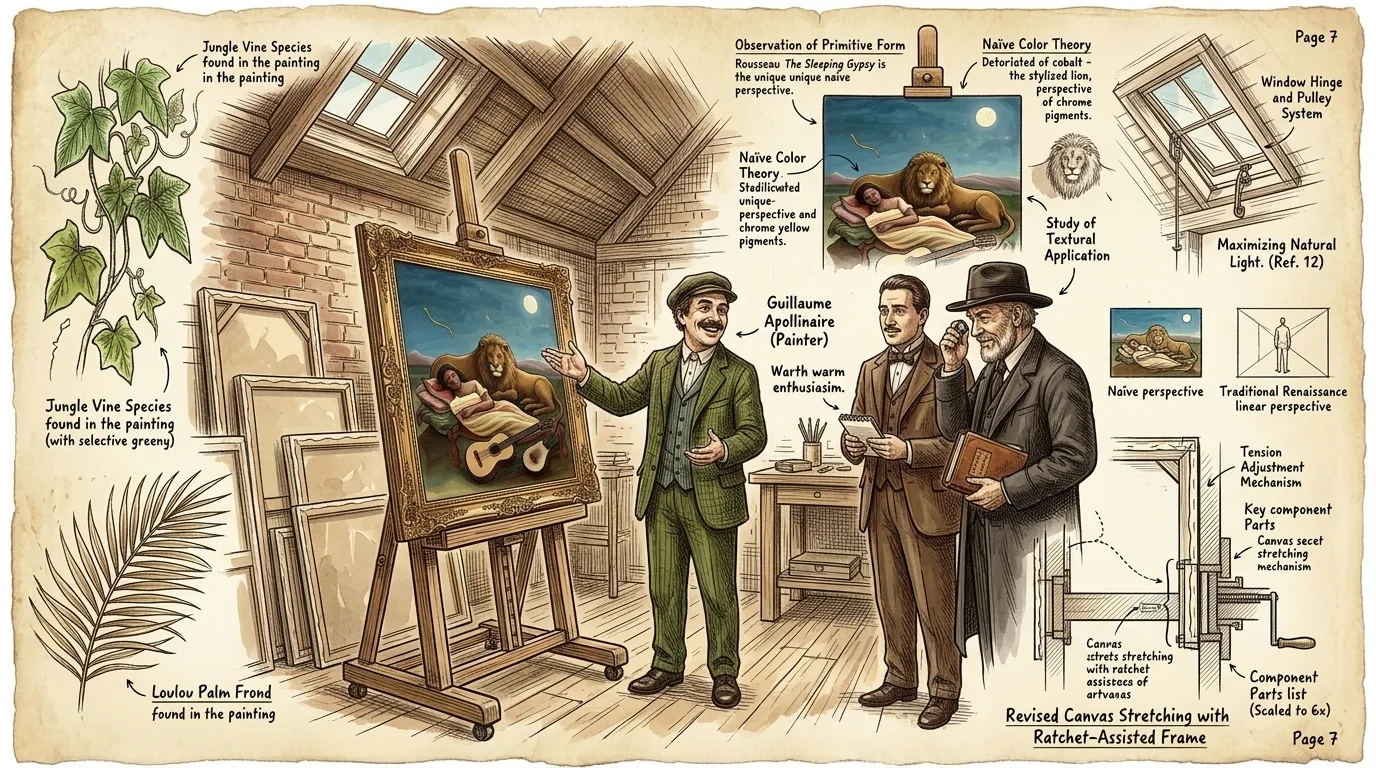
Rousseau submits 'The Sleeping Gypsy' to the official Salon, but it is rejected. Critics deem it naive and unrealistic. Undeterred, Rousseau displays the painting in his own small studio, inviting friends and fellow artists to view it.
""They may not understand it now," Rousseau declares to his friends, "but the painting will find its audience. As Helen Keller once said, 'Optimism is the faith that leads to achievement. Nothing can be done without hope and confidence.'""
Art Fact: Rousseau faced consistent rejection from the art establishment, but he remained steadfast in his belief in his own unique artistic vision.
Page 8
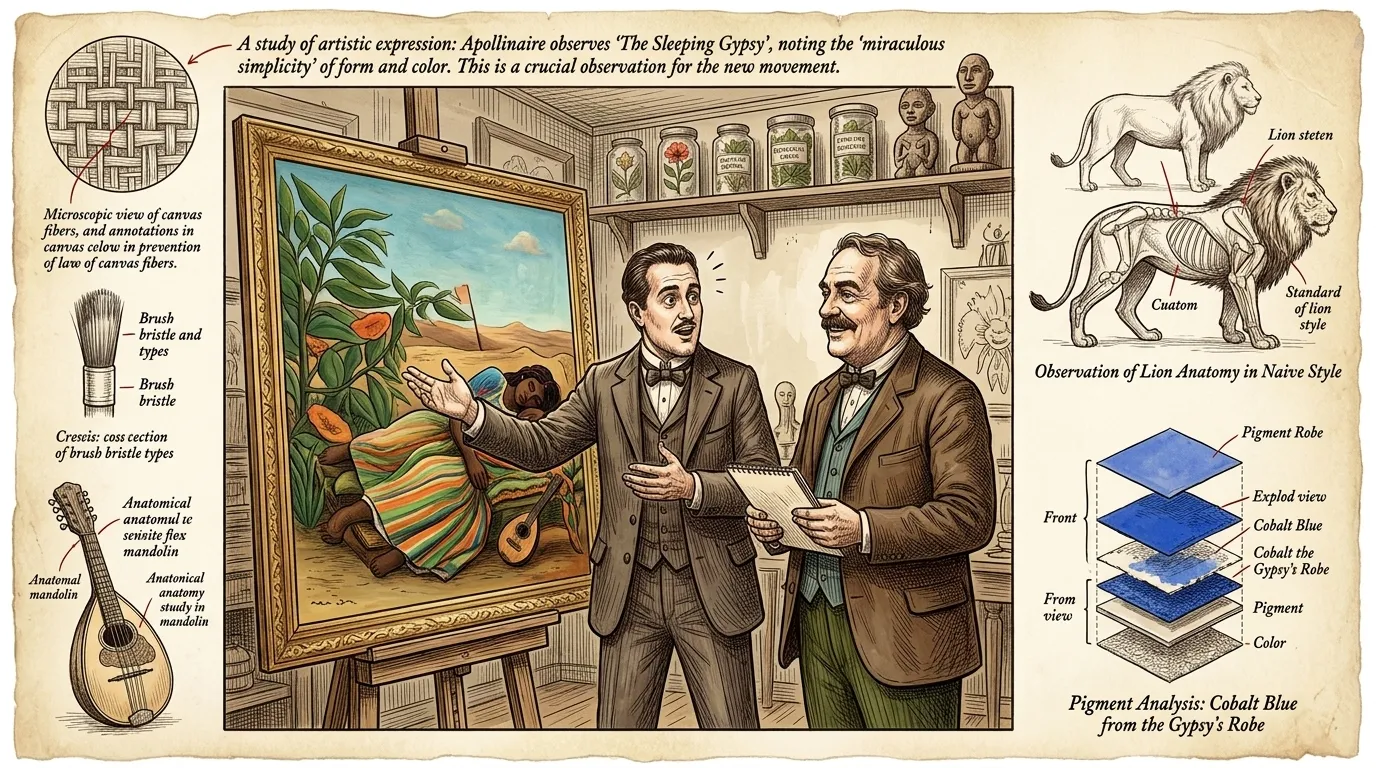
The poet Guillaume Apollinaire visits Rousseau's studio and is deeply moved by 'The Sleeping Gypsy.' He writes a glowing review, praising its dreamlike quality and its emotional power. Apollinaire's support helps to bring Rousseau's work to a wider audience.
"Apollinaire turns to Rousseau, his eyes shining: "Monsieur Rousseau, this painting... it is a portal to another world! It sings of dreams and mysteries, a true masterpiece! Like Shakespeare says, 'The poet's eye, in a fine frenzy rolling, doth glance from heaven to earth, from earth to heaven.'""
Art Fact: Guillaume Apollinaire was one of the first to recognize the unique genius of Rousseau, promoting his work to a wider audience.
Page 9
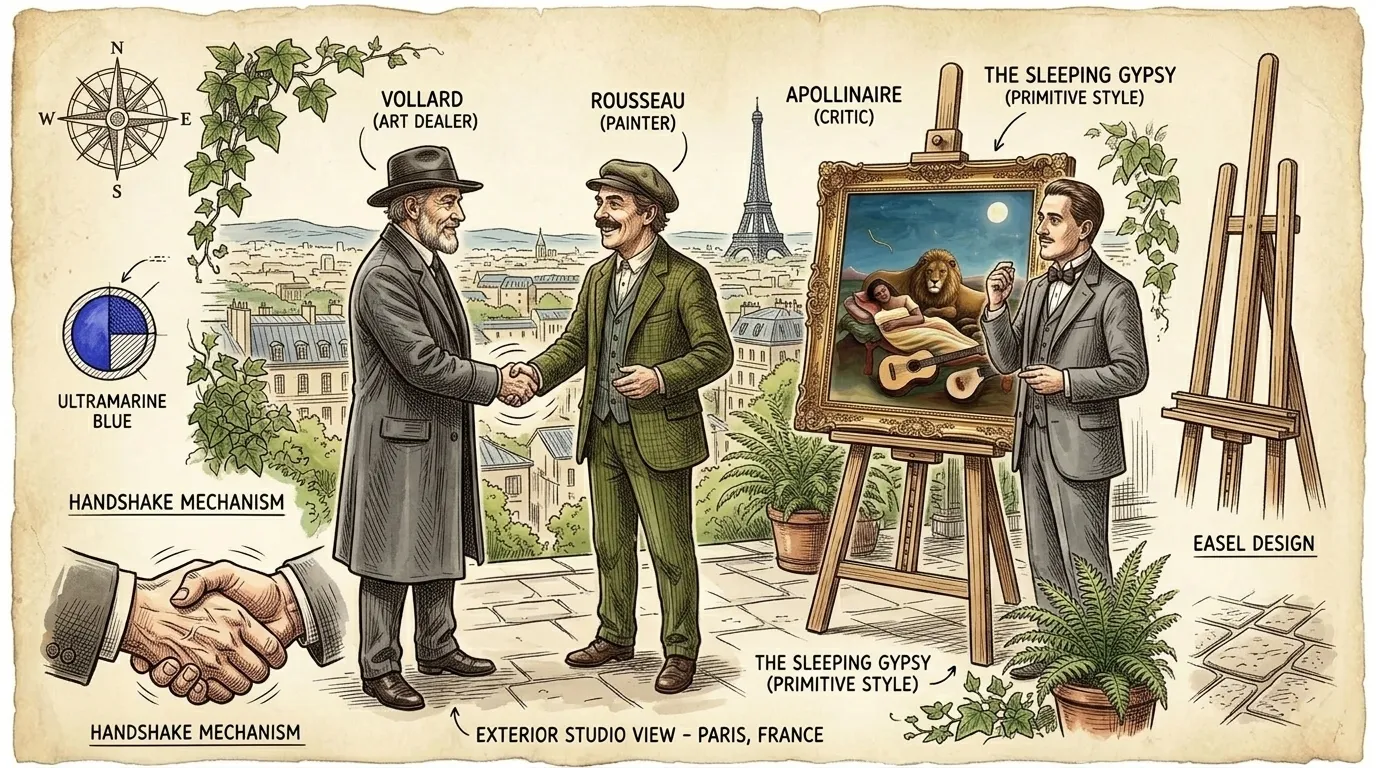
A wealthy art collector, Ambroise Vollard, purchases 'The Sleeping Gypsy.' Vollard's patronage provides Rousseau with financial security and allows him to continue painting without worry. Rousseau's paintings would later inspire Surrealist painters, as Vollard introduced the painting to other painters.
""Monsieur Rousseau, your work is... singular," Vollard says, his eyes shrewd. "It possesses a naive beauty, a raw power that is unlike anything else I have seen. I see a connection between this painting and the paintings of Dali, Magritte, and Miro"."
Art Fact: Ambroise Vollard's support helped to secure Rousseau's legacy, ensuring that his work would be preserved and appreciated for generations to come.
Page 10
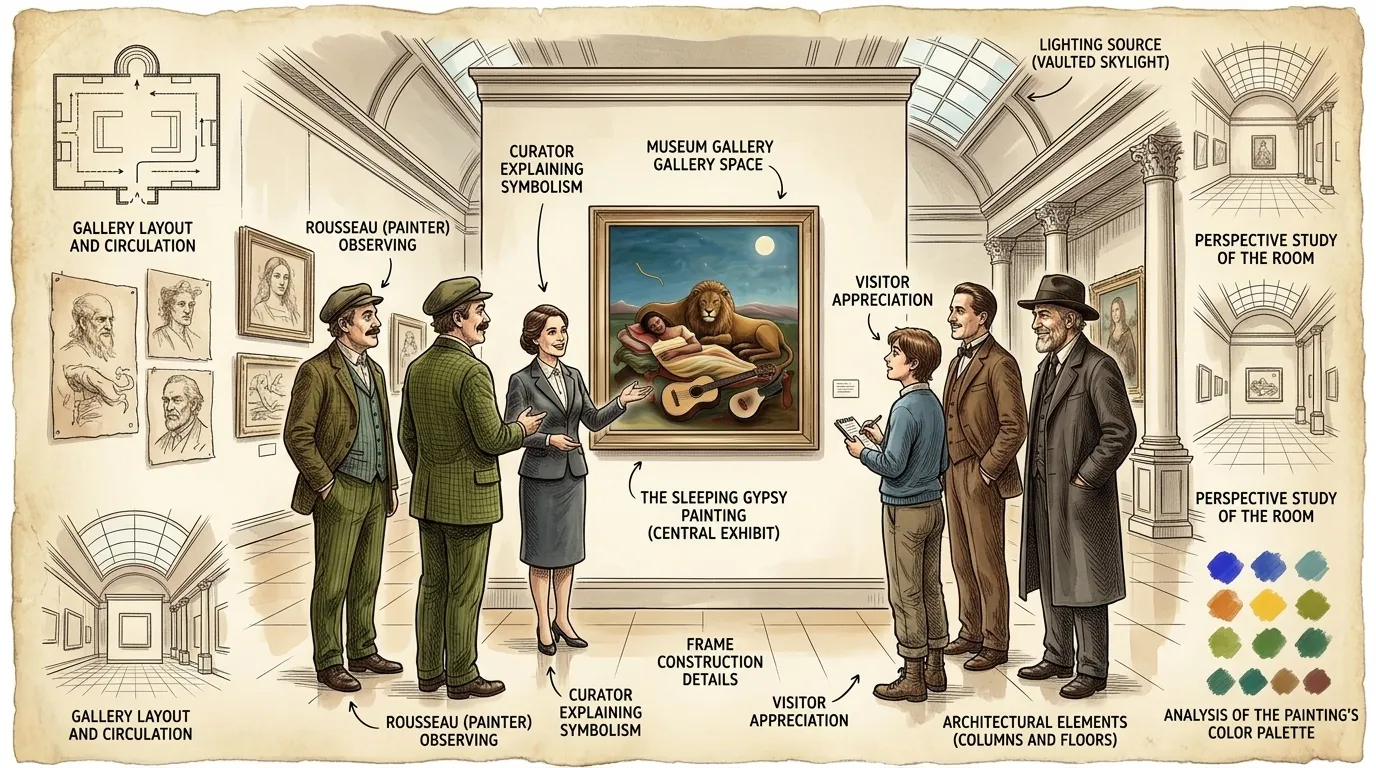
'The Sleeping Gypsy' hangs in the Museum of Modern Art in New York City, where it continues to inspire awe and wonder. Rousseau's dreamlike vision resonates with art lovers from around the world. The toll collector's painting, so often rejected, is now a timeless masterpiece. Rousseau's legacy endures because his art invites us to dream.
"A museum curator remarks to a visitor, "Rousseau created not just a painting, but a window into the subconscious. His dreams are now our dreams.""
Art Fact: Rousseau's 'The Sleeping Gypsy' remains a source of fascination and inspiration, a testament to the power of imagination and the enduring appeal of dreams.
About this story
- Location: France
- Audience: general readers
Read Wonder Arts on your phone
Wonder Arts is available on Android. Get Wonder Arts on Google Play.
More Wonder Arts stories
- The Snake Charmer by Henri Rousseau (Paris, France — 1907)
- A Burial at Ornans by Gustave Courbet (France — 1849)
- A Cavalier by Frans Hals (Australia — 1624)
- A Sunday on La Grande Jatte by Georges Seurat (Paris, France — 1884)
- Abbey in the Oakwood by Caspar David Friedrich (Germany — 1810)
- Abstract Expressionism by Jackson Pollock (New York, USA — 1940s)