The Slave Ship by J.M.W. Turner (London, UK — 1840)
The Slave Ship by J.M.W. Turner (London, UK — 1840) — an illustrated arts story, set in United Kingdom. 10 illustrated pages, free to read on Wonder Arts.
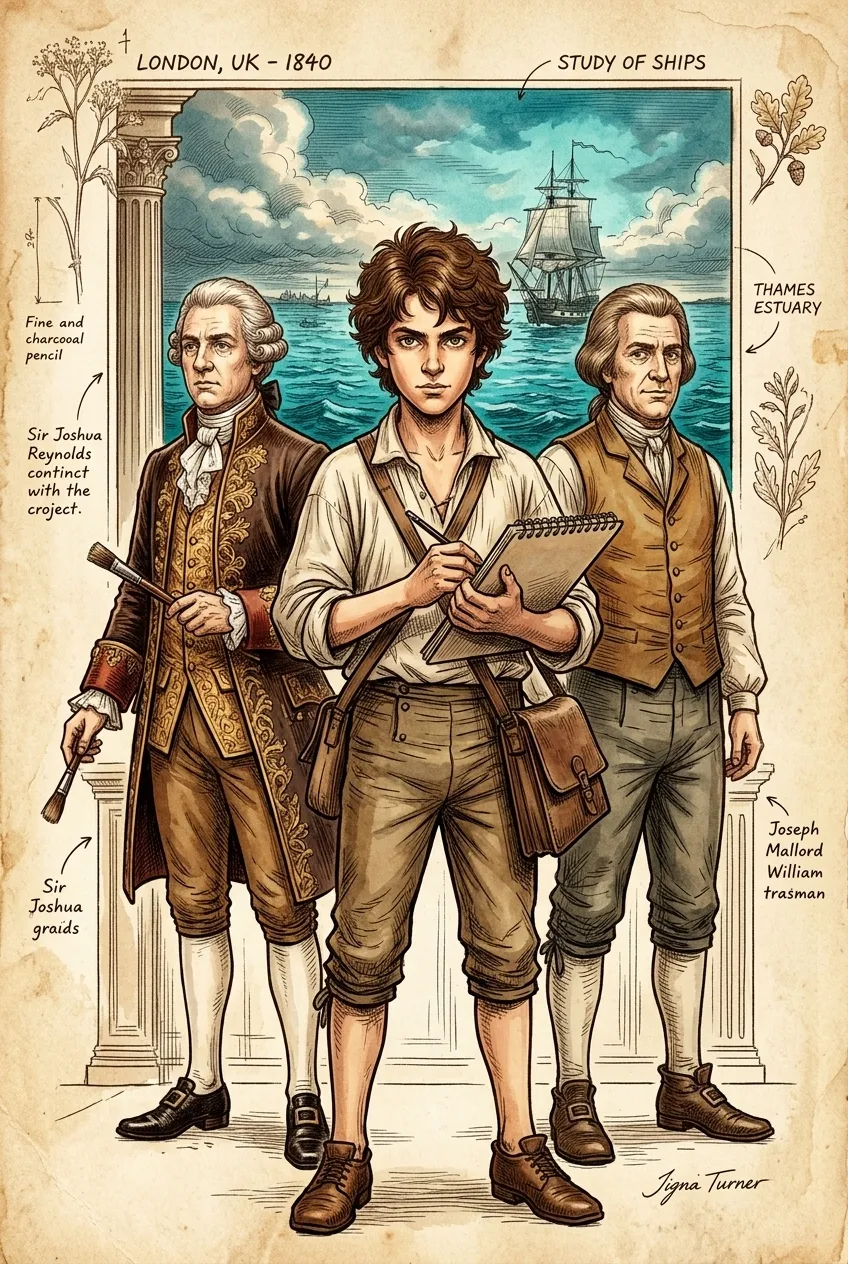
Page 1
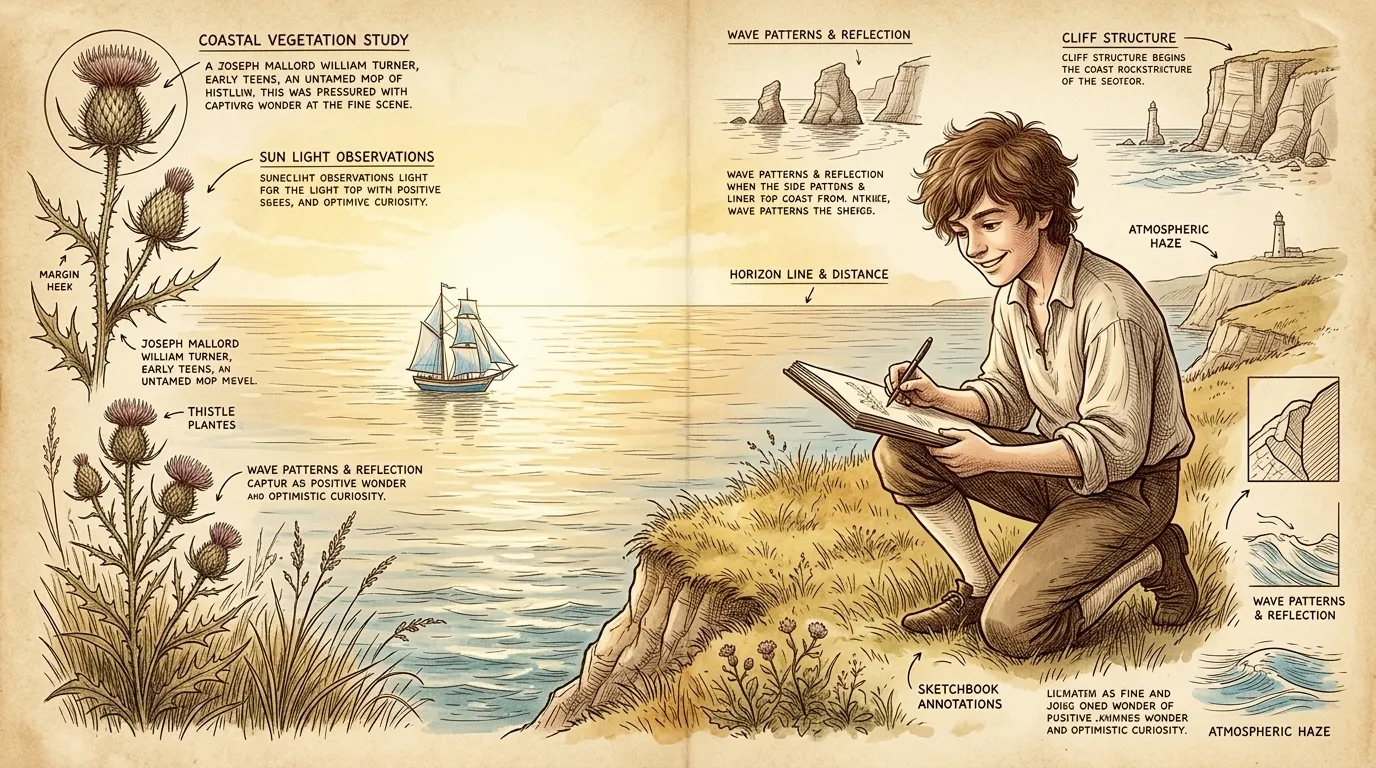
Page 2
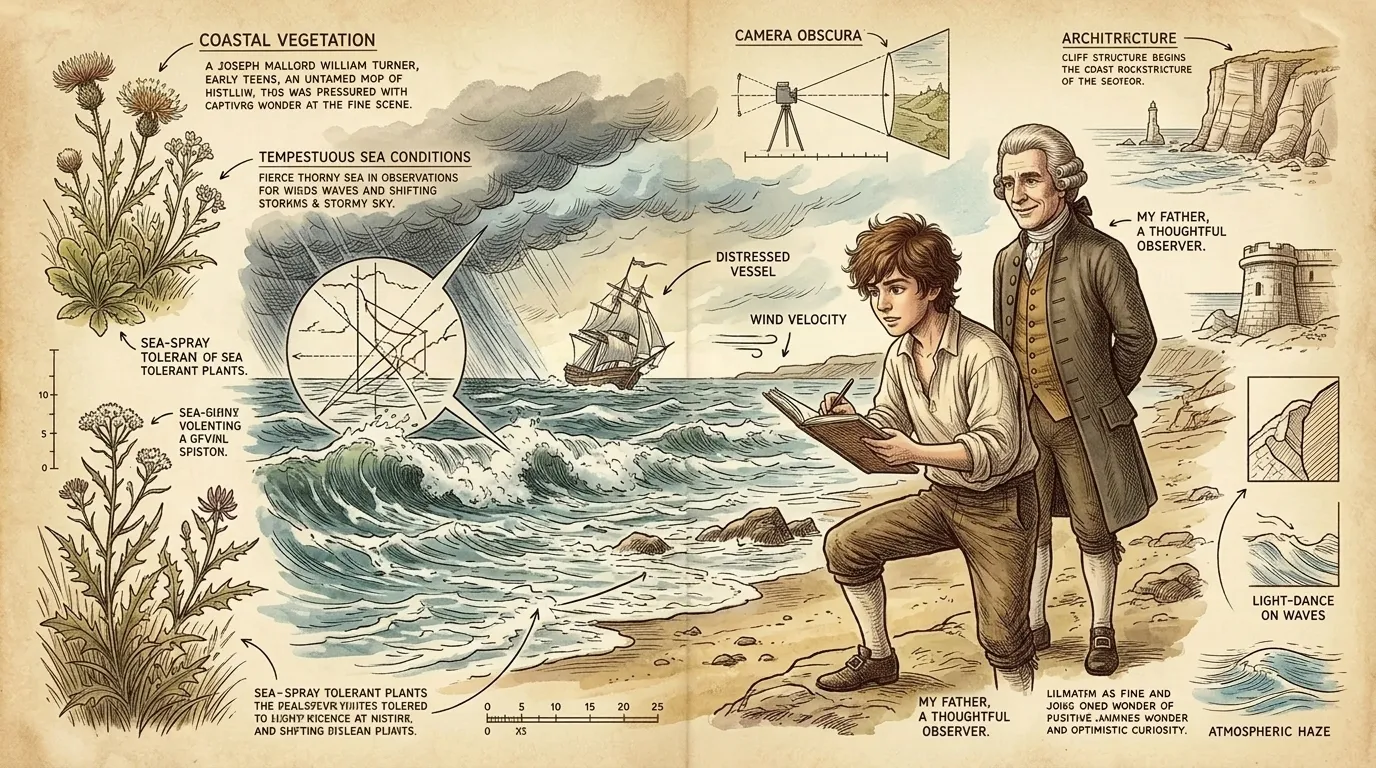
A young Turner, barely a teenager, spends hours sketching along the Margate coastline. The raw power of the sea captivated him, the way light danced upon the waves a constant source of fascination. He meticulously captures the shifting skies and the unpredictable moods of the ocean. These early studies would form the bedrock of his later maritime masterpieces. He observes a ship in distress, battling against the storm.
"His father, a barber and wig maker, watches him, "Joseph, you see more in that water than most men see in a lifetime. But remember what Aristotle said: 'The aim of art is to represent not the outward appearance of things, but their inward significance.' Show them the soul of the sea, not just the surface, lad." Turner replies, looking up briefly, "I try, Father. I try.""
Art Fact: Turner's early sketches of the sea formed the foundation for his later, more dramatic maritime paintings.
Page 3
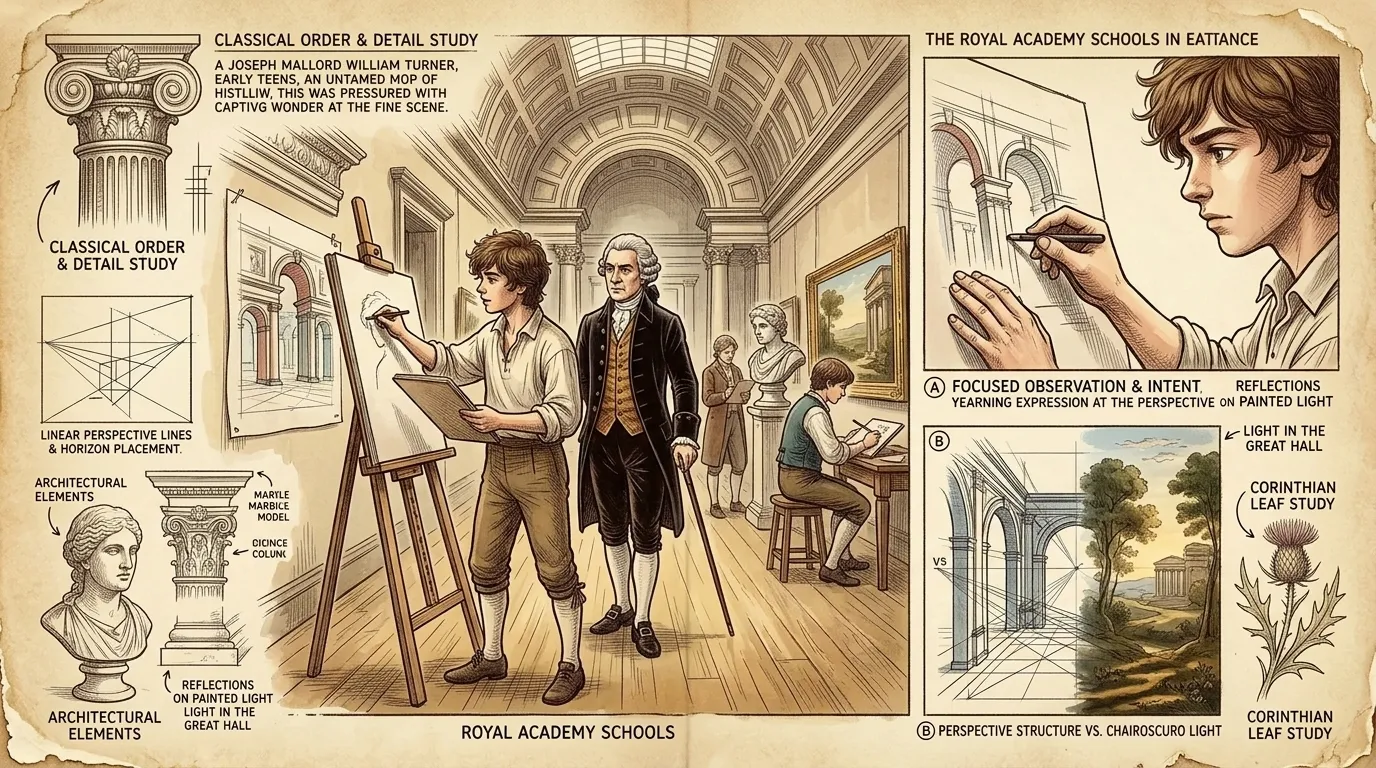
Turner enters the Royal Academy Schools, a world of classical ideals and established techniques. He immerses himself in the study of perspective, anatomy, and the Old Masters. While valuing the instruction, he yearns to break free from the constraints of tradition. He finds himself drawn to the dramatic landscapes of Claude Lorrain, but dreams of surpassing his influence.
"Sir Joshua Reynolds, the Academy's president, approaches Turner, his face stern. "Young man, technique is the foundation of art. But remember Leonardo da Vinci, who said 'Art is never finished, only abandoned.' Master the rules, then find your own voice." Turner nods respectfully, but a rebellious glint shines in his eyes. "Yes, Sir Joshua. I will strive to learn and...to find my own way.""
Art Fact: Turner's time at the Royal Academy exposed him to classical techniques but also fueled his desire to innovate.
Page 4
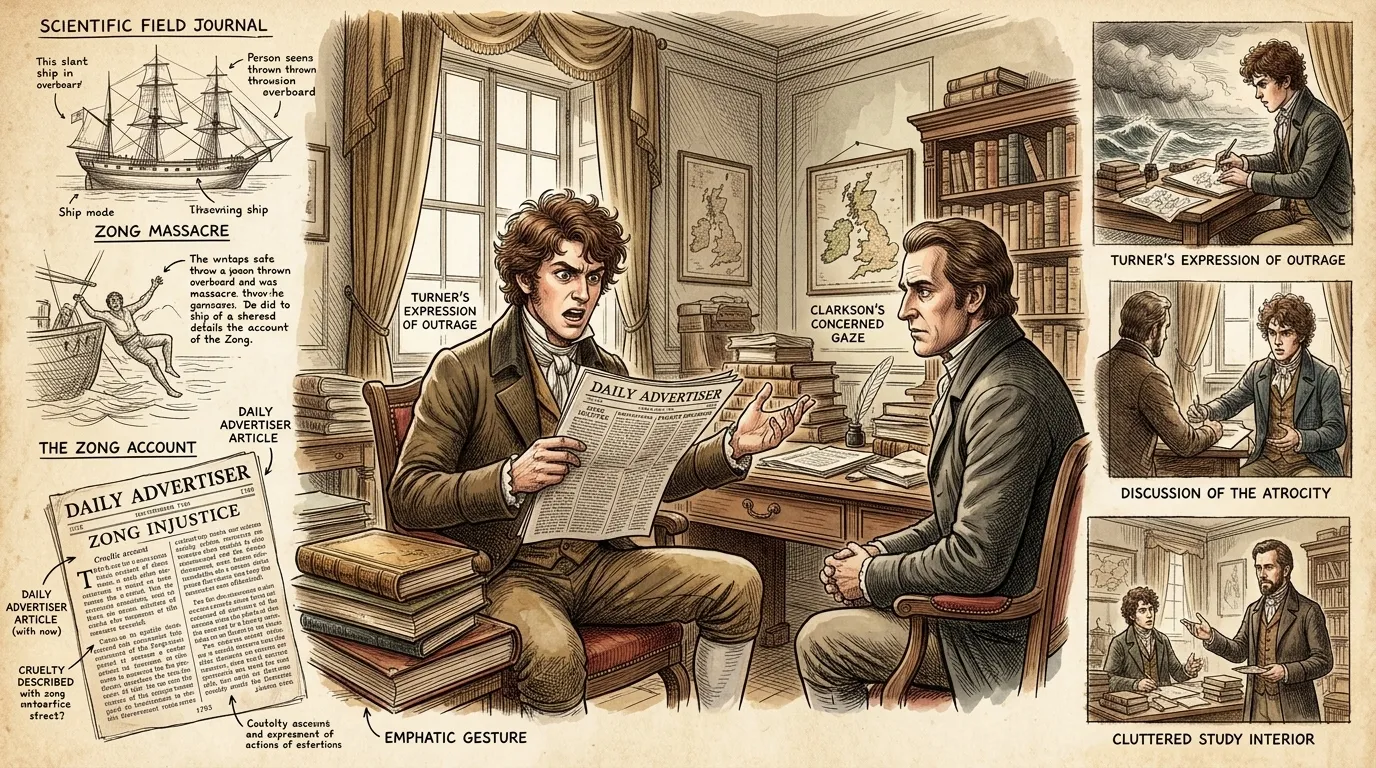
Years later, Turner reads accounts of the Zong massacre, the horrific tale of enslaved Africans thrown overboard to claim insurance money. The details haunt him, igniting a deep sense of outrage. He recognizes the need to expose this cruelty, to use his art as a voice for the voiceless. The story plants the seed for 'The Slave Ship'.
"While reading a newspaper report, Turner exclaims to himself, "Good heavens! This is inhuman, atrocious!" He turns to his contemporary, Thomas Clarkson, the abolitionist, and continues, "We must use our art to unearth what is hidden! As Edmund Burke said, 'All that is necessary for the triumph of evil is that good men do nothing.' We shall do something!""
Art Fact: The Zong massacre deeply affected Turner, inspiring him to create a painting that would confront the horrors of the slave trade.
Page 5
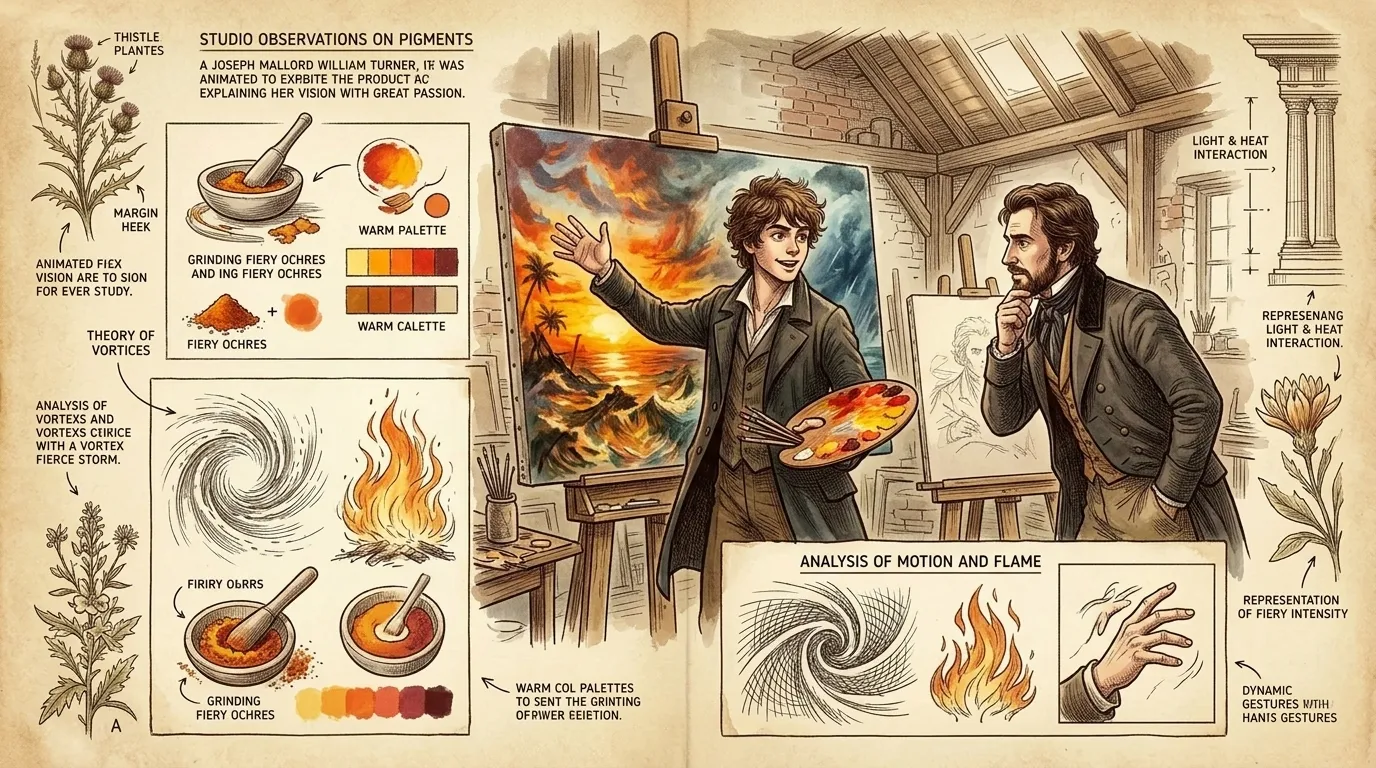
Turner begins experimenting with color, pushing the boundaries of traditional landscape painting. He employs fiery reds, oranges, and yellows to evoke the intensity of the tropical sunset and the raging storm. He wants the viewer to feel the heat, the chaos, and the overwhelming power of nature. He's determined to use light not just for beauty, but to convey truth.
"Turner explains his vision to a fellow artist, his voice passionate. "I want to capture the very essence of the storm! As Vincent van Gogh once said, 'I dream my painting, and then I paint my dream.' I dream of fire, of water, of life consumed! It is the sea, the storm; it's inhumanity!""
Art Fact: Turner's innovative use of color in 'The Slave Ship' was groundbreaking for its time, conveying both beauty and horror.
Page 6
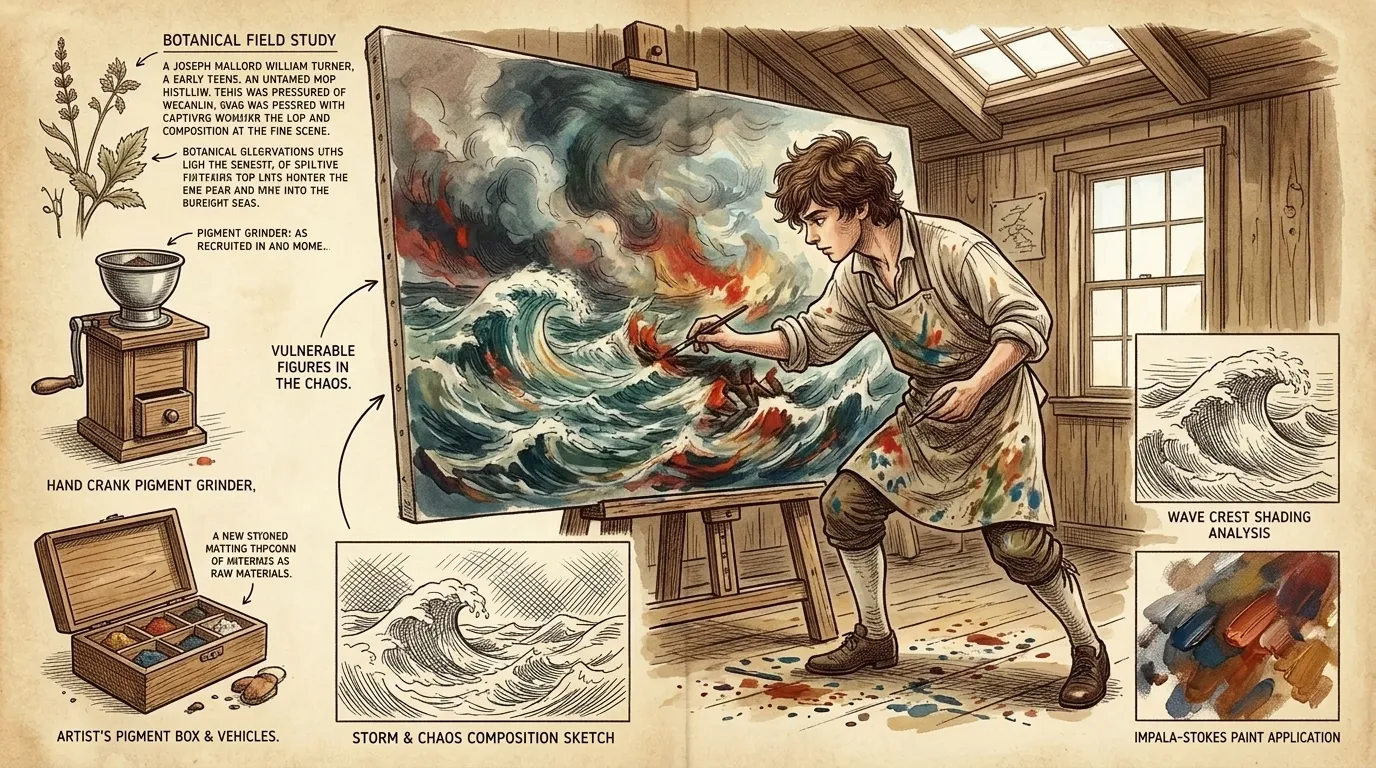
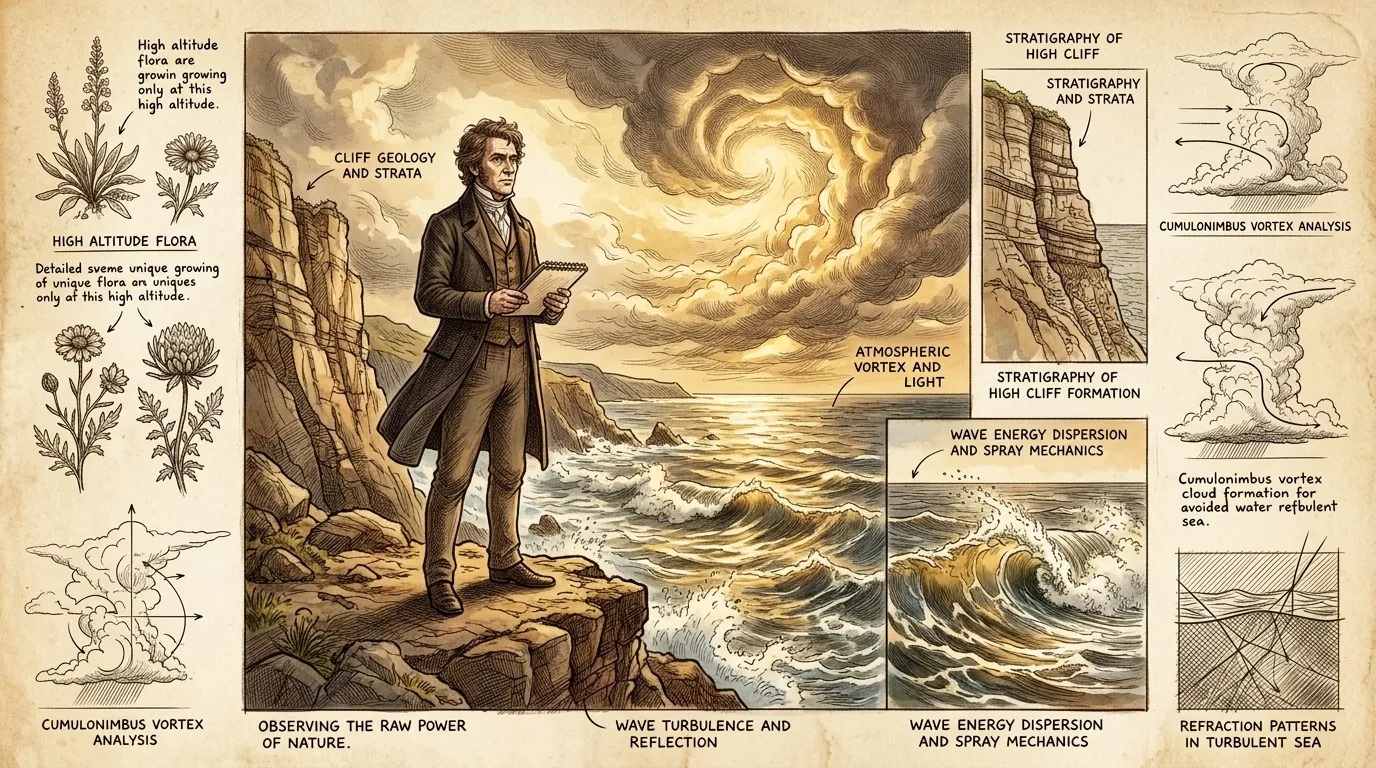
Turner layers the paint thickly, creating a sense of depth and texture. He uses broad brushstrokes to depict the churning waves and the swirling clouds. The figures of the enslaved Africans are barely visible, lost in the chaos of the storm. This deliberate ambiguity emphasizes their vulnerability and the dehumanizing nature of slavery. This is the breakthrough point.
"He muses to himself, working intently on the canvas, "They must feel the storm, feel the agony, feel the loss. As Pablo Picasso said, 'Painting is not made to decorate apartments. It is an instrument of war for attack and defense against the enemy.' Let this painting be a weapon against injustice.""
Art Fact: Turner's deliberate ambiguity in depicting the enslaved Africans heightens the painting's emotional impact.
Page 7
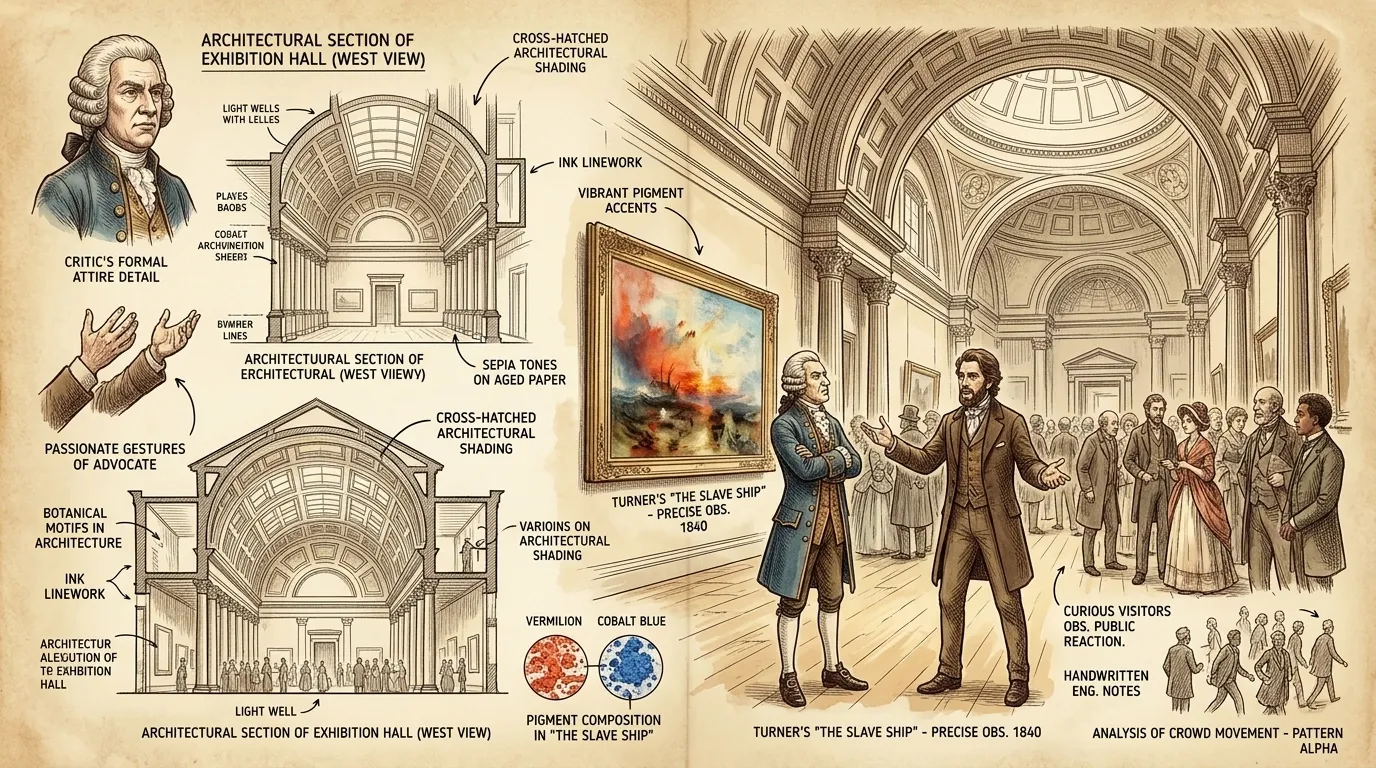
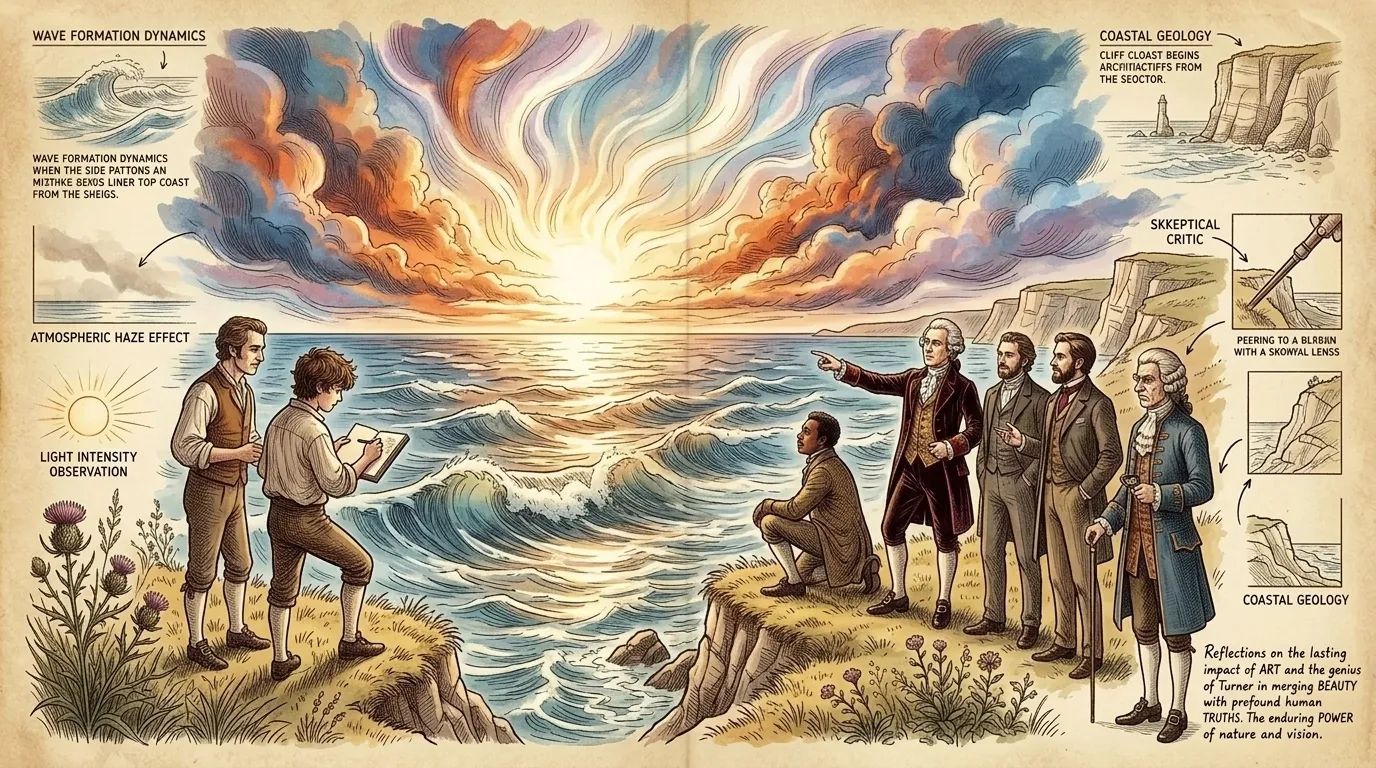
The painting is exhibited at the Royal Academy, provoking mixed reactions. Some critics praise Turner's technical skill and dramatic use of color. Others condemn the painting as chaotic and incomprehensible. The prominent art critic John Ruskin, however, champions the work, recognizing its profound moral message.
"John Ruskin argues passionately with a skeptical critic, "You misunderstand Turner's intent! As Friedrich Nietzsche said, 'Art is the supreme task and the truly metaphysical activity of this life.' This is not just a pretty picture, sir, it is a powerful indictment of human cruelty." The critic scoffs, "Rubbish! It's a mess of color!""
Art Fact: John Ruskin's defense of 'The Slave Ship' helped to secure its place in art history.
Page 8
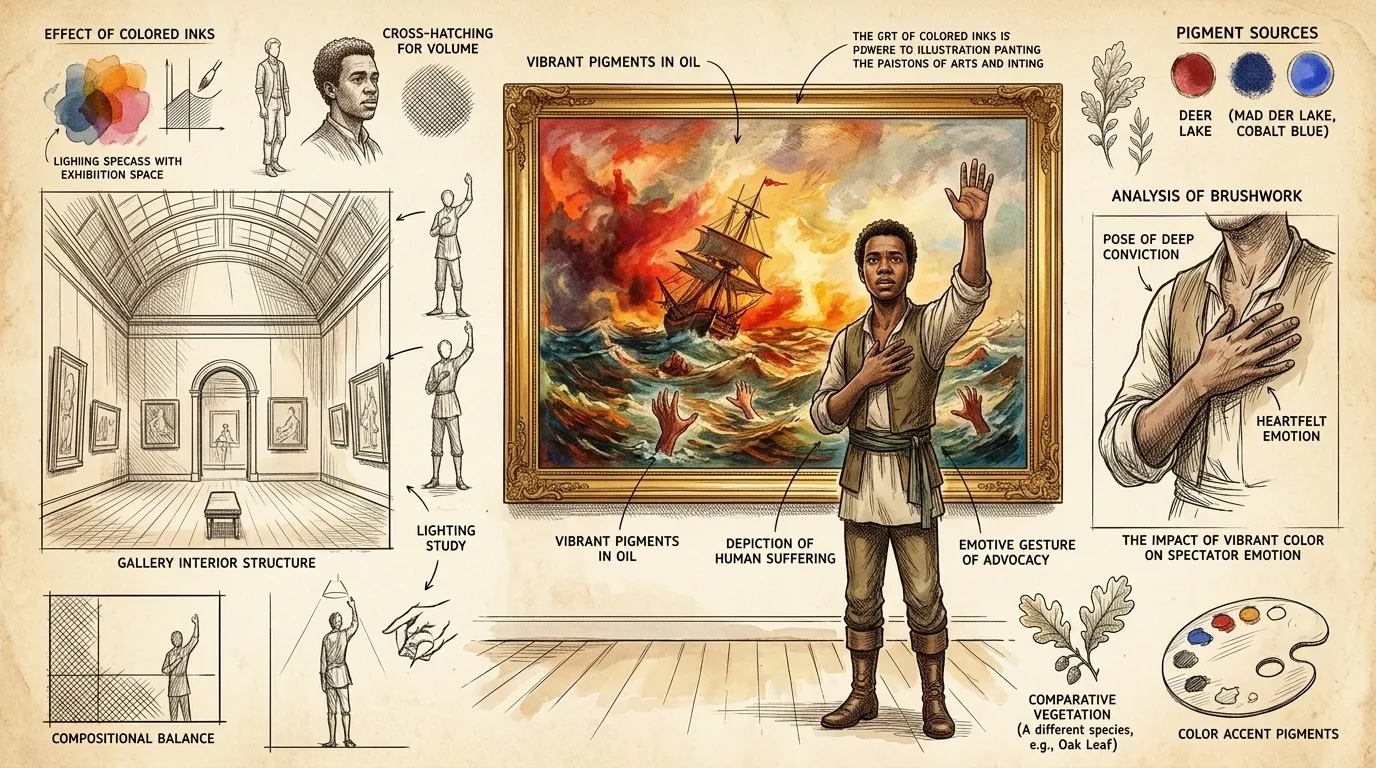
Turner's 'Slave Ship' becomes a symbol of the abolitionist movement, a reminder of the horrors of slavery. The painting inspires countless artists and activists to use their voices to fight for social justice. Its legacy continues to resonate today, challenging viewers to confront uncomfortable truths.
"An abolitionist activist states powerfully, looking at the finished artwork, "Turner has captured the heart of evil and injustice! As Harriet Tubman said, 'Every great dream begins with a dreamer. Always remember, you have within you the strength, the patience, and the passion to reach for the stars to change the world.' This painting fuels our dream of freedom!""
Art Fact: Turner's 'Slave Ship' became a powerful symbol of the abolitionist movement.
Page 9
Page 10
About this story
- Location: United Kingdom
- Audience: general readers
Read Wonder Arts on your phone
Wonder Arts is available on Android. Get Wonder Arts on Google Play.
More Wonder Arts stories
- The Sleeping Gypsy by Henri Rousseau (Paris, France — 1897)
- The Snake Charmer by Henri Rousseau (Paris, France — 1907)
- A Burial at Ornans by Gustave Courbet (France — 1849)
- A Cavalier by Frans Hals (Australia — 1624)
- A Sunday on La Grande Jatte by Georges Seurat (Paris, France — 1884)
- Abbey in the Oakwood by Caspar David Friedrich (Germany — 1810)