The Potato Eaters by Vincent van Gogh (Nuenen, Netherlands — 1885)
The Potato Eaters by Vincent van Gogh (Nuenen, Netherlands — 1885) — an illustrated arts story, set in Global. 10 illustrated pages, free to read on Wonder Arts.
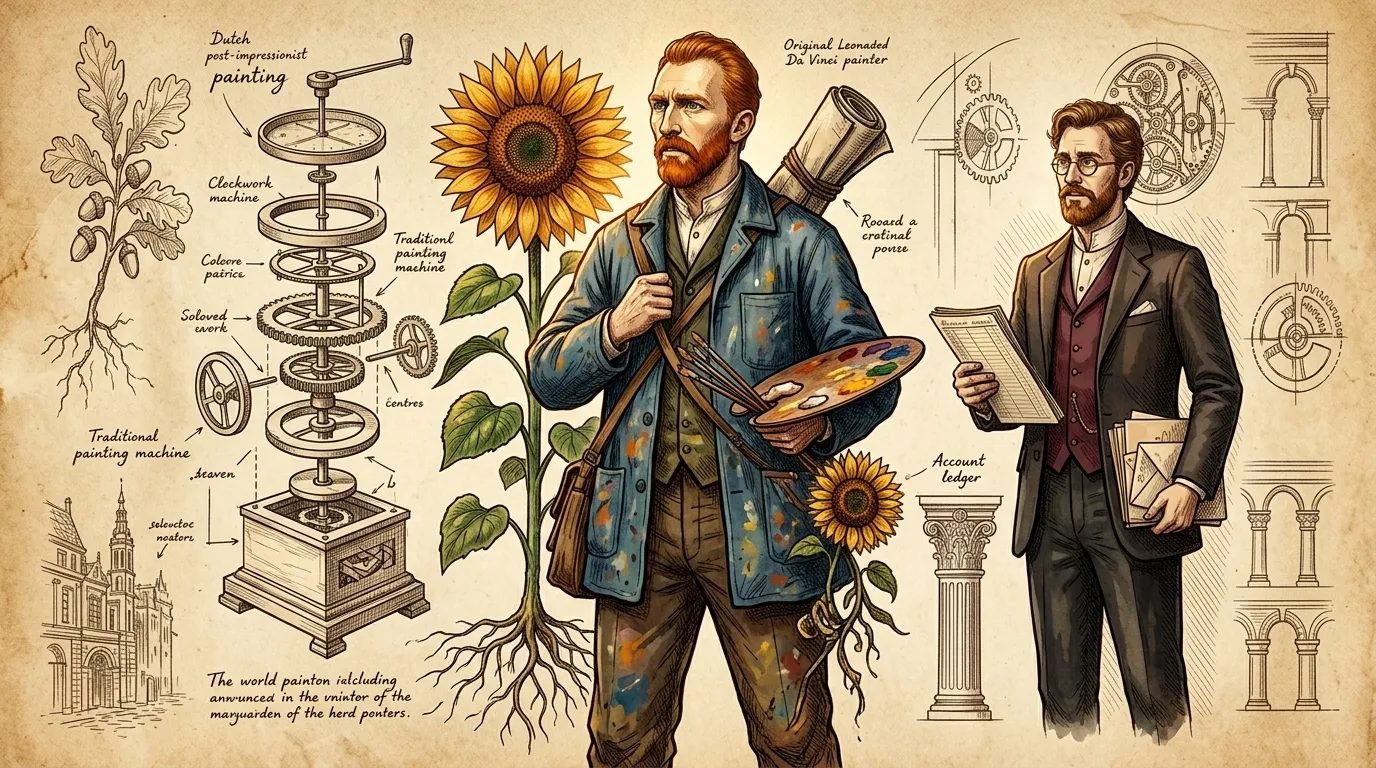
Page 1
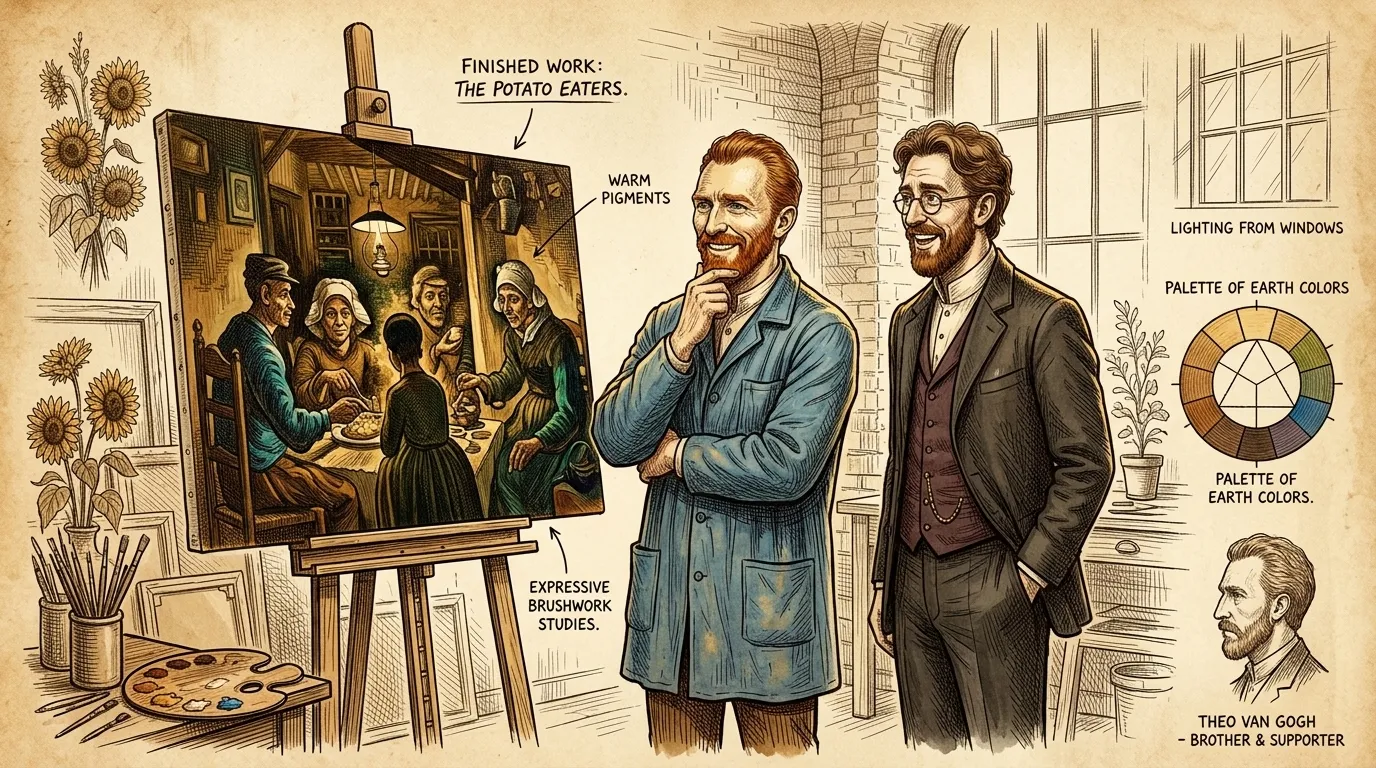
Vincent van Gogh stands before his starkly lit painting, 'The Potato Eaters,' completed in 1885. The painting, measuring 82 x 114 cm, resides in the Van Gogh Museum in Amsterdam. It represents a pivotal moment in his early career, reflecting his deep empathy for the impoverished and his commitment to depicting the harsh realities of peasant life. Its estimated value is incalculable, representing not just art, but human suffering and resilience.
""I have wanted to convey the idea that these people, eating potatoes by the light of their lamp, have tilled the earth themselves with these hands, and so it speaks of manual labor and how they have honestly earned their food," Van Gogh muttered, almost to himself. He paused, gazing at the canvas with a mixture of pride and lingering doubt."
Art Fact: Van Gogh originally conceived 'The Potato Eaters' as a lithograph, creating numerous preliminary sketches and studies to perfect the composition and capture the essence of peasant life.
Page 2
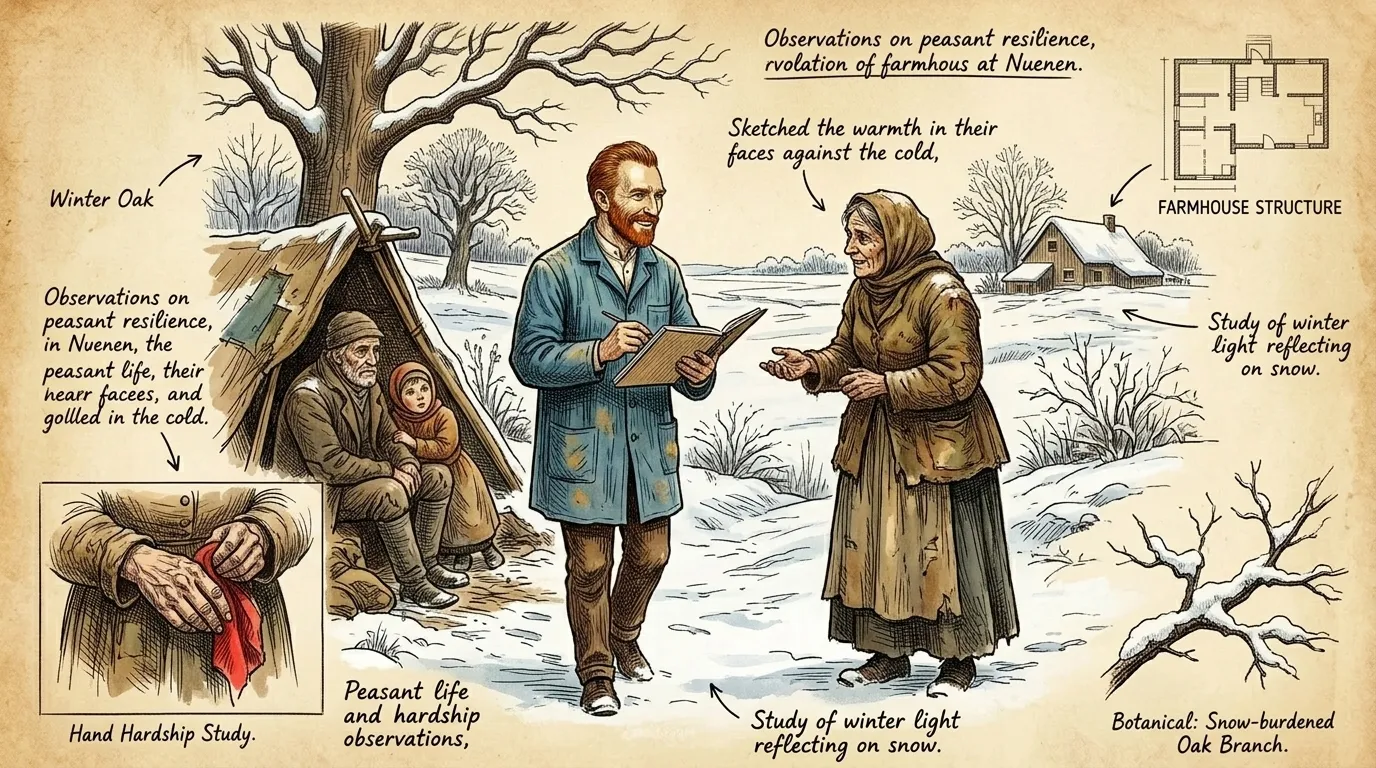
As Van Gogh walked through the snow-covered fields near Nuenen, he encountered a peasant family huddled together for warmth. Their faces, etched with hardship, struck him deeply. He paused, sketchbook in hand, capturing their likenesses. "It's not enough to paint what I see before me," he confided in a letter to his brother Theo. "I must paint what I feel."
""Excuse me, sir," a weathered woman said, her voice raspy from the cold. "Are you an artist?" Van Gogh nodded, his eyes filled with genuine compassion. "I am, madam. And I hope to capture the dignity in your struggle."
Art Fact: Van Gogh's deep empathy for the working class was heavily influenced by his father, a pastor who served impoverished communities.
Page 3
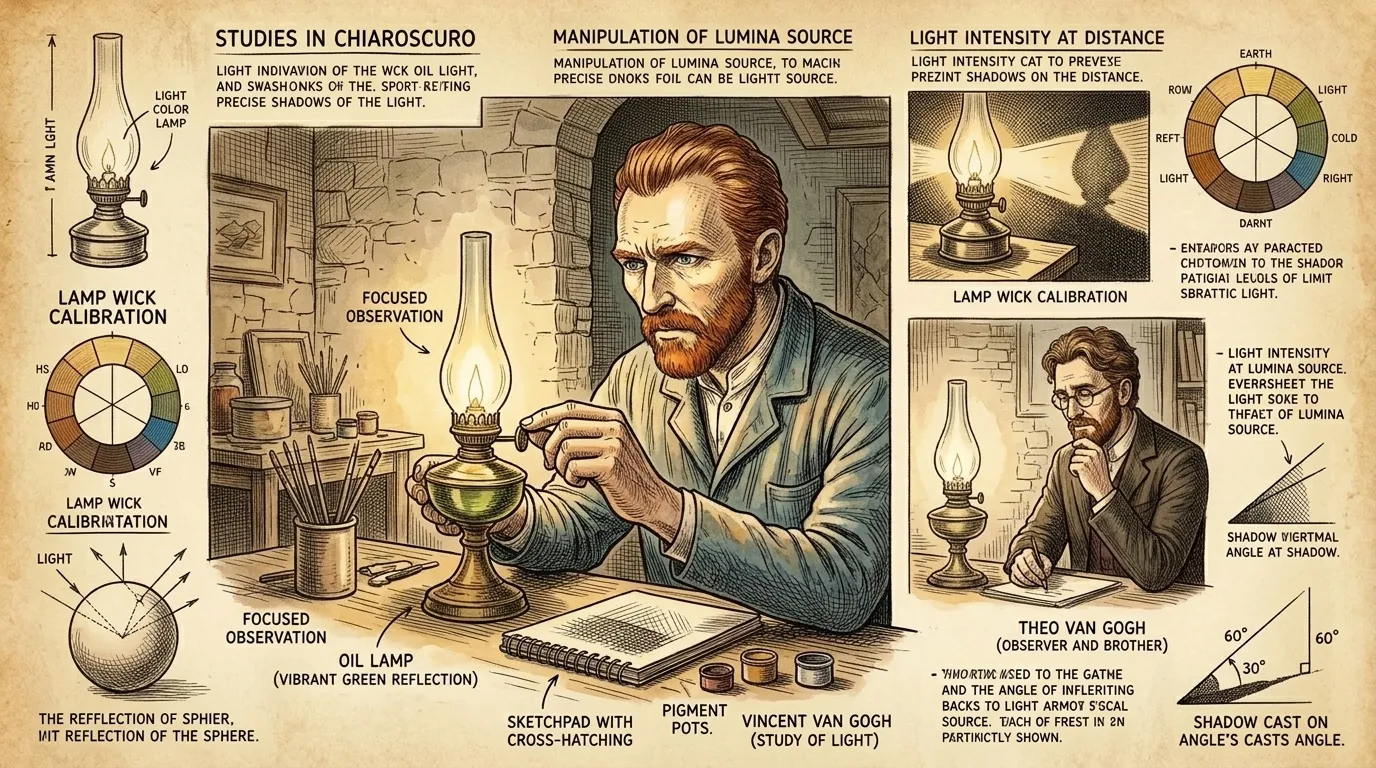
Back in his studio, Van Gogh experimented with different lighting techniques. He wanted to evoke the warmth of the family's humble dwelling amidst the cold, unforgiving winter. He meticulously arranged a single oil lamp, observing how its glow illuminated the faces of his models. "As Leonardo da Vinci said, 'Painting embraces all the ten functions of the eye; that is to say, darkness, light, body and color, shape and location, distance and nearness, motion and rest'," Van Gogh said to himself, studying the light, "and I must use them all to capture this moment."
""The light must tell the story," he muttered, adjusting the lamp's position. "It must convey the warmth and resilience of these people, their connection to the earth.""
Art Fact: Van Gogh's use of light and shadow in 'The Potato Eaters' reflects his admiration for Rembrandt's dramatic use of chiaroscuro.
Page 4
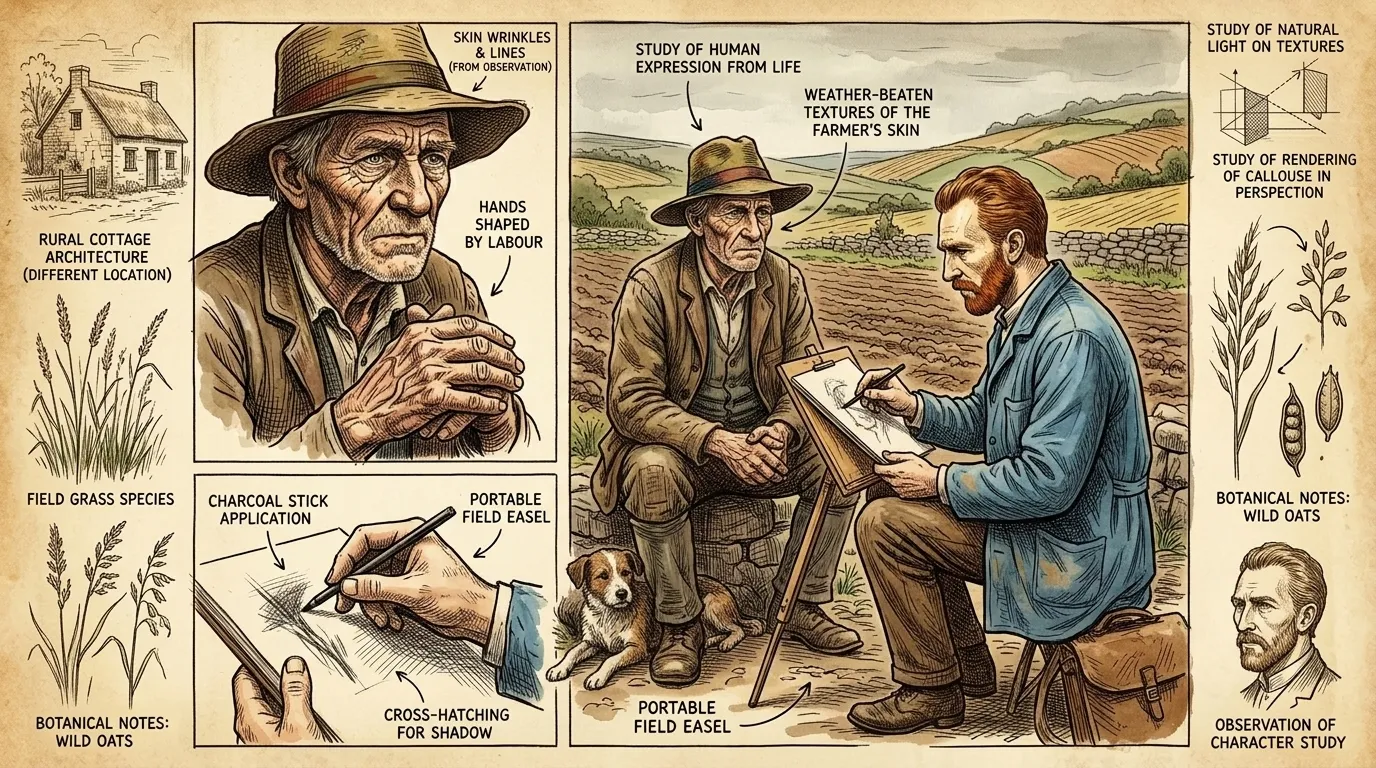
Van Gogh spent countless hours sketching the faces of the peasant family. He sought to capture not just their physical appearance, but the weight of their labor and the resilience in their eyes. He studied their weathered skin, their calloused hands, their expressions of quiet dignity. He wanted to portray the essence of their humanity.
""Each line, each wrinkle tells a story," Van Gogh remarked to a local farmer who sometimes posed for him. "It's my task to bring those stories to life on canvas.""
Art Fact: Van Gogh wrote extensively about his desire to portray the 'true' character of the working class, rather than romanticized or idealized versions.
Page 5
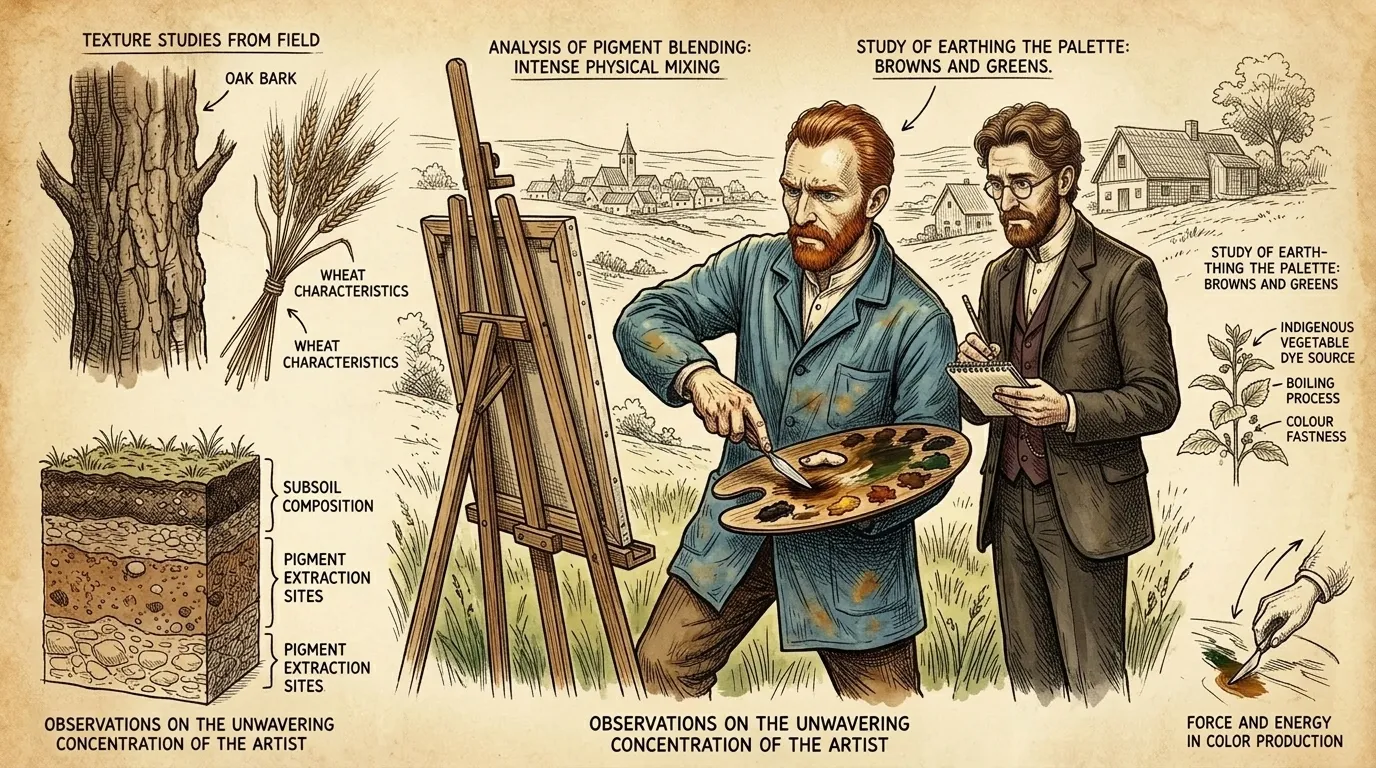
Van Gogh intentionally chose a dark, earthy color palette for 'The Potato Eaters.' He wanted to convey the stark reality of peasant life, the connection to the soil, and the absence of luxury or pretense. He mixed shades of brown, ochre, and dark green, creating a somber atmosphere that reflected the harshness of their existence.
""I want to paint them not as they appear to the casual observer, but as they truly are," Van Gogh explained to his brother Theo in a letter. "Their lives are hard, and my palette must reflect that.""
Art Fact: The dark palette of 'The Potato Eaters' contrasted sharply with the bright, vibrant colors that would later characterize Van Gogh's work.
Page 6
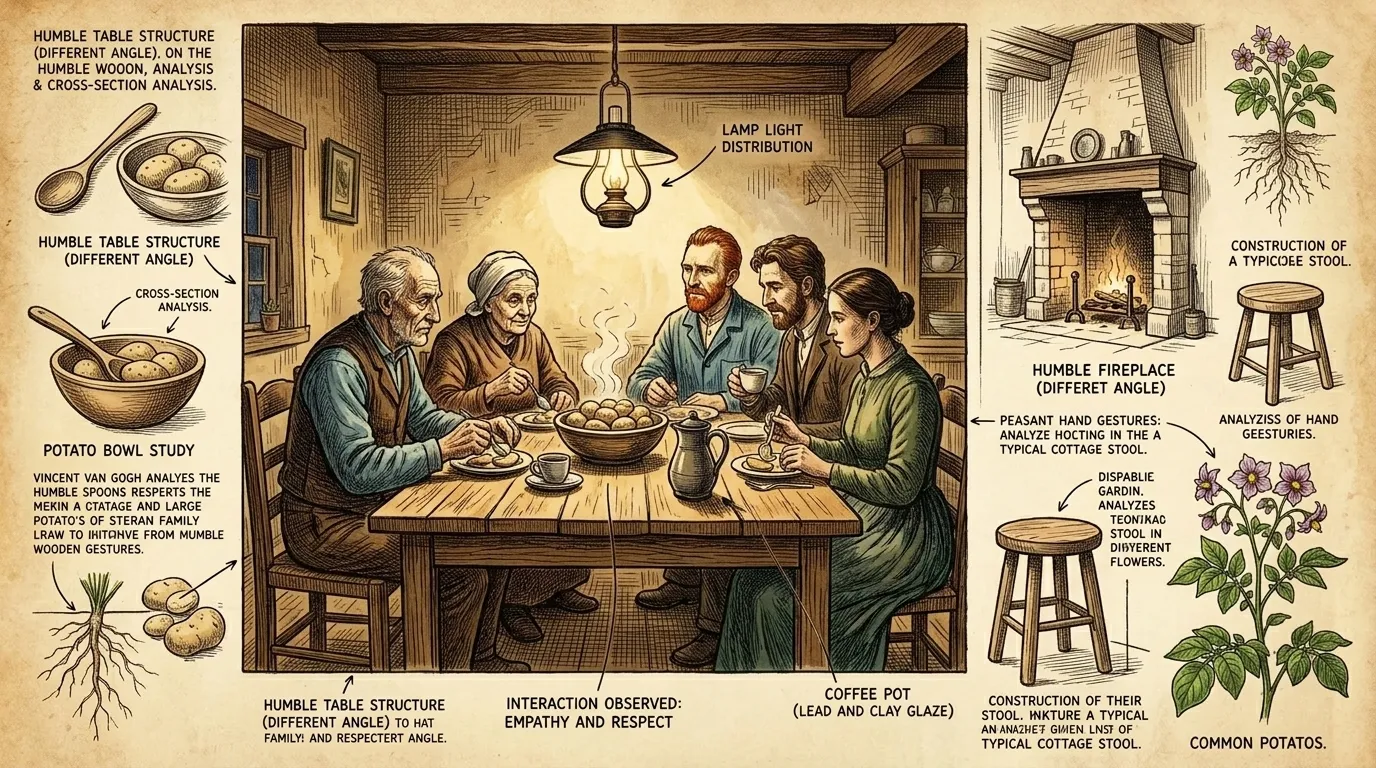
Van Gogh joined the peasant family for a simple meal of potatoes and coffee. He observed their gestures, their interactions, their expressions of gratitude. He wanted to capture the intimacy and connection within their humble dwelling. He felt a deep sense of empathy for their struggles.
""This meal, though simple, is a testament to your hard work and resilience," Van Gogh said to the family, his voice filled with genuine respect."
Art Fact: Van Gogh's personal experience of poverty and hardship informed his deep compassion for the working class.
Page 7
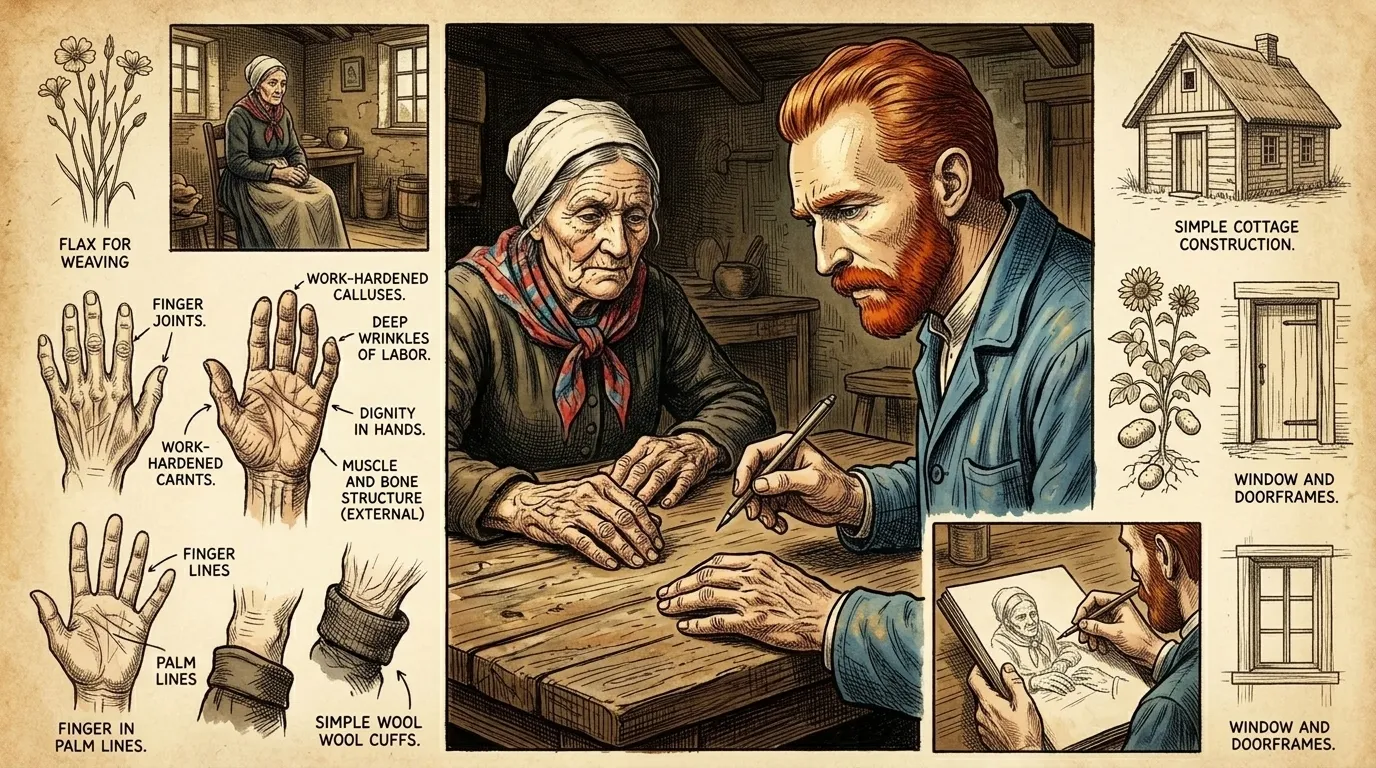
Van Gogh focused intensely on the hands of the peasants. He saw them as symbols of their labor, their connection to the earth, and their resilience. He meticulously painted each line, each wrinkle, each callus, conveying the weight of their toil and the dignity of their work.
""These hands have tilled the earth, planted the seeds, and harvested the crops," Van Gogh said, studying the hands of an old peasant woman. "They tell a story of hard work, perseverance, and unwavering connection to the land.""
Art Fact: Van Gogh's focus on the hands of the peasants reflects his belief that art should celebrate the dignity of labor.
Page 8
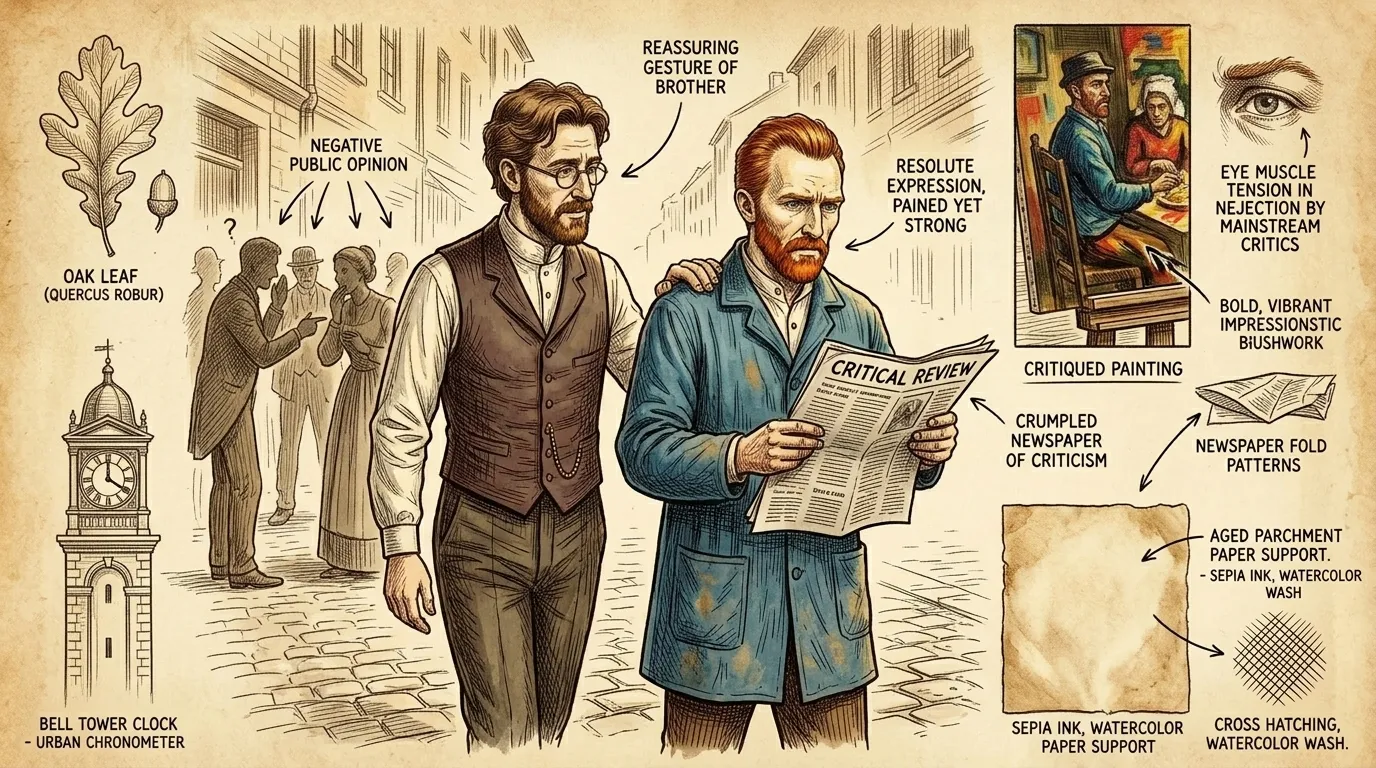
When 'The Potato Eaters' was first exhibited, it received mixed reviews. Some critics praised its unflinching portrayal of peasant life. Others criticized its dark palette and perceived ugliness. Van Gogh was deeply wounded by the negative feedback, but he remained steadfast in his artistic vision. "If I am really something as a painter," Van Gogh said to a friend, quoting Michelangelo, "I owe it to being born not in a gentle country, but in the harsh surroundings of this frozen world."
""They don't understand," he lamented to Theo, "they don't see the beauty in the harshness, the dignity in the struggle.""
Art Fact: Despite the initial critical reception, 'The Potato Eaters' is now recognized as a pivotal work in Van Gogh's early career, showcasing his commitment to depicting the lives of the working class.
Page 9
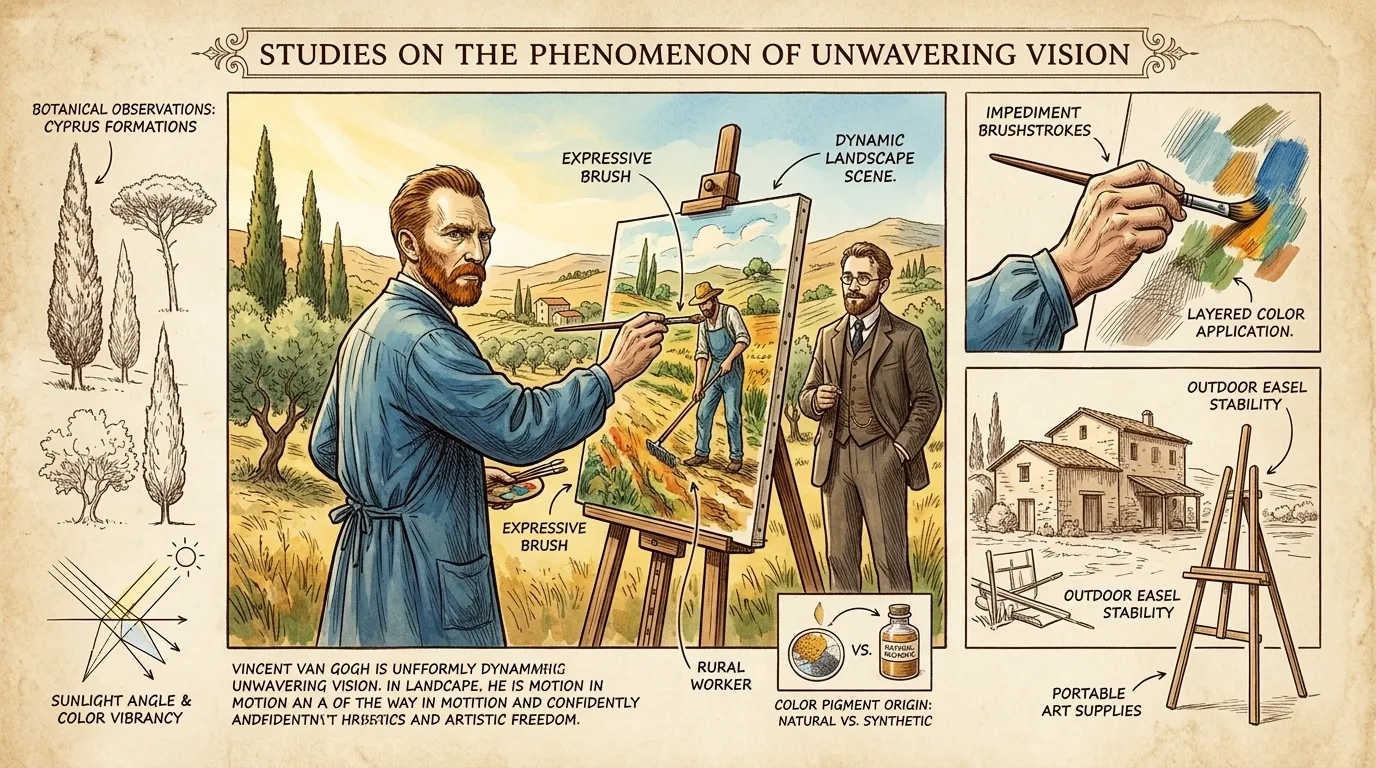
Despite the criticism, Van Gogh never abandoned his commitment to portraying the realities of peasant life. He continued to paint the landscapes, the people, and the daily struggles of the working class with unwavering honesty and compassion. His vision was unique.
""I will not be swayed by the opinions of others," Van Gogh declared, his voice filled with conviction. "I will paint what I see, what I feel, what I believe is true.""
Art Fact: Van Gogh's unwavering artistic vision laid the groundwork for his later masterpieces.
Page 10
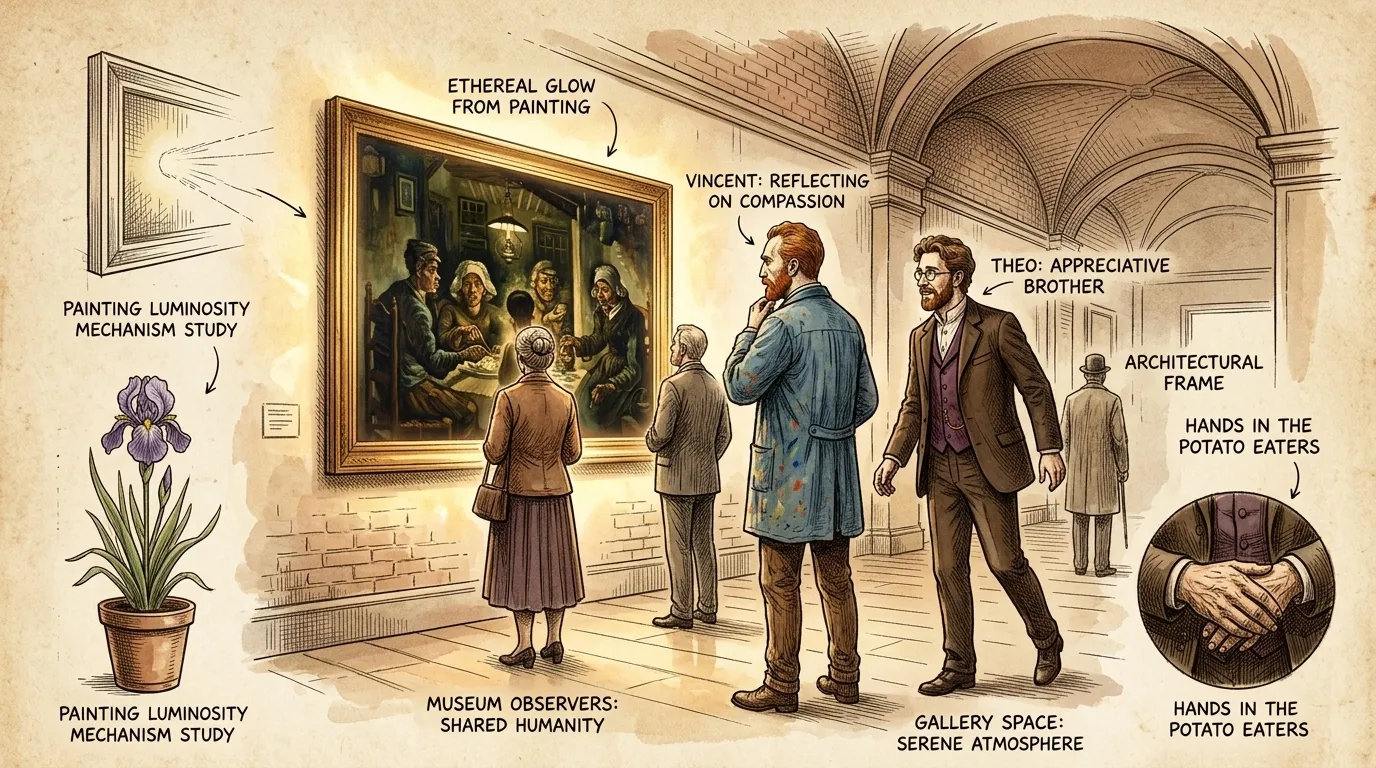
Today, 'The Potato Eaters' continues to resonate with audiences around the world. It stands as a testament to Van Gogh's deep empathy for the impoverished and his unwavering commitment to portraying the dignity of human struggle. It is remembered forever. He found the courage to stand before the world with his paintings.
"A faint whisper can be heard in the museum echoing, "The painting can never truly capture the feeling of the human soul. Only the heart of one can connect to the heart of another""
Art Fact: 'The Potato Eaters' remains one of Van Gogh's most iconic and emotionally resonant works, a powerful reminder of the shared humanity that binds us all.
About this story
- Location: Global
- Audience: general readers
Read Wonder Arts on your phone
Wonder Arts is available on Android. Get Wonder Arts on Google Play.
More Wonder Arts stories
- The Rape of Proserpina by Gian Lorenzo Bernini (Rome, Italy — 1622)
- The Rocky Mountains by Albert Bierstadt (USA — 1863)
- The School of Athens by Raphael (Vatican City, Rome — 1509–1511)
- The Sea of Ice by Caspar David Friedrich (Germany — 1824)
- The Slave Ship by J.M.W. Turner (London, UK — 1840)
- The Sleeping Gypsy by Henri Rousseau (Paris, France — 1897)