The Rocky Mountains by Albert Bierstadt (USA — 1863)
The Rocky Mountains by Albert Bierstadt (USA — 1863) — an illustrated arts story, set in United States. 10 illustrated pages, free to read on Wonder Arts.
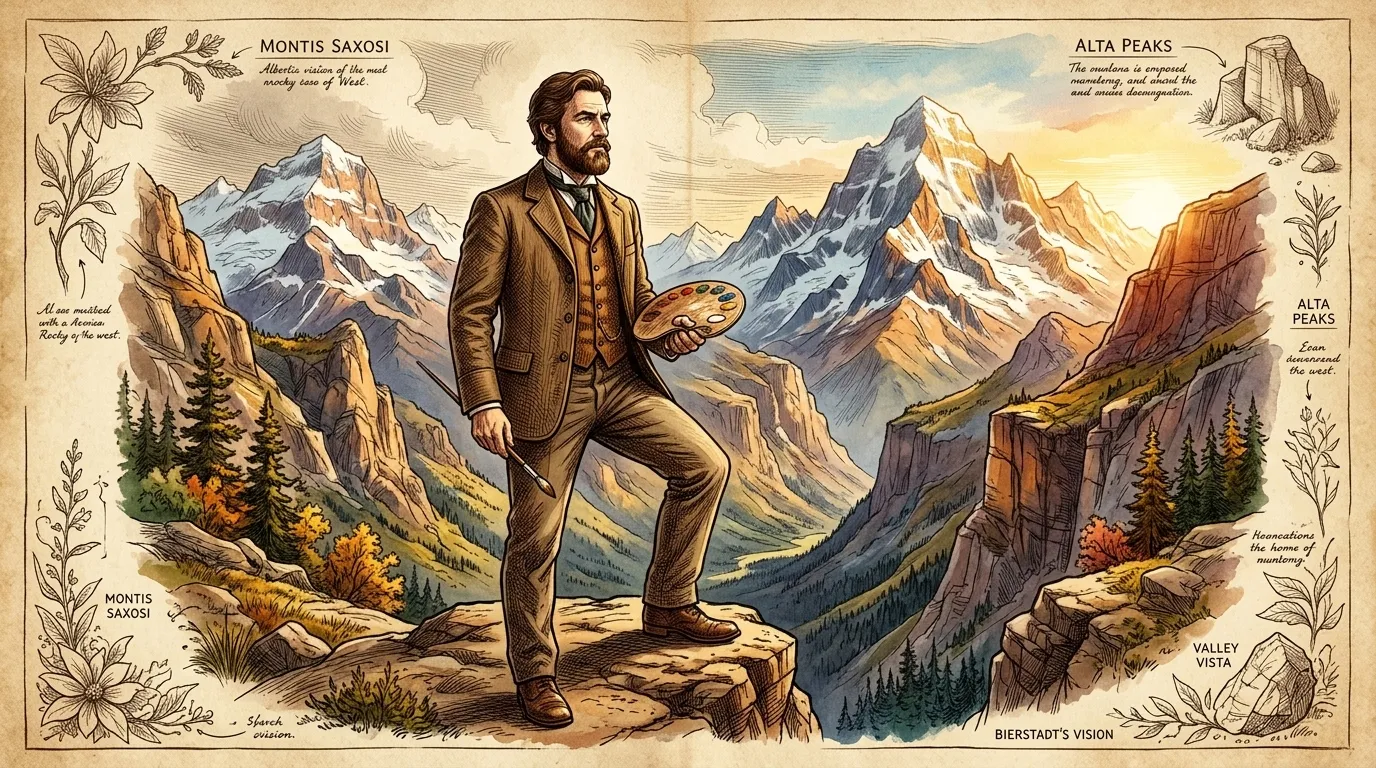
Page 1
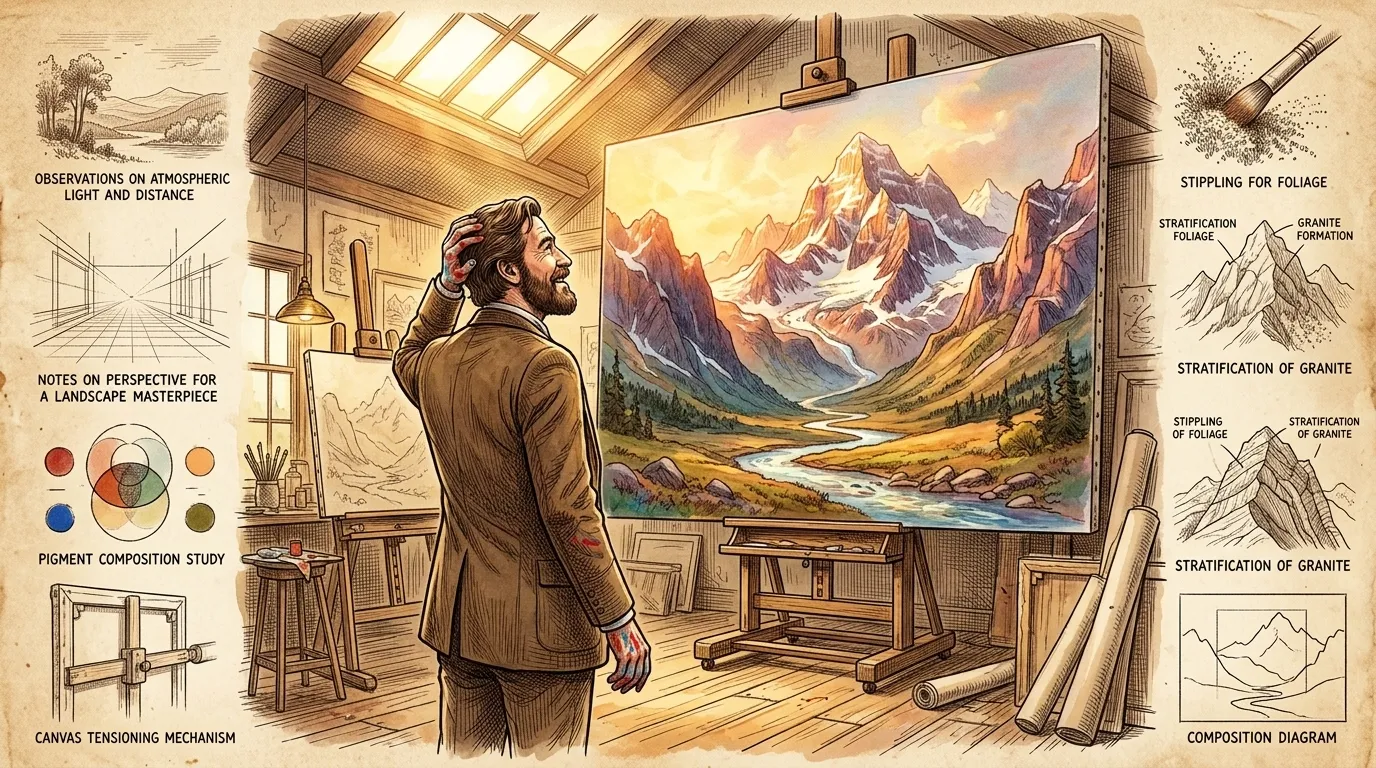
Albert Bierstadt, a German-American painter, stands before his completed masterpiece, 'The Rocky Mountains, Lander's Peak.' Completed in 1863, this monumental painting, measuring six by ten feet, captures the grandeur of the American West. The painting would later fetch a staggering 25,000, a fortune at the time, marking Bierstadt's ascent as a celebrated artist.
"Bierstadt sighs, running a paint-stained hand through his hair. "It is finished," he whispers, more to himself than anyone else. "But will they see what I see? The sublime beauty, the untamed spirit...""
Art Fact: The Rocky Mountains, Lander's Peak (1863) is currently housed at the Metropolitan Museum of Art in New York City.
Page 2
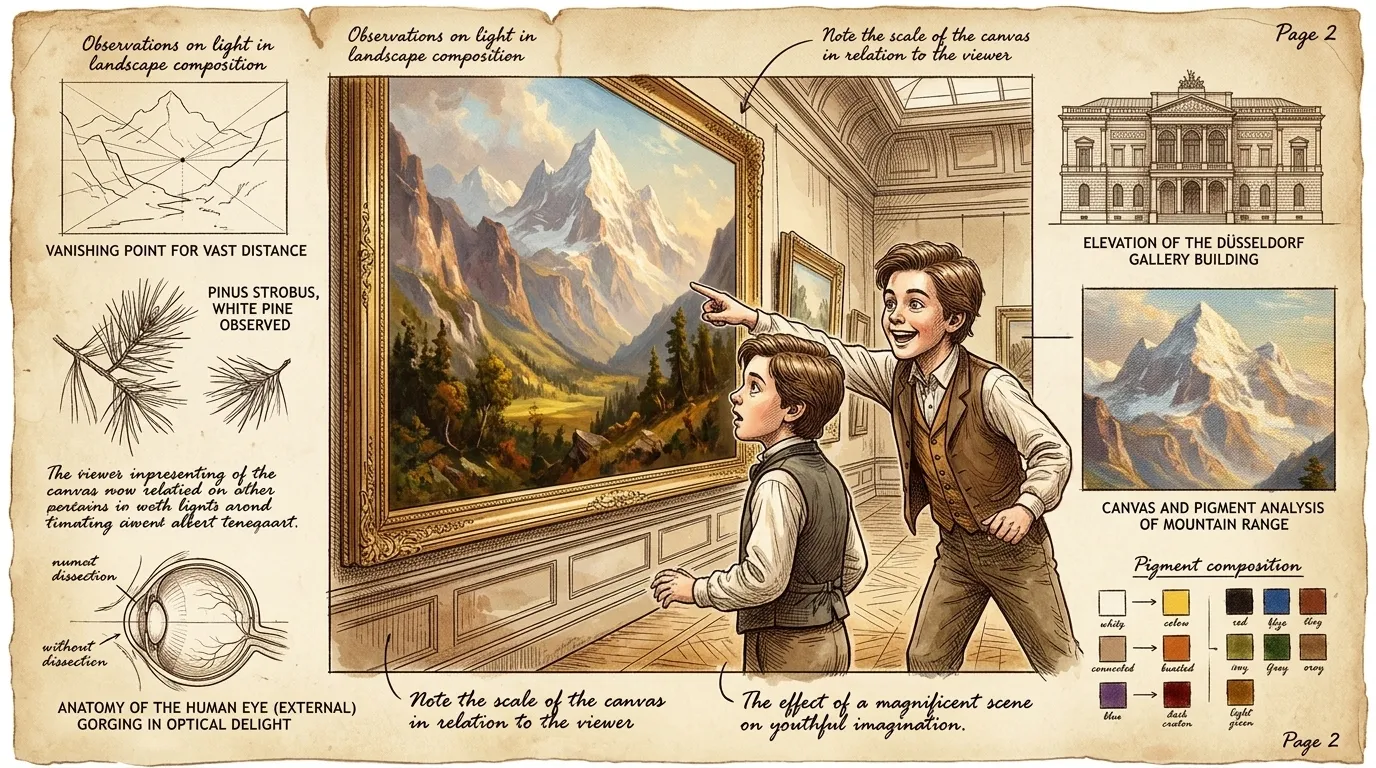
Young Albert, barely a teenager, gazes in wonder at the Hudson River School paintings displayed at the Düsseldorf Gallery. He is mesmerized by the vast landscapes and dramatic lighting, a stark contrast to the industrial landscape of his hometown. This experience ignites a passion within him, a desire to capture the beauty of nature on canvas.
"A boy, not much older than Albert, leans towards him, eyes wide with excitement. "Look at that light!" he exclaims, pointing to a painting of a mountain range. "It's like you can feel the cold air and smell the pine trees.""
Art Fact: The Hudson River School profoundly influenced Bierstadt's early artistic development.
Page 3
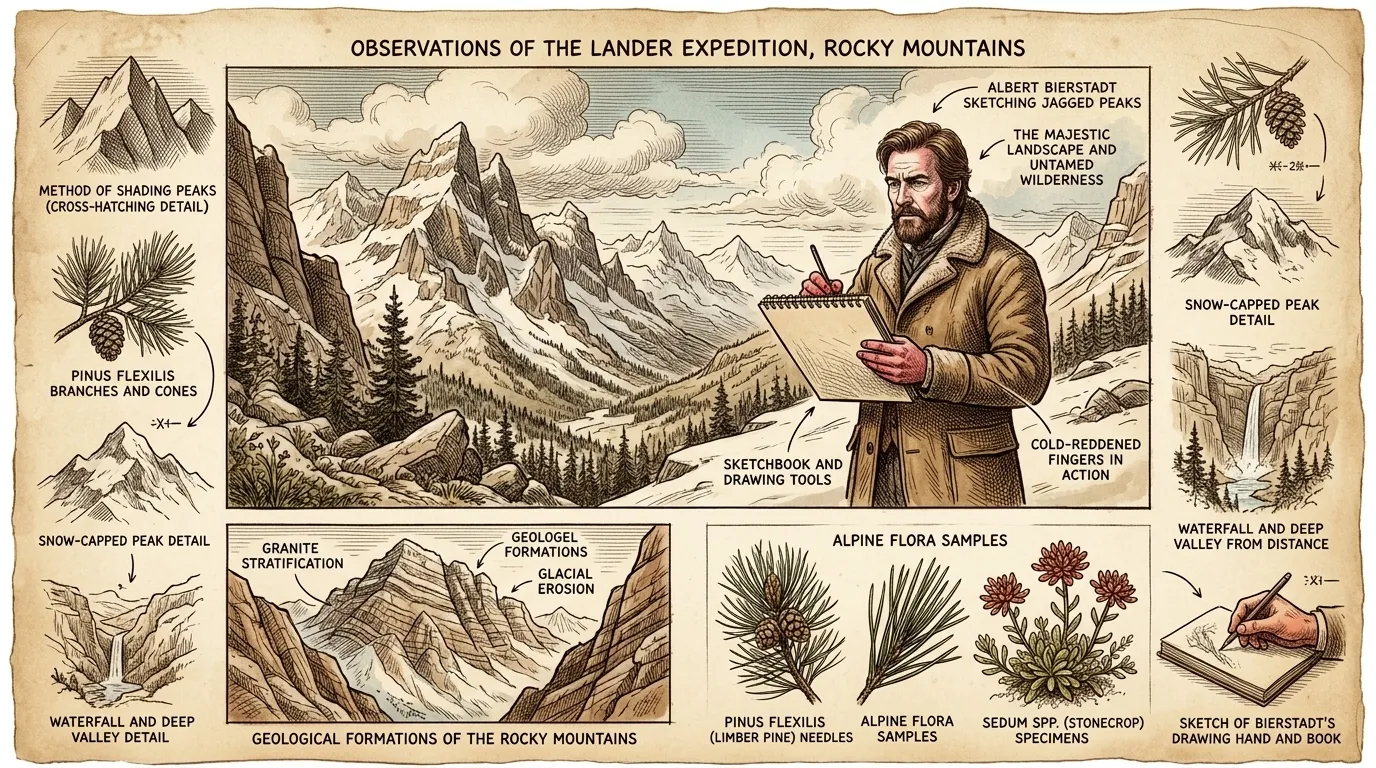
Bierstadt joins the Lander Expedition of 1859, venturing into the uncharted territories of the American West. He is awestruck by the sheer scale of the Rocky Mountains, a landscape unlike anything he has ever seen. He meticulously sketches the peaks, valleys, and flora, capturing the raw beauty of this untamed wilderness.
"Bierstadt clutches his sketchbook, his fingers numb with cold. "In the words of Leonardo da Vinci," he mutters to himself, "'The greatest deception men suffer is from their own opinions.' I thought I understood landscape, but this... this is beyond anything I could have imagined.""
Art Fact: Bierstadt's travels with the Lander Expedition provided invaluable source material for his Western landscapes.
Page 4
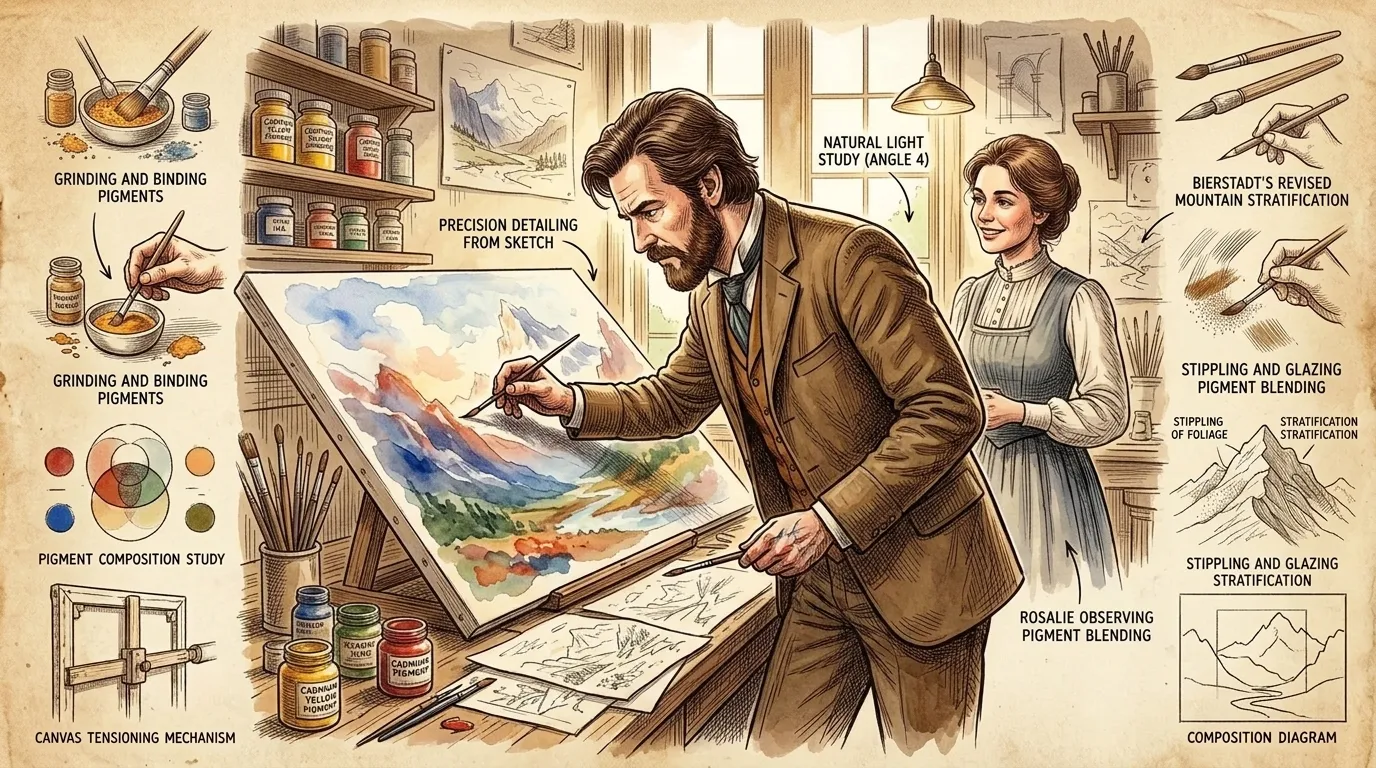
Back in his New York studio, Bierstadt pores over his sketches, meticulously transferring them onto a large canvas. He experiments with different color palettes, striving to capture the unique atmospheric effects of the Rocky Mountains. He painstakingly builds up layers of paint, creating a sense of depth and realism.
"His studio assistant, a young woman named Rosalie, watches him with admiration. "The way you capture the light, Herr Bierstadt... it's as if you're painting with sunshine itself!" she says."
Art Fact: Bierstadt meticulously planned his large-scale paintings, often working from smaller sketches and studies.
Page 5
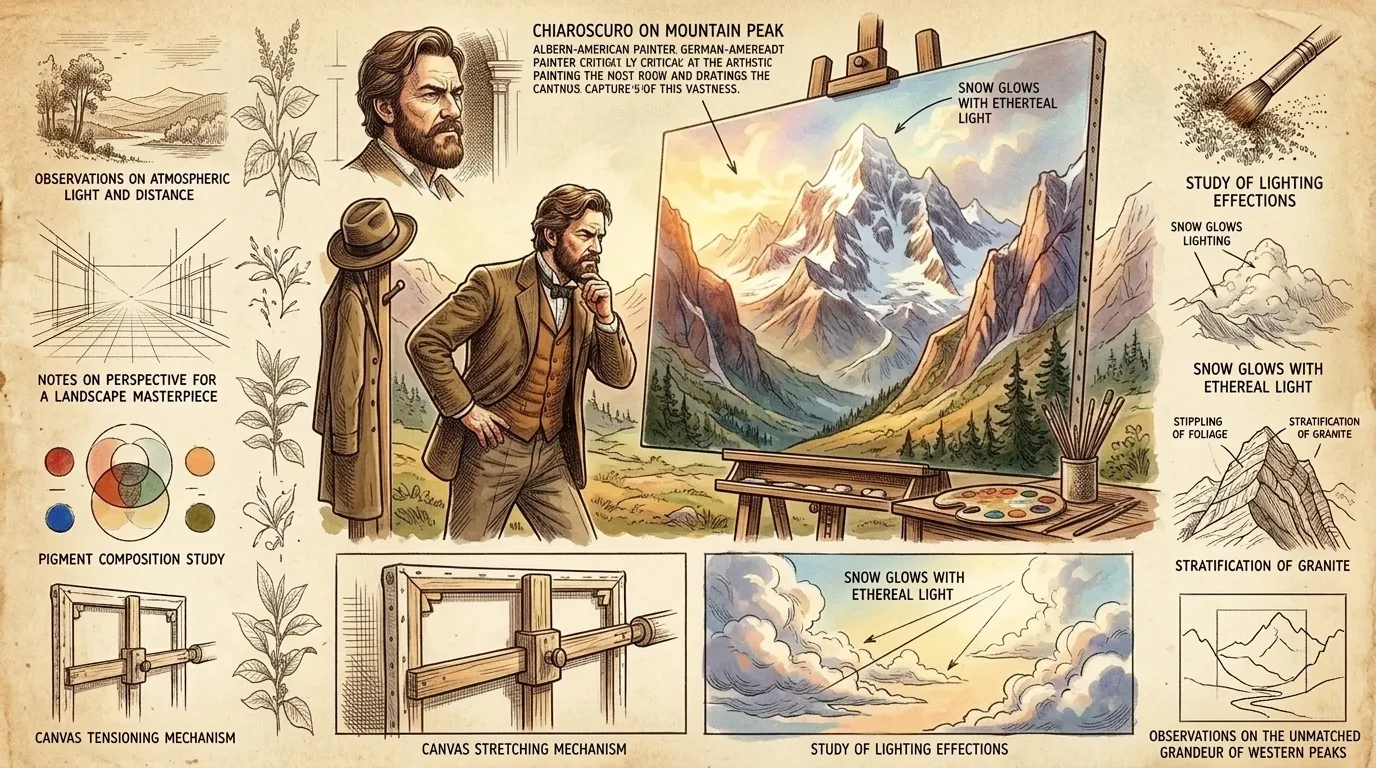
Bierstadt carefully considers the interplay of light and shadow in his painting. He uses dramatic chiaroscuro to emphasize the grandeur of the mountains and the vastness of the landscape. He pays particular attention to the way the light reflects off the snow-capped peaks, creating a sense of ethereal beauty.
"Bierstadt steps back from the canvas, squinting his eyes. "As Michelangelo said, 'I saw the angel in the marble and carved until I set him free.' I see the light in these mountains, and I must capture it, or the spirit will be lost.""
Art Fact: Bierstadt was a master of chiaroscuro, using dramatic contrasts of light and shadow to create a sense of depth and drama.
Page 6
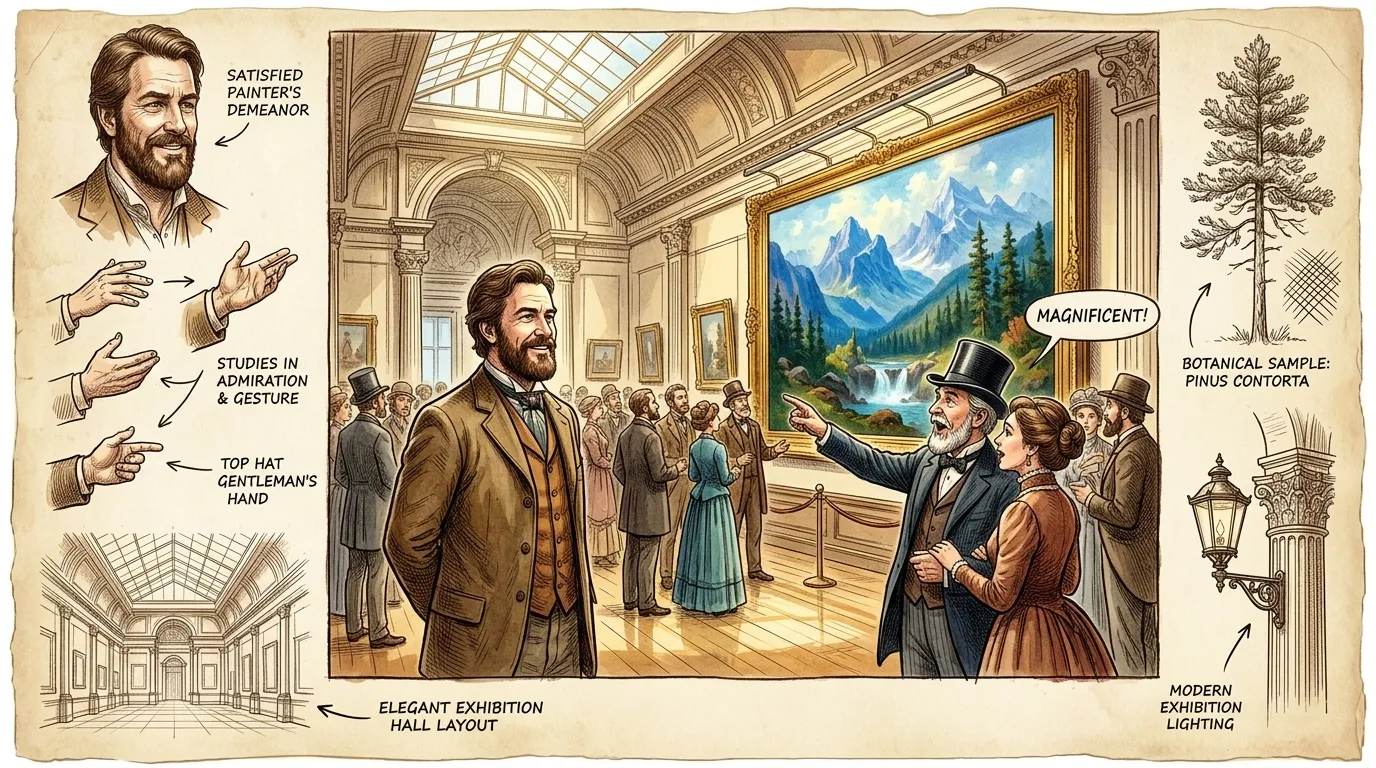
The completed painting is exhibited to great acclaim. Critics praise Bierstadt's technical skill and his ability to capture the grandeur of the American West. Admirers flock to see the painting, marveling at its scale and beauty. Bierstadt becomes a celebrated artist, his work sought after by collectors and museums.
"A distinguished gentleman, top hat perched on his head, leans towards his companion. "Magnificent!" he exclaims. "Bierstadt has truly captured the sublime spirit of the American West.""
Art Fact: 'The Rocky Mountains, Lander's Peak' was an immediate success, establishing Bierstadt as one of the leading landscape painters of his time.
Page 7
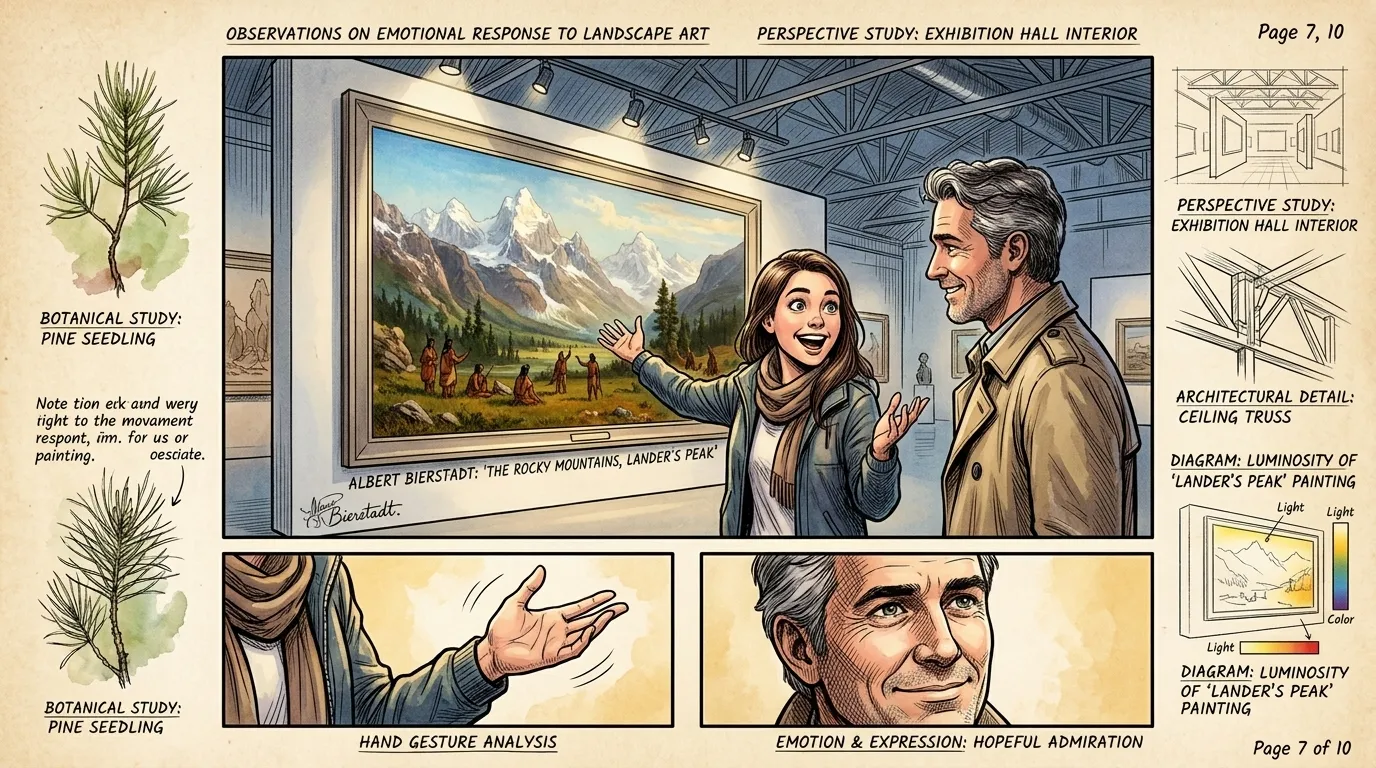
Bierstadt's painting resonates with a nation grappling with its identity and its relationship to the natural world. The painting becomes a symbol of American ambition and the promise of the West. It inspires a sense of national pride and a desire to explore and conquer the wilderness.
"A young woman, her eyes filled with wonder, speaks to her father. "Papa, it's so... big! It makes me want to go West and see it all for myself!""
Art Fact: Bierstadt's paintings contributed to the romanticized vision of the American West that captured the imagination of the nation.
Page 8
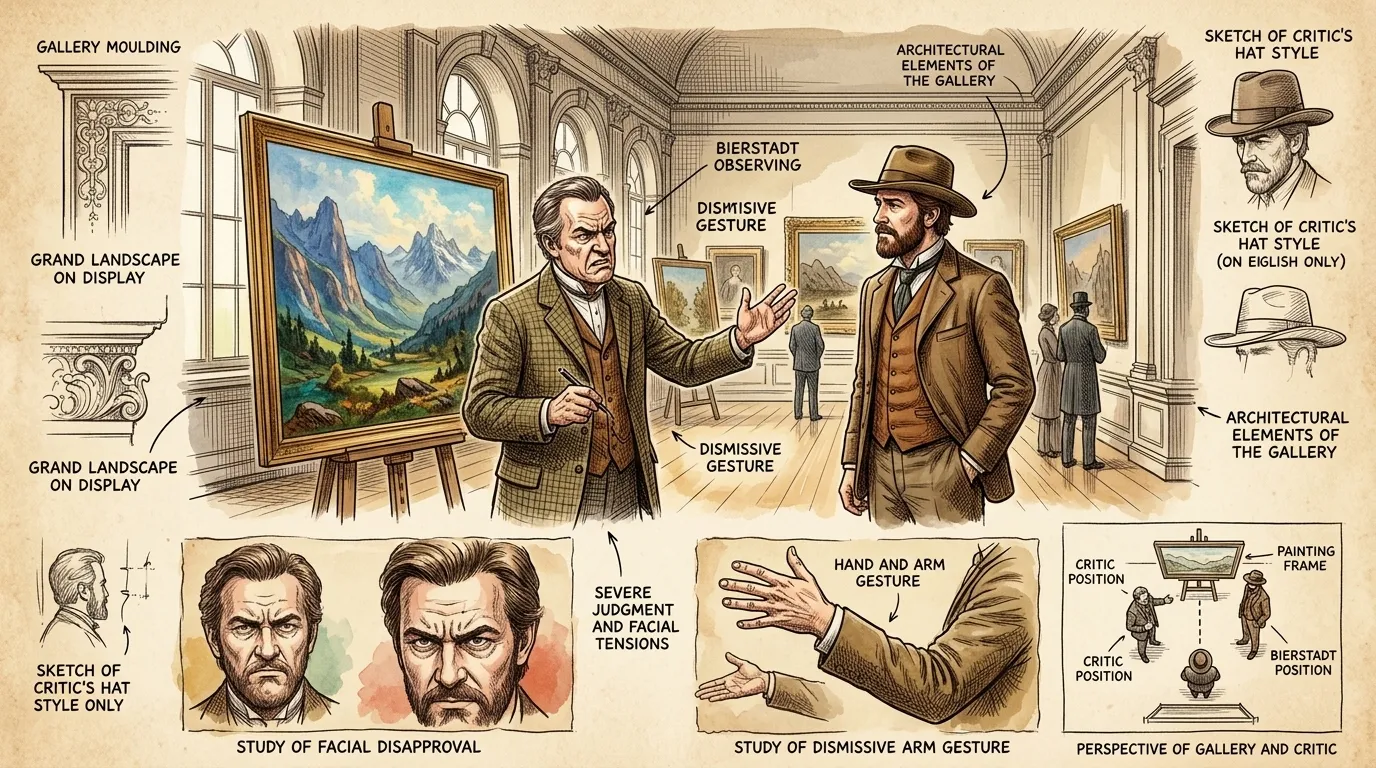
As artistic tastes change, Bierstadt's grand, panoramic landscapes fall out of favor. Critics begin to accuse him of being overly sentimental and lacking in subtlety. He struggles to adapt to the changing art world, his career declining in the late 19th century.
"A critic, pen in hand, scowls at the painting. "Bombastic!" he declares. "Bierstadt's work is nothing more than theatrical spectacle, devoid of true artistic merit.""
Art Fact: Bierstadt's reputation declined in the late 19th century as tastes shifted towards more intimate and impressionistic landscapes.
Page 9
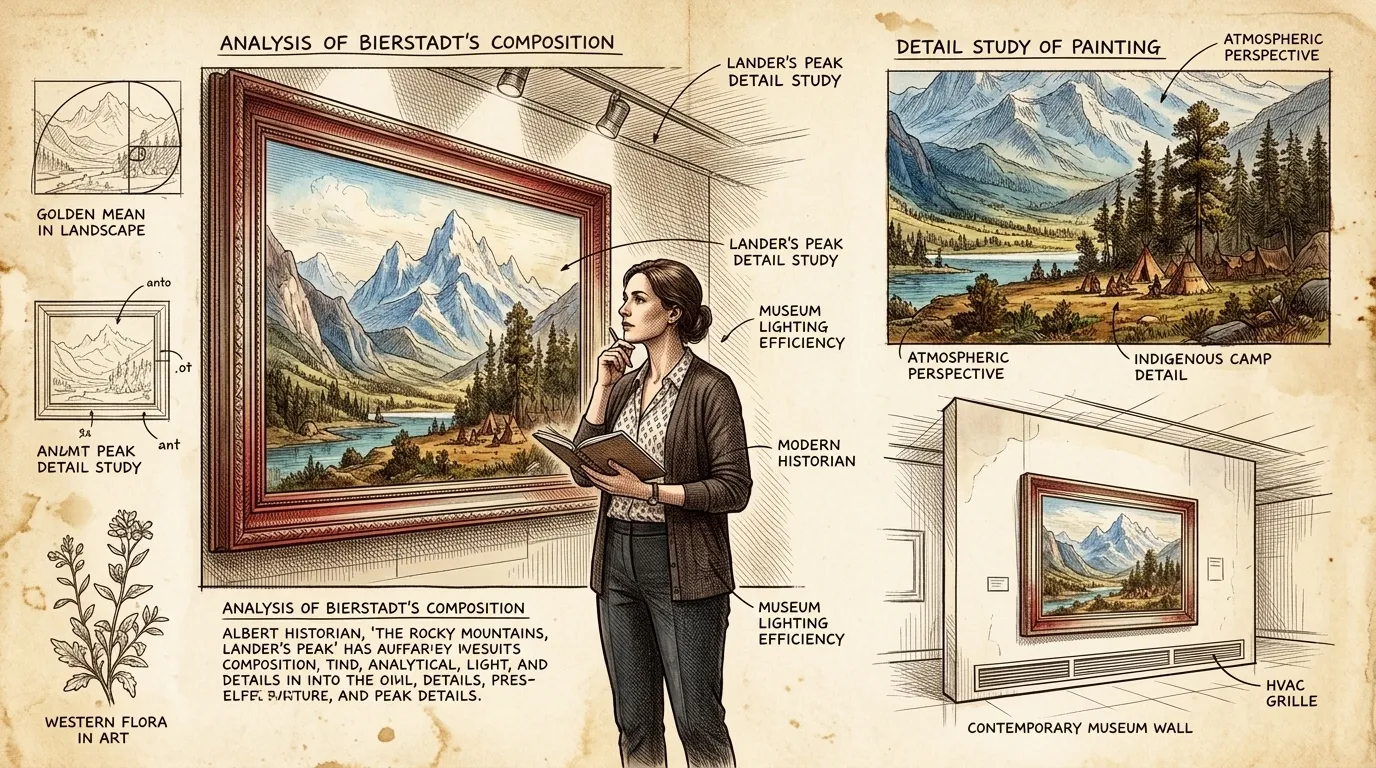
In the 20th century, Bierstadt's work is rediscovered and re-evaluated. Art historians recognize his technical skill and his contribution to the development of American landscape painting. His paintings are once again displayed in museums and galleries, captivating a new generation of viewers.
"An art historian, notebook in hand, gazes at the painting with a thoughtful expression. "Bierstadt's work is a testament to the power of landscape painting to evoke a sense of awe and wonder," she muses. "He captured the spirit of the American West like no other.""
Art Fact: Bierstadt's work has experienced a resurgence in popularity in recent decades, solidifying his place as a major figure in American art.
Page 10
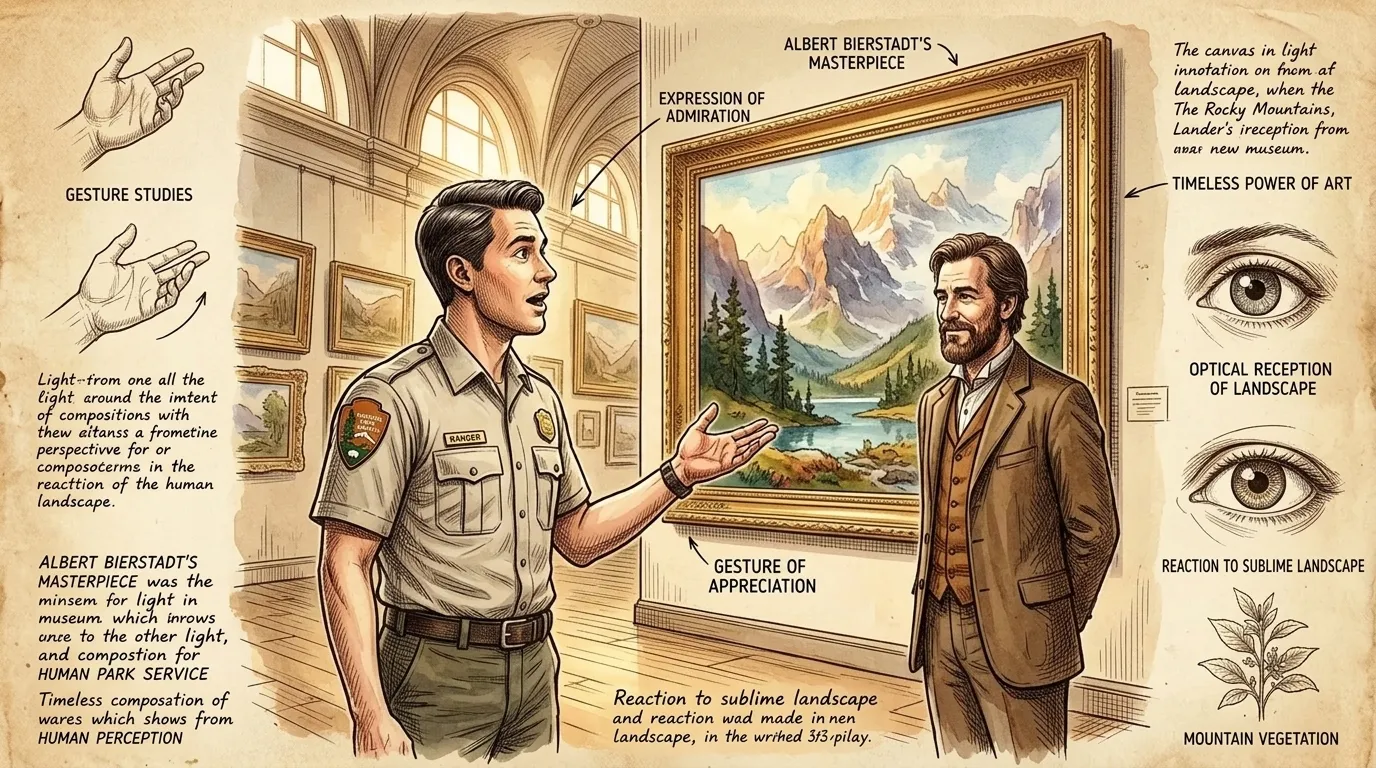
Albert Bierstadt's 'The Rocky Mountains, Lander's Peak' remains a testament to the beauty and grandeur of the American West. His vision lives on, inspiring countless artists and nature lovers. The painting continues to evoke a sense of awe and wonder, reminding us of the power of art to capture the sublime. His art survives forever because he truly knew that "the mountains are fountains of men as well as of rivers, of glaciers as well as of fertile soil."
"A park ranger looks at the painting. "Amazing!", he exclaimed. "It's still impressive that Bierstadt captured the raw beauty of nature!""
Art Fact: Albert Bierstadt's legacy endures through his breathtaking landscapes, forever capturing the spirit of the American West.
About this story
- Location: United States
- Audience: general readers
Read Wonder Arts on your phone
Wonder Arts is available on Android. Get Wonder Arts on Google Play.
More Wonder Arts stories
- The School of Athens by Raphael (Vatican City, Rome — 1509–1511)
- The Sea of Ice by Caspar David Friedrich (Germany — 1824)
- The Slave Ship by J.M.W. Turner (London, UK — 1840)
- The Sleeping Gypsy by Henri Rousseau (Paris, France — 1897)
- The Snake Charmer by Henri Rousseau (Paris, France — 1907)
- A Burial at Ornans by Gustave Courbet (France — 1849)