Uffizi Gallery (Florence, Italy — 1581)
Uffizi Gallery (Florence, Italy — 1581) — an illustrated arts story, set in Italy. 10 illustrated pages, free to read on Wonder Arts.
Page 1
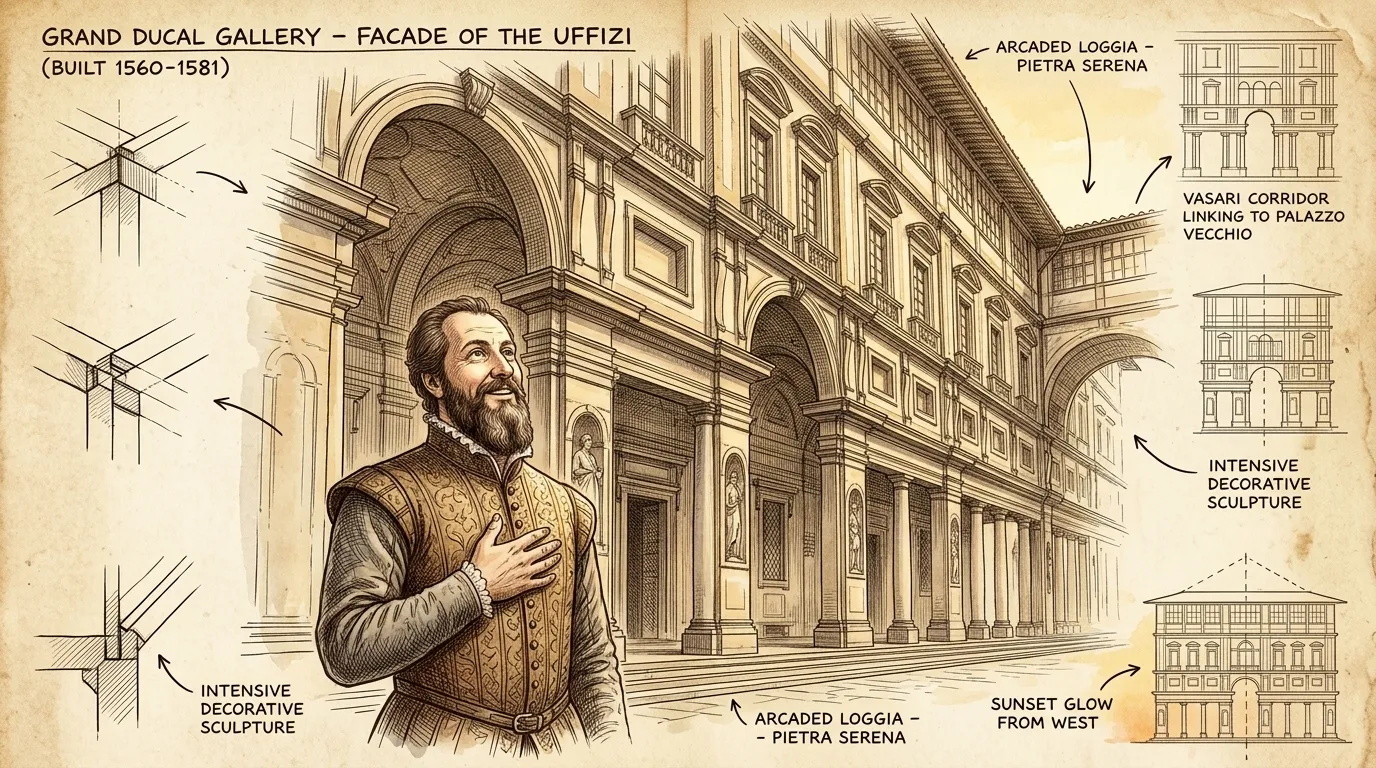
Florence, 1581. Giorgio Vasari, the architect and artist, surveys his masterpiece: the Uffizi Gallery. It stands as a testament to the artistic spirit of Florence, a city teeming with creativity. Today, its halls wait to be filled with the greatest collection of Renaissance art the world has ever seen. The gallery, originally designed as administrative offices for the Medici, is transforming into something far grander, thanks to Francesco I de' Medici.
"Vasari whispers to himself, 'As Michelangelo said, 'I saw the angel in the marble and carved until I set him free.' This building, too, was trapped potential. Now, it shall house wonders.'"
Art Fact: The Uffizi Gallery, designed by Giorgio Vasari, began construction in 1560 and was largely completed by 1581. Today, it's one of the world's oldest and most famous art museums, housing an unparalleled collection of Renaissance masterpieces. Its value is inestimable, both culturally and financially.
Page 2
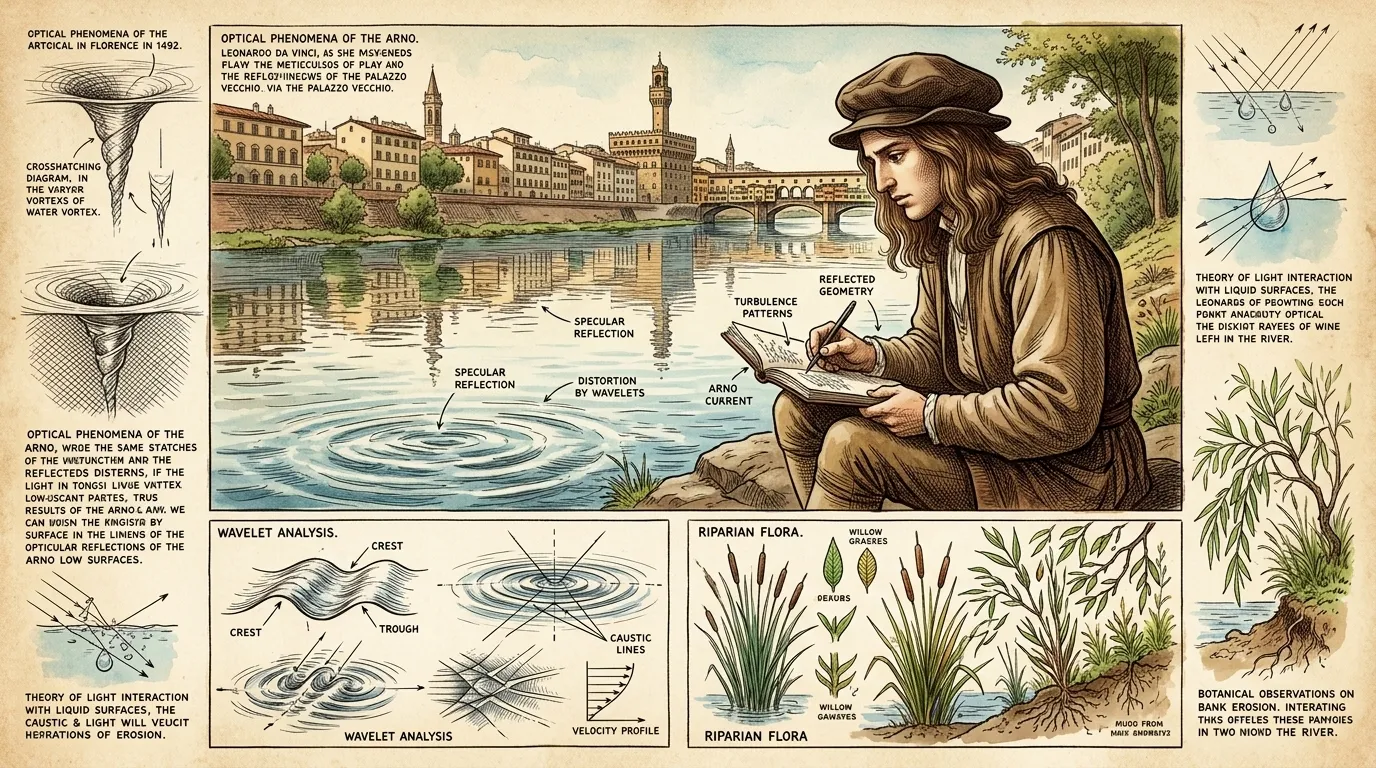
Florence, 1492. A young Leonardo da Vinci sketches furiously in his notebook, observing the play of light on the Arno River. He studies the reflections, the way the water distorts the shapes of buildings and trees. These early observations will inform his revolutionary sfumato technique, forever changing the art of painting. Years later, this skill would be seen across the Uffizi when it opened.
"Leonardo mutters, 'The river is a mirror, a fleeting reflection of the world. But how to capture its essence, its ever-changing nature?'"
Art Fact: Leonardo's meticulous observation of nature and his innovative techniques like sfumato significantly influenced the art that would eventually be displayed in the Uffizi Gallery.
Page 3
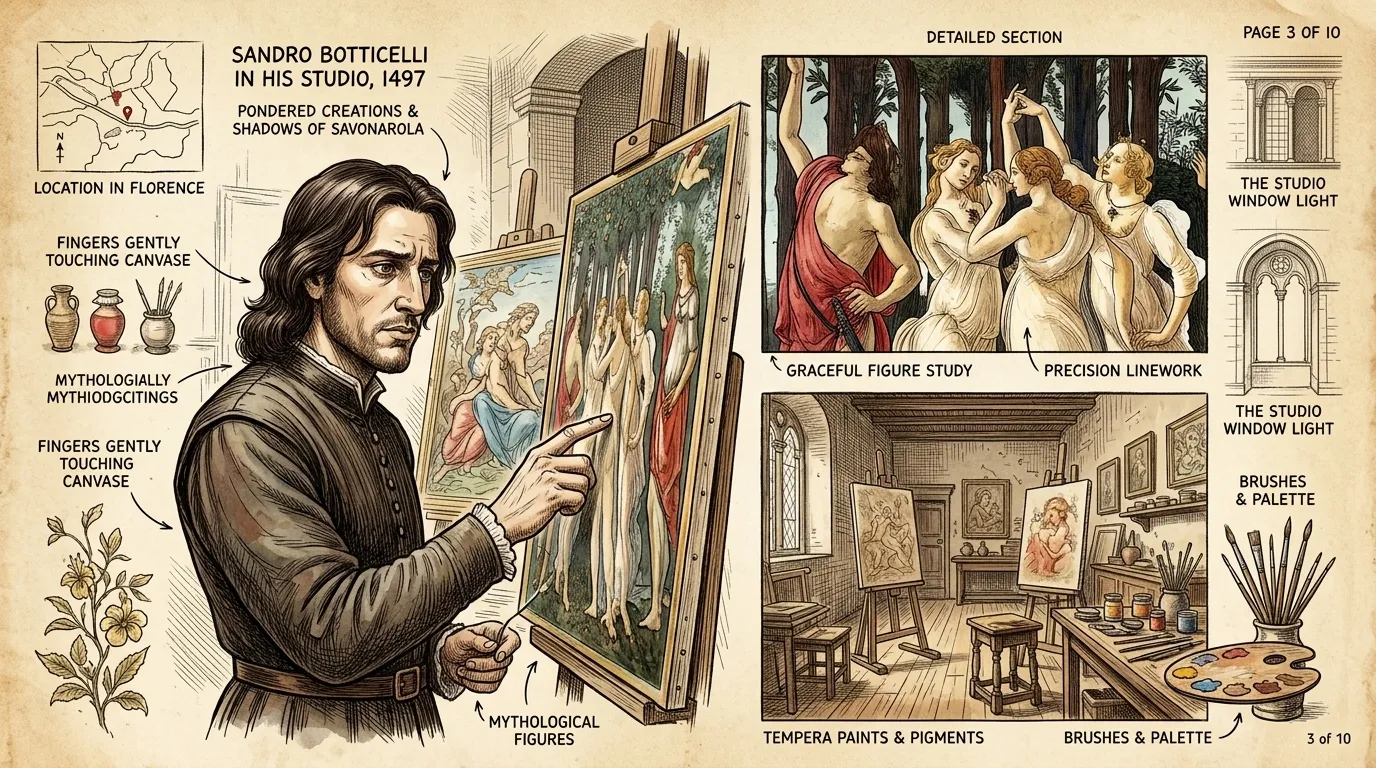
Florence, 1497. Sandro Botticelli, shaken by the fiery sermons of Savonarola, stands amongst his own paintings, debating their worth. The Dominican friar's condemnation of earthly vanities weighs heavily on him. He questions the beauty he has created, wondering if it is sinful. This period of doubt would later affect his artistic decisions.
"Botticelli sighs, 'Savonarola preaches of repentance. 'Beauty is a snare, a delusion!' But is it truly sinful to depict the divine in human form?'"
Art Fact: The influence of Savonarola on Botticelli highlights the complex interplay between art, religion, and morality in Renaissance Florence.
Page 4
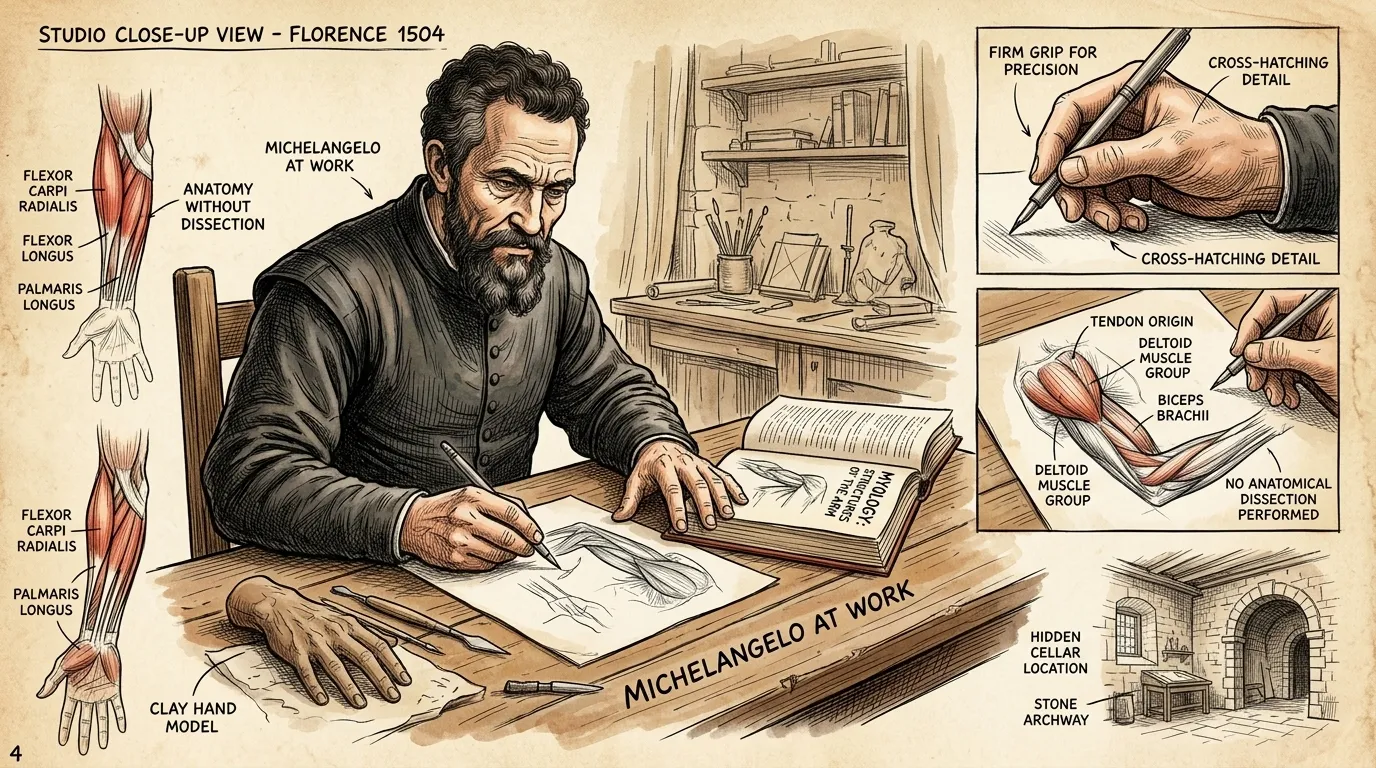
Florence, 1504. Michelangelo Buonarroti, consumed by his anatomical studies, dissects a cadaver in secret. He seeks to understand the human form at its deepest level. His dedication to anatomical accuracy will inform his sculptures and paintings, bringing a new level of realism to his art. His work would later inspire other artists who would hang in the Uffizi.
"Michelangelo says with determination, 'To capture the divine, one must understand the human. As Leonardo da Vinci said, 'He who does not value life does not deserve it.'"
Art Fact: Michelangelo's anatomical studies were groundbreaking for their time, contributing significantly to the realism and emotional power of his art.
Page 5
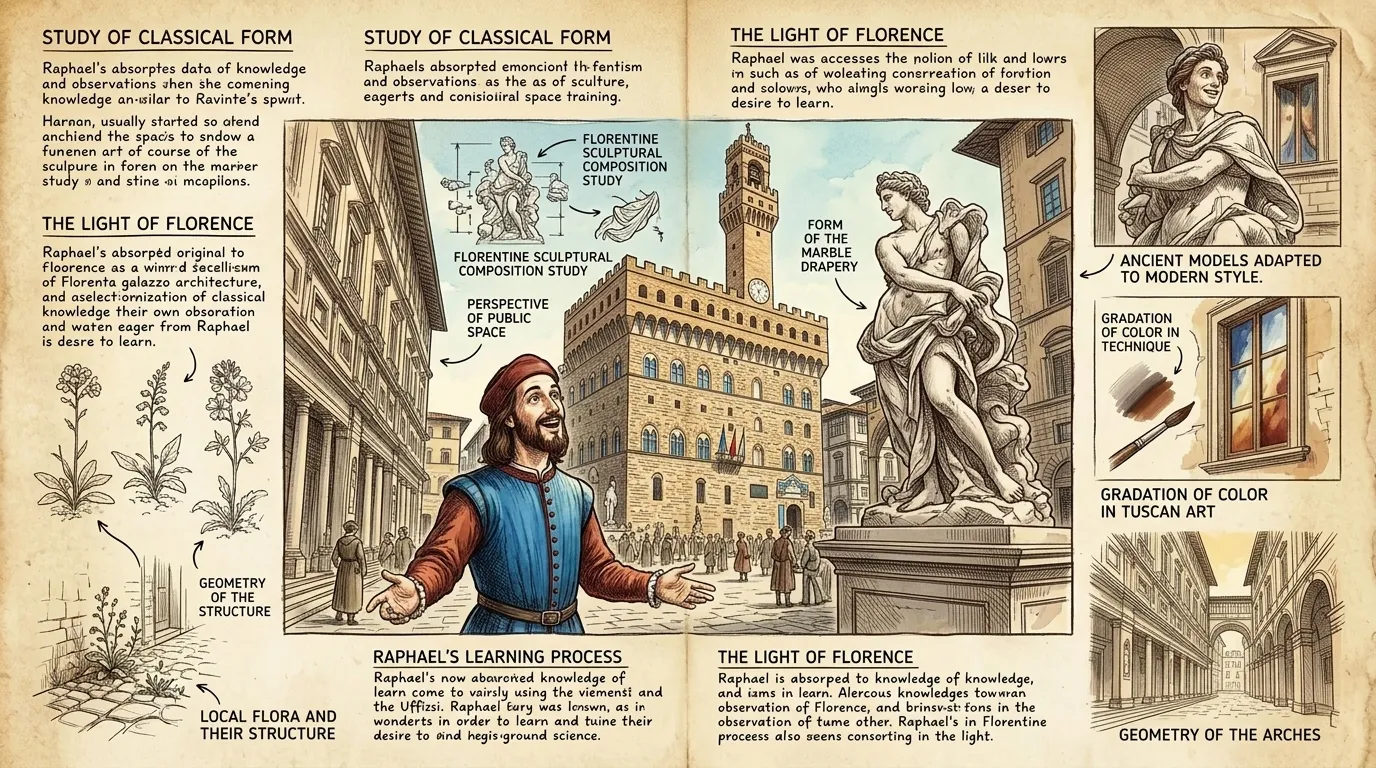
Florence, 1505. Raffaello Sanzio, known as Raphael, arrives in Florence, eager to learn from the city's masters. He studies the works of Leonardo and Michelangelo, absorbing their techniques and styles. His time in Florence refines his artistic vision, leading to his own unique blend of grace and realism. Some of his most iconic work would later be placed in the Uffizi.
"Raphael exclaims, 'Florence is a fountain of inspiration! The masters here have much to teach. The elegance and depth is inspiring!'"
Art Fact: Raphael's absorption of Florentine artistic principles demonstrates the importance of Florence as a center of artistic innovation.
Page 6
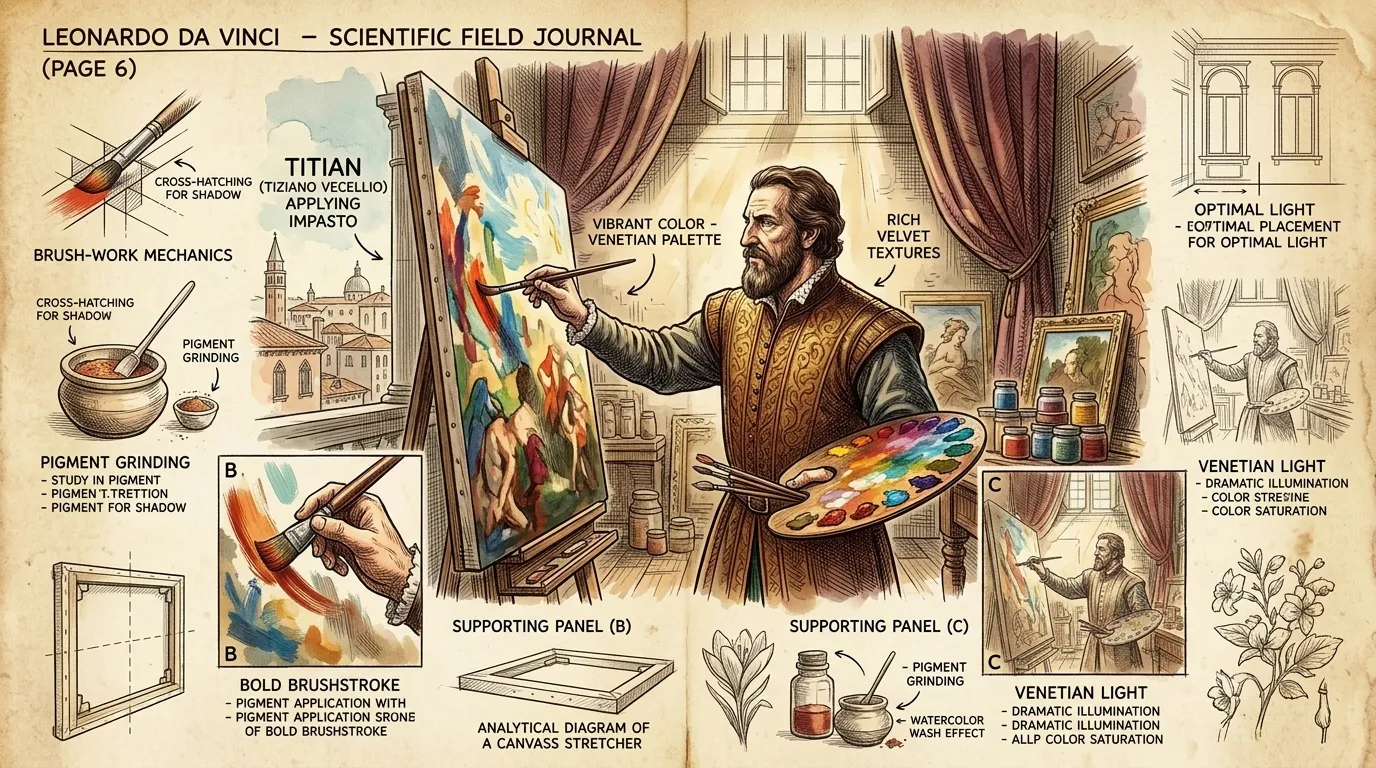
Venice, 1538. Tiziano Vecellio, known as Titian, experiments with vibrant colors and bold brushstrokes. He seeks to capture the sensuality and drama of life. His mastery of color will influence generations of painters, adding a new dimension to the art world. Some of his work will eventually travel to Florence to be shown.
"Titian declares, 'Color is life! It is passion! It is the very soul of painting! A painter is nothing without feeling!'"
Art Fact: Titian's innovative use of color revolutionized painting, adding a new dimension of emotional depth and sensuality to his art.
Page 7
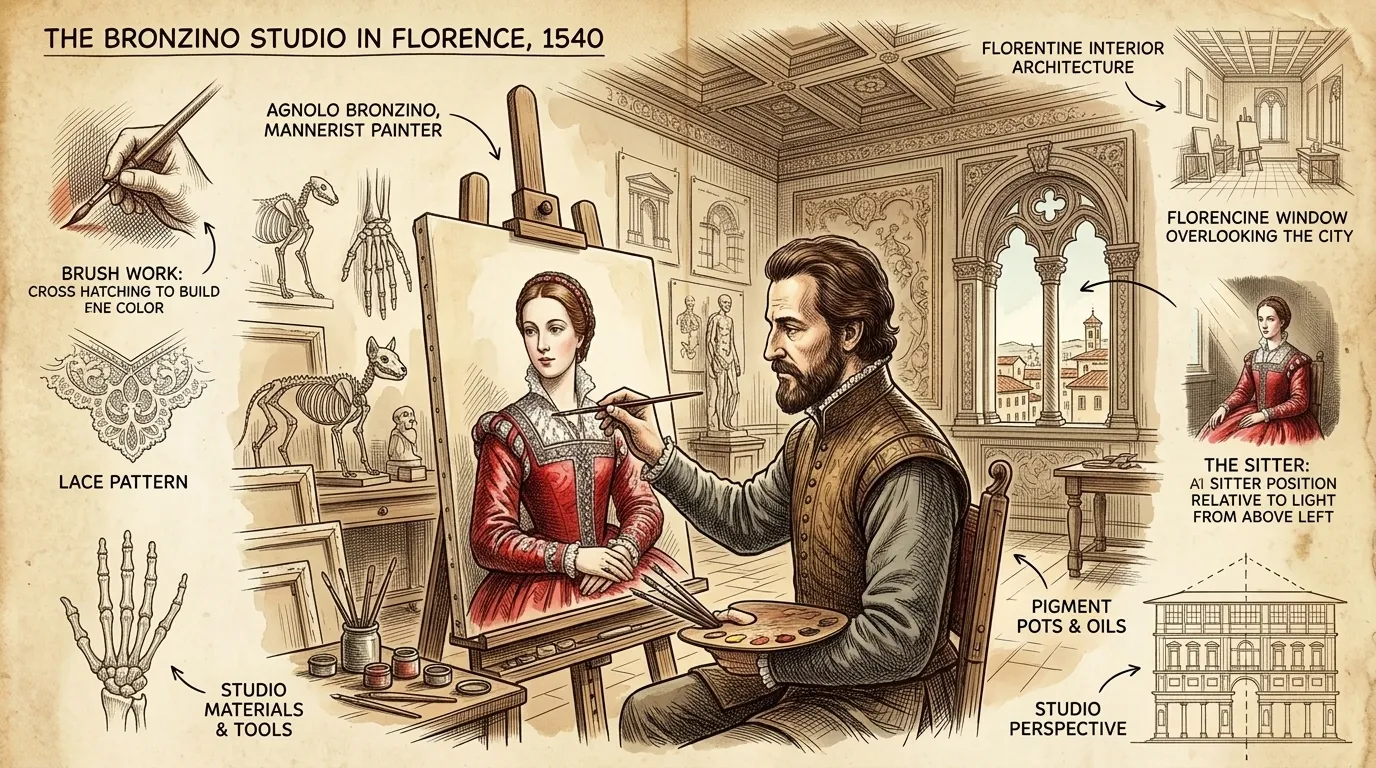
Florence, 1540. Agnolo Bronzino, court painter to the Medici, perfects his elegant and refined portrait style. His attention to detail and his ability to capture the personality of his subjects make him a sought-after artist. His work will become a cornerstone in the Uffizi.
"Bronzino tells his sitter, 'Patience, my lady. To capture your true essence takes time. I agree with Aristotle when he said, 'The aim of art is to represent not the outward appearance of things, but their inward significance.'"
Art Fact: Bronzino's elegant portraits provide a glimpse into the lives and personalities of the Medici court.
Page 8
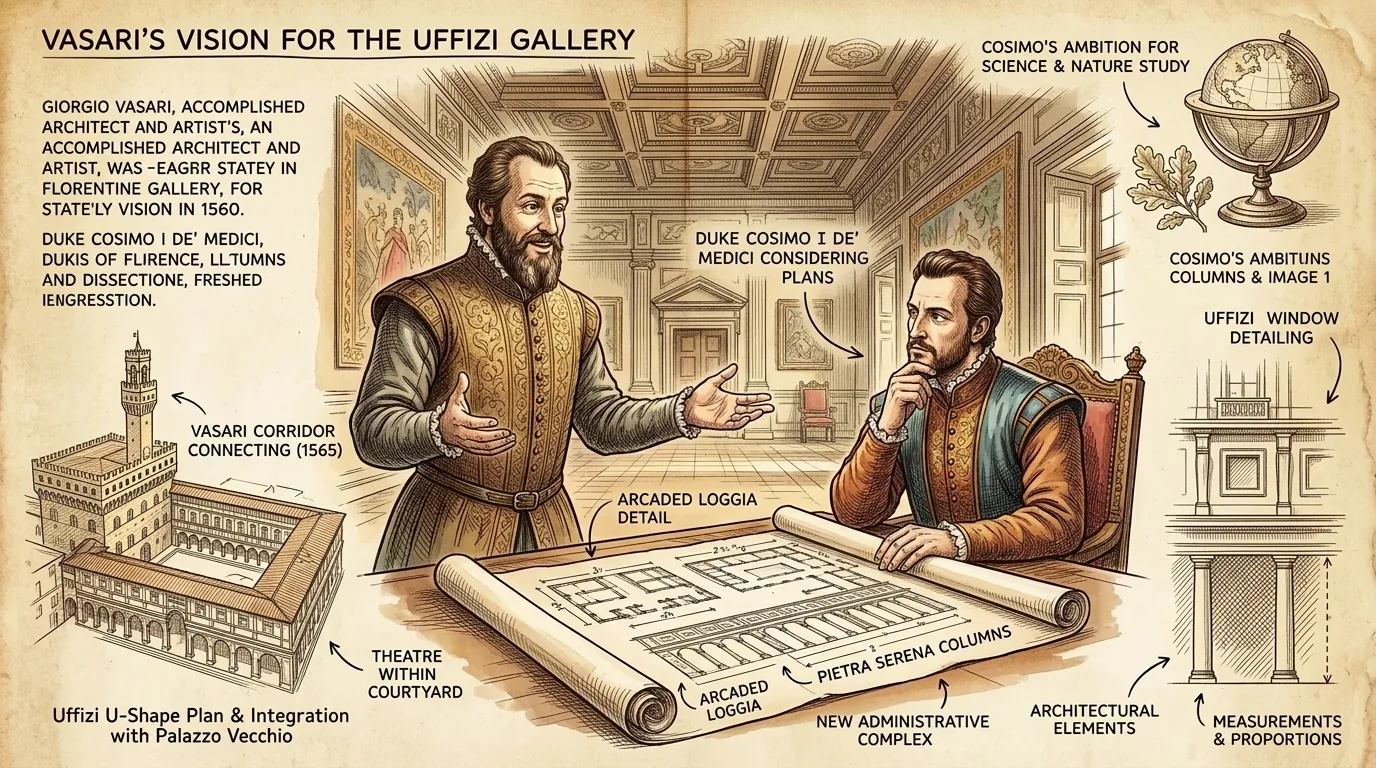
Florence, 1560. Giorgio Vasari presents his plans for the Uffizi to Cosimo I de' Medici. He envisions a grand structure that will house the administrative offices of Florence and showcase the artistic treasures of the city. Cosimo approves, and the project begins. This building will be a lasting testament to Florence's artistic greatness.
"Vasari says with passion, 'Your Excellency, this building will not merely house offices, it will be a temple to art and to the glory of Florence!'"
Art Fact: The construction of the Uffizi marked a turning point in the history of Florence, transforming it into a major center of artistic patronage and innovation.
Page 9
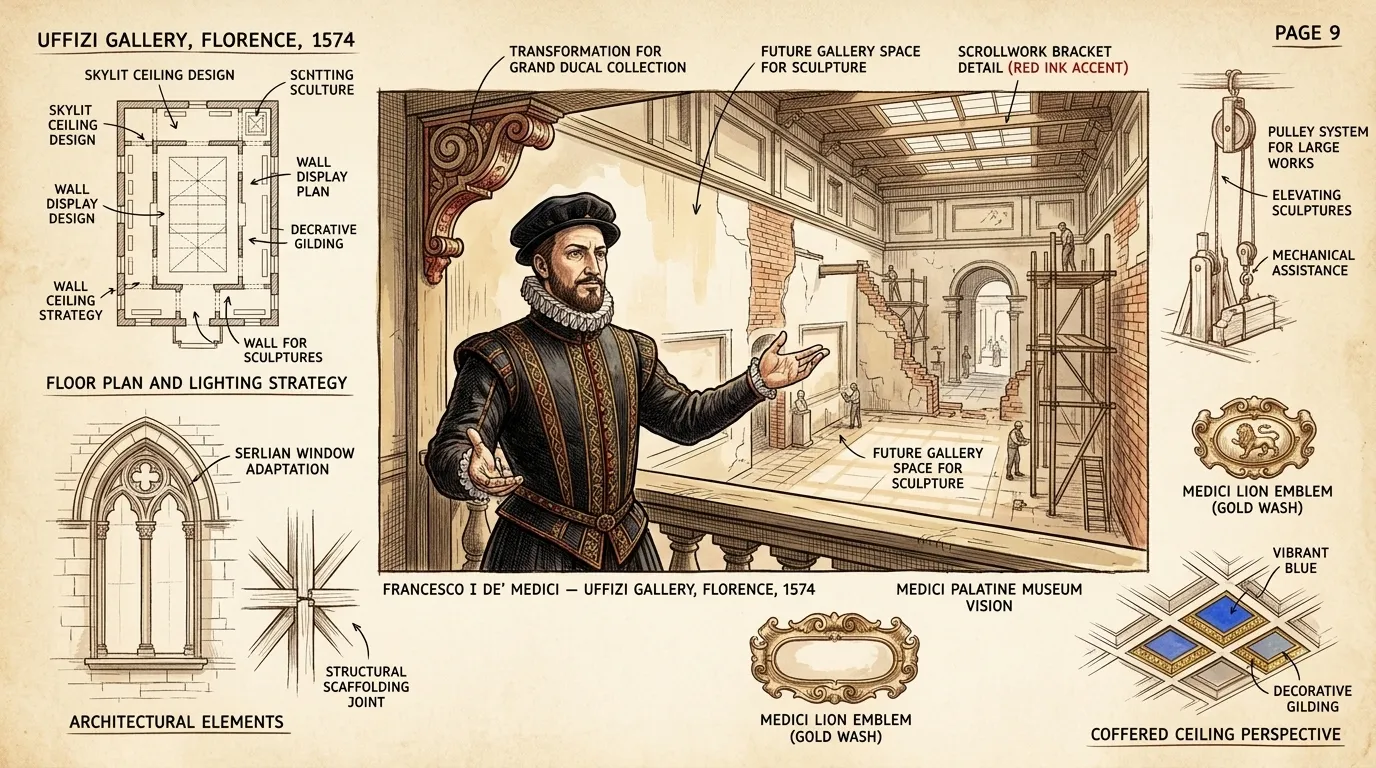
Florence, 1574. Francesco I de' Medici, son of Cosimo, continues the work on the Uffizi. He transforms the upper floor into a gallery, dedicated to displaying the Medici's vast art collection. His passion for art and his desire to share it with the world will make the Uffizi a truly unique institution. It would house the masters.
"Francesco declares, 'This gallery will be a place where beauty reigns supreme. Where the greatest minds can come to be inspired.'"
Art Fact: Francesco I de' Medici's vision transformed the Uffizi from a government building into a world-renowned art museum.
Page 10
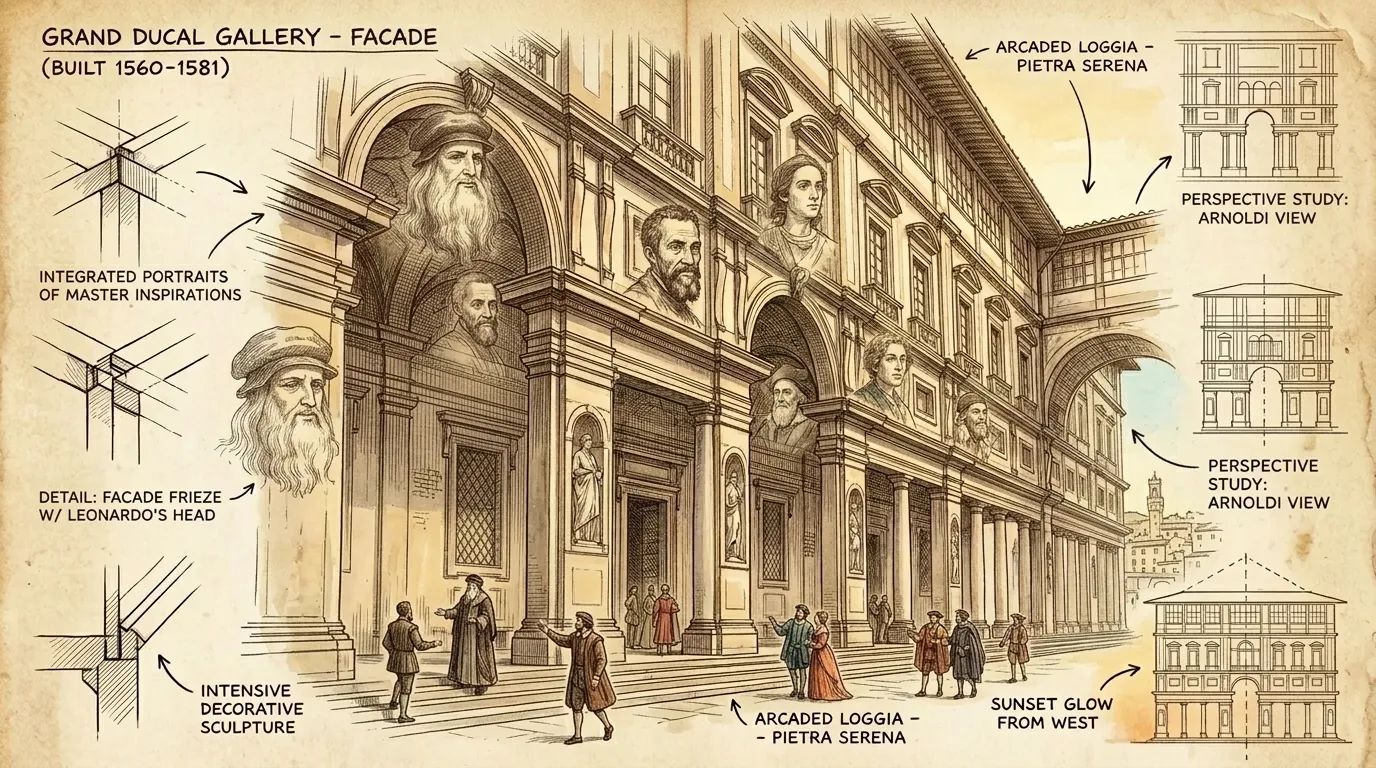
Today, the Uffizi Gallery stands as a testament to the vision of Vasari, Cosimo, and Francesco. It continues to inspire and captivate visitors from around the world. Within its walls, the masterpieces of the Renaissance live on, a reminder of the enduring power of art. The faces of artists of the past gaze down on the modern marvel.
"The Uffizi whispers, 'The Uffizi still holds its secrets, its mysteries, just as Leonardo said, 'Where there is shouting, there is no true knowledge'.'"
Art Fact: The Uffizi Gallery's enduring legacy lies in its unparalleled collection of Renaissance masterpieces and its contribution to the development of art history.
About this story
- Location: Italy
- Audience: general readers
Questions and answers
Questions and answers about Uffizi Gallery (Florence, Italy — 1581)
Read Wonder Arts on your phone
Wonder Arts is available on Android and iPhone and iPad. Get Wonder Arts on Google Play · Get Wonder Arts on the App Store.
More Wonder Arts stories
- Venus de Milo by Alexandros of Antioch (Paris, France — c. 130 BC)
- View of Auvers-sur-Oise by Paul Cézanne (Oxford, UK — 1879)
- Wanderer Above the Sea of Fog by Caspar David Friedrich (Hamburg, Germany — 1818)
- Water Lilies by Claude Monet (Giverny, France — 1899)
- Whistler’s Mother by James McNeill Whistler (Paris, France — 1871)
- Winged Victory of Samothrace by a Greek artist (Paris, France — c. 200 BC)