How Spiders Spin Webs

How Spiders Spin Webs — an illustrated stories story. 10 illustrated pages, free to read on Wonder Books.
How Spiders Spin Webs — book cover — Wonder Books
How Spiders Spin Webs — an illustrated stories story. 10 illustrated pages, free to read on Wonder Books.

Page 1
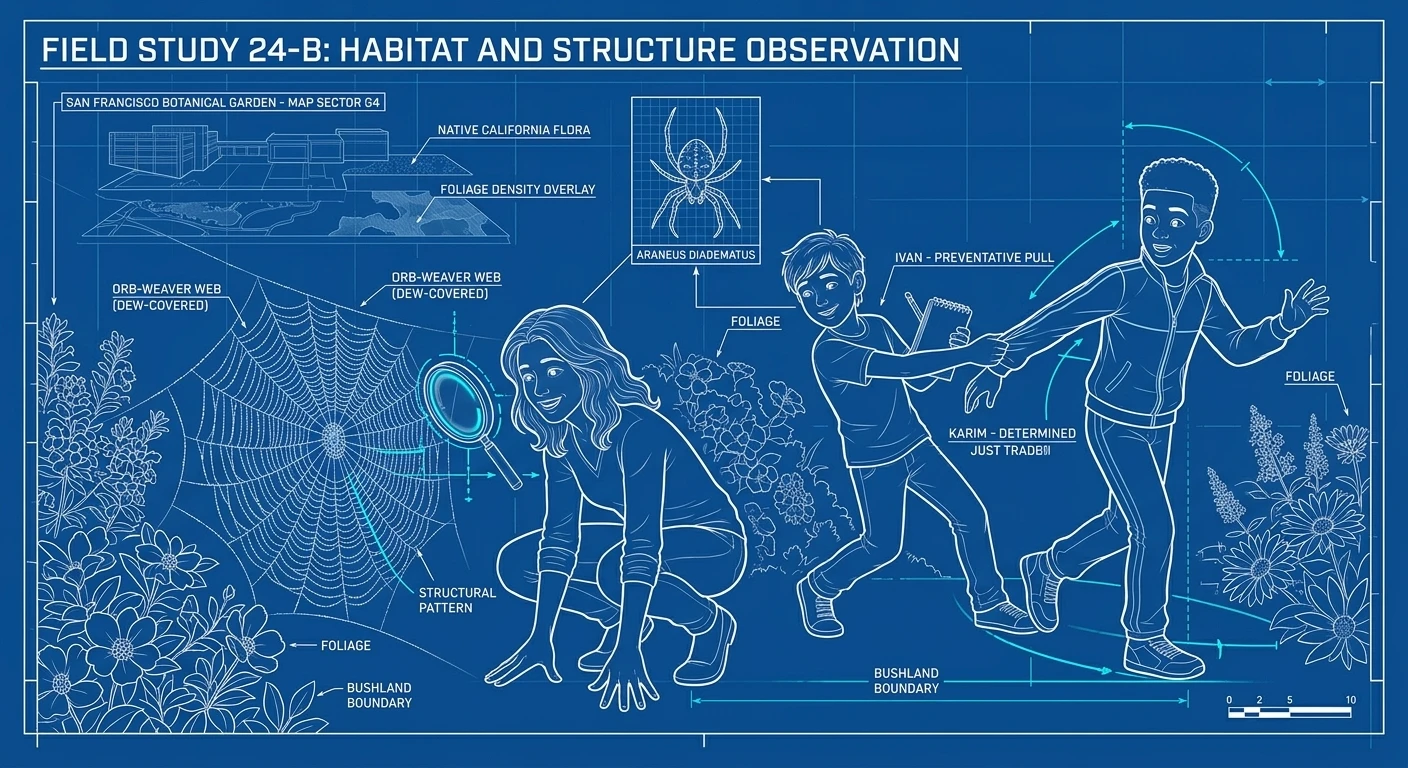
In the San Francisco Botanical Garden, a huge, perfect spiderweb glittered with morning dew between two flowering bushes.
In the San Francisco Botanical Garden, a huge, perfect spiderweb glittered with morning dew between two flowering bushes. "Whoa, watch out!" shouted Ivan, grabbing Karim's arm just before he walked right into it. Linnea knelt down, admiring the intricate design. "It looks like it's made of tiny jewels," she whispered, completely captivated.

In the San Francisco Botanical Garden, a huge, perfect spiderweb glittered with morning dew between two flowering bushes. "Whoa, watch out!" shouted Ivan, grabbing Karim's arm just before he walked right into it. Linnea knelt down, admiring the intricate design. "It looks like it's made of tiny jewels," she whispered, completely captivated.

Page 2
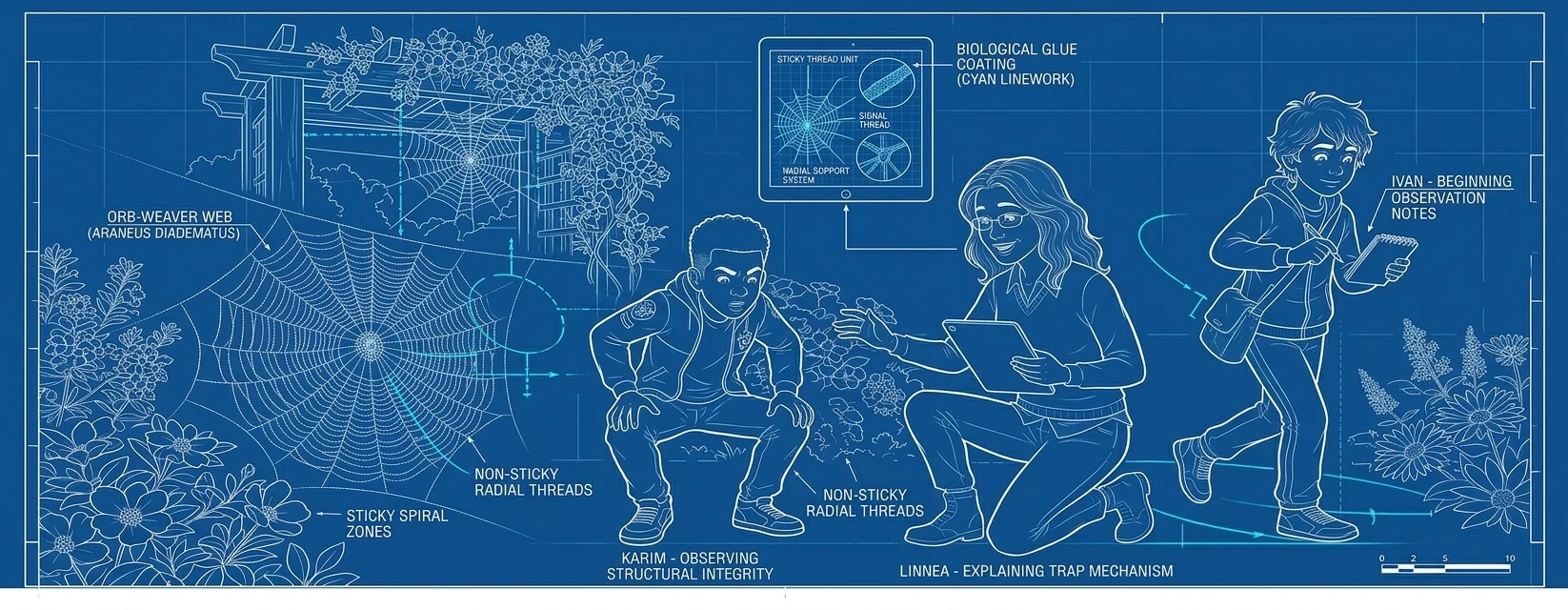
"How does a tiny spider build something so perfect?" Karim asked, leaning in closer. "And how does it crawl all over it without getting stuck in its own trap?"…
"How does a tiny spider build something so perfect?" Karim asked, leaning in closer. "And how does it crawl all over it without getting stuck in its own trap?" Linnea added, "I've read that some of the threads are for walking on, and they aren't sticky at all." Ivan pulled out his small notebook, his curiosity sparked. "It must be making different kinds of silk!"

"How does a tiny spider build something so perfect?" Karim asked, leaning in closer. "And how does it crawl all over it without getting stuck in its own trap?" Linnea added, "I've read that some of the threads are for walking on, and they aren't sticky at all." Ivan pulled out his small notebook, his curiosity sparked. "It must be making different kinds of silk!"

Page 3
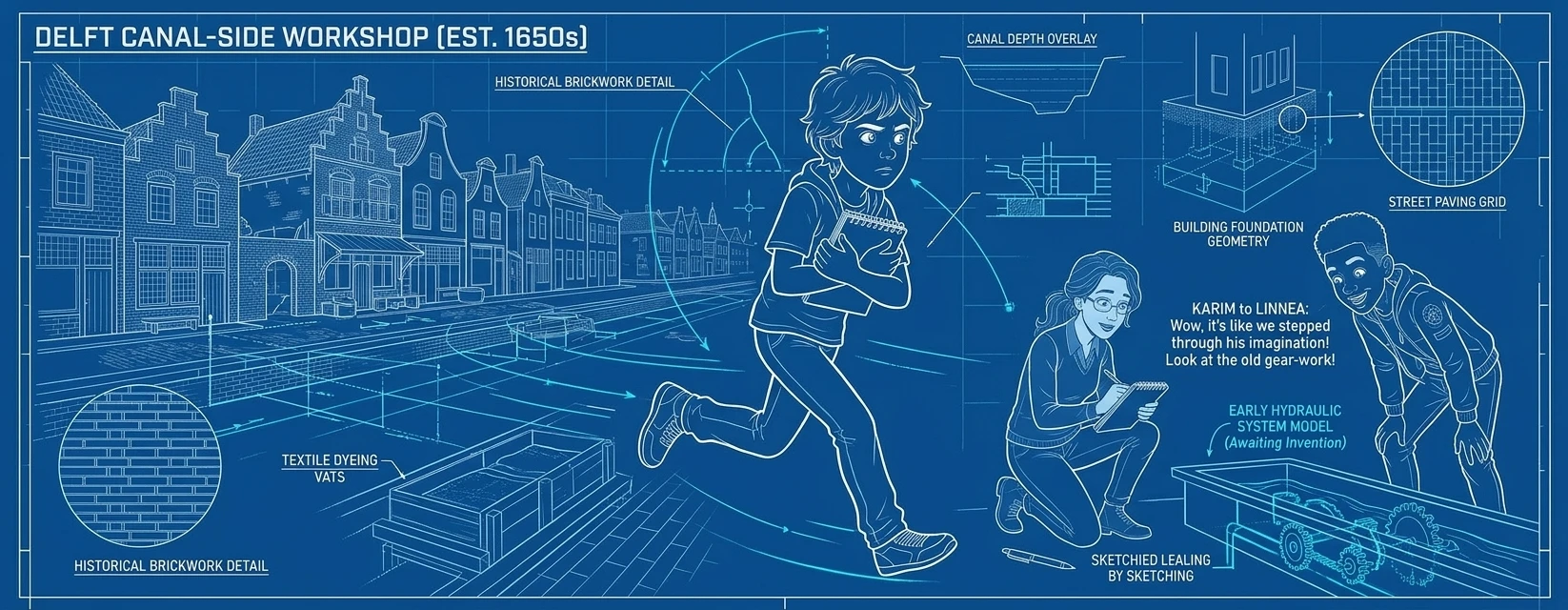
That idea took Ivan's imagination on a journey back in time, over 300 years ago. He pictured the quiet, canal-lined streets of Delft in the Netherlands, a city…
That idea took Ivan's imagination on a journey back in time, over 300 years ago. He pictured the quiet, canal-lined streets of Delft in the Netherlands, a city of brick houses and busy workshops. Inside one of those workshops, a man was about to look at the world in a way no one ever had before.

That idea took Ivan's imagination on a journey back in time, over 300 years ago. He pictured the quiet, canal-lined streets of Delft in the Netherlands, a city of brick houses and busy workshops. Inside one of those workshops, a man was about to look at the world in a way no one ever had before.

Page 4
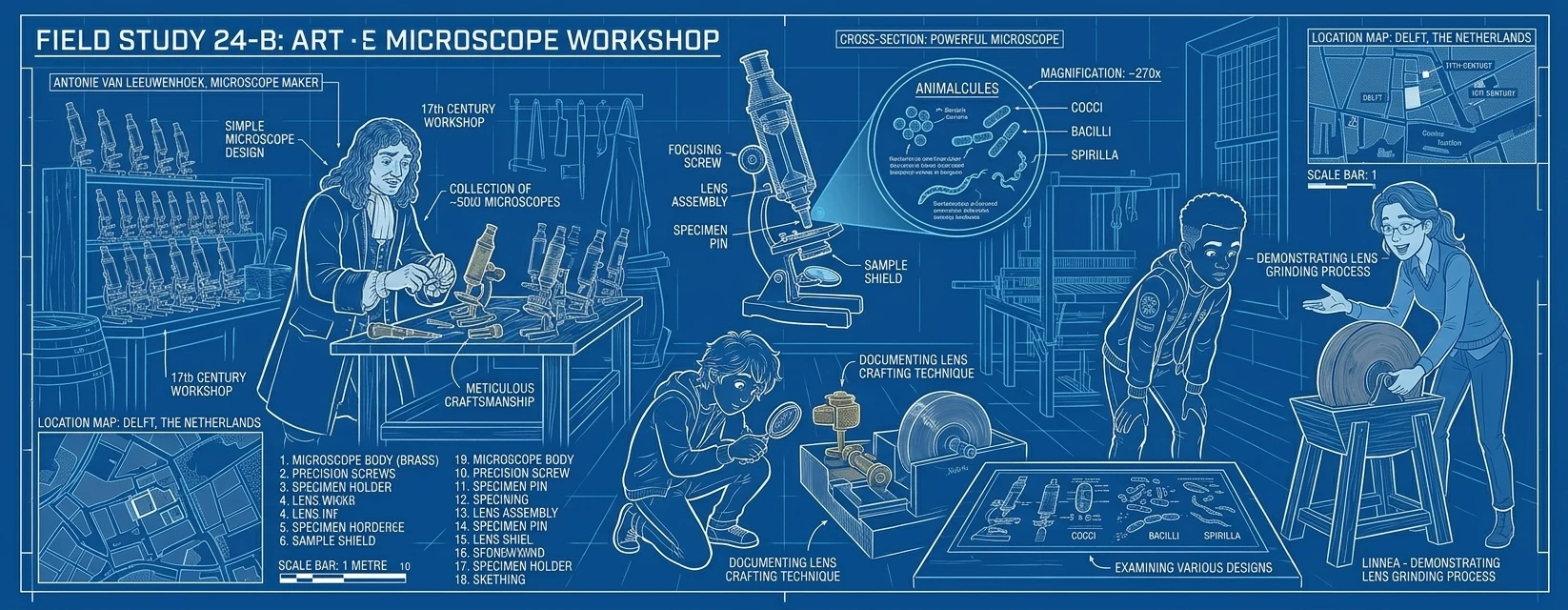
"His name was Antonie van Leeuwenhoek," Ivan thought, picturing the man. "He wasn't a famous professor, but a cloth merchant who was obsessed with making…
"His name was Antonie van Leeuwenhoek," Ivan thought, picturing the man. "He wasn't a famous professor, but a cloth merchant who was obsessed with making lenses." He built his own simple microscopes, hundreds of them, each more powerful than the last. With them, he was the very first person to see the hidden world of bacteria, which he called 'animalcules.'

"His name was Antonie van Leeuwenhoek," Ivan thought, picturing the man. "He wasn't a famous professor, but a cloth merchant who was obsessed with making lenses." He built his own simple microscopes, hundreds of them, each more powerful than the last. With them, he was the very first person to see the hidden world of bacteria, which he called 'animalcules.'

Page 5
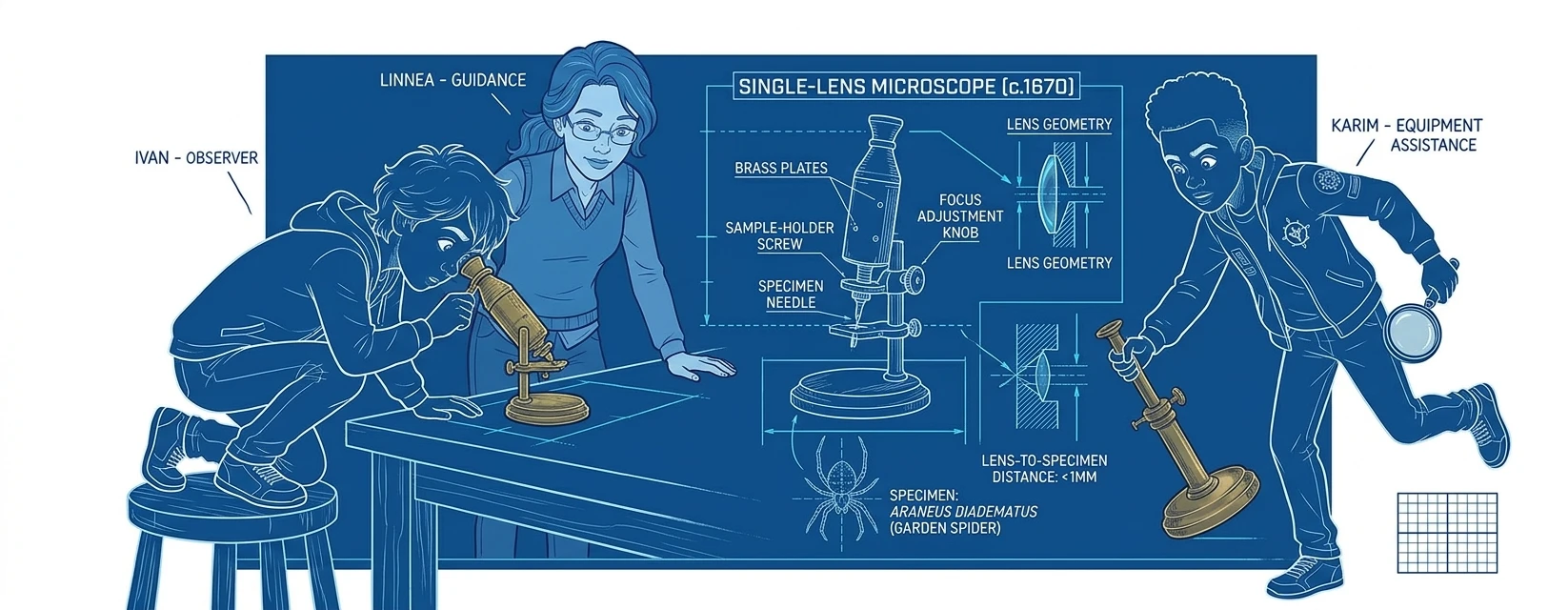
One day, Leeuwenhoek decided to look not at a drop of water, but at the creature that had spun the web in his garden. He carefully took a small garden spider…
One day, Leeuwenhoek decided to look not at a drop of water, but at the creature that had spun the web in his garden. He carefully took a small garden spider and placed it under his lens. He held the little brass instrument up to his eye, adjusting the focus screw with incredible patience.

One day, Leeuwenhoek decided to look not at a drop of water, but at the creature that had spun the web in his garden. He carefully took a small garden spider and placed it under his lens. He held the little brass instrument up to his eye, adjusting the focus screw with incredible patience.

Page 6
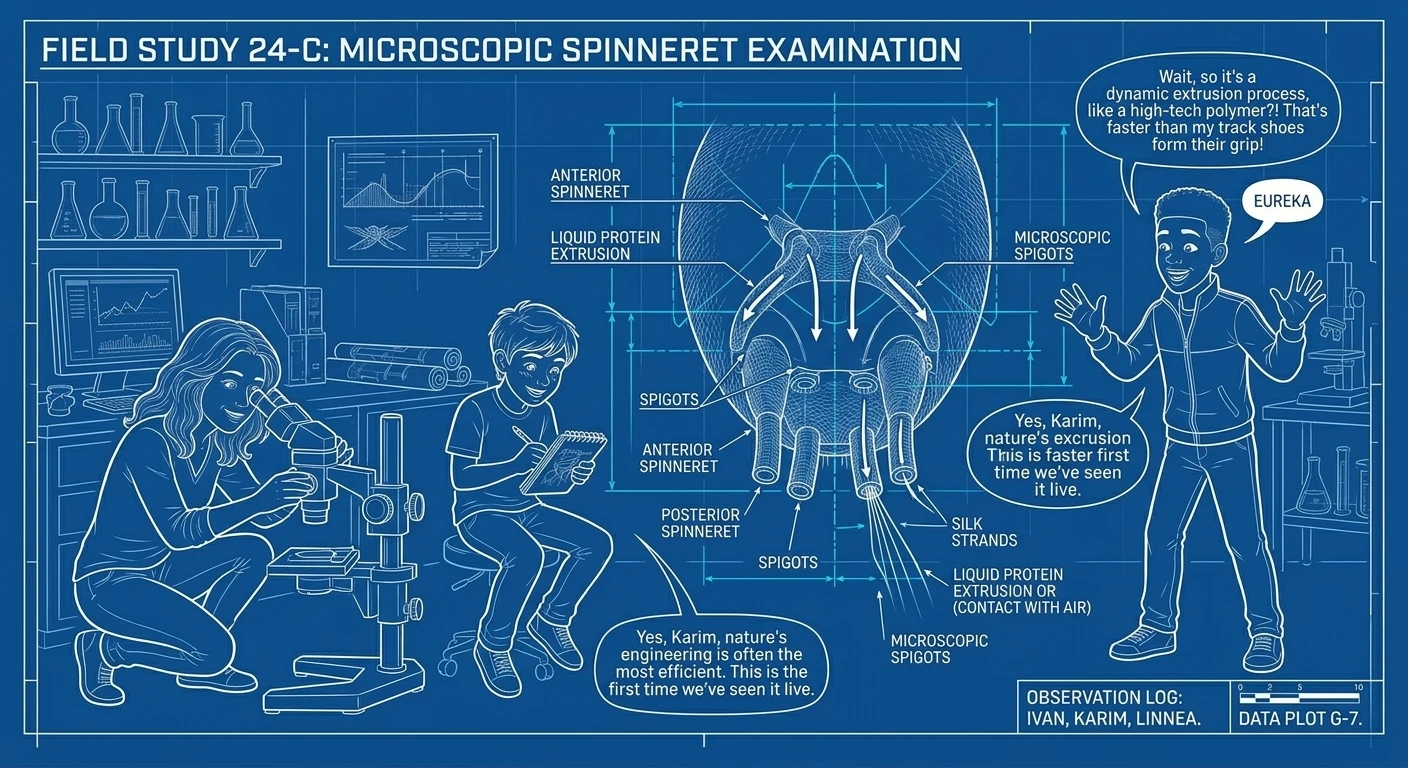
What he saw must have amazed him. Instead of one single opening, the spider's abdomen had tiny, tube-like organs that he called spinnerets.
What he saw must have amazed him. Instead of one single opening, the spider's abdomen had tiny, tube-like organs that he called spinnerets. "It's not one thread!" he realized, scribbling furiously in his notes. "It's a liquid protein, pushed through hundreds of microscopic spigots, hardening into a solid line the moment it hits the air!"

What he saw must have amazed him. Instead of one single opening, the spider's abdomen had tiny, tube-like organs that he called spinnerets. "It's not one thread!" he realized, scribbling furiously in his notes. "It's a liquid protein, pushed through hundreds of microscopic spigots, hardening into a solid line the moment it hits the air!"

Page 7
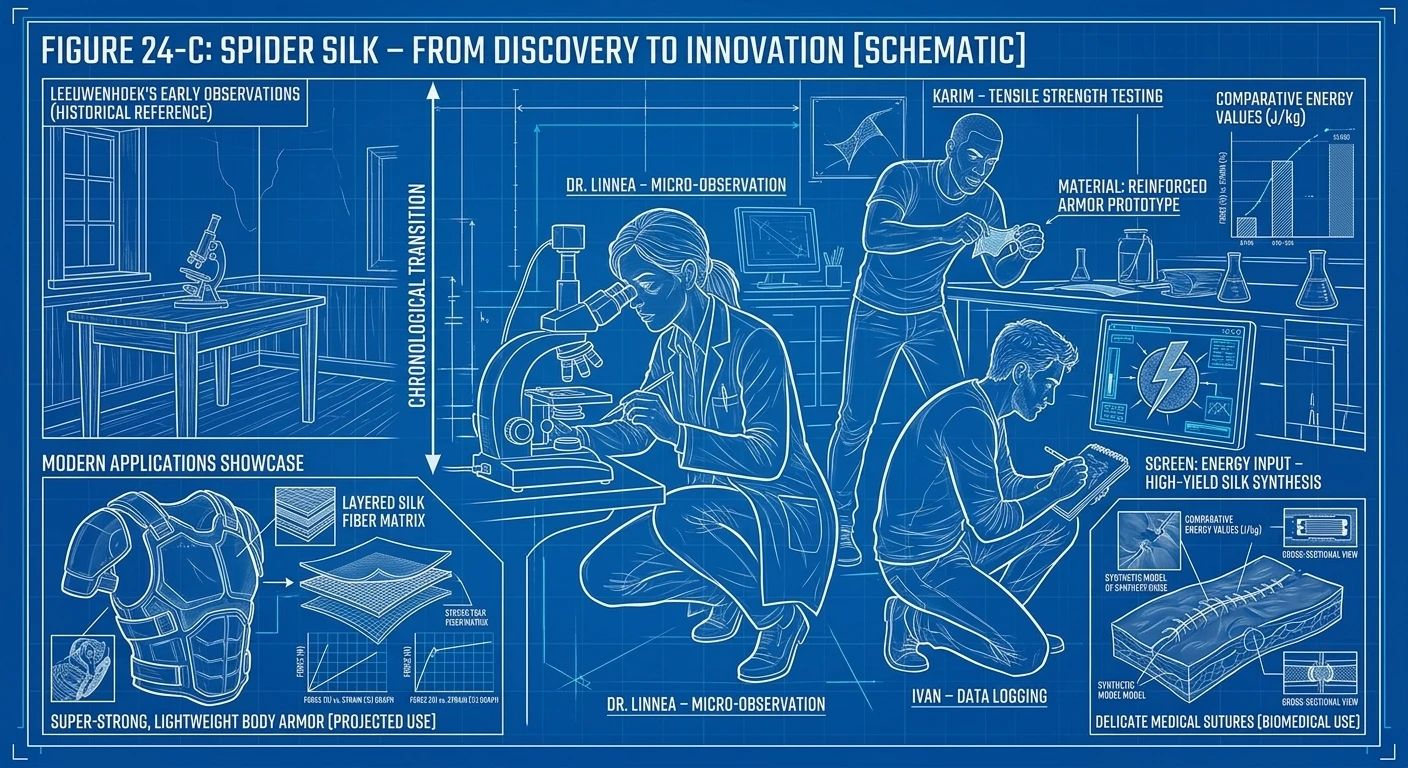
That discovery changed everything, showing that spiders are master chemists and engineers. Today, scientists are trying to copy spider silk to make things from…
That discovery changed everything, showing that spiders are master chemists and engineers. Today, scientists are trying to copy spider silk to make things from medical sutures to super-strong, lightweight armor. Creating that kind of material takes incredible energy; after all, a single lightning bolt is five times hotter than the surface of the sun!

That discovery changed everything, showing that spiders are master chemists and engineers. Today, scientists are trying to copy spider silk to make things from medical sutures to super-strong, lightweight armor. Creating that kind of material takes incredible energy; after all, a single lightning bolt is five times hotter than the surface of the sun!

Page 8
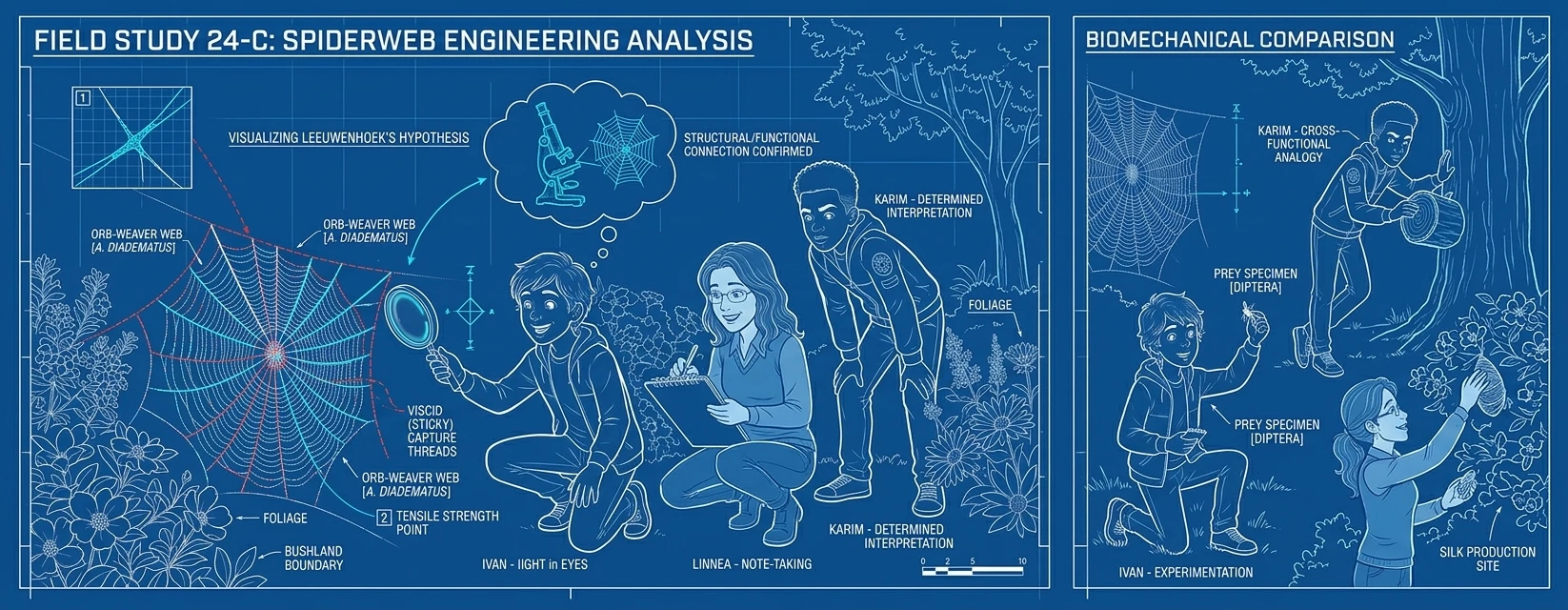
Back in the garden, Ivan's eyes lit up as he connected the past to the present. "That's it! That's why it doesn't get stuck!" he exclaimed, pointing carefully…
Back in the garden, Ivan's eyes lit up as he connected the past to the present. "That's it! That's why it doesn't get stuck!" he exclaimed, pointing carefully to the web. "Leeuwenhoek's discovery showed they have different spinnerets for different silks. The spokes of the wheel are its non-sticky highway, and the spiral is the sticky trap!"

Back in the garden, Ivan's eyes lit up as he connected the past to the present. "That's it! That's why it doesn't get stuck!" he exclaimed, pointing carefully to the web. "Leeuwenhoek's discovery showed they have different spinnerets for different silks. The spokes of the wheel are its non-sticky highway, and the spiral is the sticky trap!"

Page 9
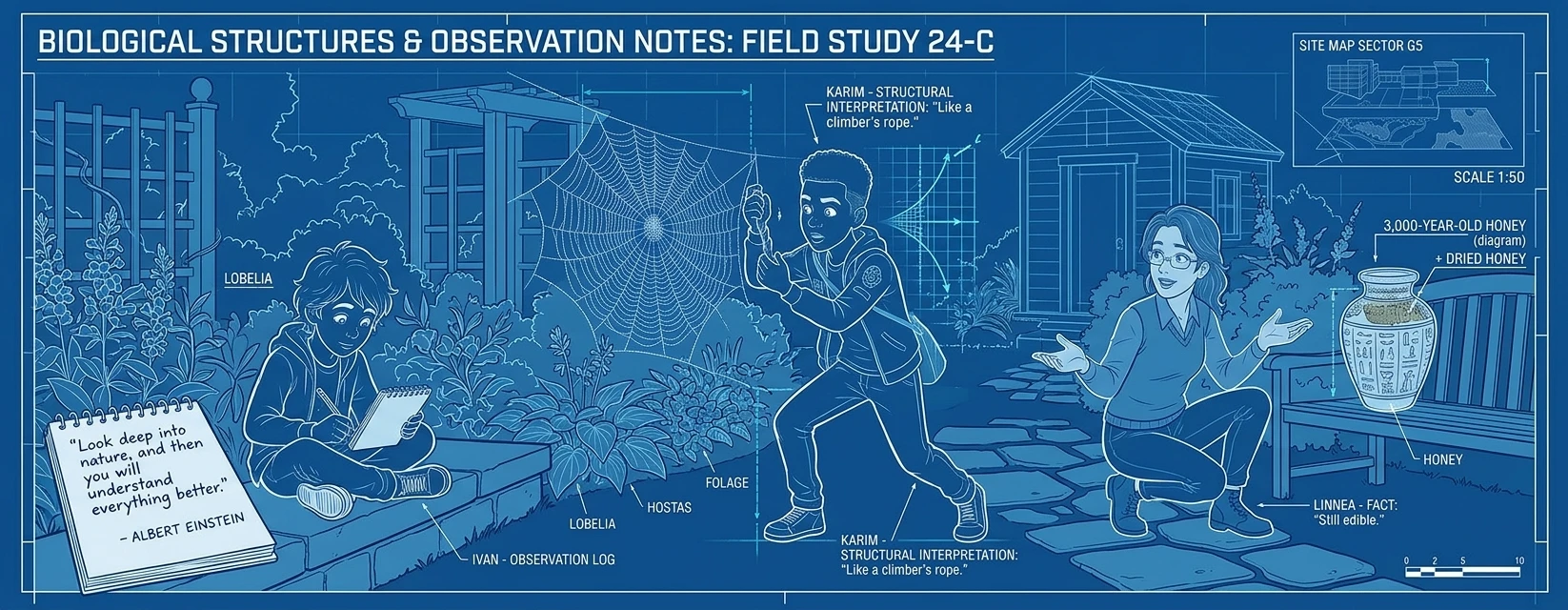
Karim nodded, amazed. "So it's like a rock climber using a special kind of rope that's both strong and flexible." Linnea added, "Nature is full of incredible…
Karim nodded, amazed. "So it's like a rock climber using a special kind of rope that's both strong and flexible." Linnea added, "Nature is full of incredible materials. Did you know archaeologists found 3,000-year-old honey in Egyptian tombs that was still perfectly good to eat?" Ivan smiled, recalling a quote. "It's like Albert Einstein said: 'Look deep into nature, and then you will understand everything better.'"

Karim nodded, amazed. "So it's like a rock climber using a special kind of rope that's both strong and flexible." Linnea added, "Nature is full of incredible materials. Did you know archaeologists found 3,000-year-old honey in Egyptian tombs that was still perfectly good to eat?" Ivan smiled, recalling a quote. "It's like Albert Einstein said: 'Look deep into nature, and then you will understand everything better.'"

Page 10
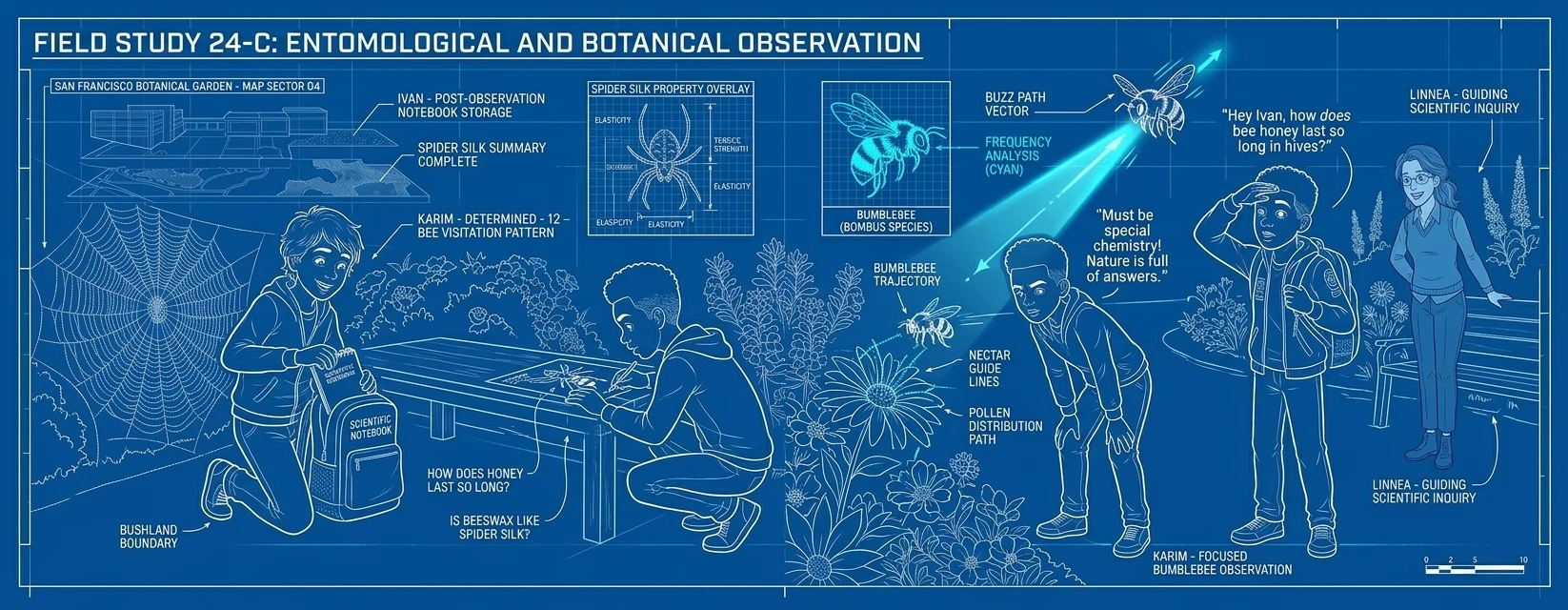
Ivan closed his notebook, summarizing the incredible idea. "So a spider spins a liquid protein that turns into different solid silks to build its home and catch…
Ivan closed his notebook, summarizing the incredible idea. "So a spider spins a liquid protein that turns into different solid silks to build its home and catch its food." A bumblebee buzzed past them, landing on a nearby flower. Karim watched it intently and asked, "That's amazing! But how do bees make something like honey that can last for thousands of years?"

Ivan closed his notebook, summarizing the incredible idea. "So a spider spins a liquid protein that turns into different solid silks to build its home and catch its food." A bumblebee buzzed past them, landing on a nearby flower. Karim watched it intently and asked, "That's amazing! But how do bees make something like honey that can last for thousands of years?"

About this story

  • Audience: kids (ages 6–12)

More Wonder Books stories

All Wonder Books stories · Open the library