Sobekneferu
Sobekneferu took the full titles of a king — not a queen regent, not a consort — and had herself shown in a royal kilt over a woman's dress, refusing to pretend to be either one thing or the other. She ruled fewer than four years, closed the Twelfth Dynasty, and set the precedent Hatshepsut would us
Page 1
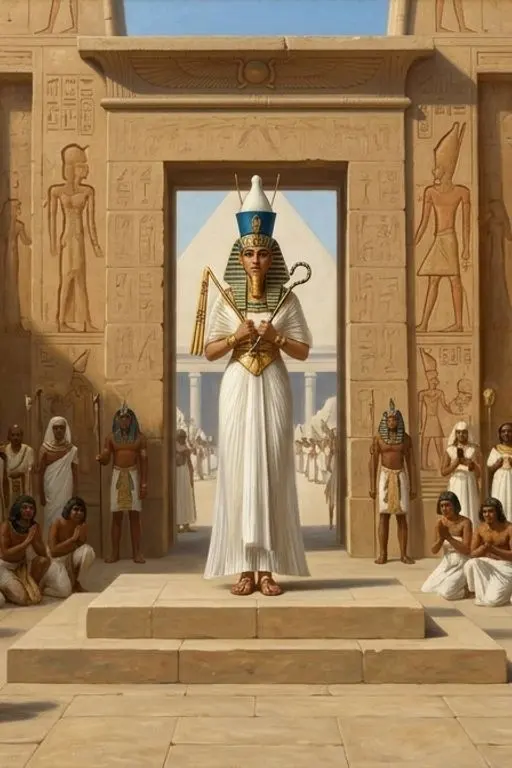
Four millennia past, in the fading years of Egypt's Middle Kingdom, a woman named Sobekneferu rose to claim the Double Crown. She was the daughter of the formidable Amenemhat III, whose reign of colossal constructions and administrative might had defined an era, and the sister and likely consort to Amenemhat IV, whose brief rule preceded hers. Sobekneferu stands as the first woman to rule Egypt in her own name, wielding the full titles and regalia of a king. Her reign, though lasting less than four years, was a pivotal moment, marking the transition from the glorious Twelfth Dynasty to the uncertain times that followed. She dedicated herself to completing the monumental works her father had begun in the Faiyum, particularly the vast funerary complex at Hawara, known to later Greeks as the Labyrinth. Her court included the esteemed officials who had served her father, now guided by a female sovereign who commanded their allegiance. Her high-status sister, Neferuptah, a princess whose own tomb indicated significant royal prestige, had passed before her accession. Sobekneferu inherited a stable, prosperous Egypt but left behind a dynasty without a clear successor, her death plunging the land into the fragmented Second Intermediate Period. This is the story of her brief but powerful reign.
Page 2
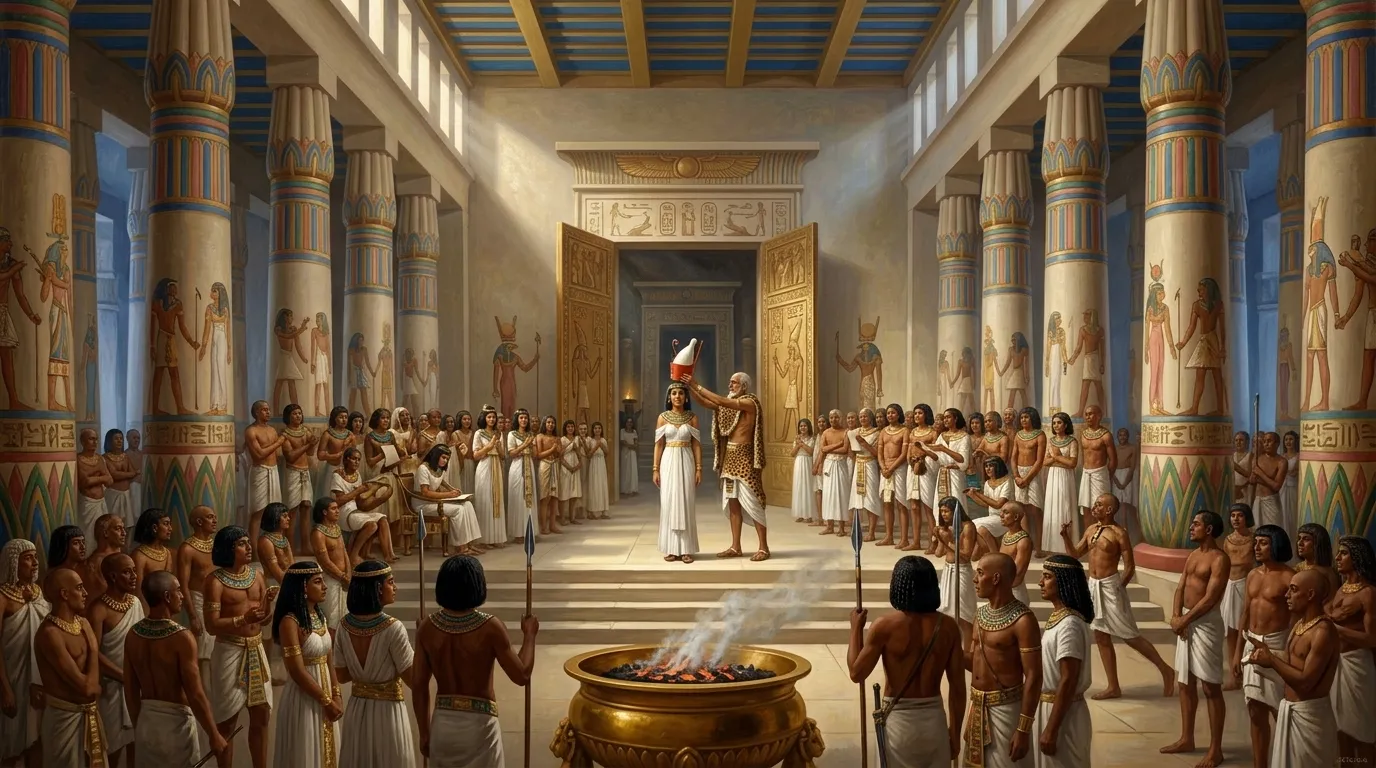
In the twenty-second year of the second month of Peret, almost four thousand years ago, the halls of the royal palace at Itjtawy thrum with an anticipation rarely felt. King Amenemhat IV, after a reign of merely nine years, had passed into the Duat without a male heir. Now, before the assembled court, his sister, Sobekneferu, prepares to ascend the throne. A mature woman in her late thirties, she stands poised, her countenance resolute, as the High Priest of Ptah approaches. The air is thick with the scent of burning incense and the murmur of prayers. This is not merely a transfer of power; it is an unprecedented moment, a woman taking the full Mantle of Kingship. The weight of the Pschent, the Double Crown, seems to settle upon her before it even touches her brow, a symbol of the millennia of tradition she now embodies.
“She who unites the Two Lands, daughter of Ra, takes the Throne of Horus!” booms the High Priest, his voice echoing.
Page 3
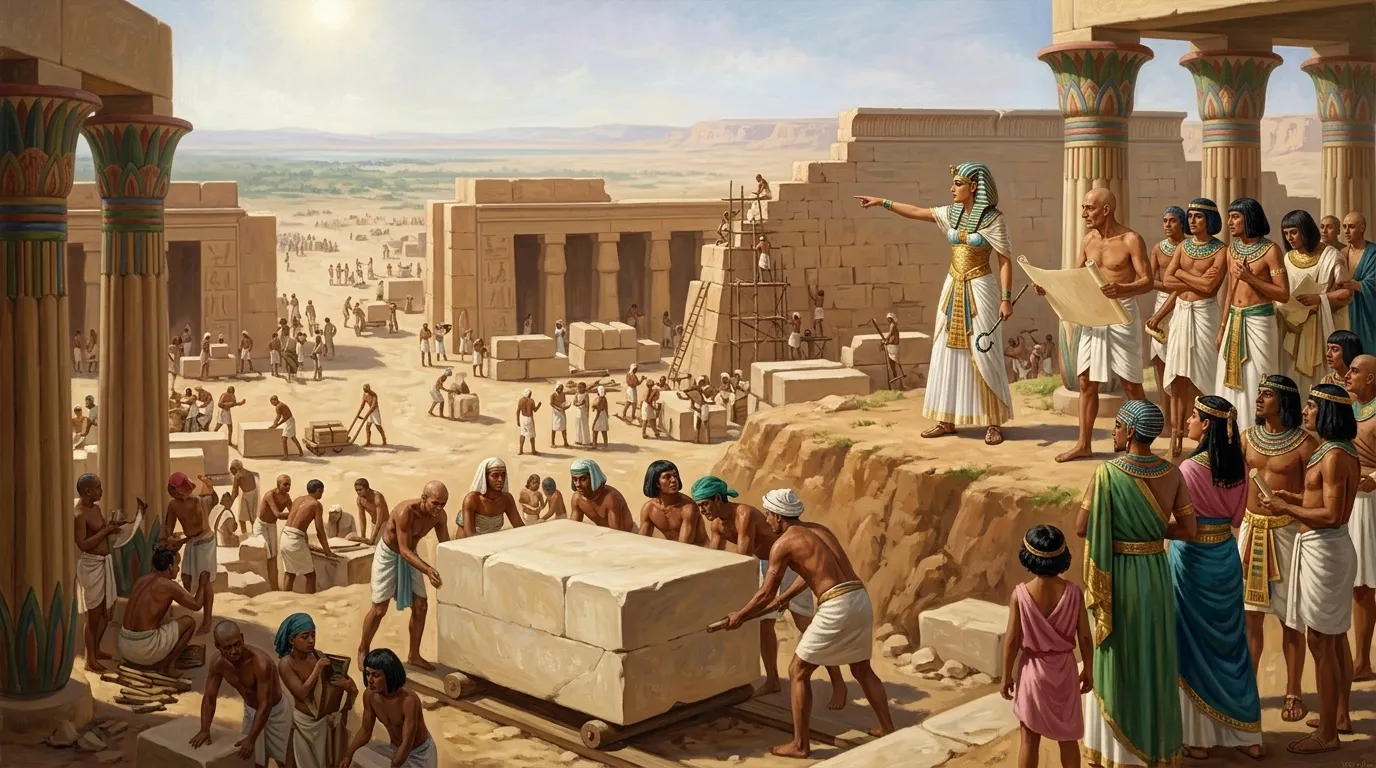
The sun, relentless and brilliant, beats down on the construction site at Hawara. Here, nearly four millennia ago, King Amenemhat III had begun a colossal funerary complex destined to awe future generations—a sprawling edifice that would come to be known as the Labyrinth. Today, Sobekneferu, in her early forties, oversees its continuation. She walks with purpose through the dust and din, her form a stark contrast to the hulking stone blocks being dragged by teams of straining men. With a chief architect by her side, a man seasoned by decades of royal projects, she reviews the carved plans. Her father’s vision, she insists, will be brought to its magnificent completion. The very foundation stones beneath her feet represent the stability she strives to maintain, even as whispers of dynastic uncertainty begin to swirl beyond these immense walls.
“The funerary chamber for my father must be sealed with stones of unparalleled precision. His rest is paramount,” she commands, her voice firm amidst the quarry sounds.
Page 4
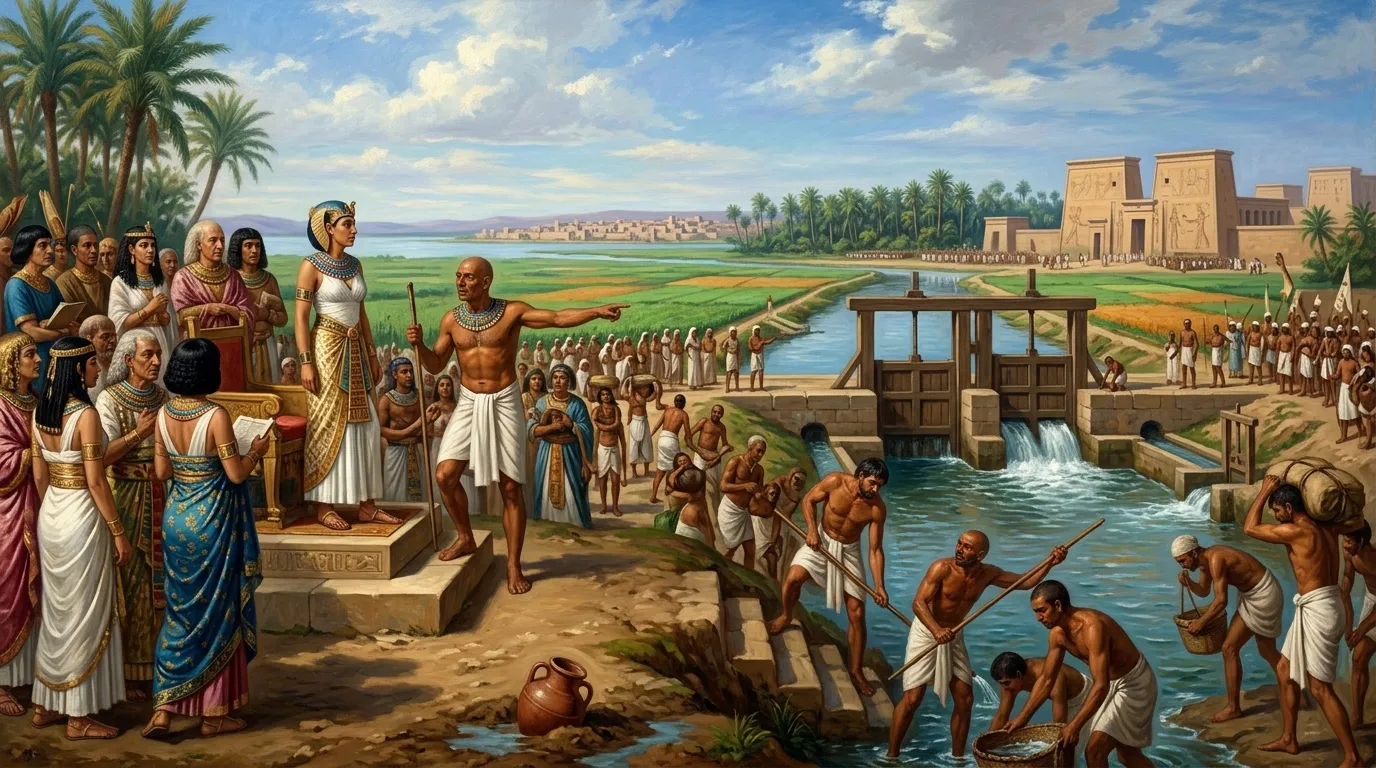
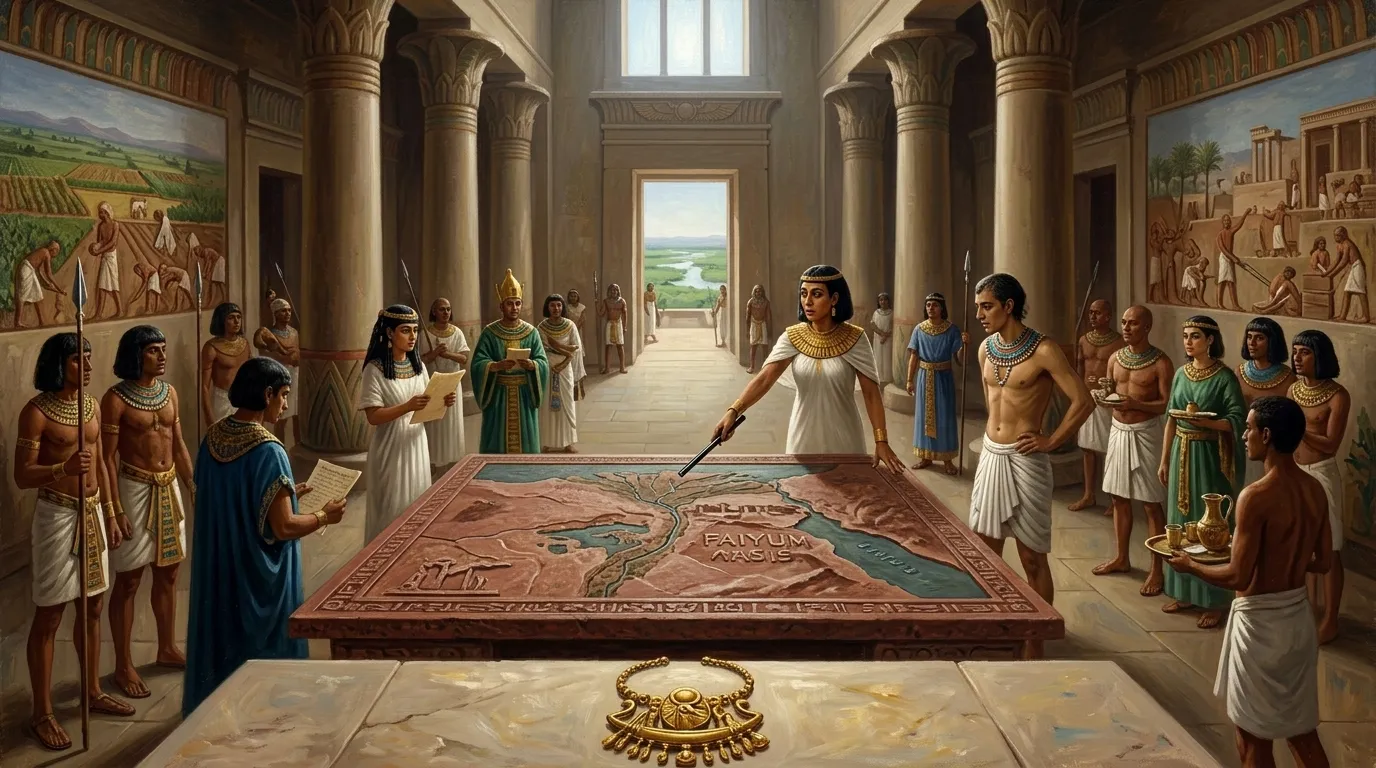
Near the vast expanse of Lake Moeris in the Faiyum, the lifeblood of the region flows through meticulously engineered canals. It is here, almost 3,800 years ago, that Sobekneferu, in her early forties, dedicates a significant part of her reign to consolidating the irrigation projects initiated by her father. The Faiyum, transformed by Amenemhat III into a fertile agricultural heartland, demands constant attention. She stands on the raised bank of a newly reinforced canal, the rich silt of the Nile clinging to her sandals. An irrigation overseer, a stout man with sun-darkened skin, gestures to the sluice gates, explaining the flow patterns. Her gaze sweeps across the emerald green fields, a testament to generations of Egyptian ingenuity. This work secures the harvests, feeds the people, and underpins the kingdom’s prosperity, a practical, enduring legacy more vital than any battle won.
“Ensure the southern channels are clear. Every drop of water means life for these fields,” she instructs, her voice carrying over the gentle lapping of water.
Page 5
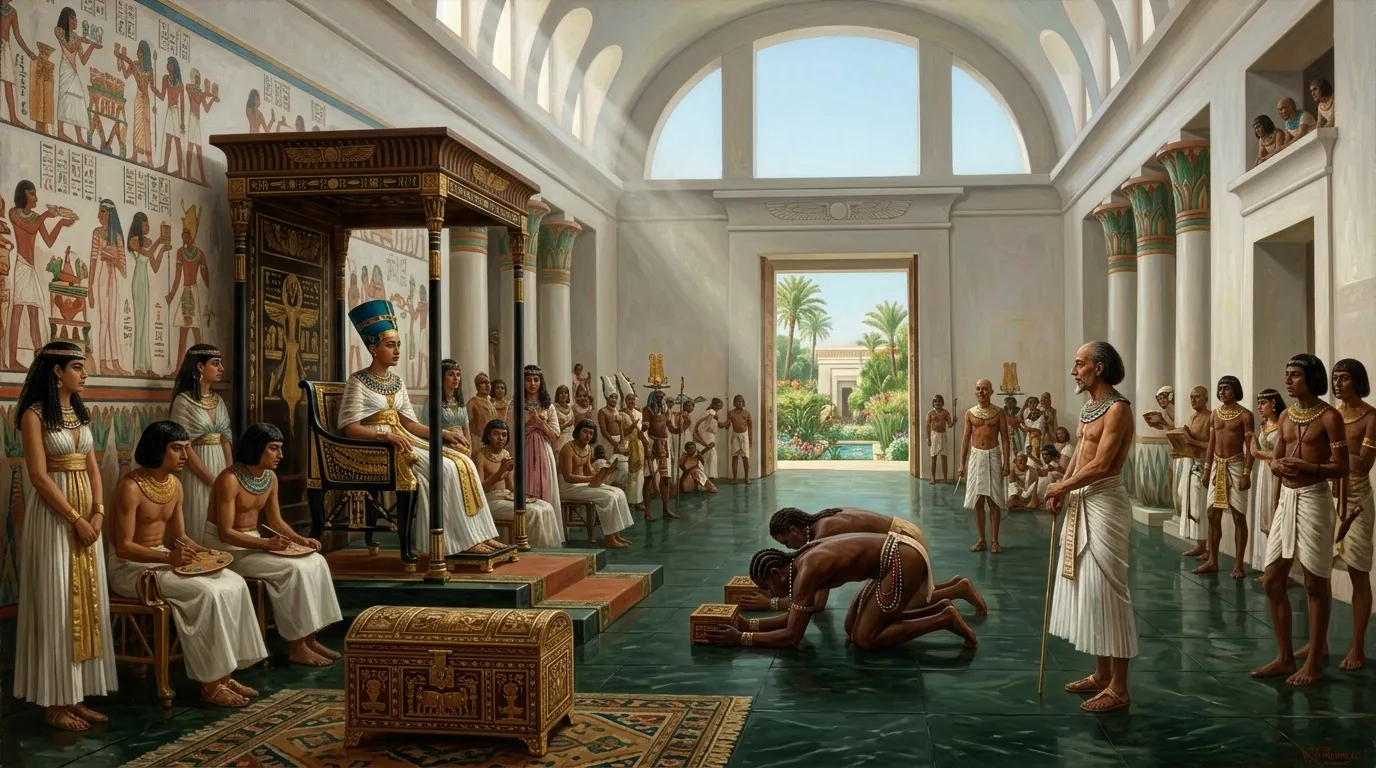
The audience chamber in the royal palace at Hawara buzzes with hushed anticipation. Nearly four millennia ago, King Sobekneferu, a woman now firmly in the stride of her reign, receives envoys from the lands to the south. The Middle Kingdom's authority reaches deep into Nubia, securing access to gold, incense, and valuable trade routes. She sits upon a finely carved ebony throne, radiating quiet command. Before her, two Nubian chieftains, distinct in their attire and darker complexions, prostrate themselves, offering tribute. Her vizier, a seasoned administrator, stands nearby, his gaze unwavering. This is a clear demonstration of Egypt's enduring power, its capacity to project influence and maintain alliances, even under the rule of a female monarch. The exchange of gifts and pleasantries solidifies bonds that ensure the flow of wealth into the royal coffers.
“Egypt's prosperity extends to all who show fealty. Your offerings are received,” the royal female figure states, her voice clear and resonant.
Page 6
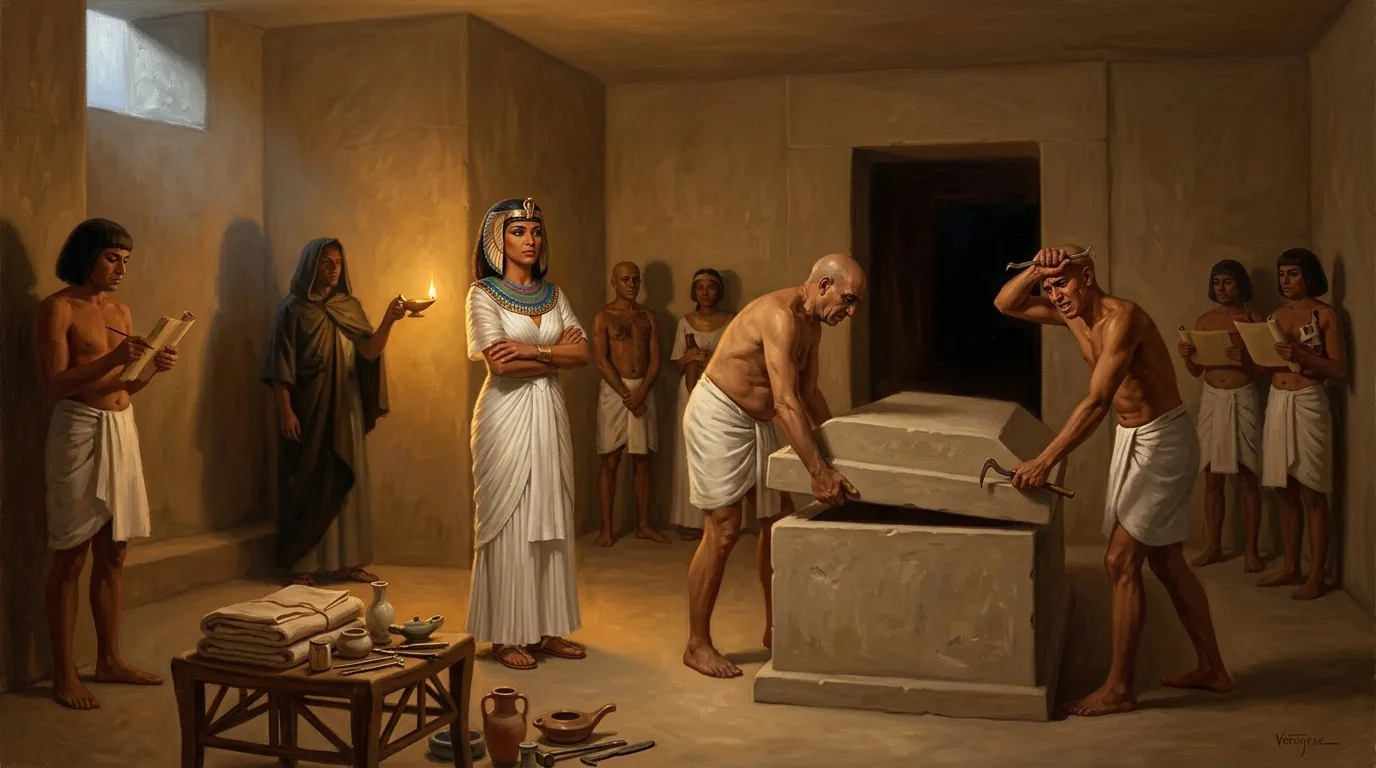
Deep within the funerary complex at Hawara, nestled close to the pyramid of her revered father, Amenemhat III, lies the burial chamber of Princess Neferuptah. Though her precise relationship to Sobekneferu is often debated, she was clearly a sister of extraordinary status, a 'King's Daughter' whose elaborate tomb preparations speak volumes of her importance. Now, almost four millennia ago, Sobekneferu, in her early forties, stands within the antechamber, overseeing the final sealing of the princess's magnificent sarcophagus. The air is cool and still, thick with the scent of resins and ancient stone. Her gaze falls upon the exquisite jewelry and grave goods intended to accompany Neferuptah into the afterlife, a testament to royal lineage and perhaps a poignant reminder of potential rival claims to the throne. A chief undertaker, precise and solemn, ensures all is in order. This act of reverence and finality underscores the weight of dynastic continuity, even as the line itself stands on the precipice of change.
“Let her rest in the full dignity befitting a daughter of the Two Lands. No detail is to be overlooked,” commands the royal figure.
Page 7
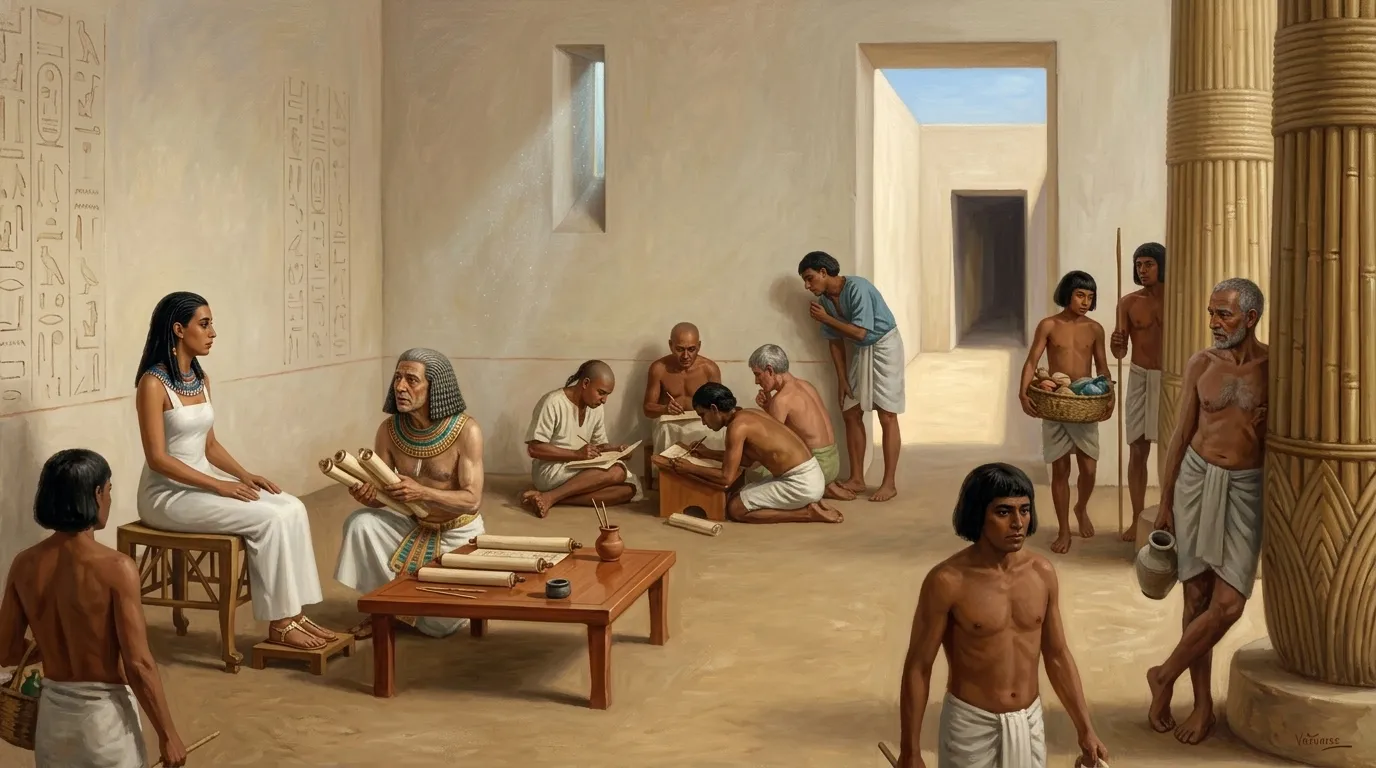
Within a private administrative chamber of the Hawara palace, far from the grand courtyards and public halls, King Sobekneferu confronts the daily demands of governance. It is nearly 3,800 years since this moment, and the weight of state rests heavy on her shoulders. Now in her early forties, she sits not on a ceremonial throne, but on a simple, backless stool before a low cedarwood table. Her vizier, the highest official in the land, an older man with sharp, discerning eyes, kneels opposite her, presenting a stack of papyrus scrolls. Petitions from distant nomes, reports from frontier garrisons, assessments of the Nile's inundation—all require her careful consideration. Her hand reaches for a stylus, her brow furrowed in concentration. Decisions made here, in the quiet intimacy of this room, shape the lives of millions across the Two Lands. The prosperity her father built is a delicate balance, and she guards it with vigilance.
“The harvest reports from the Delta require immediate attention. Ensure the granaries are prepared for distribution,” she states, pointing to a scroll.
Page 8
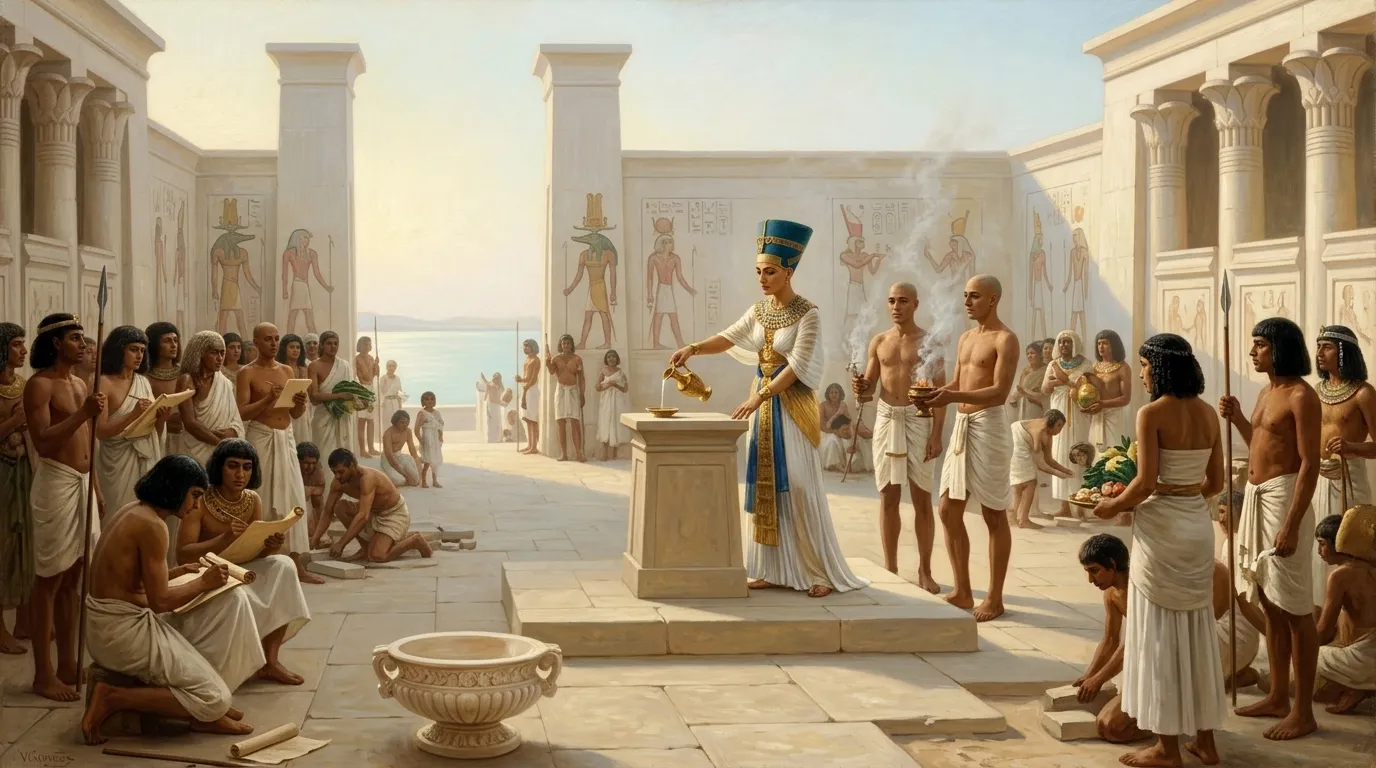
By the shores of Lake Moeris, where the cult of the crocodile god Sobek held particular sway, a new temple dedicated to the deity rises under royal patronage. This is a deliberate choice for King Sobekneferu, whose very name, 'Beauty of Sobek,' links her inextricably to this powerful, aquatic god. Now in her early forties, she performs a consecration ritual, almost 3,800 years in the past. Flanked by high priests, their shaven heads gleaming, she pours a libation from a gold vessel onto an offering table. The air is thick with the sweet smell of myrrh and the low chant of sacred words. This act asserts her divine legitimacy and reinforces her connection to the Faiyum, a region so vital to the kingdom. She stands as the living embodiment of divine will, ensuring the gods' favour upon Egypt, particularly in the bountiful waters of the lake and the Nile’s yearly flood.
“May Sobek, Lord of the Faiyum, bless these sacred walls and guard the Two Lands,” she proclaims, her voice resonating with ancient power.
Page 9
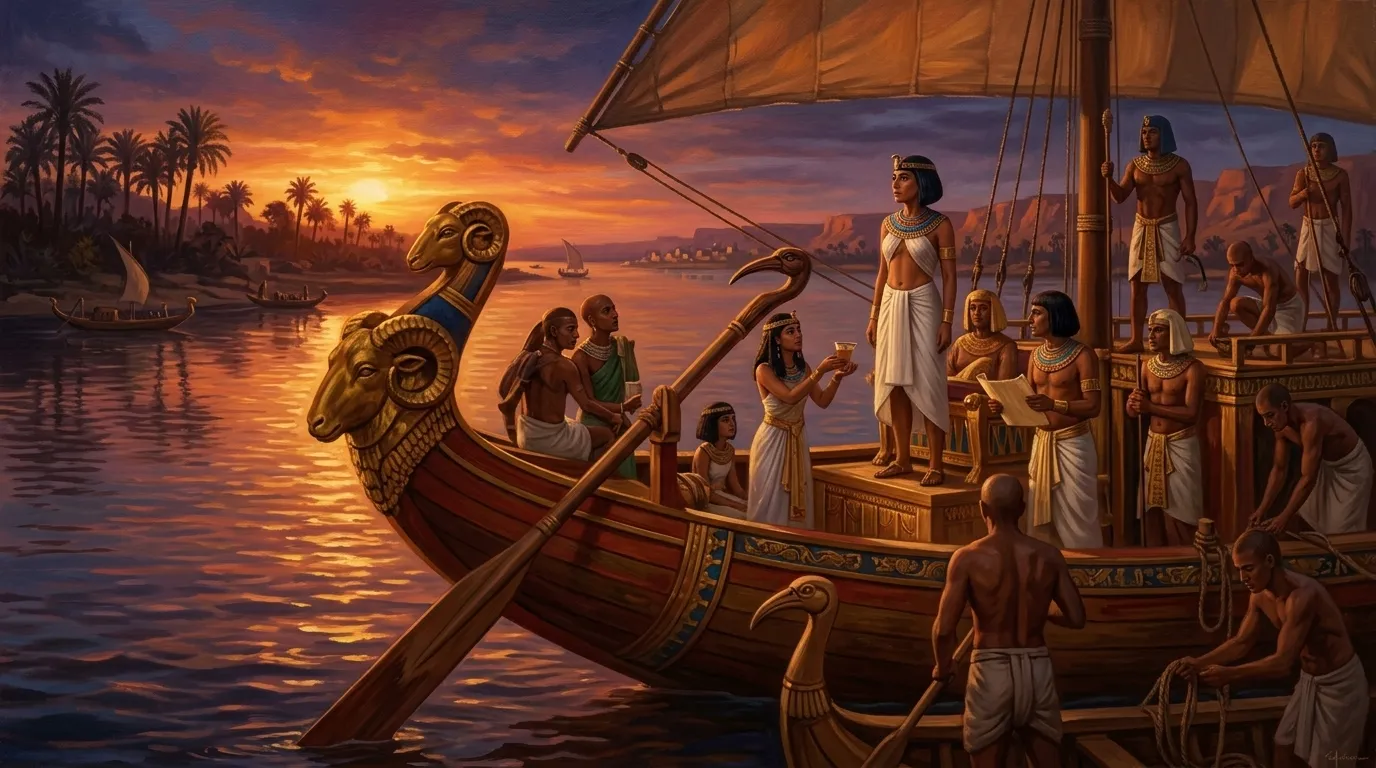
The royal barge glides silently across the still waters of the Nile, catching the last amber rays of the setting sun. Almost 3,800 years ago, King Sobekneferu, in her early forties, stands at the prow, a solitary figure against the vastness of the river and the encroaching twilight. The cool evening air stirs her nemes headdress. Her reign, a testament to her strength and capability, now approaches its end. She has completed her father's grand projects, sustained the prosperity of the land, and governed with the full authority of a king. Yet, the critical question of succession remains unanswered. No male heir has emerged to continue the direct line of the Twelfth Dynasty. The future of Egypt, stable for generations, now drifts into uncertainty. The river, eternal and indifferent, carries her towards a fate that will redefine the kingdom’s trajectory, marking the end of a golden age.
Page 10
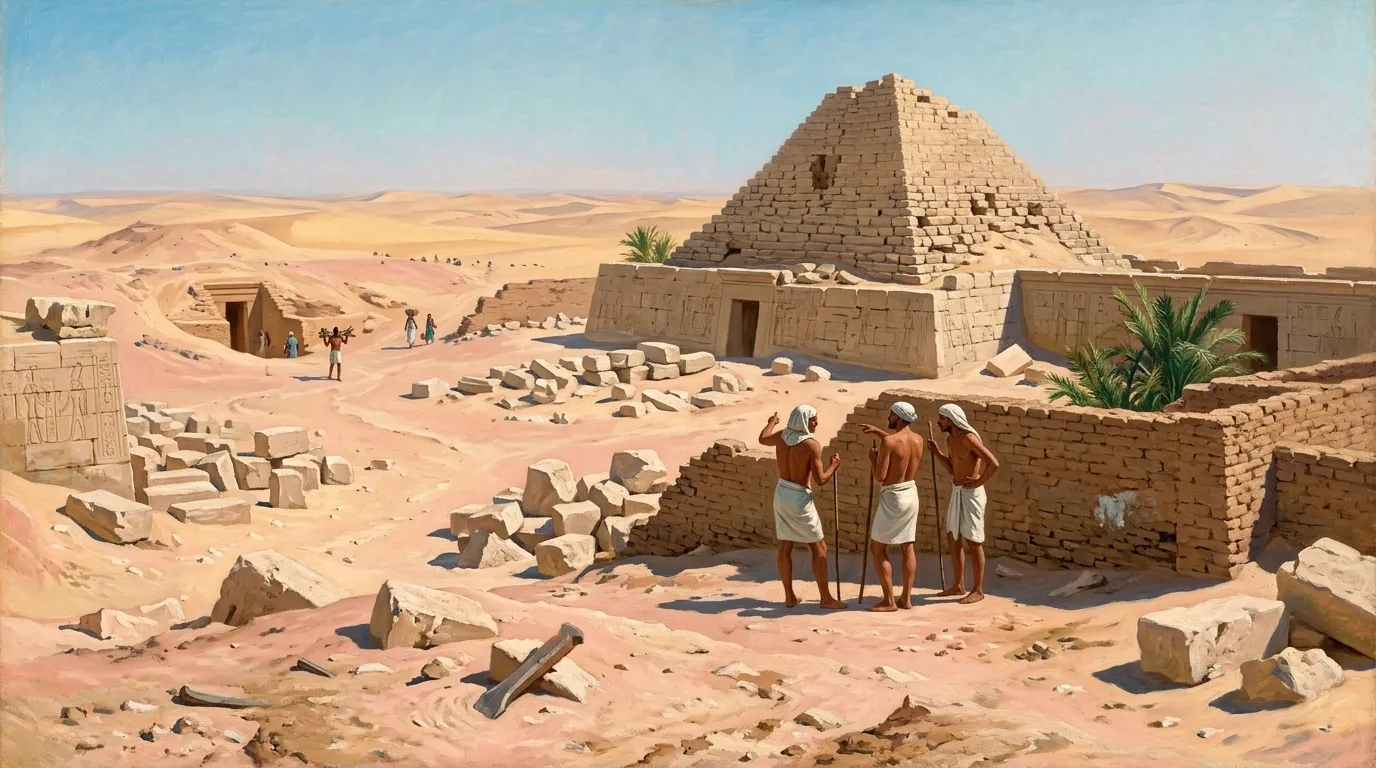
The reign of Sobekneferu, a remarkable four millennia ago, concluded as abruptly as it began, marking the definitive end of the illustrious Twelfth Dynasty. Her name, though recorded in some king lists, would be partially obscured by later historical narratives, a common fate for female rulers in a system dominated by patriarchal succession. Her funerary monument, likely a pyramid at Mazghuna that remained unfinished or was later reattributed, stood as a testament to her kingship, even if its ultimate fate was one of obscurity. Today, the outer courtyard of this vast, abandoned site echoes with silence. The stonemasons' tools lie scattered, consumed by sand, their work incomplete. Sobekneferu had held the Two Lands together, embodying the majesty of kingship, completing her father’s works, and upholding the rituals of state. But with her passing, Egypt entered a fragmented era, the Second Intermediate Period, a testament to the fragile balance of power and the immense impact of a single, powerful reign, however brief.
About this story
- Historical figures: Sobekneferu, Amenemhat III, Amenemhat IV, Neferuptah
- Location: Fayum & Hawara
- Period: Middle Kingdom
- Audience: general readers
Questions and answers
Read Wonder Egypt on your phone
Wonder Egypt is available on Android. Get Wonder Egypt on Google Play.