The City That Came Out of the Sea
The City That Came Out of the Sea — an illustrated history story. 10 illustrated pages, free to read on Wonder Egypt.
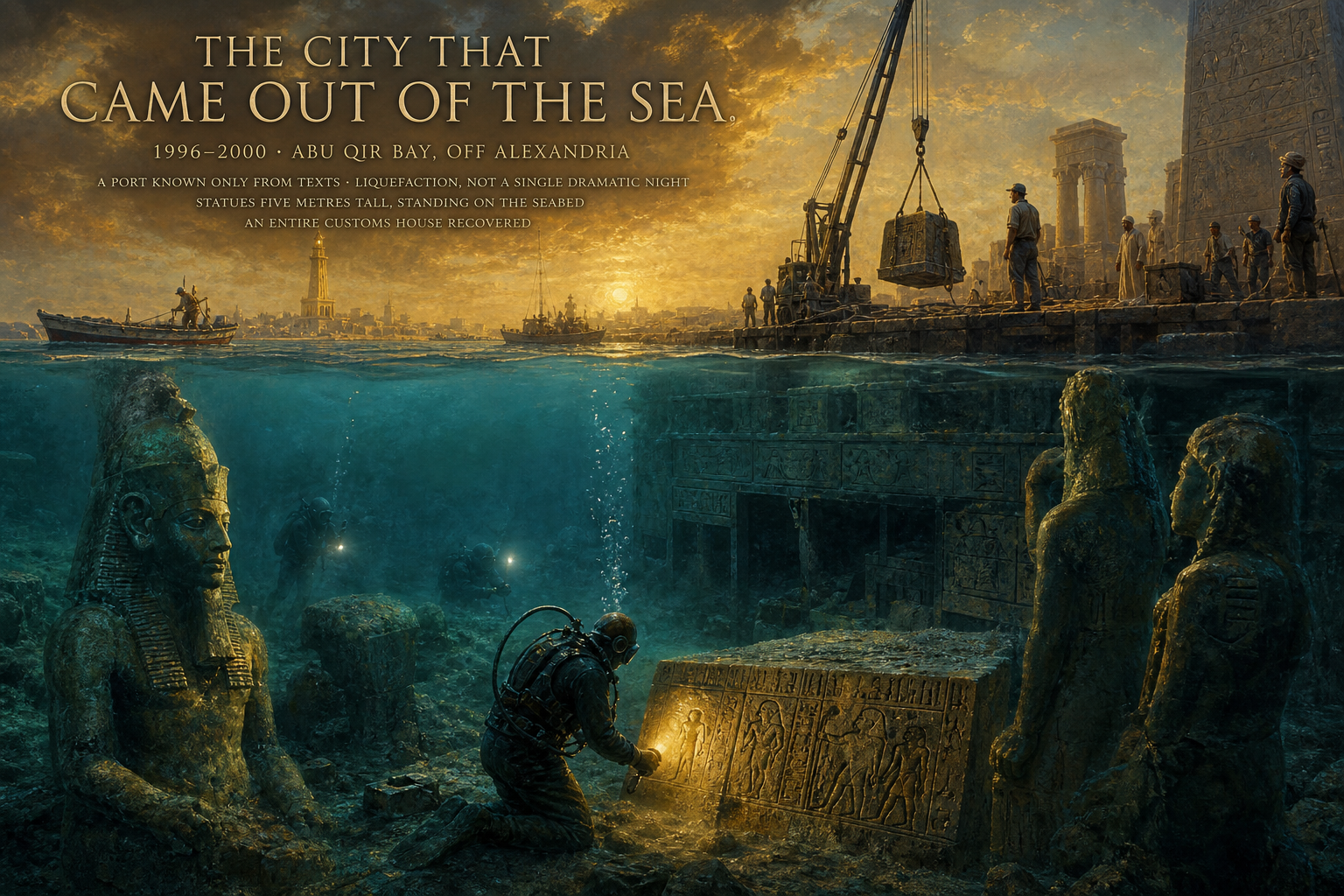
Page 1 — The Glistening Depths
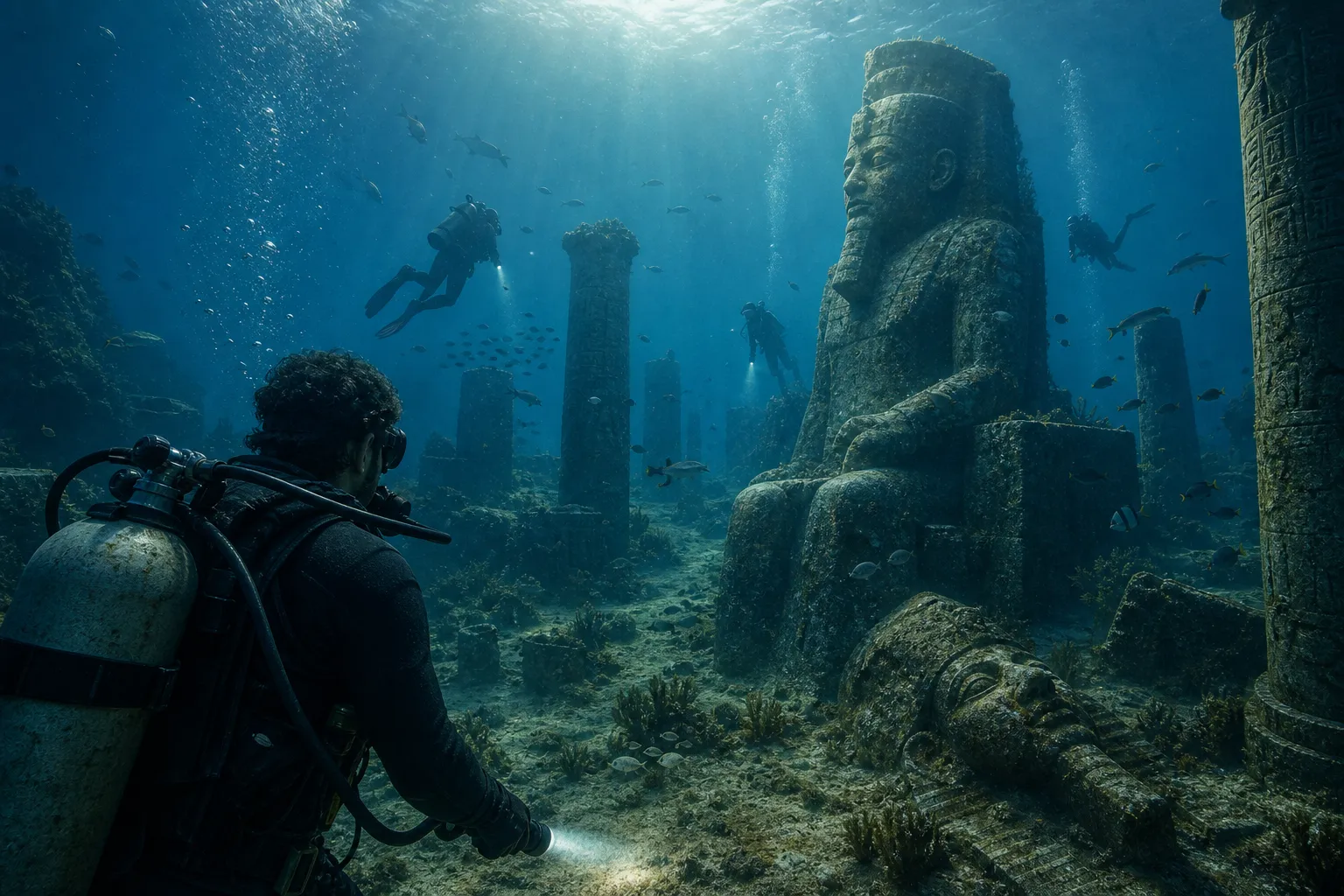
The sun rises over Abu Qir Bay, casting golden hues upon the calm waters. Below the surface, a city lies in perpetual slumber, hidden from the world. Divers, equipped with advanced breathing apparatus and wetsuits, glide silently through the submerged remains, their presence a mere ripple in the vast expanse of the bay. Colossal statues, standing five meters tall and now encrusted with marine life, loom majestically from the depths, their features softened by layers of time and algae. The harbor walls and an ancient customs house slowly reveal themselves from the sandy bed, a poignant reminder of Heracleion, the once-thriving port city lost to history. Geologists have determined that rather than a sudden cataclysm, it was a gradual process of liquefaction that swallowed the city. This slow descent into the sea was caused by the sinking of waterlogged clay beneath, a creeping inevitability that took centuries to unfold. Each artifact reclaimed from the sea tells its own story of this historical metropolis.
"Each piece reveals its own story," one diver remarks, awe in their voice.
Page 2 — Secrets Beneath the Waves
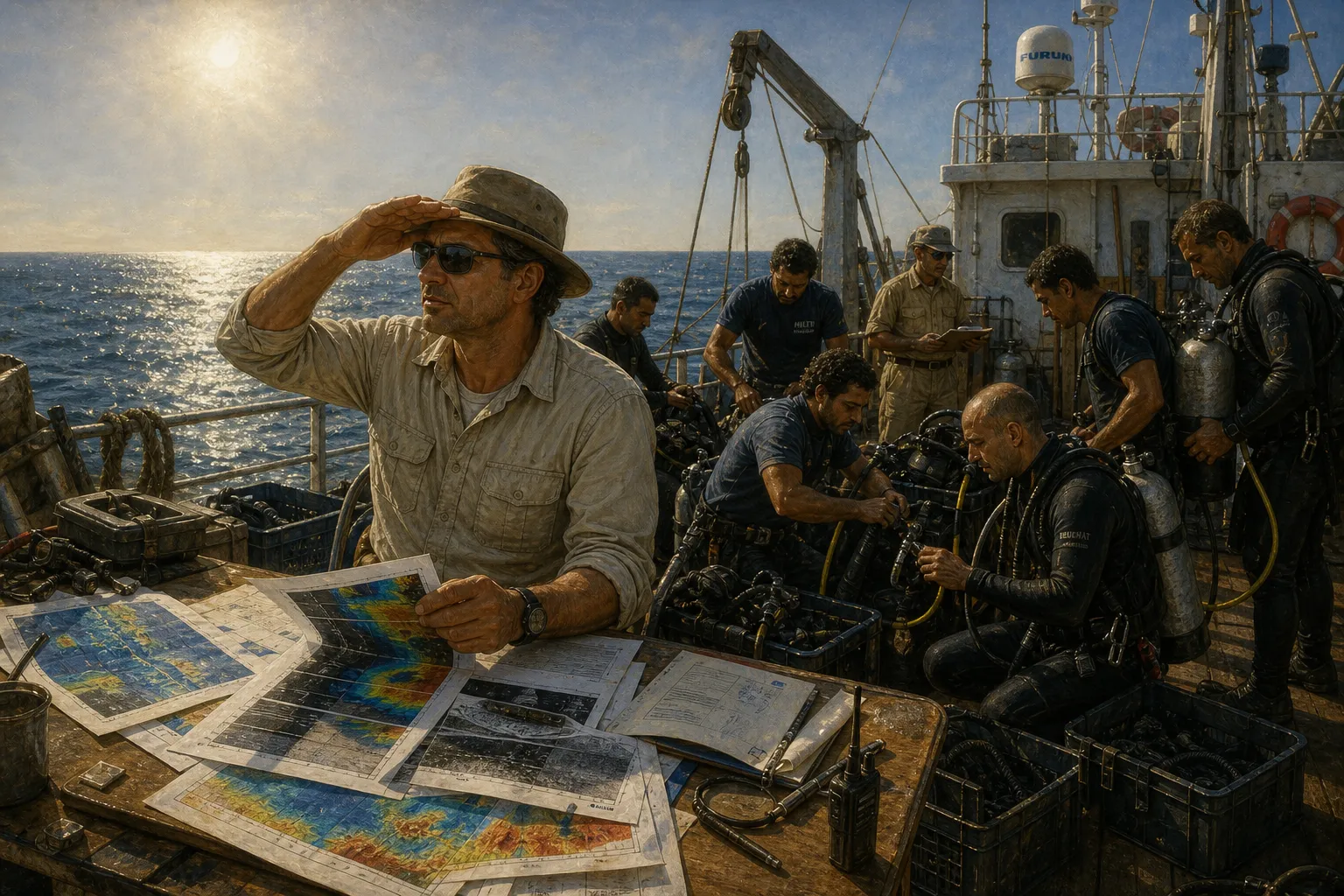
In 1996, the waters off Alexandria continue to conceal secrets long buried beneath their surface. An underwater survey team, armed with advanced magnetic imaging technology, uncovers significant anomalies lurking on the seabed. The head of the team, an experienced archaeologist, stands on the deck of the research vessel. His eyes scan the printouts that reveal the contours of ancient walls hidden beneath layers of silt and sand. The anticipation among the team is palpable as they prepare to dive, knowing they are on the verge of uncovering history that has been lost to the sea for millennia. This discovery reignites the ancient stories of Heracleion, tales found in Greek texts but long considered mythical by many.
"We have found the outline of something monumental," the archaeologist announces.
Page 3 — Revealing the Hidden
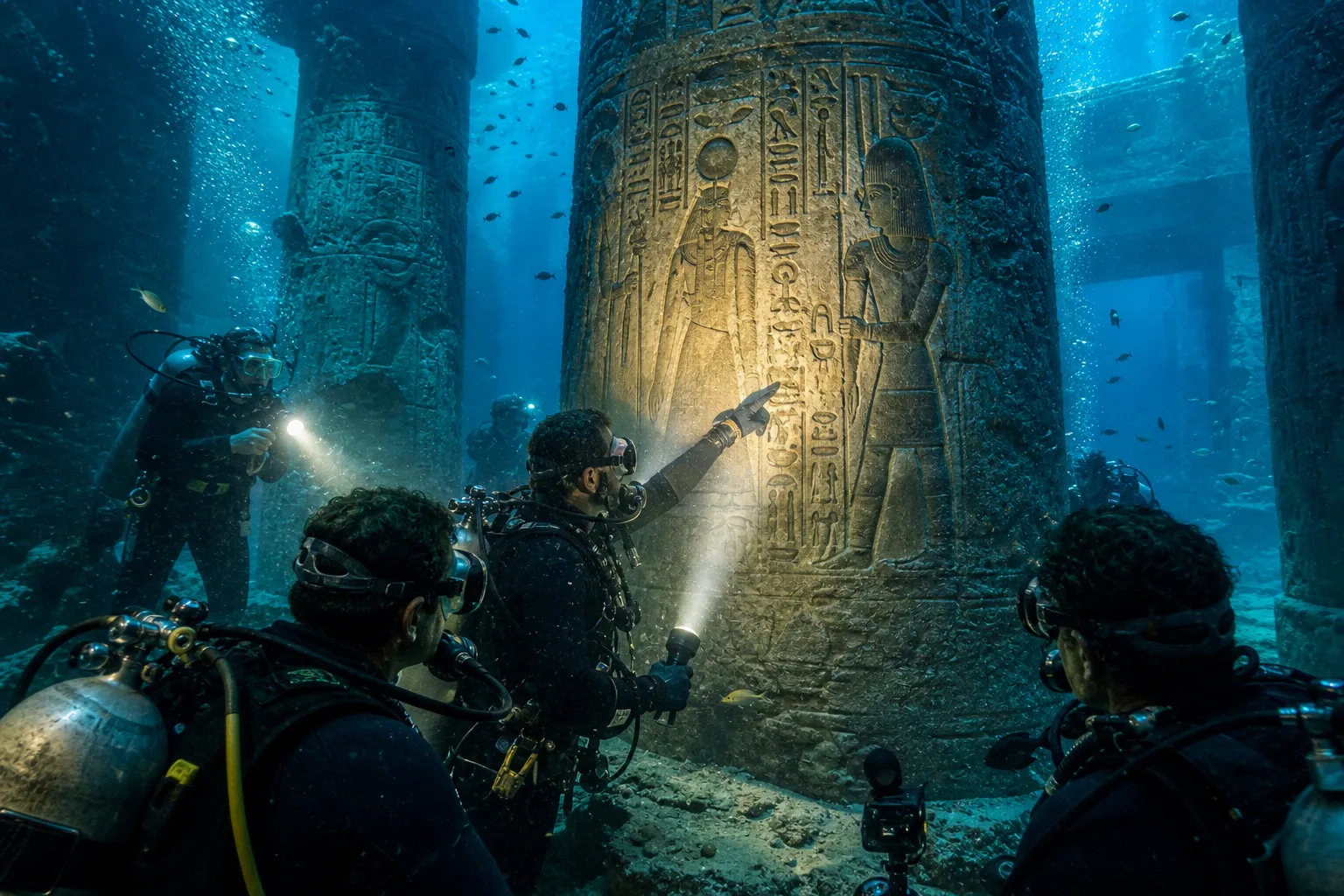
The divers descend into the twilight zone of Abu Qir Bay, their torches piercing the murky water with beams of light. Moving with practiced precision, they delicately brush aside layers of silt accumulated over centuries, gradually revealing intricately carved stone. Before them, an ancient temple emerges from the depths: columns adorned with hieroglyphs and depictions of deities, their serene expressions undisturbed by time. As they meticulously document their findings, the enormity and significance of the discovery begin to dawn on them—a city that once brimmed with life and activity, now a silent testament to the passage of time. The divers silently communicate through hand signals, sharing their amazement and urging each other to remain meticulous in their exploration.
"We've found a temple! Look at these inscriptions!" One diver signals excitedly through gestures.
Page 4 — Echoes of Commerce
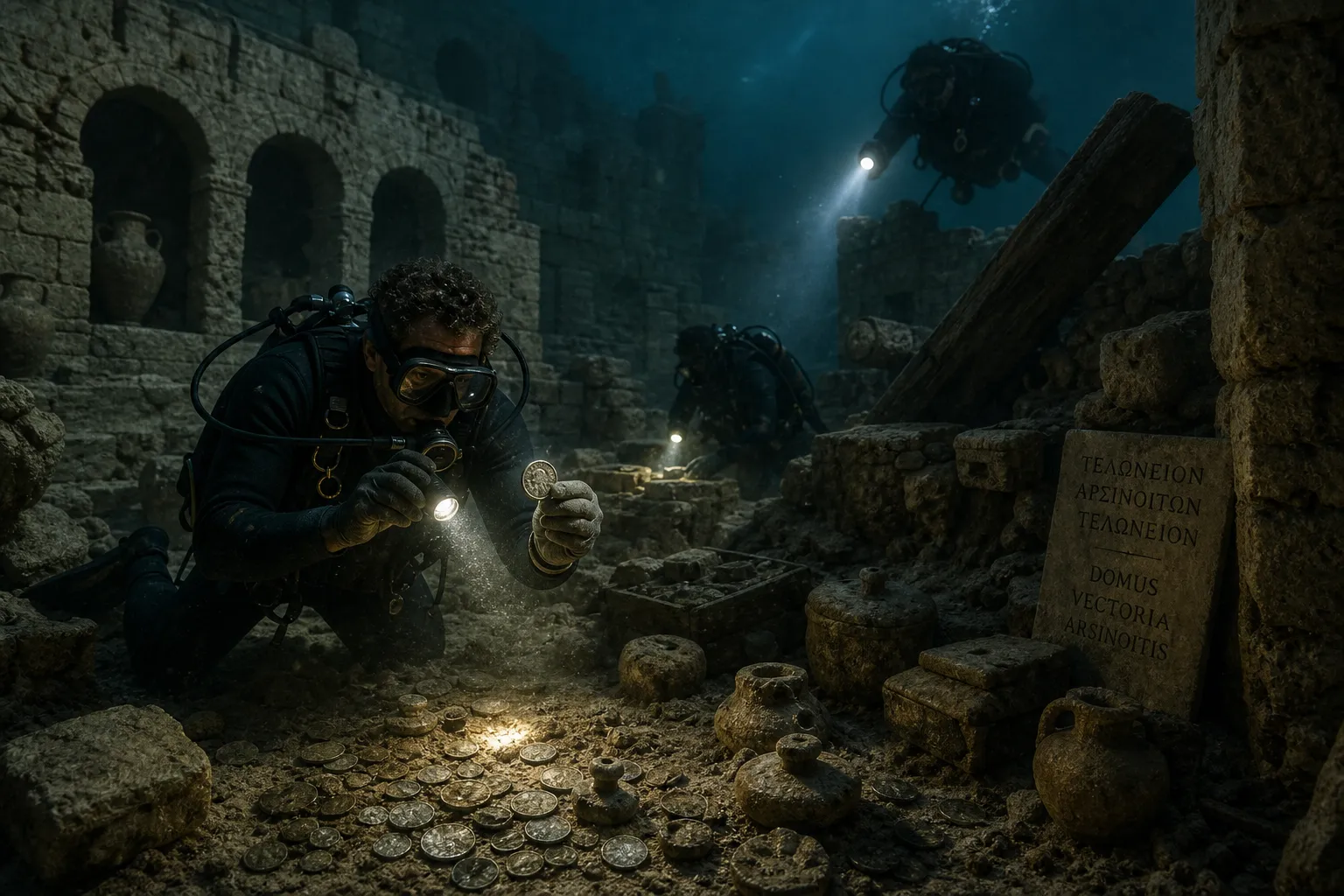
Amidst the submerged ruins, the customs house stands as a silent testament to Heracleion's once-bustling trade. The murky underwater world hides treasures that speak volumes about the economic life of this ancient city. Divers, clad in sleek wetsuits, carefully excavate the site, unearthing coins and weights—relics of an economy that once thrived within these port walls. These findings suggest an intricate network of commerce where merchants and traders conducted substantial exchanges under the vigilant gaze of tax collectors. Each corroded coin, though tarnished by time and water, still bears the subtle visages of rulers whose identities have faded into obscurity. The retrieval of each artifact adds another piece to the puzzle, revealing layers of life in this now silent city, painting a vibrant picture of the prosperity and dynamic trade activity that Heracleion once enjoyed.
"These coins tell a story of trade and prosperity," a historian later reflects, examining the finds.
Page 5 — Statues of the Sea
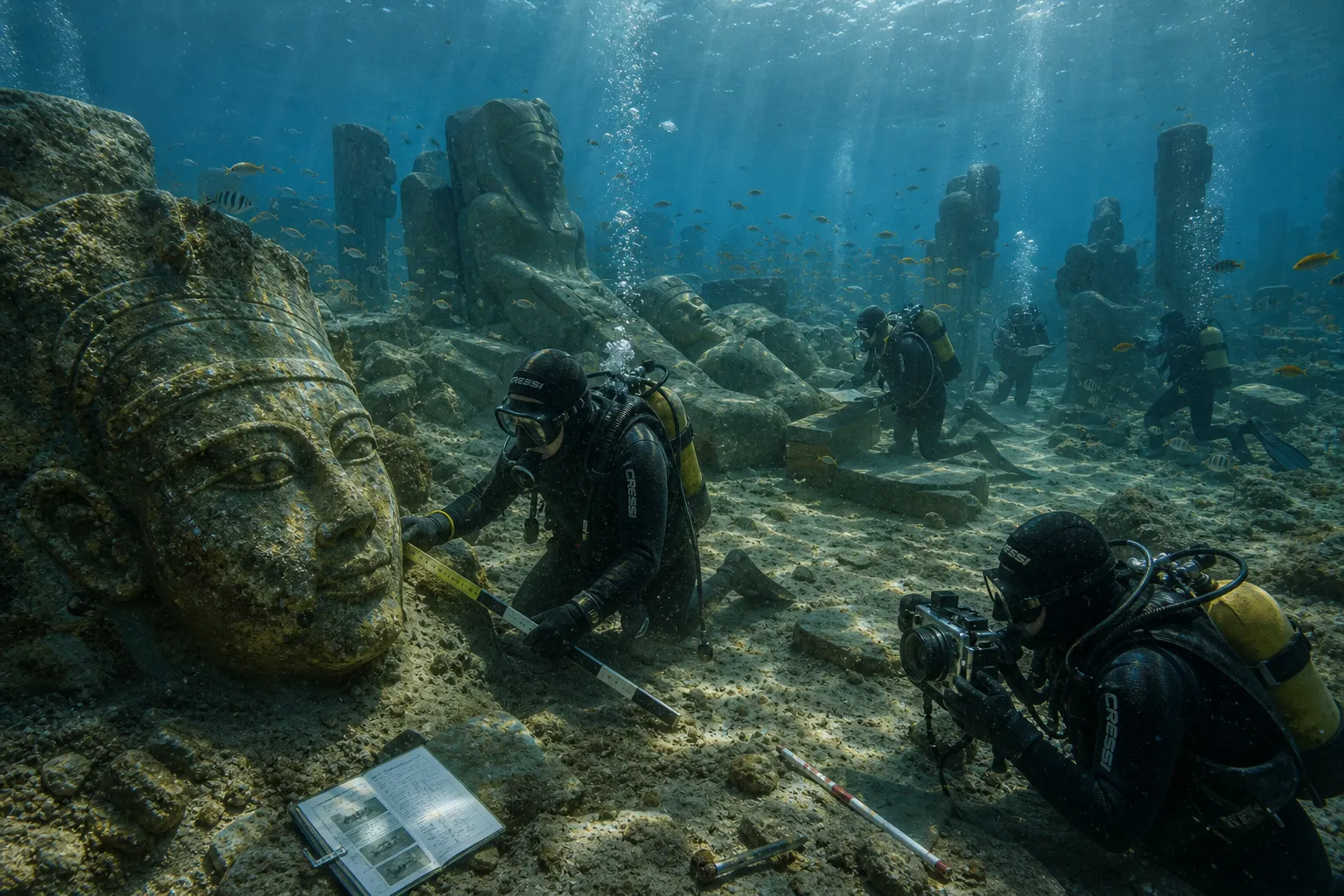
The submerged boulevard of Heracleion is a haunting sight, where towering statues of gods and pharaohs lie half-buried in golden sand. Their carved features, remarkably preserved, echo with the voices of a lost civilization. Once majestic sentinels at temple entrances, these statues now stand as guardians of the forgotten city beneath the waves. Encrusted with marine life, they possess an eerie beauty that captivates those who venture into these depths. Divers, equipped with sophisticated cameras, meticulously document every detail, each photograph capturing a moment frozen in time. Nearby, remnants of the grand boulevard's stone plinths testify to a once-bustling thoroughfare, where the footfalls of ancient citizens and travelers echoed. Today, the statues' silent faces witness new visitors who seek to uncover the secrets of this underwater realm.
"These statues are our custodians," a diver muses, floating before a stone face.
Page 6 — The Lost Harbour
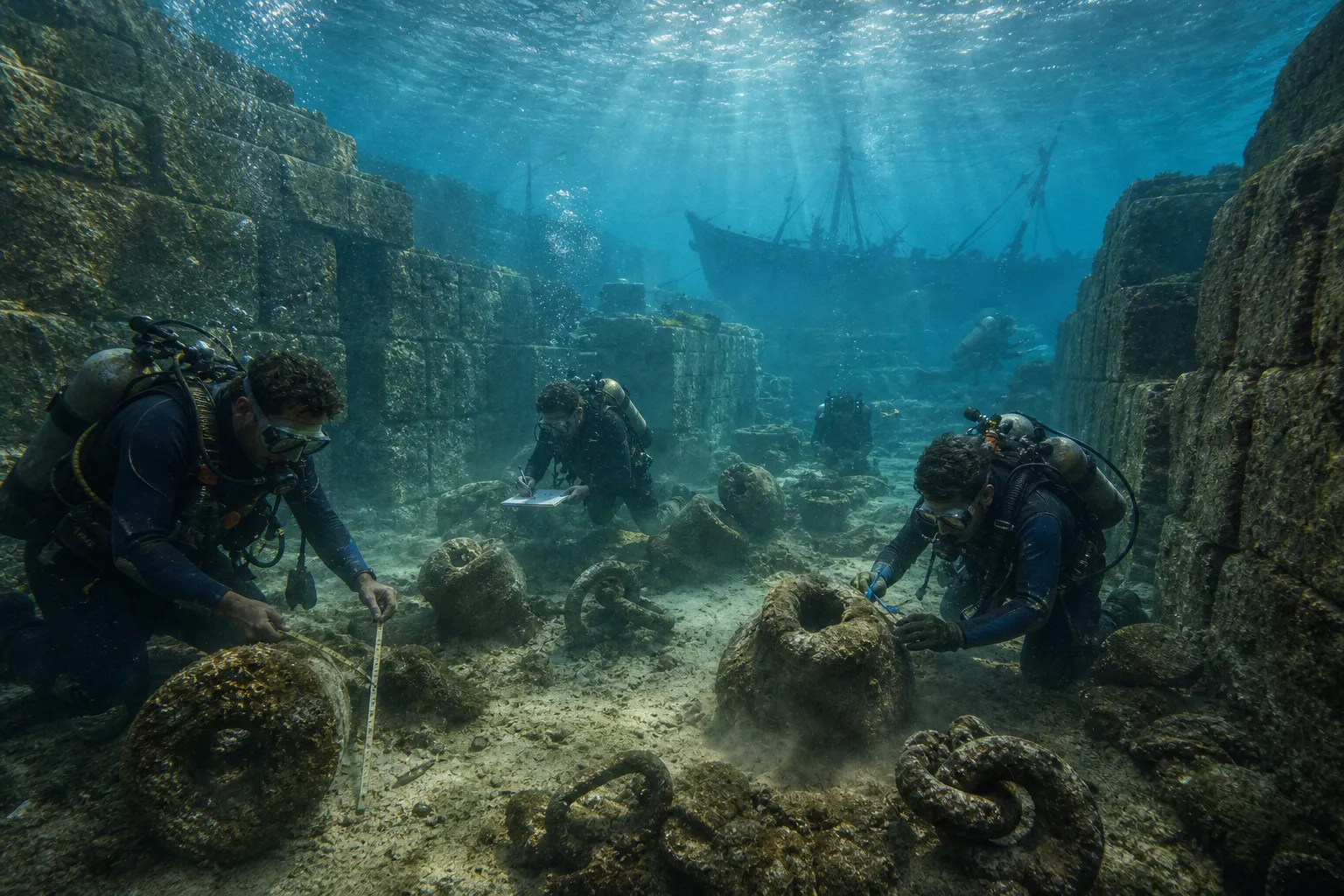
The survey data reveals the outlines of Heracleion’s once-great harbour, a testament to the city's unparalleled ancient engineering. As divers navigate the submerged docks, they trace the pathways where ships from far-flung corners of the Mediterranean once moored. Stone anchors and mooring rings, scattered across the seabed, mark the spots where vessels loaded with rich cargos were once tethered. In the silence of the deep, echoes of ancient sailors’ shouts and the creaking timbers of ships seem to resonate, a ghostly reminder of bustling trades. The formidable harbour walls, now submerged, reveal the strategic importance of Heracleion as a crucial hub of commerce and cultural exchange, seamlessly connecting civilizations across the ancient world.
"These stones held ships that connected worlds," a geologist remarks, tracing a mooring ring.
Page 7 — Deities in the Deep
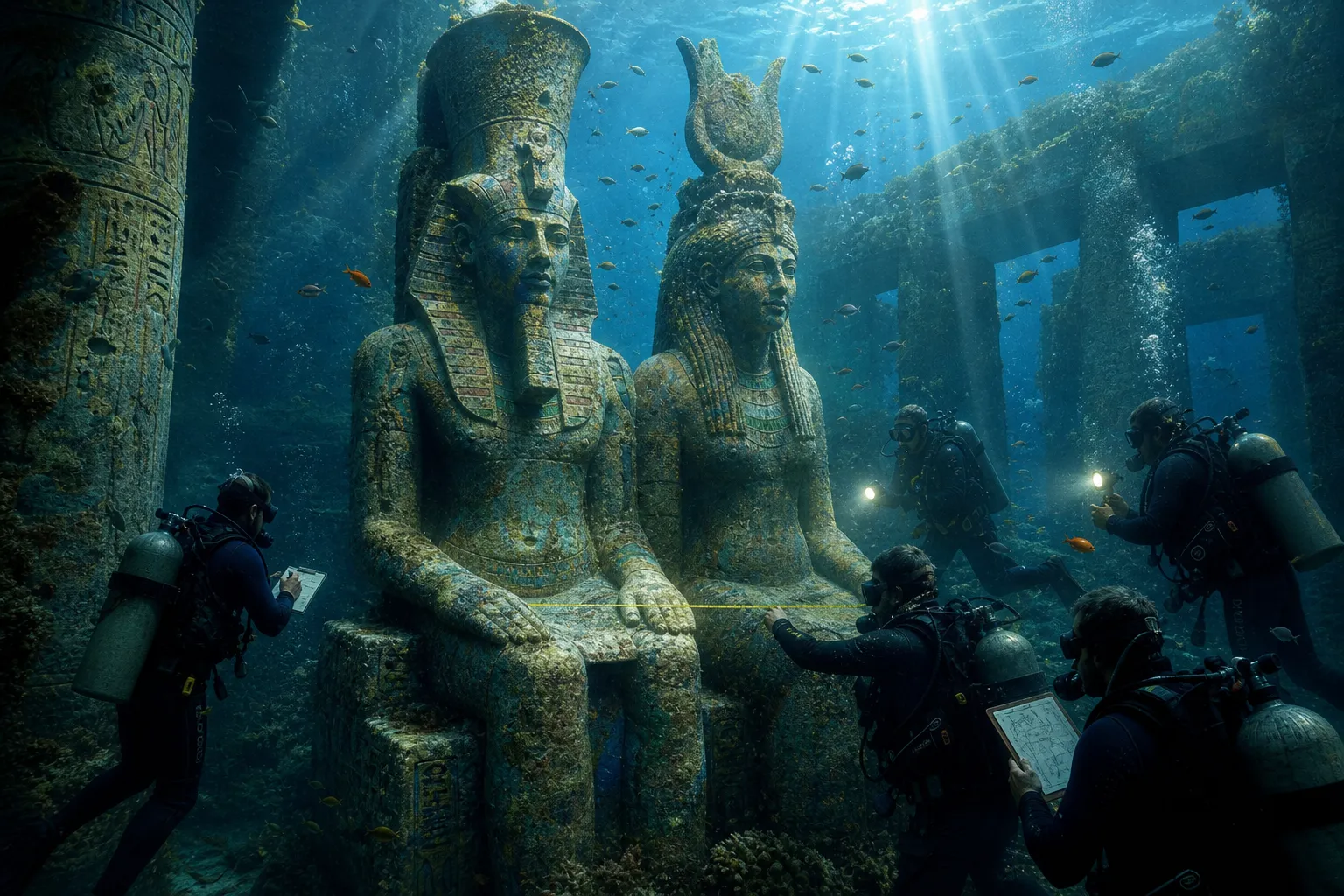
At the heart of the underwater temple complex, statues of Egyptian deities rise solemnly from the seabed, monuments of devotion in a forgotten age. The figures of Isis and Osiris, once revered as protectors of Heracleion, stand in stoic silence, their presence a powerful reminder of the temple rituals that once took place here. Each statue, intricately crafted, bears witness to the artistry that has withstood centuries beneath the sea. As divers carefully document their dimensions and positions, they marvel at the details visible despite the passage of time. The close proximity of these divine figures suggests their centrality in ceremonial practices, a testament to the vibrant religious life that once flourished above the waves.
"Even here, the gods endure," a diver whispers reverently, sketching an image of Isis.
Page 8 — Guardians of the Past
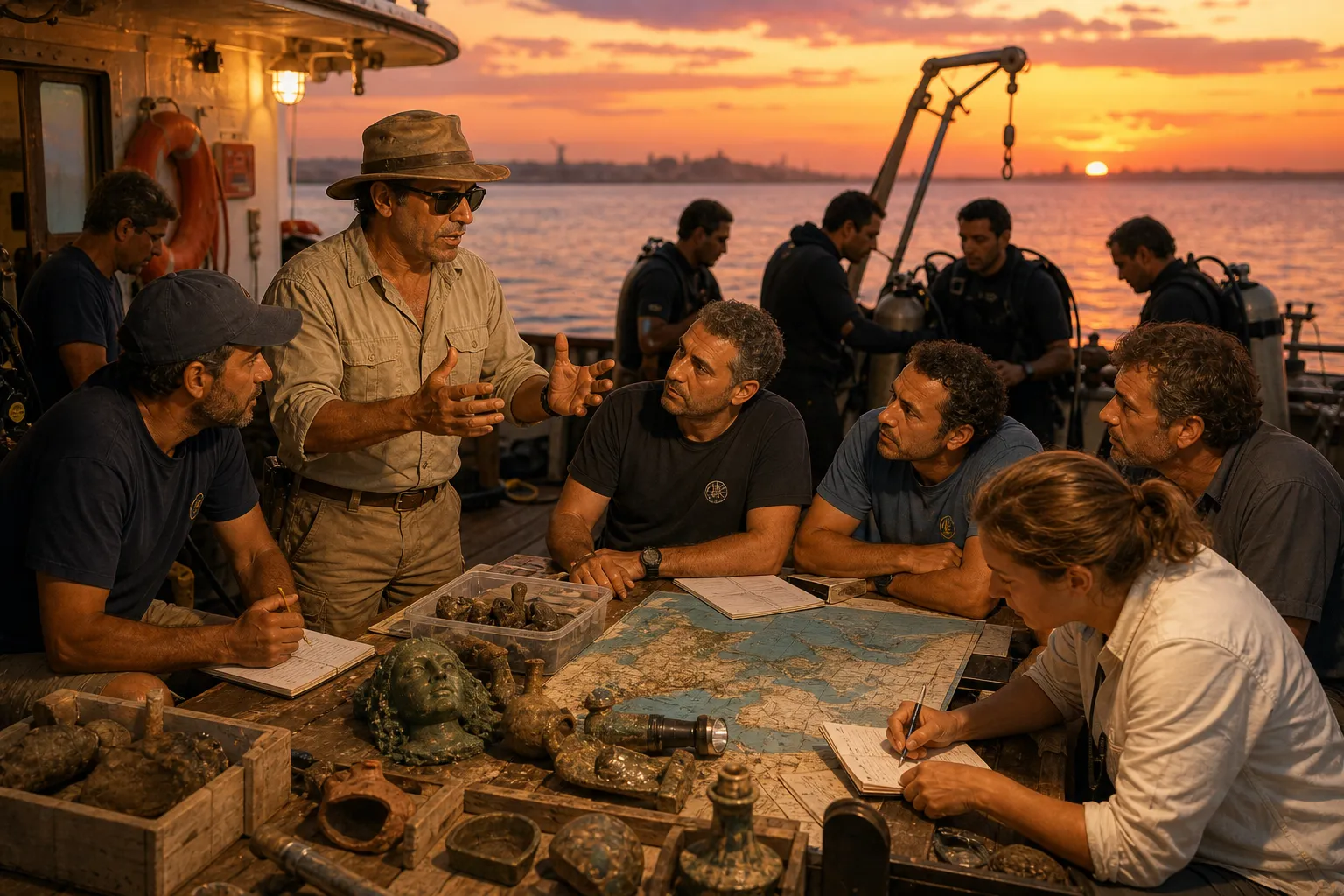
Gathered on the deck of their research vessel as the sun dips below the horizon, the team of archaeologists reflects on the day's discoveries. Their excitement is tempered by the enormous responsibility of preserving these submerged treasures. Each artifact recovered tells a story of Heracleion’s former grandeur and its inevitable sinking into the depths. The team acknowledges the complex interplay of geological shifts and historical events that led to the city’s submersion over centuries. Their mission is not only to unravel the mysteries of the past but to ensure that Heracleion's legacy endures for future generations, who will appreciate and learn from these remnants of an ancient civilization.
"Our task is not just to discover, but to preserve," the lead archaeologist insists.
Page 9 — Unveiling History
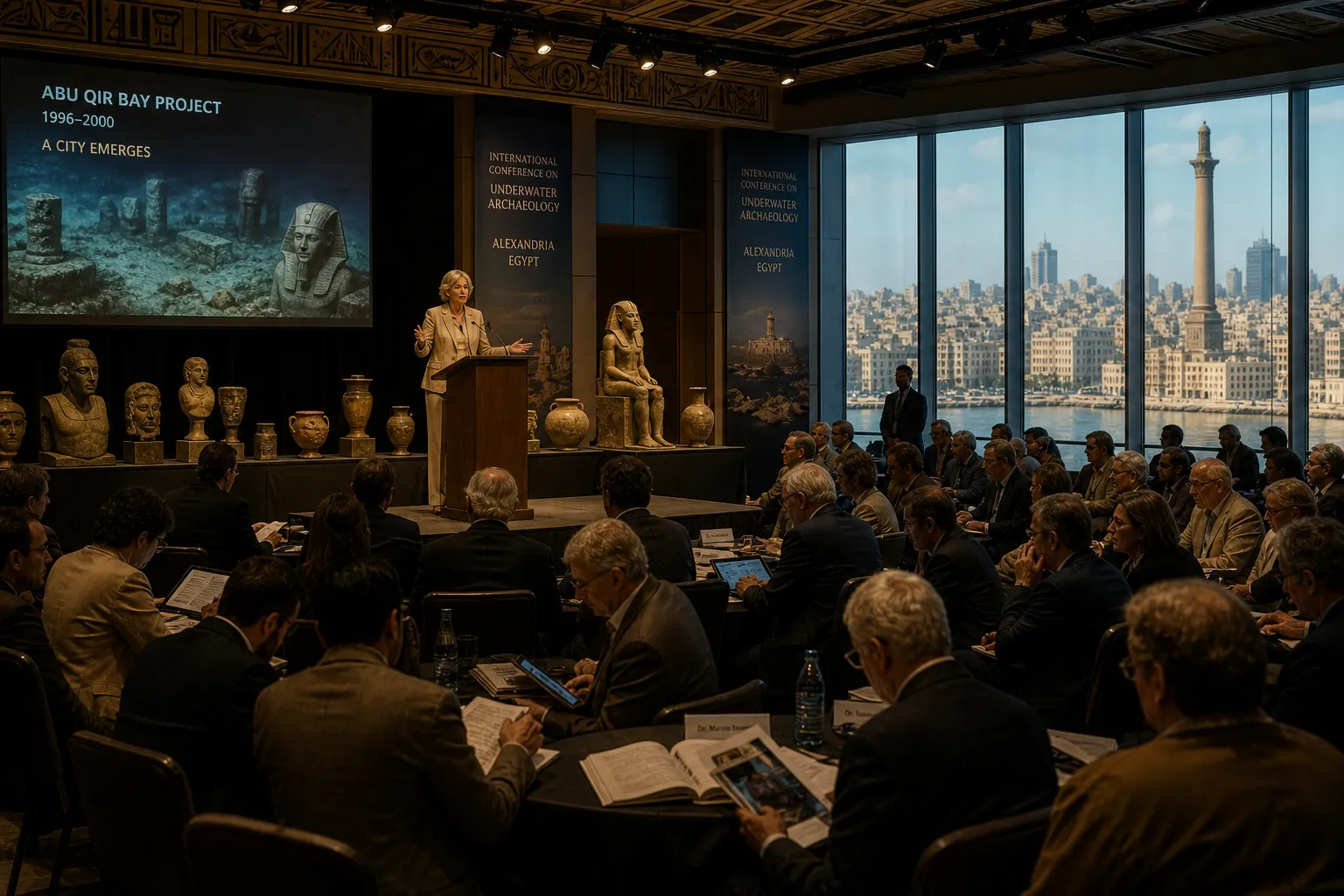
As the news of this monumental discovery reverberates across continents, the halls of academia throng with anticipation. The grand international conference hall, adorned with flags of many nations, hosts an unprecedented gathering of historians and archaeologists. Experts from diverse disciplines converge, their voices a mosaic of languages, eagerly debating the profound implications of unearthing Heracleion. This fabled city, once shrouded in myth, now stands as a testament to Egypt's intricate trade networks and rich cultural tapestry. Each artifact, meticulously cataloged and analyzed, echoes stories of a vibrant past, inviting fresh interpretations. As scholarly discourse unfolds, the collective understanding of ancient Egyptian civilization is irrevocably transformed, with new viewpoints emerging and old theories being questioned.
"Heracleion changes everything we thought we knew," a historian declares at a conference.
Page 10 — Legacy of the Sea
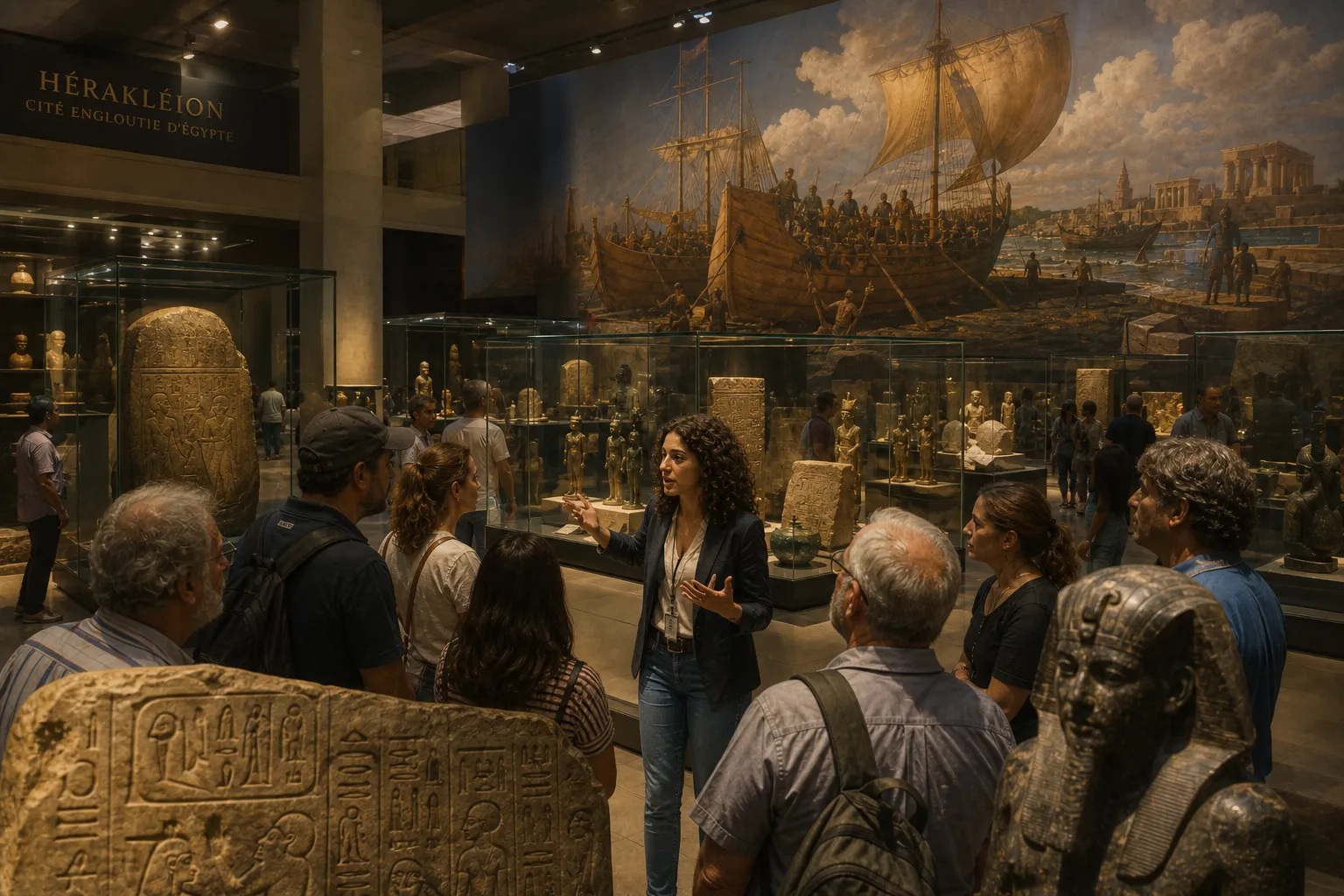
Long after Heracleion's initial surfacing from the sediment of time, its allure persists in the vivid chronicles it presents to the modern world. In museum exhibition spaces worldwide, carefully curated displays of Heracleion's relics transport visitors to a time when the city thrived as a bustling trade hub. Each item, from the towering statues to the delicate amulets, tells a story of a vibrant civilization, both its zenith and its downfall to the inexorable tide. The exhibits not only speak of a once-magnificent city's vibrancy but also of nature's overwhelming force that swallowed it whole. Archaeologists and history enthusiasts alike are drawn to these exhibitions with a similar curiosity, a desire to peer beyond the surface and uncover the untouched narratives that lie dormant beneath the ocean's depths. As these relics whisper tales of ancient glory and ruin, they ignite a spark of exploration in the hearts of those who walk the corridors, inspiring a generation to dive into the submerged chapters of history and reveal the stories lost to the waves.
"What else waits beneath the waves?" a young archaeologist asks, eyes bright with wonder.
About this story
- Audience: general readers
Read Wonder Egypt on your phone
Wonder Egypt is available on Android. Get Wonder Egypt on Google Play.