Christopher Columbus’ First Voyage — Caribbean (1492, Caribbean)
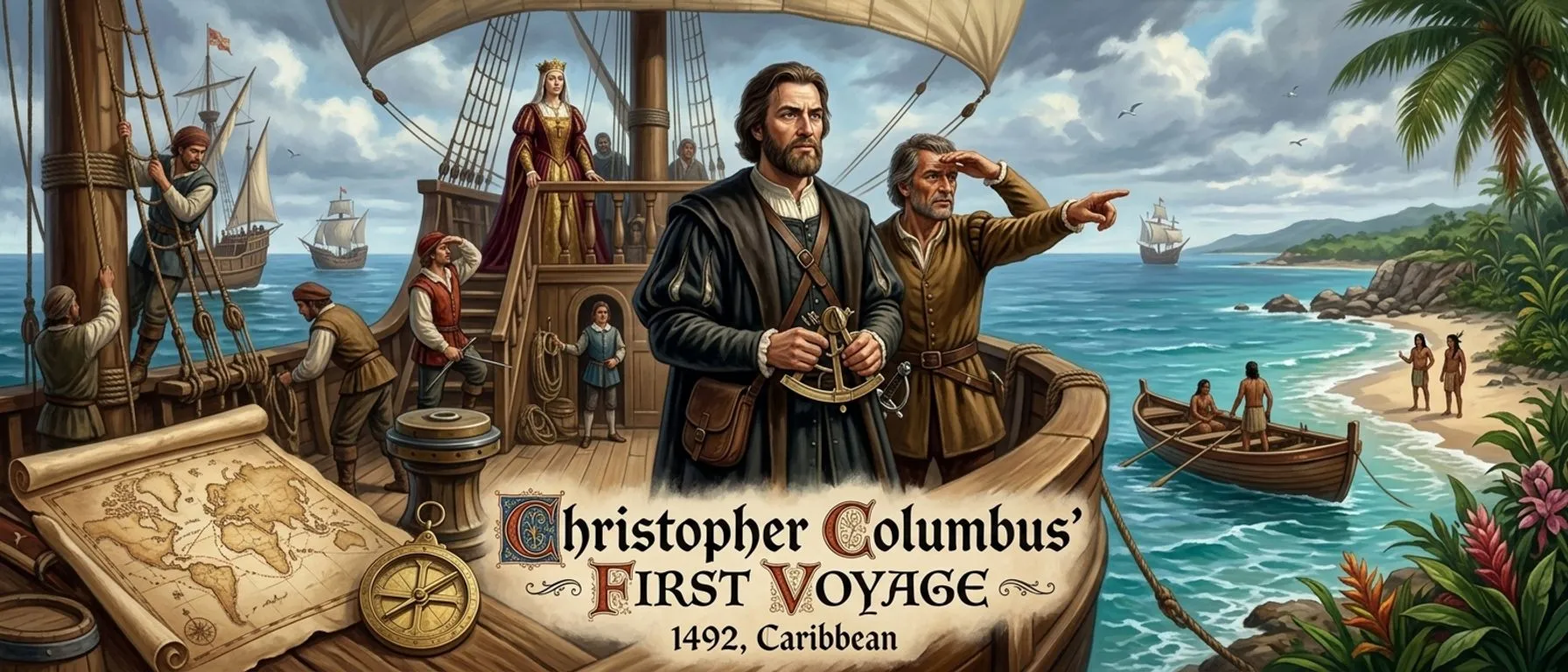
Christopher Columbus’ First Voyage — Caribbean (1492, Caribbean) — an illustrated history story, featuring Christopher Columbus, Martín Alonso Pinzón, Rodrigo de Triana, set in Caribbean. 10 illustrated pages, free to read on Wonder History.
Page 1
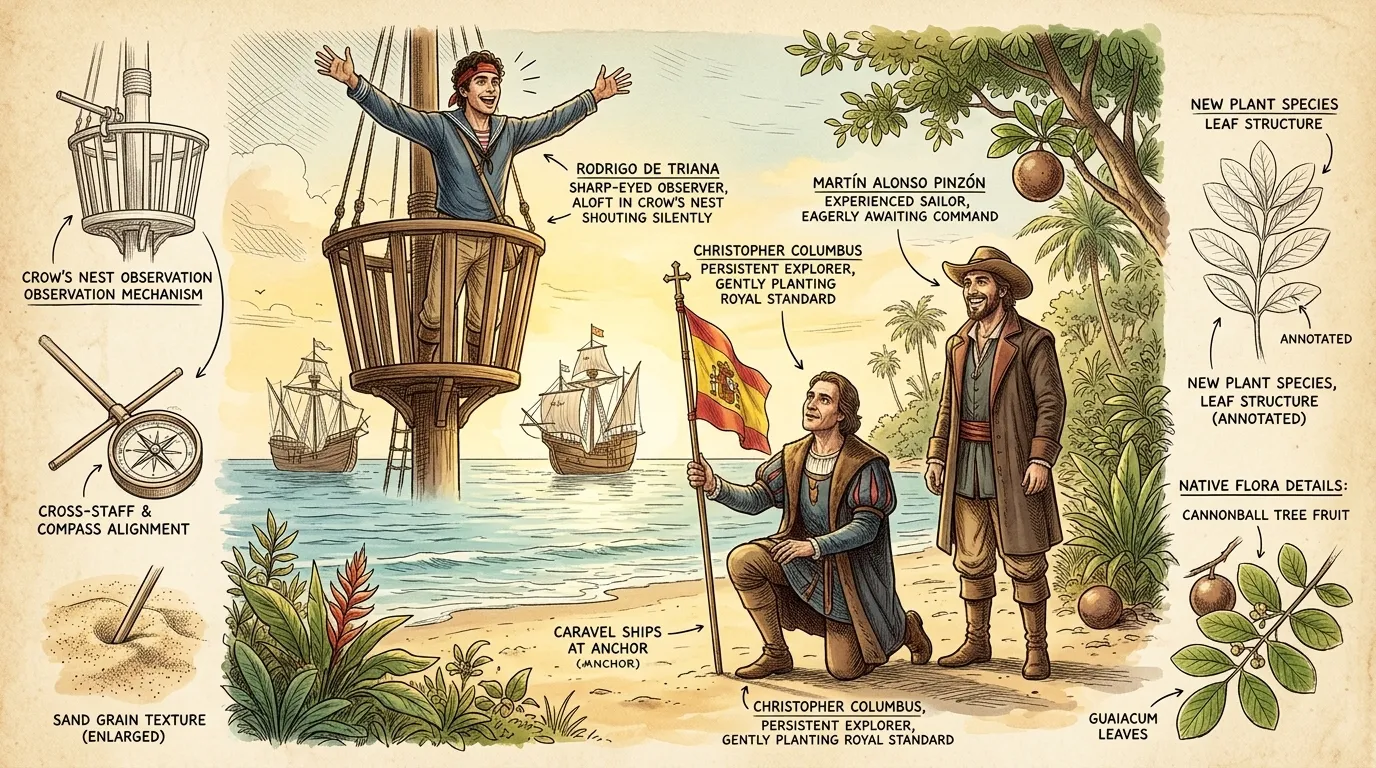
October 12, 1492. Rodrigo de Triana, a young sailor aboard the Pinta, shouted, 'Tierra!'. Christopher Columbus, the Genoese explorer who believed he could reach the East Indies by sailing west, planted the flag of Spain on this new land. Martín Alonso Pinzón, captain of the Pinta, watched with anticipation after having pushed for this very voyage. But what led these men across the vast ocean, and what did they find when they arrived?
Page 2
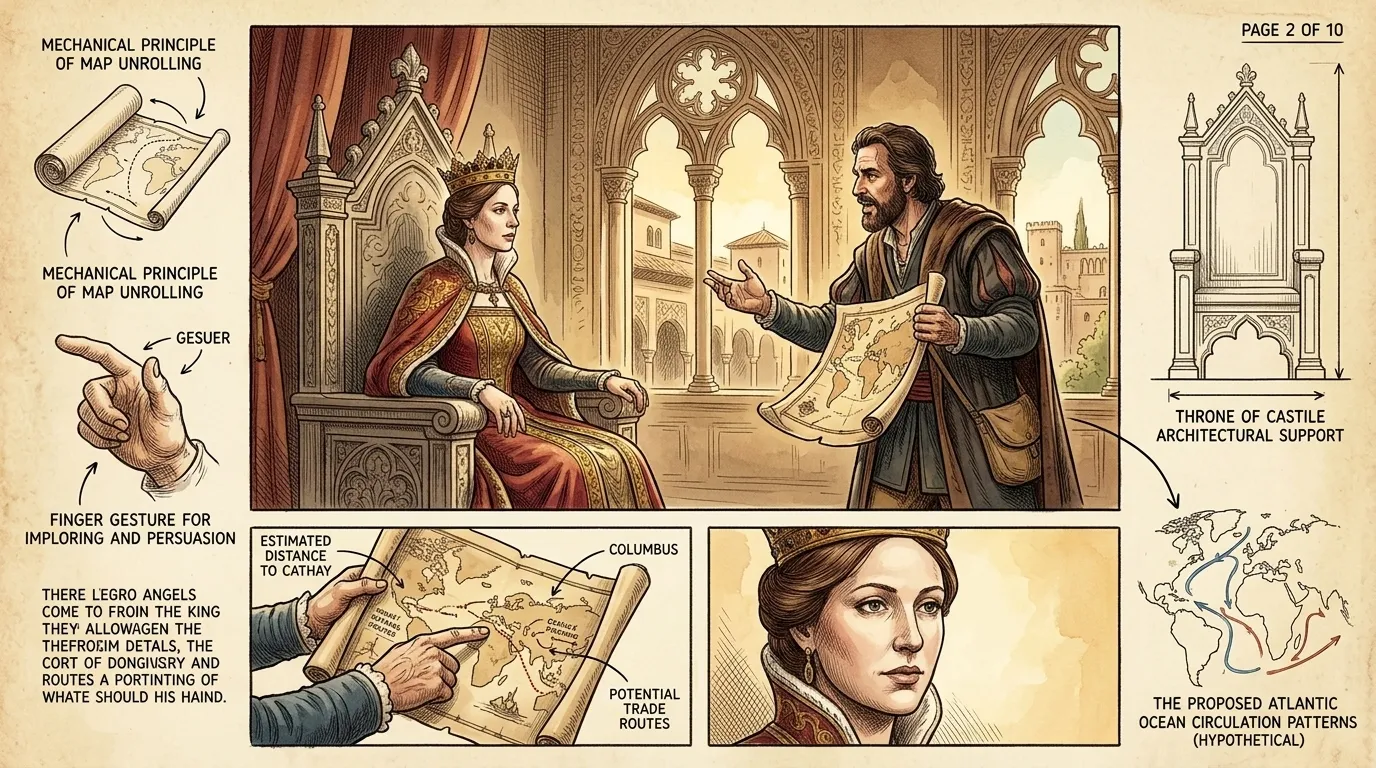
In the court of Isabella I of Castile, Columbus presented his ambitious plan. 'Your Majesty,' Columbus implored, 'allow me to seek a western passage to the Indies, and I will bring back riches and spread the holy faith.' Isabella, a woman of strong will and deep religious conviction, listened intently. She saw both opportunity and risk in this audacious venture. The promise of new trade routes and gold was attractive, but the cost and uncertainty were significant.
Page 3
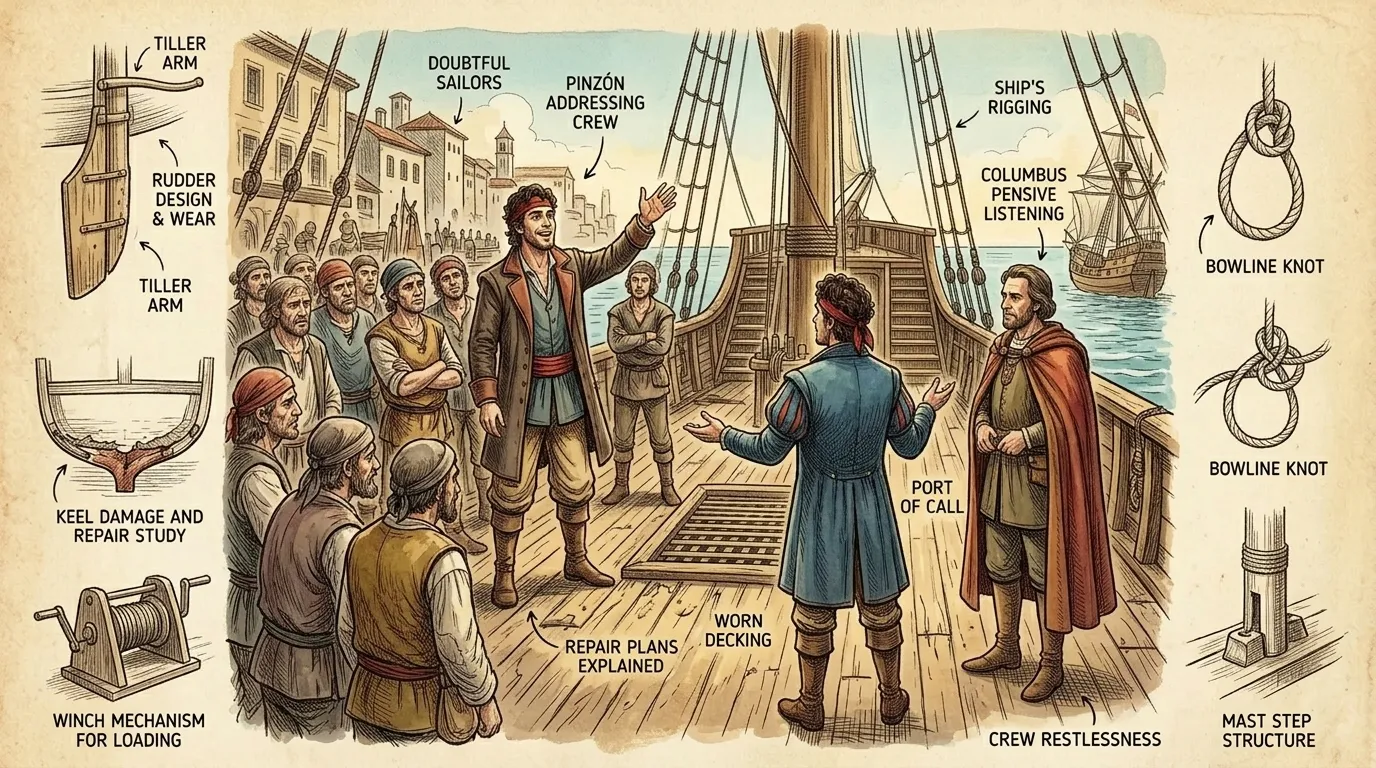
Martín Alonso Pinzón addressed the skeptical crew. 'Remember what Seneca said,' Pinzón declared, '"Every new beginning comes from some other beginning's end." This voyage is not just about spices and gold, but about reshaping our understanding of the world.' Pinzón then turned to Columbus and said, 'But our ships need repair, and the men are restless.'
Page 4

Weeks turned into months as the three ships sailed westward. The sailors grew anxious and fearful. 'We've sailed too far,' grumbled one sailor. Columbus, consulting his charts, reassured them, 'Land cannot be far now.' Rodrigo de Triana, perched high in the crow's nest, strained his eyes, searching for any sign of land.
Page 5

Fear grew among the men when days later there was still no sign of land. 'We should turn back,' a sailor shouted. 'We're heading to our deaths.' Columbus, with a stern gaze, replied 'I will not give up on this journey and this chance for glory! We will reach the Indies, or we will die trying!'
Page 6

Birds flew overhead, a sure sign of land, but still, the shores were nowhere in sight. 'Look! Those birds are flying southwest,' exclaimed Rodrigo, the young sailor. Martin Pinzón approached Columbus, 'Admiral, the course should be changed as soon as possible so that we can take advantage of the new information.'
Page 7

After weeks of relentless sailing, Rodrigo de Triana's shout echoed across the water: 'Tierra! Tierra!' The weary sailors cheered, their faces filled with joy and relief. Columbus, overcome with emotion, fell to his knees in prayer. Martín Alonso Pinzón wept with relief. Land was on the horizon at last.
Page 8
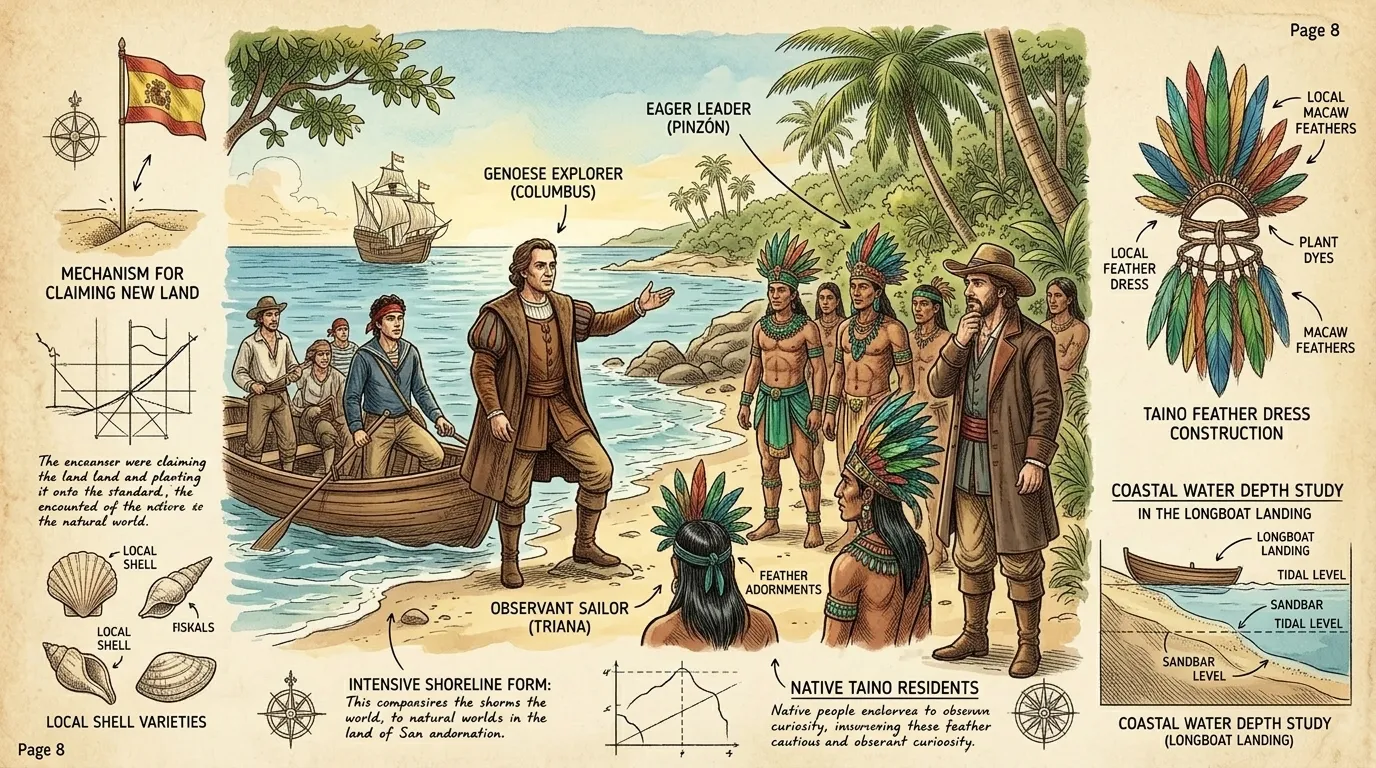
As Columbus and his men landed on the island they called San Salvador, they were greeted by the native Taíno people. The Taíno, adorned with vibrant feathers and curious expressions, watched as these strange men emerged from the sea. Columbus, misunderstanding their culture, claimed the island for Spain. A tense standoff ensued between the Spanish and the Taíno people, each unsure of the other's intentions.
Page 9

Columbus, believing he had reached the Indies, named the native inhabitants 'Indians.' He sought gold and spices but found a vibrant culture he didn't understand. Martín Alonso Pinzón approached Columbus. 'Admiral, these people know things we do not. We should learn from them before we try to change them.' Columbus did not heed his advice, focused on what he felt was the mission at hand. His misunderstanding had dire consequences.
Page 10

Columbus returned to Spain a hero, bringing news of a 'New World'. This voyage would open up the Americas to European colonization. The exchange of goods, ideas, and unfortunately, diseases, irrevocably altered the course of history. European powers would spread, new crops and goods would make their way around the globe, while devastating old world diseases decimated native populations.
About this story
- Historical figures: Christopher Columbus, Martín Alonso Pinzón, Rodrigo de Triana
- Location: Caribbean
- Period: Middle Ages
- Audience: general readers
Questions and answers
Questions and answers about Christopher Columbus’ First Voyage — Caribbean (1492, Caribbean)
Read Wonder History on your phone
Wonder History is available on Android. Get Wonder History on Google Play.
More Wonder History stories
- Commodore Perry’s Expedition — Japan (1853, Japan)
- How Gold from Africa Built European Kingdoms (1400, Mediterranean)
- How Homes Changed from Caves to Castles (30000 BC, Chauvet Cave)
- How Music Was Made Before Recordings (1750, Vienna)
- How People Told Time Before Clocks (1550, USA)
- How Sugar Changed Three Continents (500 BC, Caribbean)