The Battle of Gettysburg (1863, United States)
The Battle of Gettysburg (1863, United States) — an illustrated history story, featuring Robert E. Lee, George Meade, John Buford, set in United States. 10 illustrated pages, free to read on Wonder History.
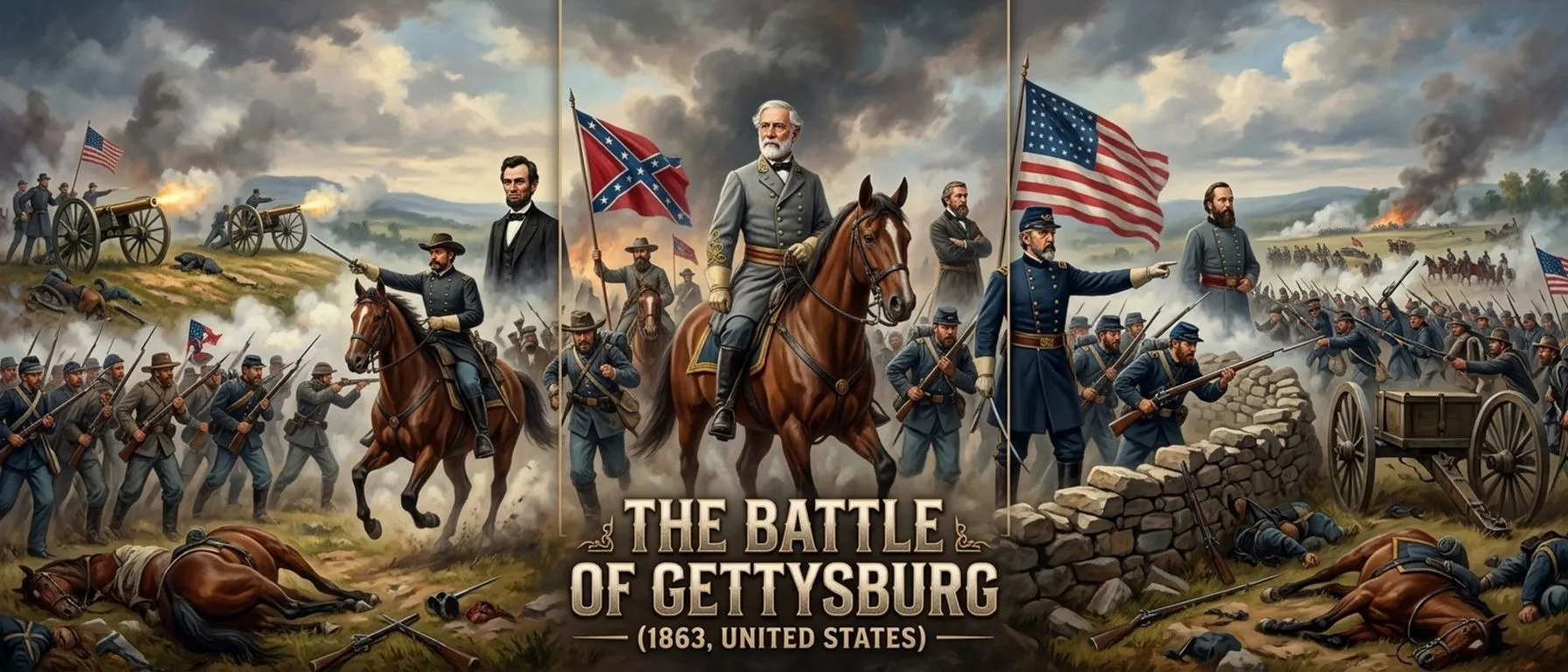
Page 1
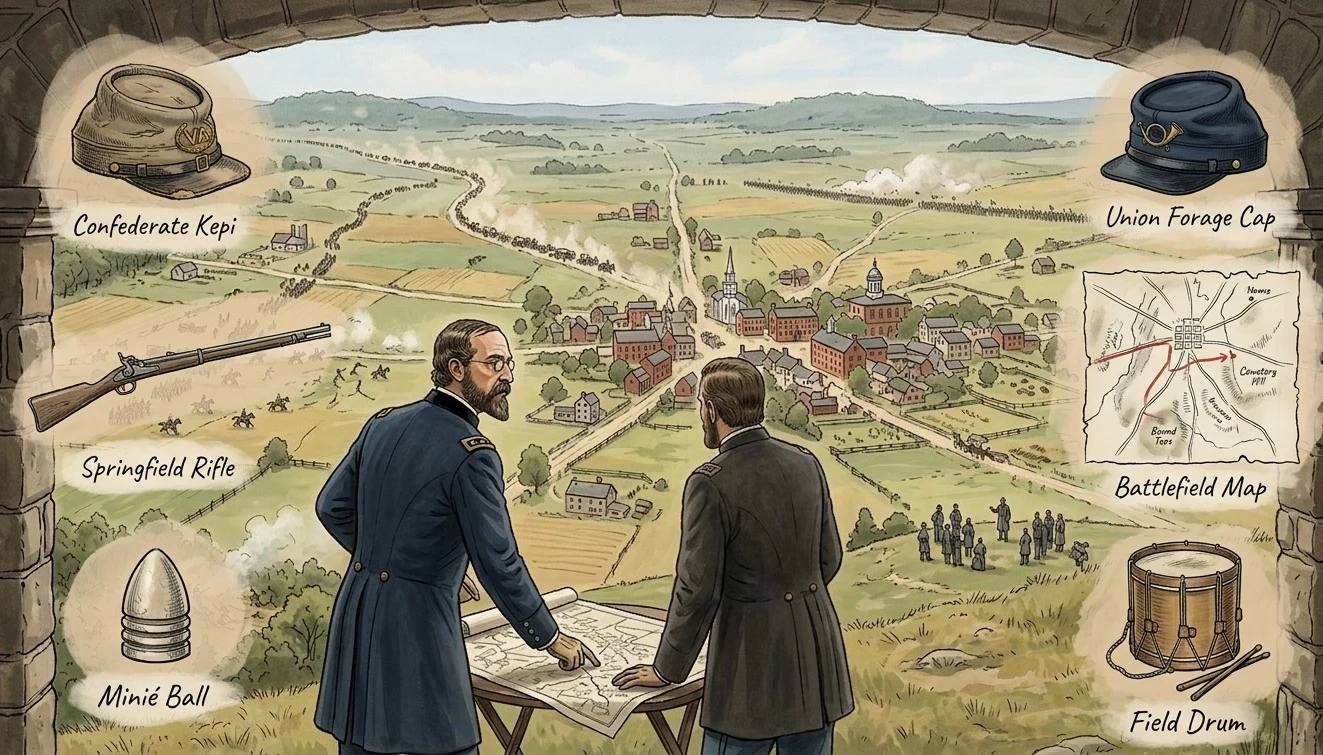
On July 1, 1863, near the small town of Gettysburg, Pennsylvania, General Robert E. Lee, commander of the Confederate Army of Northern Virginia, and General George Meade, newly appointed commander of the Union Army of the Potomac, were about to clash. The battle would rage for three days, marking a turning point in the American Civil War. Over 50,000 soldiers would become casualties on this hallowed ground. But what led these two armies to converge on this fateful field?
Historical Fact: The Battle of Gettysburg is considered the turning point of the Civil War. It had the largest number of casualties in the war with an estimated 46,000 to 51,000.
Page 2
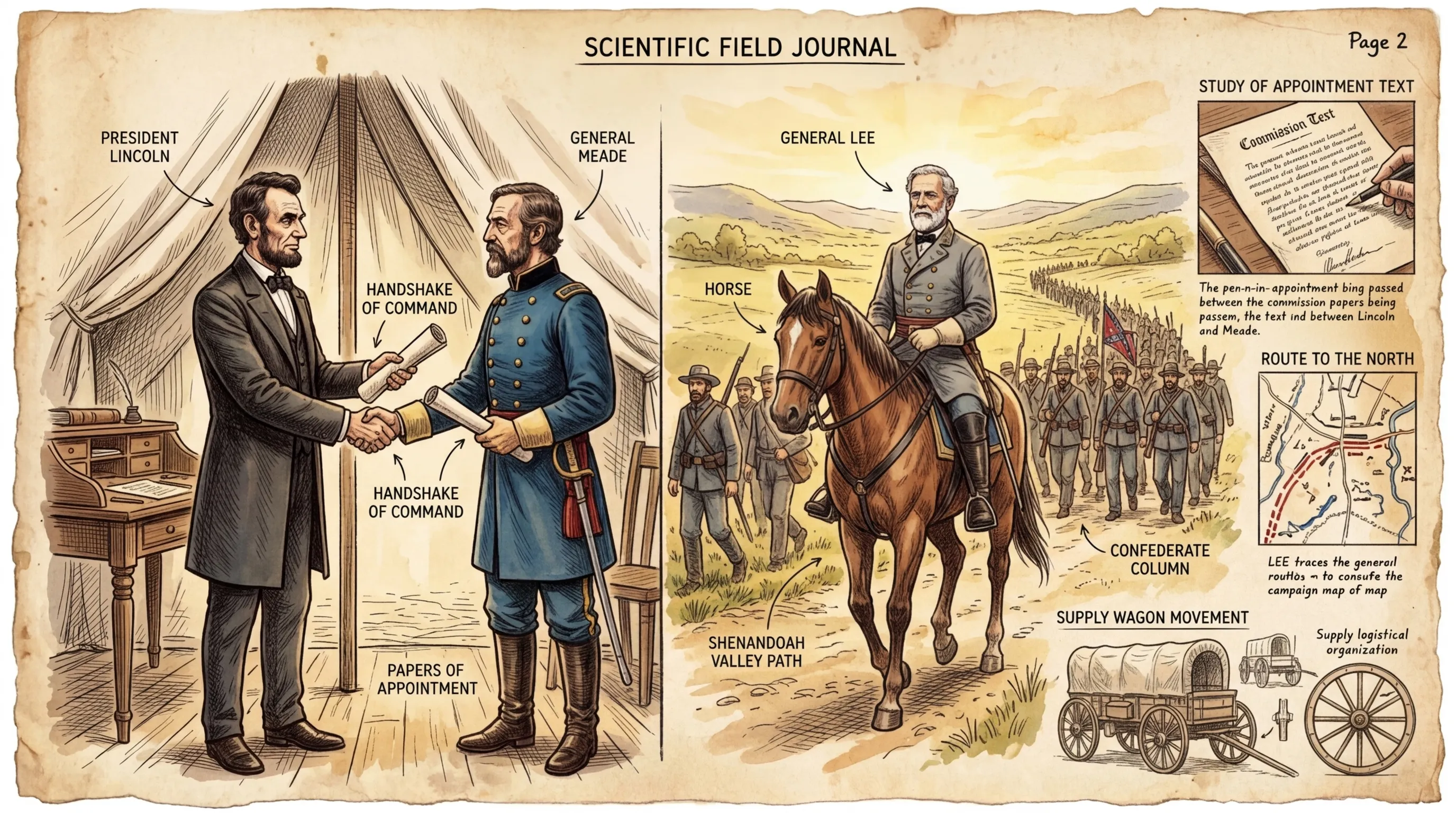
In the spring of 1863, General Lee decided to invade the North for a second time. He aimed to relieve pressure on Virginia, gather supplies, and potentially sway Northern public opinion against the war. The Confederate army marched through the Shenandoah Valley, heading north into Pennsylvania. Meanwhile, President Abraham Lincoln, desperate for a victory, appointed General George Meade as the new commander of the Union Army just days before the battle.
Historical Fact: Robert E. Lee's decision to invade the North was a gamble intended to force the Union to negotiate peace.
Page 3
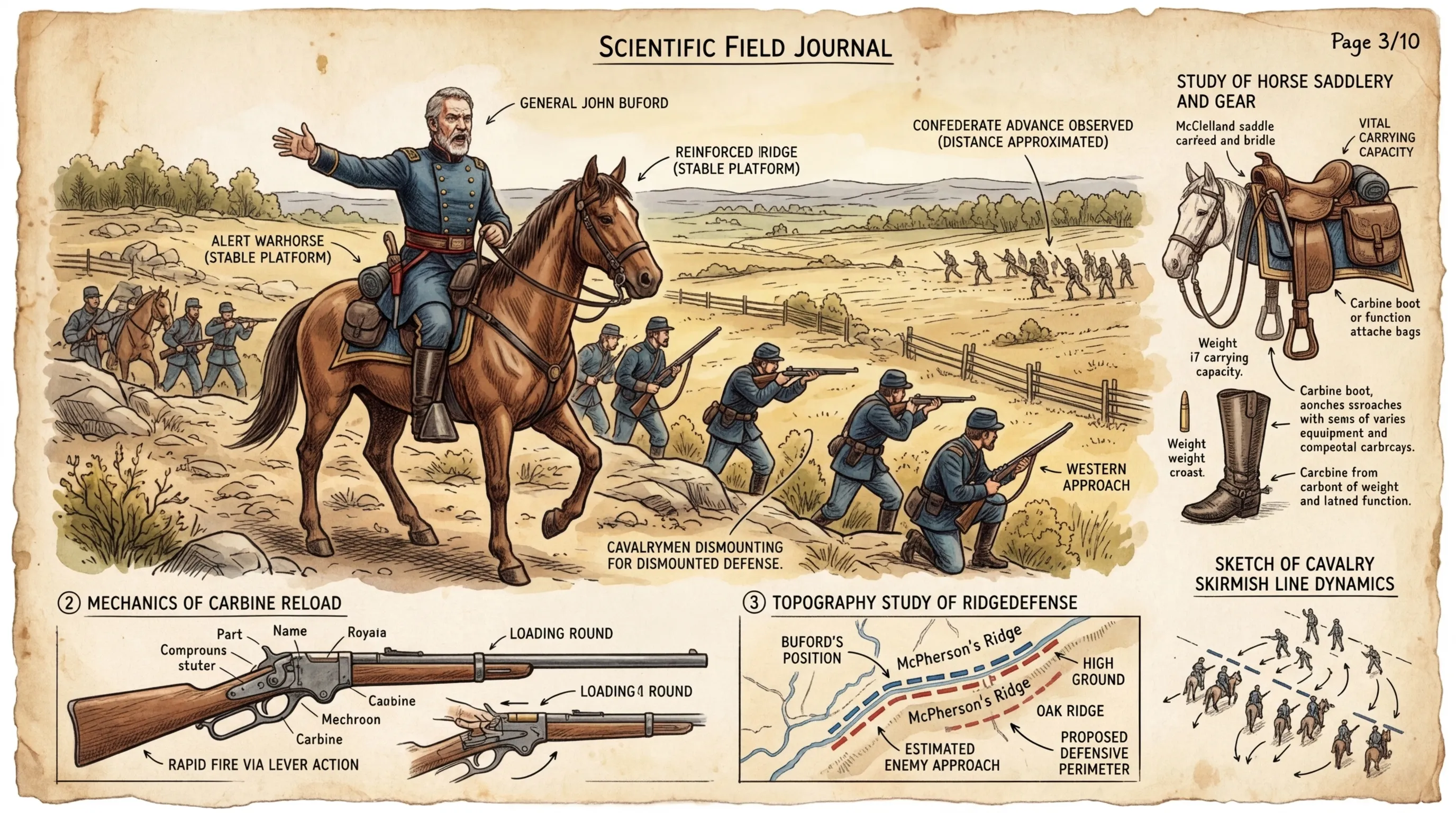
The initial engagement at Gettysburg was almost accidental. On July 1, a Confederate brigade, searching for shoes in the town, encountered Union cavalry west of Gettysburg. The skirmish quickly escalated as more troops arrived. General John Buford, commanding the Union cavalry, recognized the strategic importance of holding the high ground west of Gettysburg. He understood that if he could hold the ridges long enough, Union infantry could arrive and fortify their defensive positions.
""Hold the high ground!" bellowed General John Buford. "We must buy time for the infantry to arrive!""
Historical Fact: John Buford's decision to stand and fight bought crucial time for the Union army to establish a defensive line.
Page 4
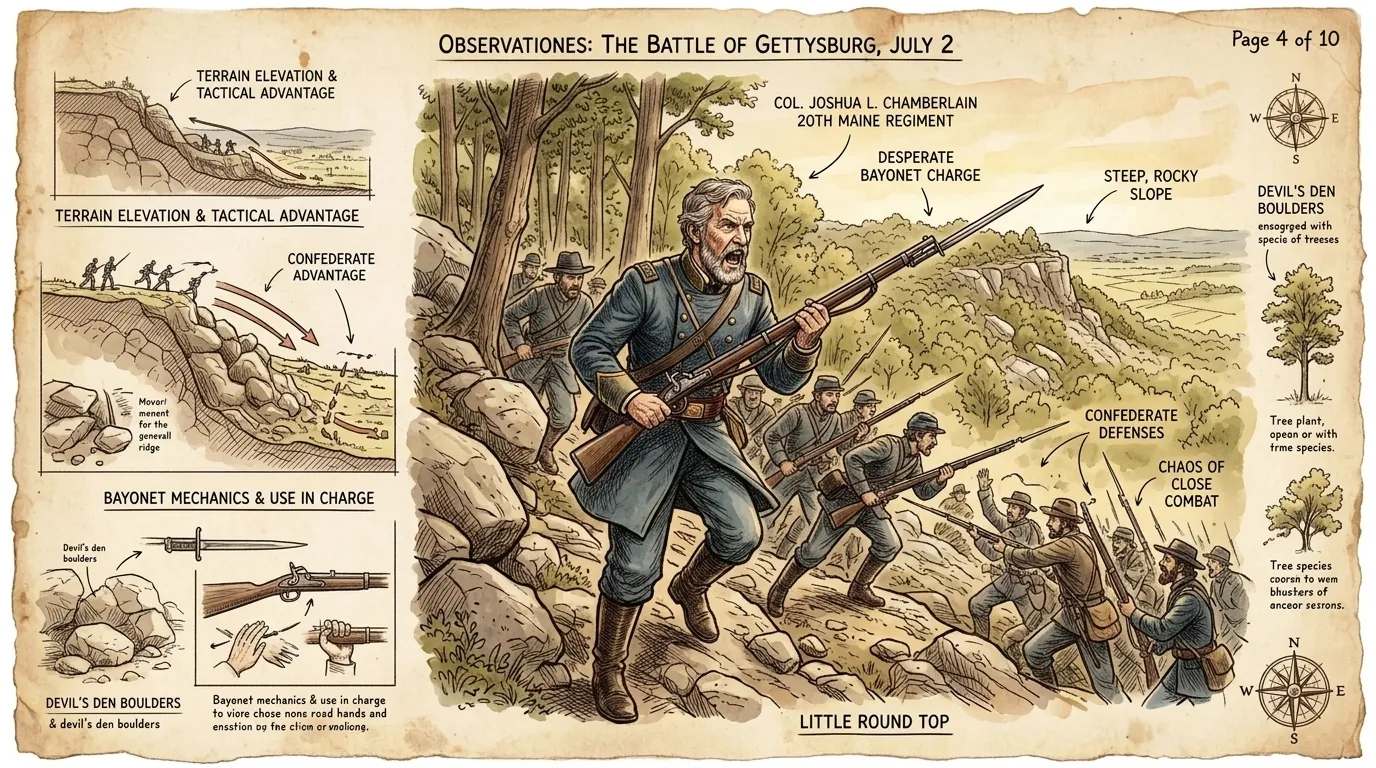
On the second day, the Confederates launched a series of attacks on the Union left flank. The fight for Little Round Top, a small but strategically important hill, became a desperate struggle. Colonel Joshua Lawrence Chamberlain, commanding the 20th Maine regiment, and his men, low on ammunition, held their ground against repeated Confederate assaults. Chamberlain, realizing the dire situation, ordered a bayonet charge, a daring move that surprised and routed the attacking Confederates.
""Bayonets!" shouted Colonel Joshua Lawrence Chamberlain, his voice hoarse. "For God and country, fix bayonets and charge!""
Historical Fact: Joshua Lawrence Chamberlain's defense of Little Round Top was a critical moment in the battle, preventing the Confederates from flanking the Union army.
Page 5
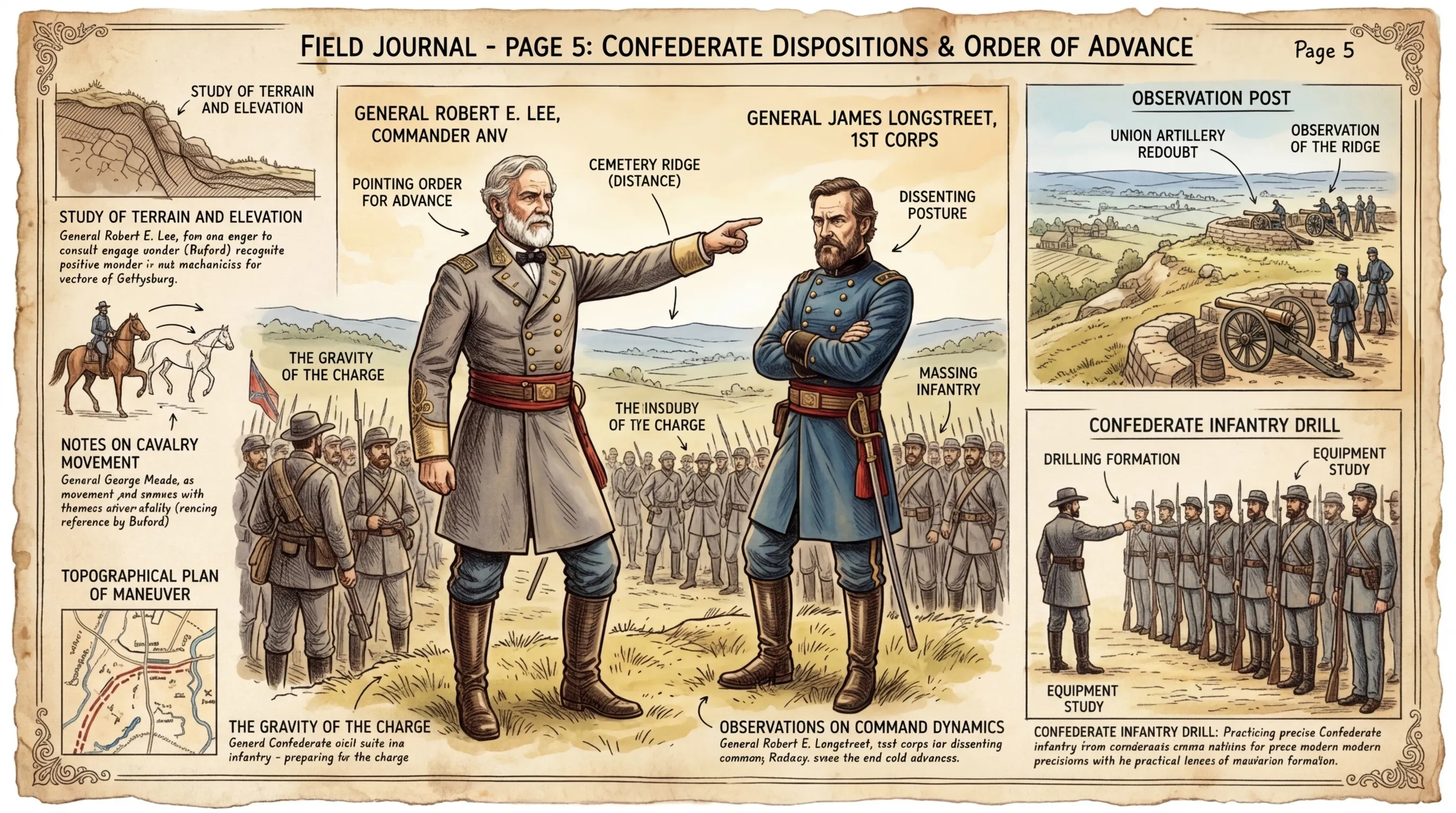
On the third day, General Lee decided to launch a massive infantry assault on the center of the Union line. This attack, known as Pickett's Charge, involved over 12,000 Confederate soldiers marching across open ground towards the Union positions on Cemetery Ridge. The Union artillery unleashed a devastating barrage, decimating the Confederate ranks. Despite heavy losses, some Confederates reached the Union line, but they were quickly overwhelmed.
"As the Confederate troops gathered for the charge, General James Longstreet, Lee's second in command, was skeptical about the plan, stating to Lee, 'I have been a soldier all my life. I have seen battle day after day, and I do not believe 15,000 men ever arrayed for battle can take that position.'"
Historical Fact: Pickett's Charge was a disastrous assault that marked the high-water mark of the Confederacy and a turning point in the Civil War.
Page 6
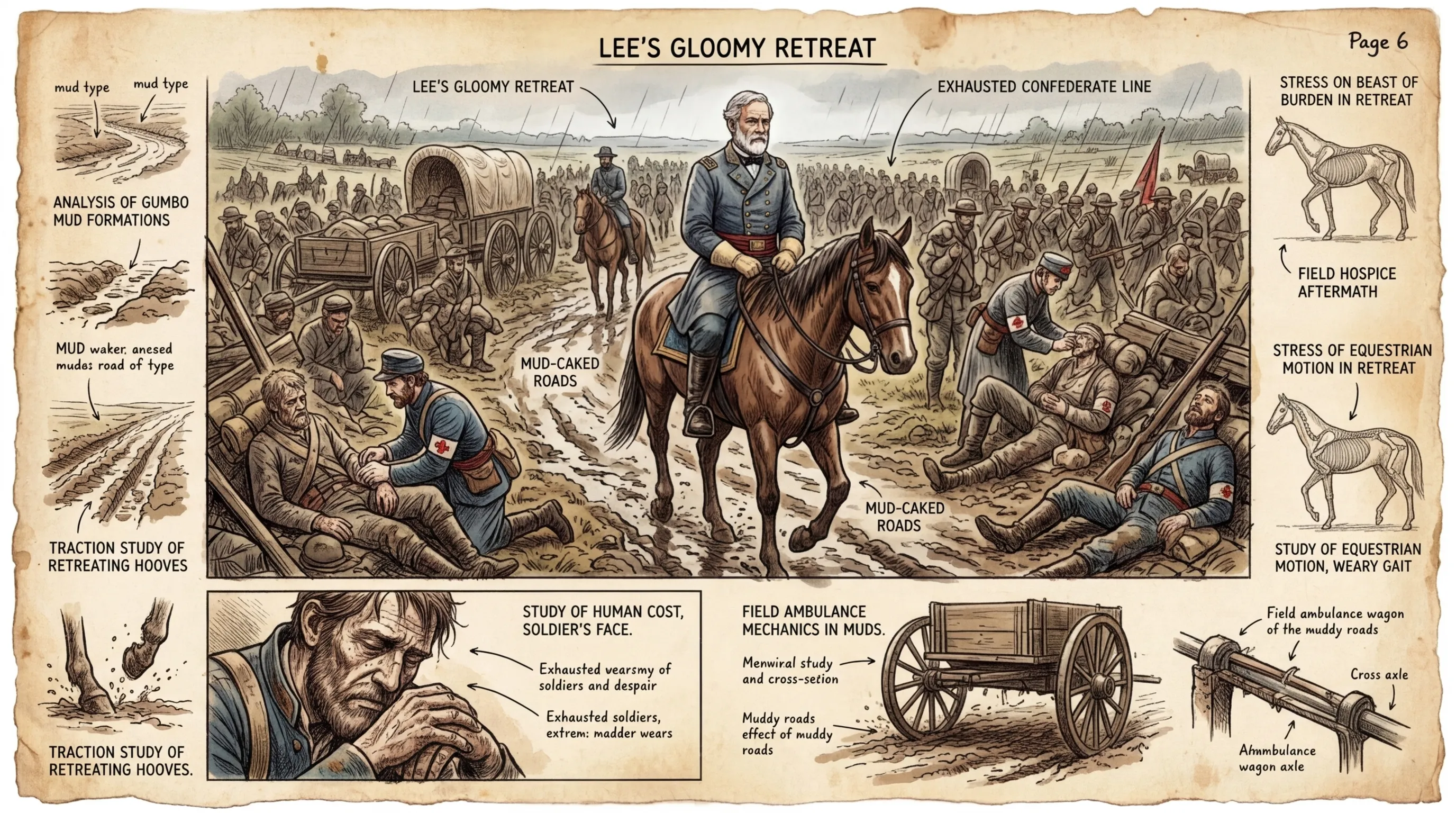
After the failure of Pickett's Charge, General Lee knew that the battle was lost. He began to withdraw his army from Gettysburg, retreating back towards Virginia. The Union army, exhausted but victorious, did not pursue aggressively. The battlefield was left strewn with the dead and wounded. The small town of Gettysburg was overwhelmed with the task of caring for the injured.
Historical Fact: The aftermath of the battle left the town of Gettysburg and the surrounding area devastated and overwhelmed.
Page 7
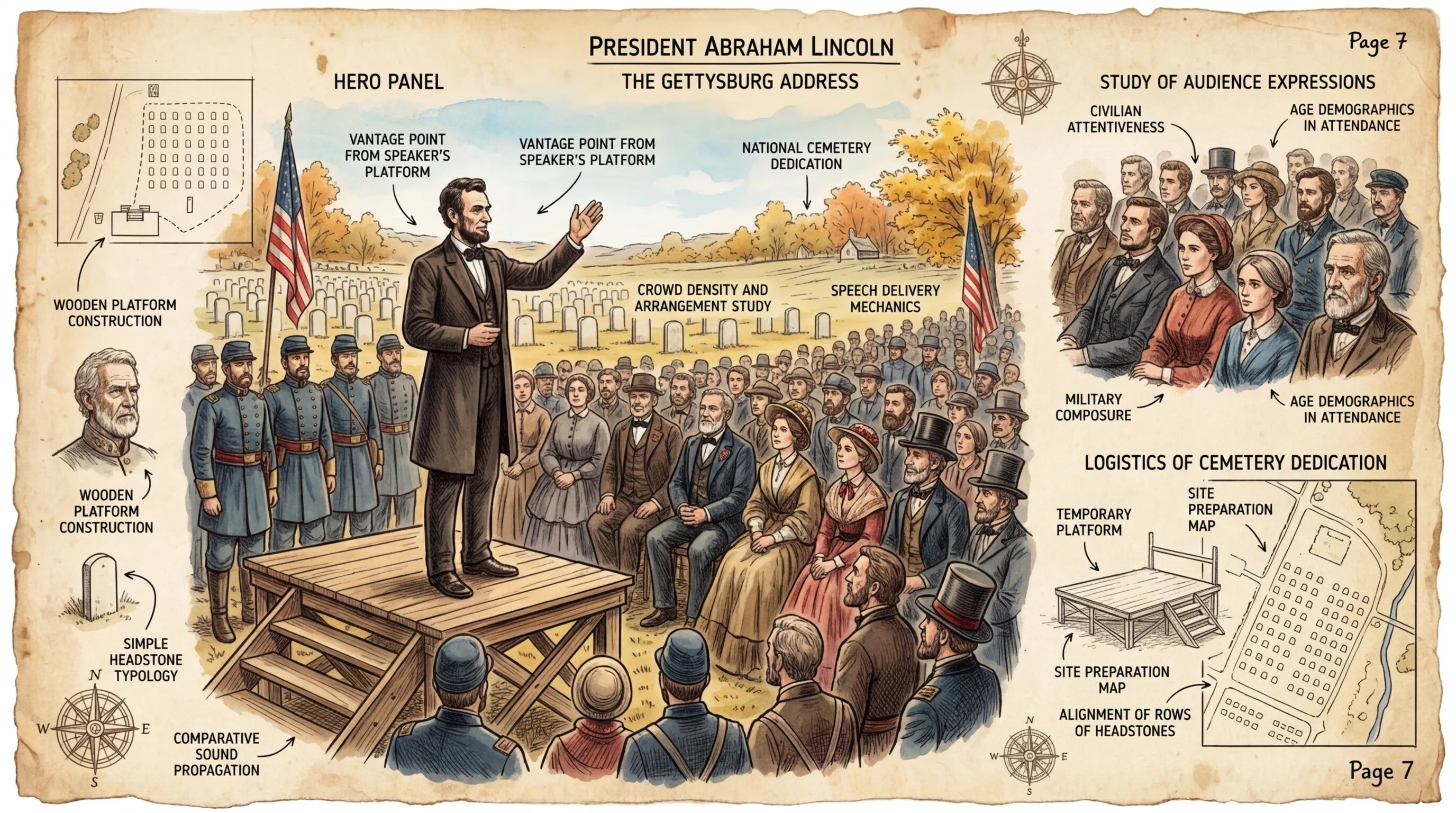
Four months after the battle, on November 19, 1863, President Abraham Lincoln traveled to Gettysburg to dedicate a new national cemetery. He delivered a short speech, now known as the Gettysburg Address, which became one of the most famous speeches in American history. Lincoln's words reminded the nation of the principles for which the war was being fought and called for a new birth of freedom.
""Four score and seven years ago our fathers brought forth on this continent, a new nation, conceived in Liberty, and dedicated to the proposition that all men are created equal," President Abraham Lincoln said, his voice ringing out across the field. "We here highly resolve that these dead shall not have died in vain – that this nation, under God, shall have a new birth of freedom – and that government of the people, by the people, for the people, shall not perish from the earth.""
Historical Fact: Lincoln's Gettysburg Address redefined the purpose of the war and cemented Gettysburg's place in American memory.
Page 8
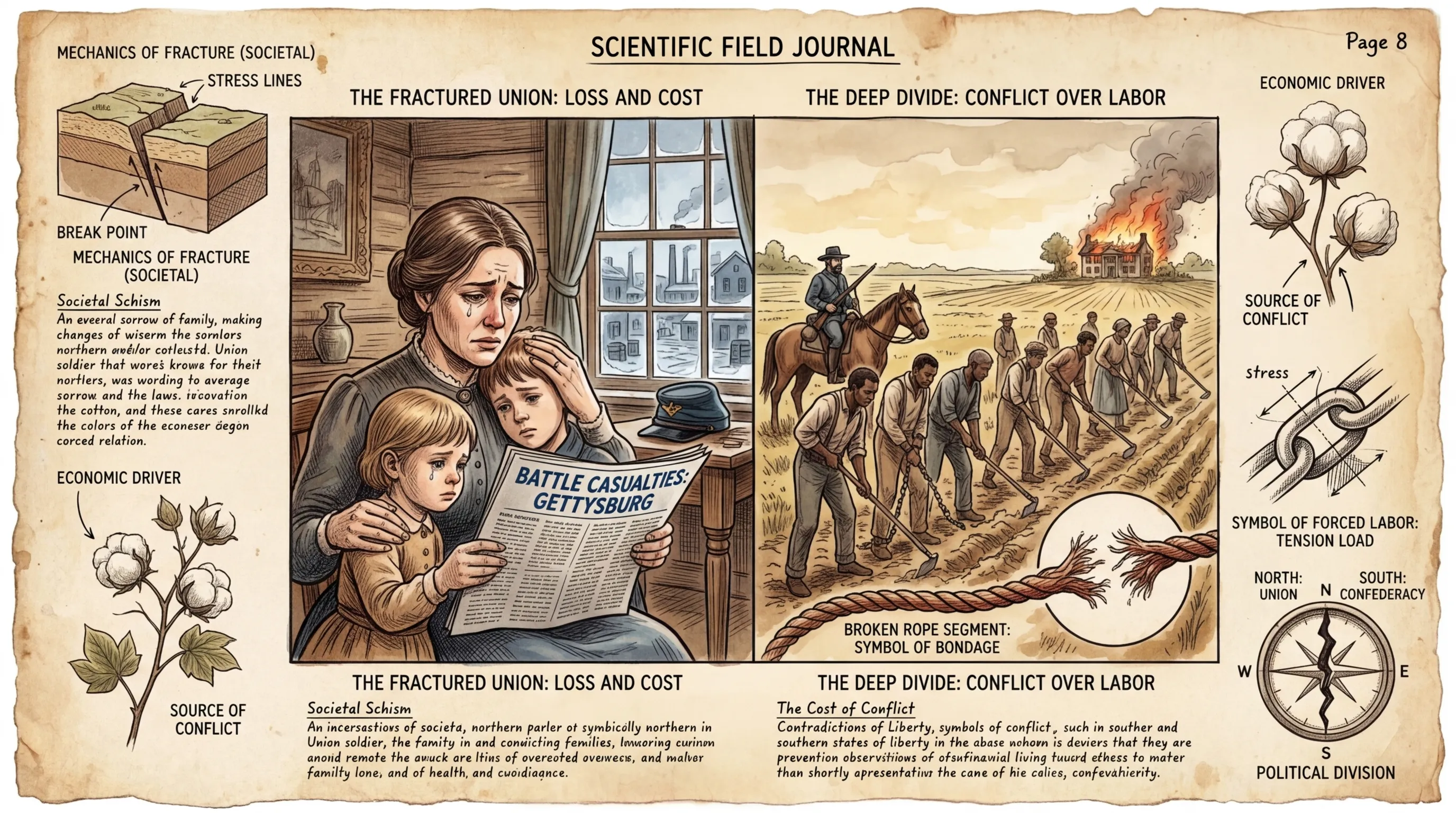
The Battle of Gettysburg was not only a turning point on the battlefield but also a turning point in the hearts and minds of many Americans. The scale of the carnage forced people to confront the human cost of the war. The conflict between the North and South reflected fundamentally different visions for the future of the nation, with slavery at the heart of the divide.
Historical Fact: The Battle of Gettysburg exposed the deep divisions within American society and the devastating impact of the war on families across the nation.
Page 9
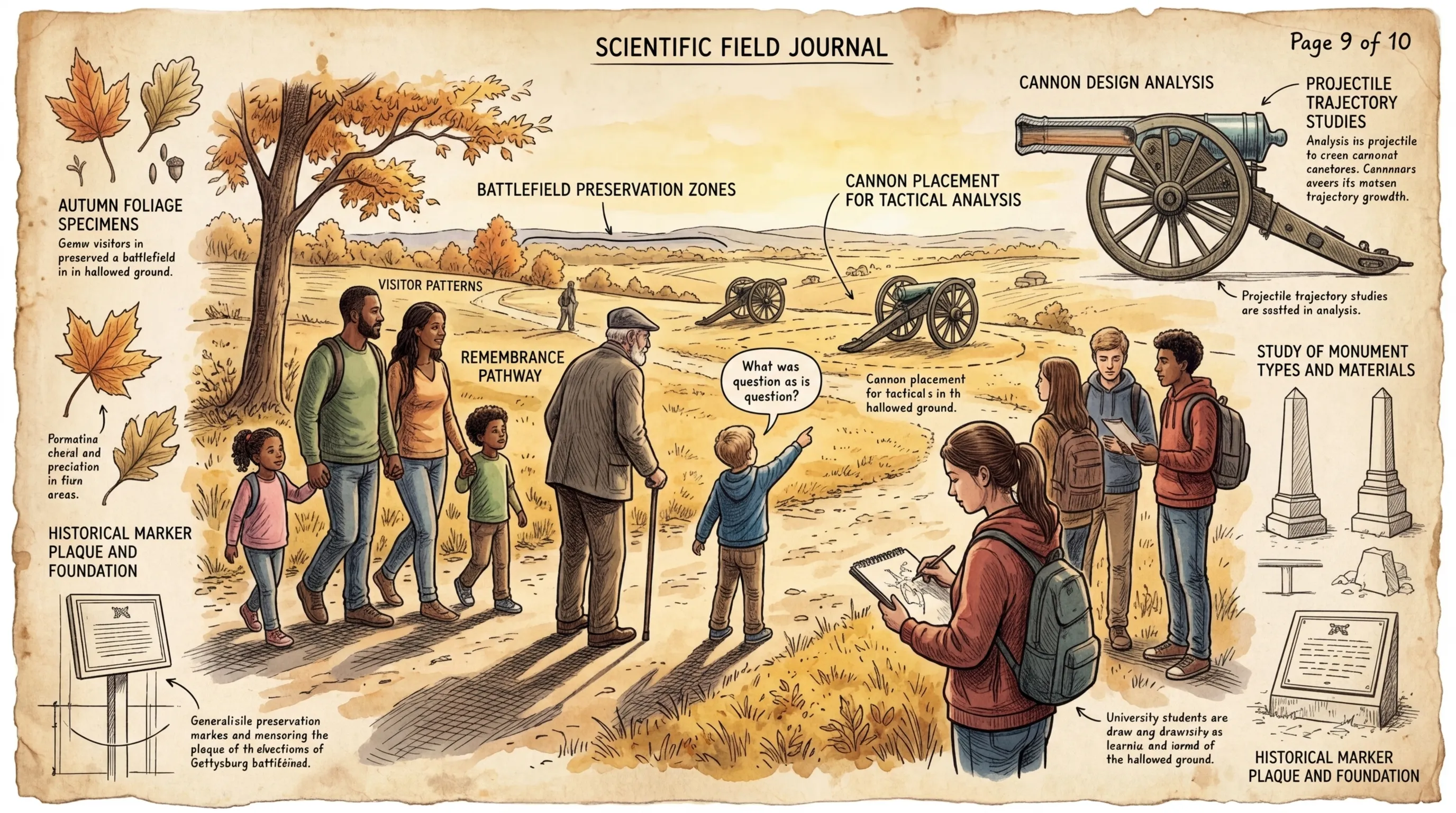
Over the years, the Gettysburg battlefield has been preserved as a national park, a place of remembrance and reflection. Visitors come to walk the fields, learn about the battle, and honor the sacrifices made by the soldiers who fought there. The story of Gettysburg continues to be told and retold, reminding us of the importance of unity and the pursuit of a more perfect union. As Carl Schurz, a Union General and later a US Senator, observed, 'Action is the only door to results'.
Historical Fact: The preservation of the Gettysburg battlefield ensures that future generations will remember the sacrifices made during the Civil War.
Page 10
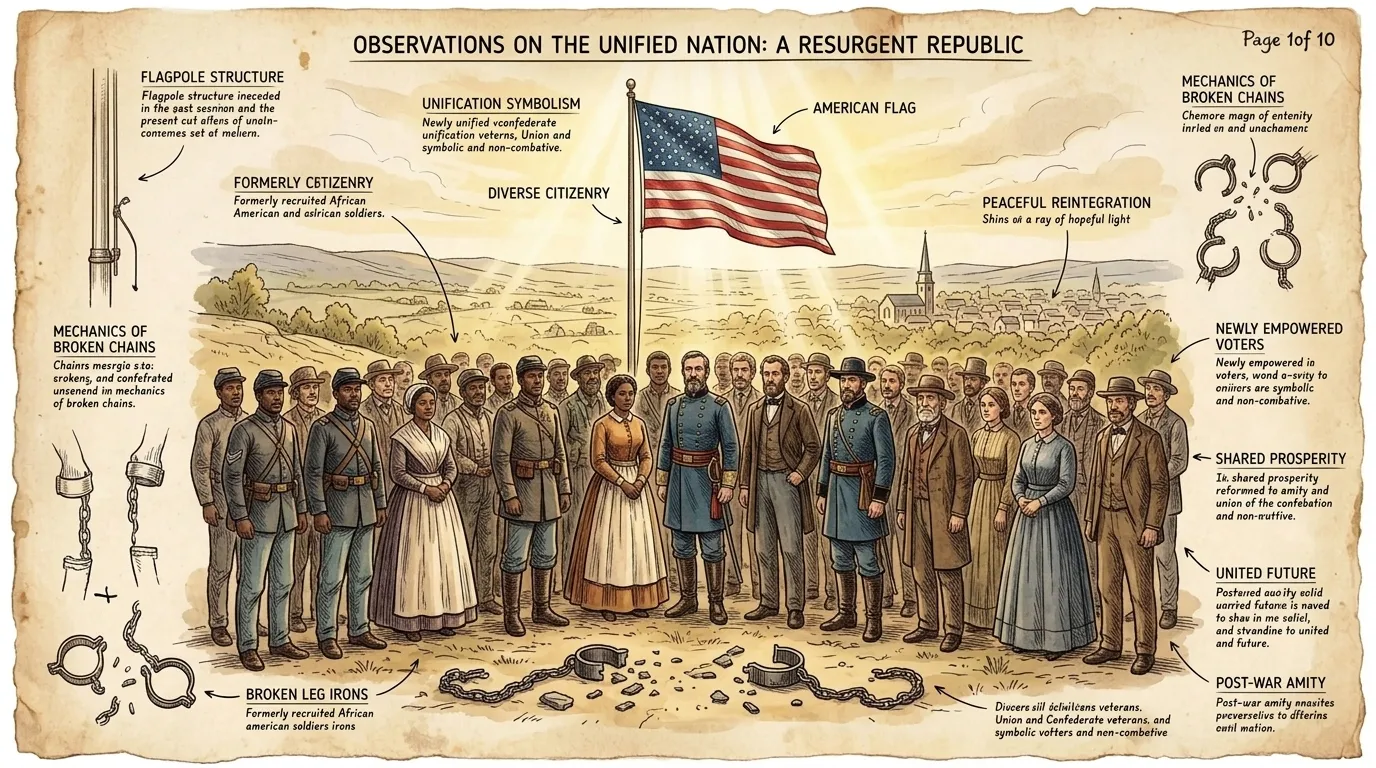
The Battle of Gettysburg and the Civil War ultimately led to the abolition of slavery and the preservation of the United States as one nation. The war transformed American society and paved the way for a more inclusive and just future. The memory of Gettysburg serves as a reminder of the fragility of democracy and the importance of fighting for equality and freedom for all.
Historical Fact: The legacy of Gettysburg is a reminder of the importance of unity, equality, and the ongoing pursuit of a more perfect union.
About this story
- Historical figures: Robert E. Lee, George Meade, John Buford
- Location: United States
- Period: Modern
- Audience: general readers
Questions and answers
Questions and answers about The Battle of Gettysburg (1863, United States)
Read Wonder History on your phone
Wonder History is available on Android. Get Wonder History on Google Play.