The Battle of Hastings (1066, United Kingdom)
The Battle of Hastings (1066, United Kingdom) — a history story, from Middle Ages, set in United Kingdom, featuring William, Duke of Normandy, Harold Godwinson, Earl of Wessex, Edward the Confessor, King of England. Topics: wars battles, United Kingdom, middle ages 500 1500, the middle ages. 10 illu
Page 1
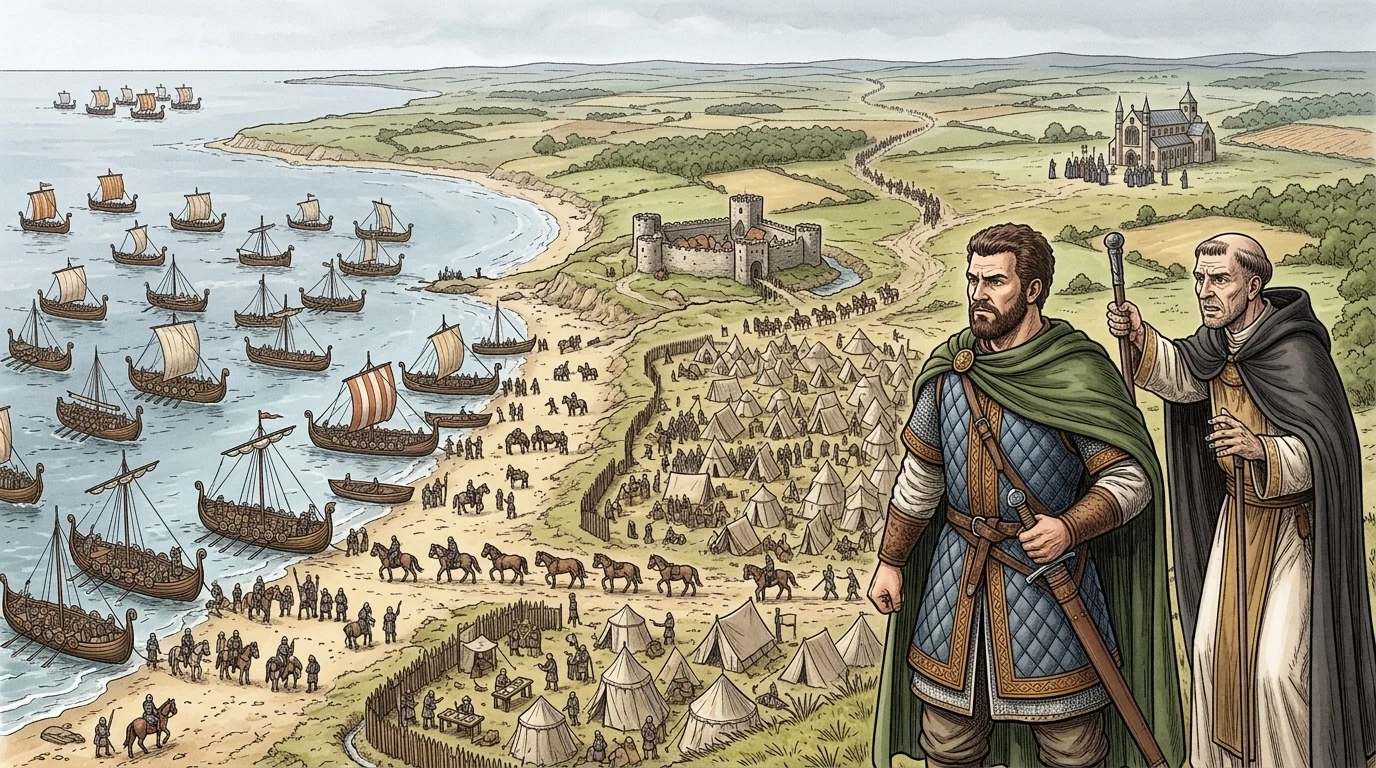
Across the ravaged Senlac Hill, William, Duke of Normandy, surveyed the carnage. Norman knights clashed with the remaining Saxon huscarls around the fallen banner of Harold Godwinson, Earl of Wessex. The year was 1066, and the fate of England hung precariously in the balance. But how did these two armies come to meet in this brutal confrontation?
Page 2
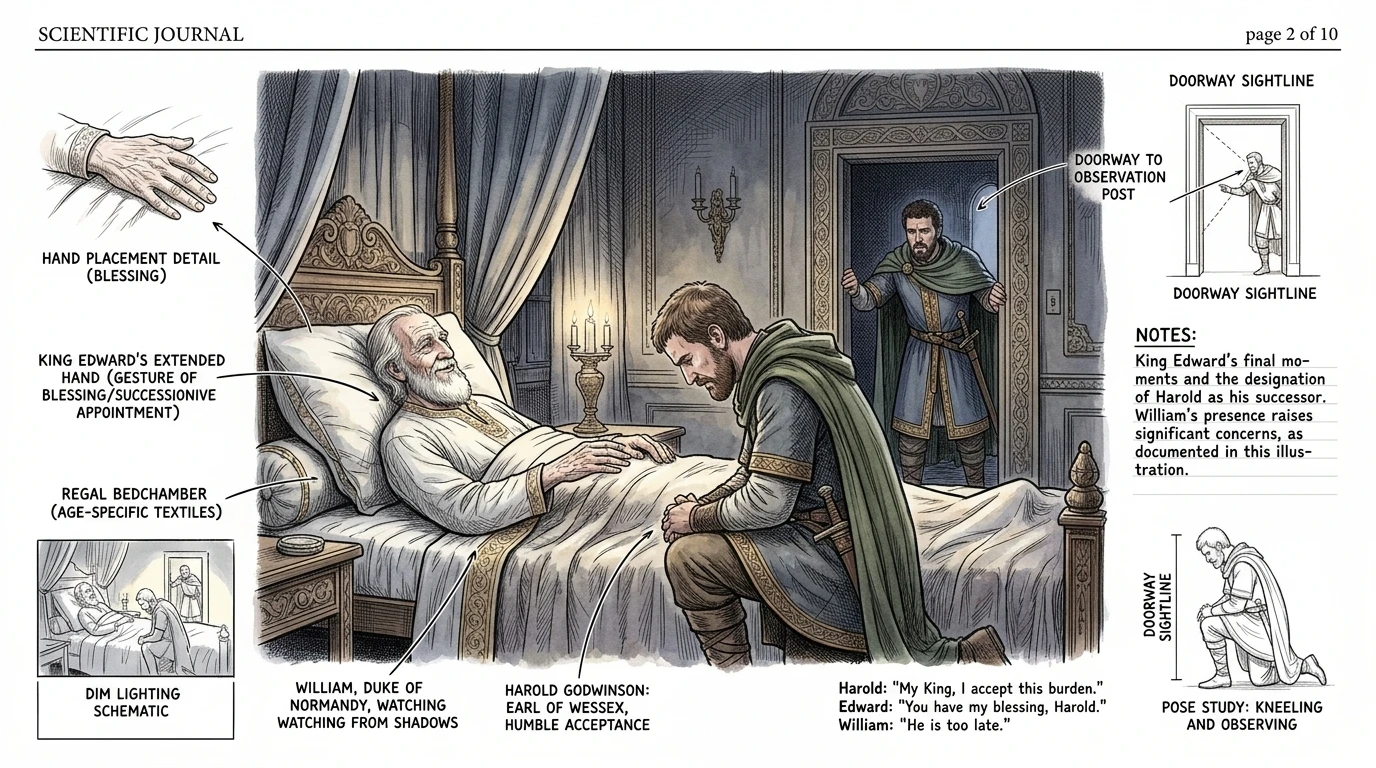
The roots of this conflict stretched back to the death of Edward the Confessor, King of England, in January 1066. Edward, old and ailing, had reportedly promised the throne to William, a distant cousin. However, upon Edward's death, the Witenagemot, the English council, chose Harold Godwinson as their king. This decision ignited a furious response from Normandy.
Page 3
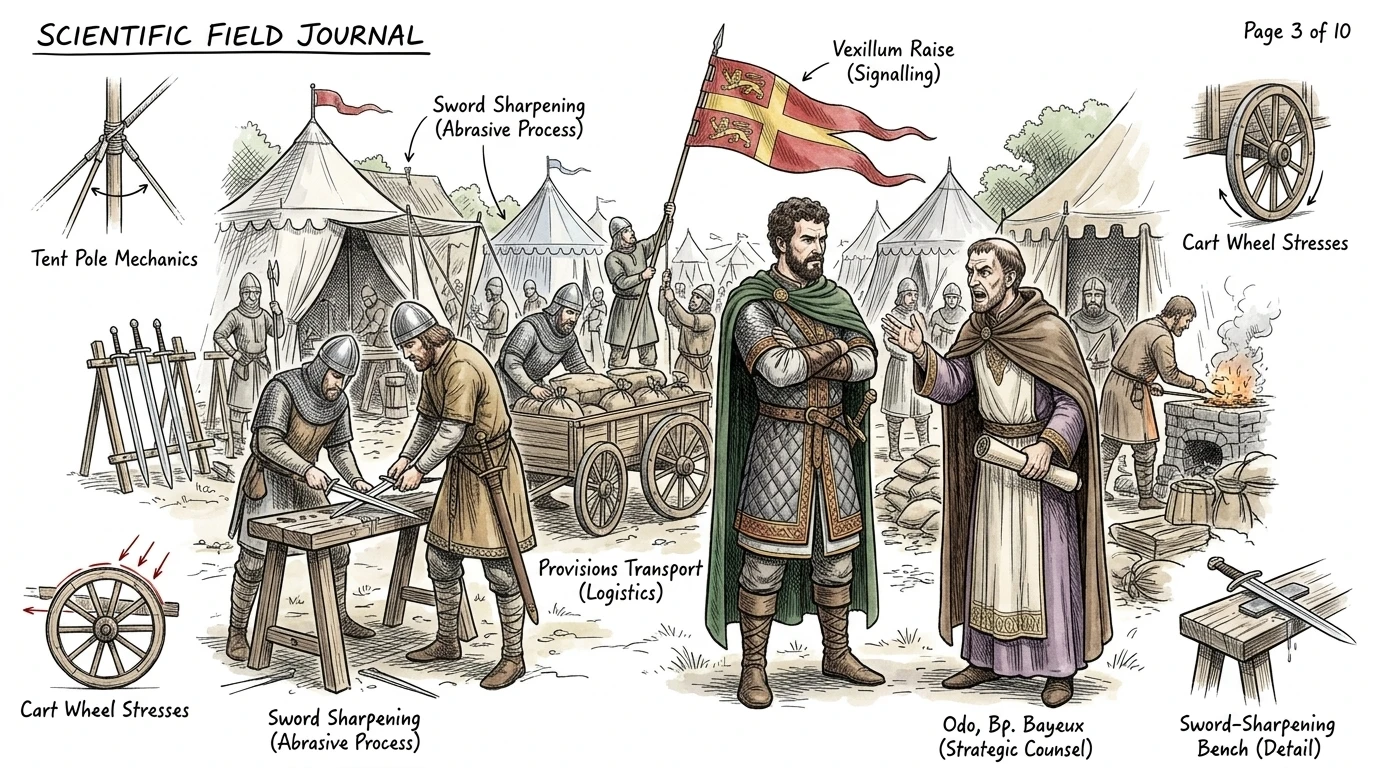
Fueled by ambition and a sense of entitlement, William gathered his forces. 'Fortune favors the bold,' Bishop Odo of Bayeux, William's advisor, declared, quoting Virgil as he urged the Duke to seize what he believed was rightfully his. Odo, cunning and ambitious, saw an opportunity to gain power and influence in a newly conquered England. He helped rally support for William's cause.
Page 4
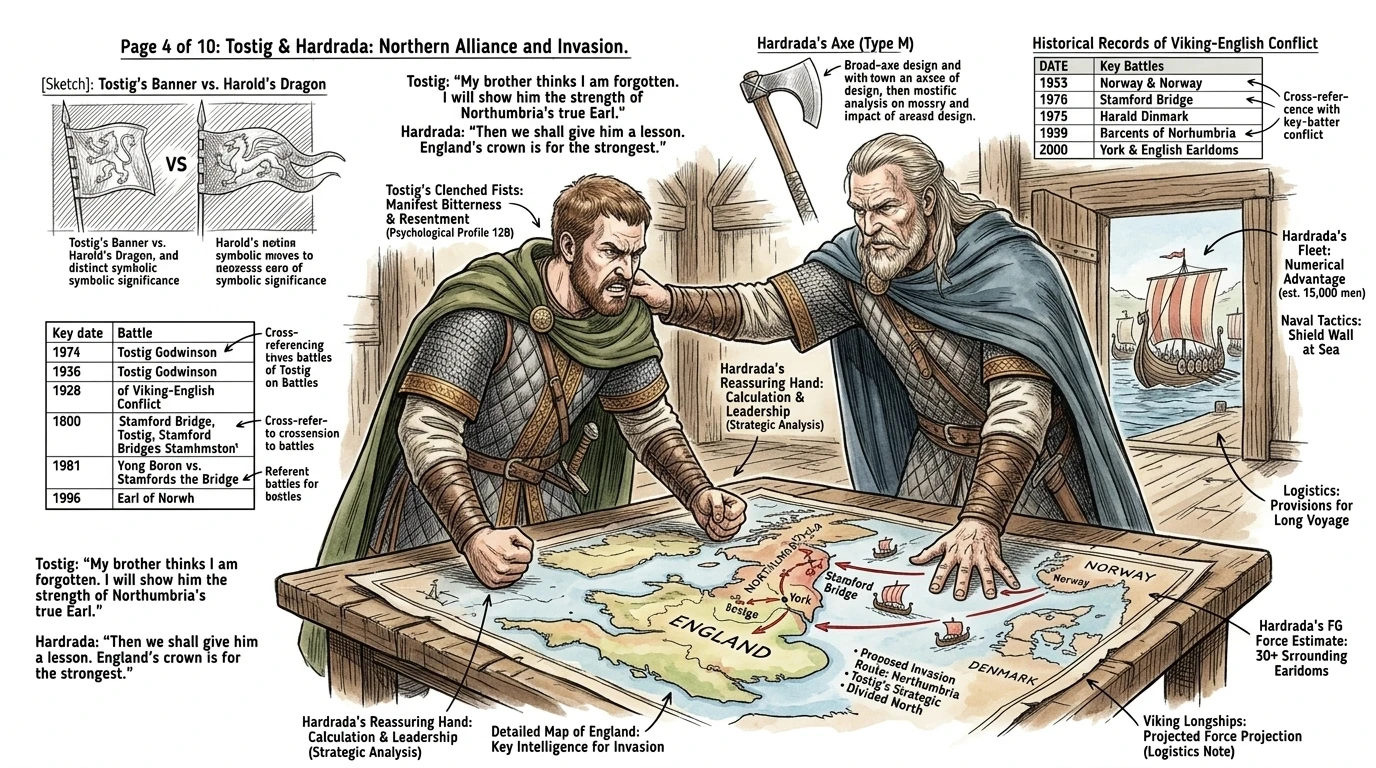
Meanwhile, Harold faced threats from multiple fronts. His own brother, Tostig Godwinson, Earl of Northumbria, fueled by resentment, allied himself with Harald Hardrada, King of Norway. 'The enemy of my enemy is my friend,' Tostig snarled, his bitterness blinding him to the consequences of his actions. Together, they invaded northern England, forcing Harold to march his army north.
Page 5
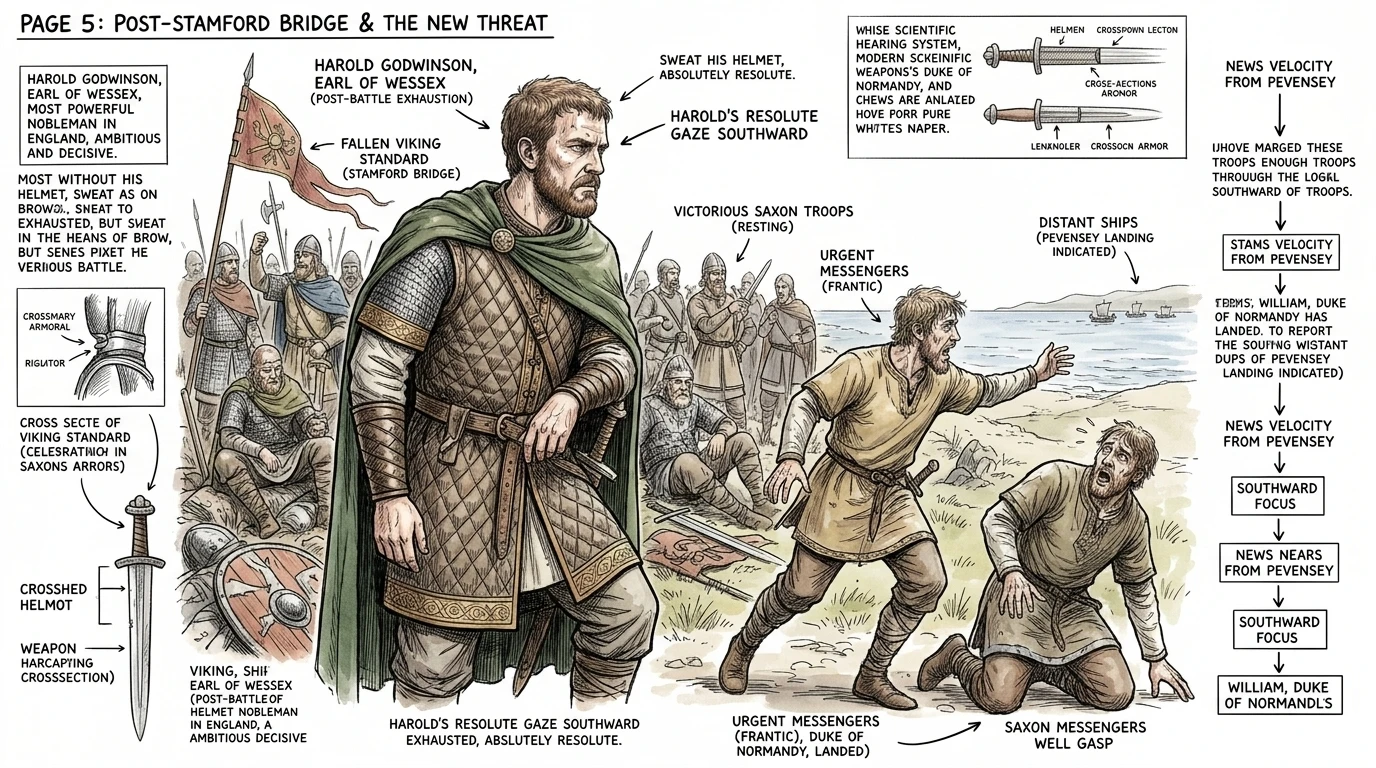
Harold swiftly defeated Hardrada and Tostig at the Battle of Stamford Bridge on September 25, 1066. He secured a decisive victory, but his triumph was short-lived. Messengers arrived with news that William had landed at Pevensey, claiming the English throne. Harold, exhausted but resolute, turned his army south, knowing a greater battle awaited.
Page 6
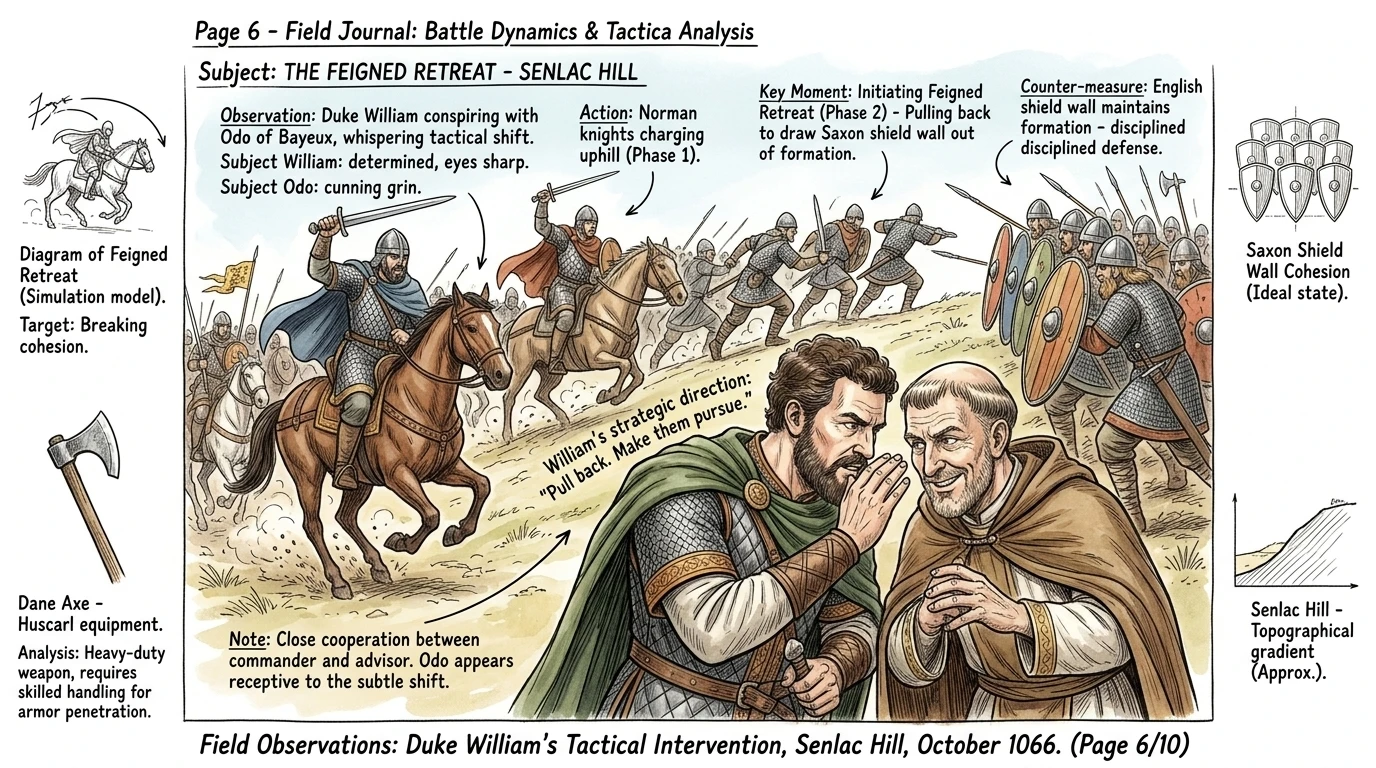
On October 14, 1066, the armies clashed at Hastings. The Norman knights, supported by archers, charged uphill against the Saxon shield wall. Harold's huscarls, fiercely loyal and heavily armed, held their ground. Hours of brutal combat followed, neither side yielding. But William, recalling the words of Sun Tzu, deployed a clever tactic: 'All warfare is based on deception,' he whispered to Bishop Odo. He ordered a feigned retreat, drawing the Saxons out of their defensive position.
Page 7
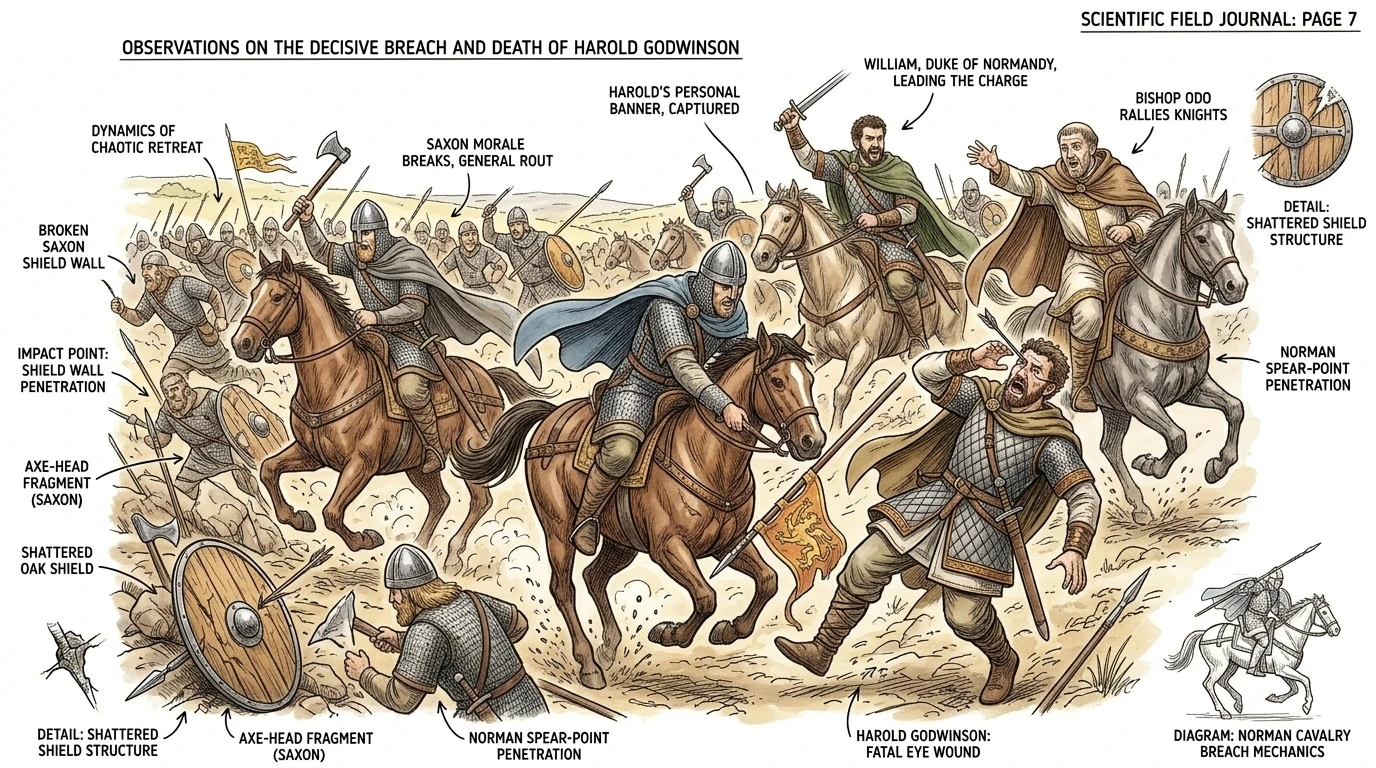
The Saxon line broke, and the Norman cavalry exploited the gap. Harold fought valiantly, but an arrow struck him in the eye. He fell, and his banner was captured. The remaining Saxon forces, their leader gone, were routed. William had won the battle, but the war for England had just begun.
Page 8
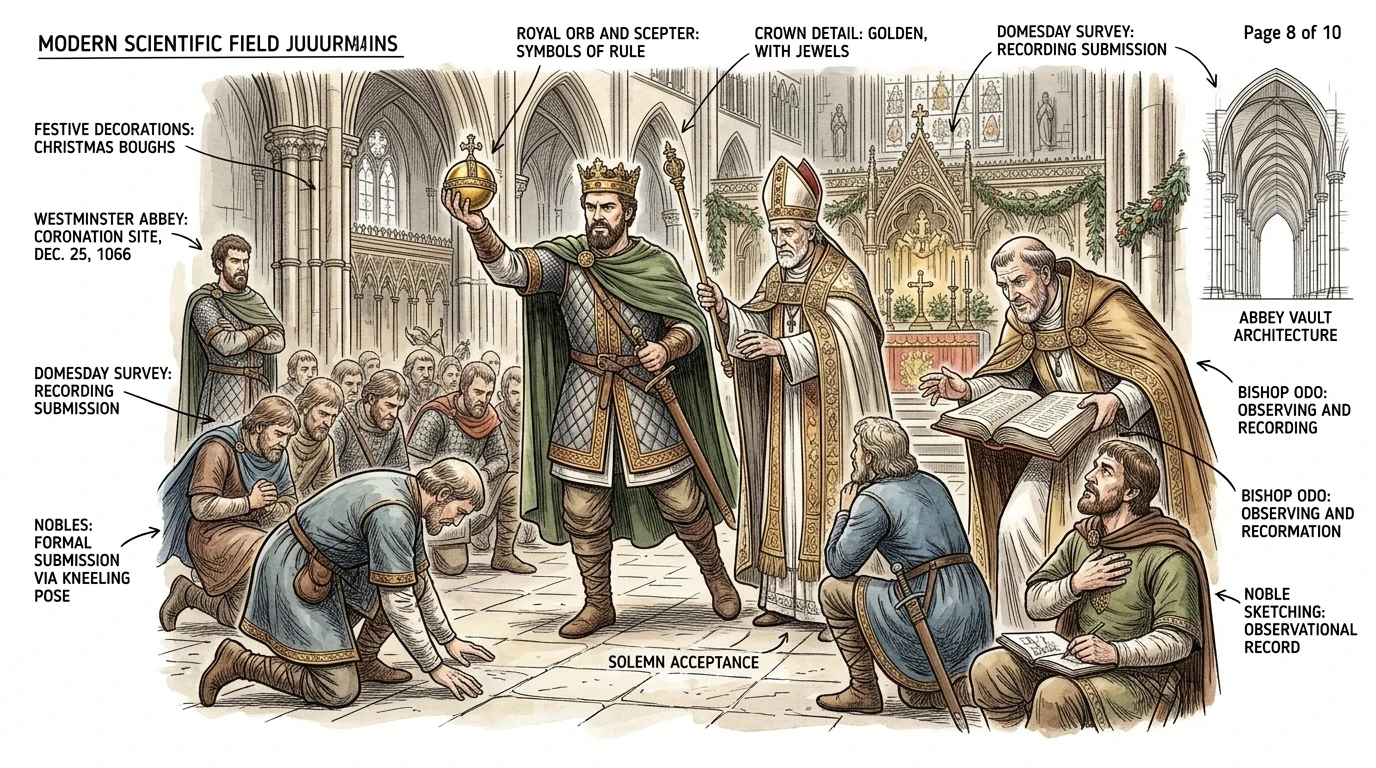
After the battle, William marched on London. The remaining English nobles, realizing their cause was lost, submitted to his rule. On Christmas Day, 1066, William was crowned King of England in Westminster Abbey. His victory at Hastings marked a turning point in English history.
Page 9
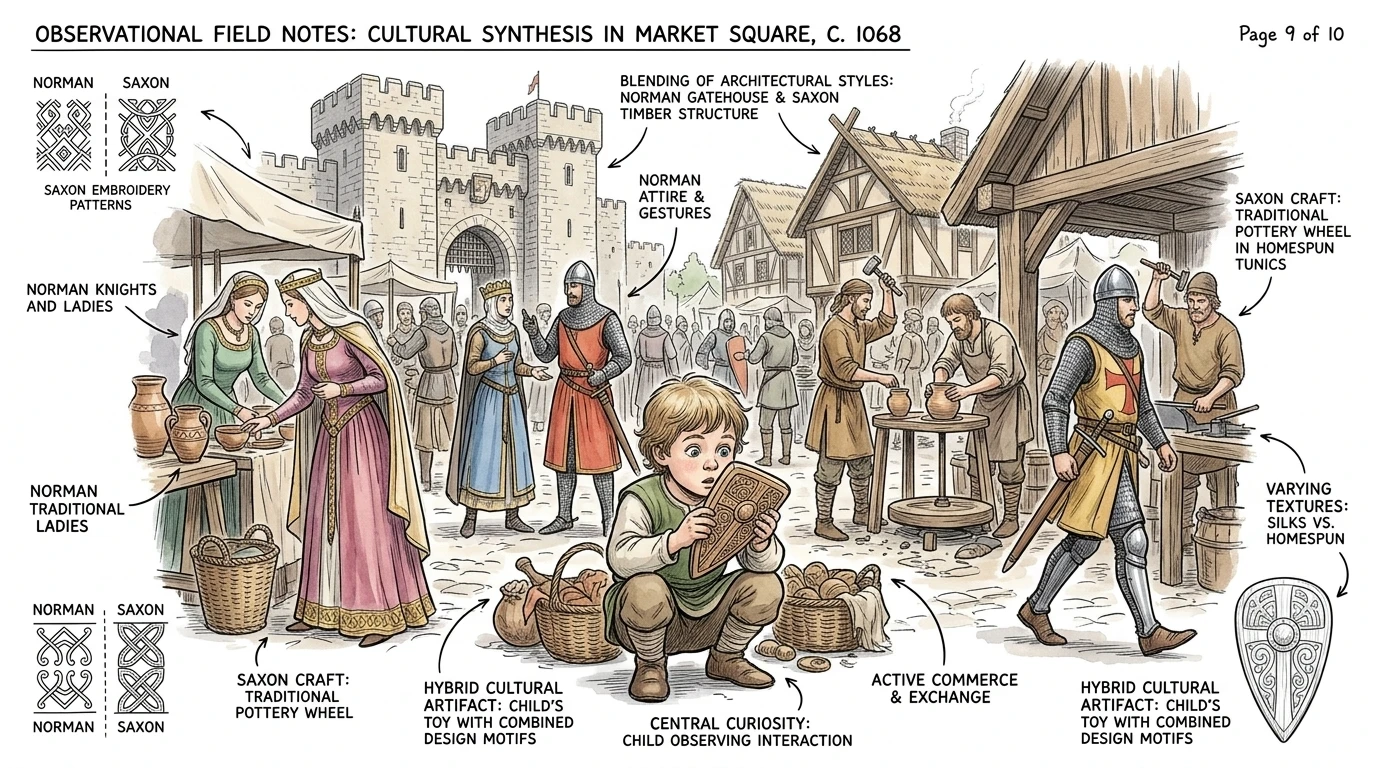
The Norman Conquest brought profound changes to England. A new aristocracy replaced the old Saxon elite. Norman French became the language of the court and government. English culture was forever altered. Yet, Saxon traditions persisted, blending with Norman customs to create a new, hybrid society.
Page 10
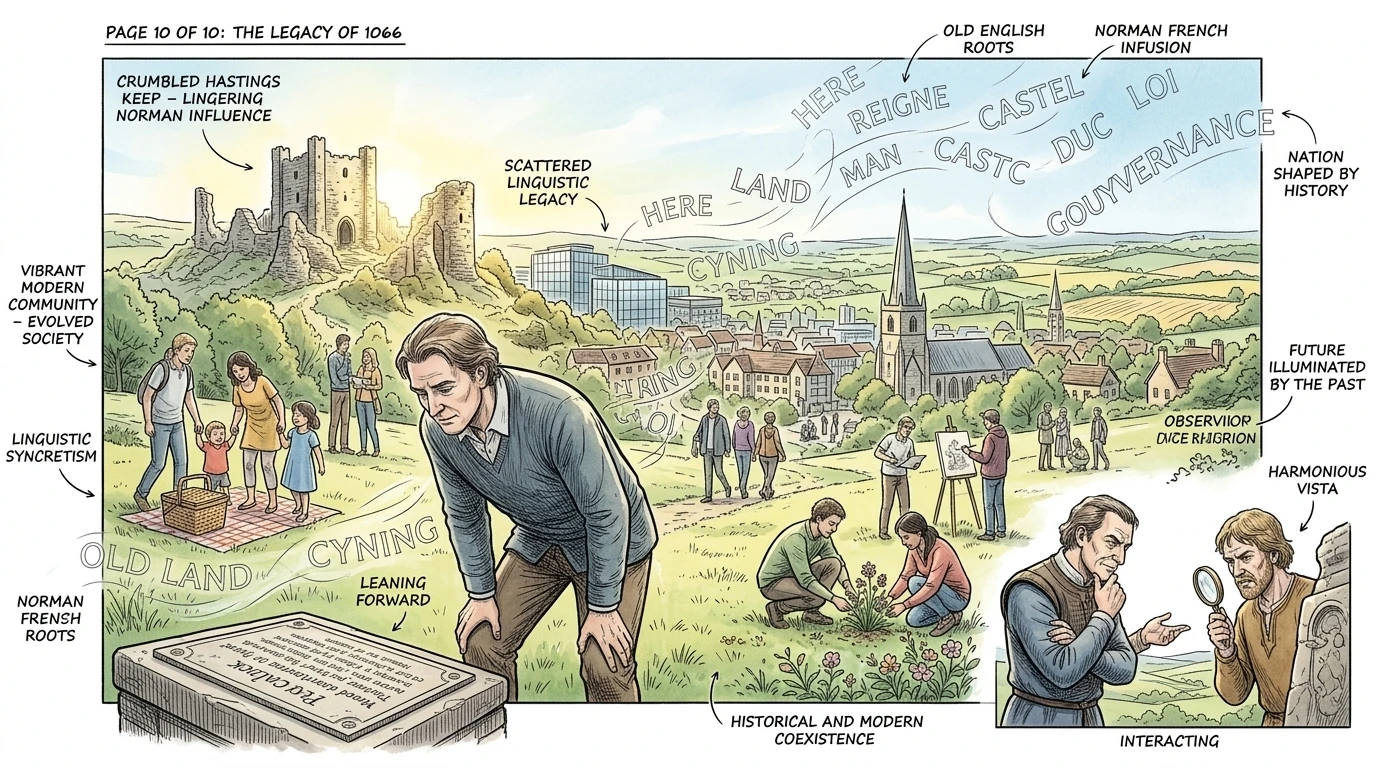
The Battle of Hastings shaped the course of English history, forging a new national identity. Its impact is still felt today, in the language, laws, and culture of England. A nation forever transformed by a single, decisive battle fought on a hill overgrown with the ruins of tomorrow. The battle remains a testament to the enduring power of ambition, strategy, and the unpredictable nature of fate.
About this story
- Historical figures: William, Duke of Normandy, Harold Godwinson, Earl of Wessex, Edward the Confessor, King of England
- Location: United Kingdom
- Period: Middle Ages
- Audience: general readers
- Format: 10 illustrated pages, narrated, free to read on Wonder History
Questions and answers
Questions and answers about The Battle of Hastings (1066, United Kingdom)
Read Wonder History on your phone
Wonder History is available on Android and iPhone and iPad. Get Wonder History on Google Play · Get Wonder History on the App Store.