The Battle of Kursk (1943, Germany)
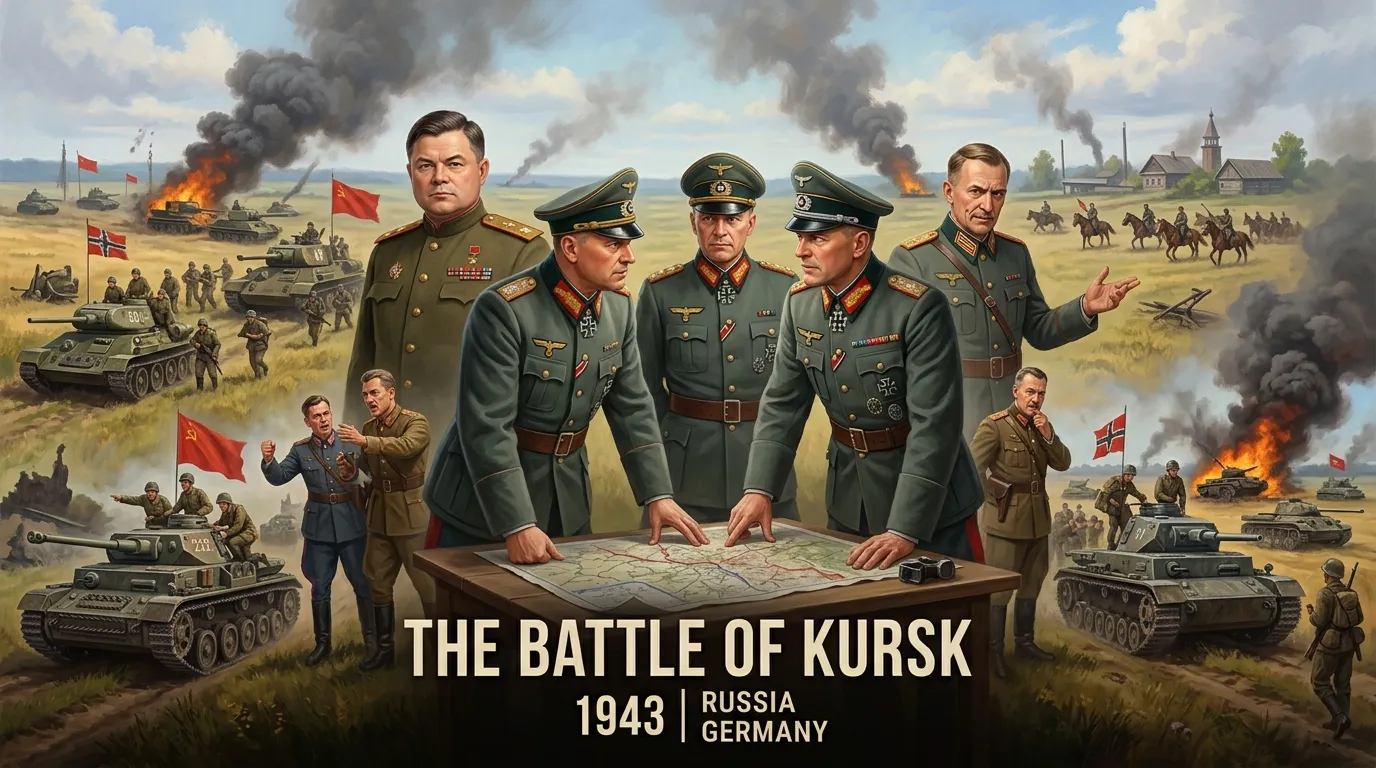
The Battle of Kursk (1943, Germany) — an illustrated history story, featuring Konstantin Rokossovsky, Günther von Kluge, Erich von Manstein, set in Germany. 10 illustrated pages, free to read on Wonder History.
Page 1
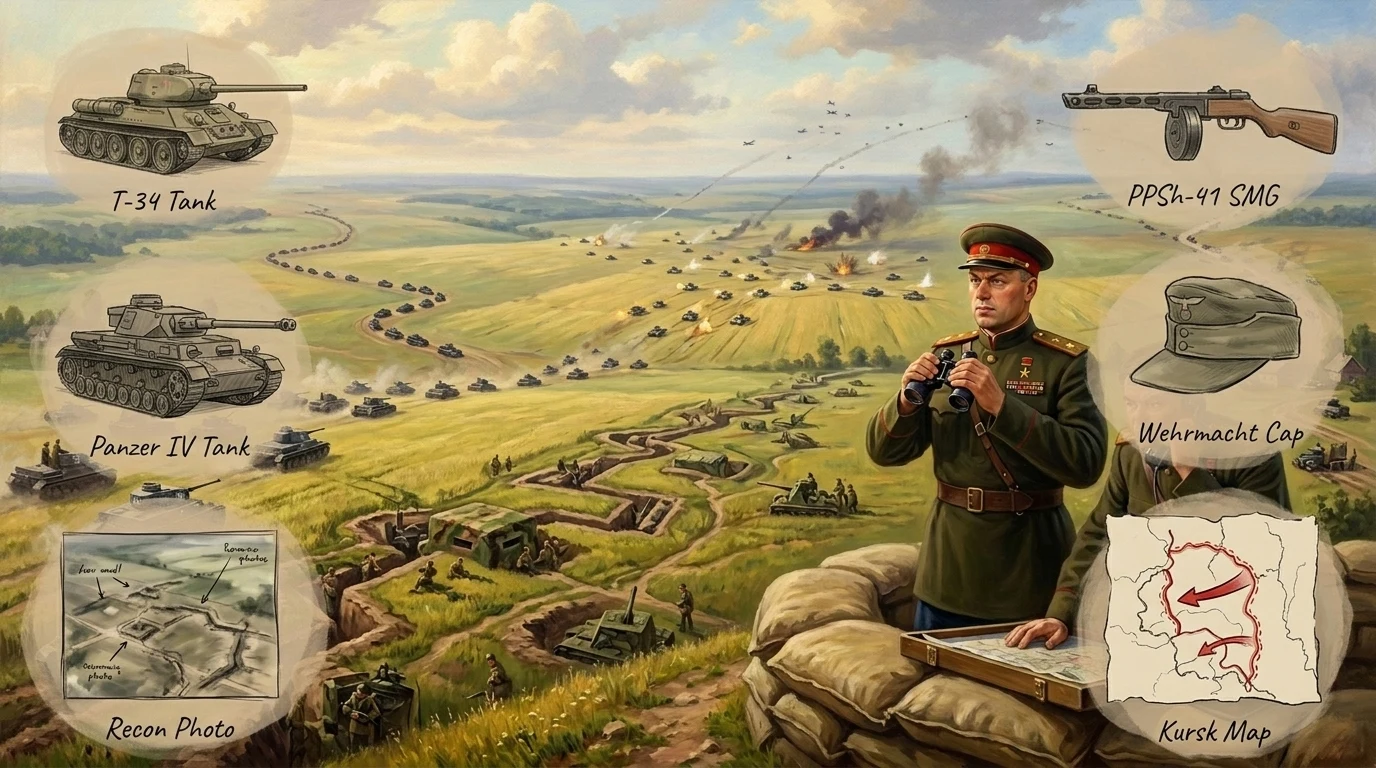
On July 5th, 1943, near Kursk, 2.5 million soldiers clashed in the largest tank battle in history. Konstantin Rokossovsky, commander of the Soviet Central Front, watched the onslaught alongside Nikolai Vatutin, who oversaw the Southern Front's defenses. Facing them were Günther von Kluge and Erich von Manstein, leading the German Wehrmacht. Smoke billowed from burning tanks, and the ground trembled under the relentless artillery fire. How did this immense clash of titans unfold?
Page 2
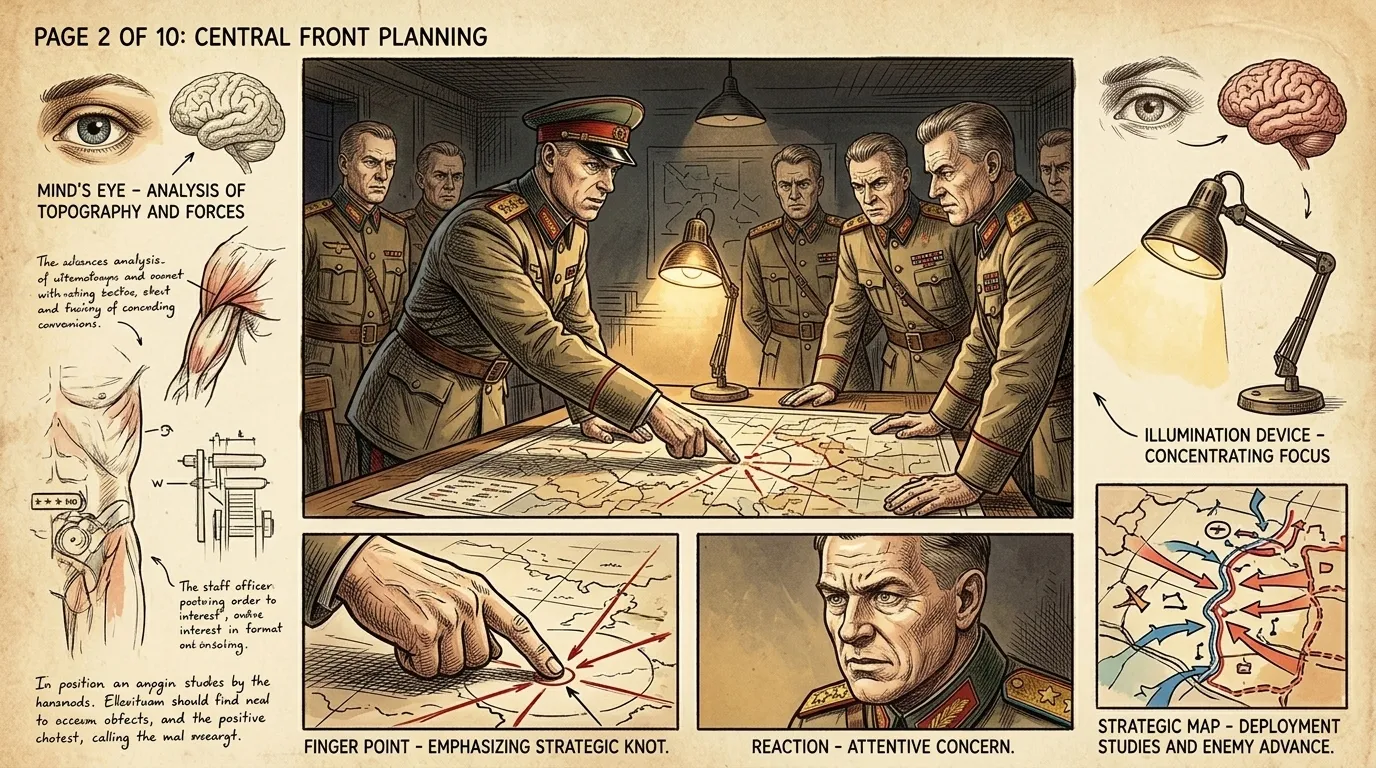
Two years prior, in 1941, Germany launched Operation Barbarossa, the invasion of the Soviet Union. The initial German advances were swift and devastating. 'We must push them back,' Rokossovsky told his staff, poring over maps in his dimly lit headquarters. 'If we do not, all of Russia will be lost'.
Page 3
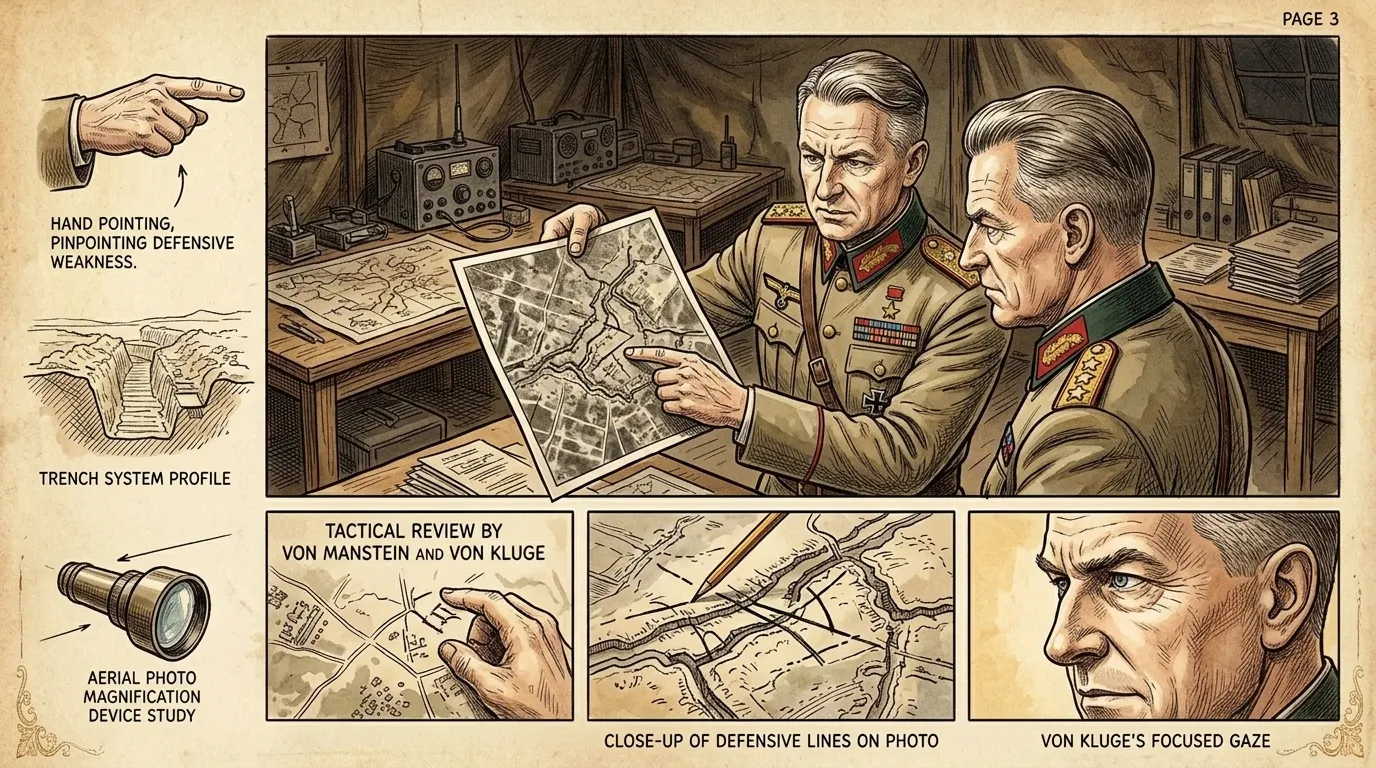
By 1943, the Soviet army had regrouped and fortified its positions around Kursk, creating a series of deep defensive lines. 'They have prepared well,' von Manstein remarked to von Kluge, examining aerial reconnaissance photos. 'Their fortifications are extensive, but nothing can stop the might of the German Wehrmacht'.
Page 4
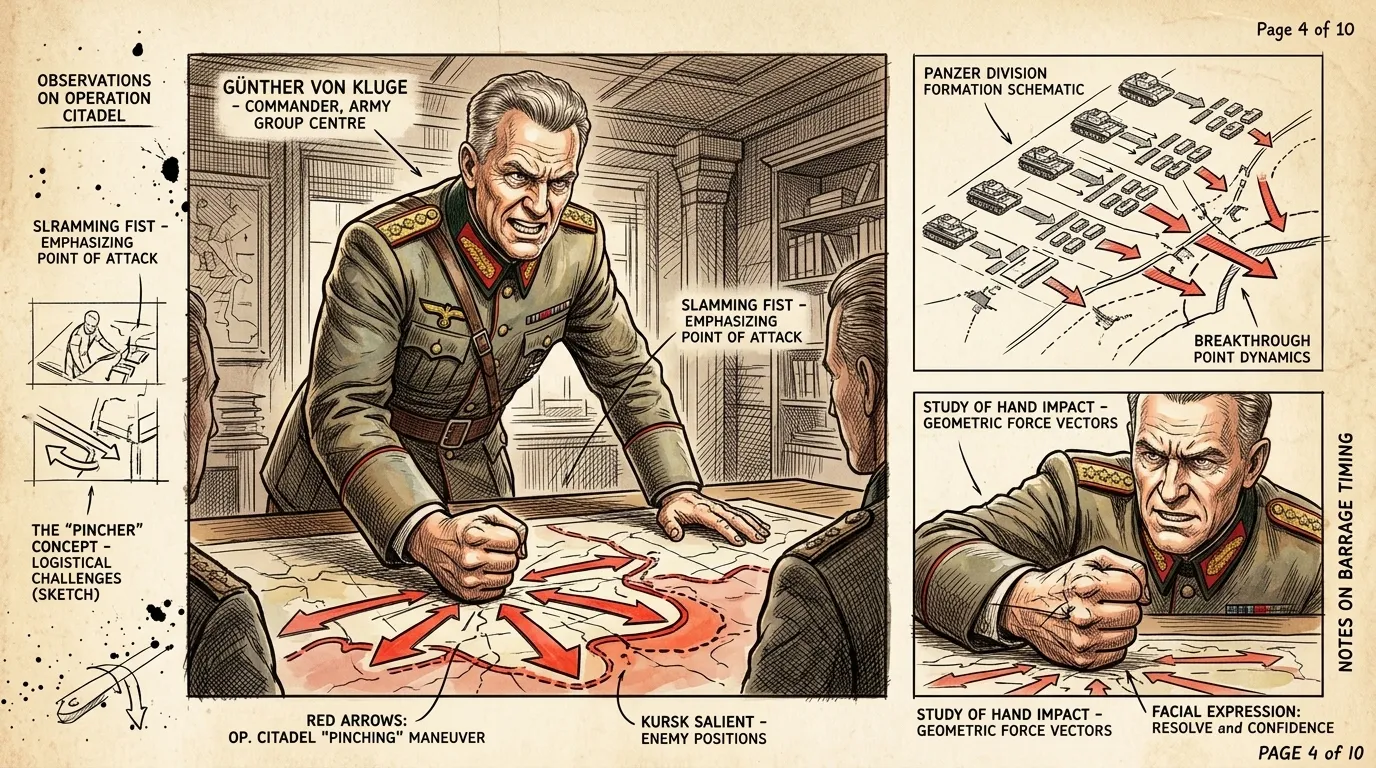
The German plan, Operation Citadel, aimed to pinch off the Kursk salient and encircle the Soviet forces. Von Kluge laid out the plan to his commanders, 'Our panzers will break through their lines and meet, crushing the enemy in a decisive blow!' He slammed his fist on the table, the confidence evident in his voice.
Page 5
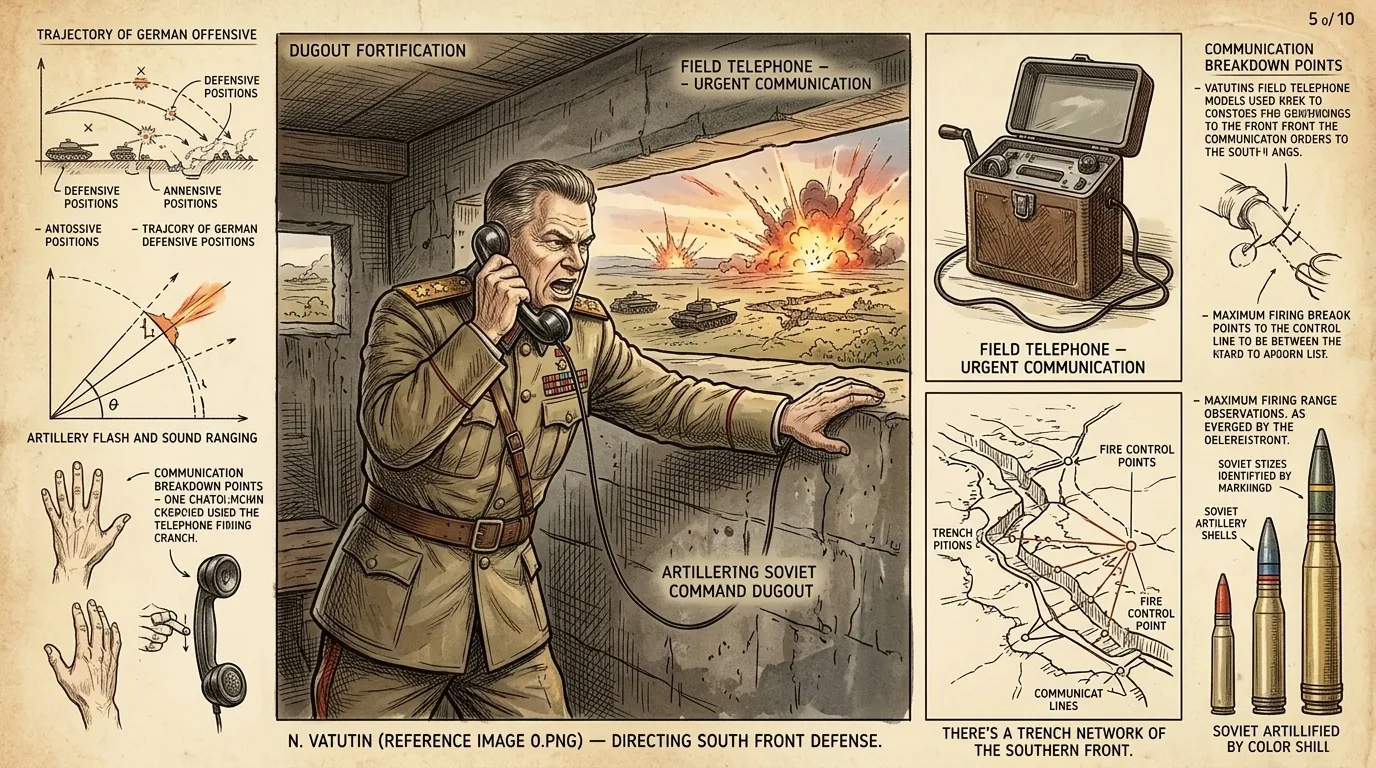
On July 5th, the German offensive began with a massive artillery barrage. Nikolai Vatutin, observing the initial assault, spoke into the field telephone. 'They are coming! All units hold your ground! The Motherland expects courage from every soldier!'.
Page 6
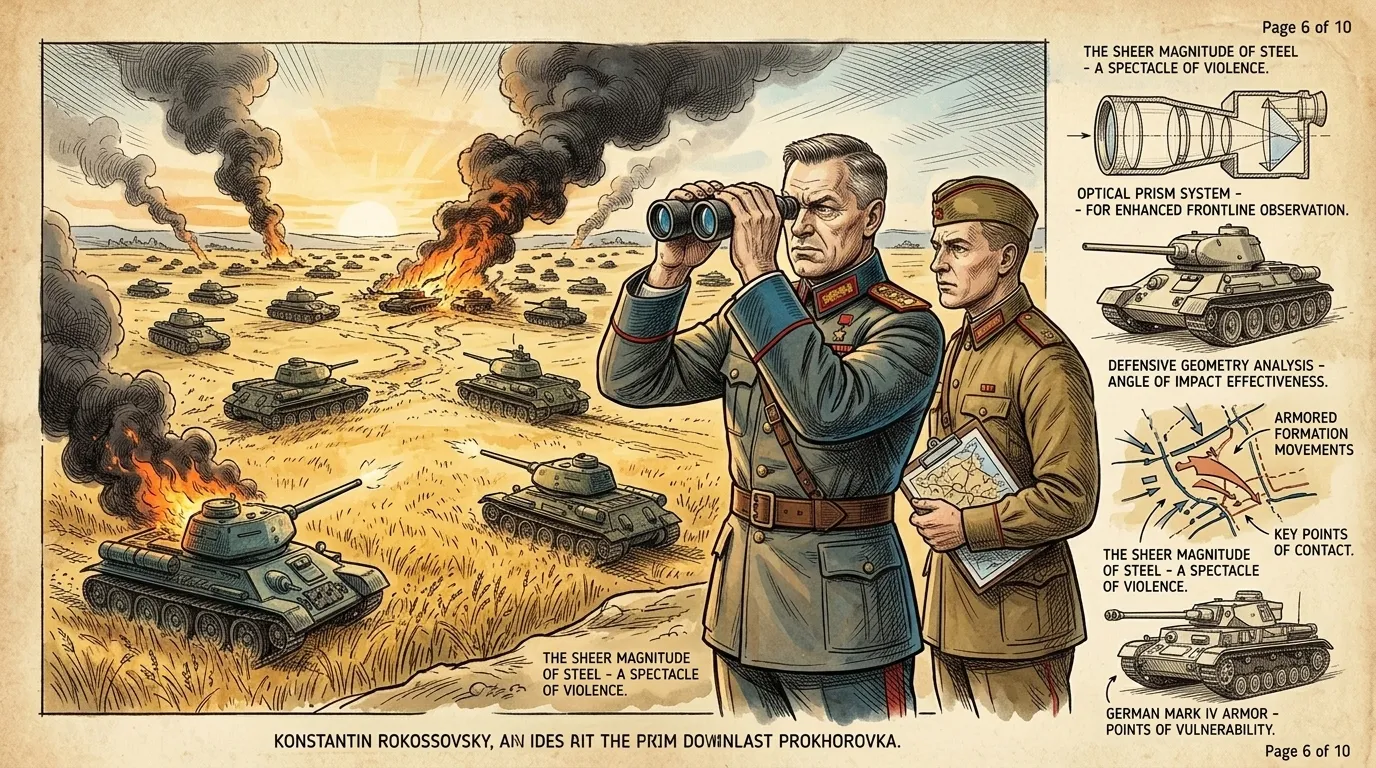
The fighting quickly escalated into a brutal clash of armor. At Prokhorovka, hundreds of tanks met in a furious engagement. Rokossovsky watched as T-34s and Panzer IVs battled amidst burning fields of wheat. "This," he muttered to his aide, "is what Clausewitz meant when he said, 'War is merely the continuation of politics by other means.'"
Page 7
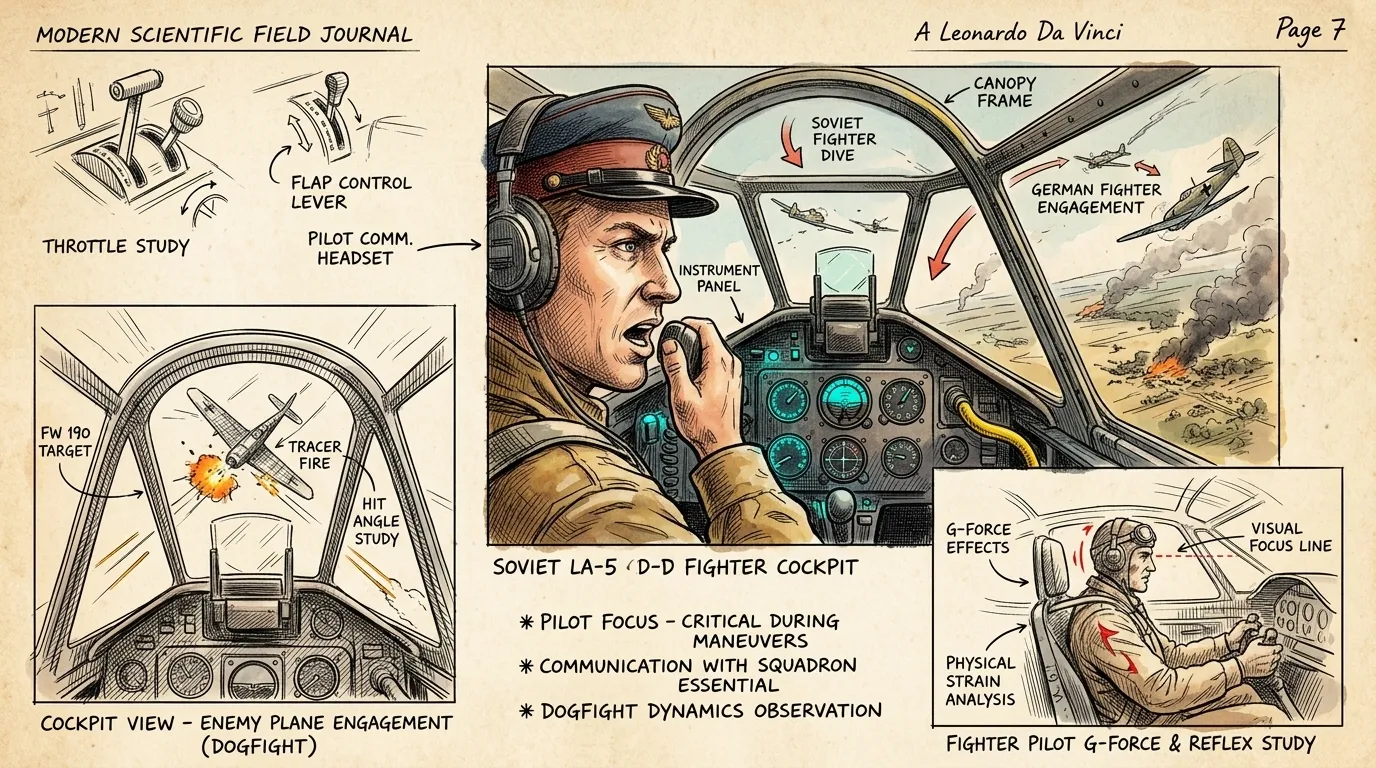
The skies above Kursk became a deadly arena as Soviet and German aircraft fought for dominance. 'Down there, men are fighting bravely,' a Soviet pilot radioed to his squadron. 'Let's give them the air superiority they need! Engage the enemy!'.
Page 8
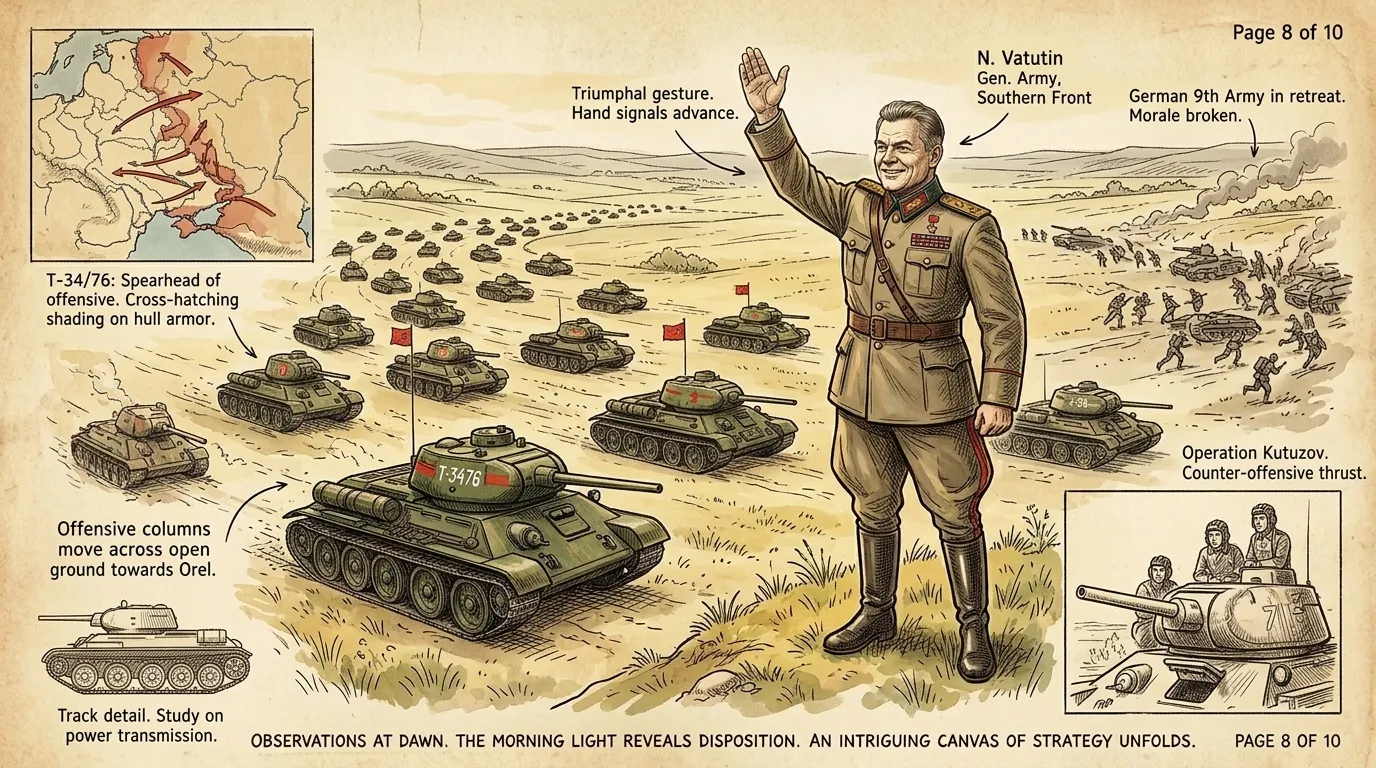
After days of intense fighting, the German offensive stalled. The Soviets launched their counter-offensive, Operation Kutuzov, pushing back the exhausted German forces. 'Now, we will show them the might of the Soviet Union!' Vatutin exclaimed, as the tanks rolled forward.
Page 9

The Battle of Kursk ended in a decisive Soviet victory. The Germans, exhausted and depleted, began a long retreat. Von Manstein, defeated, sat alone in his command tent, his face etched with disappointment. 'It is a bitter pill to swallow,' he sighed.
Page 10
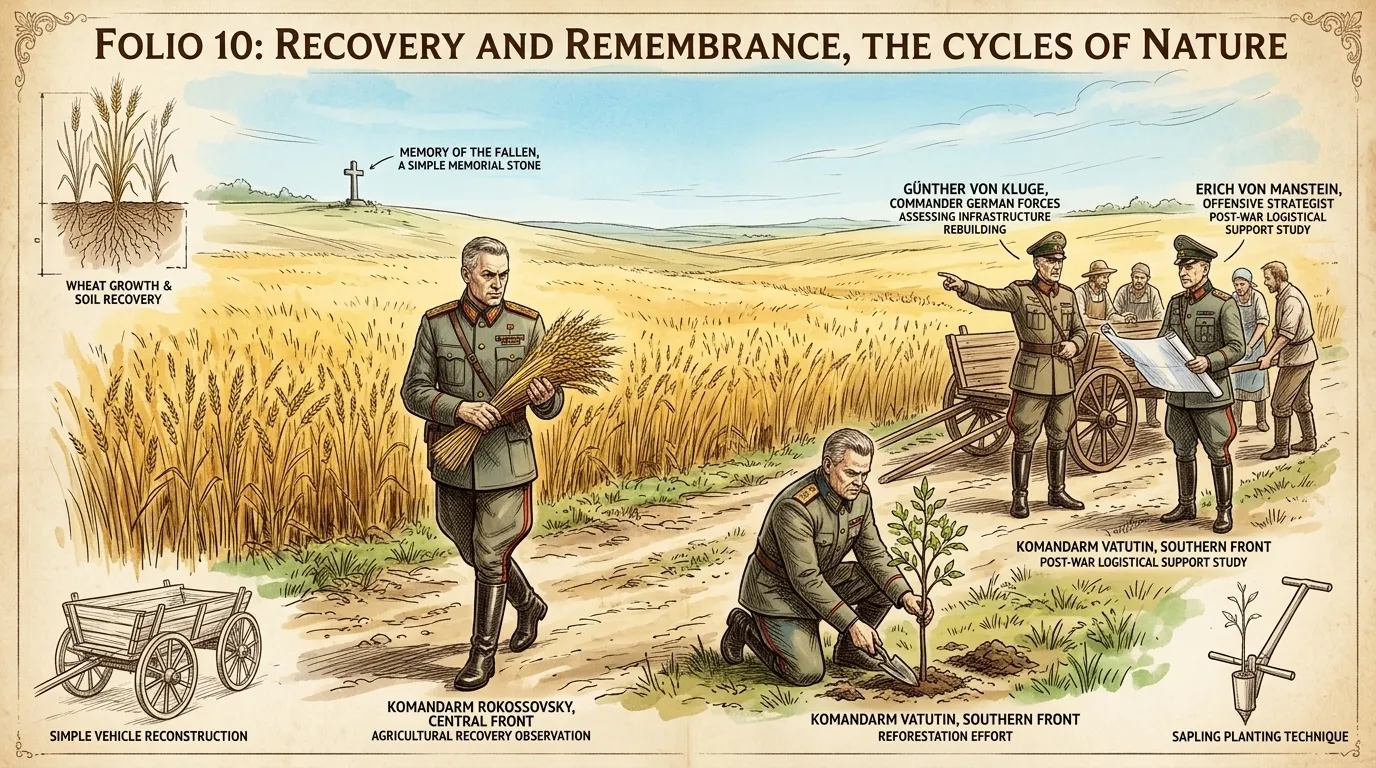
The Battle of Kursk marked a turning point in World War II. The Soviet victory signaled the beginning of the end for Nazi Germany. The vast fields, once battlegrounds, slowly recovered, becoming farmland again, and the memory of the fallen remained, a constant reminder of the high cost of war.
About this story
- Historical figures: Konstantin Rokossovsky, Günther von Kluge, Erich von Manstein
- Location: Germany
- Period: Modern
- Audience: general readers
Questions and answers
Questions and answers about The Battle of Kursk (1943, Germany)
Read Wonder History on your phone
Wonder History is available on Android. Get Wonder History on Google Play.