The Battle of Marathon — Greece (490 BC, Greece)
The Battle of Marathon — Greece (490 BC, Greece) — an illustrated history story, featuring Miltiades, Darius I, Callimachus, set in Greece. 10 illustrated pages, free to read on Wonder History.
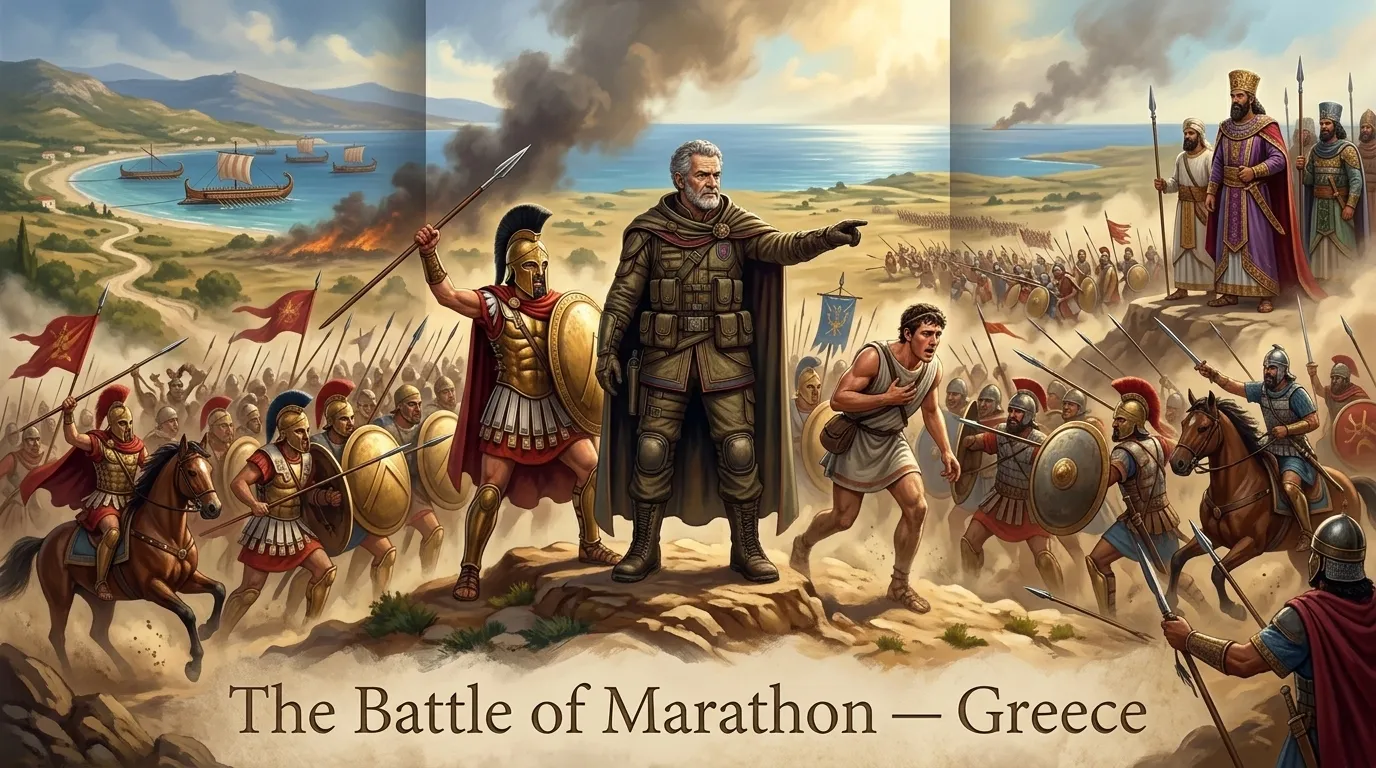
Page 1
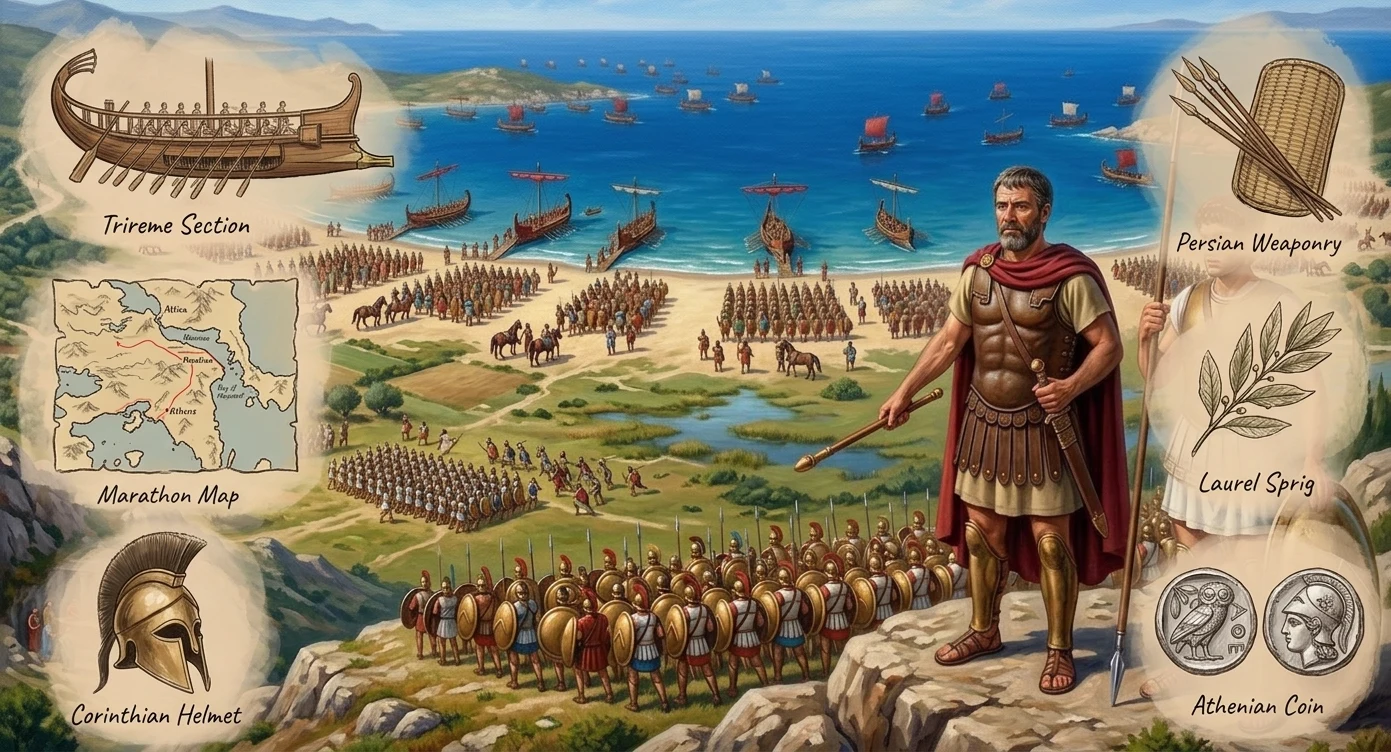
On September 12, 490 BCE, Miltiades, the Athenian general; Darius I, the Persian king; Callimachus, the Athenian polemarch; and Pheidippides, the Athenian runner, faced a turning point on the plains of Marathon. Ten thousand Athenian soldiers stood against a Persian force that numbered over 25,000 — a clash that would decide the fate of Greece itself. The iconic moment: Pheidippides's desperate run to Athens, collapsing after delivering news of victory. But where did it all begin?
Page 2
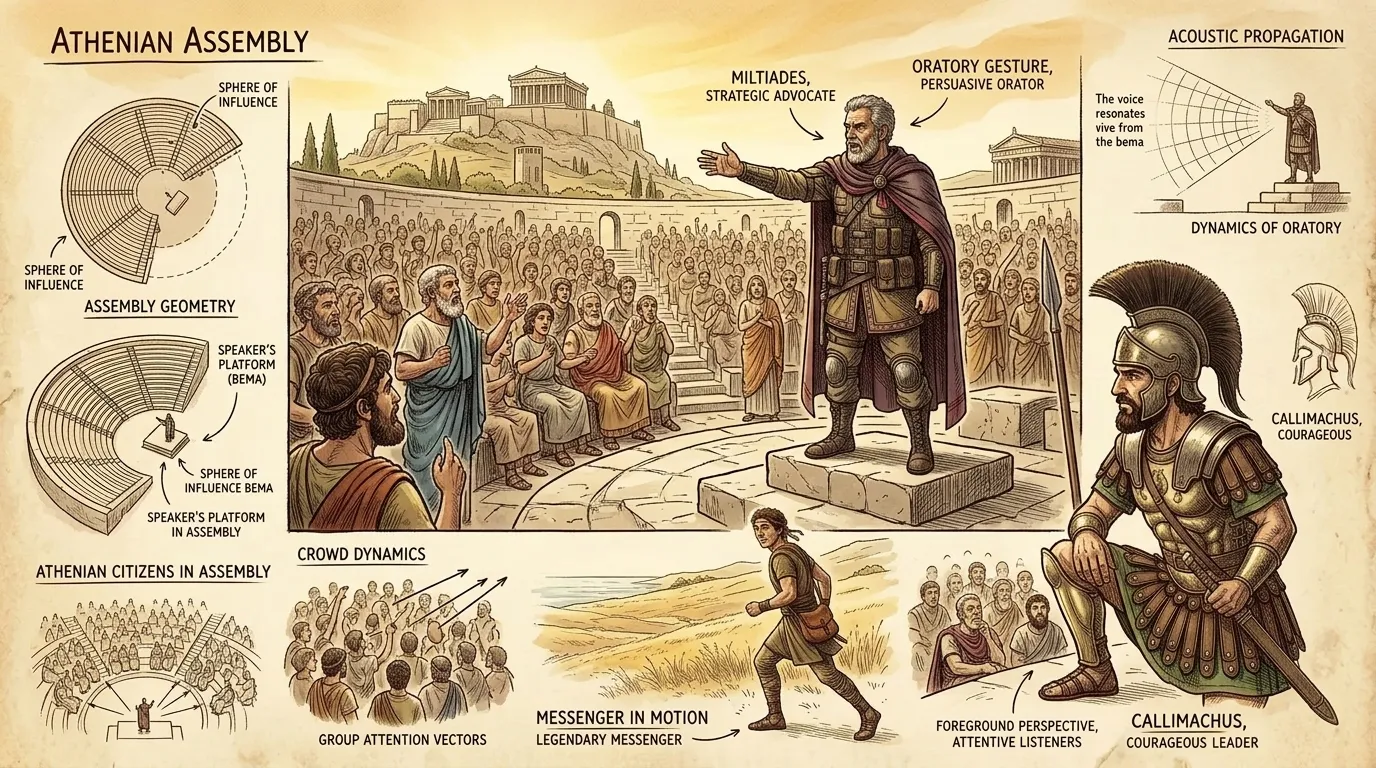
Miltiades, now in exile in Athens, recounted tales of Persian arrogance from his time governing the Thracian Chersonese. "Darius seeks to punish Athens for aiding the Ionian revolt," he declared, his voice resonating in the Athenian Assembly. Callimachus, the Athenian polemarch, listened intently, his hand resting on his spear. "We must prepare for war," Callimachus responded, "or we will be slaves to the Persian empire!"
Page 3
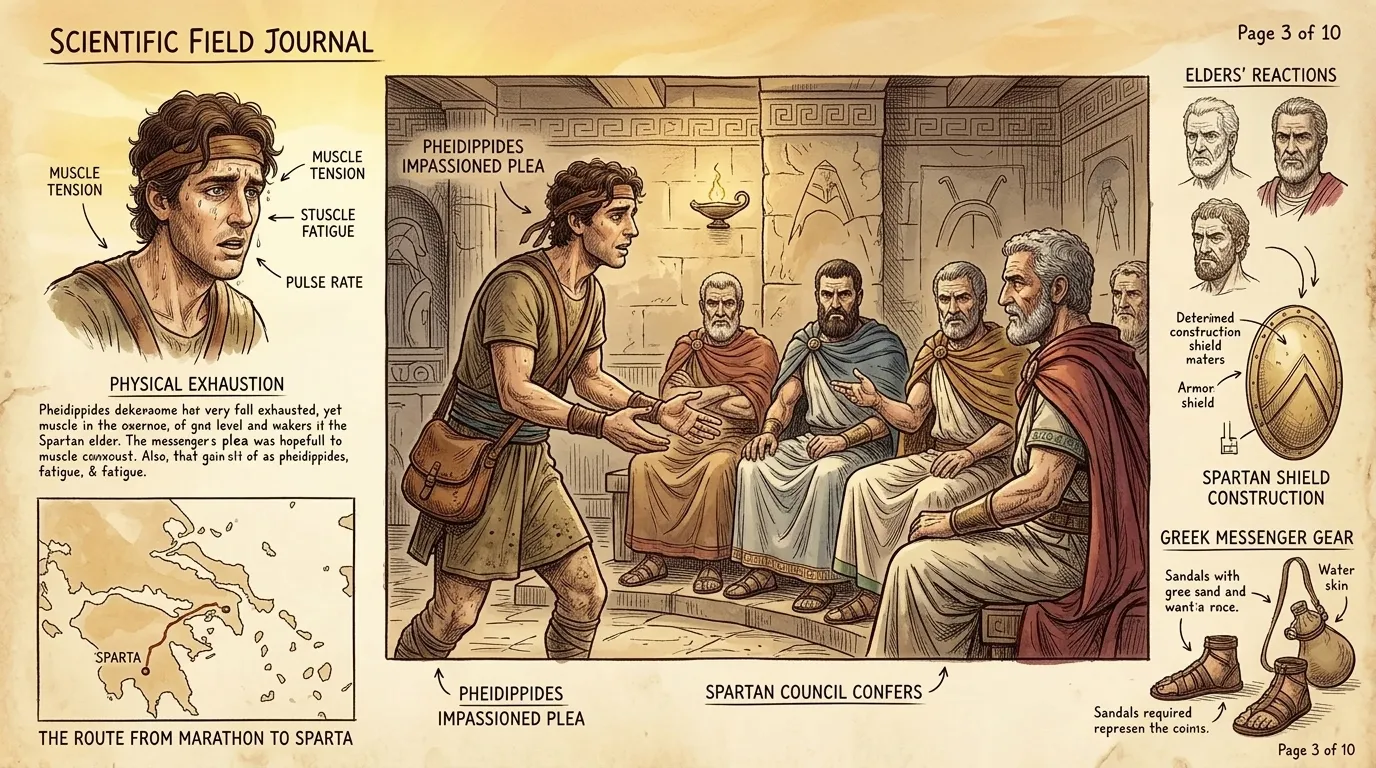
"Help us!" Pheidippides cried, arriving exhausted in Sparta. The Spartan elders listened stoically. "The Persians land at Marathon! We need your warriors!" The elders conferred, their faces grim, "We will send aid, but religious custom prevents us from marching until the full moon," one replied.
Page 4
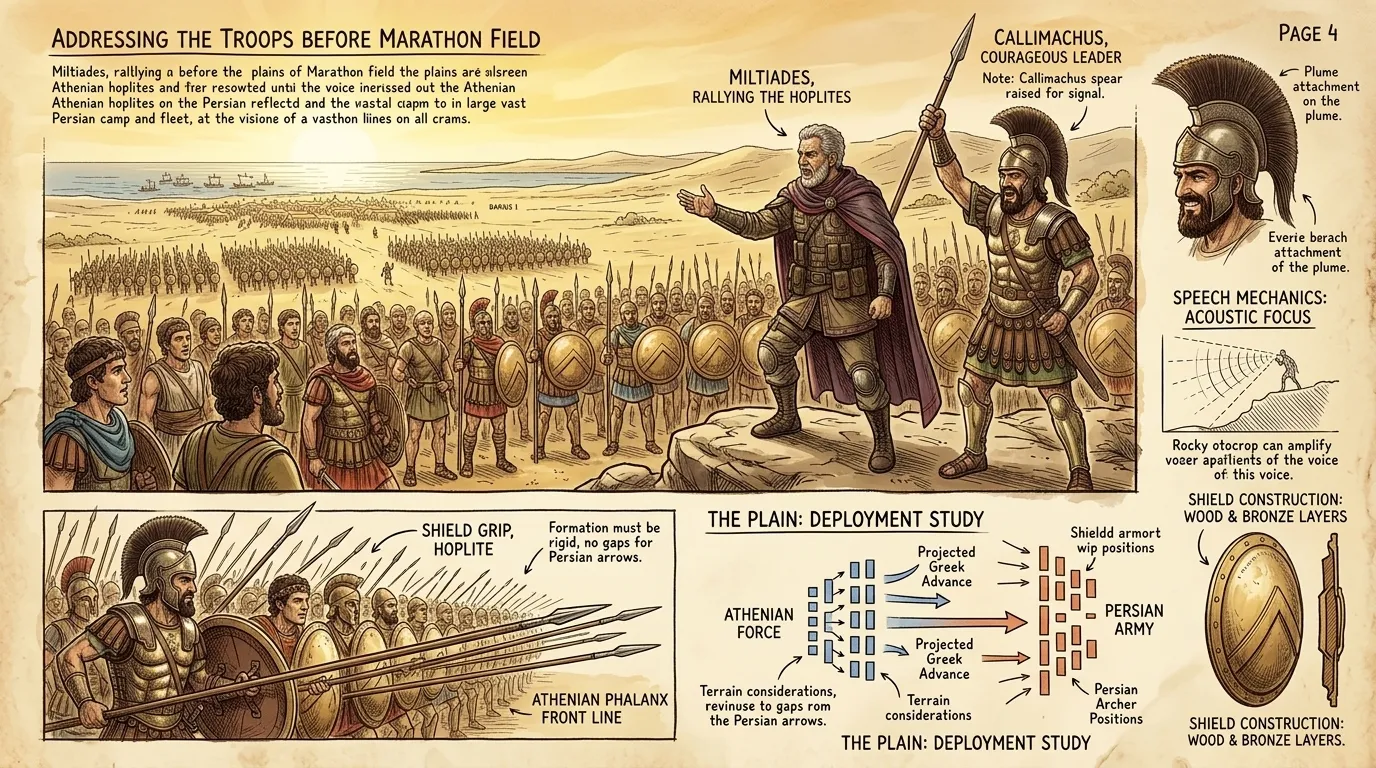
Miltiades addressed the Athenian army on the plains of Marathon. "We stand alone!" he exclaimed, his voice echoing across the field. "Sparta will not arrive in time! We must rely on ourselves and our courage to protect Athens!" Callimachus raised his spear, shouting, "For Athens! For freedom!"
Page 5
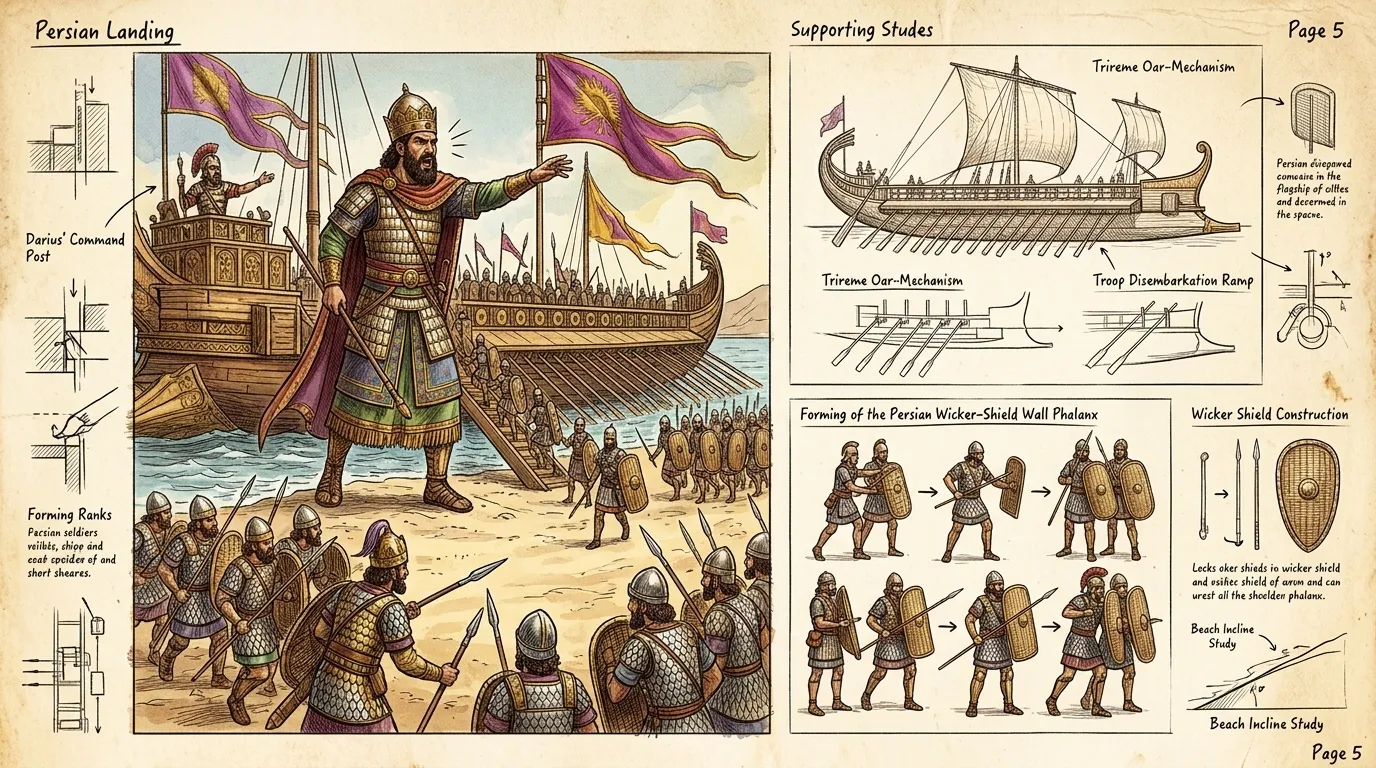
Darius I, observing from his flagship, gestured towards the shore. "Unload the horses!" he commanded. "Let the Athenian dogs feel the might of Persia!" Persian soldiers swarmed from the ships, their scale armor glinting in the sunlight. They carried wicker shields and short spears as they formed ranks on the beach.
Page 6
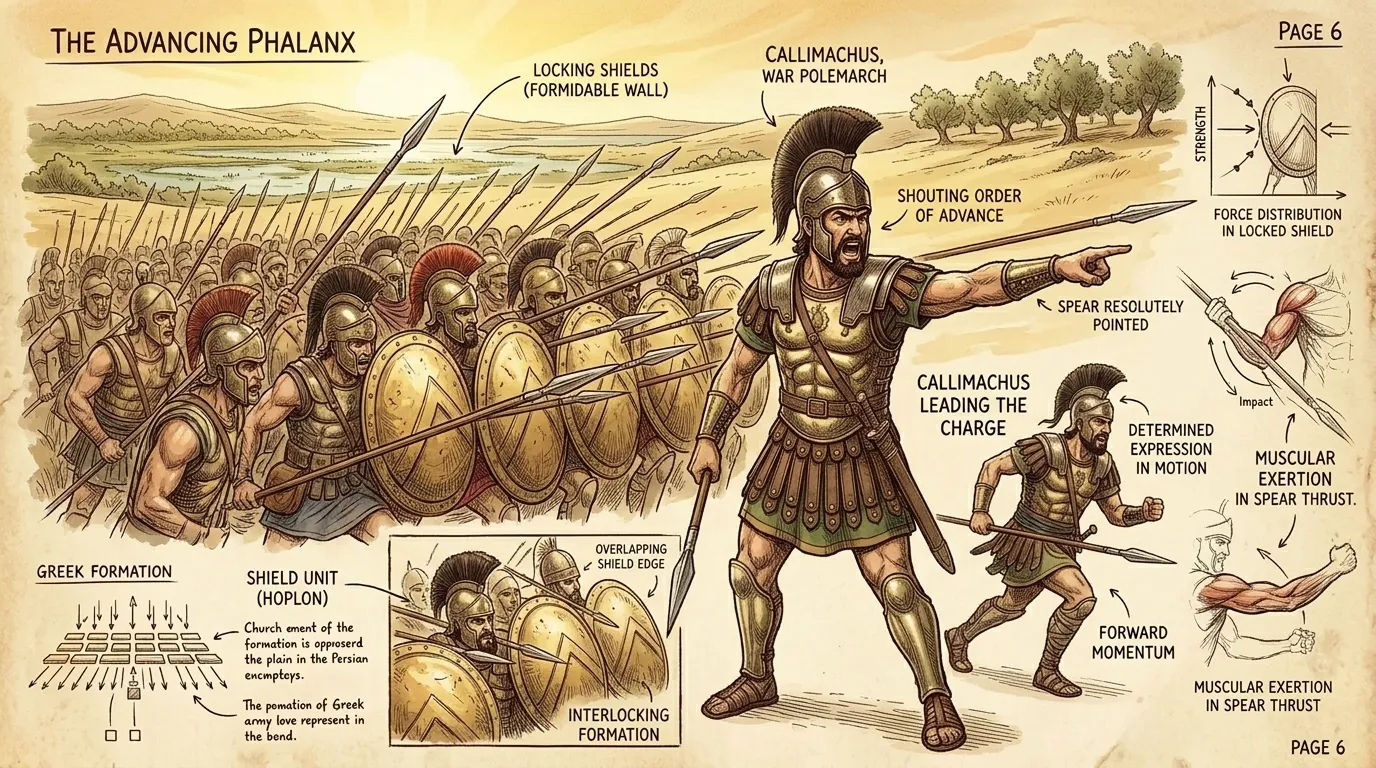
The Athenian hoplites advanced in a tight phalanx formation, their shields locked together. Callimachus led from the front, his spear pointed towards the enemy. "Remember the words of Thucydides," he cried, "'The strong do what they can, and the weak suffer what they must!' Today, we must be strong!"
Page 7
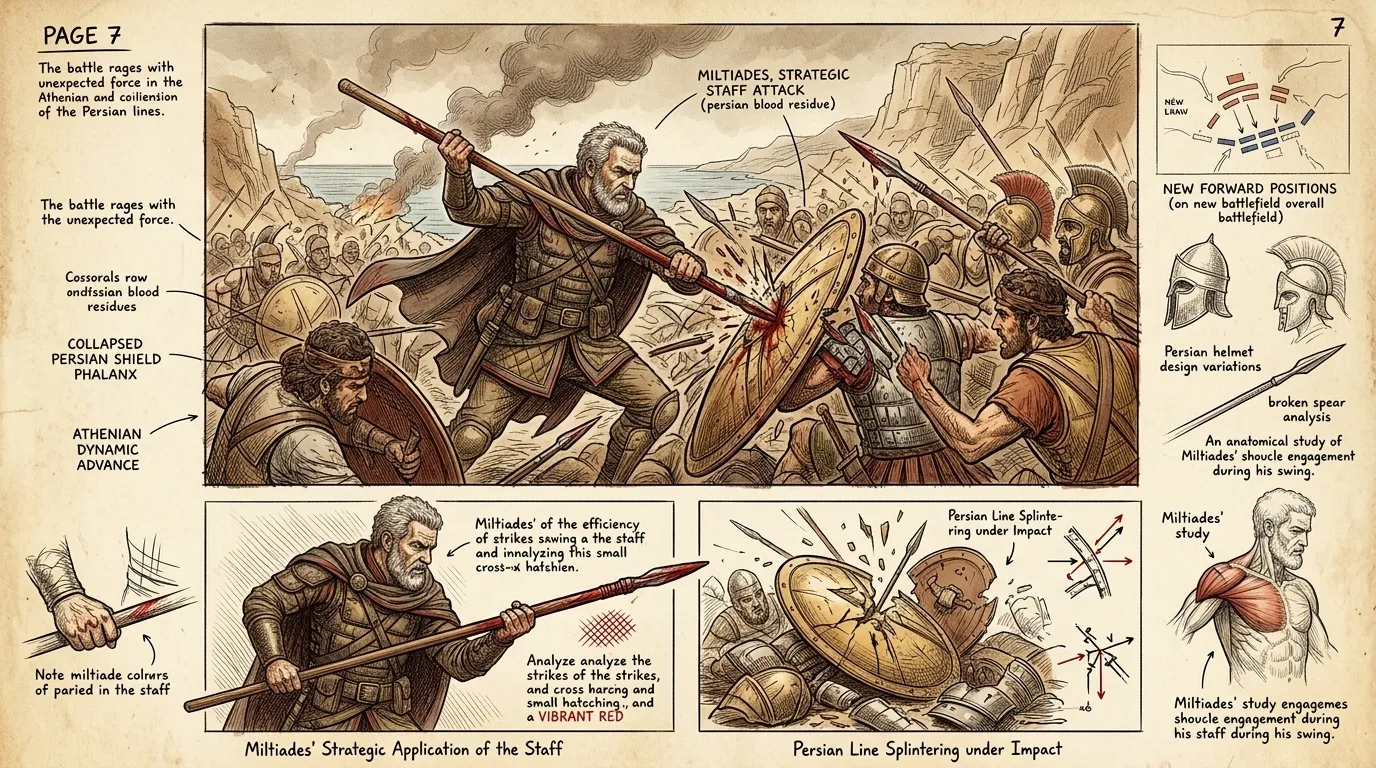
The Athenian and Persian lines collided with a thunderous crash. Shields splintered, spears shattered, and men fell on both sides. Miltiades fought fiercely, his sword stained with Persian blood. The cries of the wounded filled the air.
Page 8
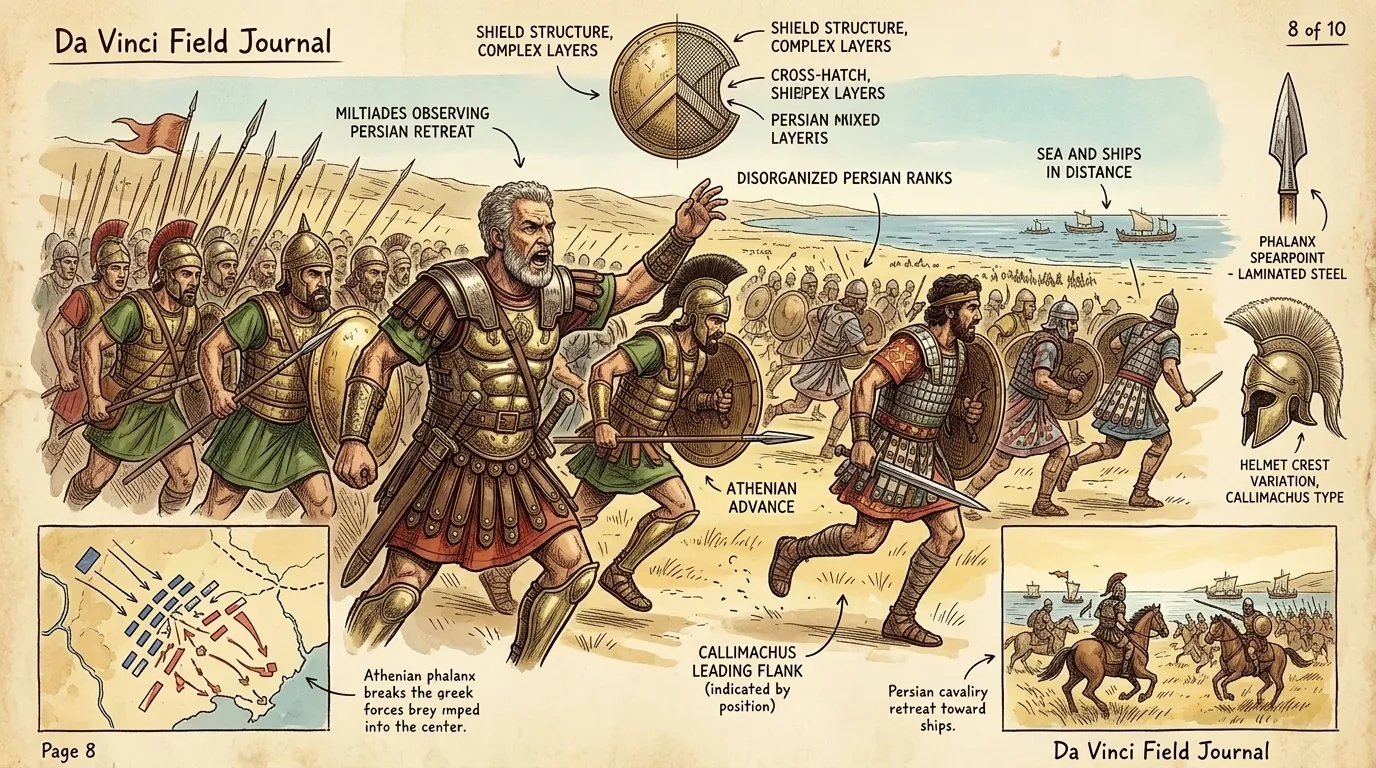
The Athenian phalanx, disciplined and resolute, pushed back the Persian line. The Persians, unused to such heavy fighting, began to break. Miltiades saw the Persians fleeing toward their ships. "They retreat!" he shouted. "Drive them to the sea!"
Page 9
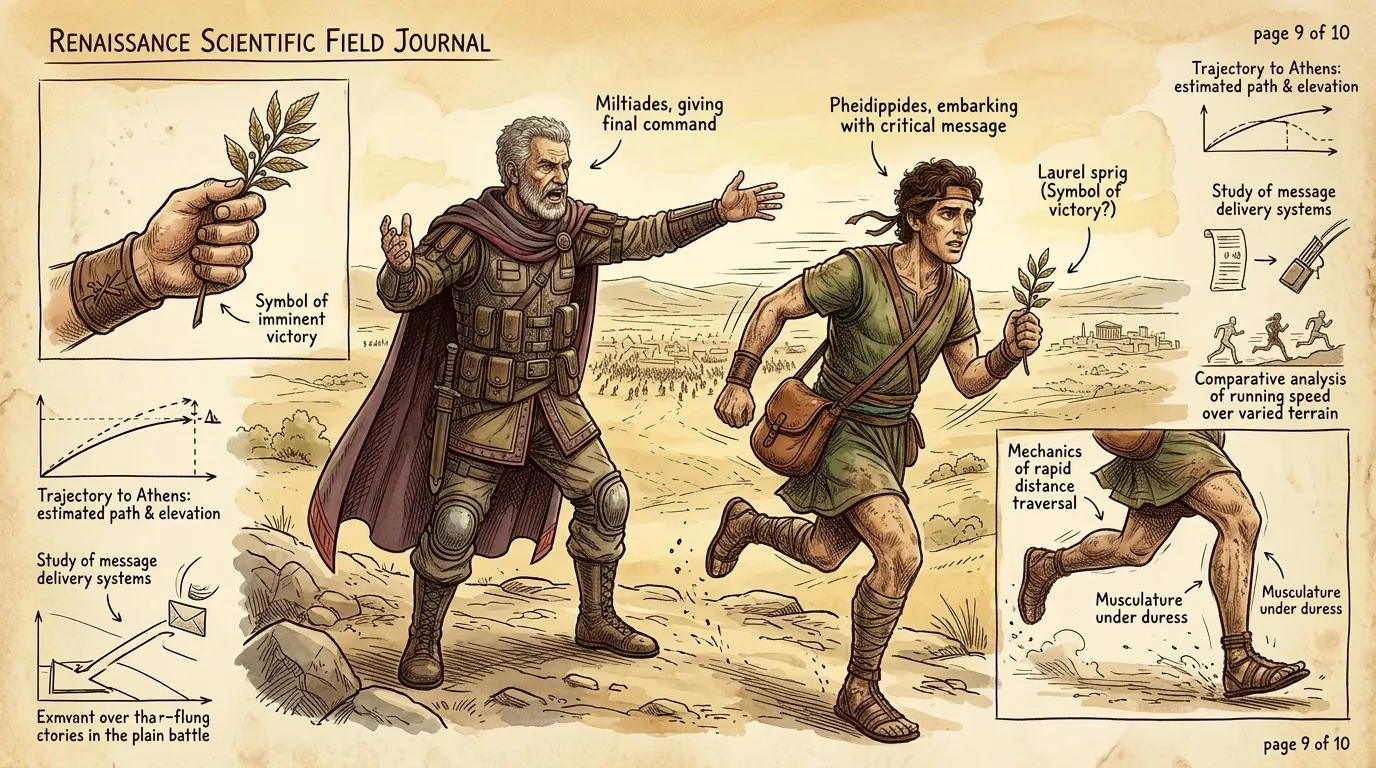
"Run to Athens!" Miltiades commanded Pheidippides. "Tell them we have won! Let them know Athens is safe!" Pheidippides, despite his exhaustion, obeyed, sprinting towards the city. He clutched a small sprig of laurel, a symbol of victory, in his hand.
Page 10
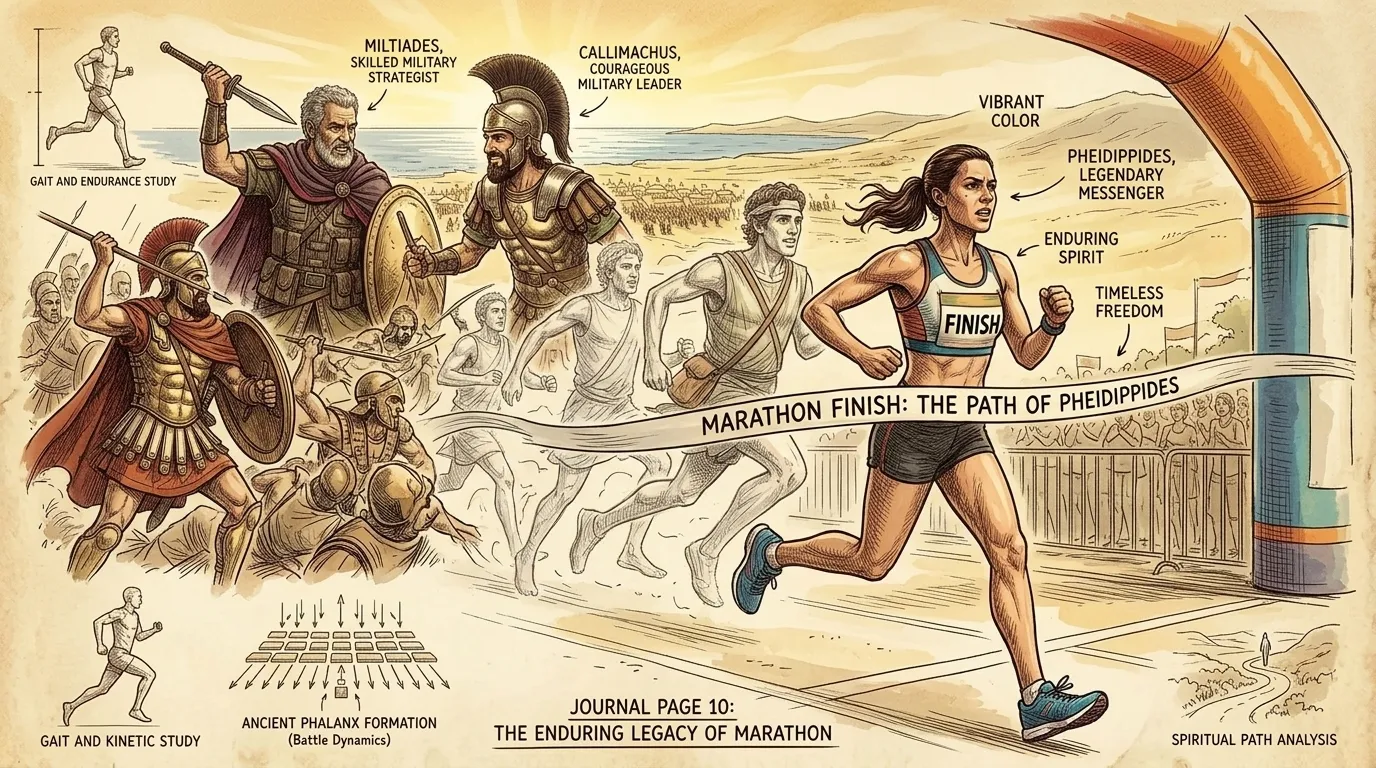
Centuries later, the Battle of Marathon remained a symbol of Greek resistance and Athenian glory. The memory of the battle inspired generations to defend their freedom. Today, people run marathons around the world, honoring Pheidippides's legendary run and the Athenian victory.
About this story
- Historical figures: Miltiades, Darius I, Callimachus
- Location: Greece
- Period: Ancient
- Audience: general readers
Questions and answers
Questions and answers about The Battle of Marathon — Greece (490 BC, Greece)
Read Wonder History on your phone
Wonder History is available on Android. Get Wonder History on Google Play.