The English Civil War — United Kingdom (1649, United Kingdom)

The English Civil War — United Kingdom (1649, United Kingdom) — an illustrated history story, featuring Charles I, Oliver Cromwell, Thomas Fairfax, set in United Kingdom. 10 illustrated pages, free to read on Wonder History.
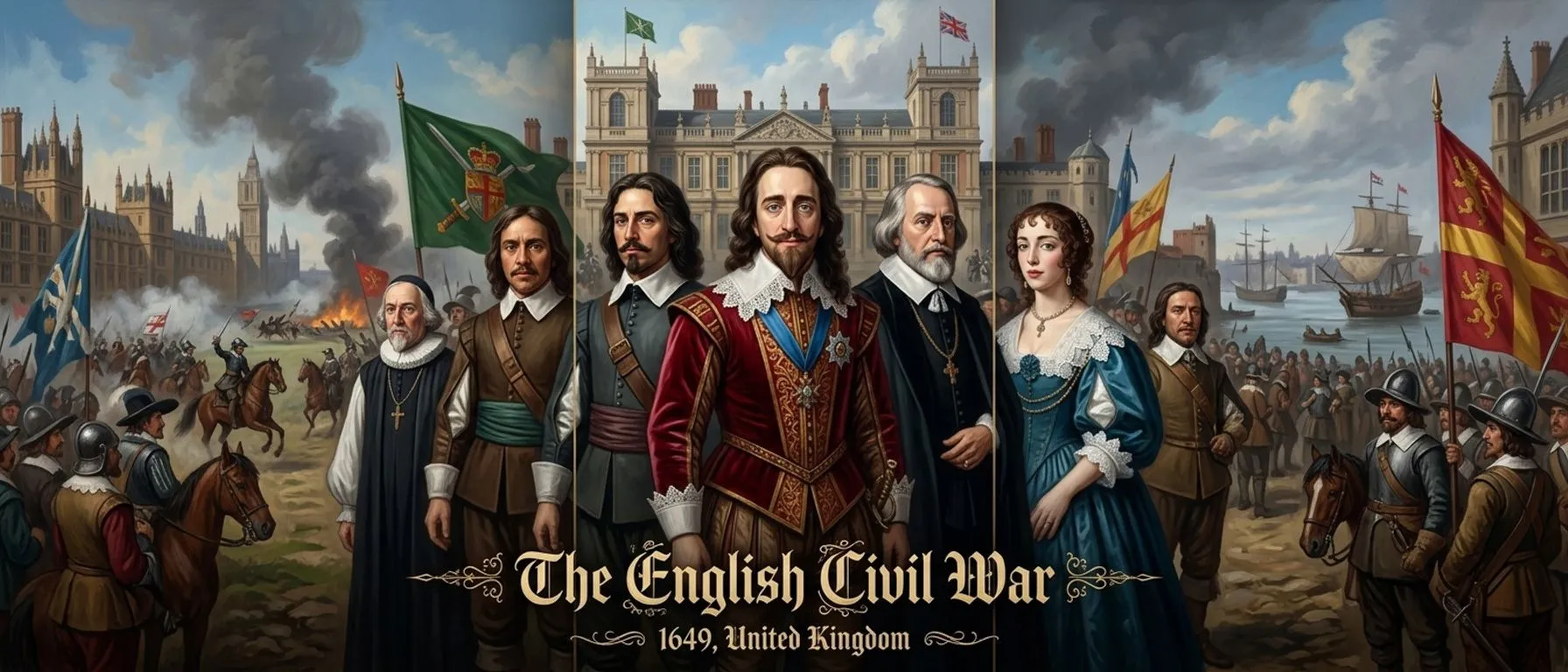
The English Civil War — United Kingdom (1649, United Kingdom) — book cover — Wonder History
The English Civil War — United Kingdom (1649, United Kingdom) — an illustrated history story, featuring Charles I, Oliver Cromwell, Thomas Fairfax, set in United Kingdom. 10 illustrated pages, free to read on Wonder History.

Page 1
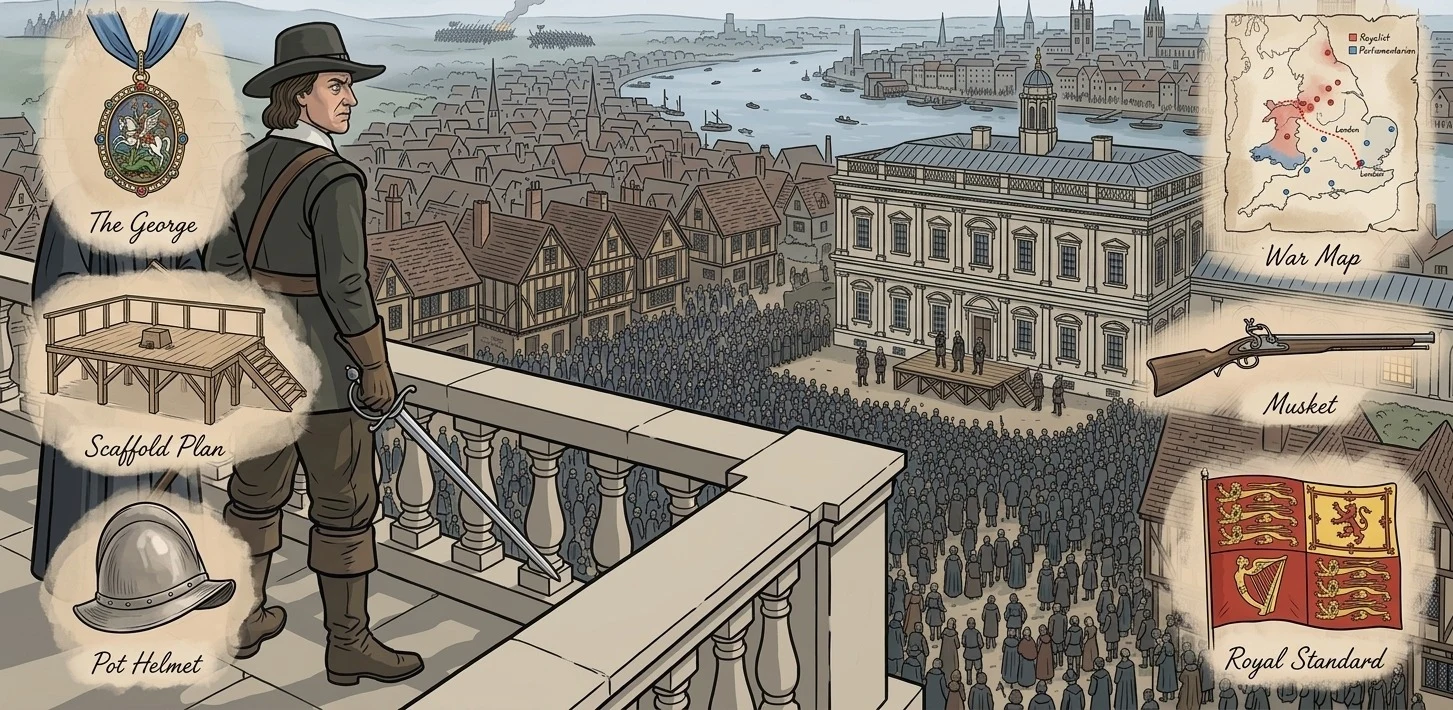
January 30, 1649: Charles I, King of England, Scotland, and Ireland, stood before the executioner. Oliver Cromwell, the Parliamentarian general, watched with…
January 30, 1649: Charles I, King of England, Scotland, and Ireland, stood before the executioner. Oliver Cromwell, the Parliamentarian general, watched with grim determination. Thomas Fairfax, commander of the New Model Army, remained conspicuously absent, his conscience troubled. Henrietta Maria, Charles's exiled queen, could only imagine the scene from afar.

January 30, 1649: Charles I, King of England, Scotland, and Ireland, stood before the executioner. Oliver Cromwell, the Parliamentarian general, watched with grim determination. Thomas Fairfax, commander of the New Model Army, remained conspicuously absent, his conscience troubled. Henrietta Maria, Charles's exiled queen, could only imagine the scene from afar. Over 10,000 Londoners filled the streets around Whitehall Palace, their murmurs a low hum against the stark finality of the moment. But how did the kingdoms reach this point of regicide?

Page 2
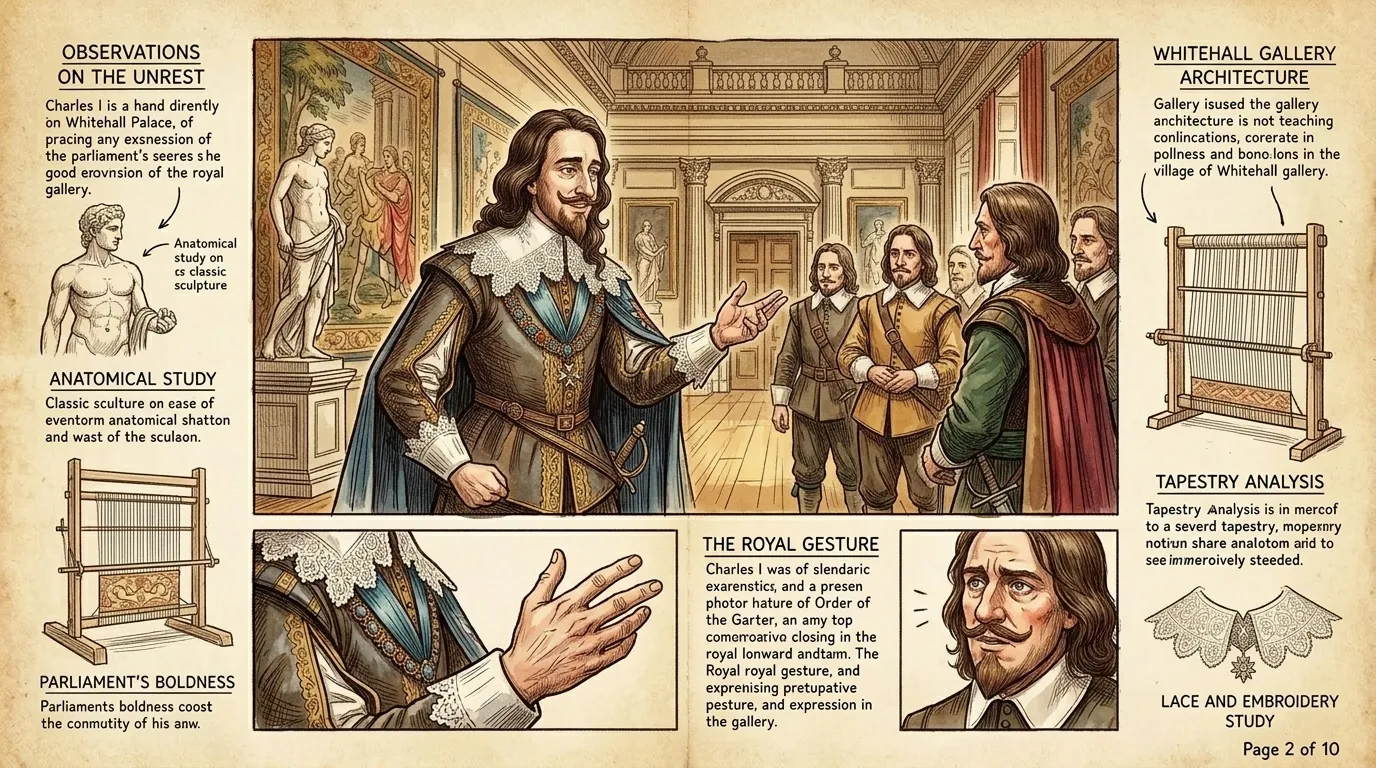
In the years leading up to the execution, the seeds of conflict were sown. Charles I believed in the Divine Right of Kings, clashing with Parliament's desire…
In the years leading up to the execution, the seeds of conflict were sown. Charles I believed in the Divine Right of Kings, clashing with Parliament's desire for greater control. "Parliament is becoming increasingly bold," Charles declared to his advisors, pacing in the opulent gallery at Whitehall Palace. "They forget who holds the true authority!"

In the years leading up to the execution, the seeds of conflict were sown. Charles I believed in the Divine Right of Kings, clashing with Parliament's desire for greater control. "Parliament is becoming increasingly bold," Charles declared to his advisors, pacing in the opulent gallery at Whitehall Palace. "They forget who holds the true authority!"

Page 3
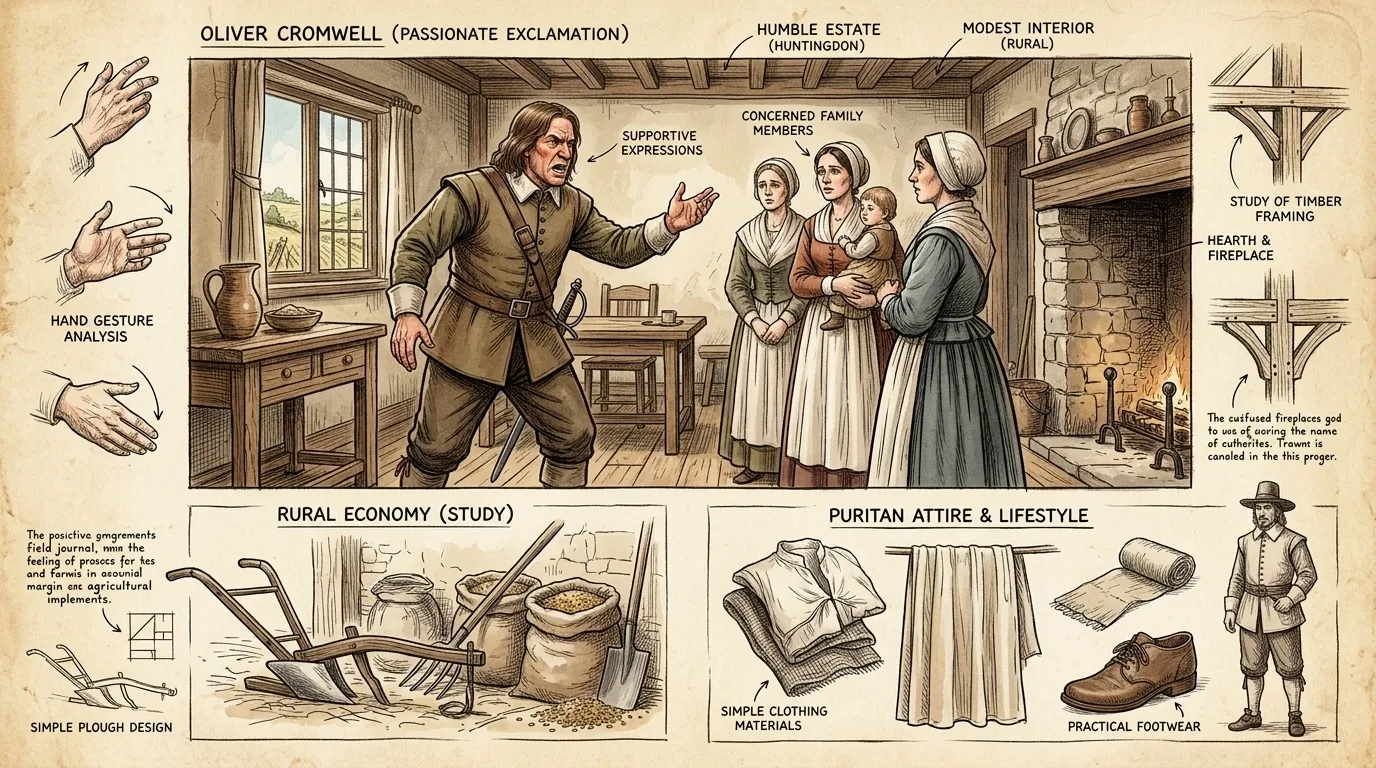
Oliver Cromwell, a farmer and devout Puritan, watched the King's actions with growing concern from his estate in Huntingdon.
Oliver Cromwell, a farmer and devout Puritan, watched the King's actions with growing concern from his estate in Huntingdon. He believed in a more equitable distribution of power. "England needs a King who is for the people, not above them!" Cromwell exclaimed to his family, his voice ringing with conviction. "Charles's actions are leading us toward disaster."

Oliver Cromwell, a farmer and devout Puritan, watched the King's actions with growing concern from his estate in Huntingdon. He believed in a more equitable distribution of power. "England needs a King who is for the people, not above them!" Cromwell exclaimed to his family, his voice ringing with conviction. "Charles's actions are leading us toward disaster."

Page 4
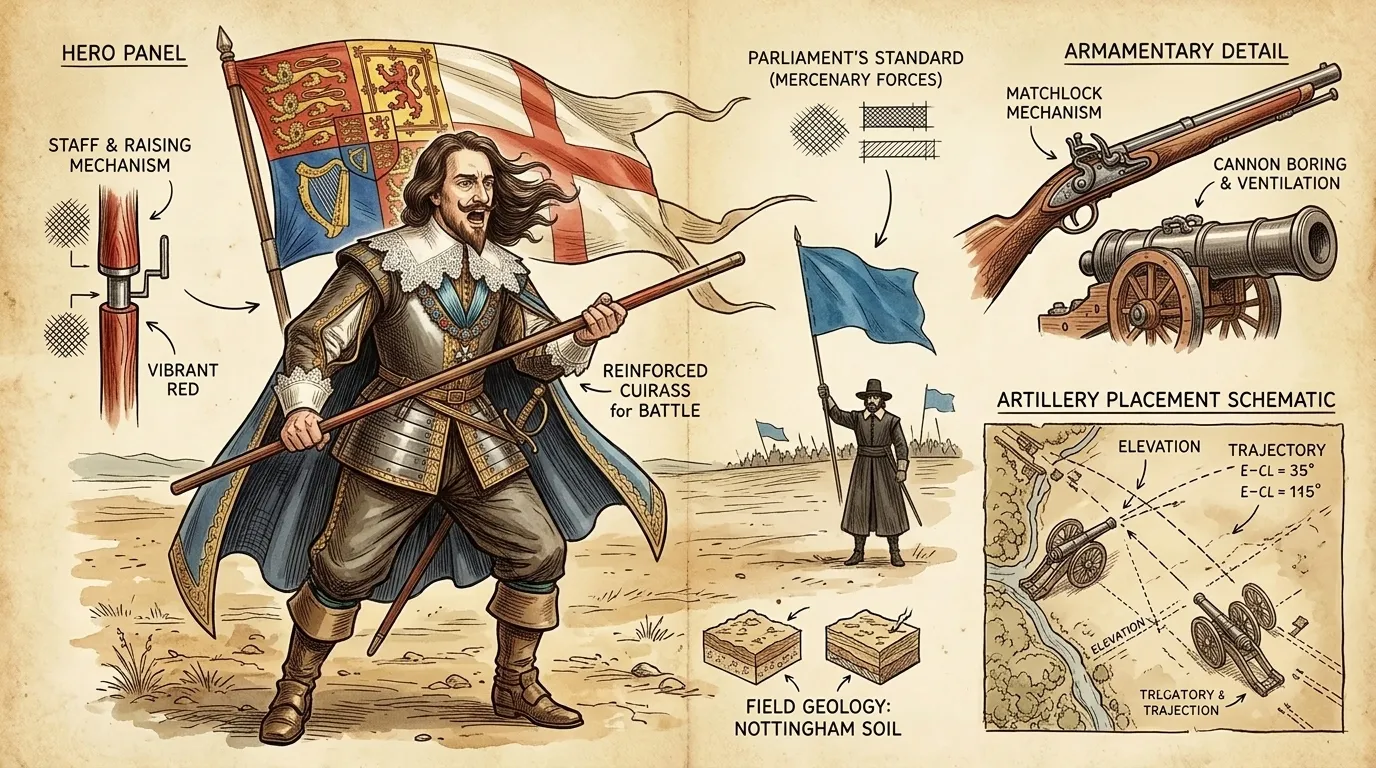
In 1642, the simmering tensions erupted into open warfare. Charles raised his standard at Nottingham, signaling the start of the First English Civil War.
In 1642, the simmering tensions erupted into open warfare. Charles raised his standard at Nottingham, signaling the start of the First English Civil War. "For the Crown!" Charles shouted, drawing his sword. Parliament, led by figures like John Pym, responded in kind, raising its own armies.

In 1642, the simmering tensions erupted into open warfare. Charles raised his standard at Nottingham, signaling the start of the First English Civil War. "For the Crown!" Charles shouted, drawing his sword. Parliament, led by figures like John Pym, responded in kind, raising its own armies.

Page 5
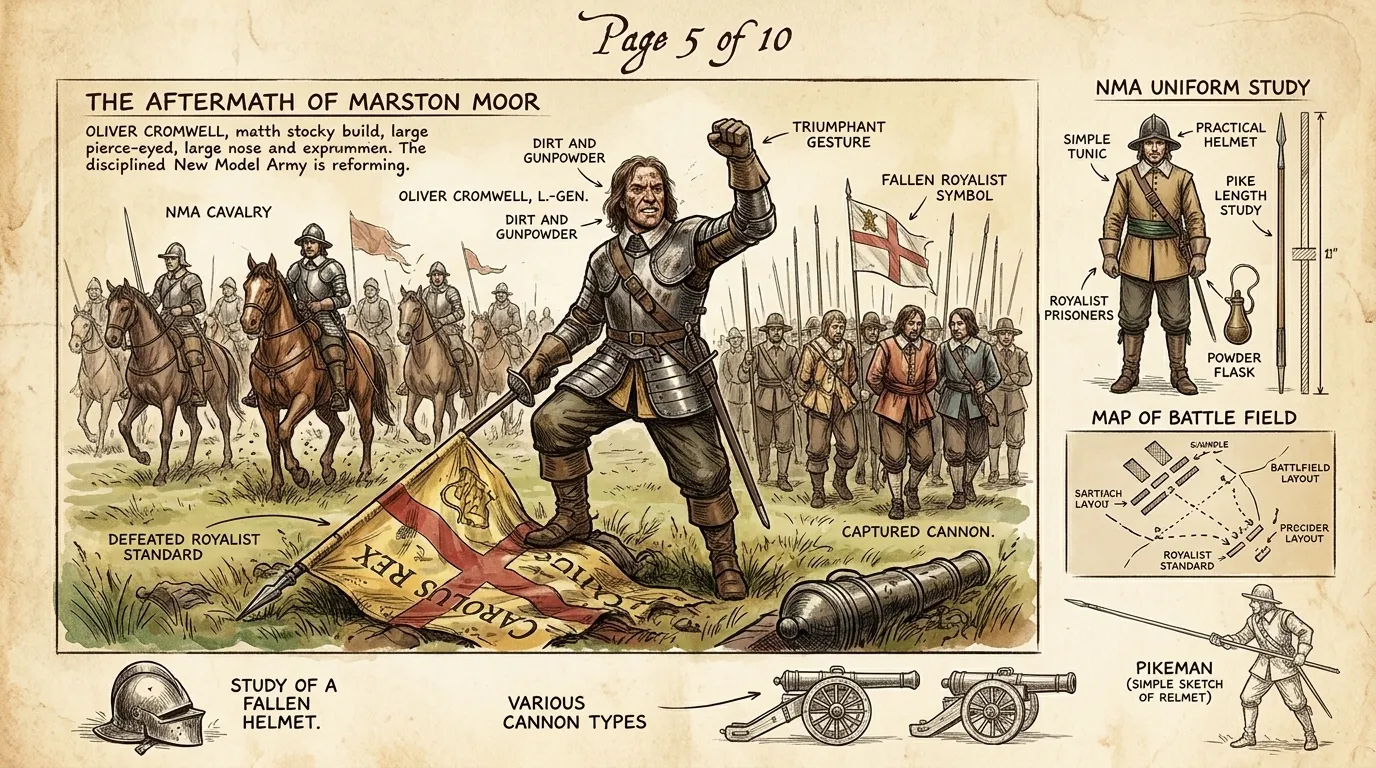
The Battle of Marston Moor in 1644 proved a turning point. Oliver Cromwell's disciplined New Model Army crushed the Royalist forces.
The Battle of Marston Moor in 1644 proved a turning point. Oliver Cromwell's disciplined New Model Army crushed the Royalist forces. "God made them as stubble to our swords!" Cromwell declared after the victory, his face streaked with dirt and gunpowder.

The Battle of Marston Moor in 1644 proved a turning point. Oliver Cromwell's disciplined New Model Army crushed the Royalist forces. "God made them as stubble to our swords!" Cromwell declared after the victory, his face streaked with dirt and gunpowder.

Page 6
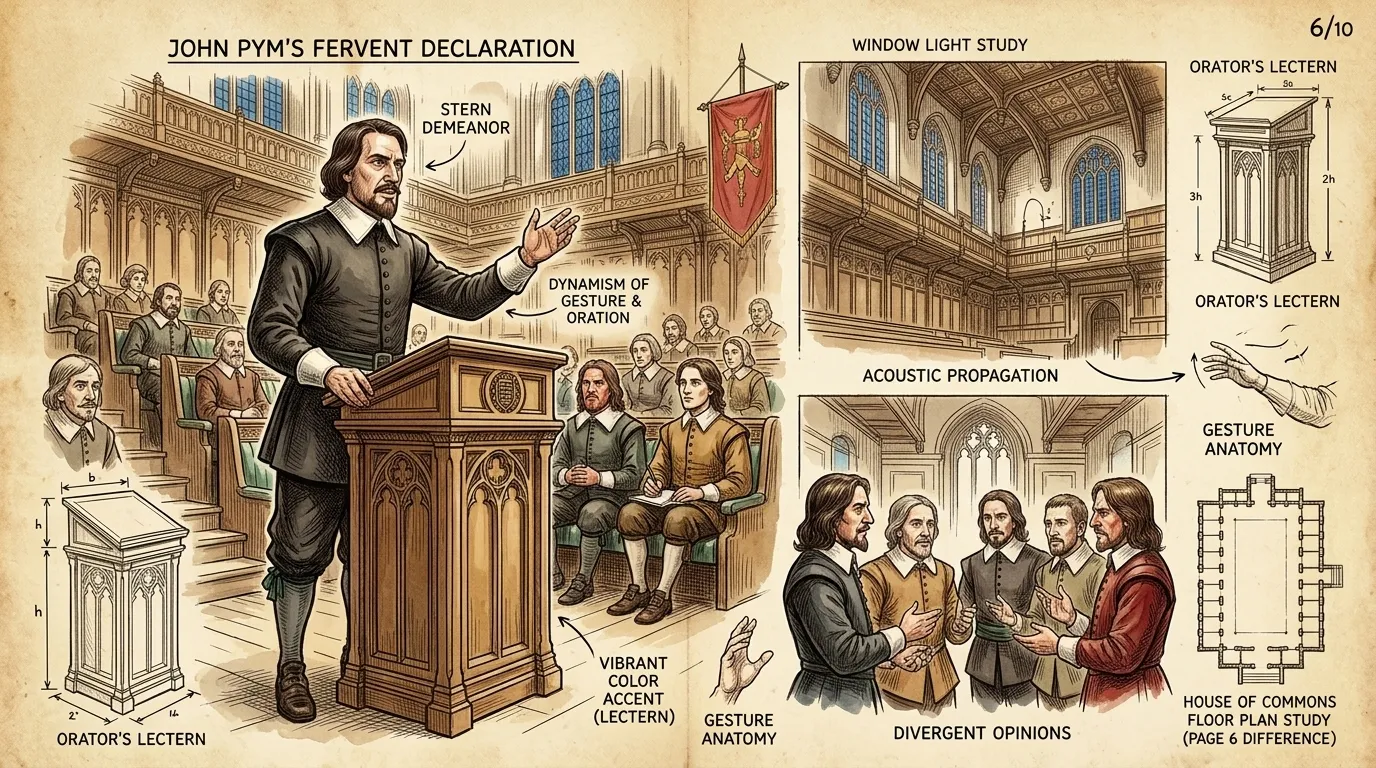
Parliament debated the future of the monarchy in the wake of their victories. John Pym, a leading parliamentarian, argued for limitations on the King's power.
Parliament debated the future of the monarchy in the wake of their victories. John Pym, a leading parliamentarian, argued for limitations on the King's power. "We must ensure that this never happens again!" Pym proclaimed during a heated debate in the House of Commons.

Parliament debated the future of the monarchy in the wake of their victories. John Pym, a leading parliamentarian, argued for limitations on the King's power. "We must ensure that this never happens again!" Pym proclaimed during a heated debate in the House of Commons.

Page 7
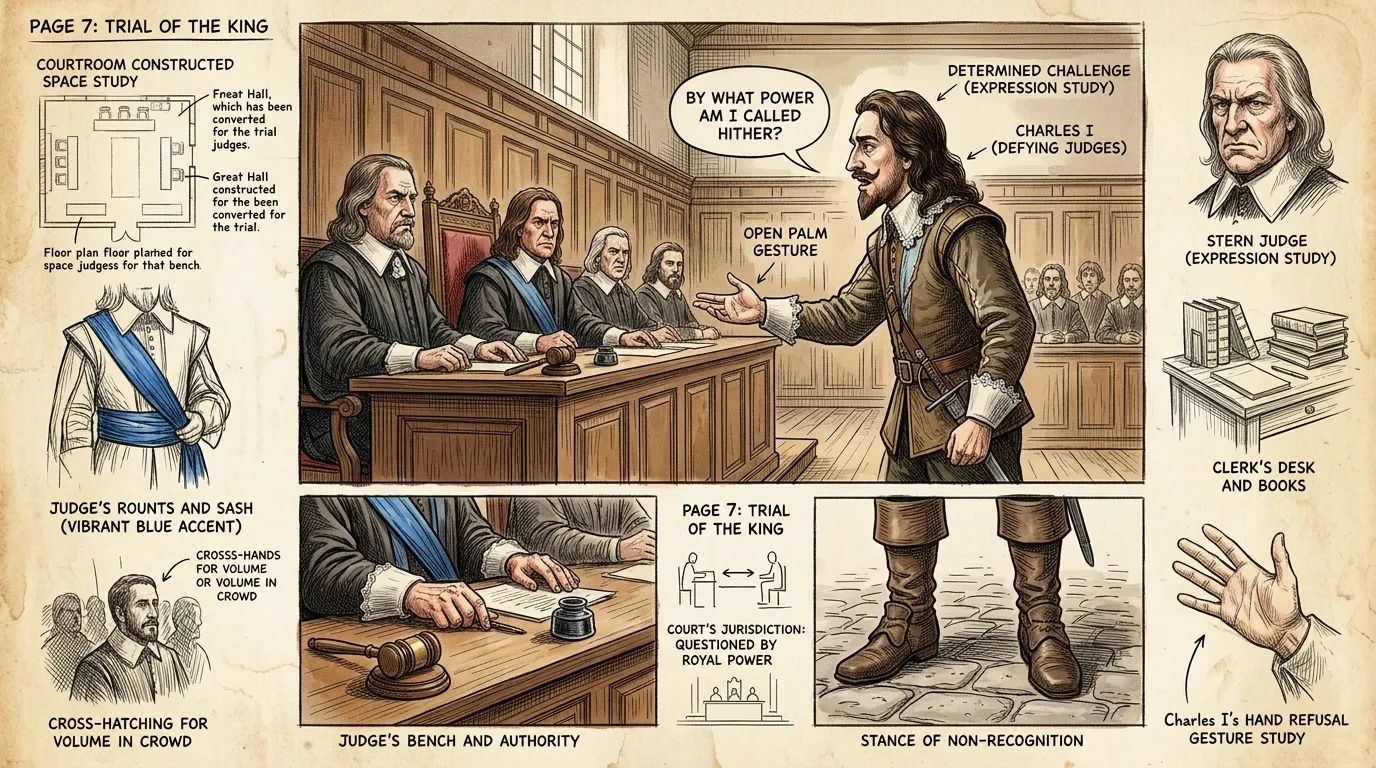
Charles I was eventually captured and put on trial for treason. He refused to recognize the court's authority. "By what power am I called hither?" Charles…
Charles I was eventually captured and put on trial for treason. He refused to recognize the court's authority. "By what power am I called hither?" Charles demanded, his voice ringing with defiance.

Charles I was eventually captured and put on trial for treason. He refused to recognize the court's authority. "By what power am I called hither?" Charles demanded, his voice ringing with defiance.

Page 8
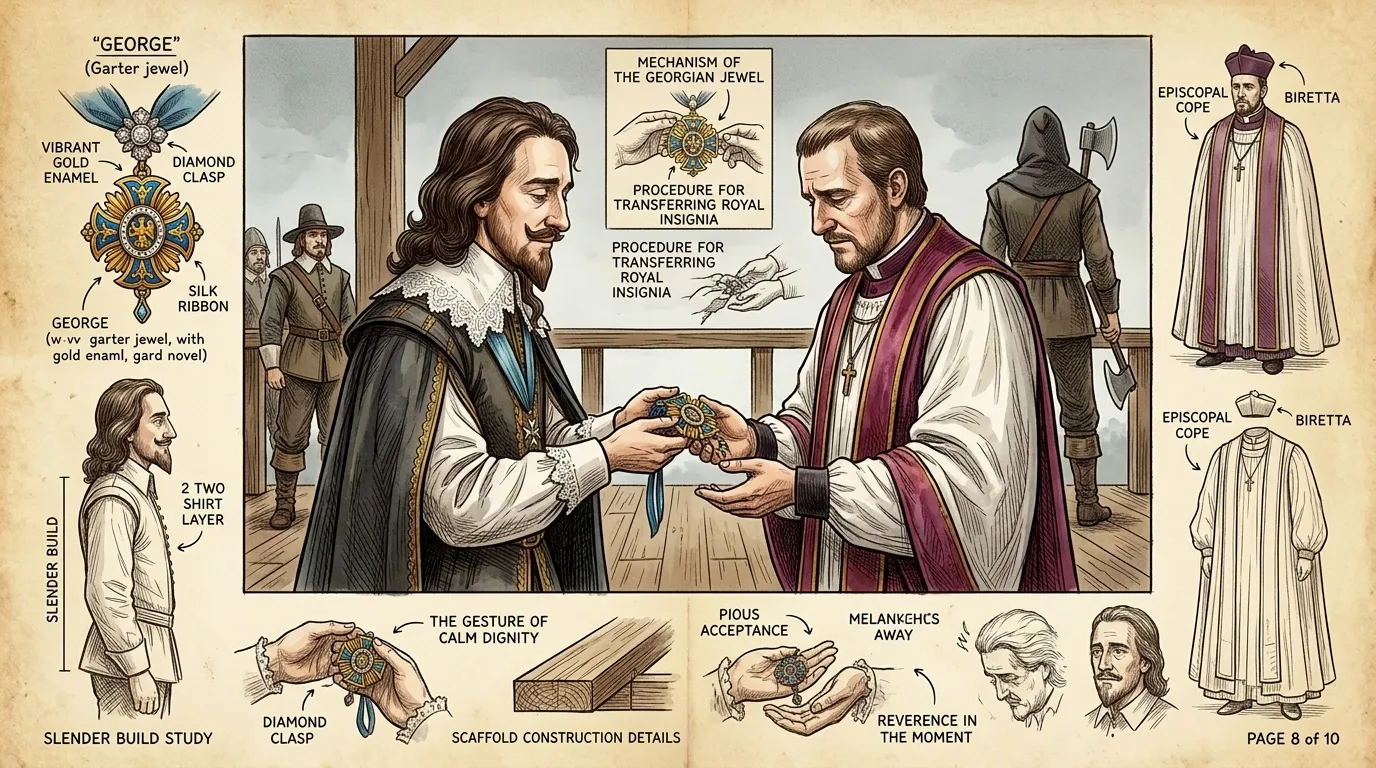
As the executioner prepared, Charles spoke his final words. He wore two shirts, against the cold. He had read somewhere the people might think him afeared if he…
As the executioner prepared, Charles spoke his final words. He wore two shirts, against the cold. He had read somewhere the people might think him afeared if he shivered in the cold. "I go from a corruptible to an incorruptible Crown," he said. Before laying his head upon the block, he removed his cloak and handed his 'George' to Bishop Juxon.

As the executioner prepared, Charles spoke his final words. He wore two shirts, against the cold. He had read somewhere the people might think him afeared if he shivered in the cold. "I go from a corruptible to an incorruptible Crown," he said. Before laying his head upon the block, he removed his cloak and handed his 'George' to Bishop Juxon.

Page 9
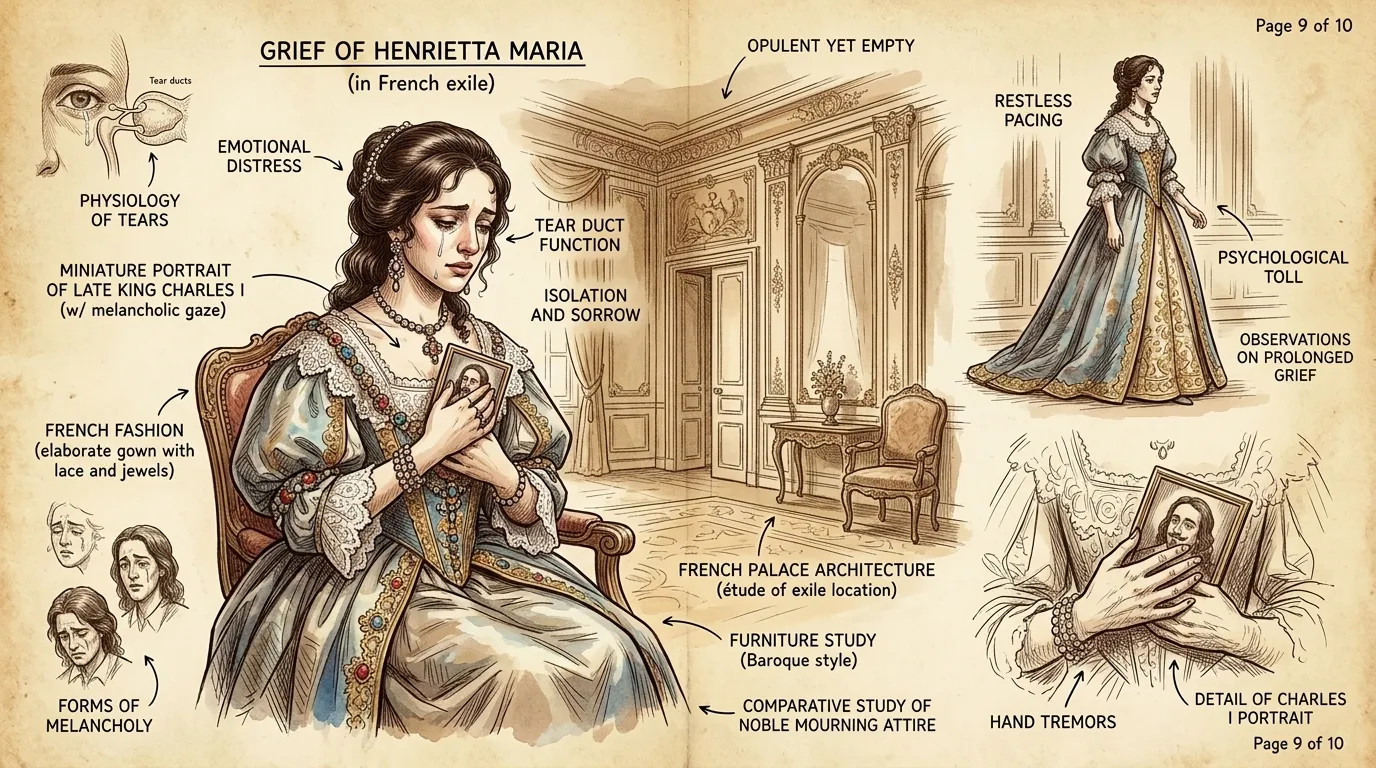
Henrietta Maria, in exile in France, received news of her husband's execution with profound grief. She clutched a miniature portrait of Charles, tears streaming…
Henrietta Maria, in exile in France, received news of her husband's execution with profound grief. She clutched a miniature portrait of Charles, tears streaming down her face. She would later echo Shakespeare, saying 'The web of our life is of a mingled yarn, good and ill together'. Shakespeare's words, she knew, rang especially true in her life.

Henrietta Maria, in exile in France, received news of her husband's execution with profound grief. She clutched a miniature portrait of Charles, tears streaming down her face. She would later echo Shakespeare, saying 'The web of our life is of a mingled yarn, good and ill together'. Shakespeare's words, she knew, rang especially true in her life.

Page 10
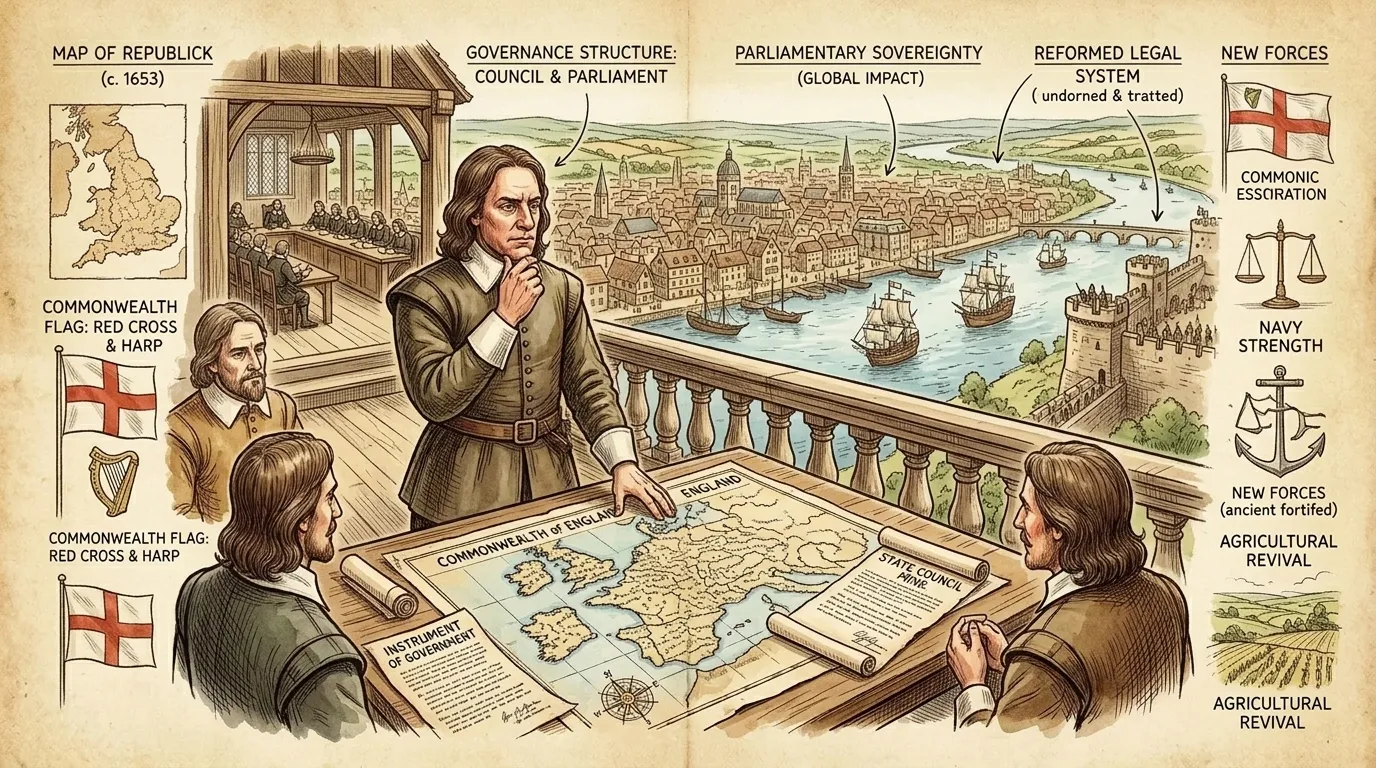
The execution of Charles I marked a turning point in English history. The monarchy was abolished, and England became a republic, the Commonwealth, under the…
The execution of Charles I marked a turning point in English history. The monarchy was abolished, and England became a republic, the Commonwealth, under the leadership of Oliver Cromwell. Though the monarchy would eventually be restored, the idea of the Divine Right of Kings was forever diminished. Parliaments across the world are to this day modeled after the English system.

The execution of Charles I marked a turning point in English history. The monarchy was abolished, and England became a republic, the Commonwealth, under the leadership of Oliver Cromwell. Though the monarchy would eventually be restored, the idea of the Divine Right of Kings was forever diminished. Parliaments across the world are to this day modeled after the English system.

About this story

  • Historical figures: Charles I, Oliver Cromwell, Thomas Fairfax
  • Location: United Kingdom
  • Period: Early Modern
  • Audience: general readers

Questions and answers

Questions and answers about The English Civil War — United Kingdom (1649, United Kingdom)

Read Wonder History on your phone

Wonder History is available on Android. Get Wonder History on Google Play.

More Wonder History stories

All Wonder History stories · Open the library