The Fall of Constantinople (1453)

The Fall of Constantinople (1453) — an illustrated history story, featuring Constantine XI Palaiologos, Mehmed II, Giovanni Giustiniani, set in Constantinople. 10 illustrated pages, free to read on Wonder History.

The Fall of Constantinople (1453) — book cover — Wonder History
The Fall of Constantinople (1453) — an illustrated history story, featuring Constantine XI Palaiologos, Mehmed II, Giovanni Giustiniani, set in Constantinople. 10 illustrated pages, free to read on Wonder History.

Page 1
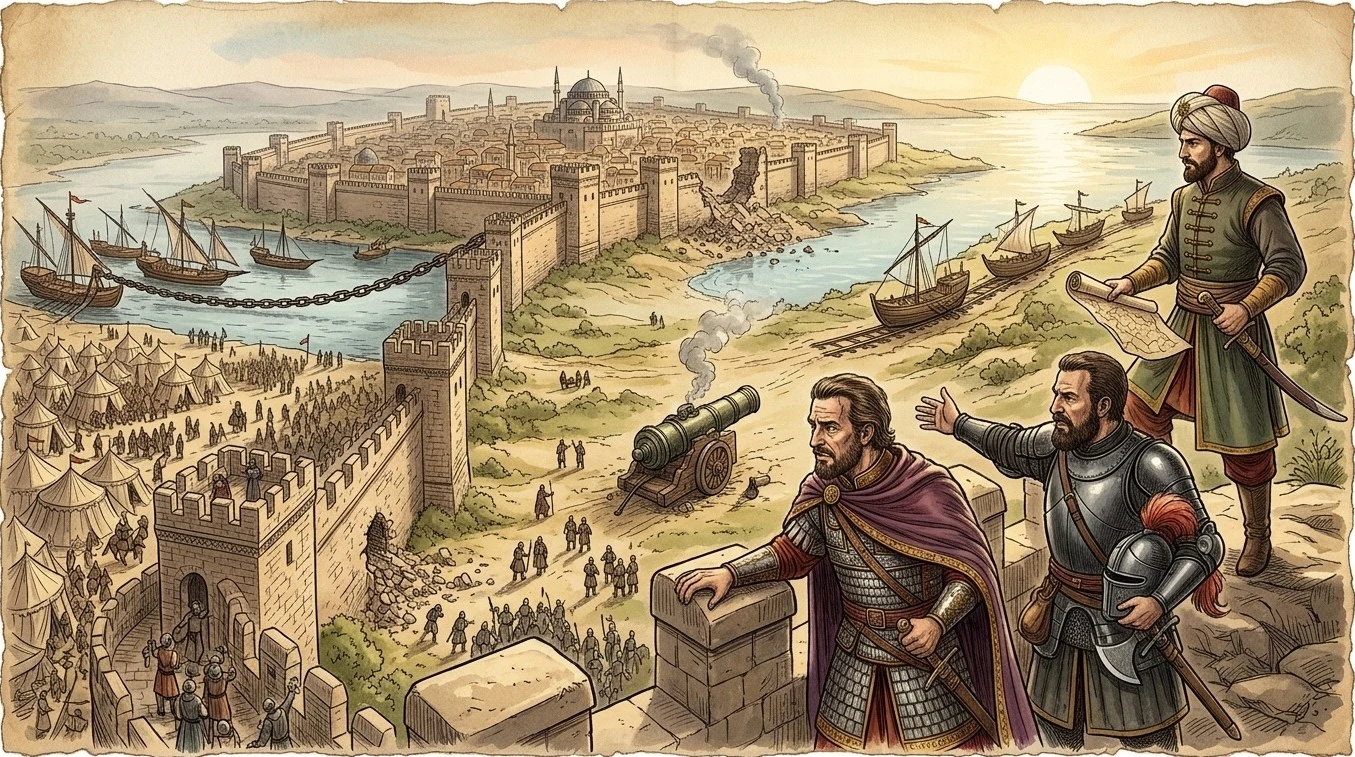
Constantine XI Palaiologos, the last Byzantine Emperor, Giovanni Giustiniani, the skilled Genoese commander, and Mehmed II, the ambitious Ottoman Sultan—their…
Constantine XI Palaiologos, the last Byzantine Emperor, Giovanni Giustiniani, the skilled Genoese commander, and Mehmed II, the ambitious Ottoman Sultan—their destinies converged on the ancient walls of Constantinople on May 29, 1453. After a 53-day siege, the Ottoman forces, numbering over 80,000, finally broke through the city's defenses, defended by a mere 7,000 soldiers.

Constantine XI Palaiologos, the last Byzantine Emperor, Giovanni Giustiniani, the skilled Genoese commander, and Mehmed II, the ambitious Ottoman Sultan—their destinies converged on the ancient walls of Constantinople on May 29, 1453. After a 53-day siege, the Ottoman forces, numbering over 80,000, finally broke through the city's defenses, defended by a mere 7,000 soldiers. The air crackled with the roar of cannons and the clash of steel as the final, desperate battle for Constantinople raged.

Page 2

The Fall of Constantinople (1453) — page 2 illustration — Wonder History

Mehmed II, barely twenty-one years old, surveyed his vast army from his command tent. He questioned Urban, the cannon founder, about the Great Turkish Bombard. "Will it shatter their walls as you promised?", Mehmed asked with a steely glint in his youthful eyes. Urban, a stout Hungarian man with a receding hairline and a nervous demeanor, assured him, "Sultan Mehmed, it will cast stones the size of mountains. It is a mighty weapon."

Page 3

Inside the Blachernae Palace, George Sphrantzes, Constantine's trusted advisor, approached the Emperor with dire news. "The Genoese ships have been delayed by…
Inside the Blachernae Palace, George Sphrantzes, Constantine's trusted advisor, approached the Emperor with dire news. "The Genoese ships have been delayed by storms, Your Majesty!" Sphrantzes reported with a worried tone. Constantine XI, pacing anxiously, stopped and faced him, his brow furrowed. "Then we must rely on God and our own strength," Constantine declared, his voice firm despite the grim circumstances.

Inside the Blachernae Palace, George Sphrantzes, Constantine's trusted advisor, approached the Emperor with dire news. "The Genoese ships have been delayed by storms, Your Majesty!" Sphrantzes reported with a worried tone. Constantine XI, pacing anxiously, stopped and faced him, his brow furrowed. "Then we must rely on God and our own strength," Constantine declared, his voice firm despite the grim circumstances.

Page 4

Baltaoğlu Süleyman, the Ottoman admiral, raged at his captains. "Why have you not breached the chain?" he demanded, pointing towards the massive chain blocking…
Baltaoğlu Süleyman, the Ottoman admiral, raged at his captains. "Why have you not breached the chain?" he demanded, pointing towards the massive chain blocking the entrance to the Golden Horn. One captain stammered, "The Genoese ships and the sea currents make it impossible, Admiral!" Süleyman slammed his fist on the railing, his face contorted with fury. "Then we shall find another way!"

Baltaoğlu Süleyman, the Ottoman admiral, raged at his captains. "Why have you not breached the chain?" he demanded, pointing towards the massive chain blocking the entrance to the Golden Horn. One captain stammered, "The Genoese ships and the sea currents make it impossible, Admiral!" Süleyman slammed his fist on the railing, his face contorted with fury. "Then we shall find another way!"

Page 5
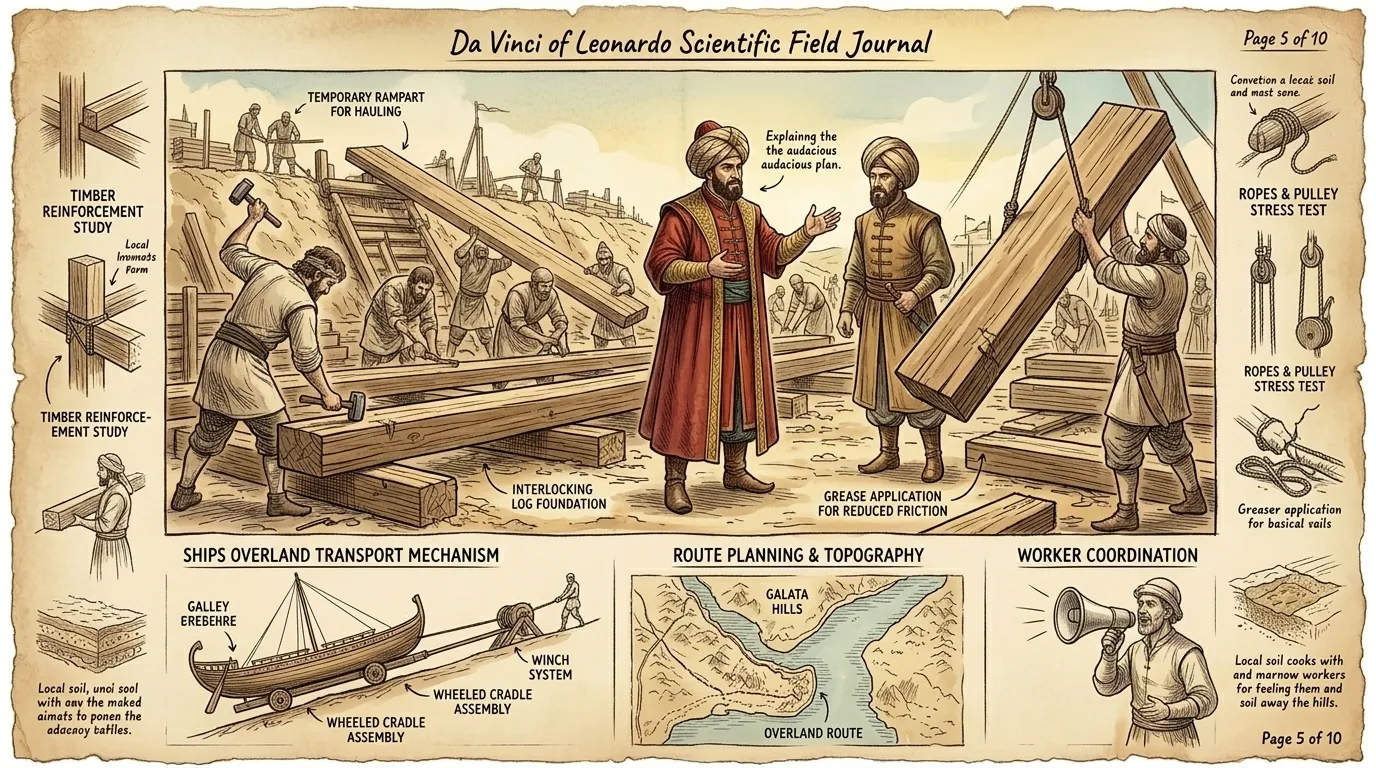
Mehmed II observed the construction of the wooden rails that would carry the ships overland. He told his top commander, "If the chain will not break, we will…
Mehmed II observed the construction of the wooden rails that would carry the ships overland. He told his top commander, "If the chain will not break, we will not go through it. We will go over the hill." He pointed to the greased timbers running up from the Bosphorus. "Put the fleet on wheels tonight. Let them wake to find our ships inside their harbour." By morning, seventy vessels sat in the Golden Horn.

Mehmed II observed the construction of the wooden rails that would carry the ships overland. He told his top commander, "If the chain will not break, we will not go through it. We will go over the hill." He pointed to the greased timbers running up from the Bosphorus. "Put the fleet on wheels tonight. Let them wake to find our ships inside their harbour." By morning, seventy vessels sat in the Golden Horn.

Page 6

The Great Turkish Bombard, designed by Urban, roared to life. George Sphrantzes watched in horror from the city walls. He exclaimed, "The walls are crumbling!
The Great Turkish Bombard, designed by Urban, roared to life. George Sphrantzes watched in horror from the city walls. He exclaimed, "The walls are crumbling! God save us!". The giant cannon blasted stone into the mighty walls. The massive cannon had its desired effect.

The Great Turkish Bombard, designed by Urban, roared to life. George Sphrantzes watched in horror from the city walls. He exclaimed, "The walls are crumbling! God save us!". The giant cannon blasted stone into the mighty walls. The massive cannon had its desired effect.

Page 7

"Hold the line!" Giovanni Giustiniani shouted, his voice hoarse. The defenders of the wall, weary but resolute, fought fiercely against the relentless Ottoman…
"Hold the line!" Giovanni Giustiniani shouted, his voice hoarse. The defenders of the wall, weary but resolute, fought fiercely against the relentless Ottoman assault. He then told his men, "Fear is your enemy!" He was trying to boost morale. But then the great cannon shook the walls.

"Hold the line!" Giovanni Giustiniani shouted, his voice hoarse. The defenders of the wall, weary but resolute, fought fiercely against the relentless Ottoman assault. He then told his men, "Fear is your enemy!" He was trying to boost morale. But then the great cannon shook the walls.

Page 8

A massive breach appeared in the St. Romanus Gate, and Ottoman soldiers poured into the city. Giovanni Giustiniani was struck by a cannonball and gravely…
A massive breach appeared in the St. Romanus Gate, and Ottoman soldiers poured into the city. Giovanni Giustiniani was struck by a cannonball and gravely wounded. "I am hit! I must leave!" Giovanni groaned, clutching his side. This was the beginning of the end.

A massive breach appeared in the St. Romanus Gate, and Ottoman soldiers poured into the city. Giovanni Giustiniani was struck by a cannonball and gravely wounded. "I am hit! I must leave!" Giovanni groaned, clutching his side. This was the beginning of the end.

Page 9

Constantine XI, realizing the city was lost, cast off his imperial regalia. He charged into the thick of the fighting. Before his death, Constantine remembered…
Constantine XI, realizing the city was lost, cast off his imperial regalia. He charged into the thick of the fighting. Before his death, Constantine remembered the words of Plato and screamed "Only the dead have seen the end of war". He refused to become Mehmed's prisoner. He was last seen in that battle.

Constantine XI, realizing the city was lost, cast off his imperial regalia. He charged into the thick of the fighting. Before his death, Constantine remembered the words of Plato and screamed "Only the dead have seen the end of war". He refused to become Mehmed's prisoner. He was last seen in that battle.

Page 10
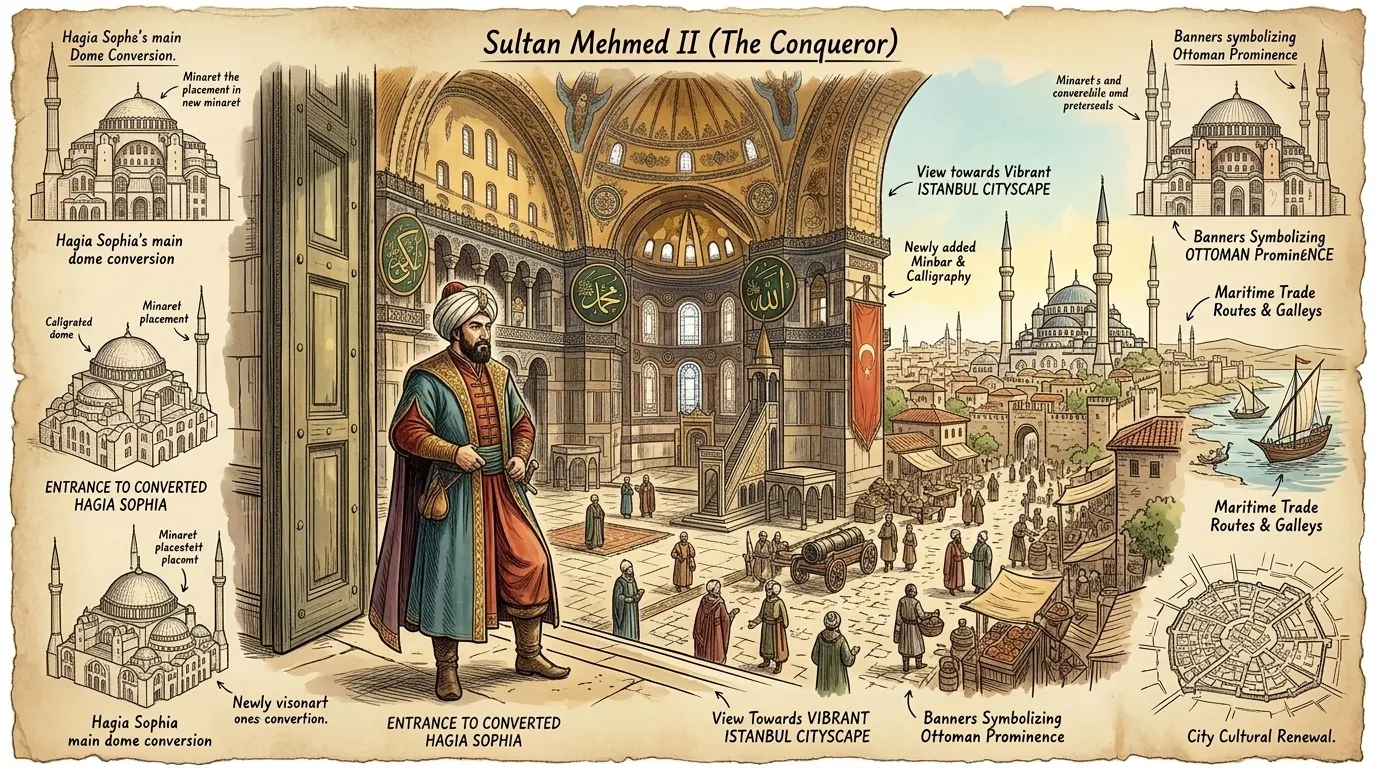
Mehmed II, now known as Mehmed the Conqueror, entered Constantinople. The Hagia Sophia was converted into a mosque. The city was renamed Istanbul, and the…
Mehmed II, now known as Mehmed the Conqueror, entered Constantinople. The Hagia Sophia was converted into a mosque. The city was renamed Istanbul, and the Ottoman Empire rose to prominence. Over time, the city flourished as a center of trade and culture under Ottoman rule, a testament to its strategic location and the Sultan's vision.

Mehmed II, now known as Mehmed the Conqueror, entered Constantinople. The Hagia Sophia was converted into a mosque. The city was renamed Istanbul, and the Ottoman Empire rose to prominence. Over time, the city flourished as a center of trade and culture under Ottoman rule, a testament to its strategic location and the Sultan's vision.

About this story

  • Historical figures: Constantine XI Palaiologos, Mehmed II, Giovanni Giustiniani
  • Location: Constantinople
  • Period: Middle Ages
  • Audience: general readers

Questions and answers

Questions and answers about The Fall of Constantinople (1453)

Read Wonder History on your phone

Wonder History is available on Android and iPhone and iPad. Get Wonder History on Google Play · Get Wonder History on the App Store.

More Wonder History stories

All Wonder History stories · Open the library