The Fall of the Byzantine Empire — Constantinople (1453, Constantinople)

The Fall of the Byzantine Empire — Constantinople (1453, Constantinople) — an illustrated history story, featuring Constantine XI Palaiologos, Mehmed the Conqueror, Giovanni Giustiniani, set in Constantinople. 10 illustrated pages, free to read on Wonder History.
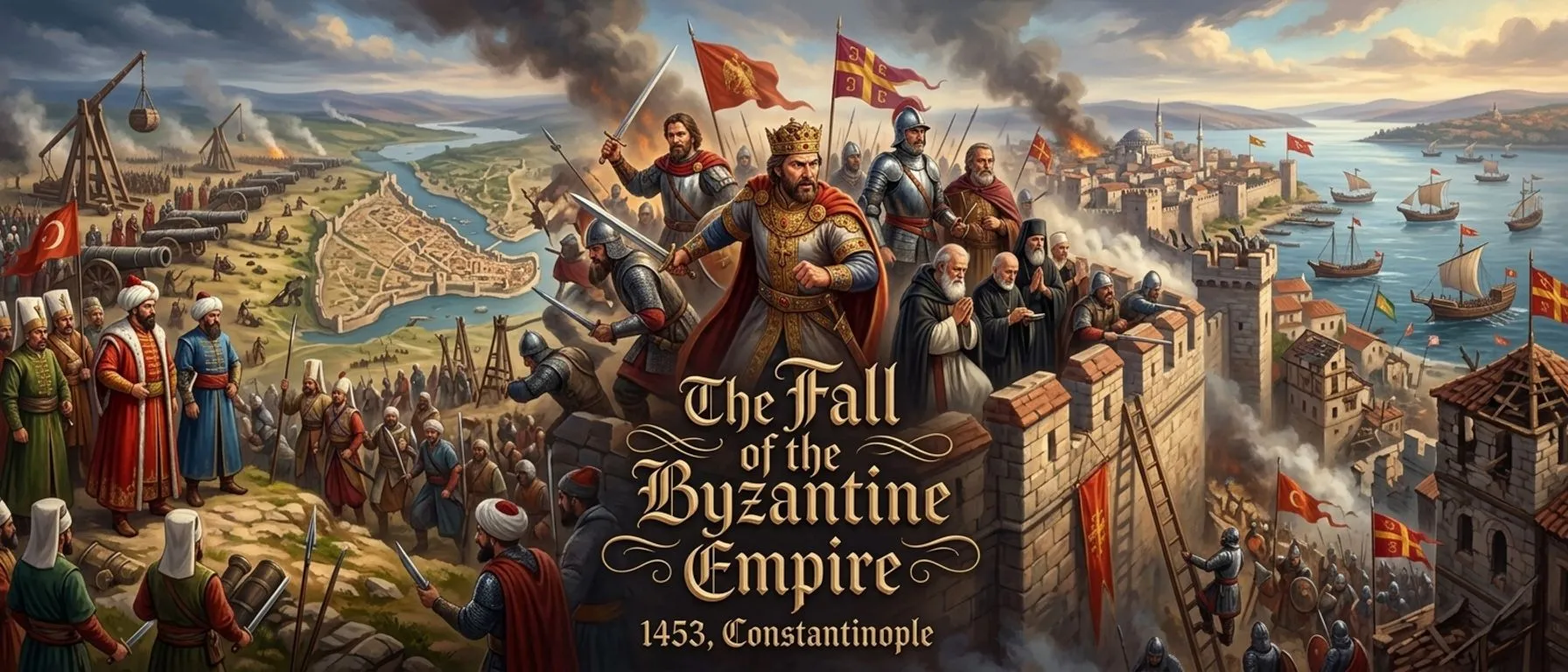
The Fall of the Byzantine Empire — Constantinople (1453, Constantinople) — book cover — Wonder History
The Fall of the Byzantine Empire — Constantinople (1453, Constantinople) — an illustrated history story, featuring Constantine XI Palaiologos, Mehmed the Conqueror, Giovanni Giustiniani, set in Constantinople. 10 illustrated pages, free to read on Wonder History.

Page 1
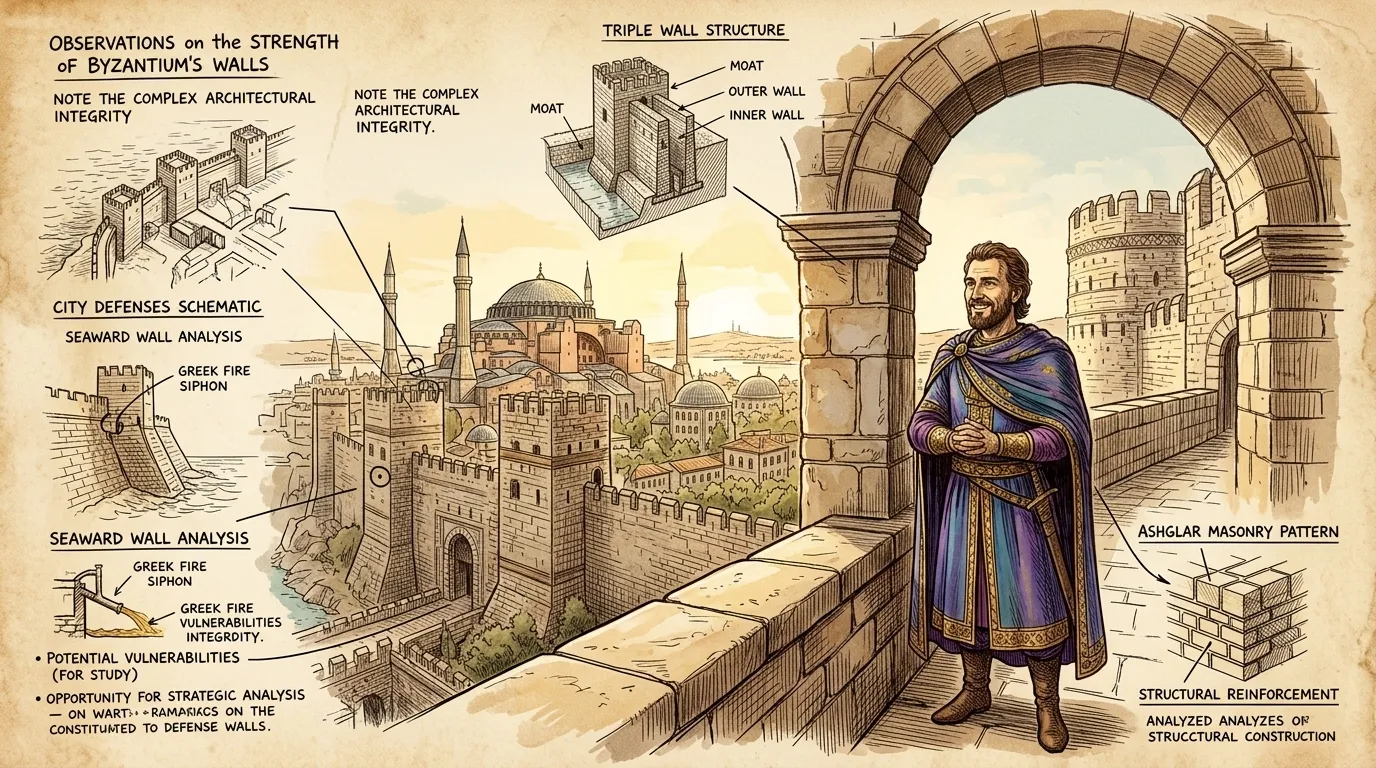
May 29, 1453. The Byzantine Empire's last stand. Constantine XI Palaiologos, the determined Emperor; Mehmed the Conqueror, the ambitious Sultan; and Giovanni…
May 29, 1453. The Byzantine Empire's last stand. Constantine XI Palaiologos, the determined Emperor; Mehmed the Conqueror, the ambitious Sultan; and Giovanni Giustiniani, the skilled Genoese commander – their fates intertwined within Constantinople's towering walls. Over 50,000 Byzantine defenders faced Mehmed's 80,000 Ottoman soldiers, their cannons relentlessly pounding the ancient Theodosian Walls. But how did this once-great city fall to such a devastating siege?

May 29, 1453. The Byzantine Empire's last stand. Constantine XI Palaiologos, the determined Emperor; Mehmed the Conqueror, the ambitious Sultan; and Giovanni Giustiniani, the skilled Genoese commander – their fates intertwined within Constantinople's towering walls. Over 50,000 Byzantine defenders faced Mehmed's 80,000 Ottoman soldiers, their cannons relentlessly pounding the ancient Theodosian Walls. But how did this once-great city fall to such a devastating siege?

Page 2

Constantinople, once the crown jewel of the Eastern Roman Empire, had dwindled, plagued by internal strife and shrinking territories.
Constantinople, once the crown jewel of the Eastern Roman Empire, had dwindled, plagued by internal strife and shrinking territories. Loukas Notaras, a Byzantine noble, voiced his concern, "Better to see a Turkish turban in the City than a Latin mitre!" His words reflected the deep divisions within Byzantine society. Father Gennadios, a spiritual leader, watched as the once-mighty empire struggled to maintain its glory.

Constantinople, once the crown jewel of the Eastern Roman Empire, had dwindled, plagued by internal strife and shrinking territories. Loukas Notaras, a Byzantine noble, voiced his concern, "Better to see a Turkish turban in the City than a Latin mitre!" His words reflected the deep divisions within Byzantine society. Father Gennadios, a spiritual leader, watched as the once-mighty empire struggled to maintain its glory.

Page 3
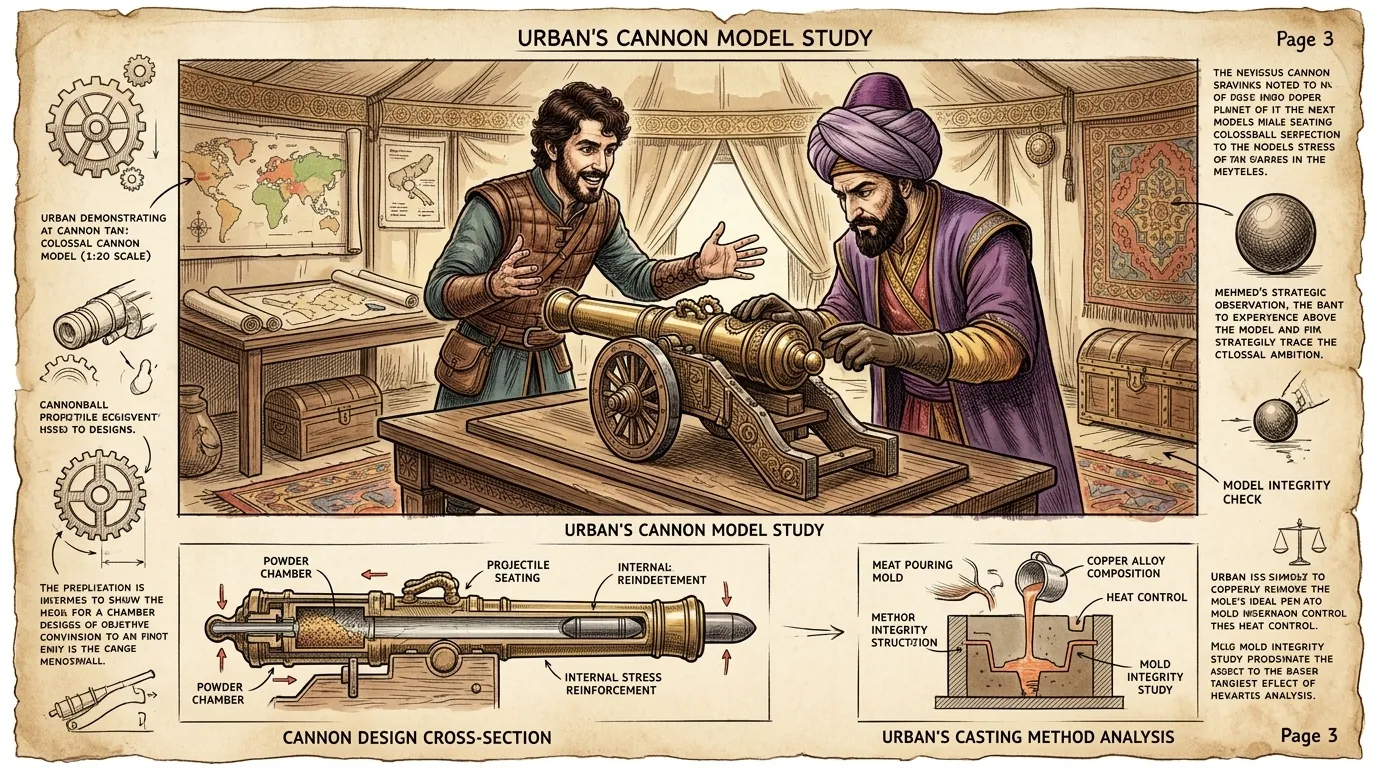
"Our cannons will shatter their walls, Sultan!" Urban, the cannon designer, a Hungarian engineer, boasted to Mehmed, displaying a miniature model of his latest…
"Our cannons will shatter their walls, Sultan!" Urban, the cannon designer, a Hungarian engineer, boasted to Mehmed, displaying a miniature model of his latest creation. "With these, Constantinople will be ours!" Mehmed, his eyes gleaming with ambition, examined the model. "Let the siege begin."

"Our cannons will shatter their walls, Sultan!" Urban, the cannon designer, a Hungarian engineer, boasted to Mehmed, displaying a miniature model of his latest creation. "With these, Constantinople will be ours!" Mehmed, his eyes gleaming with ambition, examined the model. "Let the siege begin."

Page 4

Constantine inspected the city's defenses. "Strengthen the walls near the Lycus River!" he commanded. Demetrios, a brave foot-soldier, watched as his fellow…
Constantine inspected the city's defenses. "Strengthen the walls near the Lycus River!" he commanded. Demetrios, a brave foot-soldier, watched as his fellow citizens reinforced the ancient fortifications. The air buzzed with nervous energy as the final preparations were underway.

Constantine inspected the city's defenses. "Strengthen the walls near the Lycus River!" he commanded. Demetrios, a brave foot-soldier, watched as his fellow citizens reinforced the ancient fortifications. The air buzzed with nervous energy as the final preparations were underway.

Page 5
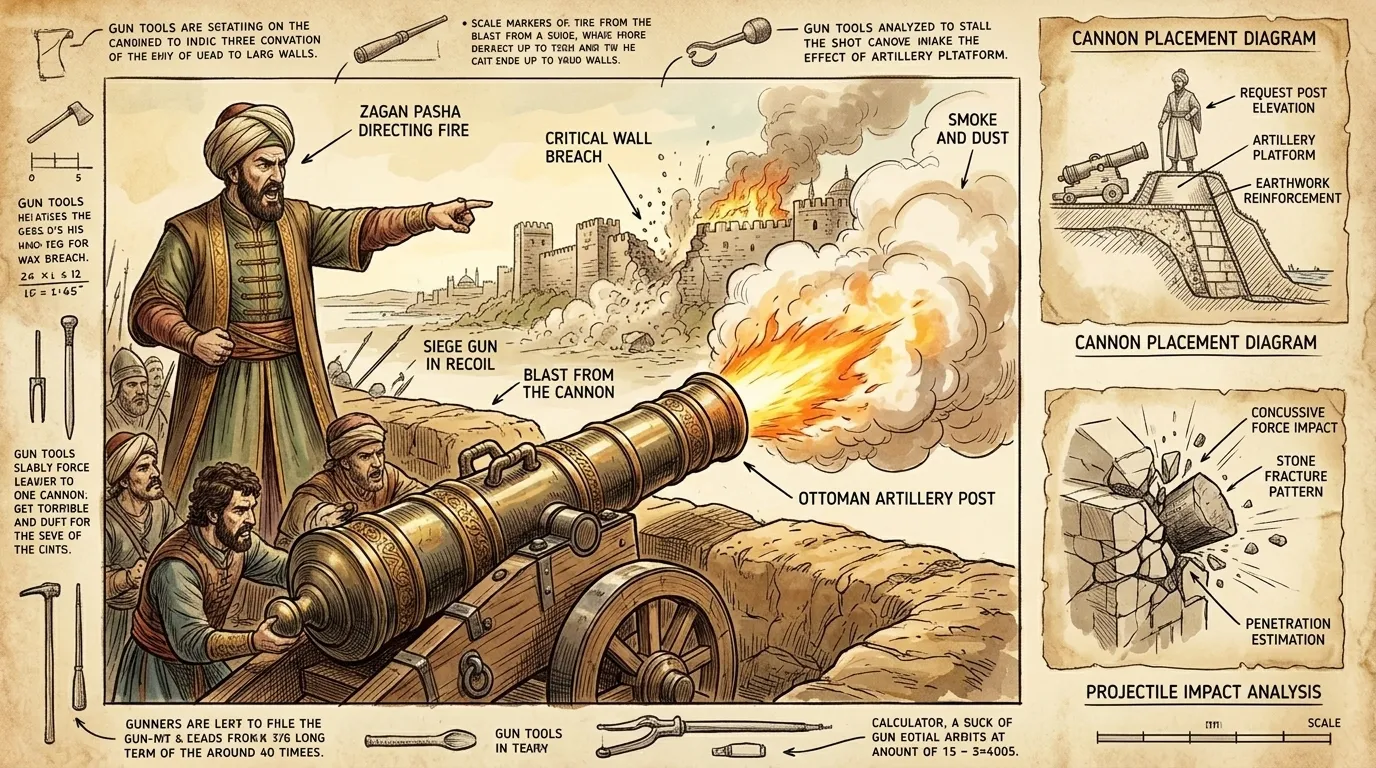
The Ottoman cannons roared, shaking Constantinople to its core. Zagan Pasha, the Ottoman strategist, directed the artillery fire. Buildings crumbled.
The Ottoman cannons roared, shaking Constantinople to its core. Zagan Pasha, the Ottoman strategist, directed the artillery fire. Buildings crumbled. "Aim for the weakest points!" he yelled, his voice barely audible above the thunderous explosions.

The Ottoman cannons roared, shaking Constantinople to its core. Zagan Pasha, the Ottoman strategist, directed the artillery fire. Buildings crumbled. "Aim for the weakest points!" he yelled, his voice barely audible above the thunderous explosions.

Page 6
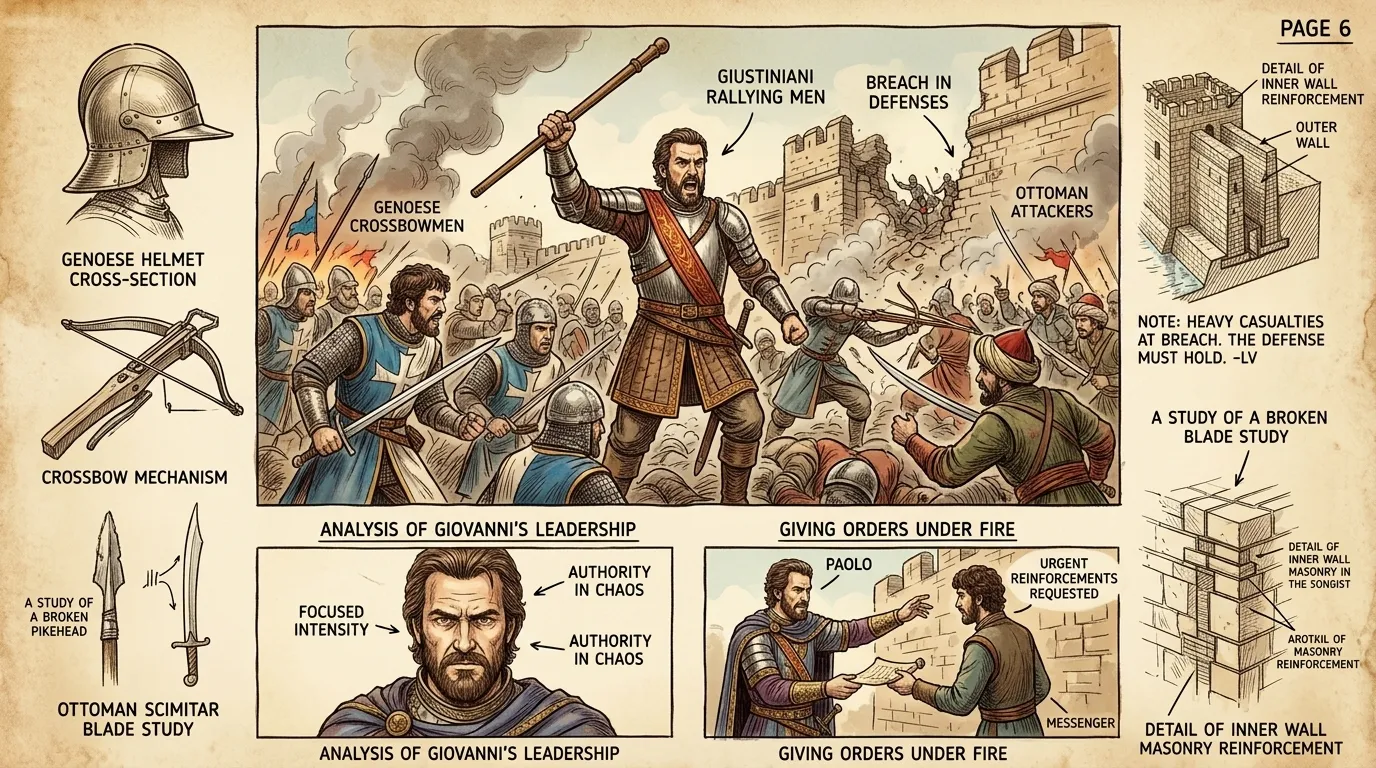
Giovanni Giustiniani, leading the Genoese troops, rallied his men at the breached walls. "Hold the line!" he shouted, his sword raised.
Giovanni Giustiniani, leading the Genoese troops, rallied his men at the breached walls. "Hold the line!" he shouted, his sword raised. "Remember what Seneca said: 'Every new beginning comes from some other beginning's end.' We must be strong until the end!"

Giovanni Giustiniani, leading the Genoese troops, rallied his men at the breached walls. "Hold the line!" he shouted, his sword raised. "Remember what Seneca said: 'Every new beginning comes from some other beginning's end.' We must be strong until the end!"

Page 7
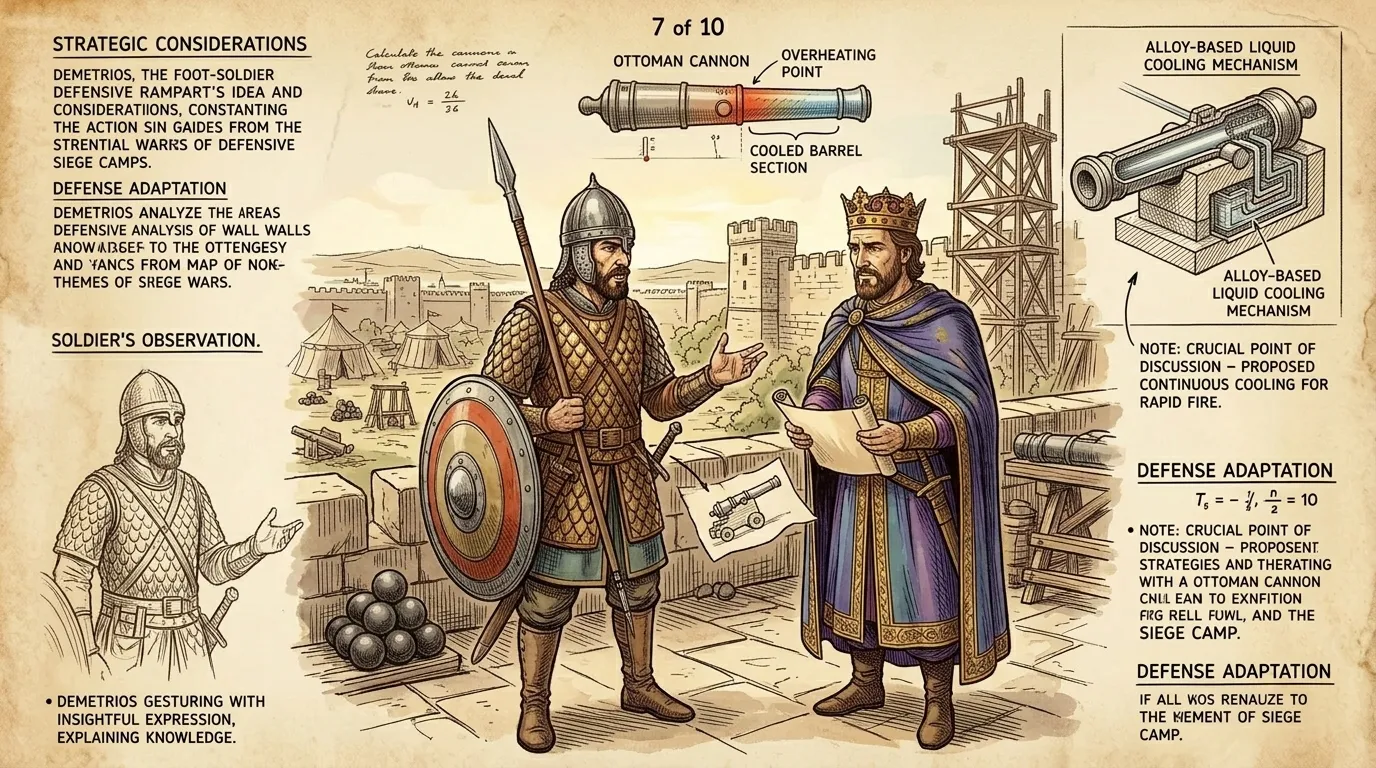
Demetrios observed the Ottoman cannon crew struggling with the reloading process. He remembered old stories that the engineers designed a specific metal cooling…
Demetrios observed the Ottoman cannon crew struggling with the reloading process. He remembered old stories that the engineers designed a specific metal cooling liquid. He explained it to Constantine. "The key to slowing them lies in their cannons' heat! They must be cooled with an alloy-based liquid.

Demetrios observed the Ottoman cannon crew struggling with the reloading process. He remembered old stories that the engineers designed a specific metal cooling liquid. He explained it to Constantine. "The key to slowing them lies in their cannons' heat! They must be cooled with an alloy-based liquid.

Page 8
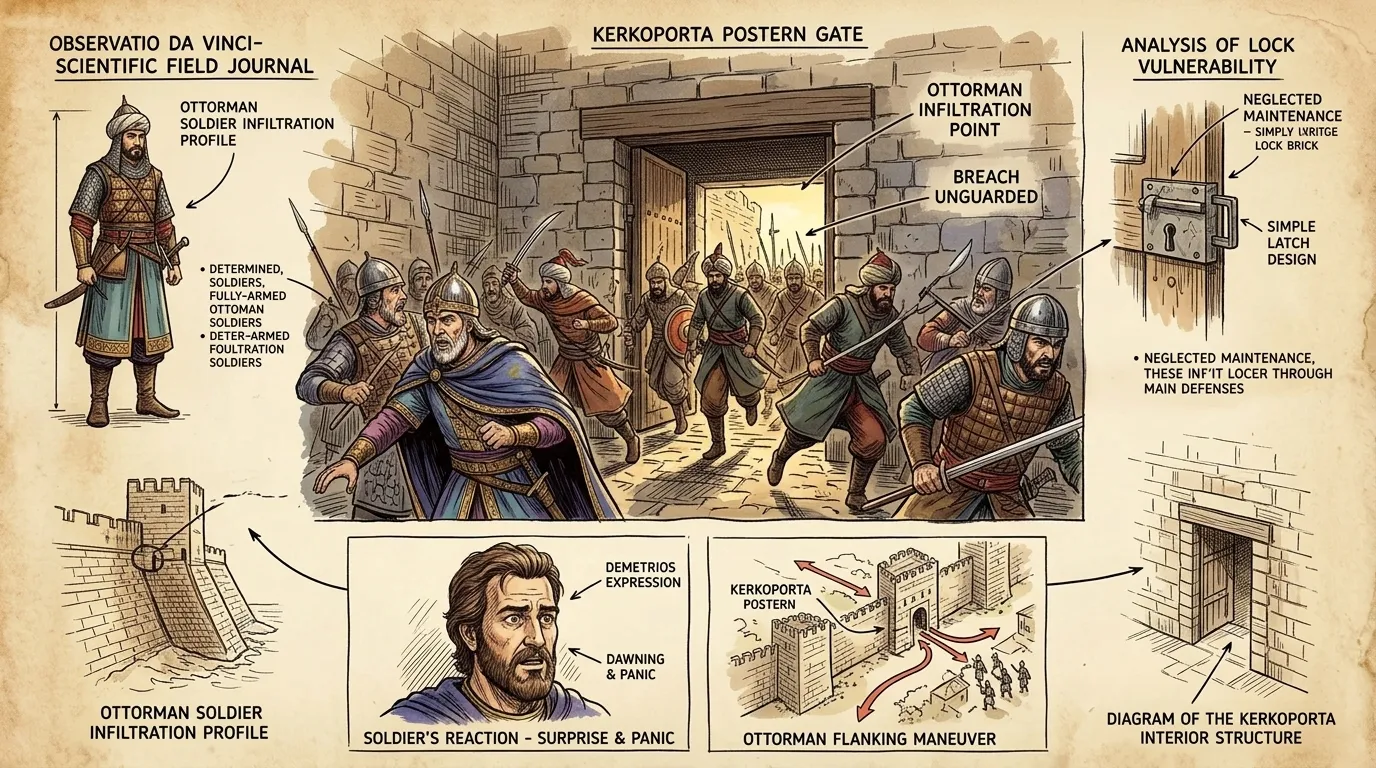
As the battle raged, the Ottomans discovered a small, unguarded postern gate—the Kerkoporta. Ottoman soldiers poured through the opening, flanking the…
As the battle raged, the Ottomans discovered a small, unguarded postern gate—the Kerkoporta. Ottoman soldiers poured through the opening, flanking the defenders. Panic spread through the city as the news reached the Byzantine troops.

As the battle raged, the Ottomans discovered a small, unguarded postern gate—the Kerkoporta. Ottoman soldiers poured through the opening, flanking the defenders. Panic spread through the city as the news reached the Byzantine troops.

Page 9
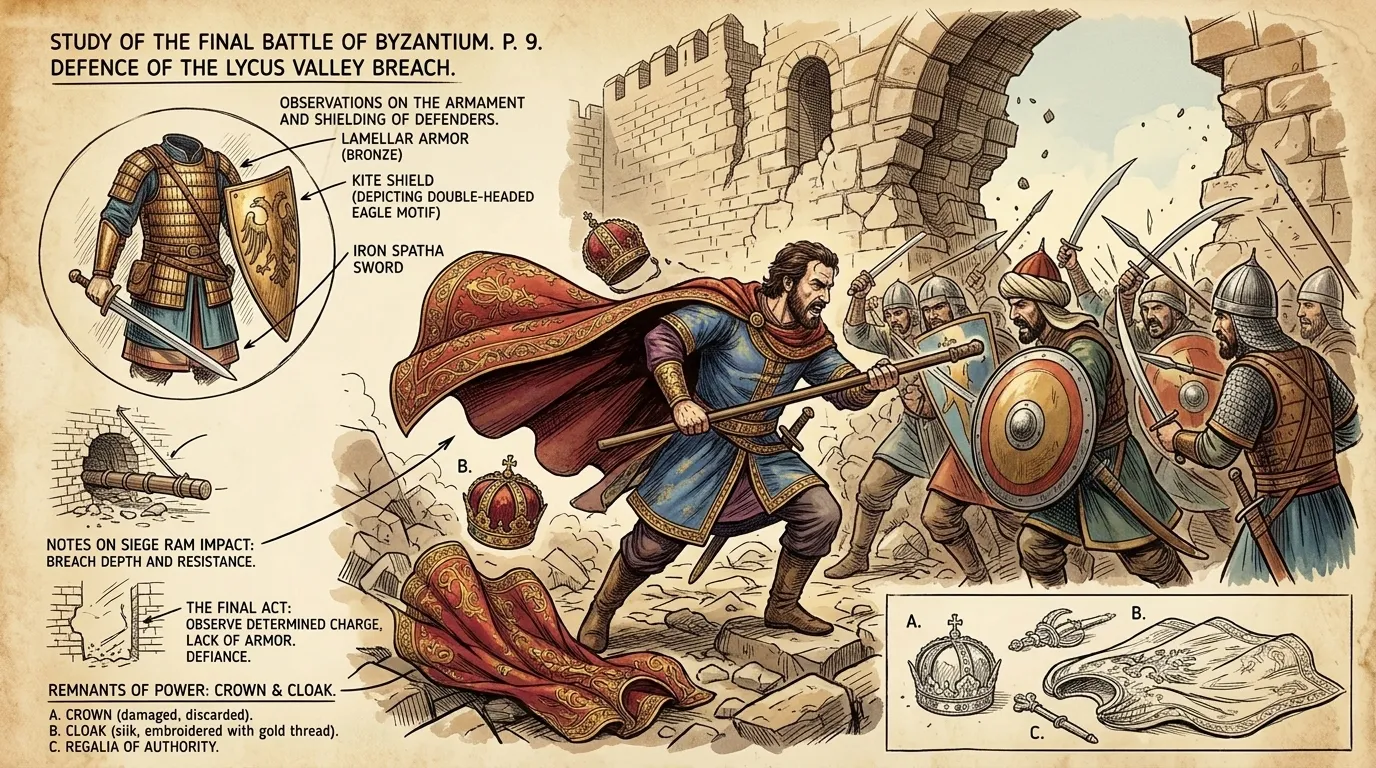
Constantine, seeing the inevitable, threw off his imperial regalia and charged into the fray. "The city is lost!" he cried.
Constantine, seeing the inevitable, threw off his imperial regalia and charged into the fray. "The city is lost!" he cried. "But I shall die with it!" He fought bravely, disappearing amidst the chaos of battle.

Constantine, seeing the inevitable, threw off his imperial regalia and charged into the fray. "The city is lost!" he cried. "But I shall die with it!" He fought bravely, disappearing amidst the chaos of battle.

Page 10

Mehmed the Conqueror entered Constantinople, renaming it Istanbul and making it the capital of the Ottoman Empire. The Hagia Sophia was converted into a mosque…
Mehmed the Conqueror entered Constantinople, renaming it Istanbul and making it the capital of the Ottoman Empire. The Hagia Sophia was converted into a mosque, its crosses replaced with crescents. The fall of Constantinople marked the end of the Byzantine Empire and ushered in a new era of Ottoman dominance in the Eastern Mediterranean. The great walls of the city are still visible today. Istanbul stands as a lasting testament to the conflict.

Mehmed the Conqueror entered Constantinople, renaming it Istanbul and making it the capital of the Ottoman Empire. The Hagia Sophia was converted into a mosque, its crosses replaced with crescents. The fall of Constantinople marked the end of the Byzantine Empire and ushered in a new era of Ottoman dominance in the Eastern Mediterranean. The great walls of the city are still visible today. Istanbul stands as a lasting testament to the conflict.

About this story

  • Historical figures: Constantine XI Palaiologos, Mehmed the Conqueror, Giovanni Giustiniani
  • Location: Constantinople
  • Period: Middle Ages
  • Audience: kids (ages 6–12)

Questions and answers

Questions and answers about The Fall of the Byzantine Empire — Constantinople (1453, Constantinople)

Read Wonder History on your phone

Wonder History is available on Android. Get Wonder History on Google Play.

More Wonder History stories

All Wonder History stories · Open the library