The Signing of the Magna Carta (1215, United Kingdom)
The Signing of the Magna Carta (1215, United Kingdom) — an illustrated history story, featuring King John, Archbishop Stephen Langton, William Marshal, 1st Earl of Pembroke, set in United Kingdom. 10 illustrated pages, free to read on Wonder History.
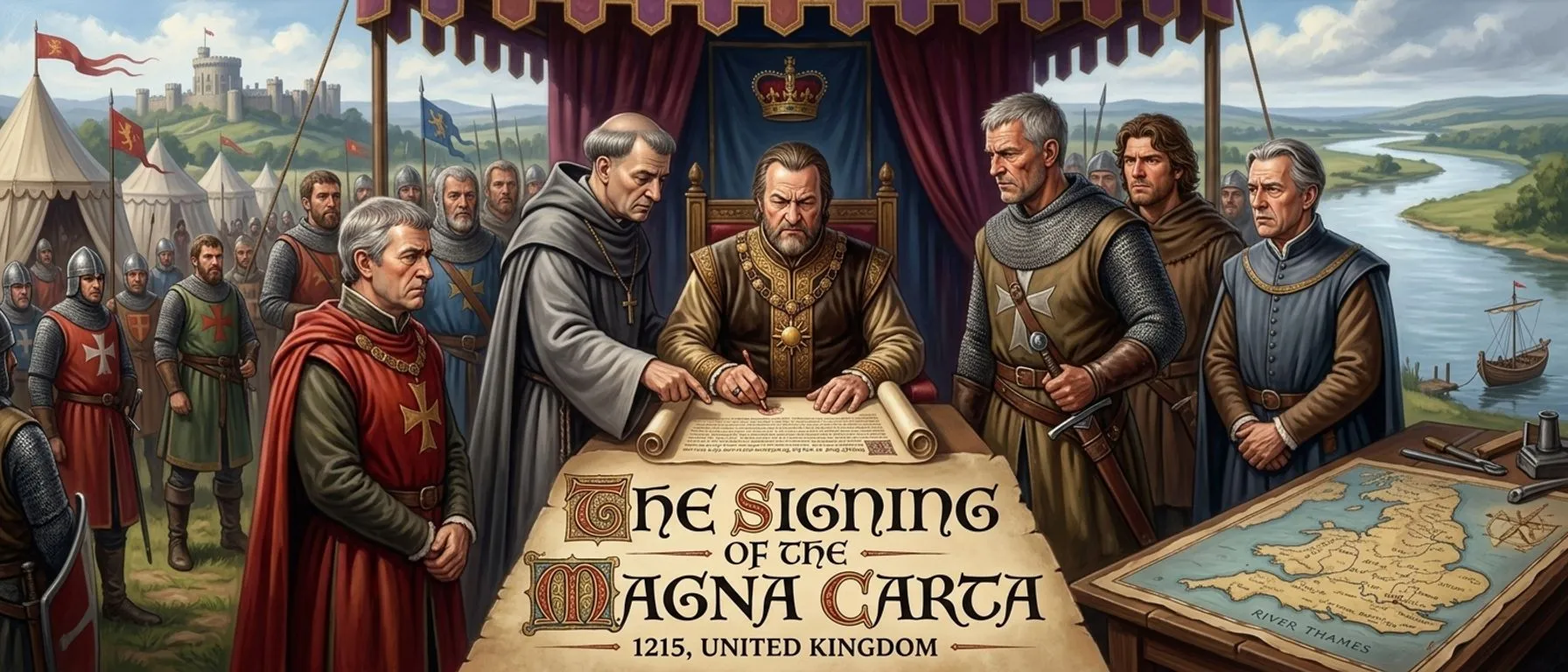
Page 1
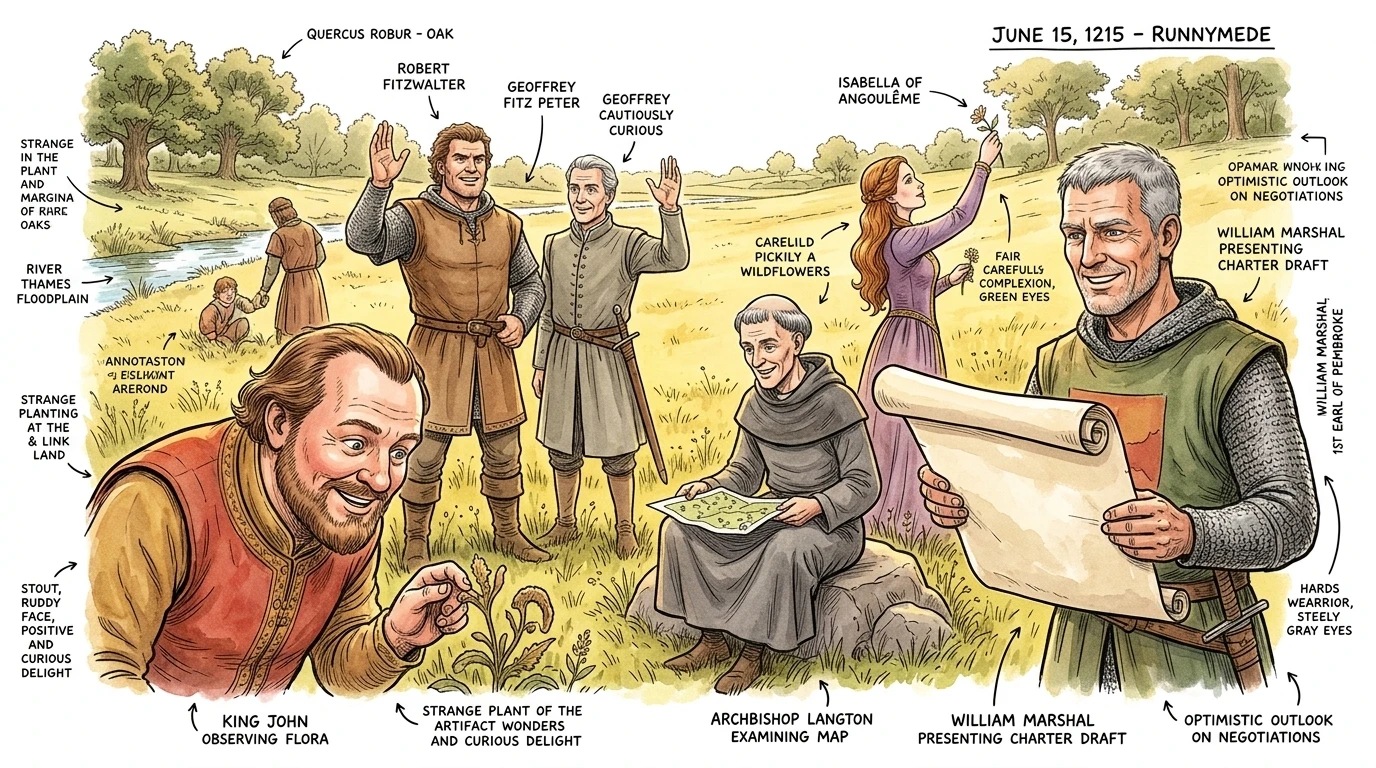
June 15, 1215, Runnymede. King John, cornered by rebellious barons, faced the inevitable. Archbishop Stephen Langton watched intently as William Marshal, Earl of Pembroke, approached with the document. The fate of England hung in the balance, but where did this dramatic clash of power begin?
Page 2
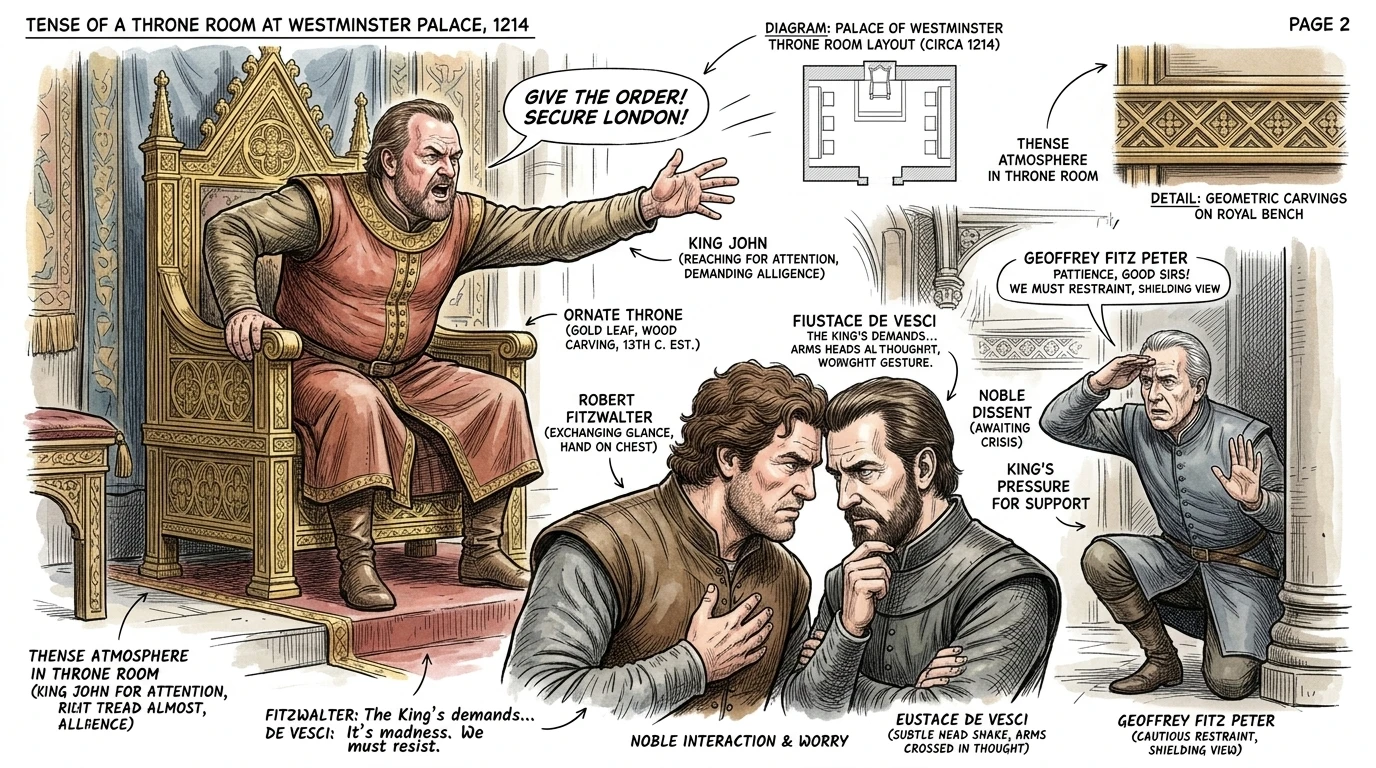
Westminster Palace, 1214. King John sat upon his ornate throne, demanding ever greater taxes from his nobles. Robert Fitzwalter, a burly man in his early 40s with thick brown hair and a determined expression, exchanged a worried glance with Eustace de Vesci, a stern-faced nobleman. Geoffrey Fitz Peter, Earl of Essex, cautioned restraint. The seeds of rebellion were being sown in the heart of the king's own court.
Page 3
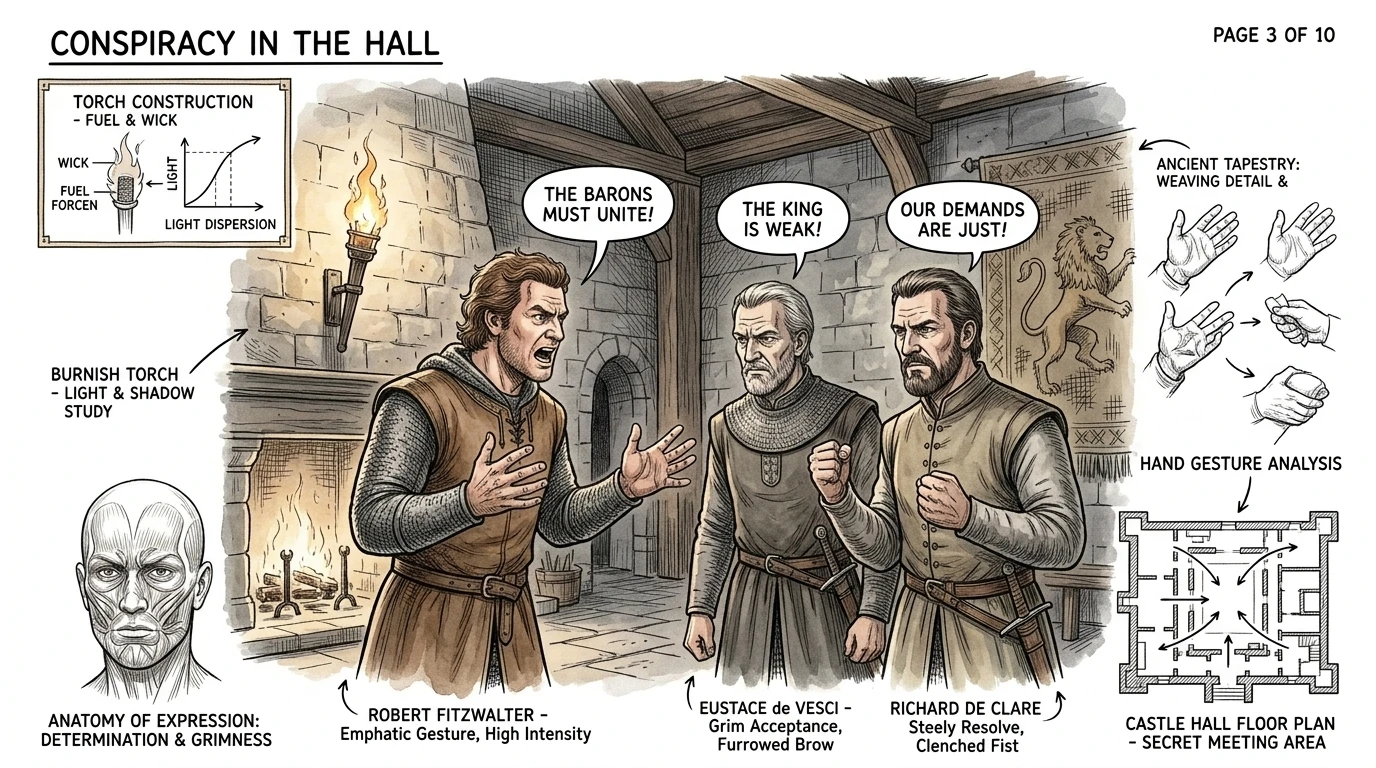
"We cannot continue to bleed our people dry," Robert Fitzwalter declared to Eustace de Vesci. Eustace nodded grimly, "The king's demands are unsustainable. He cares nothing for the well-being of his subjects." Richard de Clare, 3rd Earl of Hertford, a stern nobleman with a neatly trimmed beard and determined eyes, joined them. He stated, "Unless he concedes, we must force his hand."
Page 4
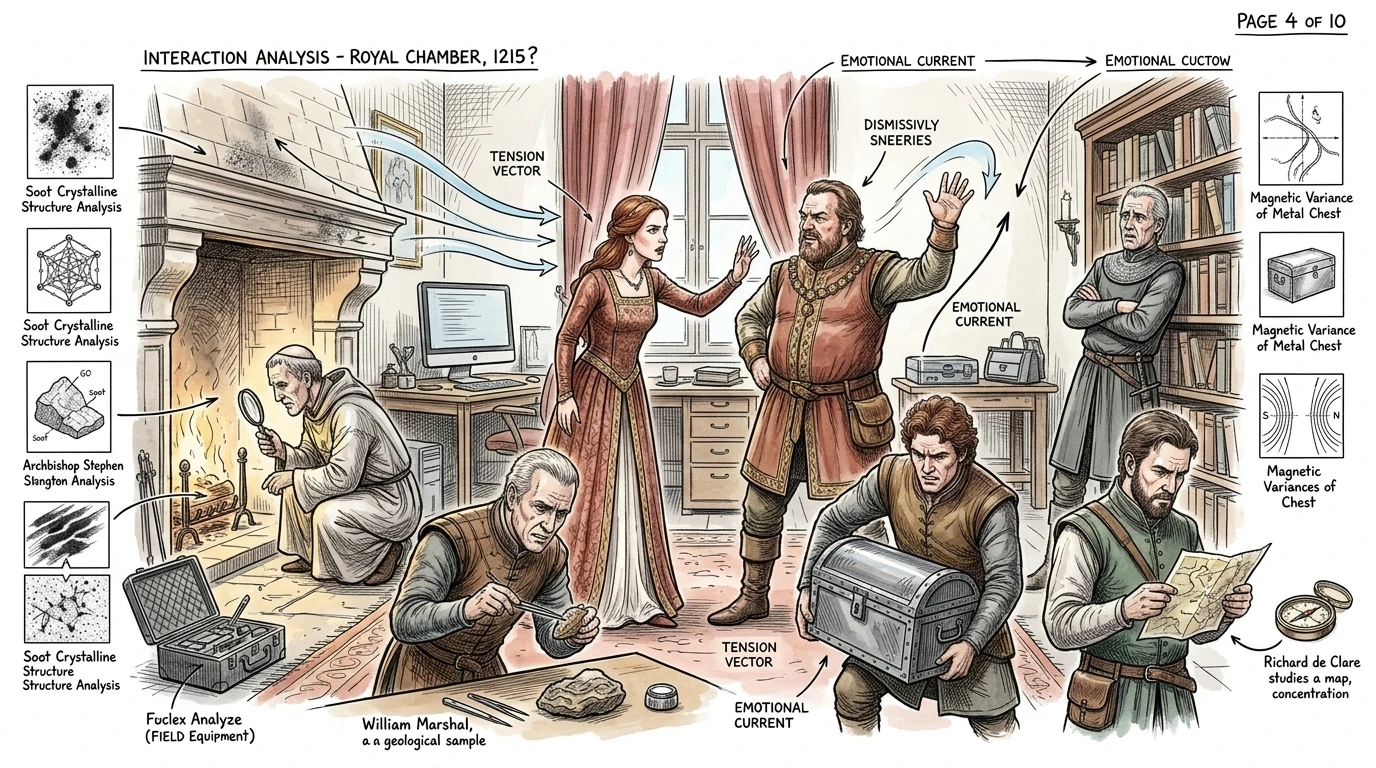
Isabella of Angoulême, the Queen of England, confronted King John. "Your policies are driving the kingdom to ruin! The barons are ready to revolt," she warned. King John scoffed, "They wouldn't dare! I am their king, appointed by God." Isabella retorted, "Hubris will be your downfall, John."
Page 5
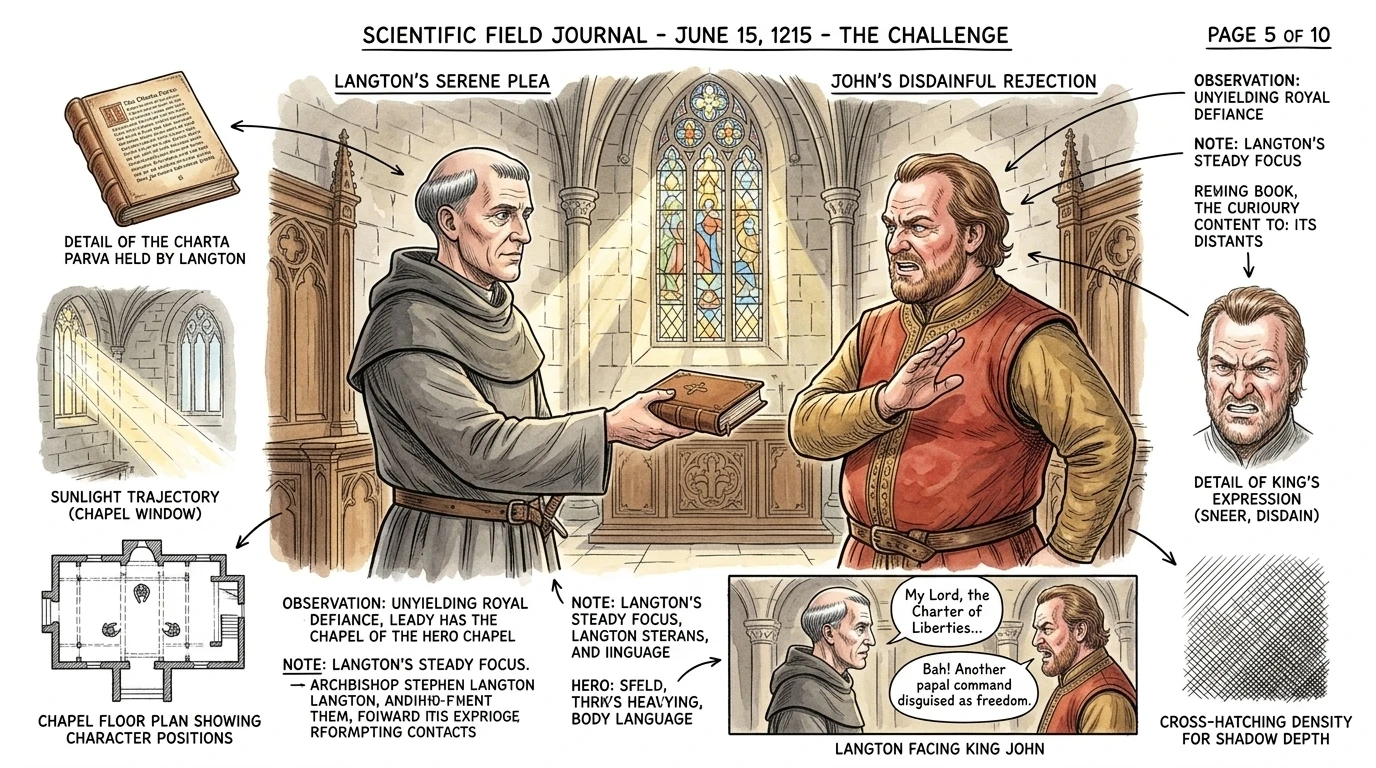
Archbishop Stephen Langton, ever the mediator, sought to reason with the king. "Your Majesty, consider the words of Seneca," Langton began. "'Every new beginning comes from some other beginning's end.' The old ways of ruling must end; you must embrace a new path of justice and fairness." King John sneered, "Justice? From rebellious dogs? Never!"
Page 6
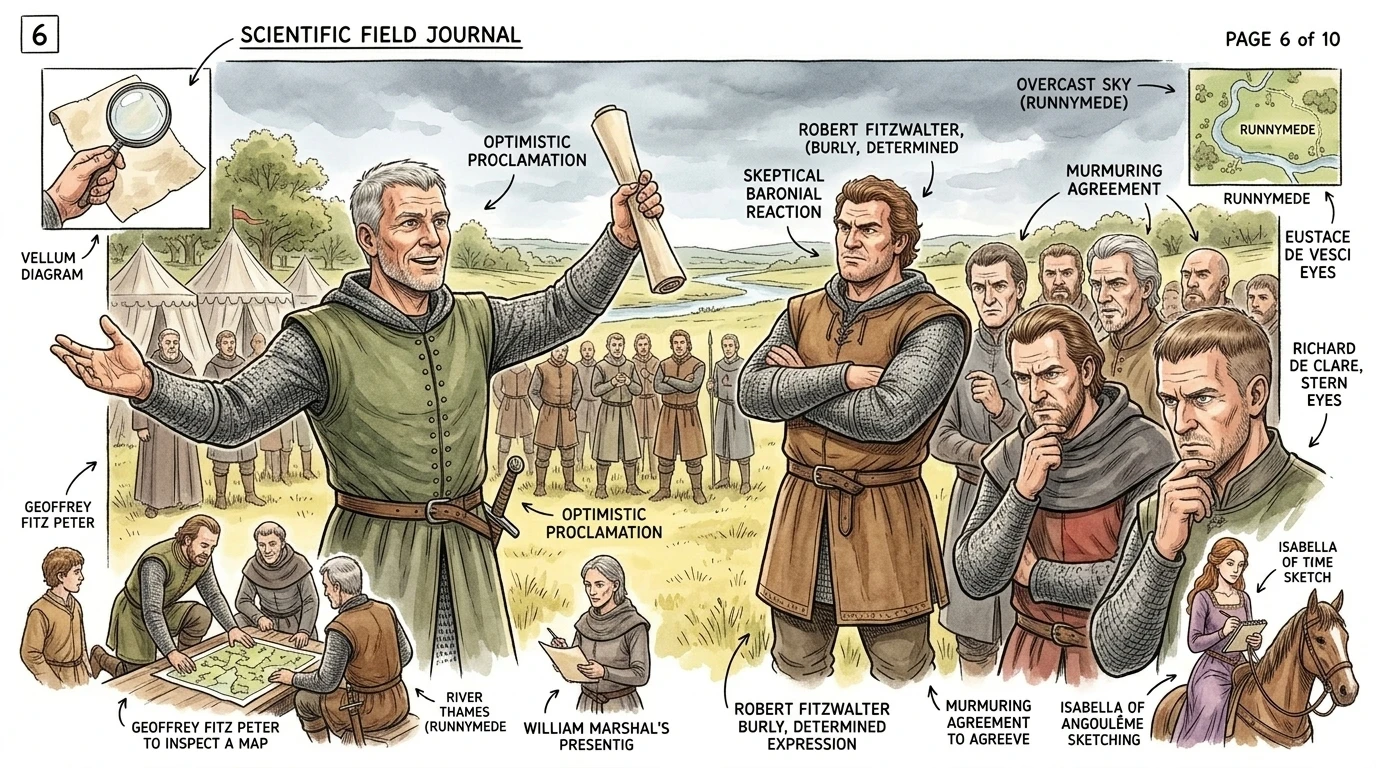
Back at Runnymede, William Marshal addressed the assembled barons. "The king has agreed to meet our demands," he announced. Robert Fitzwalter remained skeptical. "Words are wind, Marshal. We need a charter, signed and sealed, to guarantee our rights." The barons murmured in agreement; their resolve was firm.
Page 7
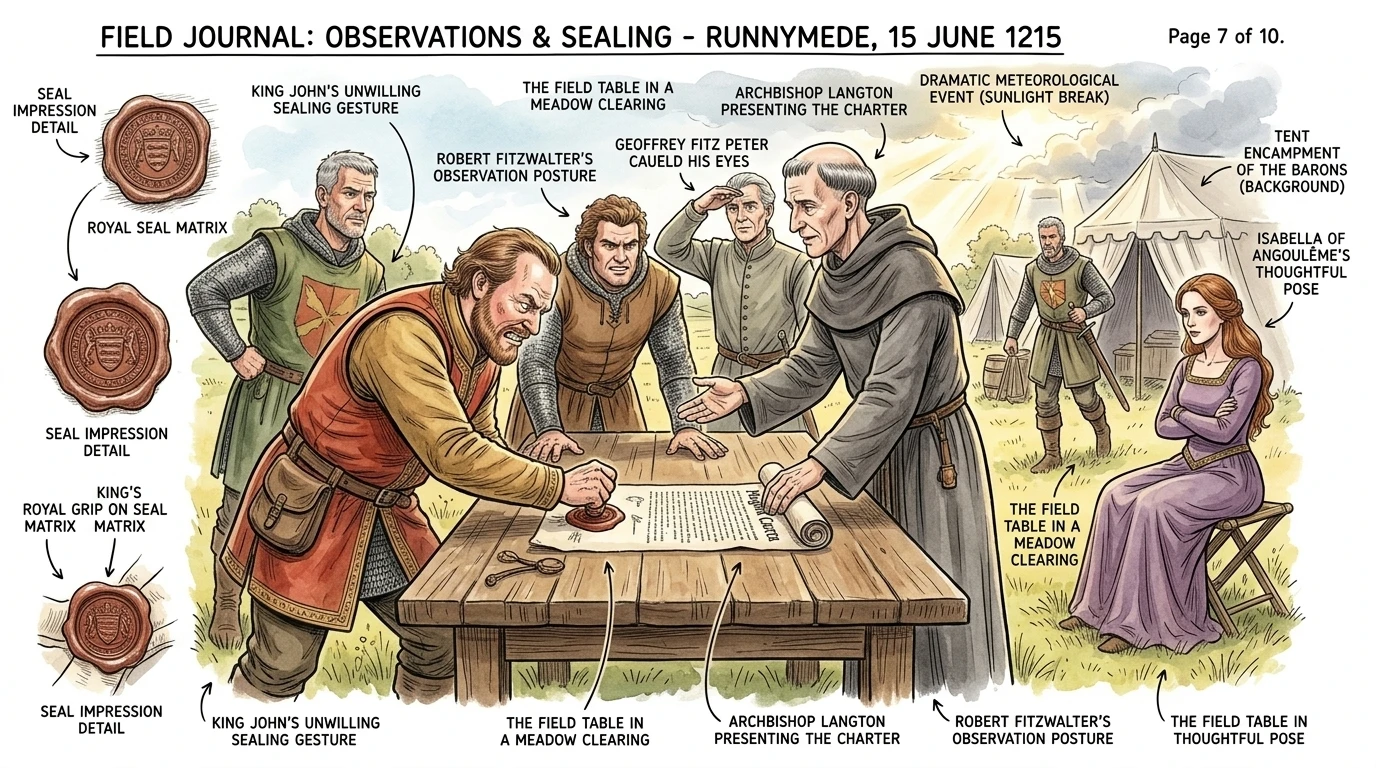
June 15, 1215. King John reluctantly approached the table. Archbishop Stephen Langton placed the Magna Carta before him. "Sign this charter, and you will ensure peace in England," Langton urged. King John hesitated, his face contorted with rage and resentment. "I am forced to do this," he hissed, grabbing the quill.
Page 8
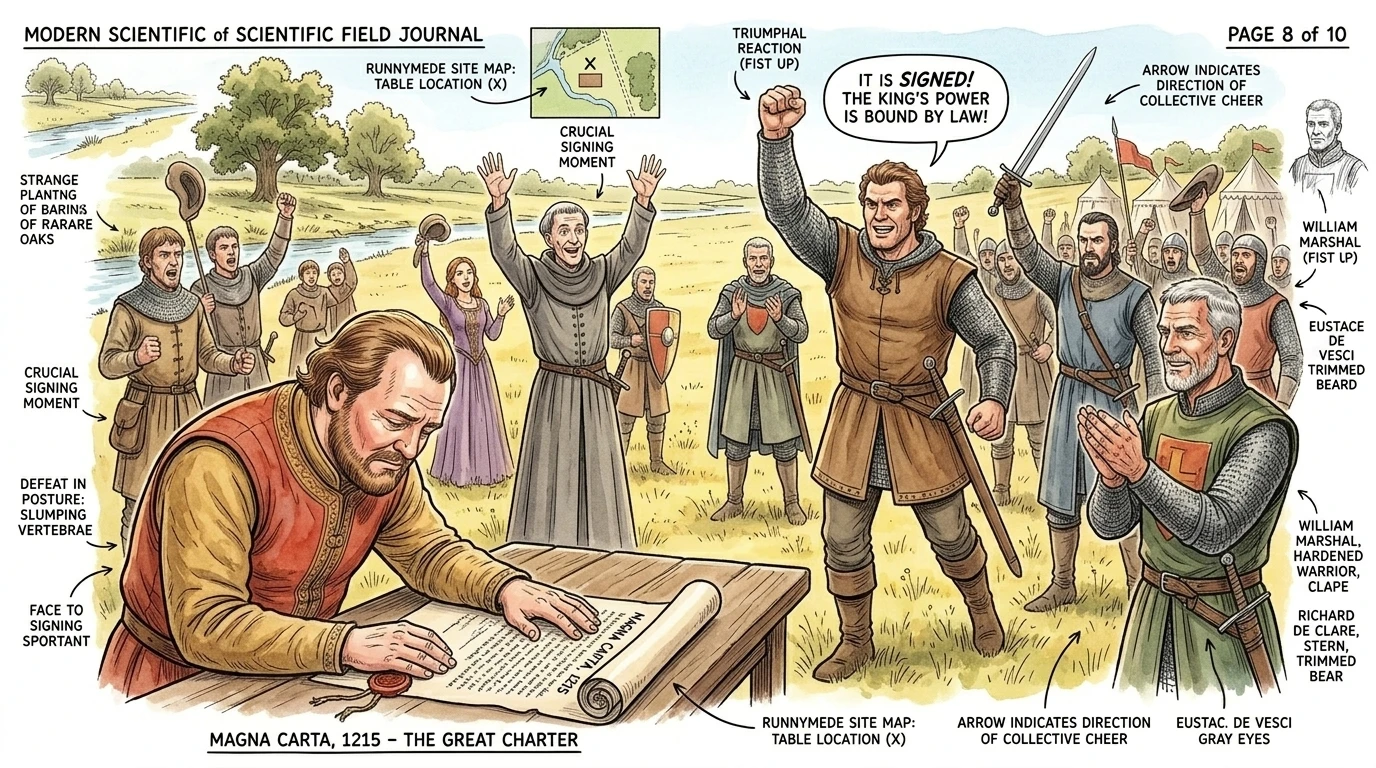
With a heavy heart, King John signed the Magna Carta. Robert Fitzwalter stepped forward, his eyes fixed on the document. "Let this charter be a testament to the rights of all free men in England," he declared. The barons cheered, their long struggle finally bearing fruit.
Page 9
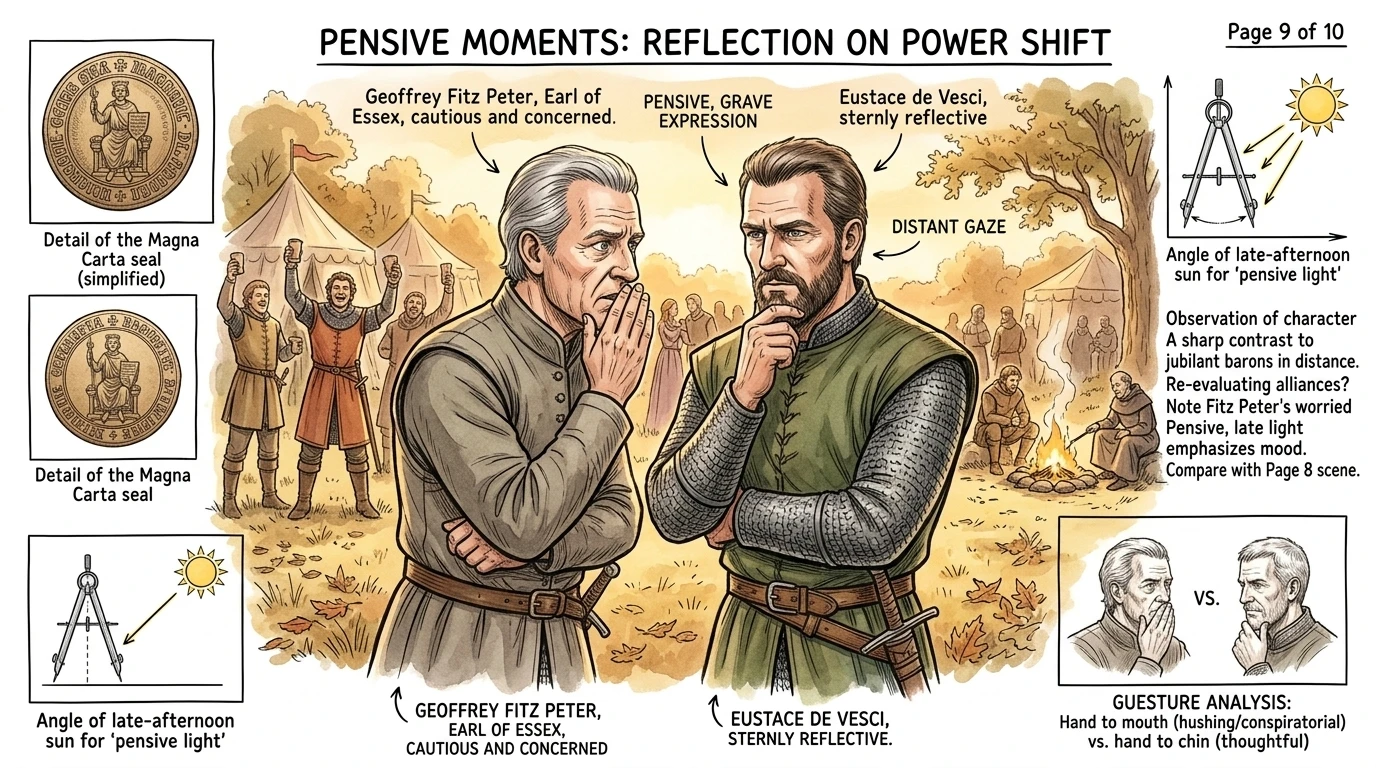
Geoffrey Fitz Peter watched as the barons celebrated. He understood that this was not just a victory, but a fundamental shift in power. "This document," he murmured to Eustace de Vesci, "will bind the king's hands for generations to come." The consequences of this day would echo through English history.
Page 10
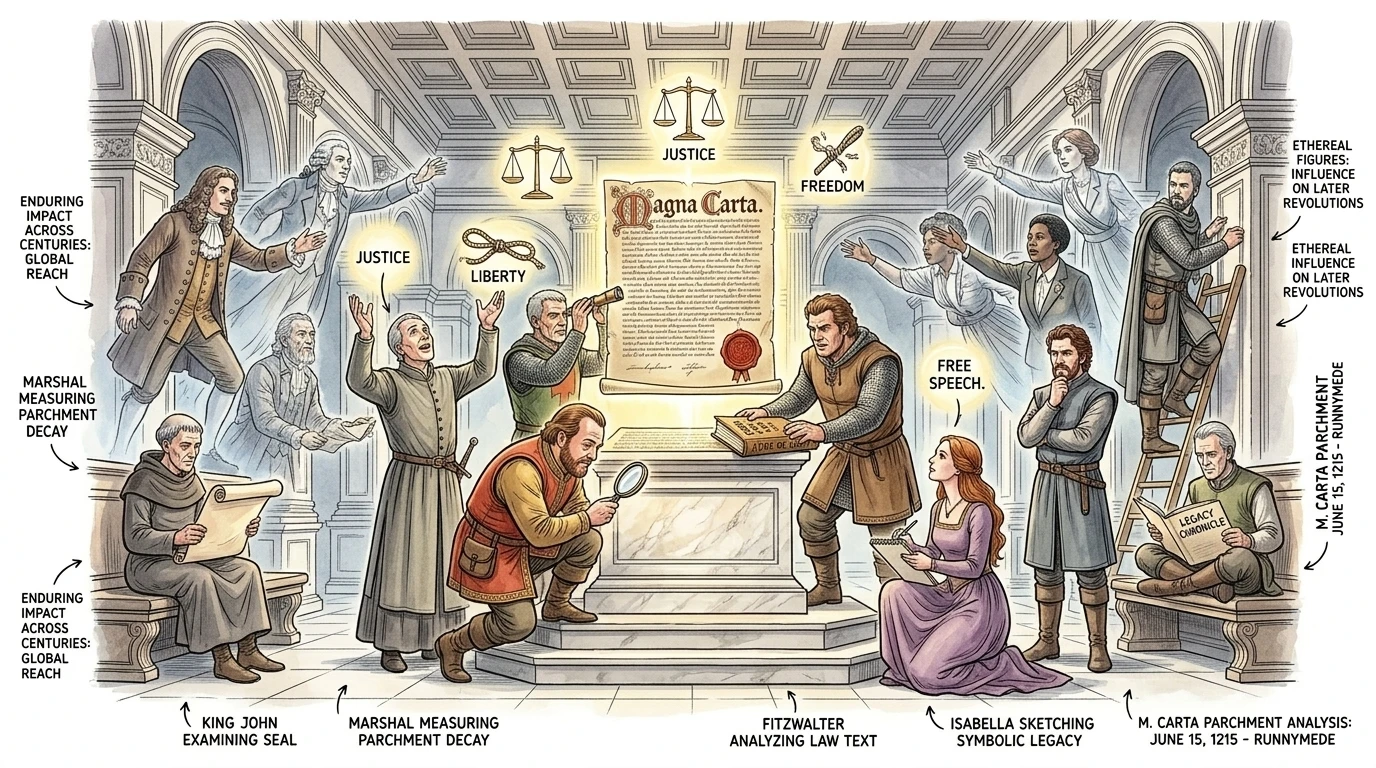
The Magna Carta, signed at Runnymede, became a cornerstone of English law and liberty. It established the principle that even the king was subject to the law. Though King John resisted it, the charter's influence spread across the centuries, inspiring movements for freedom and justice around the world. Its legacy endures to this day.
About this story
- Historical figures: King John, Archbishop Stephen Langton, William Marshal, 1st Earl of Pembroke
- Location: United Kingdom
- Period: Middle Ages
- Audience: general readers
Questions and answers
Questions and answers about The Signing of the Magna Carta (1215, United Kingdom)
Read Wonder History on your phone
Wonder History is available on Android. Get Wonder History on Google Play.
More Wonder History stories
- The Singing Revolution (1988, USA)
- The Sinking of the Lusitania (1907, United Kingdom)
- The Sinking of the Spanish Armada (1588, United Kingdom)
- The Spanish Armada — United Kingdom & Spain (1588, United Kingdom & Spain)
- The Spartacus Slave Rebellion (73–71 BC, Italy)
- The Storming of the Bastille (1789, France)