The Splitting of the Atom (1942, Germany)

The Splitting of the Atom (1942, Germany) — an illustrated history story, featuring J. Robert Oppenheimer, General Leslie Groves, Lise Meitner, set in Germany. 10 illustrated pages, free to read on Wonder History.
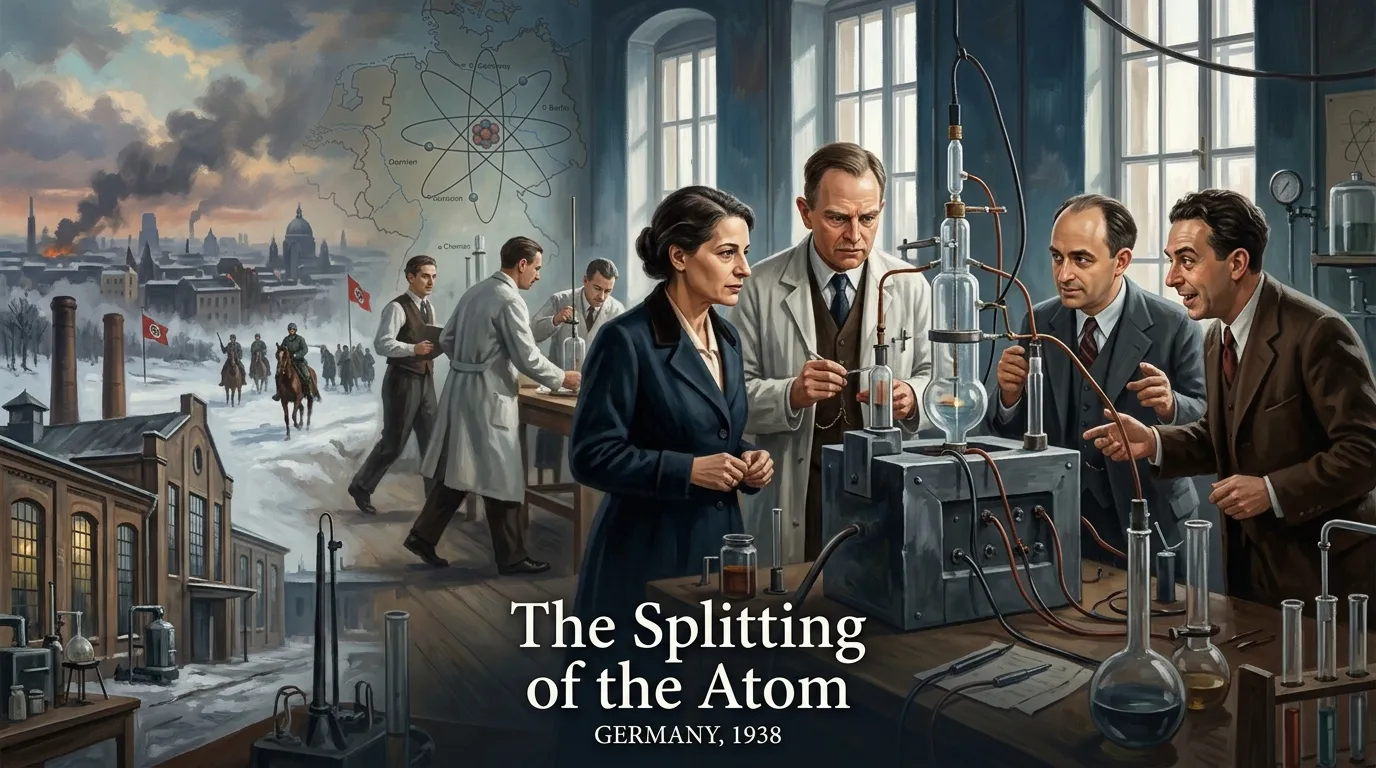
The Splitting of the Atom (1942, Germany) — book cover — Wonder History
The Splitting of the Atom (1942, Germany) — an illustrated history story, featuring J. Robert Oppenheimer, General Leslie Groves, Lise Meitner, set in Germany. 10 illustrated pages, free to read on Wonder History.

Page 1
December 2nd, 1942: the squash court beneath the University of Chicago pulsed with a strange, unseen energy. Enrico Fermi, sweat beading on his brow, watched…
December 2nd, 1942: the squash court beneath the University of Chicago pulsed with a strange, unseen energy. Enrico Fermi, sweat beading on his brow, watched the instruments intently. A hush fell over the gathered scientists. But how could this fragile experiment unleash such unprecedented destruction?

December 2nd, 1942: the squash court beneath the University of Chicago pulsed with a strange, unseen energy. Enrico Fermi, sweat beading on his brow, watched the instruments intently. A hush fell over the gathered scientists. But how could this fragile experiment unleash such unprecedented destruction?

Page 2
The journey to this moment began decades earlier with the theoretical work of physicists like Lise Meitner. In 1938, Meitner, working with Otto Hahn, grasped…
The journey to this moment began decades earlier with the theoretical work of physicists like Lise Meitner. In 1938, Meitner, working with Otto Hahn, grasped the true nature of nuclear fission, a process Hahn had demonstrated experimentally. "It might be possible that such nuclei break up into several smaller ones...all together heavier than the uranium nuclei," she wrote in a letter to Hahn.

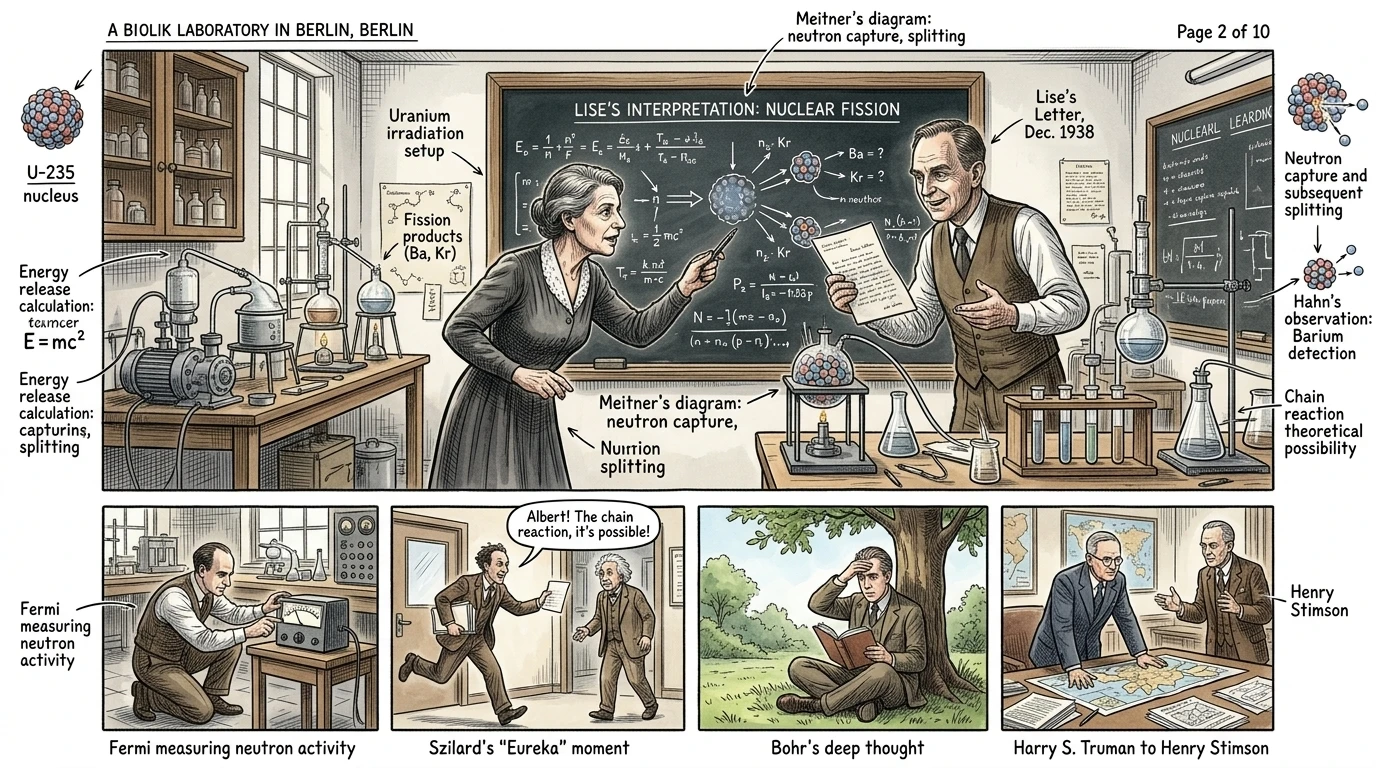
The journey to this moment began decades earlier with the theoretical work of physicists like Lise Meitner. In 1938, Meitner, working with Otto Hahn, grasped the true nature of nuclear fission, a process Hahn had demonstrated experimentally. "It might be possible that such nuclei break up into several smaller ones...all together heavier than the uranium nuclei," she wrote in a letter to Hahn. But these discoveries, driven by pure science, would soon be caught in the currents of war.

Page 3
In 1939, Leo Szilard, recognizing the potential for a nuclear chain reaction, sought out Albert Einstein. He explained how the splitting of uranium atoms could…
In 1939, Leo Szilard, recognizing the potential for a nuclear chain reaction, sought out Albert Einstein. He explained how the splitting of uranium atoms could unleash unimaginable energy. Einstein, his famously furrowed brow deepened with concern, listened intently. The threat of Nazi Germany weaponizing this discovery spurred them to action.

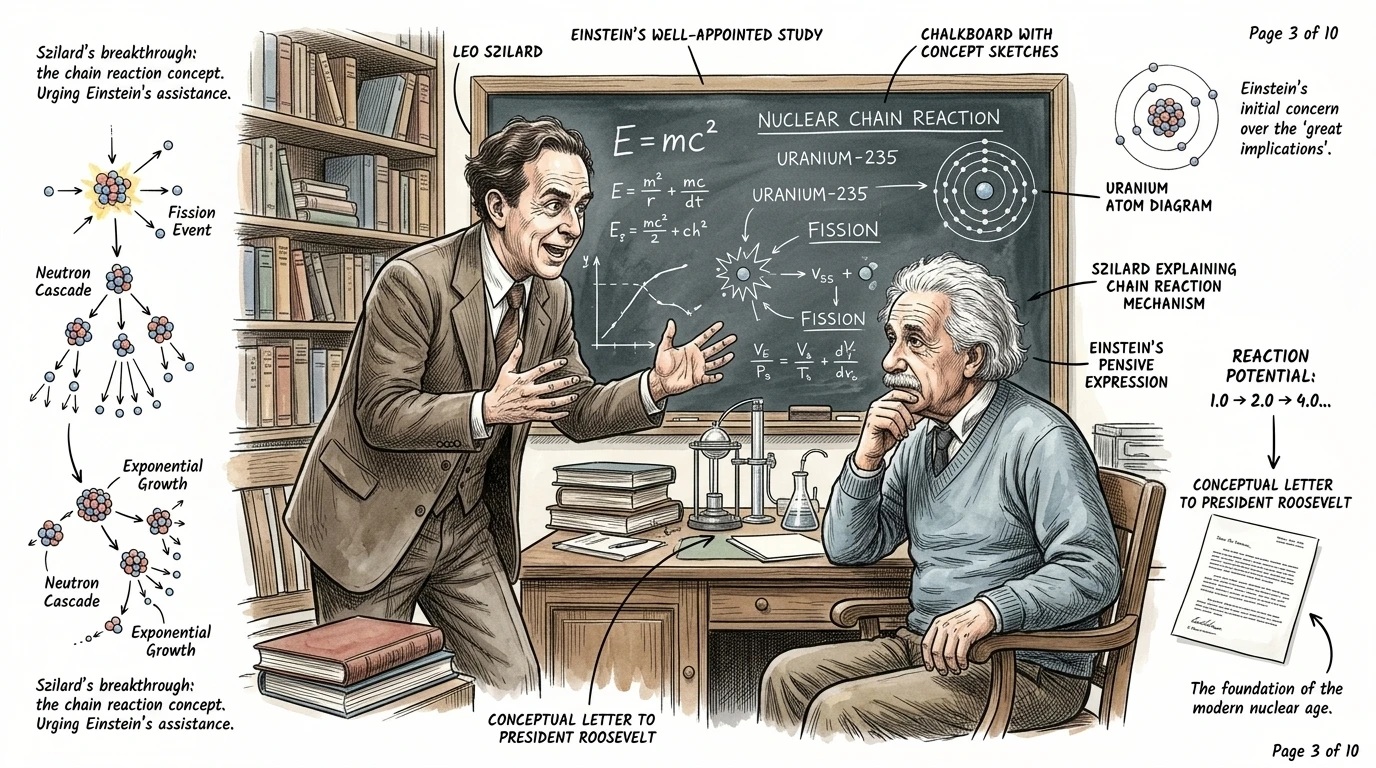
In 1939, Leo Szilard, recognizing the potential for a nuclear chain reaction, sought out Albert Einstein. He explained how the splitting of uranium atoms could unleash unimaginable energy. Einstein, his famously furrowed brow deepened with concern, listened intently. The threat of Nazi Germany weaponizing this discovery spurred them to action.

Page 4
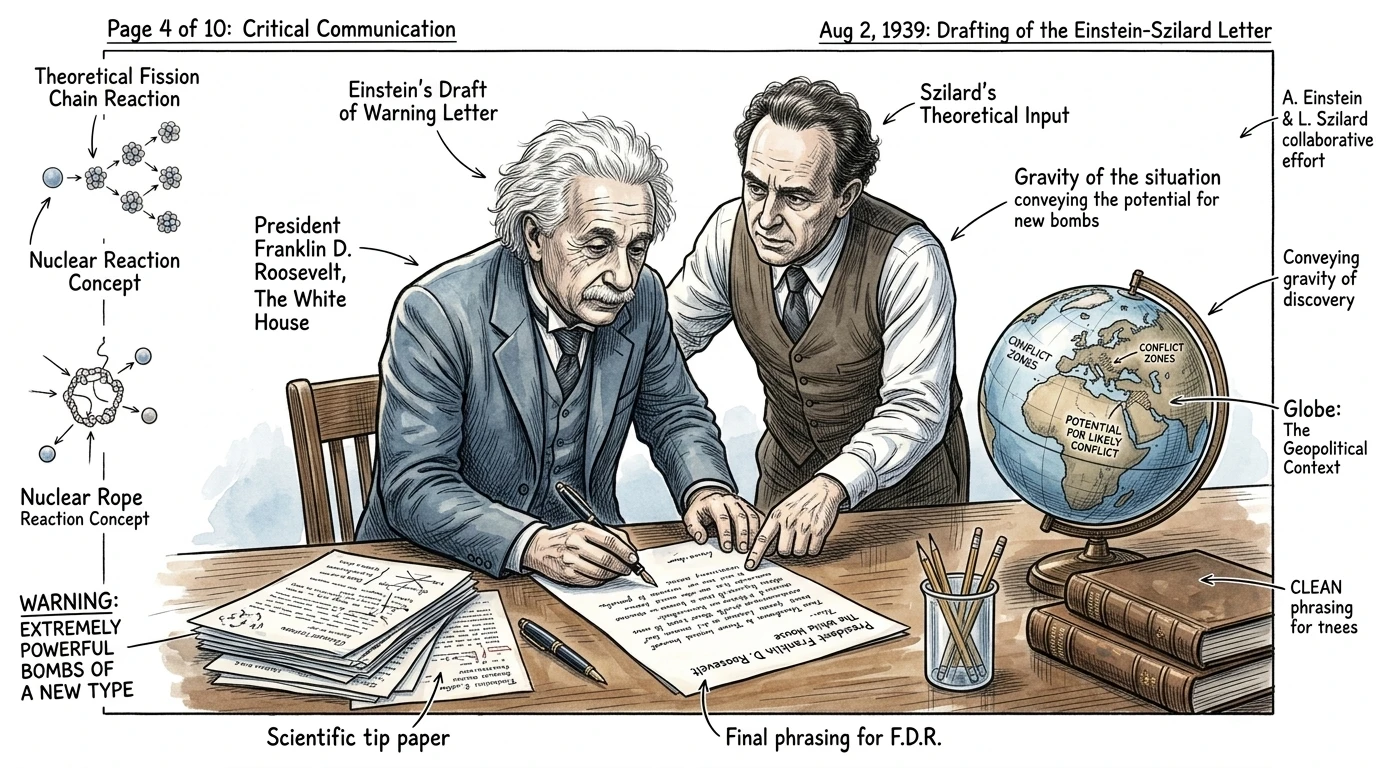
That same year, Szilard and Einstein penned a letter to President Franklin D. Roosevelt, warning of the possibility of 'extremely powerful bombs of a new type.'…
That same year, Szilard and Einstein penned a letter to President Franklin D. Roosevelt, warning of the possibility of 'extremely powerful bombs of a new type.' Roosevelt, a pragmatist facing a world teetering on the brink of war, understood the gravity of their warning. The letter set in motion the top-secret program that would become the Manhattan Project.

That same year, Szilard and Einstein penned a letter to President Franklin D. Roosevelt, warning of the possibility of 'extremely powerful bombs of a new type.' Roosevelt, a pragmatist facing a world teetering on the brink of war, understood the gravity of their warning. The letter set in motion the top-secret program that would become the Manhattan Project.

Page 5
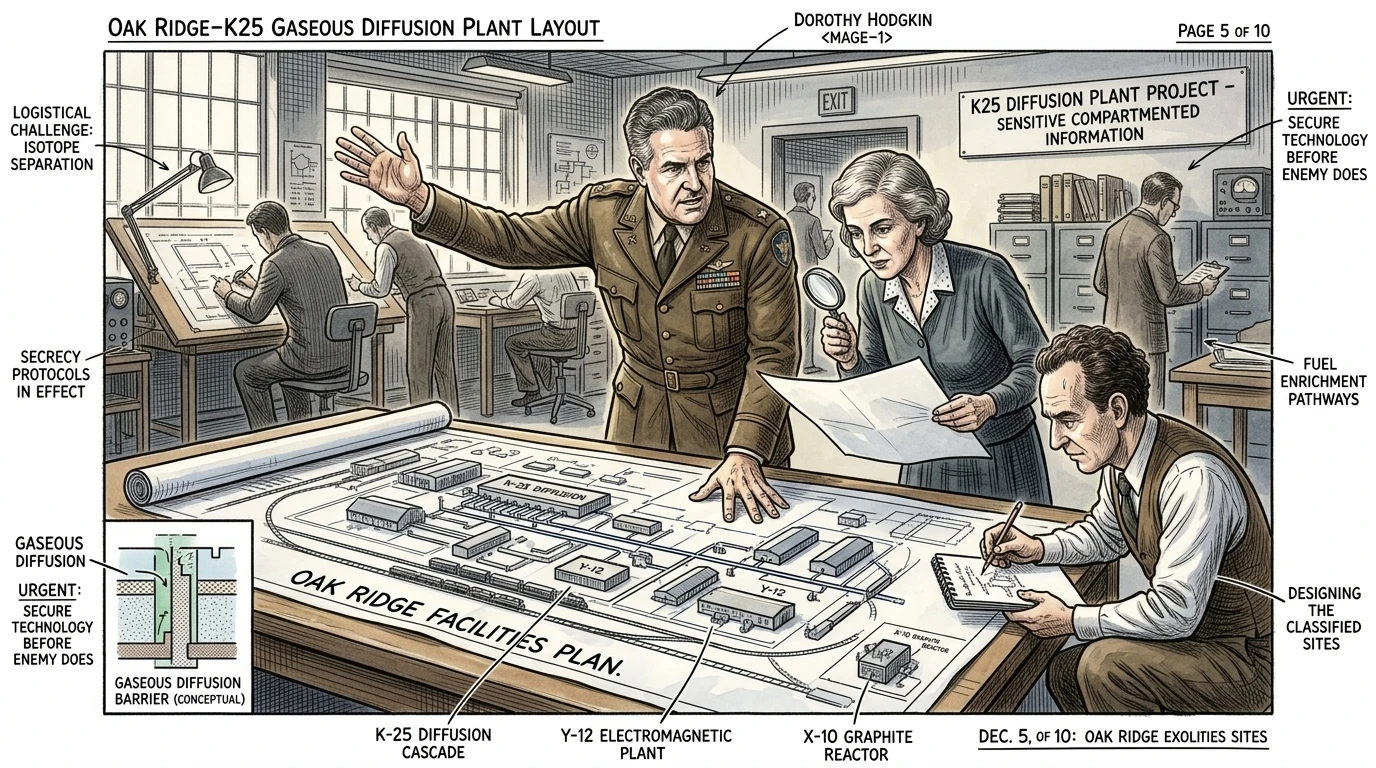
The Splitting of the Atom (1942, Germany) — page 5 illustration — Wonder History

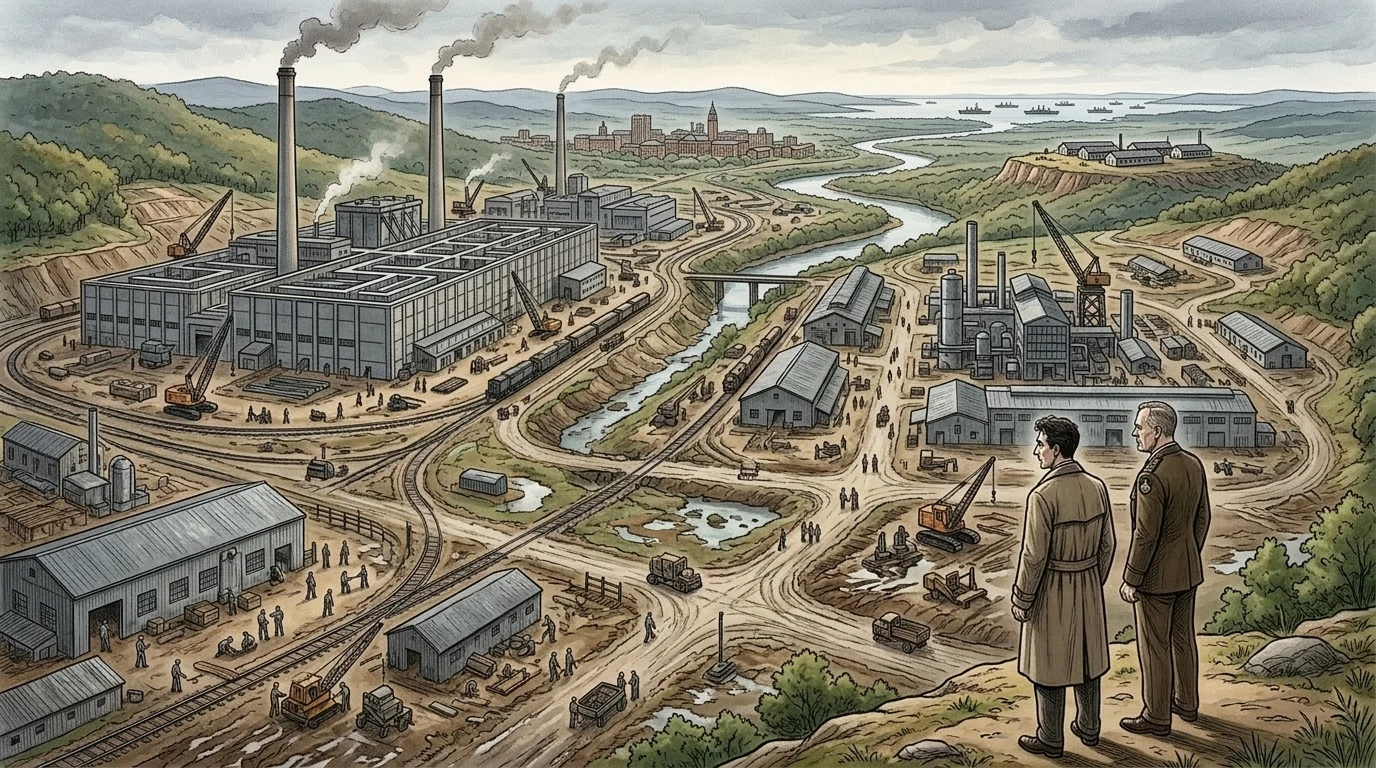
General Leslie Groves, a man known for his organizational skills and unwavering determination, was placed in charge of the Manhattan Project. He oversaw the construction of vast, secretive facilities like Oak Ridge. Dorothy Hodgkin and Alvin Weinberg are consulting there. "Time is of the essence," Groves barked, pushing the project forward with relentless efficiency, "we must secure this weapon before the enemy does."

Page 6
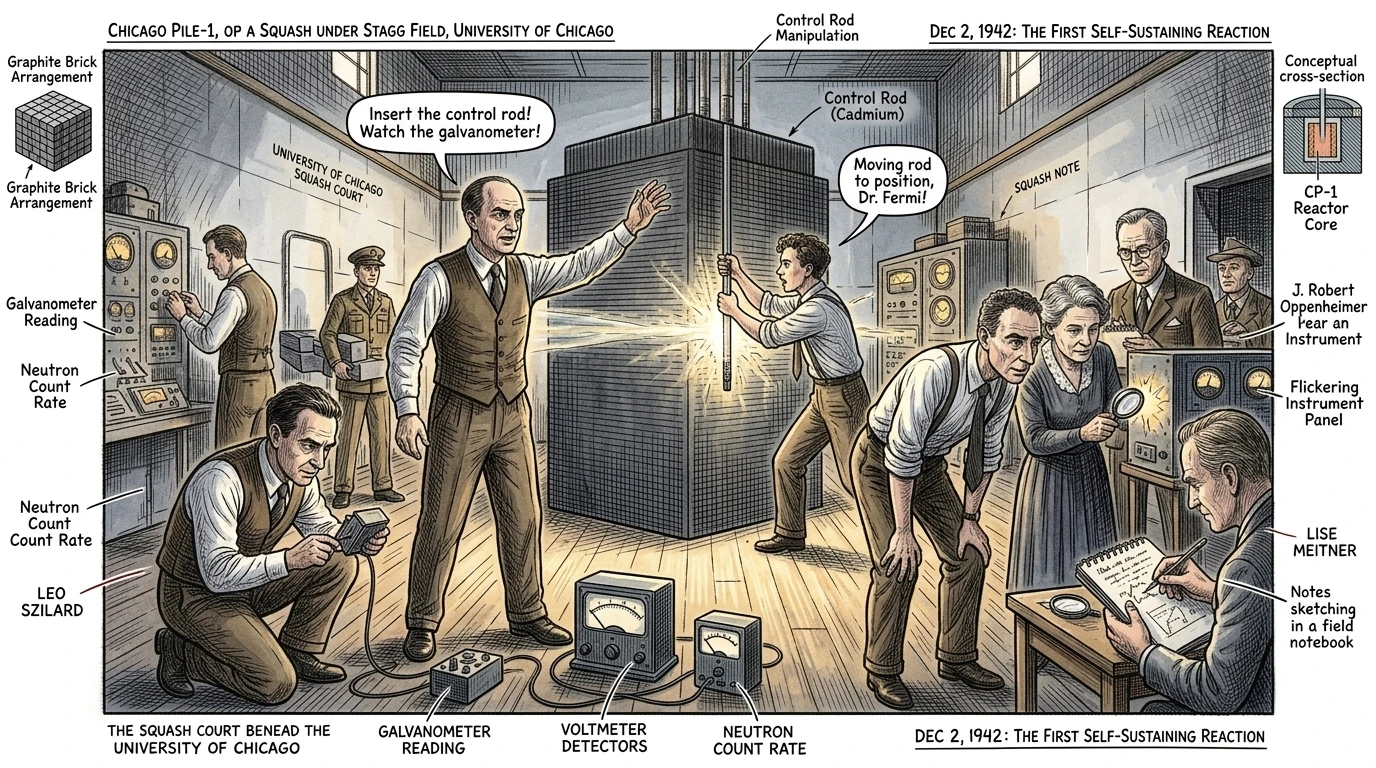
Fermi's experiment in Chicago, the culmination of years of theoretical and experimental work, reached a critical stage. He called out calmly, "Inserting control…
Fermi's experiment in Chicago, the culmination of years of theoretical and experimental work, reached a critical stage. He called out calmly, "Inserting control rod...now!" The instruments flickered, and then, silence. The first self-sustaining nuclear chain reaction had been achieved. The world would never be the same.

Fermi's experiment in Chicago, the culmination of years of theoretical and experimental work, reached a critical stage. He called out calmly, "Inserting control rod...now!" The instruments flickered, and then, silence. The first self-sustaining nuclear chain reaction had been achieved. The world would never be the same.

Page 7
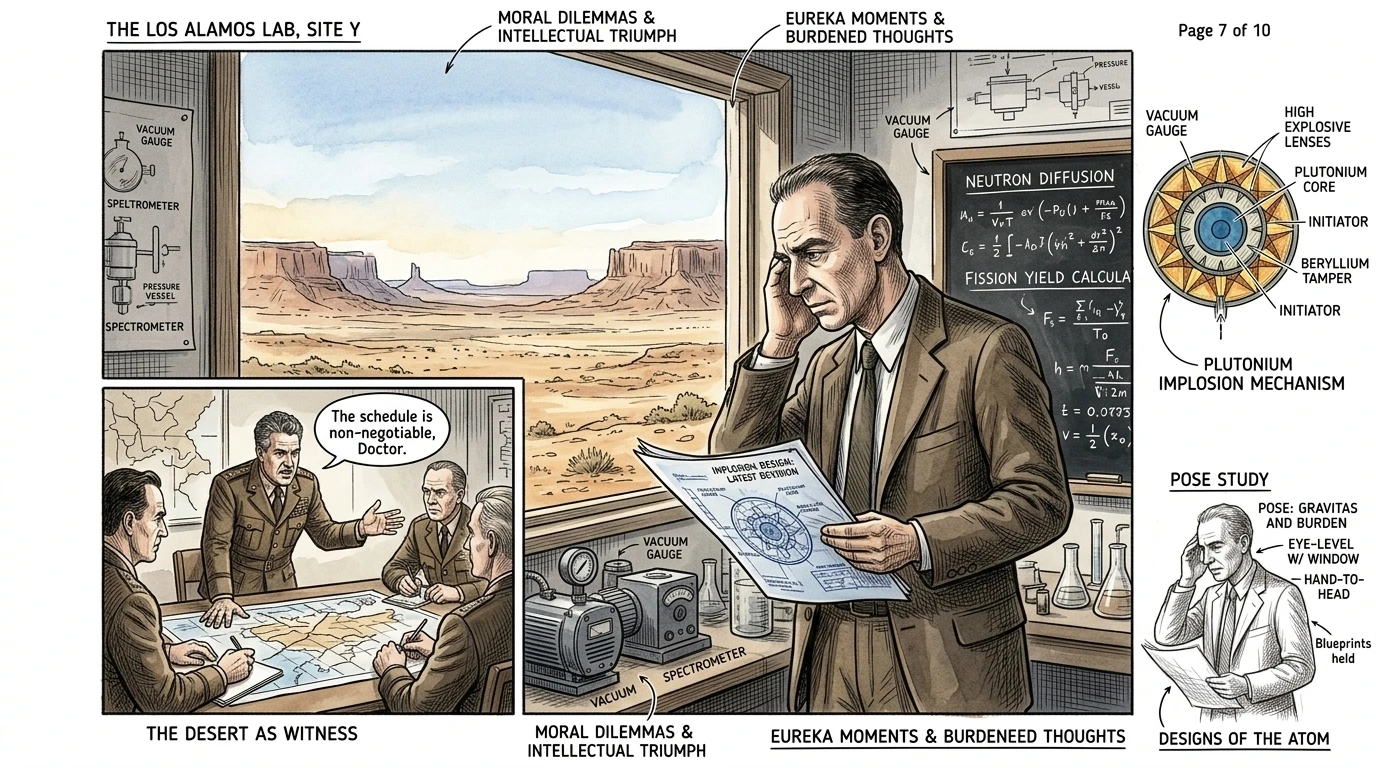
News of Fermi's success reached Los Alamos, New Mexico, where J. Robert Oppenheimer led the effort to design the atomic bomb.
News of Fermi's success reached Los Alamos, New Mexico, where J. Robert Oppenheimer led the effort to design the atomic bomb. The brilliant but tormented physicist grappled with the moral implications of their work. "We knew the world would not be the same," Oppenheimer later reflected. "A few people laughed, a few people cried, most people were silent."

News of Fermi's success reached Los Alamos, New Mexico, where J. Robert Oppenheimer led the effort to design the atomic bomb. The brilliant but tormented physicist grappled with the moral implications of their work. "We knew the world would not be the same," Oppenheimer later reflected. "A few people laughed, a few people cried, most people were silent."

Page 8
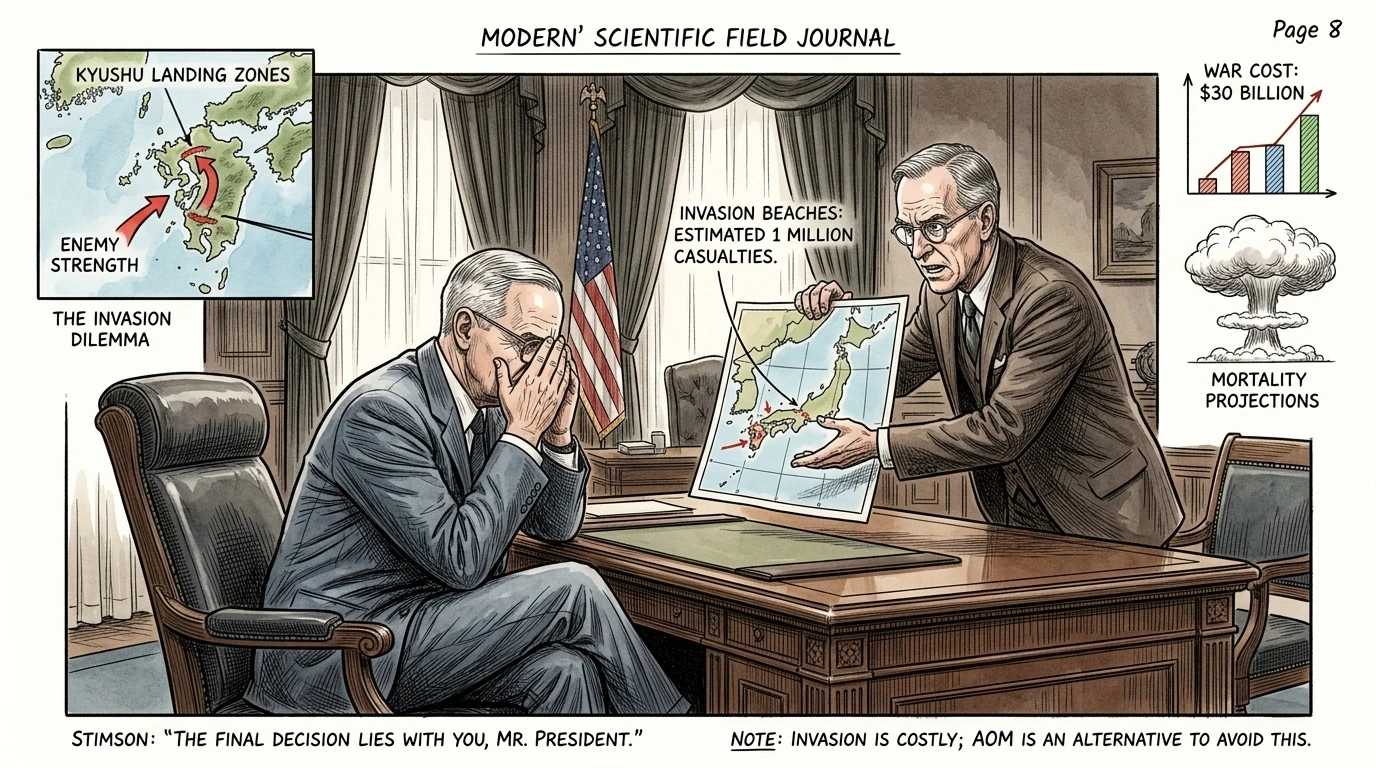
President Harry S. Truman, now in office after Roosevelt's death, faced an agonizing decision. He met with Henry Stimson, his Secretary of War, to weigh the…
President Harry S. Truman, now in office after Roosevelt's death, faced an agonizing decision. He met with Henry Stimson, his Secretary of War, to weigh the options. "What can we do to end the war?" Truman asked. Stimson argued that using the atomic bomb might be the only way to avoid a costly invasion of Japan.

President Harry S. Truman, now in office after Roosevelt's death, faced an agonizing decision. He met with Henry Stimson, his Secretary of War, to weigh the options. "What can we do to end the war?" Truman asked. Stimson argued that using the atomic bomb might be the only way to avoid a costly invasion of Japan.

Page 9
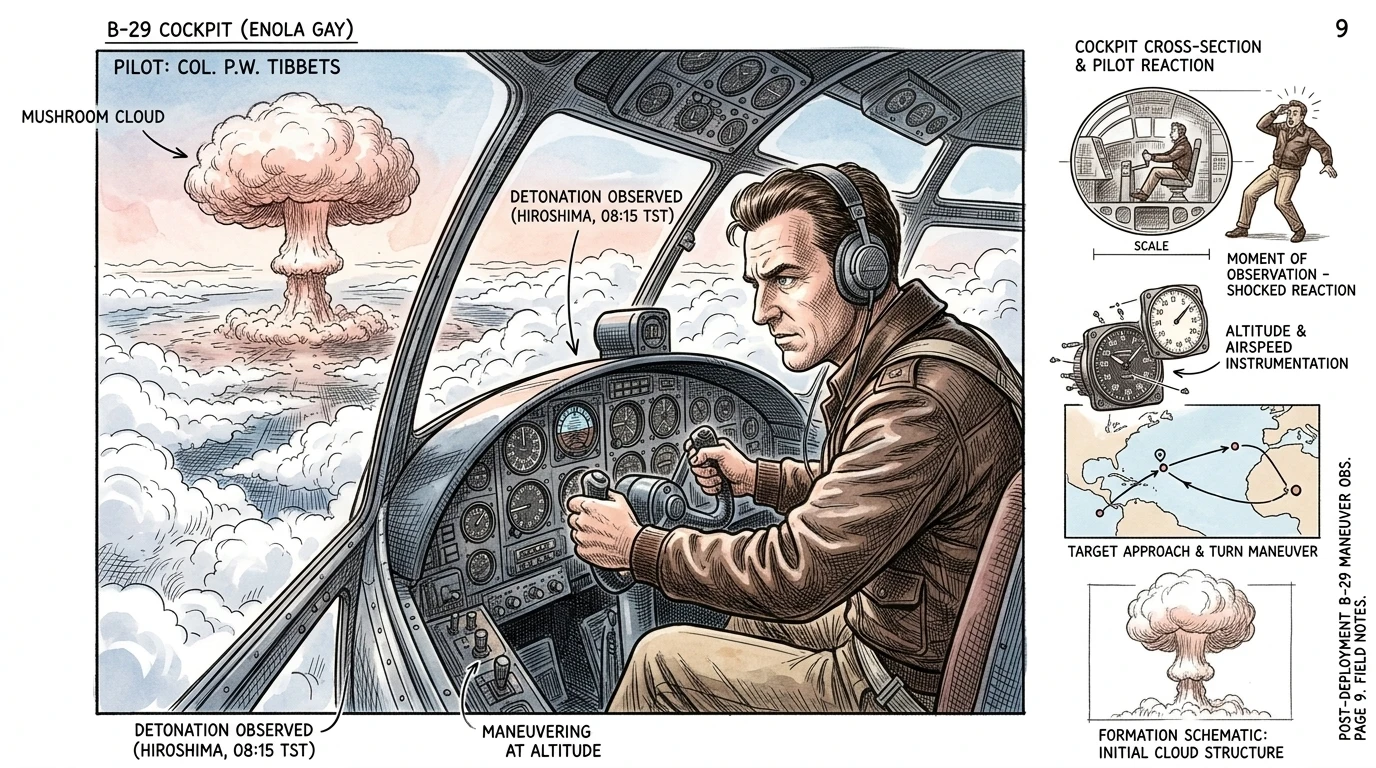
On August 6th, 1945, the B-29 bomber Enola Gay, piloted by Paul Tibbets, dropped the atomic bomb on Hiroshima. The devastation was unimaginable.
On August 6th, 1945, the B-29 bomber Enola Gay, piloted by Paul Tibbets, dropped the atomic bomb on Hiroshima. The devastation was unimaginable. Days later, a second bomb was dropped on Nagasaki. Japan surrendered soon after.

On August 6th, 1945, the B-29 bomber Enola Gay, piloted by Paul Tibbets, dropped the atomic bomb on Hiroshima. The devastation was unimaginable. Days later, a second bomb was dropped on Nagasaki. Japan surrendered soon after.

Page 10
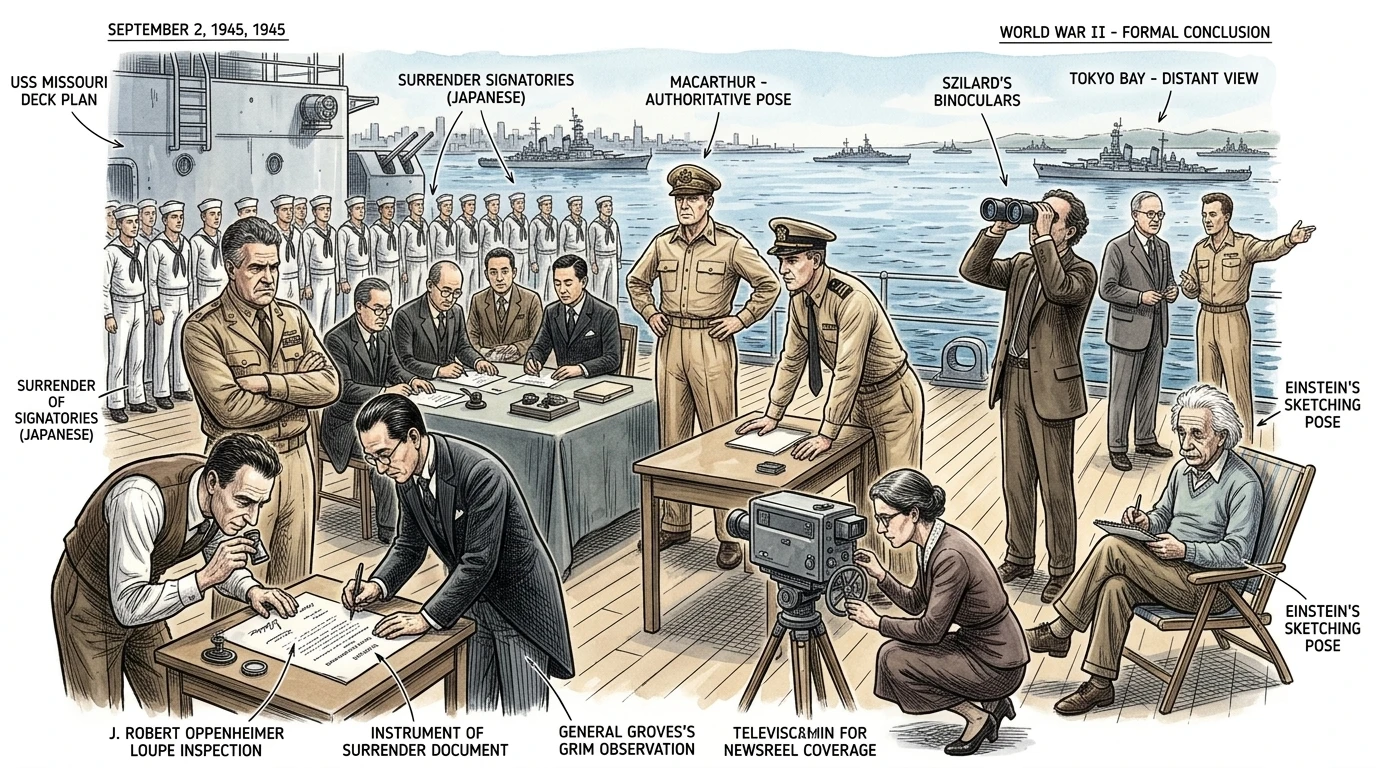
On September 2, 1945, aboard the USS Missouri in Tokyo Bay, Japan formally surrendered to General Douglas MacArthur. The splitting of the atom had brought an…
On September 2, 1945, aboard the USS Missouri in Tokyo Bay, Japan formally surrendered to General Douglas MacArthur. The splitting of the atom had brought an end to World War II, but it also ushered in a new era, haunted by the specter of nuclear weapons. As Albert Einstein had warned, "I know not with what weapons World War III will be fought, but World War IV will be fought with sticks and stones."

On September 2, 1945, aboard the USS Missouri in Tokyo Bay, Japan formally surrendered to General Douglas MacArthur. The splitting of the atom had brought an end to World War II, but it also ushered in a new era, haunted by the specter of nuclear weapons. As Albert Einstein had warned, "I know not with what weapons World War III will be fought, but World War IV will be fought with sticks and stones."

About this story

  • Historical figures: J. Robert Oppenheimer, General Leslie Groves, Lise Meitner
  • Location: Germany
  • Period: Modern
  • Audience: general readers

Questions and answers

Questions and answers about The Splitting of the Atom (1942, Germany)

Read Wonder History on your phone

Wonder History is available on Android and iPhone and iPad. Get Wonder History on Google Play · Get Wonder History on the App Store.

More Wonder History stories

All Wonder History stories · Open the library