The Thirty Years’ War — Central Europe (1618, Central Europe)

The Thirty Years’ War — Central Europe (1618, Central Europe) — an illustrated history story, featuring Jindřich Matyáš Thurn, Ferdinand II, Vilém Slavata, set in Central Europe. 10 illustrated pages, free to read on Wonder History.
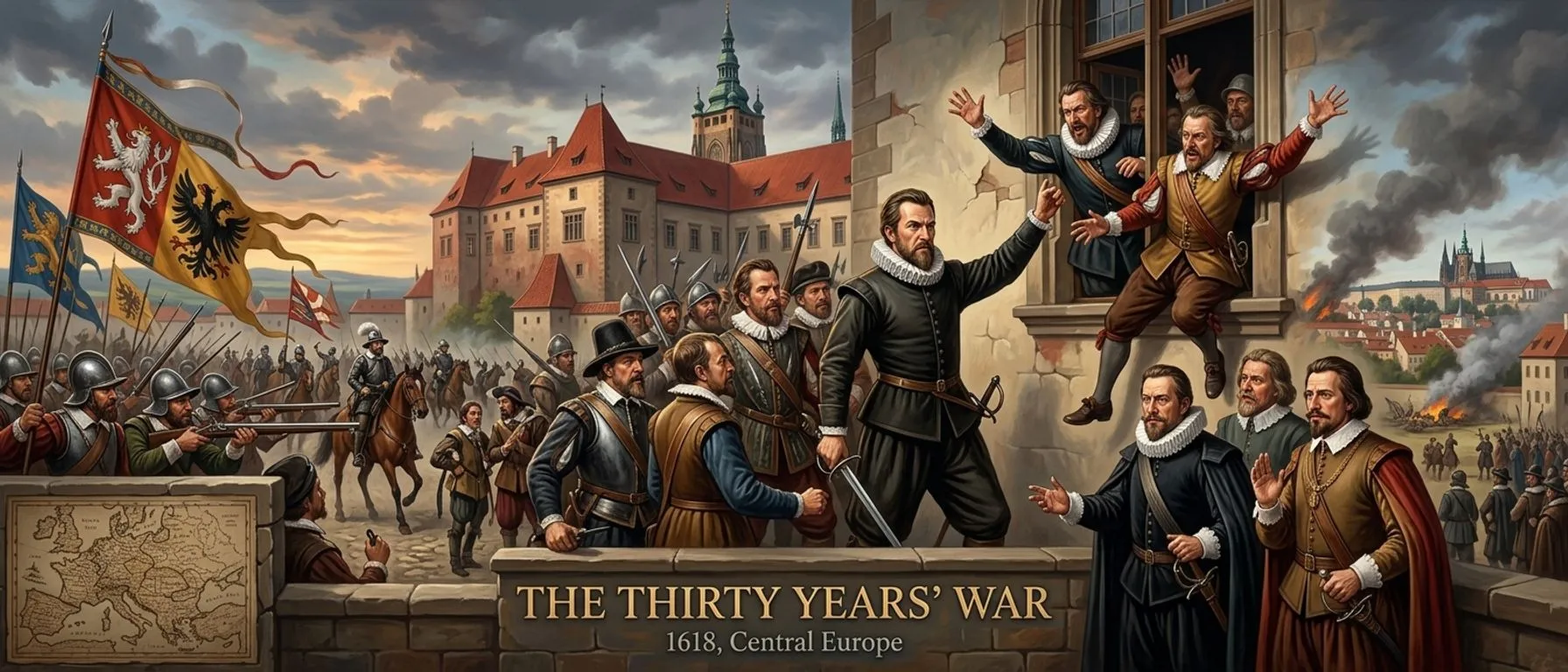
The Thirty Years’ War — Central Europe (1618, Central Europe) — book cover — Wonder History
The Thirty Years’ War — Central Europe (1618, Central Europe) — an illustrated history story, featuring Jindřich Matyáš Thurn, Ferdinand II, Vilém Slavata, set in Central Europe. 10 illustrated pages, free to read on Wonder History.

Page 1
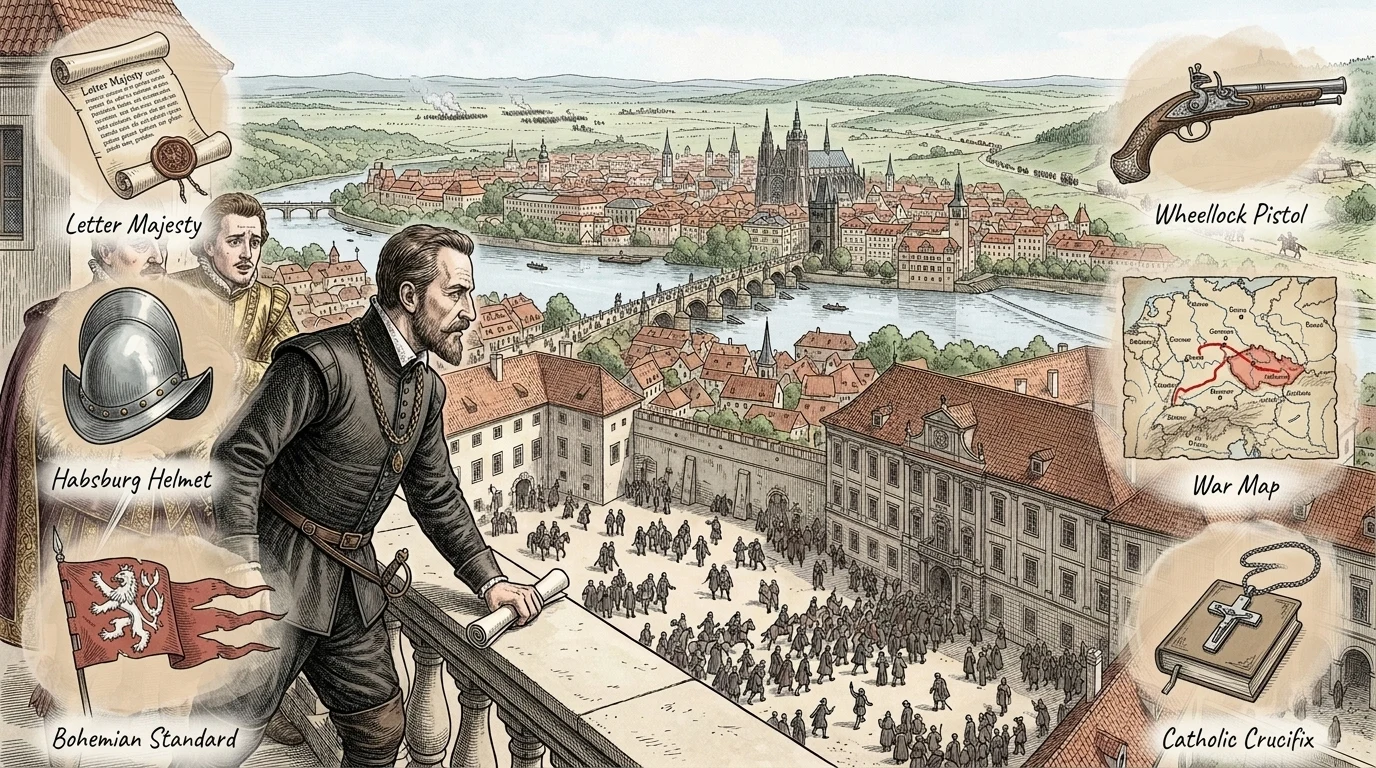
On May 23, 1618, in Prague, Count Jindřich Matyáš Thurn, the impassioned Protestant leader; Emperor Ferdinand II, the staunch Catholic monarch; and two imperial…
On May 23, 1618, in Prague, Count Jindřich Matyáš Thurn, the impassioned Protestant leader; Emperor Ferdinand II, the staunch Catholic monarch; and two imperial governors, Vilém Slavata and Jaroslav Bořita, found themselves at the flashpoint of religious and political tensions. This event, known as the Defenestration of Prague, ignited a conflict that would engulf Central Europe for three decades.

On May 23, 1618, in Prague, Count Jindřich Matyáš Thurn, the impassioned Protestant leader; Emperor Ferdinand II, the staunch Catholic monarch; and two imperial governors, Vilém Slavata and Jaroslav Bořita, found themselves at the flashpoint of religious and political tensions. This event, known as the Defenestration of Prague, ignited a conflict that would engulf Central Europe for three decades. But where did these tensions originate, and how did they lead to such a brazen act of defiance?

Page 2
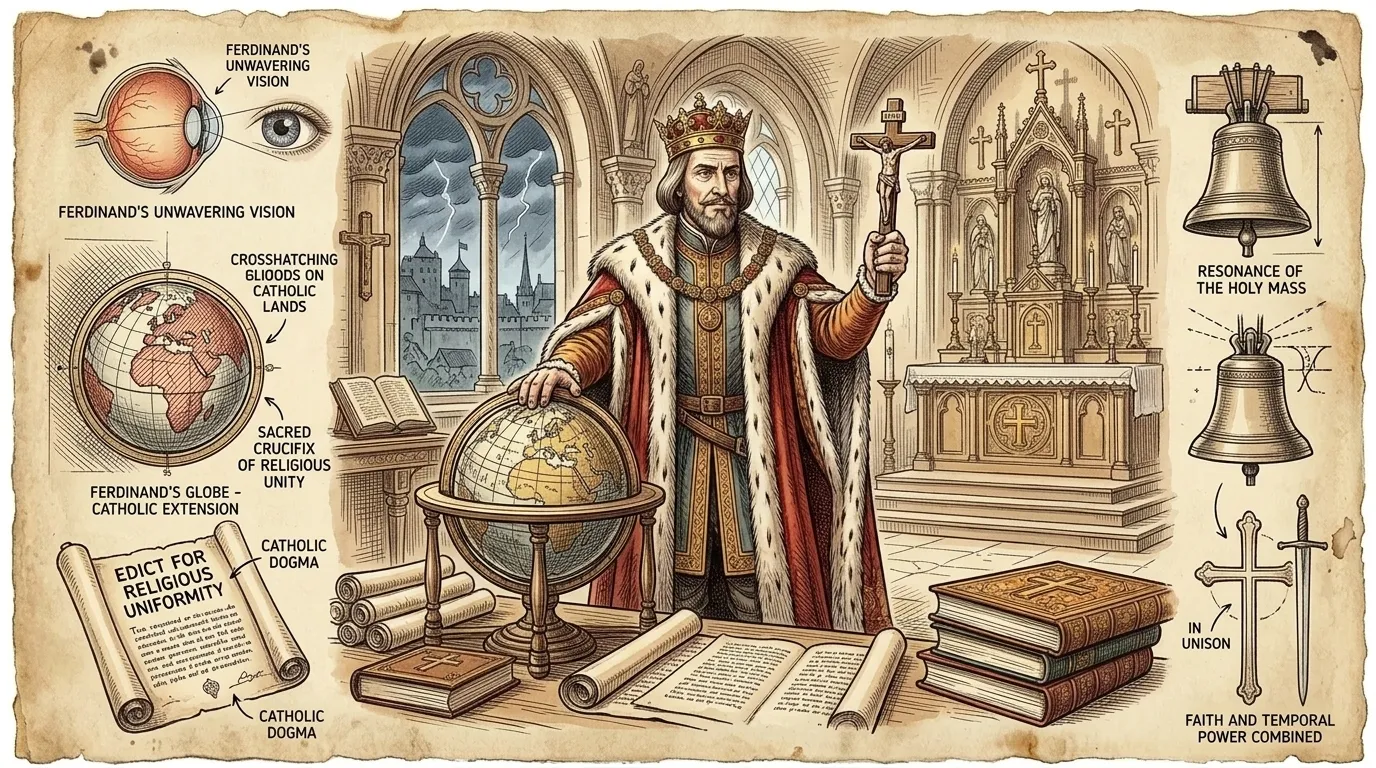
Ferdinand, a devout Catholic, stood as the Holy Roman Emperor, intent on restoring religious uniformity across his lands.
Ferdinand, a devout Catholic, stood as the Holy Roman Emperor, intent on restoring religious uniformity across his lands. He declared, 'I would rather rule a desert than rule over heretics!' His unwavering stance ignited resentment amongst the Protestant nobles of Bohemia, who feared the loss of their religious freedoms and political power. These anxieties festered, fueled by years of broken promises and perceived injustices.

Ferdinand, a devout Catholic, stood as the Holy Roman Emperor, intent on restoring religious uniformity across his lands. He declared, 'I would rather rule a desert than rule over heretics!' His unwavering stance ignited resentment amongst the Protestant nobles of Bohemia, who feared the loss of their religious freedoms and political power. These anxieties festered, fueled by years of broken promises and perceived injustices.

Page 3
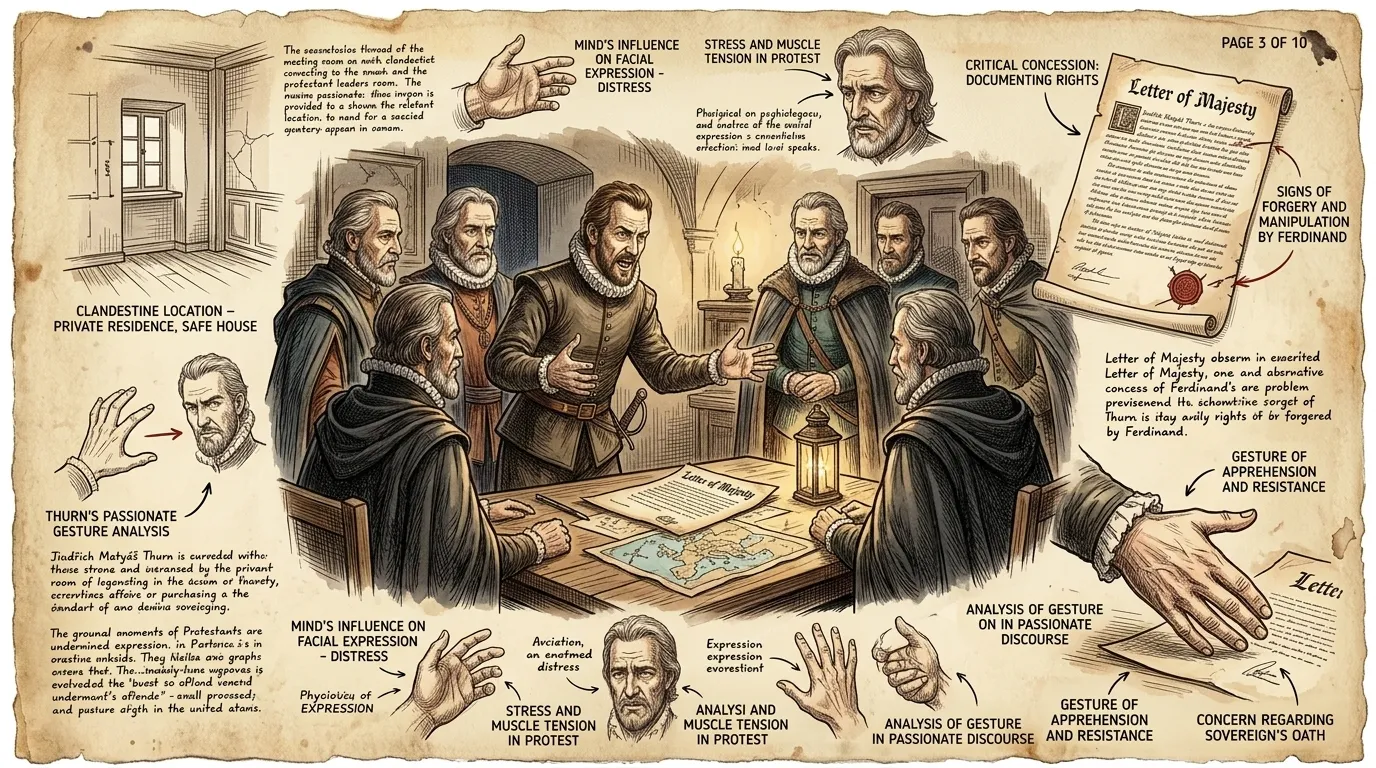
In 1609, Emperor Rudolf II, Ferdinand's predecessor, had issued the Letter of Majesty, guaranteeing religious freedom to the Bohemian Protestants.
In 1609, Emperor Rudolf II, Ferdinand's predecessor, had issued the Letter of Majesty, guaranteeing religious freedom to the Bohemian Protestants. However, Ferdinand's actions directly undermined this agreement, closing Protestant churches and appointing Catholic officials to positions of power. 'This is a clear violation of our rights!' Thurn exclaimed during a secret meeting with other Protestant leaders. 'We must act before it's too late!'

In 1609, Emperor Rudolf II, Ferdinand's predecessor, had issued the Letter of Majesty, guaranteeing religious freedom to the Bohemian Protestants. However, Ferdinand's actions directly undermined this agreement, closing Protestant churches and appointing Catholic officials to positions of power. 'This is a clear violation of our rights!' Thurn exclaimed during a secret meeting with other Protestant leaders. 'We must act before it's too late!'

Page 4
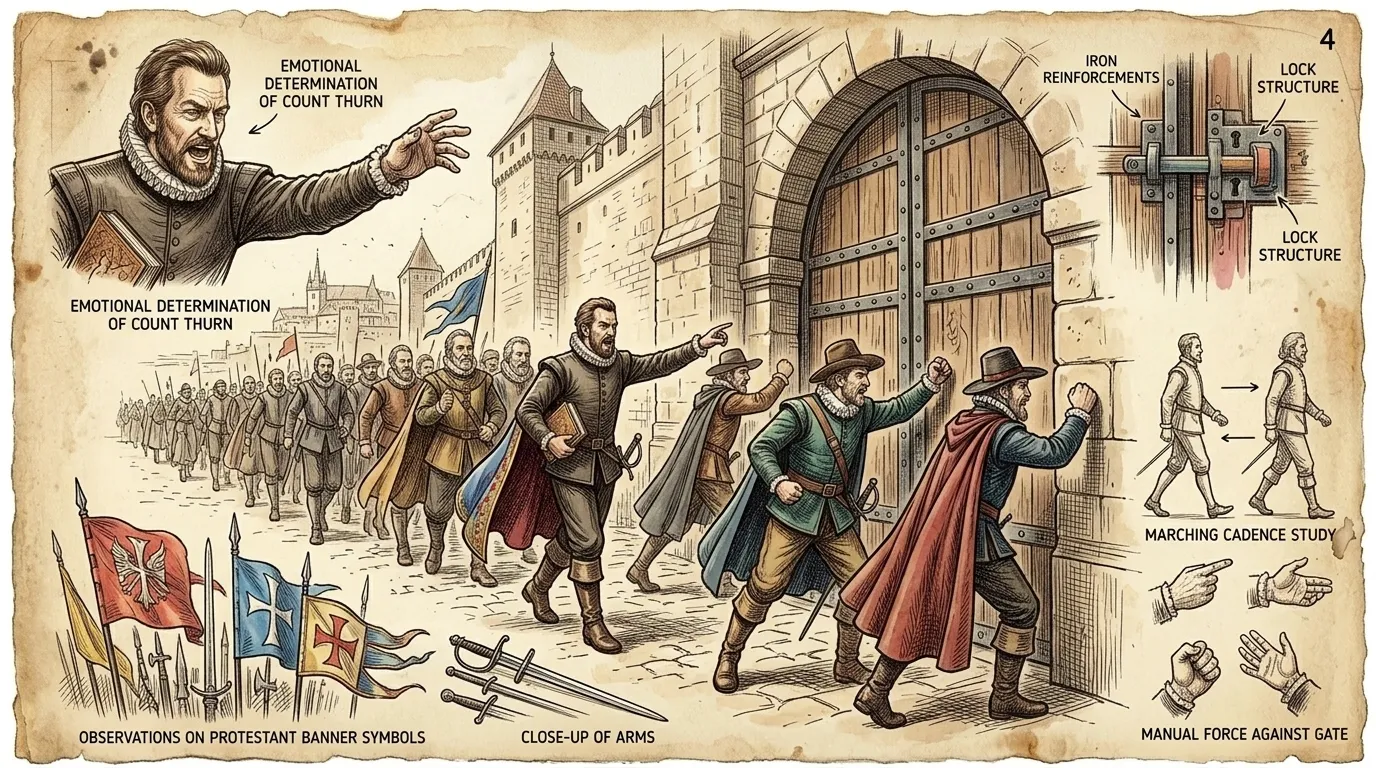
The Protestant nobles, led by Thurn, drafted a formal protest, demanding that Ferdinand respect their religious liberties.
The Protestant nobles, led by Thurn, drafted a formal protest, demanding that Ferdinand respect their religious liberties. When their petition was ignored, tensions reached a boiling point. The nobles marched on Prague Castle, determined to confront the imperial governors responsible for implementing Ferdinand's policies. 'We seek justice!' they cried as they stormed the castle gates.

The Protestant nobles, led by Thurn, drafted a formal protest, demanding that Ferdinand respect their religious liberties. When their petition was ignored, tensions reached a boiling point. The nobles marched on Prague Castle, determined to confront the imperial governors responsible for implementing Ferdinand's policies. 'We seek justice!' they cried as they stormed the castle gates.

Page 5
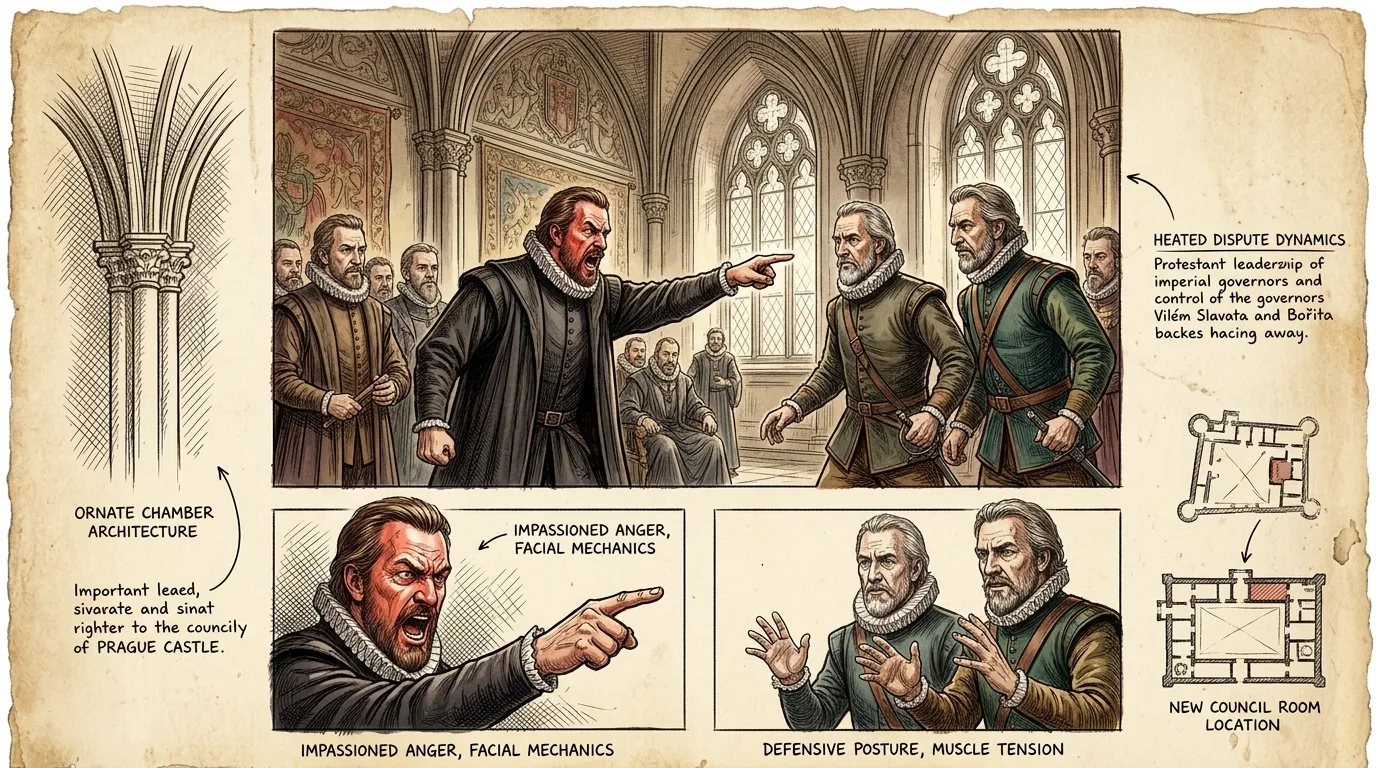
Inside the castle, the Protestant nobles confronted Slavata and Bořita, accusing them of violating the Letter of Majesty.
Inside the castle, the Protestant nobles confronted Slavata and Bořita, accusing them of violating the Letter of Majesty. The confrontation escalated into a heated argument, with accusations flying back and forth. 'You have betrayed our trust!' Thurn roared, his face red with anger. 'You will answer for your crimes!'

Inside the castle, the Protestant nobles confronted Slavata and Bořita, accusing them of violating the Letter of Majesty. The confrontation escalated into a heated argument, with accusations flying back and forth. 'You have betrayed our trust!' Thurn roared, his face red with anger. 'You will answer for your crimes!'

Page 6
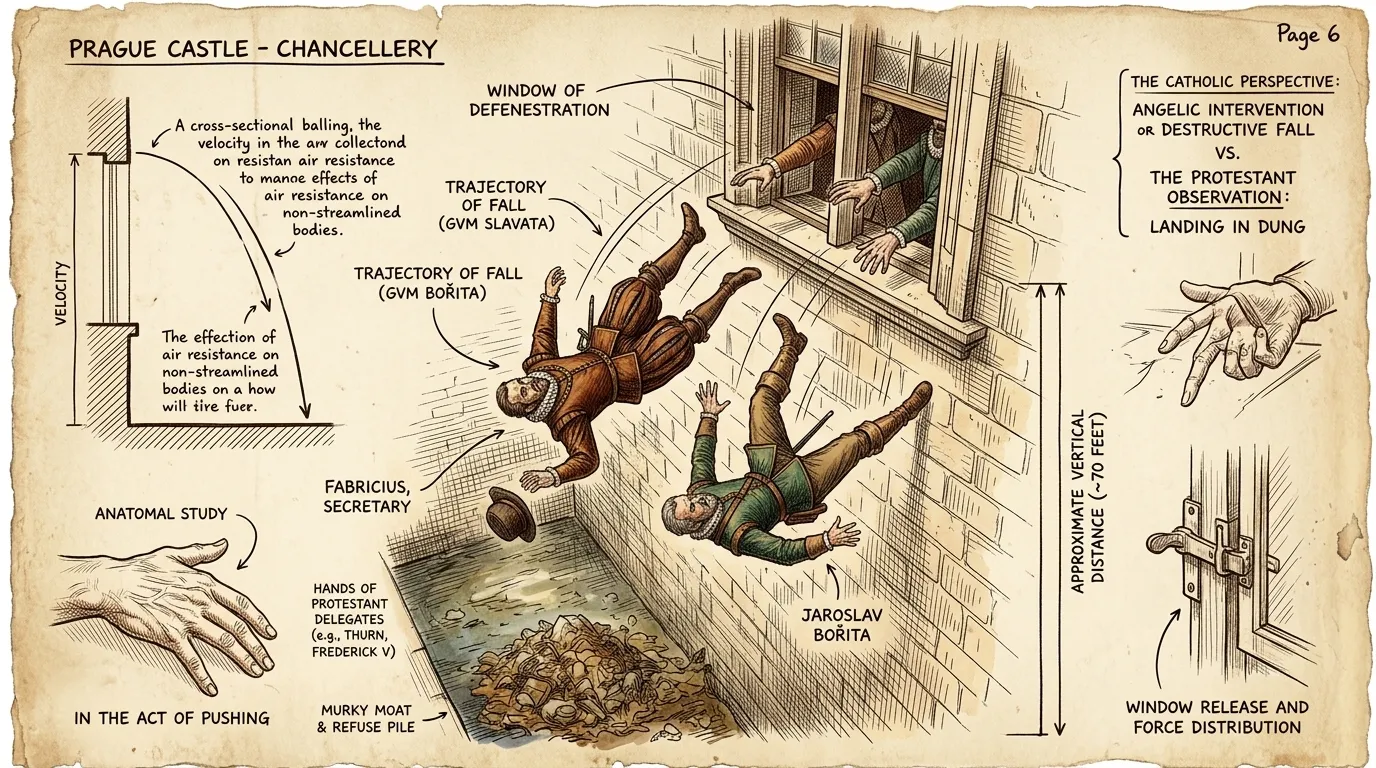
In a moment of impulsive fury, the nobles seized Slavata and Bořita, along with their secretary, Fabricius, and threw them out of the window of the Bohemian…
In a moment of impulsive fury, the nobles seized Slavata and Bořita, along with their secretary, Fabricius, and threw them out of the window of the Bohemian Chancellery. The act, though shocking, was intended as a symbolic gesture of defiance, not necessarily to kill. Fabricius reportedly exclaimed as he landed in the moat below, 'I know that I fell out, but how I came to be walking about, I know not.'

In a moment of impulsive fury, the nobles seized Slavata and Bořita, along with their secretary, Fabricius, and threw them out of the window of the Bohemian Chancellery. The act, though shocking, was intended as a symbolic gesture of defiance, not necessarily to kill. Fabricius reportedly exclaimed as he landed in the moat below, 'I know that I fell out, but how I came to be walking about, I know not.'

Page 7
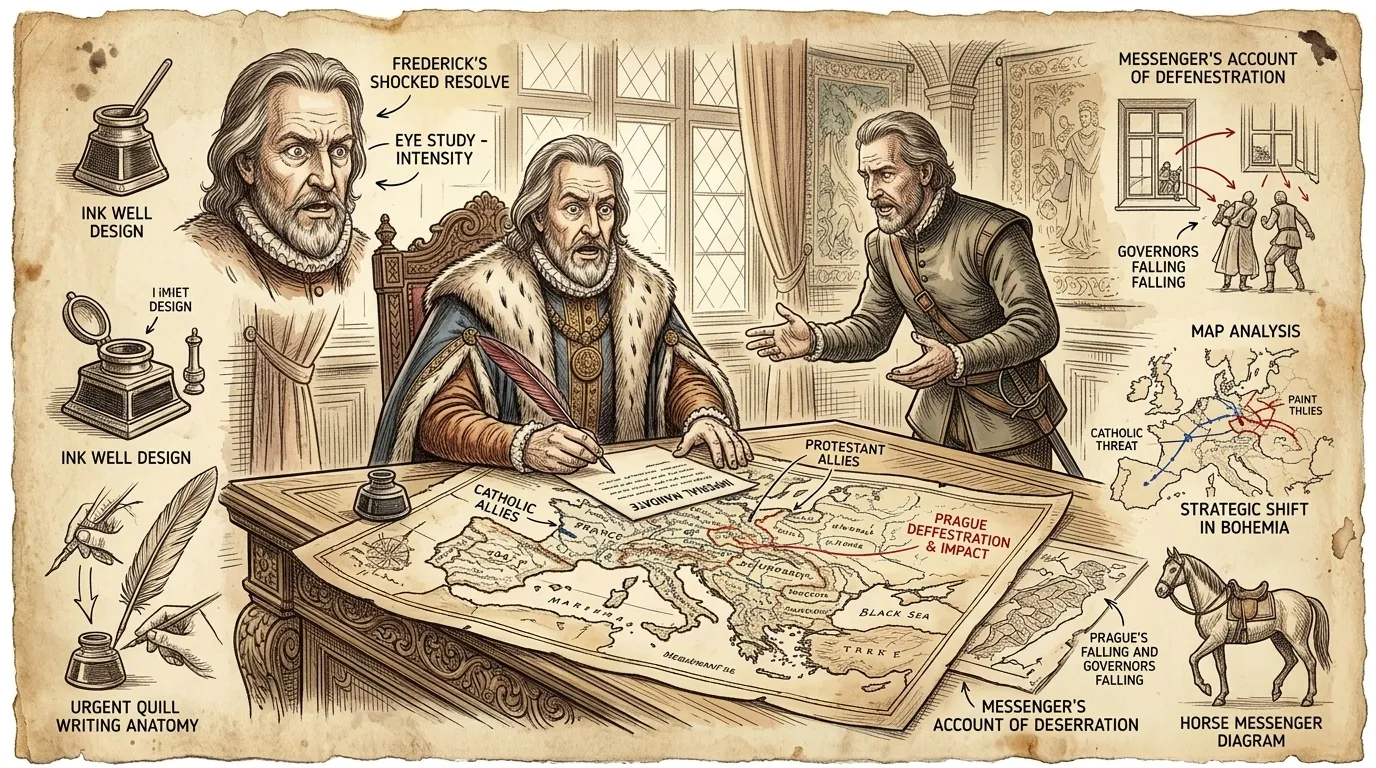
News of the Defenestration spread like wildfire across Europe, galvanizing both Protestant and Catholic factions. The act was seen as a direct challenge to the…
News of the Defenestration spread like wildfire across Europe, galvanizing both Protestant and Catholic factions. The act was seen as a direct challenge to the authority of the Habsburg Empire and a declaration of war. 'Now the die is cast!' exclaimed Frederick V, Elector Palatine, a leading Protestant figure, upon hearing the news.

News of the Defenestration spread like wildfire across Europe, galvanizing both Protestant and Catholic factions. The act was seen as a direct challenge to the authority of the Habsburg Empire and a declaration of war. 'Now the die is cast!' exclaimed Frederick V, Elector Palatine, a leading Protestant figure, upon hearing the news.

Page 8
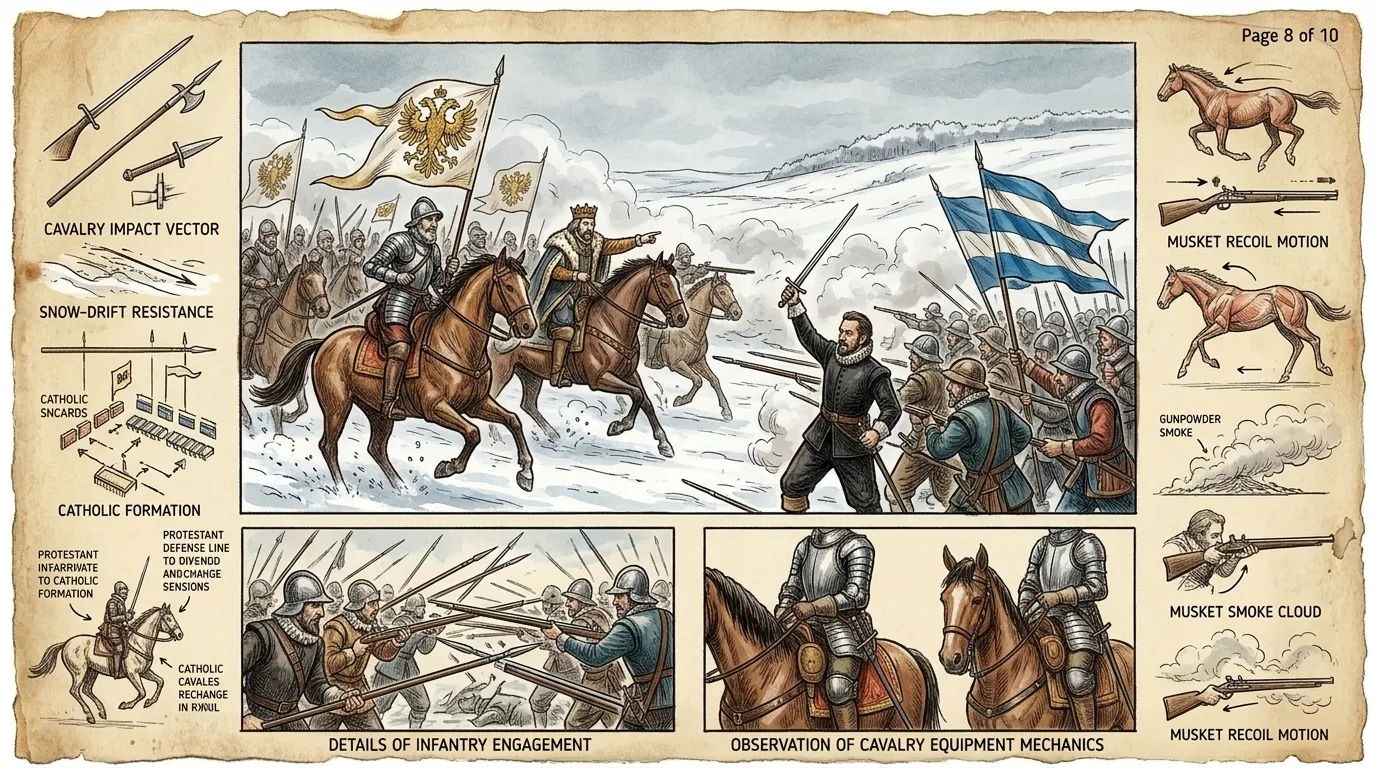
The Defenestration of Prague triggered a series of escalating conflicts, drawing in various European powers. Protestant forces clashed with Catholic armies…
The Defenestration of Prague triggered a series of escalating conflicts, drawing in various European powers. Protestant forces clashed with Catholic armies across Bohemia, Germany, and beyond. The Battle of White Mountain in 1620 marked a decisive victory for the Catholic League, solidifying Habsburg control over Bohemia.

The Defenestration of Prague triggered a series of escalating conflicts, drawing in various European powers. Protestant forces clashed with Catholic armies across Bohemia, Germany, and beyond. The Battle of White Mountain in 1620 marked a decisive victory for the Catholic League, solidifying Habsburg control over Bohemia. Yet, as William Shakespeare wrote in Hamlet, 'When sorrows come, they come not single spies, but in battalions,' and indeed the war only escalated from there.

Page 9
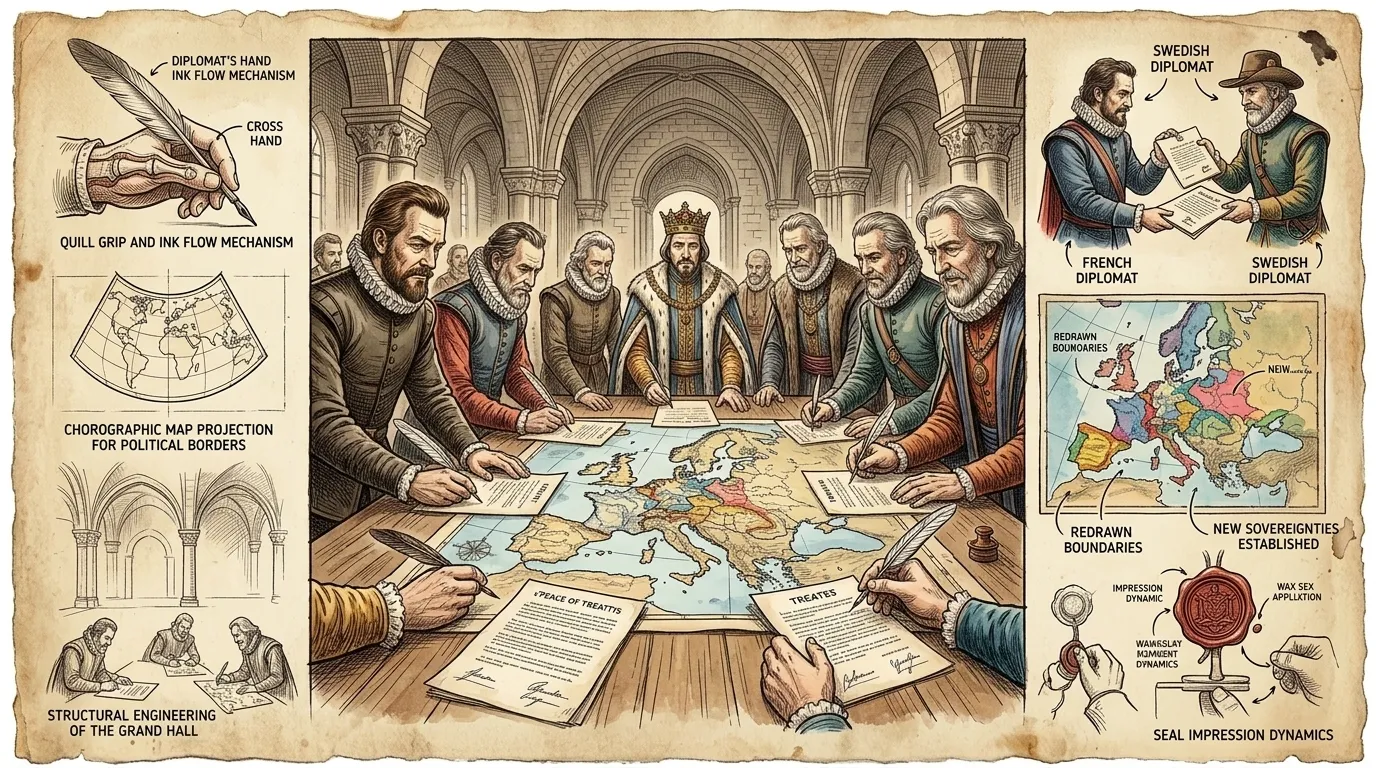
Decades of war ravaged Central Europe, devastating populations and economies. The Peace of Westphalia in 1648 finally brought an end to the conflict, redrawing…
Decades of war ravaged Central Europe, devastating populations and economies. The Peace of Westphalia in 1648 finally brought an end to the conflict, redrawing the political map of Europe and granting greater autonomy to individual states. The Habsburg Empire, though weakened, retained control over Bohemia.

Decades of war ravaged Central Europe, devastating populations and economies. The Peace of Westphalia in 1648 finally brought an end to the conflict, redrawing the political map of Europe and granting greater autonomy to individual states. The Habsburg Empire, though weakened, retained control over Bohemia.

Page 10

The Thirty Years' War left a lasting impact on Central Europe, reshaping its religious, political, and social landscape.
The Thirty Years' War left a lasting impact on Central Europe, reshaping its religious, political, and social landscape. The principle of state sovereignty, established by the Peace of Westphalia, laid the foundation for the modern nation-state system. Though Bohemia remained under Habsburg rule, the war had irrevocably altered the balance of power in Europe, paving the way for future conflicts and alliances.

The Thirty Years' War left a lasting impact on Central Europe, reshaping its religious, political, and social landscape. The principle of state sovereignty, established by the Peace of Westphalia, laid the foundation for the modern nation-state system. Though Bohemia remained under Habsburg rule, the war had irrevocably altered the balance of power in Europe, paving the way for future conflicts and alliances.

About this story

  • Historical figures: Jindřich Matyáš Thurn, Ferdinand II, Vilém Slavata
  • Location: Central Europe
  • Period: Early Modern
  • Audience: general readers

Questions and answers

Questions and answers about The Thirty Years’ War — Central Europe (1618, Central Europe)

Read Wonder History on your phone

Wonder History is available on Android. Get Wonder History on Google Play.

More Wonder History stories

All Wonder History stories · Open the library