The Trial of Galileo Galilei (1633, France)
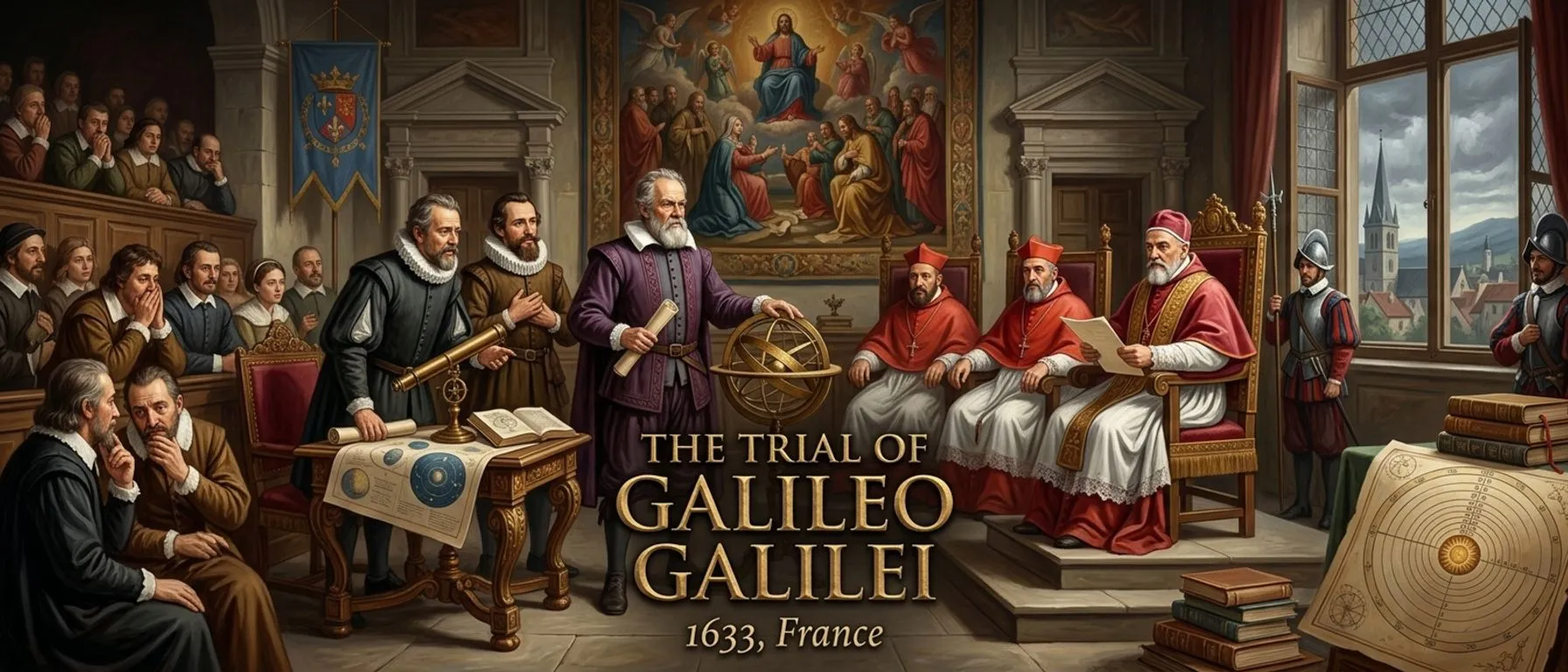
The Trial of Galileo Galilei (1633, France) — an illustrated history story, featuring Galileo Galilei, Cardinal Francesco Barberini, Benedetto Castelli, set in France. 10 illustrated pages, free to read on Wonder History.
Page 1
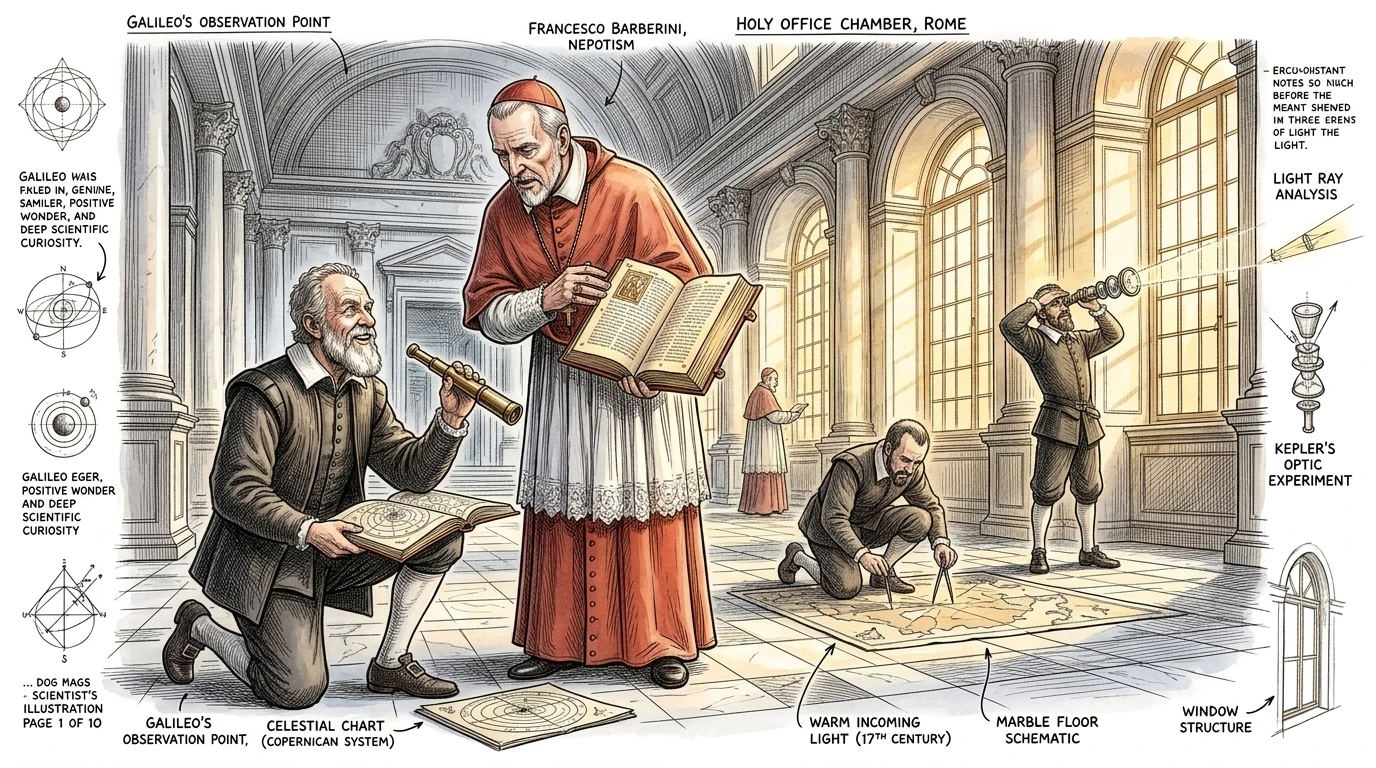
April 12, 1633. Cardinal Francesco Barberini stared down at Galileo Galilei, the aged scientist kneeling before the Holy Office in Rome. The chamber was filled with hushed whispers and the scent of incense. Galileo, his face etched with exhaustion, knew the stakes were impossibly high: his life, his work, and his immortal soul hung in the balance. But where did this devastating confrontation truly begin?
Page 2
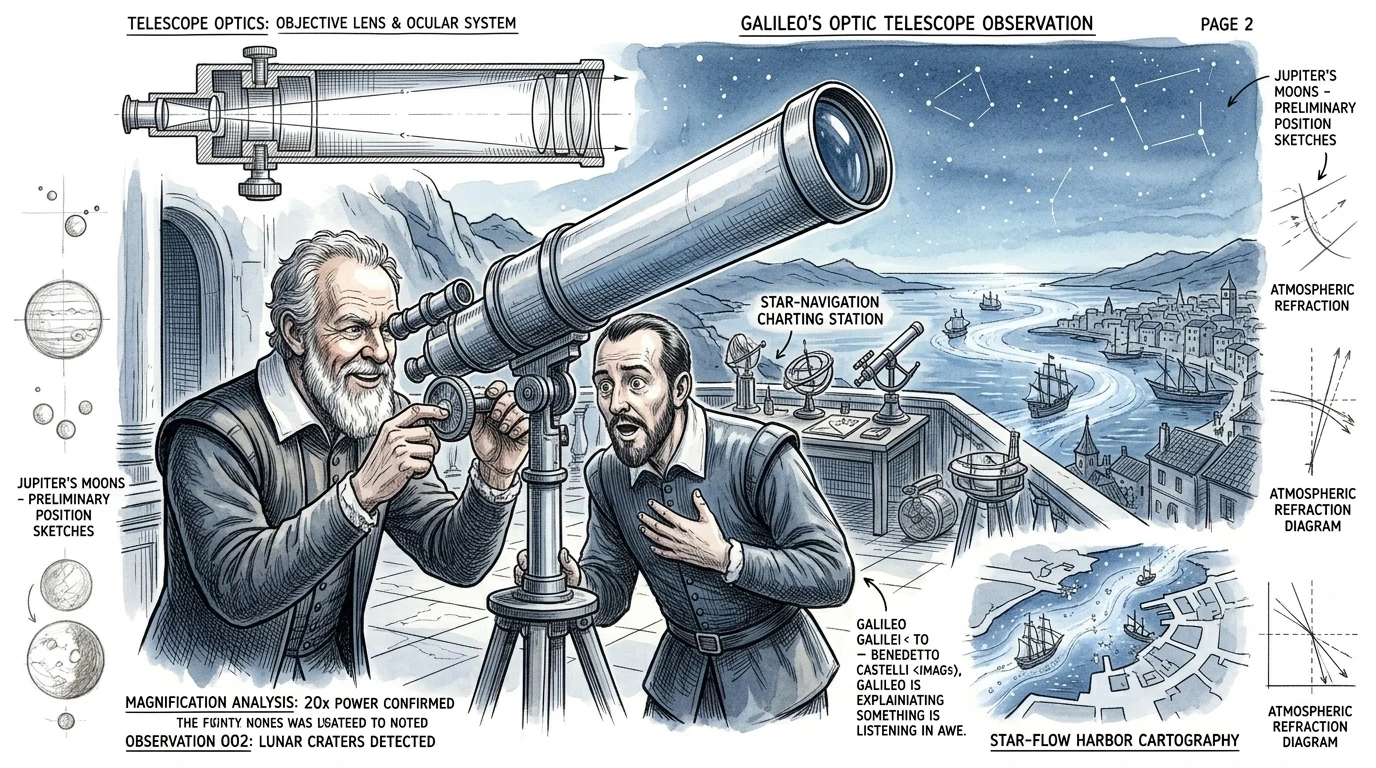
Years earlier, Galileo Galilei, a professor of mathematics at the University of Padua, peered through his newly constructed telescope at the night sky. He called out to his student, Benedetto Castelli, "Look, Benedetto! The Medicean Stars revolve around Jupiter! It defies the ancient Ptolemaic system!" A wide-eyed Castelli gasped as he looked for himself, his mind racing to the implications.
Page 3
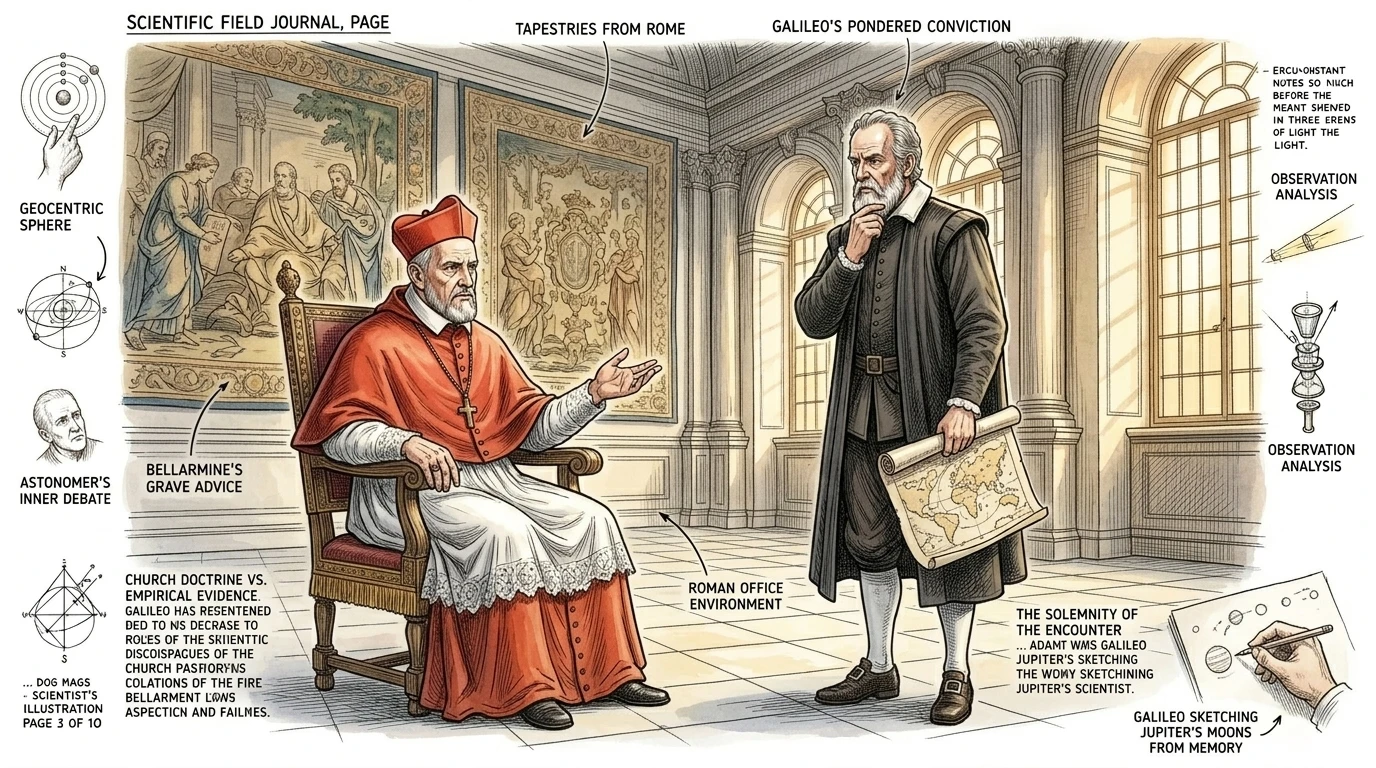
News of Galileo's findings reached Cardinal Robert Bellarmine in Rome. "Galileo must be warned," he declared to his advisors. Bellarmine summoned Galileo to Rome, advising him to abandon his Copernican views, that the earth revolved around the sun. "The Church cannot accept interpretations of scripture that contradict established doctrine," Cardinal Bellarmine stated firmly. Galileo, though respectful, knew he could not deny what he had seen with his own eyes.
Page 4
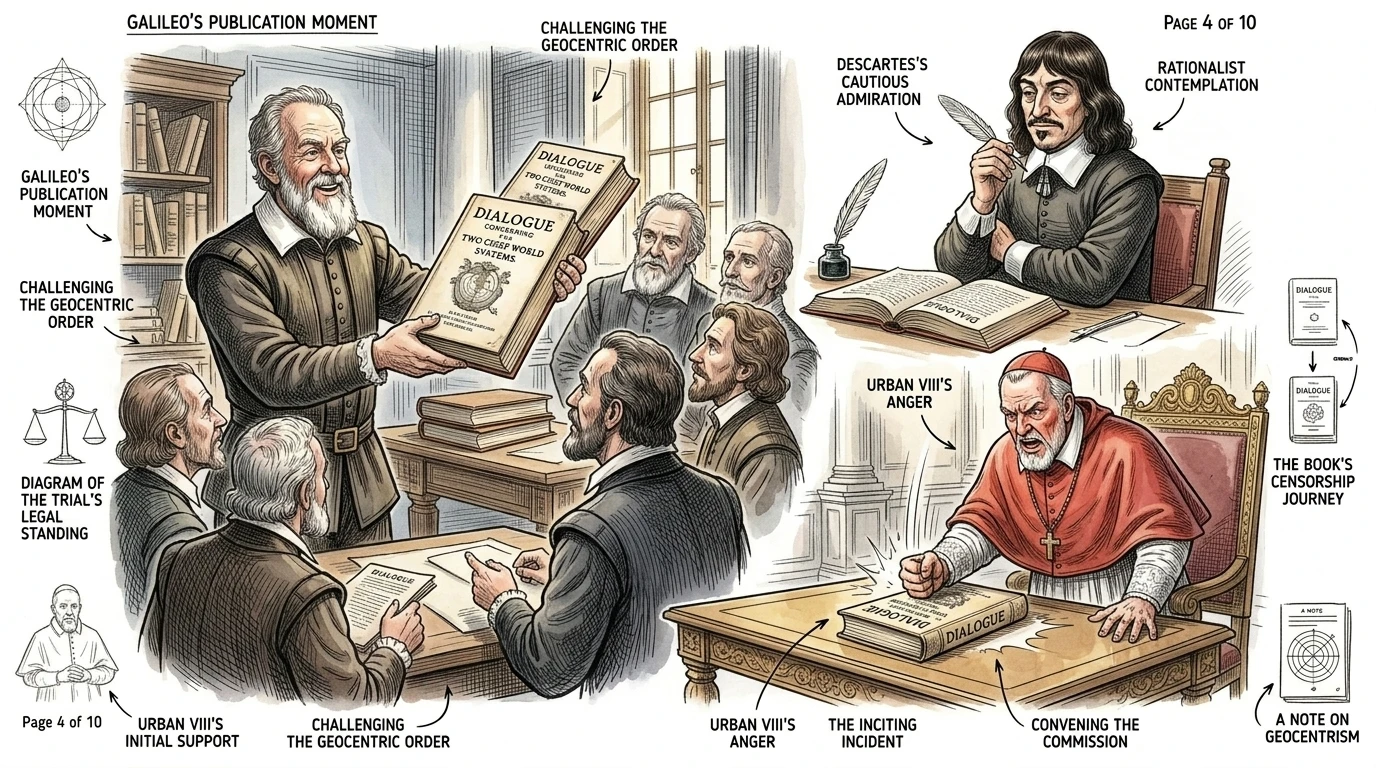
Galileo continued his research and published "Dialogue Concerning the Two Chief World Systems" in 1632. René Descartes, the French philosopher, wrote, "Galileo's work challenges everything we thought we knew about the universe." But Descartes was also cautious. "I would not want to publish anything that could incur similar disapproval." Word reached Pope Urban VIII, initially a friend of Galileo, but he grew enraged by what he saw as a mockery of his own arguments in the book.
Page 5
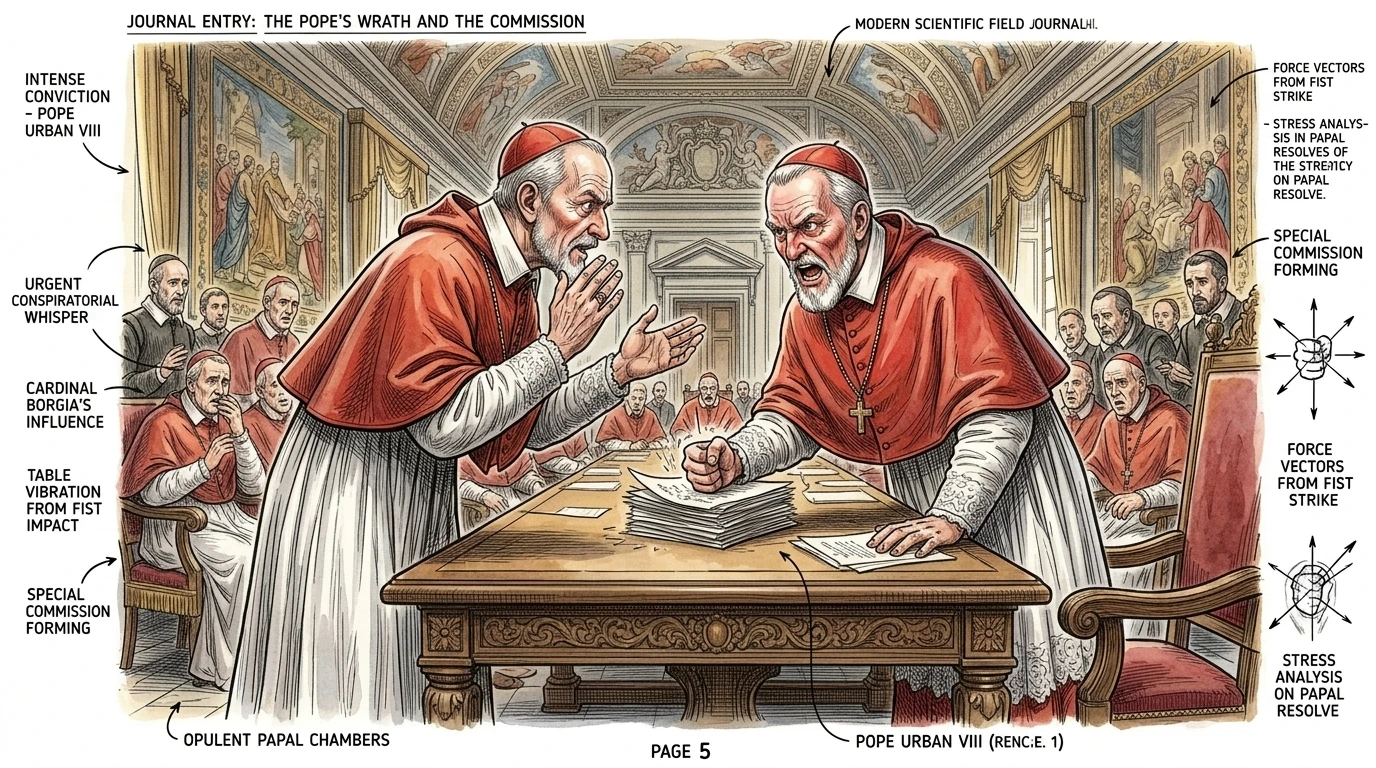
Fueled by Cardinal Gasparro Borgia, a staunch defender of Church doctrine, Pope Urban VIII convened a special commission to examine Galileo's work. Cardinal Borgia whispered to the Pope, "This book undermines the very foundation of our faith! Galileo must be silenced!" Urban, his face flushed with anger, banged his fist on the table, "Summon him! He will answer for his heresy!"
Page 6
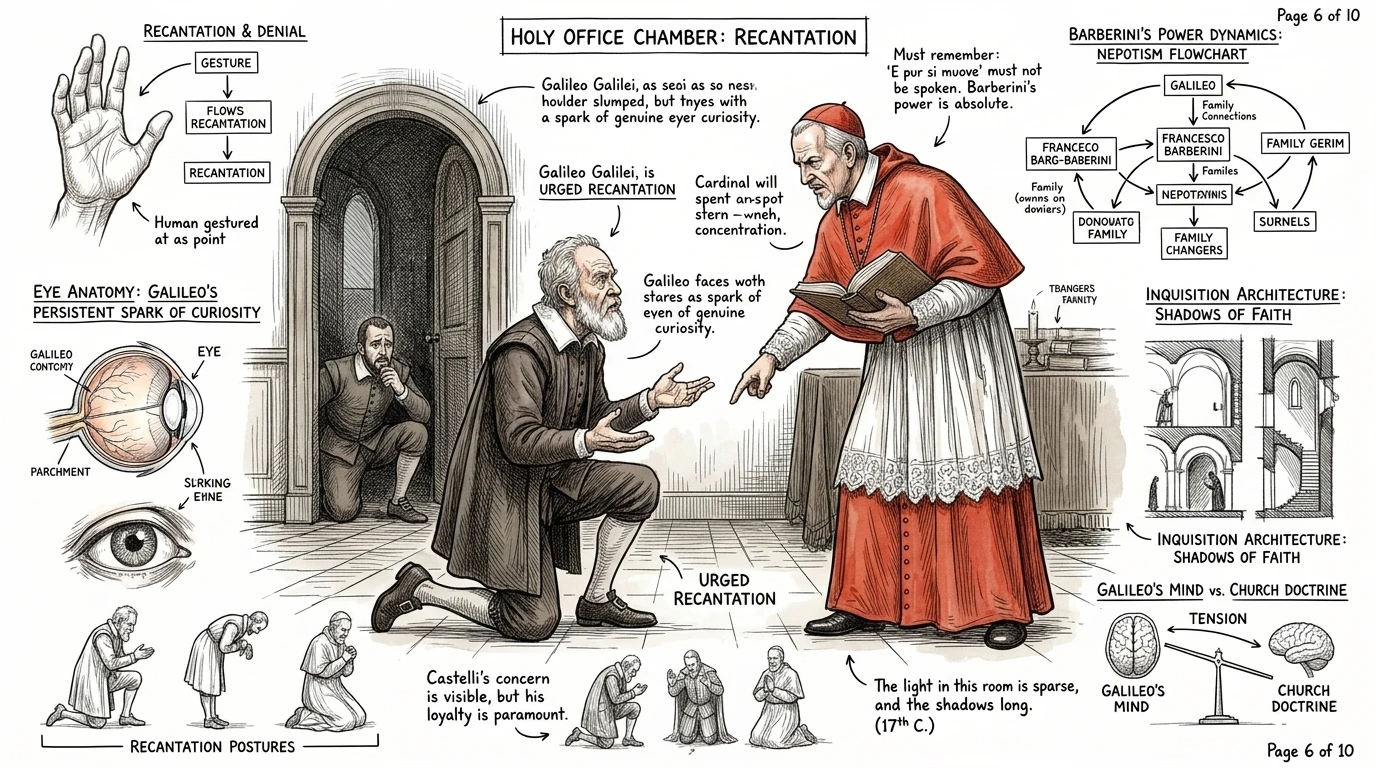
Back in 1633, Galileo, now an old man, knelt before the Inquisition. Cardinal Barberini pressed him, "Do you recant your heretical views, Galileo Galilei?" Galileo, his voice trembling, responded, "I... I must have made errors. I will denounce my beliefs if it pleases the Holy Church." His student Benedetto Castelli, watching from afar, felt a pang of guilt and despair.
Page 7
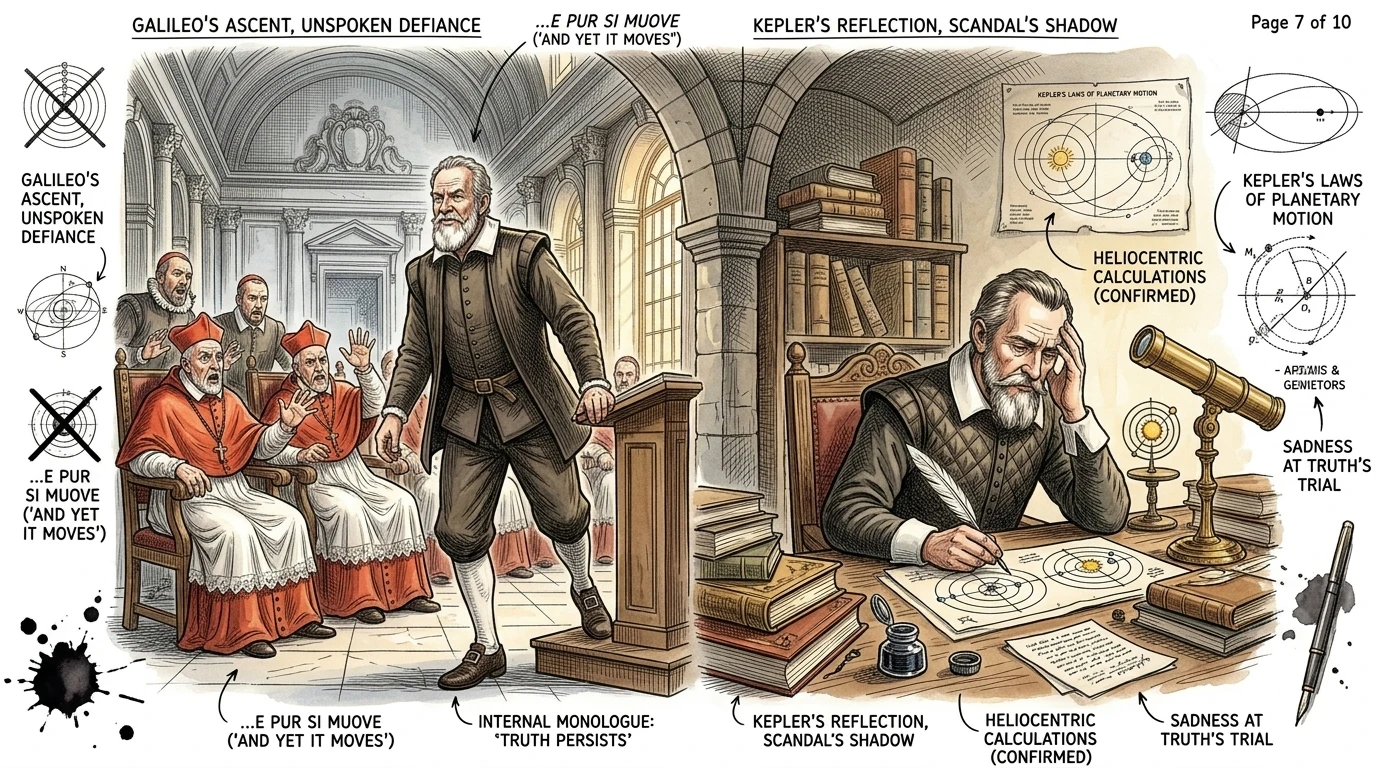
Galileo, under immense pressure, publicly renounced his belief that the Earth revolved around the Sun. However, as he rose, legend says Galileo muttered under his breath, "E pur si muove," – "And yet it moves." He was placed under house arrest for the remainder of his days. His friend, Johannes Kepler, another scientist, was heartbroken, noting the immense pressure the church had brought to bear, but also said, "As Aristotle said, 'It is the mark of an educated mind to be able to entertain a thought without accepting it'."
Page 8

Confined to his villa in Arcetri, Galileo continued his research, albeit in secret. He knew the power of observation and truth would eventually prevail, that his work was for all mankind. "There is no evil to be faced that Christ does not share with us. If you are in the dark, then He is there too," Galileo said softly, continuing his calculations.
Page 9

Galileo Galilei died in 1642, still under house arrest. His ideas, however, spread throughout Europe, influencing future generations of scientists. Johannes Kepler's laws of planetary motion helped further prove Galileo's initial statements and supported him even after he was shamed. His work was translated and studied in universities across the continent.
Page 10
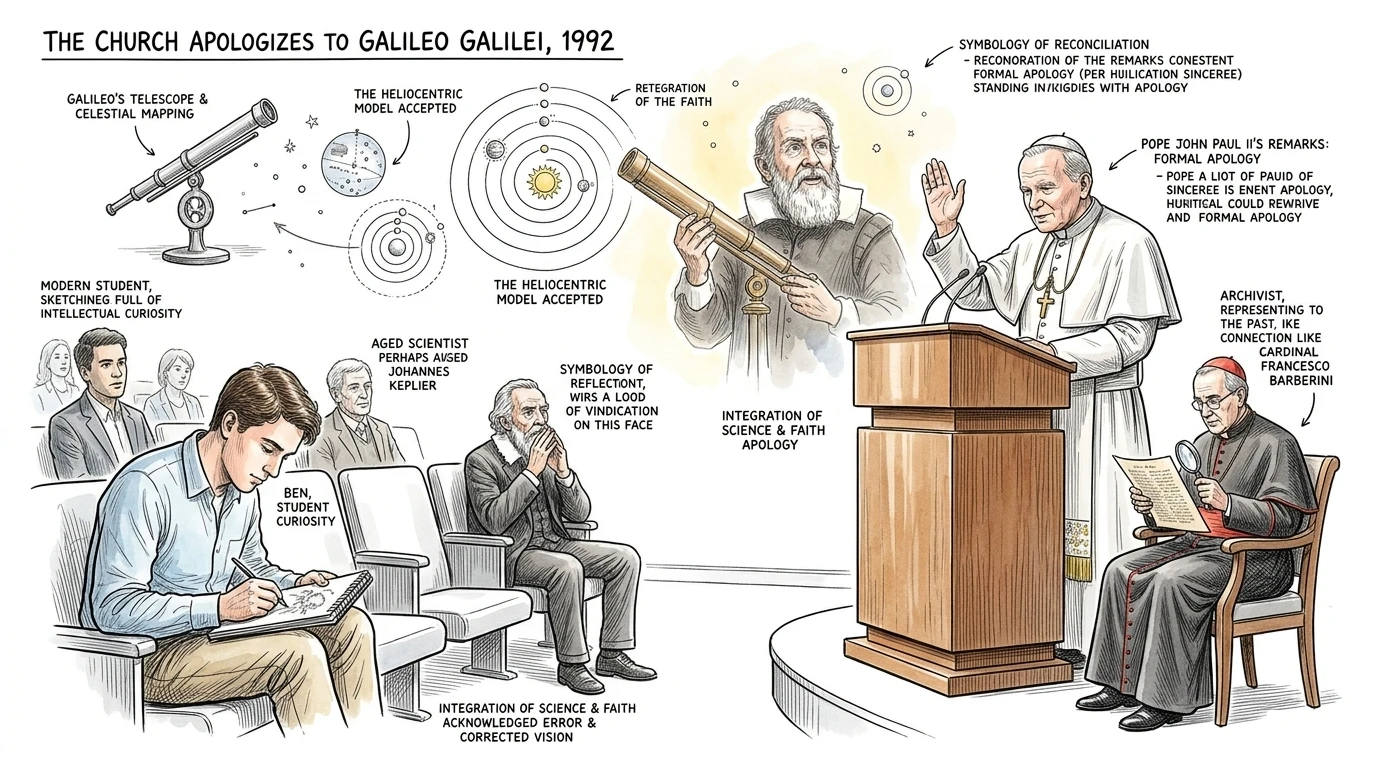
In 1992, over 350 years later, Pope John Paul II formally apologized for the Catholic Church's treatment of Galileo. He acknowledged that Galileo's observations were correct and that the Church had erred in condemning him. The pursuit of scientific truth, Pope John Paul II declared, need not be in conflict with faith. Galileo's legacy, however, remains a victory for the scientific spirit.
About this story
- Historical figures: Galileo Galilei, Cardinal Francesco Barberini, Benedetto Castelli
- Location: France
- Period: Early Modern
- Audience: kids (ages 6–12)
Questions and answers
Questions and answers about The Trial of Galileo Galilei (1633, France)
Read Wonder History on your phone
Wonder History is available on Android. Get Wonder History on Google Play.